Tag: Prof Aning

  • Prof. Aning slams  govt’s ‘two-tier law’ over deportation policy for foreign galamseyers

    Prof. Aning slams govt’s ‘two-tier law’ over deportation policy for foreign galamseyers

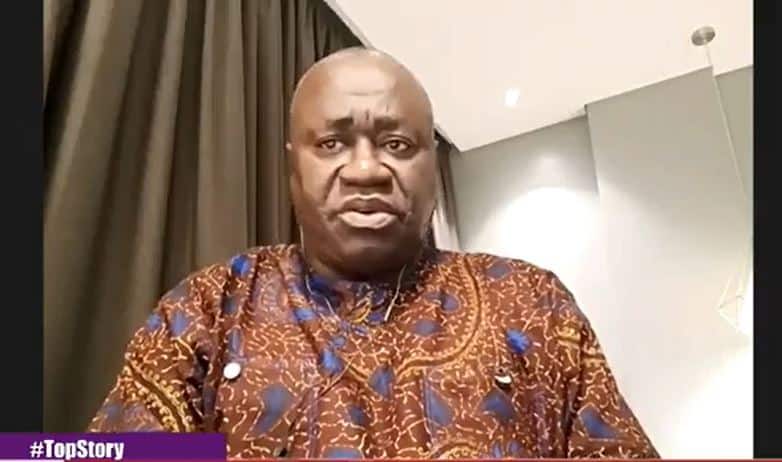
    Security expert, Professor Kwasi Aning, has strongly criticised the government’s new decision to arrest and deport foreigners caught in illegal mining without taking them through the courts.

    He believes this move could make Ghana more vulnerable to dangerous criminals and further reduce public trust in the country’s legal system.

    Speaking on Joy News’ PM Express on Tuesday, April 8, Prof. Aning described the decision as unfair and poorly thought out. He said it creates two different systems of justice—one for foreigners and another, tougher one for Ghanaians.

    According to him, this approach by the Interior Ministry sends a message that Ghanaians don’t deserve the same protection under the law in their own country.

    “I have absolutely no sympathy. I detest being an independent Ghanaian in Kwame Nkrumah’s Ghana being treated like a second-class citizen,” Prof. Aning declared passionately.

    “We cannot have a two-tier law. We cannot have a two-tier implementation process.”

    The backlash follows the announcement by Interior Minister Alhaji Muntaka Mubarak directing the Inspector General of Police to immediately transfer all regional, divisional, and district police commanders in mining areas.

    But it was the policy to deport foreign nationals involved in the crime without prosecution that drew the sharpest rebuke from Prof. Aning.

    “This is a policy that will serve as an attraction for even worse criminals to come, because they know we don’t have the capacity to prosecute them,” he warned.

    “They know we don’t have the political will to do what is right for the people of this country.”

    Directly addressing President John Mahama, the security expert made an emotional appeal.

    “Mr. President, this is your legacy term, let it matter and let it count. Your minister has demonstrated an unwillingness and a reluctance to hold the bull by the horns and resolve this crisis. This is not a time to proceed. Please rescind this policy before this country is destroyed.”

    Professor Kwasi Aning says the government’s plan to deport illegal miners without prosecution could send a dangerous message—not only to Ghanaians, but also to international criminal groups who take advantage of weak law enforcement.

    He criticized the decision, saying, “The manner in which this has been presented to the Republic of Ghana is shameful. Mr. President, it is not thought through. It is populist, and it’s a disgrace.”

    Prof. Aning added that although changing police leadership might help, it will only be effective if the officers are given clear targets and the resources they need. He warned against making decisions without proper planning, saying real progress depends on strategy, not quick fixes.

    “I think it’s useful. We need to give the police officers performance indicators, but we need to give them the resources, Your Excellency, so that the three months can be tested and their results checked.”

    He urged the President to recall his promise to Ghanaians and to make environmental reclamation and justice a defining feature of his final term in office.

    “Let this be your legacy term by reclaiming the environment, as you promised the people of Ghana in your State of the Nation Address.”
  • Galamsey is now a global crime – Prof Aning

    Galamsey is now a global crime – Prof Aning

    Security expert, Prof. Kwesi Aning has labeled the galamsey phenomenon in Ghana as a form of transnational organized crime.

    In an interview on Joy FM’s Super Morning Show on September 2, 2024, Prof. Aning warned that these illegal mining activities are not only an existential threat to Ghana but are also harming the country’s international standing.

    His comments come in the wake of a report from Ghana Water Limited, which has highlighted the challenges of providing water to parts of the Central Region due to pollution of the Pra River caused by galamsey activities.

    “This has moved beyond ordinary citizens. We are talking about levels of collusion spanning every single facet of the state and transnational organized criminality of citizens from different countries whose activities, not only in the galamsey but for the purposes of today, it’s galamsey and the way it’s polluting waters, is posing an existential threat to Ghana, raising tensions between Ghana and Cote D’Ivoire.

    “But even more disturbingly, the monies that are accrued from these activities are placing our international reputation at risk because it contributes to illicit financial flows and the funding of violent extremist activities elsewhere,” he said.

    Prof. Kwesi Aning has called the country’s inability to address galamsey activities a disgrace.

    He suggested that there may be involvement or facilitation of illegal mining by some state officials, citing the Aisha Huang case as an example.

    “For every state where its leaders either collude, are incapable, or unwilling to use the power that they have been given in trust for generations yet unborn and deliberately allow others to come in from other countries to do what is happening, it is not only shameful but a disgrace.

    “Because the heavy equipment, if I want to disaggregate those who are involved, somebody gives visas to the Chinese to come here, and the Aisha Huang case was very clear about the levels of state incompetence and the levels of state collusion.

    “Nobody knew whether she had left this country, nobody knew when she had come back, nobody could dismantle her network, and we stood on the sidelines, and as one of my panelists said, just talk,” he added.

    He emphasized that although Ghanaians’ involvement in illegal mining may have started on a smaller scale, it has evolved beyond mere illicit small-scale mining due to the significant investments now involved.

    “… I like the statement the Chinese ambassador made a couple of years ago that ‘stop talking about China because who gives them the visa to come to this country.’ Every embassy in Ghana has an intelligence officer there to assess the visa application.

    “So, we need to put a mirror in front of us, and then we need to tickle ourselves and laugh because we are just not doing what we are paid with the taxpayer’s money to do. So right now, if you look at the levels of investment in the galamsey, the Ghanaian component of that investment is very small. It’s moved from illicit small-scale to something else,” he said.

  • ECOWAS’ military intervention against Niger will not happen – Prof Aning

    ECOWAS’ military intervention against Niger will not happen – Prof Aning

    The Director of the Faculty of Academic Affairs and Research at the Kofi Annan International Peacekeeping Training Centre (KAIPTC) says ECOWAS’ military intervention in Niger will not happen.

    Professor Kwesi Aning’s stance still holds despite heads of forces of some member states after a meeting in Accra announced their readiness to strike.

    According to him, the intervention will not happen because the bloc itself is facing credibility challenges and, therefore, would need to reverse its steps to regain “parts of its credibility.”

    “Let me repeat it; the attack will not happen. You know yourself the number of times I’ve predicted coup d’états that have come through. So this is about forecasting and risk analysis and risk assessment.

    “The intervention will not happen because ECOWAS needs to reverse or retract its steps to get parts of its credibility back,” he told Newsfile host, Samson Lardy Anyenini.

    The expert indicated that the military regime in Niger started signalling their willingness to negotiate but “because of the tendency that our elders don’t make mistakes and they don’t apologise,” ECOWAS seems to be having difficulty reversing its decision.

    In the midst of these developments, reports indicate that the media in Niger is abuzz with discussions regarding the possibility of Burkina Faso, Mali, and Senegal providing ammunition support to Niger in response to the anticipated military intervention by ECOWAS.

    Professor Aning believes this response is a prudent one, considering ECOWAS’ announcement of its intent to carry out an intervention. He emphasized that when there’s a perceived threat of attack, it’s natural to make preparations.

    Following a one-week ultimatum issued to the leaders of the Niger coup to restore constitutional rule, commanders from various ECOWAS member states gathered in Accra to deliberate on their intervention plan. Notably, Mali, Senegal, and Burkina Faso did not attend the meeting, as they expressed support for Niger and criticized ECOWAS’ approach.

    Experts have also voiced their concerns about ECOWAS’ approach, asserting that the regional bloc should have exhausted all available diplomatic options before resorting to a military intervention, which was meant to be a last resort.

    As per the announcement by the commanders after their Accra meeting, there are no plans for further discussions before a potential military strike in Niger.