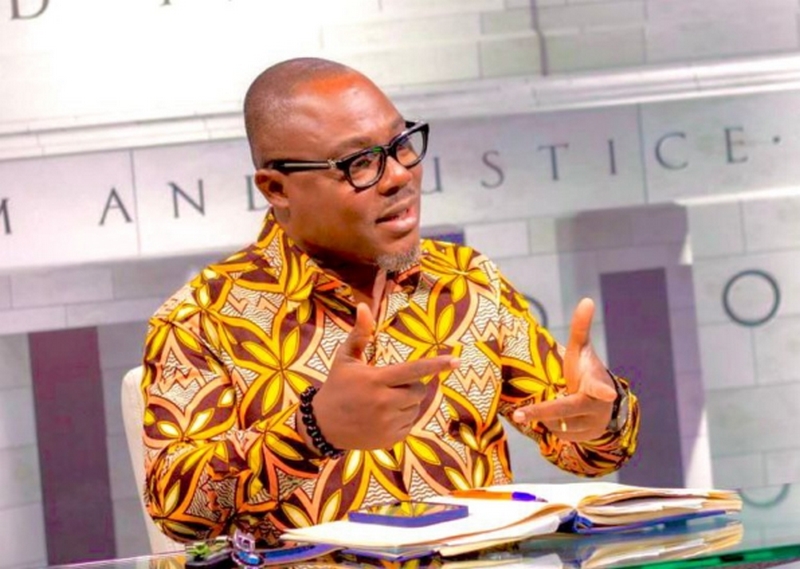
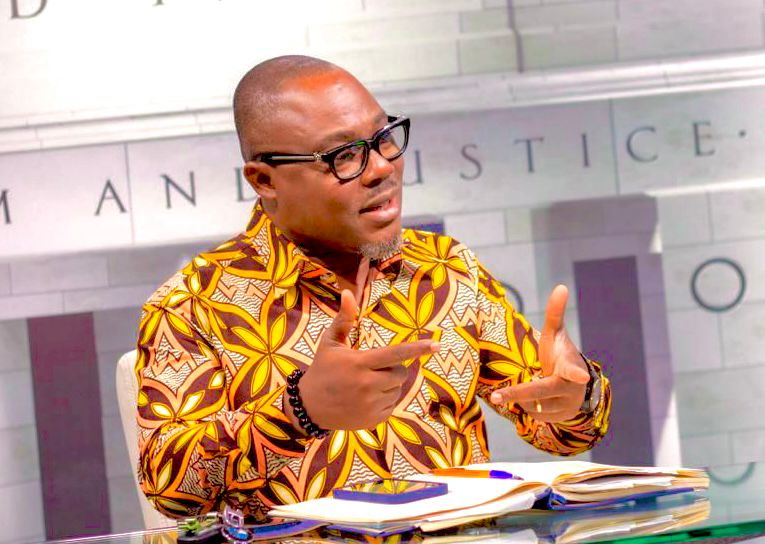
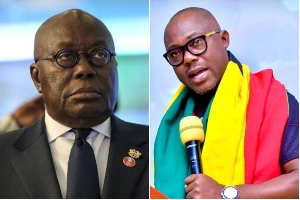
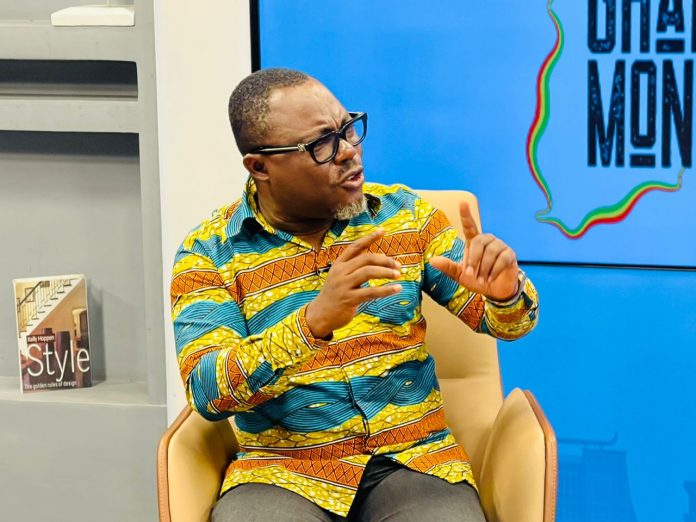
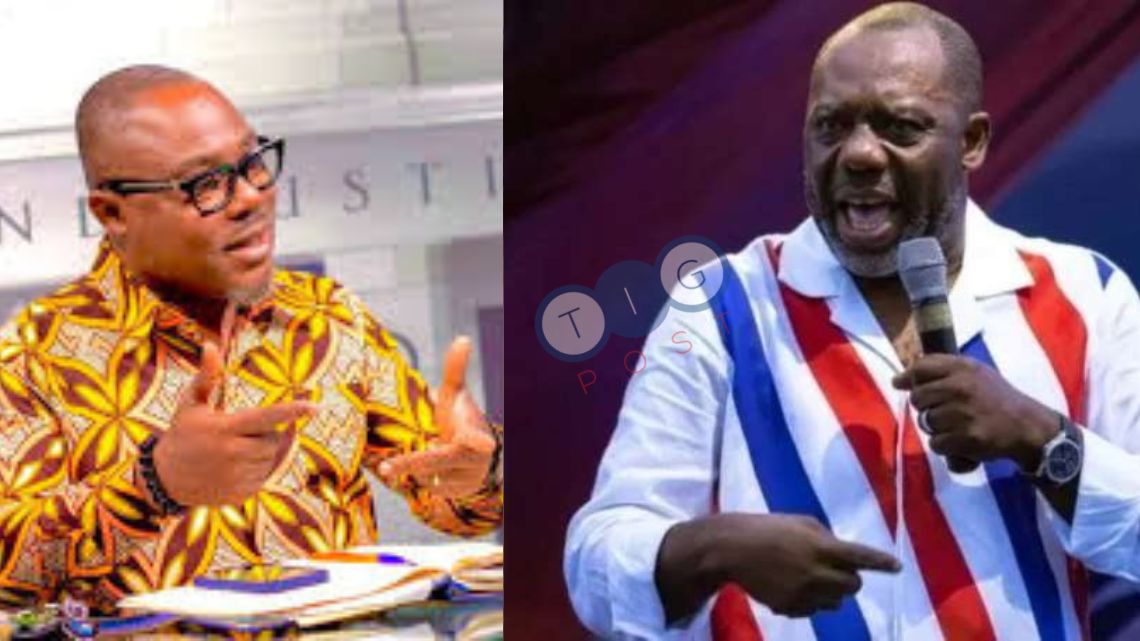
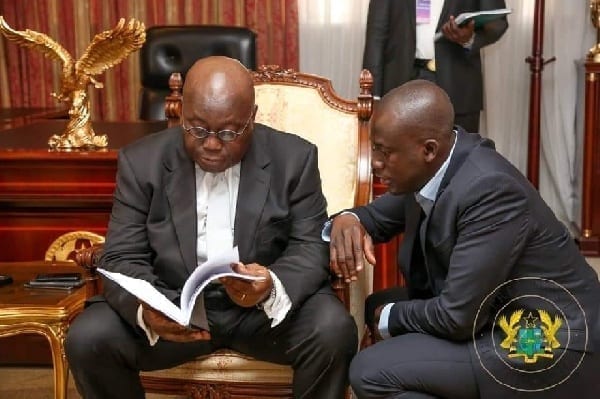
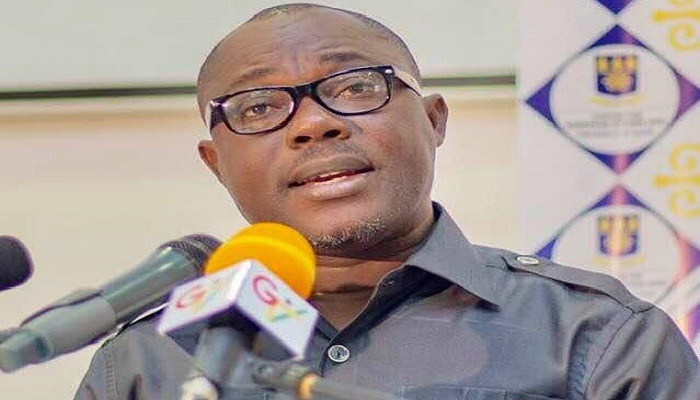
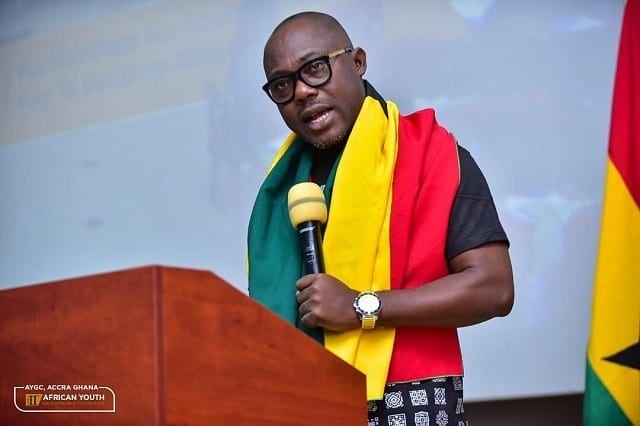
Political scientist at the University of Ghana, Professor Ransford Gyampo, has been appointed as the Acting Chief Executive Officer of the Ghana Shippers Authority.
His appointment by President John Dramani Mahama marks a new leadership era for the Authority, following the departure of Kwesi Baffour Sarpong, who was appointed in December 2024 under the Akufo-Addo administration.
A respected academic and governance expert, Prof. Gyampo is expected to bring his extensive knowledge of public administration and policy research to the Authority, which oversees Ghana’s shipping and logistics sector.
Born on March 31, 1977, in Accra, Prof. Ransford Edward Van Gyampo has established himself as a key figure in political science and governance discourse in Ghana.
He is a Professor of Political Science and the Founding Director of the Centre for European Studies at the University of Ghana, with two decades of experience in teaching and research.
Holding a PhD in Political Science from the University of Ghana, he has also pursued advanced studies at Tufts University in Boston, USA, broadening his expertise in governance, democracy, and public policy.
His research interests include governance, leadership, democratic development in Africa, youth empowerment, natural resource management, electoral studies, and maritime security in the Gulf of Guinea.
Beyond academia, Prof. Gyampo has held visiting scholar roles at the University of South Florida and the Institute of Advanced Studies at the University of Bristol, contributing to international academic discussions on governance and democracy.
Prior to his university tenure, he spent 14 years at the Institute of Economic Affairs (IEA-Ghana), rising from Research Assistant to Senior Research Fellow.
During this period, he played a pivotal role in conducting socio-economic and governance research, providing policy recommendations aimed at addressing Ghana’s developmental challenges.
Professor Ransford Gyampo of the University of Ghana (UG) has sharply criticized calls for gender and ethnic balance in President John Mahama’s recent ministerial appointments.
He argued that, for a developing country like Ghana, the focus should be on competence rather than simply ensuring equal representation across gender, ethnicity, or regions.
Speaking on Joy FM’s Super Morning Show on Wednesday, January 22, Prof Gyampo emphasized that governance in a developing country is far too serious to be dictated by factors such as gender, ethnicity, or regionalism. “Governance in a developing country is too serious a matter to be determined by mere considerations of gender, ethnicity, and regionalism,” he remarked.
He also critiqued the regional balance provisions in the constitution, which call for equal representation from various parts of the country in government appointments. While acknowledging this requirement, Gyampo pointed out that it isn’t absolute.
“While the constitution calls for regional balance, I believe it is not infallible. Even the Bible faces challenges regarding its interpretation, and similarly, the constitution has provisions that can hinder our development, which is why it is reviewed,” he explained.
Professor Gyampo expressed strong opposition to the idea of appointing individuals based solely on regional or gender considerations. “The idea of appointing individuals from all regions without prioritising competency is problematic. Focusing on gender, regionalism, and ethnicity, without considering competency, will continue to hinder our efforts to govern effectively and bring about development,” he warned.
On Tuesday, Minority Leader Alexander Afenyo-Markin had criticized President Mahama for not ensuring fair regional representation in his ministerial appointments, calling for more Ewes and Ga Dangbe individuals to be included. However, the Majority cautioned against making such tribal statements, with the Second Deputy Speaker stressing that discussions of tribalism must be handled carefully.
Meanwhile, protests erupted in Bole-Bamboi, with some youth setting fire to car tyres near the residence of the late father of President Mahama. The unrest is believed to have been sparked by the exclusion of Sulemana from the recent ministerial nominations.
A Kumasi High Court has remanded 14 individuals into prison custody over their alleged involvement in violent disturbances during Election Day in Damongo, Savannah Region.
Out of 16 suspects arraigned, 14 were remanded, while two minors were discharged and released to a responsible guardian.
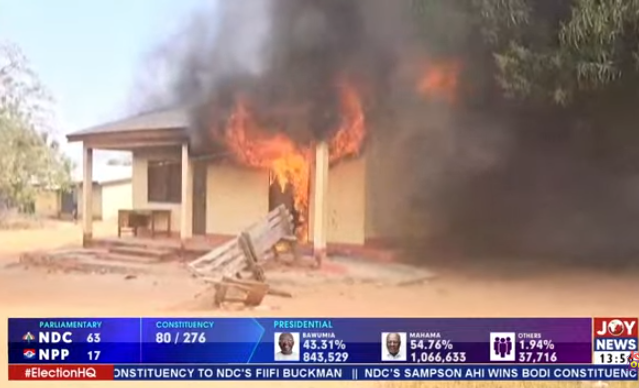
The violence reportedly erupted due to delays in declaring election results, leading to the death of one person and extensive damage to the Electoral Commission’s (EC) office.
Angry protesters stormed the Damongo Municipal Collation Center and set the EC office ablaze, prompting authorities to transfer the case from the Savannah Region to the Kumasi High Court due to security concerns.
The accused face nine charges, including unlawful damage, assault, causing harm, and obstructing electoral officers in the performance of their duties.
At the hearing, the State Attorney requested a deferral of pleas to allow more time for investigations, while the defence counsel argued for their clients’ release, emphasizing that two of the accused are minors.
The court ordered the release of the minors to a responsible guardian, Alhaji Imoro Seidu, who was required to leave his Ghana Card with the Court Registrar.
The remaining accused were remanded into prison custody as investigations continue. The court announced that pleas will be taken at the next hearing on December 19, 2024.
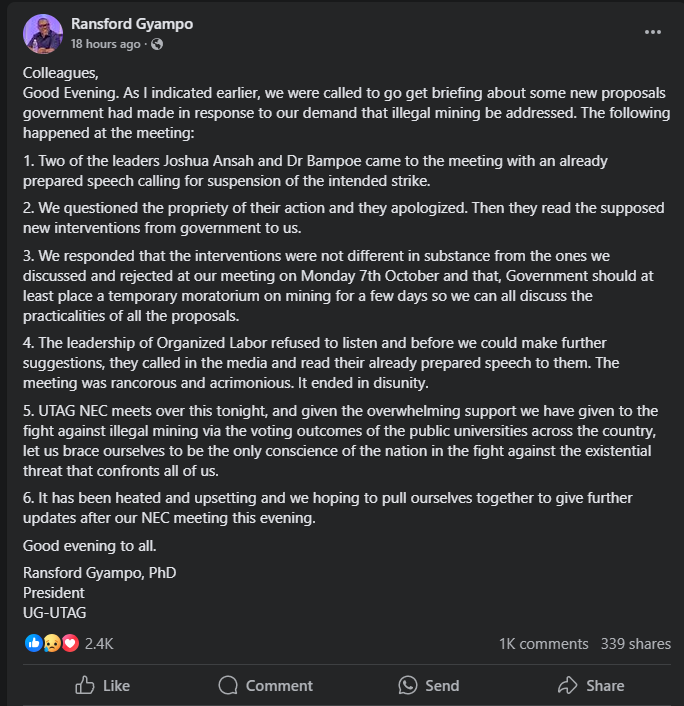
The President of the University of Ghana chapter of the University Teachers Association of Ghana (UG-UTAG), Prof. Ransford Gyampo, has criticized the leadership of Organized Labor, accusing them of refusing to listen to dissenting views during a meeting on the government’s proposals to address illegal mining, known as galamsey.
In a Facebook post, Prof. Gyampo detailed the events of the meeting, stating, “We were called to get a briefing about some new proposals the government had made in response to our demand that illegal mining be addressed.” However, what transpired left him and others frustrated.
He explained that two of the leaders, Joshua Ansah and Dr. Bampoe, arrived at the meeting with a pre-prepared speech calling for the suspension of the planned strike.
“We questioned the propriety of their action and they apologized,” Gyampo said. He added that the government’s so-called new interventions were not substantially different from the ones they had rejected at an earlier meeting on October 7.
Gyampo and his colleagues urged the government to place a temporary moratorium on mining to facilitate discussions on the practicalities of the proposals.
However, he claimed that “the leadership of Organized Labor refused to listen” and abruptly called in the media to read their prepared statement. The meeting, he said, ended in “disunity” and “acrimony.”
This comes after Organized Labor called off its planned October 10th protest, intended to pressure the government to declare a state of emergency to tackle illegal mining and protect water bodies. The decision followed a meeting where the government presented enhanced measures to address the issue.
The Secretary-General of the Trade Union Congress (TUC), Joshua Ansah, announced the suspension of the strike on Wednesday, October 9, citing the government’s improved efforts in the fight against galamsey. Despite several unions, including those in the health sector, supporting Organized Labor, many opted out of the demonstration.
Meanwhile, the University Teachers Association of Ghana (UTAG) has taken a firm stand, announcing an indefinite strike starting October 10, 2024. This follows a referendum in which 77.95% of members from 15 branches supported a nationwide ban on mining in environmentally sensitive areas. Out of 2,762 members who participated, 2,153 voted in favor of the strike, while 607 opposed, and two abstained.
UTAG’s National Executive Council (NEC) declared the outcome “a clear mandate,” emphasizing the association’s commitment to protecting the environment by halting harmful mining practices in forest reserves, farmlands, and water bodies.
In their statement, UTAG reiterated their strong resolve to take immediate action against illegal mining, reflecting their determination to safeguard the country’s natural resources.
President of the University of Ghana Chapter of the University Teachers Association of Ghana (UG-UTAG),Professor Ransford Gyampo, has openly condemned the government’s approach in addressing the illegal mining issue, also known as galamsey.
His criticism follows a private meeting between President Akufo-Addo and leaders of Organised Labour, held on Thursday, where the president requested more time to tackle the galamsey problem.
The meeting was arranged after Organised Labour declared an indefinite strike scheduled to begin on October 10.
The strike was announced on Tuesday, October 1, after the government failed to meet their demands for an outright ban on all forms of mining and the declaration of a state of emergency to stop galamsey activities.
President Akufo-Addo urged Organised Labour to reconsider the strike, reassuring them of his determination to address their grievances.
On Friday, October 4, Information Minister Fatimatu Abubakar issued a statement reaffirming the government’s resolve to deal with the illegal mining crisis.
However, in an interview with Citi FM’s Eyewitness News, Prof Gyampo expressed his dissatisfaction with the government’s communication, stating that Organised Labour had not yet fully updated its members on the situation, making the government’s announcement premature and counterproductive.
“First of all, Organised Labour is yet to meet with its membership to brief them on what really transpired. So, I don’t think that it lies in the mouth of the Minister of Information to deliberately issue that statement to create the impression that something is being done when Organised Labour has not even briefed its membership. It doesn’t help,” Prof. Gyampo stated.
He further criticised the government’s approach, suggesting that it was more focused on gaining public sympathy rather than taking effective action against galamsey.
“Why the indecent haste to break the news, to achieve what? This is a fight against galamsey. It is not about asking for better conditions of service where you can use some of these propagandistic tendencies to try to sway or win public sympathy.
“Members of the public that we are fighting for are dying just as we are also dying. So, it is not about courting unnecessary sympathy; it is about doing the right thing,” he added.
Politics in Ghana, has essentially been politics of the youth. Apart from the Kufuor regime that was understandably gerontocratic, relatively younger people have generally been dominant in everything governance, politics and leadership in Ghana.
Therefore any deliberate effort to dialogue with them before an election via the decent platform of Town Hall, is commendable, as it would help erase the derogatory perception of young people as immature, dangerous to themselves, and agents used to foment conflict.
This would in turn seize them with the information with which they can demand accountability from governments.
The age cohort of 18 to 35 years is almost 70 percent of Ghana’s voting population. Any serious effort at winning an election must therefore target the youth for the purposes of engaging them in a civil dialogue on matters germane to their welfare and what can be done about them.
Virtually all the problems confronting Ghana would be solved if the problems of young people were clearly articulated, properly grasped, and addressed.
The worry, however, is about the creation of the impression that there are solutions to all the problems of the youth. This, if not managed well, may create more disappointments. Around this time, every cohort in the voting population would want to hear something about what can be done to help them.
But realistically, it would take a lot of strenuous effort to properly rebuild what has been destroyed and regain what is lost.
In this regard, young people must be made to know quite frankly that, given the challenges that lie ahead of us as a people, it would have to be tough before it becomes easier.
We would all have to tighten our belts a little more, from whoever heads the country to the lowest-rated citizen. From the topmost politician to the party footsoldier, all must brace themselves to endure a little more suffering, after which things would begin to ease up.
This should be the message to the youth. Jerry Rawlings in his second bid to win power in the 1996 General Elections, articulated this type of message cleverly and in a manner that should be emulated.
He said he wouldn’t promise anyone anything and that all he could promise was hard work which would in turn pay off to meet the needs of all.
I, therefore, urge all to be measured in the expectations they create, even if it is still true that “yɛte sika so, nanso ɛkɔm de yɛn”, in order to avoid further disappointments that can threaten the very survival of our democracy and peace.
Yaw Gyampo
A31, Prabiw
PAV Ansah Street
Saltpond
&
Suro Nipa House
Behind Old Post Office
Larteh-Akuapim
DISCLAIMER: Independentghana.com will not be liable for any inaccuracies contained in this article. The views expressed in the article are solely those of the author’s, and do not reflect those of The Independent Ghana
Professor Ransford Gyampo of the University of Ghana has urged the Ghanaian public to accept the apology issued by Dr. Matthew Opoku Prempeh, the running mate of the New Patriotic Party’s flagbearer.
Dr. Opoku Prempeh, commonly known as NAPO, recently apologized for his remarks comparing President Akufo-Addo’s contributions to those of Ghana’s first President, Dr. Kwame Nkrumah.
In a statement on July 12, NAPO clarified that his comments were not intended to belittle Dr. Kwame Nkrumah’s legacy.
“I wish to emphasise that I never meant to disrespect our former President Dr. Kwame Nkrumah or any of our former heads of state, including my own grand uncle and mentor, Mr. John Agyekum Kufuor,” his statement said.
The former Energy Minister added that he’s noted the concerns raised after his statement and “regret any discomfort caused.”
NAPO’s apology came days after his statement has been met with condemnation, even from some party stalwarts.
He noted that his comment reflects his personal opinion about President Akufo-Addo’s impact. Commenting on this on the Key Points on TV3 on Saturday July 13, Prof Gaympi said “he has apologised; the fact that he had apologized and the public revulsion should serve as a guide. I think let us move on.”
He further stated that ”the outcome of 2024 have already been decided by Ghanaians in their hearts and minds.”
President Akufo-Addo is set to address the nation regarding the contentious revenue mobilisation contract between the Ghana Revenue Authority (GRA) and Strategic Mobilisation Ghana Ltd (SML).
Eugene Arhin, the Director of Communications at the Presidency, revealed in a Facebook post on Wednesday, April 3, 2024, that President Akufo-Addo received the audit report fromKPMG on March 27, 2024.
This announcement comes after a call from Professor Ransford Gyampo, a Political Science Lecturer at the University of Ghana, urging the President to release the KPMG audit report on the contract for transparency and accountability.
A Professor of Political Science at the University of Ghana, Professor Ransford Edward Gyampo, has indicated that his monthly salary is nowhere close to the amount taken by a cleaner in Saudi Arabia.
In a discussion on TV3’s The Key Points, he shared some of his experiences while in Saudi Arabia and one them included finding out the minimum wage paid to a worker in the country.
According to him, a worker earns a minimum of $1000 dollars monthly as salary. According to him, even as a Professor in Ghana, his monthly salary is not close to the salary earned in Saudi Arabia.
“They don’t pay taxes. He said I work, I don’t pay taxes. I said why. He said they use the money that they get from the oil to do everything.
“The minimum, there is a rule that says that if you recruit somebody, the minimum you can pay the person is 1000 dollars, even if it is a cleaner.
“I am a University professor, I don’t get that. No, why are we always fighting. Monthly salary. He said I am in an apartment, I don’t pay light bill, water bill,” he said.
In Ghana, teacher unions have lamented the poor working conditions and low remuneration provided by the government. They have on several occasions laid down their working tools to register their displeasure.
“Perceptions are wicked, they don’t steal”. Professor Ransford Gyampo shares his experience after a trip to Saudi Arabia, urges Ghanaians to emulate.#TheKeyPoints#TV3GHpic.twitter.com/W6VaMkzjg7
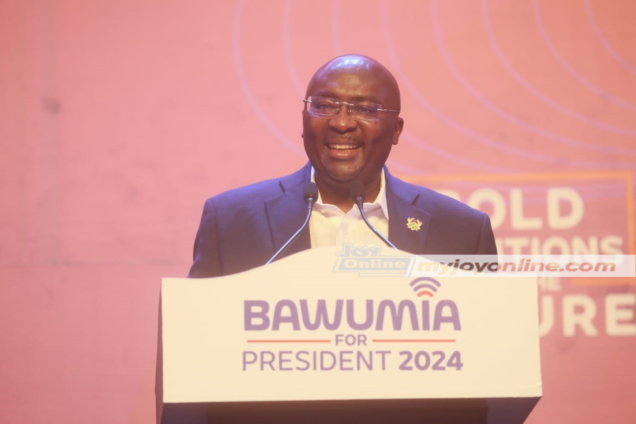
President of the University Teachers Association of Ghana (UTAG), University of Ghana Chapter, ProfessorRansford Gyampo, has called for a thorough fact-checking of the claims made by Dr. Mahamudu Bawumia regarding digitization achievements, following the NPP presidential candidate’s recent address to the nation.
In his analysis of Dr. Bawumia’s presentation on February 7, 2024, Prof Gyampo acknowledged the focus on digitization as a central theme of the address, describing the potential impact of digitization policies on development as “indubitable and enormous.”
However, the Professor expressed concerns about the manner in which the information was presented to the public.
He noted that while Dr Bawumia emphasized the achievements of digitization, many of these accomplishments should have been well-known to Ghanaians beforehand.
Further, he pointed out that the presentation made these achievements sound new to the audience, raising doubts about the accuracy of the claims.
Gyampo’s call for fact-checking comes in the midst of heightened political discourse and scrutiny as Ghana prepares for the upcoming elections.
With digitization policies forming a significant part of the government’s agenda, Prof Gyampo believes ensuring transparency and accuracy in the presentation of achievements is crucial for informed decision-making by the electorate.
As a result, Gyampo emphasized the need for thorough fact-checking of the claims made by Dr. Bawumia to ensure their veracity.
He suggested that independent verification of the information would be essential to confirm the accuracy of the digitization achievements touted by the NPP presidential candidate.
“This essentially was an articulation of achievements and vision, fundamentally in the broader area of Digitization and honestly, the various manifestations of this overarching policy, and what it can do to promote development, is indubitable and enormous. No doubt it formed the interwoven central theme of the presentation.
“Unfortunately, Ghanaians had to wait to be told more about what digitization has done for them by the man himself, in a manner that makes many of the achievements which should have been long known, sound new. Consequently, there may be the need to fact-check many of the claims in order to be sure. Prof Gyampo made these claims after Dr Bawumia addressed the nation on Feb 7, 2024. Write a news article with a focus on the Fact-check aspect,” he added.
President of the University Teachers Association of Ghana (UTAG), University of Ghana Chapter, Professor Ransford Gyampo has provided a critical analysis of Dr Mahamudu Bawumia’s recent address outlining his vision for Ghana, shedding light on aspects that raise serious questions about the government’s performance and policies.
In his analysis, Gyampo highlighted portions of Dr Bawumia‘s presentation that serve as an indictment on the government, of which he is a part.
Particularly, Gyampo pointed out Dr Bawumia’s promise to streamline the size of government by limiting ministerial appointments to not more than 50, despite the current administration having over 100 ministers.
This statement, according to Gyampo, vindicates critics who have long called for the downsizing of government.
“Promising to have not more than 50 Ministers when you are part of a government of over 100 Ministers,” he said.
Moreover, Prof Gyampo noted Dr. Bawumia’s pledge to abolish certain taxes, including the Emissions tax, Gaming Tax, E-Levy, and VAT on electricity consumption.
These promises, Gyampo argued, align with criticisms previously voiced by himself and others regarding the burden of these “nuisance taxes” on the populace.
He raised the question of whether Dr. Bawumia’s supporters would now hold him accountable for these promises, given his favorable response to criticisms on the size of government and tax policies.
“…and promising to abolish some taxes like the Emissions tax, Gaming Tax, E-Levy, VAT on electricity consumption etc makes some of us feel vindicated for criticizing and calling for downsizing of government and the abolition of such nuisance taxes.
“DMB’s supporters came after us for such criticisms and I am wondering whether they will go after him, now that he’s taken a position that responds favorably to our criticisms on the size of government and nuisance taxes,” he added.
1. This essentially was an articulation of achievements and vision, fundamentally in the broader area of Digitization and honestly, the various manifestations of this overarching policy, and what it can do to promote development, is indubitable and enormous. No doubt it formed the interwoven central theme of the presentation.
2. Unfortunately, Ghanaians had to wait to be told more about what digitization has done for them by the man himself, in a manner that makes many of the achievements which should have been long known, sound new. Consequently, there may be the need to fact-check many of the claims in order to be sure.
3. It appears DMB is the only one who has a firm grasp over the policy, as the party itself has either been ignorant about the claims about Digitization or has been incompetent in communicating its achievements to fester in the psyche of Ghanaians. Unless the party begins to undertake remedial tutorials about Digitization and its achievements for the purposes of political communication, the work will be difficult for DMB.
4. Despite what it can do, Digitization is not the sine qua non to development. Other key interventions such as good governance and deliberate efforts to seal the leakages and slippages, fight corruption, exemplary leadership that first tightens its belt, rather than living bourgeoisie, etc should have been emphasized more than being treated nearly as appendages.
5. Parts of the presentation was an indictment on the government of which he is part, in a manner that raises serious questions and vindicates those of us who have been critics of the government. Promising to have not more than 50 Ministers when you are part of a government of over 100 Ministers; and promising to abolish some taxes like the Emissions tax, Gaming Tax, E-Levy, VAT on electricity consumption etc makes some of us feel vindicated for criticizing and calling for downsizing of government and the abolition of such nuisance taxes. DMB’s supporters came after us for such criticisms and I am wondering whether they will go after him, now that he’s taken a position that responds favorably to our criticisms on the size of government and nuisance taxes.
6. But the more important question is, why do these great interventions tomorrow, instead of today that they are greatly needed? Does the answer still lie in the claim that he’s not the one in charge? Well, in that case, then karma is not good at all. There was then absolutely no basis for the 170 questions posed to Veep Amissah-Arthur because, he was also a mate and wasn’t in charge.
7. DMB still blames our challenges on COVID and Russian-Ukraine war and there is no doubt at all that these have had negative effects on many countries including Ghana. But a more convincing explanation could have also focused on an admission of what was done wrong domestically, and a promise to refrain from our own contributions to the challenges. It cannot be entirely accurate for us to blame all other than ourselves for our challenges.
8. Finally, there were great ideas that were espoused including the need for a national development plan, a move that was initiated by the predecessor government but was jettisoned. All the other contenders in the 2024 elections also have great plans. But it appears great plans wouldn’t really matter. Available empirical survey reports show that many Ghanaians now, do not believe in political promises, as many of them are merely vote garnering gimmicks. What would therefore be the decider in the 2024 elections, would be a side by side comparison of the trustworthiness, credibility and achievements of the various contenders.
In my next post, I will now offer a sharper focus and properly interrogate some of the policy vision outlined. Where they deserve commendations, we would commend and where they must be fact-checked and critiqued, we will do so.
A Political Science lecturer at the University of Ghana, Professor Ransford Gyampo, has argued against the advisability of the Electoral Commission accommodating the Seventh Day Adventist Church’s request to change the date for the 2024 general elections.
Speaking on JoyNews’ Newsfile, he contends that agreeing to such a change could set a precedent for similar requests in the future.
He emphasizes the constitutional guarantee of the free expression of religion in Ghana, coupled with the acknowledgment that the country is a secular state.
Prof. Gyampo expressed concern that altering the election date based on religious preferences might project one religious group’s beliefs over others, potentially leading to a series of similar requests.
“With the greatest of respect to them, Ghana is our constitution that guarantees the free expression of our religion. At the same time, the constitution says we are a secular state. And so if it is a secular state, people have the right to exercise their religion, but this must not be exercised in a manner that sort of projects their religious beliefs and faith and ideals over those of the other people who also have different religious beliefs and faith and ideals.”
“So the point is that given that it is a secular state any day is fine. Otherwise, if we allow this tomorrow if election day is on Friday, Muslims will tell us that, well, they go to the mosque on Friday and go, we shouldn’t. If it falls on Sunday, you have a ponderance, majority of Ghanaians being Christian, they may say that it is going to disturb the day selected to worship their God.”
Asserting that any day is suitable in a secular state, he cautions against allowing religious beliefs to dictate election dates.
He provided examples of potential future scenarios where different religious groups might request changes based on their respective holy days, leading to confusion and factionalism in the political landscape.
“So long as the fundamental laws of the land says you’re a secular country, we should be careful not to allow all religious beliefs and sects to also come in making pleas and demands.”
“Today it is SDA if it is granted, tomorrow it will be Harikrishnas, Muslims, Christians and it creates a state of confusion and a state of factionalism in the body politics. It’s not something that we should encourage.”
Prof. Gyampo acknowledges that voting is a national duty but argues for the importance of individuals having the choice to prioritize their religious obligations over voting.
He underscored the need to be cautious about allowing various religious beliefs and sects to make pleas and demands, as it could lead to a divisive and confused political environment.
The context for this discussion arises from the Seventh-day Adventist Church’s request to move the 2024 December 7 election date, falling on a Saturday, to a different day due to Sabbath conflicts.
The church proposes the first or second Tuesday as a more convenient alternative to uphold inclusive democracy. Additionally, they are pursuing a constitutional amendment to broaden the scope of organizing parliamentary and presidential elections in Ghana.
President of the University Teachers Association of Ghana, University of Ghana chapter, Prof Ransford Gyampo, has emphasized that the Labour Union will cast their votes in the 2024 polls driven by hunger and anger.
In an interview on Joy FM’s Top Story on Monday, January 15, he underscored the importance of meeting labor conditions of service regardless of the election outcome.
“It must be noted that in the upcoming 2024 elections, Labour would vote with hunger and anger. Anybody who benefits from the hunger and anger votes of Labour must necessarily do something to mitigate the hunger and anger of Labour no matter how small they may be,” Prof Gyampo said.
In response to former President John Mahama’s appeal for a grace period upon regaining power, Prof Ransford Gyampo, the senior political science lecturer at the University of Ghana and President of the University Teachers Association of Ghana, outlined certain conditions that the government must fulfill before the Labour Union considers granting such a honeymoon period.
“Leaving by example here, I am talking about the fact that you wouldn’t ask Labour to tighten their belts whilst you your appointees would be leaving in opulence as we keep seeing now,” he explained.
Political science lecturer at the University of Ghana, Professor Ransford Gyampo, has expressed disapproval of what he deems as the “arrogant” demeanor and response exhibited by Dr. Ernest Addison, the Governor of the Bank of Ghana (BoG), in response to the demonstrators affiliated with the OccupyBoG movement.
This comes in the wake of Dr. Addison’s rejection of the demands made by the opposition National Democratic Congress (NDC) and the Minority Caucus in Parliament, urging him to resign from his position.
In an interview with the international business website Central Banking, he firmly stated his refusal to step down, characterizing the NDC’s protest as entirely unwarranted.
“The Minority in parliament have many channels to channel their grievances in civilised societies, not through demonstrations in the streets as hooligans,” Dr. Addison added in reference to the #OccupyBoGProtest.
In reaction, Professor Gyampo, questioned the authority of the BoG Governor, whom he says has “a very infinitesimal understanding of the system of government we have decided to operate.”
“Your response to the tax payers and demonstrators is unprecedented. You want to determine how they voice their dissatisfaction about your abysmal performance? You described them as hooligans for demonstrating against you? Please who are you? Are you a demi-god or some deified ancestor-incarnate?” he quizzed.
In his open letter to Dr Ernest Addison, Prof Gyampo entreated the Governor to review his conduct as his actions has had adverse effect on the country’s economy.
He noted that the Governor spent about GH¢137 million on vehicle maintenance; collapsed over 400 banks and micro-finance companies; printed over GH¢700 trillion within 2 years; and depleted our foreign reserves.
“Please Governor, printing money does not make you owner of human life and human rights and respectfully, sir, you portray a certain high-level poverty, if all you have, is the money you have printed, which makes you arrogant in insulting taxpayers who are unhappy with your abysmal performance. This isn’t how Governors G.K Agamah, K. Dufuor, P. Acquah, and N. Ishahakku handled the BoG. These chaps were simply sober and competent,” he added.
Political scientist at the University of Ghana, Professor Ransford Gyampo, has urged the chairman of the ad hoc committee responsible for investigating a leaked tape that purportedly contains plans to remove the Inspector General of Police (IGP), Samuel Atta Akyea, to consider recusing himself from the proceedings.
Professor Gyampo asserts that the chairman’s conduct during the IGP’s hearing suggests a clear “personal bias against the IGP.”
He contends that the chairman’s actions have indicated a preference for the disgruntled police officers whose voices were identified in the leaked tape. Consequently, he recommends that the chairman step aside from the committee.
“You aren’t smarter than Ghanaians. We can glean your partiality. Your body language, line of questioning and recurring remarks consistently hint at personal biases against the IGP.
“You don’t look like a credible chairman of any important committee. Rather, you look more like a defence counsel for the bitter police officers whose quest to be made IGPs so they can subvert the will of the people has been exposed,” he said.
Professor Gyampo emphasized that if the chairman truly has no hidden agenda for being a part of the panel, he should consider voluntarily stepping aside to allow someone else to assume his role.
“It is not by force to chair this committee, especially when your work output is more of a disservice. If you don’t have any personal interest in this matter, then recuse yourself or get replaced by the Speaker, as your role is more of a nuisance, and annoying, particularly when you think we are unable to read in between the lines. Just recuse yourself, it is not by force!” he said.
IGP, Dr. George Akuffo Dampare earlier today during the Police Leaked tape public hearing raised objections to a comment made by the chairman of the committee Samuel Atta-Akyea asking why he's been quick to forgive the earlier witnesses against him. #CitiNewsroompic.twitter.com/823OXkhVHL
The President of UTAG-UG, Professor Ransford Gyampo, has characterized the Chief Executive Officer of the National Lotteries Authority (NLA), Sammi Awuku, as a civil individual.
Professor Gyampo stated that he appreciated the manner in which Sammi Awuku responded to Alan Kyeremanteng’s resignation from the NPP primaries.
Following Alan’s withdrawal from the primaries, Sammi Awuku called for unity among party members and asked the supporters of the presidential candidate aspirants to not use inflammatory words against themselves.
In an interview with Citi News’s Point of View, Prof Gyampo said “ I must commend Sammi Awuku, he is very mature and civil, even when he disagrees with you. And this is the posture that those who speak for Dr.Bawumia should have. I am proud to have taught him”
His comments come at the back of the resignation of Alan Kyeremanten from the NPP primaries.
In a statement released on Tuesday, September 5, NPP flagbearer hopeful Alan Kyerematen announced his withdrawal from the NPP’s flagbearer race citing several reasons
He mentioned intimidation, and violence against a member of his campaign team and claimed that the party strategically organised the super delegates conference to favour one candidate over the others as some of the reasons for his decision.
Mr Kyerematen stated that pronouncements made by some leading members of the party before and after the elections lend weight to his observations.
“After having carefully analysed the results of the said elections, it is absolutely clear to me from events leading to, during and after the elections, that the Special Delegates Conference was strategically and tactically skewed in favour of one particular aspirant.”
“The level of intimidation of varying intensity, directly and indirectly, unleashed on a significant number of Delegates at various Voting Centers across the sixteen regions, is unprecedented in the history of our Party,” parts of the statement read.
However, Professor Gyampo has advised the party to promptly address his concerns in order to prevent any potential issues of disunity from arising.
President of UTAG-UG, Professor Ransford Gyampo, has predicted that more candidates will soon exit the New Patriotic Party (NPP) presidential primaries due to concerns over inadequately managed processes that could jeopardize the party’s unity in the lead-up to the 2024 general elections.
In a Facebook post on Tuesday, September 5, Prof Gyampo urged the party to promptly address the issues surrounding the elections to prevent potential disunity.
Alan Kyerematen’s recent withdrawal from the NPP’s flagbearer race, citing reasons such as intimidation, violence against his campaign team member, and strategic manipulation of the super delegates conference, has raised concerns within the party.
Gyampo cautioned about the consequences of unfair practices, highlighting the need for neutrality among those overseeing the process. He warned of more withdrawals, underscoring the importance of preserving the NPP’s unity.
“I warned that if things aren’t done fairly, there could be a breakup. I also warned about the public comments of those expected to be seen as neutral arbiters. There will be more pull-outs. This isn’t the NPP BJ da Rocha and others led.”
Alan Kyerematen’s decision to withdraw was influenced by his analysis of the election results and allegations of favoritism during the Special Delegates Conference.
He expressed concern over intimidation of delegates and the conference’s strategic bias, leading to his withdrawal.
“After having carefully analysed the results of the said elections, it is absolutely clear to me from events leading to, during and after the elections, that the Special Delegates Conference was strategically and tactically skewed in favour of one particular aspirant.”
“The level of intimidation of varying intensity, directly and indirectly, unleashed on a significant number of Delegates at various Voting Centers across the sixteen regions, is unprecedented in the history of our Party,” parts of the statement read.
Given these developments, the UTAG-UG President emphasized the urgency of addressing these concerns to prevent potential disunity within the party.
Political Science Lecturer at the University of Ghana, Professor Ransford Gyampo, has been elected as President of University of Ghana (UG) branch of the University Teachers Association of Ghana (UTAG).
He polled 93.3 percent of the total valid votes cast in an election held on Thursday, August 17, 2023.
Prof Gyampo previously held the position of General Secretary of the Association.
According to the victor, he will “champion the interest of my people forcefully and proactively.”
He noted that he will carry out his objectives no matter the sacrifice he has to make. Prof Gyampo noted that the position of General Secretary caused him to lose some friends.
“I lost some friends as General Secretary and I do not mind losing more as I fight harder for the University Teacher in my capacity as President.
It won’t be out of malice or hatred for any regime. It would be just for the advancement of the interest of my people,” he wrote in a Facebook post on August 17, 2023.
Meanwhile, the professor has extended his gratitude to all who cast their ballots for him.
“Thanks to you all for the well wishes; thanks to all my colleague lecturers for the confidence they have shown in me and thanks to my students who were relentless in their support for me.”
A political scientist at the University of Ghana, Prof Ransford Gyampo, has urged the Akufo-Addo administration to confront the damaging revelations made in a leaked recording regarding Ghana’s police commander, Dr George Akuffo Dampare.
The claimed scheme by persons presumed to be high-ranking members of the ruling New Patriotic Party (NPP) and a key member of the Ghana Police Service to depose the incumbent Inspector General of Police, Dr George Akuffo Dampare, from office ahead of the 2024 elections was outlined in the stated hidden audio.
The unidentified individuals involved in the recorded conversation expressed frustration over the IGP’s alleged reluctance to align the police force’s activities with the interests of the ruling party.
They expressed reservations about his leadership style and alleged ties to the opposition National Democratic Congress (NDC).
“I know there are others who are also good for this position. If I don’t get and this man is changed and those people that we think are our men get it, [I will be happy]… Because we need to break this 8. That is important, we need to break the 8… Because I wouldn’t want a doctor to become the flagbearer and then we lose the elections,” one of the men who is reportedly a police officer in the audio is heard saying.
As a result, they concluded that carrying out the NPP’s ‘Breaking the 8’ agenda would be difficult with Dampare as police chief.
Prof Gyampo, on the other hand, feels that if the current trend continues, the government should abandon any plans in that direction.
He posted on Facebook that the President should take decisive action on the recording to demonstrate that he is not considering such a scheme.
Political Scientist and lecturer at the University of Ghana, Professor Ransford Gyampo, has criticised the work of the Office of the Special Prosecutor (OSP) over its investigations into corruption and corruption-related activities on illegal mining.
Over the weekend, Special Prosecutor Kissi Agyebeng, noted that the OSP cannot treat any individual accused of engaged in corrupt activities as saints as it would derail its fight against corruption.
He explained that “in consecrating your saint and heroes, mind you, I am your conscience, I’m the spirit of the nation and the office stands for that.
“In the estimation of the office, there are no saints, there are no heroes. Now if I approach this job of fighting corruption, that there are some persons in the society who have attained the status of sainthood, we will lose the fight against corruption,” he told Samson Lardi Anyenini, host of JoyNews’ Newsfile last Saturday.
In response, Professor Gyampo in a Facebook post today noted that Mr Kissi Agyebeng’s comments are not founded in law as it is the principle that “all are innocent or ‘consecrated saints’ until proven guilty.”
“So, where from this new alien legal maxim being propounded and must we allow Kissi Agyabeng to impose it on us as a people?” he therefore quizzed.
The Newsfile show mostly centered on the recent arrest of Professor Frimpong Boateng, the former Chair of Inter-Ministerial Committee on Illegal Mining (IMCIM) and former Environment Minister and the work of the OSP in capturing individuals engaged in galamsey, also known as illegal mining.
The lecturer also took a swipe at the Special Prosecutor for noting that despite the good works of Professor Frimpong-Boateng, he was apprehended in a manner that is not befitting, particularly when no charge was levelled against him.
The Special Prosecutor said “I respect the credentials of the Professor, and I doff my hat to him. You know me very well and I am an academician as well so I respect such people on all scores.”
“I mean the CV is unbelievable, I respect that and I applaud him for that but I have a charge to keep. The charge I have to keep is to the Republic of Ghana and to the public,” he added.
In reaction, Prof Gyampo stated “Even though he admits and applauds the achievements and contributions of Prof Frimpong Boateng to Ghana, some of his comments surreptitiously rubbish such heroic contributions. We must guillotine this attitude of ingratitude and prevent it from festering, or else no one will die for Ghana like the Special Prosecutor wants us to believe he’s currently doing, but which I honestly doubt.”
Find the full statement by Prof Ransford Gyampo below:
I have been pondering over the responses of the Special Prosecutor on Newsfile over the weekend. Though I initially thought the interview brought out some useful information, reflecting on the responses again in more sobriety, makes me a bit worried. Kissi Agyabeng says he doesn’t consecrate saints, and that he is the conscience and soul of Ghana. Not consecrating saints can be interpreted to mean every suspect is a criminal ab initio. But in his own law that he studied, there is a principle that all are innocent or “consecrated saints” until proven guilty. So, where from this new alien legal maxim being propounded and must we allow Kissi Agyabeng to impose it on us as a people?
Even though he admits and applauds the achievements and contributions of Prof Frimpong Boateng to Ghana, some of his comments surreptitiously rubbish such heroic contributions. We must guillotine this attitude of ingratitude and prevent it from festering, or else no one will die for Ghana like the Special Prosecutor wants us to believe he’s currently doing, but which I honestly doubt.
Kissi’s claim that he, an individual, and a mortal human being, who isn’t a saint himself, is the conscience and soul of Ghana, sounds religiously and politically blasphemous and problematic, as he suddenly attempts to play God in Ghana. Per his own enabling act, he walks in the shadows of the Attorney General who is a partisan appointee. He can be directed and dictated to, by the Attorney General in the conduct of his work.
Such a dependent Special Prosecutor, cannot arrogate to himself the role of an Independent Public Prosecutor. You cannot walk in the shadows of a partisan appointee and still describe yourself as the conscience and soul of the nation. Even the Citizen Vigilante, Martin Amidu, in spite of all that he did prior to his appointment and during his appointment as Special Prosecutor, never described himself as the conscience and soul of the nation.
It may be possible for someone or an institution to emerge one day, as the soul and conscience of the nation. But even if this may be possible, trust for such institutions created by partisan executive presidents in Ghana can only be built over time, not at once, as aptly argued by Kofi Bentil on Newsfile over the weekend.
If politicians have succeeded in bastardising and making even constitutionally created independent institutions nearly dependent, even to the point of ordering their staff to submit their CVs to them for scrutiny, then Kissi Agyabeng cannot force Ghanaians to trust him all of a sudden as being independent.
Back in school, he wasn’t a tough person. But of course, he may have built his psyche and grown to become a strong-willed person over the years, and this may be a positive attribute required to head the office he occupies. But granted this, mere talk, and display of a certain body language (that I do not want to describe as arrogance), cannot suddenly force all Ghanaians to believe that the Special Prosecutor is independent.
Let him truly go after all who are culpable in this galamsey menace; let him look into the faces of his friends and political appointees and refuse to favour them in his quest to help the fight against galamsey; and let him do these over a period of time, and he will surely win the hearts of all Ghanaians.
Yaw Gyampo A31, Prabiw PAV Ansah Street Saltpond & Suro Nipa House Kubease Larteh-Akuapim
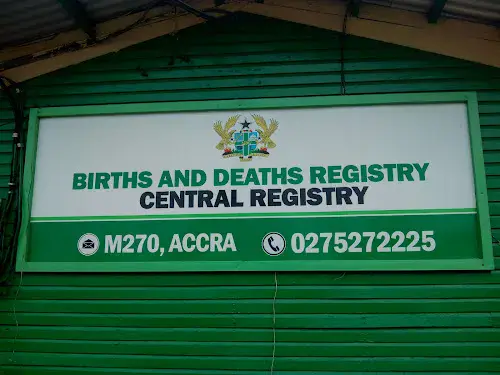
The Supreme Court will need to reconsider its stance that a birth certificate is not proof of citizenship, according toRansford Gyampo, a professor at the University of Ghana.
He said the position of the apex court on this document calls into question the relevance of the Birth and Death Registry.
Speaking on the Key Points on TV3 Saturday, May 27, Prof Gyampo said “I am wondering about Birth and Death Registry, what will be their relevance if birth and death certificate is not proof of citizenship?
“It is quite worrying, I believe we should begin to rethink this otherwise we should scrap the Birth and Death Registry.”
On FridayMay 26 while answering questions at her vetting by the Appointments Committee of Parliament, the Chief Justice nominee Gertrude Torkornoo said while reiterating the Supreme Court’s position on the document that a birth certificate is not proof of citizenship.
She stated that it is rather a record of one’s birth location.
It is recalled that the Supreme Court in it’s ruling on the matter of theNational Democratic Congress (NDC) and another vs the Attorney General, said that birth certificates could not be proof of citizenship.
“A birth certificate is not a form of identification. It does not establish the identity of the bearer. Nor does it link the holder with the information on the certificate. Quite obviously, it provides no evidence of citizenship,” the Supreme Court verdict said in part.
“In fact, as a form of Identification, it is worse than the NHIA card which was held to be unconstitutional as evidence of identification of a person who applies for registration as a voter,” the court said.
Madam Torkornoo at her vetting said “Citizenship is a matter of law, nationality is a matter of law. In certain jurisdictions, being born in that place makes you a citizen of that country, [but] in our country, being born in Ghana doesn’t make you a citizen of Ghana.
“It is your relationship with your mother, it is your mother’s identity, your father’s identity, it is your lineage that determines your citizenship. So[birth certificate] is just an international requirement, we must know where everyone is born. But beyond that, your nationality is derived from that form, the evidence on that form.”
A senior lecturer at the University of Ghana, Professor Ransford Gyampo, has advised that a limit be placed on the number of legislators.
His comments come in the wake of the increase in the number of parliamentarians. Ghana’s Parliament began with 140 members then it increased to 200 legislators, then to the current 275 MPs.
According to him, if a limit is not placed on the number of parliamentarians, Ghana should be prepared to build a stadium to meet the rising numbers.
“It does make sense, otherwise one day we will have to construct a stadium where members of Parliament will operate,” he said.
Speaking on JoyNews’ Newsfile on Saturday, he stressed that the number of MPs could easily be reduced if some constituencies are merged.
“We have to re-align constituencies and put some together, so that we can even reduce the numbers,” he suggested.
The Political Science lecturer expressed disappointment in the legislature saying “parliament has not lived up to expectation.
He said, “Over the week, I gave an assessment of Parliament and I felt that if you asked me to score them, I will give them 3 over 10 and some people came for remarking, so I increased it to three and a half over 10.”