Tag: Professor Godfred Bokpin

  • Akufo-Addo’s performance over the last eight years underwhelming – Bokpin

    Akufo-Addo’s performance over the last eight years underwhelming – Bokpin

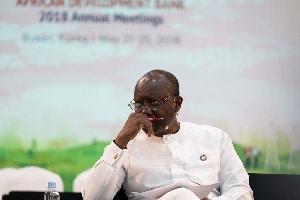
    Professor Godfred Bokpin from the University of Ghana Business School has criticized President Nana Addo Dankwa Akufo-Addo‘s performance over the past eight years, suggesting that the results have been underwhelming.

    Speaking on TV3’s Big Issue on July 30, Prof Bokpin argued that the President should have achieved more given his extended time in office.

    “That is why four years ago we were not speaking like this, five ago we were more sympathetic towards the government.”
    Prof Bokpin highlighted that public sympathy towards the government was higher five years ago compared to now, attributing this shift to perceived inefficiencies in leadership.

    He also pointed out that both major political parties in Ghana, the NPP and the NDC, have failed to justify the extensive borrowing they’ve undertaken.

    He questioned the value of the borrowed funds, asking what tangible assets have been created and how responsibly the money has been spent.

    He stressed the need for a thorough evaluation of both parties’ records, advocating for a more transparent approach in assessing their performance.
    “Let me ask you and ask our government, not only this government but including the NDC government, what did they use the borrowed funds for? What assets did we create? How prudent were we in spending the funds?

    “If you look at it across the two political parties and here I say there is none holy, let us look at it objectively

    “A good way to do it is not just to say this flagbearer is holy and therefore let us vote for him. No, there is none holy, let us give them the data as it is.

    “I will be happy for a flagbearer to say that we admit our errors, we have been therefore before, all the two main political parties that probably have the chance of governing this country from 2025 have had the chance under the Fourth Republic, we know their errors, we know what they have done, let them admit, let them show repentance, let them demonstrate to us how they have learned from their past, how the data has convicted them and how resolved they are to correct them.”

    When his attention was drawn to the fact that the flagbearer of the National Democratic Congress (ND) former president John Dramani Mahama has admitted he learned from the mistakes he made which is why he is taking that we give him another chance, he answered that “That is not enough.”

    Prof Bokpin emphasized the importance of acknowledging past mistakes and demonstrating genuine learning and improvement.

    He expressed skepticism towards former President John Dramani Mahama’s claims of having learned from past errors, suggesting that more substantial evidence of growth and repentance is needed.
  • How World Bank, IMF stopped gov’t from re-structuring it $8.8bn loan to Ghana

    How World Bank, IMF stopped gov’t from re-structuring it $8.8bn loan to Ghana

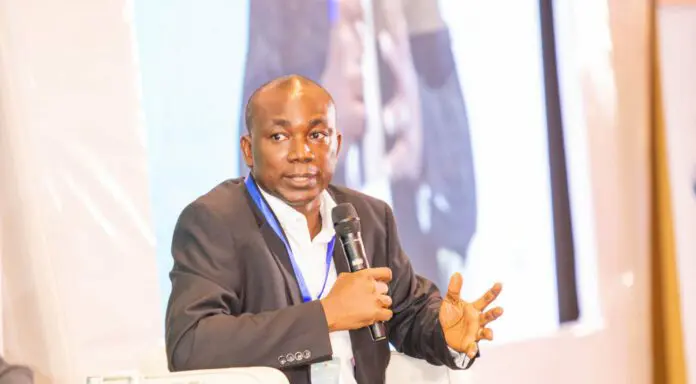
    Finance lecturer and economist, Professor Godfred Bokpin, known for his insightful perspectives, has offered a detailed account of how the World Bank and International Monetary Fund (IMF) intervened to prevent the Ghanaian government’s proposed $8.8 billion loan restructuring some years back. 

    Speaking on Peace FM’s morning show, Pro Bopkin recounted that nearly two decades ago, in 2002, the World Bank and IMF intervened to halt the government of Ghana’s efforts to restructure its debt. 

    “The total external debt of Ghana at the end of 2002 was US$30.5billion. Out of this, the multilateral debt, which refers to the amount Ghana owes the World Bank, IMF and other external institutions, was around US$8.8billion. And do you know what the IMF did? They said they are Lenders of Last Resort and so their debt is not up for restructuring and so the haircut did not affect them. They managed to protect their balance sheet,” he said.  

    He noted that these levels of losses seriously incapacitate the Central Bank from performing its functions. 

  • Economist projects approval of IMF bailout for Ghana by Wednesday

    Economist projects approval of IMF bailout for Ghana by Wednesday

    Professor Godfred Bokpin, an economist at the University of Ghana Business School, has said that the International Monetary Fund (IMF) Board would accept Ghana’s $3 billion program by Wednesday, after the country received the Paris Club financial assurance.

    Speaking on the News 360 on TV3 Friday May 12, he said that the Paris Club financing assurance was all the Fund needed to get the deal approved for Ghana.“It is a very significant breakthrough for Ghana. Practically that written statement is all that the IMF has been waiting for this while.“The detail and all of that will be worked out later but this is enough for the IMF to consider Ghana’s programme, and I think that with this assurance which has been outstanding probably by next week Wednesday or so, Ghana could get its programme.”

    President Akufo-Addo also expressed optimism that by next week, the Board of the Fund will meet and approve the deal.Addressing members of the Ghana Catholic Bishop Conference at the Jubilee House in Accra on Friday, May 12, Mr Akufo-Addo said “Today is a very special day in the recent history of Ghana. At along last today, we have been informed that the last hurdle towards our agreement with the Fund has been overcome, which is that the Paris Club met today in Paris with the creditor’s committee co-chaired by China and has okayed and approved Ghana’s request of the IMF.“It means that hopefully, next Wednesday the Board itself will meet and give final approval.”

    He further expressed optimism that soon, Ghanaians will see massive economic recovery.“So the sacrifices that the country has to make this last year, it may be that at long last we are going to see the beginning of the recovery, with the approval of the IMF we will be in a strong position then to make other arrangements to help our economy get back,” he said.

    China and the Paris Club have asked private creditors and other official bilateral creditors to commit to Ghana’s deal without any further delay after they agreed to provide the debt assurances needed for Ghana to secure the $3bn bailout from the IMF.A press statement issued by the Paris Club on Friday, May 12 said “The creditor committee stresses that the Ghanaian authorities are expected to seek from all private creditors and other official bilateral creditors debt treatments on terms at least as favorable as those being considered by the creditor committee, in line with the comparability of treatment principle.Consequently, it added “the creditor committee urges private creditors and other official bilateral creditors to commit without delay to negotiate with Ghana such debt treatments that are crucial to ensure the full effectiveness of the debt treatment for Ghana under the Common Framework.”

    Also, a creditor committee for Ghana has been formed by countries with eligible claims to see to the quick implementation of the resolution. The creditor committee is expected to be co-chaired by China and France.

    “The creditor committee examined the macroeconomic and financial situation of Ghana, including its long-term debt sustainability, and its formal request for a debt treatment under the “Common Framework for Debt Treatments beyond the DSSI” endorsed under the Saudi G20 Presidency in November 2020, which was also endorsed by the Paris Club.”

    “The creditor committee supports Ghana’s envisaged IMF upper credit tranche (UCT) program and its swift adoption by the IMF Executive Board to address Ghana’s urgent financing needs. The creditor committee encourages Multilateral Development Banks (MDBs) to maximize their support for Ghana to meet its long-term financial needs,” the statement added.

  • Government urged to use fiscal and structural reforms to maintain debt sustainability

    Government urged to use fiscal and structural reforms to maintain debt sustainability

    To ensure debt sustainability in the shortest amount of time, the government has been recommended to utilize a three-pronged strategy of fiscal, structural, and debt restructuring.

    To promote debt sustainability for its US$3 billion International Monetary Fund (IMF) loan-support program, the government has been asked to further reduce its spending, notably by consolidating several ministries and lowering the number of Ministers.

    This was stated in an exclusive interview with the Ghana News Agency regarding the ongoing DDE program by Professor Godfred Bokpin, Professor Peter Quarter, and Dr. John Kwakye, all distinguished Ghanaian economists.

    Additionally, efforts should be intensified to change the structure of the economy from being highly-import-driven by streamlining various sectorial agriculture, manufacturing and trade policies and implementing them effectively, they said.

    They expressed confidence that the progress made on the DDE so far could lead to Ghana’s debt sustainability path to secure an Executive and Management Board of IMF by March 2023 for the US$3 billion loan-support programme.

    However, the Economists stated that DDE programme alone, requiring bondholders to trade about 80 per cent of a total of GHS137 billion in bonds for new ones, could not secure debt sustainability.

    They, therefore, asked the Government, to immediately reduce the number of ministers and merge some ministries to save money in addition to intensifying efforts to change the structure of the economy with prudent and sustainable initiatives to spur manufacturing and industrial growth.

    Prof Bokpin of the University of Ghana Business School said efforts by the government such as the audit of Ghana’s COVID-19 expenditure and reaching some level of agreement with bondholders signalled a sign of progress on the DDE.

    However, he said: “When your debt is judged to be unsustainable, measures for sustainability must be a triangle approach, which involves fiscal adjustment, structural adjustment and debt restructuring.”

    He said: “If the president decides that he is going to have to reduce the size of the government by 50 per cent and also reduce the number of ministers, and merge some Ministries, Agencies, and Departments, we could have saved more than GHS10 bn.”

    Prof Quartey, Director, Institute of Statistical, Social and Economic Research (ISSER) said the government, in addition to the proposed reduction in spending as put in 2023, should “go ahead and reduce the size of government.”

    The ISSER Director said: “If we minimise waste, and corruption and ensure value for money in our expenditure, add value to our raw materials and support the agriculture value chain and manufacturing, we’ll be able to export more and get more foreign exchange and enhance our revenue mobilisation.”

    “The Government should keep its focus, continue dialoguing and build consensus with the key stakeholders and ensure that we’re able to sign onto this IMF programme and get it running by the first quarter of this year.” He advised.

    He added: “Hopefully when we sign onto the programme, we should make judicious use of the resources so, we’re able to grow the economy out of where we find ourselves. Once we do that, we can restore confidence and get our economy running.”

    Dr Kwakye, Director of the Institute of Economic Affairs (IEA), noted that while the government urged bondholders to make some sacrifices, it was also prudent for it to do same.

    “We believe the DDEP cost should be spread across the economy to the widest extent possible, in the spirit of burden-sharing,” he said and encouraged the Government to also make some sacrifices.

    “All the borrowings that the government accumulated, the Finance Minister earned GHS160 million directly or indirectly, as part of burden sharing, why doesn’t he say, I’m also refunding 50 per cent?” He quizzed.

    The DDE forms part of efforts by the government to assure the International Monetary Fund (IMF) of debt sustainability through creditors’ confidence by signing up for the programme, which has so far seen four postponements in the deadline as the government continues to engage stakeholders.

    Individual bondholders and pension schemes have been exempted from the programme, though the Government has made new provisions for individual bondholders to be part of the DDE.

  • Mahama better prepared for the IMF program in 2014 – UG lecturer

    Mahama better prepared for the IMF program in 2014 – UG lecturer

    Professor Godfred Bokpin, an economist, claimed in August of last year that former President John Dramani Mahama had done a better job of preparing for the financial rescue package that Ghana requested from the International Monetary Fund (IMF) in 2014.

    He claimed that the Mahama-led administration has two domestic remedies to the current economic crisis.

    For a better deal with the IMF right now, Professor Bokpin advised the ruling New Patriotic Party to take a page from John Mahama’s book.

    Read the full story originally published on August 16, 2022 by www.ghanaweb.com.

    The current government could have prepared better for the economic rescue programme engagement with the International Monetary Fund (IMF).

    This is according to Professor Godfred Alufar Bokpin of the University of Ghana, who believes the Nana Addo Dankwa Akufo-Addo government needed to have learned from history, specifically how the John Dramani Mahama administration approached the Fund in 2014.

    While making submissions on Joy News’ Newsfile programme last Saturday, he submitted that the Mahama government had two homegrown solutions to the economic crunch at the time.

    He is concerned that the current government announced the July 1 IMF plan without a homegrown programme stressing that the IMF does not draw a programme for any applicant except to support them through an in-house plan.

    “In 2014, when the government made the announcement on April 6, there was a document on hand. Drawing from the Senchi Consensus. There was also the Ghana Growth and Shared Development Agenda II of 2014 to 2017.

    “So, before the president (John Mahama) then made the announcement, there was a homegrown programme, so it made it a bit easier engaging the fund because we had a programme because the Fund doesn’t develop a programme for any country, that is why it is called a Ghana government programme supported by the IMF,” he stressed.

    He also averred that the IMF programme alone is not enough to solve the current crisis because the country is in an unsustainable debt situation.

    President Akufo-Addo ordered Finance Minister, Ken Ofori-Atta via a July 1 statement to present an economic rescue programme to the IMF.

    A team from the Fund led by Carlo Sdralevich has since visited Ghana between July 6 – 13, meeting with relevant stakeholders.

  • “If you can’t handle the economy with 40 ministers, then quit – Prof. Bokpin advised

    Professor Godfred Bokpin, an economist and lecturer of finance at the University of Ghana, has urged President Nana Addo Dankwa Akufo-Addo to immediately scale back his administration.

    He contends that the president ought to resign if he believes he will be unable to oversee Ghana’s economy with no more than 40 ministers of state.

    According to myjoyonline.com, he also said that some ministers and their ministries should be combined with other ministries because they have grown inactive.

    “As a matter of urgency, a reduction in the size of ministers… if our President cannot govern with less than 40 ministers and the other reforms, he should resign and give Ghana a chance.

    “.. with the number of ministers and associated calls, State Owned Enterprises, new agencies being created, some of them are actually not doing anything but their lifestyles are loaded on the public purse,” Prof Bokpin is quoted to have said on Joy FM’s Super Morning Show on Friday.

    The Economist added that the president must also temporarily suspend some emoluments given to political office holders including ex-gratia.

    He reiterated that if President Akufo-Addo wants Ghanaians to sacrifice to help the country get out of the current economic situation he must lead by example by cutting the government’s expenditure drastically.

  • Economist advises against including Treasury bills in debt exchanges

    Professor Godfred Bokpin, an economist and professor of finance at the University of Ghana Business School, has claimed that include Treasury notes in the debt swap program will be devastating for the financial sector of the nation.

    The government stated that the debt exchange scheme will not have an impact on holders of Treasury bills or individual bonds when it announced the program on December 5, 2022.

    However, the government revealed that the program will also cover individual bondholders in a statement on December 24.

    It is against this backdrop that Prof. Bokpin is warning against the addition of Treasury bills.

    “If you look at the financing landscape right now, that [T-bills] is the only means government has kept to sustaining itself. So, I am not expecting that government will make any announcement of roping in treasury bills.

    “What it means is that the regime will collapse because that is the only source of funding apart from the Bank of Ghana sustaining government on its balance sheet,” he is quoted by myjoyonline.

    He also added that Ghanaians have lost trust in the government and its promises due to the several U-turns they have made in recent times.

    “But the way things are going, it is very difficult to trust the government and their statement, that’s unfortunate. But for now, the government will keep the window open as a way of interacting with the market.

    “From the approach, the government has adopted and the terms, by the time we are done, if the government is unwilling to accommodate further revision to the terms of the domestic debt, we will systematically weaken the balance sheet of the participating financial institutions,” he said.

    He further intimated that “Without even introducing the debt exchange, if you do mark-to-market, government financial instrument is manifesting explicitly in income losses. And some banks may be asked to bring in additional capital or they will have to be recapitalized. If you assess the banks’ balance sheet today under IFRS 9, a number of banks will go underwater [collapse].”

  • Government must repackage Debt Exchange Programme – Prof. Bokpin

    Professor Godfred Bokpin, a professor of finance at the University of Ghana, has requested that the government repackage its domestic debt exchange program to protect the integrity of the financial system.

    While stating that the Staff-Level Agreement signed with the IMF “is wonderful news,” he cautioned that progress may be hampered if the Government’s domestic debt-reduction agenda was rejected.
    forum

    Prof. Bokpin stated the Debt Exchange Programme is “not in good shape” and may “systematically damage the balance sheet of the participating financial institutions” while speaking to press about the 2023 Budget on Thursday in Accra.

    “If we are not careful, in our attempt to polish the public balance sheet, we may be creating some crisis that later would come to bite us.

    “We all know that debt restructuring is unavoidable, but let’s do it in a way that preserves financial sector stability and enables the sector to be able to support the Government’s overall economic strategy,” he said.

    Under the proposed Debt Exchange Programme, which was announced by the Government last week, existing domestic bonds as of December 1, 2022, would be exchanged for a set of four new bonds maturing in 2027, 2029, 2032 and 2037.

    Also, the annual coupon on all these new bonds would be set at zero per cent in 2023, five per cent in 2024 and 10 per cent from 2025 until maturity – coupons would be semi-annual.

    Prof. Bokpin said if the Government were able to reach some level of understanding with external creditors it would help expedite ongoing engagements with the IMF and further strengthen confidence in the economy.

    “The domestic debt is contributing more to the interest cost and therefore that still needs to be restructured in a way that invites the participating financial institutions to the table,” he said.

    Parliament approved the 2023 Budget document last week, paving way for the House to begin to consider various estimates of ministries, departments, and agencies by relevant sector committees.

    Prof. Henry Kwasi Prempeh, Executive Director, Centre for Democratic Development, said the 2023 Budget presented an opportunity for the Government to take drastic measures to revive the economy under the current economic challenges.

    “We missed the chance to press the reset button in this crisis,” he said.

    Prof. Prempeh disagreed with the Government’s decision to allocate GHS80m for the construction of the National Cathedral Project, saying: “this is not the time for vanity projects.”

    Touching on tax administration, he said the Government must institute measures that would enable the state to do “means testing” so that taxes and social interventions would be targeted.

    Prof. Abena Oduro, Associate Professor in the Department of Economics, University of Ghana, said the 2.5 per cent increment in Value Added Tax (VAT) would lead to an increment in prices, reduce value of real income, all of which could increase poverty.

    “The reduction of the E-Levy rate will help to reduce the burden on the public, but the removal of the threshold will increase the burden,” she added.

  • Debt Exchange: Proposal put forward by government drastic and steep – Prof. Bokpin

    Associate Professor of Finance at the University of Ghana Business School, Professor Godfred Bokpin, says the pushback against government’s debt exchange programme is due to the fact that government has failed to internalize its austerity measures.

    Describing the debt exchange programme as being too drastic and steep, he stated that government’s failure to do enough on its part has made its request for the financial system instruments to bear the brunt a bit disproportionate.

    “I can’t imagine that people sat down and conceptualized something like this and say that we’re going to implement it. This is the NPP that believes in the private sector. This is a country that says that the private sector is the engine of growth. I mean, it’s worrying,” he said on JoyNews’ PM Express.

    According to Prof. Bokpin, the prevailing economic situation has become a matter of grave concern, especially for banks, as they are at risk of becoming insolvent due to their eroding capital.

    He has projected that banks may have to recapitalize in the next three years to remain robust.

    “I’m saying it’s worrying because without even applying debt operation, if you mark to market, government financial instruments in the books of banks today are translating to income losses. For some of them in under basel ii risk based capital prescription they may have to bring additional capital.

    “If you look at the exchange rate losses, look, a couple of years ago we said ‘let’s increase the minimum capital requirement to 400million cedis. If you look at that in today’s exchange rate that’s worth very little in dollar terms.

    “If you want to make the banking sector robust to support economic growth then we should be looking at the next three years or so recapitalizing banks all over again,” he said.

    Meanwhile, he has urged the Financial Stability Council to rather give the 15billion cedis they intend to use to set up a financial stability fund for banks, to the government.

    He said, “Why do you want to weaken the balance sheet of banks and later go and set up 15billion to help them? If they could mobilise the 15billion let them give it to government. It is the government’s balance sheet that has deteriorated. Why are we doing this to ourselves? It would have been easier to manage the pain if government had internalized the austerity. Leadership by example.”

    Source: myjoyonline.com

  • ‘Scrap E-Levy, you cannot tax your way out of poverty’ – Economist to government

    The contentious Electronic Transfer Levy (E-Levy), according to Professor Godfred Bokpin, a financial economist at the University of Ghana (UG), should be repealed because it is “conceptually flawed.”

    In May 2022, the current administration implemented E-Fee, which imposed a 1.5% levy on electronic transfers.

    The purpose of the tax was to “improve domestic tax mobilization, increase the tax base, and provide everyone a chance to contribute to national development.”

    After facing stiff resistance, the government’s initial rate proposal of 1.75% was lowered to 1.5%.

    The levy has however not generated the expected results as some who are still against it find ways of dodging its payment.

    Revision in budget

    Subsequently, the government in its 2023 budget statement disclosed the rate has been revised again from 1.5% to 1%.

    This, according to the government, will allow more Ghanaians to use the service.

    “Review the E-Levy Act and more specifically, reduce the headline rate from 1.5% to 1% of the transaction value as well as removal of the daily threshold,” Finance Minister, Ken Ofori-Atta said.

    Meanwhile, the GH¢100 threshold has been removed.

    Taxation is not a hammer

    Prof Bokpin speaking to this in an interview on Peace FM’s morning show ‘Kokrokoo’ said when a policy is “conceptually wrong” it will be opposed no matter how it is revised.

    “Government should delete it (E-Levy). When something is conceptually wrong and it doesn’t meet certain basic principles of taxation, people have issues with it; even if it’s 0.1% . . . CSOs, Private sector said all that they could say about e-levy but sometimes it is as though somebody wants to do it to demonstrate where power lies,” he intimated.

    He further stated that when your policy announcement aligns with the expectation of the market, they pick on it and confidence is generated.

    “Taxation is not a hammer where you treat everybody else in the market as a nail . . . you cannot tax your way out of poverty; it’s never done anywhere . . . ” he added.

  • Private sector cannot compete under AfCFTA – Professor Bokpin

    Professor Godfred Bokpin, an economist, is concerned that the benefits of the African Continental Free Trade Area will be lost to the private sector (AfCFTA).

    This is a result of the unfavorable tax system in the nation.

    Prof. Bokpin claimed in an interview with Myjoyonline.com that the high cost of borrowing and some unnecessary levies are severely affecting Ghanaian firms hoping to compete favorably with their peers under the continental program.

    Ghanaian enterprises will find it difficult to compete under the agreement, according to Prof. Bokpin, who was speaking to Joy Business.

    ‘If you look at our tax basket, it is heavily indirect based. All of that contributes to high produc­tion cost of doing business.

    “If you put that together with electricity restrictions on the growth drivers of the economy, Ghanaian private sector has to borrow at a rate in excess of 35 per cent…..you can’t compete,” he said.

    He pointed out that all these challenges are making it diffi­cult for Ghanaian businesses to compete under AfCFTA.

    “So you can see the funda­mentals and can project how that can affect the Ghanaian private sector and the ability to maximise the participation of the AfCFTA. That’s the point that we are talking about.

    “As it stands now, we don’t get the clear picture and direc­tion that government wants to create the enabling environment that guarantees private sector leadership,” he added.

  • Cedi depreciation a reflection of weak economic fundamentals – Economist

    According to economist Professor Godfred Bokpin, weak economic fundamentals are the cause of the cedi’s ongoing devaluation versus the US dollar.

    He contends that the performance of the cedi also reflects demand and supply mismatches, a lack of trust in the economy, and speculative activity.

    “Unfortunately, the cedi doesn’t misbehave by itself. It is a reflection of the fundamentals as well as supply and demand imbalances.
    Because the cedi is currently no longer a store of value, it is a reflection of lack of trust in the economy as well as some economic speculation, according to Prof. Bokpin, who was quoted by Citinewsroom.com.

    Touching on how the situation can be addressed, the Senior lecturer at the University of Ghana Business School called for urgent action to be taken to contain the persistent cycle of depreciation.

    “Some kind of active intervention that suggests that we are uncomfortable with the depreciation [is needed]. No one likes uncertainty. Everyone loves predictability. Price stability is at risk. Credibility around Bank of Ghana’s own short-term price stability objective is at risk. So, we need to restore these by bringing everyone on board.”

    “Government needs to build that consensus by looking at data from different angles. They need the buy-in of the opposition and organized labour across the country because implementing any programme affects everybody else, it will cause social unrest. Sometimes, the social adjustment costs are not evenly distributed and may affect those at the end of the income structure, so a good way to do this is to carry the whole nation along,” he explained.

    Meanwhile, the woes of the Ghana cedi in the first 10 months of this year continued as it has seen its value decline by over 50 percent to the US dollar.

    The situation, according to a recent Bloomberg tracking saw it ranked as the worst-performing currency in the world against the US dollar.

    This has forced many businesses to collapse, culminating in worker agitations, and discontent over government policies, among others.

  • It is time to sacrifice loyalty for the common good – Prof. Bokpin to Akufo-Addo

    An economist, Professor Godfred Bokpin, has called on the President, Akufo-Addo, to heed to the calls of the general public to downsize his government and sack the Finance Minister, Ken Ofori-Atta.

    According to him, the President has to sacrifice his loyalty to his appointees for the common good of the country.

    He noted that keeping the Finance Minister at post is counter-productive to the government’s fight to stabilize the fast depreciating cedi and the ailing economy as Ken Ofori-Atta’s leadership has been discounted by both external and internal investors.

    He added that the Finance Ministry’s sit-and-wait posture with regards to the IMF programme without putting in place any measures to stall the cedi depreciation as well as other fiscal problems is enough proof that the Finance Minister has overstayed his welcome.

    “Sometimes it matters that you sacrifice somebody so close because if the President will be mindful of what is happening even across the investor base home and abroad, you could see that they’re already discounting the leadership of the Finance Minister.

    “So part of leadership is to pick that right signal where you will say that I’ve gotten to the stage where I need to trade-off loyalty, I need to trade-off personal interest for the common good. If this is what will do the trick, why not? Because it’s done everywhere. It’s done in times like these. And that will just be the starting point.

    “What we are asking for is actually beyond just asking the Finance Minister to go. Ghana has gotten to the stage where an IMF supported programme is not enough and all that we’re doing now is just to wait for what will happen from the IMF negotiation.

    “Come on, the IMF is not here to govern this country, so there are necessary governance reforms that we need to initiate and we must do that regardless of whether an IMF programme is in place or not because reforms are more effective when they’re bundled together and reinforce each other,” he said on JoyNews’ Newsfile on Saturday.

    Professor Bokpin added that the Akufo-Addo administration has no moral right to demand haircuts on investment returns from investors and the general public when it has failed to take action in the same regard.

    He noted that downsizing government will save the country lots of resources which can then be injected back into the economy to build confidence.

    “They have no moral right to ask Ghanaians to take a haircut, or investors to take a haircut when they have kept their hair on. It makes no sense. And we can do the permutations and say that look, we know Cote D’Ivoire took a decision to reduce the number of Ministers from 41 to 32, what is so special about Ghana?

    “We can do that and free our space rather than loading the haircuts on ordinary people who perhaps did not contribute to the mess. That’s the point that we’re talking about. Look, and data exists to suggest that the size of government in Ghana is negatively affecting growth. That’s very clear.

    “So some level of restructuring, and downsizing the government, and looking at it also across state owned enterprises. A lean government is the best response when you don’t have fiscal space,” he said.

    Source:myjoyonlince

  • People are now investing their money in the dollar – Prof. Bokpin

    An economist, Professor Godfred Bokpin, has called on the government to put in place the right measures to re-instill confidence in investors concerning the economy.

    According to him, due to the fast depreciating cedi and the ailing economy, investors have started investing their money in the dollar, a move which is further weakening the cedi.

    He noted that such investors although aware of the repercussions of their actions on the local currency, continue to do so out of rationality.

    He said “investors are rational actors. When it comes to making money love for country is held constant. Nobody loves Ghana, people love their bottom line, we see GUTA people closing their shop and all of that.”

    Prof. Bokpin explained that with the cedi becoming a less desirable store of value, most investors have directed their attention to the dollar.

    This he says is as a result of the dollar gaining strength and “having a future”.

    “So when people exit and there are no alternatives because of the time value of money they wouldn’t want to keep the money idle and therefore they will look for a currency that is more stable and the currency that is more stable right now is the dollar,” he said.

    He added “If you look at it from the global dimension, you’ll see that dollar has a future not even only in Ghana here because the dollar is strengthening consistently across even major trading currencies. So if you’re an investor and you have money, you’re looking at denominating your money in a currency that is stable and more so could strengthen.”

    The Economist has warned that should the managers of the economy not put in place measures that will re-anchor the support and confidence of investors into the cedi, the country will be headed into direr times.

    “The country and the powers that is vested in those who are managing the country, the country must love itself enough to put in place the right measures so that you anchor the love of individuals around that particular angle. Other than that people will misbehave.”

    “When it happens that way the trade-off is cedi, anytime you go and buy dollar, automatically you’re selling cedis. And as a lot more people are demanding dollars they’re selling cedis. As supply of cedis increases then the value will have to come down. So if you look at it from that perspective then you know that probably you could say that the worst is yet to happen,” he said.

    Source:myjoyonline.com