Tag: Professor Samuel Kobina Annim

  • 67% of jobless Ghanaians are women – GSS

    67% of jobless Ghanaians are women – GSS

    Females account for two-thirds of the unemployed in Ghana, according to the 2022 Annual Household Income and Expenditure Survey Third Quarter Labour Statistics Report, which was released on Wednesday, May 3, 2023.

    The Government Statistician, Professor Samuel Kobina Annim, emphasized at the report launch that the high rates of female unemployment were not solely due to their gender.

    He stated that the unemployment rate for females was almost double that of males. “Unemployment among females was close to twice of males,” he said.

    In the first three quarters of last year, about 157,000 individuals, which accounted for roughly 13.2% of the labour force, experienced a spell of unemployment lasting one or more days.

    Other findings

    According to the report, around 7.5 million individuals held their jobs continuously for three quarters out of approximately 11 million employees in each quarter. This suggests that roughly 3.5 million individuals were experiencing employment fluctuations over the three quarters, indicating vulnerability.
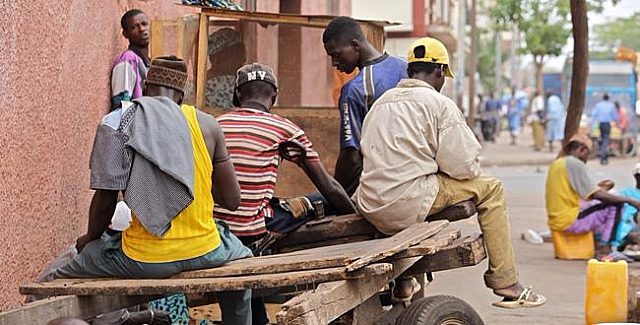
    67% of jobless Ghanaians are women

    Another important discovery was that the likelihood of shifting from informal employment to unemployment is five times greater on average than transitioning from formal employment to unemployment.

    In Q3, two out of every three individuals who were unemployed but had been employed in Q1 were in precarious employment during the first quarter.

    Lastly, the group of people who are burdened by the triple threat of being unemployed, food insecure, and multidimensionally impoverished increased by almost 55,000 between Q2 and Q3.

  • Over 80% of employees in the public sector make less than GHC 3,000 – New GSS report

    Over 80% of employees in the public sector make less than GHC 3,000 – New GSS report

    According to a recent survey by the Ghana Statistical Service (GSS), four out of every five workers in the public sector make less than GH3000.

    Out of of the 688,000 persons employed by the government, 533,179 of them earn less than GH₵3000.

    This represents 80 per cent of the total workforce.

    The new survey titled the Ghana 2022 earnings: inequality in the public sector also revealed that 104,349 people earn between GH₵3000 to GH₵4999, while 20,606 persons earn between GH₵5000 to GH₵ 9999.

    The report indicated that 6,225 people earn over GH₵10,000

  • Economic crisis: Thousands of Ghanaians ready to flee Ghana to the USA

    Over one thousand Ghanaians have thronged the Circle overhead, where a stand has been mounted by some personnel to help applicants apply for the American Visa lottery.

    According to one of the facilitators of the American Visa Lottery, a total of 1,561 Ghanaians have been registered in the past 4 weeks.

    Some applicants captured in a video report filed by Joy News explained that the current economic crisis, consisting of the high cost of living, was a contributing factor to their relocation abroad.

    They also saw the American Visa Lottery as an opportunity to travel abroad in search of greener pastures.

    One of the interviewees who was keen on not returning to Ghana should she get selected said, “The country is hard so for an opportunity like this, you have to grab it with both hands else it will skip. That’s why I’m applying for the visa…the only time you will see me in Ghana if I’m able to get there is when I’m either deported or there’s a war outbreak.”

    Another interviewee said, “You are in your own country, yet, you are suffering. You are being treated as somebody who does not come from Ghana so if go to Togo and you go and suffer there, is it not better than staying in your own country suffering.”

    Meanwhile, the country’s consumer price inflation (CPI) for October this year has reached 40.4 percent.

    According to the Ghana Statistical Service, the new rate is the highest recorded in 20 years.

    The government statistician, Professor Samuel Kobina Annim, said the increase in inflation was linked to rising food prices over the past few months.

    The price of food reached 43.7 per cent inflation in October from 37.8 per cent recorded in September this year while non-food inflation rose to 37.8 per cent from 36.8 percent.

    Fuel prices and transportation fares have also shot up in recent times.

  • Ghana’s inflation hits 40.4%, highest rate in 20 years

    The national consumer price inflation (CPI) for the country reached a startling 40.4 percent rate in October 2022, the Ghana Statistical Service has said.

    The new rate which is compared to 37.2 percent recorded in September makes is the highest in about 20 year.

    Government Statistician, Professor Samuel Kobina Annim, speaking with journalists on November 9 said the increase can largely be linked to rising food prices over the past months.

    The price of food reached 43.7 percent inflation in October from 37.8 percent recorded in September this year while non-food inflation rose to 37.8 percent from 36.8 percent.

    The Month-on-Month inflation according to the GSS rose up to 2.7 percent in October from 2.0 percent in September this year.

    For imported items into the country, the GSS said the country recorded 43.7 percent, while inflation for locally produced items stood at 39.1 percent.

    Prof. Annim further said other factors which contributed to Year-on-Year inflation of about 69.6 percent were; Housing, Water, Electricity, Gas and other fuels.

    Meanwhile, the recent inflation figures are expected to further impose more hardships on the average Ghanaian who has been grappling with the rising cost of living in the country.

    The depreciation of the local currency by about 57 percent since January 2022 to date also paints a rather gloomy picture of Ghana’s economic situation.

    The cedi has since been ranked by Bloomberg as the worst-performing currency in the world among 148 currencies it tracked in a survey.

  • Ghana’s inflation now 98% – Prof. Hanke counters GSS inflation figures

    Ghana’s inflation rate is 98%, according to Professor Steve Hanke, an applied economics professor at Johns Hopkins University and co-founder and director of the Institute for Applied Economics.

    His percentage is different from the Ghana Statistical Service’s (GSS) reading of 37.2% for September inflation.

    On Saturday, October 15, Prof. Hanke wrote in a tweet that “Using the time-tested metric of purchasing power parity, I estimate Ghana’s inflation rate to be 98% annually.
    Annim must jot down notes.”

    He continued, “Samuel Kobina Annim, a statistician from the Ghana Statistical Service, questions my estimate of Ghana’s inflation rate.

    The US-based professor also refuse claims by Professor Samuel Kobina Annim, the government statistician, who had indicated that his measurement of Ghana’s inflation has a “major weakness”.

    Prof. Hanke, then, advised the government statistician to spend some time with scientific literature.

    “Ghana Statistical Service statistician Samuel Kobina Annim claims that my measure of inflation for Ghana has a “major weakness.” Wrong. Prof. Annim should spend some time with the scientific literature…,” Prof. Steve Hanke tweeted further.

    Prof Samuel Kobina Annim cautioned Ghanaians against comparing the Statistical Services inflationary figures with that of popular US Professor Steve Hanke.

    He told the media at the October briefing on the nation’s inflation that the CPI method adopted by the Statistical Service is consistent with international practice and superior to Prof Hanke’s Purchasing Price Parity Module (PPPM), adding that Prof Hanke’s PPPM is only based on the exchange rate.

    “Steve Hanke’s approach is not based on the consumer price index, Steve Hanke’s approach is based on the purchasing power parity. Underlying the purchasing power parity is the assumption that price differences between [the] two countries are only the exchange rate.

    “The key difference here is that the CPI approach necessarily requires that you collect data on three variables: prices, quantities and the expenditure weight of these items, and this is at sharp variance with Steve Hanke’s purchasing power parity.

    “The premise of the computation both from a data point of view and a scope of data point of view are not the same, so we need not make an attempt to compare that,” Prof Annim explained.

    Ghana’s inflation rate

    Ghana’s inflation rate according to the Ghana Statistical Service has moved from 33.9 per cent in August 2022 to 37.2 per cent in September 2022.

    This is a 2.0 per cent month-on-month increase from the 33.9 per cent rate recorded in August 2022.

    However, the rate is also 37.2% higher than that of September 2021.

    Year-on-Year inflation varied upwardly by 2.2 percentage points between August (31.7%) and September (33.9%) 2022.

    Food inflation was 37.8% while non-food inflation was 36.8%.

    Inflation for locally produced items was 35.8% while inflation for imported items was 40.7%.

    Western Region recorded the highest food inflation (47.0%) and Eastern Region, the highest non-food inflation (42.0%). Eastern Region recorded the overall highest inflation (41.0%) followed closely by Western Region (40.2%) and Greater Accra Region (39.3%).

    Transport (68.7%) recorded the highest rate of inflation in the Eastern Region, for food inflation in the Western Region, Fish and Other Seafood had the highest rate of inflation at 64.0%.

  • GSS to begin nationwide health survey October 17

    Professor Samuel Kobina Annim, the Government Statistician, has admonished field officers for this year’s Demographic and Health Survey to exhibit a high sense of professionalism in the discharge of their work.

    The exercise, slated for Monday, October 17, 2022, across the country, will involve 18,540 households and done by 200 field enumerators.

    Prof Annim said this at the launch of the 2022 Ghana Demographic and Health Survey in Winneba in the Central Region.

    The cost of the survey is estimated at 4.2 million dollars.

    It is funded by the U.S. Agency for International Development, the Global Fund, the United Nations Children’s Fund, the World Health Organization, the United Nations Population Fund, the International Labour Organization, the Danish International Development Agency, and the government of Ghana.

    The field officers are expected to adhere to the United Nations principles of quality statistics.

    The principles include relevance, impartiality, and equal access, professional standards and ethics, and accountability and transparency.

    The Professor said the survey was designed to provide data for monitoring the health situation of the population in the country.

    The primary objective of the survey, he stated, was to provide up-to-date estimates of basic demographic and health indicators.

    The field enumerators will collect data on malaria, fertility levels, marriage, sexual activity, fertility preferences, awareness and use of family planning methods, breastfeeding practices, nutrition, childhood mortality, and others.

    He said the field officers were put through rigorous training both in theory and practice to deliver on their responsibilities.

    The Government Statistician urged the public to cooperate with the officers by providing complete and accurate information to ensure a successful survey.

    Dr Kerzia Malm, Programme Manager, National Malaria Control Programme, commended the GSS for the collaboration and the need to include malaria as part of the indicators.

    She was hopeful that the survey would provide information on malaria for policy decisions and help to achieve the Sustainable Development Goals.

    The participants pledged to conduct a successful exercise.

    Source: GNA

  • More than a million young people are not in school, the workforce or training – Survey

    According to Professor Samuel Kobina Annim, the government statistician, a survey by the Ghana Statistical Service (GSS) revealed that 1.8 million youngsters, or 28.8 percent of those between the ages of 15 and 24, are not enrolled in school, are not employed, or are not in training.

    In order to reduce the nation’s unemployment rate, Prof. Annim called the situation alarming and encouraged the government to identify these people and address their needs.

    The first and second quarters of the Ghana Annual Households Income and Expenditure Survey (AHIES) 2022, which includes a report on food security, multidimensional poverty, and labor statistics, were launched at the time he made this statement.

    The report revealed that about 445,000 persons who were 15 years and older, and outside the labour force, raised the level of unemployment in the country.

    These persons, according to the report, were people who were either sick and in school or on retirement.

    He, however, said that the report indicated an unemployment rate increase from 13.4 per cent to 13.9 percent, a situation that implied a higher employment rate of 86.6 percent and 86.1 percent respectively for the two quarters.

    Prof Annim explained that the high rate of employment was as a result of people who were in vulnerable employment, constituting 67 percent while 24 percent of persons had secured employment.

    Prof Annim said these vulnerable groups were either working without employees or contributing family workers.

    He said the GSS was going to engage with labour economists to understand the dynamics of the report holistically, and to aid in policy formulation for the country.

    Prof Kwaku Appiah-Adu, Director, Monitoring and evaluation and Public Enterprises, Office of the Vice President, said the report was necessary for policy formulation for the Government and all other institutions to help deliver on the needs of the people.

    He commended the Government Statistician and the GSS team for the opportunity to share the findings of the AHIES report, adding that the Government would put the findings of the report into good use.

    Prof Appiah-Adu said the data and statistical information provided the measurement of national development in order to improve the living standards of the people.

    The report, he stated, when presented to the Office of the Presidency would go a long way to impact on economic and social development policies.

    AHIES is the first nationally representative high-frequency household panel survey in Ghana.

    It was conducted to obtain quarterly and annual data on household final consumption expenditure, and a wide scope of demographic, economic and welfare variables including statistics on labour, food security, multidimensional poverty and health status for research, policy, and planning.

  • 380,000 people are triple-burdened in the labor force – Report

    According to the Ghana Statistical Service’s (GSS) Annual Household Income and Expenditure Survey, 380,000 of the country’s working-age population (15 and older) are food insecure, multidimensionally poor, and unemployed.

    Government statistician Professor Samuel Kobina Annim said this at a news conference in Accra on Thursday, September 1, 2022. He added that the Savannah area has the greatest proportion of triple-burdened people in Ghana.

    This, he claimed, was more than twice as high as the 3.2% national average.

    The statistics revealed that between the first and second quarter of 2022, food insecurity dropped by 7.0 percentage points while multidimensional poverty dropped by 2.6 percent points.

    In addition, unemployment rate, on the other hand, increased by 0.5 percentage points.

    The labour statistics also indicated that about two-thirds of the employed population are engaged in vulnerable employment with significant variation across urban areas (56.4%) and rural (80%).

    The Annual Household Income and Expenditure Survey (AHIES) is the first nationally representative high-frequency household panel survey in Ghana.

    It is conducted to obtain quarterly and annual data on household final consumption expenditure and a wide scope of demographic, economic and welfare variables including statistics on labour, food security, multidimensional poverty and health status for research, policy, and planning.

    This gives room for the Ghana Statistical Service to present statistics on labour transitions for the first time.

  • Overpaid Public Sector: Provide data to back claim – CLOGSAG to GSS

    The Civil and Local Government Staff Association, Ghana (CLOGSAG), has asked the Ghana Statistical Service (GSS) to provide data to back claims that public sector workers are overpaid.

    The Government Statistician, Professor Samuel Kobina Annim, last week raised concerns about how workers in the public sector were generally overpaid.

    He said while earnings averaged about GH¢3,420 for public sector workers, output in the sector averaged about GH¢1,420, less than half their earnings.

    “What people earn should be equal to their output and be equal to what they spend. There is something wrong and such gaps should be closed in the country’s quest for real development.”

    CLOGSAG, in a letter signed by Mr Kojo Krakani, the Deputy Executive Secretary, called on the Government Statistician to provide among other things, indicators and the sample size used to conduct the research.

    The letter said: “The Civil and Local Government Staff Association, Ghana (CLOGSAG) has noted your findings that Public Sector workers are being overpaid.

    “The Association would appreciate if you could provide us with the indicators used in your research, the sample size, the stratification and any other relevant data information to enable us have an objective assessment of your findings. Kindly treat as a matter of urgency.”

    Source: Ghanaweb