Tag: protest

  • Museveni’s son to leave the military “this year”

    Museveni’s son to leave the military “this year”

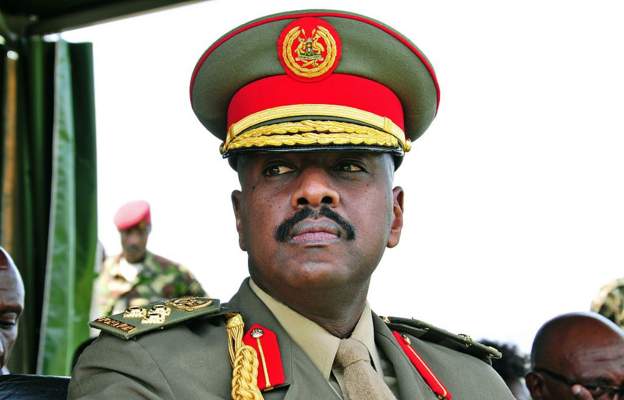
    The eldest son of President Yoweri Museveni of Uganda has announced that he will leave the army this year after nearly three decades of service.

    The army commander, Muhoozi Kainerugaba tweeted the information.

    “I will be retiring from the UPDF this year,” he tweeted.

    He made a similar announcement on Twitter in March last year when he was the commander of land forces. But the army said it had not officially received Mr Kainerugaba’s retirement request.

    His latest retirement remarks come days after he deleted a tweet announcing that he will stand for the presidency in 2026.

    The tweeting general has not hidden his ambition to take over the top job from his 78-year-old father, who has led Uganda since 1986.

    The Ugandan law does not allow serving soldiers to participate in politics.

  • Kenya suggests changes in law to place limitation on protests

    Kenya suggests changes in law to place limitation on protests

    The interior ministry of Kenya is recommending amendments to security regulations that will make it harder for people to stage rallies.

    Kenyans are granted the freedom to congregate, protest, and picket under the constitution, but all participants must do so peacefully and without weapons.

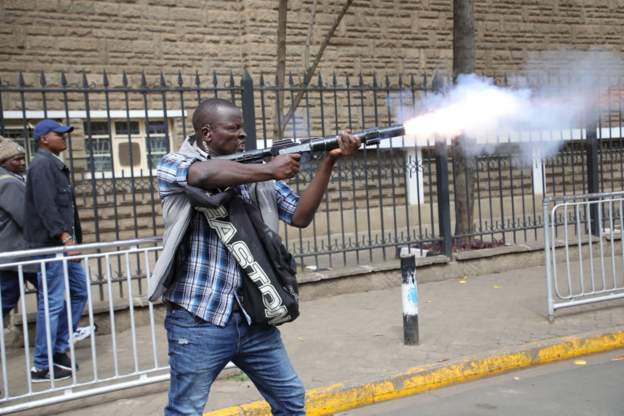
    One university student was killed during protests last week in areas where the opposition is strong after police used tear gas and live bullets to disperse crowds.

    The changes proposed by the ministry seeks to limit the number of people holding protests at any particular occasion, and makes protesters pay the costs of cleaning up.

    Protesters must also seek consent from the people affected by the protests. The demonstrators will also be liable for paying damages to those harmed by their activities.

    In the proposed changes, the interior ministry also seeks the demarcation of areas where people can assemble and hold protests.

    “It is not feasible for security organs to allow masses of people to roam streets and neighbourhoods of their choice carrying stones and other offensive weapons while chanting political slogans and disrupting the daily activities of others,” the ministry said in a statement.

    The proposed changes have been criticised by some as “an affront to the foundations of an open and democratic society” and as a “law that contravenes the constitution”.

    It comes as a defiant opposition vows to continue with protests over the high cost of living and alleged electoral malpractices.

  • Kenya: Train services on hold as citizens embark on protest

    Kenya: Train services on hold as citizens embark on protest

    In preparation for the anti-government demonstrations that opposition leader Raila Odinga has called for on Monday, the Kenya Railways Corporation has halted all commuter train service in the nation’s capital, Nairobi.

    In a statement on Sunday, the Kenya Railways management attributed the decision to “unavoidable circumstances.”

    “We do sincerely apologise to all our esteemed customers for any inconvenience caused,” it said.

    However, the train operator said all its commuter trains between the old railway station in the city centre (Nairobi Central Station) to the Nairobi-Mombasa railway station (Nairobi Terminus) – would run as scheduled.

    The opposition coalition is holding protests in Nairobi and other parts of the country to push for electoral reforms and reduction of prices of basic commodities.

    On Sunday, the police chief banned the protests, but the opposition has maintained that the protests will be held within the law.

  • Over 200 kenyans in police grips over high cost of living protests

    Over 200 kenyans in police grips over high cost of living protests

      The Kenyan police has reported that 238 individuals had been detained during the violent anti-cost-of-living rallies on Monday that also left 31 police officers hurt.

      Following a call from longtime opposition leader Raila Odinga, protesters joined rallies in Nairobi and other parts of Kenya on Monday.

      It was the first major unrest since President William Ruto took office in September last year, narrowly beating Odinga in an election his rival claims was “stolen”.

      Odinga had called for the day of action, blaming the government for the economic woes faced by Kenyans.

      They are battling high prices for food and fuel, a plunging currency, and a record drought that has left millions hungry.

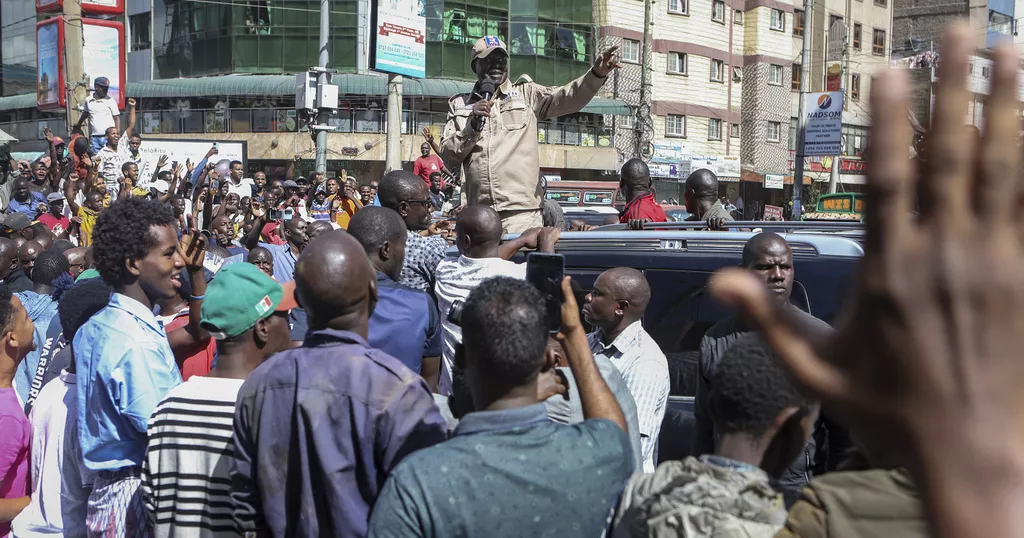
      Police fired tear gas and water cannon against demonstrators, some of whom were hurling rocks and burning tyres, as well as against Odinga’s motorcade.

      On Monday, Deputy President Rigathi Gachagua urged the organisers to call off the “mayhem and the chaos,” saying the protests had cost Kenya about $15 million in lost business.

      But Odinga has vowed no let-up the action, calling for protests and strikes to be held every Monday until the cost of living comes down.

      On Tuesday, the situation had returned to calm in Nairobi.

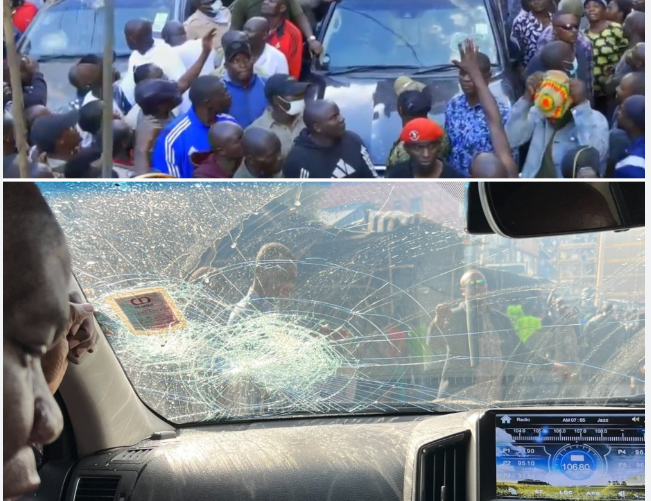
    • Raila’s vehicle destroyed on street protests

      Raila’s vehicle destroyed on street protests

      The opposition leader of Kenya, Raila Odinga has been wounded by tear gas and water cannons as well as a gunshot, according to a tweet from his aide.

      Uncertain of the exact location of the purported “damage,” Mr. Odinga has been driving a convoy of cars through residential neighborhoods on a day of protest against the poverty that most Kenyans face.

      Additionally, he has been using the demonstrations to support his unsupported assertion that he, not William Ruto, was the real winner of last year’s presidential elections.

      The protests have disrupted business operations in the capital Nairobi and in Mr Odinga’s stronghold of Kisumu in western Kenya.

    • Protest hits Enugu INEC office

      Protest hits Enugu INEC office

      In front of the INEC office in Enugu, supporters of the Labour Party and the People’s Democratic Party are currently organizing demonstrations.

      As the PDP demands that the results be declared in their favor, the Labour Party objects to the Nkanu East Local Government Area’s use of BVAS in conducting the governorship election.

      In the meantime, the Labour Party has petitioned INEC regarding the outcomes from the Nkanu East Local Government area.

    • Youth in Walewale, Nalerigu protest military’s move to detain new Bawku chief

      Youth in Walewale, Nalerigu protest military’s move to detain new Bawku chief

      The military’s attempts to detain the recently skinned Bawku Naaba by the Nayiri have sparked tension in various areas of the North East Region as youth took to the streets to protest.

      In the Nalerigu and Walewale communities, the youth burnt lorry tyres amidst chanting of war songs to drum home their anger.

      Some New Patriotic Party (NPP) billboards were also destroyed by the youth.

      Sources within the youth groups indicate their disappointment in government and the military for the recent peaceful instability in Bawku and Nalerigu.

      They have warned they will use every available means to protest any attempt to arrest the Nayiri and the rival Bawku chief.

      The King of the Maprugu Traditional area, Naa Bohugu Mahami I, on Wednesday, February 15 reportedly enskinned Alhaji Seidu Abagre as the new chief for Bawku at the Nayiri Palace in Nalerigu.

      But government declared the installation as null and void, ordering the arrest of the new chief.

      Attempts by the military to effect the arrest Sunday evening was met with fierce resistance from the youth.

      On Monday morning, the youth expressed their anger by hitting the streets.

    • Thousands protest in Madrid for better healthcare

      Thousands protest in Madrid for better healthcare

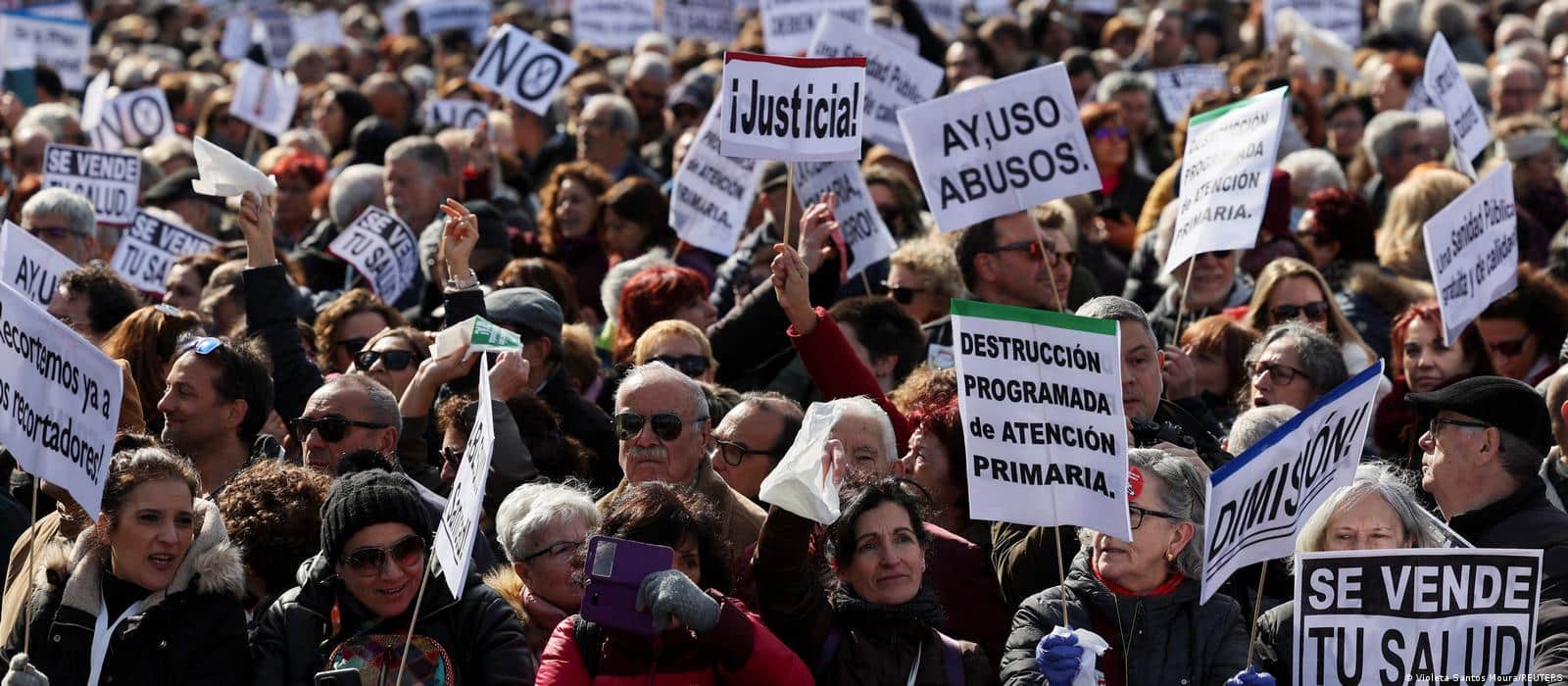
      Numerous thousands of people thronged Madrid’s streets to express their opposition to what they perceive as a conservative regional government effort to dismantle public healthcare.

      The right-wing regional government is allegedly attempting to destroy the public health system in the Spanish capital, according to health workers and their supporters who gathered in central Madrid on Sunday.

      The government reported that more than 250,000 people participated in the demonstration, but organisers estimated a turnout of close to a million.

      Demonstrators crowded the Plaza Cibeles area of the city centre while yelling and waving flags. Many of them carried homemade signs that read things like “A human right is the right to good health. Protect the medical system.”

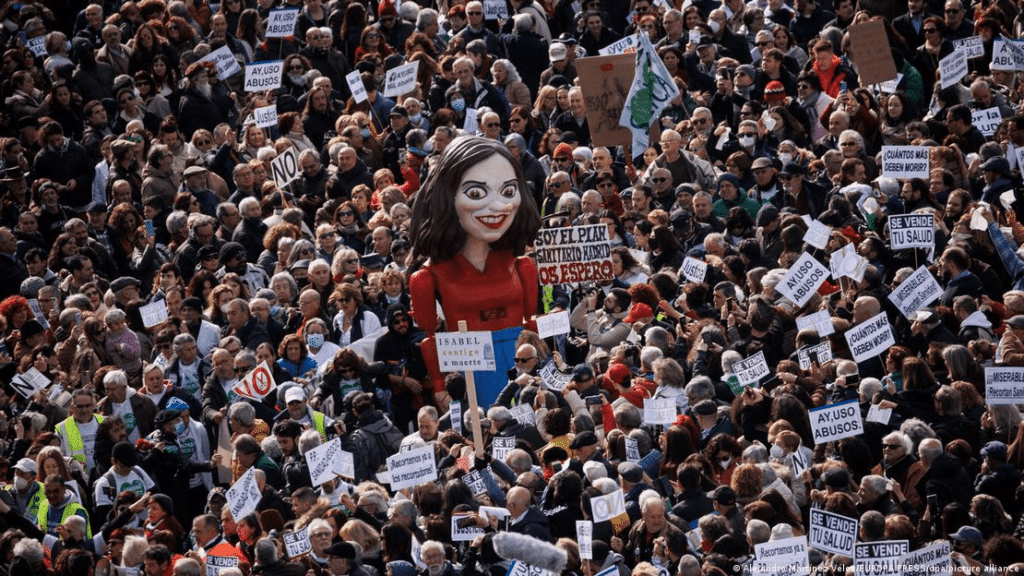
      One demonstrator sported a huge model of Isabel Diaz Ayuso, the right-wing leader of the Madrid regional government, with a Pinocchio-like nose attached.

      One protester held up a giant caricature of Madrid regional head Isabel Diaz AyusoImage: Alejandro Martínez Vélez/EUROPA PRESS/dpa/picture alliance

      “In Spain, the public health system used to be very good,” Madrid resident Ana Santamaria told the AFP news agency. “But in recent years, it has really deteriorated, particularly since the pandemic.”

      Waiting lists, overworked doctors

      Unions and left-wing parties complain about long patient waiting lists and a shortage of staff in health centers, forcing patients to overwhelm hospital emergency departments. Many government critics believe the conservatives are dismantling the system.

      “The situation is dramatic… We can’t take proper care of the patients,” nurse Maite Lopez told AFP.

      Diaz Ayuso’s opponents say her administration spends the least amount per capita on primary health care of any Spanish region even though it has the highest per capita income.

      For every €2 spent on health care in Madrid, one ends up in the private sector, according to protest organisers.

      Madrid leader blames upcoming election for protests

      Ayuso denies the accusation and wrote on Twitter on Sunday: “We all believe in public health.”

      She alleges the protests are motivated by the political interests of left-wing rivals ahead of May regional elections across most of Spain.

      Spain has a hybrid healthcare system but the public sector is larger than the private one and is considered a basic pillar of the state.

      The governments of the regional autonomous communities are responsible for a large part of the health budget as part of the country’s devolved political system.

      The protest movement against health-care cuts has gathered strength through regular protests in recent months.

      Another protest Sunday in Santiago de Compostela, in northwestern Spain, saw some 20,000 health workers take part.

      Some doctors and pediatricians have been striking on and off since November, with the Amyts doctors’ union in Madrid seeking better working conditions and pay.

    • Brazil Congress: How police failed to stop the protest

      Brazil Congress: How police failed to stop the protest

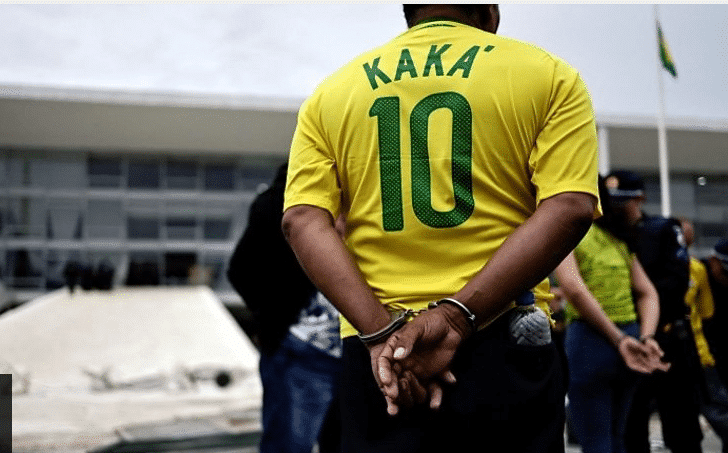
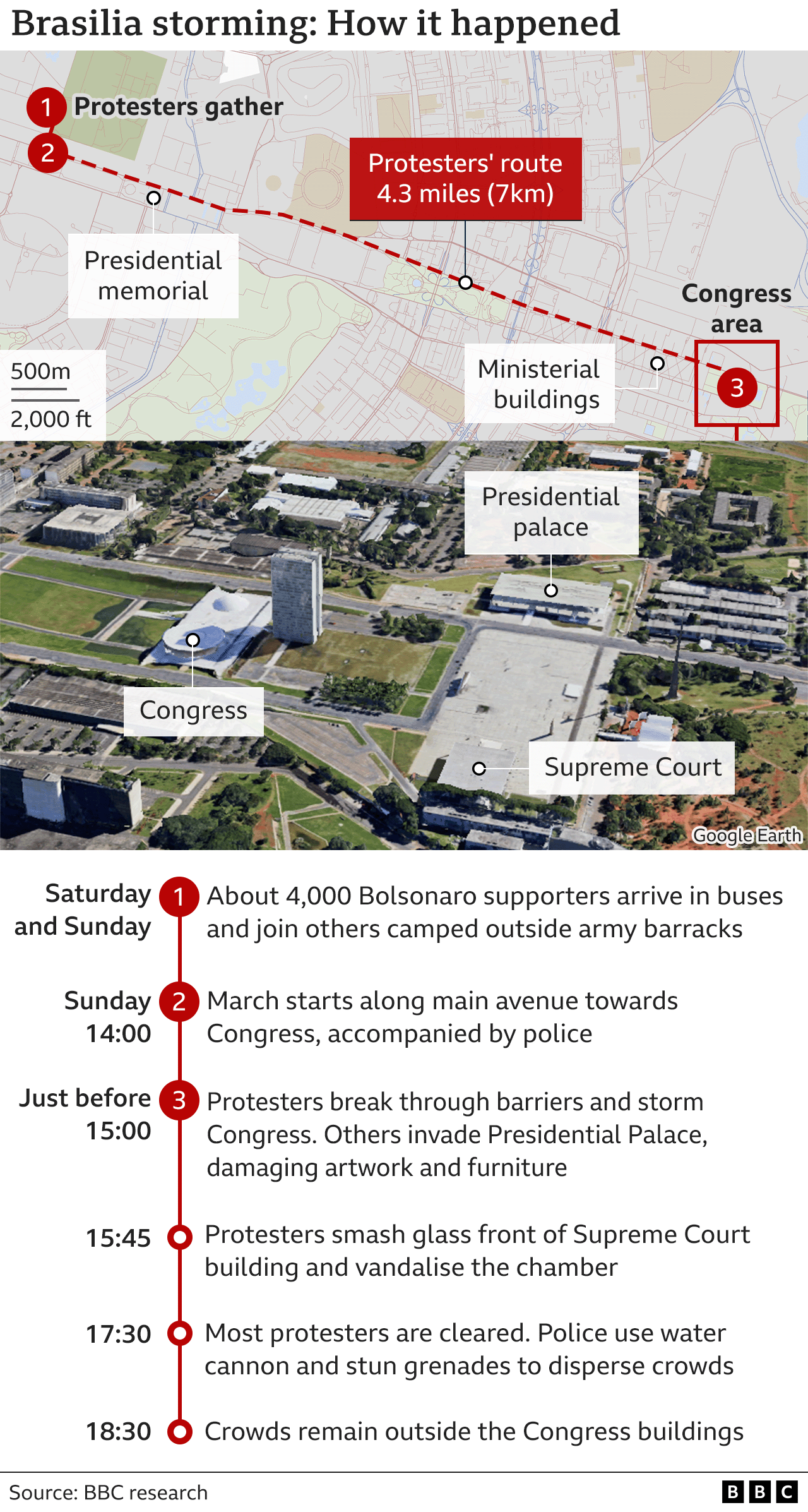
      Thousands of Jair Bolsonaro’s supporters stormed the Brazilian Congress, Supreme Court, and presidential palace just one week after Luiz Inacio Lula da Silva was sworn in as president.

      The president said security forces in the capital, Brasília didn’t do enough to stop them. We’ve looked into the key moments and how the police responded.

      The march towards Congress

      Since the narrow election win in October by the left-wing president, better known as Lula, supporters of his right-wing rival had been setting up camps in front of military barracks in many cities around the country.

      His most ardent supporters have been calling for the army to intervene and overturn the election result.

      Then over the weekend, thousands of people gathered outside the army barracks in Brasília, many of them brought in by bus.

      President Lula called on local security forces to remove these protesters, but police had opted to not use force.

      Map showing route taken by protestors towards government buildings

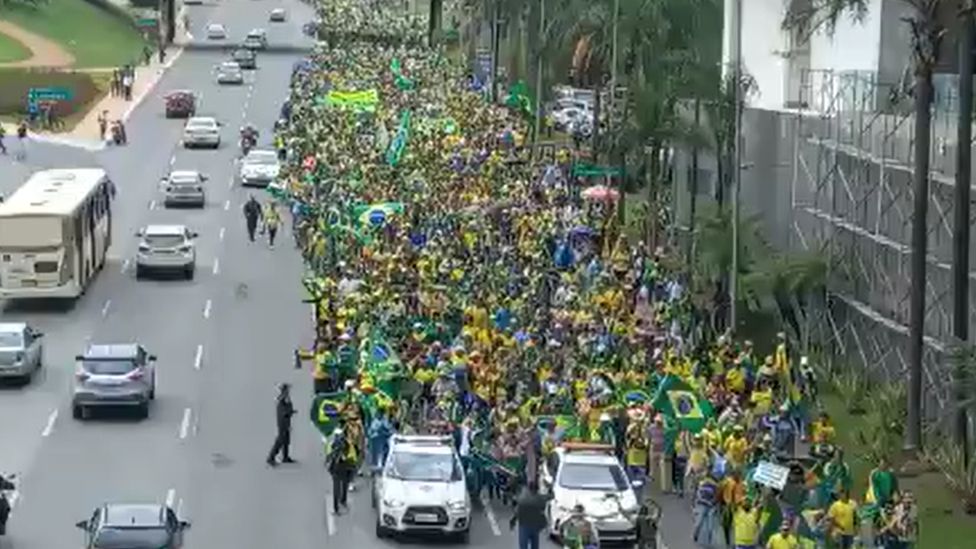
      On Sunday afternoon, the protesters set off on a march towards the complex of government buildings. Video footage shows the march peacefully under way, with military police escorting them along the 7km (four mile) route.

      Police escort video

      We have asked the police authorities in Brasília whether the protesters had been granted official permission to march along this route ahead of time. We haven’t yet received a response.

      Breaking through barriers

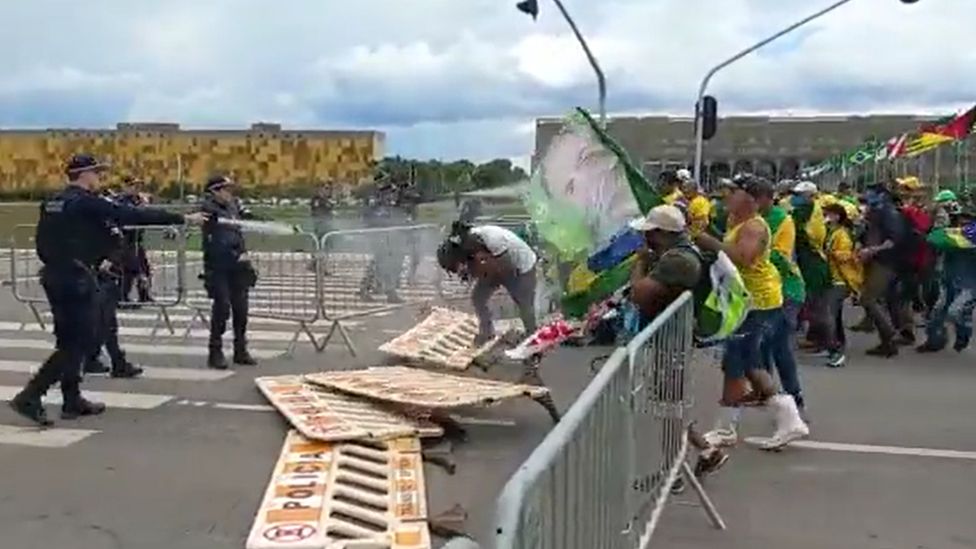
      The protesters arrived at barriers blocking access to the complex of government buildings known as “Praça dos Três Poderes” (Three Powers Square).

      Police barricade

      One of the policemen can be seen pulling out what appears to be pepper spray or tear gas, aiming it at the protesters, who quickly force their way through.

      We have asked the police why they hadn’t organised stronger barriers and mobilised more officers to control the situation once the protesters approached the government square.

      Entering the buildings

      Once the barriers had been breached, crowds flooded onto ramps which led to the Congress building and the presidential palace.

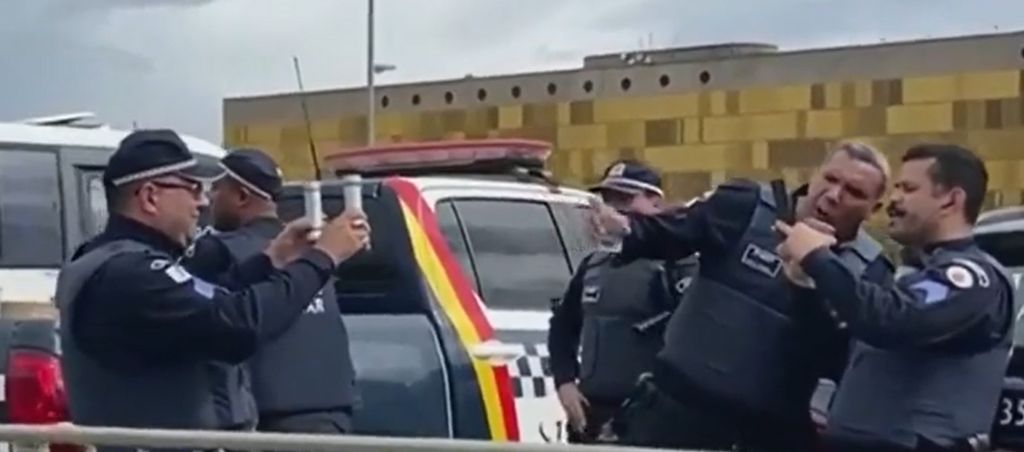
      Police have been criticised for being too hands-off with the protesters as they streamed in.

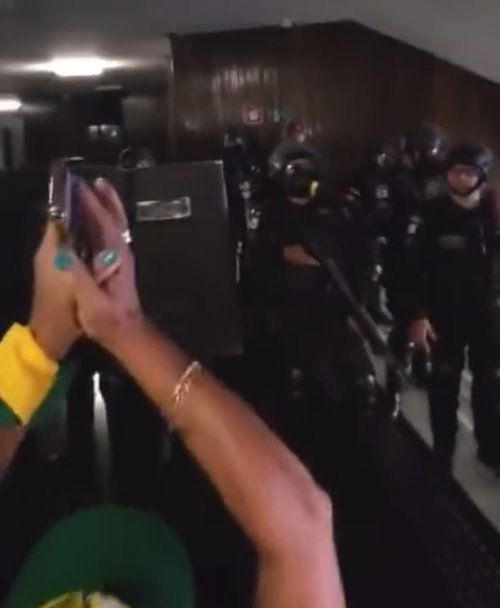
      Police taking pictures

      Another video shows a policeman being pulled from his horse by protesters as they approach the Congress building and thrown to the ground.

      The National Congress and the presidential palace were breached just before 15:00 local time.

      Videos show protesters using security barricades to smash through several large windows before entering, spreading throughout both buildings and onto the roof of Congress.

      The BBC has also verified this video which shows police standing by as protesters walk up a staircase into the Congress building through the lower floor entrance.

      Protesters clap police

      Police holding riot shields are standing on the right of the stairs, but they aren’t protecting the main entrance and appear to be guarding a side corridor instead.

      One policeman waves the protesters through and gives them a thumbs up. As the crowd move forward into the building, some of them applaud the security personnel.

      From the police uniforms seen in the video it looks like they are part of the Policia Legislativa, the Federal police group that works inside Congress.

      Shortly afterwards, a group also smashed windows of the Supreme Court and entered the building.Media caption,

      WATCH: Brazilian ex-president Bolsonaro’s supporters smash Supreme Court windows

      Destroying property

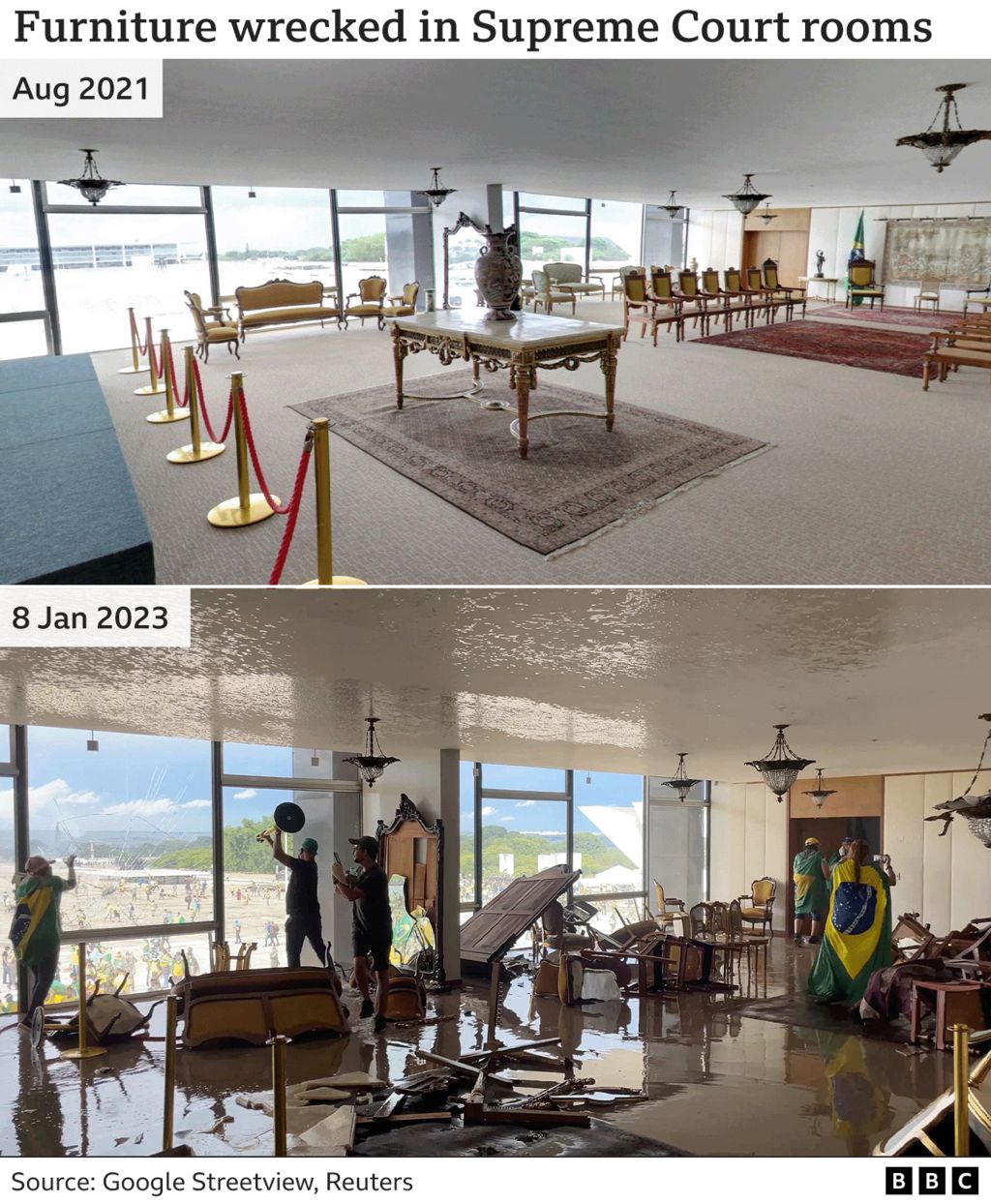
      Images show that once inside the buildings, protesters destroyed furniture, equipment and works of art.

      Before and after of Supreme Court

      Social media posts from the afternoon of 8 January clearly show scores of protestors both outside in the plaza and milling around inside buildings, in some cases with no police or security forces visible.

      Videos circulating online showed protesters trashing offices, smashing windows and doors, flipping furniture, and tossing computers and printers to the ground. Media caption,

      Watch: Key moments as Bolsonaro supporters storm Brazil government buildings

      Dispersing the crowds

      The governor of Brasília, Ibaneis Rocha, eventually requested support from the national government – although it’s not clear when exactly this was made.

      President Lula announced soon afterwards that he had authorised national forces to intervene in Brasília.

      Even with the involvement of additional forces, it took many more hours to bring the situation under control. The Supreme Court was the first to be cleared. Then, as more forces arrived, other buildings were also gradually emptied.

      Source: BBC

      DISCLAIMER: Independentghana.com will not be liable for any inaccuracies contained in this article. The views expressed in the article are solely those of the author’s, and do not reflect those of The Independent Ghana

    • Iran protests: Activist Narges Mohammadi details ‘abuse’ of detained women

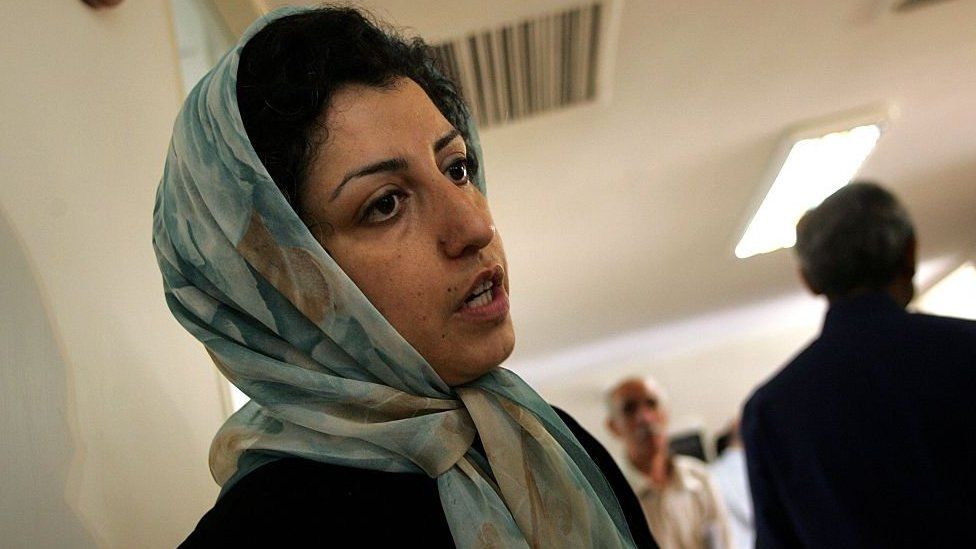
      A leading human rights activist in Iran has written from prison to give the BBC details of how women detained in recent anti-government protests are being sexually and physically abused.

      Narges Mohammadi said such assaults had become more common in recent protests.

      She is serving a lengthy sentence in Tehran’s notorious Evin prison.

      The protests were triggered by the death in custody in September of 22-year-old Mahsa Amini, arrested for violating strict dress codes.

      She was detained by morality police in mid-September for allegedly wearing her hijab, or headscarf, “improperly”.

      More than 500 protesters, including 69 children, have been killed, while thousands of others have been arrested, human rights activists say. Dozens of Iranian security personnel are also reported to have been killed.

      Many of those arrested have allegedly been subjected to torture and other ill-treatment in custody.

      Ms Mohammadi is deputy head of Nobel laureate Shirin Ebadi’s Defenders of Human Rights Center. She has received several jail sentences since 2011 and is currently in prison for “spreading propaganda”.

      This year she was also included in the BBC’s 100 Women – a high profile list of 100 inspiring and influential women from around the world.

      ‘Hands and legs tied to hook’

      Ms Mohammadi says in her letter that some of the women arrested during the recent demonstrations were transferred to the women’s ward in Evin prison.

      That gave her a chance to hear shocking details of the abuse they suffered.

      She says that one well-known activist had her hands and legs tied to a hook above her head in the vehicle taking her to prison – and was then sexually assaulted by security officers.

      Narges Mohammadi - 2007 picture
      Image caption,Ms Mohammadi, pictured here in 2007, is serving a lengthy sentence in Evin prison

      Ms Mohammadi says she saw bruises and scars on her body.

      She says another woman who was arrested in the street was taken on a motorbike by two security officers – one in front and one behind – and was repeatedly assaulted.

      Iran’s state broadcaster has denied reports of security forces using rape and sexual abuse against female protesters.

      A report on 19 December said female prisoners were kept in facilities run by all-female staff, adding that claims of rape in the Western media were “rumours” and “baseless”.

      But Iran also continues to heavily repress domestic reporting of the protests, with one recent report suggesting it was now the third largest jailer of journalists in the world.

      Ms Mohammadi says that even though reporting abuse may lead to intimidation of the families of women in detention, she believes it’s necessary to expose what’s happening – in order to try to put a stop to it.

      “Not revealing these crimes would contribute to the continuation of application of this repressive methods against women,” she says.

      “Therefore, it seems that the assault on women activists, fighters, and protesters in Iran should be widely and powerfully reported at the global level.”

      She added that this was especially important given the pressure on civil society in Iran.

      “In the absence of powerful independent civil organisations, the attention and support of the media and international human rights organisations and global public opinion is essential,” she said.

      Ms Mohammadi ended the letter by expressing the belief that Iran’s “brave, resilient, lively and hopeful women” would attain victory.

      “Victory means establishing democracy, peace and human rights and ending tyranny,” she added.

    • Peru announces nationwide state of emergency over protests

      In response to the unrest that has gripped the nation in the turbulent days since President Pedro Castillo was removed from office last week on accusations of insurrection and conspiracy, the government of Peru on Wednesday proclaimed a 30-day nationwide state of emergency.

      “A state of emergency has been declared for the whole country, due to the acts of vandalism and violence, the seizure of highways and roads, which are stabilizing (…) and require a forceful and authoritative response,” said Alberto Otarola, Peru’s minister of defense.

      The suspension of a number of rights, including the freedom of assembly, the inviolability of one’s home, and freedom of movement, as well as the potential for nighttime curfews, will result from the declaration of a state of emergency.

      The action was taken less than a week after the former president Castillo attempted to dissolve Congress and govern by decree in an effort to escape being impeached for the third time by the opposition-led assembly. Legislators instead mandated his arrest.

      Peruvian protesters demand immediate elections

      Castillo was apprehended on December 7, while seeking to flee to the Mexican Embassy in Lima. Mexico — along with other leftist countries in the region — has voiced support for the Marxist former school teacher.

      After his arrest, Vice-President Dina Boluarte was sworn in as Peru’s sixth president in as many years.

      Boluarte sought to defuse the growing anger on the streets by announcing that elections would be moved up from 2026 to 2024, this, however, did nothing to mollify angered Peruvians.

      Since then, she has said that new elections may take place as early as December 2023.

      “Legally it works for April 2024, but by making some adjustments we can bring them forward to December 2023,” Boluarte told reporters.

      Nevertheless, Castillo’s supporters have demanded his release and called for new elections to be staged immediately. Those opposing him are also calling for Congress to be dissolved and new elections held rather than accept Boluarte as president.

      On Wednesday, a judge in Lima denied Castilo’s release from jail, as prosecutors filed a request that he remain in prison for 18 months of pre-trial detention.

      At least seven people have died amid anti-government protests over the past several days.

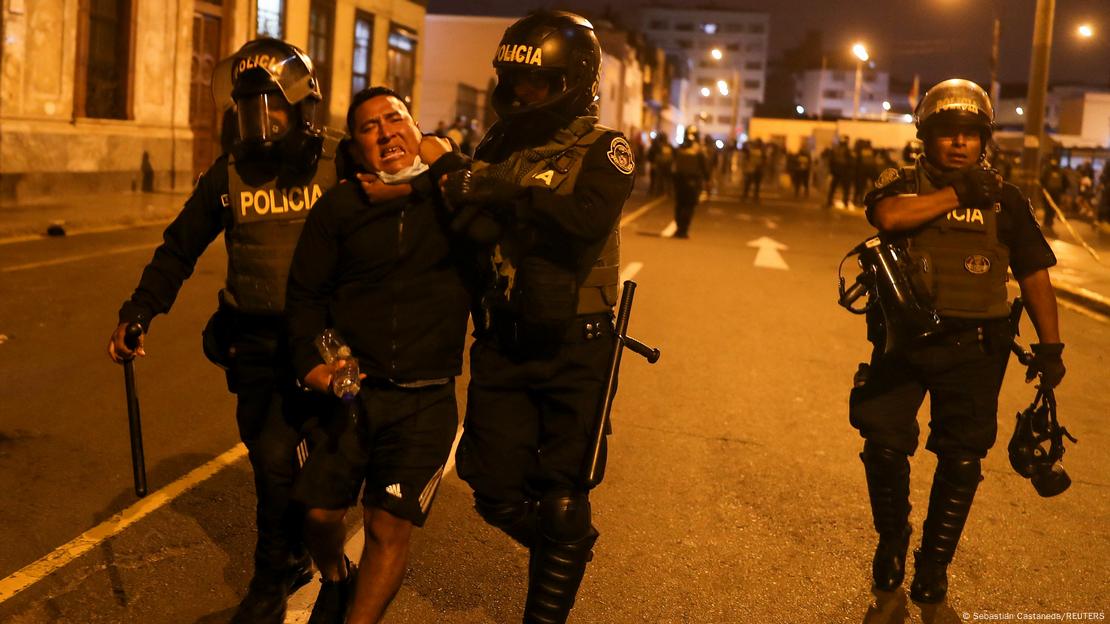
      Police in riot gear arrest a protester in Lima, Peru
      Castillo supporters want him released but opponents want Congress dissolved rather than recognize Boluart as presidentImage: Sebastian Castaneda/REUTERS

      What has the new president of Peru said?

      In announcing her plan to move up elections, President Boluarte said, “Peru cannot overflow with blood.”

      As protesters blocked streets, pelted police with rocks while attempting to storm Congress, and clashed with authorities, Boluarte said: “The only thing I can tell you brothers and sisters [is] to keep calm. We have already lived through this experience in the 80s and 90s, and I believe we do not want to return to that painful history.”

      The statement referenced the years in which the Shining Path insurgency carried out bombings and assassinations across the country, sparking decades of violence that led to the death and disappearance of nearly 70,000 people.

      “This is a very serious social convulsion,” said Peru’s rights ombudsperson, Eliana Revollar. “We fear it will lead to an uprising because there are people calling for an insurrection, who want to take up arms.”

      Appearing via video link before a court in Lima on Tuesday, Castillo railed against what he called his arbitrary and unfair arrest, vowing that he would “never give up and abandon this popular cause that brought me here.”

      He then appealed to security forces “to lay down their arms and stop killing these people thirsty for justice.”

    • I’ve never seen protests of this scale in Shanghai – resident

      More from Shanghai now, where thousands protested against strict Covid measures over the weekend – with some even calling on President Xi Jinping to step down.

      One observer of the protest there is Frank Tsai, who organises public lectures in China. He told the BBC he was surprised at how large the protest had become.

      “I haven’t seen any protests of this scale in Shanghai in the entire 15 years that I have lived here,” he said.

      Over the past two or three decades, he said, there have been tens of thousands of small-scale protests about things including labour rights and land grabs.

      But, he says, “very, very few” have targeted the central government, and “basically nothing” has targeted the regime itself before.

      Source: BBC

    • NDC MPs wear black in parliament to mourn economic hardship

      The minority in parliament have been wearing black to parliament since they reconvened on October 25.

      According to the minority, their reason for wearing black is to communicate their dissatisfaction with the country’s current economic situation, including the cedi depreciation.

      On Wednesday, October 26, almost all the MPs who showed up in parliament were dressed in black attires.

      The Minority and Majority Members of Parliament seem to be on the same page following the call to remove the finance minister from office.

      While the Minority in Parliament has filed a motion to have Ken Ofori-Atta sacked, the Majority also threatened to boycott the 2023 budget presentation if the finance minister is not relieved of his post.

      The MPs explained that their position follows several concerns over the poor management of the economy, which has forced the government to seek IMF assistance.

      While addressing the parliamentary press corps, the minority urged the majority to not relent on calling the finance minister out.

      The Deputy Minority Chief Whip, Ahmed Ibrahim, noted “as representatives of the people and as duty bearers, we must move a motion to call for the end of the Finance Minister.

      “Our brothers in the Majority believe in this. What they should do is to support the call of the Minority Leader and the motion for the Minority Leader for the dismissal of the Finance Minister.”


    • ‘Take all revenues from entry points and leave us alone’ – Kumasi traders to government

      Traders in the Ashanti regional capital – Kumasi – have called on government to take all revenues at the point of entry of goods and desist from harassing traders with other taxes.

      According to the Executive Secretary of the Ashanti Business Community, Charles Kusi Appiah-Kubi, the business community was poised to pay corporate income tax and Pay As You Earn.

      However, traders can no longer pay Value Added Tax (VAT) to government.

      Mr Appiah-Kubi added that it is about time government finds more innovative ways to collect taxes for the betterment of the country.

      Speaking at a press conference in Kumasi on Wednesday, October 12, 2022, he said, “Government should take all its revenue from the points of entry. Take all the charges you want to charge at the point of entry or at the manufacturing and leave us alone.”

      “We are ready to pay our corporate income tax and our Pay As You Earn (PAYE), but we can’t pay the VAT again,” the Executive Secretary of Ashanti Business Community stressed.

      On Monday, October 10, 2022, some traders in Kumasi locked up their shops in protest of the frequent depreciation of the cedi.

      They also cited the high cost of doing business and the collection of exorbitant taxes by the government as some reasons for the protest against the government.

      According to the traders within the central business district, the demonstration will last for three days.

      They explained that the protest also aims to kick against the decision by the Ghana Revenue Authority (GRA) to station their officers at each shop to record Value Added Tax (VAT) on products they sell.

    • Prince David Osei threatens a protest against the government in response to an increase in living standards

      Following news that Ghana has been the nation with the highest food costs in Sub-Saharan Africa since January 2022, Ghanaian actor Prince David Osei posted a lengthy message on social media threatening a protest against the Akufo-Addo-led administration.

      Expressing himself on Instagram on October 10, 2022, the actor mentioned that he has noticed that the president and his subordinates have made it their agenda to inflict pain on citizens.

      “Mr President! With all due respect Mr President, why are you sleeping on Ghanaians… This is not acceptable Mr President? We deserve better, we know there are global crises and hardships. Yes, we know!

      “But it looks like you and your ministers are determined to inflict untoward hardship on the citizenry. I decided to give you and your government the benefit of the doubt, I reckon I was wrong!” he said.

      He added that the youth in the country are suffering and if things don’t change by December he was going to mobilise them to demonstrate.

      “The Youth of this nation are not smiling, it pours, but we are still sweating. If things don’t change by December, we will mobilise the youth of this country and hit the street irrespective of party affiliations, whether NPP, NDC, CQQ, PNC whatever, it doesn’t matter now, we are all in this together.

      “God bless our motherland ???????? We want to see improvement in our livelihoods. If you have to sack some people do it without fear or favour because your legacy is on the line, Sir!! @nakufoaddo,” he added.

      His post comes after the World Bank’s October 2022 Africa Pulse Report revealed that food prices in Ghana have been on the rise since January 2022 by 122%.

      The report noted that Ghana has experienced very rapid food price increases this year, breaching the “inflation ceiling of the central bank target bands for all countries with an explicit nominal anchor.”


    • UEW students to stage another demo today over lingering GPA issues

      Students of the University of Education Winneba (UEW) will today, Monday, October 10, 2022 embark on another demonstration against the management of the school.

      The students have been agitating over the management’s failure to resolve concerns about their Cumulative Grade Point Average (CGPA).

      Authorities of the school were given an October 7, 2022 ultimatum to settle the outstanding issue, but have failed to do so.

      The students say they will protest to demand a resolution to their concerns.

      In addition, the agitated students say they will not partake in an exams scheduled for them this week.

      “What they are doing is just to frustrate us. They are telling us to write a re-sit on Monday. We are not going to write the exams. If things are not done in order, we will retaliate,” one of the affected students spoke to Citi News on condition of anonymity.

      Last Friday, students on the Southern campus of the university protested to express their outbursts.

      Students have been complaining that the school had not been updating their GPA records

      The agitation came with the students expected to graduate in the next few weeks. The school is also setting up a help centre to receive complaints.

    • Iran protests: Schoolgirls jeer at paramilitary speaker

      A recent online video appears to show schoolgirls heckling at a member of Iran’s dreaded paramilitary Basij force after nationwide anti-government demonstrations spread to the classroom.

      The teenagers wave their headscarves in the air and shout “get lost, Basiji” at the man, who was asked to address them.

      The BBC could not verify reports that it was filmed in Shiraz on Tuesday.

      The Basij has helped security forces crack down on the protests sparked by the death in custody of a young woman.

      Other footage circulated on social media shows a man shouting “death to the dictator” as another group of girls walk through traffic in the north-western city of Sanandaj and an elderly woman clapping as unveiled schoolgirls chant “freedom, freedom, freedom” at a protest on a street.

      In a fourth video, a teacher appears to threaten students with expulsion if they do not cover their heads after they stage a sit-down protest in a schoolyard.

      And a fifth, reportedly filmed in the city of Karaj, shows schoolgirls seen screaming and running from a man, thought to be a member of the security forces in plainclothes, who is driving a motorcycle along a pavement.

      The unrest was triggered by the death of Mahsa Amini, a 22-year-old woman who fell into a coma hours after being detained by morality police on 13 September in Tehran for allegedly breaking the strict law requiring women to cover their hair with a hijab, or headscarf. She died in hospital three days later.

      Her family has alleged that officers beat her head with a baton and banged her head against one of their vehicles. The police have denied that she was mistreated and said she suffered a heart attack.

      The first protests took place in north-western Iran, where Ms Amini was from, and then spread rapidly across the country.

      Young women have been at the forefront of the unrest, but it was not until Monday that schoolgirls began participating publicly in large numbers.

      It came a day after security forces briefly besieged the prestigious Sharif University of Technology in Tehran in response to a protest on the campus. Dozens of students were reportedly beaten, blindfolded and taken away.

      Monday also saw the Supreme Leader, Ayatollah Ali Khamenei, break his silence on the unrest and accuse the US and Israel, Iran’s arch-enemies, of orchestrating “riots”. He also gave his full backing to the security forces, which have been accused by human rights groups of killing dozens of people.

      On Tuesday, there were reports that the death toll resulting from clashes between security personnel and anti-government protesters in the south-eastern city of Zahedan had risen to 83.

      Zahedan is the capital of Sistan Baluchistan province, which borders both Pakistan and Afghanistan, and has a sizeable Sunni Muslim population.

      Authorities have said the security forces were attacked by armed Baluchi separatists – something the imam of the city’s biggest mosque has denied.

      The violence erupted on Friday, when protesters surrounded a police station and officers opened fire.

      Tensions in the city had been compounded by the alleged rape of a 15-year-old girl by a police chief elsewhere in Sistan Baluchistan.

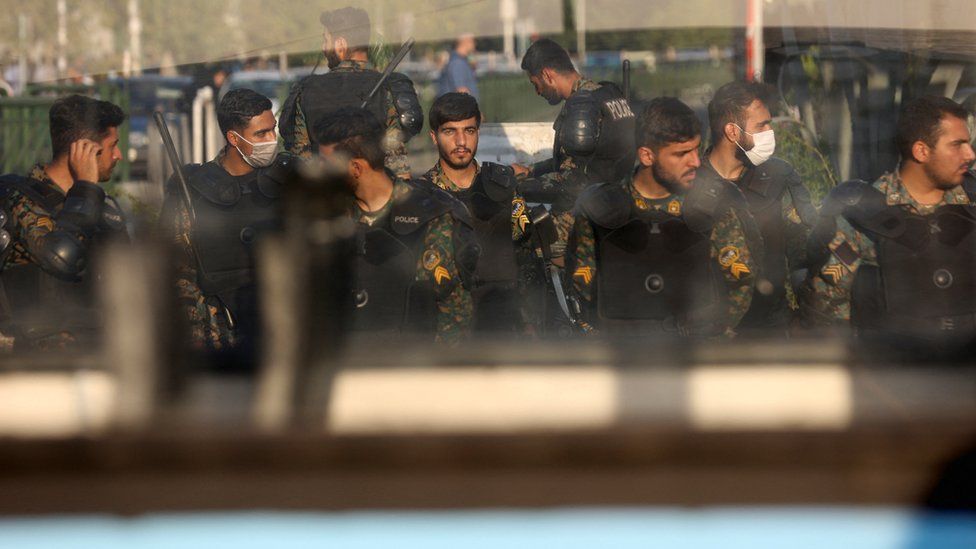
      Iranian riot police stand in a street in Tehran, Iran (3 October 2022)
      IMAGE SOURCE,WANA NEWS AGENCY VIA REUTERS Image caption, Iran’s supreme leader has called on security forces to be ready to deal with more unrest if necessary

      In another development on Tuesday, state media cited Tehran’s chief prosecutor as saying the judiciary had opened an investigation into the death of Nika Shakarami, a 16-year-old girl who went missing after taking part in protests in the capital on 20 September.

      Her aunt has said that in her last message Nika told a friend that she was being chased by police, and that her family found her body in a mortuary at a detention centre 10 days later.

      Sources close to the family told BBC Persian that before they could bury Nika, security forces stole her body and buried it secretly in a village 40km (25 miles) from her father’s hometown of Khorramabad, in the west of the country.


    • Zimbabwean author Tsitsi Dangarembga was convicted over placard protest

      A celebrated author from Zimbabwe, Tsitsi Dangarembga, was found guilty of inciting violence by toting a sign that demanded political reform.

      The magistrate argued that by encouraging others to join, the protest may have disturbed the peace.

      In exchange for avoiding a three-month jail sentence, Ms. Dangarembga consented to pay a fine of approximately $220 (£200).

      In a trial that critics claim is the most recent example of a government crackdown on dissent, she had entered a not guilty plea.

      This is despite the fact that President Emmerson Mnangagwa took power in 2017 with a promise to introduce reforms after the decades-long repressive rule of his predecessor, Robert Mugabe.

      Ms Dangarembga is one of Zimbabwe’s most famous authors. Her novel, This Mournable Body, was shortlisted for the Booker Prize, in 2020.

      She was convicted along with a friend Julie Barnes.

      The pair had walked along a road in the capital, Harare, two years ago, holding placards that called for political reform and the release of two government critics.

      The courtroom gasped and the two women stood motionless as the verdict was pronounced.

      “Guilty of inciting public violence and breaching the peace,” came the judgment.

      The magistrate said that as they protested on a public road and pictures were shared on social media, others could have been provoked to protest.

      The two have until Tuesday to pay the fine. If they re-offend within the next five years they will be jailed for six months.

    • George Floyd: Minneapolis council pledges to dismantle police department

      A majority of Minneapolis City Council has pledged to dismantle the local police department, a significant move amid nationwide protests sparked by George Floyd’s death last month.

      Nine of the 13 councillors said a “new model of public safety” would be created in a city where law enforcement has been accused of racism.

      Mayor Jacob Frey earlier opposed the move, drawing boos from the crowds.

      Activists, who for years have defended such a move, called it a turning point.

      But commentators say Minneapolis can now expect a long and complex debate over-policing.

      Mr Floyd’s death in police custody triggered mass protests against racism and police brutality. Security measures across the country were lifted on Sunday as unrest started to ease.

      Thousands of people are expected to gather on Monday for a public viewing of Mr Floyd’s body in Houston, his home city in Texas before he moved to Minneapolis, Minnesota. A private funeral will be held on Tuesday.

      A video of Mr Floyd, a 46-year-old African American, pinned to the floor with a white police officer kneeling on his neck for almost nine minutes sparked worldwide outrage.

      Officer Derek Chauvin has been dismissed and charged with second-degree murder. He will make his first court appearance later on Monday.

      Three other officers who were at the scene have also been sacked and charged with aiding and abetting.

      Source: bbc.com

    • George Floyd: Huge protests against racism held across US

      Huge peaceful rallies have taken place across the US against racism and police brutality on the 12th day of protests sparked by the death of George Floyd.

      Tens of thousands of people marched in Washington DC, in the city’s largest protest so far. Security forces blocked any approach to the White House.

      Crowds also demonstrated in New York, Chicago, LA and San Francisco.

      Meanwhile, people paid their respects to Mr Floyd in North Carolina, where he was born, before a memorial service.

      Mr Floyd, an unarmed black man, died in police custody in Minneapolis on 25 May. Video showed a white police officer kneeling on his neck for almost nine minutes while he is pinned to the floor.

      Officer Derek Chauvin has been dismissed and charged with murder. Three other officers who were at the scene have also been sacked and charged with aiding and abetting.

      Large anti-racism protests also took place in a number of other countries. In the UK, Parliament Square in central London was filled with people despite calls by the government to avoid mass gatherings for fear of spreading the coronavirus.

      In Australia, there were major protests in the cities of Sydney, Melbourne and Brisbane that focused on the treatment of indigenous Australians. There were also demonstrations in France, Germany and Spain.

      What happened at the protests?

      The largest appeared to be in Washington DC, where protesters – many of them carrying placards saying “Black Lives Matter” – gathered peacefully near the Capitol, the Lincoln Memorial and outside Lafayette Park, next to the White House, at the newly renamed Black Lives Matter Plaza.

      Mayor Muriel Bowser welcomed people, saying the crowds had sent a message to President Donald Trump. On Monday, federal law enforcement officers fired tear gas to clear a protest in the area ahead of a visit to a church by the president.

      “If he can take over Washington DC, he can come for any state, and none of us will be safe,” she said. “Our soldiers should not be treated that way, they should not be asked to move on American citizens.”

      Ms Bowser has requested the withdrawal of all federal law enforcement officers and National Guard troops from the city, saying their presence is “unnecessary”.

      One 35-year-old protester, Eric Wood, told the BBC: “I’m here because I really couldn’t afford not to be here. Racism has long been a part of the US.”

      Crystal Ballinger, 46, said she felt hopeful about the movement this time. “I feel something different about this protest… I’m hopeful that the message of solidarity and equality is getting out.”

      Many of the city curfews imposed after initial unrest have now been lifted. With restrictions eased, arrests have plummeted.

      However, late on Saturday police in Portland, Oregon, declared an “unlawful assembly and civil disturbance” after projectiles were thrown at officers near the Justice Center. Fifty arrests had been made by the early hours.

      Seattle police also said projectiles had been thrown and several officers were hurt by “improvised explosives”.

      Earlier in New York, crowds crossed the Brooklyn Bridge, while in San Francisco demonstrators briefly shut the Golden Gate Bridge. In Chicago, about 30,000 people rallied in Union Park, and a Hollywood intersection was blocked by protesters in Los Angeles.

      And in Richmond, Virginia, a statue of a Confederate general was pulled down from its pedestal.

      There were also protests in Atlanta and Philadelphia, where crowds chanted, “We need justice, we need love”.

      Meanwhile, the top editor of the Philadelphia Inquirer resigned after publishing a headline that equated property damage to the deaths of black people, which prompted public condemnation from many of the newspaper’s staff.

      Stan Wischnowski apologised for what he described as a “horribly wrong” decision to use the headline “Buildings Matter Too” on an article about civil unrest in the US.

      In Buffalo, two policemen were charged with second-degree assault after they were filmed pushing a 75-year old protester to the ground, seriously injuring him.

      In his overnight tweets, President Trump thanked the police, Secret Service and National Guard for doing a “fantastic job” and said that the Washington crowd was “much smaller than anticipated.


      Source: bbc.com

    • Two Buffalo policemen charged for shoving 75-year-old protester

      Two US policemen have been charged with second-degree assault after they were filmed pushing a 75-year old protester to the ground, seriously injuring him.

      Aaron Torgalski, 39, and Robert McCabe, 32, pleaded not guilty in Buffalo, New York. They were released without bail, and face up to seven years in prison.

      On Thursday, they were seen shoving Martin Gugino, who fell backwards on the pavement and started bleeding.

      He remains in a local hospital in a serious but stable condition.

      The two officers were enforcing a curfew in the city as a result of protests since the death of George Floyd in police custody in Minneapolis last month.


      Aaron Torgalski and Robert McCabe, members of the Emergency Response Team, were suspended without pay after footage of the incident outside the City Hall went viral.

      Fifty-seven of their colleagues – the entire unit – later resigned from the team in response to the officers’ suspension.


      On Saturday, a crowd of more than 100 supporters – including police officers and firefighters – protested outside the courthouse in Buffalo against the assault charges filed.

      What are Buffalo prosecutors saying?

      In a statement, Erie County District Attorney John Flynn said: “The two defendants, who are Buffalo Police officers, pushed a protestor outside of City Hall, causing him to fall and hit his head on the sidewalk.”

      He stressed that he was not taking sides in the high-profile case.

      “We’re on the same team here. We’re all working each and every day to do justice, to keep our streets safe, to keep our communities safe.

      “I’m partnered with law enforcement every day to do that. And when I have to prosecute one of my teammates it doesn’t help the situation,” Mr Flynn said.

      What has been the reaction?

      John Evans, president of the local police union, told the Buffalo News newspaper: “Our position is these officers were simply following orders from Deputy Police Commissioner Joseph Gramaglia to clear the square.

      “It doesn’t specify clear the square of men, 50 and under or 15 to 40. They were simply doing their job. I don’t know how much contact was made. He did slip in my estimation. He fell backwards.”

      New York Governor Andrew Cuomo said on Friday the two officers should be fired, and called for the incident to be investigated for “possible criminal charges”.

      In a statement, Buffalo Mayor Byron Brown said: “We can confirm that contingency plans are in place to maintain police services and ensure public safety within our community.”

      An initial statement from Buffalo Police Department said the man – long-time social justice activist in Buffalo, according to advocacy group Push (People United for Sustainable Housing) – had “tripped” and fallen during a “skirmish involving protesters”.

      Police spokesman Jeff Rinaldo later attributed the statement to officers not directly involved in the incident.


      Source: BBC 

    • George Floyd protests: Ex-top general rebukes Trump over troops threat

      Another senior former military officer has denounced President Donald Trump’s threat to use troops to suppress ongoing protests in the US.

      The ex-Joint Chiefs of Staff Chairman, Gen Martin Dempsey, told National Public Radio that Mr Trump’s remarks were “very troubling” and “dangerous”.

      Mr Trump’s current and former defence secretaries have also spoken out.

      On Monday, the president threatened to deploy the military to “quickly solve” the unrest if states failed to act.

      Mainly peaceful protests have spread across the US since the death of African-American George Floyd in police custody last month.

      While demonstrations over Mr Floyd’s death appear to be simmering down in the nation’s capital, the White House’s security perimeter has expanded in recent days.

      Police used batons and tear gas to clear protesters from nearby Lafayette Park on Monday, and have since erected high fences around the White House.

      Who has criticised the president?

      “The idea that the president would take charge of the situation using the military was troubling to me,” Gen Dempsey said in rare public remarks on Thursday.

      “The idea that the military would be called in to dominate and to suppress what, for the most part, were peaceful protests – admittedly, where some had opportunistically turned them violent – and that the military would somehow come in and calm that situation was very dangerous to me,” he added.

      Gen Dempsey served as America’s most senior military officer under former US President Barack Obama from 2011-15.

      His criticism comes a day after former Marine Gen Jim Mattis, Mr Trump’s former defence secretary, denounced the president, saying he deliberately stoked division.

      “Donald Trump is the first president in my lifetime who does not try to unite the American people – does not even pretend to try,” Mr Mattis wrote in the Atlantic magazine. “Instead, he tries to divide us.”

      Mr Trump hit back via Twitter at the “overrated general”.

      Earlier that day, Mr Trump’s current Defence Secretary Mark Esper had also spoken up.

      He said the use of active-duty forces to quash unrest across the nation would be unnecessary at this stage, in remarks that are known to have displeased the White House.

      What did Trump say about deploying the military?

      Mr Trump said on Monday from the White House Rose Garden that he would act to disperse violent protesters.

      “If a city or a state refuses to take the actions that are necessary to defend the life and property of their residents, then I will deploy the United States military and quickly solve the problem for them,” he said.

      While he spoke, authorities used force to disperse a mainly peaceful protest nearby so the president could walk to a historic church that was damaged by fire in the unrest and be photographed holding up a Bible.

      The justice department had ordered Lafayette Square, just outside the executive mansion, to be fenced off for Mr Trump’s walkabout.

      By Thursday afternoon, that security zone was significantly expanded, with high fencing installed around the park area known as the Ellipse just south of the White House.

      What other fallout has there been?

      Also on Thursday, a moderate Republican Senator Lisa Murkowski broke ranks to say she was unsure if she would support Mr Trump’s bid for re-election.

      In what is being seen as the most outspoken criticism yet of the president from a senator in his own party, Ms Murkowski told the Washington Post: “I thought Gen Mattis’s words were true and honest and necessary and overdue.”

      Source: bbc.com

    • George Floyd death: More large protests in US but violence falls

      Tens of thousands of people have demonstrated, mainly peacefully, across the United States for an eighth night following the death of African-American George Floyd in police custody.

      One of the biggest protests, joined by Floyd’s relatives, took place in his hometown of Houston, Texas.

      Many defied curfews in several cities, imposed after violence and looting in some districts on Monday night.

      The Pope has issued a call for racism not to be ignored.

      “We cannot tolerate or turn a blind eye to racism,” he said. But he also condemned the violence: “Nothing is gained by violence and so much is lost.”

      The Floyd case has reignited deep-seated anger over police killings of black Americans and racism.

      Demonstrators have taken to the streets – not only to express their outrage at the treatment of Mr Floyd – but to condemn police brutality against black Americans more widely.

      There have been calls, and a proposal from a US lawmaker, to end the qualified immunity of police which prevents civil legal action against them. More generally protesters have called for an end to racism and discrimination.

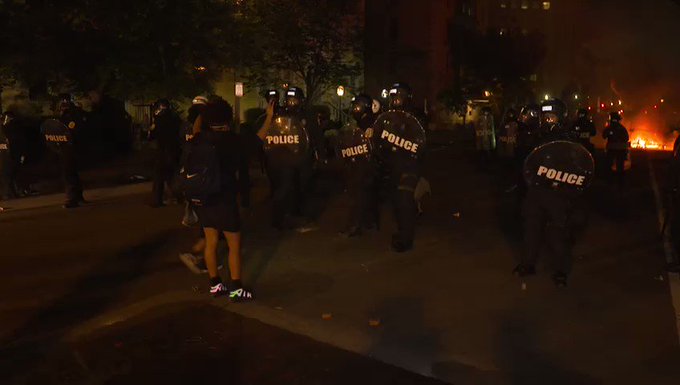
      In central Washington DC police fired tear gas after darkness. The military were again on the streets of the capital and helicopters hovered above protesters marching towards the White House.

      Traffic was blocked in New York’s Manhattan district as protesters ignored a night-time curfew, which had been extended for a week. Video footage showed them surrounding a police van.

      Disclaimer : “Opinions expressed in this article are the sole responsibility of the author(s) and do not in any way reflect those of backend.theindependentghana.com. Our outfit will hereby not be liable for any inaccuracies contained in this article.

      Source: bbc.com

    • French anti-racism protests defy police ban

      Thousands of people have joined protests in France over the 2016 death of a black man in police custody, defying police orders not to assemble due to coronavirus restrictions.

      The death of Adama Traoré, 24, has been likened to the killing of George Floyd in the US, whose death has sparked protests across the country.

      Police clashed with protesters in the Paris suburbs on Tuesday.

      The Paris police chief has rejected charges of racism against his force.

      About 20,000 people defied the order on mass gatherings to join the protest. Initially peaceful, the march turned violent, with stones thrown at police and tear gas fired back.

      There were also demonstrations in other cities, including Marseille, Lyon and Lille. Some of the demonstrators carried Black Lives Matter placards – the movement that began in the US and has spread internationally.

      Mr Traoré died in a police station after being apprehended by officers in the Paris suburbs and losing consciousness in their vehicle.

      One of the officers told investigators that he and two colleagues pinned down Mr Traoré using their bodyweight.

      Official reports indicate he died of heart failure, possibly due to an underlying health condition. Last Thursday, the officers who detained Mr Traoré were exonerated by a police investigation.

      Following his death in 2016, violent protests were seen in Paris for several days.

      His case has become a rallying cry against police brutality in France, which young ethnic minority communities say targets them.

      On Tuesday campaigners defied authorities, after their request for permission to protest was denied by police.

      Public gatherings are limited to 10 people to control the spread of coronavirus.

      Video showed police firing tear gas at crowds in Paris, as well as several fires and blocked roads.

      “Today we are not just talking about the fight of the Traoré family. It is the fight for everyone. When we fight for George Floyd, we fight for Adama Traoré,” his sister, Assa, told the protest, according to AFP.

      Paris police chief Didier Lallement defended his force against allegations of brutality and racism.

      In a letter to police officers, he said he sympathised with the “pain” they must feel “faced with accusations of violence and racism, repeated endlessly by social networks and certain activist groups”.

      Source: bbc.com

    • Protests intensify coronavirus fears

      The Associated Press news agency has analysed protests over the past few days and found that demonstrations over the killing of George Floyd had been held in every one of the 25 US communities with the highest concentrations of new cases.

      There are growing fears that the tightly packed streets and squares with people often not even wearing and face masks could lead to a spike in the number of new cases.

      There are currently 1.8 million confirmed cases of coronavirus in the US – with more than 106,000 deaths.

      Disclaimer : “Opinions expressed in this article are the sole responsibility of the author(s) and do not in any way reflect those of backend.theindependentghana.com. Our outfit will hereby not be liable for any inaccuracies contained in this article.”

      Source: bbc.com

    • Iran says 230 killed in November protests

      A senior Iranian lawmaker said Monday that 230 people were killed and thousands injured in November protests sparked by a petrol price hike, state news agency IRNA reported.

      It is the first time that an official in Iran has given overall casualty figures for the street violence.

      “During these events 230 people were killed, six of whom were official agents and security forces,” said Mojtaba Zolnour, head of the parliament’s national security and foreign affairs committee.

      “Twenty percent of them were forces keeping order and peace,” he added, noting that they included “the police, security and intelligence forces, and the Basij” militia, some of which are not under government control and considered unofficial.

      Those injured included about 2,000 people and 5,000 forces deployed to ensure law and order, the report added.

      The demonstrations erupted on November 15 in a handful of cities before spreading to at least 100 urban centres across the Islamic republic.

      Petrol pumps were torched, police stations attacked and shops looted, before security forces stepped in amid a near-total internet blackout.

      Officials had repeatedly rejected death tolls given by foreign media and human rights groups as “lies” and passed responsibility of reporting on it between different state bodies.

      London-based human rights group Amnesty International has put the number at 304, and a group of independent UN rights experts said in December that 400 including at least 12 children could have been killed based on unconfirmed reports.

      The United States has claimed that more than 1,000 were killed in the violence.

      According to Zolnour, seven percent of the 230 were “those killed in direct confrontations with security forces” and were mostly “rioters armed with semi-automatic weapons and machineguns”.

      He added that 26 percent “were not among the rioters and killed over unknown reasons” such as “being shot from seven metres to the heart or to the temple from three metres away”.

      The lawmaker insisted that the security forces were too far away from the protesters to have done this.

      “A high percentage were killed by bullets that are not used” in Iranian standard-issue weapons, he said.

      Of the remainder, 16 percent died while attacking military bases and police stations, and 31 percent at public places such as malls, banks and fuel stations.

      Zolnour alleged that those behind the violence had aimed to use the unrest to “overthrow” the system.

      Iran at the time blamed the violence that broke out during the protests on “thugs” backed by its foes the United States, Israel and Saudi Arabia.

      It has singled out exiled royalists and the People’s Mujahedeen of Iran (MEK), an exiled former rebel group which it considers a “terrorist cult”.

      Source: france24.com

    • Journalists injured covering protests across US

      Freelance photojournalist Linda Tirado was reporting in Minneapolis when she was struck in her left eye with a projectile appearing to come from the direction of the police.

      Now she’s permanently blind in that eye.

      “If somebody thought they were gonna stop me telling stories and doing my job by putting my eye out, they’re gonna have to try harder,” she told the BBC.

      Tirado is one of at least a dozen journalists who have been injured covering the protests across the US this weekend.

      Many seem to have been caught up in police efforts to disperse protesters, but in some clips shared on social media, it appears journalists were attacked even after offering press credentials.

      In Washington DC, the BBC’s Aleem Maqbool shared a video of a police officer with a riot shield running at cameraman Pete Murtaugh.

      In Michigan, Detroit Free Press reporter JC Reindl shared an image of an officer approaching him, saying: “Last thing I saw before I got sprayed.”

      Aleem Maqbool

      ✔@AleemMaqbool

      This was before curfew and our cameraman @p_murt clearly a member of the press, a block away from the White House this evening…

      Embedded video

      7,719 people are talking about this
      Disclaimer : “Opinions expressed in this article are the sole responsibility of the author(s) and do not in any way reflect those of backend.theindependentghana.com. Our outfit will hereby not be liable for any inaccuracies contained in this article.”

      Source: bbc.com

    • Dystopian movie or American Spring – world media on US protests

      The sheer extent and ferocity of the US protests have widely caught the attention of news organisations around the world.

      Latin America’s media dedicated front-page headlines and photographs to the “fire and fury” of street protests raging in the US over the death of a black man during a Minneapolis police arrest.

      Their reports spoke of “chaos”, “scenes of barbarism” and anger against the “virus of racism”.

      In Russia, a five-minute report on state news channel Rossiya featured cases of heavy-handed police tactics, such as a police car driving into a crowd of protesters.

      The report concluded that the situation resembled a “dystopian movie”.

      Pan-Arab TV channels, too, gave rolling coverage to the protests, highlighting the most prominent incidents of violence.

      Many social media users condemned the police brutality. Some called the protest movement “the American Spring”.

      And some conservative newspapers in Iran referred to the curfews imposed in US cities as “martial law”.

      Hardline Keyhan’s front page headline read “Martial law in 25 American cities”, and the banner headline of Vatan-e Emruz newspaper was “US under military boots”.

      Source: bbc.com

      Disclaimer : “Opinions expressed in this article are the sole responsibility of the author(s) and do not in any way reflect those of backend.theindependentghana.com. Our outfit will hereby not be liable for any inaccuracies contained in this article.”

    • Heroes: A group of black men have been hailed as heroes for saving a white policeman during protest

      A couple of hours ago, in the home city of the legendary boxer, Mohammed Ali, Louisville, Kentucky, Americans found an amazing love in the midst of complete chaos and unusual circumstance. It was a scene that brought many Americans to tears and made many realize what a beautiful country they would have, if only they could love one another.

      Following, the death of George Floyd at the hands of four Minneapolis Police officers a couple of days ago, angry protests and riots have ravaged several cities of America. The people have become frustrated and consequently furious as they take to the streets of the United States of America to demand for Justice and end to police brutality that is constantly meted out on the African Americans.

      As the angry protesters who had let loose the dogs of vandalism on several cities of the United States of America got to the city of Louisville, Kentucky, something very remarkable and unusual happened. A white Police officer who is among the deployed forces to contain the angry protesters, inadvertently found himself isolated from his team.

      With the angry mob bearing down on him, the police officer was clearly in danger of being hurt or probably loose his life. However, a group of black people who realized that the police officer was facing a mortal danger, quickly formed a human – shield to protect the police officer from the angry protesters.

      No doubt, this police officer will definitely be eternally grateful to these black young men for saving his life. However, their heroics have gotten the attention of many Americans who have hailed them as heroes.

      Reacting to this great act of love and brotherhood, John F. Kennedy Jr. wrote on his Twitter handle:

      “These men are protecting an officer that was separated from, was out numbered and in danger. This made me cry.”

      Truth be told, I also cried while writing this piece. Pastor Joshua Feuerstein also wrote:

      “These men are heroes. When an officer got separated from his squad… These men formed a line and refused to let rioters harm him! SHEAR THESE MEN’S FACES! THEY ARE HEROES!”

      The actions of these great Americans, have truly reaffirms the eternal words of the great Martin Luther King Jr.

      “I refuse to accept the view that mankind is so tragically bound to the starless night of racism and war that the bright daybreak of peace and brotherhood can never become a reality… I believe that unarmed truth and unconditional love will have the final word.

      Source: opera.com