Tag: Rainfall

  • Intense traffic jam on Kasoa stretch due to Monday downpour

    Intense traffic jam on Kasoa stretch due to Monday downpour

    Heavy traffic congestion gripped the Kasoa stretch on Monday, May 13, following a downpour around 4pm.

    The unusual congestion was attributed to silt and filth washed onto the road by the rain, blocking some roads and hindering vehicle movement.

    Social media users reported that the flooding around SCC and Old Barrier forced vehicles from Kasoa to Mallam to merge with those heading towards Kasoa from Mallam, exacerbating the gridlock.

    The traffic situation, which lasted for over 9 hours, compelled drivers of heavy-duty trucks bound for the Central and Western Regions to park as roads became impassable.

  • Stay away from sagging electrical conductors when it rains  – ECG warns public

    Stay away from sagging electrical conductors when it rains – ECG warns public

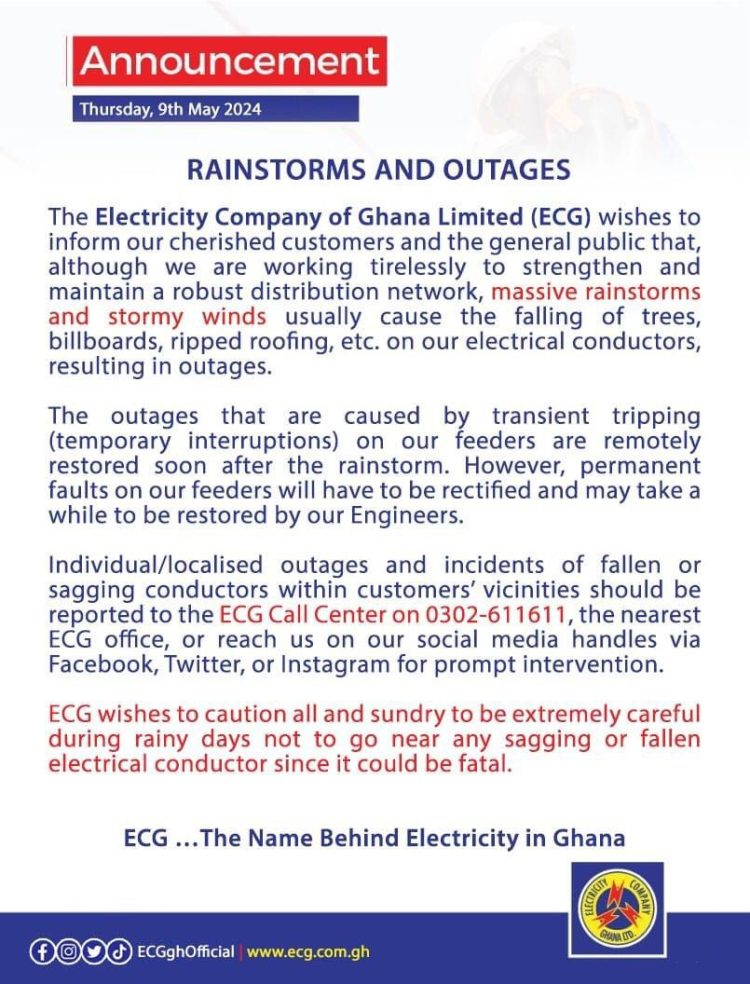
    The Electricity Company of Ghana (ECG) has issued a warning urging the public to stay away from sagging or fallen electrical conductors, especially during rainy weather, due to the potential fatal risks involved.

    In a statement released on Thursday, May 9, the power distributor emphasized the importance of caution, stating, “ECG wishes to caution all and sundry to be extremely careful during rainy days not to go near any sagging or fallen electrical conductor since it could be fatal.”

    The company also advised that any incidents of individual or localized power outages, as well as fallen or sagging conductors within customers’ vicinity, should be reported promptly to ensure safety.

    “Individual/localized outages and incidents of fallen or sagging conductors within customers’ vicinities should be reported to the ECG Call Centre on 0302-611611, the nearest ECG office, or reach us on our social media handles via Facebook, Twitter or Instagram for prompt intervention,” it stated.

  • GMet predicts thunderstorms along the coastline today

    GMet predicts thunderstorms along the coastline today

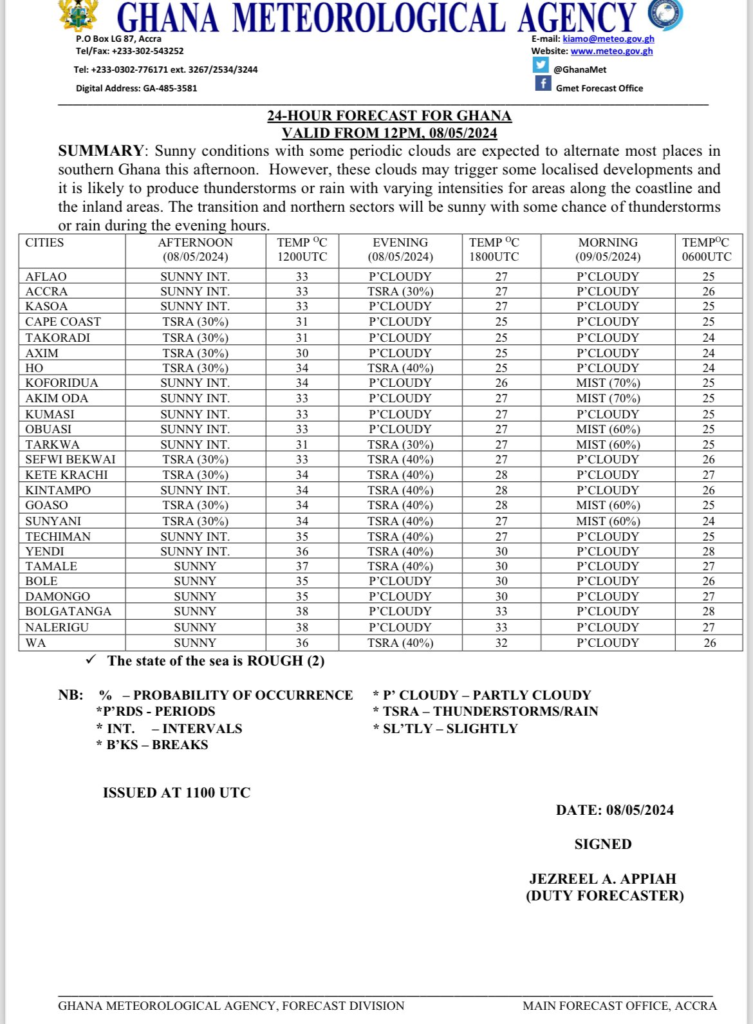
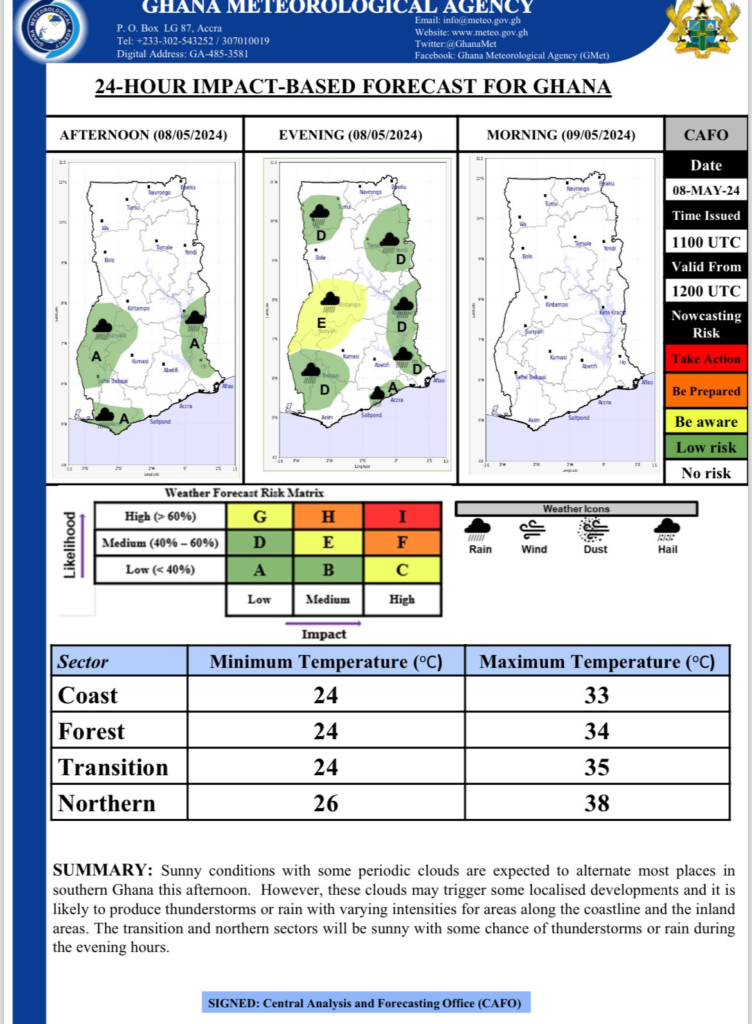
    The Ghana Meteorological Agency (GMet) has forecasted thunderstorms along the coastline of the country for the latter part of today.

    While most places in southern Ghana will experience sunny conditions with periodic clouds this afternoon, these clouds could lead to localized thunderstorms or rain with varying intensities, especially along the coastline and inland areas.

    The transition and northern sectors, on the other hand, are expected to be sunny with a chance of thunderstorms or rain during the evening hours.

    Residents are advised to stay updated with weather forecasts and take necessary precautions.


  • Another heavy rainfall exposes Accra’s filth, poor drainage system

    Another heavy rainfall exposes Accra’s filth, poor drainage system

    Accra, Ghana’s capital, faced yet another round of flooding following a heavy downpour on Monday morning. 

    The torrential rain caused severe congestion on roads, leaving many corporate workers, traders, students, and motorists stranded and drenched.

    In areas like Pokuase, Achimota, Odawna, Tesano, and Alajo, motorists were forced to pull over along the roadside to seek shelter from the relentless rain. 

    The heavy traffic led to long queues of vehicles, with some commuters opting to walk to their destinations, dampening the spirit of facing the second week of May.

    Unfortunately, it has become commonplace for Accra to be inundated with floods, even after light rainfall.

    Adding to the challenge, many individuals have taken advantage of the situation to dump their garbage into the flooded waters, exacerbating the problem.

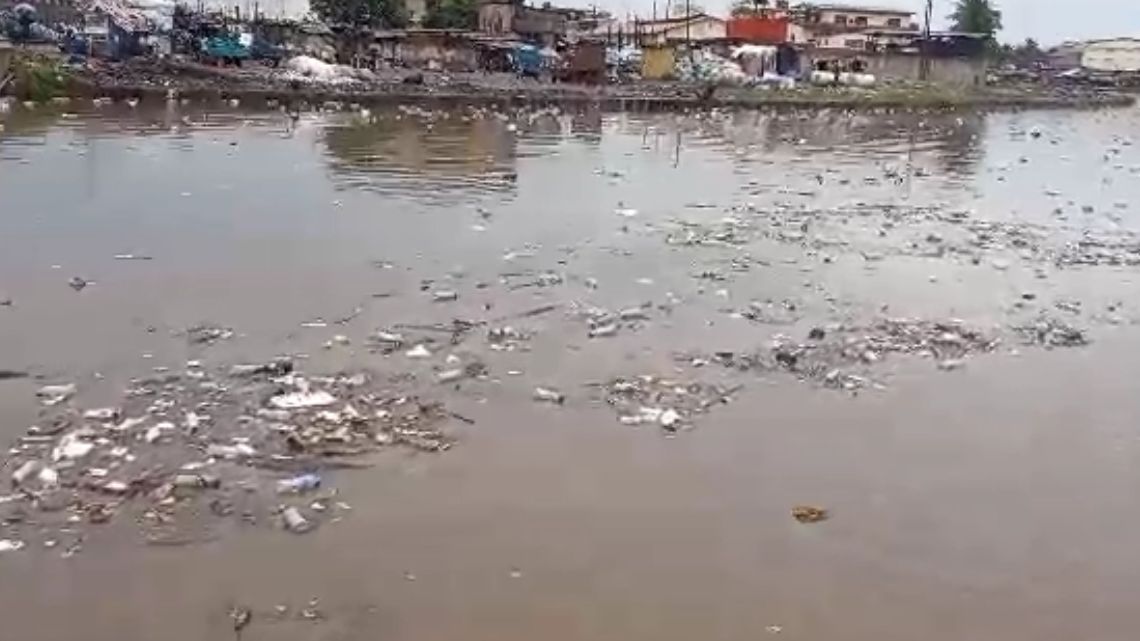
    This recurring issue highlights the inadequate drainage systems in many parts of Accra, which are often clogged with plastics, wrappers, and cans, leading to overflowing rubbish and posing a potential health hazard.

  • Woman caught disposing rubbish on a flooded street in Tesano

    Woman caught disposing rubbish on a flooded street in Tesano

    Amidst heavy rainfall in the southern part of Ghana, a video surfaced capturing a Ghanaian woman emptying her dustbin onto a flooded street in Tesano.

    Despite the adverse weather conditions, the woman, clad in a raincoat, struggled to dispose of her rubbish on the already inundated road.

    Her action has been condemned by many who have seen the video.

    The incident occurred following weather warnings issued by the Ghana Meteorological Agency (GMet) due to heavy rainfall originating from a storm observed over southern Togo.

    The rain, expected to move westward, has affected various areas in southern Ghana.

    Tragically, the aftermath of the heavy rains resulted in a person being critically injured after a tree fell on a motorcycle and a 4-wheel-drive vehicle.

    The downpour in the Accra Airport area had a devastating impact, causing numerous trees to split and leading to damage to vehicles parked nearby.

  • Dubai International Airport facing “very challenging conditions” over torrential rainfall

    Dubai International Airport facing “very challenging conditions” over torrential rainfall

    Heavy rain has been lashing Gulf states, leading to deadly flash floods and disrupting flights at the world’s second-busiest airport.

    Dubai International Airport is grappling with “very challenging conditions,” urging some passengers not to arrive as areas are submerged in water.

    In a tragic incident, a man lost his life when his car was swept away in flash floods. Meanwhile, in Oman, rescuers recovered the body of a girl in Saham, bringing the country’s death toll to 19 since Sunday.

    Flight operations at Dubai International Airport have been severely impacted, with approximately 290 flights cancelled and 440 delayed as of Wednesday evening, according to Flight Aware data.

    Emirates, a key international airline based in Dubai, has halted check-in services for departing passengers until Thursday.

    Authorities have cautioned that more thunderstorms, heavy rain, and strong winds are expected, with many low-lying areas still submerged.

    https://twitter.com/Fighter_4_Human/status/1780850263651418291

    The United Arab Emirates, Oman’s northern neighbor, experienced its heaviest rainfall event in 75 years on Tuesday, with 254.8mm (9.7in) recorded in Khatm al-Shakla, al-Ain, in less than 24 hours.

    Dubai typically receives only 97mm of rain annually, with the monthly average for April around 8mm. However, Tuesday’s deluge resulted in flooded roads and traffic congestion, including on Sheikh Zayed Road, a major thoroughfare in Dubai.

    “I’m trying to get on another flight,” Andrew, 62, told BBC News. “My wife, Kate is standing in another queue as we’re trying to hedge our bets.”

    The couple from Kent were on holiday to celebrate Kate’s 60th birthday, a trip Andrew says she will now “never forget”.

    “It has been worse I think than anyone expected, but the system within the airport has completely fallen apart and Emirates, which I consider to be one of finest airlines – no staff, no information, no coordination, no professionalism, no care – no disaster planning at Emirates, it’s weird – big companies normally plan for these events.

    “It’s been total chaos.

    “People are sleeping in the lounges, on the floors, food packets everywhere. It’s just been a pretty filthy experience really.”

    At the airport, Anne Wing from Rotherham, South Yorkshire, along with her husband and three children, was hoping to fly to London Heathrow.

    They reached the airport at 08:00 local time (04:00 GMT) for their 11:25 flight, only to be informed initially that it had been delayed by an hour.

    “We have spoken to no-one from Emirates since 08:00 this morning,” she said.

    “Passengers were shouting and rioting at the connection desk, there were no staff to be seen.”

    “Its horrific, we are squashed in like animals – it is dangerous and inhumane,” she added. “It’s absolutely ridiculous here”.

    She mentioned that her family had not eaten since lunchtime, and the only provisions provided were small cartons of water.

    Passengers diverted to another Dubai airport, Dubai World Central, have reported similar experiences, citing a lack of proper meals and water.

    No fatalities were reported in Dubai, but an elderly man died when his vehicle was swept away in a flash flood in Ras al-Khaimah.

    While the rain had eased by Tuesday evening, Dubai International Airport warned of further disruptions and noted overcrowding.

    The intense storm, which began on Tuesday morning and persisted throughout the day, forced the airport to halt operations for 25 minutes, divert several inbound planes, and cancel numerous inbound and outbound flights.

    Social media videos depicted aircraft navigating through several inches of water that covered the airport’s apron and taxiways completely.

    “We are currently experiencing significant disruption due to the weather and are continuously working with our emergency response teams and service partners to restore normal operations as quickly as possible,” it said on X, formerly Twitter.

    Emirates, one of the UAE’s two flag carriers and the world’s largest international airline, told customers that check-in had been suspended at the airport for all flights until Thursday morning.

    The chief executive of Dubai Airports, Paul Griffiths, told local radio station Dubai Eye: “In living memory, I don’t think anyone has ever seen conditions like it.”

    Software engineer Kanish Kumar Deb Barman, who is stuck at the airport on his way home to India, told Reuters news agency: “There are hundreds and thousands of other passengers just like me in this airport who have been waiting for 10 hours, 16 hours, some even for 24 to 30 hours.”

    Before the storm hit, the UAE’s National Emergency Crisis Management Authority issued a warning advising people to stay at home. The government also instructed its employees to work remotely, and private schools were advised to conduct classes online.

    In Oman, over 1,400 individuals have been relocated to shelters, and schools and government offices have been shut down as a precautionary measure.

    On Sunday, a tragic incident occurred in Oman where 10 schoolchildren aged between 10 and 15, along with an adult, lost their lives when their bus was engulfed by floodwater while attempting to cross a wadi in the al-Mudhaibi area of Sharqiya province, approximately 115km (70 miles) south of the capital, Muscat. Three other children and the driver were rescued, with two of them reportedly airlifted to safety after being swept 600m (1,970ft) from the bus.

    The sultanate’s council of ministers expressed deep sorrow over the deaths and extended their condolences to the families of the victims.

    Oman typically experiences minimal precipitation, with annual average rainfall ranging from 150 to 300mm in the north, mainly occurring during pre- and post-monsoon storms.

    Following the floods, some social media users incorrectly attributed the extreme weather solely to recent cloud seeding operations in the country. Cloud seeding, a process where planes spray clouds with particles to induce rainfall, has been conducted in the United Arab Emirates for over a decade.

    However experts say that at best it would have had a minor effect on the storm and that focusing on cloud seeding is “misleading”.

    “The UAE does have an operational cloud seeding programme to enhance the rainfall in this arid part of the world, however, there is no technology in existence that can create or even severely modify this kind of rainfall event,” said Prof Maarten Ambaum from the University of Reading.

    BBC Weather meteorologist Matt Taylor also noted the storm had already been forecast.

    “This was already forecast to be a severe weather event. Ahead of the event, computer models [that don’t factor in potential cloud seeding effects] were already predicting well over a year’s worth of rain to fall in around 24 hours.

    “The impacts were much wider than I would expect from cloud-seeding alone too – severe flooding impacting large areas from Bahrain to Oman.”
    The heavy rain also hit Saudi Arabia and Bahrain, where videos showed cars stranded in flooded roads.

    Many factors contribute to flooding, but a warming atmosphere caused by climate change makes extreme rainfall more likely.

    The world has already warmed by about 1.1C since the industrial era began and temperatures will keep rising unless governments around the world make steep cuts to emissions.


  • Heavy traffic jam on Accra-Kumasi highway as Ofankor Barrier floods after hour-long downpour

    Heavy traffic jam on Accra-Kumasi highway as Ofankor Barrier floods after hour-long downpour

    Heavy rainfall on Monday, April 8, caused chaos on the Accra-Kumasi highway as parts of Accra were submerged in floodwater.

    The downpour, lasting over an hour, led to a massive traffic jam, leaving motorists stranded and commuters struggling to reach their destinations.

    Ofankor Barrier, a particularly flood-prone area, was severely affected, with floodwaters inundating major parts of the road. Vehicles found it challenging to navigate through the flooded areas, exacerbating the already congested traffic situation.

    Workers and students relying on public transportation were among the most affected, as they were left stranded due to the impassable roads.

    The situation highlights the recurring issue of flooding in Accra and the need for effective drainage systems to mitigate the impact of heavy rainfall.

  • Expect less frequent yet ‘violent’ rains during this period – GMet warns

    Expect less frequent yet ‘violent’ rains during this period – GMet warns

    The Ghana Meteorological Agency (GMet) has issued an alert urging residents to brace themselves for relatively intense rainfall from now to April.

    According to GMet, this period coincides with the transition from the dry season into the major rainy season for southern Ghana.

    Rains during this period will be less frequent but quite violent. Expect localised rain and thunder with occasionally strong winds, especially over southern Ghana,” it stated in a circular.

    The Agency made this known while indicating that temperatures are expected to rise significantly in the coming days, with a peak anticipated on March 20, 2024, as the sun moves towards the equator.

    The current weather in Ghana is already hot, exacerbated by the ongoing Harmattan season. However, GMet forecasts that temperatures will intensify, surpassing the current conditions.

    According to GMet, “The sun is on its apparent movement from the southern hemisphere towards the northern hemisphere and expected to be on the equator on March 20, 2024.”

    In view of this, “an increase in temperature is expected from now through March to April 2024.”

    The projected temperature ranges are formidable, with the southern half expected to experience maximums between 33°C to 37°C and the northern regions facing even higher temperatures ranging from 36°C to 42°C.

    Simultaneously, minimum temperatures are anticipated to fluctuate between 22°C and 27°C nationwide.

    GMet has, however, clarified that this does not suggest the occurrence of heat waves, noting that “temperatures are normally high during these months and require precautionary measures to deal with the associated risks.”

    To protect public health during this period of heightened temperatures, GMet advises the following precautions:

    1. Stay Hydrated: Drink plenty of fluids to prevent dehydration.
    2. Seek Shade: Use umbrellas or hats, especially between 11 am and 3 pm when the sun is strongest.
    3. Wear Light Clothing: Choose lightweight, light-colored clothing to reduce heat absorption.
    4. Apply Sunscreen: Use sunscreen when spending extended time outdoors to protect your skin from sunburn.
  • Rainfall to be experienced in Accra, Axim, other areas today

    Rainfall to be experienced in Accra, Axim, other areas today

    The Ghana Meteorological Service (GMet) has observed a rain-bearing cloud over the eastern coast of Ghana.

    This storm is expected to produce rain of varying intensity over Ghana’s marine space and is anticipated to bring cloudiness over coastal cities.

    Rain of varying intensities will be experienced in a few coastal areas. Additionally, a separate band of clouds over the west coast will induce cloudiness over parts of the western and central regions, with pockets of rain expected.

    Areas to be affected are Ada, Keta, Sege, Abor, Adidome, Sogakope, Prampram, Tema, Teshie, Accra, Nzulezu, Nkroful, Essiama, Axim and Takoradi.

  • NADMO warns of more severe rains in the coming days

    NADMO warns of more severe rains in the coming days

    The National Disaster Management Organisation (NADMO) has issued a warning about anticipated heavy rainfall.

    This comes in response to the flooding in certain areas of Accra following nearly an hour of rain on Friday.

    George Ayisi, the Public Relations Officer (PRO) of NADMO, stated that the Ghana Meteorological Agency (GMet), with whom the organization maintains regular communication, has forecasted additional rainfall.

    In an interview on Eyewitness News on Citi FM in Accra, he emphasized the importance of the public preparing for more rainfall in the days ahead.

    “We are in constant touch with GMeT and they keep updating us every time. They say the rains are going to be severe, they are going to be heavy so we should be careful. Those who are travelling in some cases it will be stormy, windy. If you are travelling to places where there are trees and co just be careful. If you are in areas where the roofing of houses or homes areas not too good, let’s be careful in those areas.”

    “If we are in areas where we are not sure and they are flood prone let’s try and identify safe havens in the city and then let’s try and move to safer grounds for our ourselves and our relatives,” he stated.

    Meanwhile, portions of Accra experienced enormous wetlands of running water on roads after over an hour of rain on Friday.

    After over an hour of rain, areas including as the Tema Motorway, Kwame Nkrumah Interchange, Kaneshie, North Kaneshie, Alajo, Adabraka, Accra Central, Tema, Tema station-Accra, Osu, and others were severely impacted.

    Many houses and cars were inundated, and drains carrying running water overflowed, while some potholes on highways grew larger and deeper.

    On social media, videos and comments about the scenario and its consequences went viral, with many people urging the government to take action to address the age-old issue.

  • Hundreds queue up in front of US Embassy for visas despite rains

    Hundreds queue up in front of US Embassy for visas despite rains

    Amidst the ongoing discourse surrounding individuals seeking better prospects in more developed nations, disconcerting images have emerged depicting a troubling scene at the entrance of one of the nation’s largest foreign embassies.

    Photographs, shared on Twitter by Annie Ampofo, a journalist at Metro TV, reveal numerous individuals forming extensive, serpentine lines as they patiently await their turn for assistance at the United States Embassy in Accra.

    Adding to the concern, Ampofo shared that these individuals endured the drizzling rain while standing in the open. Astonishingly, upon close examination of the images, no umbrellas or indications of raincoats are visible, depicting their resilience against the weather while patiently queuing.

    Furthermore, one photograph clearly shows the dampened asphalt road, a testament to the recent rainfall that had occurred.

    Addressing the situation, Annie Ampofo posed a poignant question, questioning the treatment of the host country’s citizens by foreign embassies in Ghana, and pondering how long such treatment would persist.

    “Why do foreign Embassies treat us this badly… This is the American Embassy… how long will this continue???

    “Actually, it was drizzling when this pick was taken…” she wrote on her Twitter page.

    Meanwhile, recent reports indicate that professionals such as nurses have relocated from Ghana, to places like Canada, America, the UK, among others, in search of greener pastures.

  • Gaagbini Chief loses entire house to flooding; calls for support

    Gaagbini Chief loses entire house to flooding; calls for support

    Chief of Gaagbini in the North East Region’s West Mamprusi Municipality, Naa Yidana Alhassan, is seeking assistance from the government, non-governmental organizations, individuals, and charitable groups to provide him with construction materials for the rebuilding of his residence, which was inundated and subsequently collapsed due to flooding.

    The chief’s plea follows the aftermath of heavy rainfall in the region, resulting in significant damage to numerous residences and bridges within the West Mamprusi and East Mamprusi Municipalities of the North East Region.

    The extended rainfall on Wednesday, August 9, 2023, lasting more than 6 hours, led to the displacement of numerous inhabitants across various localities in the region. Affected areas include Gaagbini, Tinkaya, Tinguri, Gbani, Banawa, Takorayiri, and Boayini.

    Livestock, farmlands, building materials, containers, and other valuable items belonging to the residents were carried away by the downpour.

    Naa Yidana Alhassan said, “I don’t know what to do again. My wife, myself, and my children have all been displaced because all the rooms in my house are gone”.

    He is appealing to the government, individuals, and NGOs to support him in one way or the other to reconstruct his house.

    “I am appealing to the government, especially, the vice president and all those who matter to support me. I have nothing with me again to build my collapsed house. So, I am appealing to all those who can help me to come and support me,” he appealed.

    The Assemblyman for the Nayorku electoral area, Seidu Jafaru is also calling on the government to consider constructing three bridges in Gaagbini to avert the annual occurrence of the flood.

  • Flood prevention measures not yielding results due to human activities – Asenso-Boakye

    Flood prevention measures not yielding results due to human activities – Asenso-Boakye

    Minister of Works and Housing, Francis Asenso-Boakye has stated that specific human activities are impeding the government’s efforts to achieve effective outcomes in flood prevention measures.

    Despite allocating GH¢450 million for drain construction and desilting since 2018, the government claims that these activities have made it challenging to tackle the recurring issue of flooding.

    The minister highlighted issues such as the obstruction of lagoons and wetlands for development purposes, construction on drainage channels that impede stormwater flow, dumping of waste in drains that reduce their capacity, and inadequate enforcement of planning and building laws by local authorities.

    “It has become more evident that human activities are severely impeding the government’s efforts to tackle flooding. The observation includes blocking of lagoons and wetlands with construction materials for development purposes, building on drainage channels and blocking the free flow of stormwater, dumping of solid waste in drains thereby reducing their capacity to hold stormwater and the gap in the enforcement of planning and building laws by the various MMDAs,” Mr Asenso-Boakye bemoaned while providing a brief to Parliament on measures by the government to contain the situation.

    The Minister further intimated that flooding in the capital is considered a national security issue and his Ministry is engaging with other relevant agencies to resolve the issue.

    “Cabinet noted the need to consider flooding in Accra as a national security issue since effective law enforcement has a role to play in resolving the issue. Subsequently, the Cabinet constituted a committee to develop a comprehensive plan with appropriate measures to strengthen the enforcement of laws relating to lands and siting of buildings

    “While the Committee does its work, my Ministry will continue its engagement with the National Security Ministry in seeking support for the Assemblies to enforce planning laws and building regulations.”

    He also gave an update on the progress of projects aimed at mitigating the effects of flooding in Accra.

    “Since 2018, the government has committed more than GH¢400 million to address flooding under a special progaramme. Under this programme, 384 desilting projects and 202 channel projects were initiated.

    “Today, 370 desilting projects representing 96 percent have been completed and 84 drainage channel projects have been completed, with the remaining 118 at various stages of completion and the effects have been the mitigation of flood hazards in beneficiary communities.”

  • NADMO Director blames illegal structures around Adentan Greenbelt for Nana Krom flooding

    NADMO Director blames illegal structures around Adentan Greenbelt for Nana Krom flooding

    Director of the National Disaster Management Organization (NADMO) in the Adenta Municipality, Humphrey Ankamah Sarpong, has identified illegal structures built around the University of Ghana’s dam as the primary cause of flooding in the Nana Krom area in the municipality.

    According to him, individuals have encroached upon the designated green belt area, erecting illegal buildings that obstruct the natural flow of rainfall and clog the gutters during heavy downpours.

    During an interview with Radio Univers, Humphrey Ankamah Sarpong expressed his concern about the unauthorized construction activities taking place in the area. He stated, “That place used to be a green belt, but as I speak, people have built houses around almost the entire area. Even the dam that belongs to the University is being encroached upon, which poses a serious threat to the university farm and the people who are settling there illegally.”

    The NADMO director further explained that despite multiple efforts by the assembly to demolish illegal structures and enforce the area’s green belt status, some individuals within the community continue to support and engage in these unlawful activities. He added, “When we go to the area, some of them track us until the evenings, and then they come and build. There are people within the community who are supporting these illegal activities.”

    Humphrey Ankamah Sarpong highlighted the limitations of relying solely on gutter construction to address the flooding issue.

    He stressed that even with well-constructed gutters, the problem cannot be solved as people are now narrowing the drains by constructing buildings too close to them. Thus, it is crucial to address the root cause by curbing the encroachment on the green belt and taking measures to protect the dam and the surrounding area.

    “As an Assembly, if you go there, then they will be saying that construct the gutter but the gutter no matter how you construct the gutter, the gutter cannot solve the problem alone because people are now trying to build to narrow the drain over there, so the gutter won’t solve the problem(flooding) .”

  • How 5 rescued man at the brink of death after Thursday’s downpour

    How 5 rescued man at the brink of death after Thursday’s downpour

    The flooding situation that hits major parts of Ghana whenever it rains nearly claimed the life of an individual at Gbawe.

    On Thursday, Accra witnessed heavy rainfall for over five hours which made commuting nearly impossible as major portions of the road were engulfed by water and filfth.

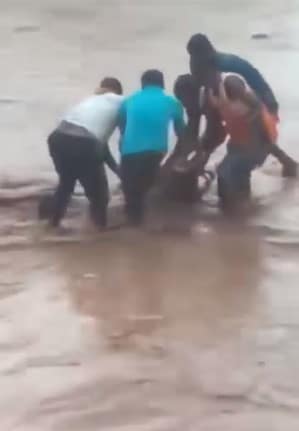
    At Gbawe, per a video circulating on social media, a man got sucked into a drain.

    Concerned for his life, some five men rushed to his aid and it took close to a minute for them to pull him to safety.

    It was however did not come easily as the rushing brownish torrent kept fighting their efforts.

    After being rescued the men was allowed to catch his breath.

    It has become the norm that whenever there is a downpour, properties have to be destroyed and lives have to be lost.

    One of the most recent casualties occurred on Tuesday dawn March 7, 2023, when flood swept away two children at Babadongo near Bortianor in the Ga South Municipality of the Greater Accra Region.

  • Climate change affecting Ghanaian farmers’ rainfall prediction, productivity

    Climate change affecting Ghanaian farmers’ rainfall prediction, productivity

    All areas of life are impacted by climate change, but those that depend on the environment are most vulnerable. One example is rural areas with farms.

    Economic and non-economic effects of climate change on farmers are the two categories into which they are most frequently divided. Losses that may be calculated or assessed in monetary terms are considered economic consequences.

    Losses that cannot be assessed or quantified in monetary terms are referred to as non-economic impacts. Loss of indigenous knowledge, cultural heritage, and a sense of location and belonging are a few examples.

    Research and policy strategies have focused on understanding and addressing the economic effects of climate change. Less so the non-economic aspects. I study food and agricultural systems in Ghana. In a recent paper my colleagues and I sought to understand the non-economic effects of climate change on farmers in Ghana.

    Our findings have implications for climate change adaptation strategies and policies across the global south.

    It is important to note that our research is not in any way suggesting that climate change is the only process driving changes in the farming systems and local culture in Ghana. But, based on the interviews we did, we argue that climate change is playing a role.

    Our research and its findings

    We conducted 30 in-depth interviews and a focus group with farmers in Offinso, a farming area in southern Ghana. Offinso is traditionally known for both food and cash crops production in Ghana. Farmers in the area produce crops that include maize, vegetables, pawpaw and cocoa. Agriculture in the area is largely rain-fed.

    Farmers were asked to describe the weather patterns over a 30-year period. Their responses showed that they had experienced variable weather patterns, a situation that is affecting their farming activities.

    For example farmers were no longer able to predict rainfall patterns and farming seasons. Farmers indicated that 30 years ago, the rains were constant during specific months of the year. This enabled them to plan and organise themselves for their yearly farming activities, as they were able to predict rains and start of the farming season.

    But rainfall patterns have become very variable.

    A consequence of this was that farmers could no longer exchange labour in a system known as Nnoboa. Farmers explained that when they could predict the farming season, they organised themselves at the start of the farming season for Nnoboa. This is often based on the principle of helping one another on the farm as a way of building social bonds. Nnoboa was largely practised at the start of the rainy and farming seasons, when land preparation and planting of crops are required.

    But the variable nature of the rains had distorted the farming seasons and organisation of Nnoboa – communal labour. Instead farmers were relying on their nuclear families or hired labour. This reflected a much more individualist – as opposed to a communal – approach to farming.

    We also asked farmers to describe how climate change affected their mental well-being. We asked them to describe climate change effects that made them anxious, depressed, grief, helpless, hopeless and sad.

    They explained that extreme weather events such as storms and droughts destroyed their crops, leaving them emotionally distressed, helpless and sad. It was clear from the responses that extreme weather events are not new to farmers. Nevertheless, they expressed the view that major changes in weather patterns had become more frequent.

    Way forward

    Global efforts are underway to curb carbon emissions. Nevertheless changing weather patterns, drought and storm conditions continue to pose both economic and non-economic effects on vulnerable people.

    The neglect of the non-economic aspects of climate change in research and policy threatens to worsen the vulnerability of farmers. This gap needs to be filled so that appropriate conventional and local adaptation strategies and policies can be designed to address the effects of climate change in developing countries.

    This article is republished from The Conversation Africa under a Creative Commons license.