Tag: Ramadan

  • Sharaf Mahama shares meals with muslims in Asawase for Iftar

    Sharaf Mahama shares meals with muslims in Asawase for Iftar

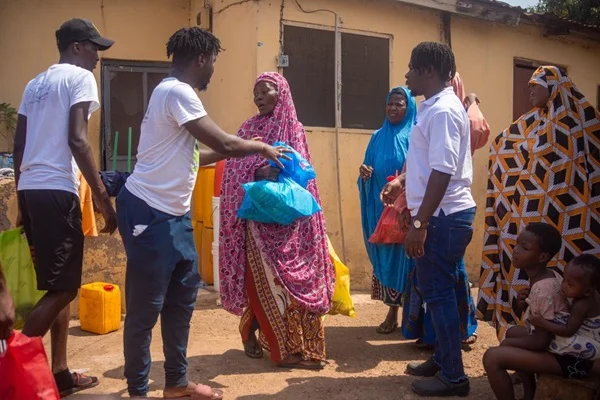
    Sharaf Mahama, son of former President John Dramani Mahama, recently visited Asawase in the Ashanti Region, where he showed kindness to the Muslim community.

    Through his Sharaf Mahama Foundation, he teamed up with Member of Parliament Alhaji Mohammed Mubarak Muntaka to organize a special gathering for the people as they prepared to break their fast.

    In a video spotted by the media, Sharaf was seen personally handing out packed meals to Muslims for Iftar—the evening meal that marks the end of a day’s fasting during Ramadan.

    His generous act touched many, not just those who received the meals but also social media users who have been following his journey, both during and after his father’s presidency.

    Watch the video below:

  • Let Ramadan strengthen our pursuit for peace, neighbourliness – Akufo-Addo to Ghanaians

    Let Ramadan strengthen our pursuit for peace, neighbourliness – Akufo-Addo to Ghanaians

    Former President Nana Akufo-Addo has extended his heartfelt wishes to Muslims in Ghana, Africa, and beyond as they begin the holy month of Ramadan.

    In his message to the Muslim Ummah, he expressed hope that the sacred period of fasting and prayer would serve as a reminder of the values of peace and unity among individuals and communities.

    “It is my wish that the period of Ramadan will strengthen further, our individual and collective resolve in the pursuit of peace and good neighborliness,” he stated.

    Ramadan is a time of deep spiritual reflection, devotion, and self-discipline observed by millions of Muslims across the world. It is also marked by acts of charity and togetherness.

    During the month-long observance, Muslims will fast from dawn to dusk, engage in prayers, and extend kindness to others as part of their faith.

  • Muslims to enjoy two days for Eid ul-Fitr celebration – Mahama

    Muslims to enjoy two days for Eid ul-Fitr celebration – Mahama

    President John Dramani Mahama has declared that an additional national holiday will be set aside to commemorate Eid ul-Fitr.

    This initiative fulfills a commitment he made during his campaign and acknowledges the vital role of the Muslim community in the country’s progress.

    During a groundbreaking event for the new Hajj Village on Friday, February 28, President Mahama revealed that he had instructed the presidency’s chief legal advisor, Marietta Brew, to revise the Public Holidays Act.

    “I am pleased to announce that I have instructed the legal counsel at the presidency, Madam Marietta Brew, to amend the Public Holidays Act to allow for an additional holiday in celebration of Eid ul-Fitr. From this year onwards, two public holidays will be observed at the end of the holy month of Ramadan,” he stated.

    Eid ul-Fitr, known as the “Festival of Breaking the Fast,” is a significant religious celebration observed by Muslims across the globe, signifying the conclusion of Ramadan, the sacred month of fasting in Islam.


  • Tragedy strikes during Ramadan: Display of motorbike skills lands one dead in Kasoa

    Tragedy strikes during Ramadan: Display of motorbike skills lands one dead in Kasoa

    Ramadan celebrations took a tragic turn as one person lost their life, and another was severely injured in a motorcycle accident in Kasoa, Central Region.

    The incident occurred when a car collided with the motorbike, resulting in the immediate death of the pillion rider, while the rider sustained critical injuries and is currently receiving treatment at Kasoa Polyclinic.

    Superintendent Hannah Agyei, Central East Regional MTTD Commander, confirmed the fatality and urged Muslim youth to exercise caution to prevent further accidents during the festive period.

    Highlighting the importance of responsible behavior, Superintendent Agyei emphasized that maintaining composure would safeguard lives and contribute positively to nation-building.

    Authorities have launched an investigation into the accident, with the deceased’s body deposited at the morgue pending further procedures.

  • UN calls for ceasefire in Gaza during Ramadan, Muslim holy month

    UN calls for ceasefire in Gaza during Ramadan, Muslim holy month

    The United Nations Security Council asked for fighting to stop in Gaza during Ramadan, which is an important time for Muslims. It was the first time they made this kind of request.

    The United States did not vote either way on the resolution. The resolution also said that all hostages taken by Hamas in October should be released. There was a surprise attack in southern Israel. However, the measure doesn’t connect the demand to stop fighting during Ramadan, which ends on April 9th.

    Russia and China said no to a US plan to stop the fighting between Israel and Hamas.

    The United States said the decision made on Monday could make it harder to stop fighting. The US, Egypt, and Qatar are trying to negotiate peace. This might lead to the US vetoing the decision.

    The 10 council members made a plan, and Russia, China, and the 22-nation Arab Group support it at the United Nations.

    On Friday night, the Arab Group asked all 15 council members to work together and vote for the resolution to stop the fighting, save lives, and prevent more suffering and destruction.

    “The Arab Group said it’s been a long time since a ceasefire is needed. ”

    Since Ramadan will end next month, the request for a ceasefire will only be for two weeks, even though the plan says that the break in fighting should lead to a lasting ceasefire.

    Since the war began, the Security Council made two decisions about the getting worse situation for people in Gaza, but neither of them asked for the fighting to stop.

    Over 32,000 Palestinians in Gaza have died in the fighting, as reported by the Gaza Health Ministry. The agency counts both civilians and soldiers, and says that two-thirds of the people who died are women and children.

    Gaza is in a very bad situation. A group that knows about hunger said that a famine could happen soon in the northern part of Gaza. If the war gets worse, half of the 2. 3 million people living in Gaza could have no food to eat.

    The US Ambassador Linda Thomas-Greenfield said that the resolution does not help with delicate negotiations in the area. Even more, it might give Hamas a reason to not accept the deal that is being offered.

    “We shouldn’t approve any decision that could harm the current negotiations,” she said. She warned that if we don’t support the diplomacy, “the council might be stuck without making any progress again. ”

    “I really hope that doesn’t happen,” said Thomas-Greenfield.

    The United States said “no” to three plans that wanted to stop the fighting in Gaza. The latest one was suggested by Arab countries in February. Rewrite this text in simpler words: 20清单23. 13 council members agreed to the resolution, one member didn’t vote, showing that most everyone supports a ceasefire.

    Russia and China said no to a resolution made by the US in late October. The resolution wanted to stop fighting so aid could be delivered, protect civilians, and stop giving weapons to Hamas. They said it does not show that everyone around the world wants the fighting to stop.

    Once again, they said no to the US resolution on Friday. They said it was unclear and did not directly demand an end to the fighting like many countries want.

    The vote was a big fight between powerful countries who are arguing in other places. The United States got criticized for not being strong against its friend Israel, even though they are getting more and more tense with each other.

    One important problem was the strange wording in the US draft. The Security Council said it is very important to stop fighting right away and for a long time. They didn’t just demand or ask for it directly.

    Russia’s UN Ambassador Vassily Nebenzia said that before the vote, Russia supports a ceasefire right away. But he didn’t like the vague language in the resolution and said it was too philosophical for a UN resolution.

    He said that US Secretary of State Antony Blinken and US Ambassador Linda Thomas-Greenfield were not telling the truth about asking for a ceasefire.

    “This was just a meaningless talk,” Nebenzia said. The American product is very political and is only meant to appeal to voters by mentioning a ceasefire in Gaza. It also aims to protect Israel from punishment for its crimes.

    China’s ambassador to the United Nations, Zhang Jun, said that the US proposal had conditions and did not meet the expectations of council members and the worldwide community.

    He said that if the US really wanted peace, it wouldn’t keep blocking the council’s resolutions. “It should have been more direct and clear on important issues instead of being unclear and avoiding them. ”

    On Friday, the 15-member council voted. Eleven members were in favor and three were against. Algeria, the Arab representative on the council, was one of the countries that voted against. Guyana chose not to vote.

    After the vote, Thomas-Greenfield said Russia and China said no to the resolution for bad reasons. They couldn’t condemn Hamas’ attacks in southern Israel on Oct. 7, which the resolution would have done for the first time. 7 would have been done for the first time by the resolution.

    She said another small reason is that Russia and China didn’t want to vote for a resolution written by the United States because they would rather see us fail than see the council succeed. She accused Russia of putting politics first and being hypocritical for invading Ukraine and then criticizing others.

    The decision showed that the United States is changing its position, because even Israel’s friends are asking for the fighting to stop without any conditions.

    In the past, the US has asked for a ceasefire and for Israeli hostages in Gaza to be freed. This decision, with wording that can be understood in different ways, still connected the two problems, but not as strongly.

  • Black Stars’ Salis Samed makes food donation to Madina Muslims during Ramadan season

    Black Stars’ Salis Samed makes food donation to Madina Muslims during Ramadan season

    Midfielder for the Black Stars, Abdul Salis Samed, has demonstrated his generosity by donating various food items to Muslim households in Madina during the Ramadan period.

    This charitable act is carried out through his foundation, “The Styler’s Foundation,” with the aim of assisting less privileged Muslim families in the community.

    Expressing gratitude for the support he has received from society, Samed sees this donation as a way of giving back.

    He emphasised that this gesture aligns with his Islamic faith, specifically fulfilling the Fourth Pillar of Islam, known as Zakat.

    The donated items include essentials such as milo, sugar, rice, tea bags, milk, and cocoa powder, among others.

    In addition to the donation, Samed offered words of encouragement to fellow Muslims, urging them to seek Allah’s guidance and pray for Ghana’s well-being.

    Samed expressed appreciation to Tag Transport Limited, Mr. Tony Bonsu, Cooker, and Sumaila Mohammed for their contributions towards ensuring the success of the donation.

  • Ramadan: Your commitment to faith, charity, and service inspires us all – NDC to Muslim community

    Ramadan: Your commitment to faith, charity, and service inspires us all – NDC to Muslim community

    The National Democratic Congress (NDC) has extended warm greetings and sincere blessings to Muslims observing the Ramadan fasting period.

    Recognizing Ramadan as a time for spiritual reflection, fasting, prayer, and unity, the party emphasized the importance of supporting Muslims during this sacred time.

    In a press release issued on Tuesday, March 12, and signed by General Secretary Fifi Fiavi Kwetey, the NDC celebrated Ghana’s cultural and religious diversity.

    The party expressed solidarity with its Muslim brothers and sisters, reaffirming its commitment to advocating for policies that promote equality and inclusivity.

    “As Muslims around the world observe the sacred fast of Ramadan, the National Democratic Congress (NDC) extends warm wishes and heartfelt blessings to our Muslim brothers and sisters in Ghana and beyond. Ramadan is a time of spiritual reflection, fasting, prayer, and unity embodying values of compassion, empathy, and solidarity.”

    “During this sacred month, we acknowledge and celebrate the rich cultural and religious diversity of our nation. The Muslim community’s steadfast commitment to faith, charity, and service inspires us all to strive for greater harmony and understanding in our society,” an excerpt of the statement said.

  • NDC extends well wishes to Muslims as they observe Ramadan

    NDC extends well wishes to Muslims as they observe Ramadan

    The National Democratic Congress (NDC) extends heartfelt greetings and sincere blessings to Muslims observing the Ramadan fasting period.

    Portraying Ramadan as a period of spiritual reflection, fasting, prayer, and solidarity, the party underscores the significance of standing by Muslims during this sacred occasion.

    In a press statement released on Tuesday, March 12, and endorsed by General Secretary Fifi Fiavi Kwetey, the NDC acknowledges and honors Ghana’s cultural and religious diversity.

    Fifi Kwetey

    The party stood in solidarity with its Muslim brethren and sisters, reiterating its dedication to promoting policies that champion equality and inclusiveness.

    “As Muslims around the world observe the sacred fast of Ramadan, the National Democratic Congress (NDC) extends warm wishes and heartfelt blessings to our Muslim brothers and sisters in Ghana and beyond. Ramadan is a time of spiritual reflection, fasting, prayer, and unity embodying values of compassion, empathy, and solidarity.”

    “During this sacred month, we acknowledge and celebrate the rich cultural and religious diversity of our nation. The Muslim community’s steadfast commitment to faith, charity, and service inspires us all to strive for greater harmony and understanding in our society,” an excerpt of the statement said.

  • Palestinians in Gaza start Ramadan with hunger

    Palestinians in Gaza start Ramadan with hunger

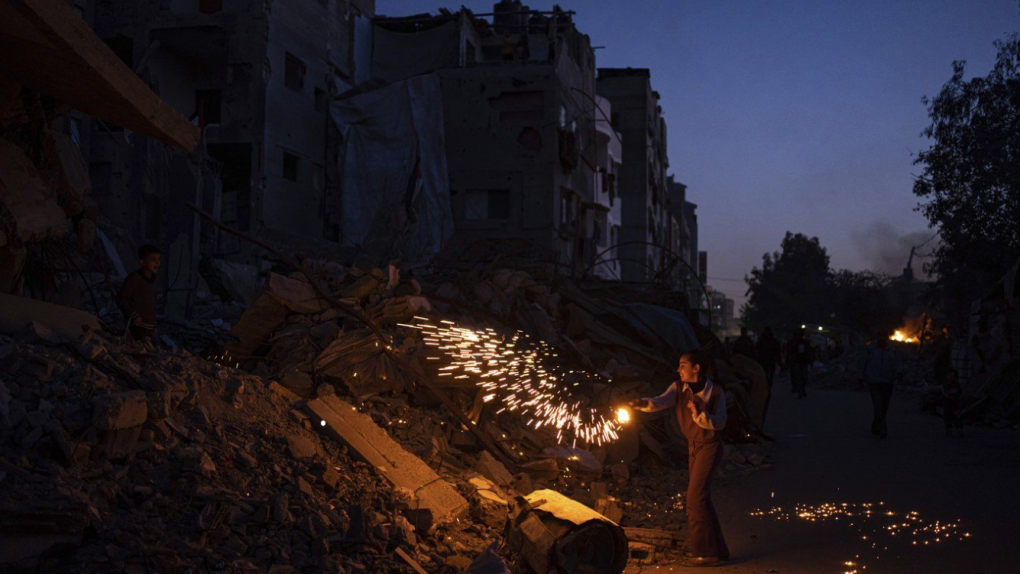
    Palestinians started fasting for Ramadan on Monday. The ceasefire talks are at a standstill, and people in Gaza are getting hungrier. The war between Israel and Hamas has been going on for five months, and there is no sign of it ending.

    People prayed outside among the wreckage of destroyed buildings on Sunday night. Some people put up lights and decorations in crowded tent camps. At a UN-school-turned-shelter, children were dancing and playing with foam while a man sang into a loudspeaker.

    However, there wasn’t much to be happy about after five months of fighting, which has resulted in the deaths of over 30,000 Palestinians and caused extensive damage to Gaza. Families usually eat big meals to end their daily fast during holidays. But even if there is food, it’s mostly canned and too expensive for many people to buy.

    Sabah al-Hendi, who was buying food in Rafah on Sunday, said that no one looked happy. “Every family feels unhappy. ” Every family has someone who sacrifices a lot for the family.

    The United States, Qatar, and Egypt were trying to help make a peace agreement before a special month of fasting. They wanted to free Israeli and Palestinian prisoners and bring in a lot of aid. But the talks stopped last week.

    Hamas wants to make sure that any deal will bring an end to the fighting, and Israeli Prime Minister Benjamin Netanyahu has promised to keep fighting until they defeat Hamas and free all the hostages.

    The fighting started when Hamas-led fighters attacked southern Israel on Oct. Seven attacks happened, and they killed about 1,200 people, most of them were not soldiers, and they also took about 250 people as hostages. Hamas still has around 100 people and the bodies of 30 others after an exchange last year.

    The fighting made almost 80% of the 2. 3 million people in Gaza leave their homes, and many are struggling to find enough food to eat. Health experts say that at least 20 people, mostly kids, have passed away from not eating enough and not drinking enough water in northern Gaza.

    Israeli soldiers have mostly blocked the north since October. Aid groups say it’s very difficult to safely deliver much-needed food there because of Israeli restrictions, ongoing fighting, and the lack of law and order.

    Israel has promised to attack the southern city of Rafah, where many people from Gaza have gone for safety. But they haven’t said where the civilians will go to stay safe. The United States. President Joe Biden said if Rafah is attacked, it is a serious issue for him, but the US will still give military help to Israel.

    Biden said in his yearly Ramadan message that the holy month is happening “when there is a lot of suffering. ”

    “As Muslims come together in the next few days and weeks to eat after fasting, many will be thinking about the hardships faced by the Palestinian people. ” “I’m thinking about it a lot,” he said.

    The United States and other countries are dropping aid from the air to help people in need. But some groups say this is expensive and not enough to help everyone. The US military is moving equipment to build a sea bridge for delivering aid. It will take a few weeks for it to be ready.

    A boat from the Spanish aid group Open Arms with 200 tons of food was going to sail to Gaza from Cyprus, but it wasn’t known when it would leave. Israel is okay with ships bringing stuff to Gaza from the sea. But first, they want to check the stuff on the ships before it goes from Cyprus to Gaza.

    The boat in Cyprus will take two to three days to reach a secret place in Gaza. The food is given by a group called the World Central Kitchen, from the United States. A charity started by famous chef José Andrés has started building a jetty in Gaza. Once the ship gets to Gaza, the aid will be taken off using a crane, put on trucks, and driven to the north.

    The United States has helped Israel with their military and defended them from other countries asking for a stop to the fighting. They have also told Israel to try to avoid hurting innocent people and make it easier for people to get help.

    The Health Ministry in Gaza reported on Monday that 31,112 Palestinians have died since the war started. This includes 67 bodies that were brought to hospitals in the last day. The government doesn’t separate civilians from soldiers when counting the dead, but it says that two-thirds of the dead are women and children.

    Israel says that many innocent people are dying because Hamas is fighting in crowded neighborhoods where there are a lot of houses, schools, and mosques. They also place their fighters, tunnels, and rocket launchers near these places. The army claims to have killed 13,000 Hamas soldiers, but there is no proof of this.

    On Saturday, Biden told MSNBC that Israel had the right to react to the Oct. 7 attacks, but Netanyahu needs to care more about the innocent people who are being killed. He said you can’t have 30,000 more Palestinians dead.

  • Fighting parties in Sudan urged by UN to ceasefire during holy month of Ramadan

    Fighting parties in Sudan urged by UN to ceasefire during holy month of Ramadan

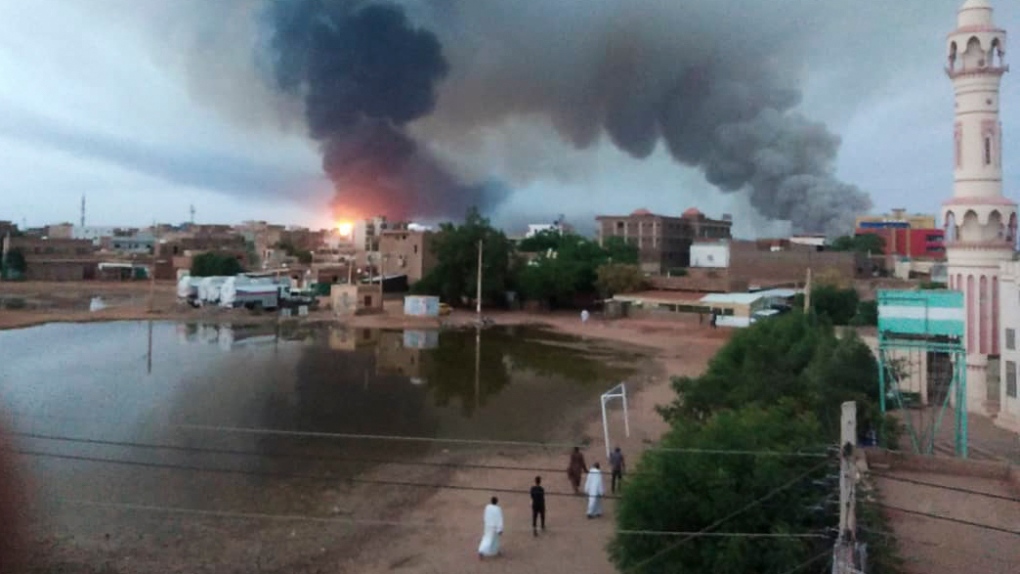
    The UN Security Council has told Sudan’s fighting groups to stop fighting during Ramadan and let food and aid reach 25 million people who need help.

    Ramadan is expected to start on Monday or a little later, depending on when the crescent moon is seen.

    The council of 15 people mostly agreed with the resolution from Britain. 14 countries supported it and only Russia did not vote.

    Sudan became very chaotic in April this happened because the military, led by Gen Abdel Fattah Burhan, had been having problems for a longtime and the Rapid Support Forces, led by Mohammed Hamdan Dagalo, fought in the streets of Khartoum.

    Violent fighting spread to more areas in the country, especially in cities. In Sudan’s western part called Darfur, the fighting was different. The Arab-dominated Rapid Support Forces carried out brutal attacks on African civilians. Many people have died.

    UN Secretary-General Antonio Guterres wants both sides to agree to stop fighting during Ramadan. He said that the conflict, which has been going on for almost a year,could cause big problems for the country and the surrounding region. The African Union also supports the idea of stopping the fighting during Ramadan.

    Burhan was happy that the UN leader asked for peace, but the Sudanese Foreign Ministry said on Friday that there are conditions for the ceasefire to work. The Rapid Support Forces did not answer.

    The resolution is very worried about the growing violence and the terrible humanitarian situation, including the serious lack of food in Darfur.

    Britain’s deputy UN ambassador James Kariuki asked the Sudanese armed forces and Rapid Support Forces to listen to the international call for peace and stop fighting.

    The Security Council asked the fighting groups to talk and find a way to end the conflict for good. Kariuki also said that both sides need to trust each other and work together to bring back peace.

    The UN says that 8. 3 million people had to leave their homes because of fighting between the government and paramilitary groups. Half of the country’s 51 million people need help, and most of the health facilities aren’t working.

  • Yemen crowd surge results in at least 78 fatalities

    Yemen crowd surge results in at least 78 fatalities

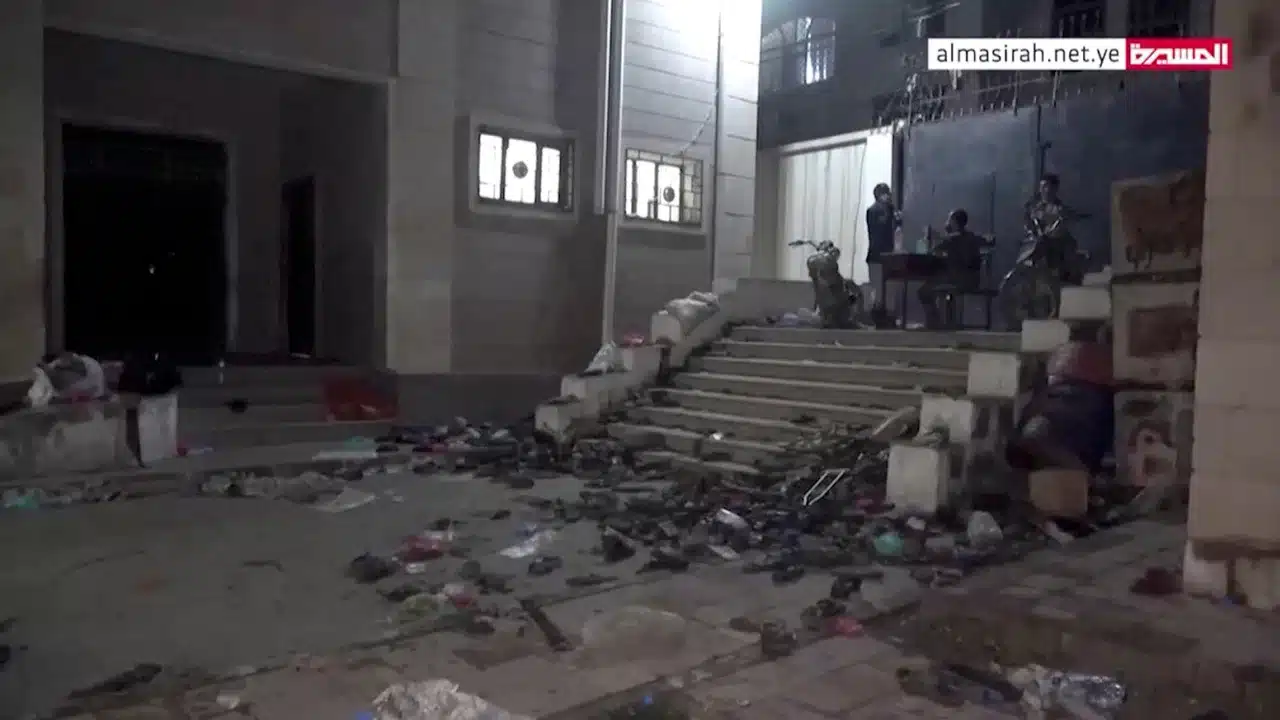
    Officials have reported that dozens of people were killed in a mob surge in Yemen’s capital on Wednesday as poor citizens of the country came there to receive charity donations from local merchants during the holy month of Ramadan.

    A chaotic scene with scores of people crammed close together, unable to move, and yelling for assistance could be seen in video of the catastrophe in Sanaa.

    The corpses of those imprisoned formed a tangled wall, with some urgently reaching out for assistance. The men who had been liberated could subsequently be seen attempting to rescue other men from the lethal crowd. Images from the aftermath showed scarves scattered on the ground and shoes and slippers piled high.

    “What happened tonight is a tragic and painful accident, as dozens of people were killed due to a large stampede of a number of citizens caused by a random distribution of sums of money by some merchants and without coordination with the Ministry of Interior,” the spokesman of the Houthi-run Ministry of Interior, Abdul-Khaleq al-Ajri, said in the statement.

    At least 78 people were killed in the crush and dozens injured, Mutahar al-Marouni, the director of the Houthi-run Health office in Sanaa, told the Houthi-run Al-Masirah news agency.

    According to Reuters, hundreds of people had crowded into a school to receive donations of about $9.

    The incident came just a few days ahead of the Muslim holiday of Eid al-Fitr, which marks the end of the Islamic holy month of Ramadan. During this time of the month, people start giving away Zakat al-Fitr, or the Zakat of Breaking the Fast of Ramadan, to people who are in need.

    Naseh Shaker, a journalist who was at the scene, told CNN there was a “very long line of people” gathered at the entrance to the school, which was being used for distributing food and financial aid. They had begun queuing after sunset with the hopes of receiving the donation, he said.

    When officials in charge of the distribution arrived and opened the door, “a lot of people rushed into the school.”

    “This is a disaster to find people sacrificed their lives for just 10 dollars,” Shaker said. “People are very hungry people are very poor.”

    Another eyewitness who was inside the school when the crush happened told Houthi media that more than 3,000 people had gathered to collect donations, and that they were all “standing, pushing and climbing on top of each other.”

    “We tried reasoning with them, told them to go back. But there were too many people,” he said.

    Police and rescue teams rushed to the scene, according to the Interior Ministry statement.

    “The dead and injured people were transferred to hospitals, and two merchants in charge of the matter were arrested,” the statement added.

    The head of the Houthi Supreme Political Council, Mahdi Al-Mashat, ordered an investigation into the incident on Thursday.

    The Houthi-run General Authority for Zakat announced in a statement it would give one million Yemeni Riyal (about $4,000) to each family of the crowd surge victims.

    It also said it would take care of the treatment of those injured and pay 200,000 Yemeni Riyal (about $800) to each injured person.

    The stampede and its overwhelming death toll reflect the current poverty rate in Yemen, said Ahmed Nagi, a senior Yemen analyst at the International Crisis Group, a Brussels-based think tank.

    “Poverty rates have greatly increased and there are more people in need,” Nagi told CNN. “The merchant who used to help 1,000 or 2,000 people now has to help 5,000 or 10,000 people.”

    And while the humanitarian situation is dire all over Yemen, it is particularly bad in Houthi-held areas, he said, noting that nearly 65% of Yemen’s population is under Houthi control.

    Houthis deal with the economic problems in areas under their control “as if they are not responsible,” attributing the different crises plaguing their cities to the war, the blockade, or other foreign actors in Yemen, Nagi said.

    “Assistance is not enough,” he said, “And the authorities are not concerned with society’s conditions … that is the root cause of the problem.”

    A top Houthi official last week told CNN that talks with the Saudis were focused on meeting the Houthis’ humanitarian demands, such as removing the blockade on ports, opening Yemen’s airspace and paying the salaries of public sector employees.

    Yemeni journalist Shaker said Wednesday’s tragedy was the result of years of economic desperation and the international community should “act now” to stop the war.

    “People are no longer killed by air strikes or by shelling of warring parties. Now they are dying because they are rushing to get food,” he said.

    Yemen has been described by the UN as the world’s worst humanitarian crisis. Nine years of war have killed thousands, destroyed the economy and left 21.6 million people – two-thirds of the country’s population – in dire need of humanitarian assistance. Tens of thousands of Yemenis are living in famine, according to the UN.

    The country’s conflict began as a civil war in 2014, when Houthi forces stormed the capital Sanaa and toppled the internationally recognized and Saudi-backed government. It spiraled into a wider war in 2015 when a Saudi-led coalition intervened in an attempt to beat back the Houthis.

    But it eventually became a proxy war between Iran – which has been accused of arming the Houthis – and Saudi Arabia, and the main arena for their competition for regional influence.

    On Sunday, a Saudi delegation arrived in Sanaa for talks with the Houthis aimed at securing a permanent ceasefire. Last Friday, negotiations bore their biggest fruits yet with a three-day prisoner swap of nearly 900 detainees from both sides. Houthi chief negotiator Mohammed Abdulsalam tweeted on Friday that talks had been “serious and positive.

  • Indonesia, Malaysia thrilled to finally celebrate Eid at large gatherings after lifted COVID curbs

    Indonesia, Malaysia thrilled to finally celebrate Eid at large gatherings after lifted COVID curbs

    Eid al-Fitr, the “festival of breaking the fast” that follows the holy month of Ramadan, is a time when Muslims congregate in Indonesia and Malaysia.

    Relieved to be allowed to celebrate freely following the lifting of most COVID-19 restrictions that had stifled past festivities, Muslims in Indonesia and Malaysia have congregated in large numbers to usher in the Eid al-Fitr festival, which marks the end of the holy fasting month of Ramadan.

    To commemorate the conclusion of Ramadan, hundreds of worshippers gathered at the historic harbour of Sunda Kelapa in North Jakarta, the country with the largest proportion of Muslims in the world, for morning prayers on Saturday.

    “I’m very happy that we’re free (of COVID curbs) now,” Laila, 35, who goes by one name like many Indonesians, told the Reuters news agency.

    Another worshipper, 30-year-old Adit Chandra, said: “I hope it gets better from here on, and that we can gather together with our families after the last three years of not being able to go back to our hometown.”

    Chandra is among the more than 120 million Indonesians – nearly half the country’s population – who plan to travel from major urban centres to their hometowns for Eid al-Fitr.

    The figure represents about 44 percent more than the number of people who travelled during celebrations last year, the government said.

    In neighbouring Malaysia, devotees also celebrated with families.

    “We can visit the extended family, and do so without suspicious feelings … during the pandemic we were cautious,” said Khairul Soryati, a 39-year-old resident of the capital, Kuala Lumpur.

    Muhd Nur Afham, 31, who works in Singapore said he could finally celebrate with family in Malaysia this year after not being able to travel during the pandemic.

    “I’m grateful … last time we only met through video call,” he said.

    Authorities in both countries have, however, urged the public to remain cautious amid reports of rising COVID cases.

  • UAE royal family’s 500-member entourage to spend Eid 2023 in South Africa

    UAE royal family’s 500-member entourage to spend Eid 2023 in South Africa

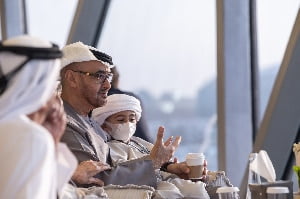
    The president of the United Arab Emirates (UAE) and ruler of Abu Dhabi, Sheikh Mohamed bin Zayed Al Nahyan, arrived in South Africa on Wednesday, April 19, along with his family and other staff members.

    Their arrival in the Eastern Cape province was widely reported by major media outlets that said he had landed on a US$1.1 million runway he built with his own money.

    South Africa’s News24 portal reported: The wealthy ruler is in the country along with an entourage of 500, including other members of the UAE royal family, staff and top artists who are expected to perform for the family to mark the end of Ramadan.

    The royal family and their guests are said to have brought their own furniture, cars and gym equipment for their two-week stay in the Eastern Cape, the report added.

    The ruler of Dubai was the last to arrive and was met by Prince Sheikh Khalid bin Mohamed bin Zayed Al Nahyan, members of the UAE royal family, staff and artists, who landed at Bulembu Airport near Bhisho on Sunday, Monday and Tuesday respectively.

    More details from News24 report: UAE president lands in Eastern Cape on R20m runway he built for himself and his entourage.

    Al Nahyan touched down in the royal private jet on Wednesday at around 14:00 and was immediately airlifted in one of five choppers that he brought into the country on a cargo plane.

    One of the choppers is an air ambulance, the protection unit will use another, one transports the president, while the other two have supplies.

    A government official said: “We accepted 500 people in the Eastern Cape since Sunday. This is because the president brought his family and staff, including protectors, doctors and entertainers. On Wednesday alone, we had 15 air traffic movements at the airport. I can confirm that there has been no single incident since Sunday, and we did not compromise any air traffic regulations.”

    Highly placed sources claimed Al Nahyan would spend two weeks at a private game resort he built from scratch earlier this year after buying a big piece of land in the province two years ago.

    While many have been left stunned by the landing of international flights at an airport that was decommissioned for passenger travel decades ago, News24 can reveal that the UAE ruler’s private jet, cargo jet and UAE airlines used the airport because the size of the aircrafts are too big for the runway and turning circle at Chief Dawid Stuurman International Airport in Gqeberha. The Gqeberha airport is the Eastern Cape’s only international port of entry by air.

    The UAE ruler requested to land at an airport near his Eastern Cape resort.

    Bulembu Airport, which was the only airport of the Ciskei homeland, was decommissioned in the 1990s. It was the only airport with the potential for improvements that would meet the standards of the UAE planes in the province.

  • Chief Imam declares end of Ramadan after sighting new moon

    Chief Imam declares end of Ramadan after sighting new moon

    On April 20, 2023, Muslims in Ghana broke their fast after seeing the new moon of Shawwal, the month that follows Ramadan.

    Sheikh Osmanu Nuhu Sharubutu spoke to the faithful late on Thursday after confirming the sighting of a new moon.

    He clarified that, in accordance with the announcement made this week by the Interior Minister, Muslims will offer the congregational prayers on Saturday, April 22, even though April 21 is the first day of Eid.

    http://backend.theindependentghana.com/muslims-deserve-two-holidays-to-celebrate-eid-ul-fitr-umaru-sanda/

    “In the exercise of his mandate as the National Chief Imam of Ghana, Sheikh Dr. Osman Nuhu Sharubutu has brought us here this evening to announce to us officially about the sighting or otherwise of the new moon of Shawwal marking the end of the month of Ramadan,” his spokesman said.

    On the details relative to the sighting of the moon, he stated: “Information that has come to the office of the National Chief Imam indicates that an authenticated information has come from the Ashanti Region with respect to the sighting of the moon, specifically in Kenyasi Troba in the Kwabre East District.”

    He said eight people had sighted the moon and made that information available to head of the Hilal (moon) committee of the Imam’s office which information was passed on and acted up by way of the announcement.

    “And in this regard, tomorrow (April 21), we are all not going to fast but as officially made known to us through the Chief Imam and the Minister of Interior, we are going to celebrate the Eid-ul-Fitr on Saturday (April 22).”

    The national prayers is slated for Saturday at 10am, at the Independence Square in Accra.

    http://backend.theindependentghana.com/imam-stabbed-during-ramadan-morning-prayers/

    Meanwhile, some sections of the Muslim community will observe the Eid prayers today, one of the most prominent being by the Ahlus Sunnah Wal Jamah group. Their prayer is slated for the forecourt of State House.

  • Yemen PM visits survivors of school crush at hospital

    Yemen PM visits survivors of school crush at hospital

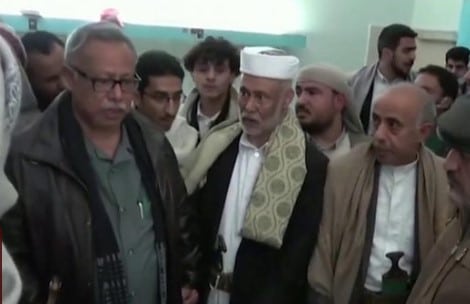
    Yemen’s Houthi Prime Minister Abdulaziz Bin Habtour has been engaging survivors of the recent crush in Sanaa’s Al Thawra hospital.

    He was accompanied by other officials including Health Minister Taha Al-Mutawakel.

    Bin Habtour said: “We are firstly checking on the injured and those who died.

    “The interior and health minister, members of the public prosecution, the head of the Supreme Judicial Council and all other relevant officials, have proceeded with their legal duties to examine this unfortunate event and to find a serious solution for this to never happen again.

    “We are experiencing a great tragedy, a large number of our citizens have died during this stampede.”

    It is reported that at least 78 individuals have died in a crowd at a school in Sanaa, the capital of Yemen, while receiving donations for Ramadan.

    Hundreds of people packed inside the school to accept donations totaling roughly $9 (£7) per individual, according to Reuters. The incident took place in the closing days of Ramadan, the Muslim holy month that is distinguished by a period of fasting.

    The individuals in charge of allocating the funds have been detained, and an investigation is ongoing, according to the interior ministry.

  • Ramadan tragedy: Scores are killed in the Sanaa stampede in Yemen

    Ramadan tragedy: Scores are killed in the Sanaa stampede in Yemen

    Authorities in Yemen’s capital Sanaa said that a crush during the distribution of Ramadan charity killed at least 78 people.

    Social media videos of the incident’s aftermath in the city’s Bab-al-Yemen neighbourhood depict chaotic scenes.

    According to the Reuters news agency, hundreds of people poured into the school to accept gifts, which averaged about $9 (£7) per individual.

    Since ousting the government in 2015, Houthi rebels have been in control of the city.

    Those responsible for the distribution have been detained and an investigation is under way, the interior ministry said.

    A spokesman for the ministry blamed the crush on the “random distribution” of funds without co-ordination with local officials.

    Many people were also injured with 13 in a critical situation, a health official in Sanaa said.

    “Women and children were among the dead,” a Houthi security official told AFP news agency on the condition of anonymity because he was not authorised to speak to journalists.

    The Associated Press news agency quotes two eyewitnesses who said Houthi fighters had fired into the air in an attempt at crowd control, apparently striking an electrical wire which resulted in an explosion. This caused panic that led to the crush, they added.

    The event happened during the final days of the Muslim holy month of Ramadan, which is marked by a period of fasting.

    Last week a major prisoner swap between warring sides in Yemen started, seen as part of stepped-up efforts to end the devastating eight-year conflict.

    Mohamed Ali al-Houthi, head of the Houthi supreme evolutionary committee, blamed Wednesday’s crush on the country’s humanitarian crisis.

    “We hold the countries of aggression responsible for what happened and for the bitter reality that the Yemeni people live in because of the aggression and blockade,” he said on Twitter.

  • Muslims deserve two holidays to celebrate Eid-ul-Fitr – Umaru Sanda

    Muslims deserve two holidays to celebrate Eid-ul-Fitr – Umaru Sanda

    Ghanaian journalist, Umaru Sanda Amadu, is displeased with the government’s decision to provide Muslims with only one public statutory holiday to commemorate this year’s Eid-ul-Fitr.

    In a Twitter post, the Citi FM\TV journalist argued that currently, it is unknown exactly which day Eid-ul-Fitr falls as no one has been able to sight the new moon yet.

    For Mr Sanda Amadu, it is unacceptable, although understandable that the Minister of Interior, Ambrose Dery, went ahead to announce Saturday, April 22, as Eid-ul-Fitr which would later be observed on Monday, April 24, since it falls on a weekend.

    http://backend.theindependentghana.com/govt-declares-april-24-statutory-holiday/

    “No Muslim is certain when the Eid-ul-Fitr will be! But Ghana’s Minister for The Interior has already stated that it’ll be on Saturday. I don’t blame him. By law, he’s supposed to announce a Holiday, days ahead which he does after consultations.

    Muslims know that the Eid…could be on Friday or Saturday, depending on whether or not we sight the new crescent on Thursday evening,” Mr Sanda Amadu wrote.

    It is expected that the new crescent will be observed on Thursday evening but that information is not guaranteed.

    Mr Sanda Amadu therefore believes it would be wise enough to declare two holidays to ensure Muslims are not deprived should the moon be witnessed on Thursday evening or later than the expected date.

    “Muslims deserve two days holiday for Eid because from the foregoing, if Eid falls on Friday, which is possible, Muslim workers can’t celebrate because it’s not a holiday!” he suggested.

    As it stands now, “His Excellency, the President of the Republic of Ghana, has by Executive Instrument (E), in accordance with Section 2 of the Public Holidays and Commemorative Days Act, (Act 601) declared Monday, 24th April 2023 as an additional public holiday”.

    Eid-ul-Fitr serves as an avenue for Muslims to crown Ramadan. This year’s month-long fasting by Muslims started on March 22, 2023, to mark the ninth month of the Islamic calendar.

    Ramadan

    Ramadan is the Arabic name for the ninth month in the Islamic calendar.

    It is considered one of the holiest months for Muslims and is marked by a period of fasting, considered one of the Five Pillars of Islam, which include faith, prayer, charity and the pilgrimage to Mecca.

    Muslims have an early morning meal before dawn, known as suhoor or sehri.

    They do not eat or drink anything including water until they break their fast after sunset for the evening meal, called iftar or fitoor.

    Fasting is observed only by those in good health.

    Some Muslims are exempt:

    • Those who are sick or ill and whose health will be affected by fasting
    • Children who have not reached puberty – although some begin to practise fasting before then
    • Pregnant and breastfeeding women
    • Menstruating women
    • Travellers

    Source: The Independent Ghana

  • Fasting while breastfeeding could lead to low IQ for babies – Health expert warns

    Fasting while breastfeeding could lead to low IQ for babies – Health expert warns

    A public health nurse at Holy Family Hospital, Techiman has advised nursing mothers against fasting while breastfeeding.

    Engaging the media amid the Ramadan Islamic celebration, Zulfawu Ahmed revealed that lactating mothers who abstain from food deprive their children and themselves of nutrients needed for growth and good health.

    She noted that there is a possibility of dehydration in children as water comprises the majority of human breast milk, low Intelligence Quotient (IQ), as well as loss of micronutrients such as zinc, potassium among others.

    “There is the likelihood that it will reduce calorie and water intake. It can cause dehydration. We know that milk – more than 50 percent is made up of water. So if a woman is dehydrated, it means that the milk supply will be affected. The baby won’t get enough breastmilk.”

    “If the child gets low micronutrients, it will obviously affect brain growth. The child could grow with a low IQ,” she added.

    Public health nurse at Holy Family Hospital, Techiman, Zulfawu Ahmed

    According to the Centers for Disease Control and Prevention, some cancers, type 2 diabetes, and high blood pressure are less common among women who breastfeed. This implies that lactating mothers who abstain from breastfeeding risk suffering from these illnesses.

    Human milk consists of 87% water, 1% protein, 4% lipid, and 7% carbohydrate (including 1 to 2.4% oligosaccharides). It also contains minerals calcium, phosphorus, magnesium, potassium, and sodium.

    Breastfed babies have a lower risk of asthma, obesity, type 1 diabetes, and sudden infant death syndrome (SIDS), a report from the Centers for Disease Control and Prevention indicates.

    Breastfed babies are also less likely to have ear infections and stomach bugs.

    Ramadan, the ninth month of the Islamic calendar mandates eligible Muslims to fast between 29 to 30 days.

    Children who have not reached puberty, the elderly, those who are physically or mentally incapable of fasting, pregnant women, breastfeeding mothers and travellers are exempted from participating in the fast.

    Source: The Independent Ghana

  • Al-Aqsa mosque invaded by Israeli police for a second occasion

    Al-Aqsa mosque invaded by Israeli police for a second occasion

    In spite of protests from the Arab and Muslim community, Israeli police stormed the Al-Aqsa mosque in Jerusalem, one of Islam’s holiest sites, for a second time on Wednesday.

    The skirmishes, which occurred on Wednesday night as Jews celebrated Passover and Muslims observed Ramadan at al-Aqsa, provoked retaliatory rocket fire from terrorists in Gaza.

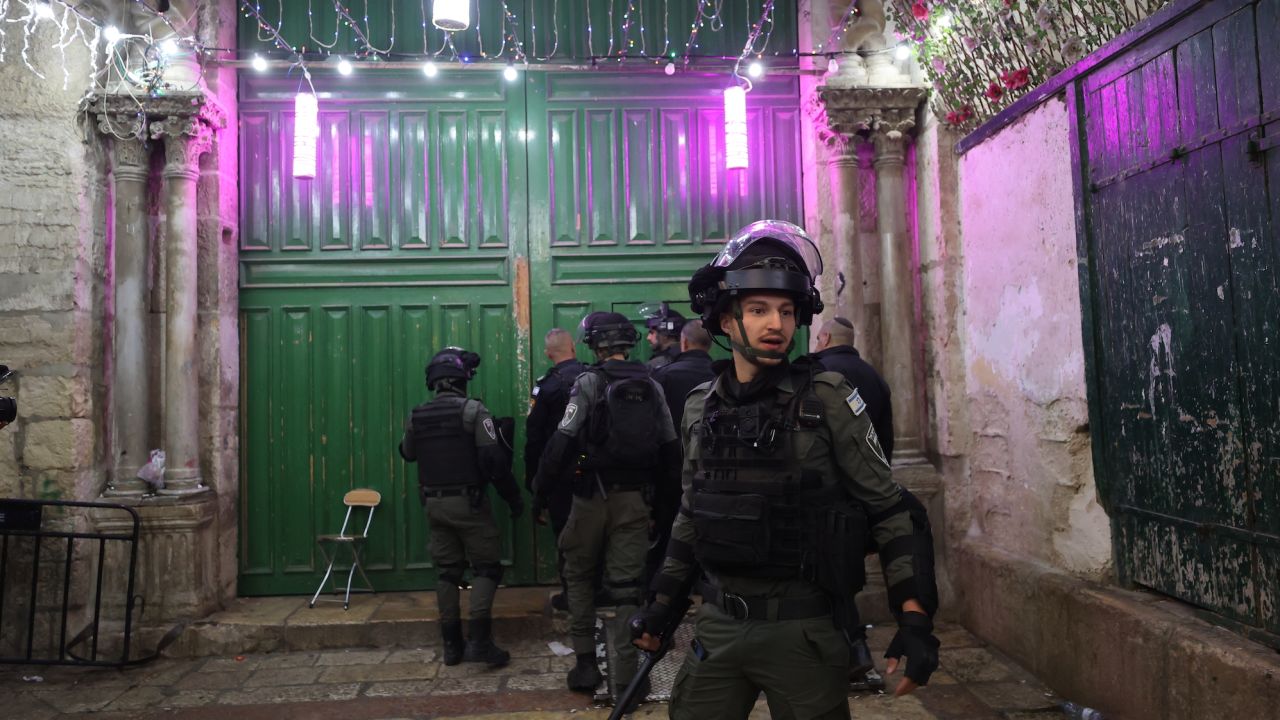
    During the first incident on Wednesday morning, footage shared on social media showed Israeli officers striking screaming people with batons inside the darkened building. Eyewitnesses told CNN that police had smashed doors and windows to enter the mosque and deployed stun grenades and rubber bullets once inside. Video shared by Israeli police show forces holding riot shields up as fireworks were launched back at them, ricocheting off the walls.

    Israeli police said in a statement that its forces entered al-Aqsa after “hundreds of rioters and mosque desecrators (had) barricaded themselves” inside. “When the police entered, stones were thrown at them, and fireworks were fired from inside the mosque by a large group of agitators,” according to the statement.

    The Palestinian Red Crescent in Jerusalem said at least 12 people were injured during clashes in and around the mosque, and at least three of the injured were transferred to hospital, some with injuries from rubber bullets.

    The Red Crescent added that at one point its ambulances were targeted by police and were prevented from reaching the injured.

    Police said they arrested and removed more than 350 people in the mosque, and that two Israeli police officer were wounded.

    Images shared on social media showed dozens of detained people lying facedown on the floor of the mosque with their legs and arms bound behind their backs, and others with their hands tied being led into a vehicle.

    During the second incident on Wednesday evening, armed Israeli forces deployed stun grenades and ordered Muslims worshipping there to leave immediately, video posted to social media shows.

    The Israeli police said in a statement that “dozens of law-breaking juveniles, some of them masked” had thrown fireworks and stones into the mosque and tried to barricade themselves inside.

    “The police forces prevented the lawbreakers from closing the doors and from barricading themselves (inside), and helped the worshipers leave the Mosque,” Israeli police said.

    One eyewitness, cameraman Rami Khatib, told CNN that after moving worshippers out of the mosque, the Israeli police had stationed officers at each doorway and prevented people from entering.

    The Palestinian Red Crescent in Jerusalem treated six people for their injuries and transferred two of them to hospital.

    Wednesday morning’s incident drew condemnation from across the Arab and Muslim world. Jordan’s Ministry of Foreign Affairs condemned the Israeli police actions “in the strongest terms,” and called on Israel to immediately remove its forces from the mosque. Jordan has also called for an extraordinary meeting of the Arab League to discuss the development.

    Egypt’s Foreign Ministry meanwhile condemned the “storming” of the mosque by police, saying it had caused “numerous injuries among worshipers and devotees” and was “in violation of all international laws and customs.”

    The US Office of Palestinian Affairs called for restraint following Wednesday morning’s raid, saying on Twitter: “Violence has no place in a holy site and during a holy season. Alarmed by the shocking scenes in Al Aqsa Mosque and rockets launched from Gaza toward Israel. We call for restraint and de-escalation to allow peaceful worship and to protect the sanctity of the holy sites.”

    Over the last two weeks, there have been calls by Jewish extremist groups to slaughter goats at the mosque compound as part of an ancient Passover holiday ritual that is no longer practiced by most Jews. A greater number of Muslim worshipers stayed in the mosque after calls came to prevent those attempts.

    Last week, a Palestinian man was shot and killed by Israeli police at the entrance of the compound. Palestinian and Israeli sources disputed the circumstances that led to the killing of 26-year-old Muhammad Al-Osaibi.

    The mosque compound, frequently a flashpoint in tensions, is home to one of Islam’s most revered sites but also the holiest site in Judaism, known as the Temple Mount.

    In a statement Wednesday, Palestinian Authority Prime Minister Mohammad Shtayyeh condemned the actions of the Israeli police, saying: “What is happening in Jerusalem is a major crime against worshipers.”

    “Israel does not want to learn from history, that al-Aqsa is for the Palestinians and for all Arabs and Muslims, and that storming it sparked a revolution against the occupation,” Shtayyeh added.

    Aviv Bushinsky, a former media adviser to Israeli Prime Minister Benjamin Netanyahu, told CNN situations that impact Israel’s security could unite a divided nation, but said that isn’t likely to have been the motivation behind Israel’s storming of al-Aqsa mosque.

    Bushinsky added he thought it was in Netanyahu’s interests to ease tensions

    Bushinsky said that the average Israeli would not, however, support any extreme Israeli measures against Palestinians in Jerusalem as that would be “too risky.”

    “I think it is in the interest of Netanyahu and even Ben Gvir to try to ease the tension in the Al Aqsa mosque,” he said. “Because when there is a rupture there, it affects the entire Arab world, and we feel it.”

    The Israel Defense Forces (IDF) said Wednesday that around 12 rockets were fired from the Gaza Strip toward Israel after the incident in Jerusalem.

    Two were fired late on Wednesday, the IDF said. Earlier in the day, 10 rockets were fired from Gaza towards Israel, five of which fell in open fields and one that fell on a factory in Sderot leaving no casualties, the IDF Spokesperson Rear Admiral Daniel Hagari had said in a previous statement.

    Ismail Haniyeh, the leader of Hamas, the militant group that runs Gaza, said in a statement that “the current Israeli occupation’s crimes at the al-Aqsa mosque are unprecedented violations that will not pass.”

    Later on Wednesday, the Israeli military said its fighter jets had struck weapons manufacturing and storage sites in the Gaza Strip belonging to Hamas.

    “This strike was carried out in response to rockets fired from the Gaza Strip toward Israeli territory earlier,” it said in a statement.

    Israel’s Defense Minister Yoav Gallant said Wednesday “we will hit anyone who tries to harm us, and exact a heavy price that will make them regret threatening Israeli citizens or IDF troops.”

    Last year was the deadliest for both Palestinians in the occupied West Bank and for Israelis in nearly two decades, CNN analysis of official statistics on both sides showed.

    And this year has seen a violent beginning, too. At least 90 Palestinians have been killed, according to Palestinian Ministry of Health statistics. In addition to suspected militants being targeted by Israeli forces, the dead include Palestinians killing, wounding or attempting to kill Israeli civilians, people clashing with Israeli security and bystanders, CNN records show.

    In the same period, at least 15 Israelis have been killed in attacks by Palestinians in Israel and the West Bank, CNN records show – 14 civilians and a police officer who was hit by friendly fire after being stabbed by a Palestinian teenager while inspecting bus passengers.

  • Palestinian Embassy in Ghana feeds over 600 Muslim women and Children for Ramadan

    Palestinian Embassy in Ghana feeds over 600 Muslim women and Children for Ramadan

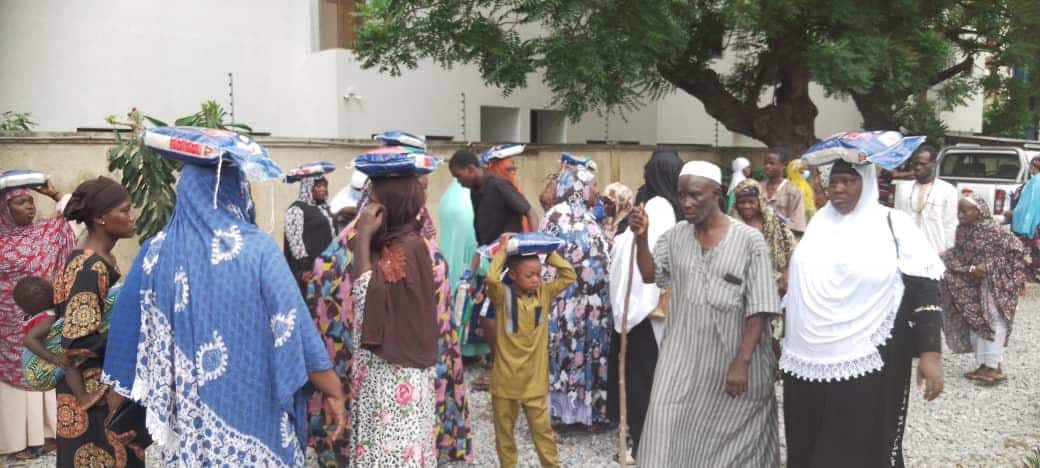
    The Palestinian Embassy in Ghana has donated food to more than 600 Muslim women and children in Accra in support of their Ramadan.

    The donation which involves 25 kg of rice each was a token of love that the Palestinian Embassy demonstrated.

    Ambassador Ahmed Al-Khalil thanked the women who honoured the invitation for their show of love and concern for the Embassy.

    He said despite the fasting mood, they still were able to move from their homes to honour his invitation at the Embassy for the token.

    Mr Kwesi Pratt, the Managing editor of the Pan-African Television was the guest to the ceremony.

    He said the essence of gift was to facilitate the ongoing peaceful relations between the Embassy and the people of Ghana and urged the Muslim community to use the fasting season to pray for the peace of the world in the ongoing global turmoil.

    Shaik Arimiyawu Shaibu, the spokesperson of the national Chief Imam called for the creation of a medium to facilitate communication and relations between the embassy and the Muslim community in Ghana and to reiterate the essence of fasting to deepen the relationship between Allah and His servants.

    He said aside the abstinence from food and water, Muslims were reminded during this fasting period their duty to share the little that they had with those who do not have.

    Pastor Isaac Mensah of Grace Gate Global Ministry admonished the Muslim community undergoing the 30 days fasting period to be steadfast and generous to all in the society.

    He narrated from the Bible, which was translated to the gathering by Shaik Arimiyaw in the Hausa language, the story of how Jesus Christ (Annabi Issah, A. S) lamented ill-treatment from his followers when he visited them in an image of a naked-poor person looking for help in the form of Cloths, food, and shelter, and was rejected and mistreated.

    The General Secretary of Pan-African Writers Association (PAWA) Dr Wale Adikran was also available to help in the success of the programme

    The Ambassador also donated a PA system to a mosque and indicated that at any-time, he was willing to Honour same request from the Church as well.

    He emphasised on world peace and the need for all the different groups of the world to live together as one. Earlier, the Ambassador invited 200 orphans to his residence on his birthday to entertain them in solidarity.

    He thanked Ghanaians and their leaders for the peaceful atmosphere created in times of global turbulence and assured his commitment to continue to advocate peace in Palestine and everlasting peace in Ghana.

  • Traditional Ramadan drink “helo-murr” returns back to the menu in Sudan

    Traditional Ramadan drink “helo-murr” returns back to the menu in Sudan

    Ramadan is never complete in the absence of Sudanese beverage “helo-murr” translating into bittersweet made with dried corn and spices.

    Women laboriously make the beverage that will be placed on practically every table in the nation in the suburbs of the nation’s capital, Khartoum.

    “It’s a tradition we inherited from our grandmothers and mothers. The “helo-murr” is a must-have drink. Without it, our table feels empty. So, we must have it in any possible way. Those who can’t make it buy it ready-made, because its preparation is complicated. We call our friends, our neighbours, our sisters, the day one of us wants to prepare it, she calls her friends and sisters and they all make themselves available for the whole day to help her. They all get together, like us today, and each one leaves with her share. Even those who don’t know how to make it, they help with the preparation or the iftar [fast breaking meal at dusk during Ramadan, ed]”, said Sudanese homemaker, Wissal Abdel Ghany.

    The corn is harvested and left to dry in the sun before being ground and mixed with spices such as fenugreek, cumin or even hibiscus — Sudan’s other essential Ramadan beverage.

    This mixture is then soaked in sugar and water for several days.

    The resulting crepe-like layer is then peeled away and stored, ready to be soaked in the final step to create the beloved drink.

    “I don’t think the original recipe included all these ingredients. Surely, a lot of ingredients were added over the years until it reached the actual recipe and maybe the next generations will add other ingredients to it. But the “helo-murr” will always be the same, with its taste, its smell. All it takes is a whiff of the scent coming out of a home to know that Ramadan is here. Ramadan brings a special atmosphere, especially with the “helo-murr”, concluded the Sudanese homemaker.

    Served as cold as possible, the drink is one of many ways that fasting Sudanese cool off, a significant challenge in one of the world’s hottest countries.

  • Muslim astronaut commemorate his Ramadan festive in space

    Muslim astronaut commemorate his Ramadan festive in space

    This week’s new moon marked the start of the holy month of Ramadan for Muslims throughout the globe, and one man will be watching it from space.

    First Emirati to work on the International Space Station (ISS), where he will spend the next six months, is astronaut Sultan Al Neyadi.

    Mubarak in Ramadan.
    Al Neyadi tweeted a video of his breathtaking views of the Earth, moon, and Venus from the International Space Station on Thursday along with the message, “Wishing you all a month full with blessings.”

    ‘Sharing the beautiful night time scenery from the International Space Station Station with you all.’

    During the month of Ramadan, Muslims refrain from eating or drinking anything from sunrise to sunset. So will Al Neyadi be fasting in space?

    As an astronaut Al Neyadi fits the definition of a ‘traveller’, excusing him from attempting to observe Ramadan at the same time as Earth-bound Muslims.

    ‘Fasting is not compulsory if you’re feeling not well. So in that regard — anything that can jeopardize the mission or maybe put the crew member at risk — we’re actually allowed to eat sufficient food to prevent any escalation of lack of food or nutrition or hydration,’ he told reporters at a press conference in January.

    Alneyadi also told reporters during a news conference in Dubai in February that he could fast according to Greenwich Mean Time, or Coordinated Universal Time, which is used as the official time zone on the space station.

    ‘If we had the opportunity, definitely Ramadan is a good occasion to fast, and it’s actually healthy,’ said Al Neyadi. ‘We’ll wait and see how it goes.’

    The Emirati is only the 11th Muslim astronaut to go to space.

    In 2007, Malaysian astronaut Sheikh Muszaphar Shukor became the first practising Muslim aboard the ISS.

    Since his time in space coincided with Ramadan, Malaysia’s space agency, Angkasa, convened a conference of 150 Islamic scientists and scholars in 2006 to create special guidelines to guide his and future Muslim astronauts’ practices in space.

    According to the guidelines, Shukor’s fasting could be postponed until he returned to Earth or he could fast in accordance with the time zone of the place from which he had launched.

    He was also relieved of the obligation to attempt to kneel while praying — a difficult feat in zero gravity.

    Another challenge in space is attempting to face Mecca, as Muslims must during Salah or daily prayer. This was left to the best abilities of the astronaut, according to Fatwa Council guidelines.

    So far, less than a dozen Muslim men have been in space.

    Al Neyadi was part of SpaceX’s Crew 6 and is currently on the first-ever long-duration mission flown by a United Arab Emirates (UAE) astronaut.

  • The first-ever Ramadan lights in London are turned on

    The first-ever Ramadan lights in London are turned on

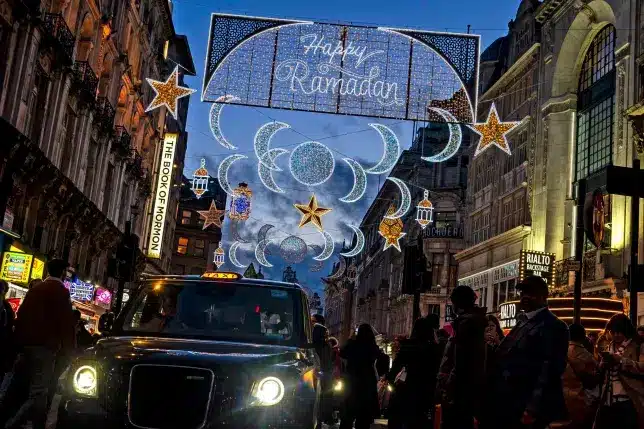
    For the first time ever, festive Ramadan lights have been displayed in London’s West End.

    30,000 environmentally friendly lights that proclaim “Happy Ramadan” and have shimmering moons and stars were strung throughout Piccadilly Circus.

    The stunning exhibit, which is the first of its kind in Europe, shows the moon’s phases throughout Ramadan.

    The installation was sponsored by the nonprofit Ramadan Lights UK and paid for by contributions from the general population.

    Aisha Desai, the founder, claimed that her appreciation of the capital’s holiday decorations served as her inspiration.

    ‘As a child, a trip into central London to see the festive lights was an annual treat,’ she said.

    My sister and I would lie in the back of the car looking at the lights through the sunroof. It was magical.

    Latest London news

    ‘As a proud Muslim, I wanted to bring some of that magic to my community… And three years ago, that journey began with Ramadan Lights.

    ramadan lights london
    The festive lights mark the start of the Ramadan period.
    London's first ever Ramadan lights to celebrate the start of Ramada
    The lights read ‘Happy Ramadan.
    sadiq khan switches on London's first Ramadan lights
    Mayor of London Sadiq Khan officially switched on the lights (Picture: PA)

    ‘And our generous donors have helped us go from strength to strength.’

    The lights were switched on by the Mayor of London, Sadiq Khan, one of the city’s many Muslims celebrating Ramadan.

    It is observed by 1.3 million Muslims across London and 3.8 million across the UK.

    Muslims will fast this year during the daylight hours from March 22 to April 21.

    Elsewhere across the capital, an open Iftar – breaking of the fast – will be held at the Victoria and Albert Museum in South Kensington.

    The museum has also erected a pop-up mosque and Ramadan pavilion for Muslims and non-Muslims.

    And in a first for Chelsea FC, an open Iftar will be held at the side of the pitch at Stamford Bridge.

    Wembley Stadium are set to do the same later this month.

  • 2023 Ramadan fast begins today

    2023 Ramadan fast begins today

    In honor of Ramadan, the ninth and holiest month of the Islamic calendar, Muslims in Ghana have begun their fast Today, Thursday, March 23, 2023.

    Sheikh Armiyawo Shaibu, spokesman for the Chief Imam, made the declaration on Wednesday night.

    “The report we received and source we are getting from Bawku is that the moon has been sighted at Bawku. This information has been well authenticated based on communication between the Bawku Chief Imam and the office of the Chief Imam.”

    “There is no reason to doubt it. On this ground, and by the Chief Imam’s mandate as the supreme leader of Muslims in this country, Muslims will begin fasting on the 23rd of March 2023”, he declared.

    Ramadan is the holiest month in the Islamic calendar. It begins with the sighting of the moon.

    Fasting in Ramadan involves abstaining from eating, drinking, smoking, and sexual relations from dawn to sunset.

    Ramadan for Muslims is a month of reflection, and self-improvement in relation to one’s behaviour toward other people, oneself, and Allah.

    It is also a way to show solidarity with millions of poor people who cannot afford a four-square meal.

    Muslims begin the fast before the call to the Fajr prayer after they are done with suhoor and fast till the setting of the sun after the call of Maghrib evening prayer.

    Children, the elderly, people who are travelling, pregnant women, and people who are suffering from chronic illness are, however, excused from fasting, but they are required to make up the fasting later or compensate by feeding the hungry in proportion to the fast they had missed.

    The festival of Eid al-Fitr, also known as the festival of fast-breaking, is observed to mark the completion of Ramadan after the 29 to 30-day fast.

  • Saudi Arabia gives 50 tons of date fruits to Ghanaian Muslims for Ramadan

    Ghana has taken delivery of 50 tons (2,500 pieces) of date fruits from the Kingdom of Saudi Arabia.

    The Ministry of Foreign Affairs and Regional Integration received the donation on Thursday, May 6, 2021, in Accra on behalf of the government.

    The Chief Director of the Ministry of Foreign Affairs and Regional Integration, Ambassador Martha Ama Akyaa Pobee, who received the items, was grateful for the gesture.

    She said, ​“Ghana-Saudi bilateral relations date back to 1960, when Ghana established a diplomatic presence in the Kingdom with the latter reciprocating later, Since then the two countries have witnessed fruitful cooperation and strengthened relations.”

    “The increasing numbers of Ghanaian Muslims embarking on the annual ritual of the Hajj, and unique occasions such as we are witnessing today bear testimony to our excellent relations,” she added.

    “This presentation ceremony is one more expression of the friendship and cooperation between Ghana and the Kingdom of Saudi Arabia. Indeed Ghana has been a beneficiary of this symbolic gift of date fruits over the years.”

    “It is also insightful to know that dates are considered among the fruits of heaven in Islam and signify vitality and growth. Rooted in the religious teachings of the Prophet Mohammed, dates are traditionally recognized as a customary food item during Ramadan.”

    The Ambassador of Saudi Arabia to Ghana, Meshal Hamdan Al-Rogi, who presented the dates, described it as the most important fruit in Saudi Arabia with deep historical and religious significance.

    Source: gbcghanaonline.com

  • Ramadan: Akufo-Addo wishes Muslims well

    President Nana Addo Dankwa Akufo-Addo has wished all Muslims in Ghana the best, as they begin their month-long fast.

    Mr. Akufo-Addo posted the message on Facebook earlier today, Wednesday, 14th April 2021.

    In the post, he said: “This is a month of intense devotion and commitment to the principle of love, sacrifice, and dedication to duty and I wish all Muslims the best of the month.”

    Meanwhile, Vice-President Mahamudu Bawumia has reminded his fellow Muslims to be mindful of the existence of the COVID-19 pandemic and strictly adhere to safety protocols as the month-long Ramadan fast begins.

    Muslims all over the world started the annual Ramadan fast on Tuesday.

    The period brings Muslims together for congregational prayers to break their fast in the evenings.

    In his Ramadan message posted on his Facebook wall, Dr. Bawumia encouraged Muslims to be “mindful of the presence of COVID-19 and continue to observe the safety protocols, especially in our various mosques.”

    He also urged Muslims to pray for the prosperity of Ghana and loved ones during the holy month.

    Source: Class FM

  • Ellembelle MP Donates to Muslim Community to Support Ramadan feast

    The Member of Parliament (MP) for Ellembelle, Mr Emmanuel Armah-Kofi Buah, has presented food items to the Muslim community in the Constituency as part of his contribution towards the celebration of this year’s Ramadan feast.

    The items were 50 bags of rice and some gallons of cooking oil.

    Beneficiary communities include, Muslims in the Ellembelle South and Aiyinasi-North communities.

    The gesture formed part of the MP’s annual donations to support Muslim communities towards the celebration of their yearly feast.

    Making the presentation at Kamgbunli, Mr. Armah-Kofi Buah commended the Muslim Communities for their patience and steadfastness which culminated in a successful Ramadan.

    The MP asked them to continue to pray for the peace and stability of the nation.

    Mr. Armah-Kofi Buah appealed to the Muslim Communities to be mindful of the outbreak of the COVID-19 pandemic and the need to strictly adhere to the safety protocols to avoid spreading of the virus.

    Receiving the food items on behalf of the Muslim communities at Kamgbunli, the District Chief Imam, Sheikh Kwasi Buah thanked the MP for the gesture.

    He recounted the unflinching support of the MP to Muslim communities over the years.

    Sheikh Buah said Muslim Communities would continue to intensify their prayers towards the peace and development of the Constituency and by extension, the nation.

    Source: GNA

  • Ramadan: Saudi Ambassador to Ghana urges Muslims to adjust to COVID-19 changes

    The Saudi Arabia Ambassador to Ghana, H.E Meshal Hamdan Al-Rogi, has urged Muslims to adapt to the changes the outbreak of the coronavirus has brought to Islamic worship, particularly during this period of Ramadan.

    According to him, he empathizes with the Muslim community who are unable to go to the mosque to observe Taraweeh prayers and not break the fast with friends and neighbours.

    Meshal Hamdan Al-Rogi is also calling on Muslims “to stand together in solidarity and help one another to observe this Ramadan fast amidst our fight against the COVID-19 pandemic.”

    In his Ramadan address to Ghanaians, the Ambassador mentioned that the Kingdom of Saudi Arabia, had, as it does before the beginning of the annual Ramadan Fast, donated 50 tons of date fruits to the country.

    He also announced a donation of US$ 500 million from the Saudi government to the World Health Organization to help in the global fight against the coronavirus pandemic, which has infected over three million people, according to the Center for Systems Science and Engineering (CSSE) at Johns Hopkins University (JHU).

    Source: www.abcnewsgh.com

  • Live by the values of Ramadan Akufo-Addo to Muslims

    President Nana Addo Dankwa Akufo-Addo has urged Muslims in Ghana to be committed to the principles of love, sacrifice and dedication to duty as they begin their annual Ramadan this year.

    Ramadan is observed by Muslims worldwide, as a month of fasting and prayer.

    Its annual observance is regarded as one of the five pillars of Islam.

    Nana Akufo-Addo, in a message to wish Muslims well as they embark on the 30-day fast, encouraged them to continue to commit themselves to the good of humankind even after the fast.

    The full message read: “I send greetings to Muslims in Ghana and around the world on the occasion of the Ramadan fast. The month of Ramadan has been instituted for Muslims to dedicate themselves to God and to the service of humankind. It is a month of intense devotion and commitment to the principles of love, sacrifice and dedication to duty.

    “In this month, let us strive to live by these values so that even beyond Ramadan we continue to commit ourselves to the good of humankind and our fellow Ghanaians. I wish all Muslims the best of the month. May the Almighty Allah bless us all and make our nation great and strong.”

    Source: Class FM

  • Chief Imam urges Muslims to adhere to ban on religious gathering during Ramadan

    The National Chief Imam, Sheikh Osman Nuhu Sharubutu has reminded Muslims in the country to adhere to the ban on congregational prayers in the month-long fast of Ramadan.

    Following the outbreak of the Coronavirus, the country has been observing a ban on religious gathering, including congregational prayers at mosques by Muslims for the past one month.

    With the month of Ramadan deemed as a special month of devotion, which brings together large number of Muslims to pray together, Sheikh Sharubutu has reminded Muslims the need to continue to observe the ban during the holy month.

    “Congregational prayer is something essential in our religion but there can arise a sitiation or circumstance where you cannot do what is permissible,” Sheikh Sharubutu said on Thursday when Vice President Bawumia called on him on his 101st birthday anniversary at his residence.

    “We have bot been restrained from praying. We have only been restrained from assembling because that is one of the means through which the disease is spread so it is for our own good that such restraints have been imposed on us.”

    “Therefore, I urge and entreat all members of the Muslim community to obey this simple directives (ban on congregational prayers and observing social distancing.)

    The Chief Imam added that the imposition of the ban is not a punishment, adding that it is important for all to respect it because the measures are in the collective good of everyone.

    “Let us endeavour to abide by the rules and the directives which are for our own good so that we dont expose ourselves to the risks of contracting and transmitting the virus.”

    Sheikh Sharubutu also reminded Muslims to pray for Ghana during this difficult moment.

    “As we pray at our various homes, let us remember and pray fervently to God to save our country and the world from this affliction.”


    Source: thezongomail.com