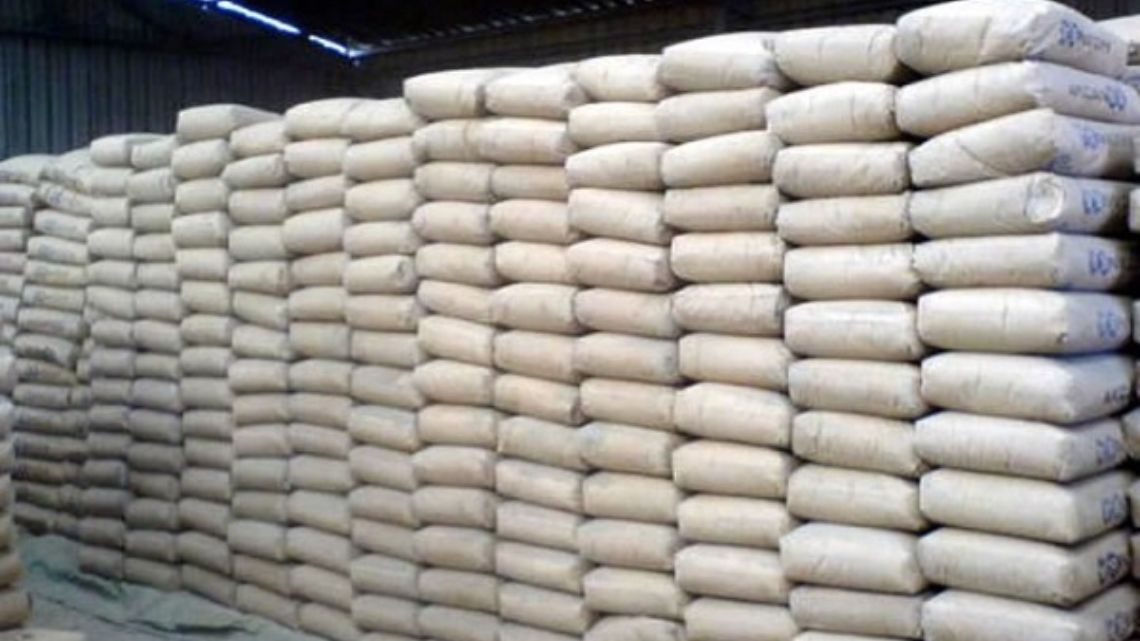
Cement manufacturers in Ghana are said to have announced plans to raise prices, marking the second increase this year.
Dr. Stephen Debrah-Ablormeti, former Vice Chair of the Ghana Real Estate Developers Association, revealed that the price of cement, which had already gone up by GH₵10.00 in May, will see an additional increase of GH₵12.00 starting July 1.
Dr. Debrah-Ablormeti explained that cement manufacturers communicated their decision to hike prices just days ago.
“Effective July 1, the price of cement will rise once again,” he said.
He emphasized the significant impact this increase will have on construction costs.
“Given that cement accounts for approximately 70% of building materials, an increase in cement prices leads to a corresponding rise in the cost of blocks, concrete, and plastering materials,” he noted.
“A project that starts in January can experience a 30-45% cost increase by December due to these price hikes.”
In addition to the rising cement prices, Dr. Debrah-Ablormeti highlighted that the cost of iron rods has also surged by 28% over the past two months.
This further exacerbates the financial burden on developers.
“Managing costs as developers is becoming increasingly challenging. We support the efforts of the Honorable Minister to address this issue and create a fair competitive environment in the market,” he stated.
In response to the situation, Trade and Industry Minister K.T. Hammond has announced his intention to proceed with the implementation of a legislative instrument (L.I.) designed to regulate cement prices in Ghana.
Despite a petition from the Chamber of Cement Manufacturers to delay the law, K.T. Hammond remains steadfast. He stressed the importance of the law in preventing exploitation by a cartel of manufacturers. A
ccording to the proposed L.I., violations by cement manufacturers could result in up to three years of imprisonment.
The move has faced opposition from the Minority in Parliament and various interest groups. Nevertheless, K.T. Hammond is determined to enforce the regulation to ensure fair pricing and protect consumers.
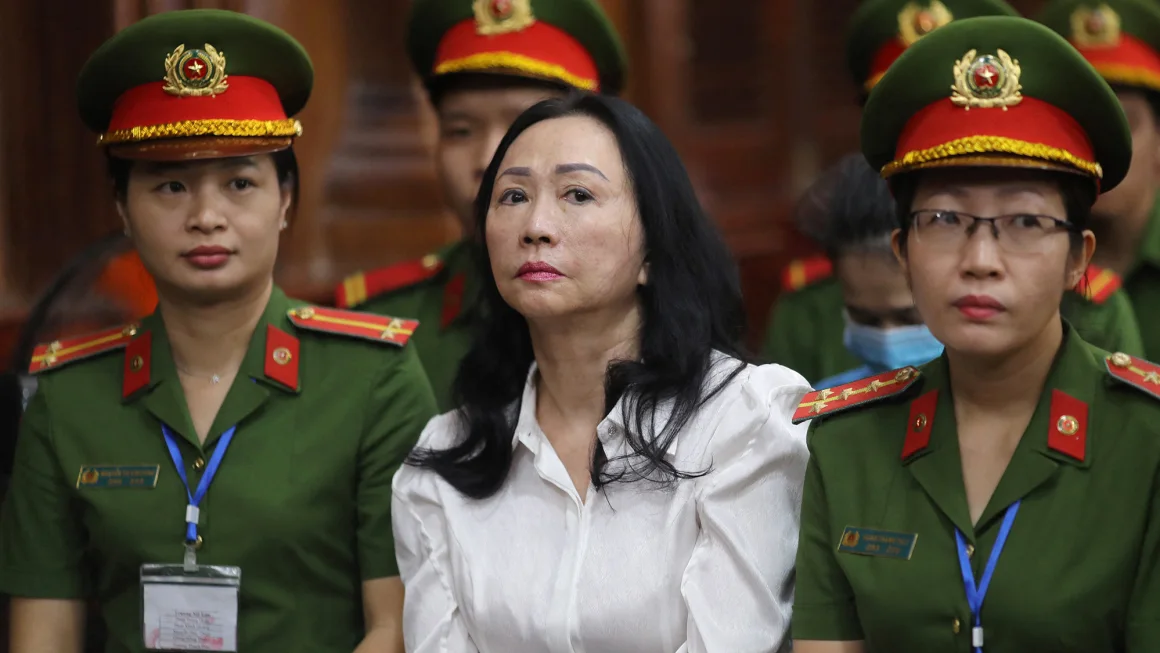
A court in Vietnam has sentenced real estate tycoon Truong My Lan to death over her involvement in a 304 trillion dong ($12.5 billion) financial fraud case, the largest in the country’s history, state media reported on Thursday.
Lan, the chairwoman of real estate developer Van Thinh Phat Holdings Group, was found guilty of embezzlement, bribery, and violations of banking rules.
Her trial, which began on March 5, ended earlier than planned and was a dramatic outcome of Vietnam’s campaign against corruption, a pledge made by the leader of the ruling Communist Party, Nguyen Phu Trong, to eradicate.
“We will keep fighting to see what we can do,” a family member told Reuters, speaking on condition of anonymity, according to CNN reports. Before the verdict, the family member had said Lan would appeal against the sentence.
Lan had pleaded not guilty to the embezzlement and bribery charges, Nguyen Huy Thiep, one of Lan’s lawyers, told Reuters.
“Of course she will appeal the verdict,” he added, noting she was sentenced to death for the embezzlement charge and to 20 years each for the other two charges of bribery and violations of banking regulations.
Truong My Lan, along with her accomplices, was found guilty of embezzling over 304 trillion dong from Saigon Joint Stock Commercial Bank (SCB), which she effectively controlled through numerous proxies, despite regulations strictly limiting large shareholdings in lenders, according to investigators.
Between early 2018 and October 2022, when the state bailed out SCB following a run on its deposits triggered by Lan’s arrest, she allegedly misappropriated substantial sums by orchestrating unlawful loans to shell companies, investigators revealed.
Currently, the bank is being supported by the central bank and is undergoing a complex restructuring process to determine the legal status of hundreds of assets used as collateral for loans and bonds issued by Van Thinh Phat Holdings Group (VTP), of which Lan was the chairwoman. The total value of the bonds alone amounts to $1.2 billion. Many of these assets include high-end properties and unfinished projects.
Prior to her downfall, Lan had been a prominent figure in Vietnam’s financial sector, playing a significant role in the previous rescue of SCB over a decade ago, before her involvement in the bank’s subsequent crisis.
Lan was also found guilty of bribing officials to turn a blind eye, including paying $5.2 million to a senior central bank inspector, Do Thi Nhan, who received a life sentence.
Vietnam predominantly reserves the death penalty for violent crimes, but it also applies it to economic offenses. According to human rights groups, the country has executed numerous convicts in recent years, primarily through lethal injection.
In the case mentioned, 84 defendants received varying sentences, including probation for three years to life imprisonment. Among them were Truong My Lan’s husband, Eric Chu, a Hong Kong businessman, who was sentenced to nine years in prison, and her niece, who received a 17-year sentence.
For many African entrepreneurs, managing debts associated with start-ups or project funding can be a critical determinant of success.
While some economic experts argue that debts are a natural part of business, substantial debt, combined with poor financial decisions and challenging economic conditions, can swiftly jeopardize the aspirations of entrepreneurs aiming to make a positive impact.
Recently, Ghanaian entrepreneur and author, Dr. Sangu Delle, reflected on one of his significant setbacks in the business world, particularly in the real estate sector in Ghana.
Dr. Delle disclosed that, at the age of 26, he embarked on a substantial signature project estimated at $12 million. However, as the project kicked off, he found himself burdened with a debt of about $5 million.
This situation, he described, marked one of his darkest and most challenging moments in life.
“I first came up with the most creative structuring around it where I was able to get the land owner to give me the land for a piece of equity in the project. The land was valued at $2 million and the balance was $10 million… I then raised $5 million from equity investors while the other $5 million was from debt investors in Japan,” Dr Delle shared, while speaking during a panel discussion organised by Absa Bank.
Dr. Sangu Delle gave an explanation of the reasoning behind selecting Japan for the debt investment, citing the Asian nation’s negative interest rates at the time.
“I had off takers for the project so it was virtually risk free. I also calculated how much the company would make in profit and it was about $4 million. I was very confident that we had struck gold until the two equity investors suddenly died in the same month,” he shared to the gathering.
Dr. Delle was hopeful that the real estate project’s off takers would secure another equity investment despite this significant setback.
“What I actually realised was that it was easy to raise equity before debt but raising equity after debt was a different situation altogether. As that was happening, Ghana’s economy took a nosedive and long story short, I was not able to get the project up and I was so confident in the deal as I personally guaranteed the loans.
“… I was 26 years old with $5 million of debt around my neck and how I got past that period, it had to take the intervention of God because I sunk into deep and dark depression where I used to wake up at night with panic attacks. It was hands down the absolute worst time of my life,” Dr Sangu Delle shared.
When a country houses an uninvited guest who has nothing but evil intentions of literally washing his dirty linens, thereby staining the credibility and threatening the survival of genuine ‘landlords’, it is certainly time to clean house.
Development is obviously a good indication of a country’s growth prospects and everyone welcomes it wholeheartedly, and housing by no small means, plays a critical role in changing the scenes of a country’s landscape and Ghana’s real estate sector is offering the needed relief.
Accra has certainly become a sight for sore eyes with respect to the springing up of high-rise buildings dotting prime locations of the city.
However, beneath the beautiful facade of perfection are clandestine activities of money laundering in the country’s burgeoning real estate sector – essentially burning a hole in its survival prospects.
Ghana last year, was removed from the European Union’s (EU) list of high risk third countries with strategic deficiencies in their Anti-Money Laundering and Countering the Financing of Terrorism (AML/CFT) regimes.
This was after Ghana had strengthened the effectiveness of its AML/CFT regime by addressing related technical deficiencies including strengthening the legal and regulatory framework to meet the commitments in the FATF action plan, with a view of removing strategic deficiencies identified under the Article 9 of 4th Anti-money Laundering Directives.
Nonetheless, this hasn’t deterred unscrupulous people from cleaning their ‘dirty monies’ and make them legal by all means.
Shedding light on this sinister act perpetrated in the real estate sector, Member of Parliament for Ningo Prampram, Sam Nartey George, in July this year disclosed that real estate businesses operating in the country are engaged in money laundering. He asserted that the real estate industry is often used as a front for money laundering activities.
“The cost of real estate in Ghana is not justifiable by any stretch. You keep seeing all these new high-rise buildings going up and they are selling them for half a million, a million dollars and they keep buying and buying amongst themselves…
“I have dirty money to clean, I put up a real estate property, you have dirty money you come and buy the property from me and then automatically your money becomes clean, then tomorrow you also start building your own then I come back and buy, and we are just cleaning the money.” Sam Nartey George said.
Despite the genuine intentions of the legislator, the Ghana Real Estate Developers Association (GREDA), the umbrella-body of property developers, threatened legal action against Sam George for his comment.
However, four months down the line, GREDA is eating humble pie as it bemoaned the influx of illicit money into the real-estate sector, describing it as alarming and with dire repercussions for the economy.
GREDA’s Executive Secretary, Sammy Amegayibor, revealed that the disturbing phenomenon was reported on by the Inter-Governmental Action Group against Money Laundering in West Africa (GIABA) at a recent conference attended by actors in the real-estate sector across West Africa.
“If you look at how the banks and other financial institutions operate these days, you will realize that they have tightened their systems; so, it is not easy for laundered money to pass through. This leaves the real-estate sector as the next frontier; we have noticed that people buy properties in the names of relatives and friends, making it difficult to trace the source and true beneficial owners.”Sammy Amegayibor said
Now that the cat is finally out of the bag, creating a pathway through the rubble of money laundering is vital to the thriving of the sector.
Tightening anti-laundering regime
Curtailing a problem of money laundering in Ghana’s real estate sector is all the more pressing as the country struggles with issues of corruption, mismanagement and housing deficits.
Indeed, the housing deficit for last year reduced by 33% but beyond providing an arguably affordable housing market to offset this trend and create a robust sector, real estate which has become a very lucrative business venture has the potential to thrive even more.
Per the Ghana Statistical Service, the performance of the real estate sector to the Gross Domestic Product (GDP) saw a 10.5 percent of the overall performance of the real GDP growth for the period of 2021.
This must certainly call for celebration, but the country has to chop more woods to raze down the building of money laundering within the system first.
The growing diversification and complexities used in perpetrating financial crimes within the real estate sector requires government to improve the effectiveness of prevention and detection systems into regulatory governance and supervision of sectors at risk of abuse.
Now more than ever before, well improve law enforcement tools and systems to trace and prosecute illicit activities that have been detected, although it must be consciously effected to restore sanity in the sector.
Member of Parliament (MP) for Ningo-Prampram, Sam Nartey George, refuses to budge in the face of calls from the Ghana Real Estate Developers Association (GREDA) for an immediate and unconditional apology and a retraction of his remarks.
He asserts that he has no intention of offering an apology or retracting any of his statements regarding the real estate industry.
During a broadcast on ‘Joy NewsFile Joy FM and Joy TV’ on Saturday, July 22, 2023, the MP reportedly referred to the real estate business in Ghana as an enterprise involved in ‘money laundering’.
In response to GREDA’s reaction, the Ningo-Prampram MP expressed his disappointment and accused the association of adopting an ostrich-like approach by denying the existence of money laundering in Ghana’s real estate sector.
“Let me start by stating that I have absolutely no intention to render an apology, qualified or not, nor make any retraction. As a public office holder, I am minded first by my fidelity to the truth, my conscience and the general well-being of the Ghanaian people. These considerations in my opinion supersede the whims of any individual or specific grouping.
“It is shocking that an association like GREDA would seek to play the ostrich and display publicly the malaise that bedevils our beautiful Nation – hypocrisy! How GREDA can boldly seek to make them that they are unaware of the fact that money laundering is happening in the real estate sector of our country is shocking and disappointing. The phenomenon is not peculiar to Ghana alone and is serious jurisdictions, legitimate industry players work with State authorities to rid their sector of these criminals. Unfortunately, here in Ghana, we are seeing GREDA seek to silence any voice that points out this criminality,” part of the MP’s statement read.
Sam George claims that his comments were not intended to single out all GREDA members but rather to address the issue of money laundering in the industry.
He mentioned messages of encouragement from reputable real estate developers who applauded him for speaking out on a matter that threatens the credibility of the industry.
“Let me state for the records that I have received messages from hardworking and credible real estate developers who are engaged in honest enterprise commending me for speaking out on an issue that threatens the viability of the sector. The attempt by the Executive Council to paint a picture that all GREDA members are saints and above reproach is one that would leave any discerning minds in stitches,” he continued.
The MP went on to say that many Ghanaians share his views on the real estate and that GREDA should use all legal means at their disposal to address those views rather than turning their legal efforts against him.
Sam George also gave the association assurances that his office is open to working with them to combat dishonest players in the industry who take part in unlawful activity.
“I am fortified that my position is one that the majority of Ghanaians agree with and believe in. I encourage GREDA to exercise any legal options available to your good selves as you have indicated in your statement. It may open a vista for a wider investigation into a sector that we may not have looked at closely.
“My office remains available to work with GREDA whenever it is prepared to deal with unscrupulous elements who use the sector to perpetrate illegalities,” the MP stated.
The Executive Council of the Ghana Real Estate Developers Association (GREDA) has expressed its dissatisfaction with recent remarks made by the Member of Parliament for Ningo Prampam, Sam Nartey George, regarding Ghana’s real estate sector.
According to GREDA, the lawmaker made an error in his statements when he characterized the entire real estate business in Ghana as a haven for individuals to launder money acquired through illicit means.
In a statement issued by GREDA and seen by GhanaWeb Business, they have requested that the Ningo Prampram MP issue an immediate and unqualified apology, as well as a retraction of his statement from the July 22nd edition of Joy News’ File within 7 days.
“It is therefore an affront to our genuine hardworking members for this Honorable MP to make such an unguarded and irresponsible utterance without offering any proof whatsoever.
We demand an immediate unqualified apology and retraction of this unfortunate statement within 7 days of this press statement,” the statement read in part.
GREDA continued, “We however, wish to serve him notice and notice is hereby served that we reserve our right to seek legalredress should he not retract his unfortunate comments and apologize accordingly.”
The Association, however, reminded the lawmaker that as part of efforts to ensure the real estate sector is sanitized, it collaborates with the Economic Crime and Intelligence Office (EOCO) and Financial Intelligence Centre (FIC) and other parallel state agencies to implement of the Anti-Money Laundering Law, AML (Act 749) as amended.
“Members of our Association are hardworking Ghanaians who every day have to battle with the economic conditions in the country as every other business sector is doing,” GREDA emphasized.
Read the full statement from GREDA below:
Background
On the July 22nd edition of the Joy News’ File, Member of Parliament for Ningo Prampam, Sam Nartey George raised concerns over the legitimacy of some real estate businesses operating in the country.
According to him, the real estate sector has become a haven for individuals to launder money acquired through illicit means and ways.
He suggested that individuals engaging in these money laundering schemes in the real estate sector often exchange these properties as part of a ploy to effectively ‘clean’ illicit funds.
“Real estate business in Ghana is money laundering. If our authorities want to deal with it, they will deal with it,” Sam George lamented.
He explained that “the cost of real estate in Ghana is not justifiable by any stretch. You keep seeing all these new high-rise buildings going up and they are selling them for half a million, a million dollars and they keep buying and buying amongst themselves.”
“…I have dirty money to clean, I put up a real estate property, you have dirty money you come and buy the property from me and then automatically your money becomes clean, then tomorrow you also start building your own then I come back and buy and we are just cleaning the money,” Sam George added.
The Ningo Prampram MP further asserted that the funds generated from such illegal activities are subsequently used to finance political campaigns and among others.
His remarks were on the back of a recent newspaper report from The Chronicle detailing how a former Minster of Sanitation, Cecilia Abena Dapaah had been keeping huge sums of foreign currency in her home which was subsequently stolen by her two maids.
Member of Parliament for Ningo Prampram, Sam Nartey George, has expressed deep concerns about the legitimacy of certain real estate businesses operating in the country.
The lawmaker raised alarm over how the real estate sector has turned into a safe haven for individuals to launder money obtained through illicit means and activities.
During an appearance on the July 22nd edition of Joy News’ File, Sam George lamented the inflated pricing of real estate properties and high-rise buildings, which are often sold at exorbitant prices.
He suggested that those involved in money laundering schemes within the real estate sector frequently use these properties as a means to effectively ‘clean’ illicit funds by exchanging ownership among themselves.
“Real estate business in Ghana is money laundering. If our authorities want to deal with it, they will deal with it,” Sam George lamented.
He explained that “the cost of real estate in Ghana is not justifiable by any stretch. You keep seeing all these new high-rise buildings going up and they are selling them for half a million, a million dollars and they keep buying and buying amongst themselves.”
“…I have dirty money to clean, I put up a real estate property, you have dirty money you come and buy the property from me and then automatically your money becomes clean, then tomorrow you also start building your own then I come back and buy and we are just cleaning the money,” Sam George added.
The Ningo Prampram MP went on to say that the money made from these unlawful acts is then utilized to support political campaigns and other things.
His comments follow a recent newspaper article from The Chronicle that described how Cecilia Abena Dapaah, a former minister of sanitation, kept enormous amounts of foreign currency in her residence, which were later taken by her two maids.
The upcoming launch of the Chartered Institute of Realtors (CIR) in Ghana marks an important milestone for the real estate industry.
Committed to delivering top-notch training and educational opportunities to its members, the CIR aims to meet the evolving needs of real estate professionals worldwide.
The launch event is expected to attract a diverse audience, including policymakers, international property developers, lawyers, arbitrators, politicians, clergy, government stakeholders, academics, and property investors, among others.
This diverse representation underscores the significance of the real estate industry and its impact on various sectors of society.
The establishment of the CIR aims to foster unity among the different fields within the building environment and establish itself as a globally recognized certification body in the real estate industry. By bringing together professionals with specialized skills and experiences, the CIR will contribute to the advancement of the industry as a whole.
Similar to other professional bodies in fields such as Accountancy, Law, and Banking, the CIR will play a crucial role in educating its members on professional standards and ethics.
This will ensure that real estate professionals adhere to recognized standards of operation, working in harmony with state institutions like the Lands Commission and other industry associations.
The Chartered Institute of Realtors (CIR) in Ghana is dedicated to providing high-quality training, education, and certifications for individuals seeking to establish themselves in the real estate industry. Its objective is to harmonize the skills, experiences, and services of all stakeholders, ensuring professionalism and excellence in the field.
To achieve this goal, the CIR has designed a comprehensive training program consisting of progressive stages, including requisite training, seminars, and workshops. This systematic approach enables members to grasp essential concepts and conventions in the real estate industry.
The institute recognizes the importance of collaboration and will engage with realtors and professional associations worldwide. By leveraging available resources and expertise, the CIR aims to equip its members with the necessary tools to promote professionalism, quality, and excellence in their work.
The expansion of the global real estate industry has brought forth various challenges, including land acquisition issues, property fraud, property pricing, broker management services, and facility and property management.
The CIR aims to address these diverse issues to safeguard the integrity of the industry. By doing so, it seeks to restore or maintain confidence in the real estate sector and provide valuable insights to navigate the experiences faced by professionals worldwide.
The Chartered Institute of Realtors in Ghana is poised to make a significant impact in the real estate industry by promoting best practices, continuous learning, and the highest standards of professionalism.
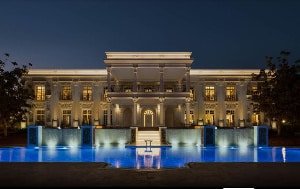
In Dubai, where luxury real estate is in high demand, a palace reminiscent of Versailles is on the market for Dh750 million ($204 million), making it the most expensive home there.
The home in the Emirates Hills neighbourhood has 60,000 square feet of indoor space though only five bedrooms: At 4,000 square feet, the primary bedroom is bigger than most homes.
The ground floor has rooms for dining and entertaining. Other amenities include a 15-car garage, indoor and outdoor pools, two domes, a 70,000-liter (15,400-gallon) coral reef aquarium, a power substation and panic rooms. It sits on a 70,000-square-foot lot in a gated community overlooking a golf course.
The property – nicknamed the “Marble Palace” by the selling agents – was built using an estimated Dh80 million to Dh100 million in Italian stone. Construction took nearly 12 years and was completed in 2018, according to Luxhabitat Sotheby’s International Realty, which is selling the property. Tasks included the application of 700,000 sheets of gold leaf by 70 skilled workers toiling more than nine months, the brokerage says.
The home is currently decorated with about 400 pieces from the owner’s personal art collection, primarily 19th-century and 20th-century statues and paintings; the owner is prepared to negotiate about including them and furnishings in the purchase.
The owner, a local property developer, declined to be named.
“It’s not everybody’s taste or style,” Luxhabitat Sotheby’s broker Kunal Singh says, well aware that buyers will either love it or hate it.
The Dubai property market has been on a tear since late 2020, an uplift that has lasted much longer than other global property booms during the pandemic. Dubai’s handling of the pandemic enabled the city to reopen quickly, attracting bankers who transferred from places like Singapore or Hong Kong.
Several recent mega deals include the Dh125 million sale of a plot of empty beachfront land and the purchase, for Dh420 million, of a penthouse. Still, the price per square foot of the Marble Palace – Dh12,500 – is more than double what other properties in Emirates Hills have fetched. The most expensive home sale previously in the neighbourhood was for Dh210 million, at Dh5,614 per square foot, in August 2022, according to Dubai property records.
Only one listing in the city rivals this mansion: A planned penthouse apartment in a project called Bugatti by Binghatti is also being offered at Dh750 million but has yet to be built. (Generally, properties that are move-in ready have commanded higher prices than those under construction.) That apartment – or “sky mansion,” as the developer calls it – will come with a car elevator and is due to hit the market in about three years.
Singh estimates that there are only about five to 10 potential buyers in the world are wealthy enough – and interested in its look – to buy the Marble Palace.
Singh says the property’s price is partly justified by the value of the time and materials that went into building it. The location is minutes from the Palm Jumeirah and about 25 minutes by car from the Dubai International Financial Center business district.
Emirates Hills, a gated community, was created two decades ago and has often been described as Dubai’s Beverly Hills, without the movie-industry connections. A golf course runs through the middle. The total lot size of the Marble Palace is one of the largest in the community. An adjacent plot of about 6,000 square feet could be purchased or leased from the developer, potentially for tennis or padel ball court.
The primary suite includes his-and-her bathrooms. The second-largest bedroom suite is 2,500 square feet, and guest rooms are each about 1,000 square feet. There are 12 staff rooms with space for up to 25, and two bank vaults.
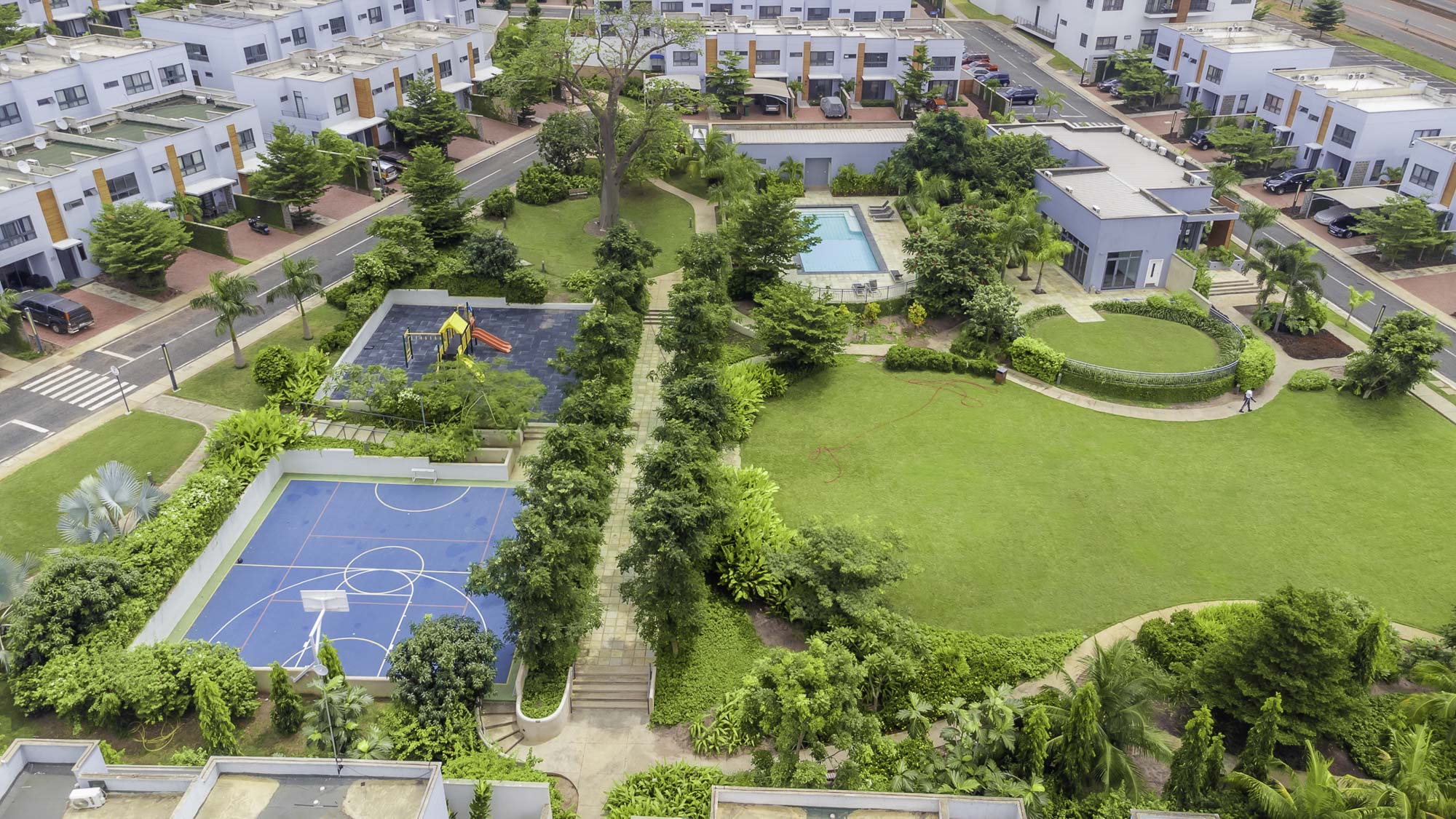
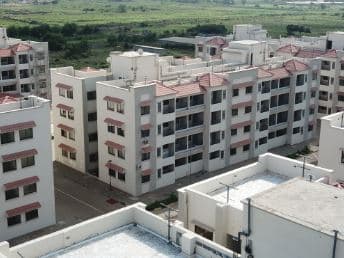
Nyame Dua Apartment’s lovely 3-bedroom apartments come with many standard features; a master bedroom with its own toilet, two other rooms that can be used for the family, study room or/and guest room.
This distinguished facility which is worth owning also has ample space for the average family as all apartments come with fitted kitchen ceiling fans, fibre optics, individual electric and water meters. There is also abundance of natural light that comes through the balcony and windows, providing rays of vibrant energy all day.
It is the dream of everyone to own a house that does not just provide comfort, but also one that reflects good vibes and offers house owners their desired peace of mind, and that’s exactly what Nyame Dua Apartments is about; homes built to save you time and money.
Located in a serene environment, this gated community offers 24 hours private security, various infra-structure and amenities: allotted car park, street lights, underground water drainage, water back up, electricity back up, convenience store, swimming pool, tennis court, basketball court, clubhouse, cafeteria, etc…,practical, simple and modern design.
Nyame Dua Apartments is perfect for people who wish to live more efficiently/economically and an ideal opportunity to invest. It is the only luxury apartment in Ghana with affordability. You can reach Nyame Dua on 055 143 5555 or 055 143 8888 and for help in securing your unit.
About Nyame Dua Apartments
With soaring house and land prices, apartments seem to be the future of real estate in Ghana. Nyame Dua Apartments give prospective owners an affordable alternative to traditional housing units.
Being the first master-planned community in Ghana, Nyame Dua Apartments is an integrated community with various infrastructure and amenities, which stands in the heart of all major developments in Tema. It is strategically located a short drive from the Tema Motorway Roundabout towards Community 25.
The plush estate is designed to keep the cost of living low and built to withstand earthquakes. It is coined the ‘Future of Living.’ It is also focusing on and promoting Eco-Friendly Living.
A real estate company, Waterstone Realty Limited, has filed a lawsuit against the Lands Commission regarding the destruction of a two-story multifunctional building that was originally situated where the National Cathedral project is currently at.
The helpless innocent baby boy was found by a good samaritan who later blew an alarm for people to come around, according to an eyewitness report.
The unknown mother who dumped her day-old baby into the bush has faced the wrath of residents who witnessed the unfortunate incident.
According to most of these eyewitnesses who came across this shocking news, the perpetrator of such a heinous act will surely be exposed and be made to pay for her evil deeds.
The yet-to-be-identified mother who committed the crime has since gone into hiding as both residents and other security agencies have been pursuing her.
“God will surely punish the wicked mother who threw this child into the bush here,” an angry woman said.
“Why would you carry a baby for nine months and dump it into the bush just a few days after birth? Is that not madness? I pray God closes this person’s womb forever,” another woman said.
“This is a bigger abomination and the perpetrators will surely be exposed. They will pay for their evil deeds. How dare you throw a child into a bush alive?” another person reacted.
Justice Kyei Baffour Awuah aka Wofa Kusi, the Assembly Member for the area who earlier spoke to GhanaWeb said, it was good news the baby was alive.
He further revealed that the wicked woman who dumped the baby into the bush was going to be pursued by all efforts to be brought to book.
In an updated report, the honourable member revealed that the case which was initially lodged at the Afasiebon Police Station was later forwarded to the DOVVSU department of the Abuakwa divisional Police station.
He further revealed that as police seriously manhunt for the wicked mother, the baby had been put on a life-supporting treatment at the hospital.
Meanwhile, a thorough investigation by GhanaWeb at the time of filing this story revealed that the innocent baby was responding to treatment and that he will soon be discharged.