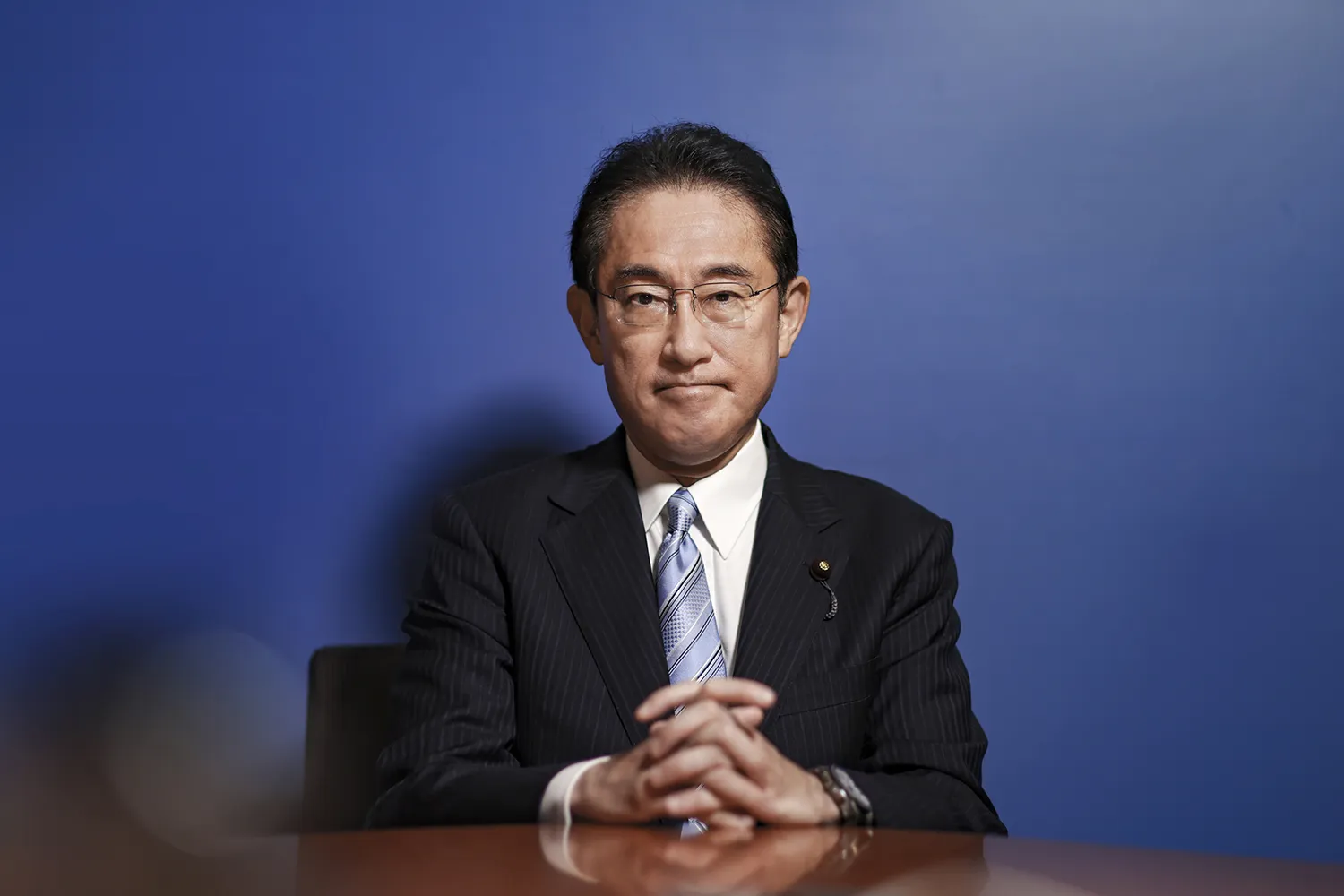
Japan unexpectedly entered a recession as its economy contracted for two consecutive quarters.
The country’s gross domestic product (GDP) shrank by 0.4% in the last three months of 2023, following a 3.3% contraction in the previous quarter.
This decline caused Japan to lose its position as the world’s third-largest economy to Germany. Economists had anticipated a GDP growth of over 1% for the fourth quarter of the year.
The International Monetary Fund (IMF) had forecasted Germany’s likely overtaking of Japan as the world’s third-largest economy, based on US dollar measurements.
However, Japan’s economy could regain its position if the yen strengthens against the dollar. The yen’s weakness has benefited Japanese exporters by making their products cheaper in international markets.
Despite the economic downturn, Tokyo’s main stock index, the Nikkei 225, reached its highest level since 1990.
The Bank of Japan may postpone raising interest rates further due to the recession, as negative rates have helped boost spending and investment in the past.
Despite a steep 0.5% decline in economic output in December, which was partially caused by strikes in the health, transportation, and postal services, this is still the case.
Chancellor Jeremy Hunt said the figures show “underlying resilience” but said “we are not out of the woods”.
The Bank of England still expects the UK to enter recession this year.
But it will be shorter and less severe than previously thought.
Mr Hunt said that high inflation remains a problem and continues to cause “pain for families up and down the country”.
Inflation – or the rate at which prices are rising – is slowing but at 10.5% remains close to a 40-year high.
Additionally, it updated its data for July and September to show that the GDP contracted by 0.2% rather than the 0.3% previously predicted.
When the economy shrinks for two consecutive three-month periods, it is considered to be in a recession.
But December’s numbers came in worse than anticipated.
Darren Morgan from the ONS said there was a fall in health services with fewer operations and GP visits. He also said that sporting activities, particularly football, were impacted because of the World Cup.
He people were not “able to enjoy top flight football due to the absence of Premier League football until Boxing Day, as the World Cup continued”.
“And finally rail and postal industries had a poor month. We certainly saw the impact of strikes as both fell heavily in December,” he said.
Strike action on trains caused disruption on the railways and on the roads in December. Postal workers also went on strike on a series of days in the run-up to Christmas.
Over 2022, gross domestic product (GDP) grew by 4% – the biggest increase of all G7 nations for last year.
However that compares to 7.6% growth in the previous year and the UK economy is still 0.8% smaller than it was before the Covid pandemic.
Rachel Reeves, Labour’s shadow chancellor, said the latest figures show the economy “is stuck in the slow lane”.
She added: “We must bring in urgent measures to prevent yet more harm from the cost of living crisis, using a proper windfall tax on oil and gas giants to stop the energy price cap going up in April so that people have more money in their pockets.”
Liberal Democrat MP Sarah Olney, said: “Britain is dangling on over the edge of a recession after months of economic vandalism and chaos in Government.
“The blame for these gloomy figures lies squarely with the government, who have botched budgets, failed to tackle inflation and have no plan for growth.”
As the economies of the US, EU, and China slow, 2023 will be “tougher” than last year, according to Kristalina Georgieva.
The global economy is currently being weighed down by the conflict in Ukraine, rising prices, higher interest rates, and the spread of Covid in China.
The IMF revised down its forecast for 2023 global economic growth in October.
“We expect one third of the world economy to be in recession,” Ms Georgieva said on the CBS news programme Face the Nation.
“Even countries that are not in recession, it would feel like they for hundreds of millions of people,” she added.
Katrina Ell, an economist at Moody’s Analytics in Sydney, gave the BBC her assessment of the world economy.
“While our baseline avoids a global recession over the next year, the odds of one are uncomfortably high. Europe, however, will not escape recession, and the US is teetering on the verge,” she said.
The IMF cut its outlook for global economic growth in 2023 in October, due to the war in Ukraine as well as higher interest rates as central banks around the world attempt to rein in rising prices.
Since then, China has scrapped its “zero-COVID” policy and started to reopen its economy, even as coronavirus infections have spread rapidly in the country.
Ms Georgieva warned that China, the world’s second-largest economy, would face a difficult start to 2023.
“For the next couple of months, it would be tough for China, and the impact on Chinese growth would be negative, the impact on the region will be negative, the impact on global growth will be negative,” she said.
The IMF is an international organization with 190 member countries. They work together to try to stabilize the global economy. One of its key roles is to act as an early economic warning system.
Ms Georgieva’s comments will be alarming for people around the world, not least in Asia which endured a difficult year in 2022.
Inflation has been steadily rising across the region, largely because of the war in Ukraine, while higher interest rates have also hit households and business.
Figures released over the weekend pointed to weakness in the Chinese economy at the end of 2022.
The official purchasing managers’ index (PMI) for December showed that China’s factory activity shrank for the third month in a row and at the fastest rate in almost three years as coronavirus infections spread in the country’s factories.
In the same month home prices in 100 cities fell for the sixth month in a row, according to a survey by one of the country’s largest independent property research firms, China Index Academy.
On Saturday, in his first public comments since the change in policy, President Xi Jinping called for more effort and unity as China entered what he called a “new phase.”
The downturn in the US also means there is less demand for the products that are made in China and other Asian countries including Thailand and Vietnam.
Higher interest rates also make borrowing more expensive – so for both these reasons companies may choose not to invest in expanding their businesses.
The lack of growth can trigger investors to pull money out of an economy and so countries, especially poorer ones, have less cash to pay for crucial imports like food and energy.
In these kinds of slowdowns, a currency can lose value against those of more prosperous economies, compounding the issue.
The impact of higher interest rates on loans affects economies at the government level too – especially emerging markets, which may struggle to repay their debts.
For decades, the Asia-Pacific region has depended on China as a major trading partner and for economic support in times of crisis.
Now Asian economies are facing the lasting economic effects of howChina has handled the pandemic.
The manufacture of products such as Tesla electric cars and Apple iPhones may get back on track as Beijing ends zero-Covid.
But renewed demand for commodities like oil and iron ore is likely to further increase prices just as inflation appeared to have peaked.
“China’s relaxed domestic Covid restrictions are not a silver bullet. The transition will be bumpy and a source of volatility at least through the March quarter,” Ms Ell said.
Bill Blaine, strategist and head of alternative assets at Shard Capital, described the IMF’s warning as “a good wake up and smell the coffee moment”.
“Even though labour markets around the world are fairly strong, the kind of jobs being created are not necessarily high paying and we’re going to have a recession, we are not going to see interest rates fall as rapidly as the markets think,” he told BBC Radio 4’s Today programme.
“That’s going to create a whole series of consequences that will keep markets on tenterhooks for at least the first half of 2023.”
Price increases in the United States moderated last month, the latest sign that the nation’s inflationary pressures may be easing as the economy slows and consumers become more cautious.
According to the government, consumer inflation was 7.7 percent year on year in October and 0.4 percent month on month in September. The year-over-year increase was the smallest since January, slowing from 8.2 percent in September. Core inflation, which excludes volatile food and energy prices, rose 6.3 percent over the past year and 0.3 percent from September.
The numbers were all lower than economists had expected.
Helping drive the inflation slowdown from September to October was used car prices, which dropped for a fourth straight month. Also down were the prices of clothing and medical care. Food price increases slowed. By contrast, energy prices rebounded in October after having declined in August and September.
Even with last month’s tentative easing of inflation, the Federal Reserve is widely expected to keep raising interest rates to try to stem persistently high price increases. But Thursday’s better-than-expected data raised the possibility that the Fed could decide to slow its rate hikes, a prospect that sent stock prices jumping immediately after the government issued the figures.
“We expect this to mark the start of a much longer disinflationary trend that we think will convince the Fed to halt its [hikes] early next year,” said Paul Ashworth, chief North American economist at Capital Economics, a consulting firm. “With supply shortages normalising, deflationary pressure is now finally showing up.”
Recession fears
Many economists have warned that in continuing to tighten credit, the central bank is likely to cause a recession by next year. So far this year, the Fed has raised its benchmark interest rate six times in sizeable increments, heightening the risk that prohibitively high borrowing rates – for mortgages, auto purchases and other high-cost expenses – will tip the world’s largest economy into recession.
Some economists suggested that the latest inflation data shows that the hikes are beginning to achieve their goal, though the Fed needs to see further evidence.
“The data will be welcome news for the [Fed] finally showing some response in prices” to the rate increases, said Rubeela Farooqi, chief US economist at High Frequency Economics.
In the midterm elections that ended Tuesday, roughly half of voters cited inflation as the top factor in their decisions, according to VoteCast, an extensive survey of more than 94,000 voters nationwide conducted for The Associated Press by the National Opinion Research Center (NORC) at the University of Chicago.
Supply chain disruptions have largely eased up, and port backlogs have cleared [File: Qilai Shen/Bloomberg]
About 8 in 10 said the economy was in bad shape, and a slim majority blamed President Joe Biden’s policies for worsening inflation. Just less than half said factors beyond Biden’s control, such as Russia’s invasion of Ukraine, were to blame.
Those economic anxieties contributed to the loss of Democratic seats in the House of Representatives, though Republicans failed to score the huge political gains that many had expected.
Supply chains improve
Even before the release of Thursday’s figures, inflation by some measures had begun to ease and could continue to do so in coming months. Most gauges of workers’ wages, for example, show that the robust pay increases of the past 18 months have levelled off and have begun to fall. Though worker pay is not a primary driver of higher prices, it can compound inflationary pressures if companies offset their higher labour costs by charging their customers more.
Except for automakers, which are still struggling to acquire the computer chips they need, supply chain disruptions have largely unsnarled. Shipping costs have dropped back to pre-pandemic levels. The backup of cargo ships off the port of Los Angeles and Long Beach has been cleared.
And as declines in new rents that have emerged in real-time measures from such sources as ApartmentList and Zillow begin to be captured in the government’s forthcoming measures, that factor should also reduce inflation.
Even as many fear that the economy will fall into recession next year, the nation’s job market has remained resilient. Employers have added a healthy average of 407,000 jobs a month, and the unemployment rate is just 3.7 percent, close to a half-century low. Job openings are still at historically high levels.
But the Fed’s rate hikes have inflicted severe damage on the American housing market. The average rate on a 30-year fixed mortgage has more than doubled over the past year and topped 7 percent this week. As a result, investment in housing collapsed in the July-September quarter, falling at a 26 percent annual rate.
Higher mortgage rates have depressed sales. Home prices are slowing sharply compared with a year ago and have begun to fall on a monthly basis. The cost of a new apartment lease is also declining.
In September, the inflation rate in Germany reached a new high of 10%. The announcement follows economic forecasts that the GDP will contract in 2019.
High energy and food prices pushed inflation in Germany to 10% in September. In August, the figure was 7.9%.
Rising energy costs, which have skyrocketed since Russia’s invasion of Ukraine, were fueling inflation.
According to the federal statistical office, Destatis, energy prices were 43.9% higher in September 2022 this year than in the same month last year.
Destatis said the end of a fuel subsidy and the €9 public transport ticket “presumably had an impact on the inflation rate in September.”
German Chancellor Olaf Scholz announced on Thursday plans for an energy relief package worth €150-200 billion ($145-194 billion).
“The German government will do everything so that prices sink,” Scholz said in a press conference.
Germany expected to enter a recession
The inflation announcement follows a forecast by a leading group of think tanks earlier on Thursday that painted a bleak picture for Germany’s future economic prospects.
According to the think tanks’ projections, the crisis in the gas markets, spiraling energy prices, and a massive drop in purchasing power would push the German economy into recession.
The high cost of energy was the leading factor “driving Germany toward recession,” said Torsten Schmidt, head of economic research at the RWI think tank.
Schmidt told a media briefing that Europe’s largest economy would shrink over the second half of 2022.
Incomplete recovery from the global pandemic wasamong the factors contributing to Germany’s economic future.
Munich’s ifo Institute said in a statement earlier on Thursday that inflation would likely average at 8.8% in the coming year.
Inflation is expected to settle down in 2024 — “to be only slightly above the ECB’s target rate of 2%.”
German GDP is also expected to shrink by 0.4% in 2023, down from April’s estimate of 3.1% growth, before rebounding back to a state of growth in 2024.
The forecasts came Thursday as part of the so-called Joint Economic Forecast, which is prepared twice a year by the Ifo Institute in Munich, the Kiel Institute for the World Economy, the Halle Institute for Economic Research (IWH), and the RWI — Leibniz Institute for Economic Research.
Germany is not alone in the economic challenges it is facing. According to the joint statement, the global economy is in a downturn, with Russia’s war against Ukraine and subsequent Western sanctions against Moscow fueling the level of inflation for energy commodities.
The high levels of inflation have prompted the US Federal Reserve, along with many other central banks, to tighten monetary policy.
The joint report also pointed to China’s zero-COVID strategy,which prohibits economic activity during periods of lockdown, and a bubbling real estate crisis as having impacts on the economy.
The Bank of England hikes interest rates as it indicates the UK is already in recession; government hints energy support for schools, hospitals, and care homes could continue beyond six months; submit your cost of living dilemma to personal finance expert Gemma Godfrey using the form below.
What is a recession?
It is a significant decline in economic activity, lasting months or even years.
Economists usually define a recession as two consecutive quarters where GDP has fallen.
Why do recessions happen?
There are a number of common causes for recession, including:
A sudden economic shock – such as the COVID pandemic or the war in Ukraine
Excessive debt
Asset bubbles – when investors become too optimistic and inflate the stock market or real estate bubbles, before the bubble bursts and panic selling ensues
Many people will also remember the Great Recession of 2008 and 2009 – the UK’s worst in modern history.
This was largely due to the mortgage crisis in the US impacting the British banking sector, and the subsequent “credit crunch”.
The UK also saw a recession between 1990 and 1991, caused by rapid economic expansion under Margaret Thatcher and Britain’s plans to maintain membership of the Exchange Rate Mechanism.
How will a recession affect you?
Unemployment levels will rise, so more people will be at risk of losing their jobs.
People who keep their jobs may see cuts to pay and benefits, or struggle to negotiate future pay rises.
Meanwhile, investments can lose money and savings can be reduced, upsetting some people’s plans for retirement or for large expenses such as buying homes or getting married.
Businesses make fewer sales during a recession, and mortgage lenders can also tighten standards for mortgages, car loans and other types of financing – meaning you may need a better credit score or larger down payment.