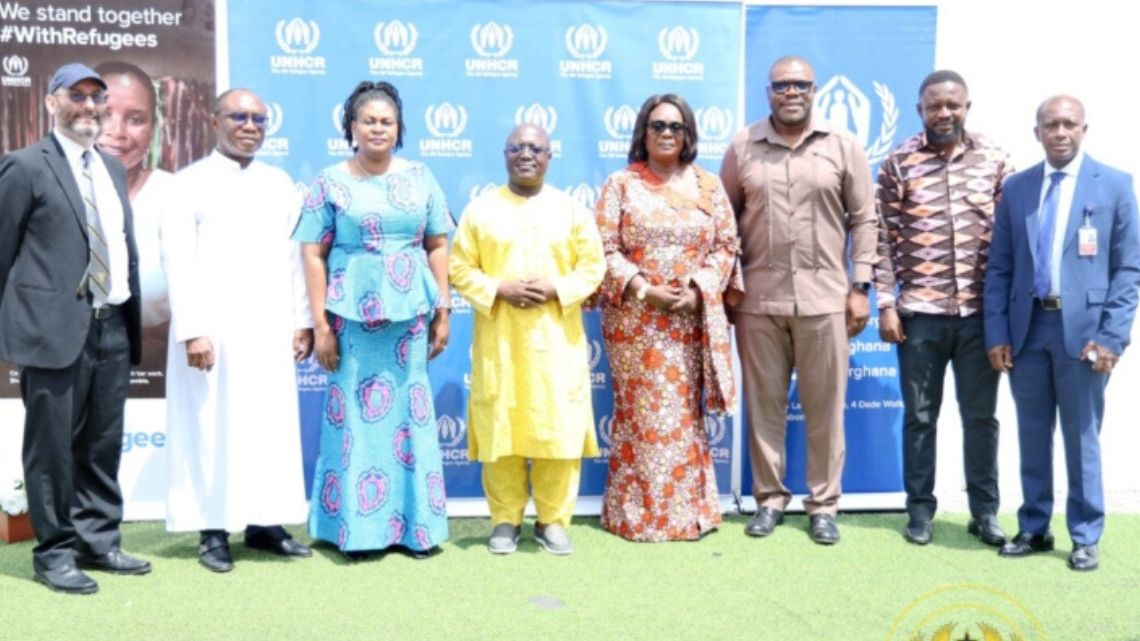
Deputy Minister for the Interior, Naana Eyiah, has reaffirmed Ghana’s steadfast commitment to supporting refugees within its borders.
At the 2024 World Refugees Day commemoration in Accra, highlighting the theme “Solidarity with Refugees,” she emphasized the various initiatives Ghana has implemented to ensure refugees have access to essential services and opportunities.
Naana Eyiah outlined that Ghana has been proactive in providing free education, healthcare, and economic opportunities to refugees, facilitating their integration into society.
She noted that identity cards have been issued to refugees to help them integrate more seamlessly, and residence permits have been granted to former refugees, allowing them to live legally in Ghana.
Despite these efforts, the Deputy Minister expressed concern over the dwindling resources allocated for refugee assistance, especially in light of the ongoing emergency in the Upper East and Upper West Regions. She urged the private sector to bolster their support, highlighting the mutual benefits that come with the inclusion of refugees in society.
“The involvement of the private sector is crucial,” she emphasized. “There are mutual benefits when refugees are supported and integrated into our communities.”
Hon. Naana Eyiah also took the opportunity to commend refugees for their resilience and contributions to Ghanaian society. She extended her gratitude to the United Nations High Commission for Refugees (UNHCR) for their continuous support and called for sustained solidarity with refugees.
Andrew Ginsberg, the Head of Office of UNHCR Ghana, echoed these sentiments, emphasizing the importance of providing refugees with opportunities in their host communities. He advised refugees to actively contribute to the development of their host areas and praised Ghana for its robust response in assisting refugees whenever needed.
“Refugees need opportunities in the communities that host them,” Ginsberg stated. “Their contributions can significantly enrich the social and economic fabric of these communities.”
The event concluded with a rallying call for collective action, reaffirming Ghana’s dedication to ensuring refugees live in safety and dignity.
Executive Secretary of the Ghana Refugee Board, Tetteh Paddie, has announced the successful relocation of over 100 refugees following the demolition at Buduburam.
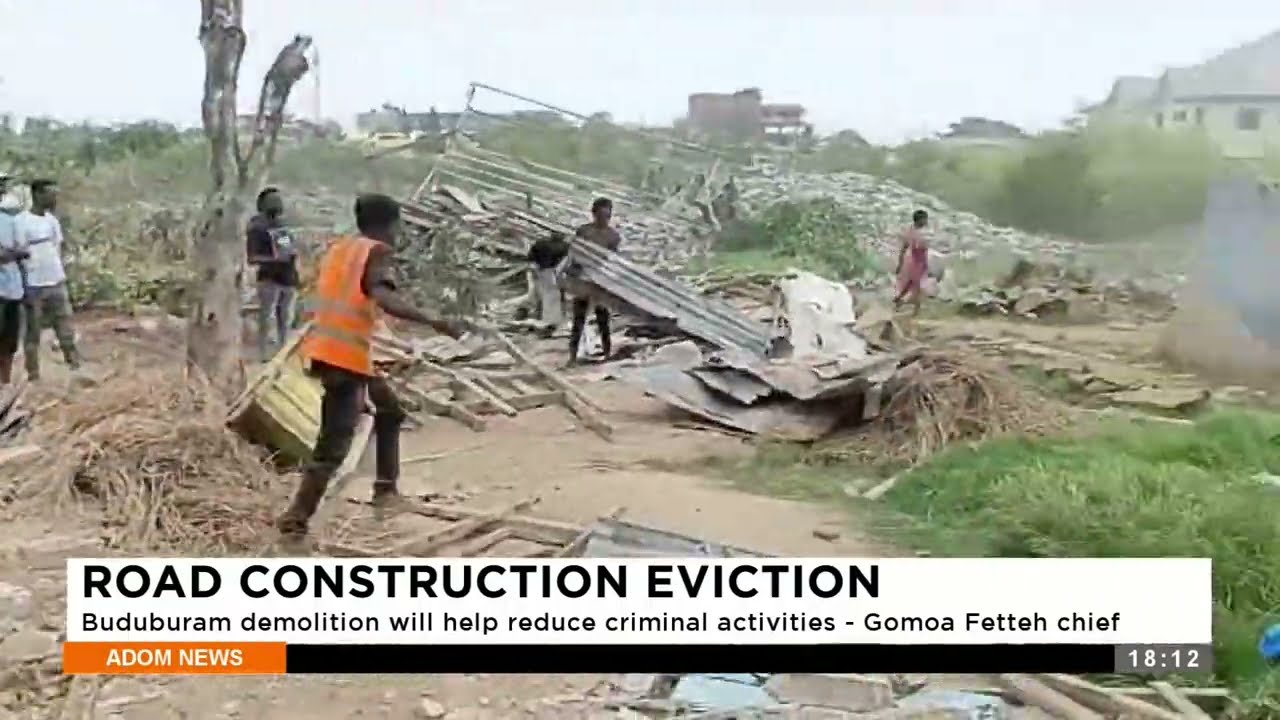
The demolition resulted in the destruction of many homes, prompting residents to hastily gather their belongings.
Speaking to Citi News on Thursday, Paddie clarified that the relocated individuals have been transferred to various refugee camps across the country.
“Most of the Liberians, a large majority of Liberians who are at Buduburam are not refugees. The few of them who are refugees approached us and they are still under our care. We relocated them to a refugee camp in the Western region, and they numbered about 150 that we relocated to the western region.
“The rest of them are largely former refugees who chose to remain in Ghana, and so they are no longer under, the care of the Ghana refugee board. They’re simply Liberian nationals,” he stated.
Paddie also mentioned ongoing efforts to facilitate the voluntary repatriation of the remaining Liberian refugees to their home country.
“The first batch of Liberians as we all know, have left. The Liberian governments have indicated that they will come and continue with the repatriation for those who want to return voluntarily. I cannot give you a date, but, we can confirm with the Liberian government when the next movement will be,” he stated.
The Ghana Refugee Board has disclosed that the majority of residents at the Buduburam camp are not refugees, leading to its reclassification away from being a refugee camp.
This clarification follows a demolition exercise on February 27, 2024, which left approximately 600 people, including Liberians and Ghanaians, homeless.
In an interview, the Executive Secretary, Tetteh Padie, revealed that out of the reported victims, only 268 were refugees.
“Buduburam is no longer a refugee camp. We have several people living there who are not refugees. In fact, most of the people living there are not refugees, including the Liberians.
“Since the demolition, we’ve done some head counts and so far 268 persons who are refugees have come forward as having been affected,” he stated.
Mr Padie explained that these individuals are their responsibility, and plans are in place to relocate them to other refugee camps.
“For these people who have opted to go to the refugee camp, we will provide free transportation. We will provide some amount of money for them to start, this will be provided by the UNHCR, they are our partners,” he explained.
The demolition, initially scheduled for 2021 but postponed due to residents’ pleas for more time, was prompted by concerns from local chiefs about increasing social issues and the camp becoming a haven for suspected criminals.
Gomoa East DCE, Solomon Quarm emphasized that the camp had exceeded its usefulness, and the chiefs’ call was a positive step.
However, nearly two months after the exercise, some victims have expressed feelings of abandonment and uncertainty about their future.
“We have two refugee camps in the Western Region, in the Ellembelle district and we are moving them into one of these camps. Out of the 268 people who have come forward, 231 have opted to go to Ampain.
“So for these people who have opted to go to the refugee camp, we will provide free transportation. We will provide some amount of money for them to start, this will be provided by the UNHCR, they are our partners,” he explained.
Rwanda has welcomed 91 refugees and asylum seekers from Libya through a program supported by the UN’s refugee agency, the African Union, and the European Union.
Among the arrivals are 38 Sudanese individuals, 33 Eritreans, 11 Somalis, seven Ethiopians, and two people from South Sudan.
These refugees and asylum seekers were evacuated as part of the Emergency Transit Mechanism program, which has relocated 2,150 refugees to Rwanda from Libya since 2019.
Of these individuals, 1,600 have resettled in the United States and various European countries.
On Thursday, Rwanda’s emergency management ministry reaffirmed the country’s commitment to providing refuge to those in need.
The arrival of these refugees and asylum seekers coincides with the UK’s efforts to pass new legislation allowing for the transfer of some asylum seekers to Rwanda while their claims are processed.
However, the UK Supreme Court previously ruled this plan unlawful.
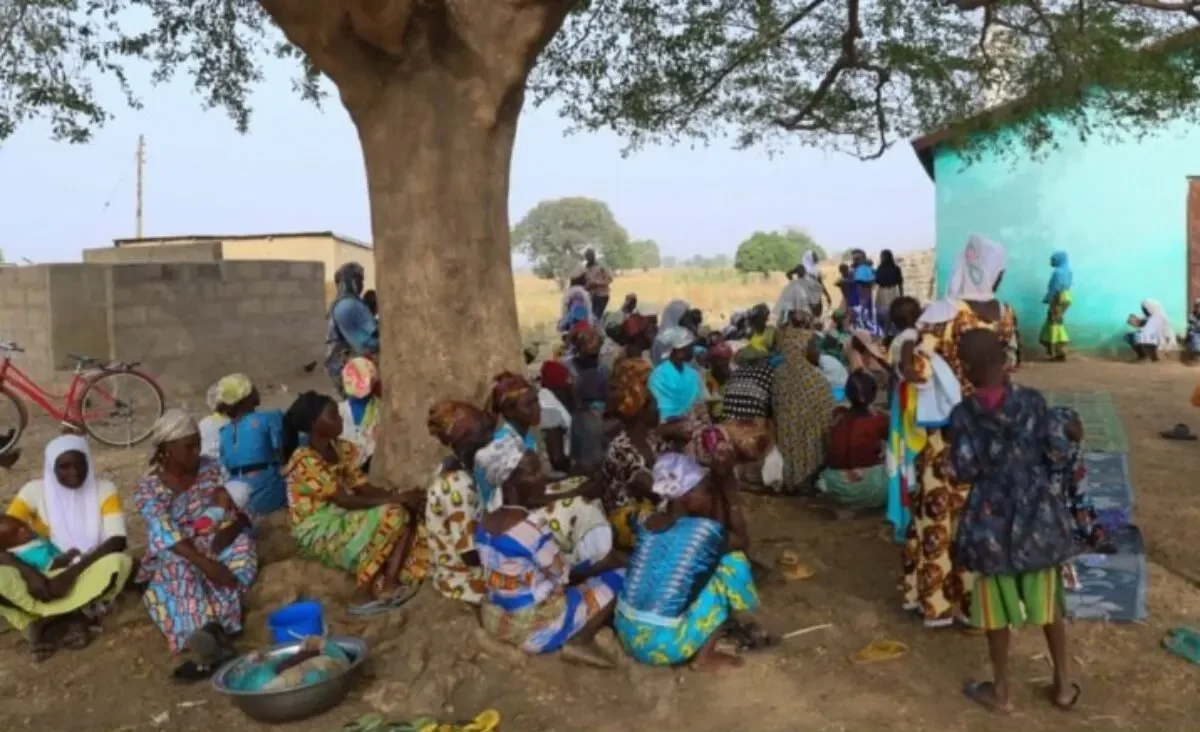
Over 200 residents from border communities have fled to various parts of the North East region following a suspected attack in Nagudi, Togo.
Residents from Tantra 2, Tambeng, and Jangbande have evacuated their communities, seeking safety in nearby towns and villages such as Yunyoo, Bunkpurugu, and Wanchiki.
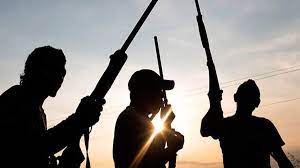
According to reports, a Togolese community was targeted by approximately 10 unidentified armed men on motorbikes, leading to residents fleeing the area. The attack resulted in two fatalities.
The District Chief Executive of Bunkpurugu, Joseph Luknan, confirmed the incident on Eyewitness News, stating that the attack occurred around 9 pm when armed individuals targeted four young men at a store, resulting in two deaths.
“On [Tuesday] around 9 pm, when we got a call that some armed people attacked a community in Togo near the border, we alerted our security personnel to beef up patrols around that area. Immigration officers decided to move closer to that area.
The information was that young guys were seated at a store in the evening around 9 pm, and 4 people arrived on two motorbikes and shot at them. And two people passed on.”
Mr Luknan stated that efforts are underway to identify the perpetrators, and security measures in the area have been heightened.
The MCE for Bunkpurugu mentioned that security forces at the Togo border are unable to determine whether the suspects are jihadists or common criminals.
“They decided to monitor throughout till today, March 6. Togo side, they also deployed their security. We gathered that the people who did that fled, so up to now they are searching and Ghana too, the Bunkpurugu district, and our security is monitoring.
“I spoke with my colleagues at Yunyoo and Chereponi and is the same thing, that the Togolese have arrived at some of the communities. The Togo side cannot tell whether they are jihadists or not. But the Togo people confirmed those who passed on were two,” he stated.
Mr Luknan also mentioned that the National Disaster Management Organization (NADMO) has been tasked with conducting a census in various homes to determine the number of individuals who have fled Togo.
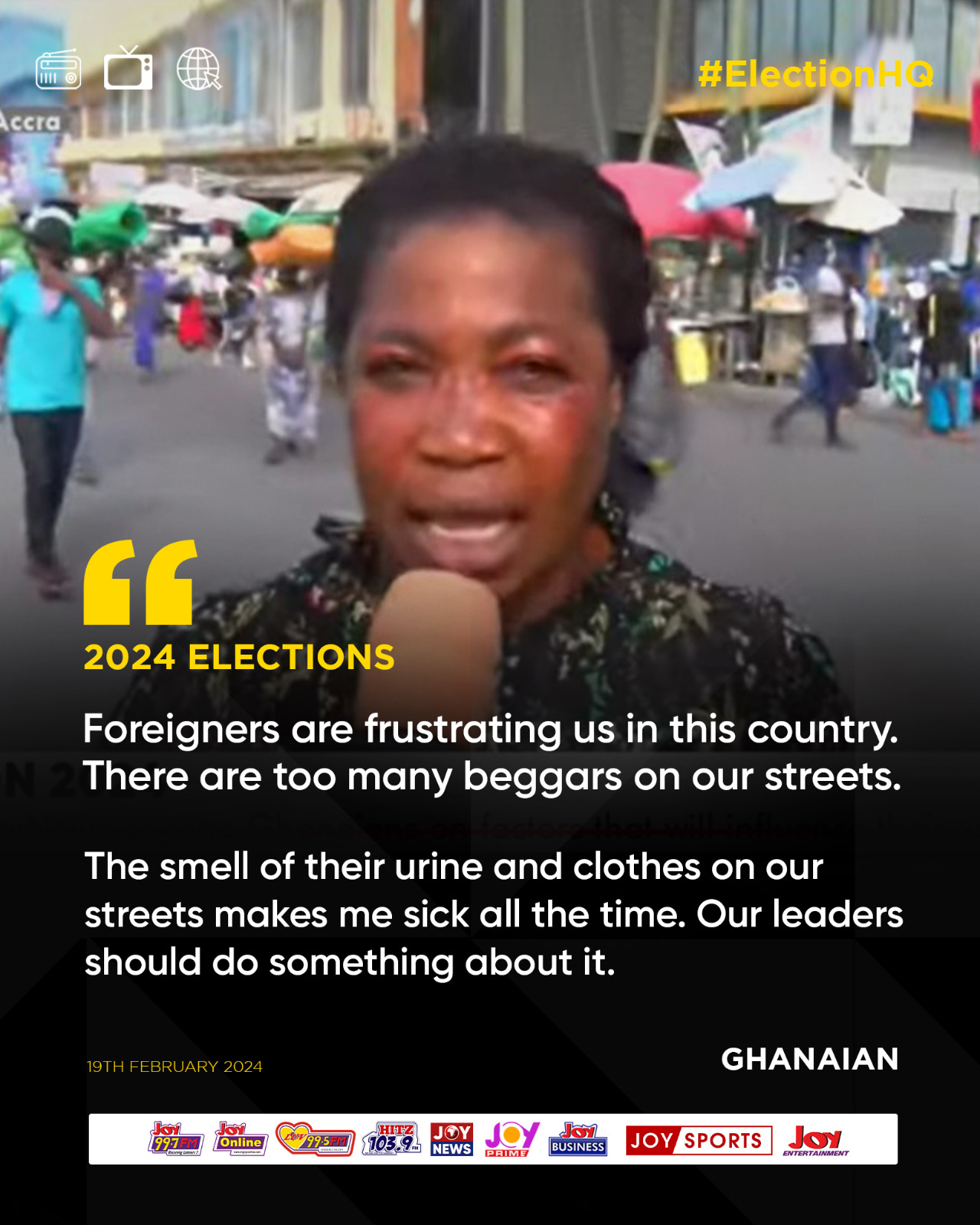
A Ghanaian woman has openly expressed her frustrations regarding what she perceives as the negative impact of refugees in the country.
Her concerns primarily center around hygiene and behavior issues attributed to some non-native residents.
The woman shared her sentiments, particularly highlighting her discomfort with the perceived unpleasant smell of refugees’ urine and clothes on the streets, asserting that it makes her feel sick.
In a statement, she conveyed her perspective, stating, “Foreigners are frustrating us in this country. The smell of their urine and clothes on our streets makes me sick all the time.”
Reports indicate that the refugee population has seen a steady increase, prompting heightened apprehension within the country.
In 2023, approximately 500 individuals from Burkina Faso communities migrated to Fufulso, a suburb in the Central Gonja District of the Savannah Region.
The influx of migrants has sparked fear among local residents, who now worry about the safety of their lives and property.
Sources within Fufulso reveal that these foreigners often arrive during the night and have been gradually integrating into the community as residents since their arrival.
A Ghanaian woman has voiced her frustration over what she perceives as the negative impact of refugees in the country, citing concerns about the hygiene and behavior of some non-natives.
She expressed her sentiments, particularly addressing what she described as the unpleasant smell of refugees’ urine and clothes on the streets, which she claims makes her sick.
In a statement, the woman shared her perspective, stating, “Foreigners are frustrating us in this country. The smell of their urine and clothes on our streets makes me sick all the time.”
The number of immigrants appears to be steadily growing, causing heightened apprehension within the country.
According to reports, in 2023, approximately 500 individuals from Burkina Faso communities migrated to Fufulso, a suburb located in the Central Gonja District of the Savannah Region.
The influx of migrants has stirred fear among the residents, who are now concerned about the safety of their lives and property.
Sources within Fufulso have disclosed that these foreigners typically arrive during the night and have been integrating into the community as residents since their arrival.
The UN refugee agency (UNHCR) has called upon Ghana to cease the expulsion of refugees from Burkina Faso.
Expressing concern over reports of hundreds of Burkinabè citizens, particularly women and children, being deported from Ghana after seeking refuge from violence in their own country, the UNHCR emphasized the importance of halting such actions.
The UNHCR has also expressed its readiness to offer additional support to Ghana in addressing the needs of the refugees.
The ongoing Islamist insurgency in Burkina Faso, which extends across multiple countries in Africa’s Sahel region, has resulted in over two million people being displaced from their homes.
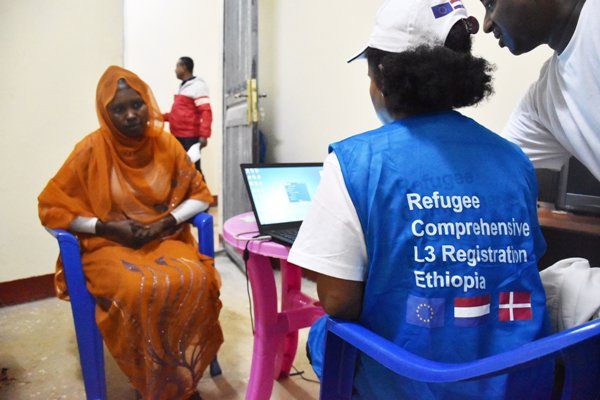
In response to a recent BBC report, the Refugee and Returnees Service (RRS) in Ethiopia has addressed the issue of birth certificates not being issued to new-born babies born to Eritrean refugee parents.
The parents have expressed their concerns that this situation is obstructing the process of family reunification.
The RRS called the claims “a baseless allegation”.
“Registration is going on since November 2022 and 2,149 Eritrean children are registered,” it said in a statement.
However, the statement from the Refugee and Returnees Service (RRS) did not clarify whether they are currently issuing the birth certificate documents that the families require.
A man residing in Germany shared with the BBC that he has been anxiously awaiting the opportunity to reunite with his wife and children.
The issuance of birth certificates is a necessary requirement by the German embassy in order to proceed with visa applications for the babies.
“I have seen the response from RRS. Our problem is not registration – what we need is the birth certificate document which the German embassy is requesting,” one father said.
Another said: “Our wives have been going to the RRS offices many times for months asking for the birth certificate but still we are waiting despite repeated promises.”
Tens of thousands of people are fleeing to South Sudan to escape the conflict between Sudan’s military and a rival militia, which has so far killed at least 863 civilians.
Last Monday a 7-day ceasefire was agreed.
Many took the opportunity to head to the border with the world’s youngest nation.
“We fled because of the war and we came here and there was violence again. We don’t understand what’s happening. We’re hungry and thirsty and the rain is coming and we don’t have plastic sheets. We’re tired and we don’t know how our problems will be solved”, said Alwel Ngok, a South Sudanese who was living in Sudan’s capital, Khartoum, with her family until the violence erupted.
Aid agencies are struggling to cope with the influx of people. Even before this crisis, 70% of the population in Sudan needed humanitarian assistance.
“They are very hungry, and they are thirsty and they are very tired. So they need help, they need food, they need water, they need for healthy, they need everything”, appealed Mary Otwong, a border monitor with the United Nations International Organization for Migration.
United Nations World Food Program regional director for East Africa, Michael Dunford, added:
“My biggest concern is the implications that this crisis in Sudan will have across the region, particularly in South Sudan. Even before this crisis, 70% of the population needed humanitarian assistance and at the moment WFP can’t meet their needs, we’re going to struggle to meet any increased needs at this stage”.
On Friday, Sudan’s army appealed for reservists and retired soldiers to re-enlist and asked the United Nations to change its envoy to the country.
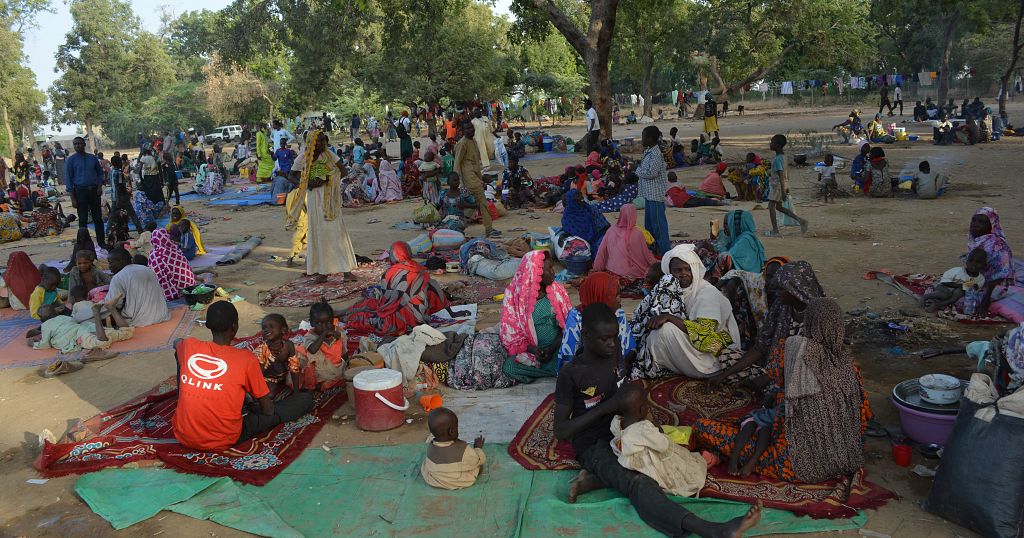
The United Nationswarned Friday that it would no longer be able to feed 600,000 refugees in Chad within weeks unless it receives urgent international funding.
The UN’s World Food Programme said Chad was hosting the biggest refugee population in west and central Africa, with the numbers rising due to unrest in neighbouring Sudan.
The WFP said that despite refugees being a priority, it had to reduce its plans to support 455,600 refugees down to only around 270,000 in April.
“We have already done a drastic targeting to ensure that the poorest among the poor will be assisted,” WFP’s Chad country director Pierre Honnorat told reporters in Geneva via video-link from the capital N’Djamena.
However, “we have absolutely no funding from May onwards for the refugees and displaced people. It’s really catastrophic.”
WFP wants $142.7 million for the next six months to feed all crisis-affected populations in Chad, including refugees, the 380,000 internally displaced, and other Chadians who have been hit by extreme weather in recent years.
“If no further funding is received, food assistance will come to a 100 percent halt in May 2023 for both refugees and internally displaced,” the agency said in a statement.
Chad is facing its fourth consecutive year of very high severe food insecurity.
The country suffered the worst lean season in a decade last year, plus the most devastating floods in 30 years. WFP said there were 1.9 million people in Chad who are food insecure.
Meanwhile, the UN refugee agency said it was looking to raise $172.5 million to provide protection and relief assistance to one million forcibly displaced people and their hosts in Chad.
“That is just 15 percent funded so we desperately need money for that country,” UNHCR spokesman Matthew Saltmarsh told reporters.
He said the agency was encouraging Nigeria and Chad to look at voluntary returns of refugees.
“The numbers envisaged might be relatively modest but we think this is an important signal in terms of finding solutions for the displaced in Chad but also for the region.”
Just one day after leaving the hospital, Pope Francis presided over Sunday’s Easter services in St. Peter’s Square.
In front of more than 30,000 faithful, he presided over the Palm Sunday ceremony, which was followed by the Angelus prayer.
He had difficulties breathing when he was brought into Rome’s Gemelli Hospital on Wednesday, and bronchitis was later determined to be the cause.
Upon being discharged on Saturday, the Pope joked that he was “still alive”.
“I just felt a malaise, but I wasn’t afraid,” Italian news agency Ansa quoted him as saying on Saturday.
After being discharged, the pontiff was seen smiling and waving from his car, before getting out to speak to a crowd.
Instead of heading home, his car drove past the Vatican and stopped at the Basilica of Santa Maria Maggiore. When he came out after praying, people on the street applauded and shouted: “Long live the Pope!”
During another stop, he exited his vehicle to give chocolate Easter eggs to police officers in his motorcade, AP news agency reported.
On Sunday he thanked those who prayed for him during his hospital stay.
Image caption,Pope Francis, surrounded by security officers, waved to the crowds that had gathered outside his hospital in Rome
The pontiff’s admission to hospital came ahead of the busiest week in the Christian calendar.
The Holy Week includes a busy schedule of events and services which can be physically demanding.
The Argentine pontiff, who marked 10 years as head of the Catholic Church earlier this month, has suffered a number of health issues throughout his life, including having part of one of his lungs removed at age 21.
He has also used a wheelchair in recent months because of problems related to his knee.
Wednesday’s hospitalisation was his second since 2021, when he underwent colon surgery, also at Gemelli.
But the Pope has remained active, visiting the Democratic Republic of Congo and South Sudan in February. The previous month, he led the funeral of his predecessor Pope Benedict XVI.
Although the pontiff, who has pushed for reforms in the Catholic Church, has previously said he would consider stepping down if his health failed him, he recently confirmed he had no plans to quit.
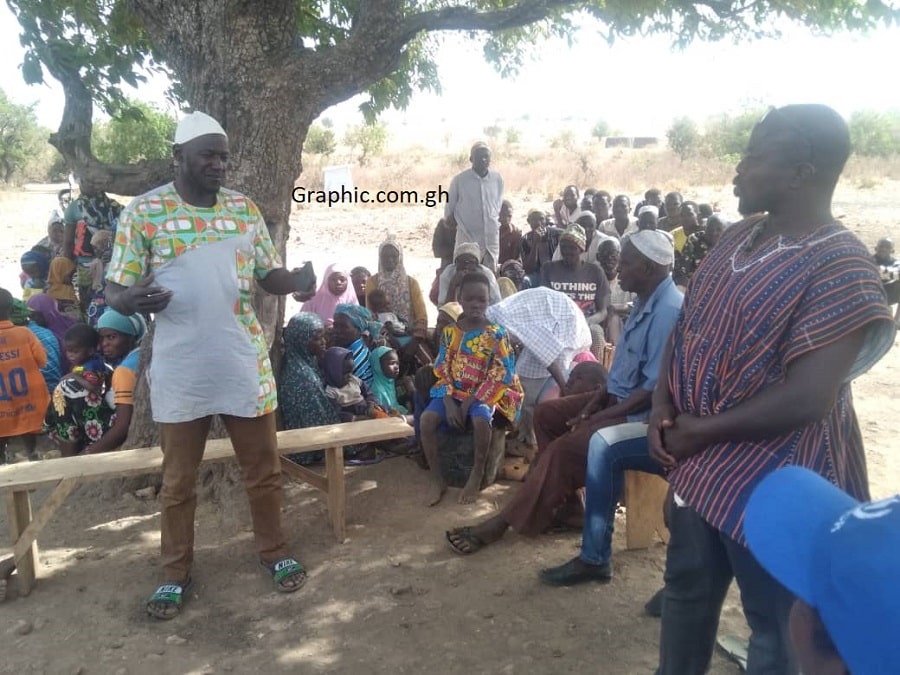
Several Burkinabes who are seeking asylum in Sapeliga, in the Bawku West District of the Upper East Region, have promised never to go back to their home country again because their safety and security cannot be guaranteed there.
They claimed that this was as a result to the murder of their family members, which made the nation unsafe for them and other people.
“The atrocities and killing of innocent citizens by Jihadists and terrorist groups have made the country unsafe for everyone.
“Since the security of the country has been compromised, our safety cannot be guaranteed when we return,” they intimated.
The Burkinabe refugees made their decision known when the Country Representative of the UN Refugee Agency, UNHCR, Esther Kiragu, visited them at their camp.
She was accompanied by the Executive Secretary of the Ghana Refugee Board (GRB), Tetteh Padi, and some officials of the Ghana Immigration Service (GIS).
Visit, observation
The team’s visit to the temporary camps at Kare and Burgila was to assess the situation on the ground and to inform them of measures being taken to respond and support after fleeing to Ghana due to Jihadist attacks.
At the Kare camp, the Daily Graphic team observed that they have only one borehole and three toilets constructed by the United Nations Children’s Fund (UNICEF), serving more than 200 people.
As a result, on a daily basis, there are long queues of people who want to use the facilities.
No intention
Speaking through an interpreter, the leader of the asylum seekers, Madi Bukari, said: “We want to officially inform you that we do not intend to go back to Burkina Faso, but want to stay in Ghana to continue our lives.
“We saw with our eyes how the Jihadists besieged our communities, entered our houses and killed our family members with no provocation.
“The terrorists and Jihadists shot and killed our mothers, fathers and siblings in front of us. We don’t feel it will be safe for us if we return to our country and our communities at this moment,” Mr Bukari emphasised.
He stated that they were yet to overcome the torture and emotional trauma they went through after their relations and neighbours were gruesomely murdered by the Jihadists.
Feeling at home, help needed
Mr Bukari described Ghana as a haven for them, intimating that the chiefs and people of Sapeliga had been hospitable towards them since they fled to the town over terrorist attacks in their country.
“We feel safe here and the chiefs and people wholeheartedly received us into the community, shared their houses and food with us and made us feel at home by giving us a land to put up temporal structures,” he said.
He appealed to the UNHCR and other institutions to quicken the process to provide them with urgent support since they needed basic items and facilities to make life a bit more comfortable for them in their new settlement.
Additionally, he asked for support to enable them to engage in dry season farming to grow some crops to sell to earn income to support their lives.
On behalf of the women, Zeinabu Zabre, said aside from food, they urgently needed clothing since they left all their belongings and fled to Ghana.
Further, she called for the provision of hands-on skills for the women in some trades to enable them to set up small businesses to support their upkeep.
Increased numbers
Ms Kiragu underscored the need for urgent support to enable them to live comfortably in the community.
She said the visit was a follow-up to an earlier one ostensibly to find out if more of the asylum seekers had fled to the community.
“Obviously, based upon the figures now, your numbers have increased, which required immediate material support since you fled to this community,” she stated.
Mr Padi said the GRB and its partners would put in place the needed measures to accordingly respond to the needs of the asylum seekers from Burkina Faso who were living in communities in the area.
Resolution
During a courtesy call on him at his palace, the Chief of Sapeliga, Naba Emmanuel Ayagiba Abangiba, said since the Burkinabes had resolved not to return, his community was ready to integrate them into it.
“Since they have expressed interest in farming, we will make lands easily available to them to cultivate crops to sell to earn income,” he added.
By doing so, he said, they would be able to generate some income in the interim to cater for some of their basic needs.
Rwandan President Paul Kagame says his country will no longer offer refuge to people fleeing conflict in the Democratic Republic of Congo.
Decades of instability in the east of the country have forced scores of refugees across the border into Rwanda.
“This is not Rwanda’s problem,” said Mr Kagame, adding: “I am refusing that Rwanda should carry this burden.”
The presidency has shared Mr Kagame’s remarks in a tweet:
“We have had refugees here for over 20 years, from DRC. I am refusing that Rwanda should carry this burden and be insulted and abused everyday about it.” President Kagame. pic.twitter.com/laDAQrW05d
He said the rest of the world had completely missed the point when it came to eastern DR Congo.
The real threat to security – in his view – is what he describes as the remnants of Hutu extremist forces who tried to wipe out his Tutsi ethnic group in the 1994 genocide.
Rwanda is being accused of backing the M23 rebel group – which the country has always denied.
The rebel group has captured swathes of territory in recent months, sending tens of thousands of refugees across the border into Rwanda.
Banned from working, a refugee family from Bangladesh tries to survive in one of the world’s most expensive cities.
Slouched against the lone, grime-covered, grated window of his tiny apartment in the working-class neighbourhood of Sham Shui Po in Hong Kong, there is a look of despair in 41-year-old Rana’s* brown eyes.
One of his feet, visibly swollen, is angled high up against the wall of peeling, off-white paint as the asylum seeker from Bangladesh recalls the recent accident that left him unable to walk for several days.
“I was on a construction site carrying some tools and a metal girder fell on my leg. It hurt so much. I am lucky it didn’t snap anything,” he says.
For decades, many of those like Rana seeking refuge in the former British colony have been forced to scrape by in extremely challenging conditions, from substandard housing to harsh limits on daily activities.
Most asylum seekers in Hong Kong are banned from having jobs, so he was technically breaking the law when he was injured. But he feels his family’s desperate financial situation left him with no choice.
“Sometimes I have to do work, even though I know it’s illegal,” he says, folding his arms with a grimace.
In lieu of paid work, each asylum seeker is given roughly 40 Hong Kong dollars ($5) a day for food by the government via e-cards. But that is only a little more than the 37.50 Hong Kong dollars ($4.82) hourly minimum wage for workers in the city.
The daily stipend is barely enough to get by, especially in what was until recently the most expensive city in the world.
‘What choice do we have?’
With the cost-of-living crunch bleaker than it has ever been and rocketing inflation that has seen everything from food to electricity and clothing become less affordable, the stipend asylum seekers receive has nevertheless remained frozen since 2014.
According to research by the Hong Kong-based non-profit Refugee Union, which is run by refugees and asylum seekers, prices for some food staples have doubled this year. A separate analysis by the NGO Justice Centre found that the average price per kilogramme of Chinese lettuce, a local staple, more than quadrupled from 5.70 Hong Kong dollars to 24.90 Hong Kong dollars ($0.73 to $3.20). In September, Hong Kong’s consumer inflation rate hit its highest level since 2015.
Akter sits with her child on their bed in the family’s small apartment [Peter Yeung/Al Jazeera]
“We ran out of food,” says Rana’s wife, Akter*, as she gazes at the frenetic traffic below.
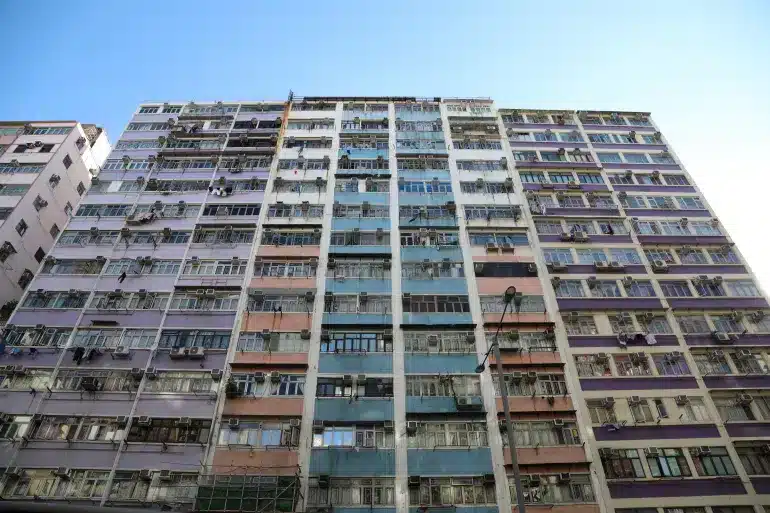
The couple spends most of their time in their cramped, 200sq feet (18.6sq metres) apartment in a ramshackle tenement building in a neighbourhood infamous for its “coffin homes” – so named because of their tiny size. Their apartment on one of the upper floors can be reached only via a dimly-lit stairwell filled with rat droppings.
Down below, the streets are a cacophony of hawkers and traders selling black market goods. Impoverished elderly women offer up their possessions on mats spread across the ground; others gather rubbish to earn income from recycling.
“We had to sell things in the house,” says Akter, whose tone shifts from initial sadness to pure exasperation. “It’s too much expensive. Everything, everything. The government doesn’t give us enough money.”
After being pushed to extremes a few years ago, Rana began taking on illegal part-time work on a construction site to make ends meet for the family. Yet the risks are enormous. In 2018, he was sent to aHong Kong correctional facility for 13 months after he was caught working, separating him from Akter.
This November, Rana took up work again, before he was injured when the girder fell on his leg, leaving him temporarily unable to walk or work.
“I don’t want to be doing this. But what choice do we have?” he says, mulling the choice between breaking the law or leaving his family without food.
‘Food is so expensive’
For Akter, 32, the pressure of tending to a two-year-old and a six-month-old takes things to a whole new level. Yet she strides around the room with purpose – to clean, collect toys and deal with any number of issues the day throws up.
“My children are very small,” says Akter, who cooks just one batch of food in a large steel pot each day to feed the family of four. “I’m worried that they aren’t getting enough to eat. But food is so expensive. We can’t afford many vegetables.”
She usually cooks up large rice dishes, and on better days, stews chicken and eggs. The family has never eaten at a restaurant, the couple says.
The family lives in a small apartment in a neighbourhood known for its so-called ‘coffin homes’ [Peter Yeung/Al Jazeera]
Akter fled Bangladesh in 2017 after she was raped and her family disowned her. Hong Kong seemed to be a land of opportunity, where she could start anew, seek asylum and make a living for herself in a global megacity. But that new life took a while to adapt to. For the first two years, she says, she would walk the streets and simply cry; she barely ate.
Rana meanwhile is a political refugee who escaped Bangladesh when he faced threats due to his involvement in opposition politics. He ended up in Hong Kong in 2016. “I can’t go back home,” he says. “But I can’t live like this.”
The pair, who met and fell in love inHong Kong, made an effort to carve out a home, taping pictures of loved ones to the wall.
But conditions are grim: cockroaches scuttle all over the one-room apartment – which is just wide enough to fit their bed in lengthways – along the rims of pots and pans and between cracks in the floor. Laundry hangs to dry just above their heads because there is no other space.
“I don’t have friends who can help,” says Rana, with a tired shrug of his skinny shoulders and a blank expression on his face. “We are all in the same situation.”
The status of refugees
Despite its wealth, Hong Kong is one of the most unequal cities in the world. For asylum seekers – a vulnerable, marginalised underclass – there are fewer and fewer ways to survive.
Hong Kong has an estimated 14,000 refugees and asylum seekers, the vast majority of whom are barred from employment. While 143 countries and territories have agreed to the 1951 United Nations Convention Relating to the Status of Refugees and its 1967 protocol, Hong Kong is not a signatory of either, instead adopting its own “Unified Screening Mechanism” to determine asylum claims.
That means only when asylum seekers’ non-refoulement claims are accepted can they apply for a six-month work permit. But such instances are extremely rare: just 291 have had their non-refoulement claims accepted since late 2009, according to the latest figures from the Immigration Department, and the process can take years.
Until recently, Hong Kong was the most expensive city in the world [Peter Yeung/Al Jazeera]
According to official data, less than 1 percent of asylum claims have been substantiated since 2014. And 65 percent of those happen on appeal, suggesting there are issues with the initial process.
The result is that Hong Kong’s refugees are trapped in desperate poverty.
The stark divide is highlighted by the fact that the city of 7.4 million simultaneously has more than 125,000 millionaires and 1.65 million people living in poverty.
While the city’s central business district is lined with shimmering skyscrapers, Michelin-starred restaurants and high-end fashion stores, on the pavement below, poor domestic workers, with nowhere else to go, spend their time off relaxing on the torn shreds of cardboard boxes.
A more ‘caring’ society
Mounting pressures nearly culminated in disaster earlier this year amid panic buying as the city’s strict pandemic policies led to food shortages at ParknShop, the only supermarket chain where refugees and asylum seekers in Hong Kong are allowed to spend their food subsidy, provided by the Social Welfare Department. ParknShop does not sell halal meat, further excluding already marginalised Muslim asylum seekers like Rana and Akter.
A survey released by Refugee Concern Network earlier this year found that 73 percent of asylum seekers were struggling to buy food and about 60 percent were unable to buy other necessities, such as toiletries. The government subsidy for asylum seekers only allows for food items, therefore non-food necessities such as diapers cannot be bought, leaving many reliant on donations from local charities.
In a rare touch of solace, Rana and Akter have been receiving milk powder and diapers from a local charity since the pandemic struck.
Dwindling food supplies in the family’s small kitchen [Peter Yeung/Al Jazeera]
Beyond the bare necessities of food, other equally serious pressures are cranking up. The effects of climate change and extreme heat have become ever-more tangible in the family’s ageing apartment as record heat struck Hong Kong this year – including some of the hottest days since records began in 1884. In turn, the rising cost of energy has meant that the use of air conditioning is even more costly.
After electricity bills rocketed this summer, in part due to Russia’s invasion of Ukraine and in part due to warmer temperatures, the family was forced out of the house during the peak daylight hours to cool down in public libraries and malls, where they cannot afford to buy anything. “The AC became too much for us to pay,” says Rana. “It was too uncomfortable to stay at home, even if we were doing nothing.”
This perfect storm of worsening conditions means asylum seekers like Akter and Rana risk becoming a forgotten population in the global cost-of-living crisis.
For some, hopes rose when Hong Kong’s new chief executive, John Lee – who pledged in his election manifesto to forge a “more caring society” – was sworn in in July.
But any improvement has yet to materialise for Akter, Rana and their young family as they struggle to stay afloat. Instead, they dream about being given the opportunity to earn a basic living for themselves.
“I would like a future, I want a future,” says Rana, his deep-set eyes beginning to well up as he speaks. “Because now I don’t have one.”
Sri Lanka Navysays , 104 people were discovered on board a trawler suspected of leaving Myanmar on its way to Indonesia.
An official said that the Sri Lankan navy rescued 104 Rohingya refugees who were stranded off the Indian Ocean Island nation’s northern coast.
A large number of mainly Muslim Rohingya suffer hardships in cramped refugee camps in Bangladesh after they escaped violence by the Myanmar military. The UN said the military operation was carried out with “genocidal intent,” and it was investigating Myanmar officials.
Many Rohingya in Bangladesh and Myanmar risk their lives every year by attempting to reach Southeast Asian countries such as Malaysia and Indonesia on rickety vessels. Their numbers have surged following deteriorating conditions in the camps and last year’s military coup in Myanmar.
The boat was first detected by the Sri Lanka navy when it was 3.5 nautical miles (6.5km) from the shore.
The Sri Lankan navy boat towing the trawler [Sri Lanka Navy/Screengrab via Reuters]
A search and rescue operation was launched to eventually tow the vessel to the island nation’s northern harbour on Sunday night, navy spokesman Captain Gayan Wickramasuriya said.
“The people have been handed over to the police,” Wickramasuriya told Reuters news agency. “The police will present them before a magistrate who will decide the next step.”
A navy statement said 104 Myanmar nationals were found on board the small trawler suspected to have originated from Myanmar and was heading to Indonesia when it ran into engine trouble in rough seas.
Wickramasuriya said 39 women and 23 minors were among the rescued people. An 80-year-old man, as well as a woman and her two children, all suffering from minor sickness, were admitted to hospital.
In 2017, more than 730,000 Rohingya fled to neighbouring Bangladesh following the Myanmar military crackdown that witnesses said included mass killings and rape.
Myanmar authorities say they were battling an armed rebellion and deny carrying out systematic atrocities. But rights groups and media have documented killings of civilians and the burning of villages during the crackdown.
Refugees are concerned that the incoming administration will continue to close UNHCR officesand expand an official tracking system.
Millions of Malaysians will go to the polls on November 19 to decide the direction of their country for the next five years.
While Malaysians vote in the hope of creating the country they want, the 183,000 refugees who live there are wary of what appears to be a recent hardening of rhetoric toward asylum seekers and refugees.
Refugees, who are classified as “illegal immigrants” under Malaysian law, are one of the country’s most marginalised and vulnerable communities, with no right to work or access to formal education.
Like most of its neighbours in Southeast Asia, Malaysia is not a signatory to the UN’s 1951 refugee convention or the 1967 protocol, but in recent months the government of incumbent Prime Minister Ismail Sabri Yaakob has returned asylum seekers to Myanmar, launched a new tracking system for refugees and announced its commitment to closing down the offices of the United Nations High Commissioner for Refugees (UNHCR), which currently handles protection needs for asylum seekers and refugees.
“The presence of UNHCR offices is seen to be the biggest pulling factor towards the increased arrival of foreign migrants,” a cabinet minister, Abd Latiff Ahmad, said in a parliamentary reply to then-opposition member of parliament Charles Santiago on October 7 shortly before the house was dissolved.
Ismail Sabri, who is a vice president of the United Malays National Organisation, is campaigning for re-election as part of the Barisan Nasional (BN) coalition against two other broad coalitions, including BN’s current partner in government Perikatan Nasional (PN) and Pakatan Harapan, which won the last election in May 2018 but collapsed amid political manoeuvring.
Malaysia’s Prime Minister Ismail Sabri Yaakob (second left) is campaigning hard to form the next government. His administration has said it wants to close the offices of the UN refugee agency in Malaysia [Mohd Rasfan/AFP]
Human Rights Watch’s Asia deputy director, Phil Robertson, told Al Jazeera that some see the moves as an election ploy.
“Many observers believe that the Home Affairs Minister is pushing this issue hard for political reasons, to try and scapegoat UNHCR as the problem, which plays well with parts of the conservative electorate who are more xenophobic and anti-refugee,” he said.
“That’s a real shame because refugees should not be demonised for any reason because it puts people’s lives at risk.”
‘Terrible and sad’
Many refugees are alarmed at the potential closure of the UNHCR offices.
The agency not only assesses protection needs but also helps verify the identity of those caught up in the immigration detention system, although the government has not allowed access to the centres since 2019 during Pakatan Harapan’s brief period in power.
James Bawi Thang Bik, a representative for The Alliance of Chin Refugees in Malaysia, described the move as “terrible and sad news for the refugee community”.
People from Myanmar account for 85 per cent of the refugees in Malaysia, and ethnic Chins who come from the country’s west are the second-largest group after the mostly Muslim Rohingya.
Rohingya refugee children feed a sacrificial cow on the eve of Eid al-Adha in Batu Caves, Kuala Lumpur, Malaysia, July 9, 2022 [REUTERS/Hasnoor Hussain]
The UNHCR is usually the first point of call for new arrivals, who go through a series of interviews and checks with agency staff to assess whether they are in genuine need of protection. Those assessed as refugees are given identity cards from the agency, with the lucky few eventually securing resettlement elsewhere.
But the process of getting a card can take months and resettlement years.
“We are afraid the registration process will take longer than the UNHCR registration process,” said Zafar Ahmad Abdul Ghani, the president of the Myanmar Ethnic Rohingya Human Rights Organization in Malaysia (MEHROM). “Usually, it will take between three to six years for the Rohingya asylum seekers to be recognised as refugees. In some cases, more than six years.”
Zafar himself was the target of a disinformation campaign that forced him into hiding in 2020 after a false Facebook post claimed that he had demanded Malaysian citizenship for Rohingya refugees. Two years later, he and his family are still receiving death threats and harassment.
‘Establishing a national framework’
The UN refugee agency first began working in Malaysia during the Vietnam refugee crisis in the 1970s and has expanded rapidly as a result of conflicts in countries from Myanmar to Afghanistan, Sri Lanka and Syria.
Its colonial-era bungalow in Kuala Lumpur has been extended multiple times, and the once-lush garden is covered over with portacabins, parking and a vast covered building where asylum seekers wait for interviews and for claims to be processed.
When asked about the government’s plan to close the offices, Yante Ismail, the Kuala Lumpur-based UNHCR spokesperson, told Al Jazeera that it “welcomes the continued engagement of the Government of Malaysia and ongoing efforts to explore closer cooperation on a variety of issues related to refugee protection”.
She added that the organisation has been in close discussions on a framework of cooperation on managing refugees in the country for years through a government-initiated Joint Task Force, cochaired by the Malaysian Ministry of Foreign Affairs and the UN refugee agency.
“UNHCR welcomes the Malaysian Government’s continued interest in establishing a national framework to manage the refugee situation in the country that may eventually result in the Government assuming greater responsibility for refugee management and protection,” she said.
Rohingya refugee and activist Zafar Ahmad Abdul Ghani and his wife were forced into hiding in 2020 after disinformation was spread about him on social media. He continues to receive death threats [File: Lim Huey Teng/Reuters]
But others are sceptical about the government’s ability to handle the work.
“The bottom line is the government doesn’t really have the capacity to manage the refugee situation in the country,” Human Rights Watch’s Robertson said.
“With more than 180,000 UNHCR-recognised refugees, there is a major human rights protection challenge to keep those people safe, and nothing the Malaysian government has done to date indicates that they are up for that challenge.”
Questions over resettlement
The plan to take control of asylum seekers and refugees in Malaysia has also raised questions about the resettlement process under which people are able to start new lives in third countries. The UNHCR is central to the process and works with accepting countries to submit refugees for resettlement. In Malaysia, most refugees are resettled in the United States.
“What I can say is that there will be no more resettlement for refugees in the absence of UNHCR,” said James Bawi Thang Bik. “I think resettlement for refugees is beyond the capacity of a government without UNHCR.”
Robertson notes that most governments require a UNHCR interview to determine the status of a refugee.
“The fact that Malaysia is not a state party of the UN Refugee Convention means that UNHCR’s role is even more important and that closing down the office would be like Malaysia shooting itself in the foot,” he said.
While UNHCR identifies refugees in need of resettlement, it is up to resettlement countries to decide how many refugees they will accept with a quota decided each financial year. The US, which takes in the most people, has said it will accept 125,000 refugees under resettlement after reaching an all-time low during the administration of former President Donald Trump when the quota was cut to 15,000.
Former Prime Minister Muhyiddin Yassin is campaigning as leader of Perikatan Nasional (PN). As prime minister, he had said Malaysia could not cope with any more Rohingya refugees [Hasnoor Hussain/Reuters]
Despite the challenging situation in Malaysia, many refugees are hoping that whoever wins power this week will not only reconsider the plan to close the offices of the UN refugee agency but also develop a more comprehensive policy for refugees and asylum seekers, even though the competing coalitions’ manifestos barely touch on the issue.
Officials have periodically talked of giving refugees the right to work, while outgoing Foreign Minister Saifuddin Abdullah has often visited community schools for Rohingya refugees while in office.
Back in 2016, as he faced growing questions over his role in the multibillion-dollar corruption scandal, now-jailed Prime Minister Najib Razak held a mass rally condemning Myanmar’s “genocide” against the Rohingya.
It was not possible for the world to “sit by and watch genocide taking place” he told thousands of people at a Kuala Lumpur stadium, adding that the persecution of the Rohingya was an “insult” to Islam.
The next year, hundreds of thousands more Rohingya were forced to flee as the Myanmar army launched a brutal crackdown in the country’s northwest that is now the subject of a genocide trial at the International Court of Justice.
“We hope the new government will allow the UNHCRto resume their work to assist refugees and asylum seekers and find a durable solution for them,” said MEHROM’s Zafar.
A large proportion of the pot – some £3bn – is being spent on housing refugees, mainly from Ukraine, according to the Centre for Global Development (CGD).
The UK is now spending more of its aid budget at home than in poorer countries, development experts have said.
That is because a large proportion of the pot – some £3bn – is being spent on housing refugees, mainly from Ukraine, according to the Centre for Global Development (CGD).
The UK aid budget is around £11bn, with some £4bn going to multilateral institutions including the World Bank.
Of the remaining £7bn, which is administered by the UK directly, more than half will be spent domestically this year, including some £3bn on housing refugees, according to CGD’s analysis.
While the UK is allowed to count refugee-hosting costs as official development assistance (ODA) under internationally agreed rules, it is one of only a few countries – and the only one in the G7 – to fund all the costs of Ukrainian refugees from its existing aid budget, the Washington and London-based think tank said.
Rishi Sunak was criticised for cutting the budget from 0.7% to 0.5% of national income during his time as chancellor, for setting a precedent for letting the Home Office and other departments use the pot, and for stretching the rules on what can be counted as aid.
Ranil Dissanayake, the policy fellow at CGD, said: “The development budget – the pot of money we put aside to help the world’s poorest people – is being squeezed from every angle.
“Not only was it slashed by almost a third, Rishi Sunak then set a precedent as chancellor for letting other departments claim whatever they could back from this pot.
“Saying we spend 0.5% of our national income on aid is becoming meaningless, when such a huge proportion of this pot is being spent domestically, rather than on helping people facing enormous hardship across the world.”
The appointment was seen as significant as Mr Mitchell, a former international development secretary, could increase pressure on Mr Sunak to honour his pledge to return to 0.7% international aid spending by 2024-25.
However, the prime minister is considering freezing the budget for an extra two years – saving £4bn a year – as he eyes ways to plug a multi-billion pound fiscal black hole, the Telegraph reported.
A spokesperson at the Foreign, Commonwealth and Development Office said: “Across government, there are significant pressures on the 0.5% ODA budget due to the costs of accepting refugees from Afghanistan and Ukraine as well as wider migration challenges. Obviously how many refugees arrive in any particular period is not certain, so there is not fixed cost.
“We remain one of the largest global aid donors, spending more than £11 billion in aid in 2021, and UK aid has recently gone towards those in need in the Horn of Africa and Pakistan.”
An estimated 11,000 foreign children and women remain in the refugee camps of Roj and al-Hol in northeastern Syria.
The Australian government has returned four Australian women and their 13 children from a Syrian refugee camp to the state of New South Wales, according to home affairs minister Clare O’Neil.
The repatriation is part of a plan to bring back from Syria dozens of Australian women and children who are relatives of dead or imprisoned ISIL (ISIS) fighters and have been held at the al-Hol and Roj detention camps in Kurdish-controlled northeastern Syria for several years.
Australia first repatriated eight children and grandchildren of two dead ISIL fighters from a Syrian refugee camp in 2019 but has held off repatriating any others until now.
“The decision to repatriate these women and their children were informed by individual assessments following detailed work by national security agencies,” O’Neil said in a statement on Saturday.
The women and children left the Roj refugee camp in northern Syria on Thursday afternoon and crossed the border into Iraq to board a flight home, the Sydney Morning Herald and state broadcaster ABC reported on Friday.
O’Neil said at all times the focus has been on the safety and security of “all Australians” as well as those involved in the repatriation, with the government having “carefully considered the range of security, community and welfare factors in making the decision to repatriate”.
The repatriation followed similar moves by the United States, Italy, Germany, France, the Netherlands, Belgium, the United Kingdom, and Canada, O’Neil said.
She said allegations of illegal activity would continue to be investigated by state and federal law enforcement authorities.
“Any identified offences may lead to law enforcement action being taken,” O’Neil said, adding that New South Wales was providing “extensive support services” to assist the group to reintegrate into Australia.
In a statement on Saturday attributed to the repatriated women, the group said they were “deeply thankful” to be back in Australia and they expressed regret for the “troubles and hurt” caused by their actions, particularly to their families.
Asking for privacy and space to reconnect with their loved ones, the women expressed hope that “all Australian children and their mothers will soon be repatriated from the camps in Syria”.
Human Rights Watch researcher Sophie McNeill said the repatriation was a “long overdue step”.
“For years, the Australian government has abandoned its nationals to horrific conditions in locked camps in northeast Syria,” McNeill said.
“Australia can play a leadership role in counterterrorism through these orderly repatriations of its nationals, most of them children who never chose to live under ISIS,” she said.
In a statement congratulating Australian Prime Minister Anthony Albanese for his “strong leadership” on the repatriation plan, the humanitarian organisation Save the Children said that an estimated 11,000 foreign children and women remain in the Roj and al-Hol camps.
Ukrainian refugees have been told by their government not to return until spring to help relieve pressure on the energy system following a wave of Russian attacks.
“The networks will not cope,” said Deputy Prime Minister Iryna Vereshchuk. “You see what Russia is doing.”
“We need to survive the winter,” she added.
Ukrainian President Volodymyr Zelenskysaid Russian air strikes had destroyed more than a third of the country’s energy sector.
Ms Vereshchuk said that although she would like Ukrainians to return in the spring, it was important to refrain from returning for now because “the situation will only get worse”.
“If it is possible, stay abroad for the time being,” she added.
Ukraine’s economy has suffered badly since the war began. Mr Zelensky has called on the world for help urgently to cover an expected budget deficit of $38bn (£33bn) next year.
The International Monetary Fund (IMF) said Ukraine would need $3bn every month to survive the next year – and $5bn if Moscow’s bombardment intensified.
The deputy mayor of the western city of Lviv, Serhiy Kiral, told the BBC on Saturday that Russia’s strategy was to damage critical infrastructure before the winter and bring the war to areas beyond the front line.
Russia says it began attacking Ukraine’s energy networks in retaliation for an attack on a bridge linking mainland Russia to occupied Crimea, although Kyiv has not said it was behind the bridge attack.
Areas targeted by the latest attacks include the Cherkasy region, southeast of the capital Kyiv, and the city of Khmelnytskyi, further west.
On Friday Mr Zelensky accused Russia of planting mines at a hydroelectric dam in the Kherson region of southern Ukraine, which is under the control of Moscow’s forces.
He said that if the Kakhovka hydropower plant was destroyed, hundreds of thousands of people would be in danger of flooding. Russia has denied planning to blow up the dam and said Ukraine was firing missiles at it.
Since the Russian invasion of Ukraine in February, the UN’s refugee agency has recorded about 7.7 million refugees from Ukraine across Europe, including Russia, out of a population of about 44 million.
Germany will discontinue a programme to assist refugees in converting their Ukrainian hryvnia into cash into euros on October 30, according to a joint statement from the finance ministry and the central bank.
The move was agreed upon with Ukraine’s central bank on Monday.
The move came after demand diminished considerably, and few transactions have been carried out recently, said the statement.
Language barriers, complex enrolment processes and a lack of awareness among colleges and universities on asylum applications are leading to delays and postponements for more and more young people.
And this figure has more than doubled (a 125% increase) compared to the total three years previously (September 2018 – August 2019).
The charity says students are waiting for several rounds to join the next academic year due to language barriers, complex enrolment processes and a lack of awareness among colleges and universities on asylum applications.
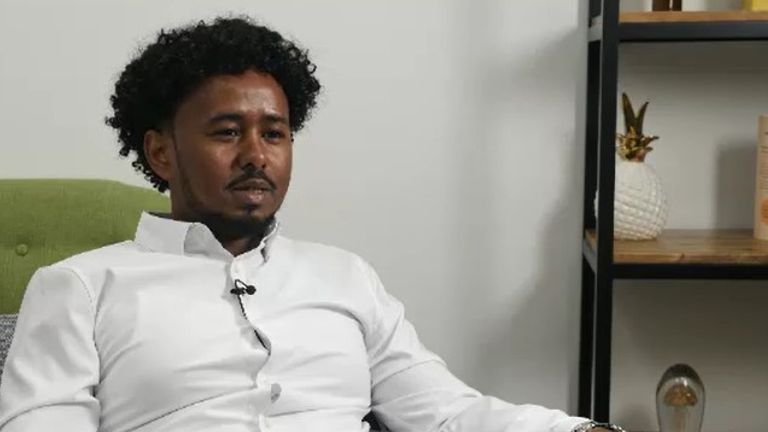
Ahmed Mohammed, 21, is a refugee from Eritrea and says a delay in enrolment means he is years behind his age group.
“Enrolment is a very hard process,” he told Sky News.
“Sometimes they say you need an online application and as a person that doesn’t know English, you cannot do this and so you just give it up and the whole year goes by. It’s just wasted.”
‘I felt I was in the wrong place’
Image:Ahmed Mohammed says he is years behind his age group
Ahmed says he was already behind because of the time it took to flee Eritrea and get enrolled in a UK school.
“I couldn’t even write my surname. My mathematics was very basic because my last education was in grade 4 (9-10 years old).”
“I remember being in a high-level GCSE class but the only thing I knew was plus, minus and multiplication. Everyone else was answering the teacher’s questions with ease.
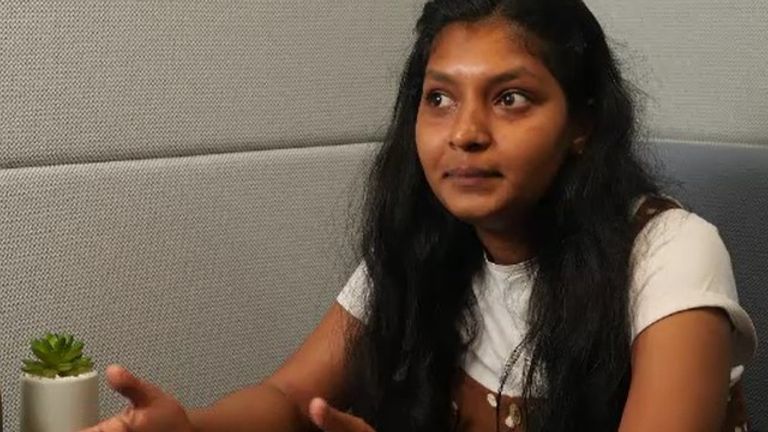
Gobika, 24, is from Sri Lanka and struggling to get into university because she is yet to pass GCSE English.
“I’d already taken a GCSE in Sri Lanka, but when I came here I was asked to take it again. So I’m doing GCSE English. It’s almost been five years,” she told Sky News.
‘I’m not able to plan my future’
Image: Gobika, 24, was forced to re-sit her GCSE in English
“It’s very frustrating. People my age have started working in good jobs. For me, I’m still doing English GCSE. I need to go to university, and that’s for three years. So I’m not able to plan my future. I’m almost 25.”
Refugee Education UK’s Chief Executive, Catherine Gladwell, says when students cannot start their education, it removes hope for the future.
“We often have young people say to us that so much of what they get asked about is backward-looking.
“A solicitor trying to establish their claim for asylum in the UK is going to be asking, ‘What happened to you in order for you to be referred to here?’ If they’re referred to a counselor, it’s about unpicking previous experiences.
“Education is often the one thing in their lives that is actually forward-looking. So when you take that away, what you’re doing is taking away that young person’s chance to imagine and envision and be equipped for the future that they should have.”
Most vulnerable
A government spokesperson said it recognized that refugee and asylum-seeking children were among the most vulnerable in society – and that being in a school was vital to help children integrate into their communities.
A statement added: “Local authorities are responsible for providing enough school places for children in their area, and should consider their linguistic and cultural needs.
“Our Free Schools programme and capital funding for school places are also making sure every child has the opportunity of a place at a good school, whatever their background.”
Displaced women and girls are facing a heightened risk of gender-based violence during the coronavirus crisis, the UN Refugee Agency said Monday.
The UNHCR said they may be forced into “survival sex” or child marriages.
Lockdowns imposed to control the spread of COVID-19 have restricted movement and led to the closure of services.
“We need to pay urgent attention to the protection of refugee, displaced and stateless women and girls at the time of this pandemic,” said Gillian Triggs, the UNHCR assistant high commissioner for protection.
“They are among those most at-risk. Doors should not be left open for abusers and no help spared for women surviving abuse and violence.”
She said displaced women could end up confined with their abusers, while others, having lost their precarious livelihoods, “may be forced into survival sex, or child marriages by their families”, said Triggs.
The restrictions imposed in many countries in response to the coronavirus pandemic mean limited access to support services, said the UNHCR.
It said some safe shelters had been temporarily suspended.
To counter the risk, the UNHCR is distributing emergency cash to survivors and women deemed to be at risk of gender-based violence.
Triggs said governments should ensure that the “rising risks of violence” for displaced women are taken into account in their COVID-19 action plans.
One measure could be ensuring that services for survivors of gender-based violence are designated as essential and remain accessible.
Twenty people, many of them women and children, were trampled to death on Monday in a stampede for food and money for refugees in southeast Niger, sources said.
“We have a provisional toll of 20 dead,” a medical source said. Aid workers confirmed the account and said about 10 people had been injured.
The accident occurred at a culture centre in Diffa, the main town of a region of that name that abuts Nigeria and Chad.
The region has been repeatedly hit by attacks by Nigeria’s Boko Haram jihadist group since 2015.
It hosts 119 000 Nigerian refugees, 109 000 internally-displaced people, and 30 000 Nigeriens who have come home from Nigeria because of the instability in its northeast, according to UN figures released October.
The aid being distributed had been given by Babagana Umara Zulum, the governor of Borno state in northeast Nigeria, a Nigerian official told AFP.
He had come to the region to visit the camps for refugees and the displaced, and had already left the town when the stampede occurred.
“They were distributing food and money – 5 000 naira ($13.75) per person,” a local resident told AFP. The naira is Nigeria’s national currency.
“Thousands of people, most of them refugees, heard about the handout and left the camps, sometimes travelling up to 100km to get to Diffa,” the source said.
Another resident said: “Even ordinary inhabitants of Diffa rushed there in the hope of getting the handout.”
“Many women trampled their child to death” in the rush, a medical source said.
Dozens of African LGBT+ refugees in northwestern Kenya’s sprawling Kakuma refugee camp pleaded on Thursday with the United Nations to relocate them to a safer place, saying they had suffered violent attacks.
More than 40 LGBT+ refugees from countries including Uganda, Burundi and the Democratic Republic of Congo said they were targeted in two homophobic attacks by other refugees in the last three weeks.
Fifteen people were injured in the Dec. 21 and Jan. 7 incidences and some taken to hospital with wounds to the head and internal bleeding, they said.
The Thomson Reuters Foundation was given photographs of people with bleeding wounds on their head and scars on their limbs, but could not immediately verify the pictures.
The U.N. refugee agency (UNHCR) said there had been some incidents of vandalism in the camp, but there was no evidence that LGBT+ refugees were specifically targeted.
“They came in large numbers – much more than us. They beat us with sticks and rods, kicked and punched us and told us to leave. They destroyed our shelters,” said Andrew, a 23-year-old gay man from Uganda who did not want to give his real name.
“We cannot go back to the shelters inside the camp. The other refugees know who we are and will kill us. We ask the U.N. to give us shelter and protection somewhere else – but they are ignoring us.”
The refugees have been staying outside the UNHCR reception centre in Kakuma since the first attack on Dec. 21, he said by phone from the camp in Kenya’s remote Turkana county.
The UNHCR’s regional spokesperson Dana Hughes said they were closely monitoring the situation, adding that decisions to relocate refugees were made on an individual basis and required authorization from the Kenyan authorities.
“Incidents of shelter vandalism were reported to law enforcement authorities in December, however these attacks were found to be attributed to common petty criminality and were not targeted at any particular individuals,” said Hughes.
The allegation that LGBT+ refugees were attacked on Jan. 7 had not been substantiated, she said.
“Security reports from law enforcement indicated that there was no attack/assault at the venue.”
It is not the first time LGBT+ refugees have faced physical violence in Kakuma, a vast camp that is home to more than 180,000 refugees.
In December 2018, the UNHCR relocated about 200 LGBT+ refugees from the camp to Nairobi as an emergency measure after a spate of violent attacks against them.
But Kenya requires most refugees to stay in designated camps and 75 of them were returned to Kakuma in June.
African countries have some of the most prohibitive laws against homosexuality in the world, with punishments ranging from imprisonment to death.
Although gay sex is punishable with up to 14 years in jail in Kenya, the law is rarely enforced. The east African nation is seen as more tolerant than neighbouring Uganda and Tanzania, though discrimination against the LGBT+ community is prevalent.
Gay rights groups say the camps are not safe for LGBT+ refugees and are calling on Kenya to allow them to live in urban areas.
“These persons were relocated out of this camp due to such violence last year, only to be forced to return to this dangerous and volatile situation,” said a statement from Refugee Coalition of East Africa.
“Claims that these attacks do not specifically target LGBTQI refugees are unfounded and patently untrue.”