Tag: renal unit

  • Keta Municipal Hospital now has a Renal Unit

    Keta Municipal Hospital now has a Renal Unit

    Keta Municipal Hospital has officially opened a Renal Dialysis Centre aimed at easing the burden on kidney patients in need of dialysis treatment.

    This facility was made possible through the generous funding of Togbi Tenge Dzokoto Gligui VII, the Dufia of Anyako-Konu and Paramount Chief of the Amugo-Vego Traditional Area in the Volta Region.

    During the inauguration, Togbi Gligui expressed that the new centre would not only improve healthcare services but also become a place where empathy is transformed into tangible care for those in need.

    He said: “All must come together to affirm the idea that no one should endure such a hardship of kidney disease alone.”

    “Dr Paul Farmer, a medical anthropologist and physician profoundly stated that the idea that some lives matter less is a root of all that is wrong with the world. These words keep me strong always.”

    The newly established Renal Dialysis Centre at Keta Municipal Hospital aims to embody a future where everyone, regardless of their circumstances, has access to quality healthcare and essential support.

    Togbi Tenge Dzokoto Gligui VII, who funded the facility, emphasized this vision during its inauguration.

    Togbi Gligui also expressed deep gratitude to his wife, Mama Tenge, their children, and the medical professionals whose dedication made the creation of the centre possible.

    He urged the hospital staff and management to maintain the facility diligently, ensuring it fulfills its purpose of providing much-needed care.

    Receiving the centre, Dr. Emmanuel Kona, the Keta Municipal Director of Health, and Dr. Kofi Karikari Bonsu, the hospital’s Medical Superintendent, assured that the unit would be used effectively to deliver the intended outcomes.

    Three specially trained doctors have been assigned to operate the facility.

    This Renal Dialysis Centre is the first of its kind in the Southern belt and only the second in the entire Volta Region.

  • Outpatients left in limbo as Korle Bu’s renal unit attends to inpatients only

    Outpatients left in limbo as Korle Bu’s renal unit attends to inpatients only

    The Renal Unit at Korle Bu Teaching Hospital has been made available exclusively to inpatients, despite earlier announcements that outpatients would also have access.

    This decision has left kidney patients feeling uncertain and frustrated.

    The Renal Patients Association is calling on the hospital to open the facility to outpatients, allowing them to receive the essential care they need.

    A recent visit to the renal department at KBTH revealed that while inpatients are being treated, outpatients still cannot access the dialysis center.

    Kojo Baffour Ahenkora, a spokesperson for the Renal Patients Association, voiced concern about the lack of official communication regarding when the facility will be available to outpatients.

    Despite these challenges, Ahenkora remains hopeful that the hospital will soon extend its services to outpatients.

  • Renal unit at Cape Coast Teaching Hospital shutdown

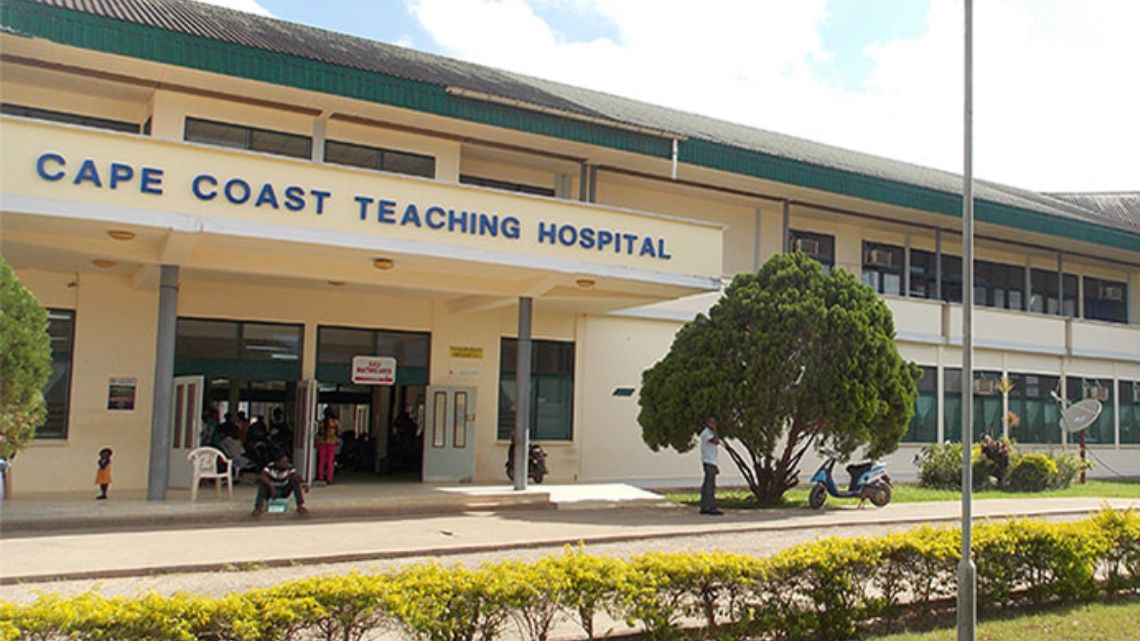
    Renal unit at Cape Coast Teaching Hospital shutdown

    Kidney patients who rely on the Renal Unit at the Cape Coast Teaching Hospital in the Central Region have expressed deep frustration following the unexpected closure of the unit this week.

    The sudden shutdown has left many patients uncertain about their ongoing treatment and facing increased costs and travel burdens.

    Hospital officials cited routine maintenance as the reason for the closure. However, patients who spoke to JoyNews on June 13 expressed distress over the lack of communication and clarity surrounding the situation.

    “We had to come for dialysis, and unfortunately, we came to the unit and then we were informed that it has been closed for services. For now, we don’t know the details, but all we know is that it is as a result of technical challenges,” one patient explained.

    This patient, like many others, now has to travel to either Takoradi or Accra for treatment, incurring higher costs.

    This closure comes shortly after the National Health Insurance Scheme (NHIS) announced the commencement of a six-month free dialysis support program for renal patients, running from June to December 2024.

    The NHIS support program is aimed at alleviating the financial burden on renal patients, with the National Health Insurance Authority (NHIA) dividing beneficiaries into two categories: vulnerable groups (patients aged below 18 and above 60) and those aged 18 to 59 years.

    According to the scheme, “patients under 18 and above 60 years will receive all eight free dialysis sessions per month,” with a cumulative cost estimated to be approximately GH₵2.3 million.

    Despite this initiative, there have been reports of implementation issues. Nearly a week ago, some patients at the Komfo Anokye Teaching Hospital in Kumasi reported that they had yet to benefit from the program.

    One patient explained to JoyNews’ Nana Boakye Yiadom that he was still required to pay for his dialysis sessions, as the hospital had not yet received a notice to commence the free dialysis program.

    The closure of the Cape Coast Teaching Hospital’s Renal Unit has exacerbated these frustrations, leaving patients in a difficult position as they seek essential medical care.

    The NHIA and hospital authorities have yet to provide a detailed response to the patients’ concerns, but the situation underscores the urgent need for effective communication and swift implementation of support programs to ensure that vulnerable patients receive the care they need.

    As the NHIS program continues, kidney patients across the country are hopeful that the promised free dialysis sessions will soon become a reality, providing much-needed relief from the financial strain of their treatment.

  • Korle-Bu Renal Unit shutdown imminent as management struggles to pay GHC2m debt

    Korle-Bu Renal Unit shutdown imminent as management struggles to pay GHC2m debt

    The renal dialysis unit at the Korle-Bu Teaching Hospital (KBTH) is at risk of shutdown due to its inability to raise funds for purchasing consumables needed for service delivery.

    Prof. Vincent Boiman, the Head of the Unit, revealed that the unit incurs a loss of GH₵380 with every dialysis session, leading to accumulating debt.

    This situation is now impacting service delivery and could potentially result in the unit’s closure.

    Speaking to JoyNews, he said, “Each time, we dialyse one person at GH₵380, we lose another GH₵380 because the actual cost is more than double what the patients are paying now. We are actually incurring costs which is not being paid for.”

    “In terms of improving their quality of life, in terms of prolonging their treatment in the long term or giving them a chance of surviving for a long time and good treatment satisfaction. Probably, we may not be able to provide all these things because we are not charging at the rate that will help us to buy the consumables needed.

    “For instance, what if this unit closes in the next one or two months because we are running out of consumables and we are dialysing at the rate that we can’t buy enough?.”

    On February 9, Dr. Owusu Sekyere, the Director of Medical Affairs at the Korle-Bu Teaching Hospital (KBTH), announced that the facility had accumulated an additional debt of GH₵2 million for treating kidney patients.

  • Increase in cost of dialysis by Korle Bu will only kill people; we will die again – Renal patients

    Increase in cost of dialysis by Korle Bu will only kill people; we will die again – Renal patients

    Renal Patients Association of Ghana has issued a warning about the potential consequences for patients if the Korle Bu Teaching Hospital (KBTH) proceeds with a planned increase in dialysis fees.

    This concern arises as reports indicate that the hospital’s renal unit is facing a new debt of GH₵2 million, just three months after the government settled a previous debt of GH₵4 million.

    Dr. Owusu Sekyere, the Director of Medical Affairs at KBTH, revealed that the current cost of dialysis exceeds GH₵720 per session, while patients currently contribute only GH₵380.

    This significant difference in costs presents a major financial burden for patients, as emphasized by Baffour Kojo Ahenkorah, President of the Renal Patients Association. Ahenkorah highlighted the financial strain already experienced by association members who struggle to afford the current dialysis fees.

    During an interview with Selorm Adonoo on Eyewitness News, Ahenkorah expressed deep concern, stating that any increase in prices would have devastating consequences for patients.

    While acknowledging the financial challenges faced by the hospital, Mr. Ahenkorah urged the government to intervene urgently and find a solution.

    “We knew this would come one day even though it has come a bit early because they wanted to charge GH767.42 and they were pushed to cut it down to GH¢380. So definitely, there was going to be underrecovery there. But this is the reality on the ground. The consumables are more expensive. But here we are; we all know the economy that we are in. Even for the 380, we can’t pay. The government has to come in.”

    “People are going to die again. People are going to die again on this thing…So we will just plead with the government to do something.”

  • Korle Bu Renal Unit resumes operation, introduces new patients requirements

    Korle Bu Renal Unit resumes operation, introduces new patients requirements

    The Renal Dialysis Unit at the Korle Bu Teaching Hospital has been reopened to outpatients following an order from the Minister of Health.

    The unit had been temporarily closed in May for renovation, and when it was reopened, patients were faced with increased costs, ranging from GH¢380 to GH¢765.42.

    Protests erupted due to these proposed higher charges, prompting the immediate closure of the facility, even though it continued to provide intensive care for severe cases.

    The hospital’s management also initiated an internal inquiry into the pricing, as it had not received parliamentary approval.

    The closure of the facility sparked public outrage, leading to Parliament summoning the Minister of Health to address the issue. Prior to his appearance on Thursday, November 9, Kwaku Agyeman Manu instructed the hospital’s management to admit outpatients once again.

    This directive was issued on Thursday, November 2, according to Isaac Baah Ofei, the Public Relations Officer (PRO) of the Ministry of Health.

    “The Minister has directed the Chief Executive Officer of Korle-Bu to, as a matter of urgency, see to the opening of the centre, and so he directed as well that it be opened,” Mr Baah Offei disclosed in an interview on TV3.


    On Tuesday, November 7, Godwin Asediba of TV3 reported from the unit that, although it has been reopened to outpatients, they are now required to provide laboratory results before being scheduled for dialysis.

    This measure has been implemented as a precautionary step to guard against the potential introduction of bacteria from procedures conducted at private centres in the recent past.

    “I am a bit relieved,” a kidney patient said.

    “At least, it’s quite better than doing it outside. I am more comfortable doing it over here than outside. Korle Bu is the best.”

    But some of the patients have raised concerns that the facilities at the unit may break down due to pressure from the over 251 of them seeking care.

    According to them, if government does not beef up the number of pieces of equipment at the unit, it may be shut down again in the next month or two.