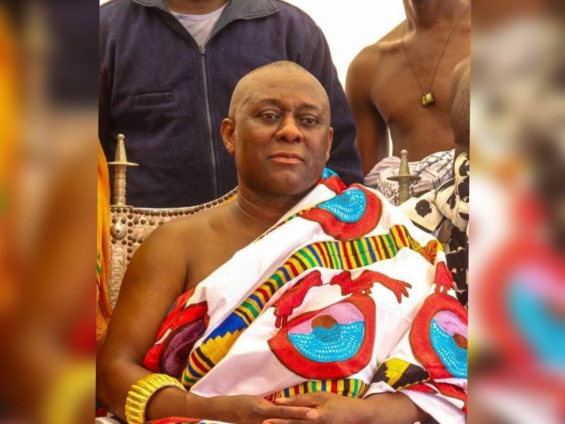
The Chief of Asamankese, Osabarima Adu Darko III, is calling on residents, particularly the locals of Asamankese, to stay calm and composed amidst the ongoing debate following the promotion of the Anum-Asamankese chief by the Okyenhene, Osagyefo Amoatia Ofori Panin.
A statement issued by Nana Oppong Adease II, Gyaasehene of the region, on behalf of the Asamankesehene, clarified that the promotion of the Asamankese-Anum Chief from Barima to Osabarima does not alter the traditional, customary, or legal boundaries of the stool land.
“We have taken note of the decision by His Majesty regarding the elevation of the Asamankese-Anum stool, and the subsequent tension and disquiet it has generated in the Asamankese Township and villages”.
“This elevation does not affect the stool lands boundaries as established by traditions customs and law in anyway, neither does the elevation convey nor cede any portion of the Asamankese stool lands to anybody as being speculated in certain quarters of Asamankese. Asamankese remains one unitary town fully committed to the development agenda of Osagyefo His Majesty,” parts of the statement read.
Reports suggest growing tension and a strained calm in Asamankese, Eastern Region, following the recent promotion of the Asamankese-Anum Chief by the Okyenhene, Osagyefo Amoatia Ofori Panin.
The elevation of Barima Essah Kwesi Mensah, a chief from the settler community, to the rank of Osabarima—on par with the Asamankese Chief, Osabarima Adu Darko III—has triggered controversy and unease within the local community.
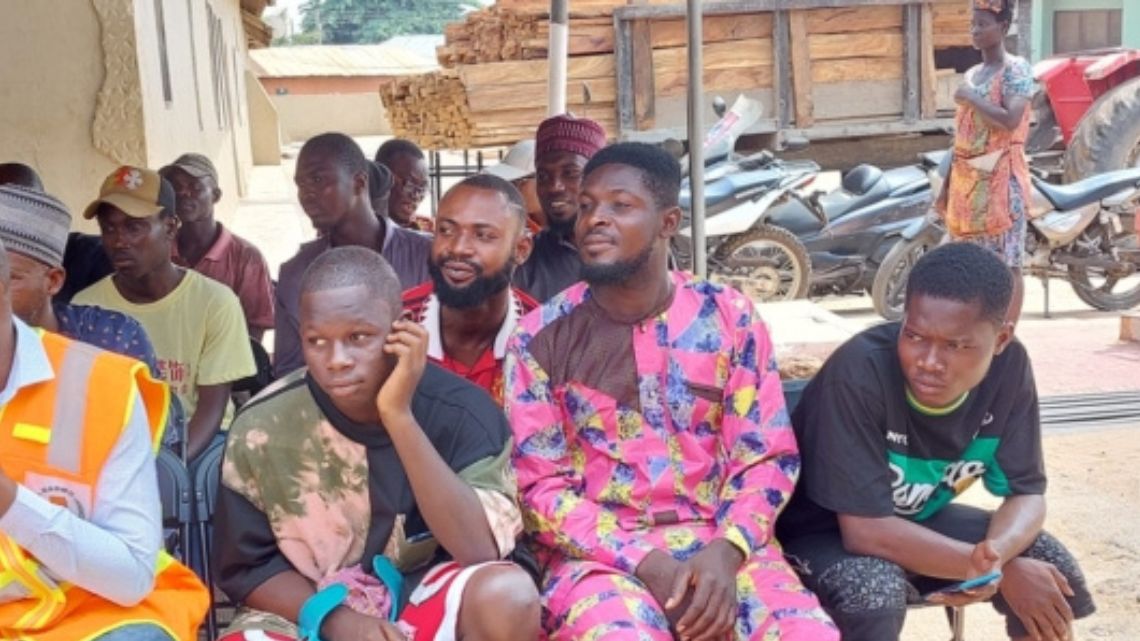
Residents perceive this action as a challenge to the authority of the Asamankese Chief.
They criticize the Okyenhene for making a unilateral decision driven by personal motives, potentially leading to long-term conflict and unrest among the locals.
The community members are urging Nananom to take proactive steps to address the issue, warning that passivity could lead to severe historical judgment.
A resident of Winneba, identified as Awo Sagoe, has shared reasons why she believes the NPP flagbearer Dr Mahamudu Bawumia is unfit to to become Ghana’s next president.
The current Vice Presiden stated in his major speech as flagbearer of the New Patriotic Party (NPP) that “as Vice-President, I am like a driver’s mate. But if, by the Grace of God, you make me President, I will be in the driver’s seat with constitutionally mandated authority to pursue my vision and my priorities.”
However, Madam Awo Sagoe believes Ghanaians cannot place their trust in someone who views himself as the driver’s mate.
She argues that if the driver (Akufo-Addo) has been unable to manage the country effectively, there is little reason to expect the mate to perform any better.
“If the driver couldn’t drive properly, what would the mate do?” – Awo Sagoe told the media.
Following a tragic shooting incident that claimed three lives in Baniekrom, Ahafo Ano Southwest District of the Ashanti Region, local schools are noticeably deserted.
Residents and leaders are urging for police protection amidst fears sparked by the incident.
Allegedly, youths from a neighboring community were shot by a local fetish priest, Osman Majeed, who claimed self-defense against an alleged attack.
The shooting, near God is One Preparatory School, has led to a sharp drop in attendance, with only 30 out of over 100 pupils showing up for classes.
Concerned residents have requested a temporary closure of schools due to safety concerns, highlighting the absence of police presence in the area.
“So, we went there yesterday [Wednesday], in the morning, we pleaded with the proprietor that he should close down the school for three days at least so that we do not know what may happen, so he also agreed with us and he has done that.”
A 17-year-old individual suspected of robbery, identified as Joel Nyarko, has been beaten severely for allegedly engaging in a robbery attempt at Domeabra-Police Tent opposite the Sky Roofing System in the Ga South Municipality of the Greater Accra Region.
The incident occurred on Monday, June 24, 2024, at approximately 4:30 AM.
Reports gathered by Kasapa News Yaw Boagyan suggest that the suspect, known as a “Gameboy” (Fraudster), resides in Swedru Dwenwoho, Agona West District, Central Region, but frequently visits his uncle in Kasoa.
Allegedly, the suspect, accompanied by a group of armed robbers in a vehicle, attempted to carry out a robbery in the community but was noticed and chased away.
However, luck was not on the suspect’s side, and he was left behind as the others fled.
Enraged youth from the town then attacked the suspect, resulting in severe injuries, including a broken left foot.
After the beating, the suspect was transported from the community to the roadside in a wheelbarrow while unclothed.
An eyewitness named CD reported that after the suspect was left naked, an Okada rider passing by made a remark expressing frustration with accusations against Okada riders for theft. Subsequently, the Okada rider cut off the suspect’s right ear.
However, police interrogation of the suspect contradicts the claims made by residents.
The suspect, in pain, explained that he was present to carry out an activity early in the morning when a group of individuals suddenly attacked him, robbing him of his belongings, including an iPhone, Ghanaian Cedis, US Dollars, and other accessories.
He was later taken to Amanfrom Hospital for treatment, and his father has been contacted to aid in further investigation.
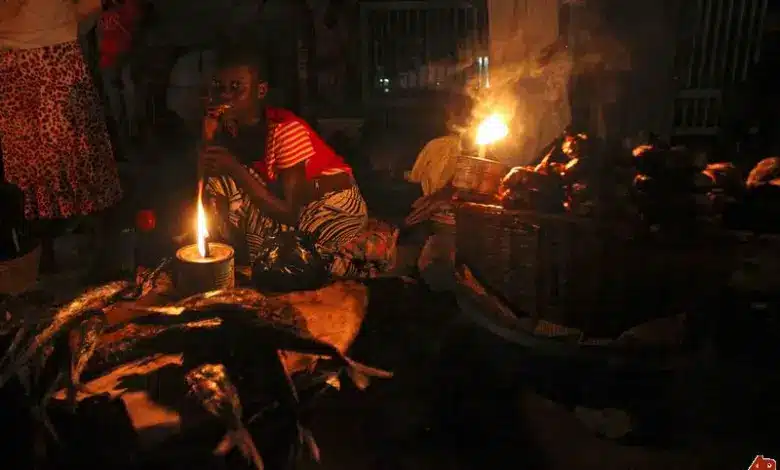
An Institute of Economic Affairs (IEA) survey has unveiled that businesses and households in the Greater Accra region face power interruptions exceeding seven hours at least four times per week, on average.
Conducted between May 6, 2024, and May 12, 2024, among 82 Small Medium Enterprises (SMEs) and 83 households, the study highlighted that approximately 94 percent of participants encountered varying degrees of power disruptions, ranging from one to over seven occurrences per week.
Overall, findings indicate that 75.4 percent of respondents dealt with power outages at least three times weekly, with around 19 percent reporting seven or more instances.
Regarding outage durations, the survey revealed that about 57 percent of respondents endured power interruptions lasting seven hours or more, while merely 12 percent indicated durations of three hours or less.
“These figures show significant outages across the Greater Accra Region, even after the president declared ‘dumsor’ was over,” the report stated.
The survey also revealed that around 89 percent of households and 58.5 percent of SMEs lacked access to any backup power, resulting in revenue losses due to unproductivity and damage to goods and appliances, impacting about 61.5 percent of households and 70.7 percent of businesses.
Mr. Samuel Manu, Head of the Survey Centre at IEA, noted during a press briefing in Accra that the absence of alternative power sources left most businesses and households in Accra dependent on the Electricity Company of Ghana (ECG) and the country’s energy sector managers.
“Cutting people off the electricity supply is bad, but not informing them in advance before doing so worsens their situation,” he said. “An overwhelming 95 percent of respondents indicated that they do not receive any form of communication on the time and reason for power outages.”
“To add insult to injury, the authorities are in denial of the situation and have refused to inform citizens in advance before cutting the electricity supply. This makes it difficult for businesses and households to plan their activities,” he added.
As part of its recommendations to tackle the electricity problem, the IEA encouraged all political parties to include a roadmap for a permanent solution to Ghana’s energy challenges in their platforms.
It urged the ECG to inform the public ahead of scheduled power outages and suggested that policymakers create policies to make alternative power sources affordable and accessible for Ghanaians.
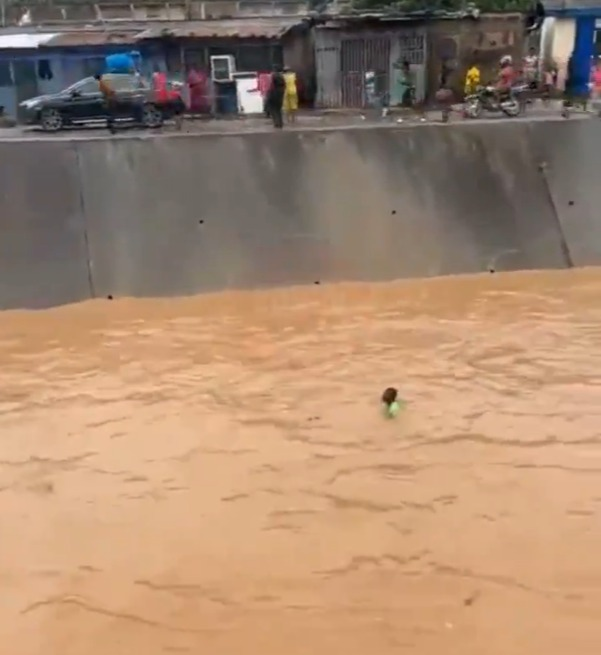
Today, in Alajo-Accra, residents united to save a young man from drowning in a substantial drain following heavy rainfall that led to severe flooding in the area.
The swift response and collaborative effort of community members secured the man’s safety amidst the adverse conditions.
According to gathered reports, the man fell into the fast-flowing floodwaters while attempting to cross the drainage system.
Because of the strong current, he found it difficult to keep himself above water.
Witnessing the alarming situation, certain residents promptly requested assistance.
Approximately three individuals bravely entered the water in an effort to rescue the struggling man.
While the endeavor seemed hopeless at first, the combined efforts of additional bystanders ultimately led to the successful retrieval of the man and the three rescuers.
Residents of Blue Top Estate in Kasoa, Central Region, successfully rescued an eight-year-old boy who was kidnapped, suspected to be awaiting ritual killing.
The boy was abducted by suspected ‘sakawa boys’ while on his way to school on the morning of Tuesday, March 12.
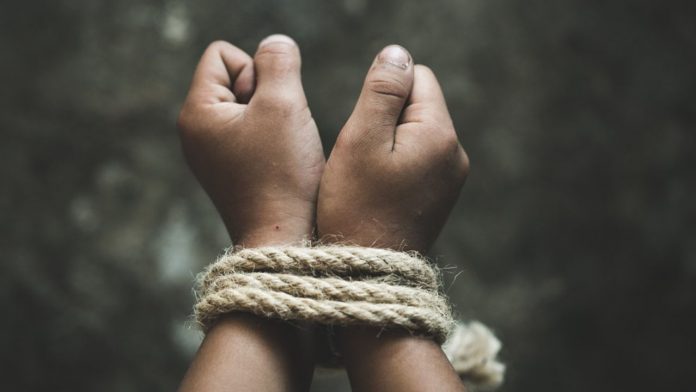
Found with his hands tied behind his back and his mouth stuffed with clothes, the victim, a pupil of Great Promise School Complex, appeared dirty in a video posted on X, clad only in his school uniform shorts and singlet, with no shirt.
He was discovered in darkness on Tuesday evening at a deserted site by a Fulani herdsman grazing his cows.
Upon finding the boy, the herdsman sought help from neighbors to rescue him.
Reports indicate that the boy was bound, allegedly awaiting ritual killing by the ‘sakawa boys’ later that same evening he was captured.
Residents of Abuorso, a secluded farming community in the Eastern Region, grapple with the challenges of irregular mobile network coverage, resorting to gathering under a specific tree to make essential calls.
The 1,500 inhabitants, situated 25 kilometers from Begoro, face distress as crucial services and economic activities rely heavily on mobile communication, leaving them disconnected from the outside world.
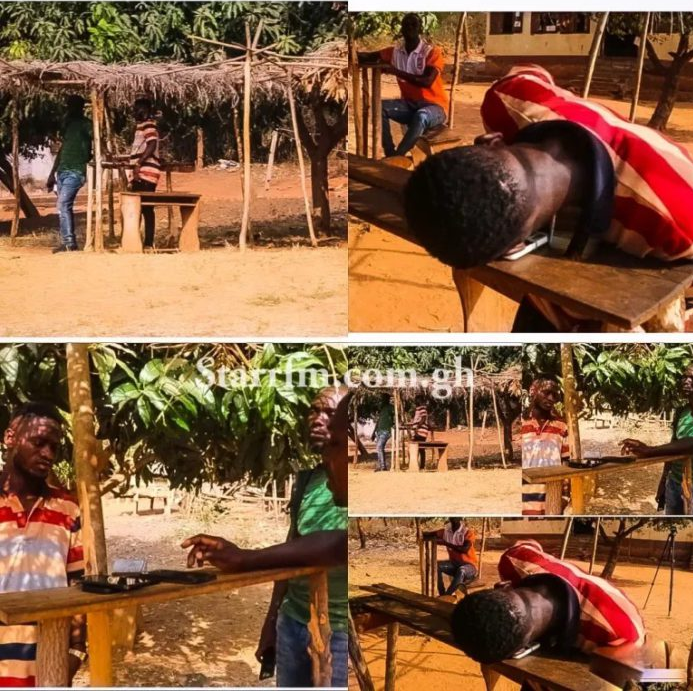
The makeshift gathering spot, a bamboo shed under the tree, serves as the community’s communication hub, where residents eagerly wait for network signals to make calls.
A teacher who met at the spot with other colleagues awaiting network signal described the situation, asserting, “This bamboo shed under this tree is where we gather to await network signal. We put the phones on these tables as soon as we see a network signal then we quickly make calls.The network sometimes comes after three days “.
Privacy concerns arise as calls must be put on loudspeakers to avoid losing the signal if the phone is moved, further complicating their communication efforts.
Beyond inconvenience, the network outage significantly impacts critical services such as healthcare delivery.
The in-charge of the Abourso CHPs compound highlights the challenges faced, emphasising the need for costly transportation to access the call center due to the lack of connectivity.
“The major challenge we are having is network issues. If you want to make a call, you have to pick Okada in and out of Ghc10 before you can move to the call center.”
The absence of reliable mobile coverage has also emboldened a gang of armed robbers, terrorizing commuters on the Abuorso to Dedeso road for over a decade.
Residents, like driver Opanyin Kwaku Kyere, attribute the increased criminal activity to the ongoing network issues, pleading for urgent government intervention.
“We are pleading to the government to help us get a network to enable us to communicate with our friends and family. We feel disconnected from the rest of the country.”
Residents are now urging the government to step in and address the connectivity challenges, emphasising their plea to “help us get a network to enable us to communicate with our friends and family.”
With the Sustainable Development Goal nine emphasising increased access to information and communications technology, the Abuorso community hopes for the government’s swift action to extend rural telephony infrastructure and end their communication struggles.
Some women in Damongo, Savannah region, have thrown their support behind the flagbearer of the National Democratic Congress (NDC) as the December 7 elections approaches.
Speaking to the media, the women who had lighted kerosene lanterns on their heads stated that John Mahama is the only individual who can change the current state of the region.
They mentioned that the region is grappling with potable water although the Akufo-Addo-led administration pledged to resolve the situation.
The women revealed that they resort to boreholes for water, which also serves as a source of water for sheep, goats and cows.
According to them, “ We are looking for JM because we are in darkness, we are looking for JM in the Savannah region to come and save us, he is our light. We drink water from tanks, we don’t have water, no water, what we need is just the water. NPP promised us water and zero. We’re booking for John to come and give us water. We drink from dam water and not pipe water. We drink water with sheep, goats and cows. We want proper water.
Explaining the significance of carrying lanterns the Akufo-Addo-led administration has plagued Ghana into a state of darkness and it is about time assumes presidency in other to save the country.
The aggrieved on Sunday, February 25, 2024 John Mahama paid a working visit to Damongo.
Mahama won over 55% votes in the 2020 elections.
The former president has not been to Jakpa Palace since he witnessed Yagbonwura Bii-Kunutu Jewu Soale I’s outdooring as the Overlord of Gonja approximately a year ago, this was his first visit.
Yagbonwura Bii-Kunutu Jewu Soale I invited all paramount chiefs, divisional chiefs, sub-chiefs, and traditional leaders of all the tribes in the Savannah Region to attend a durbar in honor of Mr. Mahama.
Residents of Jirapa and other areas in the Upper West Region are urging the police to accelerate investigations into the killing of Eric Johnson, the Chief Executive Officer (CEO) of the Royal Cosy Hill Hotel, widely known as Jirapa Dubai.
The assassination of Eric Johnson, a local of Jirapa, has deeply affected the Upper West Region, leaving the community in shock and distress.
Businessmen and women in the region, expressing their dismay, labeled the incident as barbaric, especially following previous similar occurrences in the area. Hissein Yakubu, a businessman, expressed his anguish, noting that Johnson’s death, occurring around the same time as his wife’s passing, compounded his grief.
Sariatu Nuhu described the loss as profoundly saddening, while Bismark Osei-Owusu lamented the untimely demise of a prominent investor, likening it to a nightmare.
Philanthropist
The late Johnson was an entrepreneur and philanthropist, who awarded scholarships to several students at all levels of education and sponsored many public interest programmes.
He was found dead on the morning of Sunday, February 11, 2024, stabbed multiple times to death inside a room in his private Villa on the hotel premises.
A ladder was found leaning on the outside of the wall of the hotel on the morning Johnson was found dead.
His private vehicle was supposedly taken away by the assassin.
The Royal Cosy Hill Hotel, which he founded, has a four-acre zoo attached, an Olympic-size swimming pool, and a drinking water factory which employs about 300 youth, mostly recruited from the locality.
Since the incident, however, operations at the hotel have come to a standstill following the arrest of the Manager, a German-trained engineer, as one of the suspects.
Seven persons, all staff of the hotel, are assisting police investigations into the matter.
One other resident, Juliet Bayor, said she was now living in fear because with the killing of the CEO in his bedroom, within the hotel with all the security arrangements in place, nobody in the community was safe.
She said she could vouch that the hotel founder would not hurt anyone, adding, however, that “that did not save him”.
Natives
In other unravelled cases involving natives of Jirapa, Richard Badombie, a lawyer and Assembly Member of the Jirapa Municipal Assembly was killed by some assassins, who blocked the road for a purported road check, near Nuoyiri around Banda Nkwanta in the Savannah Region, on May 28, 2022.
In his attempts to car open the door for them to check, they shot him dead when he opened his car for them to check and fled into the bush without taking anything from the vehicle.
Then on October 11, 2021, an assassination attempt was made on the Presiding Member of the Jirapa Municipal Assembly, Ebenezer Ayemah, at Jirapa, but he escaped.
Residents of Adambrobe and Obama in Oyibi have called on the police to beef up security measures to check rising robbery.
Residents are living in constant fear as a spate of robbery attacks continues to plague the area, resulting in over 15 homes being targeted in the past three months and undermining the peace in the region.
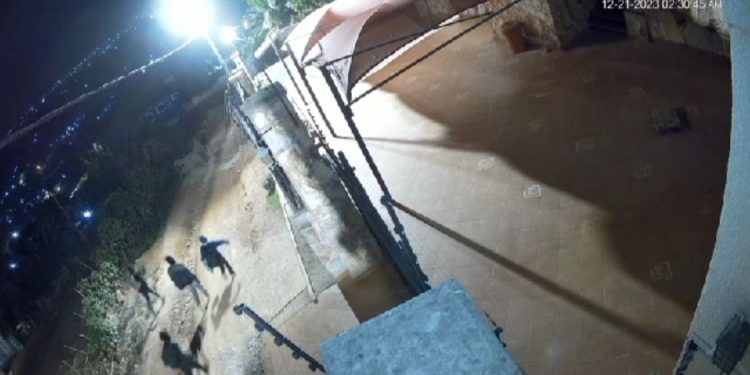
The tranquility of Oyibi has been disrupted, with armed assailants carrying out nightly attacks, typically occurring between 1:00 am and 2:00 am, instilling perpetual fear among the residents.
Victims of these attacks shared their harrowing experiences with Citi News, recounting instances of armed robbers targeting their homes and causing distress in the community.
Residents are calling on the police to enhance security measures in the area and urging authorities to step up efforts to address the security concerns.
They emphasize the dire situation and the compromised safety of the residents, pleading for increased police patrols to ensure their protection.
In light of the alarming escalation in attacks, residents implore the government to intervene and provide assistance.
The situation is described as extremely challenging, with one resident highlighting the urgency of continuous police protection for the community.
Vida Oppong, a mother of four who experienced a nighttime attack, recounted the terrifying ordeal involving armed individuals forcibly entering her home, demanding money at gunpoint, and resorting to gunfire when help was perceived.
She emphasized the urgent need for intervention to ensure the safety and security of the community.
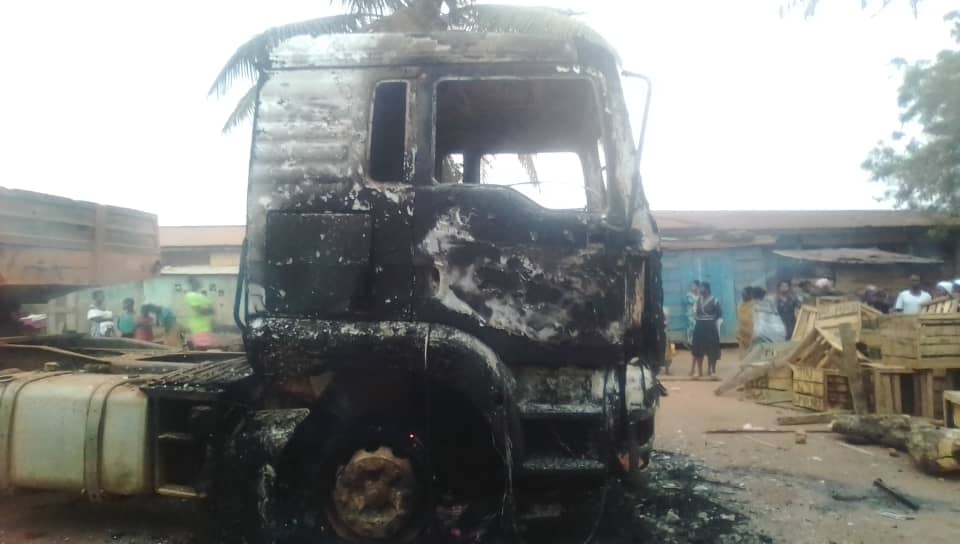
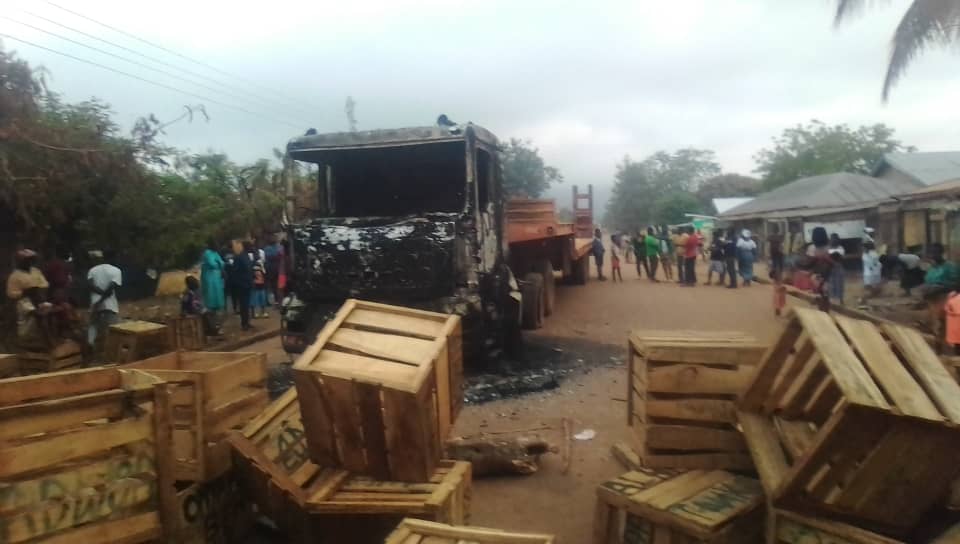
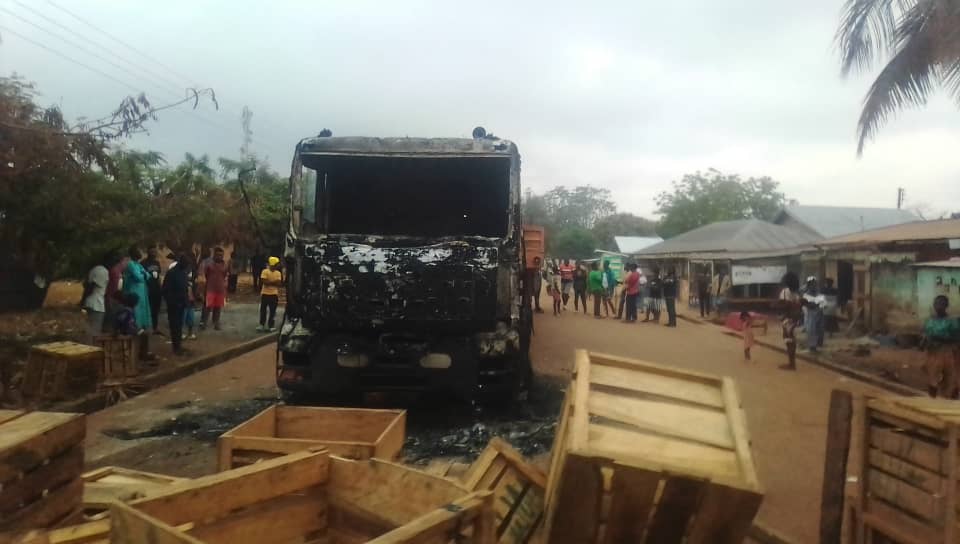
On Monday, January 15, 2024, enraged residents of Sabronum, Ashanti Region took matters into their own hands, blocking and setting a truck ablaze amid suspicions that it was transporting an excavator for illegal mining within a forest reserve.
Allegedly supported by unidentified individuals with local authority backing, the excavator was brought to the forest, causing alarm among residents who feared potential illegal mining activities.
Resisting the truck’s departure, the residents obstructed its path and set it on fire as a form of protest, expressing their determination to oppose any unlawful mining activities in the area.
During the confrontation in Sabronum, an individual named Bismarck Ankamaah reportedly faced an attack, sustaining severe machete wounds. He was accused by alleged thugs of inciting the arson against the truck transporting the excavator to the forest reserve.
Ankamaah, who suffered injuries to his leg, arm, and back, recounted the incident, stating that he received an announcement from the Assembly Member at around 2 am on Monday about the arrival of an excavator for mining purposes. As the truck arrived, residents gathered and blocked the road, leading to the subsequent incident.
“I was threatened by one of them. I later realized the vehicle was set ablaze, then my wife asked me to get my kids from her mother’s room. While at my wife’s shop, the thugs known as A Thousand Robbers pounced on me. As I struggled with them, they used machetes and sticks to beat me up and inflicted wounds on me,” Ankamaah explained.
The residents expressed concerns about potential pollution of a crucial water source for domestic and irrigation needs if illegal mining persists. They issued a warning of decisive action if the excavator remains within the community.
Despite government efforts, illegal mining continues to pose challenges in the Ano South East District, creating tension in the area, which is currently deemed tense.
“I was threatened by one of them. I later realized the vehicle was set ablaze, then my wife asked me to get my kids from her mother’s room. While at my wife’s shop, the thugs known as A Thousand Robbers pounced on me. As I struggled with them, they used machetes and sticks to beat me up and inflicted wounds on me.”
Residents of Dasomiadwene, a small community in the Ashanti Region, have expressed concerns over the lack of development in the area.
Speaking to the media they cited issues such as poor roads, inadequate drinking water, lack of telecommunication network, and the absence of a health center as major challenges affecting their community.
These problems have made daily life difficult for the residents. They mentioned that the only means of transport to other communities is by motorbike, and cars are a rare sight except on market days.
The residents expressed disappointment with the government, alleging that they only receive extravagant promises during elections, which are not fulfilled afterward.
“You just saw how narrow and dilapidated our road is when you were coming. Even motorbikes find it difficult to use the road”, a resident said.
They also called on their Member of Parliament, T.K Hammond, to address these issues and improve the community’s infrastructure.
In their complaints, the residents mentioned the dangerous state of the road, which poses risks to pregnant women traveling for antenatal care.
They emphasized the need for better telecommunications infrastructure, as their current network is extremely poor, forcing them to stand near specific trees to make calls.
Moreover, the absence of a health center in the community forces them to seek medical care in other towns. The poor network situation has led to teachers fleeing the community, affecting the education of local children.
Despite their efforts to address these problems, the community is still struggling to get them resolved. The residents called on authorities to intervene and improve their living conditions.
Gyaasehene of the community, Nana Tawia Mensah, expressed concern over teachers leaving due to the poor network and called on authorities to address the issues.
He thanked the MP and authorities for installing a network pole but urged them to fix it and improve the road infrastructure in the community.
A section of Ghanaian residents currently living in Israel have expressed their reluctance to return home, even amidst the escalating conflict between Ghana and Palestine.
Seth Cudjoe, a Ghanaian residing in Israel, conveyed in an interview on JoyNews’ The Pulse that pursuing repatriation would be his final resort. This decision is driven by the fact that he has a newborn child who requires utmost care and stability.
He further noted that the Ghanaian community within his vicinity shares a similar sentiment and is unwilling to leave unless there are no viable alternatives.
“I am not planning to come back to Ghana … I can’t also leave my wife and jump to Ghana and the Ghana community is not ready to leave unless the worst confronts us,” Mr. Cudjoe.
He mentioned that he maintains regular contact with officials from Ghana and consistently receives updates on how to stay out of harm’s way amidst the ongoing conflict.
“The Ghanaian community in Israel feels safer in Israel. With the help of the Embassy, they’ve communicated to us – given us instructions, basically what to do and what not to do. They’ve made us understand that if they don’t have anything to do outside, then no need to go out .. to be at a safer place.”
A deadly assault by Hamas militants in Southern Israel has reignited tensions between Israel and Palestine over the Gaza Strip. Reportedly, Hamas militants from Gaza infiltrated Southern Israel, targeting innocent Israeli civilians.
Israel has reported over 600 casualties and 100 abductions as a result of these attacks. In Gaza, at least 313 individuals have lost their lives due to retaliatory Israeli airstrikes, as confirmed by Palestinian authorities.
Despite these developments, the Israeli Mission in Ghana believes it is premature to initiate a hasty evacuation. They have committed to ensuring the safety of all individuals, including Ghanaian citizens residing in the affected region.
“Israel is ready to guard the safety of all the people in Israel.”
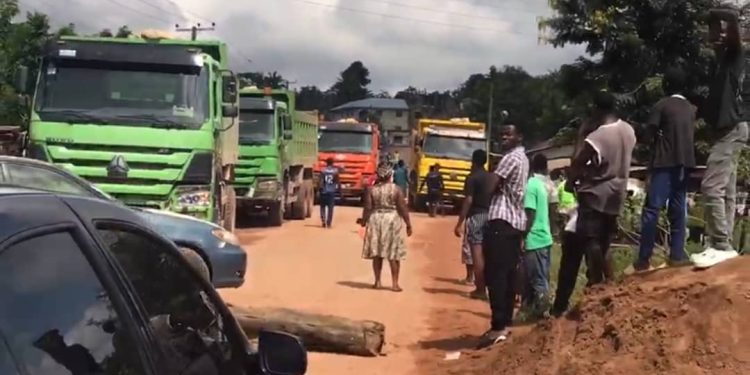
Residents of Samsam Odumase, near Amasaman in the Greater Accra Region, have taken action by blocking the Samsam Fotobi road to prevent tipper truck drivers from using it.
The protest is in response to the deteriorating condition of the road, which residents attribute to the heavy loads transported by these tipper trucks.
Approximately ten tipper drivers have found themselves stranded on the road, forcing them to seek alternative routes for their travel.
One resident expressed their frustration, stating, “we are stopping these people. They are destroying our roads, and we don’t want that. The taxi drivers in the community are unable to work. We’ve been calling them to have discussions on the road and explore ways to repair it, but nothing has happened. So, we want to take action that will get their attention.”
Another resident mentioned that the Municipal Chief Executive (MCE) has visited their area multiple times, but no concrete actions have been taken to improve the road.
They indicated, “Therefore, we are taking this action to send a clear message to the authorities.”
Meanwhile, one of the affected drivers urged the residents to demand accountability from the local assembly. He argued that the drivers already pay a levy for each trip, which is intended for road maintenance.
Therefore, they should not be held responsible for the poor state of the road.
He emphasised: “the road is very very bad. The contractor or government has to fix it and the government is taking money from us. We pay council tickets, GH30 per trip.
“So we the drivers are paying our quarter just to fix the roads for the people. So we don’t know why they don’t do it…So we are not here to destroy the road.”
The construction of crucial drainage systems aimed at facilitating water flow and averting floods at Wassa Simpa within the Tarkwa Nsuaem Municipality has been at a standstill since 2020.
The repercussions of this incomplete initiative are impacting the inhabitants of the area.
Originally intended to ensure efficient drainage and redirect water, these gutters now stand unfinished, presenting open gaps that pose significant risks to the community.
In the absence of proper covering, residents have resorted to placing wooden planks over these openings to ensure safe passage.
Rather than utilizing the existing drainage route during construction, a new path was chosen, disrupting the natural water flow in the locality.
Consequently, this alteration has resulted in water pooling and flooding on streets and properties.
The residents voice their apprehensions, especially during the rainy season. The exposed gutters are perceived as potential accident sites, and incidents of slips and falls have become all too common, causing distress among community members.
B. Baker, a flood victim, shared how the continuous water influx from neighboring areas adversely affects his shop. His business establishment consistently grapples with challenges due to the water influx.
Speaking to the local Assembly member, Wilberforce Essien, it was revealed that the incomplete project has exacerbated the flooding predicament in the area.
He said: “the construction of the gutter started in 2020, but because the Covid set in, the project was halted. We were all waiting for the continuation of the project, but after the election, nothing went on again”.
“Politics has crept into the project such that when you begin to talk too much about it, you are tagged, so for me, I have stopped talking about it”,
Essien further mentioned that the project was initiated by the Member of Parliament, George Mireku Duker, and expressed hope that it would resume in 2024.
The recent water and electricity tariff increases by the Public Utilities Regulatory Commission (PURC) have left some residents in Sunyani, the Bono Regional capital, lamenting their impact.
These concerns arise in the wake of the 4.22% increase in electricity tariffs and the 1.18% increase in water tariffs, which took effect on September 1, 2023, affecting average end-user tariffs for non-lifeline residential consumers.
Residents are already grappling with financial challenges in a difficult economic environment, and they fear that the recent tariff hikes will exacerbate their struggles.
Voicing their discontent over the tariff increases, they have appealed to the government to reconsider the decision, as it would result in a higher cost of living and further hardships.
Nana Kwame Asamoah, a long-time Sunyani resident, expressed how the tariff hikes are affecting ordinary people like himself, given the current challenging economic conditions. He mentioned that the increased costs of electricity and water are becoming unbearable, causing financial strain for many.
Eno Mary called on the government to focus on improving the country’s economic situation before approving any future tariff adjustments. She emphasized that they cannot afford to pay higher bills during these difficult times.
Agya Oppong criticized the PURC for consistently favoring utility providers, despite poor service delivery, and failing to address consumers’ concerns and hardships. He believes that any tariff increase during these challenging times is regrettable.
Over six weeks following their departure from Senegal, 38 survivors of the boat tragedy off Cape Verde have returned to Dakar via a military aircraft on Monday evening, as confirmed by the authorities.
This group constitutes part of the 101 individuals who embarked on the voyage on July 10 with the intention of reaching Spain’s Canary Islands.
Tragically, over 60 individuals, primarily men hailing from the fishing community of Fass Boye and its environs, are feared to have lost their lives after their vessel remained adrift at sea for more than a month.
The Walking Borders NGO reported that it notified the authorities in Senegal, Mauritania, Morocco, and Spain back in July, yet no rescue operations were initiated by these nations. As a result, those aboard the vessel were left isolated and subjected to the mercy of the Atlantic Ocean for several weeks.
In the wake of the boat tragedy, a sense of sorrow and frustration persists within the affected town. Several residents, including members of the same family, shared with the BBC their relief upon learning that their loved ones were en route back home, having survived the ordeal.
In the area between Tabarka and Melloula, a Tunisian coastal village that had to evacuate 300 people due to wildfires, I encountered numerous cars parked outside Adil El Selmy’s eco-friendly restaurant.
In a show of support, people had hurriedly gathered to stand in solidarity with the owner, whose eatery had been completely destroyed by the devastating fires that are wreaking havoc in this region along the border with Algeria.
“We left the restaurant as the flames approached,” Mr Selmy says.
The recent unprecedented heatwave in Tabarka had a detrimental impact on the water supply, further complicating the situation for those combating the fires.
People have come to commiserate with Adil El Selmy, who employed 22 people at his restaurant
“We couldn’t douse flames, hours after the wooden building was devastated,” Mr Selmi told me, looking deeply afflicted.
The devastated restaurant, which typically offers a view of the sea, is now obscured by a thick haze of smoke blanketing the area, making it difficult to see the Mediterranean.
On Monday, temperatures soared to 48°C (118°F) in certain parts of North Africa.
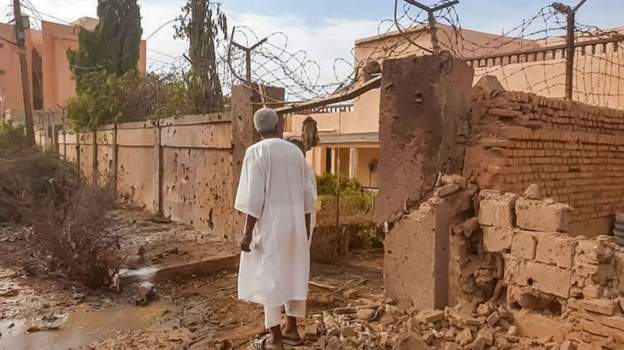
In the Sudanese city of Nyala, heavy fighting between rival military forces has persisted for several days, resulting in the death of at least 30 civilians and leaving dozens others injured.
The paramilitary Rapid Support Forces (RSF) and allied Arab militias have been engaged in attempts to seize control of the main army base in the city, which serves as the capital of South Darfur state.
In response, the army has used heavy artillery, leading to shells hitting residential areas.
As a consequence of the violence, many people have fled to villages outside the city, seeking safety.
A human rights worker informed the BBC that RSF fighters have been compelling civilians to surrender their vehicles.
The western region of Darfur has witnessed the worst of the violence since the fierce power struggle erupted in April between the army and the RSF.
Numerous regional efforts have been made to negotiate a ceasefire between the two factions.
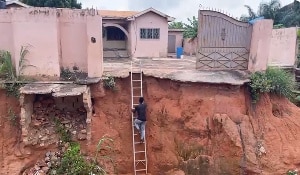
A road that was washed away has left behind a deep gully, creating a challenging situation for the residents of a house located nearby. As a result, they have resorted to improvising ways to access their residence.
To navigate the gully, the residents ingeniously constructed two wooden ladders. One smaller ladder was placed on the other side of the gully, while a much longer one was positioned in front of the house.
The concerning state of affairs was captured in a video seen by GhanaWeb, and the incident occurred in Bortianor, within the Ngleshie Amanfro Constituency of the Greater Accra Region.
Accompanying the video was a commentary that circulated on various social media platforms, urging the relevant authorities, especially at the local government level, to come to the aid of these vulnerable residents.
GhanaWeb cannot independently verify the duration for which the residents have been facing this challenging situation, nor can it confirm whether the disaster is a recent occurrence or has been persisting for some time.
Residents of the Emena Constituency in the Ashanti Region are threatening turmoil if the police do not free three people who were detained for allegedly trying to stop a private developer from building a road through a cemetery. Tensions are rising in the area.
The young man said that the aforementioned construction had led to the exhumation of ancestors’ remains and the destruction of several cemeteries.
The residents of the town protested the road project’s damage to the cemetery in an effort to protect the burial grounds, which led to their arrest, according to a report filed by UTV. As a result, the private developer began building a road leading to his residence, directing it through the town cemetery.
In an interview with UTV, an assemblyman from the Emena Boadi Appiahdu Kokoben electoral district, Kenneth Owusu Bediako, offered his support for the young people, noting his own observation of three tombs that had been destroyed. He highlighted that it is forbidden to exhume grave remains.
“For me, I heard on Friday that they have brought grader to demolish our graves which has resulted in some graves of our fathers being exposed, so, I went to the police station to discuss with them, for myself I have witnessed about three graves that have been demolished…so, I support the steps that the youths have taken because it is a great taboo to exhume our grandfathers’ grave with a grader.”
Several residents voiced their concerns over the issue. One resident lamented, “What is painful is that someone has taken the law into his hands to exhume our graves, believing that his son, a Circuit Court Judge, will deliver justice on his behalf, disregarding the feelings of the community.”
Several residents voiced their concerns over the issue. One resident lamented, “What is painful is that someone has taken the law into his hands to exhume our graves, believing that his son, a Circuit Court Judge, will deliver justice on his behalf, disregarding the feelings of the community.”
Additionally, from another resident, “My father Kwaku Mensah’s grave is now exposed. We implore our leaders to intervene and protect our cemetery.”
People in Omdurman, the city adjacent to Sudan’s capital, Khartoum, have told the BBC that conditions are dire after two days of intense clashes between rival military factions.
“In the neighbourhood where I dwell, al-Thawra, there is a single hospital that is still operating and providing services to the sick and injured, but it suffers from a major shortage of medical supplies and a lack of the working staff,” one resident told the BBC’s Sudan Lifeline programme.
Another person explained how they were struggling to find bread.
“A number of neighbourhood groceries and markets have been out of service for a long period of time and many merchants have abstained from selling their goods because of continued shelling and gunfire, which threaten their lives.”
A vicious power struggle between the army and the paramilitary Rapid Support Forces (RSF) erupted in mid-April causing a major humanitarian crisis and forcing nearly three million people from their homes.
Residents of a region of the Northern Cape province in South Africa have been admonished to exercise caution and keep an eye out for cheetahs and leopards prowling the streets.
State broadcaster SABC quoted a representative of an organisation cautioning that wildcats are dangerous and had been seen crossing roads close to a nearby town.
“It’s a bit of a concern they are hungry. They can walk 35km [22 miles] in one night. We have warned the community. The police have warned the community. I have been out telling the people,” Michelle Oppernan of Olifantshoek Animals is quoted as saying.
It is not clear if the cats have escaped from a game serve.
This was the case earlier in the year with incidents of wild cats, including tigers, on the loose which triggered safety warnings in areas of Gauteng province and the capital, Pretoria.
Residents of a community in the Ashanti region’s Afigya Kwabre South District, Bouho-Foase, are in a state of fear after being targeted by suspected armed robbers on regular basis.
The residents claimed that these suspected robbers regularly attacked them.
They claim that these armed men attack them, steal their valuables, and destroy their property.
The situation has made their lives unbearable, prompting many residents to flee their homes and seek refuge elsewhere.
Residents accused one Okomfour Kwame Prince of carrying out the attack; the Armed Men frequently travel in groups.
They have therefore appealed to the Police Service to deploy men to the area to patrol so it would help minimize these attacks.
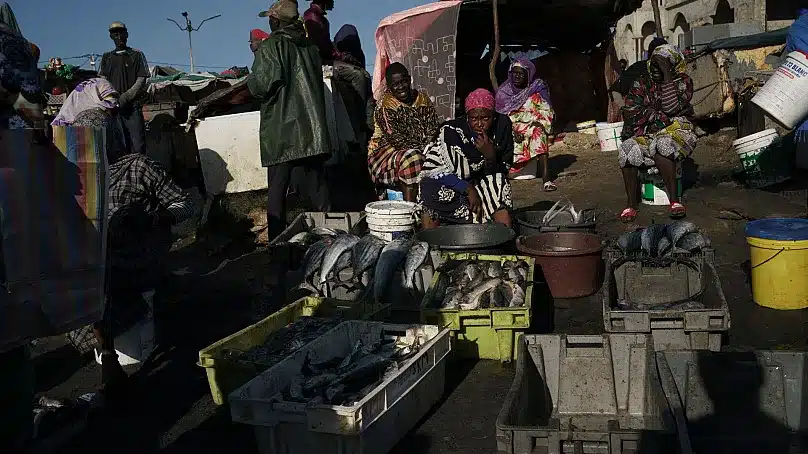
Residents of Saint-Louis, a small fishing village in Senegal, have been having difficulties for a long time. The COVID-19 pandemic, foreign industrial trawlers, and climate change have all made it challenging to make a living off the water.
When officials announced a new gas project off the coast in 2015, the community was hopeful it would bring new opportunities. Instead, many locals say, the gas has only brought a wave of problems and pushed people to desperation. That includes forcing some women to turn to prostitution to support their families, they told The Associated Press in interviews.
Four women who shared their stories said they started working as prostitutes because their husbands, all fishermen, could no longer make a living after the gas deal came to town and the rig restricted access to fertile fishing areas, known locally as diattara. The women all said they knew of several other women in the same position.
The women spoke on condition of anonymity because their families do not know what they do. Prostitution is legal in Senegal, but the women do not want to register, citing cultural shame.
For them, prostitution is faster and more reliable than working in a shop or restaurant — jobs that do not pay well and can be hard to find.
The deal — planned by a partnership among global gas and oil giants BP and Kosmos Energy, and Senegal and Mauritania’s state-owned oil companies — is expected to produce around 2.3 million tons of liquified natural gas a year, and Mauritania and trying to benefit the wider economy by locally sourcing products, developing the workforce and supporting sustainable development.
More than 3,000 jobs in some 350 local companies have been generated in Senegal and Mauritania, according to BP. The company also cited its work to renovate the maternity unit at the Saint-Louis hospital and its help of 1,000 patients with a mobile clinic operating in remote areas.
In a statement, Kosmos spokesman Thomas Golembeski, said the project will provide a source of low-cost natural gas and expand access to reliable, affordable, and cleaner energy. He also cited access to a micro-finance credit fund established for the fishing community.
“I pray that this ends, because it’s not what I want to do from the bottom of my heart. I do it for my children,” one mother said, her shoulders hunched and voice weary in a hotel room where she would not be seen by her husband or friends.
Traditionally, many women make a living processing fish, while the men catch it; sons, husbands and fathers spend weeks at sea. But with the restrictions, families could not feed their children or pay rent.
In some cases, families had to pull their children out of school or switch them from private to public schools where the teachers don’t show up for days.
BP and Kosmos did not respond to questions about the women turning to prostitution.
They also did not respond to questions about whether they stood by their initial risk assessment of the project, which acknowledged in a 2019 environmental and social impact assessment that there were “a lot of uncertainties around the consequences for Saint-Louis fishermen” but still considered the intensity of the impact to be low.
The local government said people’s concerns about the rig were overblown and that the community needs to be patient, at least until after production, which is expected to start by the end of this year.
Papa Samba Ba, the director of hydrocarbons for Senegal’s Petroleum and Energy Ministry, said the objective is that by 2035 half of all gas projects will go to local companies and services.
Local officials have acknowledged an increase in prostitution in Saint-Louis, but they attribute it to economic woes and widespread poverty in general — not directly to the gas project.
In Saki, in the Nmlitsakpo Electoral area of the Kpone-Katamanso municipality of the Greater Accra Region, a middle-aged man who’s name is still unknown, was electrocuted after scaling the Gridco/VRA pylons.
The Ghana News Agency (GNA) on arriving at the scene, noticed some residents gathered at the place to catch a glimpse of what might have warranted such an incident.
The deceased is also unknown in the community making it difficult for the police to trace and find his identity or relatives.
The GNA observed that the victim rode on a bicycle to the place and committed the act.
Residents and passersby remained in shock trying to figure out what might trigger the man to end his life in such a manner.
A joint police team from the Tema Regional Command and the Tema Community 25 Unit of the Ghana Police Service conveyed the lifeless body to the hospital for autopsy and preservation.
Meanwhile, the Police have commenced an investigation and called on the public with any information to contact the Tema Regional Command, a police source told the GNA.
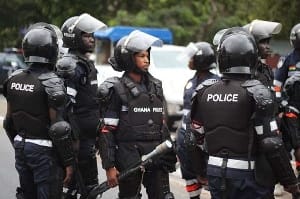
One person dead and several others injured after unknown man opened fire at the Wa East District of the Upper West Region.
According to reports, the residents effected an arrest of an unknown man, who was armed, in the area. But suddenly other armed men emerged from the bushes and opened fire on the gathered residents.
The incident is said to have occurred on Sunday, April 2.
The victims were all taken to the Wa Regional Hospital, where the survivors are responding to treatment.
Member of Parliament for Wa East Constituency Godfred Seidu Jasaw confirmed the incident but said information is “sketchy”.
Speaking on Midday News on 3FM on Wednesday, April 5, Mr Seidu Jasaw said relative calm has returned to the area, according to the Assembly member he talked to.
He said the matter has been reported to the Upper West Regional Police Command, which is now handling the case.
A manhunt to arrest the gunmen has been launched.
“The police in Wa municipality were alerted and they got on to the scene but the activities had taken place and the assailants had left.
“At the moment, my information is that the case has been reported to the regional police CID.”
There are suspicions that the case may be as a result of simmering chieftaincy and land disputes.
The MP also said some residents suspect the assailants may be galamseyers who are trying to assert their control of the area.
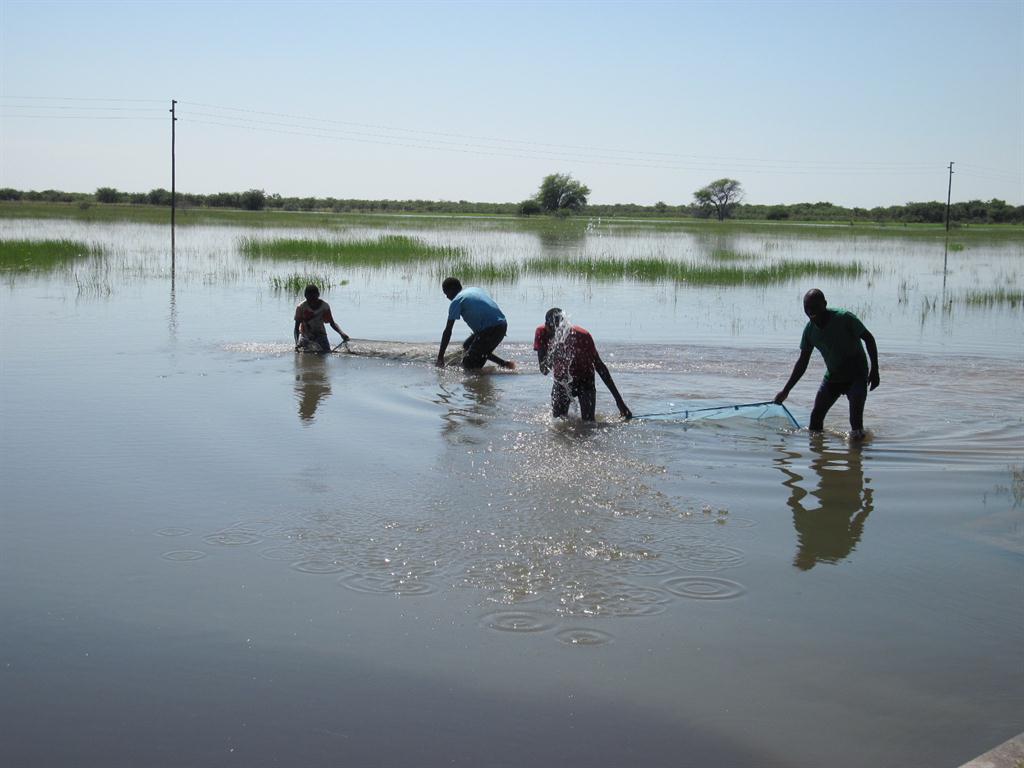
Residents of a town in Namibia’s north have been advised not to consume fish that has been swept up by floodwater and is thought to be infected.
According to officials cited in local media accounts, an epidemic of a fungal disease is thought to have killed the fish.
The Ohangwena region, which is close to the border with Angola, has been receiving a lot of rain.
Samples of the fish have been taken for analysis and residents will be informed at a later stage about when it’s to start eating fish again, chief fisheries biologist Elizabeth Ndivayele is quoted as saying.
Residents told journalists that they had made a fortune from selling some of the fish.
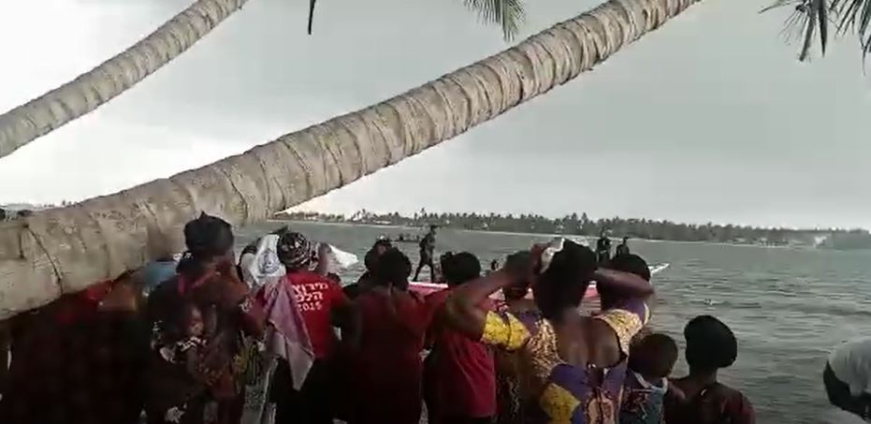
Eight people are feared dead at Azizanya. They are said to have drowned in at the Ada estuary.
The incident which occurred around 9:00am on Saturday was allegedly caused by strong winds.
Residents of Agbeve community blame the dredging activities in the area, which they say has confirmed their fears.
The residents explained that the accident was due to flow velocity due to increased water depth, leading to a recorded increase in volumes of incoming water into the estuary which makes underwater current heavier and swifter.
Eight people are feared dead at Azizanya. They are said to have drowned in at the Ada estuary.
The incident which occurred around 9:00am on Saturday was allegedly caused by strong winds.
Residents of Agbeve community blame the dredging activities in the area, which they say has confirmed their fears.
The residents explained that the accident was due to flow velocity due to increased water depth, leading to a recorded increase in volumes of incoming water into the estuary which makes underwater current heavier and swifter.
According to reports, the boats used by the residents from the same community of Azizanya-Kewunor capsized because they were overloaded.
Reports also had it that the residents who were on their way to a funeral at Kasseh in Ada had no life jackets on.
Search is still currently ongoing for more people suspected to have drowned.
According to some of the survivors, they alerted the sailor about the overload. The boat was supposed to carry about 25 people but loaded more than 60 passengers.
The incident unfortunately happened mid way into the journey, resulting in the loss of the 8, including 3 children and 2 women.
The sailor has been reportedly arrested to help with investigation
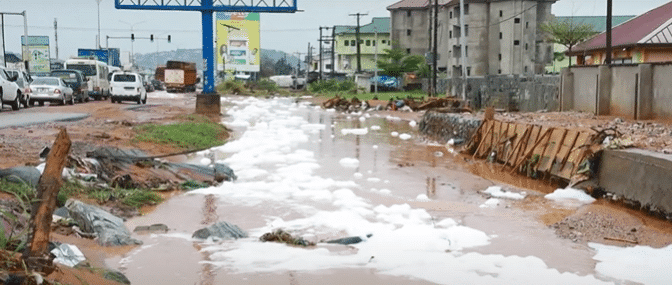
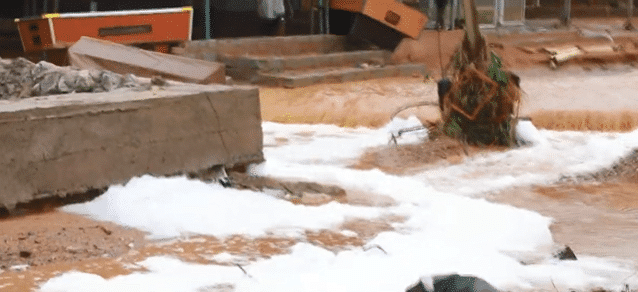
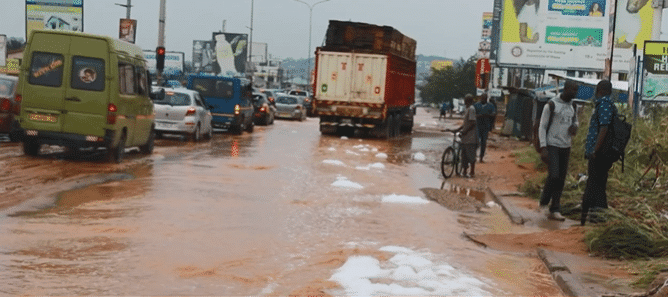
Foul waste water at New Bortianor in the Ga South district of the Greater Accra area has turned foamy after Tuesday morning’s downpour.
The unsettling sewage pools on a section of the Accra-Kasoa motorway between Old Barrier and the West Hills Shopping Center.
The media has been reporting on the inconvenience caused by the waste water to residents of the area and how they and road users are struggling to cope with it.
The situation got worse on Tuesday morning, thus increasing the level of danger posed to residents.
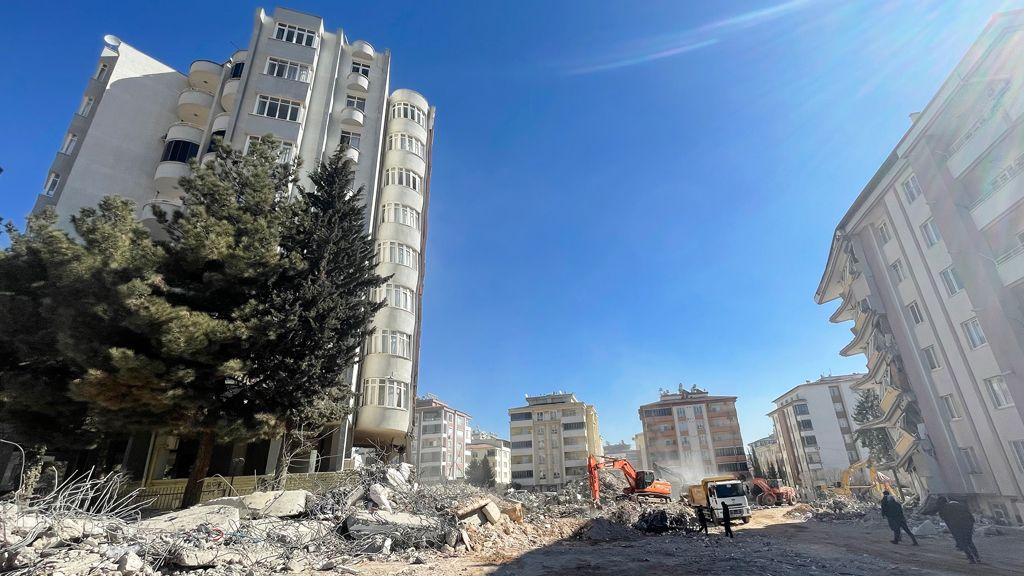
Safety concerns at an apartment complex in the Turkish city of Gaziantep were raised long before last week’s deadly earthquakes.
More than 130 people living there lost their lives.
A BBC team has spent three days looking at what happened – and the early warnings voiced by residents.
With only a bonfire for light and warmth on a bitter winter’s night, an extended family sits at the roadside waiting for amiracle.
They’ve been here for nine days and nights but their loved ones have not been found.
This personal grief is being played out in the rubble of one of the most desirable streets money can buy here.
“This is one of the most luxurious residential areas in Gaziantep,” says musician Yunus Emre, whose cousin and his family of four are missing. “The wealthiest live here. Those flats are sold for millions.”
But the price of the property meant nothing when the earthquake struck.
“I’m just angry. I want to bring someone to justice but I don’t know who,” says the 28-year-old. For him, so many parties are culpable in what is not just a national tragedy but, with the collapse of so many buildings, a national scandal.Image caption,
Yunus Emre lost five family members
“It starts with the contractor,” he explains.
“He uses low-quality building material. Next comes the certifying authority. They have the bloodof people who died here on their hands.
“It’s not right to scapegoat the contractor. The ones who approved this building are responsible together with the government and the state. They shouldn’t have signed off on this building project at all.”
The Ayşe Mehmet Polat apartment complex is 24 years old. Four of its six blocks collapsed while other buildings around it stood tall.
We came to this site because we had heard that a man said to be the building’s contractor had been arrested. He will later tell us through his lawyer he was doing nothing wrong and should bear no responsibility.
But what exactly happened here on 6 February, and could it have been prevented?
As we return to the complex the next morning, emergency services reveal to us a shocking figure – 136 people are known to have died here as they slept.
At a petrol station next door, we ask if they have any CCTV footage of when the earthquakes struck. We are given videos from four separate cameras which show the horror unfolding. First, the violent shaking of the lights, then seconds later, people running for their lives before, finally, a thick cloud of smoke and dust enveloping everything in its path.
The neighbouring apartment buildings collapsed in a matter of seconds.Media caption,
Watch: CCTV from a petrol station next to the apartment complex shows when one of the earthquakes struck
As we leave the petrol station, we are drawn to the pile of personal possessions on the edge of the forecourt. It is a deeply upsetting museum of lives suddenly extinguished – homework, dolls, cooking pans and family photos. Scouring the heap, and sobbing inconsolably, is 65-year-old Emel Filik.
“Everything is gone,” she tells us.
She explains that her cousin had been sleeping in one of the four destroyed blocks, and no-one had taken responsibility for keeping the building safe.
“Once you start to live in your flat, nothing happens. No inspection. Earthquake insurance and property insurance don’t work either. The municipality doesn’t make checks. No such thing as monitoring.”Image caption,
Emel Filik tells us apartment residents were worried about safety before the earthquakes.
There had been concerns about these apartments, she says, adding that the head of the residents’ association – a woman known as Selma – had even asked neighbours to come to a meeting to listen to her fears.
“Six months ago, Selma told us about the problems of the building. She said ‘Dear residents, our buildings might collapse at the slightest of earthquakes. Let’s strengthen the pillars. If you’re short on money, the municipality could help us for a cheaper solution.’ She held several meetings. But nothing happened.”
We find a phone number for Selma and she confirms she held meetings to express her fears.
But should residents really have to pay to be safe in their own homes? This was a question of structural integrity, not repainting walls.
The head of the organisation representing architects in Turkey, Eyüp Muhçu, tells us the ultimate responsibility for making sure buildings are safe rests with the Turkish government.
“The priority of the central government was not to make the cities safe, but to implement some projects that were solely planned for maximising profits. For this reason, 65% of the current building stock in Turkey is risky. And no measures have been implemented regarding these risky structures.”
With two residents having told us there had been potential problems within the blocks – we start trying to find out if those responsible for the building knew about it and whether they did anything.
When we had first arrived at the block the previous night, a boy had come up to us briefly to say his dad had pulled seven people from the rubble with his bare hands. It sounded a remarkable story, given the scale of the destruction we could see, but we didn’t discount it.
And sure enough, when we hear others talking about the bravery of a man called Bahattin Aşan we decide to track him down.
“I saw the building twirling and crashing down. I came here running, it was dark, raining, there was snow and I was the first responder,” he tells us.Image caption,
Bahattin Aşan says he pulled seven people from the rubble
Bahattin Aşan used to work as a security guard at the housing complex.
He shows us a harrowing video he took in the smoking ruins, in which he’s calling out to those trapped. Some people reply.
“I rescued seven people by myself. It was like the apocalypse. Even now as I’m telling you this, I’m still shaking,” he says.
But what about these supposed concerns over the buildings’ safety, I ask? Did he see this?
“In the car park, I witnessed the defects with my own eyes. When I touched the concrete columns it would crumble to dust in my hands, as though it wasn’t concrete at all. Iron was rusting in the columns, the rainfall was damaging and corroded the iron.”
When I ask Bahattin Aşan if he ever reported this, he insists it was obvious to the management as well as the residents.
“I used to tell a friend that if they were to give me a flat here I wouldn’t take it. I said it was because I didn’t think the columns were solid and in an earthquake the building would collapse.”
But the man accused of being the contractor, Mehmet Akay, says the building complied with regulation at the time it was built. He claims that sewage and water works were added to the property after construction – and that this, or other work, may have damaged the supporting columns.
How many other security guards and caretakers across Turkey had voiced similar concerns in a country precariously positioned at the crossroads of shifting tectonic plates?
Your device may not support this visualisation
The immediate picture that is emerging in this Gaziantep neighbourhood is not of a cover-up or conspiracy – but either indifference or inaction.
Everyone knew there was a problem, but nobody did anything.
For opposition MP Garo Paylan, from the HDP party, who we meet as he visits this site, it is indicative of criminal negligence on an industrial scale in Turkish construction and oversight.
“This is a crime. This is a sin.”
Mr Paylan accuses the government of Turkey’s president, Recep Tayyip Erdogan, of failing to ensure the safety of new buildings as well as failing to strengthen older ones.
“The scientists were shouting about it, this disaster is coming, but the government did almost nothing. We warned the cities, we warned them to prepare the rescue teams, but they did nothing and we live this catastrophe. They say this is destiny. No, it is not. In civilised countries these kinds of disasters happen but fewer people die. But here we have tens of thousands of people under the rubble.”
Mehmet Akay, the man whom authorities say was the building contractor for the Ayşe Mehmet Polat complex, was arrested on Saturday 11 February – five days after the earthquakes. He was stopped at Istanbul Airport as he tried to leave the country.
State prosecutors say he was the building contractor, but responding to questions put to him through his lawyer, Mr Akay claims he was the construction co-ordinator, but not the contractor. He also rejects accusations that cheap building materials were used.
Image source, Istanbul PoliceImage caption,
Mehmet Akay (l) was detained by police in Istanbul
In Gaziantep, we ask the local authority, Şehitkamil Municipality, for a response. Spokesman Ahmet Aydın Sert says no complaints were received about the complex buildings, and therefore no inspections were made. “We went through the records and found no irregularities.”
President Erdogan has conceded that the emergency response to the disaster was slow in places, but has urged his people not to listen to those whom he accuses of politicising a tragedy.
His government denies negligence and claims that more than 98% of buildings that collapsed were older – like the Ayşe Mehmet Polat complex – and built before the ruling party took office.
There are plenty who would say every country has a moral – if not legal – duty to protect its citizens, no matter the age of their property.
And when Turks go to the polls in the summer they will decide for themselves who can best ensure their families are safe in their own homes.
Additional reporting by Naomi Scherbel-Ball, Doğu Eroğlu, Dilay Yalçin and Jake Horton
The high cost of remitting money has significantly impacted the amount of funds that Kenyan diaspora residents send back home.
Many have been forced to limit their financial support to immediate family only, and this trend is likely to continue until the cost of remitting money decreases.
The report emphasized the resilience and determination of economic migrants to financially support their loved ones, despite facing financial difficulties.
Kenyan diaspora residents have either reduced or cut the amounts of money they send back home due to the high cost of remitting funds, according to a report from WorldRemit, a global digital remittance company.
The report’s findings also highlight the importance of remittances for many families around the world, who rely on the support of friends and relatives abroad to make ends meet.
According to the report, many have been forced to limit their financial support to immediate family only, and this trend is likely to continue until the cost of remitting money decreases. The report noted that 82% of respondents agree that the cost of remitting money has increased significantly, leaving 45% to only send money to immediate family rather than to friends and distant relatives.
The report also noted that globally, one in nine people rely on money sent from friends and relatives who have migrated abroad for work. The study, which was conducted in October 2022 and surveyed 2,687 respondents, aimed to assess the impact of the increased cost of living on international money senders.
East Africa Regional Manager for WorldRemit Ivan Kanyali commented on the resilience and commitment of migrants to financially supporting loved ones overseas, despite the economic challenges they face.
He says, “The inventive solutions, such as side hustles, that we are seeing as a result of the current economic landscape point to the resilience of migrants and their commitment to financially supporting loved ones overseas.”
“These findings demonstrate the grit of economic migrants in adapting to wider financial stresses and the rising cost of living while still meeting the needs of their families at home and abroad,” he added.
In addition to the negative impact on Kenyan diaspora residents’ ability to support their loved ones, the high cost of remitting money has also led to a trend of taking on side hustles in order to support an increased cost of living.
This was reported by a significant percentage of respondents in the US, UK, and Australia, with 89% of those with a side hustle indicating that they would continue to maintain it in the coming year.
The report also found that many respondents were cutting back on discretionary spending to save money, with 26% reporting that they were curtailing entertainment expenses such as dining out or going to the cinema.
On Friday, Soweto residents voiced their opinions on the country’s president in light of calls for Cyril Ramaphosa to resign after a parliamentary investigation concluded he may have broken anti-corruption rules.
25-year-old Linda Mogoje, an unemployed Soweto Resident said he does not believe that Ramaphosa has added any value to the country since he’s been in power. “I feel that for me, he hasn’t brought any change,” he said.
Opposite views were held by 18-year-old Melva Maphaha, who feels that the issue has nothing to do with Ramaphosa’s presidency. “I think so far he’s been a good President,” she said.
Adding, “I think that he has been trying his best.”
Pule Galeboe, 69, echoed the same sentiment saying the president should not resign.
“He must continue because he is a good leader as far as I’m concerned. He brings investors into the country, which creates jobs,” he said.
The calls for Ramaphosa to resign follow allegations by the country’s former head of intelligence, Arthur Fraser, that the President tried to conceal the theft of a huge sum of cash stuffed into couches at his farm in 2020.
Fraser accused the president of money laundering and violation of foreign currency control laws.
The ruling party’s highest decision-making body is expected to meet Thursday evening tobe briefed on the matter and possibly to determine Ramaphosa’s fate.
A woman believed to be in her early sixties has committed suicide on her farm at Breman Essiam in the Central Region.
The deceased, Antie Esi Annan, was a popular shopkeeper who operated her own provision store at Breman Essiam.
She went missing on Sunday, November 27, 2022, so residents thought she had travelled to visit her children.
Several calls were made to reach her children to find out if she was with any of them. But it turned out that none of the children had seen her.
She was found hanging from a tree on her farm in the afternoon of Monday, November 28, 2022.
Her death has thrown residents into a state of shock, wondering what might have pushed her to take her life.
Reports gathered by Kasapa News’ Yaw Boagyan indicate that the brother of the deceased also committed suicide by hanging himself about three months ago on the same farm.
Police at Breman Nkwantanum were informed and officers proceeded to the scene and conveyed the body to the Cape Coast Teaching Hospital Mortuary.
Odikro of Okyerekrom in the Akrofuom district, Nana Adyei Amoako Gyampa II, has expressed worry about an abandoned pit dug by AngloGold Ashanti (AGA) mine.
According to the chief, AGA has turned deaf ears to this concern raised after the pit collapsed in 2012 posing as a threat to farmers who have their farmlands around the pit.
The pit, which has allegedly claimed 10 lives since 2012 has remained one of the major concerns of the chief and residents in the area.
Addressing the press, Nana Amoako Gyampa II gave a two-week ultimatum to AngloGold Ashanti to reclaim the pit or face their wrath.
Some residents noted that their relatives who ply their farming activities around the pit kept going missing after the pit collapsed.
They added that harmful chemicals such as cyanide and mercury used in retrieving gold by the company in 2012 has polluted the river they use to feed their various homes.
The chief and residents, however, cautioned the mining company to reclaim the dangerous pit or face their anger after the 14-day given ultimatum.
Abandoned AngloGold Ashanti pit swallows 10 people at Okyereko – Chief alleges.
Flood waters at Weija and its environs have begun to recede, revealing the extent of devastation caused following the opening of the spill gates of the Weija Dam last week.
The recession of the flood waters is as a result of the opening of the Weija estuary and a reduction in the volume of water from the Eastern Region into the Weija Dam.
Consequently, residents who abandoned their homes for fear of their lives have gone back to clean up and salvage remaining personal effects and other items.
The first casualty of the flooding has also been found at Tetegu — a 55-year-old man known as Addi Kwashie, aka Chocholotso.
His body was discovered by the Weija Police around 12:30 p.m.
Kwashie had reportedly run to take cover in a nearby house but ended up getting drowned.
Visit
This came to light when the Daily Graphic visited areas affected by the floods when the Ghana Water Company Limited (GWCL) opened four spill gates of the Weija Dam to allow for the flow of excess water from the facility to save it from collapse.
At New Weija, Tatop, Tetegu, White Cross, Oblogo, among others, there were traces of the levels the flood waters had reached in homes, shops, schools and other facilities.
Some of the traces were at the ground, window and door levels.
There were also traces of refuse and debris in the homes of people at the various places.
On standby were the Marine Police, with their boat; personnel from the Weija Divisional Command of the Ghana Police Service, members of the Ghana Ambulance Service and the Ghana National Fire Service.
At Tetegu, for instance, for the first time in three days, the asphalted road leading to the town could be seen as residents cleaned their shops and homes.
Due to the power outage in the affected flooded areas, people who had generators switched them on to operate their businesses.
Recovering
A victim of the flooding at New Weija, Emmanuel Afari, told the Daily Graphic that with the water receding, he and his family were now trying to test whether or not their electrical gadgets would work.
He said their clothes would all be washed, since Kente and other materials were all submerged in the flood.
Another resident, Alhaji Seidu, said he had lived in the area for 25 years but had never seen anything like the recent flood.
“I have not been home for the past three days and I am now going to see what is left in my house. We had to temporarily relocate when the flood came to our home,” he said.
Zenabu Azumah, another victim, said apart from losing her personal belongings, her business too had been badly affected, as bags of beans for ‘waakye’, cartons of fish and a new fridge were destroyed by the flood.
“I lost all my clothing and all I have left is what I wore on that day. I am still wearing it,” she said.
Meanwhile, the Weija-Gbawe Municipal Director of the National Disaster Management Organisation (NADMO), Emmanuel Adu-Boahen, told the Daily Graphic that the organisation was assessing the extent of damage and the number of people displaced.
For his part, the Public Relations Officer of the Weija-Gbawe Municipal Assembly, Julius Sarpei, said the assembly members had been tasked to identify people who had been affected and displaced by the flooding, since they were with them on the ground.
He said as of 11 a.m. yesterday, the assembly was yet to take delivery of relief items from NADMO.
Businesses
While on the rounds, the Daily Graphic team observed that vulcanisers around Tetegu, Tatop and Weija were not working due to the power outage.
The Electricity Company of Ghana (ECG) had indicated that until it was safe to restore power, it would not do so.
Yaw Opoku of Tatop Company Limited, manufacturers of concrete products, said the company could not work as a result of the flooding of its yard.
Sumaila, a vulcaniser, who was seen sitting idle, said he could not work because there was no light to power the machine.
He said he could only hope that the flood waters would recede further for the light to be switched on, since he had not worked for the past four days.
At the Talented Royal School where some staff members were seen clearing the debris left by the flood, the Headmaster, Anthony Torgorme, said nothing was destroyed, except for the debris that was left on the compound.
The school, he said, had to be closed, since they could not access it because of the flood.
Support
At Tetegu, members of the National Council of Zamarama Chiefs had gathered to visit some of their members who were hit by the flood.
The President of the council, Chief Musah Yahaya Yandu, said between 80 and 90 per cent of its members lived at Tetegu and so they were at the place to assess the impact of the flood in the homes of those members.
Once that was done, he said, “then we will see how best to assist them”.
The Ghana Armed Forces (GAF) has announced that it rescued over 100 residents of Weija and its environs who were stranded due to the spillage of excess water from the Weija Dam.
According to the army, the residents were rescued in some five communities by its officers from the 48 Engineers on October 4, 2022.
“Personnel from the 48 Engineer Regiment of the Ghana Armed Forces (GAF) conducted rescue operations in the general areas of Tetegu and New Weija following the floods that ensued from the opening of the Weija Dam spill gates.
“The Tuesday 4 October 2022 exercise was conducted as part of OP BOAFO with about 40 GAF personnel partaking in rescue efforts around Tetegu, Sampa Valley, New Weija, White Rose and Top Down. Personnel were able to rescue over 100 stranded residents.
“The Ghana Armed Forces continues to support citizens in these emergency situations as part of its civic duty to help mitigate destruction of property and loss of life,” parts of a Facebook post shared by GFA on October 6, 2022 read.
Like the floods of Accra that have become a perennial occurrence, residents of Weija have once again had to wake up to the devastating effects of the spillage of the Weija Dam by the Ghana Water Company Limited.
The annual spillage of the dam is meant to release excess water from the dam.
The maximum level of water the dam is built to hold is about 46 feet, but the level came up to 48 feet, thereby threatening its safety, hence the decision to spill.
Residents have been forced to move around in canoes, as many houses have been completely submerged under the water.
Like the floods of Accra that have become a perennial occurrence, residents of Weija have once again had to wake up to the devastating effects of the spillage of the Weija Dam by the Ghana Water Company Limited.
The annual spillage of the dam is meant to release excess water from the dam.
The maximum level of water the dam is built to hold is about 46 feet, but the level came up to 48 feet, thereby threatening its safety, hence the decision to spill.
Residents have been forced to move around in canoes, as many houses have been completely submerged under the water.
GhanaWeb has been to the area and has captured videos of the extent of damage caused after the spillage of the dam on Monday, October 3, 2022.
Meanwhile, the management of the GWCL has assured the public that despite the challenges, it is in control and has put in measures to ameliorate the situation to minimize the impact on consumers.
The management explained further, “the Weija dam is currently at a level of 49.5ft as against the maximum operating level of 48ft. Spillage normally begins when the level gets to 46.5ft. As a result, four (4) spill gates have been opened to safeguard the integrity of the dam, save the dam from collapse, and save lives and properties.”
Watch the latest episode of The Lowdown below:
The Lowdown: Role of the diaspora in the development of Africa
CEO of the Aaron Manvel Foundation Millie Lorene Tucker and Gary Hope, the CEO of FLCC – Bring Back Hope Foundation underscore the need for the African diaspora to help develop the continent in this episode of The Lowdown on GhanaWeb TV. According to the women trying to make and create a change in Ghana, our forefathers were sold away and made to develop strange lands. Thus, coming back home and developing their home country is the best thing to do especially when resources are available.
Reports from some residents who live close to Madam Janet Nsia, a woman who has been accused of beating her househelp to death, have revealed how the accused person used to ill-treat the latter.
According to most of these residents, Mama Jane was fond of maltreating the late Akua Kyem as though she was not a human being.
The reports further revealed that there was not a single day Mama Jane wouldn’t be seen begrudging the deceased.
Further interrogation revealed that the deceased had been the second victim to die in the hands of madam Jane through similar maltreatment.
A 24-year-old Akua Kyem who died on Monday was said to have died after suffering a severe beating and bruises from her 57-year-old house mistress, Madam Janet Nsia.
The sad incident which happened at Anwomaso in the Oforikrom municipality of the Ashanti region saw some blood stains on the body of the deceased.
Madam Janet Nsia who earlier denied a hand in the death of her house help went to the Domeabra police to report the incident whilst she declared herself innocent.
In her earlier narration, madam Janet claimed that Akua was found dead in her room on Monday morning, thus after she had come home very late on the previous night and refused to talk to her even after she had asked why Akua was coming home late.
She has allegedly confessed to having struggled with the 24-year-old before her demise.
Despite her earlier claim of innocence, some nearby residents accused her of beating the girl the previous night, with most of them citing a noise that emanated from the struggles during the previous night. They told GhanaWeb on condition of anonymity.
Some also blamed her and wondered why she chose to go to the police instead of sending the girl to a hospital after seeing her lied helpless.
“If she did not know the girl was dead already, why did she choose to go to the police instead of sending her to a hospital?”. An angry neighbour quizzed.
Mr. Kwadwo Peprah, the deceased’s family head who spoke to GhanaWeb on Tuesday evening said, the accused who was sent to the Ejisu magistrate court on Tuesday confessed to struggling with the victim on the previous night over a misunderstanding.
According to him, Mama Jane who was said to have accused the victim of stealing her Five Hundred Ghana Cedis confessed to beating her with her hands and other objects like knives, etc.
Meanwhile, the accused, madam Janet Nsia has been remanded into prison custody by the Ejisu magistrate court and is expected to reappear in court on 12th October 2022.
The deadline for SIM card re-registration ends today, September 30, 2022.
This comes after the Minister for Communication and Digitalisation, Ursula Owusu-Ekuful, extended the deadline for the sim card re-registration initially scheduled for July 31, 2022.
The minister said the extension had become necessary owing to challenges such as delays in the rollout of a self-serving registration app and delays in the acquisition of Ghana Cards, which is the mandatory document for the registration.
“Upon consultation with the industry and in view of the challenges enumerated above, I have very reluctantly decided to grant a final conditional extension.
“The programme will be extended to September 30 to end on the anniversary of its commencement. That will give us one full year of SIM registration to be reviewed at the end of this month and any SIM that has not been fully registered by the end of August will be barred from fully receiving certain services including voice and data services. It will also be more expensive to use unregistered SIMs. The full range of punitive measures will be announced at another press briefing in September,” the minister stated.
The SIM card registration exercise began on October 31 2021, and was expected to end on March 31 2022; however, as of March 17, over 14 million SIM cards had been linked to the Ghana Card, with over 10 million Bio-captures conducted and 99,445 new SIMs registered.
Due to some factors, including the fact that over 7.5 million citizens and residents were yet to obtain Ghana Cards to enable them to register their SIM cards, it was clear the deadline for completion of the re-registration of the remaining active SIM cards could not be met.
As a result, the ministry extended the deadline to July 31, 2022.
However, many are still facing challenges in acquiring their Ghana Card.