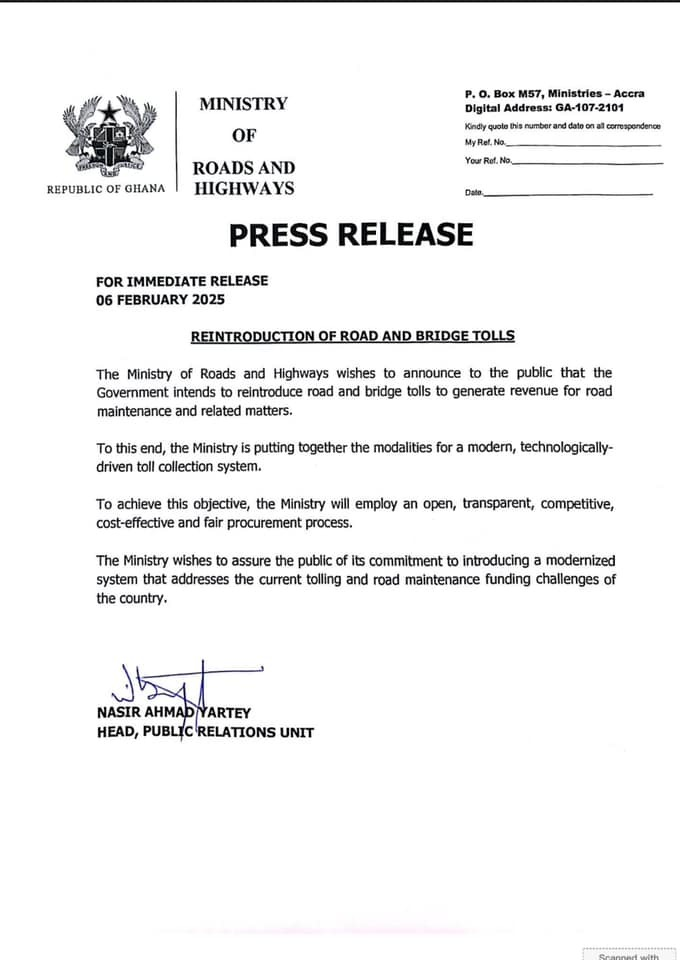
The Ministry of Roads and Highways has assured the public of a fair and transparent procurement process in selecting a technologically advanced toll collection system.
This follows the government’s decision to reintroduce road and bridge tolls to generate revenue for road maintenance and infrastructure development.
In a statement issued on February 6, the Ministry emphasized that the selection process for the new toll system would be open, competitive, cost-effective, and aligned with best practices.
“The Ministry will employ an open, transparent, competitive, cost-effective, and fair procurement process,” the statement read.
Authorities believe the modernized toll collection system will resolve inefficiencies associated with previous tolling methods and ensure sustainable road maintenance funding.
Ghana first introduced road tolls in the early 1990s as a means of financing road infrastructure. Over the years, toll booths became common on major highways, with motorists required to pay fees for road usage.
However, in 2021, the Akufo-Addo-led administration scrapped road tolls, arguing that collection costs were high and revenues generated were insignificant. The toll removal was part of the government’s budget that year and was replaced by the controversial Electronic Transaction Levy (E-Levy).
With plans now underway to abolish the E-Levy, the government is seeking to restore road tolls under a more efficient system, ensuring sustainability and enhanced revenue generation for road infrastructure.
In the 2024 mid-year budget review, PricewaterhouseCoopers (PWC) advocates for adopting a digital method for reintroducing road and bridge tolls.
The firm highlighted that adopting digital technologies, similar to those used in other revenue collection areas, could notably decrease revenue loss and corruption.
PWC suggested that the government should introduce a system where drivers utilize prepaid swipe cards connected to their Ghana Card, the national ID.
“Our recommendation is that government goes digital as they have done in other aspects of revenue collection. We believe providing drivers with prepaid swipe cards which are linked with their identity card (Ghana Card) will prevent revenue leakage and corruption, and also make the toll collection seamless,” the firm stated in its digest.
Moreover, PWC emphasized that the revenue from tolls should be allocated specifically for the construction and upkeep of highways and bridges, ensuring that the funds are used as intended.
The government’s proposal to reinstate road and bridge tolls in 2025 has generated significant debate. Road tolls were suspended in 2022 and replaced by the electronic transactions levy (E-levy). Although the E-Levy initially faced opposition, it managed to generate GH¢1.19 billion in 2023. However, its effectiveness may be jeopardized by recent trends in the mobile money (MoMo) sector.
Data from the Bank of Ghana (BoG) shows a noticeable decrease in mobile money transactions. In June 2024, the total number of MoMo transactions dropped to 644 million, down from 668 million in May 2024.
This decline also affected the total transaction value, which fell from GH¢234.3 billion to GH¢224 billion. Despite the overall decrease, the float balance—representing funds held in mobile money accounts—slightly increased from GH¢21.1 billion to GH¢22.2 billion.
The sharp reduction in MoMo transactions could undermine the effectiveness of the E-Levy, a vital revenue source for the government. In light of these developments, PWC’s recommendation for a comprehensive digital toll collection system appears particularly timely.
“We expect that the new framework will be as robust as possible, incorporating digitalisation in this space of revenue generation,” PWC mentioned.
This comes as concerns over the cost and reliability of mobile money (MoMo) appear to be on the rise. Over the past two weeks, several social media commentators have expressed dissatisfaction with MoMo, highlighting issues such as high transaction fees and frequent network downtimes.
These concerns were echoed in an interview with Nana Kwabena Barimah, a seller of building materials who shared his experiences and growing frustrations with the mobile money service. Barimah explained that he has increasingly turned to traditional banking services, including the use of Automated Teller Machine (ATM) cards and bank cheques, to manage his transactions.
“I use a bank that’s close to my shop, and it has served me well. The costs associated with MoMo and occasional network downtimes are becoming too much for us,” he said.
“It’s not just about the fees; it’s also about the reliability. There have been times when I couldn’t complete transactions due to network issues, which affects my business operations. With my bank, I have more consistent access to my funds and the transaction fees are more predictable,” he added.
A professor at the University of Ghana Business School, Patrick Asuming has said that he is suspicious of the intention of the government tobring back road tolls.
He said the government made similar comments in the past about bringing back some abolished levies but that did not materialize hence his doubts.
“The e-levy is a bad tax that should be removed with or without the road tolls. I am very suspicious that these road tolls will be back.
In 2023 they stated that they were going to bring back some tolls that were removed but we didn’t hear anything about it. Now you are saying this.
“I am not sure there is a real intention to bring back the road tolls. It was a bad idea to remove the road tolls,” he said on the Key Points on TV3 Saturday, July 27.
The government plans to reinstate road tolls, which were discontinued in 2021. Finance Minister Dr. Mohammed Amin Adam announced that the Cabinet has approved a plan to reintroduce the tolls by 2025.
This announcement was made during the mid-year budget review presented in Parliament on Tuesday, July 23.
In June, New Patriotic Party (NPP) flagbearer and Vice President Dr. Mahamudu Bawumia advocated for the return of road tolls to enhance the country’s road infrastructure.
He pointed out that the government is currently facing funding shortages for infrastructure projects and suggested that road tolling could be an effective solution.
“Let us go back to a system of broad-based road tolls. The tolling system has to come back, and I think it will come back.
“It is a fundamental mistake of the government to place all road projects on the budget. The government doesn’t have enough money and the private sector has to be brought in,” he noted.
Government canceled road toll collections in 2021 after introducing the e-levy which government said was to substitute the road tolls.
However,the e-levy has failedto live up to its promise prompting government to bring back the tolls in 2025.
Minister for Works and Housing, Kojo Oppong-Nkrumah, has noted that the Minister for Roads, Francis Asenso-Boakye, has received cabinet approval to begin the process of re-introducing road tolls.
The Housing Minister made this known to the media on the sidelines of the 2024 mid-year budget statement presentation.
“Already, the Minister for Roads has received Cabinet approval to start the process of reintroducing these tolls,” he said.
Finance Minister Dr Mohammed Amin Adam has indicated that the establishment of a framework for the re-introduction of road and bridge tolls will be done in 2025.
He made this known while presenting the 2024 mid-year budget statement.
Effective November 2021, the government ordered the suspension of the collection of road tolls across the country in a bid to ease traffic congestion at toll booths and in the hope that a portion of the e-levy revenue would be committed to maintaining the roads.
The e-levy has failed to generate the necessary funds since its passage; a development that has now led to the need for the reintroduction of road tolls.
Moreover, the flagbearer of the NPP, Dr Mahamudu Bawumia, during a recent campaign tour of the Volta Region, proposed a reintroduction of the tolling system.
The Ministry of Roads and Highways has initiated discussions with key stakeholders to finalize the decision to reinstate road tolls in Ghana.
According to the sector minister, Francis Asenso-Boakye, the reintroduction of road tolls is necessary to aid the government in repairing the country’s deteriorating roads.
In 2021, the Ministry of Roads and Highways directed the cessation of toll collection nationwide, effective November 18, 2021. This decision was made to alleviate traffic congestion at toll booths and in anticipation of the introduction of the e-levy, which was met with mixed reactions from the public.
Speaking on the matter, Mr. Asenso-Boakye emphasized the importance of seeking the buy-in of key stakeholders before reintroducing road tolls.
“[Road] maintenance also means money. In many countries, they use the tolls that they collect from road tolls to finance maintenance. But in our case, we have suspended it, and I think it is a good time for us to start the discussion to bring these road tolls back and get money to maintain our roads.
“That is very important, and we have started the process by engaging the various stakeholders to get their buy-in to make sure that we bring the road tolls back,” he said.
The ministry is engaging with various groups to ensure that the decision is well-received and understood by all parties involved.
The reinstatement of road tolls is expected to provide the government with additional revenue to fund road maintenance and improvement projects across the country.
Ghana’s new Minister of Roads and Highways, Francis Asenso-Boakye, has announced plans to reintroduce road tolls, noting that many countries use toll proceeds to fund road maintenance.
The decision to suspend toll collection under the former Minister, Amoako Atta, has raised concerns about the impact on road maintenance, given the country’s deteriorating road network.
Previously, toll collection contributed to funding road maintenance. However, the Ministry of Roads and Highways abruptly halted toll collection nationwide in 2021, effective November 18, to reduce traffic congestion at toll booths and in anticipation of implementing the e-levy.
The decision to scrap toll collection was made with the expectation that the e-levy would generate sufficient funds. However, the e-levy has not met expectations, prompting the need to reintroduce road tolls.
In an interview on TV3 on Monday, June 10, the Bantama MP stressed the importance of tolling roads, noting that tolling is common practice in many countries.
“In many countries, they use the toll that we collect from the roads to finance maintenance. So, at our ministry, we have started the process by engaging the various stakeholders to get their buy-in to make sure that we bring the road toll back. This is very important. I have never seen any serious country where they don’t toll their road,” he said.
Vice Chairperson of the Roads and Transport Committee of Parliament, Alex Tetteh Djornobuah, says when road tolls are reintroduced, they will be digitalised.
According to him, this system will reduce the number of human activities and increase productivity.
“Last week at our committee meeting, the Minister and his agency briefed the committee that they are going to reintroduce the road toll. It will not be in the old form. It will be digitalised and at the end of the day the human phase will be minimised and we can save a lot of money,” he said in an interview on Friday, December 15, 2023.
Mr Djornobuah explained that monies generated would be used to help fund the $388 million road projects recently approved by Parliament.
“For example, the reconstruction or the expansion of Ofankor to Nsawam road, I think it will be part of the tolling. Just this afternoon, we passed about $388 million for the reconstruction of the Motorway and in that agreement, there is an introduction of road toll. That means that the PPP or the private person who is going to construct this particular road will use that one as part of the revenue to defray the margin that the government is taking,” he said.
When reminded that it was that the majority caucus pushed for the cancellation of the road toll despite minority concerns about the obvious revenue loss, he insisted that at the time, the government assumed that with the introduction of the e-levy, enough revenue would be generated.
Also, he said the traffic situation around the Motorway was a major reason the Roads Minister had pushed for the cancellation of the road toll. However, now that the road will be reconstructed, traffic would be a thing of the past.
The Sefwi Akontombra MP said “Since both parts of the House has accepted it, I think it’s good news for Ghana and we hope to see the modernization of the road tolls.
On the question of whether the tolls will be increased, he said, “We have to have a national dialogue on how to finance our roads. If we look elsewhere, the government is not burdened with road construction. Looking at the request for various constituencies and elsewhere I think that we need to debate.
“If you look at the other African countries elsewhere our road tolls is the least among the other countries. The reintroduction, I think we should have a consultative stakeholders meeting to agree so that at the end of the day, road financing will not be a burden on our budget.”
Two years after scrapping road tolls in response to the contentious passage of the Electronic Transactions Levy (E-Levy), the government is now contemplating the reintroduction of tolls starting in 2024.
Minister of Roads and Highways, Kwasi Amoako-Attah, revealed this development on the floor of Parliament on December 15, 2023, while defending his ministry’s budget estimates in the 2024 budget.
Deputy Majority Leader Alexander Afenyo-Markin explained the importance of reinstating toll collection, emphasizing the need to combat corruption and ensure that the funds collected do not end up in private hands.
“The committee tells us that road tolls are likely to be introduced. I believe that for good reason government had a policy of not having tolls collected.
“Mr. Speaker, at the time we were receiving almost about, just a little over 70 million,” he referenced a report that said over 70% of tolls collected ended up in wrong hands.
He continued: “I hold the view that this reintroduction of the road tolls… should come with a digitalised solution to sustain it so that the human interface will be minimized if not to be eradicated.”
Afenyo-Markin continued, expressing the view that the reintroduction of road tolls should be accompanied by a digitalized solution to sustain it, minimizing or eradicating human interface.
Some lawmakers from the Minority also supported the idea of toll reintroduction. In recent times, former toll booth employees protested non-payment of arrears and the lack of alternative employment after the closure of collection points affected their jobs.
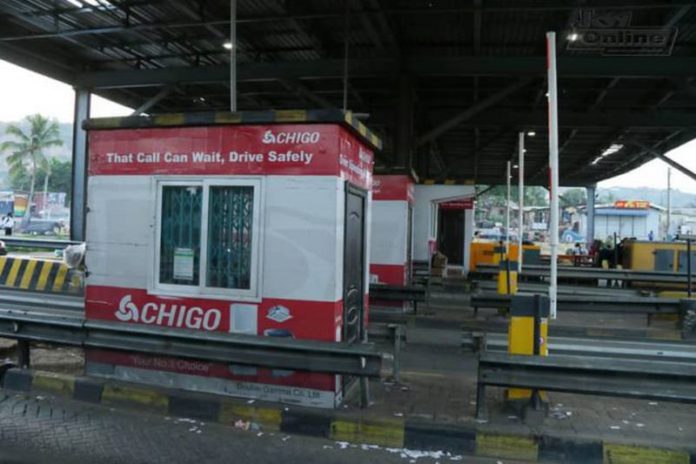
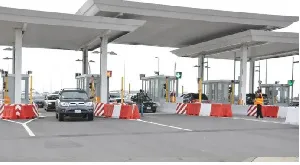
Currently, the government will need to invest new funds in rebuilding most toll collection points, which have deteriorated due to abandonment.
Meanwhile, Parliament has approved GH₵4.6 billion for the ministry’s operations in the coming year.
Road tolls are likely to be reintroduced in 2024, as revealed by the Minister of Roads and Highways, Kwasi Amoako-Attah, during the consideration of the 2024 budget statement and economic policy in Parliament.
The reintroduction is seen as a response to the government’s decision to cancel road toll collections in 2021 after introducing the e-levy, which did not meet expectations.
The ministry emphasized the need for a national dialogue on financing road construction. The reintroduction of tolls and the call for a national dialogue on road financing were welcomed by Minority Chief Whip Kwame Agbodza.
“I think the minister has done the right thing. I will maintain that the suspension was in a haste. By the time we suspended it we were getting 78 million. Mr. Speaker 78 million can pay SMCs, small medium contractors who were weeding the roadside because today we can’t pay them. So I welcome the bold decision by the minister to reintroduce the debate on road tolls as well.
“The minister is proposing for a national dialogue on road financing. Mr. Speaker I think that is the appropriate thing to do. Let us all have a conversation on how we fund our roads. We can never have enough loans from World Bank or free money from anywhere, so let’s have a debate on how we fund our roads internally,” he said.
Deputy Majority Leader, Alexander Afenyo-Markin, has expressed support for the decision to reintroduce road tolls, asserting that it is a positive move. He emphasized the importance of implementing a digitalized toll collection system when reintroducing tolls to prevent potential losses to the state.
“Mr. Speaker, at the time we were receiving almost about, just a little over 70 million. That over 70% of tolls collected ended up in wrong hands. I hold the view that this reintroduction of the road tolls… should come with a digitalised solution to sustain it so that the human interface will be minimized if not to be eradicated,” he said.
Parliament has approved ₵4.6 billion for the ministry’s services for next year.
The Minority Chief Whip in Parliament, Mr Kwame Governs Agbodza has declared that the Minority will not support any increase in road tolls unless the funds generated are solely used for road-related expenses.
He explained that funds generated from road tolls cannot be diverted to finance other projects such as the National Cathedral. Mr. Agbodza made these remarks during an interview with Joy FM’s Top Story on Tuesday.
“In my view, unless we can prove that whatever we charge as road toll will entirely to be used on road-related expenditure, the Minority will not support this. Because we can’t pay money for building roads and somebody uses it for cathedral,” he said.
“Basically, in the 2023 Budget as you can see, the government is projecting that for instance, the road fund will generate GHC2.4 billion but if you go to the Appendix 3(c) –the expenditure section, you will see that they are only going to spend about 1 billion cedis on roads.
“In other words, we use the name of roads to collect money from the public and then we take the majority of that money and spend it elsewhere.”
He further stated that the Minority would oppose any amendment to the Capping and Realignment Act as long as it remains a factor in the road fund.
“The Minority will never support the amendment if the Capping and Realignment Act is still on the road fund,” he said.
Mr. Agbodza also highlighted the public’s disenchantment with the current road toll collection system, noting that the Capping and Realignment Act has made matters worse.
He pointed out that road users pay for the construction and maintenance of roads but receive little value in return.
While he is not against the reintroduction of road tolls, Mr. Agbodza stated that the consultation process must be more inclusive and may require a review of the Road Toll Act.
The conversation about road tolls has been resurrected again following a document which emerged on Monday, February 14, 2023, with some proposed rates for the reintroduction of tolls of some of Ghana’s roads.
Per the document said to have been released by the Finance Ministry, pegged the rates at 50 pesewas for motorbikes, GH¢1 for cars, and GH¢3.50 for heavy goods trucks (5 or more axles), among other things.
This follows the cancellation of the road tolls by the government in 2021 during Finance Minister, Ken Ofori-Atta’s presentation of the 2022 budget in November.
A year after, the Finance Minister said during a budget reading in November 2022, for the 2023 economic year, that the tolls will return on selected roads after the revenue shortfalls from the e-levy.
The concern for many however is how much money will be reinvested in the re-construction of some of these toll booths that have been destroyed and are in bad shape following the scrapping of tolls.
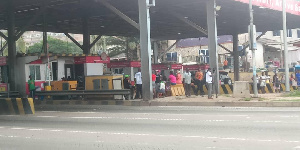
GhanaWeb’s George Ayisi visited some toll booths in the country in December, 2022 and captured the state of these booths ahead of the reintroduction of tolls.
The government’s decision to reinstate road tolls has drawn criticism from theAlliance of Drivers.
This comes after the announcement of the rates for the proposed road tolls that would be implemented once again this year.
Referring to a press conference they had in the past at Kasoa, in a statement issued on Tuesday, 14 March 2023, requesting that government scraps road tolls, the Alliance of Drivers, highlighted some of the key issues touched on, for suggesting scrapping of the road tolls, including the “dust and dirt on the roads, unnecessary congestion and traffic, high cost of fuel as a result of delay in traffic among others.”
According to the group, the belief has been that the issues raised during their press conference also “influenced” government’s decision to scrap road tolls and “it has been better since.”
The group is therefore questioning the “sudden reintroduction of road tolls and a marginal increase in the fares [tolls] as well.”
The group wants government to explain to its members “the reason for this sudden diversion as the recent economic hardship is not even favourable for paying road toll.”
It noted that if government fails to heed its call to scrap road tolls, it will urge its members to halt operations.
“If the above suggestions are not adhered to by the government, we will urge all drivers and transport operators to put on hold all transport business.
“We believe it can be done and be done well if proper consultation is done on these key, decisions as the negative impact it’s having on the ordinary Ghanaian is unbearable,” it projected.
It urged: “Let’s all have the country at heart and work together to raise the name of this country high.”
Finance Minister Ken Ofori-Atta in a letter to the Minister for Roads and Highways proposed charges for the road tolls for confirmation by the latter.
Road tolls were cancelled in 2022 following the introduction of the Electronic Transaction Levy (E-Levy).
The road tolls were, however, re-introduced during the 2023 budget presentation on Thursday, 24 November 2022.
The Finance Minister had said: “The fiscal policy measures to underpin the 2023 Budget for consideration and approval by Parliament include the reintroduction of tolls on selected public roads and highways with a renewed focus on leveraging technology in the collection to address the inefficiencies characterised by the previous toll collection regime.”
Finance Minister, Ken Ofori-Atta, last year announced that government will be reintroducing the collection of road tolls on selected roads in the country this year.
The reintroduction of the road toll was one of the revenue measures contained in the 2023 budget presented to Parliament by the Finance Minister.
“The fiscal policy measures to underpin the 2023 Budget for consideration and approval by Parliament include the reintroduction of tolls on selected public roads and highways with a renewed focus on leveraging technology in the collection to address the inefficiencies characterized by the previous toll collection regime,” paragraph 462 of the 2023 Budget statement read.
But the Ashanti Regional Minister, Simon Osei-Mensah has disagreed with the reintroduction of the road tolls.
Narrating how he once, as Regional Minister, had to personally get involved in distributing tickets in order to ease the traffic congestion on a certain road in the Ashanti Region, he noted that bringing back the tolls will cause unnecessary traffic.
To him, he will only subscribe to the idea of reintroducing road tolls on the condition that it will be electronic.
“We should consider maybe electronic but if we are to go back to the previous form, I won’t support it because it gives headache”, he said during “Kokrokoo” panel discussion programme on Peace FM.
Speaking to the media about future road projects his ministry plans to undertake, Mr Amoako-Attah stated that the government has not been able to generate the expected revenue from road tolls to meet road infrastructure objectives due to low toll collection returns.
“We were paying the lowest toll in the whole world, while we wanted excellent and good roads. For a whole year, we were getting an average of GH¢78 million. If you deduct salaries and whatever from it, how much is left? Depending on the ground condition, that amount of money cannot even build 10 km of road,” he said.
Prior to a directive banning their collection in November 2021, road tolls were 50 pesewas or GH¢1 nationwide.
According to the Roads Minister, motorists must be willing to pay more if they want to travel on good roads.
“If we want good roads, then we must be prepared to pay more. We will no longer be paying fifty pesewas and one cedi. Tolls are even more expensive abroad,” Mr Amoako-Attah added.
He however did not reveal the exact amount to be charged.
The new road toll rate can only be implemented after the approval of the 2023 budget statement and economic policy currently before Parliament.
When the government announced its decision to cease the collection of road tolls, the minority disapproved of its plan.
Deputy Finance Minister, John Kumah, however, argued that the collection of the toll was inequitable and inefficient because it affected just a particular group of individuals and could not bring in the needed revenue.
“The rich were enjoying the road toll and the poor were paying more. So we thought it should be scrapped and put it on something that can cover everybody. The whole year, Ghana was getting GH78 million from road toll,” he said.
Last year, while presenting the 2022 budget statement, Finance Minister Ken Ofori-Atta revealed that the government will implement a new tax measure, the Electronic Transaction Levy (e-levy), in place of road tolls, the proceeds of which will be used for road construction.
However, the government appears to have made a U-turn, as Mr Ofori-Atta announced the return of road tolls in some specific locations due to the government failing to meet its target with the e-levy at the current rate of 1.5%.
He made this known while delivering the mid-year budget review, as well as the 2023 budget statement, two weeks ago.
For about a year, toll booths have not been operational.
Its return expected next year is to come with some upgrades. Mr Amoako Atta says the mode of collection will be electronic.
“We are going to build a modern express way, which will come with tolling facilities, but those tolling facilities will be electronic tolling facilities. If it has to come, it will be done electronically,” he stated.
This is expected to address the heavy traffic congestion caused by slow attendance by the attendants.
Meanwhile, the Toll Workers’ Union has opposed the use of advanced technology, arguing that it would render most of its members jobless, and thus the government and the union will have to engage.
“We could have the one that will need the involvement of workers, it doesn’t necessarily have to be that they are paying physical cash to workers, but they will be there to assist in one way or the other,” General Secretary for the union, Edward Duncan, said.
The Minister for Roads and Highways, Kwesi Amoako-Atta, has said the mode of collecting road tolls in the country will change when it is re-introduced.
According to Mr. Amoako-Atta, the payment of road toll will be via electronic means when the levy is reintroduced in 2023.
“We are going to build modern expressway which will come with tolling facilities but those tolling facilities will be electronic tolling facility…if it has to come, it will be done electronically,” he said.
He urged road users to be prepared to pay more money for the toll to enable the government to construct enough good roads.
“The whole year, we were getting an average of GH₵78 million depending upon the ground condition, that amount of money cannot even build 10km of road. We were paying the lowest toll in the whole world. Meanwhile, we want excellent and good roads in our country.
“We want good things, we must be prepared to pay for more. We will no longer be paying the 50 pesewas and ₵1.”
Government in November 2021 announced the scrapping of road toll collection on all major highways across the country.
A year after, the government has made a u-turn to reintroduce the collection of the toll.
The reintroduction of the road toll is one of the revenue measures contained in the 2023 budget presented to Parliament by the Finance Minister, Ken Ofori-Atta.
“The fiscal policy measures to underpin the 2023 Budget for consideration and approval by Parliament include the reintroduction of tolls on selected public roads and highways with a renewed focus on leveraging technology in the collection to address the inefficiencies characterized by the previous toll collection regime,” paragraph 462 of the 2023 Budget statement reads.
Meanwhile, the Minority in Parliament has stated that they will offer their full support only if the revenue from the collection of the toll would be used solely on road maintenance.
The government’s decision to reintroduce road tolls in 2023 has been welcomed by the minority in Parliament.
The government canceled the collection of tolls on public roads in November 2021, following an announcement by the finance minister during his presentation of the 2022 budget.
A year after the announcement, the Minister for Finance, Ken Ofori-Atta, during the presentation of the 2023 Budget Statement and Economic Policy on November 24, 2022, announced the return of road tolls on selected roads as part of the government’s revenue mobilisation measures.
Contributing to a debate on the budget in parliament on Wednesday, the Minority Spokesperson on Roads and Transport, Governs Kwame Abgodza, welcomed the reintroduction of tolls while describing their initial cancellation as populist.
“We welcome the decision by the Roads Minister to bring back road tolls. We take no pride in saying we told you so. Mr. Speaker, it was populist, unnecessary, and they were there shouting, we are going to do it because we have e-levy… today they have brought a law here that they want to bring back road toll.”
The minority, however, asked for revenues accrued from road tolls to be directed solely towards the maintenance of roads.
“If you bring the road toll back, all the accruals must go into road maintenance. Otherwise, we are not going to support you, that is why we say de-cap the road fund,” Governs Kwame Agbodza said on the floor of Parliament.
The minority in 2021 bemoaned the cancellation of road tolls, describing it as a policy that will lead to a massive loss in government revenue.
There were calls from several critics who called for government officials to be charged for causing financial loss to the state over the decision to suspend road tolls.
“Whoever took the decision to stop the road toll has caused financial loss to the state, whatever has been lost, he must be surcharged for it. …It wasn’t a prudent decision to take off the road toll,” an economist at the University of Ghana, Lor Mensah, said in an interview.
Meanwhile, Kwasi Amoako Atta, Minister of Roads and Highways, told parliament in March this year that the suspension of tolls caused no financial loss to the state.
“Mr Speaker, there are, in total, 38 toll booths across the country. There has been no loss of revenue to the Ministry of Roads and Highways since the cessation of the collection of the road tolls,” he told the House.
Finance Minister, Ken Ofori-Atta, has announced government’s decision to abolish road tolls.
He said inasmuch as money is needed for the fixing of deplorable roads in the country, the establishment of toll booths has led to congestions at various toll points.
Ofori-Atta further said that the congestion has affected productivity negatively.
It would be recalled that some Ghanaians including politicians have over the years called on government to rethink its decision on tolls.
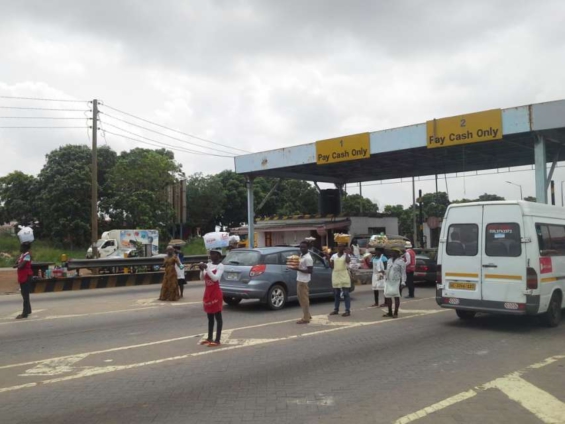
They explained that the toll booths cause traffic congestion and also pose health risks to commuters.
Addressing this challenge in parliament during the 2022 budget reading, Ken Ofori-Atta said, “Mr. Speaker, our roads need fixing. Our roads are being fixed. It is true that more roads have been fixed and are being fixed over the last five years than any relative period in the entire history of our nation. We even want to do a lot more and this budget will cater for this.
“That is why for decades, Government after Government imposed and maintained tolls on some public roads to raise funds for road construction and maintenance. This is the situation in many countries. However, over the years, the tolling points have become unhealthy market centres, led to heavy traffic on our roads, lengthened travel time from one place to another, and impacted negatively on productivity,” he said.
“The congestion generated at the tolling points, besides creating these inconveniences, also leads to pollution in and around those vicinities. To address these challenges, Government has abolished all tolls on public roads and bridges. This takes effect immediately the budget is approved (after appropriation or now?). The toll collection personnel will be reassigned. The expected impact on productivity and reduced environmental pollution will more than off-set the revenue forgone by removing the tolls,” he declared.