Tag: Robert Mugabe

  • Why animal farm continues to wow Zimbabweans

    Why animal farm continues to wow Zimbabweans

    The famous line from George Orwell’s satirical novel Animal Farm, “All animals are equal, but some animals are more equal than others,” has struck such a chord in Zimbabwe that novelist Petina Gappah translated it into the native Shona tongue.

    “There is something about the story that spoke so much to the reality of Zimbabwe,” the award-winning Zimbabwean writer and lawyer told the BBC about the book first published in 1945.

    It has long been a favourite in Zimbabwe in English – studied in some schools – and became a huge hit when it was serialised in a local newspaper around two decades ago, with readers blown away by its astute metaphor of a liberation struggle gone wrong.

    It is something Gappah and fellow translator, poet Tinashe Muchuri, decided to focus on with their slight twist of the title in Shona, opting for Chimurenga Chemhuka, meaning “Animal Revolution”.

    The word chimurenga is a reference to the liberation war fought during white-minority rule that led to Zimbabwe’s independence in 1980, bringing to power Robert Mugabe, who went on to lead the country for 37 years until he was overthrown in a coup.
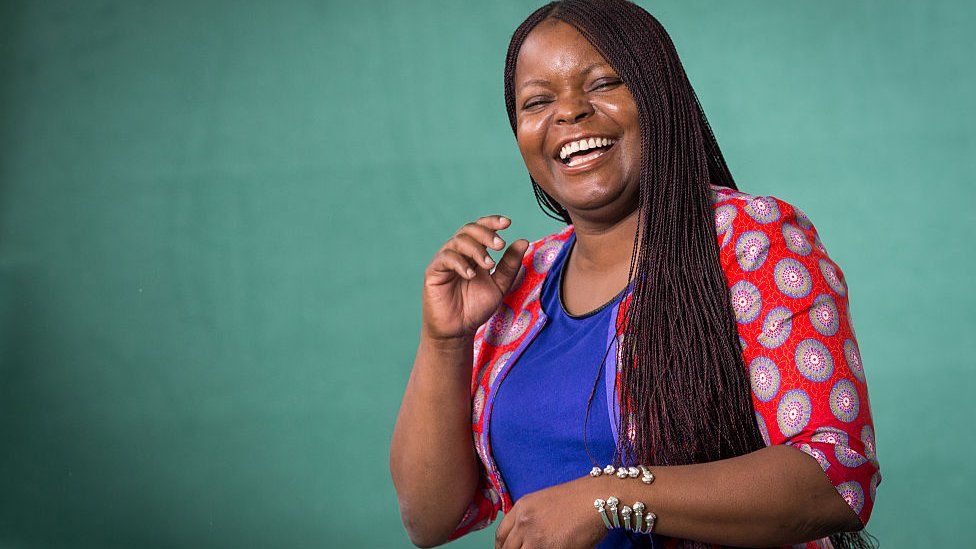
    Petina Gappah pictured in 2015
    Image caption,Petina Gappah says the Shona translation’s use of different dialects adds layers and humour to the story for Zimbabweans

    Through the Shona translation, Gappah said they had been able to bring added depth, meaning and humour for readers as their characters use the different Shona dialects spoken around Zimbabwe.

    “In the 1960s the language was standardised throughout the entire country,” Gappah told the BBC World Service.

    “So I’d be learning standard Shona at school but at home I’d be speaking Karanga because my family is Karanga.

    “What we thought we’d do with the book is have the narration in standard Shona but the animals all speak different dialects – almost as though they’re coming from all the four corners of Zimbabwe.”

    It allows the story to reflect the power struggles that have played out with the ruling Zanu-PF party, as Zimbabweans know that current President Emmerson Mnangagwa is Karanga, while Mugabe, his long-time ally turned rival, was from the Zezuru clan.

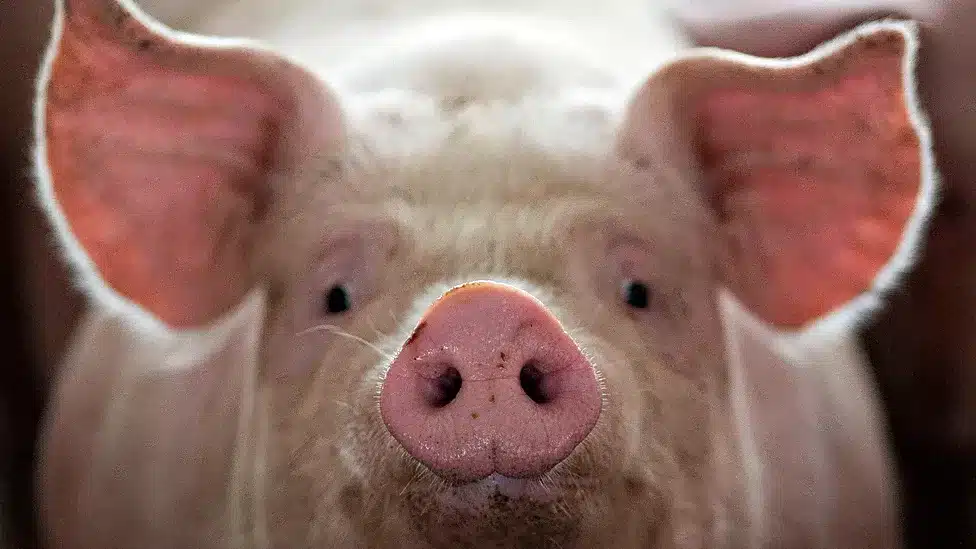
    The story is about farm animals rising up against their human owner to create a new and equal society, said to be an allegory of what happened under Communism in the Soviet Union.

    When journalist and editor Geoffrey Nyarota took the decision to serialise Animal Farm in 2000 in the Daily News, once Zimbabwe’s best-selling paper, he said many took Napoleon, the pig who gains power through intimidation and manipulation, to be Mugabe.

    “Animal Farm is a microcosm of political developments in post-independence Zimbabwe,” Nyarota told the BBC World Service in 2003, a few months before the Daily News was banned by the authorities and he was forced to go into exile for several years.
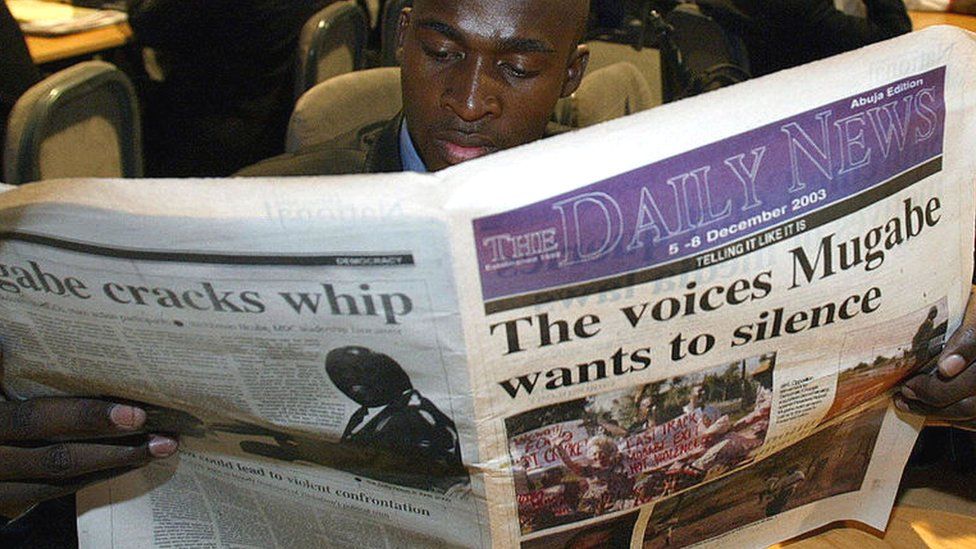
    Someone reading a special edition of The Daily News at the Commonwealth Summit in Abuja, Nigeria - December 2003
    Image caption,The Daily News was banned in 2003 under tough media laws – a special edition was brought out for a Commonwealth Summit later that year

    In the Zimbabwean context, Mr Jones, the former owner of the farm, represented colonialism while the vicious dogs who Napoleon secretly trains to later gain power, were Zanu-PF’s youth militia, he said.

    “The youth brigade… are removed from their families and put through courses of political indoctrination in some camps far out in the rural areas and then they are unleashed on an unsuspecting innocent public and they have caused much damage.”

    Voter intimidation and violence have marred several Zimbabwean elections – with the country gearing up for another poll in August and a renewed crackdown on opposition figures and government critics.

    The sheep – continually bleating the pigs’ propaganda slogans – Nyarota likened to Zanu-PF’s women’s league “whose existence seems to be for the sole purpose of singing praise songs of… the ruling party”.

    The pigs in Animal Farm start to act more and more like humans – living it up in the old farmer’s house, while the rest of the animals toil away, often cold, hungry and over-worked.

    Even with changing political events and the death of Mugabe in 2019, the parallels are ones that Zimbabweans still recognise as inflation soars once more and electricity is scarce, making life a daily struggle.
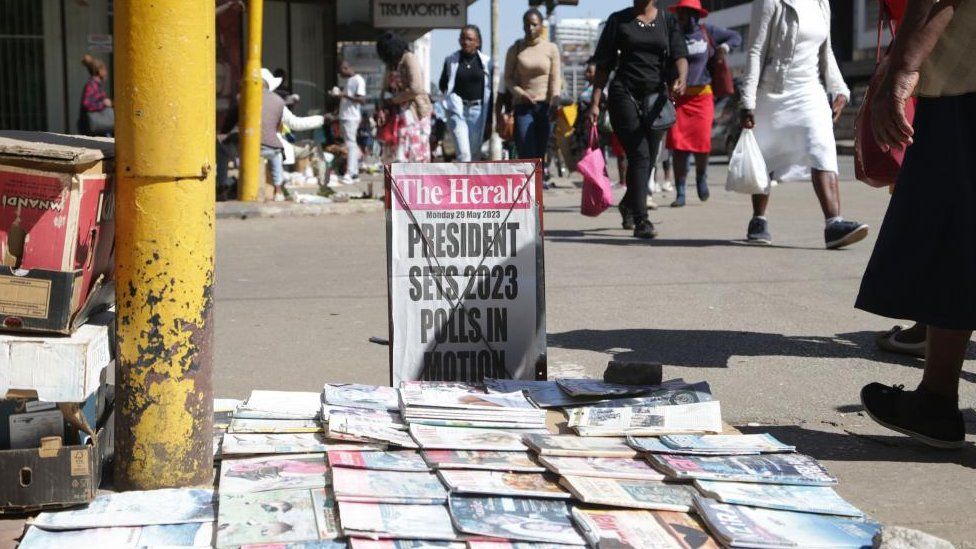
    A newspaper poster on the 2023 election is displayed on a busy street in Harare, Zimbabwe - 29 May 2023
    Image caption,Presidential elections have been set for 23 August

    The book has continued to inspire Nyarota, who penned his first novel last year, which he dubbed “truthful fiction” looking at “endemic corruption”.

    “Orwell was able to look into the future, as it were, and was able to forecast the future of our independent nations. Orwell’s future is the present that I now graphically seek to capture in The Honourable Minister,” he told the NewsDay website.

    But for Gappah, the Shona translation is less about political comment or resistance and more about making mischief and her love of languages.

    Her project began by chance in 2015 when she started to translate snippets of English literature into Shona to entertain her Facebook friends.

    “Then I thought to myself: ‘Why don’t I try a larger project?’ So I did the first page of Animal Farm and I invited friends on Facebook, writers and other people interested in language, to join me and it just ballooned from there.”

    It grew to such an extent that at one time around 20 people were involved “and it became really messy”, she said.

    It was whittled down to a core group and then eventually retranslated, overhauled and edited by Gappah and Muchiri.

    “But I’ll be grateful for that initial first group,” Gappah said.

    Their translating partnership with House of Books, a small Zimbabwean publisher, is set to continue with Things Fall Apart by Nigerian author Chinua Achebe – a seminal work that deals with the impact of colonialism in Africa – next on their list.

    “And at some point we’re going to tackle Shakespeare, because Julius Caesar, for example is a very Zimbabwean story,” said Gappah.

    The play, first performed in 1599, is about a group of conspirators who decide to assassinate a general, saying it is for the good of the state to prevent him from becoming a tyrant.


  • Zimbabwe and Ghana sign cooperation agreement to strengthen relations

    Zimbabwe and Ghana sign cooperation agreement to strengthen relations

    Ghana and Zimbabwe have signed a historic general cooperation agreement, paving way for a formal framework to enhance political and socio-economic relations between the two countries.

    The agreement was signed yesterday in Accra in the presence of Zimbabwean President Emmerson Dambudzo Mnangagwa. 

    The signing ceremony was attended by Finance and Economic Development Minister Professor Mthuli Ncube and Ghana’s Deputy Minister for Foreign Affairs, Kwaku Ampratwum Sarpong. 

    The event took place on the sidelines of the ongoing 30th Annual Meetings of the African Development Bank. The signing was also witnessed by Zimbabwe’s Ambassador to Ghana, Kufa Chinoza, and Ghana’s envoy to Harare, Ambassador Grant Ntrakwa.

    Following the signing ceremony, Deputy Minister Sarpong emphasized the historic nature of the event. He noted that although Zimbabwe and Ghana have maintained relations for over 60 years, no formal agreements have been in place to enhance cooperation until now.

    Deputy Minister Sarpong highlighted the significance of formalizing the relations between the two countries, allowing for a more focused approach to cooperation. Priority areas such as agriculture, tourism, and aviation will be explored for collaboration.

    He emphasized the need for diligent implementation to elevate the bilateral relations between Ghana and Zimbabwe.

    Ambassador Chinoza, speaking to the media after the signing ceremony, regarded the agreement as a crucial starting point. 

    He expressed the hope that it would eventually evolve into a comprehensive joint permanent and bi-national cooperation agreement.

    Ambassador Chinoza emphasized the importance of further enhancing cooperation between the two countries.

    The historical connection between Zimbabwe and Ghana traces back to their founding Presidents, Robert Mugabe and Kwame Nkrumah, both driven by the pan-Africanist ideology. The shared history includes Mugabe marrying in Nkrumah’s country.

    Zimbabwe has been actively seeking to strengthen cooperation with various countries as part of its Second Republic’s engagement and re-engagement initiative.

    This pursuit of collaboration comes after years of isolation resulting from sanctions imposed by the United States and the European Union, which aimed to isolate Zimbabwe from the international community due to its implementation of the Fast Track Land Reform program.

    The program aimed to rectify colonial injustices related to land ownership and ensure equitable access to land for indigenous Zimbabweans.

    President Mnangagwa returned to Zimbabwe following the signing ceremony, concluding his visit to Ghana.

  • Robert Mugabe family’s vast wealth exposed!

    Robert Mugabe family’s vast wealth exposed!

    The high-profile divorce case of the daughter of Zimbabwe’s late President, Bona Ouma Mugabe, has lead to the exposure of at least 21 commercial farms and vast tracts of land in the capital-Harare own by family.

    Mr Mugabe’s daughter filed for divorce against her husband of nine years – Mr Simbarashe Mutsahuni Chikore, in March.

    Mr Chikore claimed that the property he listed was just a drop in the ocean compared to what Ms Mugabe owned.

    “Defendant (Mr Chikore) is not claiming even a third thereof,” read Mr Chikore’s plea filed in response to his wife’s application for divorce at the High Court.

    “Defendant contributed to acquiring the properties through his savings from his former jobs as a pilot and the farming venture.”

    He said he contributed to the wealth through earning and donations from his father-in-law for work, jobs and special assignments done on behalf of the late Mr Mugabe.

    “There is much input through direct and indirect contribution wherein defendant contributed to the assets, both movable and immovable, acquired during the subsistence of the marriage,” Mr Chikore added.

    The couple tied the knot on March 1, 2014 in a lavish ceremony that was attended by several African heads of State and government.

    Their wedding was broadcast live by the country’s State broadcaster.

    According to court papers, the couple who have three children have been living apart for more than nine months.

    Ms Mugabe is demanding the custody of the children and is seeking maintenance of $2,700 monthly per child until they reach the age of 18.

    She wanted the court to delay dealing with the property issues arguing that it would delay the granting of the divorce decree.

    In his counter claim, Mr Chikore wants all properties acquired during the subsidence of their marriage or donated to them as a couple to be shared equally.

    Mr Mugabe died in September 2019, two years after he was toppled in a military coup.

    He ruled the southern African country with an iron fist for 37 years where he spearheaded a violent land reform programme with a “one household one farm” policy.

    Three years ago, a list filed in court by his daughter while seeking to register her father’s estate claimed Mr Mugabe only left $10 million held in a local bank, four houses in Harare, 10 cars, a farm, his rural home and orchard.

    A former minister in Mr Mugabe’s government Jonathan Moyo described the revelations about the wealth as “staggering.”

  • Zimbabwe blames Mugabe for the country’s severe energy crisis

    Zimbabwe’s ruling Zanu-PF party has blamed the country’s severe power outages on former long-time leader Robert Mugabe.

    Zimbabweans have been subjected to power outages lasting up to 18 hours per day for the past two weeks. The crisis worsened as a result of low water levels at the Kariba South power station.

    According to a Zanu-PF spokesman, the country is currently dealing with the consequences of the previous administration’s “neglect” to invest in power generation over the years.

    “The economic management of the last two decades of [President] Mugabe is retarding the speed of recovery; but you can’t doubt that there’s a recovery which is going on,” Chris Mutsvangwa told South African broadcaster eNCA.

    The party has been in power since 1980 when the country gained independence from Britain.

  • Team due to assess Zimbabwe Commonwealth readmission

    A Commonwealth team will arrive in Zimbabwe over the weekend to assess the country’s suitability for readmission to the group.

    Harare voluntarily withdrew from the body in 2003 after being suspended for breaching core values following human rights abuses under former leader Robert Mugabe.

    The visit comes as Zimbabwe’s opposition says there is renewed crackdown on its supporters.

    The week-long mission led by assistant secretary-general Luis Franceschi will assess the progress made on implementing political and economic reforms.

    It’s the third visit since Zimbabwe applied for readmission in 2018 – part of President Emmerson Mnangagwa’s re-engagement plan after years of isolation from the West.

    But there are growing claims of political persecution here.

    On Thursday, opposition MP Godfrey Sithole was freed on bail after five months in jail without trial for allegedly inciting violence.

    His co-accused, fellow MP Job Sikhala, remains behind bars on charges that rights groups describe as malicious.

    The Commonwealth team will meet members of government and the civil society and produce a report.

    Members of the Commonwealth will then come up with a position on Zimbabwe’s suitability for readmission.

    Source: BBC