Tag: Russian-Ukraine war

  • Shell signs deferral amendment of LNG delivery agreement with GNPC and Tema LNG company

    A change to the Commercial Agreements has been approved by a number of parties involved in the Tema LNG Project. This change effectively releases the national oil agreement from its earlier obligation to continue paying for regasified liquefied natural gas now, even if 2019 volume levels are significantly reduced.

    The most recent development, which will delay the delivery of LNG cargoes, gives Ghana enough time to establish the necessary infrastructure to meet the country’s high LNG demand while also expanding the regional downstream market in West Africa.
    The opportunity to specifically service businesses in West Africa exists at Tema LNG, the only multi-commercial LNG terminal in Sub-Saharan Africa.

    But, GNPC negotiated the original agreement in a way that the $450 million facility will eventually pass on to the GNPC at the end of the GSA.

    The parties to this groundbreaking agreement are the Ghana National Petroleum Corporation (GNPC) as the “Buyer”; Shell Energy Ghana Ltd (Shell) as the “Seller”; and Tema LNG Terminal Company (TLTC) as the “Operator”. The amendment to the Agreements is said to have been necessitated by a proposal by Shell to defer shipment of LNG. Experts believe the proposal is to manage the global supply-demand dynamics of LNG precipitated by the Russian – Ukraine war.

    By working collaboratively with Shell, GNPC has executed an amendment that ensures that there is no fiscal burden placed on the Government of Ghana by the Project in the near term while maintaining the option to receive liquefied natural gas (LNG) in the medium to long term, to bring significant advantage to the country and the region’s growing energy needs.

    In a recent brief on the Tema LNG Terminal case study, a team of CSOs including IMANI, ACEP and Tax Justice Network Africa among others alleged that despite multiple postponements and much PR, the Tema LNG terminal has failed to supply gas for use in Ghana. The brief says the consortium continues to insist however that the terminal is “operational” and that the take-or-pay arrangement remains valid. The CSOs say that unless the project is terminated, liabilities of up to $1.5 billion, could still manifest to the detriment of Ghana. This is being denied by GNPC.

    According to the CSOs, the Tema LNG project poses a major risk to the already strained finances of the GNPC. Some calculations by ACEP and IMANI suggest that the GNPC could be paying between $790 million and $1. 357 billion a year (based on average 2022 Brent crude prices) for gas the country doesn’t need. These fears are, however, not reflected in the structure of the amended contract.

    Even though it is free of any such obligation for now, GNPC stands to benefit from a portion of the fees in the regional business from Tema LNG. It has, therefore, expressed its willingness to continue working with the Operator, in the intervening period, to deliver solutions for the supply of LNG to customers in the region, to generate additional revenues to the Corporation.

    It says it continues to see the introduction of LNG into the gas supply mix as an important step to shoring up energy security and meeting Ghana’s growing demand for energy and as a way to lead West Africa in the drive towards a transition to cleaner fuels.

    A senior source in the national oil company has further explained circumstances that led to the GNPC and the other parties involved to amend the project agreement.

    According to the source Shell proposed to defer supply of LNG for regasification to a period of about two years after which it believes the country’s current precarious situation would have been normalized.

    “The proposal for amendment came from Shell that we look at deferring the supply for some period till things normalize then we resume activities. So it’s a mutual agreement cleverly executed, which we stand to benefit,” the source stated.

    The source further explained that there is an option for further deferral periods to be explored. It hinted that within the deferral period, the Tema LNG facility can still take advantage of any business opportunities outside Ghana.

    He said the project which is almost complete is not owned by the GNPC, as the terminal use agreement (TUA) that exists is between the Tema terminal facility and Shell, while the GNPC has a gas sales agreement with Shell.

    The source criticized the CSOs for their lack of proper understanding of the transactions and further explained that the terminal becomes an asset of Ghana at the end of the contract period. Basically Ghana takes over the terminal.

    “We don’t have a TUA per se, the agreement we have is to the extent that Ghana takes over the terminal and the terminal company requires permission of GNPC ( during contract period) for other third party businesses that the terminal wants to do,” the source said.

    It maintained the commercial arrangement to buy gas is between the GNPC and Shell with that serving as the basis for the construction of the Tema LNG facility. It says within the deferral period and afterwards GNPC will not prevent the Terminal from going ahead with other business transactions that will inure to its benefit as that will not amount to any breach of law or contract, but allowing the investors to recoup their investments currently estimated at nearly half a billion US dollars. The project is fully private sector funded.

    The national oil company says the terminal infrastructure provides a strategically important asset for energy security both locally and within the west Africa sub region for the benefit of all stakeholders.
  • Putin awards occupied cities ‘hero’ status

    Russian President Vladimir Putin has issued decrees bestowing the status “City of Military Glory” on two Russian-occupied Ukrainian cities – Melitopol and Mariupol.

    It is a status similar to the Soviet-era “Hero City”, which honoured certain cities’ roles in the USSR’s fight against Nazi Germany in World War Two. The status gave them certain privileges under communism, such as consumer goods in short supply elsewhere.

    Putin’s decrees say the new status honours “the courage, steadfastness and mass heroism displayed by the defenders of the cities in the fight for the freedom and independence of the fatherland”.

    It makes no mention of the current war in Ukraine, which Russia still calls a “special military operation”.

    Russian state news agency Ria says 45 Russian cities have the status of City of Military Glory.

    In September, Putin declared four occupied regions of Ukraine, including the cities of Melitopol and Mariupol, to be part of Russia. The claim was widely condemned. Russian shelling devastated Mariupol, killing thousands, before the city was captured.

    Putin has also given two smaller Russian-occupied Ukrainian cities – Luhansk and Horlivka – the status “City of Labour Valour”. It honours their hard industrial work during World War Two. He lists seven Russian cities alongside them.

    Source: BBC.com 

  • AGI urges businesses to employ innovative strategies to control economic hardships

    The Association of Ghana Industries (AGI) is asking industry participants to embrace creative solutions to overcome the difficulties facing their sectors.

    According to citibbusinessnews.com, their call comes as businesses are currently battling the nation’s economic problems.

    Greater Accra Regional Chairman of AGI, Dr. Tsonam Cleanse Akpeloo, stated during the Accra Regional Annual General Meeting of the Association that the Association can survive the current crisis provided members adhere to strategic concepts.

    “Since the beginning of the year, industries have gone through a lot of challenges as a result of the global crisis specif­ically the ravaging effect of the COVID-19 pandemic and the Russian-Ukraine war. This situa­tion has cascaded into economic and financial limitations with its attendant impact on businesses and trade,” he recounted.

    He also called on government to speed up interventions to sup­port industry players who have been badly hit by the crisis.

    “We are looking forward to government to take immediate steps to support industries to overcome some of these chal­lenges. We have consistently chosen the themes that reflect finances sources available for in­dustries post COVID-19 and we have not deviated this time.”

    “We will continue to push for alternative funding sources for industries especially for our SMEs. That notwithstanding we think if there is any dispen­sation that we need funding, it is now.”

    “This is the opportune time to help members find the ap­propriate funding for their busi­nesses. We are all concerned that our industries navigate through the economic crisis especially in the midst of the high cost of the dollar against the cedi and the multiplicity of taxes. We therefore are calling on all stakeholders present to come out with innovative ways to receive collateral free funds,” he added.

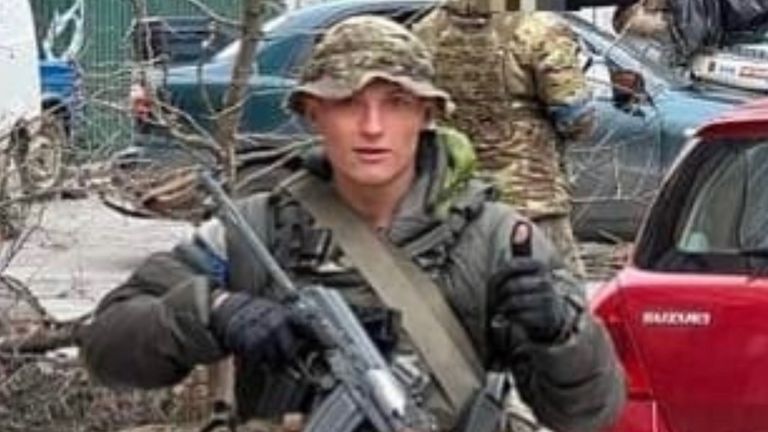
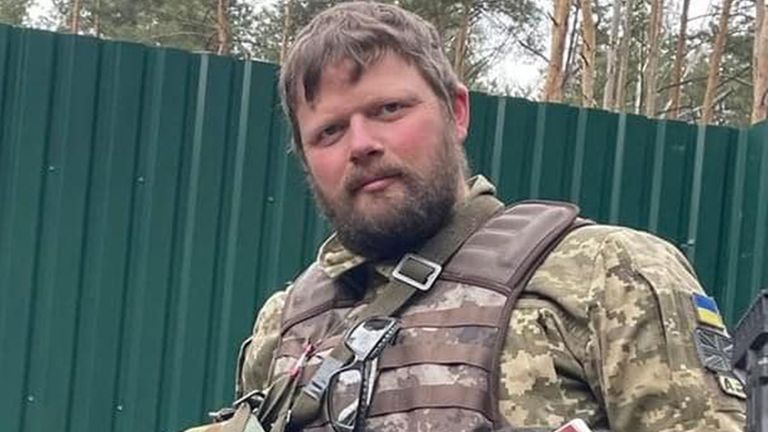
  • Russian-Ukraine war: British man dies fighting in Ukraine

    Simon Lingard’s family says, the Ukrainian military has offered to transport his body back to the UK. He is thought to be the third British national to be killed in Ukraine.

    “My Dad was an inspiration to all who knew him, a real life hero who died fighting for what he believed in,” they wrote on a fundraising page for him.

    “He was loved and adored by so many a true representation of what a soldier should be.

    “The Ukrainian Military have offered to bring him home to England but we need help to show him the respect and adoration he deserves by giving him THE greatest well deserved send off.”

    He is believed to be the third British national to die so far in the conflict.

    Jordan Gatley, 24, died in June after leaving the British Army in March. Scott Sibley, 36, died in late April, and was also a former member of the Armed Forces.

    A further five Britons were released from Russian detention in Ukraine after a successful prisoner swap in September.

    The Foreign and Commonwealth Office confirmed Shaun Pinner, Aiden Aslin, John Harding, Dylan Healy and Andrew Hill had arrived safely back on UK soil.

    Pic: Dean Gatley/Facebook
    Image:Jordan Gatley died in June. Pic: Dean Gatley/Facebook
    Scott Sibley
    Image:Scott Sibley was reported dead in late April

    Tributes to ‘warrior’ and ‘top bloke’

    Paying tribute to Mr Lingard on Facebook, friends described him as a “warrior” and a “real man”

    Another posted: “Ohh it’s with a very heavy heart I write this but Si Lingard you were a top bloke.”

    It comes after Russian troops announced they are withdrawing from the annexed region of Kherson.

    Defence Minister Sergei Shoigu ordered his troops to withdraw from the west bank of the Dnipro River in the face of Ukrainian attacks near the southwestern city of the same name.

    In televised comments, the general said it was no longer possible to supply Kherson city and proposed taking up defensive lines on the eastern bank of the river.

    It marks one of Russia’s most significant retreats and a potential turning point in the war, now nearing the end of its ninth month.

    Kherson was annexed along with three other regions – Luhansk, Donetsk and Zaporizhzhia – in September.

    Sky News has contacted the Foreign and Commonwealth Office for further comment.

  • Mining companies charged to pay attention to building local capacities

    The Minister of Lands and Natural Resources has urged mining businesses to build up regional capabilities throughout the mining industry value chain.

    The Government views this as crucial, according to Hon. Samuel Abu Jinapor, who spoke at the 5th National Conference of the Ghana Chamber of Mines on Human Resource Management in the Mining Industry. The Minerals and Mining Act (Local Content and Local Participation) Regulations, 2020 (L.I. 2431) was enacted to, among other things, develop local capacities in the mining sector through education, skills transfer, and expertise development, transfer of technology, and development.

    He, therefore, charged Mining companies to take the localisation programme very seriously and ensure strict compliance to ensure that we build adequate capacity across the value chain.

    The theme for the 2-day conference was “Transforming people management for the sustainable mining industry in Ghana”. This the Minister of Lands and Natural Resources, who is also a Member of Parliament for Damango, said is in sync with the Chamber’s mission statement, to use “resources and capabilities of its members to deliver services to government and community needs to enhance sustainable development.”

    He again reminded that the mining industry is associated with many risks; hence motivation and fair treatment is key for the workforce, who he said constitute the backbone of the success of mining companies.

    He added that for the workers to give out their best, it is important for Human Resource Departments to work closely with workers’ unions to build consensus and strive towards organisational objectives together.

    Chamber of mines must play active role in the fight against illegal mining

    Hon. Abu Jinapor seized the opportunity to admonish the Chamber of Mines to play a more active role in the fight against illegal mining. He further stated that Government is taking all the necessary measures to come to grips with the menace.

    “Apart from its negative environmental impacts, illegal mining also affects your operations and your employees. The occasional clashes between illegal miners and your employees will be a thing of the past if we join hands together to deal with illegal mining and develop our mining communities”.

    Chamber of mines takes steps to support human capital dev’t – Dr. Koney

    The Chief Executive officer of the Ghana Chamber of Mines, Dr. Suleiman Koney, on his part, revealed that the Chamber had taken steps to support the human capital development of the mining industry.

    He said the Chamber has handed over 804,000 dollars research grant to 6 faculty members and five postgraduate students at the George Grant University of Mines and Technology at Tarkwa to conduct research into the mining industry.

    He said this was the second tranche of support to the University with a total of 1.3 million Ghana cedis grants dedicated to research the mining industry.

    Dr. Koney further emphasised that the mining industry can only be productive and sustainable with a conference of research as well as attraction, retention, and nurturing of talents with the right skills.

    Radical rethink needed to attract, retain and nurture talents in the mining sector – Eric Asubonteng

    The immediate past President of the Ghana Chamber of Mines and the current Managing Director of Anglogold Ashanti, Eric Asubonteng, has called for a radical rethink of the mining sector’s approach to attracting, retaining, and nurturing talents in the industry.

    He said the effects of COVID-19 and the Russian- Ukraine war have impacted the mining sector’s supply chain; hence mining sector players need to be proactive in their strategies and strengthen the employee’s value chain proposition.

    Citing the EY report on the top 10 risks in 2023 for the mining and metal industries, he said it was identified that the current talent shortage in the industry is the worst as skills and experienced ones retire and resign.

    Replacing them, he added, requires a critical rethink on the attraction, retention, and nurturing of talents.

  • Take advantage of current crises to tap country’s potential – German Ambassador

    The current issues and challenges the nation is facing must be used by the government and the investor community to tap into promising regions and industries, according to Daniel Krull, the German ambassador to Ghana.

    In his opinion, the success of the nation’s recovery depends on identifying potential areas, investing in them, and utilizing them.

    “The situation in Ghana has been altered by external causes. The COVID-19 outbreak and the conflict between Russia and Ukraine have hurt the energy sector.
    The laws governing interest rates have also had an impact on Ghana’s capacity to repay its debt.

    “There are crises internally and externally, but I would like to express optimism. There are always chances in times of crisis, and I would encourage Ghanaian partners not to only look at the dark side but also look on the promising part,” he said.

    “The Russian-Ukraine war has caused enormous trouble in the energy supply for Europe, and has forced it to redesign its energy matrix at a much faster rate than was planned.

    “One main element of the new energy matrix for the European industry sector will be related to hydrogen power – and this brings me to Ghana, where there is huge potentials of untapped renewable energy sources, enormous hydropower sources – and all these could be harnessed,” he added.

    He revealed that his outfit is putting together a group of interested investors and linking them with possible off-takers in Europe, in the hope of having a private sector-driven process in the field.

    He added that given the soaring price and shortage of fertiliser, it opens opportunities for local producers – thus encouraging Ghanaian investors and companies to look into that possibility.

    “There are also complaints about the rising cost of imports, so I think it is time to look for import substitution and how the country can increase the amount of locally-produced products, especially in the field of agriculture and food processing. There are a lot of discussions going on regarding the possibility European industry might diversify resources. This again must open opportunities for Ghana and its industries,” he indicated.

    He revealed that there is an upcoming joint economic commission slated to take place in Accra this month.

    AfCFTA

    The Ambassador is confident the country can thrive under The African Continental Free Trade Area (AfCFTA) if it ensures a trained workforce and maintains quality products.

    The World Bank has said AfCFTA presents an opportunity for member-countries to reduce poverty, broaden economic inclusion and boost growth, despite the possible initial challenges of implementation.

    Full implementation of the agreement, according to the Bank, will boost regional income by 7 percent to US$450billion; lift 30 million people out of extreme poverty, and another 70 million people from moderate poverty.

    It is anticipated that the trade bloc will further spur wage gains for women by 10.5 percent compared to 9.9 percent for men, while making African countries more competitive – a situation that will propel innovation and growth.


  • UN Security meeting: Sergei Lavrov walks out after speech

    After giving his speech, Sergei Lavrov, the foreign minister of Russia, left the UN Security Council meeting.

    He began by saying: “There is an attempt today to impose on us a completely different narrative, about Russian aggression as the origin of all the tragedy”.

    He continued by talking about the historical relationship between Ukraine and Russia and described Ukraine as “totalitarian”.

    He added that he is “concerned about the fate of Russian soldiers taken prisoners by Ukraine”.

    Mr Lavrov said he has “no confidence” in the work of the International Criminal Court.

  • Every bullet, bomb that hits a target in Ukraine hits our pockets – Akufo-Addo tells UN

    The effects of the Russia-Ukraine conflict on the world economy, particularly for African nations, have been emphasized once more by President Nana Addo Dankwa Akufo-Addo.
    According to the President, the conflict, which broke out in February 2022, made an already bad position even worse for African economies, which were just beginning to recover from the COVID-19 pandemic’s consequences.

    Akufo-Addo said the war had direct impact on Africa especially in the area of food supply triggering importantly, inflation.

    “Two years ago, our world came to a thundering halt, as we cowered from a health pandemic from an unknown, malicious virus, coupled with a devastating global economic pandemic. High budget deficits were no longer concerns of only developing nations.

    “By 2021, COVID-19 had pushed Africa into the worst recession for half a century. A slump in productivity and revenues, increased pressures on spending and spiralling public debts confronted us without relent,” he submitted.

    On the specific case of the Russian invasion, even though Moscow insists it was a military operation, Akufo-Addo stated: “As we grappled with these economic challenges, Russia’s invasion of Ukraine burst upon us, aggravating an already difficult situation.

    “It is not just the dismay that we feel at seeing such deliberate devastation of cities and towns in Europe in the year 2022, we are feeling this war directly in our lives in Africa.

    “Every bullet, every bomb, every shell that hits a target in Ukraine, hits our pockets and our economies in Africa. The economic turmoil is global with inflation as the number one enemy this year,” he added.


    Government has routinely explained that recent economic headwinds are attributable largely to the ravages of the COVID-19 pandemic, the ongoing Russia-Ukraine war and the banking sector clean-up.

    The rippling effect has been an increase in the cost of living, record high inflation rates and downgrades of the economy by rating agencies such as S&P and Fitch – a situation which has dealt a heavy blow to government’s ability to access the international capital market.

    The Cedi has also been on a free fall compelling the Bank of Ghana to resort to hiking its monetary policy rate to deal with the situation.

    The worsening economic situation compelled the government in July to initiate contact with International Monetary Fund for an economic support programme.

    Ghana is targeting an amount of US$3 billion over three years from the Fund once an agreement on a programme is reached.

    Government hopes to complete negotiations by end of the year in order to receive the funds in the first quarter of next year.


  • War in Ukraine: Biden says ‘chosen by one man’

    US President Joe Biden has termed the war in Ukraine as a war “chosen by one man”.

    Speaking at the UN General Assembly, he said Russia has made “irresponsible nuclear threats” and that “a nuclear war cannot be won and can never be fought”.

    His comments come just hours after Vladimir Putin warned the West he was not bluffing about the potential use of nuclear weapons.

    Mr Biden said Russia has “attempted to erase a sovereign state from the map”, adding that the war is about “extinguishing Ukraine’s right to exist as a state, plain and simple”.

    “Wherever you are, that should make your blood run cold.”

    Taking aim at Russia, Joe Biden said he wants the war to end on “just terms”.

    He added that he rejects the use of “violence and war to conquer nations and expand borders”.

  • The country would change if the banking system was more specialized – Economist

    According to economist Reverend Dr. Samuel Worlanyo Mensah, Ghana needs additional specialist banks to advance the country’s development objectives.

    The majority of local businesses and entrepreneurs rely on banks for beginning capital and other forms of financial support, according to Rev. Dr. Mensah, the executive director of the Centre for Greater Impact Africa, which highlights the need for specialist banks to help various industries.

    He also urged the government to take more measures to support industrialization and productivity by fostering an atmosphere that will allow the local population to flourish and be competitive on the world market.

    Rev. Dr. Mensah stated at the Ghana News Agency Tema Regional Office’s Industrial News Hub Boardroom Dialogue platform.

    The GNA Tema Industrial News Hub Boardroom Dialogue is a media think-tank platform for state and non-state and commercial and business operators to communicate to the world and address global issues with Ghanaian expertise.

    Rev. Dr. Mensah lamented that most banks in the country were running the normal universal banking activities, and most were not ready to help local entrepreneurs to stand on their feet.

    He again said most of the small businesses have been left stranded because financial institutions that supported them had been dissolved.

    He said the lack of a strong national development plan module to develop the country contributed to the economic crisis the nation is experiencing recently despite COVID-19 and the touted Russian-Ukraine war.

    He said the government must plan in a way that, in the next ten to 15 years, it would raise solid entrepreneurs who could support the economy, reiterated that the banking and financial sector cleaning exercise was laudable at that time it was undertaken but unfortunately COVID-19 pandemic had revealed that the decision was not economically motivated.

    Mr Francis Ameyibor, Tema Regional Manager of Ghana News Agency reiterated that the media landscape is going through rapid transformation, and the old system of institutions organizing face-to-face seat-in events at a big conference hall is passing away.

    He said, “from now onwards don’t expect more invitations to seat-in events, newsroom managers must adopt new means for news gathering, and dissemination.”

    Mr Ameyibor said: “Due to global communication and information transformation, state and non-state institutions that used to organize conferences, meetings, seminars and invite journalists to cover are rapidly resorting to the use of Zoom, Skype, and other web-based platforms for meetings.

    “Now web-based meetings have come to stay and the old system of organizing a big conference is dead and gone, media practitioners should not be looking for event focus assignment again.”

    Mr Ameyibor said GNA-Tema has moved ahead to set up parameters to engage strategic stakeholders consistently to prepare the ground to be more active and profitable to society.

  • Russian-Ukraine war: EU proposes to regulate Russian gas prices

    The EU is preparing its own kind of response after Russia shut down the main Nord Stream 1 pipeline a few days ago, but it acknowledges that consumers and businesses are already paying “astronomical rates.”

    A new confrontation between the European Union and Russia over gas supplies appears to be imminent.

    The bloc has revealed plans for a price cap on Russian gas imports in retaliation for the war in Ukraine and measures to help member states cope with the energy squeeze.

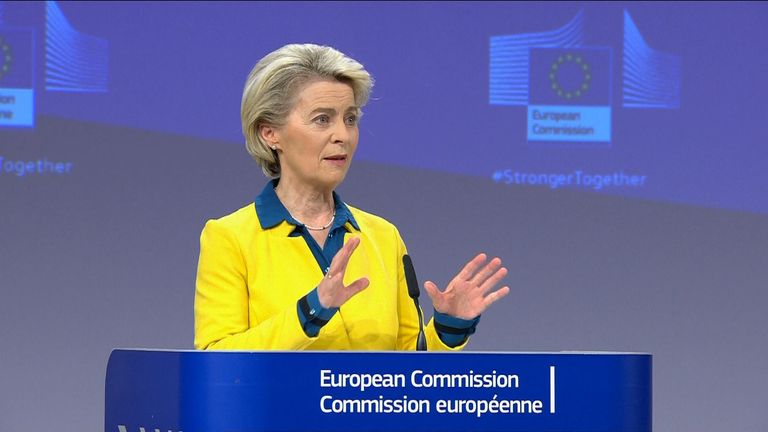
    Ursula von der Leyen, the president of the European Commission, laid out five proposals on Wednesday, hours after Russia’s leader threatened to turn off the taps to any Western nations moving to impose price caps on his country’s energy.

    She said Russia had become an “unreliable supplier” after state-run Gazprom’s decision to turn off the taps on the major Nord Stream 1 pipeline indefinitely last week, adding that the EU’s reliance on Russian gas had fallen significantly since the invasion and stocks were back at 82% across the bloc.

    One of the other measures however betrayed the perilous position the bloc continues to face ahead of winter.

    She also planned a cap on the revenue of non-gas fuelled generators – bolstered by record raw energy costs – to re-channel their “unexpected profits” into measures that support households and companies.

    Ursula Von Der Leyen
    Image: Ursula von der Leyen said consumers across the EU were facing ‘astronomic’ bills

    A windfall tax on fossil fuel firms was also on the cards, she said, along with aid for utility providers struggling under the weight of wholesale prices.

    The plans, which will have to be agreed upon by member states, may face opposition.

    Some EU countries are wary of capping Russian gas prices in case that costs them the dwindling supply they still receive from Moscow.

    It follows confirmation that the UK is planning to bring down its own energy bills through a taxpayer-funded bailout. The details are expected this week.

    Ms Von der Leyen explained that the planned cap on wholesale prices from Russia was now possible after the bloc had eased its reliance on Russian energy.

    “We have increased our preparedness and weakened Russia’s grip on our energy supply through demand reduction – which allowed our common storage to be at 82%,” she said.

    “Through diversification, we have increased deliveries of LNG or pipeline gas from the US, Norway, Algeria, Azerbaijan, and others. For example, Norway is now delivering more gas to the EU than Russia.”

    The UK has also been pumping record volumes to the EU via interconnectors for months as part of EU efforts to bolster storage.

    Ms Von der Leyen said Russian gas accounted for 9% of imports, down from 40% in February before the invasion of Ukraine.

  • Zaporizhzhia nuclear workers: Russians are holding us at gunpoint

    Russian troops are using the captured Zaporizhzhia nuclear power station as a military camp, and employees there have told the BBC that they are being held at gunpoint.

    Since early March, occupying forces have been in control of the location, the largest nuclear power plant in Europe. Ukrainian technicians continue to run it, nevertheless.

    Moscow has recently been accused of using the plant “as a shield” while its troops launch rockets from there towards nearby locations.

    And on Thursday, more shelling was reported – and the head of the UN issued a new warning about fighting near the nuclear site “leading to disaster”.

    Now two workers have told the BBC about the daily threat of kidnap, as well as their fears of either “radioactive contamination of the wider region” or a nuclear catastrophe.

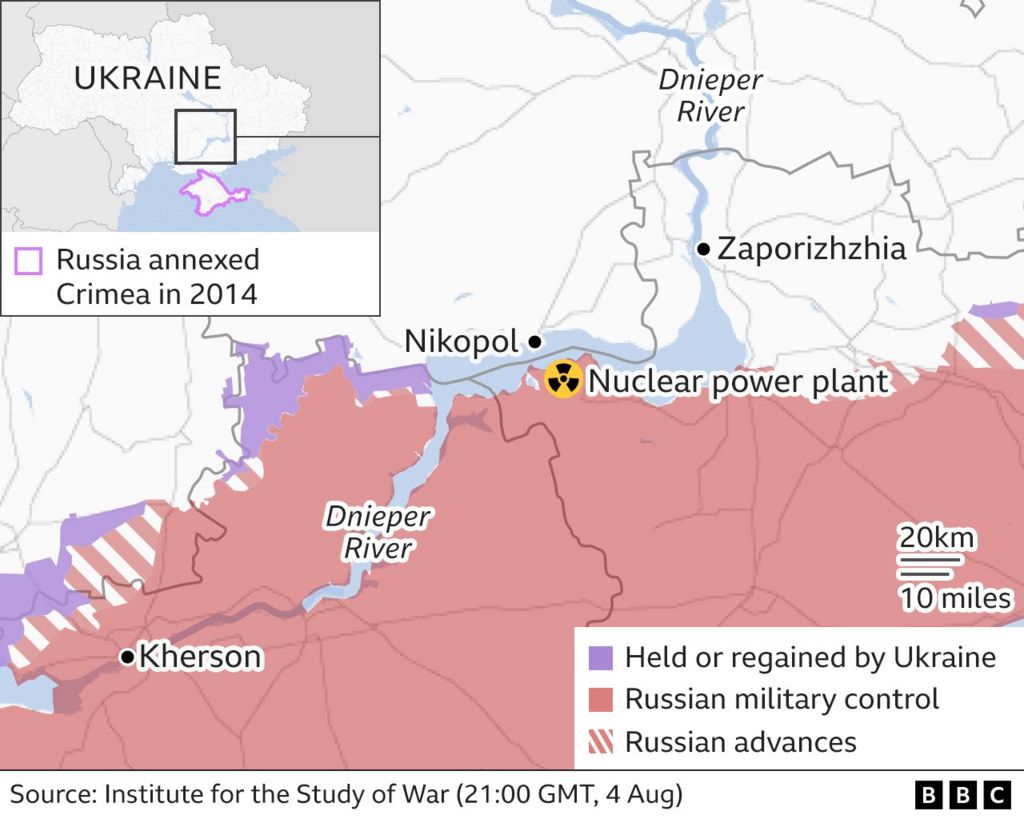
    The southern city of Nikopol is one of the most dangerous vantage points in Ukraine.

    On the banks of the Dnipro River, it’s possible to see the Zaporizhzhia nuclear power plant 10 miles across the water.

    It’s a place that has seen heavy shelling over the past couple of weeks, with up to 120 rockets being reported in a single night.

    They come from the direction of Enerhodar, the city where the plant is situated.

    In turn, Enerhodar – and the power station – have also come under heavy fire.

    The UN’s nuclear watchdog claims there’s a “real risk of nuclear disaster” unless the fighting stops and inspectors are allowed access.

    Ukraine and Russia blame each other. The picture is murky, but the risks are crystal clear.

    “My working day is a constant stress,” says Svitlana, who’s contacting us over text.

    She and fellow worker Mykola can only use Russian Sim cards now and the signal is very limited. We’re not using their real names for their safety.

    “I can’t work like I used to,” says Svitlana. “The last week I haven’t even been able to come to my workplace – it’s dangerous.

    On Saturday, there was the shelling of the nitrogen-oxygen station, which caused a fire. By some miracle, the people working there survived.”

    Another Enerhodar resident tells us that shop and pharmacy prices are now four times higher than in the territory that Ukraine still controls, as well as there is a shortage of doctors. Most ATMs are closed, too.

    Svitlana has worked at the plant for many years and says shells have been landing close to it every day.

    “The psychological situation is difficult,” she adds. “Soldiers are walking everywhere with weapons and everyone is actually kept at gunpoint.”

    Russia is accused of basing about 500 soldiers there. Recent footage has shown military vehicles being driven inside, and Svitlana is in no doubt it’s being used as a base.

    “Every day they drive back and forth in their military vehicles,” she says.

    “They positioned their military equipment right at the station buildings, to make it impossible for Ukrainian armed forces to strike.”

    A text comes in from Mykola: “The staff is now hostages of the Russians,” it reads.

    “They turned off the internet, left only landline phones, and food is available only in one single dining room. They turned the others into their bases.”

    Ukraine is concerned Russia has started shelling the area it occupies to try to create a false narrative, such as: “Ukraine is attacking you – so better vote to join Russia so we can take root and protect you.”

    Moscow-installed politicians for the Zaporizhzhia region have just signed an order for a referendum to be held soon. Russia has staged sham votes in the past, such as with Crimea, which it annexed in 2014.

    Mykola continues: “Access to all roofs is prohibited, they made their observation points there. The training building also became their barracks.

    “Now, more and more often, staff are kidnapped just when leaving the shift at the security gate.”

    It’s not known why the kidnapping takes place – but residents paint a picture of intimidation as Russians look to lay down law.

    Svitlana and Mykola also describe
    by the Russians – but they say the staff is still able to monitor the reactor properly.

  • Russian-Ukraine war : Seven Russian warplanes destroyed in Crimea blast

    According to recent satellite photographs, at least seven Russian warplanes were destroyed on Tuesday after explosions shook and claimed Crimea. According to CNN research, this may have been Moscow’s largest loss of combat aircraft in a single day since World War II.

    The destroyed warplanes appear to be Su-24 bombers and Su-30 multirole fighter jets, said Peter Layton, a fellow at the Griffith Asia Institute and a former Australian Air Force pilot, who examined Planet Lab satellite photos showing the Saki Air Base before and after the explosions.
    Two more warplanes appear to have been damaged, Layton said. On Wednesday, the Ukrainian armed forces added nine aircraft to the tally of Russian military hardware they say has been destroyed since the Russian invasion of Ukraine began in February.
    A satellite image from August 10, after the explosion, shows the charred remains of at least seven aircraft in the earthen berms.
    The Ukrainian Ministry of Defense said it could not determine the cause of the explosions at the air base, which lies 225 kilometers (140 miles) behind the Russian front line, according to the Institute for the Study of War think tank.
    The Russian Ministry of Defense said the blasts were caused by aviation ammunition — but did not say how it had been detonated.
    Video on social media, verified and geolocated by CNN as being from the air base, shows smoke rising from the base before it is rocked by three large, fiery explosions that send black mushroom clouds into the sky. Two of the explosions happen almost simultaneously and a third occurs shortly thereafter.
    The satellite photos also show ​the explosions burned a swath of vegetation around a portion of the air base.

    ‘Explosive propagation’

    Layton said the satellite images point to a deliberate attack, rather than an accident, due to the presence of three large craters.
    Whatever caused the craters could have caused other Russian munitions to explode, Layton said.
    “If one bomb explodes, it can send high speed, very hot fragments into any adjacent bombs and detonate them. This is called explosive propagation,” Layton said. “In the image of the Russian air base, you can see three explosion sources. These set off adjacent aircraft that it seems had bombs on them. The explosion propagated.”

    In the trenches: See Ukrainians holding the line against Russia

    Russian munitions are not engineered to avoid such chain-reaction explosions, Layton added.
    He noted that the type of destruction at the air base is reminiscent of what led to the sinking of the Russian Navy cruiser Moskva earlier in the Ukraine war.
    “The Moskva also had an internal explosion when warheads in the anti-ship cruise missiles on board self-detonated,” Layton said. “This was the explosive fill burning to an explosion.
    “Russian weapons are less safe than Western weapons in terms of the sensitivity of the explosive fill of the warheads. This is at least due to most weapons being old ex-Soviet stocks and so old technology,” he said.
    The Planet Labs photos show that other aircraft not destroyed but possibly damaged by the explosions had been moved away from the area where the blasts occurred.
    The detonations also caused damage in a nearby town, where windows in some buildings were blown out, according to Russian state news agency TASS. Some high-rise buildings lost power, while shops and a cultural center were damaged, TASS reported.
    Russian warplanes
    Four helicopters and a four-engine plane appear to have left the air base in the past 24 hours, the satellite images taken before and after the attack appear to show.

    Zelensky’s Crimea vow

    Since 2014, the Saki Air Base has been home to a Russian naval aviation regiment, part of Russia’s Black Sea Fleet, according to the state-run RIA-Novosti news service.
    Russia annexed Crimea from Ukraine in 2014, after Russian President Vladimir Putin sent military forces into what was then an autonomous region of southern Ukraine with strong Russian loyalties.
    Thousands of Russian-speaking troops wearing unmarked uniforms poured into the peninsula in early March that year. Two weeks later, Russia completed its annexation of Crimea in a referendum slammed by Ukraine and most of the world as illegitimate.
  • Visible and hidden trauma: Ukraine children’s scars skin deeper

    Serhii Sorokopud a fourteen-year-old  Ukrainian teenager is still tormented by what happened when Russian tanks rolled into his village five months ago.

    The deep scars across his back are a reminder of trauma both hidden and visible.

    Russian troops set up a military camp in the small farming community of Yahidne, northeast of the capital Kyiv, on March 3, on their advance toward the capital.
    Serhii and his family were taken captive with hundreds of others in the basement of his school.
    Ten days later, as he stood in line for food in the playground, there was an explosion and he was struck by shrapnel.
    “First, there was a strong blow to the back. I fell, couldn’t get up, couldn’t move,” he told CNN on Thursday, showing the spot behind his school where he was hit. “People ran over and lifted me up. I couldn’t even walk. There was a lot of blood.”
    The next day, the teenager was taken by Russian troops in a helicopter across the border to Belarus for treatment alongside their wounded soldiers.
    Photos of his injuries, shared with CNN, show a deep laceration to his shoulder. A medical report from the Gomel Regional Children’s Clinical Hospital, where he was treated, said he suffered an open fracture of the shoulder blade, fractured ribs, and a deep bruising of his right lung.

    Serhii sustained injuries after being struck with shrapnel last March.

    Over the next month, Serhii had no contact with his family and underwent major surgery twice.
    His mother, Svitlana Sorokopud, said Russian troops in Yahidne took all the residents’ cell phones and, cut off from the outside world, she had no way to find out where her son had gone.
    “It cannot be described in words when you don’t know where your child is,” she said. “I cried day and night. He had such a serious injury, and I did not know where he was.”
    It wasn’t just physical injuries that beset her son, but the agony of being separated from his family, she said.
    “In the beginning, he couldn’t even sleep there, and he had nightmares. He was worried that we would not pick him up.”
    Serhii made contact with his parents only after the Russians started their retreat on March 30, and his family was able to buy a new cell phone and access the internet again.
    They say that a Belarusian doctor had posted Serhii’s name, date of birth and hometown on social media. “Parents, perhaps, [are] in Yahidne,” the post read.
    “Please spread the word so they know the boy is alive.”
    When they found out where he was, Svitlana said they spoke on the phone every day for around a month, assuring him they were coming.
    His 25-year-old sister crossed the border to Poland and then to Belarus at the beginning of May to get him.
    Now, in Yahidne, there are burned-out homes on every street.
    Outside the house where Serhii and his family now live, his 9-year-old brother and young nephew pretend to operate a checkpoint. The specter of a new Russian offensive in northern Ukraine is never far from their minds.
    “There is no fear now,” Serhii said. “But sometimes I wonder what will happen if they come back, and what they will do.”

    Serhii's mother Svitlana was devastated when her son was separated from the family.

    As the war stretches into its sixth month, the impact on Ukraine’s children is evident in the grim tally of young lives cut short.
    On a new Ukrainian government webpage, “Children of War,” the toll ticks up against the backdrop of a black screen: 361 dead and 703 wounded at the last count.
    Yet the impact is not just physical, but psychological, Daria Gerasimchuk, the Ukrainian president’s commissioner for children’s rights, said.
    “Absolutely every Ukrainian child is affected … Every child has heard air raid warnings.
    Children see the suffering of their relatives and friends.
    Children are forced to say goodbye to parents who go to defend the country on the front line.
    There are those who are still under occupation.
    Those who are injured. In other words, absolutely every Ukrainian child has got quite serious psychological and physical injuries,” Gerasimchuk said in an interview with CNN last week.
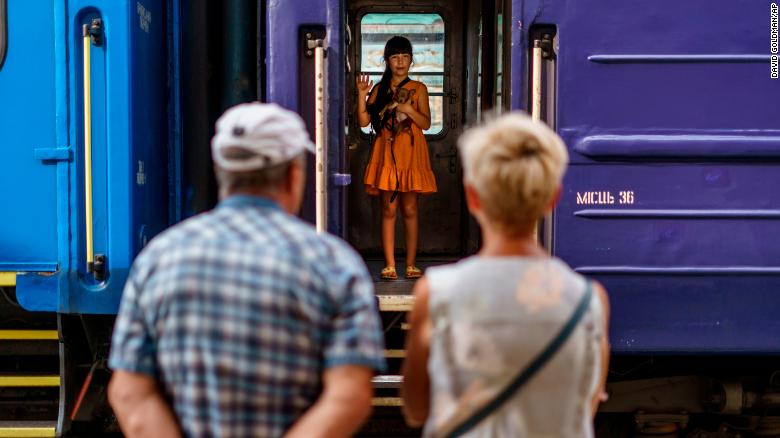
    Most Ukrainian children have fled the front lines and nearly two-thirds have been displaced, either inside the country or across borders as refugees, according to UNICEF in June.
    That same month, Ukrainian President Volodymyr Zelensky said: “Russia is stealing the childhood of our children, it wants to destroy our future.”
    Human Rights Watch has said that Russia’s invasion “instantly suspended the education of 5.7 million children between the ages of 3 and 17, many of whom had already missed out on months of education due to deadly attacks on schools in eastern Ukraine, or Covid-19 school closures.
    ” Many schools in Ukraine have resumed classes, according to the World Bank, but these take place almost entirely online.

    The deep scars on Serhii’s back are a permanent reminder of his survival.

    While something resembling normal life returns to the streets of Kyiv, Jenya Nikitina — a bashful 7-year-old — knows this uneasy calm can be shattered in an instant. She was asleep when multiple Russian missiles hit the capital’s western district of Shevchenkivskyi on the morning of June 26, striking her family’s apartment block. Her father, Oleksii, was killed. Jenya and her mother, Katerina Volkova, a 35-year-old Russian citizen, were trapped for hours.
    Her mother remembers the moment she heard Jenya call out, confirming she was still alive.
    “There was no happiness [at] this moment I was able to hear her,” she told CNN, sitting beside her daughter outside a school gymnasium in Chokolivka district in Kyiv ahead of Jenya’s Saturday morning gymnastics class. “It was even more awful because I was thinking [that] she was also in pain … I was telling her, ‘Someone will come.’ Was I believing in this? That is another question.”
    Jenya, who was trapped for a few hours, had a concussion and multiple abrasions. Her mother, trapped for five hours, sustained burns, deep cuts, and a fracture.
    Weeks later, it’s her daughter’s psychological scars that worry Katerina the most. Asked if it’s possible for a child to understand what has happened, her voice breaks.
    “I’m not sure we adults emotionally understand what is happening.”

    Katerina Volkova and her 7-year-old daughter Jenya.

    In case the sirens start again, Jenya’s gymnastics classes are the only time they are separated. Leaping and bounding on the mat is a chance to heal and, for a brief time, forget.
    Katerina is worried that fear is now too familiar for her daughter.
    “It [her childhood] was taken … in the future there will be joyful moments and lots of parents are trying, still, to make these moments for them,” she said, adding that children have experienced “too much.”
    Katerina added that she “couldn’t have imagined” that her daughter would grow up in an environment where she could identify the sounds of sirens, rockets, and gunfire.
    “It’s not what you expect your child will learn at the age of seven.”
    “The most horrifying thing is that [children] think it’s normal already. They talk about it like it’s their daily life.”
  • Zaporizhzhia: Ukraine blames partial damage of nuclear plant on Russian rockets

    Ukraine’s nuclear agency says Russian rockets have damaged part of a giant Russian-controlled nuclear power plant, but there has been no radiation leak.

    Enerhoatom said a nitrogen-oxygen unit and a high-voltage power line had been damaged at the Zaporizhzhia plant – Europe’s largest – in southern Ukraine.

    Local Russian-appointed officials blamed Ukraine for shelling earlier.

    Ukraine also accuses Russian forces of firing rockets at civilian areas from the site, employing “terror tactics”.

    “Every morning we wake up and see that they have hit only residential homes,” a local businessman told the BBC.

    The BBC was unable to verify the reported damage at the nuclear plant. Enerhoatom says there were two rounds of Russian rocket fire on Friday, which prompted the site’s operators to disconnect a reactor from the power grid.

    Enerhoatom said, “there is a risk of hydrogen leakage and dispersal of radioactive particles”.

    “The fire danger is high. Currently, there are no injuries,” it added.

    Russia seized the Zaporizhzhia plant in March but kept its Ukrainian employees. Russia controls the plant and surrounding areas, close to Ukrainian-held territory. It consists of six pressurized water reactors and stores radioactive waste.

    Western officials have sounded the alarm about Russia’s tactics there.

    The plant is in the city of Enerhodar, in southeast of Ukraine along the left bank of the River Dnieper (Dnipro in Ukrainian).

    The Russian-appointed officials in Enerhodar said Ukrainian forces shelled the plant twice on Friday “from the opposite bank of the Dnieper”. “The second time the nationalists managed to hit the target – shells landed in the plant’s industrial site,” their statement said.

    The plant’s Moscow-installed management was quoted by Russia’s state-run Interfax news agency as saying two of the plant’s power lines had been hit by a Ukrainian artillery strike, causing a fire.

    It is not clear how many power lines still operate at the plant, and the contrasting claims have not been independently verified.

    Earlier, in its daily intelligence update, the UK defense ministry said Russia was using the area to launch attacks – taking advantage of the “protected status” of the nuclear power plant to reduce the risk of overnight attacks from Ukrainian forces.

    The head of the UN’s nuclear agency, Rafael Grossi, warned this week that the plant was “completely out of control”.

    Map showing Zaporizhzhia nuclear power plant and Nikopol
    1px transparent line

    Any accident at the power station could have catastrophic consequences.

    The assessment reflects the views of civilians in nearby Nikopol, which lies across the river and is still under Ukrainian control.

    “Our forces don’t shoot back because the 30km (19-mile) zone around the power station is sacred. You don’t want to shoot there. But the Russians are terrorists. There’s nothing sacred to them,” the local businessman, who did not want to be named, told the BBC.

    “It’s meant to scare us,” he continued, explaining that rockets have hit Nikopol every night since the middle of July.

    A former employee of the plant, who is still in contact with colleagues but is now in Ukrainian-held territory, told the BBC that as well as firing rockets from the area around the plant, Russian forces had moved some military hardware into one of the main buildings.

    The BBC can’t verify the claim, but Enerhoatom has reported the same thing.

    The UN’s nuclear watchdog has warned several times about the difficult conditions for staff working at the power plant and wants access to inspect the site.

    The former employee, who worked at the plant for several weeks under Russian occupation before leaving, said the Russian soldiers in charge of the plant generally left the workers alone, but their presence caused psychological difficulties.

    Many employees are unable to leave the occupied area because “they are afraid of losing their salaries, afraid to leave their relatives, or afraid of the Russians taking over their homes after they go”.

    Source: bbc.com

  • Ukraine war: First grain ship out of Ukraine cleared to sail to Lebanon

    The first grain ship to depart Ukraine since Russia invaded has been cleared to leave Turkish waters for its destination in Lebanon.

    A team of officials from Russia, Ukraine, Turkey, and the UN inspected the Razoni’s cargo of 26,000 tonnes of corn and its crew.

    The UN said the ship was free to leave for Lebanon on Wednesday.

    Russia has been blockading Ukraine’s ports since it invaded in February, intensifying global food shortages.

    Under a deal brokered by Turkey and the UN last month, which set up a Joint Coordination Centre (JCC) to oversee exports, both sides agreed shipments could resume.

    The Razoni, which left the Ukrainian port of Odesa on Monday, is bound for the Lebanese port of Tripoli.

    “The team carried out a three-hour inspection and confirmed that crew and cargo are as authorized and consistent with the information the JCC received before the vessel sailed from Odesa,” the UN said on Wednesday.

    “The joint inspection team had the opportunity to discuss with the crew and gain valuable information on the vessel’s journey along the maritime humanitarian corridor in the Black Sea that was agreed by the JCC.

    “The JCC will use this voyage in its ongoing work on fine-tuning procedures and processes to enable the continuation of safe passage of commercial vessels across the Black Sea under the Initiative.”

    Ukraine has said its naval vessels will guide cargo ships through waters that have been mined.

    Ukrainian President Volodymyr Zelensky has said he wants to see grain exports become regular again. In addition to easing food shortages elsewhere, he said he hoped exports would encourage Ukrainian farmers to sow seeds for the next season.

    Ukrainian authorities say there are 17 other grain ships waiting to leave the country’s Black Sea ports once the Razoni completes its voyage safely.

    The deal between Russia and Ukraine, brokered at the end of July after two months of negotiations, was called into doubt when Russia launched two missiles at the port of Odesa less than 24 hours after the agreement was announced.

    Trust is low on both sides, but if kept to, the deal is set to last 120 days and can be renewed if both parties agree.

    Russia and Ukraine jointly account for nearly a third of global wheat exports.

    Source: bbc.com

  • UN nuclear chief warns Europe’s largest nuclear power plant is ‘completely out of control

    Rafael Grossi, director general of the International Atomic Energy Agency, has issued a dire warning over the Zaporizhzhia plant in southeastern Ukraine.

    The situation there is getting more perilous every day, he said, urging Russia and Ukraine to allow experts to visit the complex to prevent a nuclear accident.

    “Every principle of nuclear safety has been violated,” he said. “What is at stake is extremely serious and extremely grave and dangerous.”

    He pointed to shelling near the plant at the beginning of the war and continued accusations from Russia and Ukraine of attacks at Zaporizhzhia.

    The plant is currently controlled by Russia but has retained its Ukrainian staff, leading to moments of friction and alleged violence.

    The IAEA has some contact with staff but it is “faulty” and “patchy”, Mr. Grossi said.

    He also said the supply chain of equipment and spare parts to the plant has been interrupted so “we are not sure the plant is getting all it needs”.

    “When you put this together, you have a catalog of things that should never be happening in any nuclear facility,” he said.

    Source: skynews.com

  • Ukraine war: Russia accuses US of direct role in Ukraine war

    Russia has accused the US of direct involvement in the war in Ukraine for the first time.

    A spokesperson for Moscow’s defense ministry alleged the US was approving targets for American-made Himars artillery used by Kyiv’s forces.

    Lt Gen Igor Konashenkov said intercepted calls between Ukrainian officials revealed the link. The BBC could not independently verify this.

    There was no immediate comment on the allegation from US officials.

    Russia previously accused Washington of fighting a “proxy war” in Ukraine.

    “It is the Biden administration that is directly responsible for all rocket attacks approved by Kyiv on residential areas and civilian infrastructure facilities in settlements of Donbass and other regions that caused mass deaths of civilians,” Mr. Konashenkov said.

    Himars is a multiple rocket system that can launch precision-guided missiles at targets as far as 70km (45 miles) away – far further than the artillery that Ukraine previously had.

    They are also believed to be more accurate than their Russian equivalents.

    In April, Foreign Minister Sergei Lavrov said US President Joe Biden’s decision to supply Ukraine with billions of dollars worth of arms meant “Nato, in essence, is engaged in a war with Russia through a proxy and is arming that proxy”.

    “War means war,” the 72-year-old warned.

    Throughout the conflict in Ukraine, Russia has been accused of numerous war crimes and crimes against humanity. Last week, Ukraine accused Moscow of bombing a prison in separatist-held Donetsk to cover up allegations of torture.

    And the BBC has documented allegations of torture and beatings of Ukrainian prisoners by both the Russian military and security services.

    Source: bbc.com

  • Lavrov “propose a date” for a phone call with the US to discuss a prisoner exchange.

    According to Sergei Lavrov, the foreign minister of Russia, Moscow will likely suggest a time for a call with US Secretary of State, Antony Blinken.

    According to Mr. Blinken, the two will communicate on Wednesday to plan a swap of captives imprisoned in American and Russian prisons.

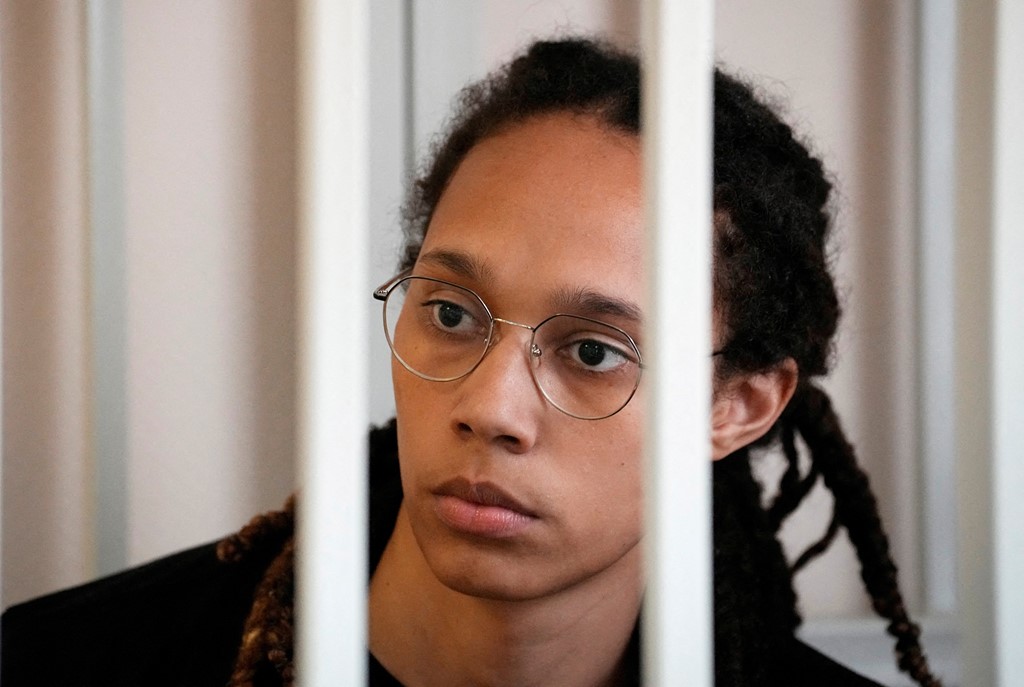
    In an effort to free two Americans who were detained, including basketball player Brittney Griner, the US offered the prisoner swap agreement.

    The US Women’s National Basketball Association player was detained on February 17 at Moscow’s Sheremetyevo Airport as she traveled back to Russia to play for UMMC Ekaterinburg.

    Brittney Griner was arrested at Sheremetyevo Airport in Moscow in FebruaryIn February, Brittney Griner was arrested at Moscow’s Sheremetyevo Airport.

    Police claimed to have discovered cannabis oil-filled vape cartridges in her luggage.

    Ms. Griner, 31, who has been detained ever since pleaded guilty to charges that could result in a decade prison sentence for her.

    But she testified at her drug possession trial that an interpreter translated only a fraction of what was being said while she was detained and that officials told her to sign documents, but “no one explained any of it to me”.

    Mr. Blinken said he would raise the matter of both her detention and that of Paul Whelan -arrested in Russia in 2018, and accused of spying – in a call with Russia’s foreign minister.

    A source said that Washington was willing to exchange convicted arms trafficker Viktor Bout, jailed in the US, as part of such a deal.


  • Ukrainian prisoners ‘being forced to fight for Russia’

    Ukrainians held by Russian forces are being sent “en masse” to a network of prisons and filtration camps, according to Poland’s special service. 

    It claims that in these camps, people are “verified” and checked for whether they have combat experience, whether they are officials of the Ukrainian administration, and what their attitudes are towards Russia.

    Those who do not raise objections are deported to Russia – and some are then “forcibly conscripted” into the Russian army and sent to the front in Ukraine, the special service said.

    People who do not comply are “forced to testify or make statements against Ukraine, or they are brought to court as part of propaganda”, it added.

    The Polish special service also said it had geolocated some of the Russian prisons and filtration camps.

    Source:newsky.com

  • Seth Terkper did not resign when the economy was in a mess – Majority

    The Deputy Majority Leader Alexander Kwamena Afenyo Markin has responded to the Minority’s call on the Finance Minister to resign.

    After delivering the mid-year budget review on Monday, July 25, 2022, the Minority started chanting, “resign! resign!! resign!!”.

    According to them, the Minister has exhibited incompetence.

    Addressing the parliamentary press corps, he asked the Minority if Mr. Seth Terkper and some of their ministers resigned despite their incompetence during their era.

    He condemned the attacks on the Finance Minister and asked them to stay away from the Minister.

    According to him, the NPP government, upon assumption of office, took immediate steps without delay to implement every single social intervention program while in opposition.

    In doing so, the government did not attempt to introduce taxation. Rather, the government reviewed the taxation we inherited from the NDC government. Review in terms of some of them being reviewed downwards and some being reviewed completely.

    He said the E-Levy was 5the first major discal policy in terms of taxation that the NPP government introduced.

    The other taxes, such as the ‘Borla tax’ he added, are minor.

    The legislator noted that the NDC government could decrease electricity tariffs, but the NPP reduced tariffs without adding new raxes.

    To him, these are facts that even people who dislike the NPP government will agree with.

    He insisted that the government performed well and achieved single-digit inflation until COVID-19 hit us, just like other countries.

    ” So should NDC and NDC MP come to you and tell you that the difficult times we are in are as a result of mismanagement, obviously, it may be one of the numerous propaganda because the world over, every government is complaining. Covid affected the supply chain; Covid affected industries. Many comp[anies shut down all over the world. We were all held as prisoners in our homes,” he added.

    “The worst of it is the current Russian-Ukraine war. Iron rods that are used by the private sector for construction come from Ukraine. Obviously, the supply chain is affected; obviously, the cost of importing will not be the same as previous. Now cement, the paper for bagging cement comes from Russia. As we speak, companies that are involved in the manufacturing of cement have difficulties in getting the required quantity for bagging.”

    He also mentioned flour and wheat as some of the commodities that had seen price hikes due to the ongoing war.

    The lawmaker added that for the NDC to go to the IMF when there were no challenges compared to that of the NPP, they have no right to point fingers at the current administration or demand the resignation of Ken Ofori-Atta.

    The government, he assured, will continue to roll out policies that will revive the economy.

    Source:ghanaweb.com

  • Financial indiscipline and mismanagement cause of economic mess – Economist

    A chartered economist Mr. Prince Obiri Yeboah, has asked the government to stop using the COVID-19 pandemic, and the Russian-Ukraine war as an excuse for mismanaging the economy.

    The economist explained that although the COVID-19 and Russian-Ukraine war could have had an impact on the current state of the economy, the major cause of our woes has been necessitated by the mismanagement and, financial indiscipline, and incompetence on the part of the government.

    He said, over the last three years, Ghana has faced challenges, including the outbreak and the Russian-Ukraine war, coupled with financial indiscipline, which has led us to the International Monetary Fund for a bailout.

    He said when people are faced with challenges, they seek excuses and those to blame. But when you evaluate our situation, you will discover that there was fiscal indiscipline from the President to his appointees.

    For him, the COVID-19 outbreak affected several countries but Ghana did not have any major negative impact on the economy as people make it seem.

    ”The leaders we voted for have not been financially disciplined. Governance is about revenue and expenditure, and when you overspend or spend more than what you generated, you will face an economic crisis and borrow more. That is what we find ourselves today. We have overborrowed and have no other option than to go to the IMF to seek a bailout.”

    Source:ghanaweb.com