Tag: Russian

  • ‘Every bomb, every bullet’ statement at UN – Ukraine thanks Akufo-Addo for support

    The Ukrainian Foreign Affairs Minister, Dmytro Kuleba, has expressed his country’s gratitude to Ghana for standing by them amid the Russian invasion that started in February this year.

    Kuleba arrived in Accra on Wednesday, October 6 and departed on the 7th, with Ghana being the third stop of his African tour. He had earlier been to Senegal and Ivory Coast.

    While in Ghana, he delivered a message from President Volodymyr Zelensky to his counterpart Akufo-Addo and also held talks with Foreign Affairs minister, Shirley Ayorkor Botchwey.

    It was during this meeting he revealed that Ukraine was grateful for Ghana’s support through the current crisis, citing specifically a statement at the 77th United Nations General Assembly in Akufo-Addo’s address in September.

    He said Akufo-Addo’s: “Every bullet and every bomb fired at Ukraine is felt in Africa,” statement was the clearest and the most eloquent statement, which reflected the global repercussions of the Russian aggression against Ukraine.

    “We have to stop this war, we will be winning it, because we defend the right cause, the principle of sovereignty, the principle of territorial integrity of the nation,” he is quoted to have said in a Ghana News Agency report.

    Kuleba also disclosed that aside from boosting bilateral and especially trade relations between Accra and Kyiv, Ukraine would soon be opening a full diplomatic mission in Accra.


  • War in Ukraine: Fact-checking Russian claims that Nato troops are fighting in Ukraine

    Russian President Vladimir Putin says there are military units in Ukraine “under the de-facto command of Western advisers”.

    Claims have also appeared on Russian television and social media channels that Nato troops are actively involved in the war.

    Nato member countries have been providing weaponry and logistical support, but have said they aren’t sending troops into Ukraine, which is not a member of the alliance.

    We’ve looked at the evidence provided for these claims of Nato boots on the ground in Ukraine.

    What is being claimed?

    In his national address on 21 September, President Putin said: “The Kyiv regime has launched new gangs of foreign mercenaries and nationalists, military units trained to Nato standards and under the de-facto command of Western advisers.”

    It’s well known that foreign fighters have joined Ukrainian military units. However, claims are being made by Russian officials and media outlets of serving Nato troops on the ground in Ukraine.

    On 13 September, Ruslan Ostashko, the host of Vremya Pokazhet (Time Will Tell) on Russia’s Channel One said: “In the grand scheme of things, Ukrainian soldiers are there more for appearances, for having photos taken and uploading videos to TikTok, but it’s mainly Nato troops fighting there.”

    RUslan OstanshkoImage source, Channel One
    Image caption,

    Ruslan Ostashko is the host of a daily talk show on Russia’s Channel One

    Throughout the programme, footage taken from social media of foreigners allegedly fighting in Ukraine was shown as “evidence” of Nato boots on the ground.

    Andrei Marochko, a military spokesman for the self-proclaimed Luhansk People’s Republic (LPR) in the east of Ukraine, told Russian state-owned news agency RIA Novosti: “Our intelligence agencies revealed the arrival of regular Nato officers in the Kharkiv region.

    “The purpose of their trip to this area is to organise interaction between foreign and Ukrainian units.”

    Mr Marochko has also told Russian state TV that Nato officers have arrived in Kramatorsk, a city in the Donetsk region of Ukraine.

    Other claims are more generally about the presence of foreign fighters and don’t make the direct connection to Nato – but leave the link implied.

    For example, Vladimir Kornilov, a columnist for RIA Novosti, has said there had been a “dramatic increase in video footage of people who’ve come to ‘liberate’ Izyum, with English being spoken.”

    What evidence is being given?

    It’s important to make a clear distinction between those foreign fighters who’ve travelled independently to Ukraine and troops deployed by Nato member countries.

    Russian media outlets haven’t provided evidence of serving Nato personnel on the ground, only pointing to the presence of individual foreign fighters on the battlefield.

    One of the fighters shown on the Vremya Pokazhet television programme is Malcolm Nance, a former US naval officer, who has regularly posted videos of himself in Ukraine over recent months.

    One video, highlighted in the TV programme, shows Mr Nance with an artillery battery behind him, firing what he describes as “the first artillery shot of a massive combined arms, multi-axis ground offensive.”

    Malcolm Nance tweet: Text: PSA: "What does the first artillery shot of a massive arms, multi axis ground offensive look like? Well according to this Norwegian donated M109 SPG that rolled up next to us I say it sounds distinctly like "What now b*tches?"

    With over a million followers on Twitter, there’s very little that could be considered covert about Mr Nance’s presence in Ukraine.

    He is not currently serving in the US military and back in April, he shared online that he had joined the Ukrainian Foreign Legion.

    A second individual identified in pro-Russian social media posts is another American, Rob-Roy Lane, who grew up in the US state of Idaho.

    Mr Lane also regularly posts online videos of himself embedded with a Ukrainian military unit and names several other foreign volunteers in the team. These videos have been widely shared on pro-Russian social media channels.

    Image of Rob-Roy Lane. Text "The presence of American mercenaries in the Izyum grouping of the Armed Forces of Ukraine was confirmed."

    There’s no online evidence to suggest he has any previous military experience. The US Department of Defense has not responded to requests for comment about his involvement with American military forces.

    On his social media account, Mr Lane names several other members in his unit including two British nationals.

    ​​The UK’s Ministry of Defence said it would not comment on the service records of former personnel, or on their activities in conflict zones.

    What support is Nato giving?

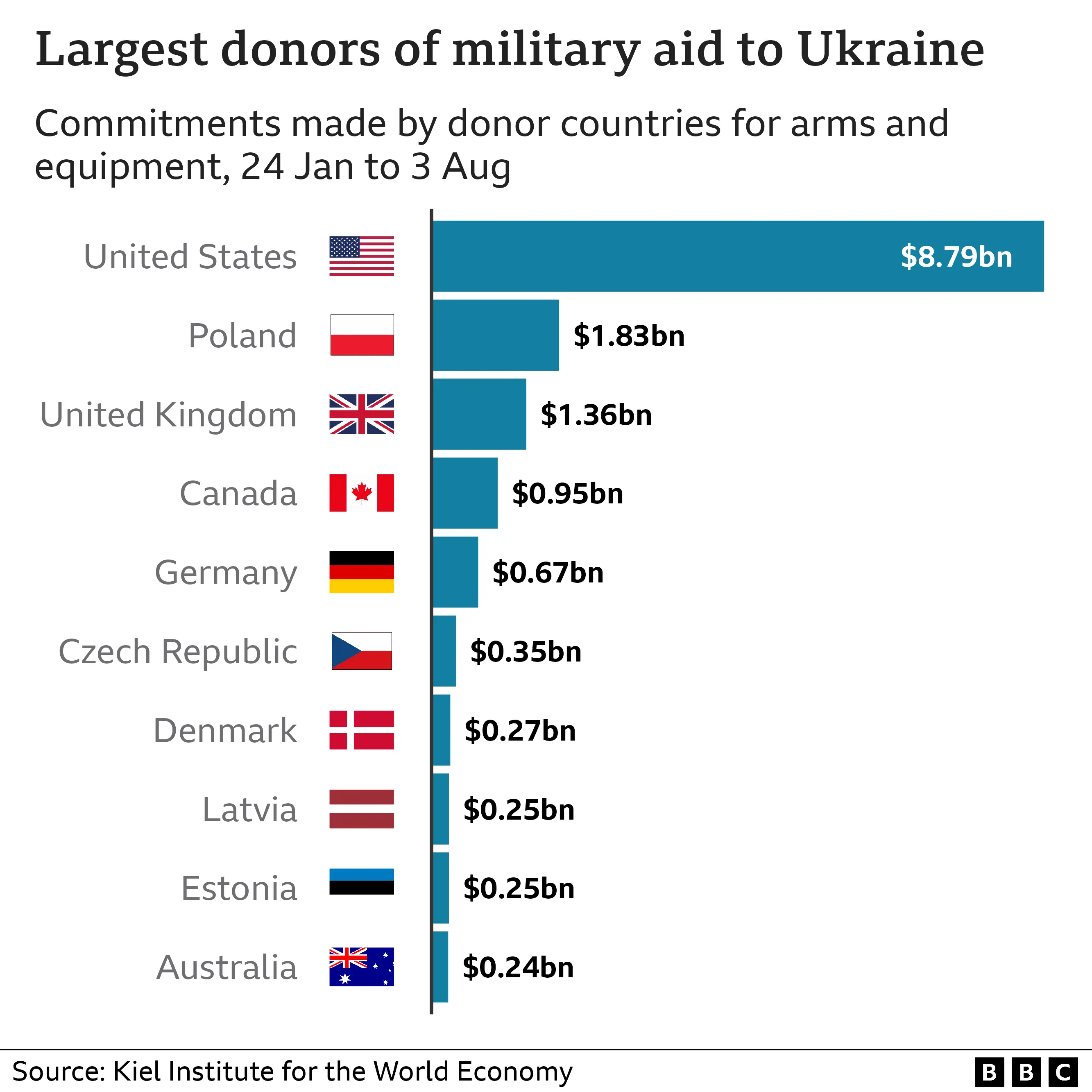
    Nato member countries are providing large quantities of sophisticated weaponry and logistical support to Ukraine, with the United States by far the largest donor.

    This equipment includes several weapon systems which are believed to have played key roles in the conflict so far, such as long-range rocket launchers and anti-tank weapons.

    And there has also been Western media speculation that Nato members have been helping both with intelligence and the selection of military targets.

    Largest providers of military support to Ukraine

    There are around 40,000 Nato troops stationed in alliance member countries in the region, such as in the Baltic states and Poland, with another 300,000 troops on high alert in response to Russia’s invasion.

    Extensive training of Ukrainian forces by Nato members has been taking place outside the country, but no Nato member country has said it has contributed military personnel to fight in Ukraine.

    “There is no evidence of Nato ground forces participating in Ukraine,” says Edward Arnold at the Royal United Services Institute (Rusi), a defence and security think tank.

    “Nor of Nato commanders directing Ukrainian units on the battlefield,” he adds. “There is also a very low likelihood of this happening in the future as Nato seeks to mitigate escalation risks.”

    Source: BBC

  • Russia warns Moldova not to threaten its troops in breakaway region

    Russian Foreign Minister Sergei Lavrov says Moldova risks triggering military confrontation with Moscow if it threatens Russian troops in the breakaway region of Transdniestria.

    Russia has stationed peacekeeping troops in Transdniestria since the early 1990s, when an armed conflict saw pro-Russian separatists wrest most of the region from Moldovan control.


    “Everyone should understand that any action that would threaten the security of our troops (in Transdniestria) would be considered under international law as an attack on Russia, as was the case in South Ossetia when our peacekeepers were attacked by (former Georgian President Mikheil) Saakashvili,” Lavrov said.

    The government in Chisinau, stressing it was committed to peaceful dialogue over the future of the region, said it would summon the acting Russian ambassador to make clear its position.

    Source; Aljazeera

  • Pope warns of potential ‘nuclear disaster’ at Zaporizhzhia nuclear power plant

    Pope Francis today called for “concrete steps” to be taken to avert a nuclear disaster at the Zaporizhzhia nuclear power plant – which is currently under Russian occupation.

    Speaking at his weekly general audience, the pontiff said: “I hope that concrete steps will be taken to bring an end to the war and to avert the risk of a nuclear disaster at Zaporizhzhia.”

    The religious leader also condemned wars as “madness” and referred to the death of Darya Dugina, the daughter of prominent Russian ultra-nationalist Alexander Dugin, who was killed in a car bombing near Moscow on Saturday.

    “Innocents pay for war, innocents,” he said.

    On Tuesday, the International Atomic Energy Agency (IAEA) said it would  visit the Russian-occupied Zaporizhzhia nuclear power plant within days if talks to gain access succeed.

    Russia and Ukraine have repeatedly accused each other of firing at the facility, the largest of its kind in Europe, after Russian forces seized control of the plant earlier this year.

    Source: Sky news

  • We had nothing to do with Russian murder-Ukraine

    Ukrainian officials have ridiculed Russia’s accusation that its special services were behind the killing of Darya Dugina, the daughter of an ultra-nationalist, in a car-bomb attack.

    “We don’t work in this way,” said National Security and Defence Council secretary Oleksiy Danilov.

    A memorial service for Ms Dugina, 29, was taking place in Moscow on Tuesday.

    Ms Dugina, a commentator on a Russian nationalist TV channel, died when her car blew up on the outskirts of Moscow.

    Her influential father, Alexander Dugin, may have been the intended target of the attack. His expansionist ideas of a New Russia or “Novorossiya” on Ukrainian territory are said to have influenced President Vladimir Putin’s annexation of Crimea in 2014.

    President Putin condemned the “cruel and treacherous” attack and posthumously awarded Ms Dugina the Order of Courage.

    Her 60-year-old father paid tribute to her as a “rising star at the start of her journey”. She was brutally murdered in front of him by Russia’s enemies, he said, and he went on to call for victory over Ukraine. Ms Dugina’s memorial service took place at Russia’s Ostankino TV centre on Tuesday morning.

    In Kyiv, the security and defence council secretary said Ukraine had nothing to do with the bombing: “We have more important tasks for our boys and girls… The FSB did this and is now suggesting that one of our people did it,” he was quoted as telling Ukrainian TV.

    Presidential office adviser Mykhailo Podolyak, said Russian “propaganda lives in a fictional world”, adding that the car bombing was part of a struggle within Russia’s special services.

    Russia’s Federal Security Service (FSB) said it had solved the case and blamed Ukraine directly. Its claims were widely reported by state TV, and pro-Kremlin commentators called for immediate revenge.

    The Russian outcry came as Ukraine prepared to mark 31 years of independence on Wednesday, which coincides with six months since Russia’s invasion of Ukraine began.

    The US state department has warned that Russia is stepping up efforts to attack Ukrainian civilian infrastructure and government facilities. Fears of an escalated Russian attack have prompted Kyiv to ban public events while the city of Kharkiv has brought forward an overnight curfew to start at 16:00 local time (13:00 GMT).

    According to the FSB’s account of Darya Dugina’s death, a Ukrainian woman linked to security services in Kyiv had moved to Russia in July alongside her young daughter.

    The woman had rented an apartment in the same building as Ms Dugina for a month, preparing for the attack, it alleged. In that time, she allegedly followed her target through Moscow in a Mini Cooper – for which she used three different licence plates.

    The FSB later released video purporting to show the suspect’s car entering Russia, then of her entering Ms Dugina’s building and finally leaving Russia for Estonia.

    Russian investigators released this photo of teams inspecting the site of the explosion

    Ms Dugina and her father were attending a festival near Moscow on Saturday evening where he was giving a lecture. They had reportedly intended to leave in the same car, but changed their plans at the last minute.

    Investigators said explosives had been planted underneath the Toyota Land Cruiser she was driving. Video appeared to show him looking on in shock as her car burned.

    Ms Dugina was a vocal supporter of the Russian invasion of Ukraine and a political commentator for her father’s International Eurasian Movement organisation. She wrote regularly for pro-Kremlin media outlets and had been placed under sanctions by the UK in July as “a frequent and high-profile contributor of disinformation in relation to Ukraine”.

    “My daughter Darya Dugina was brutally murdered in front of me,” his statement on Telegram read. “She was a beautiful Orthodox woman, patriot, war reporter, an expert for central TV and philosopher.”

    Russian media linked the suspect identified by the FSB to Ukraine’s Azov regiment, which Moscow says is a terrorist group. The Azov regiment flatly denied the allegation.

    Estonia rejected the Russian claim that Ms Dugina’s alleged killer had fled across the border as a “provocation in a very long line of provocations by the Russian Federation”.

    Independent Russian outlet Agentstvo raised several questions about the FSB version of events, surrounding the woman identified as the killer and the Mini Cooper car. It wondered why she would take a child with her on such a dangerous mission and said video of the car had been posted in the Kyiv region three days before the blast.

    Exiled former Russian MP Ilya Ponomarev argued it was the work of a little-known Russian resistance group called the National Republican Army. The former MP who moved to Ukraine said the group had carried out several actions already, although there was no public reference to the group before Sunday.

    Source: BBCnews

  • Russia strikes Kharkiv ahead of Erdogan, UN chief meeting with Zelensky AFP

    Russian strikes battered the northeast Ukraine region of Kharkiv Thursday, killing at least five people, hours ahead of the first face-to-face meeting since the start of the war between the Turkish and Ukrainian leaders.

    Moscow meanwhile denied it had deployed any heavy weapons at the Russian-controlled Zaporizhzhia nuclear power plant in southern Ukraine where a recent escalation in fighting has increased fears of a nuclear disaster.

    The head of the Kharkiv region Oleg Synegubov said Moscow’s forces had launched eight missiles from Russian territory at around 0430 local time (0130 GMT) striking across the city.

    “Three people died, including a child. Eight people, including two children, were rescued,” the emergency services said.

    Synegubov posted images from the scene of one strike showing the smoldering remains of several burnt-out buildings and twisted wreckage of destroyed vehicles nearby.

    In separate strikes on the town of Krasnograd southwest of Kharkiv, bombardments that damaged residential buildings left two dead and two more injured, he said.

    “Kharkiv. 175 days of horror. Daily terror, missile strikes on residential areas and civilians,” a senior presidential aide, Mykhaylo Podolyak, wrote on social media.

    – A ‘political solution’ –

    The strikes in the war-scarred east of the country come a day after bombardments killed at least seven in the city and as the Turkish President Recep Tayyip Erdogan and UN chief Antonio Guterres were convening in the western city of Lviv.

    The two were key brokers of a deal last month with Moscow and Kyiv allowing the resumption of grain exports from Ukraine after Russia’s invasion blocked essential global supplies.

    A spokesman for Guterres said that the UN chief, Ukrainian President Volodymyr Zelensky and Erdogan will discuss the grain deal, as well as “the need for a political solution to this conflict”.

    He added that he had “no doubt that the issue of the nuclear power plant” would be raised.

    In his regular nightly address on Wednesday, Zelensky said he and Guterres would “work to get the necessary results for Ukraine”.

    The UN chief is slated to travel on Friday to Odessa, one of three ports involved in the grain exports deal — hammered out in July under the aegis of the UN with Ankara’s mediation.

    He will then head to Turkey to visit the Joint Coordination Centre, the body tasked with overseeing the accord.

    According to the UN, the first half of August saw 21 freighters authorized to sail under the deal carrying more than 563,000 tones of agricultural products, including more than 451,000 tones of corn.

    The first wartime shipment of UN food aid for Africa reached the Bosphorus Strait on Wednesday carrying 23,000 tonnes of wheat.

    – ‘Provocation’ –

    Russia’s defense ministry meanwhile said Thursday its forces had not deployed heavy weapons at the Zaporizhzhia plant, accusing Kyiv of preparing a “provocation” at the station.

    “Russian troops have no heavy weapons either on the territory of the station or in areas around it. There are only guard units,” the ministry said in a statement.

    Zelensky touched on the Zaporizhzhia plant in his address on Wednesday, saying Ukrainian diplomats and scientists were in “constant touch” with the International Atomic Energy Agency (IAEA) with the goal of sending a mission by the watchdog to the occupied nuclear facility.

    “The Russian army must withdraw from the territory of the nuclear power plant and all neighboring areas, and take away its military equipment from the plant,” he added. “This must happen without any conditions and as soon as possible.”

    Earlier Wednesday, NATO Secretary General Jens Stoltenberg said Russia’s seizure of the plant “poses a serious threat to the safety and the security of this facility (and) raises the risks of a nuclear accident or incident”.

    Also calling for a Russian withdrawal and inspections by the IAEA, Stoltenberg accused Moscow of using “the ground around the nuclear power plant as a staging area, as a platform, to launch artillery attacks on Ukrainian forces, and this is reckless”.

    Russian forces took the Zaporizhzhia plant, located in southern Ukraine, in March shortly after invading.

    It is the largest in Europe, and the uncertainty surrounding it has fueled fears of a nuclear accident to rival Chernobyl in 1986.

    Russia and Ukraine have accused each other of shelling the Zaporizhzhia installation.

    Source: Skynews

  • Russian rockets strike Odesa in southern Ukraine

    At least four people were injured in a Russian attack on the southern city of Odesa overnight, Ukrainian officials said.

    In a Telegram post, Serhii Bratchuk, spokesman for the Odesa military administration, said a recreational center and several buildings had been destroyed and a fire was now raging in a 600-square-meter area.


    Russia fired on the city with Kh-22 anti-ship missiles from Tu-22M3 strategic bombers Bratchuk wrote. Russia has previously used anti-ship missiles against targets on land.

    Rescue operations were ongoing, Bratchuk added.

    This post has been updated with additional information.

    Source: CNN

  • UK intelligence says “no indication” Russia hit military targets in Odesa port attack

    Firefighters work at a site of a Russian missile strike in the port of Odesa, Ukraine, on July 23. (Joint Forces of the South Defence/Reuters)

    There is “no indication” that Russia hit a Ukrainian warship and military targets in missile strikes on the port of Odesa at the weekend, according to a British intelligence report.

    “The Russian MoD claimed to have hit a Ukrainian warship and a stockpile of anti-ship missiles. There is no indication that such targets were at the location the missiles hit,” the UK Ministry of Defence said Tuesday.

    It said Russia perceives anti-ship missiles as a “key threat” and claims Moscow will continue to prioritize its efforts to destroy Ukraine’s anti-ship capability, but that its “targeting processes are highly likely routinely undermined by dated intelligence, poor planning and a top-down approach to operations.”

    The attack on Odesa on Saturday came just a day after Ukraine and Russia signed an agreement to allow grain exports from Ukrainian Black Sea ports, leading to anger and concern over the future of a deal aimed at easing the global food crisis sparked by war.

    Russia’s denial: Moscow has claimed it struck military targets, including a naval ship and an ammunition depot, in the “high precision strikes” on Odesa and that it did not impact grain exports from the harbor.

    Russian Foreign Minister Sergey Lavrov reiterated Moscow’s defense of the strikes while he was in the Republic of Congo on Monday.

    “As for the targets of those high-precision strikes, they are located in a separate part of the Odesa port, in the so-called military part of the Odesa port,” he said.
    “These targets were the combat boat of the naval forces of Ukraine and the ammunition depot, where the Harpoon anti-ship missiles were recently delivered. They were brought there to pose a threat to the Russian Black Sea Fleet.”

    Source: CNN

  • “Entire territory” of Donetsk under fire as Russians push toward Bakhmut, says Ukrainian official

    Many settlements close to the front lines in Donetsk have come under fire in the past 24 hours as Russian forces try to break down Ukrainian defenses, according to the head of the region’s military administration,

    “There is not a single settlement in Donetsk region that has not been shelled,” Pavlo Kyrylenko said on Ukrainian television. “The entire territory is under fire. The enemy is destroying civilian infrastructure.”

    He added that “the front is approaching the city of Bakhmut, where there were systematic artillery fire and air strikes” on Monday.

    Bakhmut is a key objective of Russian forces as a gateway to the remainder of the region still in Ukrainian hands. Russian forces are estimated to be about 6 kilometers (3.7 miles) southeast of the town.

    In its latest assessment Monday, the US-based Institute for the Study of War said Russian forces “made marginal gains south of Bakhmut but are unlikely to be able to effectively leverage these advances to take full control of Bakhmut itself.”

    The Ukrainian military said Tuesday that the Russians were “creating conditions for an offensive on Siversk and Soledar” — two towns in the pocket of eastern Donetsk still being defended by Ukrainian forces.

    “Enemy units replenish stocks of ammunition and fuel,” the military’s General Staff said.

    Russian assaults in the area around the town of Spirne had been repelled, it added. Similarly, the General Staff said a Russian effort to break through north of Sloviansk had been rebuffed in the Sviati Hory area.

    Source: CNN

  • Ukraine war: Russia waging gas war with Nord Stream 1 cuts – Zelensky

    Ukraine has accused Moscow of waging a “gas war” against Europe and cutting supplies to inflict “terror” on people.

    Russian energy firm Gazprom announced it is once again reducing gas flows into Germany to allow work on a turbine on the Nord Stream 1 pipeline.

    But Ukraine’s President Volodymyr Zelensky said this was simply “gas blackmail” against Europe.

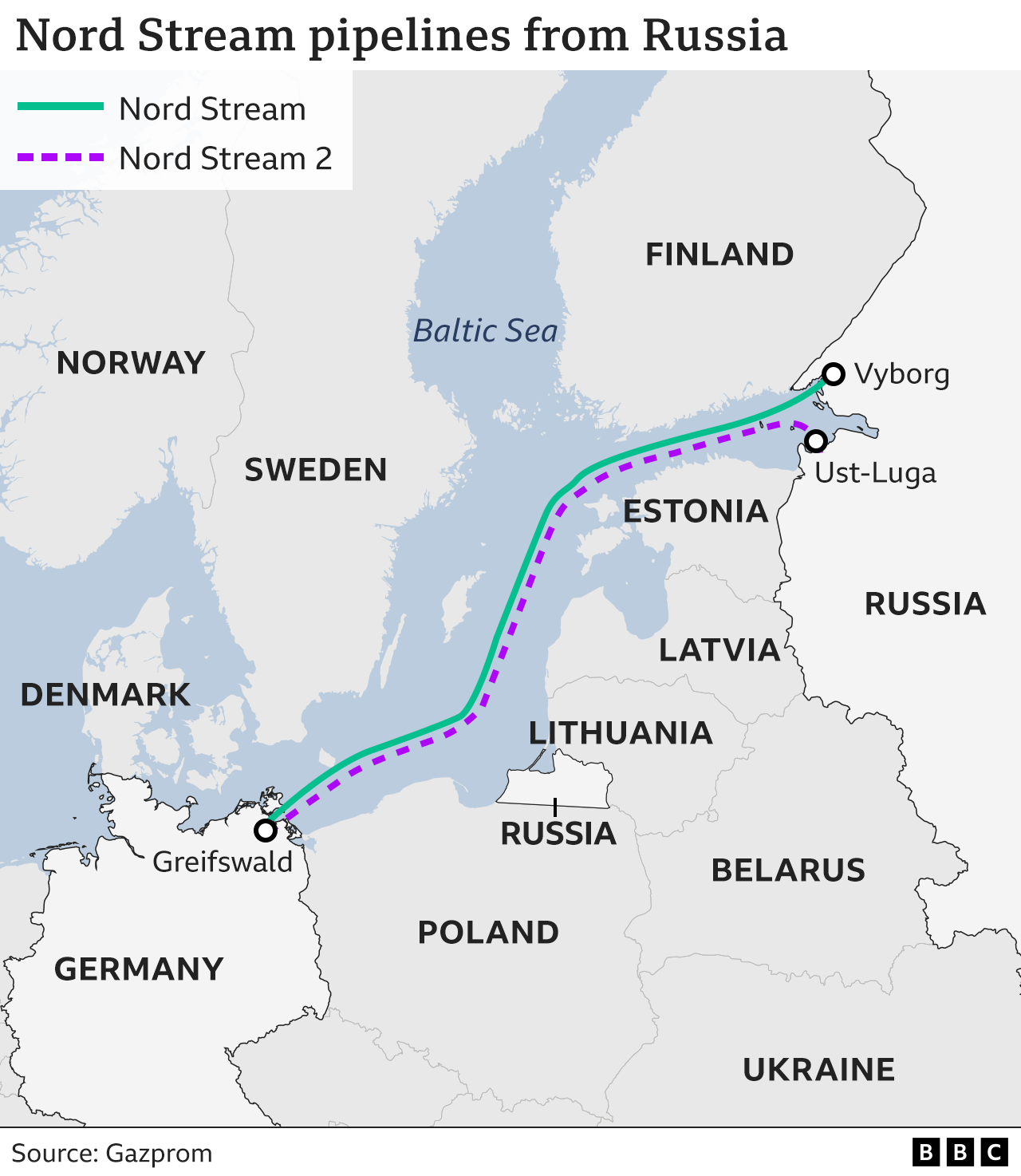
    The Nord Stream 1 pipeline, which pumps gas from Russia to Germany, has been running well below capacity for weeks.

    Earlier this month, Russia’s biggest European pipeline was completely shut down for a 10-day maintenance break, sparking fears in Europe that shipments would not resume at all.

    Shipments did restart five days ago – albeit still at a reduced capacity. But on Monday, Gazprom announced it would be cutting its gas supply further once again.

    This time, it said it needed to cut gas supply to around half of current levels in order to carry out maintenance work. The German government, however, said there was no technical reason for it to limit the supply.

    “The gas blackmail of Europe, which only gets worse every month, is needed by a terrorist state to make the life of every European worse,” said Mr Zelensky in his nightly address.

    He said it was deliberately intended to make it difficult for Europe to prepare for winter, without any care for the poverty people may suffer in the colder months as a result.

    Map showing the Nord Stream pipelines from Russia
    1px transparent line

    The EU, which received 40% of its gas from Russia last year, has also accused Russia of using energy as a weapon.

    The latest reduction in flows puts pressure on EU countries to reduce their dependence on Russian gas even further, and will likely make it more difficult for them to replenish their gas supplies ahead of winter.

    European energy ministers are meeting in Brussels on Tuesday where they hope to sign off on a joint response to the crisis.

    Last week, the European Commission proposed member states cut gas consumption by 15% over the next seven months. The target would be voluntary, but under the proposals the Commission could decide to make it mandatory in an emergency.

    Although some countries have resisted the plan, the pressure on EU capitals to reach an agreement is high.

    Ursula von der Leyen, the European Commission President, has previously said the prospect of Russia completely cutting off gas supplies to the EU was a “likely scenario”.

    Since Russia invaded Ukraine in February the price of wholesale gas has already soared, with a knock-on impact on consumer energy bills across the globe.

    The Kremlin blames the price hike on Western sanctions, insisting it is a reliable energy partner and not responsible for the recent disruption to gas supplies.

    Meanwhile, Ukraine still hopes that a landmark deal brokered by the UN last week could mean grain exports resume from its Black Sea ports “within days.”

    “If the sides guarantee security, the agreement will work. If they do not, it will not work,” Infrastructure Minister Oleksandr Kubrakov said.

    In his nightly address, President Zelensky also said he was confident that grain exports from Ukraine will start again this week.

    His comments came after fears the deal could fall apart after Russia targeted Ukraine’s main port of Odesa with missiles on Saturday.

    As many as 20 million tonnes of grain are trapped in Ukraine, unable to leave because the Russian navy controls most of the Black Sea.

    Source: BBC

  • Putin and Peter the Great: Russian leader likens himself to 18th Century tsar

    Vladimir Putin’s admiration for Peter the Great is well known, but he now seems to have ideas of “Great”-ness himself.

    He has openly compared himself to the Russian tsar, equating Russia’s invasion of Ukraine today with Peter’s expansionist wars some three centuries ago, and making his strongest acknowledgment yet that his own war is a land grab.

    Mr Putin’s apparent empire-building ambitions bode ill for Ukraine and have irked other neighbours, including Estonia, which called his comments “completely unacceptable.”

    Russia’s president was meeting young scientists and entrepreneurs when he made the remarks. Before talking IT and tech development, he talked politics and power: the new battle he sees for geopolitical dominance. In that, he told his select audience that Peter the Great was a role model.

    “You might think he was fighting with Sweden, seizing their lands,” Mr Putin said, referring to the Northern Wars which Peter launched at the turn of the 18th Century as he forged a new Russian Empire.

    “But he seized nothing; he reclaimed it!” he said, arguing that Slavs had lived in the area for centuries.

    “It seems it has fallen to us, too, to reclaim and strengthen,” Mr Putin concluded, with a near-smirk that left no doubt he was referring to Ukraine and his aims there.

    Peter’s rule, he suggested, was proof that expanding Russia had strengthened it.

    Putin spoke of Peter the Great as a role model during the meeting

    Mr Putin has taken to citing Russia’s past a lot lately, always carefully curated to suit his present-day cause. Several months before he attacked Ukraine, he produced a giant essay in which he essentially argued away the country’s historical right to exist.

    When Russia invaded its neighbour on 24 February, Putin falsely claimed it was a “special operation” limited to the eastern Donbas region to “de-Nazify” Ukraine and reduce the supposed threat to Russia.

    But even as he was uttering those words, his troops were moving on Kyiv and bombing land even further west. More than 100 days later, a fifth of Ukrainian territory is under Russian military control, with puppet administrations who talk of referenda on joining Russia.

    And now Putin feels bold enough to admit that his “operation” is in fact an occupation.

    He also seems to believe the West will ultimately accept the reality his troops are fighting to create on the ground.

    At the time, “not one European country” recognised Russia’s claim to the land where Peter created St Petersburg as Russia’s bold new capital, Mr Putin said. Now they all do.

    His comments have also rattled the Baltic countries. The Estonian foreign ministry summoned the Russian ambassador to condemn his reference to Peter the Great’s assault on Narva, now in Estonia, as Russia “reclaiming and strengthening” its territory.

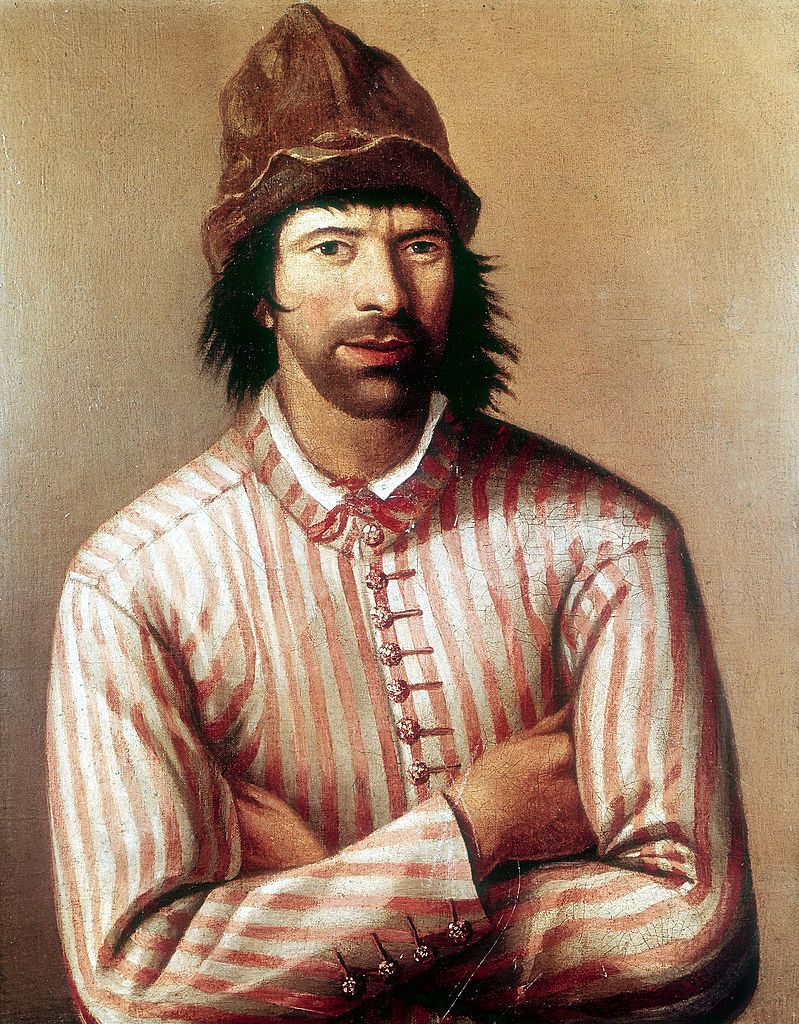
    Peter the Great in disguise
    Getty Images Peter travelled incognito through Europe to get inspiration for modernising Russia

    Putin’s use of history is selective.

    Peter the Great, though a ruthless autocrat, was a huge admirer of Western ideas, science and culture, famously building St Petersburg as a “window on Europe” and travelling that continent thirsty for knowledge to help drag Russia towards modernity.

    Putin’s increasingly repressive rule slowly closed that window on the West; the war on Ukraine has slammed it shut. The idea of the Russian leader touring Holland or Greenwich in search of ideas and inspiration, as the Tsar once did, now seems impossible.

    As Putin lectured the young entrepreneurs on an 18th Century tsar, a series of words flashed up behind them: ‘future’, ‘confident’, ‘victory’.

    Russia is determined to project defiance in the face of Western condemnation and sanctions and Putin himself certainly appeared relaxed rather than beleaguered.

    But perhaps there is another lesson from the history books.

    Peter the Great did eventually conquer land from the Baltics to the Black Sea. But Russia was fighting its Great Northern War for 21 years.

    Source:  bbc.com

  • Russian historian jailed in controversial sex abuse case

    A Russian historian who has spent much of his life unearthing Soviet dictator Joseph Stalin’s crimes has been jailed in a controversial sexual abuse case.

    Yury Dmitriyev was sentenced to three and a half years for abusing his fostered daughter.

    He denies the accusations and his colleagues say he was framed in a plot to discredit his work.

    The government of President Vladimir Putin has sought to downplay the extent of Stalin-era violence.

    Dmitriyev, who has uncovered execution sites from the Great Terror in the 1930s, is expected to be freed later this year due to time already served.

    His supporters received the verdict with relief and applause as he was given a much shorter prison term than the 15 years requested by the prosecution, BBC Russian’s Oleg Boldyrev reports from Petrozavodsk.

    Source: bbc.com

  • Russian women stuck in lockdown hell as abuse surges

    Ineta Akhtyamova’s husband flew into a rage in late April, about a month into Moscow’s coronavirus lockdown.

    She was preparing a meal in the small apartment she shares with her partner when he exploded, calling her names, hitting her and shouting at her to get out.

    “So off I went. I just could not take it anymore,” said Akhtyamova, a 50-year-old singer who lost her income due to confinement restrictions.

    “I’m bad if I stay quiet. I’m bad if I talk. I’m bad if I make soup. I’m bad if I cook potatoes,” she told AFP.

    When her partner hit her before, she would run to friends. This time she had nowhere to go.

    Friends were reluctant to take her in over fears of coronavirus infection, and two women’s shelters turned her away because of Moscow’s city-wide quarantine.

    With the help of a crisis centre, Akhtyamova finally found temporary shelter in a small, two-star hotel in eastern Moscow.

    Rights groups say that domestic violence has surged around the world since the start of lockdowns, with the stress caused by social isolation and fears around financial security straining even healthy relationships.

    The quarantine has hit victims of domestic violence especially hard — some have seen verbal hostility escalate into physical abuse, and for others routine beatings have become even more severe.

    Women in Russia have been left especially vulnerable.

    Suffer in silence

    “The situation here is worse because there’s no law,” said Marina Pisklakova-Parker, a women’s rights campaigner.

    In 2017, President Vladimir Putin decriminalised some forms of domestic violence and most abusers can get away with a fine.

    Advocates say the lack of legislation, including restraining orders, as well as a shortage of shelters nationwide and police who are unresponsive to appeals for help, have left Russian women unprotected.

    Every year, nearly 16.5 million women across the country fall victim to domestic violence, according to activists’ pre-quarantine estimates.

    Pisklakova-Parker, founder of the ANNA women’s rights group, said they registered a 30 percent spike in calls to their nationwide hotline between February and late April.

    Had Russia adopted a domestic violence law, coping with the upsurge would have been easier, she said.

    Last month, Pisklakova-Parker and several other campaigners urged the government to urgently protect domestic abuse victims.

    Authorities, they said, need to set up enough shelters and conduct an awareness-raising campaign on violence against women, among other measures.

    Those calls have fallen on deaf ears.

    The interior ministry said this month there was no evidence domestic violence was on the rise. On the contrary, it said, such crimes went down by nine percent in April compared to last year.

    Alyona Sadikova, head of the Kitezh crisis centre, said they had received more than 400 calls for help since the enforcement of stay-at-home rules. Most of the victims said police did not help.

    Before the pandemic, women could leave their abusers, find jobs and send children to kindergartens. Now, Sadikova said, many have adopted a different strategy: sit tight and suffer in silence.

    “The country’s economic prospects are not clear,” Sadikova said. “So many have decided to endure it until the very end.”

    Akhtyamova, the Latvian-born singer, has lived at the eastern Moscow hotel free-of-charge for the past three weeks.

    It was Sadikova’s centre that helped her find the make-shift shelter and is now paying for her meals.

    “I feel safe here,” Akhtyamova told AFP in a cafe which shares premises with the hotel.

    “People are treating me so well here that I even forgot about my despot husband,” the bespectacled woman laughed.

    Worst still to come

    Valentina Konstantinova, the hotel’s owner, said it and another she runs had offered refuge to two dozen domestic violence victims since the lockdown began.

    One of her friends also briefly stayed at the hotel with her child.

    Pisklakova-Parker said authorities should take action immediately because the worst is yet to come.

    “What we are seeing now is just the beginning,” she said, adding many victims could not reach out for help because they are closely controlled by their partners.

    More women and their abusers are also likely to lose jobs due to the economic crisis, which will exacerbate tensions, she said, even if restrictions are eased soon.

    “When the quarantine is lifted, we will see aftershocks, waves of family violence,” said Pisklakova-Parker.

    “That’s why it is very important to focus as much as possible on this problem now.”

    Source: france24.com

  • More details on the Russian hospital blaze

    A fire at a St Petersburg hospital has killed five coronavirus patients in an intensive care unit.

    The blaze was apparently started by a short-circuit in a ventilator, Russian news agencies have said.

    “Ventilators are working on the brink of collapse. According to preliminary data, there was an overload and a machine ignited which caused the fire,” news agency Interfax reported, quoting a source at the St Petersburg emergencies department.

    All of the patients who died had been on ventilators.

    The fire has been contained and 150 people have been evacuated from the hospital, the country’s emergency ministry said. It is not clear how many people have been injured.

    A criminal investigation has been launched into the incident.

    Source: bbc.com

  • Coronavirus: Putin admits PPE shortage as lockdown extended

    Russian President Vladimir Putin has admitted that there is a shortage of protective kit for medics as the country battles the coronavirus.

    This was despite a big increase in production and imports, he said.

    Mr Putin warned that the peak of the coronavirus infection rate had not yet been reached in the country, and the population must remain vigilant.

    Russia’s lockdown aimed at containing the spread of Covid-19 was extended until 11 May.

    It has more than 93,000 coronavirus cases, with 867 recorded deaths.

    What did Putin say? The president said there was still not enough protective equipment for health workers on the frontline of the crisis.

    “Compared to before, [we’re producing] a lot. But compared what we need, it’s still not enough,” he said during a televised briefing.

    “Despite increased production, imports – there’s a deficit of all sorts of things,” he added.

    Medics have complained about working without proper protective clothing, especially in Russia’s regions.

    Russia is now producing 100,000 protective suits for medics per day, up from 3,000 a day in March, he said. Production of masks has also increased more than 10 times, to 8.5 million per day in April.

    Mr Putin said that while the government had managed to “slow the spread” of the epidemic, Russians would have to self-isolate for longer.

    He said the lockdown would continue for two more weeks, though he instructed the government to draw up recommendations by 5 May for a gradual easing of restrictions.

    “The deadly danger of the virus remains,” he said.

    Source: bbc.com

  • Coronavirus delays Russian vote on Putin staying in power

    Russian President Vladimir Putin has postponed a vote on constitutional change that would allow him to stay in power, because of concerns over coronavirus.

    He said the public vote previously due to be held on 22 April would be delayed until a “later date”.

    The proposed changes include scrapping a ban on allowing Mr Putin to run for office again.

    He also announced that Russians would not work next week “to slow the speed” of the infection.

    Source: BBC

  • Russia’s Putin wants traditional marriage and God in constitution

    Russian President Vladimir Putin wants marriage to be defined as the union of a man and woman in a revised constitution, ruling out gay marriage.

    It is among several constitutional amendments proposed by Mr Putin, which are set to be put to a public vote.

    Critics see the proposals as a move by Mr Putin to keep a hold on power after his presidential term ends in 2024.

    The package includes a proclamation of Russians’ faith in God and a ban on giving away any Russian territory.

    The territorial amendment would strengthen Russia’s hold on Crimea – a Ukrainian region it annexed in 2014 – and the Kuril Islands, disputed with Japan since World War Two, according to Vladimir Mashkov, a renowned actor-director involved in drafting the new constitution.

    Mr Putin also proposed an amendment on “historical truth”, to protect “the great achievement of the people in their defence of the Fatherland”.

    He has railed against what he sees as foreign attempts to diminish the enormous sacrifice made by the USSR in World War Two. The defeat of Nazi Germany cost an estimated 27 million Soviet lives.

    Mr Putin is in his fourth presidential term; he has been the dominant figure in Russian politics for 20 years. His presidency has been marked by a revival of Soviet-era symbols, conservative values and the influence of the Russian Orthodox Church.

    He surprised the nation in January with plans for constitutional changes that include transferring some powers from the presidency to parliament.

    While most Russians identify as Orthodox Christians, the state is officially secular. The current constitution dates from 1993, when then President Boris Yeltsin was embracing Western democracy and capitalism.

    Mr Putin’s drive against Western liberalism has included a controversial ban on disseminating “gay propaganda” among young Russians. The ban – condemned by many liberals and the European Court of Human Rights – has been used to harass gay rights activists.

    The constitutional reform bill was approved by the Russian parliament’s lower house – the State Duma – in January, and Mr Putin’s amendments were introduced in time for a second reading next week. The Russian legislature is dominated by Putin supporters.

    A public vote on the constitutional revision is scheduled for 22 April, but before then it has to get final approval from parliament and the Constitutional Court.

    A Russian political analyst, Konstantin Kalachev, told BBC Russian that the proposals were “a mixed bag”. “It turns out that our forefathers gave us faith in God and the ideas of communism,” he commented, but added: “Putin is a mirror for the majority of Russians”.

    Many of the amendments were submitted to Mr Putin by prominent social and cultural figures appointed to a constitutional working group.

    Political scientist Grigory Golosov criticised the changes as “political”. “The constitution we have indicates that the state should be free of ideology. So I think these changes are inappropriate.”

    Source: bbc.com

  • Maria Sharapova retires: Five-time Grand Slam champion ‘says goodbye’ to tennis at 32

    Five-time Grand Slam champion Maria Sharapova is “saying goodbye” to tennis at the age of 32.

    In an article written for Vogue and Vanity Fair, Sharapova said her body “had become a distraction” after a struggle with shoulder injuries.

    The Russian won her first Grand Slam at Wimbledon in 2004 aged 17 and completed the career slam – all four major titles – by winning the French Open in 2012.

    In 2016, she served a 15-month ban after testing positive for meldonium.

    After returning from her ban in 2017, Sharapova struggled to recapture her best form and suffered from a number of injuries.

    She has dropped to 373 in the world, her lowest ranking since August 2002, and has lost in the first round of her past three Grand Slam tournaments.

    In announcing her retirement, she said: “I’m new to this, so please forgive me. Tennis – I’m saying goodbye.

    “Looking back now, I realize that tennis has been my mountain. My path has been filled with valleys and detours, but the views from its peak were incredible.

    “After 28 years and five Grand Slam titles, though, I’m ready to scale another mountain – to compete on a different type of terrain.

    “That relentless chase for victories, though? That won’t ever diminish. No matter what lies ahead, I will apply the same focus, the same work ethic, and all of the lessons I’ve learned along the way.

    “In the meantime, there are a few simple things I’m really looking forward to: A sense of stillness with my family. Lingering over a morning cup of coffee. Unexpected weekend getaways. Workouts of my choice (hello, dance class!)”

    Sharapova said her 6-1 6-1 first-round defeat by Serena Williams at last year’s US open was the “final signal”.

    “Behind closed doors, 30 minutes before taking the court, I had a procedure to numb my shoulder to get through the match,” she said,

    “Shoulder injuries are nothing new for me – over time my tendons have frayed like a string. I’ve had multiple surgeries – once in 2008, another procedure last year – and spent countless months in physical therapy.

    “Just stepping on to the court that day felt like a final victory, when of course it should have been merely the first step toward victory.”

    Sharapova did not play again in 2019 after that defeat at Flushing Meadows and has played just twice this year, including a straight sets loss to Croat Donna Vekic in the Australian Open first round.

    Source: bbc.com

  • Maria Sharapova retires: Five-time Grand Slam champion ‘says goodbye’ to tennis at 32

    Five-time Grand Slam champion Maria Sharapova is “saying goodbye” to tennis at the age of 32.

    In an article written for Vogue and Vanity Fair, Sharapova said her body “had become a distraction” after a struggle with shoulder injuries.

    The Russian won her first Grand Slam at Wimbledon in 2004 aged 17 and completed the career slam – all four major titles – by winning the French Open in 2012.

    In 2016, she served a 15-month ban after testing positive for meldonium.

    After returning from her ban in 2017, Sharapova struggled to recapture her best form and suffered from a number of injuries.

    She has dropped to 373 in the world, her lowest ranking since August 2002, and has lost in the first round of her past three Grand Slam tournaments.

    In announcing her retirement, she said: “I’m new to this, so please forgive me. Tennis – I’m saying goodbye.

    “Looking back now, I realize that tennis has been my mountain. My path has been filled with valleys and detours, but the views from its peak were incredible.

    “After 28 years and five Grand Slam titles, though, I’m ready to scale another mountain – to compete on a different type of terrain.

    “That relentless chase for victories, though? That won’t ever diminish. No matter what lies ahead, I will apply the same focus, the same work ethic, and all of the lessons I’ve learned along the way.

    “In the meantime, there are a few simple things I’m really looking forward to: A sense of stillness with my family. Lingering over a morning cup of coffee. Unexpected weekend getaways. Workouts of my choice (hello, dance class!)”

    Sharapova said her 6-1 6-1 first-round defeat by Serena Williams at last year’s US Open was the “final signal”.

    “Behind closed doors, 30 minutes before taking the court, I had a procedure to numb my shoulder to get through the match,” she said,

    “Shoulder injuries are nothing new for me – over time my tendons have frayed like a string. I’ve had multiple surgeries – once in 2008, another procedure last year – and spent countless months in physical therapy.

    “Just stepping on to the court that day felt like a final victory, when of course it should have been merely the first step toward victory.”

    Sharapova did not play again in 2019 after that defeat at Flushing Meadows and has played just twice this year, including a straight sets loss to Croat Donna Vekic in the Australian Open first round, her last competitive appearance..

    A star is born at 17

    Sharapova shot to stardom in 2004 aged just 17 when victory over Serena Williams saw her become the third-youngest woman to win the Wimbledon singles title.

    She would go on to become one of the most high-profile names in women’s sport, winning 36 singles titles and earning more than $38m (£29m) in prize money.

    In 2005 she became the first Russian woman to become world number one, and won her second Grand Slam singles title at the US Open the following year.

    But 2007 saw the first of Sharapova’s struggles with injury, as she missed most of the clay court season with a shoulder problem.

    She would return to form and fitness to win the Australian Open at the start of 2008, but a second shoulder injury kept her off tour for the second half of the season, meaning she missed the US Open and Beijing Olympics.

    In 2012, Sharapova captured the French Open at Roland Garros to become the 10th woman to complete the career Grand Slam, before winning Olympic silver in London.

    Yet another shoulder injury saw her miss the second half of the 2013 season, although she returned the following year to win her second French Open, and fifth and final Grand Slam.

    Meldonium ban

    In March 2016, Sharapova told a news conference she had tested positive for meldonium at the Australian Open.

    Meldonium, a heart disease drug, became a banned substance on 1 January 2016.

    Sharapova said she had been taking the drug since 2006 for health problems and was unaware it had been added to the banned list, insisting she had “not tried to use a performance-enhancing substance”.

    She was banned for two years, later reduced to 15 months following an appeal to the Court of Arbitration for Sport.

    She returned to tennis in April 2017, winning what would be her final career singles title at the Tianjin Open in October that year.

    Sharapova reached the quarter-finals at the 2018 French Open and the last 16 of the Australian Open at the start of 2019, but injuries and loss of form began to take its toll.

    ‘It was a pleasure to share the court with you’ – reaction Following Sharapova’s announcement, hercoach Riccardo Piatti tweeted: “It’s been an honour to have worked with such an amazing athlete and person. I’ll miss her on court and outside. I’m sorry we couldn’t work together for longer. But I know our paths will cross again and I can’t wait for it. In the meantime, good luck with everything.”

    Two-time Grand Slam champion Petra Kvitova said it had been “a pleasure” to share a court with Sharapova.

    The Czech added: “We always had great battles when we played and I have so much respect for your hard work and the way you always fight for everything. You have achieved a lot in your life and I know this is just the start.”

    Meanwhile, tennis legend Billie Jean King added: “From the day Maria Sharapova won her first Wimbledon title at age 17, she has been a great champion. A five-time major champion and a former world number one, her business success is just as impressive as her tennis achievements. Maria, the best is yet to come for you!”

    Reacting after his victory over Philipp Kohlschreiber at the Dubai Open on Wednesday, world number one men’s player Novak Djokovic asked the crowd to offer a round of applause for Sharapova.

    “She is a great fighter, as dedicated as someone can really be in our sport,” the Serbian 17-time Grand Slam champion said. “The will power and willingness to overcome the obstacle she had, with her injuries and surgeries and trying to fight to come back to the court and play at her desired level – it’s truly inspirational to see what a mind of a champion she has. At the end of a fantastic career she can be proud of herself.”

    Source: bbc.com