Tag: Sam Bankman-Fried

  • Sam Bankman-Fried, former crypto exchange titan convicted of fraud in New York trial

    Sam Bankman-Fried, former crypto exchange titan convicted of fraud in New York trial

    In the culmination of a month-long trial in New York, Sam Bankman-Fried, the former head of one of the world’s largest cryptocurrency exchanges, has been found guilty of charges related to fraud and money laundering.

    The jury delivered its verdict after only four hours of deliberation.

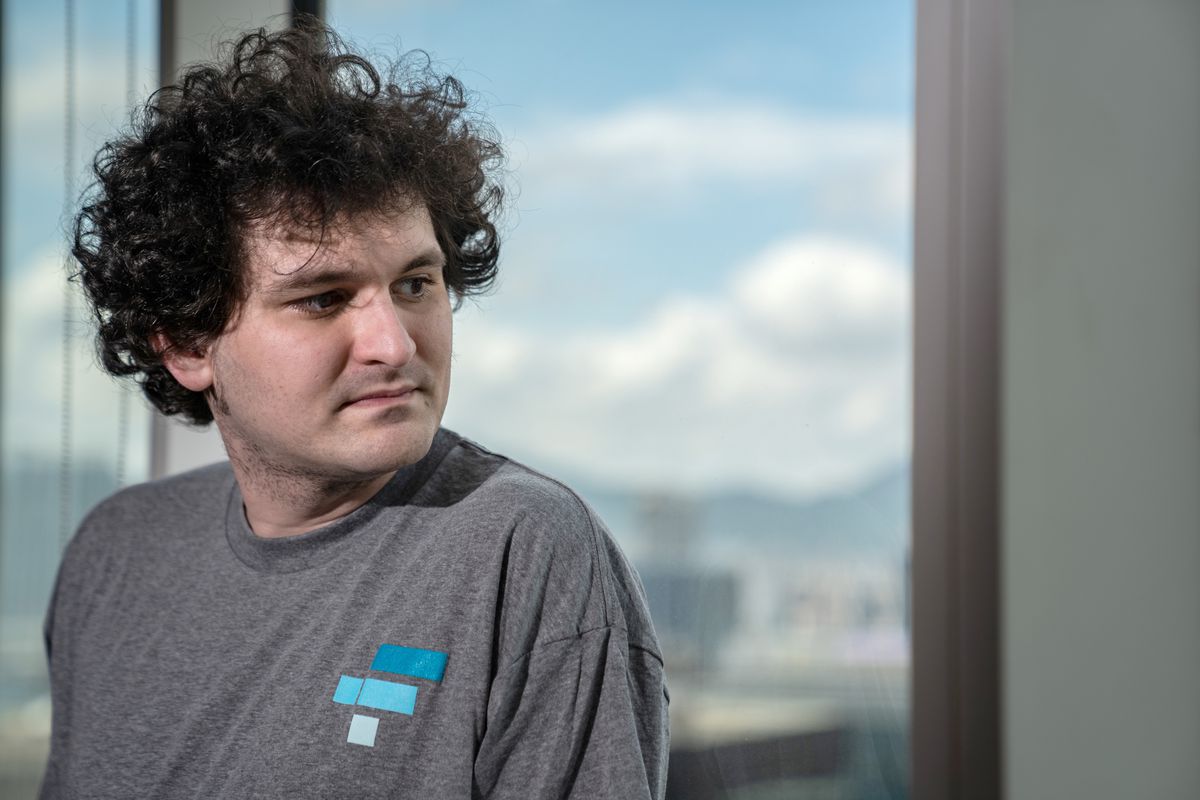
    This marks a dramatic downfall for the 31-year-old former billionaire, once a prominent figure in the cryptocurrency industry. Bankman-Fried was apprehended last year following the bankruptcy of his firm, FTX.

    He now faces the prospect of a lengthy prison sentence, with his sentencing scheduled for March 28, 2024.

    “Sam Bankman-Fried perpetrated one of the biggest financial frauds in American history – a multibillion-dollar scheme designed to make him the king of crypto,” US attorney Damian Williams said in a statement after the verdict.

    “This case has always been about lying, cheating, and stealing, and we have no patience for it,” he added.

    Prosecutors alleged that Bankman-Fried had engaged in deceitful practices, including misleading investors and lenders, and misappropriating billions of dollars from the cryptocurrency exchange FTX, ultimately contributing to its downfall. He faced seven counts of fraud and money laundering.

    Bankman-Fried consistently pleaded not guilty to all charges, asserting that, despite his errors, his actions were carried out in good faith.

    After the verdict Bankman-Fried’s lawyer Mark Cohen said: “We respect the jury’s decision. But we are very disappointed with the result.”

    “Mr Bankman-Fried maintains his innocence and will continue to vigorously fight the charges against him,” he added.

    A BBC request for comment regarding a potential appeal from Bankman-Fried’s spokesperson remained unanswered at the time of reporting.

    Furthermore, three of Bankman-Fried’s former close associates, among them his ex-girlfriend Caroline Ellison, admitted guilt and entered into agreements to testify against him, aiming to secure reduced sentences for themselves. Their sentencing will take place at a later date.

    “The government won this case by putting a lot of pressure on cooperators, getting deals with them very early on and trying this case in a very streamlined way,” said former federal prosecutor Renato Mariotti.

    “Instead of overcomplicating the case, turning it into some complicated crypto case, they tried it as a garden variety fraud.”

    During the trial, the prosecution provided evidence indicating that Bankman-Fried’s crypto trading company, Alameda Research, had accepted deposits on behalf of FTX customers during the exchange’s early stages. Traditional banks had initially refused to grant FTX an account.

    Contrary to Bankman-Fried’s public assurances to safeguard these funds, he used the funds for purposes other than their intended protection. Specifically, he used the money to settle debts with Alameda lenders, purchase property, and make various investments and political contributions.

    Bankman-Fried’s parents seemed disheartened when the court announced the guilty verdict.

    At the time of filing for bankruptcy in November, Alameda had an outstanding debt of $8 billion (£6.5 billion) to FTX.

    “He took the money. He knew it was wrong. He did it anyway, because he thought he was smarter and better and that he could figure his way out of it,” assistant US attorney Nicolas Roos said in his closing arguments.

    In an attempt to persuade jurors that the prosecution had not produced sufficient evidence to support his claim of criminal intent, Bankman-Fried took the bold decision to testify on his own behalf.

    “There was bad judgment,” said defence lawyer Mark Cohen, offering a portrait of a nerdy mathematician who was overwhelmed as his companies grew rapidly.

    “That does not constitute a crime.”

    Bankman-Fried defended the money transfers between his firms as “permissible” and testified that he was largely unaware of the financial hole described by his deputies until a few weeks before the FTX collapse last year.

    The downfall left many customers unable to recover their funds.

    Lawyers working on the bankruptcy case have since said they have recovered the vast majority of the missing money.

    Bankman-Fried’s trial was closely watched for its implications for the crypto industry as a whole, which has failed to recover from last year’s market turmoil.

    He has been seen as a poster child for the problems in the sector, which top regulators in the US have described as rife with criminality.

    Before the collapse of his companies, he was known for hobnobbing with celebrities and appearing frequently in Washington and in the media, to discuss the sector.

    The rapid growth of FTX and his deal-making last year, when a market downturn hit other crypto firms, earned him the moniker “the king of crypto”.

    With Congress unlikely to pass new rules for crypto anytime soon, Mr Mariotti said he expected US courts to continue to be the site of battles over the industry.

    “I really think having specific crypto regulations in the United States would reduce the sort of crime that occurred in this particular case,” he said.

    “Sadly I don’t think we’re going to see regulation in the very short term… But it certainly means that the fight is going to continue in courts and civil cases litigated by the SEC [Securities and Exchange Commission] and CFTC [Commodity Futures Trading Commission]” he added, referring to US financial regulatory agencies.


  • US regulators caution banks about the dangers of cryptocurrencies

    US regulators caution banks about the dangers of cryptocurrencies

    US regulators have warned banks about the dangers associated with the cryptocurrency market for the first time ever in a joint statement.

    Financial institutions were warned by the watchdogs to watch out for potential fraud, legal uncertainty, and deceptive statements made by companies dealing in digital assets.

    Banks were also warned about the industry’s “contagion risk.”

    It happens just two months after the collapse of the trading platform FTX rocked the cryptocurrency sector.

    In a joint statement, the US Federal Reserve, the Federal Deposit Insurance Corporation, and the Office of the Comptroller of the Currency said they were closely monitoring the crypto activities of banking organizations.

    “The events of the past year have been marked by significant volatility and the exposure of vulnerabilities in the crypto-asset sector,” the statement said.

    The regulators also said that issuing or holding crypto tokens, which are stored on public, decentralized networks, was “highly likely to be inconsistent with safe and sound banking practices.”

    Banks were also encouraged to take steps to avoid problems in the digital asset market spreading to the wider financial system.

    “It is important that risks related to the crypto-asset sector that cannot be mitigated or controlled do not migrate to the banking system,” it added.

    Tuesday’s statement comes after months of hesitancy by US financial industry watchdogs to issue uniform guidelines on cryptocurrencies, despite banks inviting clearer advice from regulators.

    FTX shock

    The cryptocurrency industry was rocked by the collapse of FTX in November.

    It was the world’s second largest cryptocurrency exchange and the entry point for millions of people into the digital asset market.

    On Tuesday, FTX’s former chief executive, Sam Bankman-Fried, officially denied charges that he defrauded customers and investors.

    He pleaded not guilty in a US court to claims that he took customer deposits at FTX to fund his other firm, Alameda Research, buy property, and make political donations.

    Two of Mr Bankman-Fried’s closest colleagues have already pleaded guilty and are cooperating with the investigation, which has shaken the entire cryptocurrency industry.

    Mr Bankman-Fried was one of the most high-profile figures in the sector, known for his political ties, celebrity endorsements, and bailouts of other struggling firms.

    He has been accused by the US of building “a house of cards on a foundation of deception” while telling investors that it was one of the safest buildings in crypto”.

    Source: BBC.com
  • FTX co-founder Sam Bankman-Fried granted release on $250 million bail

    FTX co-founder Sam Bankman-Fried is set to be released on a $250 million bail package.

    According to the Associated Press, , a New York federal judge announced the decision on Thursday, less than two weeks after the disgraced cryptocurrency executive was arrested on fraud charges in the Bahamas. As part of the bail terms, Magistrate Judge Gabriel W. Gorenstein ordered Bankman-Fried to surrender his passport, wear an ankle monitoring bracelet, and remain under house arrest at his parents’ Palo Alto, California, home.

    “It would be very difficult for this defendant to hide without being recognized,” Judge Gorenstein said, as reported by the New York Times. “So I believe that the risk of flight is appropriately mitigated.”

    The judge announced his ruling just hours after Bankman-Fried’s voluntary extradition from the Bahamas, where FTX is based. The 30-year-old MIT graduate is facing multiple charges in connection to his role in FTX’s downfall. The now-bankrupt company was founded in 2019, and served as a cryptocurrency exchange. At its peak, FTX had more than 1 million users and became one of the biggest crypto startups in the world, with an estimated value of $32 billion. 

    Back in November, Bankman-Fried was accused of diverting investors’ assets to his privately held crypto hedge fund, Alameda Research. Prosecutors also allege the man used customers’ money to purchase real estate and make political donations. He was eventually arrested on Dec. 12 and hit with eight counts, including conspiracy, wire fraud, securities fraud, money laundering, and campaign finance violations. If he’s convicted of the charges, he could face up to 115 years in prison. 

    Bankman-Fried has since apologized to his customers, but insisted he never committed any crimes.

    “I fucked up,” he wrote in a statement for the House Financial Services Committee last week. “… Last year, my net worth was valued at $20 billion. Today, I would be wrong to say that I have nothing: I have a loving family, and food on my plate, and that’s more than life has given to billions of people. But last I saw, I believe my bank account had about $100,000 in it.”

    Bankman-Fried’s next court hearing is scheduled for Jan. 3, 2023.

    Source: Complex.com

  • Sam Bankman-Fried, the CEO of FTX, agrees to be extradited

    The CEO of the defunct cryptocurrency exchange FTX, Sam Bankman-Fried, has consented to extradition to the US to face charges, according to information obtained by the BBC.

    The 30-year-old, who resides in the Bahamas, is charged with committing “one of the largest financial frauds in US history,” according to US authorities.

    The BBC was informed by a source close to Mr. Bankman-Fried, who denies the accusations, that he had consented to be extradited.

    Many people are unable to withdraw money because FTX filed for bankruptcy.

    FTX owed its 50 largest creditors nearly $3.1 billion (£2.5 billion), per a court document.

    It is not clear when Mr Bankman-Fried will be extradited to the US, following his arrest on 12 December.

    Among the most serious allegations against him is that he used billions of dollars of customer funds to prop up his investment trading company Alameda.

    Last week, Damian Williams, the US Attorney for the Southern District of New York, said Mr Bankman-Fried was accused one of the largest frauds in US history.

    The FTX founder was also accused of using “tens of millions” in ill-gotten gains for illegal campaign contributions to Democrats and Republicans alike, Mr Williams said.

    The Securities and Exchange Commission said the man who was formerly nicknamed the “King Of Crypto” had built a “house of cards on a foundation of deception”.

    However, Mr Bankman-Fried has sought to distance himself from accusations of illegal activity and in a BBC News interview before his arrest said: “I didn’t knowingly commit fraud. I don’t think I committed fraud. I didn’t want any of this to happen. I was certainly not nearly as competent as I thought I was.”

    Mr Bankman-Fried has also denied allegations he must have been aware that Alameda Research was using FTX customer funds.

    The FTX exchange allowed customers to trade normal money for cryptocurrencies such as Bitcoin.

    Cryptocurrencies are not traditional currencies, but are stored online and act more like investment vehicles or securities – often with a high degree of volatility.

    FTX had an estimated 1.2 million registered users who were using the exchange, but many have been left wondering if they will ever get back their cash trapped in FTX’s digital wallets.

    Mr Bankman-Fried was once viewed as a young version of legendary US investor Warren Buffett, and as recently as late October had a net worth estimated at more than $15bn.

    Source: BBC.com


  • Sam Bankman-Fried: Bahamas court denies FTX crypto bail

    FTX founder of failed cryptocurrency exchange Sam Bankman-Fried, founder has been refused bail by a judge in the Bahamas.

    On Tuesday, US authorities accused Mr. Bankman-Fried of committing “one of the largest financial frauds in US history.”

    According to Security and Exchange Commission (SEC) Chair Gary Gensler, the former FTX CEO constructed a “house of cards on a foundation of deception.”

    According to Mr. Bankman-Fried, he will fight extradition to the US.

    He was kept on remand at a jail until February 8 after Bahamas Chief Magistrate JoyAnn Ferguson-Pratt rejected the petition for his release on bail due to a “great” risk of flight.

    He was arrested in the Bahamas on Monday.

    Last month, FTX filed for bankruptcy in the US, leaving many users unable to withdraw their funds. According to a court filing, FTX owed its 50 largest creditors almost $3.1bn (£2.5bn).

    Among the most serious allegations against Mr Bankman-Fried is that he used billions of dollars of customer funds to prop up his investment trading company, Alameda.

    It is unclear how much people who have funds in the exchange will get back at the end of bankruptcy proceedings – though many experts have warned it may be a small fraction of what they deposited.

    Mr Bankman-Fried faces eight criminal charges in the US, including wire fraud, money laundering and conspiracy to defraud. He also faces civil charges including misleading investors who put more than $1bn into the company.

    Officials have also accused him of violating campaign finance laws.

    At a news conference on Tuesday, Damian Williams, the US Attorney for the Southern District of New York, described the fraud Mr Bankman-Fried is accused of as among the largest in US history.

    Besides accusing Mr Bankman-Fried of defrauding lenders, investors and customers, Mr Williams alleged he had used “tens of millions” in ill-gotten gains for illegal campaign contributions to Democrats and Republicans alike.

    “All this dirty money was used in service of Bankman-Fried’s desire to buy bipartisan influence and impact the direction of public policy in Washington,” Mr Williams said.

    In previous media interviews, the crypto tycoon has admitted to mistakes, but denied intent to defraud his customers.

    Mr Bankman-Fried also denied allegations he must have been aware that FTX’s affiliated trading company, Alameda Research, was using FTX customer funds.

    He was once viewed as a young version of legendary US investor Warren Buffett. As recently as late October, he had a net worth estimated at more than $15bn (£12.1bn).

    Meanwhile, the firm’s new chief executive, John Ray, told a US congressional committee that FTX’s collapse appeared to be the result of it being controlled by a small group of “grossly inexperienced, non-sophisticated individuals”.

    He said he had seen “an utter lack of record-keeping – no internal controls whatsoever”.

    The FTX exchange allowed customers to trade normal money for cryptocurrencies such as Bitcoin.

    Cryptocurrencies are not currencies in the traditional sense, but are stored online and act more like investment vehicles or securities – often with a high degree of volatility.

    Their anonymity means they have been favoured for criminal activities such as drug dealing and ransomware attacks, but their supporters say there is huge potential for innovation – and independence from governments.


  • Sam Bankman-Fried: The founder of FTX arrested in the Bahamas

    Sam Bankman-Fried, the founder of the defunct cryptocurrency exchange FTX, has been arrested in The Bahamas, according to the country’s attorney general.

    He is expected to appear in a magistrates court in Nassau, the Caribbean country’s capital, on Tuesday.

    According to police, Mr Bankman-Fried was arrested for “financial offences” against US and Bahamas laws.

    FTX declared bankruptcy in the United States last month, rendering many users unable to withdraw their funds.

    According to a court filing last month, FTX owed nearly $3.1 billion (£2.5 billion) to its 50 largest creditors.

    It is unclear how much people who have funds in the exchange will get back at the end of bankruptcy proceedings – though many experts have warned it may be a small fraction of what they deposited.

    The FTX exchange allowed customers to trade normal money for cryptocurrencies like Bitcoin.

    Mr Bankman-Fried was once viewed as a young version of legendary US investor Warren Buffett, and as recently as late October had a net worth estimated at more than $15bn.

    He had become well known in Washington DC as a political donor, mostly to Democrat politicians or groups, supposedly supporting pandemic prevention and improved crypto regulation.

    Mr Bankman-Fried will be held in custody “pursuant of our nation’s Extradition Act,” the Attorney General of the Bahamas said in a statement.

    “Earlier this evening, Bahamian authorities arrested Samuel Bankman-Fried at the request of the US Government, based on a sealed indictment filed by the SDNY [Southern District of New York]. We expect to move to unseal the indictment in the morning and will have more to say at that time,” the US Attorney’s office in Manhattan said in a tweet.

    Wall Street regulators also said that they would be taking action against Mr Bankman-Fried.

    “We commend our law enforcement partners for working to secure the arrest of Mr Sam Bankman-Fried in the Bahamas on federal criminal charges,” US Securities and Exchange Commission (SEC) official Gurbir Grewal said in a statement.

    “The Securities and Exchange Commission has separately authorised charges relating to Mr. Bankman-Fried’s violations of our securities laws, which will be filed publicly tomorrow in the Southern District of New York,” he added.

    Mr Bankman-Fried had been due to testify about the collapse of FTX before the US Congress on Tuesday.

    However, he will now be unable to testify, according to Congresswoman Maxine Waters, who said in a statement that she was surprised to hear that he had been arrested.

    Mr Bankman-Fried’s lawyer did not immediately reply to a BBC request for comment.

    The BBC is not responsible for the content of external sites.View original tweet on Twitter
    1px transparent line

    FTX, the owner and operator of the FTX.COM cryptocurrency exchange, was founded in 2019 by Mr Bankman-Fried, a former Wall Street trader and ex-Google employee Gary Wang.

    It became the second largest crypto exchange in the world, trading about $10bn of cryptocurrencies a day.

    But on 11 November FTX filed for bankruptcy protection after users pulled $6bn from the platform in three days and rival exchange Binance abandoned a rescue deal. At the same time, Mr Bankman-Fried resigned as FTX’s chief executive.

    In a series of interviews and public appearances in recent weeks, Mr Bankman-Fried has acknowledged that mistakes were made at the firm, but sought to distance himself from accusations of illegal activity.

    “I didn’t ever try to commit fraud,” he said at the New York Times’ DealBook Summit at the end of last month.

    The collapse of FTX came during a tumultuous year for the cryptocurrency industry. This year Bitcoin has lost more than 60% of its value, while other cryptocurrencies have also slumped.

  • Sam Bankman-Fried: I want to be able to pay back my debts

    A disgraced cryptocurrency executive, Sam Bankman-Fried, claims he intends to launch a new company in order to generate enough revenue to compensate FTX collapse victims.

    The 30-year-old faces several federal investigations into his former company’s handling of funds.

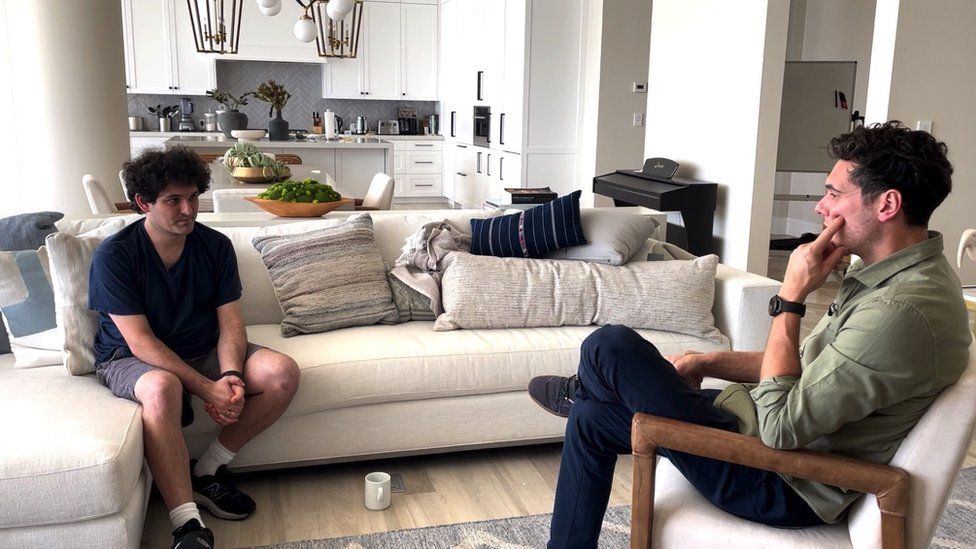
    Speaking in a luxury complex in the Bahamas, the former billionaire denies fraud but says he was “not nearly as competent as I thought I was”.

    He admits worrying about possible arrest while “ruminating at night”.

    The FTX crypto exchange allowed customers to trade normal money for cryptocurrencies like Bitcoin.

    It was the second largest in the world, trading about $10bn of crypto coins every day.

    But last month it was revealed that FTX and Mr Bankman-Fried’s separate company – Alameda Research – were financially unstable.

    In just eight days everything came crashing down and bankruptcy was filed.

    It is estimated that more than a million FTX users are locked out of their crypto wallets and cannot access their funds.

    Mr Bankman-Fried invited the BBC to the residential complex in the Bahamas where he still lives and said he hopes to find a way to pay back FTX users.

    “I’m going to be thinking about how we can help the world and if users haven’t gotten much back, I’m going to be thinking about what I can do for them. And I think at the very least I have a duty to FTX users to do right by them as best as I can,” he told me.

    Asked if he planned to start a new business venture to earn the money to pay investors back, he said: “I would give anything to be able to do that. And I’m going to try if I can.”

    Bankruptcy lawyers have described the FTX scandal as “one of the most abrupt and difficult collapses in the history of corporate America”.

    They accuse Mr Bankman-Fried of running the company as “his own personal fiefdom”.

    The US Senate Banking Committee wants the former CEO to testify at next week’s hearings into the collapsed exchange, and he said on Friday that he would attend.

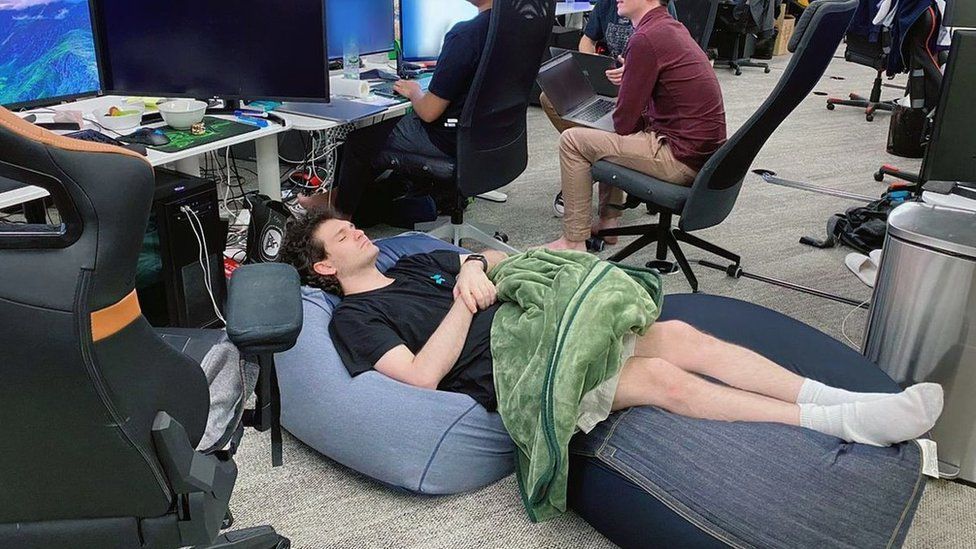
    Sam Bankman-Fried on a bean bagImage source, Twitter
    Image caption, “Mostly I sleep on a beanbag,” Mr Bankman-Fried once told his Twitter followers

    At the top of a long list of alleged failings, there are allegations that Mr Bankman-Fried’s Alameda Research hedge fund was using FTX customers’ money to make risky financial bets.

    A former senior FTX employee who worked with Mr Bankman-Fried has told the BBC he thinks the former CEO must have been aware that Alameda Research was using FTX customer funds.

    He accused Mr Bankman-Fried of lying when he said in recent interviews that he did not know about the flows of cash and cryptocurrencies between the companies.

    “No that’s not true,” Mr Bankman-Fried said, while going on to acknowledge that as CEO he was ultimately responsible for any mishandling of funds. “That’s on me, one way or another,” he said.

    Asked whether he was fraudulent or incompetent, he replied: “I didn’t knowingly commit fraud, I don’t think I committed fraud, I didn’t want any of this to happen. I was certainly not nearly as competent as I thought I was.”

    Sam Bankman-Fried bbc interview
    Image caption, Mr Bankman-Fried is meeting reporters at a luxury apartment owned by FTX

    The American has conducted nine lengthy self-critical interviews in the last six days.

    His team say they’ve had to relocate to an unknown location in the luxury resort where he lives, because of “security concerns”.

    Reporters have taken pictures of him in his apartment with telescopic lenses from the sea, and at least two YouTubers have managed to sneak into the complex to film videos.

    Mr Bankman-Fried, who comes from a wealthy family, claims to be concerned about his own personal finances with no access to his bank accounts and “less than $100K left”.

    When asked if he is preparing for the possibility of arrest and prison, he said: “There’s some time at night ruminating, yes, but when I get up during the day, I try and focus, be as productive as I can and ignore things that are out of my control.”

    Source: BBC

  • ‘I didn’t try to commit fraud,’ says ex-FTX CEO Bankman-Fried

    Sam Bankman-Fried, the former CEO of the defunct cryptocurrency exchange FTX, has denied any wrongdoing.

    In his first public appearance since the collapse, the man nicknamed the “King of Crypto” told The New York Times that he had a “bad month” and had almost no money left.

    FTX, which was once valued at $32 billion (£26.5 billion), collapsed last month.

    Many investors have been unable to withdraw funds from the now-defunct global exchange.

    Mr Bankman-Fried, 30, also stated that his lawyers advised him not to speak publicly, but he disregarded their advice.

    He denied having moved any personal money out of FTX himself – saying he now has “close to nothing.”

    Speaking from The Bahamas, he said he had one credit card left which had around $100,000 of debt on it.

    In the interview he said he had not deliberately misled investors, adding: “I didn’t ever try to commit fraud.”

    However, asked several times about details of money movements between FTX and other entities, including the trading firm he owned, Alameda Research, he at times seemed sketchy in detail.

    He also said the company had indulged in “greenwashing” where firms engage in environmental projects for publicity.

    Mr Bankman-Fried was once viewed as a young version of legendary US investor Warren Buffet, and as recently as late October had a net worth estimated at more than $15bn.

    However, he says, he underestimated the sheer amount of cash needed to cover FTX customers’ withdrawals – leading to a run on the exchange.

    Many crypto firms have struggled with the downturn in the broader economy and amid concerns about the viability of crypto currencies more generally.

    FTX declared bankruptcy soon after. Mr Bankman-Fried stepped down as CEO on 11 November.

    According to a court filing earlier this month, FTX currently owes its 50 largest creditors almost $3.1bn.

    Mr Bankman-Fried had become well known in Washington DC as a political donor, supposedly supporting pandemic prevention and improved crypto regulation.

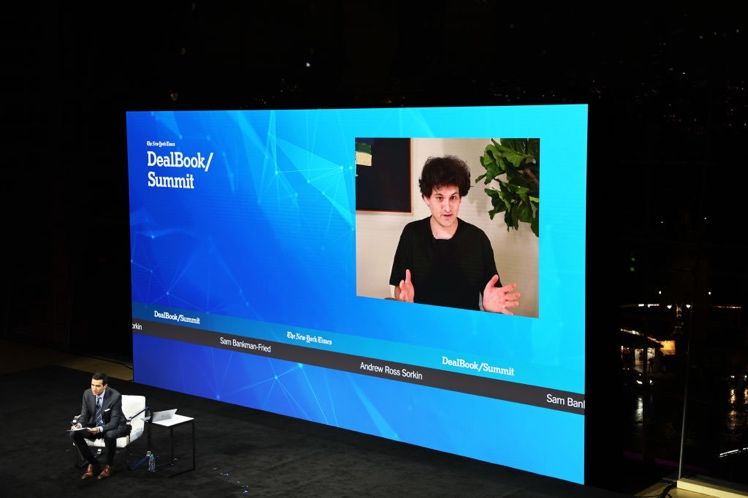
    But in his talk with Times reporter Andrew Ross Sorkin, Mr Bankman-Fried confessed much of his Washington DC work had been PR “masquerading as do-gooderism.”

    Sam Bankman-Fried speaks to The New York Times
    IMAGE SOURCE,GETTY IMAGES Image caption, Sam Bankman-Fried was speaking from the Bahamas

    Mr Bankman-Fried said for now he was not concerned about potential criminal or civil liability.

    “There’s a time and a place for me to think about myself and my own future,” he said after starting and stopping several times. “I don’t think this is it.”

    When asked if he had been truthful in his responses, Mr Bankman-Fried said he was as truthful as he knowledgeably could be. “I don’t know of times when I lied,” he said.

    Though he did not provide evidence to support it, SBF said he believed FTX US was solvent and could in fact pay back American investors.

  • The fall of the FTX ‘King of Crypto’ Sam Bankman-Fried

    It took fewer than eight days for Sam Bankman-Fried to go from being nicknamed the “King Of Crypto” to his company filing for bankruptcy and him stepping down as CEO, potentially facing federal investigations into how he handled the company’s finances.

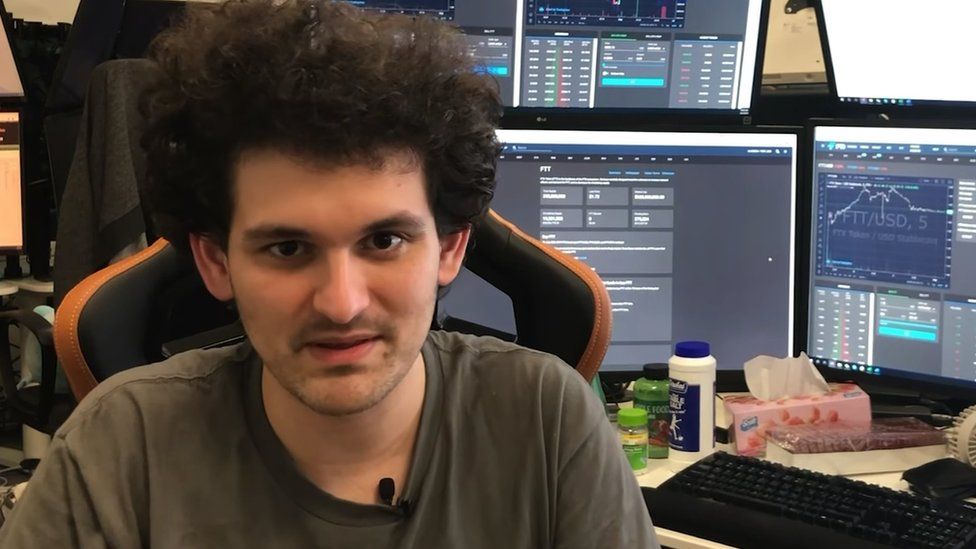
    Over the last few years, the internet has been flooded with long interviews with him, speaking over video chat from his office desk in the Bahamas.

    In some of them, there’s a distracting clicking noise.

    As his interviewees listen intently to his incredible story of how he became a multibillionaire in five years, the sound is persistent and clearly coming from the American entrepreneur’s mouse.

    “Click, click, click,” it goes, in rapid, on-off bursts.

    Meanwhile, Mr Bankman-Fried’s eyes dart around the screen.

    It’s not clear from the videos what he’s doing on his computer but his tweets can give us a pretty good clue.

    “I’m (in)famous for playing League of Legends while on phone calls,” he tweeted in February 2021.

    Mr Bankman-Fried – the former boss of embattled cryptocurrency exchange FTX – is an avid gamer. And in a series of tweets to his nearly one million followers, he explained why. Playing the team fantasy battle game was his way to get his mind to switch off from running two companies trading billions of dollars a day.

    “Some people drink too much; some gamble. I play League,” he said.

    Sam Bankman-Fried at his desk
    IMAGE SOURCE,FTX Image caption, Sam Bankman-Fried also enjoyed playing a video game called Storybook Brawl so much he brought its maker in March 2022

    Since the 30-year-old’s cryptocurrency empire collapsed this week in dramatic fashion another anecdote about his gaming has resurfaced online.

    According to a blog post from venture capital giant Sequoia Capital, Mr Bankman-Fried played an intense League of Legends battle during a high-level video call with their investment team.

    It didn’t seem to put them off at all though. The group proceeded to invest $210m in Mr Bankman-Fried’s company FTX.

    This week Sequoia Capital deleted that gushing blog post and announced they are now writing off their FTX investment as a loss.

    They’re not the only investors who have lost eyewatering amounts of money since Mr Bankman-Fried’s $32bn empire collapsed.

    FTX had an estimated 1.2 million registered users who were using the exchange to buy cryptocurrency tokens like Bitcoin and thousands of others.

    From large traders to everyday crypto fans, many are left wondering if they will ever get back their savings trapped in FTX’s digital wallets.

    It’s a dizzying downfall and the rise of Mr Bankman-Fried is also its own dramatic story of risks, rewards, and beanbags.

    Mr Bankman-Fried went to Massachusetts Institute of Technology (MIT) – a prestigious US research university where he studied physics and maths.

    But the young bright undergraduate says it was lessons learned in the student dorms that led him on his path to getting rich.

    In a BBC radio interview last month he recalled being swept up in the “effective altruism” movement. Effective altruism is a community of people “trying to figure out what practical things you can do with your life to have as much positive impact as you can on the world,” he said.

    So, as Bankman-Fried recalls, he decided to get into banking to make as much money as he could to give it back to good causes.

    He learned to trade stocks during a short stint at the trading firm Jane Street in New York before he got bored and decided to experiment with Bitcoin.

    He noticed the variations in the value of Bitcoin across different cryptocurrency exchanges and started arbitraging – buying Bitcoin from places selling it cheap and selling it to other places where it was trading for more.

    After a month of making modest profits, he got together with some college friends and started a trading business called Alameda Research.

    Mr Bankman-Fried says it wasn’t easy and took months of perfecting techniques about how to move money in and out of banks and across borders. But after around three months he and his small team hit the jackpot.

    “We were super dogged,” he said to the Jax Jones and Martin Warner Show podcast a year ago. “We just kept going. If someone throws another roadblock we would be creative and if our system couldn’t handle that we would just build a new system to get us through that hoop.”

    By January 2018 his team was making $1m every day.

    A business reporter at CNBC asked him recently how that felt.

    Intellectually and according to his methodology, he said “it made perfect” sense. “But viscerally, it surprised me every day,” he said.

    Sam Bankman-Fried became an official billionaire in 2021 thanks to his secondary and more high-profile business – FTX. The crypto exchange grew to be the second largest in the world and a titan of the industry, seeing $10-$15bn traded a day.

    In early 2022 FTX was valued at $32bn and a household name with an NBA stadium named after the company and endorsements from celebrity backers like the NFL’s Tom Brady.

    All the while, Mr Bankman-Fried seemingly delighted in giving his Twitter followers an insight into his lifestyle. He mainly sleeps on a bean bag next to his desk in the office, he said, with a picture of him lying next to his staff at their trading terminals.

    Sam Bankman-Fried on a bean bag
    IMAGE SOURCE,TWITTER Image caption, “Mostly I sleep on a beanbag,” Mr Bankman-Fried told his Twitter followers

    In another, he posted in the early hours of the morning. “Couldn’t sleep. Back to the office,” he wrote.

    Mr Bankman-Fried’s dream of giving away vast amounts of money to charity was also well underway. In the BBC radio interview last month, he claimed he had given away “a few hundred million as of now”.

    And his generosity didn’t just extend to charities. In the last six months the “King of Crypto” was given another nickname – “Crypto’s White Knight”.

    With the price of cryptocurrencies falling in 2022, the so-called “Crypto Winter” is in full swing. While other companies in the industry faltered, Mr Bankman-Fried was handing out bailout cash in the hundreds of millions.

    Asked why he was trying to prop up failing crypto firms, he told CNBC: “It’s not going to be good long term if we have real pain and real blow points. And it’s not fair to customers.”

    He also claimed, in the same interview, to have $2bn in reserve that he could use to help to fail crypto companies.

    But last week he was going around the same industry himself trying to raise money to save his own company and customers.

    Questions about the real financial stability of FTX began swirling after an article on the CoinDesk website suggested that much of Mr Bankman-Fried’s trading giant Alameda Research rests on a foundation largely made up of a coin that a sister company of FTX invented, not an independent asset.

    Further accusations that Alameda Research used FTX’s customer deposits as loans for trading were made in the Wall Street Journal.

    The beginning of the end came though when FTX’s main competitor – Binance – publicly sold off all its crypto tokens linked to FTX a few days later.

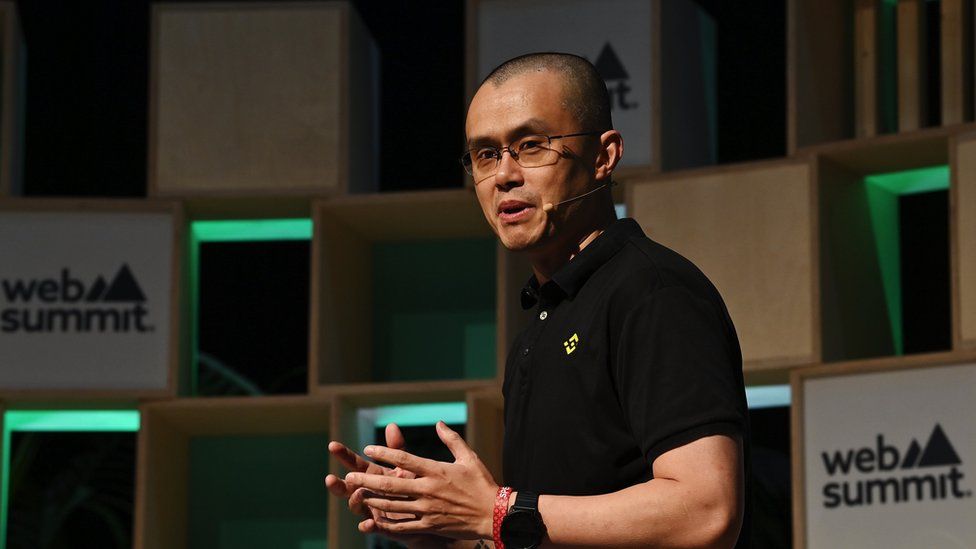
    Binance CEO Changpeng Zhao told his 7.5 million followers his company would be selling off the holdings “in light of recent revelations”.

    It sparked a run on FTX with panicked customers withdrawing billions of dollars from the cryptocurrency exchange.

    Binance CEO Changpeng Zhao
    IMAGE SOURCE, GETTY IMAGES Image caption, Binance CEO Changpeng Zhao shared terse exchanges on Twitter with his rival Mr Bankman-Fried

    Withdrawals were halted and Mr Bankman-Fried tried to get a bailout, with Binance at one stage publicly considering a buyout before walking away.

    Binance said reports of “mishandled customer funds and alleged US agency investigations” had swayed its decision.

    A day later FTX was declared bankrupt.

    Mr Bankman-Fried apologized in a series of tweets saying “I’m really sorry, again, that we ended up here.”

    “Hopefully things can find a way to recover. Hopefully, this can bring some amount of transparency, trust, and governance to them.”

    He also said he “was shocked to see things unravel the way they did”.

    So was, and is the crypto world. The price of Bitcoin has fallen to a two-year low and many are wondering – if FTX can go down along with its talismanic leader, what could fall next?

    Source: BBC.com