Tag: Same-sex marriage

  • “We have different types of people and you have to accept what you see” – Sister Derby on LGBTQ+ matters

    “We have different types of people and you have to accept what you see” – Sister Derby on LGBTQ+ matters

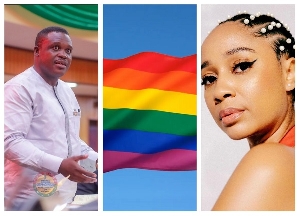
    Leading advocate for the Proper Human Rights and Family Values Bill, Samuel Nartey George, recently explained his determination to criminalize same-sex activities in Ghana.

    As the Member of Parliament for Ningo Prampram, he cited an incident involving an LGBT+ activist attempting to influence his children in school as his primary motivation.

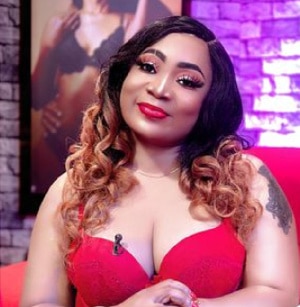
    During an interview with Bola on Starr Chat, Sam George expressed his outrage when musician and model Deborah Vanessa provided LGBT+ education during a visit to his children’s school.

    “For those who say why is Sam George interested in this, I am absolutely not interested in what you do in the privacy of your bedroom. It is not my business… it is because these same people have taken what is their private perversion and are bringing it into my children’s classrooms; North Legon Little Angels.

    “They take somebody who calls herself an influencer and a so-called social media celebrity. Takes her to the school, sit her with children aged 8 to 11 and tells them that it is okay as children for boys to love boys and for girls to love girls,” he stated.

    Asked who he was referring to, Sam George responded saying “she calls herself Deborah Vanessah or whatever,” adding that she was engaged in the grooming of the schoolchildren.

    After parliament’s endorsement of the Proper Human Rights and Family Values Bill, also referred to as the anti-gay bill, a video featuring Deborah Vanessa’s visit to Little Angels School has emerged on social media.

    In the video, Deborah Vanessa is seen seated on a panel and addressing the students of the school. She explains the existence of various sexual identities beyond male and female, asserting that it is not incorrect to identify differently from these two genders.

    “Some people will argue with you that we have only two terms; we have man and woman… we actually see that we have different types of humans. Am I lying? So no matter what you call a person, no matter what, sometimes you can see a boy two years or three years old being girly. We have different types of people and you have to accept because that is what you see. So I feel like we shouldn’t discriminate for how they’ve been created; how they were born, who they are. That’s the same as people being racist to us as black people because we are black. You didn’t ask to be black or you didn’t ask to be Asian. So for me that is my reasoning. You don’t have to judge especially if you are religious; if you are a Christian…” she told the students.

    The Proper Human Rights and Family Values Bill prohibits activities related to lesbian, gay, bisexual, and transgender (LGBT+) individuals and criminalizes their promotion, advocacy, and financial support.

    Individuals found engaging in these activities may face imprisonment ranging from six months to three years, while promoters and sponsors could be sentenced to three to five years in jail.

    Having obtained parliamentary approval, the bill now awaits endorsement from President Nana Addo Dankwa Akufo-Addo to formally become law.
  • Nepal records its first marriage between same sex couple

    Nepal records its first marriage between same sex couple

    Nepal recently had its first same-sex marriage after a long legal fight by the couple and activists.

    Officials in Lumjung district officially registered the marriage of Maya Gurung, 35, and Surendra Pandey, 27, on Wednesday.

    It happened five months after the Supreme Court said that same-sex couples can get married.

    Taiwan is the only country in Asia where people of the same sex can get married.

    Ms Gurung said to the media that the couple’s registration was a very important day, not just for them, but for all people who are part of sexual minorities.

    “Fighting for rights is hard. ” We did it. “And future generations will find it easier,” she said. “The registration has given us many opportunities to do new things. ”

    The couple wanted to open a bank account together and share ownership of the land they bought. However, their main goal is to bring a child into their family once they have more money.

    They have been together for nearly ten years. The couple got married in a temple in 2017. This year, they wanted their marriage to be officially recognized by the law.

    Ms Gurung is a woman who was born a man, but she has not updated her official documents to show that she is now a woman. Pandey was born as a boy and says he is a boy.

    On 13 July, a court in Nepal’s capital city Kathmandu, said they could not record their marriage even though the Supreme Court had told the government to do so until they changed the law.

    The district court said that other courts didn’t have to do what the order said, because it only applied to the government.

    On Wednesday, Hem Raj Kafle, who is in charge of the Dordi rural municipality, said to Reuters that they gave a marriage certificate to the couple because they had to follow the Supreme Court’s order and the government’s instructions.

    Sunil Babu Pant, a leader for LGBT rights, thought the moment was a big win for sexual and gender minorities.

    “We can now get married like other couples. ” “We need to do more to gain additional rights,” he said to the BBC.

  • Vicky Zugah expressly criticizes same-sex marriage

    Vicky Zugah expressly criticizes same-sex marriage

    Ghanaian actress Vicky Zugah, has taken to her Instagram page to condemn same-sex marriage, emphasizing that her bible frowns on it.

    In a short video, the actress was seen lamenting about the consequences and health implications same-sex marriage can have on those practicing it and how it can affect others, especially future generations.

    According to her, even though she knows she stands a risk of being misconstrued for what she said, she doesn’t care as she is disturbed by the situation and has to voice out her take on it.

    She further clarified that a man sleeping with a woman through the anus is different from two men or two women having sex, stressing that some sins are much bigger than others

    The host of the ‘Red Light’ show on United Television asserted that she is a bible believing Christian and that her bible taught her God created Adam and his helper Eve and not Adam and another Adam.

    The actress also opined that people must desist from saying that they don’t have any business to do with what people do with their sexuality as they can be affected in the future.

    ‘‘You will oneday pay with your time and money if you continue to say you don’t care,’’ she stated.

    Vicky to a greater extent divulged that it will be very difficult to completely eradicate same-sex marriage if God doesn’t intervene, as some countries have legalized it but appealed for the practice to be minimized.

    She further called on her colleagues to speak on the matter as their voices can have a great and positive impact with regard to the situation.

  • LGBTQ+: I am opposed to same-sex relations – Asabee

    LGBTQ+: I am opposed to same-sex relations – Asabee

    Minister-designate for Chieftaincy and Religious Affairs has declared his stance on the longstanding LGBTQ debate. According to Mr Stephen Asamoah Boateng, he is opposed to same-sex marriage in the country.

    “Same-sex legalising in Ghana, I am opposed to it,” he said.

    He made this comment when he appeared before Parliament’s Appointment Committee on Monday for vetting.

    Mr Asamoah Boateng’s comment was in response to Awutu Senya West MP, Gizella Tetteh’s question about his view on the legalisation of same-sex marriage in Ghana,

    Over the last few years, the issue has been a hot topic in Ghana with a bill – anti-LGBTQI currently before Parliament to criminalise the activities of the LGBTQ+ community in the country.

    Touching on what his legacy would be when given the nod as the sector minister since he has two years to be in office, Mr Asamoah Boateng noted that he would fight for the Ministry to assume its rightful position as custodians of tradition.

    He further stated that he would ensure that “our traditional authorities are lifted higher to the dignified and noble status.”

    “Our Christian and Moslem leadership must be given the necessary support so they can get congregation to understand that we are one nation which is a sovereign state … so my role is to make sure that we all work together on this aspect and not bring trouble. In the case of conflict, we will manage it and jaw jaw,” he added.

    Source: Myjoyonline

  • I’m against same-sex marriage – Designate Minister for Religious Affairs

    I’m against same-sex marriage – Designate Minister for Religious Affairs

    The Minister-designate for Chieftaincy and Religious Affairs, Mr Stephen Asamoah Boateng, has taken a stance on the LGBTQI debate.

    According to him, he is opposed to same-sex marriage in the country.

    “Same-sex legalising in Ghana, I am opposed to it,” he said.

    He made this comment when he appeared before Parliament’s Appointment Committee on Monday for vetting.

    Mr Asamoah Boateng’s comment was in response to Awutu Senya West MP, Gizella Tetteh’s question about his view on the legalisation of same-sex marriage in Ghana,

    Over the last few years, the issue has been a hot topic in Ghana with a bill – anti-LGBTQI currently before Parliament to criminalise the activities of the LGBTQ+ community in the country.

    Touching on what his legacy would be when given the nod as the sector minister since he has two years to be in office, Mr Asamoah Boateng noted that he would fight for the Ministry to assume its rightful position as custodians of tradition.

    He further stated that he would ensure that “our traditional authorities are lifted higher to the dignified and noble status.”

    “Our Christian and Moslem leadership must be given the necessary support so they can get congregation to understand that we are one nation which is a sovereign state … so my role is to make sure that we all work together on this aspect and not bring trouble. In the case of conflict, we will manage it and jaw jaw,” he added.

  • Cuba Family Code: Country votes to legalise same-sex marriage

    Cuba has voted to legalise same-sex marriage in a national referendum.

    About two-thirds of the population voted to approve reforms in a new Family Code, which will also allow surrogate pregnancies and give gay couples the right to adopt children.

    It marks a big moment for Cuba, which saw gay people persecuted and sent to work camps in the 1960s and 70s.

    However, there was significant opposition to the reforms among religious groups and conservatives.

    The referendum on Sunday was for a new Family Code – a 100-page document which went through more than two dozen drafts and hours of debate in community-level meetings.

    Cuba’s government had backed the law change and ran a nationwide campaign urging people to approve it.

    Speaking as he voted on Sunday, the country’s President, Miguel Díaz-Canel, said he expected most of the population would vote yes and that the new code reflected the diversity of people, families and beliefs.

    On Monday, preliminary results indicated an “irreversible trend”, with 66% of votes counted so far in favour of the reform, electoral council president Alina Balseiro said on state television, according to AFP news agency. The law required 50% of voters’ approval to be adopted.

    The reforms were the culmination of efforts by gay rights activists in Cuba.

    Official attitudes towards homosexuality on the Communist-run island have changed over the past decades, partly thanks to the efforts of former leader Raúl Castro’s daughter Mariela.

    In the early part of communist leader Fidel Castro’s rule after the 1959 revolution, homosexual men and women were sent to work camps for supposed “re-education”.

    However, many in Cuba still oppose the step, including evangelical churches and other non-religious conservatives.

    Parts of the opposition also campaigned for a “no” vote, urging Cubans to seize a unique opportunity to hand the country’s communist government a defeat in the polls.

    • Cuba’s first ever LGBTQ hotel opens

    Some anti-government activists consider the referendum an effort by the state to improve its human rights image following a brutal crackdown on all forms of dissent in recent years.

    The referendum also comes during a serious energy crisis, which has led to daily power cuts affecting millions of people across the island.


    Source: BBC