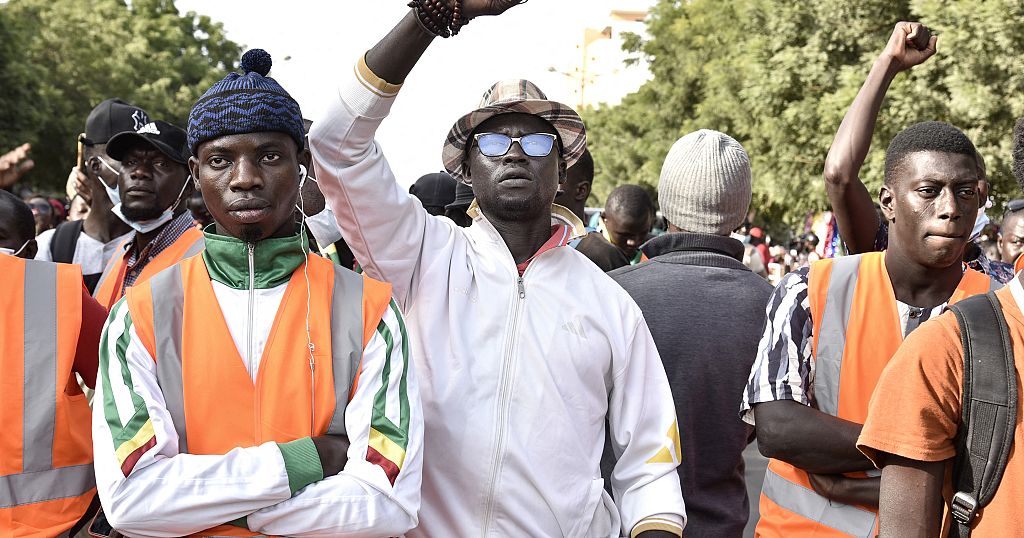
Senegal has blocked TikTok, saying it’s threatening the stability of the country.
The media reports that it’s an attempt to clampdown on critics using the platform.
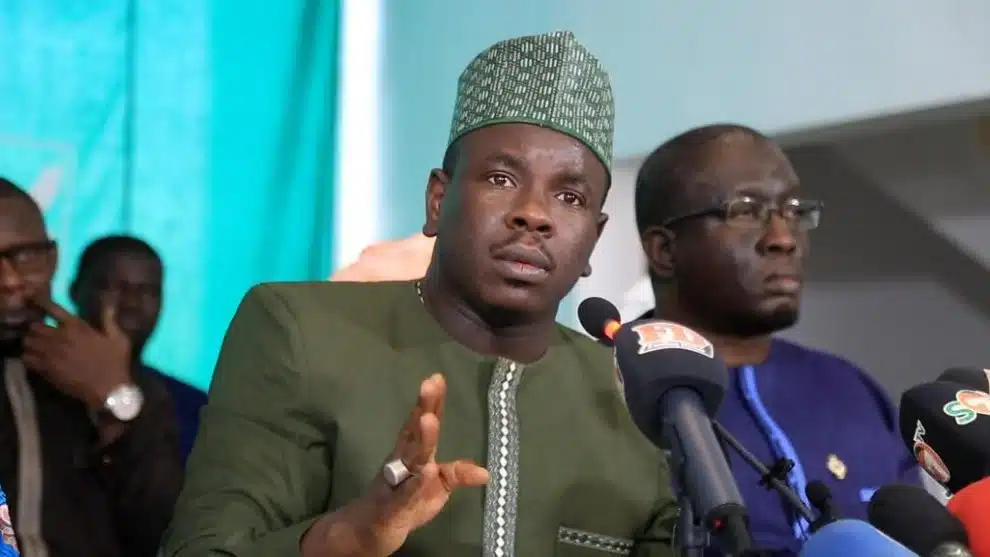
Senegal’s Minister of Communication Moussa Bocar, has announced that TikTok has been suspended because it is being used to propagate “hateful and subversive messages threatening the stability of the country.
“The well-known social networking app was referred to as the “preferred network for people with malicious intent” by the speaker.
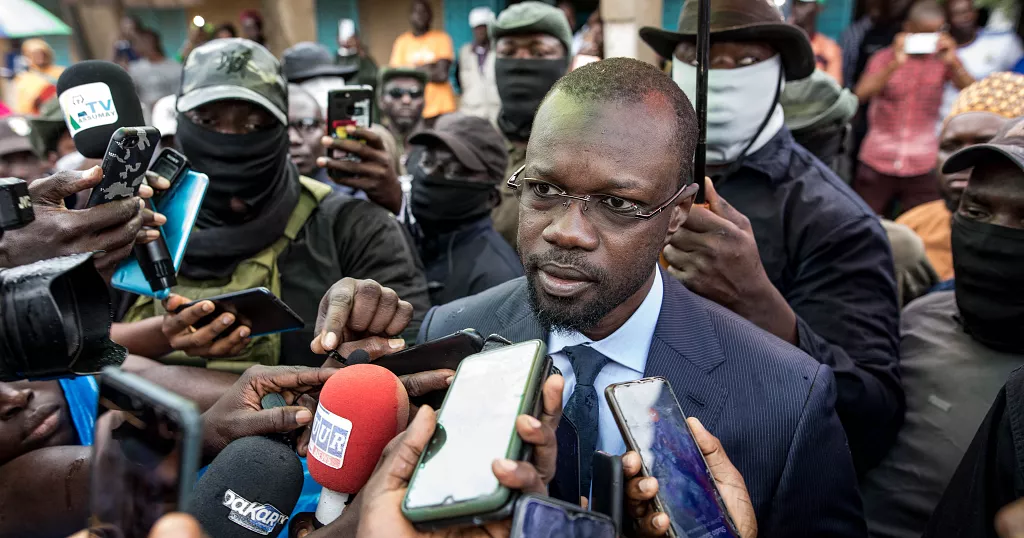
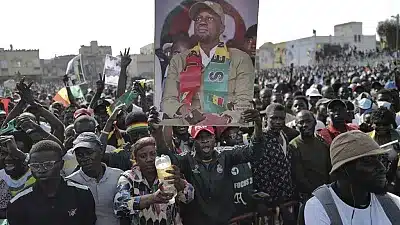
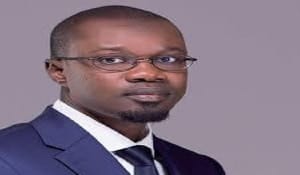
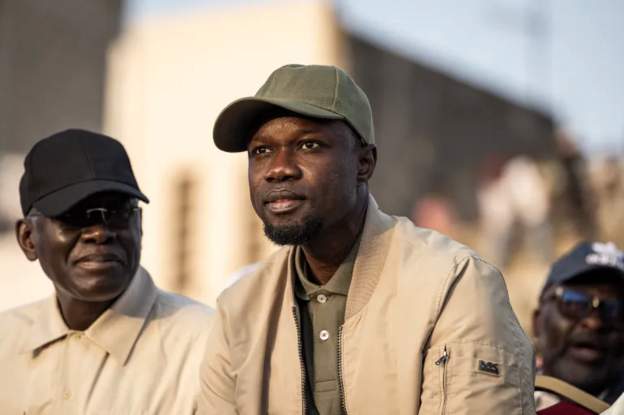
The actions came a few days after fiery opposition politician Ousmane Sonko was detained and accused of a number of offenses, including inciting a riot.
During demonstrations protesting the politician’s incarceration in the city of Ziguinchor, where he serves as mayor, three people were slain.
Earlier this week, the minister issued an order temporarily shutting down mobile data, and telecom firms were instructed to follow it.
The interior ministry of Senegal has announced that it is taking measures to “preserve peace and tranquillity” as opposition protests continue in certain parts of the country.
Small protests are ongoing in the capital, Dakar, as well as in Ziguinchor, where the opposition leader Ousmane Sonko serves as the mayor.
These recent protests were sparked by the arrest of Mr. Sonko over the weekend and the subsequent dissolution of his party. He remains in custody and has initiated a hunger strike as of Sunday.
The government, through Interior Minister Antoine Félix Abdoulaye Diome, declared the dissolution of Mr. Sonko’s party, Patriots of Senegal (Pastef), for inciting unrest during violent protests in Dakar last month.
But Pastef says the Senegal’s stability “is now compromised, because the people will never accept this ultimate forfeiture of power against ‘the favourite’”.
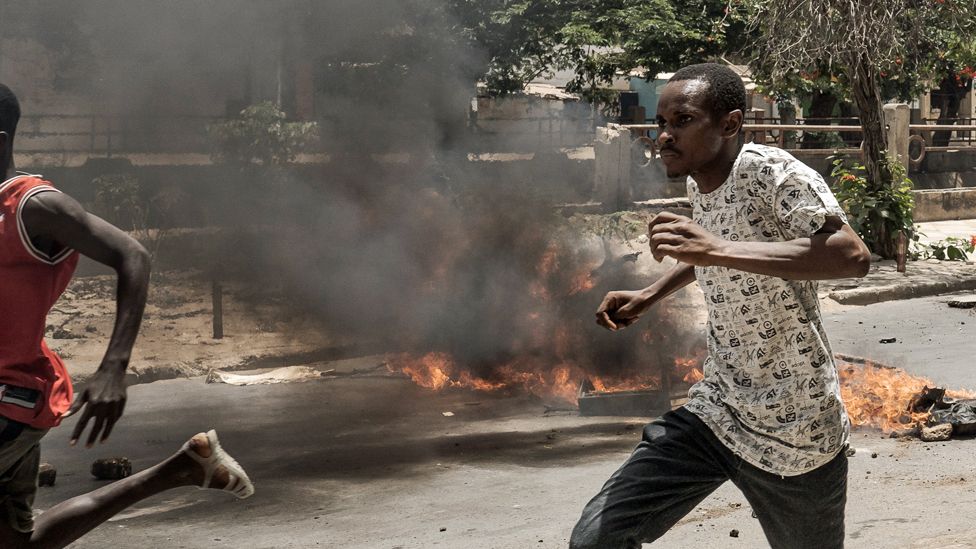
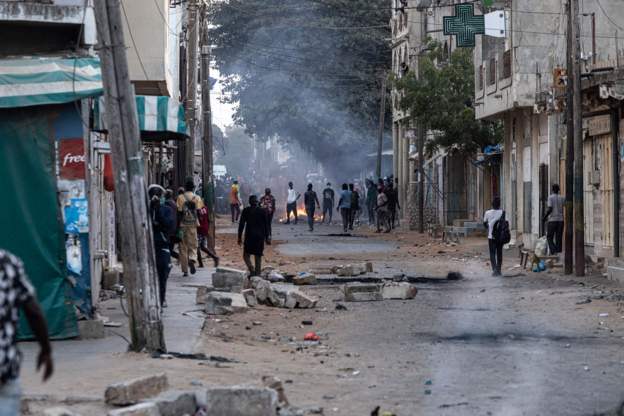
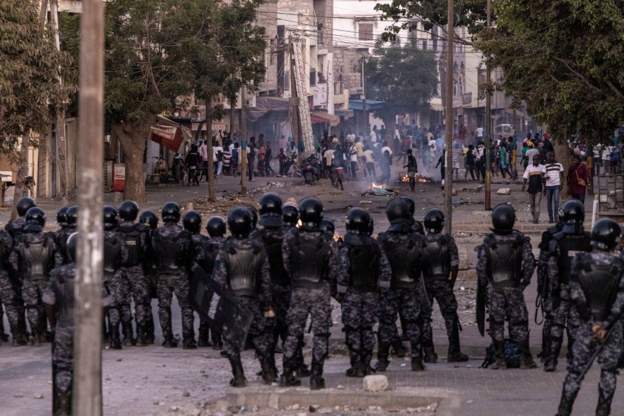
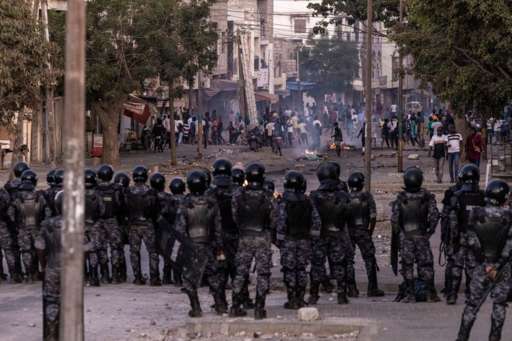
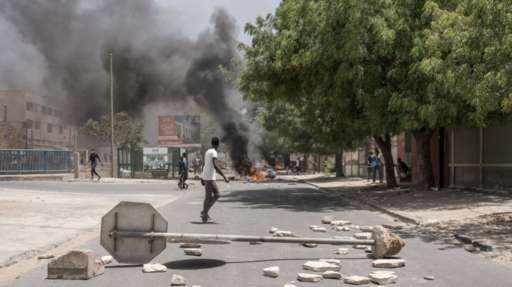
Videos on social networks showed demonstrators throwing stones at the security forces following the arrest and party dissolution.
Mr Sonko has denounced his imprisonment, saying it is “on false grounds”. He is also waiting for the official notification about his party’s disbandment so he can fight it by “legal means”.
It is the third time a political party had been banned in the West African nation since it gained its independence from France in 1960 – the others happened before multi-party democracy was introduced in the 1970s.
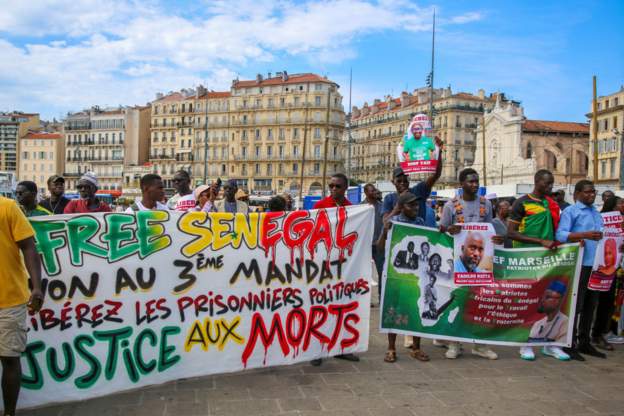
Pastef’s supporters have accused President Macky Sall’s ruling party of trying to side-line his popular opponent, who came third in the 2019 presidential election, with trumped-up charges ahead of February’s vote.
Senegal’s Minister of Communication Moussa Bocar, has announced that TikTok has been suspended because it is being used to propagate “hateful and subversive messages threatening the stability of the country.”
The well-known social networking app was referred to as the “preferred network for people with malicious intent” by the speaker.
The actions came a few days after fiery opposition politician Ousmane Sonko was detained and accused of a number of offenses, including inciting a riot.
During demonstrations protesting the politician’s incarceration in the city of Ziguinchor, where he serves as mayor, three people were slain.
Earlier this week, the minister issued an order temporarily shutting down mobile data, and telecom firms were instructed to follow it.
Senegal’s interior ministry has declared its commitment to “safeguarding peace and tranquillity” in the midst of ongoing opposition protests in various parts of the country.
Minor demonstrations continue to unfold in Dakar, the capital, and Ziguinchor, a city where Ousmane Sonko, the opposition leader, holds the position of mayor.
These protests stem from the recent arrest of Mr. Sonko during the weekend and the subsequent dissolution of his political party. He remains in custody and initiated a hunger strike on Sunday.
On Monday, Interior Minister Antoine Félix Abdoulaye Diome announced the government’s decision to dissolve Mr. Sonko’s Patriots of Senegal (Pastef) party, citing its involvement in inciting unrest during violent protests that transpired last month in Dakar.
However, Pastef contends that Senegal’s stability is now in jeopardy, as they believe the people will not accept what they view as a significant power forfeiture against their favored candidate.
Social media videos depicted demonstrators pelting security forces with stones following Mr. Sonko’s arrest and the party’s dissolution.
Mr. Sonko has criticized his detention, asserting that it is based on false pretenses. He also intends to challenge the official notification of his party’s dissolution through legal means.
Remarkably, this marks the third instance of a political party being banned in Senegal since its independence from France in 1960, though the prior cases occurred prior to the introduction of multi-party democracy in the 1970s.
Supporters of Pastef have alleged that President Macky Sall’s ruling party is attempting to marginalize their popular opponent.
Mr. Sonko secured third place in the 2019 presidential election and is now facing what his supporters believe to be fabricated charges in anticipation of the February election.
The interior ministry of Senegal has reported that two individuals lost their lives in Ziguinchor during protests opposing the detention of the prominent opposition leader, Ousmane Sonko.
Although the ministry did not disclose the identities of the deceased, it called for calm and assured that measures were being implemented to uphold stability in the nation.
In a prior move, the government dissolved Mr. Sonko’s party, alleging that it had incited its supporters towards an insurrection.
On Monday, Mr. Sonko made an appearance in court and was ordered to remain in custody. He faces charges of plotting an insurrection, criminal conspiracy, and other related offenses.
The opposition leader vehemently refutes these charges, asserting that they are driven by political motives.
Party of the embattled Senegalese opposition leader Ousmane Sonko, PASTEF, has condemned the government’s recent decision to levy new charges against him.
They denounced the action as anti-democratic, as the government charged and detained Sonko on Monday for multiple offenses, including allegedly inciting insurrection, which the authorities claim resulted in fatalities.
Sonko’s lawyers have claimed it’s a political vendetta by the government of the outgoing President Macky Sall.
“We consider that the case is empty. We’ve put together a lot of statements to do this. But I have here statements by President Macky Sall, who made much more violent calls,” said Youssoupha Camara, the lawyer for Ousmane Sonko.
The lawyers have also questioned the independence of the judiciary accusing some judges of being biased and siding with the executive to propagate punitive agenda against the opposition.
“We think it was a political order that was unfortunately carried out by a judge. The aim of this political order was to prevent President Ousmane Sonko from taking part in the 2024 elections. And unfortunately, today, we have a judiciary that is almost subservient to the executive, not even to the executive, but to a regime that, whenever it wants, looks for trouble with its political opponents and sends them to prison. And that’s unfortunate for our Senegalese democracy,” said Babacar Ndiaye, the lawyer for Ousmane Sonko.
Less than two hours after his indictment, Interior Minister Antoine Diome announced in a press release the dissolution of the opposition party, Pastef, justifying his decision by its “frequent” calls for “insurrectionary movements” which, according to him, resulted in numerous deaths in March 2021 and June 2023 and “acts of ransacking and looting of public and private property”.
Internet was also restricted on Monday by the government in a move intended to curb spread of information to deter an insurrection.
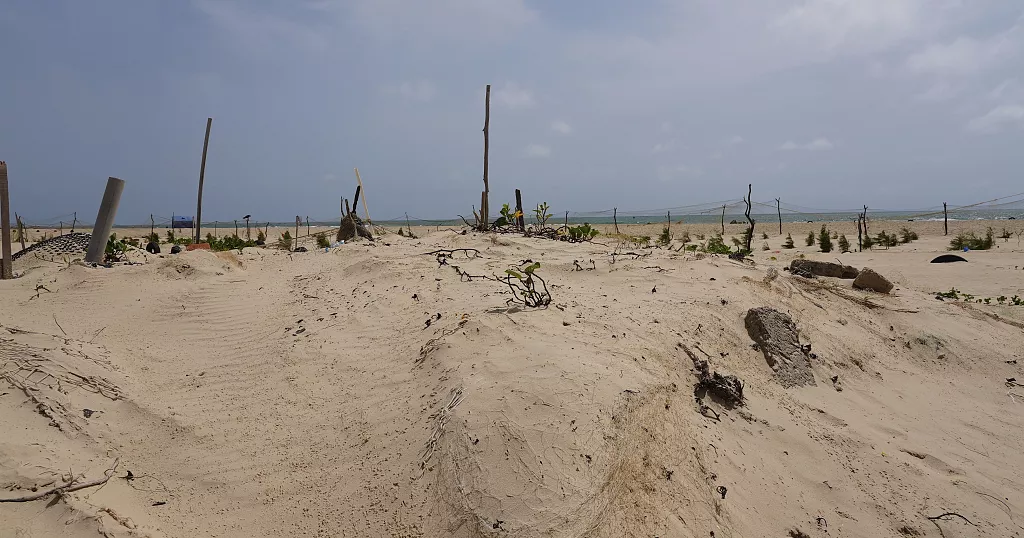
A beach in northern Senegal has a few small sand mounds that mark the resting sites of countless migrants who attempted the perilous voyage from West Africa to Spain.
The 19- and 24-year-old nephews of Mouhamed Niang vanished in late June.
“I’ve been looking for my nephews for three weeks now without any news from them,” he says.
“I heard the government say there are some bodies collected onshore and buried in graves near the beach. That is really awful.”
According to the U.N. International Organization for Migration, at least 2,300 migrants left Senegal in the first half of the year in an attempt to reach Spain’s Canary Islands, but only around 1,100 made it.
The fate of the more than 1,000 individuals who did not travel to Spain is unknown. They might have perished at sea, been saved from sinking boats, or be in custody of the law.
Ibnou Diagne, one of the survivors from a boat that capsized in early July while traveling to Europe, spoke of his ordeal.
“I lost many people when the boat capsized. I lost my friend Abdourahmane. I lost everything. I paid money, the first time 420 dollars and 680 dollars the second time.
“The sea is not good. I lost everything. I lost my clothes. If I were to give advice here it is. If someone wants to travel to Spain, don’t take a pirogue [canoe], you have to take a plane.”
Beach burials, a tradition that has been observed for many years, experienced a significant surge in 2023. In the initial seven months alone, approximately 300 bodies were laid to rest on the shores, surpassing the previous year’s total of just over 100 burials in 2022.
On Thursday, Senegal unveiled a 10-year plan to address the issue of illegalmigration, responding to a recent increase in migrant-related deaths.
The country’s new National Strategy to Combat Irregular Migration (SNLMI), as declared by Interior Minister Antoine Felix Abdoulaye Diome, aims to “drastically reduce the phenomenon by 2033.”
Minister Diome stressed the need to intensify their efforts and set new targets to enhance results, while also acknowledging the progress already achieved in countering this “dangerous phenomenon.”
The SNLMI will concentrate on five key areas: prevention, border management, enforcement measures against traffickers, measures to support and protect migrants, and the return and reintegration of irregular migrants.
The plan will be funded by both the national budget and external partners, although the total cost of the scheme has not been disclosed by the authorities.
The Canary migrant route, an entry port to Europe via the Atlantic Ocean, has experienced an increase in activity in recent weeks, leading to a surge in the number of migrants departing from Africa’s north-western coasts.
As the number of migrants rises, so does the number of deaths.
Over the past two weeks, Senegal has witnessed several tragedies. On Monday, 16 migrants lost their lives when their boat sank off Dakar, and on July 12, another boat capsized near Saint-Louis, resulting in the deaths of at least 14 people.
Morocco’s navy has recently reported rescuing nearly 900 would-be irregular migrants between July 10 and July 17, with the majority of them being from sub-Saharan Africa.
On July 20, President Macky Sall urged the government to intensify controls in potential departure zones and areas while also implementing extensive surveillance, awareness-raising, and support measures for young people. He emphasized the need to strengthen public programs aimed at combating clandestine emigration.
An Egyptian-German who helped a Jewish family during World War Two, Dr. Mohamed Helmy, has been recognized with a Google Doodle.
On the occasion of Dr. Helmy’s 122nd birthday, Google commissioned the piece by Berlin-based artist Noa Snir.
It shows the doctor’s “open-hearted nature” by displaying him with his arms spread wide.
Born in Sudan in 1901 to an Egyptian father and a German mother, Dr. Helmy subsequently migrated to Germany to pursue his medical studies. He eventually worked his way up to become the chief of the urology division at a hospital in Berlin.
When Adolf Hitler came to power in 1933, the persecution of Jews grew worse.
Non-Aryan people were also subject to prejudice, and Dr. Helmy was twice detained by the Nazis in 1939 and 1940, lost his job, and was forbade from marrying his German fiancée.
However, Dr. Helmy made the decision to support the family of one of his Jewish patients, especially a teenage girl named Anna Boros who, at one point, he mistook for his niece by donning a Muslim headscarf.
An official statement issued on Thursday by Senegalese authorities reveals that the rallies planned by Ousmane Sonko’s party for Saturday and Sunday have been prohibited.
The rally scheduled for July 15 was intended to serve as the official nomination of Mr. Sonko as the candidate for his party, Pastef, in the upcoming 2024 presidential election. However, due to a recent conviction, the opponent is no longer eligible to run.
“There are indications that these gatherings constitute real risks of disturbing public order” , justified the governor of Dakar, Al Hassan Sall.
“Calls through social networks invite supporters of this political formation (Pastef) to already invest in the major markets and the main axes and places of gatherings,” said the press release.
According to the governor, there were incidents of individuals attacking public and private property, businesses, and other facilities during a call for a demonstration by Mr. Sonko in early June.
Supporters of Mr. Sonko have stated that their candidate’s inauguration will take place on Saturday at the Amadou Barry stadium in Guédiawaye, located in the suburbs of Dakar, rather than on a public road.
Mr. Sonko, President Macky Sall’s strongest opponent, who will celebrate his 49th birthday on Saturday, was sentenced to two years in prison in a corruption case a month ago. He claims to have been confined to his home in Dakar since May 28, alleging that he was “kidnapped” by security forces.
The sentencing resulted in the most severe unrest in Senegal in years, occurring in early June, which led to 16 deaths according to the authorities, and approximately thirty deaths according to the opposition.
The leader of the opposition party, Pastef, warned of “indescribable chaos” if he is prevented from running as a candidate in the upcoming presidential election.
President Macky Sall, who was elected in 2012 and re-elected in 2019, announced at the beginning of July that he would not seek a third term.
From 4.7% in 2022 to above 5.3% in 2023, Senegal’s growth is projected to pick up, in part due of a growing oil and gas industry. But the country faces many challenges, including an economic fallout from the Ukraine crisis, stricter financial regulations, and growing political upheaval in the region. Two major problems are growing fiscal imbalance and rising government debt.
The strong post-pandemic recovery of Senegal has been impeded, according to Edward Gemayel, IMF Mission Chief for Senegal. As a result, GDP predictions have been reduced, and inflation has increased, worsening the fiscal and current account deficits. Additionally, the national debt now accounts for nearly 76% of GDP.
However, the nation has bright prospects, which are supported by the production of oil and gas, which will stimulate the economy for the foreseeable future. With the assumption that the IMF-supported programs’ cautious macroeconomic policies and resolute structural reforms are carried out, growth is forecast to pick up to 10.6% in 2024 and 7.4% in 2025, with non-hydrocarbon growth anticipated to reach about 6%.
“Inflation hit a multi-decade high of 9.7 percent in 2022, driven largely by the surge in food prices, which account for almost half of the CPI basket in Senegal. Inflation has since eased to around 9 percent and is projected to fall to around 5 percent by year-end but could potentially increase again if commodity prices remain high,” he disclosed during an interview.
The Senegalese government responded by raising public sector pay by almost 20% and increasing gasoline and energy subsidies, which have risen to about 4% of GDP.
However, in order to address the budget deficit, public investments were decreased. Future important actions, such as cutting tax exemptions and gradually eliminating energy subsidies while better focusing on social spending to mitigate the consequences of falling real wages, will be required to maintain debt sustainability and help contain inflation.
According to Senegal’s Nationally Determined Contribution (NDC), which outlines the country’s projected climate actions between 2023 and 2030, the nation will need funds equivalent to almost 7% of its GDP year until 2030 to achieve its mitigation and adaptation goals.
Prosecutors in the Canary Islands have filed a lawsuit suggesting that the negligence of Spanish authorities could have resulted in the tragic deaths of 36 migrants who attempted to reach the territory in an inflatable boat last month.
The boat sank after waiting for 10 hours without receiving assistance.
The prosecutors have alleged that crimes, including failure to provide assistance, may have been committed in this case.
Spain’s coastal rescue service has faced accusations of negligence after reports emerged that one of its boats was reportedly only an hour away from the distressed migrant vessel.
Fortunately, a Moroccan boat rescued the 24 survivors from the incident.
The lawsuit serves as an attempt to investigate and potentially hold accountable those responsible for any negligence or misconduct that may have contributed to the loss of lives during the tragic event.
A senior opposition politician in Senegal says his client, Birame Souleye Diop, has been apprehended by the police after making a political comment against President Macky Sall.
Per reports, Mr Diop, an MP with the Pastef party suggested that the president might row back on his commitment not to stand for a third term in next year’s election.
President Sall ruled out running for re-election earlier this month, following widespread protests.
“My dear fellow citizens, my decision after long consideration is to not be a candidate in the election on February 25, 2024,” Sall said in a televised address.
“Senegal is more than me, and is full of capable leaders for the country’s development,” he said.
Sall said he had sought to prioritise his country’s progress, “in particular at a time of social-economic difficulties and uncertainties.”
On the eve of Sall’s nationwide address, his fiercest critic, Ousmane Sonko, had urged the public to “come out en masse” and oppose him.
The seas off the Canary Islands is being searched by Spanish police for a boat that vanished more than a week ago carrying at least 200 African migrants.
Other ships in the region have been instructed to keep an eye out for the missing ship, and a search plane is currently probing the waters south of the Spanish islands.
A seaside village in southern Senegal called Kafountine is 1,700 kilometers (or around 1,000 miles) from the Canaries, where the boat left from.
Many children are on board, according to aid workers.
Also reported missing are two smaller boats from the same region that were carrying numerous people.
Senegal’s prominent opposition leader, Ousmane Sonko, expressed concerns about potential “unimaginable chaos” if he is prevented from participating in the upcoming February elections.
These remarks came in response to President Macky Sall’s confirmation that he will not seek another term in office.
In a virtual interview with France 24, Sonko warned that if President Sall resorts to legal maneuvers to obstruct his candidacy, it would lead to a state of disorder and jeopardize the conduct of elections in the country.
Sonko, known for his outspoken and confrontational style, recently received a two-year prison sentence on charges of morally corrupting a young woman. This conviction renders him ineligible to run for office.
The ruling triggered significant unrest in Senegal, resulting in clashes that claimed the lives of 16 people, according to official figures, or around 30 people, as claimed by the opposition.
President Sall, who is nearing the end of his second term, announced on Monday in a nationwide address that he would not seek a controversial third term in the forthcoming election. Although some of Sall’s supporters argued that a 2016 constitutional revision reset the term limit to zero, the constitution states that a president cannot serve more than two terms.
In recent months, he had remained coy about a third term, stoking ambiguity exploited by the opposition.
On Thursday, Sonko said the president had made the decision not to run, “not because he is a democrat,” but because of “popular and international pressure.”
He said there is no reason to congratulate him for it.
Though he said those in power are determined to eliminate him from the presidential race, Sonko flagged that he was “ready to forgive” and even to “forget” if permitted to run.
Calling for free, transparent and inclusive elections, Sonko said he hoped Sall ended his term well “and that he and his family will be able to leave in peace.”
Additionally, Sonko mentioned that he is currently not in communication with President Sall.
Since May 28, a few days before the court’s ruling, security forces have maintained a blockade around Sonko’s residence in the capital city of Dakar, effectively confining him to his home.
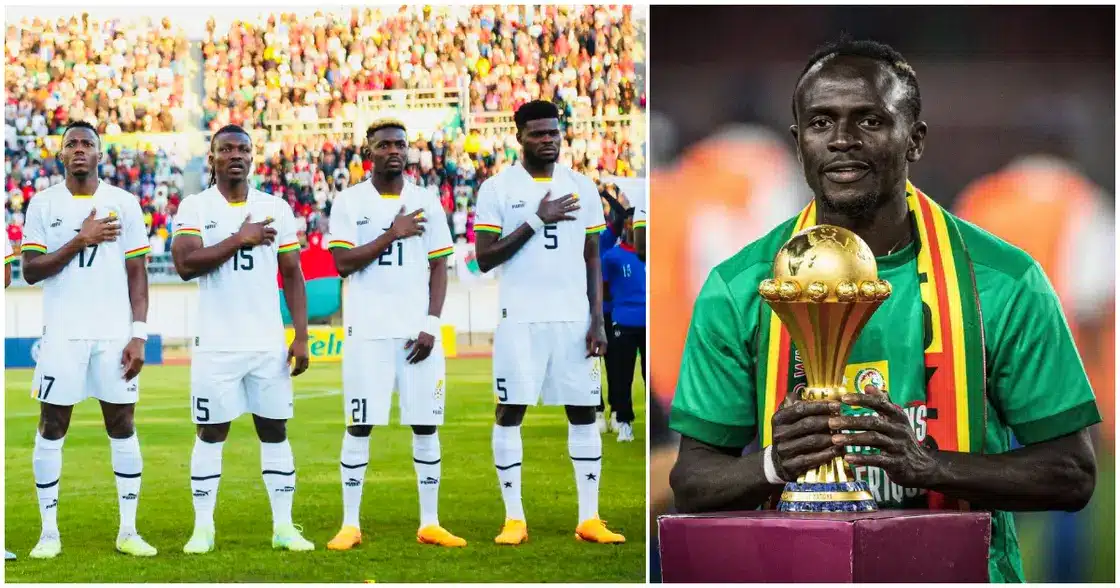
Senegal and Bayern Munich winger, Sadio Mane, has identified Ghana as one of the top contenders to win the Africa Cup of Nations in Ivory Coast next year.
Mane, who was part of the 2021 AFCON-winning team, believes that alongside Egypt, Morocco, and Cameroon, the Black Stars have a strong chance of clinching the title.
Although Ghana is still working towards securing qualification for the tournament following a draw with Madagascar in the penultimate AFCON qualifier, Egypt, Morocco, and Cameroon have already secured their places in the competition scheduled for January.
“The AFCON is full of surprises, but we know the usual best teams like the hosts, Nigeria, Egypt, Morocco, Ghana, Algeria and Cameroon,” he said, as quoted by Joueurs Cameronais.
The Black Stars have struggled in recent times, getting eliminated at the group stage of their last two tournaments.
The team failed to progress beyond the group stage ofthe last AFCON with Morocco, Gabon and Comoros advancing ahead of the four-time African champions.
At the 2022 FIFA World Cup, Ghana finished bottom of their group with Portugal and South Korea progressing to the round of 16, as reported by nbcwashington.com.
Black Meteors arrive after AFCON disappointment
Earlier, Sports Brief reported that The Black Meteors of Ghana have finally arrived home in Accra after a disappointing U-23 Africa Cup of Nations in Morocco.
Ghana failed to secure one of the tickets to the 2024 Olympic Games in Paris after exiting the tournament at the group stage.
Following the 1-1 draw against Guinea in their final group game, the Black Meteors finished third in Group A and were beaten to the semi-final spot on goal difference.
Badu unhappy with Ghana football
Former Black Stars midfielder, Emmanuel Agyemang Badu has been lamenting over the state of Ghanaian football following the Black Meteors’ AFCON U-23 exit.
The Ghana U23 team were eliminated from the tournament in Morocco at the group stage, and will not qualify for the 2024 Olympic Games in Paris.
This is the third time in a little over a year that a Ghanaian national team has failed to progress beyond the first round of an international competition.
Opposition leaders have reacted to Senegal President Macky Sall’s decision that he will not run in the 2024 presidential election, claiming that it was due to popular pressure.
A member of parliament and Pastef Abass Fall, the party of key opposition leader Ousmane Sonko, said it came as no surprise:
“What would have surprised us is if Macky Sall had declared his candidacy for 2024. We all know that he wanted to… unfortunately for him, the pressure was such that he had no choice but to respect the constitution, which he himself cited several times, which he had voted in 2016.”
Former Prime Minister Aminata Touré, who is currently in opposition, claimed Mr Sall’s decision to obey the constitution was due to the “mobilisation of Senegalese democrats” both locally and in the diaspora:
“No one was prepared to accept the democratic regression he envisaged. So, in desperation, he respects the Constitution. If he had done so much sooner, we wouldn’t be where we are today,” she said.
She said 16 people had been killed in protes”s “and the commission of inquiry will have to tell us who the masterminds were and who the others were”.
A former trade minister and leader of the ruling Alliance pour la République party, Aminata Assome Diatta, has however described the moment as “historic”.
“Today is a historic date, and more than in the past, the President of the Republic has shown the world that politics can go hand in hand with ethics,” she said.
President Macky Sall of Senegal has officially declared that he will not be pursuing re-election when his current term comes to an end next month.
In a highly anticipated address to the nation on July 3, 2023, he put an end to the speculations and dispelled the rumors surrounding his intention to seek a controversial third term in office.
“My dear fellow citizens, my decision after long consideration is to not be a candidate in the election on February 25, 2024. Senegal is more than me, and is full of capable leaders for the country’s development,” he said in French.
The news of his candidacy and the subsequent arrest of a prominent opposition candidate, Ousmane Sonko, sparked violent protests that resulted in loss of lives and extensive property damage in recent times.
Reacting to Sall’s announcement, former Niger president Mahamadou Issoufou tweeted: “The President, Macky Sall, has just shown great political intelligence. Thus, Senegal remains one of the torchbearers whose flame lights up our continent.”
The United Nations Secretary General tweeted: “I would like to express my deep appreciation for President Macky Sall and the statesmanship he has shown. His decision represents a very important example for his country and the world.”
Putting an end to the widespread speculation surrounding his political future, President Macky Sall of Senegal has officially announced that he will not seek re-election in 2024.
“The 2019 term was my second and last term,” he said in a televised address.
In his address late on Monday, Mr Sall, 61, said: “There has been much speculation and commentary on my eventual candidature on this election.
“My decision, carefully considered… is not to run as a candidate in the upcoming election.
“Senegal is more than me, and is full of capable leaders for the country’s development,” he added.
Since 2021, rumors of President Macky Sall attempting to extend his hold on power have sparked unrest on multiple occasions, leading to the loss of many lives.
In response to these speculations, the opposition had threatened to organize further protests if Mr. Sall pursued another term, a move that most legal experts argued would have been in violation of the country’s constitution.
In recent times, anger has surged throughout Senegal following the conviction of opposition leader Ousmane Sonko, who was sentenced to two years in prison on the charge of “corrupting youth.” While the 48-year-old was acquitted of rape allegations, he was found guilty of engaging in immoral behavior with a person below the age of 21.
The verdict triggered mass demonstrations across various cities, with thousands of protesters rallying against the ruling. Tragically, the protests resulted in at least 16 fatalities.
Sonko vehemently denies any wrongdoing, and his supporters argue that the trial was a politically motivated scheme designed to prevent him from participating in the upcoming presidential race.
Image caption,Senegal was rocked by deadly violence after Ousmane Sonko’s court verdict in June
Mr Sall has been in office since 2012.
In 2016, he changed the constitution to set a two-term presidential limit. But his supporters argued he could still run for a third term as his first was under the previous constitution.
Speculation that he would try to cling on to power has dented Senegal’s reputation as a relatively stable democratic nation in the restive West African region.
The opposition leader of Senegal, Ousmane Sonko, has urged the public to participate in large-scale protests against President Macky Sall’s bid for a third term in office.
President Sall is expected to deliver a speech later to announce whether he intends to run for president in 2024, a move that most legal experts argue would violate the Senegalese constitution.
Last month, widespread demonstrations took place in various cities across Senegal following Sonko’s conviction and subsequent sentencing to two years in prison on charges of “corrupting youth.” Sonko’s supporters and some political observers believe that the case was politically motivated, aiming to prevent him from running in the upcoming presidential election.
These clashes marked the deadliest and most significant unrest in recent history.
Sonko also said on Sunday that if the president announces a third-term bid it was “incumbent on all the Senegalese people to stand up, to face him”.
The constitution limits presidents to two terms in office but Mr Sall’s supporters argue that this should be reset because a new constitution was adopted in 2016.
An attempted third-term bid by then President Abdoulaye Wade in 2012 plunged the country into violence, leading to 12 deaths.
Senegalese defender, Kalidou Koulibaly, has finalized his transfer from Chelsea to SaudiArabian club Al-Hilal.
The 32-year-old has signed a three-year contract with the Saudi Blues, opting to depart from Chelsea after only one season.
Koulibaly becomes the second acquisition from England for the Saudi giants during the summer transfer window, following the arrival of Ruben Neves from Wolverhampton Wanderers.
“Coming From the Strongest League in the World.. “Koulibaly”.. The Senegalese Player is Hilaly,” wrote Al-Hilal on Twitter, confirming the arrival of the defender.
Both teams have made big signings, with the likes of Cristiano Ronaldo and Karim Benzema moving to the Middle Eastern nation.
“From my first game to my last, it was an honour to wear this badge. Last season wasn’t the one we wanted, but I want to thank the fans and everyone at the club for your support,” wrote Koulibaly on Twitter, as he confirmed his Chelsea departure.
Koulibaly commissions Senegal hospital project
Earlier, Sports Brief reported that Koulibaly has returned to his parents’ hometown in Ngano, Senegal.
The Blues’ centre-back arrived to a heroic welcome after years of plying his trade in Europe, where he was born.
Although he was born in France, Koulibaly decided to represent Senegal at the senior level, helping the country win its first-ever Africa Cup of Nations title in 2021.
Addo joins Red Star Belgrade
Black Stars midfielder Edmund Addo has joined Serbian giants Red Star Belgrade in the summer transfer window.
The 23-year-old signed a four-year deal to join the treble winners from rivals Spartak Subotica.
Addo, who was part of the Black Stars team for the AFCON qualifier against Madagascar on Sunday, has been on the radar of Red Star since last season.
Senegal has temporarily closed its consulates abroad following attacks on diplomatic missions in Bordeaux, Milan, Paris and New York among others.
The foreign affairs ministry said in a statement on Tuesday that the precautionary measure followed “a series of aggressions that caused serious damage”.
It said the consulate in Milan had been particularly hard hit, with passport-making machines and identity cards damaged.
The closures come amid political tensions in Senegal following the sentencing of opposition leader Ousmane Sonko last week to two years in prison which led to deadly protests.
Italian media reported on Monday that about 40 Sonko supporters had gathered outside the consulate with flags and anti-government signs – breaking in and ransacking the offices before the police intervened.
Senegal’s foreign ministry says consulate services will resume “as soon as material and security conditions allow”.
In the aftermath of the judgment of a two year prison term for opposition leader Ousmane Sonko on Thursday, violence broke out, according to the Red Cross in Senegal, injuring about 360 persons.
At least 16 people are known to have died in the clashes between demonstrators and security forces in the capital, Dakar, and Mr Sonko’s home city of Zinguinchor.
Supporters of Mr Sonko say his conviction on charges of “corrupting” a young woman are politically motivated.
They have condemned what they called the “murderous repression” of the security forces.
On Sunday the situation appeared calm.
The government has restricted access to the mobile internet, to stop what it called “subversive messages” from being shared.
The Red Cross in Senegal has revealed that approximately 360 individuals have been injured in the violence that erupted on Thursday following the sentencing of opposition leader Ousmane Sonko to two years in prison.
The clashes between demonstrators and security forces in the capital, Dakar, and Mr. Sonko’s hometown of Zinguinchor have tragically claimed the lives of at least 16 people.
Supporters of Mr. Sonko firmly believe that his conviction on charges of “corrupting” a young woman is politically motivated.
They have strongly condemned what they perceive as the “murderous repression” carried out by the security forces.
As of Sunday, the situation appeared to have calmed down. However, the government has implemented restrictions on mobile internet access to prevent the dissemination of what it describes as “subversive messages.”
Violent clashes between riot police and protesters in Senegal have resulted in the death of at least nine individuals.
The unrest erupted after opposition leader Ousmane Sonko was sentenced to two years in prison.
Interior Minister Antoine Diome confirmed the casualties during a late-night press conference following a day of widespread violence across the country. In response to the situation, the government has blocked access to social media platforms like Facebook and WhatsApp.
The city of Ziguinchor, where Sonko serves as the mayor, experienced some of the most intense clashes.
Fresh unrest hit Senegal's capital Dakar after a court sentenced a leading opposition politician, Ousmane Sonko, to two years in jail for corrupting youth, undermining his chances of running for president next year https://t.co/q9QxqMaEynpic.twitter.com/tDKlLIZumN
Sonko’s two-year jail sentence, delivered in his absence, could potentially bar him from participating in next year’s presidential election.
While he was cleared of rape charges, he was found guilty of immoral behavior toward an individual below the age of 21. These allegations originated from a massage therapist, which Sonko vehemently denied.
The Senegalese government has pledged to take necessary measures to safeguard both people and property in the aftermath of the deadly unrest.
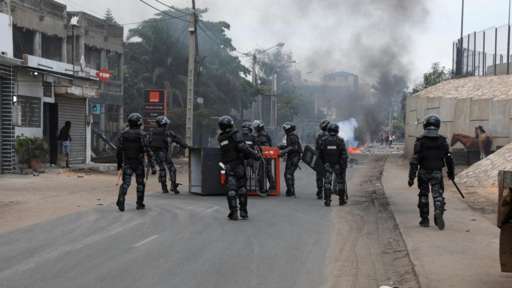
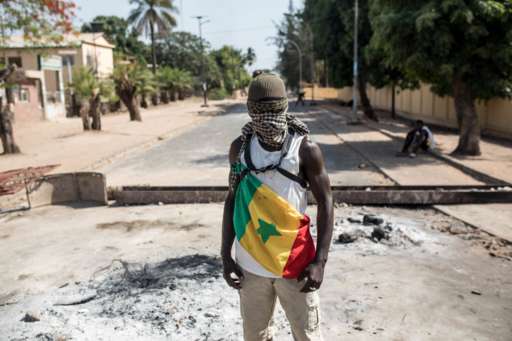
Protesters clashed with security authorities in Dakar, Senegal, on Monday, torching cars and erecting barricades to protest the treatment of opposition leader Ousmane Sonko, who is on trial for rape.
Just one day prior, Sonko – founder of the left-leaning PASTEF party – had attempted to lead what he called a “caravane de la liberté” or a “freedom caravan” from the town of Ziguinchor, where he serves as mayor, to Dakar.
But the convoy of vehicles was deemed illegal and diverted to a home Sonko has in Dakar.
Interior Minister Antoine Felix Diome denied that Sonko has been arrested, but supporters and fellow politicians have claimed that security forces prevented them from visiting him.
Police also allegedly blocked roads around Sonko’s residence in Dakar’s Keur Gorgui district. Those restrictions have spurred concerns about Sonko’s rights and the fate of Senegal’s upcoming 2024 presidential election, in which the PASTEF leader is a candidate.
“The restrictions imposed on Ousmane Sonko’s freedom to come and go, without notification, are illegal and must end,” the Senegalese branch of the rights group Amnesty International posted on Twitter, calling on authorities to follow the rule of law.
El Malick Ndiaye, the national secretary of communications for PASTEF, issued a strongly worded declaration on his own Twitter account. Dubbing the PASTEF candidate “President Sonko”, Ndiaye accused the Senegalese authorities of confiscating Sonko’s phones, laptop and personal effects and barricading his house.
“They are refusing access to his staff, his lawyer and his parents coming to visit him,” Ndiaye wrote. “We can tell you that President @SonkoOfficiel is now in prison. We have to fight to free him.”
Interior Minister Diome has responded to the criticism by telling the Senegalese broadcaster RTS that it is the “prerogative of the state to maintain public order and preserve the security of people and property”.
In protest, supporters allegedly threw rocks at police outside Sonko’s home, while law enforcement responded with tear gas.
It was the latest surge of violence in the heated rivalry between Sonko and current President Macky Sall, a centrist representing the Alliance for the Republic party.
Earlier this month, at least one teenager was killed and 30 people wounded in Dakar after Sonko called for protests in response to his ongoing legal woes.
He had recently received a suspended sentence of six months in a defamation case after an appeals court decided to increase the penalty he faced. Initially, in March, he had been handed a two-month suspended sentence.
The ruling threatens to make him ineligible for the upcoming presidential race. Sonko is expected to return to court on June 1 for another case, this time to face allegations he raped and threatened a woman in a massage parlour in 2021.
Prosecutors intend to seek a sentence of 10 years at the hearing, which could likewise derail Sonko’s race for the presidency.
Meanwhile, Sonko and his allies have accused President Sall of trying to sabotage his candidacy. Sonko previously ran against Sall in the 2019 presidential election, placing third.
Normally, Senegalese presidents are limited to two terms. But critics fear Sall might use a constitutional change in 2016 as an excuse to vie for a third term.
When Sall was first elected in 2012, a single presidential term ran for seven years. But in 2016, Senegal held a referendum to cut presidential terms to five years.
Sall served his full seven-year term and then was reelected in 2019 to serve a five-year term. But he has implied in media statements that the constitutional reform reset the clock – and that he would be eligible to run for a second five-year term under its provisions.
This has been a highly controversial assertion in Senegalese politics, leading to questions about whether Sall will run again in 2024 – and about the strength of the West African nation’s democracy.
Nine extremely elderly riflemen who served France in Algeria and Indochina arrived in Senegal on Friday to gently end their lives after a protracted legal battle with the French government to get their “sacrifices” recognized.
When the first of them walked through the doors of the plane at Blaise Diagne airport, installed in his wheelchair, white beard, dressed in a traditional brown boubou, families and veterans have launched the first applause.
It was time for a reunion. Some smiled, others cried, all marked by the emotion of returning to their country of origin in the twilight of their lives.
This moment was made possible thanks to a derogatory measure decided by the French government, which allows them to live permanently in Senegal without losing their minimum old-age allowance of 950 euros per month.
“I am very happy to be back with my family, my brothers, my children,” said 91-year-old Oumar Diémé on his arrival.
A few minutes before, his brother Sidi introduced him to AFP as “the patriarch”, “the baobab of the family”, who was sorely missed. His relatives prepared a mafé, his favourite dish, for his return.
“The measure may have come a little late, but today the prevailing feeling is one of joy,” he said, saying his only regret is that his eldest child “will not be able to benefit from the same medical care as in France.
The nine soldiers were then received at the presidential palace by President Macky Sall, who decorated them.
– Injustice repaired” –
“Today we celebrate an injustice repaired. You can finally live at home, with your families and receive your full pensions,” said President Sall.
“This ceremony is an exercise in memory in recognition of the sacrifices. It is also a reminder of the long series of injustices against the infantrymen who have been in all the battles,” he added.
“All the Senegalese infantrymen have given their full satisfaction to France. It is a debt that France has paid us,” reacted Yoro Diao, their spokesman.
All elegant in impeccable suits or traditional tunics, wearing their military medals with poise, these Senegalese riflemen had left at dawn their 15-square-metre studios in a hostel in Bondy, near Paris, where they had lived for years.
“Long live our fathers!” and “Long live France and Senegal!” were the words heard during the moving moments of group photos and exchanges with the French Secretary of State for Veterans and Remembrance, Patricia Mirallès, before their departure. “We will miss you! but the family is waiting for you there…”, the Secretary of State told them, moved.
“I am very happy to return to Senegal and to continue to benefit from the rights I had in France; for the past 25 or 20 years, it was hard for our relatives to commute, and for our age too.
N’Dongo Dieng, 87, wearing his military medals on a mustard tunic, told AFP.
This comes “late”, because “many comrades died before benefiting from this measure…”, lamented the veteran.
Exceptional aid also finances their removal, their return flight and their resettlement.
– Relief” –
“I am extremely moved,” Aïssata Seck, president of the Association for the Memory and History of Senegalese Tirailleurs, told AFP before taking the plane.
The granddaughter of a rifleman, she was the linchpin who for 10 years worked for their recognition, until the decision of French President Emmanuel Macron in early 2023 to announce this derogatory measure for their allowance.
“The fact that they can finally return home is a real relief and the culmination of a very long struggle” for them to have “a dignified end to their lives”, according to Ms Seck, who believes that the French state “did what was necessary”.
For Claire Miot, a lecturer in history at the Institute of Political Studies in Aix-en-Provence (France), “it is a recognition of their sacrifices in the service of France that is extremely late because these are men who are 90 years old.
The French “Senegalese Riflemen” corps, created under the Second Empire (1852-1870) and disbanded in the 1960s, brought together soldiers from the former African colonies. The term came to designate all African soldiers who fought under the French flag.
After Friday’s departures, there are still 28 Tirailleurs in France – all of Senegalese origin -, many of whom are likely to return permanently soon.
Yoro Diao, 95, who volunteered for the French army as part of his family’s tradition, is wearing the Legion of Honour and wants to “rest” in Kaolack, in central Senegal.
“It’s a very important day for us, and memorable,” he told AFP before boarding the plane. “Our children and grandchildren will always remember… that grandpa came back from France that day very happy.
Residents of Saint-Louis, a small fishing village in Senegal, have been having difficulties for a long time. The COVID-19 pandemic, foreign industrial trawlers, and climate change have all made it challenging to make a living off the water.
When officials announced a new gas project off the coast in 2015, the community was hopeful it would bring new opportunities. Instead, many locals say, the gas has only brought a wave of problems and pushed people to desperation. That includes forcing some women to turn to prostitution to support their families, they told The Associated Press in interviews.
Four women who shared their stories said they started working as prostitutes because their husbands, all fishermen, could no longer make a living after the gas deal came to town and the rig restricted access to fertile fishing areas, known locally as diattara. The women all said they knew of several other women in the same position.
The women spoke on condition of anonymity because their families do not know what they do. Prostitution is legal in Senegal, but the women do not want to register, citing cultural shame.
For them, prostitution is faster and more reliable than working in a shop or restaurant — jobs that do not pay well and can be hard to find.
The deal — planned by a partnership among global gas and oil giants BP and Kosmos Energy, and Senegal and Mauritania’s state-owned oil companies — is expected to produce around 2.3 million tons of liquified natural gas a year, and Mauritania and trying to benefit the wider economy by locally sourcing products, developing the workforce and supporting sustainable development.
More than 3,000 jobs in some 350 local companies have been generated in Senegal and Mauritania, according to BP. The company also cited its work to renovate the maternity unit at the Saint-Louis hospital and its help of 1,000 patients with a mobile clinic operating in remote areas.
In a statement, Kosmos spokesman Thomas Golembeski, said the project will provide a source of low-cost natural gas and expand access to reliable, affordable, and cleaner energy. He also cited access to a micro-finance credit fund established for the fishing community.
“I pray that this ends, because it’s not what I want to do from the bottom of my heart. I do it for my children,” one mother said, her shoulders hunched and voice weary in a hotel room where she would not be seen by her husband or friends.
Traditionally, many women make a living processing fish, while the men catch it; sons, husbands and fathers spend weeks at sea. But with the restrictions, families could not feed their children or pay rent.
In some cases, families had to pull their children out of school or switch them from private to public schools where the teachers don’t show up for days.
BP and Kosmos did not respond to questions about the women turning to prostitution.
They also did not respond to questions about whether they stood by their initial risk assessment of the project, which acknowledged in a 2019 environmental and social impact assessment that there were “a lot of uncertainties around the consequences for Saint-Louis fishermen” but still considered the intensity of the impact to be low.
The local government said people’s concerns about the rig were overblown and that the community needs to be patient, at least until after production, which is expected to start by the end of this year.
Papa Samba Ba, the director of hydrocarbons for Senegal’s Petroleum and Energy Ministry, said the objective is that by 2035 half of all gas projects will go to local companies and services.
Local officials have acknowledged an increase in prostitution in Saint-Louis, but they attribute it to economic woes and widespread poverty in general — not directly to the gas project.
In a televised address, Senegal’s president declared that he is “ready to conversation,” weeks after a prominent rival who is on trial accused him of employing a “policy of terror” to drive out political rivals.
At an address on Monday night, President Macky Sall made the remarks ahead of Tuesday’s independence day celebrations, which the Yewwi Askan Wi opposition coalition has decided to boycott.
The country is less than a year away from presidential elections, and last month there was an outcry when Mr Sall said it wouldn’t be illegal for him to seek a third term in power despite the constitution limiting presidents to two consecutive terms.
He has not yet officially declared whether he intends to step down or run for top office again.
The current champions Senegal are one of six countries that have already qualified early for the 2019 Africa Cup of Nations.
Six teams, including the hosts, Cote d’Ivoire, have already purchased tickets as the qualification stage for the largest football tournament on the continent comes to a close with two games left.
Sports Brief examines the nations that have already confirmed their attendance in Ivory Coast, with the remaining 17 nations hoping to join the festivities later.
Morocco
Arguably the best nation on the continent, the Atlas Lions unsurprisingly secured an early qualification for the flagship tournament next year on the back of a memorable World Cup run.
Walid Regragui’s charges booked their spot in Cote d’Ivoire without kicking a ball in the recent qualifiers.
Due to the permutations of Group K, Morocco punched their ticket after sealing six points in two games.
Algeria
The two-time African champions are among the few nations to have punched their ticket to next year’s African Cup of Nations. Les Fennecs secured a ticket to the 2023 TotalEnergies Africa Cup of Nations with a 1-0 victory over Niger.
The win was their fourth in a row in Group F and sees Djamel Belmadi’s side cement their hold at the summit of the group with a 100 per cent record, winning all four of their group games.
For Algeria, it was another vital victory that gives them a chance to battle for a title they lost in Cameroon last year.
Senegal
Defending champions Senegal have also qualified for the defence of their title after edging out Mozambique 1-0 in Maputo.
The West African nation have been flawless throughout the qualifiers, bagging a maximum of 12 points out of four group games.
Aliou Cisse’s boys will contest Morocco’s claim as the best side on the continent, with the 2023 AFCON presenting the best opportunity to affirm the claim.
Hugo Broos’s charges make a return to the biennial competition after agonizingly missing out on the last edition in Cameroon.
The Belgian manager, who led Cameroon to its fifth continental crown, has already disclosed his targets for next year’s competition, per CAFOnline.
Burkina Faso
The Stallions of Burkina Faso just almost made it to the 2023 Africa Cup of Nations, sharing the spoils with Togo on Tuesday.
When the qualifiers resume in June, Burkina Faso will play Cape Verde in a top-of-the-table matchup.
Tunisia
The Carthage Eagles joined the six nations to book their spot in the 2023 Africa Cup of Nations after a 1-0 victory over Libya in Benghazi on Tuesday night.
They now lead Group J by 10 points, one point better than second-placed Equatorial Guinea and seven points better than Libya, with two rounds of matches remaining.
The fact that Tunisia qualified while remaining unbeaten and not giving up a goal thrilledhead coach Jalel Kadri.
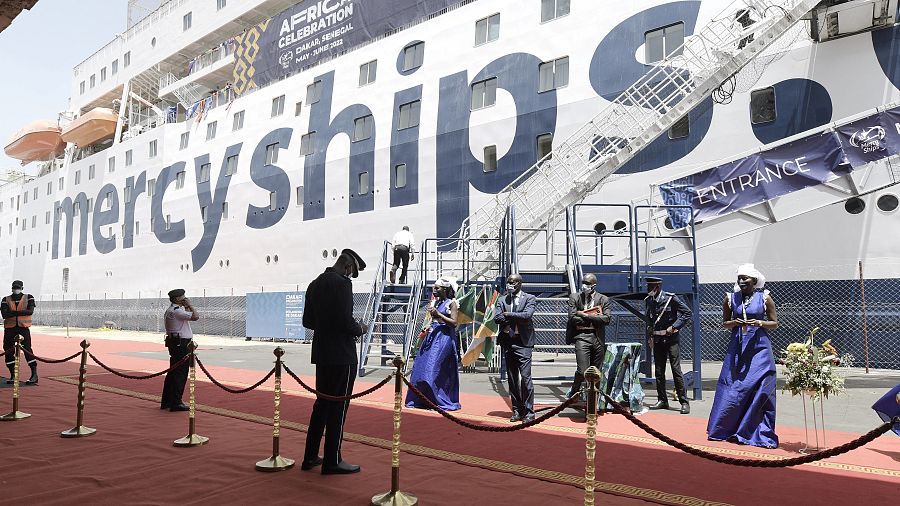
Medical teams onboard the world’s largest civilian hospital ship, performed Tuesday, the first of 40 planned pediatric orthopedic free surgeries this month in Senegal.
Amadou, a four-year-old, was the first patient to receive surgery on board the Global Mercy ship which is docked in Dakar, Senegal.
He was born with one windswept leg and one bowed leg, two conditions that can be corrected by early intervention.
This is also the first time that one ship will serve two countries through one port. At the invitation of the Senegalese government, up to 25% of the surgery patients are expected from nearby The Gambia.
Over the next four months, Global Mercy will provide more than 800 surgeries.
At present, there are no fully certified pediatric orthopedic surgeons practicing in Senegal.
During the previous 2022 field service, Mercy Ships provided training and mentoring for more than 2,500 participants
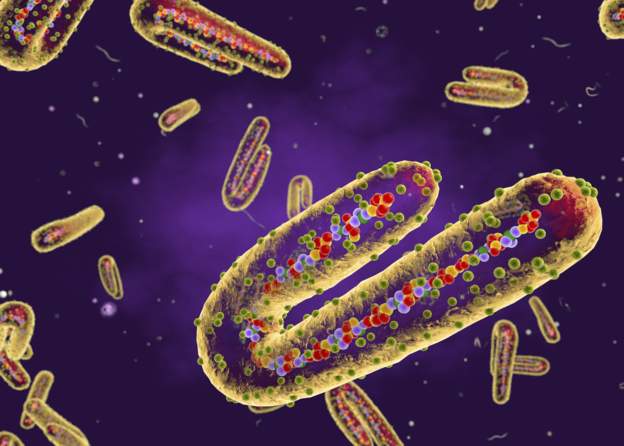
The Marburg virus, a highly contagious illness belonging to the same virus family as Ebola, has been reported as having made its first appearance inEquatorial Guinea, according to the country’s authorities on Monday.
In the country’s western Kie Ntem province, the viral hemorrhagic fever is thought to have killed nine people.
One sample that was gathered and sent to the Institut Pasteur in Dakar, Senegal, underwent additional testing, and the results were positive.
According to the World Health Organization, 16 people are currently being held in isolation as suspected contact cases. A team of experts from the health organisation has been sent to the area to assist the medical personnel.
Last week, the country’s Health Minister, Mitoha Ondo’o Ayekaba, said preliminary investigations linked the deaths to people who attended a funeral ceremony.
Movement has been restricted around two villages, where most cases have been reported. Contact tracing is currently ongoing.
This is the first outbreak recorded in the country and the third in West Africa. Ghana confirmed one case last year and Guinea the previous year.
The virus is transmitted to people from fruit bats and spreads between humans through the transmission of bodily fluids.
Although there are no vaccines or treatments, those diagnosed are advised to drink plenty of water as doctors treat a patient’s specific symptoms.
Previous outbreaks and sporadic cases of Marburg in Africa have been reported in Angola, the Democratic Republic of the Congo, Kenya, South Africa, and Uganda.
Senegal won the 7th Championship of African Nations (CHAN) on Saturday night after defeating Algeria, the tournament’s host nation, to reaffirm their newly discovered continental dominance.
The Lions secured the historic win through a penalty shoot-out which saw them win 5-4 over host nation Algeria, after regulation time and 30 minutes of extra time at the Nelson Mandela Sports Stadium in Algiers.
Senegal last year won the Africa Cup of Nations for the time after years of elusion, and made it double by winning the second-tier competition on the continent made for locally based players.
Both sides converted their kicks successfully until Algeria player Kendouci hits the crossbar to hand the west Africans their first win.
They became the first West African side to win the competition since its inception.
At the Nelson Mandela Stadium in Algiers, the home-based Teranga Lions defeated Algeria 5-4 on penalties, ending Algeria’s ambitions of serving as the tournament’s host and winning the match.
Pape Thiaw’s team will look back on their performance on the night they completed the treble for the West African nation and be pleased with their performance in a year in which they had won the prestigious Africa Cup of Nations (AFCON) as well as the Beach Soccer AFCON.
Both teams were nervous in the first few minutes of the final, which would crown a new champion for the continental competition set up for players who compete in their domestic leagues.
In the opening 30 minutes, the tension rose as Gabonese referee Pierre Ghislain Atcho handed four yellow cards, but they both soon cooled down and focused on taking the lead.
After the first 45 minutes of play, neither team scored a goal to put them ahead of the other.
When Senegal nearly scored in the 56th minute, the Senegal bench was on edge as Diallo’s long-range shot from beyond the box went over the crossbar.
No goals were scored in the second half, therefore the game went into extra time before moving to penalties.
Despite Cheikhou Ndiaye and Aimen Mahious both missing their turns from the spot, Senegal went on to win the trophy. Ahmed Kendouci and Aimen Mahious both missed their turns from the spot.
Algeria, meanwhile, set a new tournament record by going six games in a row without conceding.
The CHAN final between Senegal and Algeria is scheduled to take place on Saturday in Algiers, where at least 40,000 spectators are anticipated.
Algeria go into the final not having conceded in five matches with goalkeeper Farid Chaal, standing in for the suspended Alexis Guendouz, troubled only during a brief spell of second-half Nigerien pressure.
“We faced the Senegalese national team in Annaba (a friendly match in December 2022).Fantastic team. They play good football. They have a (youth) academy. But we also have a good team, individually and collectively. We aim to implement our manager’s instructions on the pitch, and I hope that we can be a better team. The more focused team will win,” said Soufiane Bayazid, an Algeria player.
Algeria reached the final after thrashing Niger 5-0 for the biggest win in the tournament in 15 years.
For the first time in its history, Senegal will participate in the CHAN final on Saturday against Algeria.
Senegal defeated Madagascar 1-0 to book their place in the final.
To this stage, Algeria have kept three clean sheets while the Lions of Teranga have experienced conceded in all four clashes by eight goals.
Some opposition leaders and Sonko’s supporters fear the case is an attempt by Senegal’s president to remove a potentially popular rival.
Senegalese opposition leader Ousmane Sonko will face trial on charges of rape and making death threats to a beauty salon employee in 2021, an investigating judge has said.
The judge referred the matter to Senegal’s criminal chamber for trial in a letter dated January 17 and seen by Reuters news agency on Wednesday.
Sonko’s lawyer did not immediately respond to a request for comment, but the 48-year-old politician has previously denied all the charges.
A trial could jeopardise his intention to compete in the 2024 presidential election. Sonko, who came third in the 2019 election, has announced he will run.
It could also stoke political tensions in Senegal. Clashes broke out in the country in March 2021 when Sonko was initially summoned by the investigating judge and arrested.
Sonko is accused of sexually assaulting a woman who worked in a massage parlour and later threatening her. He and his backers say the trial is politically motivated to eliminate him from the presidential race.
He enjoys widespread support among Senegalese youth, many of who are frustrated with the government as unemployment and economic hardship have remained high, leading to sporadic and sometimes violent protests.
Cries of “Macky Sall is a dictator” rang out in Dakar during one protest in July 2022.
El Hadj Diouf, lawyer for the plaintiff, said his client was delighted by the judge’s decision.
Some opposition leaders and Sonko’s supporters believe the president of Senegal is trying to get rid of a potential rival by bringing this case.
According to a judge conducting the investigation, Senegalese opposition leader Ousmane Sonko will go on trial in 2021 on charges of rape and threatening to kill a worker at a beauty parlour.
According to a letter from the judge dated January 17 and obtained by the Reuters news agency on Wednesday, the case has been referred to Senegal’s criminal chamber for trial.
Sonko’s lawyer did not immediately respond to a request for comment, but the 48-year-old politician has previously denied all the charges.
A trial could jeopardise his intention to compete in the 2024 presidential election. Sonko, who came third in the 2019 election, has announced he will run.
It could also stoke political tensions in Senegal. Clashes broke out in the country in March 2021 when Sonko was initially summoned by the investigating judge and arrested.
Sonko is accused of sexually assaulting a woman who worked in a massage parlour and later threatening her. He and his backers say the trial is politically motivated to eliminate him from the presidential race.
He enjoys widespread support among Senegalese youth, many of who are frustrated with the government as unemployment and economic hardship have remained high, leading to sporadic and sometimes violent protests.
Cries of “Macky Sall is a dictator” rang out in Dakar during one protest in July 2022.
El Hadj Diouf, lawyer for the plaintiff, said his client was delighted by the judge’s decision.
“It does not come as a surprise. We have nothing to hide,” he told Reuters by telephone.
Officials report that a bus and a truck collided in northern Senegal, resulting in at least 19 fatalities and 24 injuries.
According to Papa Ange Michel Diatta, a colonel with the national firefighting service, the incident happened early on Monday near Sakal in the Louga region.
According to the state-owned Le Soleil newspaper, the bus swerved to avoid hitting an animal and struck the truck on the Number 2 national road. It was further stated that the injured were taken to the local hospital, Amadou Sakhir Mbaye.
President Macky Sall sent “heartfelt condolences” to the families of those killed in the accident, adding that the incident shows “the need to strengthen road safety measures” in the West African country.
Encore un autre accident mortel sur nos routes à l’entrée de Ngeun Sarr. 19 vies humaines perdues et 24 blessés. Cela met en évidence la nécessité de renforcer les mesures de sécurité routière. Mes condoléances émues aux familles éplorées. Prompt rétablissement aux blessés.
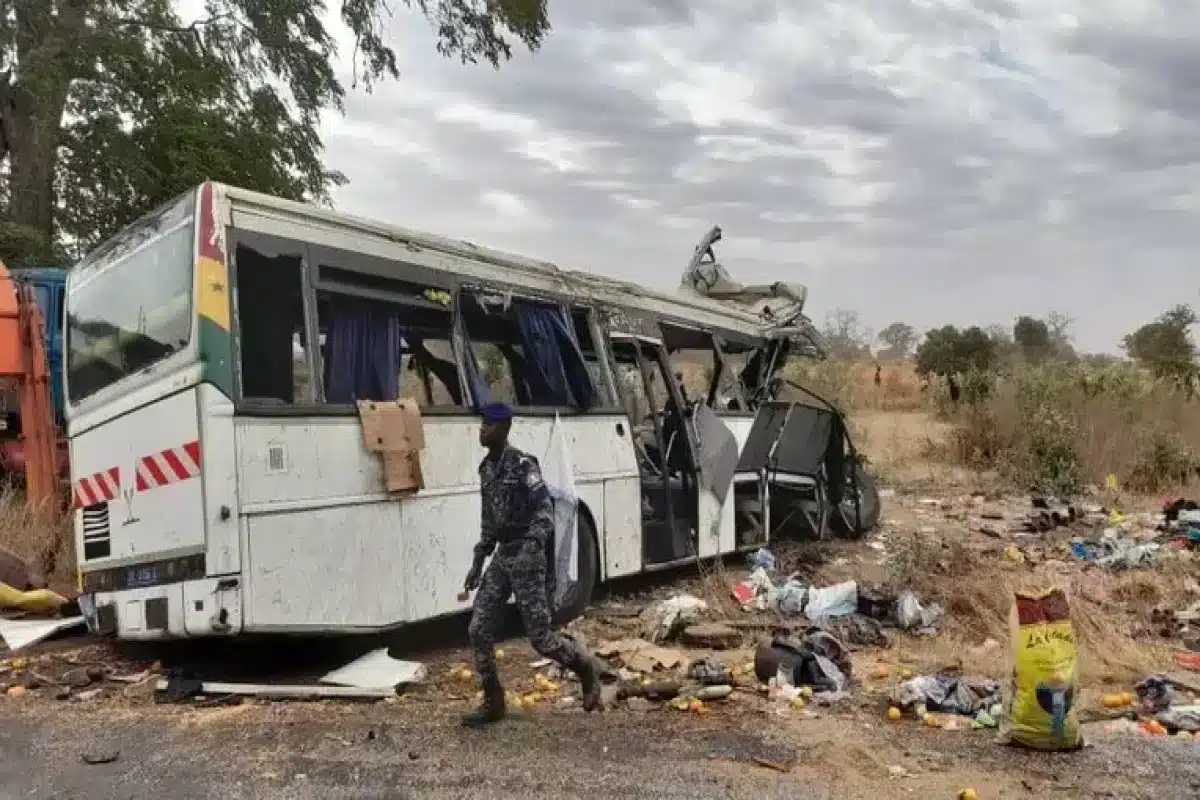
The accident came just eight days after Senegal was plunged into mourning following the collision of two buses in the early morning of January 8 in the central region of Kaffrine, leaving 40 dead and more than 100 injured.
The government responded by banning night buses and outlawing the import of used tyres – the suspected cause of the accident.
It also announced that the speed of vehicles transporting goods and people would be limited to 90km/h (56mph).
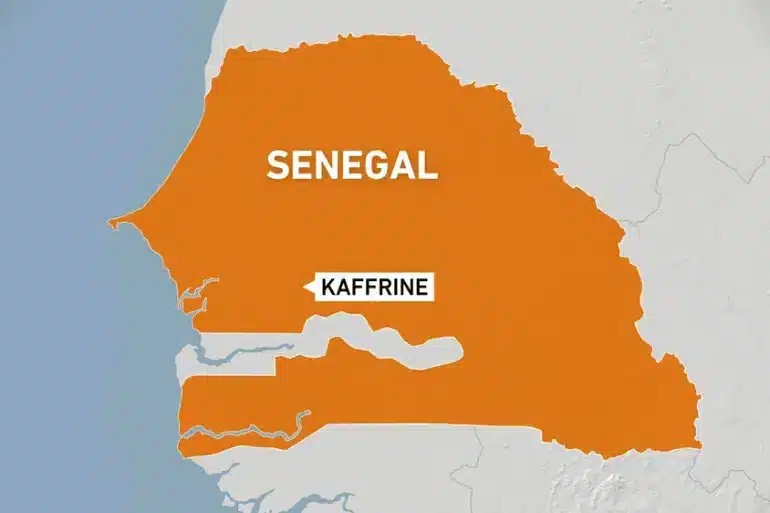
The accident took place near Kaffrine in central Senegal, emergency services said.
Two buses crashed in Kaffrine in central Senegal, resulting in at least 40 fatalities and 87 injuries.
At 3:15 a.m. on Sunday (03:15 GMT), the accident happened on the Number 1 national highway.
The “grave” disaster claimed the lives of 40 individuals, according to President Macky Sall, who also declared a three-day national mourning period.
The bus, with a 60-seat capacity, was heading to Rosso near the border with Mauritania, the fire brigade said, adding that the number of people onboard was unknown.
“It was a serious accident,” Colonel Cheikh Fall, head of operations at the National Fire Brigade, told AFP news agency, adding that 87 people were injured in the incident.
Victims were taken to a hospital and medical centre in Kaffrine, he said. The wreckage and demolished buses have since been cleared and normal traffic has resumed, said Fall.
Public prosecutor, Cheikh Dieng, said early investigations suggested that the accident happened when “a bus assigned to the public transport of passengers, following the bursting of a tyre, left its trajectory before colliding head-on with another bus coming in the opposite direction”.
Suite au grave accident de ce jour à Gniby ayant causé 40 morts, j’ai décidé d’un deuil national de 3 jours à compter du 9 janvier. Un conseil interministériel se tiendra à la même date pour la prise de mesures fermes sur la sécurité routière et le transport public des voyageurs.
“I am deeply saddened by the tragic road accident,” President Sall said on Twitter. “I extend my heartfelt condolences to the families of the victims and wish a speedy recovery to the injured,” he added.
This is one of the heaviest death tolls from a single incident in recent years in a country where road accidents are common largely because of a lack of driver discipline, poor roads and decrepit vehicles, according to experts.
In October 2020, at least 16 people were killed and 15 more injured when a bus collided with a refrigerated lorry in western Senegal. Local media said at the time that the lorry was hauling fish toDakar.
Amy Ndiaye Gniby, a fellow MP, was awarded more than $8,000 in damages from Amadou Niang and Massata Samb.
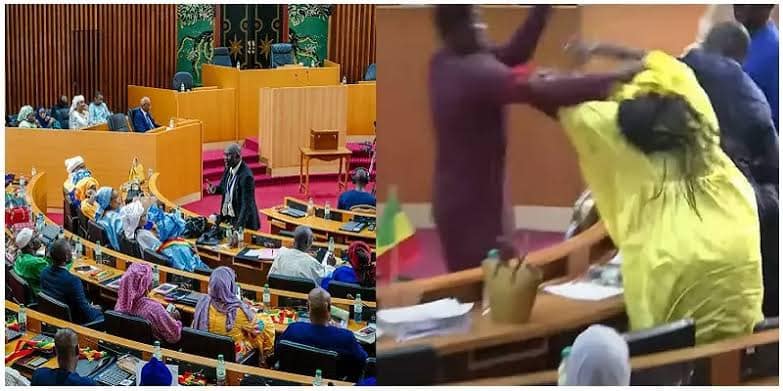
Two lawmakers in Senegal have been given six months in prison for assaulting a pregnant coworker on December 1 during a heated parliamentary debate that turned into a full-fledged brawl.
Amadou Niang and Massata Samb of the opposition Party for Unity and Rally (PUR) were also ordered by the Dakar court to pay Amy Ndiaye Gniby of the ruling Benno Bokk Yakaar coalition a total of 5 million CFA francs ($8,144) in restitution.
In a chaotic televised scene that shocked Senegal,Samb slapped Gniby in the face during a budget debate in the National Assembly after she scoffed at his remarks in criticism of her.
Gniby responded by throwing a chair at Samb and was then pushed to the ground by other lawmakers and kicked in the abdomen by Niang.
The fight has worsened political tensions in Senegal that flared when the governing party lost its comfortable majority in a July legislative election.
The loss was widely seen as a rebuke of President Macky Sall amid uncertainty over whether he will seek a third term in 2024, a move the opposition says would be in breach of term limits and an earlier promise.
Sall, 60, has refused to state clearly whether he plans to run again.
Numerous errors were discovered in a report by the Court of Auditors on the management of anti-Covid funding, which prompted hundreds of Senegalese to protest in Dakar on Friday, according to an AFP journalist.
The crowd gathered at the Place de la Nation in Dakar, under the call of a dozen civil society organisations, shouting “To the thieves” and “You will not digest our billions!
A large police force was deployed around the square to supervise the rally, which was authorised by the prefect and supported by the opposition, which has repeatedly denounced the authorities’ “theft” in recent days.
In mid-December, an audit by the Court of Auditors of Senegal on the “Response Fund against the effects of Covid-19” amounting to more than 740 billion CFA francs (more than 1.1 billion euros), financed by donors and the state in 2020 and 2021, pointed to “shortcomings”, “overbilling” or “lack of evidence” of expenditure.
Civil society is demanding the resignation of all those implicated and the reimbursement of the alleged misappropriations.
The government has defended itself by stressing that the reported shortcomings concern less than one percent of the total amount of the fund and has promised to follow the recommendations of the Court of Auditors.
“Let justice be done. I am here to denounce the misappropriation of the funds,” said Alioune Tine, founder of the Afrikajom Center and a civil society figure.
“I am here to denounce impunity and the impartiality of justice. I am outraged to see that our leaders have embezzled our billions while we were between life and death,” said Papis Diatta, a 35-year-old demonstrator.
The slogan “No to the third term” appeared on several placards, because of the doubt that persists on the decision of President Macky Sall, elected in 2012 for seven years and re-elected in 2019 for five years, to run again for president in 2024.
The demonstrators also chanted the name and called for the release of Pape Alé Niang, a journalist detained for more than a month for “disclosing information likely to harm the national defence”, who was released and then returned to detention on 20 December.
The 40-year war between Senegaland rebels in its Casamance region has left legacies of landmines with diverse impacts.
Night was falling, and Boubacar Ba was once again hunting in the forest outside his hometown of Mpak in southern Senegal. Then a crack rang out, not from his rifle or another hunter. Not the Senegalese army or even the rebels waging a war for secession in the area.
It was a landmine, which blew off his right leg.
Ba tied up a makeshift tourniquet, but when he hobbled up on his left leg, he quickly discovered it was broken, and crashed back onto the forest floor.
“When someone hears these mine accidents, an explosion, they can’t go adventuring to see what happened,” without putting themselves at risk, Ba told Al Jazeera. Alone, he ended up crawling on his elbows 10km (6.2km) to find help.
That was in 2004.
The mine he had stepped on had been forgotten at the start of Senegal’s simmering civil war two decades earlier. These days, Ba walks with a slight limp, his prosthetic leg deftly hidden under his boubou and pants.
The region of Ziguinchor, along the porous borders of The Gambia to the north and Guinea-Bissau to the south, contains the last fragments of the Movement of Democratic Forces of Casamance (MFDC). The armed movement was born in 1982, pushing for the independence of Casamance, the collective of regions situated underneath The Gambia, which is enveloped by Senegal.
Peace has largely returned to the Casamance – comprising the regions of Ziguinchor, Sedhiou, and Kolda – since then. A few strongholds of fractured rebel groups hold out near the borderlands, but elsewhere, citizens mostly go about their day without a second thought, and tourists hit the beach in the resort town of Cap Skirring.
But in too many villages, mines remain. Estimates from the Senegalese National Mine Action Center (CNAMS), the government authority in charge of demining activities, put some 49 to 170 hectares (120 to 420 acres) of land, mostly all in the Ziguinchor region, as still at risk of being mined. In addition to the physical risk posed by the ordnance, the mines – planted by the Senegalese military and the rebels – often cut people off from roads, schools or farmland.
“The socioeconomic impact is real,” Emmanuel Sauvage, Senegal country director at Humanity and Inclusion, an NGO contracted by CNAMS to carry out demining operations, told Al Jazeera. “It’s affecting the whole economy.”
Boubacar Ba speaks during a meeting at the Senegalese Association of Mine Victims in Casamance, Senegal [Guy Peterson/Al Jazeera]
Finding landmines
Reports of civilian victims first appeared in the 1990s, more than a decade into the conflict. Estimates of how many people have been killed or injured are hard to pin down.
The Senegalese Association of Mine Victims (ASVM) counts 482 members on its rolls – mostly people directly injured, but also including “indirect victims”, like family members who sometimes struggle economically after a breadwinner is killed or disabled. CNAMS estimates 453 civilian injuries, and 157 deaths. Incidents are isolated, but pop up from time to time: Most recently, six people were killed by a mine returning from Friday prayers last year.
In the village of Bassere, about 8km from the Guinea-Bissau border, Pierre Marie Badji slowly waves his metal detector across the barren, brown earth. Dressed in a sky-blue kevlar vest and a face shield, he’s scanning what used to be thick brush, chewed up by a tank-like demining machine whose rotating claws eat away at the bush, seeking explosives. Badji’s metal detector is silent, so he marks the area immediately in front of him as clear, and takes another step forward.
A few dozen meters away, his colleague Papa Bourama Diedhiou is on his knees, slowly scraping away dirt. His metal detector went off, and now he’s inspecting further, hunched over what would be the blast zone if a mine indeed goes off.
It’s an old can of sardines. He tosses it away.
“If I find a mine, I’m happy,” he said. “I’m saving lives.’”
Bassere, sitting under towering baobab and kapok trees deep in one of Ziguinchor’s lush forests, was completely abandoned in 1990, though residents have started to trickle back in recent years. For a time, the Senegalese military set up an outpost here, though they left about 15 years ago. But when villagers returned, they found a plaque in the forest warning of mines. Mines found in nearby villages, and by the abandoned school on the other side of town, added to their fears.
“The forest has reclaimed 80 percent of the village,” said Bassere resident Therese Sagna. “This year, there was a lot of fruit in the woods that spoiled because no one could access it.”
Liboire Sagna, the village chief, said uncertainty about what areas are safe is preventing the rest of the village from moving back and making it impossible to build a school or clinic.
While the total at risk of having mines is small – a bit less than 2 square kilometres (1.6 square miles) maximum, mostly in the Ziguinchor region, which covers 7,352sq km (4,568sq miles) – finding scattered pockets of mines in the region’s dense, isolated forests can be a bit like finding needles in a haystack.
So far, the demining team, run by the nongovernment organisation Humanity and Inclusion, hasn’t found anything in Bassere besides sardine cans and old bullet shells. Charles Coly, the team leader, reckons it will take three months to clear the area.
A variety of deactivated landmines mostly found by the demining team over the years in Casamance, Senegal used for demonstrations and educational purposes [Guy Peterson/Al Jazeera]
A simmering conflict
Authorities in Dakar say the Casamance can be mine-free by 2026. But because demining teams can only safely work in areas without rebel presence, the success of that plan largely rests on the Senegalese military snuffing out the elusive rebel camps that remain. The conflict is arguably Africa’s longest-running war, and total victory against a small group of ideologically-driven fighters across heavily forested borderlands is far from an easy task.
Ba, now the community outreach leader at the ASVM, has contacted rebels to convince them to allow demining teams to come into their territory, as has Barham Thiam, director of CNAMS. But so far, both men say their overtures have been unsuccessful.
“I told the guy, OK, you want independence. If you get it, it would be hard for your budget to find money to destroy mines, and then to find money to rehabilitate the victims,” said Thiam. “I told him, somehow, we are working for you … If the government brings you a road, take it. A bridge, OK, whatever. A demining programme – take it.”
The continued rebel presence has been an existential threat to deminers too. Nine years ago, Fatou Diaw was kidnapped on a demining mission alongside a few colleagues. She was held in a rebel camp in the countryside for a month until government negotiations led to her and her female colleagues’ release. The men were held another month before being freed eventually.
“I [told them] we didn’t know [that area] was a red-line – otherwise, we wouldn’t have come to work there,” she says, suiting up for the demining mission in Bassere, unfazed all these years later. “We don’t work for the military,” she recalled telling the rebels. “We work for the population.”
Given the opportunity, she believes she can get the rebels to give up their mines – if not their other weapons or their cause – but “they’re not easy to convince”.
Meanwhile, recent peace agreements, like one signed in August with some of the rebel factions along Guinea-Bissau’s border, offer hope – but only applied to a few groups.
So, the conflict simmers as rebels traffic illegal timber and cannabis far out in the countryside. But it still boils over from time to time.
Amid a renewed offensive by the Senegalese military earlier this year, some 6,000 refugees fled to neighbouring The Gambia. Earlier this month, three refugees were killed in a Senegalese drone strike. The Gambian government insists that while victims were registered as refugees, the strike happened on Senegalese territory, across the porous border. Gambian opposition politicians, meanwhile, have complained that the conflict is increasingly spilling out of Senegal.
At home, the rebels are facing tough odds. The conditions that led to the revolt – land reform laws that tipped power into the hands of the Senegalese state, and an economic downturn – are ancient history to a population ground down by four decades of war.
Anyone under 40 has known conflict their entire lives. Those taking up arms in the ’80s could easily point to Casamance’s distance from Dakar – literally in terms of geography and figuratively in the lack of investment from the government – as serious grievances. Economic development projects – roads and bridges – and a new university in Ziguinchor have helped close those gaps.
For advocacy groups like the ASVM, where some members have lifelong disabilities, not even physical peace can bring peace of mind until the mines are fully rooted out.
“Even if there’s a definitive peace in the Casamance … we’re going to continue to work,” said Souleymane Diallo, ASVM’s finance chief, himself missing a leg.
Two opposition Senegalese MPshave been arrested for the alleged assault of their pregnant colleague in parliament earlier this month.
It follows the chaos that erupted during a budget debate in parliament, in scenes that were televised. The video of the fight was shared widely on social media.
Massata Samb is said to have slapped the female MP, Amy Ndiaye Gniby, after she scoffed at him during the debate.
She threw a chair at him before another MP, Mamadou Niang, kicked her in the stomach after she was pushed to the ground.
Both Mr Samb and Mr Niang have been detained and are charged with voluntarily causing hurt, their lawyer told the Reuters news agency, adding that the detention violated their parliamentary immunity.
The President of the Ghana Diabetes Association, Elizabeth Esi Denyoh, has been elected Chairperson of the International Diabetes Federation (IDF) for the Africa Region.
Mrs Denyoh was elected at the end of the 2022 World Congress of the IDF held in Lisbon, Portugal, where she contested with three other candidates from Senegal, Mauritania, and Uganda.
Mrs Denyoh takes over from Professor Jacque Abodo of Cote d’Ivoire, being the first non-medical doctor to be elected as the Chairperson of the IDF for the Africa Region.
Her term will last from 2022 to 2026.
Speaking in an interview, Elizabeth Denyoh described her election as Africa’s representative on the global organisation as a “win for all Africa,” adding that “I promise to unite the continent together towards the fight against diabetes that is a major cause of deaths in females in South Africa.”
She pledged to work with the African Union (AU) to get governments to give waivers on taxes for diabetes consumables across the continent.
Elzabeth Esi Denyoh also said that she would work with the Food and Drugs Authorities (FDA), as well as the ministries of heath in Africa to ensure that unwholesome diabetes drugs are eradicated from the system so that “we have high quality standard medicines for diabetes on the African market.”
According to the IDF Chairperson for Africa, she would engage giant pharmaceutical manufacturers, including Pfizer and Gloxosmithkline, to produce diabetes treatment drugs, particularly insulin, on the continent.
As part of her vision for her four-year tenure, Mrs Denyoh said she would endeavour to ensure that the continent moves from over dependence on donor funding for the treatment of diabetes, to a system where “we can device mechanisms to become self-reliant in providing our own resources to treat our own citizens.”
She further pledged to dialogue with all stakeholders to enhance diabetes treatment and bring hope to diabetes patients .
“I wish to use my election as senior nurse to this great position as victory and urge all Ghanaian nurses that there are more opportunities out there for nurses outside the hospital walls,” she added.
The International Diabetes Federation (IDF) is an umbrella organisation of over 230 national diabetes associations in 170 countries and territories, representing the interests of the growing numbers of people with diabetes and those at risk.
The Federation has been leading the global diabetes community since 1950.
Even though Senegal exited the World Cup at the round of 16 stage in 2022, President Macky Sall commended his team’s performance.
At the knockout stage, Africa’s champions lost 3-0 to England without their key players.
England opened the scoring through Jordan Henderson before Harry Kan scored his first goal of the tournament to double their advantage. Bukayo Saka put the icing on the cake after converting Phil Foden’s cross in the 57th minute to seal a comfortable win for Gareth Southgate’s side.
In a tweet, Senegalese President Macky Sall expressed satisfaction with the team’s performance at the tournament.
He said: “Dear Lions, You have not failed. And you played without Sadio [Mane], [Cheikhou] Kouyate and [Idrissa] Gana. You are among the top 16 teams in the world and England were a strong opponent.”
Morocco are now the last African side following the exit of African champions Senegal, Ghana, Tunisia and Cameroon.
Senegal was beaten by England in the knockout stages of the FIFA World Cup in 2022. That leaves Morocco as a contender for the quarter-finals. The team plays Spain on December 6, 2022.
The knock-out phase in Qatar reminds football fans globally of the unmistakable glass ceiling over Africa at football World Cups.
Despite spicing the tournaments with outstanding and iconic moments, African teams have always fallen short of Brazilian football great Pelé’s assertion that an African team would win the World Cup by 2000.
Declan Rice, who asserted that other nations will dread the Three Lions, believes that England is not receiving the credit it merits for its World Cup performances.
Despite a slow start on Sunday at Al Bayt Stadium, Gareth Southgate’s team easily defeated Senegal 3-0 to go to the World Cup quarterfinals.
Jordan Henderson, Harry Kane, and Bukayo Saka all scored goals to give Englanda Saturday tie with France. Jude Bellingham was the star of the show.
Although Southgate’s pragmatic approach to major tournaments has drawn some criticism, England is leading the competition after four games with 12 goals while only giving up two goals on the opposite end.
“I’m delighted. It was a real top performance,” Rice said.
“There was a lot of energy, some great goals. We knew Senegal posed a massive threat but we shut them down and now we march on.
“I’ve said it all along – we’ve not been getting the credit we deserve with our performances. If you look at other teams, like the Netherlands and Argentina, they win their games comfortably and it gets called a masterclass, but with us it always gets picked off.
“If you look at our last couple of games we’ve been faultless. Other countries should be fearing us now.
“I think we’re starting to silence the critics. Going into the tournament there was always a lot of talk that we don’t score enough goals – again, that’s another one we’ve kept people quiet on. There was scrutiny around the defence and conceding goals but it’s been solid so we’re going to keep building and pushing.”
Rice did add: “We’re building a solid foundation and it’s down to us now – there’s no point being buzzing about tonight if we can’t push on and beat France.”
At the basis of England’s midfield, Rice displayed his customary composure, but Bellingham stole the show.
The midfielder for Borussia Dortmund was instrumental in both Henderson’s first-half goal and Kane’s 2-0 expansion of the lead just before halftime.
“He’s thriving on the main stage,” Rice said of the 19-year-old. “It makes me happy to see that, when you’ve got a player like that who is so strong and athletic, creating the chances he’s creating.
“He’s been doing it for Dortmund all season and is now doing it for us. It was a real collective team performance from us tonight all over the pitch, magnificent.”
Of going up against France and the World Cup’s leading goalscorer Kylian Mbappe, Rice said: “These are the game we want to play in. England versus France quarter-final – it doesn’t get bigger than that. We’ve got six days now to prepare, we know the world will be watching and we want to progress.”