Minister of Foreign Affairs Samuel Okudzeto Ablakwa has announced that Serbia is set to issue 100,000 work permits to Ghanaians this year to boost economic ties.
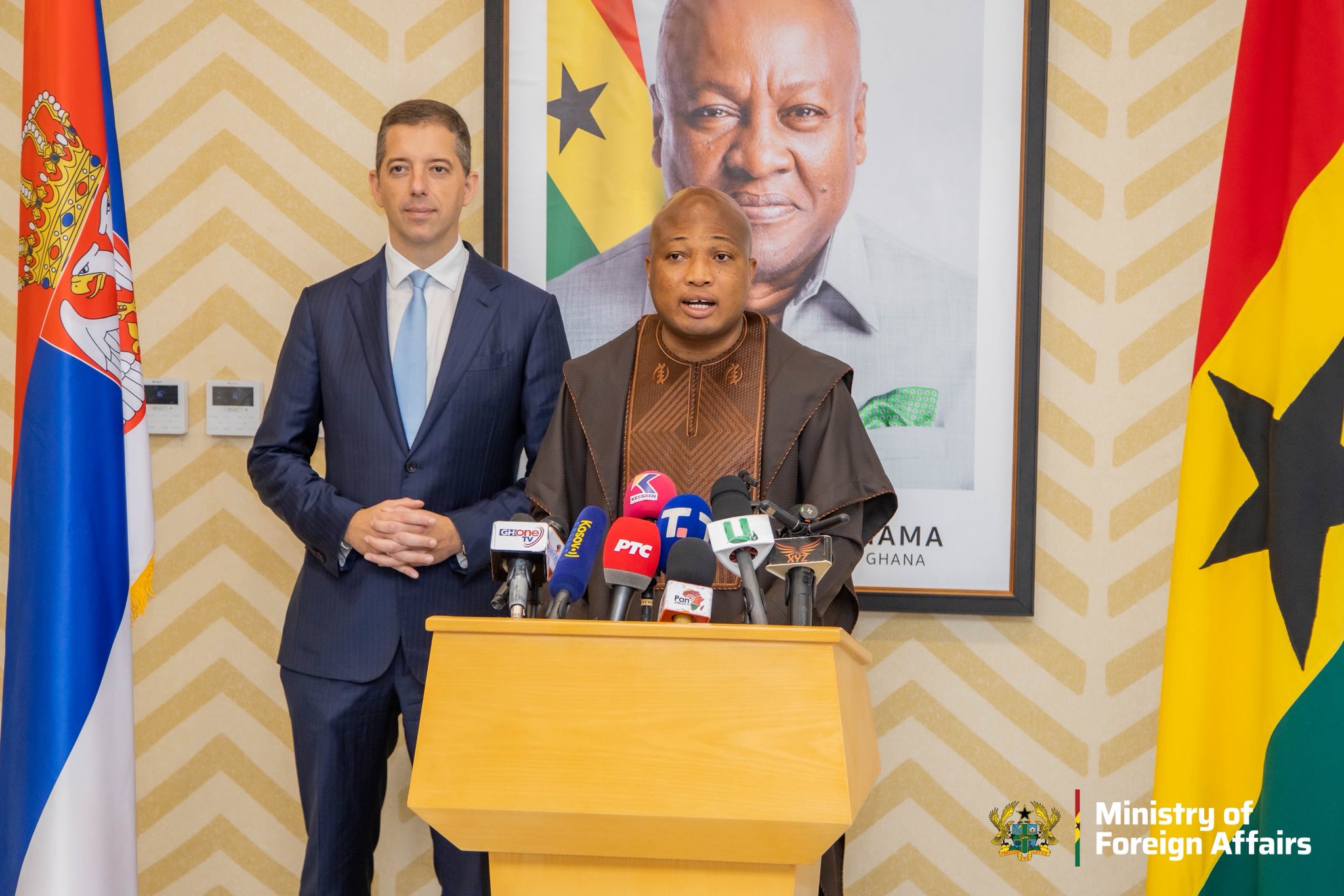
Speaking to reporters in Accra following the signing of a deal with Serbia’s Foreign Affairs Minister, Marko Đurić, Mr. Ablakwa explained that the plan targets Serbia’s demographic challenges and Ghana’s growing youth population.
“Ghana is ready to take full advantage of Serbia’s plan to issue 100,000 work permits this year,” he stated, adding that discussions are ongoing to finalize a labour mobility agreement between the two nations.
In addition to job creation, Ghana and Serbia are looking into collaborations in areas such as trade, agriculture, AI, sports, scholarships and defence.
According to Mr Ablakwa, the development is a source of tremendous pride to see “our relations blossom since Ghana and Serbia established formal diplomatic ties in 1959.”
He added that President Nkrumah and President Tito were the architects of the strong bilateral relations, as they both pioneered the formation of the Non-Aligned Movement (NAM) in 1961.
The Accra International Conference Centre, which was built by Serbian engineers in preparation for the 10th Ministerial Conference of the NAM in 1991, is a significant symbol of Ghana’s collaboration with Serbia.
He said discussions have reaffirmed the belief in the UN Charter, “our faith in international public law, our commitment to global peace as leading UN peacekeeping troop contributing nations and our resolve to seek friendship with all nations.”
Presently, the government is working on signing a labour mobility agreement with the German government to allow thousands of youth to be employed abroad under a special bilateral agreement. Ghana seeks to join other countries, including Kenya, that have such deals with Germany.
In a statement on Facebook, Mr Okudzeto Ablakwa in May noted that the agreement, which is currently under discussion, will guarantee “safe, rewarding and dignified employment.”
“We expect actual implementation soon,” Mr Ablakwa added while remarking on the government’s belief in meaningful and impactful diplomacy.
The Foreign Minister engaged German Foreign Minister Johann Wadephul, Mr. Joachim Stamp, the Special Representative of the Federal Government for Migration Agreements, and top officials of the German Interior Ministry on the margins of the UN Peacekeeping Ministerial ongoing in Berlin.
In April, Minister for Employment and Labor Relations Dr. Rashid Pelpuo made mention of work ongoing between his outfit and the Foreign Ministry to craft a strategy to export skilled Ghanaian labour to countries requiring workers to curb the rising unemployment.
Fitch projects that the unemployment rate in Ghana in 2025 will remain at an average of 4.0% of the labour force.