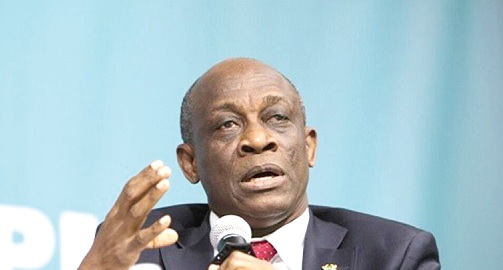
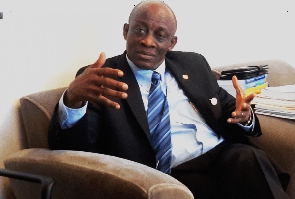
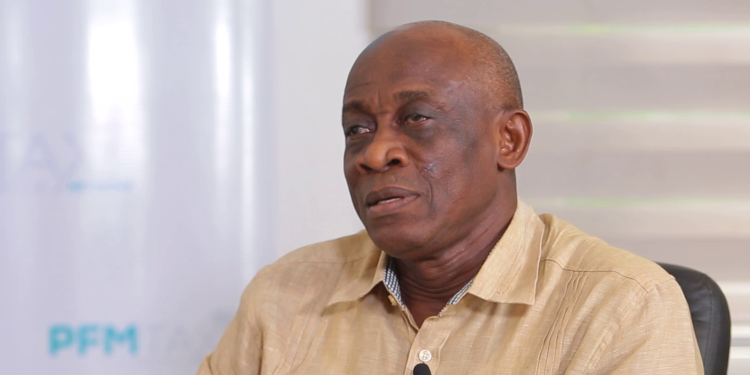
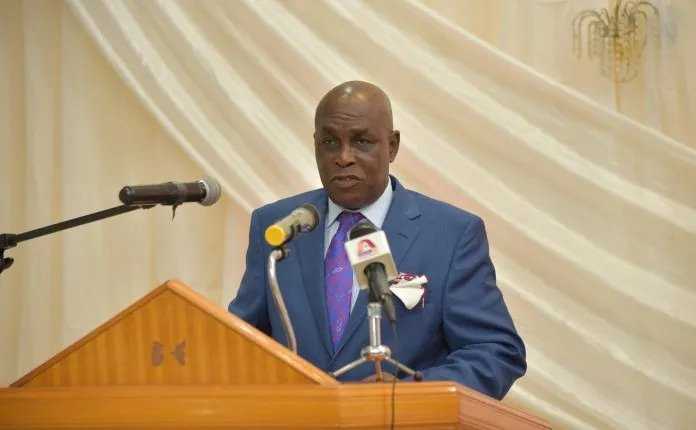
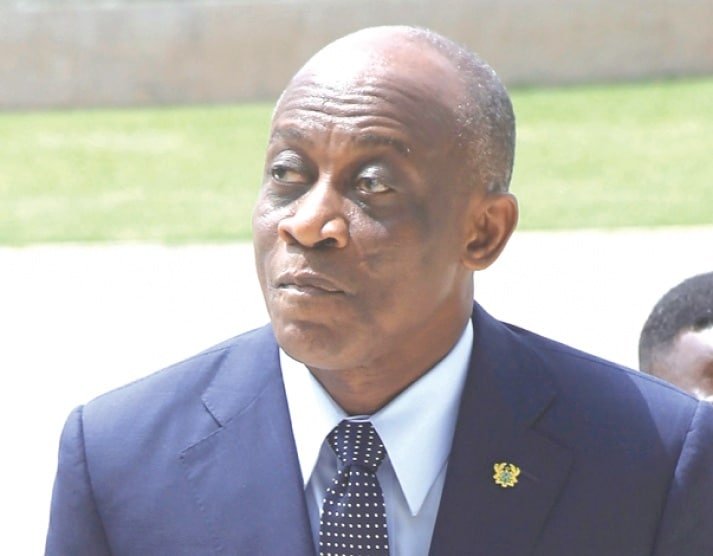
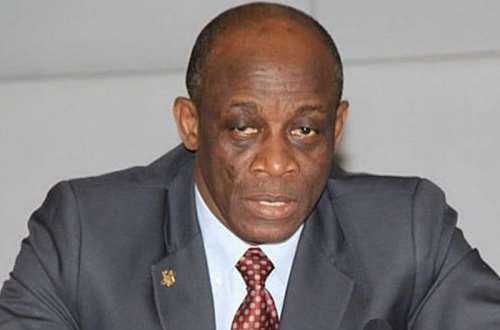
Seth Terkper, who previously served as the Minister of Finance, has been appointed as the President’s Economic Advisor.
In this capacity, he will provide expert guidance on critical economic matters, such as fiscal management, debt control, and strategies to revitalize the economy.
This appointment comes at a time when Ghana is grappling with significant economic challenges, including inflation, rising public debt, and currency depreciation.
Mr Terkper will be central to efforts aimed at steering the nation through these difficulties and promoting long-term economic growth.
He will work alongside the Finance Minister-designate, Dr. Cassiel Ato Forson, to implement a series of economic policies designed to strengthen the country’s financial landscape under President John Mahama’s administration.
Terkper brings a wealth of knowledge to the role, having previously held the Finance Minister position from 2013 to 2017.
During his tenure, he was instrumental in implementing vital fiscal reforms, stabilizing the economy, and improving public financial management.
He also played a key role in negotiating Ghana’s Extended Credit Facility (ECF) with the International Monetary Fund (IMF) and in introducing the Energy Sector Levy Act (ESLA) to tackle energy sector debt.
Terkper’s vast experience is expected to shape policy decisions that will stabilize the economy, stimulate growth, and build investor confidence.
Former Finance Minister Seth Terkper says Ghana risks triggering an unprecedented government shutdown early next year should Parliament fail to pass a provisional budget this month.
“We risk a government shutdown or at best, lean government spending from January,” Seth Terkper said in an interview,as quoted by Reuters.
According to him, this may have an adverse effect on interest payments and funding for the transition.
Speaker of Parliament, Alban Sumana Kingsford Bagbin, declined a recent request to reconvene the House before the polls but has expressed determination to transact all businesses of the 8th Parliament before the transition to the 9th Parliament.
“I wonder how the proposed twenty-two items could be transacted within two days. I accordingly suggest that government prioritizes these businesses together with others not captured by your memo for consideration after the conduct of the General elections on the 7th of December 2024. The House will resume sitting after the elections to complete all essential matters before a seamless transition to the 9th Parliament of the Fourth Republic of Ghana,” Mr Bagbin assured.
Majority Leader Alexander Afenyo-Markin petitioned him to recall the House to consider twenty-two (22) outstanding urgent government and public businesses two days ahead of the December 7 polls after his side of the House failed to show up in Parliament for the immediate past sitting they requested to be held.
Concerns have been raised about the potential implications of this hiatus, including a legislative backlog that could delay critical national decisions, and this has been reiterated by Mr Seth Terkper.
The government is set to pay GHC36 billion in interest on its debt in the second half of 2024, per analysed data from the Ministry of Finance.
Projections from the 2024 Annual Borrowing Plan indicate a total of GHC55.9 billion in interest payments for the year, with GHC36.9 billion for domestic debt and GHC19.0 billion for external debt. Of the domestic interest payments, GHC30.3 billion will be paid in cash, while GHC6.6 billion will be paid in kind.
In the first half of the year, the government spent GHC19.0 billion on interest payments: GHC14.5 billion in the first quarter and GHC4.5 billion in the second quarter.
Finance Minister Mohammed Amin Adam sought to present the provisional budget on November 15, but that was not successful as the House was on recess.
Parliament now has a few weeks to pass the provisional budget to avert cuts and a potential shutdown.
Former Finance Minister Seth Terkper has highlighted the importance of consolidating tax systems to enhance revenue collection.
In a discussion on Morning Starr with Lantam Papanko, Mr. Terkper argued that combining the systems of the Ghana Revenue Authority (GRA) would help curb tax evasion and boost revenue.
Mr. Terkper noted that the expiration of the High-Value Tax (HVT) represented a missed opportunity for revenue enhancement. He detailed how the HVT would have connected revenue collection with imports, simplifying the process of tracking and collecting taxes.
The former finance minister also stressed the importance of re-attracting companies that left Ghana due to challenging investment conditions. He pointed out that creating a more investment-friendly environment in Ghana would result in increased revenue and economic growth.
Mr. Terkper’s comments come amid Ghana’s significant economic challenges, including high levels of debt and revenue shortfalls. His critique of the government’s economic strategies has ignited discussions about the need for reforms to stimulate economic growth and reduce dependence on debt.
Mr. Terkper assured that with a well-structured medium-term plan, it is possible to control debt and achieve economic growth, emphasizing that such commitments should be realized over the course of the term rather than in just one year.
Former Finance Minister Seth Terkper has raised a red flag over the substantial debt burden that awaits Ghana’s next government in 2024.
During a recent media briefing on the country’s International Monetary Fund (IMF) programme and debt restructuring efforts, Seth Terkper expressed deep concerns about the depletion of the nation’s financial reserves and buffers, which are essential for maintaining economic stability.
Mr Terkper emphasized the severity of the situation, stating, “The next administration will be saddled with a significant debt burden. Our reserves and financial buffers, which provide essential leverage for economic management, have been nearly exhausted.”
He attributed this precarious state to the country’s reliance on the Primary Balance, which, according to IMF data, could lead to a false sense of security and complacency.
Highlighting the inadequacies in the current fiscal framework, Terkper pointed out that the criteria based on non-interest expenditure fail to address critical components of Ghana’s economic challenges, such as interest payments, arrears, and amortization.
“Using the Primary Balance as a measure of fiscal health excludes critical elements like interest payments, arrears, and debt repayments,” he explained.
He noted that arrears, including those in the energy and banking sectors, were estimated to be GHC 53 billion in 2021, and a portion of this has been added to the public debt without being reflected in the fiscal framework’s ‘financing’ section.
Seth Terkper also cautioned against premature celebrations of perceived economic progress, noting that any apparent improvements are primarily based on the sacrifices of domestic and external lenders who have endured, and will continue to endure, financial losses.
“There is no need to be jubilant,” Terkper warned.
“The view that we have made progress is premised on the sacrifices and largesse of domestic and external lenders. Our legacy may not make us third-time lucky. After HIPC (forgiveness), we should not have defaulted again. We should have continued on the PRMA path, managing crises with significant inflows from our oilfields and the recent IMF tranches and donor support.”
The IMF reported that Ghana’s primary fiscal balance improved by over 4 percent of GDP last year, but Terkper’s analysis suggests that deeper, more comprehensive measures are needed to secure the nation’s financial future.
The 3rd accused person in the ongoing ambulance trial, Richard Japka, on Thursday, July 20, 2024, informed the court during his cross examination by the prosecution that the former Ministers of Finance and Health in the Mahama administration, Hon Seth Terkper and Hon Shirley Ayittey were evil, and that, they deliberately sabotaged the ambulance project.
Richard Jakpa is standing trial together with Hon Ato Forson, a former Deputy Finance Minister and the Minority Leader in Parliament, for willfully causing financial loss to the State in the botched ambulance transaction.
The prosecution had tendered in court documentary evidences in support of its case, and was able to establish a prima facie case against all the accused persons.
The prosecution led evidence to show that the transaction had not received the necessary approvals as required by law, and that the then Health Minister, Shirley Ayittey and the Finance Minister, Seth Terkper had objected to this transaction citing irregularities, breaches of law, as well as value for money concerns.
Having established a solid case against all the accused persons, the court ordered them to open their defense, in the course of which the 3rd accused person is currently being cross examined by the prosecution to ascertain the veracity of his claims. It was during this exercise that he (Japka) informed the court that the ambulance transaction was sabotaged by the two former Ministers, and claimed that, they were evil.
Meanwhile, Hon Ato Forson, the first accused person had earlier informed the court that his former boss (Hon. Seth Terpker) was the person who authorized the transaction. Jakpa’s testimony today has essentially confirmed the case of the prosecution that Ato Forson acted without lawful authority thereby occasioning the loss to the State.
The cross examination of the 3rd accused person by the prosecution continues on Thursday, 27th June 2024.
Former Minister of Finance, Seth Terkper, has called on African governments to ensure the sustainability of their debts in order to attract development finance assistance.
Development finance refers to financial resources to support economic development and growth in countries, particularly in low- and middle-income regions.
Mr. Terkper, who is also the Executive Director of Public Financial Management (PFM) Tax Africa Network, a consulting firm, made the comment when he held a virtual engagement with journalists following the conclusion of the International Monetary Fund/World Bank Group (WBG) annual meetings in Washington, US.
During the session, he noted that many African countries have transitioned to lower and middle-income status, reducing their access to grants and concessional financing for sustainable development and poverty alleviation.
He emphasized the importance of development finance going forward and urged African governments to diligently address their debt burdens to attract such support.
“Africa must do something about its debt, otherwise, we might be shut out of development finance,” Mr Terkper said. Per reports, he led Ghana’s 16th International Monetary Fund (IMF) loan-support programme,
The IMF’s April 2024 Regional Economic Outlook for Sub-Saharan Africa noted a gradual improvement in the region after four turbulent years.
The region’s growth is projected to increase from 3.4 per cent in 2023 to 3.8 per cent in 2024. However, the report highlighted that “not all is favourable,” as the funding squeeze persisted.
Governments in the region are still facing challenges such as financing shortages, high borrowing costs, and impending debt repayments, which need to be addressed.
“Amid these challenges, sub-Saharan African countries will need additional support from the international community to develop a more inclusive, sustainable, and prosperous future,” the report noted.
Mr. Abebe Aemro Selassie, from the African Department of the IMF, emphasized the importance of African governments continuing to improve public finances, with a focus on domestic revenue mobilization. He made these remarks during the release of the April IMF Regional Economic Outlook for Sub-Saharan Africa last week.
He also encouraged a sustained effort to reduce inflation and suggested implementing reforms to enhance skill development, stimulate innovation, improve the business environment, and promote trade integration. These measures aim to secure more affordable and stable financing for the region.
Former Finance Minister, Seth Terkper, has expressed optimism regarding Ghana’s potential to secure a waiver from official creditors, facilitating the approval of a third tranche of US$360 million for the nation.
Mr Terkper, who led Ghana’s 16th International Monetary Fund (IMF) loan-support program in 2015, acknowledged the challenges but remained hopeful, stating, “it may be difficult, though not impossible to secure another waiver because these are major waivers.”
He shared his insights during a virtual media briefing on April 26, highlighting the ongoing program’s dynamics.
While Ghana has reached an interim agreement with its official creditors, the signing of a Memorandum of Understanding (MoU) for debt treatment remains pending.
However, Mr Terkper clarified that the MoU isn’t a prerequisite for the third tranche disbursement, although the Fund stresses the importance of a deal with official creditors.
Mr Terkper’s confidence stems from Ghana’s past success in securing waivers from key creditors like France and China, crucial for previous loan-support approvals.
He urged the government to take proactive steps to build sufficient buffers for debt repayment and mitigate further accumulation.
Highlighting the importance of fiscal prudence, Mr Terkper emphasized the need to allocate funds for debt repayment amidst revenue constraints, warning against a mirage of debt reduction without such measures.
He underscored the challenges ahead, pointing to revenue projections and expenditure dynamics under the program.
He attributed uncertainties to delays in the completion of the Integrated Tax Administration System (ITAS) and the program’s modest goals in increasing the tax-to-GDP ratio.
Mr Terkper recommended Ghana to establish a credible debt repayment mechanism, such as a Sinking Fund, to address fiscal challenges effectively.
Additionally, he advised leveraging the Energy Sector Recovery Act (ESLA) to settle Independent Power Producers (IPP) debts while maintaining fiscal discipline to curb government expenditure.
On 15th May 2016, the then Minister of Finance, Seth Terkper, announced the country’s intention to enter the international bonds market with the goal of raising around one billion dollars.
Despite earlier concerns from financial experts about the International Monetary Fund (IMF) withholding approval due to Ghana’s debt levels, the IMF has now given its endorsement for the issuance of Ghana’s 5th Eurobond during its review of the Extended Credit Facility program.
Minister Terkper led a government delegation in a non-deal road show, presenting Ghana’s expanding economic prospects to potential investors.
With parliamentary approval already secured, the government aims to secure additional funds from the global market to bolster the nation’s growing infrastructure requirements and address maturing debts.
While the timing of the Eurobond issuance remains uncertain, Joel Toujas-Bernaté, the head of the IMF mission to Ghana, shared in a press conference that the decision would be influenced by prevailing market conditions.
He emphasized the flexibility of adapting to market fluctuations, suggesting that if conditions are unfavorable at the beginning of the year, the government can utilize existing cash balances.
Toujas-Bernaté reassured that the IMF supports Ghana’s ability to smoothly adapt to changing circumstances without jeopardizing financing for the year.
“The concern about debt dynamic season is driven by the fiscal position. At the start of the year, they can use a large part of these cash balances if indeed the market conditions are not right for issuing a new Eurobond,” he said.
“If the market conditions improve and would make issuance of a Eurobond more attractive, then the strategy may change. And it is here that I think the idea is to adapt to market conditions and the fact that the authorities have this cash,” he explained.
Former Finance Minister, Seth Terkper, has urged the government to prioritize responsible debt management and seek alternative funding sources beyond short-term treasury bills.
He expressed concern that the country is at risk by heavily relying on T-bills for financing. Terkper made these comments during a media dialogue on Ghana’s International Monetary Fund program.
“We cannot sustain the economy on treasury bills because treasury bills are for three months. So, at the end of the three months, we must pay”.
“Inadvertently, we are increasing the public debt because we do not have a payment mechanism since the sinking fund is no more.”
He also warned the government about the consequences of not including the nation’s arrears as part of the total debt stock.
“The fact that we are doing well may not mean if our primary balance were good at indicating that we were doing well. I can assure you that we would have settled our domestic debt and would have started issuing three-year bonds.”
He added that” the tendency to leave out arrears has hurt us before, and we should be very mindful it doesn’t hurt us again.”
Mr. Terkper called for the abolition of the Electronic Transaction Levy, arguing that it has failed to achieve its intended goals. He expressed stronger support for the implementation of a digitalized tax system by the Ghana Revenue Authority, believing it would enhance efficiency and increase domestic revenue collection.
The media dialogue, organized by PFM Tax Africa Network, provided a platform for open discussions on national economic issues with media professionals and experts.
Former Finance Minister, Seth Terkper has cast doubt on President Akufo-Addo‘s choice to replace Ken Ofori-Atta with Dr. Mohammed Amin Adam as Finance Minister.
Mr Terkper, expressing skepticism, argues that the timing of this change, occurring during the country’s engagement with an IMF program, might hinder Dr. Adam’s ability to have a significant impact on the economic policies of the president and government.
Following his reassignment, Dr. Mohammed Amin Adam has pledged to prioritize revenue mobilization to fortify the nation’s finances and meet expenditure goals.
He has also reassured the International Monetary Fund (IMF) of the government’s commitment to the ongoing program, promising alignment with outlined policies and programs in the 2024 budget.
In an interview with Citi News, Terkper highlighted that budget and economic policies ultimately fall under the President’s authority. With the limited timeframe until the next general elections, he expressed concerns about Dr. Adam encountering challenges in implementing substantial policy changes.
Terkper remarked, “We are a country where we could not do a turnaround of the economy, and we were preemptive, with everybody blaming it on COVID-19 and the Ukraine war, where some $6 billion flowed into the economy without the ability to turn it around.”
“This administration is not the only one that has suffered global or domestic setbacks, from droughts or floods to the global financial crisis, and so I think the situation is dire, and so we have to ask ourselves if nine months is enough time to do a turnaround.”
Former Finance Minister Seth Terkper has expressed skepticism about President Akufo-Addo’s decision to replace Ken Ofori-Atta with Dr. Mohammed Amin Adam as Finance Minister.
Terkper believes that the timing of the change, coming at a critical juncture when Ghana is under an IMF program, may hinder Dr. Adam’s ability to make a substantial impact on economic policy.
Dr. Mohammed Amin Adam, upon his reassignment, has pledged to prioritize revenue mobilization efforts to strengthen the nation’s finances and achieve its expenditure goals.
He has also reassured the IMF of the government’s commitment to the ongoing program, promising to adhere to the government’s policies and programs outlined in the 2024 budget.
Terkper, in an interview with Citi News, noted that the budget and economic policy are ultimately under the President’s authority. Given the limited timeframe until the next general elections, he expressed concerns that Dr. Adam may face challenges in implementing significant policy changes.
“We are a country where we could not do a turnaround of the economy, and we were preemptive, with everybody blaming it on COVID-19 and the Ukraine war, where some $6 billion flowed into the economy without the ability to turn it around.”
“This administration is not the only one that has suffered global or domestic setbacks, from droughts or floods to the global financial crisis, and so I think the situation is dire, and so we have to ask ourselves if nine months is enough time to do a turnaround.”
Former Finance Minister Seth Terkper has asserted that the current tax regime in Ghana represents the most severe and punitive in the nation’s history.
The opposition National Democratic Congress (NDC) has accused the ruling New Patriotic Party (NPP) government led by President Akufo-Addo of introducing over 50 new taxes since 2017.
In an interview on Citi News on Monday, Mr. Terkper emphasized that the country’s current tax rates are excessively high. He expressed concerns that such high rates could potentially drive individuals to seek ways to evade these taxes.
“I think we are seeing the worst of the tax system… It is the most punitive and worst tax structure that we have had. And as with every tax that is punitive, you will end up not collecting, or generating as much revenue as possible,” he said.
He further underscored that “But more importantly, when you begin to introduce punitive taxes, taxpayers find ways and means of evading and avoiding the tax. So if you have a simplified tax regime it is better and compliance increases. And the evidence is that if you look at our tax-to-GDP ratio well until recently as GRA is claiming, the highest point at which revenue was collected was 2015 per the percentage of GDP, not nominal terms.”
This continuous imposition of taxes has ignited public outrage in Ghana. Among the most recent taxes are the Value Added Tax (VAT) on residential electricity usage and the Emissions levy.
A Labor Consultant, Mr. Austin Akufo Gamey, has expressed the view that the government should have engaged labor unions in the decision-making process regarding the introduction of Value Added Tax (VAT) on electricity consumption.
He emphasized that considering the impact on workers, involving labor unions would have been appropriate to reach a consensus and prevent the current agitations.
Speaking on the Ghana Tonight show on TV3 in response to recent labor union protests, Mr. Gamey pointed out the need for the government to learn from past experiences.
He recalled a situation during the tenure of former President John Mahama where a similar issue was addressed through dialogue with labor unions, resulting in a beneficial outcome.
“When the former president [John Mahama] was in office, we came close to a situation where almost all labour unions were clamouring for some conditions of service, legitimately as the case may be, but all things added it was realized that almost 70 percent of national income was being used to pay wages alone.
“So the former president initiated a move and we met at Ho, almost 20 percent of the national unions were present, we had a very useful conversation and the unions having appreciated the concerns of the former president and Finance Minister, Seth Terkper came to the conclusion that they should hold on with everything.
“And so therefore lessons have not been learned I am surprised that they want to introduce this measure which will impoverish or create problems and did not involve the unions, they should have involved the unions in the decision-making. It was most unfortunate, this is a bitter lesson.”
Mr. Gamey lamented the lack of lessons learned and expressed surprise at the government’s decision to introduce a measure without consulting the unions, considering the potential negative consequences.
He emphasized the importance of involving labor unions in the decision-making process, stating that it was an unfortunate oversight.
“It is always the poor including pensioners who bear the brunt and we should not allow that to continue. Today organized labour, our message to the government is that we cannot pay VAT on electricity, we will not pay it today, we will not pay it tomorrow.
“Organized labour is therefore demanding the directive from the Minister of Finance to stop the VAT on the consumption of electricity. So we are giving the government up to 31st January 2024 to withdraw the letter. If by that time the directive has not been given to withdraw it we will advise ourselves,” Dr Yaw Baah said at a press conference in Accra on Tuesday, January 23.
The Trades Union Congress (TUC) has called on Finance Minister Ken Ofori-Atta to withdraw the directive on the introduction of VAT on electricity.
TUC Secretary-General, Dr. Anthony Yaw Baah, argued that this move would worsen the economic hardships faced by workers and pensioners. The TUC has given the government until January 31st to withdraw the directive, threatening further action if it is not heeded.
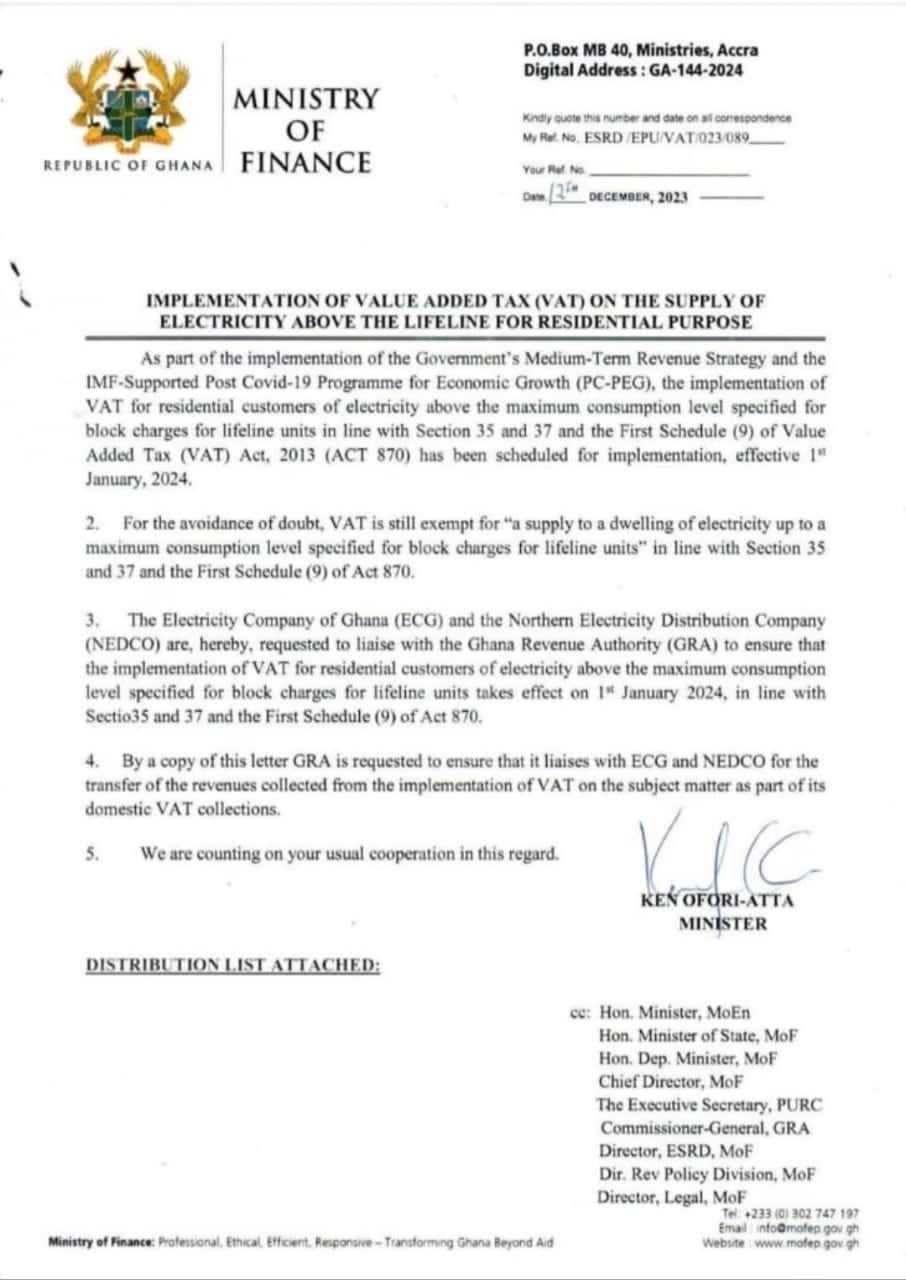
The Ministry of Finance, as part of its Medium-Term Revenue Strategy and the IMF-supported Post Covid-19 Programme for Economic Growth (PC-PEG), announced the commencement of a 15% VAT for residential electricity customers above specified consumption levels.
The Ministry clarified that VAT remains exempt for electricity supplied to dwellings up to a maximum consumption level specified for lifeline units.
The Ministry directed the Electricity Company of Ghana (ECG) and the Northern Electricity Distribution Company (NEDCO) to collaborate with the Ghana Revenue Authority (GRA) for the implementation of VAT on residential electricity customers, effective January 1, 2024.
The letter also instructed GRA to coordinate with ECG and NEDCO for the collection and transfer of revenues from the implemented VAT.“The Electricity Company of Ghana (ECG) and the Northern Electricity Distribution Company (NEDCO) are, hereby, requested to liaise with the Ghana Revenue Authority (GRA) to ensure that the implementation of VAT for residential customers of electricity above the maximum consumption level specified for block charges for lifeline units takes effect on 1 January 2024, in line with Sectio35 and 37 and the First Schedule (9) of Act 870,” it said.“ By a copy of this letter GRA is requested to ensure that it liaises with ECG and NEDCO for the transfer of the revenues collected from the implementation of VAT on the subject matter as part of its domestic VAT collections,” it added.
A former Minister of Finance, Seth Terkper, has admitted that he granted his deputy, Dr. Cassiel Ato Forson, authorization to compose a letter to the Bank of Ghana (BoG) requesting the issuance of Letters of Credit (LCs) in favor of Big Sea General Trading Ltd for the procurement of 30 ambulances.
During his testimony on the previous day in a court presided over by a Court of Appeal judge with additional duties as a High Court judge, Justice Afia Serwah Asare-Botwe, Mr. Terkper explained that he approved this action in response to the legal advice from the Attorney-General and the Ministry’s Legal Unit.
He stated, “The letter to the Bank of Ghana requesting the setup of the LC originated from the Ministry of Finance and had my full authorization.”
Mr. Terkper clarified that this decision was made to prevent potential government liability in accordance with the guidance provided by the Attorney-General at that time.
In a different context, Dr. Forson, the Minority Leader, along with Richard Jakpa, a private entrepreneur, and Sylvester Anemana, a former Chief Director of the Ministry of Health, are facing allegations of causing a €2.37 million financial loss to the state in connection with the procurement of ambulances.
All three have pleaded not guilty to charges of deliberately causing financial loss to the state, aiding and abetting the willful causing of financial loss to the state, violating the Public Procurement Act, and intentionally misappropriating public assets.
The Attorney-General contends that Dr. Forson directed the LCs to be charged to the Ministry of Health’s budget, contrary to the parliamentary approval for the ambulance procurement.
During his testimony, Mr. Terkper revealed that he had received an opinion from the Attorney-General in 2014, which emphasized that failure to execute the contract with Big Sea could create liability for the government. He stated that the Attorney-General’s opinion clearly indicated that “all necessary government approvals had been obtained” for the contract and that this opinion was legally binding on all government agencies involved in the transaction.
During the cross-examination, Attorney-General Godfred Yeboah Dame inquired whether the payment for the ambulances had been made in error. Mr. Terkper admitted that the payment was indeed made in error, but this occurred because the ministry had believed at the time that Stanbic Bank’s Letters of Credit were still valid under the Parliament-approved agreement. It was only after the Debt Management Unit of the Ministry of Finance alerted him to the fact that Stanbic Bank’s Letters of Credit were no longer valid that the Finance Ministry decided to charge the Ministry of Health budget, contrary to what Parliament had initially approved.
He explained, “On the surface, it may appear contrary to what Parliament approved, but it’s important to grasp the principle that all loans, including Letters of Credit, are ultimately charged to the capital budget of the ministry.”
When questioned about why he had not disclosed his authorization of Dr. Forson’s request for the establishment of the LC during the investigation by the Economic and Organized Crime Office (EOCO), Mr. Terkper clarified that he lacked the necessary documents from his ministry at that time as he had left office and didn’t want to rely on his memory to respond to investigators.
The case is scheduled to continue on Thursday, October 26, 2023.
Prosecution’s Account: According to the facts presented by the Attorney-General in the charge sheet, in 2009, during the State of the Nation Address, the then President, Prof. John Evans Atta Mills, announced plans to purchase new ambulances to expand the operations of the National Ambulance Service.
Jakpa, a local representative of Big Sea General Trading Ltd, a Dubai-based company, approached the Ministry of Health with a proposal in which he claimed to have secured financing from Stanbic Bank for the supply of 200 ambulances to the government. Parliament granted approval for the financing agreement between the government and Stanbic Bank.
According to the facts, on November 19, 2012, Dr. Anemana sent a letter to the Public Procurement Authority (PPA) seeking approval to engage Big Sea through single sourcing for the supply of 200 ambulances.
Furthermore, on August 7, 2014, Dr. Forson wrote to the Bank of Ghana requesting Letters of Credit amounting to €3.95 million for the supply of 50 ambulances in favor of Big Sea. These Letters of Credit were subsequently released to Big Sea.
Former Finance Minister, Seth Terkper, provided a clear account before an Economic and Financial Court in Accra, affirming that he had granted full authorization to his then Deputy, Dr. Cassiel Ato Forson, to formally request the Bank of Ghana to set up Letters of Credit in favor of Big Sea General Trading Ltd of Dubai.
These Letters of Credit were specifically for the procurement of 30 ambulances.
Mr. Terkper, who took the stand as the key witness for the Defense in a legal case involving Minority Leader Dr. Cassiel Ato Forson and two others, informed the Court, presided over by Justice Afua Serwaa Asare Botchwey, that this authorization for Dr. Forson was issued during a special management meeting under his chairmanship at the Finance Ministry.
The meeting was convened in response to a legal opinion received from the Attorney General and the Ministry’s legal department, aiming to facilitate the execution of a government contract with Big Sea.
This contract was intended to secure the delivery of 200 ambulances, thereby averting potential liability in the form of a judgement debt if Big Sea pursued legal action against the government due to prolonged delays and contract violations.
He said claims by the Attorney General that Dr. Forson caused the LCs to be set up without due cause and authorization were untrue. Minority Leader Dr Cassiel Ato Forson, has been charged with two counts of willfully causing financial loss to the state by causing Letters of Credit to be established in favour of Big Sea for the supply of ambulances “without due cause and authorization”.
Mr Terkper elaborated further in his witness statement that he received an opinion from the Attorney General in 2014 which said that failure to execute the contract with Big Sea would result in judgement debt if the latter went to court over undue delays in the execution of the contract for the supply of ambulances and breaches by the government of Ghana.
Mr Terkper indicated that the AG’s opinion to him was emphatic that “all governmental approvals had been obtained” for the contract and that the opinion was binding on all goverment agencies engaged in the transaction.
He further said that the LCs in question were set up on an “approval basis” which meant that the Ministry of Health had to indicate their approval of documentation from Big Sea proving the shipment of the ambulances and then proceed to authorize the Bank of Ghana to make payment under the LC if they were satisfied that Big Sea had met all conditions.
He said the establishment of the LC, which fell within the purview of the Finance Ministry, was distinct from payment, which had to be approved by the Ministry of Health, and wondered how the Ministry of Finance could be blamed for any defects in the ambulances when the responsibility for ascertaining their state and condition rested with the Ministry of Health.
Dr. Cassiel Ato Forson, Dr. Sylvester Anemana, a former Chief Director of the Ministry of Health and Businessman, Richard Jakpa are standing trial in connection with the importation of the 30 ambulances.
Former Finance Minister, Seth Terkper, is advising the government to exercise caution when it comes to celebrating the accomplishment of the first phase of the International Monetary Fund (IMF) Programme.
Terkper has emphasized that despite progress, significant economic challenges still persist, including elevated levels of inflation and interest rates. Consequently, he believes that the government should refrain from lauding the narrowing of the primary balance as it falls short of the IMF’s intended targets.
In his discussion with Joy Business, Mr. Terkper emphasized the importance of the government not becoming complacent but rather continuing to put in efforts to rejuvenate the economy, with a particular focus on ensuring the sustainability of the country’s debt.
“If you consider when [inflation] it cross 40% that is another three fold, and you looking at debt at 57% of Gross Domestic Product, now closely to 100%. Even when you take out the contingent liabilities and others, if we are in the 90% right from 57% of GDP that is doubling of the debt to GDP ratio. I granted an interview and wrote a short article which said that we should not be made complacent by those who are in the position to know were Ghana’s economy is in at the moment”.
“I think it is particularly after the debacle of the BoG [Bank of Ghana] showing the extent to which the deficit [fiscal] was monetize, the economy was monetize which is the course of the inflation that we talking about. I think it is a bit too early especially for our friends from the international community to be singing our praises”, he added.
The former Finance Minister elaborated that while there is evidence of economic recovery, potential risks to the economic outlook still exist.
“I am not saying there hasn’t been any success so far in terms of the injection of foreign exchange by the multilateral institutions in particular into the economy to try and stabilise the situation, particularly significant flows of COVID-19 funds. During the COVID-19 period, about ¢60 billion which is six times what we have always use to turn around the economy was injected into the economy”.
“Remember no government has done a turnaround of the economy using more than $1 billion”, he added.
The GHS22 billion “fiscal offset” in the 2023 budget, according to former finance minister Seth Terkper, could impede the implementation of an International Monetary Fund (IMF) program if caution is not exercised.
He stated that about a month ago, he drew attention to the problem of arrears the government owed suppliers, contractors, employees.
“We noted that they are as important as the ongoing debate on domestic & external public debt,” he tweeted.
He added ” We must stress: every government has to deal with arrears in every Budget. Hence, the issue is [a] how to sought to improve on the method of compilation & reporting: and how this effort was distorted in the 2017 Budget.
“We show the 2016 “offsets” & bailout “footnotes” appear to resurface in the 2023 Budget; but to paint a positive picture. If not addressed, it will [a] retard progress under an IMF programme; and haunt a new government [NDC?]. Case in point? Single Spine. Tune in.”
Regarding the IMF deal, Finance Minister Ken Ofori-Atta said the government expects the IMF board approval of the deal it is seeking with the Fund by May this year.
He told the investors on the sidelines of the ongoing IMF/World Bank Spring Meetings in Washington, D.C. USA on Thursday, April 13 that “We do at this time expect an IMF board approval in May and contemplate a rapid negotiation of a Memorandum of Understanding (MoU) with our creditors. We have made significant efforts on all fronts.”
He further assured the investors that the government had taken a number of steps to ensure that the challenges with the nation’s finances are tackled.
He told the investors on the sidelines of the ongoing IMF/World Bank Spring Meetings in Washington, D.C. USA that the country is undergoing debt restructuring as part of efforts to secure a deal with the IMF.
said “Ghana has done a number of things, first of all with regards to the Paris Club, we did travel to China, we sort support from India and the Saudis and really maintained open relations with the Club.
“We did get to the Club to let them know that we were worried about the track record of the common framework, we have had a good relationship, we really commend the Paris Club for the sense of urgency that they have and we are confident that they will be able to bring the assurances to the Bank in the coming week.”
He also indicated that Government intends to deepen the relationship with its external creditors.
“We reaffirm our commitment to work with our private and commercial creditors in all of our engagements,” he stressed.
Former Finance Minister, Seth Terkper, has reiterated his advice to the government not to engage in what appears to be another “fiscal offset” in the 2023 budget, similar to what occurred in the government’s 2017 budget.
In this context Mr. Terkper has called on the government to disclose its plan for dealing with a large GHS 77bn pipeline of arrears and contracts in the 2021 Budget Performance Report. He noted that a similar plan was used to deal with the “single spine” wage arrears in 2020.
He has argued that, given that the budget overruns are at the core of most debt challenges, transparency and accountability in government finances are crucial for securing an IMF programme. Moreover, they are also needed for sustainable economic growth and development.
Mr. Terkper has argued that the treatment of the banking and energy sector bailout costs as memoranda items, rather than adding them to the country’s deficit and public debt stock, creates a false impression of fiscal consolidation.
The former minister has pointed out that this practice by Government resulted in the rapid financial market rating downgrades of the country’s sovereign bonds and eventual debt default, with the deficit revised upwards to 7% and 7.2% for 2018 and 2019 respectively, when the IMF and ratings agencies adjusted Ghana’s fiscal deficit and public debt figures.
Mr. Terkper recalled that in 2017, the incoming Akufo-Addo administration accused the John Mahama administration of overlooking arrears of about GHS 7bn. However, only about GHS 2bn was carried forward to the 2017 fiscal year after an apparent offset of GHS 5bn against total expenditures. At the time, Mr. Terkper opposed the move in various articles and interviews.
In a similar move, Mr. Terkper notes that the 2023 budget shows another apparent offset of GHS 22bn that also appears to reduce the deficit from about GHS 60bn to approximately GHS 38bn. As with the 2.3% reduction in the budget or fiscal deficit in 2017, the repetition of the fiscal move results in a “paper” reduction by 3.7% of GDP.
The former minister has warned that this practice by government creates a false impression of fiscal prudence, which is unsustainable in the long term. He has argued that such moves lead to a lack of transparency and accountability in government finances, which can lead to financial instability and economic turmoil.
Mr. Terkper’s concerns reflect a broader need for transparency and accountability in government finances in Ghana. The government must address these concerns to build trust with its citizens, investors, and international partners. Failure to do so could lead to further economic instability and harm the country’s long-term economic prospects.
Speaking on JoyNews on Thursday, he said that “I say there are technical reasons, past and present why it is draconian. A measure that was in SMCD 5 (Supreme Military Council Decree 5) is being brought back in this day and electronic age.”
According to him, per the tax, “any business that does not declare profit in five years would have to pay a certain tax compulsorily.”
“Where are tax audits, where is the data? The tax audit is going to examine the records for this and if there is a reason they are not paying. Another one, minimum taxes are coming back where you are going to be paying a tax irrespective of business size, it is because of a lack of continuous investment in the domestic tax system,” he stated.
Mr. Terkper added that the above-mentioned are measures that were replaced under the economic recovery programme and Structural Adjustment Programme in Dr Botchway’s era.
He maintained that industry will struggle to operate should these measures receive parliamentary blessing.
A former Minister for Finance, Seth Terkper, has cast doubt on the government’s ability to secure a deal with the International Monetary Fund (IMF) by the end of March.
This comes on the back of the government setting an ambitious target of getting a board-level agreement with the IMF by the end of March 2023.
But speaking on the Morning Starr with Francis Abban, Terkper stated that Ghana still has set outstanding obligations and targets it must meet before the board-level agreement can be approved.
“As far as I know and from experience, it may be difficult, and the reason is, in that communication, there are conditions that involve Domestic Restructuring and External Debt Restructuring. We know that we have come to sign an agreement with the domestic debtors.
“Now, as far as I know, with the external, we are in a negotiation with the Chinese, and there isn’t any communication yet; I stand to be corrected with respect to other external creditors,” the former Finance Minister stated.
He continued: “Notably those institutions who formed the committee, if you recall, with respect to our external bonds. So a precondition for a debt restructuring, I don’t think that we are within the eleven days from what I know of accomplishing it.”
According to the former Finance Minister, businesses in Ghana are paying more taxes currently compared to what they paid during the administration of former President John Mahama.
He avers that this phenomenon is in contrast with what was promised to Ghanaians in the build-up to the 2016 general elections.
Speaking in an interview monitored by ABC News, Seth Terkper condemned the government for the taxes it has levied on Ghanaians and businesses since they took over the governance of the country in 2017.
The argument by Seth Terkper, however, is arguable considering the fact that the Akufo-Addo government scrubbed almost 17 ‘nuisance’ taxes in its first budget as a government.
To buttress his point, Seth Terkper advanced that government has within the time in government increased the Energy sector levy and indirectly increased the Value Added Tax (VAT).
Despite the government’s intervention, though some policies that have been lauded as innovative, aimed at improving the business climate in the country, Seth Terkper is of the view that little results have been recorded.
He mentioned that the recent port reforms did not bring the expected impact as envisaged suggesting that the benchmark value that slashed import duties by up to 50 percent this year has not necessarily helped all traders but rather increased the cost of transaction for some.
He claims that the action is being taken to help those people affected by the debt swap scheme by using development partners, such as the World Bank, as leverage.
He also said that other nations had done the same thing in the past during hard financial circumstances.
The US he noted made a profit of US$3 trillion when it sold the ‘bad’ bonds after the crisis.
“This is what happened during the global financial crisis where governments stepped in. We can prevail on the development partners – the World Bank and others who have had experience in this to set up a fund to pay those who are really in need or set up a ‘bad bank’ and when the time is good you can buy back the bonds,” he is quoted by myjoyonline.com.
“Look, the US Treasury – Federal Reserve when it bought the bad debt from the banks, it offloaded those bonds when the condition improved and made 3 trillion US$ profit which was given to the treasurer and the US put the funds aside,” he added.
“The solution may be fiscal or monetary. There are financial institutions, especially those we called primary dealers, those who buy the most government bonds – the ones who can even come in and stand in for the government when the auction is failing. They may be more liquid, so we may want to prevail on them to set up funds.
“If somebody wants to offload out of hardship, we can determine the criteria for those who have to pay children’s school fees and whatever we invested in the bonds for various reasons. They [bondholders] can go to these institutions, offload their bonds for a discount, and when the conditions improve, they can sell at a higher rate,” he said.
A former Minister of Finance has asked the government to suspend the Free SHS policy until the economy rebounds.
Mr Seth Tekper said the current economic crisis does not support the implementation of policies such as the Free SHS and that all capital intensive projects should be reviewed urgently.
“I am going to use the Free SHS, unfettered free SHS, I am free to say it because in 2017 I tweeted and said unfettered free SHS was attractive but cannot be achieved. Ghana cannot do unfettered free SHS,” he said.
He added that the IMF deal will come with constraints to expenditure. So should the flagship policy be suspended, the money from it can be used for roads construction and hospitals.
“If we have a project which we have signed to complete in three years, I think we can suspend it for one year until we improve the situation…for instance some roads or some hospitals.”
The government and the Bretton Woods Institution in a joint press statement on Monday, December 12, said a Staff-Level Agreement on economic policies has been reached.
This is to be supported by a new three-year arrangement under the Extended Credit Facility (ECF) of about $3 billion.
According to a statement from the fund, the government’s strong reform programme aimed at restoring macroeconomic stability and debt sustainability while protecting the vulnerable, preserving financial stability and laying the foundation for strong and inclusive recovery, was key in this decision.
However, the staff-level agreement is subject to IMF Management and Executive Board approval and receipt of the necessary financing assurances by Ghana’s partners and creditors.
Meanwhile, the government announced it is suspending debt service payments on certain categories of external debts, including Eurobonds, commercial loans and most bilateral debt.
According to the government, this is aimed at bringing the country’s unsustainable debt level under control – a statement from the Ministry of Finance said.
Former finance minister, Seth Terkper, has said that Ghana’s economy is showing encouraging signals.
However, in order to help people make wise judgments, he asserted that the government must present data to back growing trends.
Addressing the media at the National Democratic Congress’ (NDC) delegates conference at the Accra Sports Stadium, he said “The signs are looking good, but let us support that with actuality.”
He further advised the administration to bear responsibility for economic problems rather than blaming them solely on external factors.
His comments come on the back of positive signs seen with the cedi against the dollar.
The local currency has over the past few days, especially since the start of December 2022, been gaining strength against the major trading currencies particularly, the Dollar.
Per the Bank of Ghana (BoG) rate, the cedi, as of Thursday December 15, was buying at GHS7.9975 to a dollar and and selling at GHS8.0056 to a dollar.
The Ghana cedi on December 14, 2022, gained 5.6% value against the US dollar, resulting in a cumulative gain of approximately 33.6% in the month of December alone.
This put the cedi as the strongest performing currency against the American ‘greenback’ in December 2022.
The cedi slumped by more than 54% against the dollar before December 2022.
In 2023, the government plans to spend more than 200 billion Ghanaian cedis while expecting to earn just 143 billion, resulting in a 7.7% budget deficit.
The former finance minister recommended the government to make significant spending cuts in order to adequately address the situation while speaking on State of Affairs.
“We are not raising enough revenue and stuck to tax revenue of 12 to 13 percent, as well as the revenue setting, if we are lucky, at 15.5 percent was the highest in actual terms for 2015. Therefore we are not able to break the Sub-Sahara average of 17.5 let alone the 20 percent that the Minister indicated.
“So you can see the road that we need to travel in that tax to GDP at 20 percent and we are talking of a five percent increase. Even if it is total revenue we are talking about, a 24 percent increase. We are not closing the gap but we are making the effort to increase revenue because there will always be a deficit, Mr. Terkpe stated.
He added: “I think there are some positive vibes coming from the budget but I’m afraid we have a long way to go in reducing the deficit and bringing the debts to sustainable levels so that we can go to the market again. Because now everything is dependent on the domestic market, treasury bills, bonds, and the Bank of Ghana beginning to take over the mantle of financing the deficit.”
The former finance minister indicated that the government’s debt/deficit is part of the Appropriation Bill and the Bank of Ghana cannot allocate to itself the fiscal responsibility of who to pay.
“Because when the budget is presented there is a projection of how it should be financed,” Mr. Terkper explained.
The executive director of PFM Tax Africa, Seth Terkper, will be teaching at Bentley University in the United States as a visiting scholar from January 2023.
Terkper, a former finance minister, will collaborate with outstanding finance professors at the university in research, teach courses on public finance and participate as keynote speaker in seminars that will be opened to the university community and the public.
Bentley University (based in Waltham, Massachusetts), is a prestigious private University focused on business programs. It offers undergraduate, masters, and PhD programmes in business disciplines. Its undergraduate tuition is US$56,500 per year.
It was founded in 1917 as a college of accounting and finance in Boston’s Back Bay Neighborhood.
“We are very delighted to have Hon. Terkper joining our faculty with such a wealth of experience,” says Kartik Raman, George and Louis Kane Professor of Finance and Chair of Finance Department. “We have no doubt that he will make quite an impact with his presence, knowledge and experience.”
Terkper has vast experience in global and national public finance. He previously served as the Minister of Finance under the John Mahama administration, during which he was at some point given additional concurrent responsibilities as Minister of Power.
He previously worked for a decade in the Fiscal Affairs Department (FAD) of the International Monetary Fund (IMF).
He is currently on the expert roster for the African Development Bank (AfDB), IMF, World Bank, and other global financial institutions, and serves on several steering committees focused on global policy issues.
“Bentley University has a great track record in training some of the best business and finance professionals I’ve had the privilege of working with,” Terkper said.
“I am therefore honoured by this opportunity to go there as a visiting scholar and contribute to training and research at this great institution with a proud history and a very bright future.”
His expertise is in public financial management (PFM), including taxation, financial and fiscal accounting. He has a keen interest in structural fiscal reforms that will ensure a smooth transition from low-income country (LIC) to middle income country (MIC) status – as the minister who received the official notification from the WB and AFDB on his country’s transition.
Terkper has written several reviews and articles and has published a book on Value Added Tax (VAT). He is the Founder and Executive Director of PFM-TAX Africa (Network) Ltd.
He currently does some part-time teaching at the University of Ghana and has taught occasionally in other universities in Ghana, UK, and US.
Terkper is a Fellow of the Institute of Chartered Accountants, Ghana (ICAG), and holds degrees from Harvard University, Kennedy School of Government (MPA; Cert. Tax), Strayer University (MBA), and University of Cape Coast (Bachelor of Commerce, and Diploma in Education). He is married with two children.
Anyidoho in a tweet said, “I just want simple answers to my questions about the economy: My senior brother, Seth Tekper, given the opportunity, what would you do differently? Pls pls pls convince me I beg u”.
He said “Hi Koku, doing well? Ready to engage, been discussing a few (also what we did). 3 egs: i) if you borrow, learn to repay (Sinking Fund & debt/ratings wahala); ii) crisis are inevitable, prepare, w/ fields (Stabex/Contingency Fund, my crisis is bigger than yours is fallacy)”.
“3rd, if tax revenue is stagnant, reduce expenditure, however lofyvor well-meaning (recall E-schools in 2016?). Can’t borrow perpetually to finance them. Be targeted when you receive $6b (unprecedented, not even HIPC flows) for a crisis like COVID, topping 3 oil fields.”
“1st, negotiations were long in coming and not even the WB could have predicted the BRIC/EM meltdown in 2015. 2nd, Saudi etc withdrew funds from the markets for domestic needs at the time. 3rd, Ghn’s 2015 budget was based on a healthy $99 pbl, which crashed to sub-$35 pbl”
“4th, recall we suspended pricing for 2 wks, then realized some major non-resident holders of Ghn’s domestic Bonds, due in 2-to-3 mths, were bidding high or not bidding at all (potential arbitrage?). Clearly, we face a high local rate hike to rollover, @ about 30% plus?”
“5th, got 2 oilfieds in 2017 but failed to (i) put more money in Sinking Fund for credible buyback or swap/exchange (as w/ 1st Bond); (ii) messed PRG with PDS saga (blame MCC too for exit?). 6th we messed up using ESLA to pay IPPs; and yet 7th kept borrowing with no repmt plan.”
In a tweet in response to former presidential spokeswoman Koku Anyidoho, Terpker, who served as Minister of Finance throughout the Mahama administration, stated that the idea was incorrect.
The former minister claimed that he had repeatedly challenged anyone to make cutlasses and condoms available if they had any proof that such taxes had been imposed or that such taxes had been repealed by the current administration. However, this challenge had received no answer.
Anyidoho had tweeted: “Who taxed condoms and cutlasses in this country when he was President?” reference to claims that Mahama had at a point taxed the two products.
“Wrong!! My good brother. I have been challenging anyone to cite the provision in the Customs Act and relevant Tariff # that imposed such taxes. He or she can also cite the “amendments” by the current administration. None to date but still on standby,” Terkper hit back.
Find Terpker’s tweet below:
In the run up to the 2016 elections, the then running-mate of the flagbearer of the then opposition New Patriotic Party (NPP), Dr Mahamudu Bawumia, accused the government of undermining economic growth by overburdening businesses with taxes.
He said: “You have a government where you have cutlasses being taxed; condoms being taxed…. When you become desperate, this is what happens; and when you mismanage the economy into this hole then, anything sounds great to you. You don’t have any option and this is the problem.
“Anything that is taxable and that can feasibly be taxed, they are trying to impose tax on them. All of these are hurting the economy and therefore you are not going to get the growth, and when you don’t get the growth, you will not get the revenue, and when you don’t get the revenue, you go back to increasing taxes to get the revenue, and then you are in a cyclical downward spiral. So they have it wrong and we’ll change that particular policy.”
Former Minister for Finance Seth Terkper has refuted suggestions that he did not lead Ghana’s negotiation with the International Monetary Fund (IMF) during the era of ex-President John Dramani Mahama.
According to him, even though the negotiation was chaired by renowned economist Prof Kwesi Botchwey, he (Terkper) took part in all the meetings and was the one who signed off on the deal the government had with the IMF.
“The fact that we had a team does not mean that the minister of finance was not at the table where the discussions were being held. I have heard that being said by academics, so they should be careful sometimes with what they say.
“Yes, it is true we had a team; it was chaired by Dr Botchwey … alternating occasionally with the Chairman of the Economic Management Team. After all, it was the nation’s economic programme. He (Prof Botchwey) has rich experience – 19 years of doing these things.
“So, we did have a team, but there wasn’t any of the discussion that I did not participate with my deputies,” he said in a JoyNews interview monitored by GhanaWeb.
Seth Terkper’s remarks follow calls by some people for Finance Minister Ken Ofori-Atta to be excluded from Ghana’s team for the ongoing negotiation with the IMF for a $3 billion bailout.
Seth Terkper, former Finance Minister during the erstwhile Mahama government, has contended that the tax burden remains the major bane of businesses under the tenure of the Akufo-Addo-led government, ABC News can report.
According to the former Finance Minister, businesses in Ghana are paying more taxes currently compared to what they paid during the administration of former President John Mahama.
He avers that this phenomenon is in contrast with what was promised to Ghanaians in the build-up to the 2016 general elections.
Speaking in an interview monitored by ABC News, Seth Terkper condemned the government for the taxes it has levied on Ghanaians and businesses since they took over the governance of the country in 2017.
The argument by Seth Terkper, however, is arguable considering the fact that the Akufo-Addo government scrubbed almost 17 ‘nuisance’ taxes in its first budget as a government.
To buttress his point, Seth Terkper advanced that government has within the time in government increased the Energy sector levy and indirectly increased the Value Added Tax (VAT).
Despite the government’s intervention, though some policies that have been lauded as innovative, aimed at improving the business climate in the country, Seth Terkper is of the view that little results have been recorded.
He mentioned that the recent port reforms did not bring the expected impact as envisaged suggesting that the benchmark value that slashed import duties by up to 50 percent this year has not necessarily helped all traders but rather increased the cost of transaction for some.
In his opinion, taxes today are much higher than they were during the previous NDC regime.
According to Seth Terkper, the government raised the energy sector levy and indirectly raised the value-added tax as of 2019. (VAT).
Seth Terkper, former Finance Minister during the erstwhile Mahama government, has contended that the tax burden remains the major bane of businesses under the tenure of the Akufo-Addo-led government, ABC News can report.
According to the former Finance Minister, businesses in Ghana are paying more taxes currently compared to what they paid during the administration of former President John Mahama.
Speaking in an interview monitored by ABC News, Seth Terkper condemned the government for the taxes it has levied on Ghanaians and businesses since they took over the governance of the country in 2017.
The argument by Seth Terkper, however, is arguable considering the fact that the Akufo-Addo government scrubbed almost 17 ‘nuisance’ taxes in its first budget as a government.
To buttress his point, Seth Terkper advanced that government has within the time in government increased the Energy sector levy and indirectly increased the Value Added Tax (VAT).
Despite the government’s intervention, though some policies that have been lauded as innovative, aimed at improving the business climate in the country, Seth Terkper is of the view that little results have been recorded.
He mentioned that the recent port reforms did not bring the expected impact as envisaged suggesting that the benchmark value that slashed import duties by up to 50 percent this year has not necessarily helped all traders but rather increased the cost of transaction for some.
Seth Terkper, a former finance minister, has asked the government to inform Ghanaians of its comprehensive debt restructuring strategy in order to put a stop to market rumors.
He asserts that a thorough document outlining the government’s debt restructuring program will increase investor trust, despite the president of Ghana’s assertion that there won’t be any haircuts on investments.
“…To stop some of the speculations, we need to know precisely what is on the table. We were told that it is an enhanced program; isn’t it time for the citizens to know what their government is putting on the table so that we can speak to it? This whole confusion over whether there is going to be a haircut or not,… it is not speculation because that is what the market is asking. If there are questions which the market, those who gave the money to you, including domestically (those who have invested in Treasury Bills), those from who we’ve borrowed money, they are concerned about what will happen to their money because you are not talking about the risk of default.”
Mr Terkper added: “I think what we need is the agenda on the table so that we can be certain. And this is why ex-President Mahama has always called for national discussion and consensus. I think that it is now justified because we are told that it will take 2028 before our debt will be sustainable, and as I’ve said, by that time, the President of the current administration will have been long gone.”
He pointed out that the ensuing employment losses had a negative impact on the expansion of the economy.
In 2017 and 2019, the government invested a total of GH23billion in the cleanup of the banking sector.
Former Finance Minister Seth Terkper has said the approach adopted by the Bank of Ghana and the Finance Ministry towards the banking clean-up exercise was wrong.
He said the exercise could have been carried out without loss of jobs on the scale that was witnessed during the exercise.
His comments come after Finance Minister Ken Ofori-Atta defended the approach that was adopted towards the clean-up exercise.
Mr. Ofori-Atta told TV3’s Etornam Sey in an exclusive interview on Monday, October 26, 2020, that the financial sector is the heartbeat of every economy globally. A weak financial sector, he said, will have dire consequences for the economy and its people, a situation that demands that central authorities step in swiftly to address.
Therefore, he said, the Government of Ghana will act quickly to address any challenges that may emerge in the sector again after the recent cleanup exercise.
The Bank of Ghana with support from the Finance Ministry swept through the financial sector of the economy between the period 2017 and 2019.
The central bank first started by revising the minimum paid-up capital for existing banks and new entrants from ¢120 million to ¢400 million.
According to the regulator, this was to test the viability of the banks.
The banks that were unable to meet this new requirement were either merged or collapsed.
Following this action, some nine local banks, 23 savings & loans companies, 347 microfinance institutions, 39 finance houses, and 53 fund management companies closed down during the exercise.
In total, the government spent GHSS23billion to undertake this exercise
UniBank, The Sovereign Bank, The Beige Bank, Premium Bank, The Royal Bank, Heritage Bank, Construction Bank, UT Bank, Capital Bank all collapsed.
Mr. Ofori-Atta said “Once you have the problem, you have to solve it because the financial architecture is the (basis) for any development.
“So whether we like or not we had to do that. Now that we have done that we move ahead.”
Asked whether if the situation presents itself the government will do it again in the same manner, he answered “You meet problems as a government that is what they elected you for and so you solve it.
“And then you begin by commissioning this to give people the sense of hope for the future to say this thing can be done, and they have faith in you so lets us go with them.
“If the engine is not functioning you can’t build on top of that so you had to solve the problem.
“Is there a way you improve on what you are doing? Of course yes there is always a way to do that but fundamentally was the approach necessary, no question about that.”
But Mr Seth Terkper, when asked whether he supports this approach while speaking in an interview with Etornam Sey on the New Day programme Wednesday, October 28 said “No.”
He further explained that the government had the Energy Sector Levy left behind by the previous NDC administration, to use in strengthening the banks but did not.
He claims that the maximum amount the nation has ever received from the Fund was GH3 billion when it was designated as a HIPC.
On October 25, 2022, he stated at the 11th Ghana Economic Forum, “the most we have had by way of intervention and that was HIPC was 3 billion.
No government has ever received 1 billion to make a change.
The amount we spent, which occurred after 2017 and under the current administration, was the highest at GH950 million.
He also stated that the notion that Ghana was doing well before 2020 needs to be re-examined.
Meanwhile, the Director of the Institute of Economic Affairs, Dr. John Kwakye, has stated that Ghana’s revenue targets have not been ambitious enough to rake in the expected revenue needed for development.
“As a country, we need both resources and policies to advance our development. For Ghana, we have lacked adequate resources, and our policies have also been defective in so many areas,” he said.
No country has received GH¢1 billion from the fund – Seth Terkper
A former finance minister, Seth Terkper, has stated that no government has secured GH¢1 billion from the International Monetary Fund (IMF).
According to him, the highest the country has received from the Fund is GH¢3 billion when the country was declared as HIPC.
Speaking at the 11th Ghana Economic Forum on October 25, 2022, he said “the highest we have had by way of intervention and that was HIPC was 3 billion. No government ever got 1 billion to do a correction. The highest was GH¢950 million which we did and that came after 2017 to the current administration.”
He also stated that the notion that Ghana was doing well before 2020 needs to be re-examined.
Meanwhile, the Director of the Institute of Economic Affairs, Dr. John Kwakye, has stated that Ghana’s revenue targets have not been ambitious enough to rake in the expected revenue needed for development.
According to him, every country thrives on good policies and the ability to take advantage of resources, but, in Ghana’s case, both have been defective.
“As a country, we need both resources and policies to advance our development. For Ghana, we have lacked adequate resources, and our policies have also been defective in so many areas,” he said.
His worries are related to the central bank supporting the government budget to the tune of GH22 billion as of the middle of the year.
Since the Covid-19 pandemic’s appearance, the Bank of Ghana has abandoned its zero-financing policy in order to lend to the government and lessen the pandemic’s effects as well as the degradation of the nation’s public finances.
This resulted in rating agencies downgrades, which in turn, contributed to a protracted lack of access to the Eurobond markets, led to a significant decline in external liquidity and access to the American greenback, thereby, having a significant impact on the local currency’s strength relative to the US dollar.
“What BoG has tried to do, and this is what we have always done, is to manage the crisis in the short term, but they need some inflows because they’ve been haemorrhaging by financing the fiscal deficit. GH¢22 billion out of about GH¢37 billion deficit, that is two-thirds of the whole deficit is on BoG and this is a country that has come from a zero financing in 2016 to now be financing two-thirds of the deficit which was even as at mid-year,” he said.
“The central bank is hugely financing government expenditure, but something has to be done about this in the short-term,” Mr. Terkper said.
According to the BoG, the budget implementation, using banking sector data, for the first 9-months of the year recorded an elevated overall cash deficit of 6.4 percent of GDP, against the revised programmed target of 5 percent of GDP.
Total receipts of GH¢51.49 billion (8.7 percent of GDP) over the review period, fell short of projected target of GH¢60.08 billion (10.2 percent of GDP) and represented 85.7 percent of the budgeted estimate.
Total payments of GH¢89.04 billion (15 percent of GDP) was almost on target, representing 99.5 percent of GH¢89.46 billion (15.1 percent of GDP). The deficit of GH¢37.56 billion, together with net foreign loan repayments of GH¢3.54 billion, created a resource gap of GH¢41.1 billion, which was financed from domestic sources and the use of resources from the stabilisation fund.
IMF projections
Ghana’s fiscal deficit is expected to be 9.2 percent of GDP in 2022, according to the International Monetary Fund’s Fiscal Monitor Report from October 2022. It surpasses the government’s revised 6.6 percent estimate from the Mid-Year Budget Review.
The primary deficit is anticipated to be 2.1 percent of GDP in 2022. On the other hand, it will decline to 1.1 percent of GDP in 2023 and even lower to 0.0 percent in 2024. This will show that the nation’s ability to raise revenue may be increasing.
He claimed that the key to winning over the Fund and the required benefit there is for the economy is to provide a strong program.
The former finance minister stated in a media discussion that obtaining funding from the IMF is essential given the current economic difficulties; as a result, the program should be carefully thought out.
“The global economy is becoming increasingly hostile, and I believe that given all we have been talking about, let us aim for a solid and good programme – making it slowly and not necessarily a fast one. One that can cover the nuts and bolts, otherwise it will come to haunt us; we might win the IMF and go back to where we were. Getting the programme is a must, otherwise things will go downhill.
“I think the goal should be a thorough discussion of all issues, so that we have a good programme. A programme that will make us win over the Fund in a very substantive and more realistic manner. From my experience I think it has always taken us a minimum of six months, sometimes with lesser headaches, to negotiate the programme,” he said.
Speaking on concerns that government seems to be protecting its legacy and flagship programmes, he said that it will have to relent to allow for progress in the negotiations.
Mr. Terkper further advised that there is a need to bring back some buffers and stabilisers and implement them so the country can fall back on them during difficult times.
“We must stretch into the medium-term to bring back some of the buffers and stabilisers that have been ignored, like the Sinking Fund. We cannot continue borrowing without paying. We must look beyond austerity to build solid sector policies to boost job creation for growth,” he said.
He also urged government to be open on issues with the citizenry to carry them along.
“Even internally, there are things that are unknown to the Ghanaian populace. Do we know all the costs outside the budget? The Fund will want to know. Do we know things that are coming up,” he questioned.
Enhanced Domestic Programme
The Ministry of Finance and Bank of Ghana have commenced a comprehensive debt sustainability analysis with the IMF for a possible US$3billion support programme.
Having reversed a policy of not seeking aid from the International Monetary Fund, government requested a balance of payment package following a serious economic crisis characterised by record-high inflation, currency depreciation and rising food prices.
The proposed programme should span a minimum of three years and seek to achieve the following objectives: strengthen government’s efforts to restore investor confidence in the economy, thereby regaining market access, boosting development partner disbursements and unlocking other financing sources; restore debt sustainability and macroeconomic stability to support green growth, economic transformation and job creation while protecting social spending.
Speaking at a media dialogue on Ghana’s negotiations with the IMF in Accra on Friday, Mr Terkper, according to myjoyonline.com, said if the government failed to exhibit transparency with the data, the country would not get the programme as expected on time, and that would hurt the economy more.
“What has dominated the discussions during the first round and going into the second round is a possible debt restructuring, refinancing or however you may call it. And, we will give some examples, and that is because we all know that debt is a problem that faces the nation. But I also want to remind us that debt is the outcome of raising revenue and borrowing beyond that revenue to the point we are in debt distress….there should be no question about that. And therefore, we have also faced downgrades.”
He mentioned that a typical IMF programme would start from revenue, expenditure, and management of arrears “to give us the fiscal balance and go all the way to the fiscal and go into debt – where we are facing the difficulty.”
He said, “Everything shows clearly that we are protecting certain expenditures as seems to be what is coming from some government officials, then the Fund [programme] is a non-starter. Because it means that you are saying that the Fund gives you money to continue with the pattern of your behaviour. You should know that the Fund knows it all; if you read Article 4, they follow our debates, they know what is going on, they have an office here,” Mr. Terkper said.
He further pointed out that a fast programme from the IMF would depend on whether the country could provide all the available data for scrutiny and approval.
“So I think whether we can do a fast programme or not depends on whether we can lay it all on the table. It can be shocking, but we need to lay all on the table,” he added.
Seth Terkper also dismissed the perception that the rating agency have been harsh to developing countries, saying the developed countries have not been left out of the equation, citing the United Kingdom as an example.
Former Finance Minister, Seth Terkper, is advising the government to be transparent as much as possible with data on revenue, expenditure and arrears in order not to delay the urgent economic programme from the International Monetary Fund (IMF).
Ghana’s economy is reeling under severe pressures, from rapid currency volatility, to higher inflation and interest rates.
Speaking at a media dialogue on Ghana’s negotiations with the IMF, Mr. Terkper said if the government fails to exhibit transparency with the data, the country will not get the programme as expected on time and that will hurt the economy more.
“What has dominated the discussions during the first round and going into the second round is a possible debt restructuring, refinancing or however, you may call it. And, we will give some examples and that is because we all know that debt is a problem that faces the nation. But I also want to remind us that debt is the outcome of raising revenue and borrowing beyond that revenue to the point we are in debt distress….there should be no question about that. And therefore, we have also faced downgrade.”
He mentioned that in a typical IMF programme, it will start from revenue, expenditure, and management of arrears “to give us the fiscal balance and go all the way to the fiscal and go into debt – where we are facing the difficulty”.
“Everything shows clearly that we are protecting certain expenditures as seems to be what is coming from some government officials, then a Fund [programme] is a non-starter. Because it means that you are saying that the Fund gives you money to continue with the pattern of your behaviour. You should know that the Fund knows it all; if you read Article 4, they follow our debates, they know what is going on, they have an office here”, Mr.Terkper disclosed.
He further pointed out that a fast programme from the IMF will depend on whether the country can provide all the available date for scrutiny and approval.
“So I think whether we can do a fast programme or not depends on whether we can lay it all on the table. It can be shocking, but we need to lay all on the table”, he added.
Mr. Terkper also dismissed the perception that the ratings agency have been harsh to developing countries, saying, the developed countries have not been left out of the equation, citing the United Kingdom as an example.
When then-President John Dramani Mahama and his Finance Minister, Seth Terkper, claimed that the nation had been upgraded by rating agencies, Dr. Mahamudu Bawumia said in 2016 that this was untrue.
He claimed that the nation’s creditworthiness condition remained poor.
“Ghana’s outlook was recently changed from B- negative to B- stable (the equivalent of B3), turning the situation around from bad to stable.
And as a result, the NDC government and President Mahama incorrectly believed that Ghana’s credit rating had improved,” he stated.
The former Central Bank Deputy Governor, speaking at the launch of the manifesto of the New Patriotic Party (NPP) over the weekend at the Trade Fair in Accra, said: “With the recent revision of Ghana’s outlook from B- negative to B- stable (i.e. the equivalent of B3), the outlook was revised from negative to stable. And this has resulted in a misinterpretation by this NDC government and President Mahama that Ghana’s credit rating has been upgraded.”
Moody’s did not upgrade Ghana
“This is in fact not the case. Moody’s did not upgrade Ghana. Ghana’s rating under Moody’s is still B-. It is only the outlook that has been revised and that is not equivalent to a change in rating, or ratings upgrade. The outlook is not equivalent to an upgrade in ratings. Sometimes one wonders whether they don’t read or they don’t understand,” he explained.
Dr Bawumia stated that “without oil, Ghana was being rated at B+ positive, under the NPP. We’ve now come down with oil under the NDC and John Mahama, to B- with a stable outlook in 2016. So we’ve gone from B+ to B-.”
Noting that international ratings agencies like Moody’s, Fitch and Standards and Poors now had basically the same credit rating for Ghana, he advised the President to desist from such erroneous interpretations and fall on his economic management team for explanation.
Ghana worse off now
“The Mo Ibrahim 2016 Report on governance shows that on virtually all key indicators such as safety, and the rule of law, human rights, economic opportunities, infrastructure, business environment, human development, health and public management, all these indicators, Ghana is worse off today than it was 10 years ago.
“The IMF, in its recent review of the economy, has warned that Ghana is on the cusp of a financial and economic crisis. Notwithstanding this abysmal record, President John Mahama is actually asking Ghanaians where the economic crisis is. He is clearly out of touch. Mr President, the economic crisis is everywhere.”
“Teachers are suffering. Teacher trainees are suffering. Nurses are suffering. Nursing trainees are also suffering. Patients are suffering. Students are suffering. Traders are suffering. Pensioners are suffering. Drivers are suffering, contractors are suffering. Civil servants are suffering and farmers are suffering. Fishermen are suffering and industries are suffering. Artisans are suffering and ‘kayayei’ are suffering. The disabled are suffering and men are suffering. Women are suffering and children are suffering, and Ghanaians as a whole are suffering.”
Huge debts without substantial benefits
The incumbent is on record as having received huge resources and yet accumulating as much as 66 percent of the country’s debt in the last 3 and half years.
Some of its policies have driven the country’s industrial sector to register -5 percent in the second quarter of this year.
The country’s total public debt as at August this year totaled GH¢110 billion but there is still massive unemployment among the youth and high cost of living.
No agreement has been achieved with the International Monetary Fund (IMF) regarding the specifics of any debt operations, according to Finance Minister Ken Ofori-Atta.
According to Seth Terkper, a former minister of finance, the government may face difficulties in calculating the various debts accumulated throughout the period for the debt sustainability analysis with the International Monetary Fund (IMF).
Mr. Terkper added that the government must present a number of debts for examination as part of the bargaining process.
But, during a press conference in Accra on Wednesday September 28, 2022, Mr. Ofori-Atta said IMF will cover a period of 10 days; and in line with the President’s dialogue with the IMF Managing Director, Kristalina Georgieva, negotiations will be fast-tracked to ensure that key aspects of the programme are reflected in the 2023 Annual Budget Statement in November 2022.
“We simply have not reached any agreement with the Fund on the parameters of any debt operations as we are in the process of completing the debt sustainability analysis. Government shall continue to actively engage all stakeholders in a clear and transparent manner as we seek to fast-tract the IMF negotiation process.
“Government is committed to ensuring that a comprehensive package is negotiated with the aim of restoring and sustaining macroeconomic stability, ensuring durable and inclusive growth and promoting social protection,” he explained.
Mr. Ofori-Atta stated that in the Ministry’s press release dated 26th September, 2022 on the commencement of the IMF negotiations, having a sustainable debt path is a pre-requisite for the IMF programme.
“Therefore, the IMF/World Bank and the Ghana Team are currently undertaking a debt sustainability analysis (DSA) to inform the programme negotiations.
“In addition, the IMF and Government Team are working to update the medium-term macro-fiscal framework to inform IMF programme design.
“Also, the Government Team and the IMF Team are discussing policy measures and structural reforms proposed in our economic programme aimed at addressing the economic challenges facing the country towards restoring and sustaining macroeconomic stability, fiscal and debt sustainability, as well as promoting durable and inclusive growth and social protection.”
According to Seth Terkper, a former minister of finance, the government will face difficulties when calculating the various debts accumulated throughout the time period for the debt sustainability analysis with the International Monetary Fund (IMF).
On Tuesday, September 27, 2022, Mr. Terkper said on Morning Starr with Francis Abban that the administration must provide a number of debts for examination as part of the bargaining process.
If there is a chance that they won’t be paid, any additional debt that Parliament guaranteed will need to be added.
Therefore, this is where the scanning must be done.
These will all need to be discussed in relation to the framework for debt sustainability.
“That is what the statement that was issued yesterday was talking about the success of the negotiations which is dependent on a stable situation going forward. The debt sustainability framework actually puts in all these debt situations, for example your ability to generate foreign exchange to service the foreign debts. Your ability to raise revenue,” Mr. Terkper stated.
He continued: “Now your trade and other things come in, your growth probability and others are fed in and extended over a long period of ten years plus. So that is how long that analysis goes and it means there is a major problem as we have always discussed the calculation of arrears and the calculation of debts.”
He added that there are issues of arrears arising from nonpayment of domestic and foreign on the purchase of crude during the COVID-19 period and arrears owed contractors among others.
The Ministry of Finance on Monday announced that the IMF delegation is currently undertaking a comprehensive debt sustainability analysis of the country.
“The Government of Ghana is putting together a comprehensive post-Covid-19 economic programme which will form the basis for the IMF negotiations.
“The programme seeks to establish a macro-fiscal path that ensures debt sustainability and macroeconomic stability, underpinned by key structural reforms and social protection.”
Background
An International Monetary Fund (IMF) staff team, led by Stéphane Roudet, Mission Chief for Ghana, is in Accra to continue discussions with the Ghanaian authorities on policies and reforms that could be supported by an IMF lending arrangement.
The IMF staff will also further engage with other stakeholders during the visit.
There was an IMF staff team visit in July that saw the initial discussions with the Ghanaian authorities.
“We characterized that mission as constructive, kickstarted the process, and laid the groundwork for engagement,” Gerry Rice, the Director of Communications for the IMF told a media engagement ahead of this week’s visit.
Ghana is in dire need of a $3 billion package from the fund to shore up its economy.
His comment came on the back of claims by President Akufo-Addo that John Dramani Mahama superintended over the worst economy in Ghana.
President Nana Addo Dankwa Akufo-Addo in an interview on Wontumi TV said, “This is the man (Mahama) who presided over the worst statistics in the economic history of our country, who also picked an economy and oil company and then sunk it into a 3.4 percent rate of growth.â€
Former Finance Minister, Seth Terkper has disagreed with President Akufo-Addo’s assertion that former President John Mahama superintended over the worst statistics in the country’s economic history.
Speaking on Ashanti regional-based Wontumi TV on Saturday, August 1, President Akufo-Addo said: “This is the man (Mahama) who presided over the worst statistics in the economic history of our country, who also picked an economy and oil company and then sunk it into a 3.4 percent rate of growth.â€
In a one-on-one interview on Neat FM’s Me Man Nti programme, the former Finance Minister in the erstwhile Mahama administration said someone who presided over the worst economy would not have set up ESLA (Energy Sector Levy Act).
“ESLA has brought in nearly GH¢20 billion…if we have this much revenue why do we still have bailouts not being paid? Why are we issuing bond without interest for five years? This is revenue which was described as a nuisance tax… the fact that they (NPP) said they will cancel it…so when my President (Akufo-Addo) describes his predecessor as worst… ”
He went further to give evidence to back his claim that Mahama did well in managing the economy.
Ghana celebrated the tenth anniversary of former president, the late Prof. John Evans Fiifi Atta Mills, who died on July 24.
A number of Ghanaians took to their various social media handles to honour and praise the works of the late President on Sunday, July 24,
Former Finance Minister during Mahama’s administration, Mr. Seth Terkper, also eulogize his former boss.
In a tweet cited by the Theindependent Ghana today, July 25, he stated that the late President was very committed and meek to his nation.
“Dear H.E. Prof. J E A Mills: we honour you and the contribution you made to Ghana, from the humblest of vocation to the pinnacle,†he noted.
The former Finance Minister further stated “For some of us, our development was a personal commitment to you. We say, thank you.â€
Dear H.E. Prof. J E A Mills: we honour you and the contribution you made to Ghana, from the humblest of vocation to the pinnacle. For some of us, our development was a personal commitment to you. We say, thank you.
Late President John Evans Fiifi Atta Mills served under the late former President Jerry John Rawlings as Vice President from 1997 till their tenure ended in January 2001.
He later became the third President of the 4th Republic of Ghana on January 7, 2009, succeeding H. E John Agyakum Kufuor until his sudden demise on July 24, 2012.
Former Finance Minister, Seth Terkper, has once again bemoaned the negative impact of the Electronic Transfer Levy (E-Levy) on ordinary Ghanaians.
According to him, apart from being poorly designed and inequitable, the controversial tax policy adds to the operational costs of new and innovative businesses within the technology space.
A member of the governing New Patriotic Party (NPP), Gabby Asare Otchere-Darko, recently stated that the e-levy introduced by the government to generate additional cash for the government is raking in only 10% of estimated revenue.
This has led to calls for the levy to, among other things, be scrapped.
Commenting on the E-levy ahead of the presentation of the mid-year budget review, Mr. Terkper urged the government to look for ways to provide new businesses with incentives to facilitate their growth.
“They are the ones who should get tax concessions. They are not the ones who should suffer the tax.â€
But he complained that Ghana is currently “doing the reverse.â€
“You have old industries, and you keep renewing their incentives and when new industries come, we rather tax them instead of providing them with incentives,†Mr. Terkper said.
Former Minister of Finance, Seth Terkper has denied claims that the erstwhile Mahama administration borrowed from the Bank of Ghana (BoG) to finance the 2016 budget.
“As the Minister for Finance at the time, I wish to clarify that the Mahama Administration did not borrow directly from BoG to finance the 2016 Budget.
“I signed the Non-Lending Memorandum of Understanding (MOU) with the Governor of BoG, as an IMF Conditionality under the IMF Enhanced Credit Facility (ECF) Agreement, even as we went through the Crude Oil Price Shock (2014 to 2016) and Nigeria Gas Supply (Dumsor) crisis…†Mr Terkper said in a statement copied to ClassFMonline.com.
He explained further below:
BoG performs various roles on the Financial Markets for Government, including borrowing on behalf of Government (MOF).
A) Borrowing for (on behalf of) Government from Banks and individuals.
These short-term and medium-to-long term loan instruments are called T-Bills, Notes, Bonds etc .
Upon borrowing, they become GoG instruments and GoG loans.
In the Budgets and Debt Reports, while BoG is shown as the “source” of securing these loans, it does not mean that the Central Bank did the lending directly to Government.
Hence, it is a big mistake for the FACT-CHECK to classify these as BoG lending directly to the Mahama Government.
Note that BoG itself is in the Financial Markets to lend and borrow to manage the sector.
B) BOG Lending TO Govt (directly, on its own).
These are simply called Short-term Advances to Government in Budgets and Debt reports.
They did NOT show in Appendix 1 of the 2016 Report because
(I) there was no new BoG Advance in 2016 and earlier; and
(Ii) GoG and BoG agreed in 2014 or 2015 to turn the outstanding balance or stock of past Advances into a long-term Bond.
C) BoG 5% Limit in Act
While the BoG Act allows it to make an Advance of up to 5 percent to Government, as explained earlier, the IMF ECF Agreement did not allow the Mahama Administration to borrow from BoG.
D) Conclusion
The only substantive amount that GoG received from BoG at the time was “Dividend”, as sole Shareholder of the Bank. This routinely shown as Non-Tax Revenue in Budget.