Several Oil Marketing Companies (OMCs) have begun adjusting prices for petroleum products at their pumps due to recent developments in the global oil market and currency fluctuations.
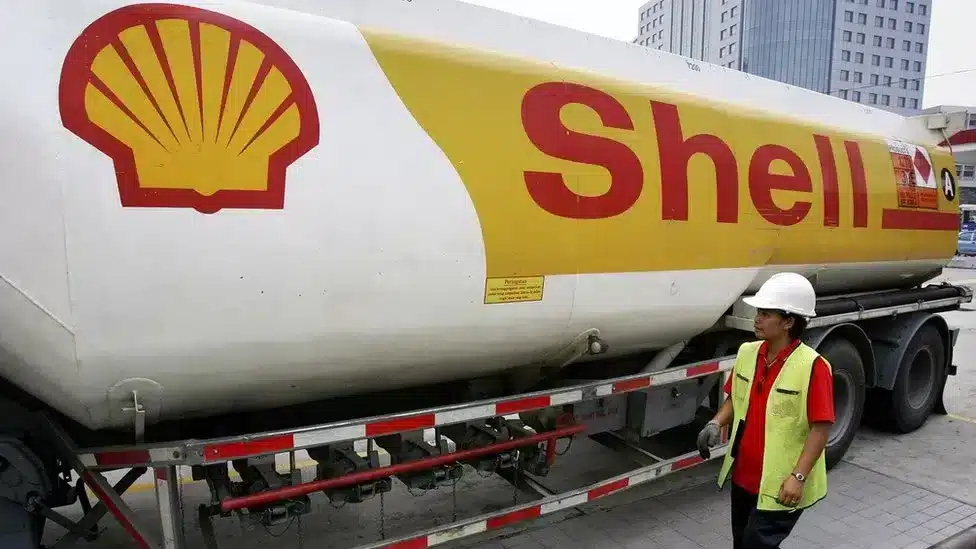
Shell has increased its prices, with petrol now selling at ₵15.10 per litre and diesel at ₵15.25. Previously, Shell sold petrol at ₵14.80 and diesel at ₵14.92, marking a 2% and 2.2% increase, respectively.
Star Oil, another major OMC, has adjusted petrol prices to ₵13.93 per litre and lowered diesel prices to ₵14.70. Earlier, Star Oil sold petrol at ₵13.88 and diesel at ₵14.79.
The price adjustments are attributed to rising crude oil prices internationally and the depreciation of the cedi against the dollar.
The Chamber of Petroleum Consumers (COPEC) has forecasted a 4% increase in fuel prices effective July 16, 2024, citing these economic factors.
COPEC analysis
Earlier, the Chamber of Petroleum Consumers (COPEC) forecasted a 4.0 percentage points hike in prices of petroleum products, effective Tuesday, July 16, 2024.
COPEC reported that the retail prices for petrol, diesel, and LPG are set to rise due to the cedi’s depreciation against the dollar, shifting from $1:GHS15.2779 to $1:GHS15.462 (-1.205%).
COPEC’s Executive Secretary, Duncan Amoah outlined expected price changes: Petrol to GHS14.795/L, Diesel to GHS15.332/L, and LPG to GHS16.205/kg, with a 14.5 kg cylinder reaching GHS234.97.
COPEC urged the government to cut taxes or subsidize LPG to boost accessibility and protect the environment.
Tag: Shell
-
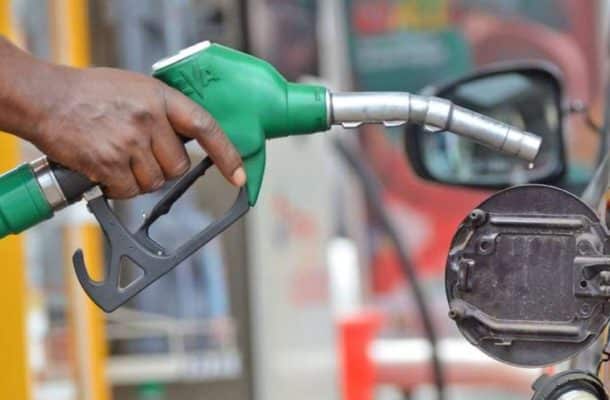
Fuel price increase: Petrol now at GHC15.10, diesel at GHC15.25 a litre
-
Tender Notice: Vivo Energy Ghana seeks investment partners for Shell service station management in multiple cities
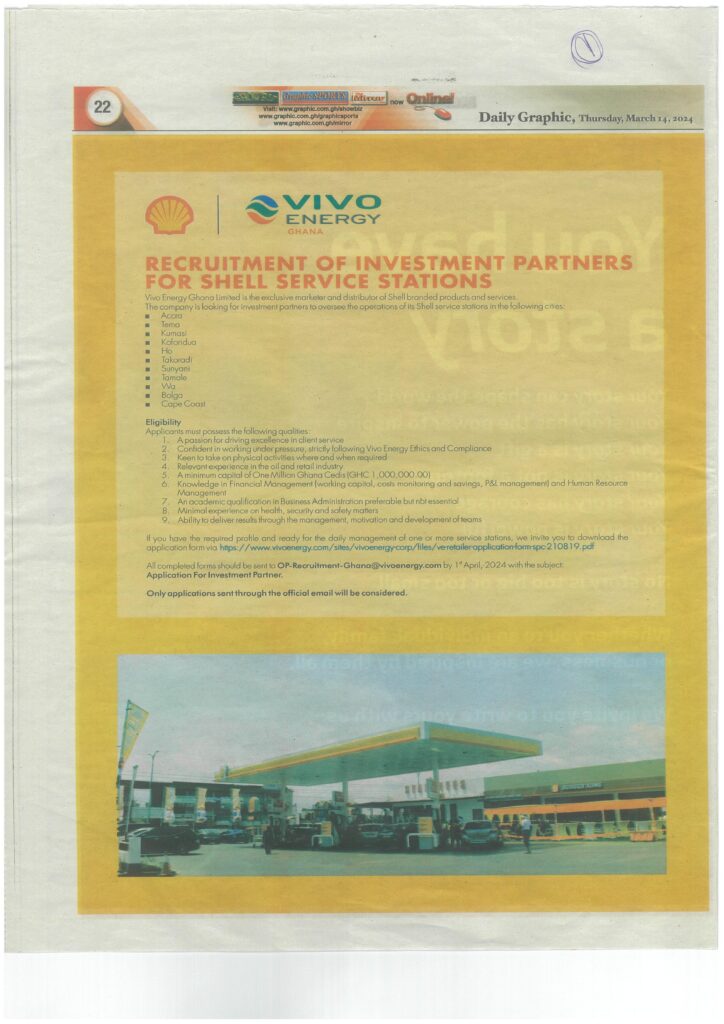
RECRUITMENT OF INVESTMENT PARTNERS FOR SHELL SERVICE STATIONS
Vivo Energy Ghana Limited is the exclusive marketer and distributor of Shell-branded products and services.
The company is looking for investment partners to oversee the operations of its Shell service stations in the following cities:Accra
Tema
Kumasi
Koforidua
Ho
Takoradi
Sunyani
Tamale
Wa
Bolga
Cape Coast
Eligibility
Applicants must possess the following qualities:- A passion for driving excellence in client service.
- Confident in working under pressure, strictly following Vivo Energy Ethics and Compliance.
- Keen to take on physical activities where and when required.
- Relevant experience in the oil and retail industry.
- A minimum capital of One Million Ghana Cedis (GHC 1,000,000.00).
- Knowledge in Financial Management (working capital, costs monitoring and savings, P&L management) and Human Resource
Management. - An academic qualification in Business Administration preferable but not essential 961000.
- Minimal experience on health, security and safety matters.
- Ability to deliver results through the management, motivation, and development of teams.
If you have the required profile and ready for the daily management of one or more service stations, we invite you to download the
application form via https://www.vivoenergy.com/sites/vivoenergy-corp/files/ve-retailer-application-form-spc-210819.pdf.
All completed forms should be sent to OP-Recruitment-Ghana@vivoenergy.com by 1 April, 2024 with the subject:
Application For Investment Partner.
Only applications sent through the official email will be considered.
-
Shell to build gas supply facility for Dangote fertilizer plant in Nigeria
Shell Plc has announced its final investment decision to construct a gas supply facility in Nigeria aimed at supporting a fertilizer plant owned by Africa’s wealthiest individual, Aliko Dangote.
According to the company’s statement, the new facility is set to provide 100 million standard cubic feet of gas per day from the Iseni field to the Dangote Fertiliser and Petrochemical plant for a duration of 10 years.
This agreement involves Shell, along with its joint venture partners TotalEnergies, Eni, and the state oil firm NNPC Ltd.
The construction of this facility, valued at US$2.5 billion, marks Africa’s largest urea complex with an annual output of 3 million tonnes.
It is anticipated to fulfill 65% of Nigeria’s fertilizer requirements and is poised to cater to all major markets within the sub-region.
“The agreement is a critical step in pursuing the development of the gas-rich Iseni field, which is part of the Okpokunou Cluster in Oil Mining Lease 35” in the oil-rich Bayelsa state, Shell’s Nigeria chief, Osagie Okunbor, said in an email.
Nigeria, with Africa’s largest gas reserves exceeding 200 trillion cubic feet, aims to harness these resources to enhance supply to industries, power plants, and for export purposes, stated Okunbor.
He emphasized that the project will significantly elevate gas delivery to the domestic market and spur economic growth.
-
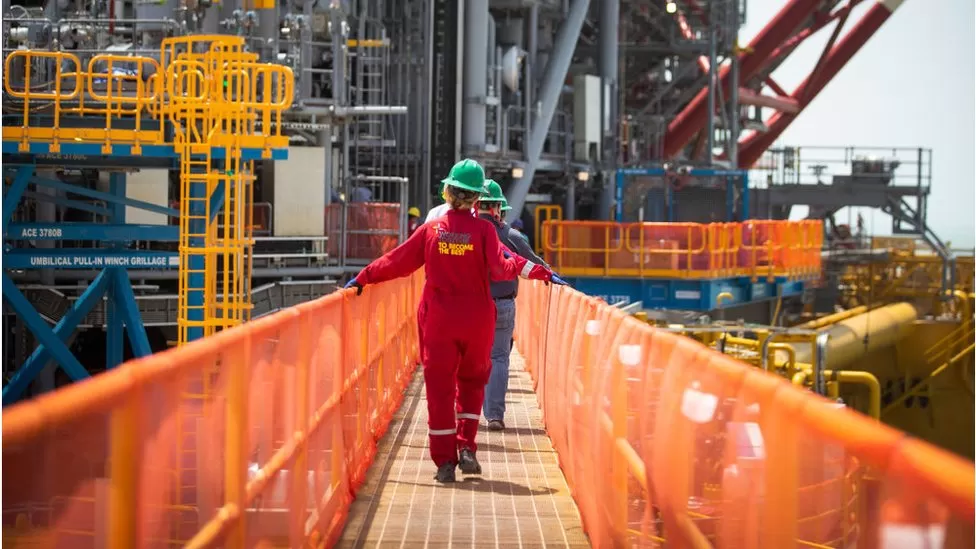
Shell records $6.2bn profit between July and Sept.
Shell, the oil and gas giant, has reported robust profits, primarily due to the recent increase in oil prices.
In the period between July and September, the energy company recorded earnings of $6.2 billion (£5.1 billion), a significant improvement from the previous quarter.
Comparatively, profits were lower than the $9.4 billion reported in the same period last year when oil and gas prices surged due to Russia’s invasion of Ukraine. Although current oil prices remain below those levels, they have shown recent increases.
The rise in oil prices is largely attributed to production cuts by members of the OPEC+ group, aimed at stabilizing the market. The World Bank recently warned that ongoing conflicts in the Middle East could push crude oil prices up to $150 per barrel, in contrast to the current price of $85.
Shell’s earnings for the past three months surged by 23% compared to the previous quarter, benefiting from higher oil prices, increased oil and gas production, and improved returns from refining and gas trading.
The energy sector experienced a surge in oil prices in 2022 followed by a subsequent decline earlier this year, which led to reduced profits for energy companies. However, the cost of crude oil has once again been on the rise since production cuts were implemented in the summer.
The production cuts were introduced by OPEC+ members, led by Saudi Arabia and Russia, as they expressed concerns about weakening global demand.
Moscow also attributed the need for cuts to Western “interference with market dynamics,” referencing restrictions placed on Russian oil following its invasion of Ukraine.
-
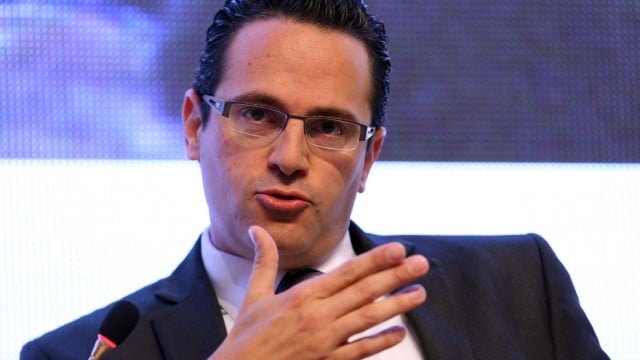
Cutting down on oil production ‘dangerous’ – Shell
Chief Executive Officer of energy giant Shell, Wael Sawan, has argued that cutting oil and gas production would be “dangerous and irresponsible”.
In an interview with the BBC, he indicated that as moves to renewable energy were not happening fast enough, the world still “desperately needs oil and gas“.
“What would be dangerous and irresponsible is cutting oil and gas production so that the cost of living, as we saw last year, starts to shoot up again,” he added.
According to him, increased demand from China and a cold winter in Europe could push energy prices and bills higher again.
Mr Sawan said an international bidding war for gas last year saw poorer countries like Pakistan and Bangladesh unable to afford liquefied natural gas (LNG) shipments that were instead diverted to Northern Europe.
“They took away LNG from those countries and children had to work and study by candlelight,” he said. “If we’re going to have a transition it needs to be a just transition that doesn’t just work for one part of the world.”
In recent times, leaders have pledged to keep the world from warming by more than 1.5C this century and as such are ready to ditch fossil fuels for greener alternatives.
In 2022, the European Commission outlined how the EU would speed up its shift to green energy to end its dependency on Russian oil and gas. Many countries do not have the infrastructure to move to more sustainable forms of energy.
-
ExxonMobil records $11.4bn profit in first-quarter
The rising demand for oil and gas contributed to the oil giant ExxonMobil’s profits more than doubling in the first three months of this year.
The US energy company claimed that cost-cutting initiatives also helped to boost first-quarter profits to a record $11.4 billion (£9.1 billion), up from $5.5 billion the year before.
Despite declining oil prices and a $200 million loss from windfall taxes the corporation paid in Europe, the increase occurred.
Chevron, a rival US oil company, also announced an increase in profits.
It generated about $6.6 billion between January and March, a 5% increase from the same period last year. It also paid a windfall tax or “energy profits levy” in the UK worth $130 million.
Next week Shell and BP are both set to report their latest results.
Like other big energy companies Exxon has faced criticism about how much it has returned to shareholders off the back of high oil and gas prices.
It said shareholders would receive $8.1bn including dividends and $375m in share buybacks.
ExxonMobil said the rise in profits included a $3.4bn after-tax reduction to exit Russia.
“We delivered a first-quarter record despite the fact that energy prices and refining margins are softening a bit,” chief financial officer Kathryn Mikells told Reuters.
The biggest contributor to the better-than-expected earnings came from strong production growth, driven by the start-up of new offshore developments and refining facilities, she said.
Exxon is currently caught up in a legal case with the European Union – it is suing the EU in an attempt to stop its new windfall tax on oil firms.
It has accused Brussels of exceeding its legal authority, calling the measure “counter-productive” and argued, along with other players in the sector, that the tax would discourage investment.
Peter McNally, an industry analyst at Third Bridge research firm, said Exxon’s output had exceeded expectations. The firm’s oil and gas production was the highest since 2019.
“The key driver was surging oil production in Canada, but profitability was dragged lower by the collapse in US natural gas prices,” he said.
Mr McNally said the company’s refining business continued to be a “star performer”, delivering earnings of more than $4bn for the fourth consecutive quarter.
-

Oil drilling in the Gulf is safer, but there is still a cause for worry
A new study by the National Academy of Sciences found that although regulators and industry have reduced some risks associated with deep water exploration in the gulf 13 years after the massive Deepwater Horizons spill contaminated the Gulf of Mexico, some problematic safety issues still exist.
According to the report released on Tuesday, the establishment of a dedicated federal agency for offshore oil drilling safety, the development of an industry-wide safety centre, and new technology have all reduced risks.
However, given that 80% of workers are contractors on rigs, federal inspectors continue to have little control over them.
The report also worried about the lack of an industrywide safety culture that integrates accident prevention into everyday work.
“There are a lot of things that are happening that are really good, but the industry is not at a place″ where it should be, said panel chairman Richard Sears.
He was a longtime Shell executive who was the chief technical adviser to the federal panel that initially investigated the 2010 explosion on the BP rig that killed 11 people and caused America’s biggest oil spill — more than 130 million gallons.
A culture that gave lip service to safety but didn’t really integrate it into the way it does business was part of the problem with the accident, Sears and others said. Some companies are treating safety the proper way — including giving flash bonuses to workers who stopped drilling because of potential dangers — but others “that don’t seem to get it,” he said.
“They have not figured out how to naturally embrace safety in particular… in who they are and what they do” but instead treat it like a box to check off, Sears said.
That’s far different from the more uniform industrywide safety culture seen in commercial airlines and nuclear power plants, he said.
There’s a “long list” of specifics on safety culture process that “other high-risk industries” like aviation, have done but the drillers have not, said Steve Murawski, a University of South Florida marine ecologist who was a top NOAA scientist during the spill.
Federal safety inspectors lost a court case giving them power to directly regulate contractors so when they find a problem on an offshore rig they can ding the operator but not the contractor who is actually creating the problem, Sears said.
It’s then up to the operator to crack down on the contractor, and it becomes complicated and not as effective, he said.
The report said that was one of the problems on the Deepwater Horizons rig.
Murawski, who wasn’t part of the study team, said the report highlights many of the recommendations that still haven’t been put into effect 13 years after that disaster, especially changes to a key oil spill law.
He also said the report shows the need for greater transparency into industry actions.
Another outside scientist involved in the spill, Christopher Reddy of the Woods Hole Oceanographic Institution, said he was impressed by “the amount of positive change since 2010” but then that was offset by the safety culture issue.
“The oil and natural gas industry and the federal government have together taken great strides to enhance the safety of offshore drilling operations,” American Petroleum Institute Vice President Holly Hopkins said.
National Academy President Marcia McNutt, who was a top Obama administration official dealing with the spill in 2010, said her concern is that officials are preparing for the last disaster, not the next one.
Still, McNutt said, the public should find the report “at least partially reassuring that this isn’t high school or elementary school shootings in terms of sticking your head in the sand and ignoring the problem.”
-
30,000 Nigerians involved in Shell oil spill demand compensation
Judges at the Supreme Court of England and Wales have begun considering a case that will determine whether or not almost 30,000 Nigerians can request compensation from the oil company Shell for land damage brought on by an oil spill in 2011.
Communities from Delta and Bayelsa State’s coastal regions said that the spill had severely harmed their land.
In a previous decision, the London Court of Appeal ruled that the complaint had been filed too soon after the leak had occurred.
According to English law, a complainant has six years from the claimed incidence to file a lawsuit for property damage.
The spill was about 120km (75 miles) off the coast of Nigeria and lasted several hours before the pipeline was closed and oil stopped.
At least 40,000 barrels leaked into the sea, making it one of the largest spills ever in Nigeria.
The Nigerian communities argue that the oil devastated their shoreline and has continued to cause widespread damage to their land and water supply and so they should be allowed to seek compensation.
A ruling is not expected for months.
-
Shell records significant decline in Nigerian oil spills after shutdown
In 2022, Shell made claims of a substantial decrease in oil spills caused by sabotage in Nigeria’s oil-rich Delta, which was attributable to the shutdown of activities for six months following attacks.
According to Shell’s annual report, which was obtained by Reuters news, the amount of crude oil spilt as a result of sabotage in the Delta decreased to 600 tonnes from 3,300 tonnes the previous year. Such leaks decreased from 106 to 7
“The decreased number of incidents in 2022 correlates with a shutdown of production for about six months because of an unprecedented increase of crude oil theft from the Trans Niger,” it said.
The primary onshore oil and gas joint venture in Nigeria is operated by Shell and is called SPDC. For years, operational problems, theft, and sabotage have plagued SPDC.
-
Shell, BP and other oil giants seem to be making huge profits now, why?
The large oil companies, including ExxonMobil and Norway’s Equinor, as well as UK-based BP and Shell, have been announcing astounding profit numbers.
They are all profiting from the rise in oil and gas prices as a result of the invasion of Ukraine.People around the world struggle to pay their energy bills and fill up their cars while these businesses make huge profits, which has prompted calls for higher taxes on these businesses.
What is their method of income generation, and should the government intervene to put a stop to it?
Why has the oil price soared?
Oil and gas are traded around the world, and if supplies are short and demand high, sellers can charge more, and the price goes up.
Before the Ukraine war, Russia was the world’s largest exporter of oil and natural gas.
A lot of the money that people paid to buy that oil and gas went to the Russian government – those exports made up 45% of the Russian government budget in 2021.
After the invasion, Western countries, including the UK and EU, tried to stop (or at least massively reduce) their energy imports from Russia, to avoid funding the Russian military and supporting a hostile regime.
Countries that didn’t want to buy from Russia had to pay much higher prices for oil produced elsewhere.
As economies recovered from the COVID-19 lockdowns and began to function normally, oil prices had already been rising.
The day after the Russian invasion, the oil price went above $100 a barrel, and peaked at over $127 in March, before coming back down to around $85. Gas prices also soared after the invasion.
Oil and natural gas are crucial to almost every aspect of modern life. Oil is used to make petrol and diesel, and natural gas is used for heating and cooking.
They’re also used in agriculture, electricity generation, and other industrial processes which make everything from fertilizer to plastics.
So a sustained rise in oil and gas prices pushes up the cost of many other things we buy, driving the cost of living crisis that has gripped the UK – and other countries – in recent months.
Why do soaring prices mean more profits?
Oil companies make money by locating oil and gas reserves buried in rocks under the earth’s surface, and drilling down to release them.
The costs don’t vary that much as the price goes up or down, but the money they make from selling it does.
So when oil prices soared after the invasion of Ukraine, the money these companies made from selling oil and gas massively increased as well.
How much profit did Shell and BP make last year?
On Tuesday, BP reported record annual profits of $27.7 billion (£23 billion) for 2022 as it scaled back plans to reduce the amount of oil and gas it produces by 2030. Those profits were double the previous year’s figure.
In February, Shell reported its highest profits in 115 years. Profits will reach $39.9 billion (£32.2 billion) in 2022, more than doubling the previous year’s total.
The profits they make don’t all disappear – lots of ordinary people own shares in BP, Shell, and other global oil companies. This may be via their pension funds, and they may not even be aware of it.
Some of the extra profits are paid to shareholders through higher dividends, and buying back shares (which increases the share price).
But as long as the billions roll in while customers struggle to pay their bills, the calls for higher taxes will continue.
How much tax do oil and gas producers pay?
Big oil companies made their record profits even after paying billions to governments around the world.
BP and Shell are in a complicated position because they are headquartered in the UK but produce a relatively small amount of oil and gas in UK waters. They make most of their profits from activities around the world.
Shell paid $134m (£110m) tax on its UK operations in 2022, out of a worldwide tax bill of $13bn.
BP paid $2.2bn (£1.8bn) in taxes on its UK operations, out of a global tax bill of $15bn.
How are oil firms taxed in the UK?
Oil companies already pay a tax on their profits from oil and gas production in the UK of 40% – which is higher than taxes on other companies.
But they can reduce that tax bill by deducting the cost of shutting down old oil rigs, or offsetting future investments and losses from earlier years.
In some years, BP and Shell have paid no tax on UK operations, and received payments from the UK government instead.
After the invasion of Ukraine, the government faced calls to introduce an extra “windfall tax” on energy company profits to help pay for soaring energy bills.
This was introduced in May 2022, and increased from 25% to 35% in November. It is now expected to raise around £40bn extra from all the companies operating in UK waters between 2022 and 2028.
However, the windfall tax only applies to the profits on UK oil and gas production, which only account for a small share of some firms’ profits.
And firms can deduct more than 90% of the cost of new exploration and production from their windfall tax bills, significantly reducing what they have to pay.
The windfall tax accounted for all of Shell’s UK tax bill and $700 million (£538 million) of BP’s.
They face calls to pay even more tax
Politicians, environmentalists, trade unions and poverty campaigners have attacked oil companies’ record profits, and argued for higher windfall taxes.
They say high prices are the result of something beyond the oil firm’s control – war, and that it’s not fair that oil companies are profiting from people’s suffering.
Some say higher windfall taxes are a good way for governments to raise money because they’re easy to collect and hard to avoid.
Even the former boss of Shell himself, Ben van Beurden, wondered if it was inevitable that governments would need to tax energy producers more to protect the poorest in society.
But oil firms argue that a higher windfall tax would make them less willing to invest in producing in the UK, and that they would search for oil elsewhere where taxes are lower.
Harbour Energy, which produces more oil and gas in the UK than anyone else, is cutting jobs and reconsidering its UK investments because of the windfall tax.
If the UK government decided to tax BP and Shell on their global profits more heavily, they could potentially move their headquarters out of the country – escaping the new tax, and depriving the UK of much of the revenues they currently pay.
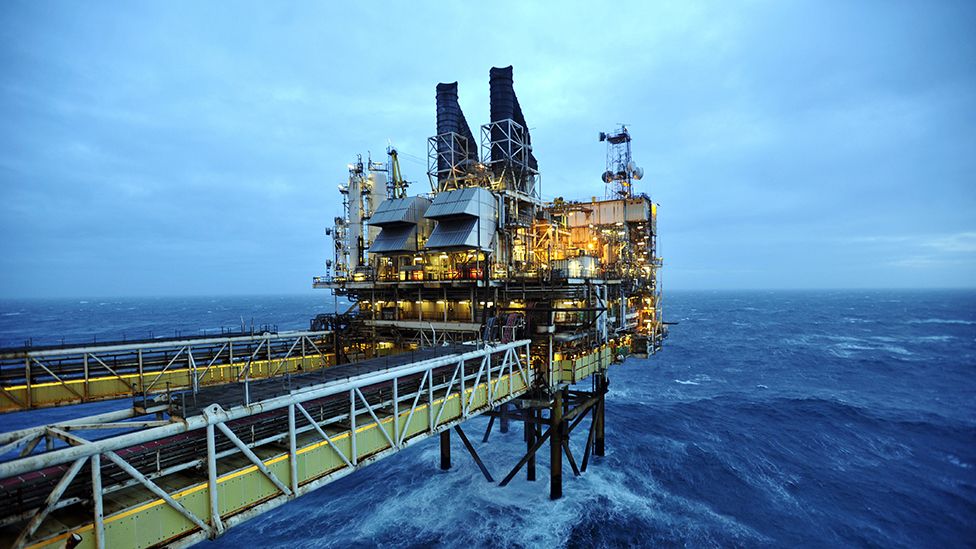
Image caption,A BP oil rig in North sea Oil companies have to operate in a world where the price of oil can go down as well as up, with little warning. Money made in the good years helps to balance out years when oil prices are low.
Many oil companies lost billions from Russian investments last year – BP wrote off $24bn of investments in the Russian oil company Rosneft, for example.
They also have to invest billions to find new reserves of oil to keep supplies running until the world switches over to renewable sources of power.
Energy companies have a big role to play in that switch-over, too. BP and Shell invest some of the billions they make from oil and gas into renewable power such as solar and wind farms, and charging stations for electric cars.
BP boss Bernard Looney said the British company was “helping provide the energy the world needs” while investing the transition to green energy.
Shell chief executive Wael Sawan said that these are “incredibly difficult times – we are seeing inflation rampant around the world” but that Shell was playing its part by investing in renewable technologies. Its chief financial officer Sinead Gorman added that Shell had paid $13bn in taxes globally in 2022.
However, BP scaled back its plans to cut its carbon emissions this year because demand for oil and gas is so strong.
Does the energy cap reduce oil company profits?
The energy price cap was introduced in 2019 to stop companies from overcharging people who didn’t shop around for cheaper deals. It targets energy suppliers, and doesn’t affect the profits of oil and gas producers.
-
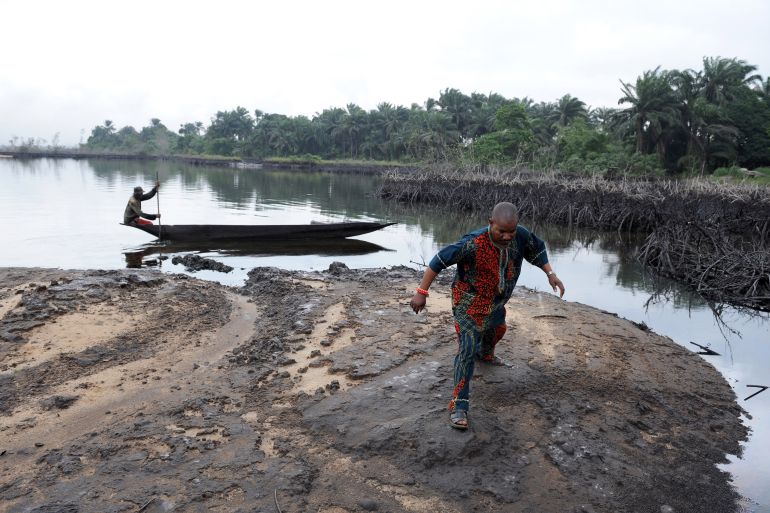
Nigerian communities file damages claim against Shell in UK court
At the London High Court, more than 11,000 Nigerians from the oil-producing Niger Delta have filed a suit for compensation against Shell.
The latest development in a case that will test whether multinational corporations can be held liable for the deeds of their foreign subsidiaries is the lawsuit filed on Thursday by the UK law firm Leigh Day.
After years of oil spills had contaminated the land and groundwater, the UK Supreme Court permitted a group of 42,500 Nigerian farmers and fishermen to sue Shell in English courts in 2021.
According to the judges at the time, one of the largest energy companies in the world, Shell, could be held accountable for the incident because it had significant control over its Nigerian subsidiary, SPDC.
On Thursday, Leigh Day said it had filed claims on behalf of 11,317 people and 17 institutions including churches and schools from the Ogale community in the Niger Delta for compensation for loss of livelihoods and damage against Shell.
Leigh Day said the claim from Ogale adds to one brought by members of the Bille community in 2015. That brings the total number of villagers seeking compensation from Shell to 13,652.
The claims said oil spills resulting from Shell’s operations in the Niger Delta have destroyed farms, contaminated drinking water and harmed aquatic life. The average life expectancy in the region is 41 years, 10 years lower than the national average.
“The next stage in the case is for a case management hearing to be set in Spring 2023, ahead of the full trial which is likely to occur the following year,” Leigh Day said in a statement.
A Shell spokesperson said the majority of spills related to the Ogale and Bille claims were caused by illegal third-party interference, including pipeline sabotage but that SPDC would continue cleaning affected areas.
“We believe litigation does little to address the real problem in the Niger Delta: oil spills due to crude oil theft, illegal refining and sabotage, with which SPDC is constantly faced and which cause the most environmental damage,” the spokesperson said.
Oil spills, sometimes due to vandalism or corrosion, are common in the Niger Delta, a vast maze of creeks and mangrove swamps crisscrossed by pipelines and blighted by poverty, pollution and oil-fuelled corruption.
In 2020 and 2021, Nigeria’s National Oil Spill Detection and Response Agency (NOSDRA) recorded 822 combined oil spills, totalling 28,003 barrels of oil spewed into the environment.
SPDC was culpable for most of them, residents said, but the company has often blamed sabotage for the spills.
-
Shell reports record high profits in over a century
After energy prices soared last year as a result of Russia’s invasion of Ukraine, oil and gas giant Shell has announced record annual profits.
In its 115-year history, the company’s 2022 adjusted earnings of $39.9 billion (£32.2 billion) were the highest ever.
Following Russia’s invasion of Ukraine, oil and gas prices increased, which resulted in energy companies making record profits.
Given that households are struggling with inflation, the profits have increased pressure on businesses to pay windfall taxes.
Last year, the UK government introduced a windfall tax – called the Energy Profits Levy – on the profits of firms to help fund its scheme to lower gas and electricity bills.
Oil and gas prices had begun to rise after the end of Covid lockdowns but rose sharply after Russia’s invasion of Ukraine, resulting in bumper profits for energy companies.
The price of Brent crude oil climbed above $120 a barrel in March 2022, but has fallen back since. Oil prices are now below the level seen before the invasion of Ukraine.
Gas prices remain elevated but have been capped for consumers by the government.
Shell chief executive Wael Sawan said the firm’s results “demonstrate the strength of Shell’s differentiated portfolio, as well as our capacity to deliver vital energy to our customers in a volatile world”.
“We believe that Shell is well positioned to be the trusted partner through the energy transition.“
-
Shell to pay $16m to Nigerian farmers over oil damage
Shell has agreed to pay $16m (£13m) to four Nigerian farmers and their communities to compensate for damage allegedly caused by pollution coming from leaks in its oil pipelines.
The sum was agreed in negotiations between the oil company and campaign group Friends of the Earth.
But it is being given on the basis of “no admission of liability”, a joint statement says.
Nigeria’s oil industry has been a major source of environmental damage.
The oil spills in this case happened from 2004 to 2007 and the pay out follows a decision last year by a Dutch court that the Nigerian branch of Shell was responsible for the damage.
Shell had argued that the leaks were a result of sabotage.
Shell’s headquarters were in the Netherlands until early this year. Campaigners hailed the 2021 court decision as the first time a multinational had been deemed legally responsible for what a subsidiary did.
“Thanks to this compensation we can build up our community once again. We can start to re-invest in our living environment,” Eric Dooh, the son of one of the farmers who launched the case in 2008 alongside the Dutch branch of Friends of the Earth, said.
The money will be going to communities in Oruma, Goi and Ikot Ada Udo.
Although the amount of compensation is not huge, this development is seen as a milestone for rural communities across the Niger Delta region and environmental activists, the BBC’s Ishaq Khalid reports.
Oil pollution continues to damage the health and livelihoods of many in the area.
The four farmers who began the case – Barizaa Dooh, Elder Friday Alfred Akpan, Chief Fidelis A Oguru and Alali Efanga – said the leaks from underground oil pipelines had cost them their livelihoods by contaminating land and waterways.
Mr Efanga and Mr Dooh have died since the case was first filed so their sons pursued the case instead.
As well as compensation, last year’s court ruling ordered Shell to set up a leak early detection system. This has now been installed, the joint statement by Shell and Friends of the Earth said.
-
Widows of executed Nigerian activists end case against Shell
The widows of four Nigerian activists executed in 1995 have withdrawn their appeal in a Dutch civil case in which they alleged that oil giant Shell was complicit in the men’s deaths, ending a yearslong legal battle for compensation and an apology.
The four widows, Esther Kiobel, Victoria Bera, Blessing Eawo and Charity Levula, launched the case in 2017. It was rejected in a final ruling by The Hague District Court in March, following an interim decision in 2019 dismissing parts of their claim.
Their husbands were among nine activists from the Ogoni tribe, led by writer Ken Saro-Wiwa, who were hanged in 1995 for the murder of four political rivals. Supporters say they were really targeted because of their involvement in protests against environmental damage by Shell’s Nigerian subsidiary.
Lawyer Channa Samkalden confirmed the end of the case in a statement emailed to The Associated Press on Tuesday. The decision to withdraw the appeal was first reported by Reuters.
“This has been a lengthy and demanding procedure, which makes them relive horrible events, while the outcome is most uncertain,” Samkalden said, adding that the women have never received any form of compensation or other support.
“While two of them found refuge in the U.S. and Canada, two others are still in Nigeria in very poor conditions. Rather than focusing on the appeal, initiatives are now being developed aimed at providing these women with some basic financial assistance,” the statement added.
Shell has always denied the allegations of complicity in the activists’ executions.
The company said that the end of the civil case “does not in any way diminish the tragic nature of the events of 1995. These events shocked us deeply. The Shell Group, alongside other organizations and individuals, appealed for clemency to the military government in power in Nigeria at that time, but to our deep regret those appeals went unheard.”
Shell discovered and started exploiting Nigeria’s vast oil reserves in the late 1950s and has faced heavy criticism from activists and local communities over spills and for the company’s close ties to government security forces.
The Dutch case was not the first time relatives of Ogoni activists had taken Shell to court.
In 2009, Royal Dutch Shell agreed to a $15.5 million settlement to end a lawsuit in the U.S. District Court in New York alleging that the oil giant was complicit in the nine executions. Shell said it agreed to settle the lawsuit in hopes of aiding the “process of reconciliation.” But the company acknowledged no wrongdoing.
Source: apnews.com
-
Shell reports $9.5 billion in profits for the third quarter of 2022, but not at the record levels seen in the first half of the year
Despite soaring oil and gas prices, the London-listed oil and gas company reported record profits in the first half of the year.
Shell reported operating profits of $9.5 billion (£8.19 billion) for the third quarter of this year, which were lower than the previous three months but more than double the same period in 2021.
In the first half of the year, the London-listed energy giant reported two consecutive quarters of record profit despite rising oil and gas prices.
The earnings are lower than expected. Shell had been forecast to report net earnings of $10.5bn in the third quarter, compared with net earnings of $11.5bn in the second quarter.
The profits were lower compared with the second quarter because of lower liquefied natural gas (LNG) trading, lower chemicals, and refining margins, and higher underlying operating expenses.
The total amount paid to shareholders during the three months was $6.8bn. The company paid a dividend of $0.25 for each share held.
But Shell wants that amount to increase. Subject to board approval, it intends to increase the amount per share by 15% for the fourth quarter, which would be paid in March next year.
On Thursday the company also said it is to buy back shares worth $4bn from shareholders by the time fourth-quarter results are announced, it follows a $6bn round of share buybacks announced in the second quarter results statement.
The profits are likely to increase calls for more one-off windfall taxes.
When she was prime minister Liz Truss ruled out any additional windfall tax beyond the one introduced in May. The May energy profits levy taxed profits at 25% and was introduced by current Prime Minister Rishi Sunak when he was chancellor.
The chief executive of Shell had himself called on the government to tax oil and gas companies in order to protect the poorest people in society from soaring energy costs.
Speaking at the Energy Intelligence Forum in London, Ben van Beurden said: “One way or another there needs to be government intervention that somehow results in protecting the poorest.
“That probably may then mean that governments need to tax people in this room to pay for it.”
The government recently announced it is to go ahead with a windfall tax on the renewable sector which has been enjoying bumper profits off the back of high gas prices.
-
Shell CEO Says Governments Need to Tax Energy Firms to Help Poor
According to the CEO of Shell Plc, governments must impose taxes on energy producers to help the most vulnerable citizens cope with the skyrocketing cost of fuel.
Shell Chief Executive Officer Ben van Beurden stated at the Energy Intelligence Forum, a significant gathering of oil and gas producers on Tuesday in London, “One way or another there needs to be government action.”
Protecting the most vulnerable might require governments to impose taxes on the attendees in this room in order to pay for it.