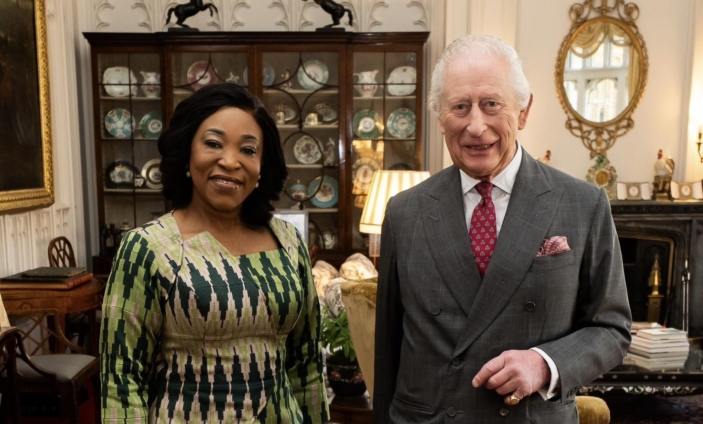
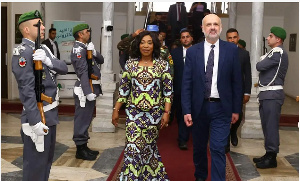
The newly appointed Commonwealth Secretary-General, Shirley Ayorkor Botchwey, was formally received by King Charles III at Windsor Castle in a significant meeting marking the start of her tenure.
This event signifies her role as the 7th Secretary-General of the Commonwealth, succeeding Baroness Patricia Scotland.
Botchwey, who was elected by consensus during the 2024 Commonwealth Heads of Government Meeting (CHOGM) in Apia, Samoa, made history as the first Ghanaian and the second African to hold this esteemed position. Her appointment is a significant milestone for both Ghana and the broader African continent.
During her first address as Secretary-General on April 1 at the Commonwealth Secretariat in London, she addressed the global challenges the Commonwealth faces today.
“The world we live in today is unlike any we have seen before,” she stated, emphasizing the effects of economic downturns, rising defense spending, and the erosion of multilateralism on critical issues such as employment, poverty, and social protection.
Botchwey reaffirmed the Commonwealth’s commitment to its core principles, including democracy, good governance, human rights, peace, and equal opportunity.
Looking ahead, she outlined her strategic vision, focusing on three key priorities: empowering women and young people with essential skills and opportunities, revitalizing trade and investment to foster inclusive growth, and bolstering climate action to assist vulnerable member states.
As she begins her tenure, Shirley Ayorkor Botchwey’s leadership is expected to focus on fostering unity, addressing global challenges, and advancing sustainable development across Commonwealth nations.
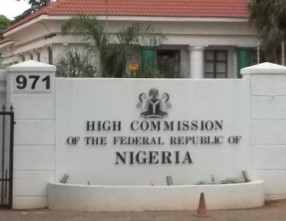
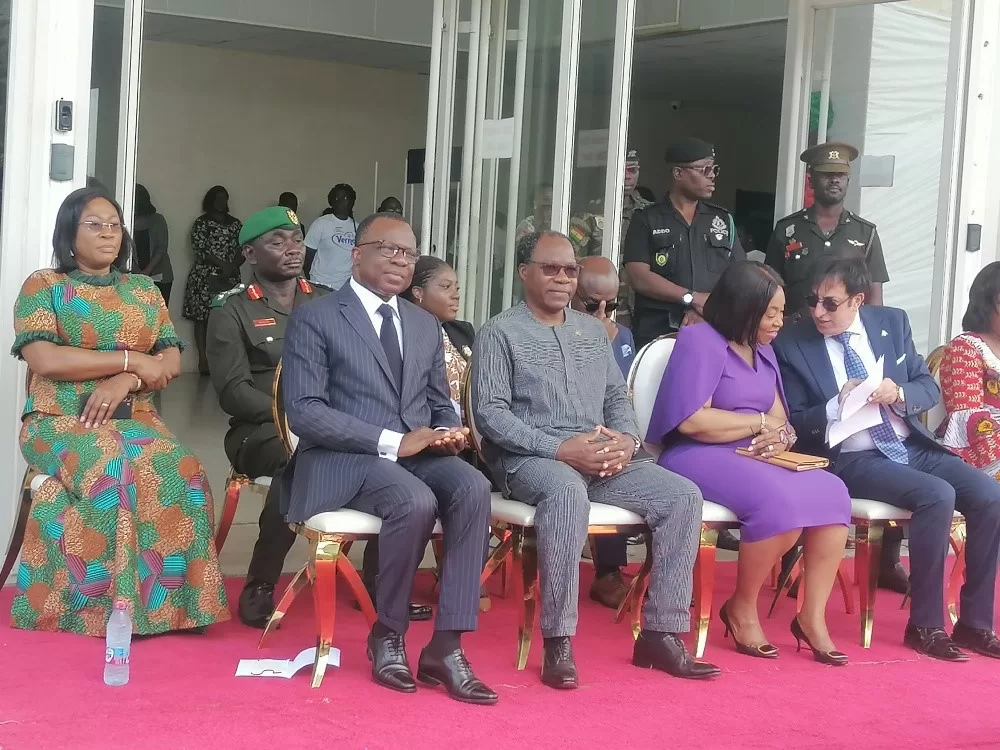
Ghana’s Minister of Foreign Affairs and Regional Integration,Shirley AyorkorBotchwey, has officially handed over the newly reconstructed Nigerian High Commission building in Accra to representatives of the Nigerian government.
This handing over has been necessitated due to the unlawful demolition by unknown armed individuals on June 20, 2020, who invaded the residential quarters of the Nigerian High Commission at Julius Nyerere Street, Osu, and demolished the building.
This act was strongly condemned by the Nigerian government as it violated diplomatic protocols and caused significant costs for the mission, which had to rent alternative accommodation for its staff.
However, after four years of waiting, the Ghanaian government, represented by Shirley Botcwey, handed over the reconstructed structure to Nigeria on Wednesday, November 21, 2024.
The handover ceremony saw Chimeze Ogu, Director of the Foreign Service Academy under Nigeria’s Ministry of Foreign Affairs, accepting the facility on behalf of Yusuf Maitama Tuggar, Nigeria’s Minister of Foreign Affairs.
In her address at the ceremony, Ms. Ayorkor Botchwey apologised for the demolishing, citing the Ghanaian government’s commitment to strengthen the enduring relationship between Ghana and Nigeria, built on shared values, mutual respect, and a commitment to addressing challenges with unity and resilience.
“Let me also take this opportunity to express, on behalf of the Government of Ghana, our sincerest apologies for the regrettable incident that led to the initial demolition of this building.
Today’s ceremony marks an important milestone, highlighting the solidarity that has been tested yet remains unshaken between our two nations,” she said.
She said the relationship between Ghana and Nigeria transcends diplomacy, adding that it was a partnership steeped in history, culture, and shared aspirations.
She said under the visionary leadership of President Nana Addo Dankwa Akufo-Addo of Ghana and President Bola Ahmed Tinubu, their two nations continue to strengthen bonds through regional cooperation within ECOWAS and the African Union.
“Together, we strive to uphold the ideals of African unity, peace, and economic integration, principles that guide our shared journey,” she said.
Mr Yusuf Maitama Tuggar, the Minister of Foreign Affairs of Nigeria, in a statement read on his behalf by Mr Chimeze Ogu, the Director of Foreign Service Academy, Ministry of Foreign Affairs of Nigeria, congratulated Ms Ayorkor Botchwey on her election as the first African Woman and the second African national to hold the prestigious office of the Secretary General of the Commonwealth.
Mr Tuggar said, “As we receive this reconstructed building, we reaffirm our commitment to strengthening diplomatic ties, enhancing economic cooperation, and mutual understanding between our two countries.”.
“To the government and people of Ghana, we express our sincere gratitude for this gesture. Your actions demonstrate the value you place on our relationship.”
In attendance at the event were Mr Kwaku Ampratwum-Sarpong, a Deputy Minister of Foreign Affairs and Regional Integration; Mr Charles Abani, United Nations Resident Coordinator in Ghana; Mr Ramses J. Cleland, Chief Director, Ministry of Foreign Affairs and Regional; and Moses Ifedayo Adeoye, Charge D’Affaires of theNigerian High Commission in Accra.
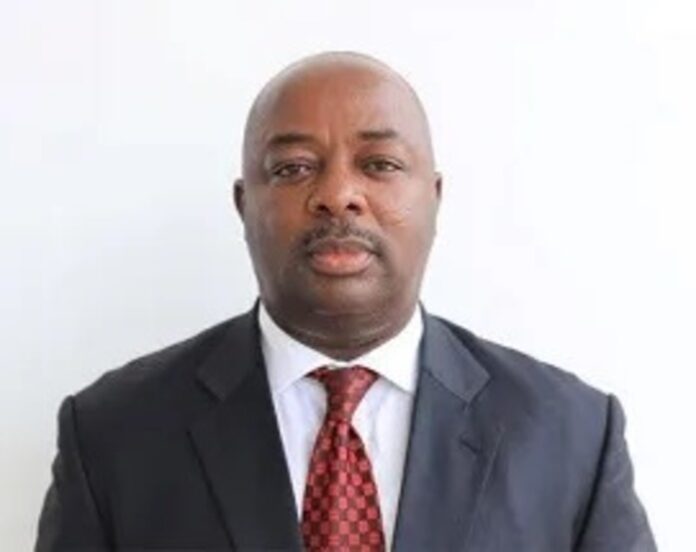
The Minister for Foreign Affairs and Regional Integration, Shirley Ayorkor Botchwey, has appointed Kwasi Asante as the new Director of Passports.
The appointment, effective Monday, August 19, 2024, was reported by Accra-based Asaase Radio.
Prior to this new role, Mr. Asante was serving as the Chargé d’Affaires at Ghana’s Embassy in Addis Ababa, Ethiopia, a position he held since May 2024.
He also served as Deputy Ambassador/DPR from June 2021 to August 2024.
A letter from the Ministry of Foreign Affairs and Regional Integration outlined the reassignment “The honourable Minister of Foreign Affairs and Regional Integration has decided that you should be re-assigned to the Passport Office as the Director of Passports with effect from Monday, 19th August, 2024.
“You are, therefore, requested to take steps to undergo the required handing over process to enable you assume duty,” the letter reportedly from the Ministry read in parts.
In his new role, Mr. Asante will oversee the management and administration of the passport issuance process.
He will collaborate with government agencies, including immigration and national security, to ensure adherence to international passport standards and regulations.
Before his tenure in Addis Ababa, Mr. Asante was the Director of Operations at the Passport Office from April 2020 to June 2021 and served as the Executive Assistant at the ECOWAS Commission from June 2018 to April 2020.
Minister of Foreign Affairs and Regional Integration, Shirley Ayorkor Botchwey, has recommended that Ghanaians unable to afford a passport should abstain from applying for it, emphasizing that passports are no longer the primary means of identification.
Addressing journalists, she underscored the efficacy of the national identification system as the principal form of identification.
Botchwey remarked, “Today, as we speak, we have the National Identification that is working very well, so that’s our primary source of identification. No longer the passport.
“And even those who have the national ID can travel into the country with it. So, then, I’m humbly asking Ghanaians that, please, if you do not need a passport and because you cannot afford it, please, humbly, I’m asking you not to go for a passport because it’s no longer your primary source of identification,” she added.
“If the government is subsidising heavily, it’s difficult to provide any good services to Ghanaians,” she said.
She added, “Even individuals possessing the national ID can utilize it for travel within the country. Hence, I respectfully urge Ghanaians who do not require a passport due to financial constraints to refrain from obtaining one.”
Expressing apprehension regarding the government’s subsidy of passport applications, she cautioned that maintaining such subsidies could compromise service quality for citizens. “Heavy government subsidies make it challenging to deliver quality services,” she stated.
Botchwey assured collaboration with Parliament in the event of a review of passport fees, stressing that fee adjustments aim not to burden citizens financially.
The Ministry recently announced fee increments for passport services, effective April 1, 2024, in alignment with the 2023 Fees and Charges regulations, L.I. 2481.
Under the new fee structure, the processing fee for an expedited 48-page passport is GH¢800, while a 32-page application costs GH¢700.
She noted: “Fees come from the Parliament of Ghana. We make a presentation to them; we give them the bare facts of what it is. Parliament is aware of this, and these charges came from Parliament. If Parliament decides, we should go back. We will have to look at it. It is Parliament that has decided, and we will go by it.”
The Minister of Foreign Affairs and Regional Integration, Madam Shirley Ayorkor Botchwey, has committed to revitalizing the Free-trade Agreement among Commonwealth nations if elected as the Secretary-General of the Commonwealth Secretariat.
She emphasized that a successful free-trade agreement would foster integration, global and regional supply chain participation, and enhance engagement in the multilateral trading system for member states.
Speaking in Accra at a lecture titled “A Vision for a New Commonwealth in a Fast-Evolving World,” organized by the Council on Foreign Relations Ghana, Madam Botchwey proposed that the initiative could serve as a model for WTO members, offering a balanced approach to regional and multilateral trade integration.
Nominated by President Akufo-Addo on February 2, 2024, for the post of Secretary-General of the Commonwealth, Madam Botchwey outlined the evolving global landscape, citing advanced negotiations between the United Kingdom and India, as well as the African Continental Free Trade Area (AfCFTA), as opportunities to consolidate agreements towards a Commonwealth-wide free trade agreement.
“To be transformative, any such trade and development agreement has to respond to the development needs and challenges of the developing countries in the Commonwealth,” she said.
She stressed the importance of any trade and development agreement addressing the needs of developing countries within the Commonwealth.
Madam Botchwey called for increased aid for trade disbursements to boost productive capacity, encouraging developed members to invest in developing states, with specific consideration for the Pacific Island States, the Caribbean, and small states in both service and non-service sectors.
“Developed Commonwealth members and other donor partners should maintain and enhance non-reciprocal preferential market access mechanisms like duty-free, quota-free, flexible rules of origin, and preferential treatment for services and service suppliers from small developing states to facilitate their integration in regional and global value chains,” she said.
Madam Botchwey urged developed Commonwealth members to maintain and enhance preferential market access mechanisms for small developing states.
She emphasized the Commonwealth’s role in supporting the specific needs of small island states in fishery subsidy negotiations at the WTO, highlighting the critical role of ocean sustainability for their development.
“The Commonwealth should support the specific needs and concerns of small island states in fishery subsidy negotiations at the WTO.”
“Ocean sustainability in general and sustainable fishing stocks and practices are critical to the development of the ocean economy in island states and especially to the millions of mostly poor people who make their living by fishing.”
Additionally, she underscored the significance of services like health insurance, medical data, and banking in fostering integration and creating economic prosperity within the Commonwealth.
The Commonwealth, consisting of 56 nations, focuses on shared goals of prosperity, democracy, and peace, with the Commonwealth Secretariat coordinating much of its work.
Objectives include environmental protection, sustainable resource use, economic development, democracy support, and assistance to small states in addressing unique challenges.
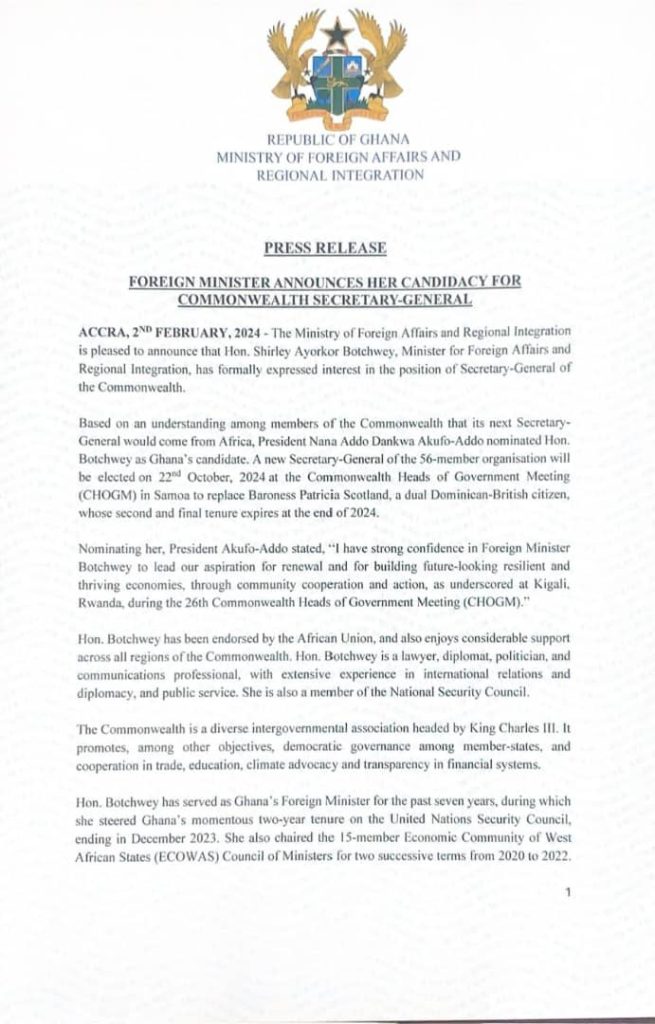
The Minister for Foreign Affairs and Regional Integration, Shirley Ayorkor Botchwey, has officially announced her candidacy for the position of Secretary-General of the Commonwealth.
This declaration was made public through a press release issued by the Ministry on February 2, 2024.
President Nana Add Dankwa Akufo-Addo nominated Minister Botchwey, citing an agreement among Commonwealth members that the next Secretary-General would be selected from Africa.
The election for the new Secretary-General of the 56-member organization is scheduled for October 22, 2024, during the Commonwealth Heads of Government Meeting (CHOGM) in Samoa.
“On an understanding among members of the Commonwealth that its next Secretary-General would come from Africa.”
“A new Secretary-General of the 56-member organization will be elected on 22nd October 2024 at the Commonwealth Heads of Government Meeting (CHOGM) in Samoa to replace Baroness Patricia Scotland, a dual Dominican-British citizen, whose second and final tenure expires at the end of 2024.”
“I have strong confidence in Foreign Minister Botchwey to lead our aspiration for renewal and for building future-looking resilient and thriving economies, through community cooperation and action, as underscored at Kigali in Rwanda, during the 26th Commonwealth Heads of Government Meeting (CHOGM).”
This election aims to replace Baroness Patricia Scotland, a dual Dominican-British citizen, whose second and final term concludes at the end of 2024.
President Akufo-Addo expressed his confidence in Foreign Minister Botchwey’s ability to lead the Commonwealth towards renewal and the development of resilient and thriving economies, referencing the commitment made at the 26th Commonwealth Heads of Government Meeting (CHOGM) in Kigali, Rwanda.
Minister Botchwey is optimistic about her candidacy, having received endorsements from the African Union and substantial support from across all regions of the Commonwealth.
The United Nations Security Council has adopted a resolution led by Ghana, emphasizing support and funding for operations addressing threats to international peace and security in Africa.
This Peace Support funding model goes beyond traditional UN peacekeeping operations.
Under the resolution, AU-led peace support operations mandated by the UN Security Council will receive up to 75% of their annual budgets from UN assessed contributions.
The remaining amount will be jointly mobilized by the UN and the African Union from the international community as extra-budgetary resources.
The Council commits to considering viable options in case of significant shortfalls in resource mobilization. Ghana submitted the resolution with other African countries on the Security Council.
The goal is to change the traditional response to peace and security in Africa, especially concerning violent extremism and terrorism. Ghana aims to achieve these goals within its two-year term as a non-permanent member of the UN Security Council.
The resolution emphasizes addressing socio-economic and climatic root causes of conflicts in addition to military operations.
“The dramatic outcome of the complex and difficult negotiations comes 10 days before the end of Ghana’s term as a non-permanent member of the UN Security Council,“ said the release.
ECOWAS and regional security initiatives, such as the Accra Initiative and the Multi National Joint Task Force, may benefit from the resources and international support to combat terrorism and violent extremism in the ECOWAS region.
“When Ghana announced its priorities at the beginning of its term in January 2022 to secure agreement of the Security Council to change its traditional response to international peace and security, especially in Africa, where violent extremism and terrorism had overtaken traditional conflicts that attracted UN peacekeeping, many had expressed skepticism.”
The Minister for Foreign Affairs and Regional Integration, Shirley Ayorkor Botchwey, declared the adoption of the resolution as a great day for Africa and diplomacy.
“Attempts in the past to agree on the use of UN assessed contributions to support African-led operations had failed in the face of opposition from some Permanent Members of the Council and other large contributors to the UN.”
The resolution aims to end threats to international peace and security in the region and promote peace, stability, and progress through successful peace support operations.
“One key objective was to starve terrorists of conditions for radicalisation and recruitment from vulnerable communities,” the release emphasised.
“With the adoption of the framework resolution, it is understood that the plans of ECOWAS and relevant security initiatives in our region, such as the Accra Initiative and the Multi National Joint Task Force, battling Boko Haram, will potentially benefit from the needed resources and international support to defeat terrorism and violent extremism in the ECOWAS region.”
“Working with our partners around the world, we have taken a giant step to end the many threats to international peace and security in our region.
“Our people deserve the peace, stability and progress that successful peace support operations will bring. The distractions to our regional integration project and the pressure on development resources from our security needs would ease as we go forward.
“I congratulate President Akufo-Addo for his leadership. I also commend our team in NewYork, my own Ministry and the Multi-Stakeholder Working Group on the United Nations Security Council, which I set up to advise me.”
Foreign Affairs Minister, Shirley Ayorkor Botchwey calls for actionable steps from member-states at 2023 UN Peacekeeping Ministerial.”
During the inaugural day of the ministerial meeting, the Minister for Foreign Affairs and Regional Integration, Shirley Ayorkor Botchwey, encouraged all participating member-states to translate the knowledge and insights shared at the 2023 UN Peacekeeping Ministerial into concrete actions.
In her address, she underscored the pressing security challenges globally, emphasizing the need for ongoing dedication and cooperation. She asserted that applying the knowledge gained from the meeting would significantly contribute to promoting global peace and security.
“I urge each participant to translate the insights gained and commitments made during our time together here into tangible actions that will contribute to global peace and security,” she encouraged.
The flagship event is the first to be held on the African continent and the fifth ministerial-level gathering organized by the United Nations and the Republic of Ghana.
She further highlighted that the UN Peacekeeping Ministerial is a “platform for the exchange of innovative approaches, best practices and lessons learned in the field of peacekeeping” – adding that the in-depth knowledge shared by participating nations will deepen the globe’s collective understanding, and also provide a solid foundation for “developing comprehensive strategies to address contemporary peacekeeping and security challenges”.
Ms. Botchwey noted that she hopes the event will be marked “by a rich tapestry of ideas, perspectives and collaborative efforts”, as well as a continuous collective commitment by all member-states to strengthen UN peacekeeping operations.
She anticipates that the richness of discussions, variety of perspectives, and commitments voiced during the meeting will be grounded in the strength derived from global unity in addressing the complex challenges defining our contemporary global landscape.
The minister urged all participating nations to explore some of Accra’s historic sites, including the iconic Black Star Square, Kwame Nkrumah Memorial Park, and Mausoleum, among others.
Discussing the selection of Accra as the venue for this year’s UN peacekeeping ministerial meeting, Jean-Pierre Lacroix, the United Nations Under-Secretary-General for Peace Operations, noted its appropriateness due to Africa being a continent where the majority of peacekeeping operations occur. He highlighted Ghana’s significance as one of the most important contributors of troops and police on the continent.
Mr. Lacroix commended the country for hosting the meeting, citing political recommitment to peacekeeping, the opportunity to celebrate peacekeepers’ achievements, and learning about member-states’ pledges as the three primary reasons for the gathering.
He explained that the political recommitment of nations is critical to peacekeeping, because the UN as a whole is operating against the backdrop of a more divided world and a more divided international community – adding the presence of all member-states in Accra “is a reflection of that strong commitment”.
Mr. Lacroix emphasized that the ministerial meeting serves as a forum to honor the accomplishments of peacekeepers, pointing out that this is significant because thousands of civilians depend on these men and women to keep their lives safe every day.
He also emphasized how each member state and its security agency individually contributes in terms of partnerships, technology, and training.
“There’s nothing we can do without the contribution of our member-states, without the men and women, the units, the individual police and military officers, the support that all of us can provide in terms of training, technology and partnerships,” he emphasised.
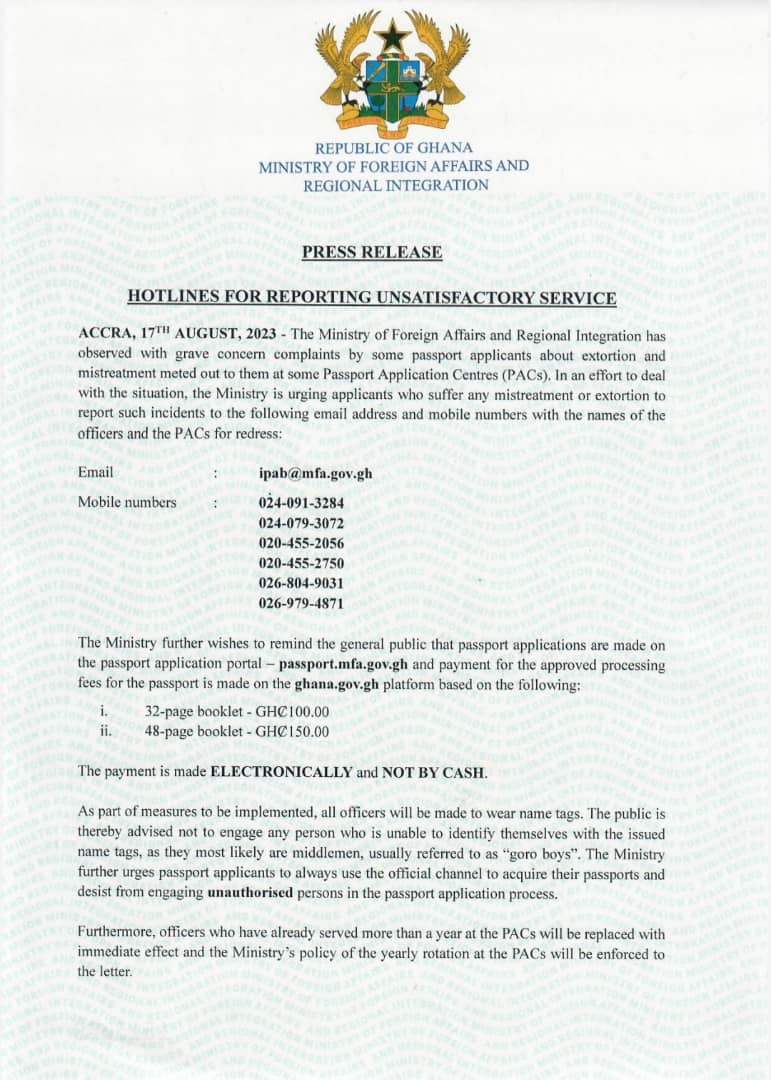
The Ministry of Foreign Affairs and Regional Integration has issued hotlines for individuals facing mistreatment and extortion at passport offices nationwide.
Applicants encountering misconduct or extortion from staff are encouraged to contact the provided hotlines or send emails:
The Minister of Foreign Affairs, Shirley Ayorkor Botchwey, expressed concern about corruption within staff and intermediaries during an impromptu passport office visit.
In a statement dated August 17, the Ministry acknowledged the reported incidents and introduced the hotlines to address the issue.
“The Ministry of Foreign Affairs and Regional Integration expresses deep concern regarding reports of mistreatment and extortion at certain Passport Application Centers (PACs). To combat this problem, the Ministry urges affected applicants to report any instances of corruption or mistreatment.”
The Ministry also advised applicants to avoid dealing with staff lacking proper identification badges.
Furthermore, the Ministry reiterated its commitment to rotating officers who have served for more than a year.
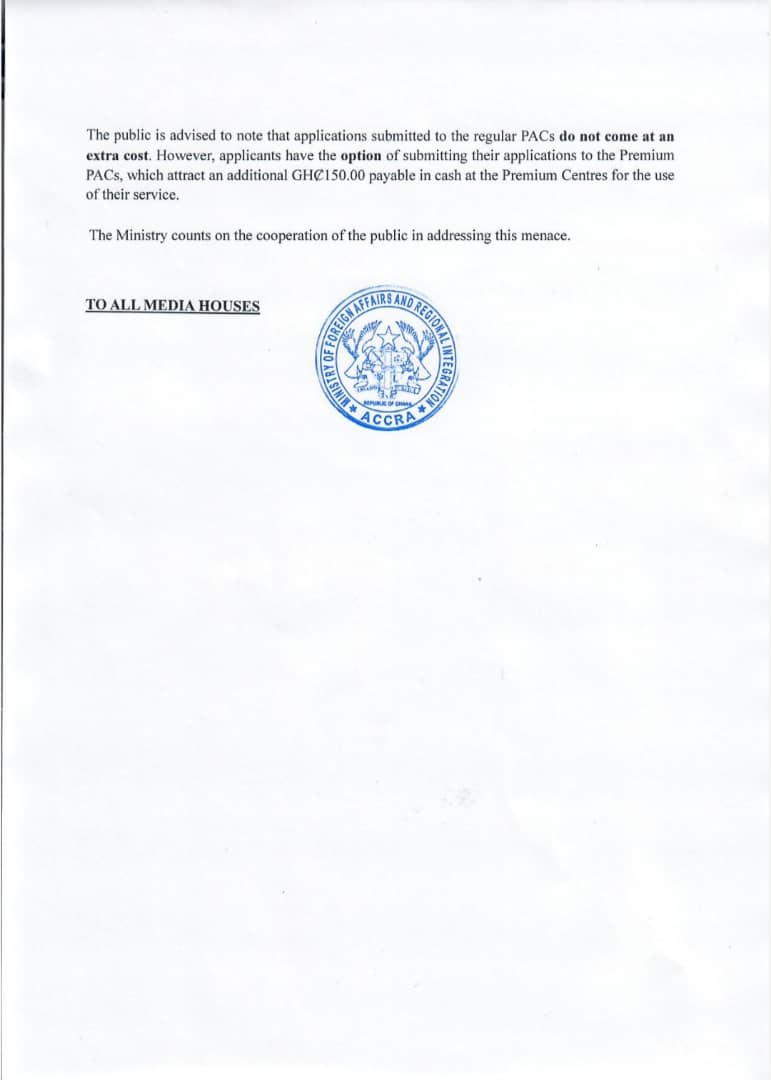
Please see the complete statement by the Ministry of Foreign Affairs and Regional Integration below:
The topic of how much it should cost for residents to obtain passports has come up again after Shirley Ayorkor Botchwey, the minister of foreign affairs and regional integration, paid an unexpected visit to the passport office in Accra recently.
The minister fired some employees who had been seconded to the Passport Office because he was furious that there were persons working there who had made it their personal mission to overcharge and extort unwary applicants.
According to reports, those fired were allegedly involved in corrupt activities.
“Reports that officers, and there are nine or so agencies represented in any passport application centre… these people are involved in illegal activities, and when I say illegal activities, we know just two days ago the report in Daily Guide that the issue of goro people involved in our passport acquisition process has become rife. It is wrong.
“How can 100 Ghana for standard service of passport acquisition and 150 for expedited service be bumped up to 2,000 and 3,000? I hear they don’t even charge 2,000 now; they are charging 3000 and it is wrong.
“But I can say and we all will agree that a goro person is outside the passport office and they need somebody inside to work with, they cannot do it on their own, people are paying 2,000, 3,000 to acquire a passport, why should this be so?” she said.
What you actually need to pay to get a passport:
Although the Minister of Foreign Affairs and Regional Integration, Shirley Ayorkor Botchwey, spoke about what charges that applicants for passports have to pay, GhanaWeb has gone further to make some checks from the official website of the ministry.
On the ‘Passports’ section of the ministry website, it indicates the specific amounts that must be paid for the passports, including details on the application types, passport application centres, and sample documents.
Under the Application Types, for instance, the available types of passports advertised, and their corresponding fees, are: expedited application 48 pages at GH¢200; expedited application 32 pages at GH¢150, standard application 32 pages at GH¢100, and standard application 48 pages at GH¢150.
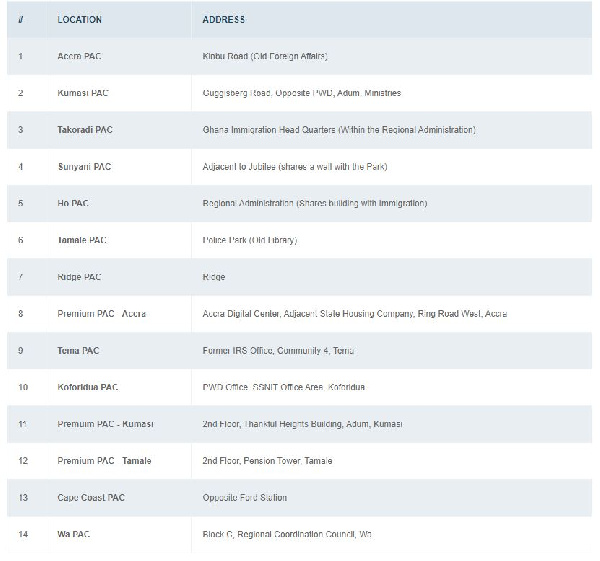
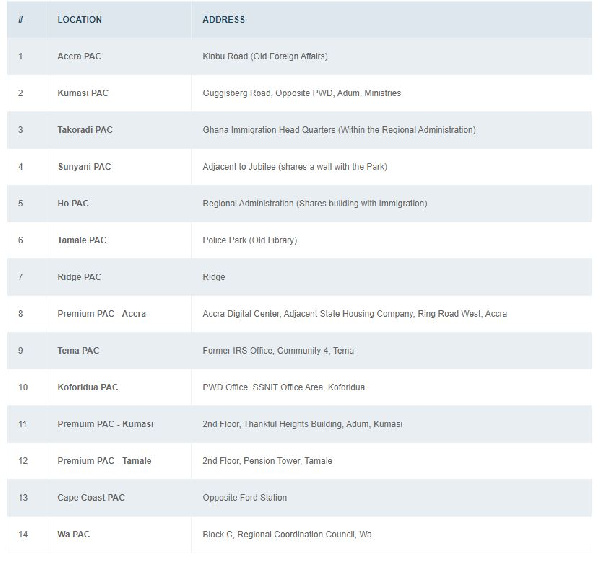
The page also details all the locations of passport offices across the country.
See the lists below:
Also, below is information on What you need to apply for the passport:
1. Birth Certificate(Proof of Ghanaian citizenship) 2. Documents to support Identity such as Driver’s Licence, National ID card 3. Proof of Profession (An introductory letter from the applicant’s employer that is if the applicant is currently employed or a work ID card that bears applicant’s name, organisation’s name and position. A student ID if the applicant is currently in school. Homemakers/housewives and applicants that are unemployed and those in the non-formal sector of employment like mechanics, hairdressers seamstresses, traders etc. do not need proof. Registered Business Owners and self-employed applicants must produce their business registration certificate as proof)
Minister of Foreign Affairs and Regional Integration, Shirley Ayorkor Botchwey, has raised an alarm about the persistent prevalence of extortion and corruption within the Passport Office.
Following a visit to the Passport Office on Monday, August 14, the Minister expressed her astonishment at the unethical practices that applicants have been subjected to by certain individuals within the office.
According to a 2021 report by the UNODC, passport agency officials were identified among the public servants who most frequently accept bribes in Ghana. The report highlighted that 29 percent of Passport officials were involved in collecting bribes, averaging GHS 392 per instance.
The Minister lamented the existence of such extortion and disrespect within an institution that plays a crucial role in facilitating international travel.
As a result, the Minister has instructed employees seconded to the Passport Office not to report for duty starting from Monday, August 21, 2023.
In an interview, she emphasized that a thorough investigation has been launched to address this distressing situation. The inquiry has unveiled the presence of a network operating in collaboration with personnel within the Passport Office.
The Minister expressed her dismay at the common attribution of corruption solely to politicians and her ministry. She highlighted the reality that many instances of malpractice involve civil servants, emphasizing, “It is disheartening that while blame is often laid at the feet of politicians, it is, in fact, some public servants who engage in these wrongful acts, which are then mistakenly ascribed to politicians.”
Notably, she urged those with more than a year’s tenure at the Passport Office to abstain from returning to work as the office undergoes a transformative phase aimed at restoring integrity.
She said, “Everybody who has been here for more than one year, from Monday on, please do not come back because you have been changed We want to restore some sanity. Every time politicians are corrupt, meanwhile, it is some public civil servants who will do things that shouldn’t be done, and then they will be put on politicians”.
The Minister disclosed that the ongoing efforts to streamline operations at the Passport Office through digitization have faced obstacles due to certain civil servants manipulating the online application system for personal gain.
Looking ahead, she conveyed that the impending issuance of the Ghana card to all citizens will render many agencies within the Passport Office redundant, leaving only the essential printing department.
In her concluding statements, Minister Ayorkor Botchwey urged Passport Office personnel to refrain from engaging in extortion practices. She emphasized the importance of maintaining professional integrity, adhering to high standards of work, and treating applicants with utmost respect.
Meanwhile, investigations into the activities of the “goro boys,” who exploit applicants with the involvement of office staff, are ongoing. The Minister highlighted that these external individuals cannot operate independently but require collusion with certain individuals within the Passport Office.
She cautioned that those found responsible will face legal consequences as a deterrent to others.
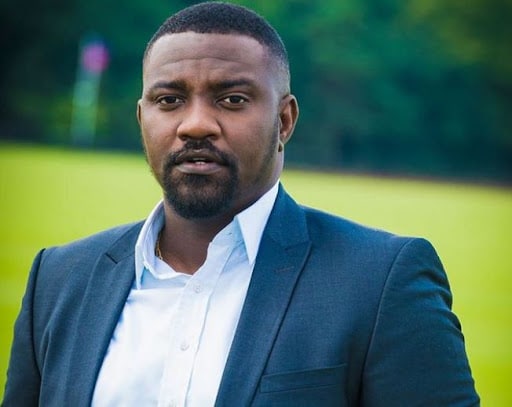
Businessman and politician John Dumelo has expressed his frustration with the practise of extorting money from applicants who seek to obtain a passport.
He suggested that, in order to transform this situation, the Ministry of Foreign Affairs and Regional Integration should distribute the application and acquisition procedures across various regions.
During an appearance on TV3’s Ghana Tonight Show, John Dumelo explained that by printing passports in all the regional capitals, the need for intermediaries, commonly referred to as “goro boys,” could be eliminated.
John Dumelo said, “It is quite frustrating, sometimes you have to pay; you have to make a call before you acquire a passport. I feel it should not be like that…”
“Why not decentralise the application and acquisition process?…Why don’t you print in Cape Coast, Kumasi, and the North so that you don’t have to go through these processes?” he stated.
These people charge between GH2,000 and GH3,000 for a passport, though the initial amount for standard and expedited services is GH100 and GH150, respectively.
The minister stated that the unannounced visit to the passport was necessary because of reports that some officers were involved in illegal activities.
She said their actions have tarnished the reputation of the passport issuance system.
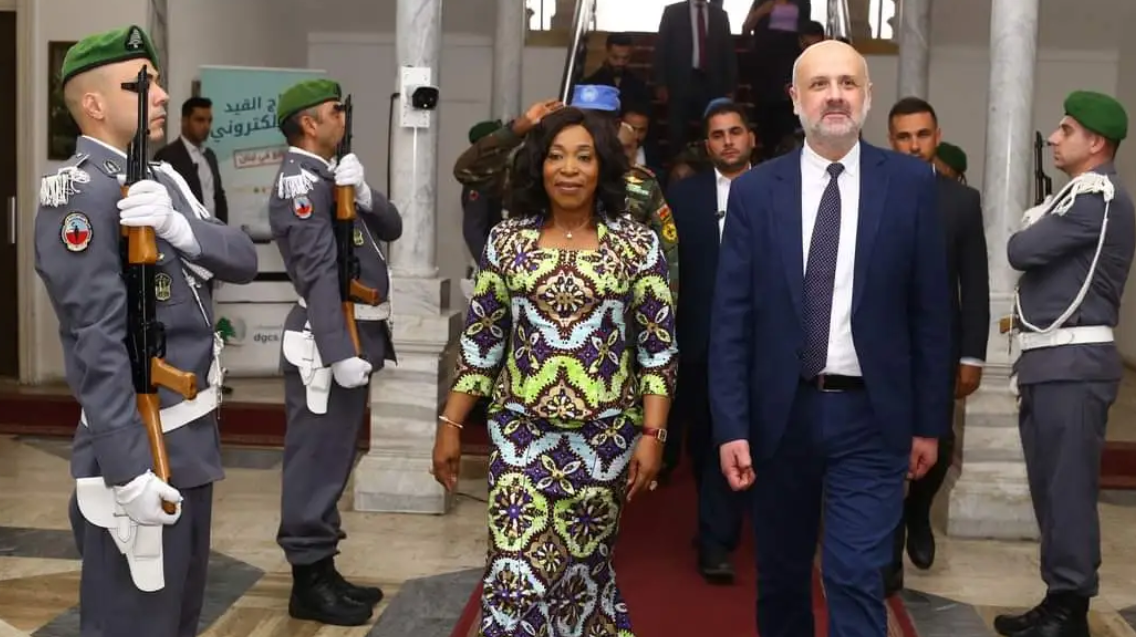
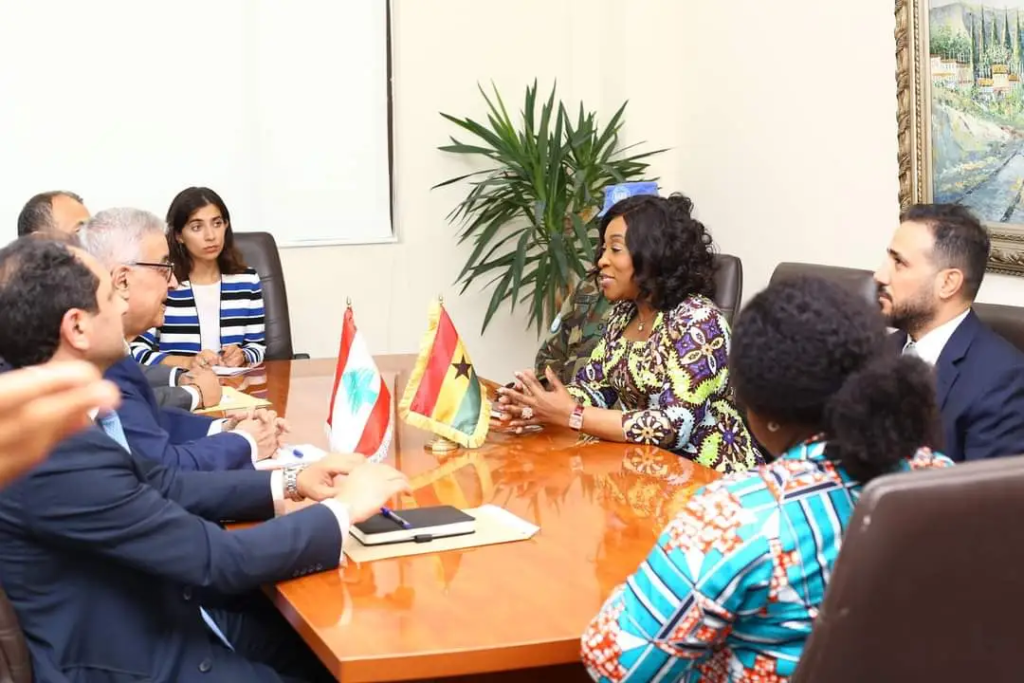
The Minister of Foreign Affairs and Regional Integration, Shirley Ayorkor Botchwey has embarked on a four-day official trip to Beirut, Lebanon, aimed at investigating potential avenues for cooperation.
During her visit, she engaged in discussions with her Lebanese counterpart, Abdallah Bou Habib, emphasizing the importance of exploring additional areas for collaboration.
Madam Ayorkor Botchwey also met with Mr Nabih Berri, the Speaker of the Lebanese Parliament, during which they discussed the importance of the recently established Ghana-Lebanon Parliamentary Friendship and called for more exchanges between the two countries.
A statement copied to the Ghana News Agency said the Minister finally held a meeting with Bassam Mawlawi, the Minister of the Interior, Lebanon, accompanied by Elias Baissari, the Head of General Security of Lebanon.
The meetings highlighted the importance of the relations between Ghana and Lebanon, especially the contribution of Ghanaian troops to the United Nations Interim Force in Lebanon (UNIFIL).
She expressed the hope that conditions would be made conducive for Ghanaian workers in Lebanon.
Ghana established its formal diplomatic relations with Lebanon on her attainment of Independence. It was the second country in the Middle East that Ghana established diplomatic relations.
The Minister of Foreign Affairs and Regional Integration has embarked on a four-day official visit to Beirut, Lebanon, aimed at fostering collaboration and cooperation between the two nations.
During her stay, Shirley Ayorkor Botchwey engaged in discussions with her Lebanese counterpart, Mr Abdallah Bou Habib, emphasizing the importance of extending cooperation beyond existing avenues.
Furthermore, Ayorkor Botchwey met with Mr Nabih Berri, Speaker of the Lebanese Parliament, focusing on the recently established Ghana-Lebanon Parliamentary Friendship and advocating for enhanced exchanges between the countries.
Additionally, meetings were held with Mr Bassam Mawlawi, Lebanon’s Minister of the Interior, and Mr Elias Baissari, Head of General Security.
These discussions underscored the significance of Ghana-Lebanon relations, particularly acknowledging Ghana’s contribution to the United Nations Interim Force in Lebanon (UNIFIL).
Ayorkor Botchwey expressed optimism for improved conditions for Ghanaian workers in Lebanon, while commemorating the establishment of diplomatic ties between the two nations, further strengthening their relations.
In the next three weeks, the World Bank’s Public Sector Reform for Results Projects (PSRRP) will deliver two enormous industrial printing machines to the Ministry of Foreign Affairs and Regional Integration.
Madam Shirley Ayorkor Botchwey, the Minister of Foreign Affairs and Regional Integration, said the arrival of these machines would help the Passport Office to clear all outstanding backlogs within a week.
“It is imperative to indicate that these giant industrial machines have the capacity to print about two thousand passports within an hour,” Madam Ayorkor Botchwey stated on the floor of Parliament in her response to a question by Mr William Okofo-Dateh, National Democratic Congress (NDC) Member of Parliament (MP) for Jaman South.
The MP asked the Minister about the steps being taken by the Ministry to reduce the huge backlog of processed passport application forms since 2022.
Madam Ayorkor Botchwey said the steps being taken by the Ministry of Foreign Affairs and Regional Integration to reduce the backlog of printed passports were improving the capacity of passport printing machines and increasing the capacity to vet completed applications.
She said the Passport Office’s inability to print all processed applications within the stipulated time frame last year, as she had indicated on several numerous platforms was largely due to supply chain challenges, which was a result of COVID-19 pandemic and most recently, the Russia-Ukraine war.
“Fortunately for us, Mr Speaker, the Ministry took delivery of three hundred thousand passport booklets in October, 2022,” she stated.
“Mr Speaker, I am pleased to inform this august House that with the number of booklets supplied, the backlog cases reduced from over 120,000 in October 2022 to 22,698 by December 2022, but for the frequent breakdown of our printing machine, all the backlogs would have been cleared.”
She said it must be noted that completed applications go through various levels of vetting to ensure that only eligible applicants were issued with the Ghanaian passport.
Adding that to this end, the Passport Office had increased the number of vetting staff, who were also tasked to do extra hours occasionally, including working on weekends to clear outstanding passports yet to be printed.
“Mr Speaker, whilst efforts are underway to clear the backlogs, Passport Application Centres, particularly those in Kumasi and Accra have been saddled with the phenomenon of uncollected passports,” she said.
“Even though applicants are usually informed through text messages that their passports have been printed and sent to the various Passport Application Centres, a lot of passports are yet to be collected.”
Madam Ayorkor Botchwey said the Ministry recently issued a public announcement and some applicants did turn up and collected their passports.
She said the Ministry would continue to course such announcements to be made periodically.
“I wish to use this opportunity to apologize to our compatriots who are yet to receive their passports and also to assure this august House and the entire citizens that the Ministry has put in place enough measures to prevent a future occurrence of this unfortunate incident and promise smooth and efficient service delivery,” she stated.
She also assured the House that the Ministry of Foreign Affairs and Regional Integration continuous to give urgent applicants for passports the utmost attention that it requires.
Minister of Foreign Affairs and Regional Integration, Shirley Ayorkor Botchwey, has expressed the highest optimism over Ghana acquiring full membership status of the International Organsiation of La Francophonie.
The International Organsiation of La Francophonie also known as Organisation internationale de la Francophonie is an international organisation representing countries and regions where French is a lingua franca or customary language, where a significant proportion of the population are francophones, or where there is a notable affiliation with French culture.
Ghana is currently an Associate state of the organisation and is hopeful to attain full membership by the end of 2024 in order to strengthen cooperation between itself and its neighbours.
Speaking at a flag-raising ceremony to commemorate the 53rd anniversary of the International Organisation of La Francophonie, OIF, Foreign Affairs Minister, Madam Ayorkor Botchwey, noted that “I believe La Francophonie is more poised than ever to take up the challenges of the 21st century through economic cooperation and the development of cultural and creative industries in the quest for a better life for the younger generations.
“Ghana is therefore very excited to become a full member of this essential organisation, whose relevance to the socio-economic development of our country cannot be overlooked. We are happy to be part of this drive, which aligns with the vision of the government of Ghana,” she added.
The 53rd anniversary of the International Organisation of La Francophonie, OIF, was held in Accra.
During the event, Madam Ayorkor Botchwey underscored the relevance of supporting education and research in French. This, she believes, will promote economic cooperation between Ghana and Francophone countries in line with sustainable development.
“The various agreements and memoranda of understanding signed between Ghana and the OIF have accorded Ghanathe opportunity to enjoy fruitful collaboration with organisations and its head member states. The linguistic plan signed in May 2018 and the teacher mobility program are notable examples of our engagements. Within the context of the Teacher Mobility Programme, Ghana has played host to over 20 French teachers drawn from various Francophone countries who are helping to improve the quality of teaching and learning French in all the regions of the country across various sectors,” she noted.
The International Organisation of La Francophonie is an 88-member Francophone community that has, for the past 53 years, become a diverse political, economic, and cultural space, contributing to maintaining global peace, cooperation, and sustainable development.
It accounts for more than one-point-five million people in the world, representing one third of UN member countries. With nearly 20 percent of global trade, the organisation accounts for 16 percent of the world’s GDP. Ghana is closely associated with the Francophonie and shares its principles of peace, diversity, democracy, and human rights, among others.
Ghana has, since 2006, had the status of an associate member within the International Organisation of La Francophonie. Madam Ayorkor Botchwey was hopeful Ghana will achieve full membership status at the 2024 summit of the organisation.
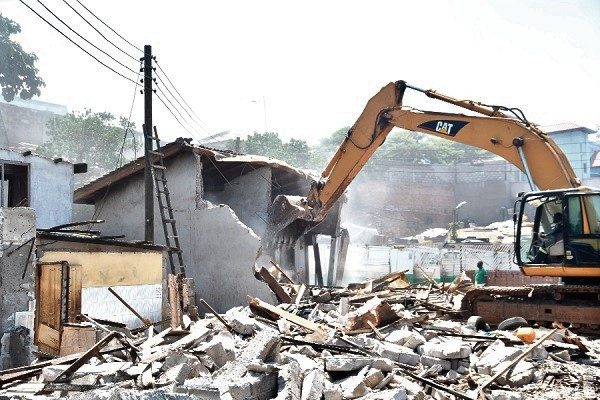
The Ayawaso East Municipal Assembly (AEMA) in collaboration with the police have carried out a demolishing exercise, destroying about 200 structures, including motor repair shops, containers, and food vending facilities.
The exercise, which took place on Tuesday, March 21, 2023, was conducted between the National Vocational Training Institute (NVTI) and the Nima-Maamobi Community Library.
According to reports, the illegal occupants were located around the Central Mosque at Kawukudi, in the Ayawaso East Municipality.
The demolition exercise, which commenced at dawn, prevented some individuals from salvaging valuable items. Eyewitnesses have reported that the exercise was carried out thoroughly, leaving no structure standing.
“I went to the mosque to pray, and when I finished and came out I saw people running out of their rooms. Some of them had towels around their waist, and others wore only shorts because they were still sleeping when the demolition started,” said Rafik Seidu, an eyewitness, in an interview with Graphic Online.
The Ayawaso East Municipal Assembly has not yet disclosed what the demolished site would be used for in the near future.
However, affected residents are speculating that the piece of land could be used for the construction of a police station or a national mosque. Some have even alleged that the land has been sold to a church.
Hundreds of individuals have been rendered homeless as a result of the demolishing exercise.
The AEMA has assured the public that it will work with the appropriate authorities to ensure that those affected are adequately resettled.
The Ministry of Foreign Affairs and Regional Integration has given further explanations as to how a project whose initial cost was GH¢1,435,728.99 was executed for GH¢7,967,886.57.
The contract for the rehabilitation of Adu Lodge Guest House, which is a presidential lodge facility, was awarded to International Development Resources on March 15, 2007.
Appearing before the Public Accounts Committee (PAC) on Friday, January 20, 2023, the Acting Chief Director of the Ministry, Ambassador Ramses Joseph, said the project was revisited in March 2019 and, upon the request of the consultant, was re-valued at GH¢7,967,886.57 for the same contractor to execute.
He had attributed the delay in project execution to the ill health of the contractor.
But the Ministry of Foreign Affairs says the explanation offered by the Acting Director was “inaccurate”.
“The Ministry wishes to state for the record that the delay in getting the project completed had been occasioned by a number of factors, including the redesign and delayed release of funds, delayed certification, and delayed payment of those certificates issued to the contractor by AESL.
“As a result of the delay, the contract sum increased in correlation to increased inflation and currency depreciation, impacting adversely on material costs,” the Ministry said in a statement on Monday.
The ministry’s statement also gave a detailed account of the project.
The initial scope of work included: refurbishment of Block A; refurbishment of Block B; refurbishment of Block C; external works; electrical installation works; 2 boys’ quarters structures; a security gatehouse; a swimming pool; fire detection installation; and an air-conditioning system.
After it was redesigned, the following was included: Construction of a laundry block; construction of a conference block; construction of a kitchen block; construction of a pool house; a generator platform; a water storage tank and platform; borehole drilling and treatment; VOIP intercom and data networking; installation of a fitted kitchen; and close circuit television.
Find the Ministry’s full statement below
REJOINDER: “MINISTRY OF FOREIGN AFFAIRS SPENDS 7.9 MILLION CEDIS ON A 1.4 MILLION CEDIS PROJECT BECAUSE THE CONTRACTOR FELL ILL – CHIEF DIRECTOR”
While noting that the submission was inaccurate, the Ministry takes the opportunity to apprise the public about the extent of work and details of events that led to the delay and increased cost between the years 2007 and 2021.
Adu Lodge is a presidential lodge facility that consists of 3 buildings that were used to host various sizes of high-level delegations with the primary objective of saving the taxpayer’s avoidable expenses. This was the function of the Adu Lodge facility for decades until it was closed, originally for rebuilding and later revised for renovation.
The original award to Messrs International Development Resources (IDR) on 15th March 2007 by the Architectural Engineering Services Limited (AESL) was to demolish the originally existing 3 buildings that constituted the Lodge, at the time, and construct a new building of twelve (12) bedroom at a contract sum of Fourteen Billion.
Three Hundred and Fifty-Seven Million, Two Hundred and Eighty-Nine Thousand, Seven Hundred and Seventy old Ghana cedis (14,357,289.77), equivalent to One Million, Four Hundred and Thirty-Five Thousand, Seven Hundred and Twenty-Eight new Ghana Cedis, Ninety-Eight Pesewas (GH01,435.728.98) after the redenomination of the Cedi in July 2007.
The contract sum was, however, revised in October 2011 to an amount of Four Million, Four
Hundred and Thirty-Two Thousand, Five Hundred and Fifty-Eight Ghana Cedis, Seventy pesewas
(GH4,432,558.70). This time, the project had been reviewed to rather renovate the existing facilities and build additional ones for expansion and to create room for other ancillary facilities.
The revised bill of Quantities from AESL covered the under-listed works:
• Refurbishment of Block A
• Refurbishment of Block B
• Refurbishment of Block C
• External works
• Electrical installation works
• 2 Boys Quarters structures
• Security gatehouse
• Swimming pool
• Fire detection installation
• Air-conditioning system
Unfortunately, the project stalled completely from the period 2009 to 2017 mainly due to the inability of the contractor to continue to pre-finance the project as a result of the lack of reimbursement for expenditure already incurred. Indeed, the bank accounts of IDR were garnisheed for its inability to pay back bank loans the company had taken to prefinance the project on schedule.
On her assumption of office in the year 2017, Honourable Shirley Ayorkor Botchwey, the Minister for Foreign Affairs and Regional Integration called for the review of the contract which was later re-awarded to save the country the already invested funds and put the facility to its originally intended use.
The Ministry, therefore, invited Public Works Department (PWD) Prestige to take over the supervision of the project in December 2017, after 6 years of inactivity. This necessitated the need to revisit, ascertain and revise the outstanding works on the project.
PWD Prestige’s assessment revealed that the value of outstanding works from details above was Five Million, Eight Hundred and Seventy-Five Thousand, Three Hundred and Eighteen Ghana Cedis, Ninety-Six pesewas (GH¢5,875,318.96) per the prevailing market prices as of 16th January 2018.
Not long after this, a site meeting was held, and it was decided that there was a need to include other works which did not form part of the initial Bills of Quantities. The Department was, once again, tasked to review the Bill of Quantities on 170 January. 2019 taking into consideration, the outstanding works including the new structures.
The General Summary of the works amounted to Eight Million, Three Hundred and Thirty Thousand, Sixty-Three Cedis, Twenty-Three Pesewas (GH¢8,330,063.23). Newly measured works that were added to the existing project comprised the following:
• Construction of a Laundry block
• Construction of a Conference Block
• Construction of a kitchen block
• Construction of a pool house
• Generator platform
• Water storage tank and platform
• Borehole drilling and treatment VOIP intercom and data networking
• Installation of fitted kitchen
• Close Circuit Television
The Ministry duly obtained the procedural approval of the Public Procurement Authority (PPA) and transmitted same to the PWD. Prestige to enable the revival of the project. It is worth noting that the PPA, while granting the approval, directed that the Fifteen (15) % of the Contingency sum be reduced to Ten (10) %.
This brought about a reduction of the proposed contract sum to Seven Million, Nine Hundred and Sixty-Seven Thousand, Eight Hundred and Eighty-Six Ghana Cedis Fifty-Seven Pesewas (GH¢7,967.886.57) as the new contract sum.
The above-listed and reviewed works were duly completed and handed over to the Ministry in October. 2021. Payment of work done was honoured at various stages until completion with the exception of the retention amount of One Hundred and Fifty-Five Thousand, Three Hundred and Thirty-Eight Ghana Cedis. Ninety-Three pesewas (0E10155,338.93).
Throughout the lifespan of the project, Sixteen Interim Payment Certificates were raised. Five out of the Sixteen were valued and raised by AESL and the remaining 11 by PWD Prestige after taking over the project.
The Ministry wishes to state on record that, the delay in getting the project completed had been occasioned by a number of factors, including the redesign and delayed release of funds, delayed certification, and delayed payment of those certificates issued to the contractor by AESL As a result of the delay, the contract sum increased in correlation to increased inflation and currency depreciation impacting adversely on material cost.
While the Ministry seeks to assure the general public of every effort to sustain the prudent management of resources entrusted to it by the people of Ghana, it also hopes that the foregoing clears any misunderstanding that resulted from the submission made to the Public Accounts Committee of Parliament.
They include policies that will facilitate trade and investment, regulate, yet make the flow of labour within Commonwealth countries easier and lead to greater investment in education, skills training, innovation and entrepreneurship for young people.
Ms Botchwey was speaking on the theme: “The Commonwealth in a Changing World” at the British foreign relations think tank, Chatham House in London, last week.
Measures
She also listed the other measures needed to revitalise the Commonwealth as climate adaptation, paying particular attention to small states and boosting the human and financial resources of the Commonwealth institution itself.
“Our citizens watch as we struggle with policies to raise growth in isolation through austerity and high taxes.
“The pie is simply not capable of feeding everyone, unless consumer-based market expansion considers the potential of our 2.5 billion population, 60 per cent of whom are 30 years or younger,” she said.
The Commonwealth comprises 56 countries from five regions, including some of the world’s largest and wealthiest, such as Australia and Canada, and the smallest, among them Tonga and St Kitts and Nevis.
Ms Botchwey said considering the size of its population, demographic and political profiles, as well as wealth and economic potential, the Commonwealth should be the second most consequential organisation of states globally.
“But the question we must ask ourselves is whether it is,” she said.
Industrialisation
The Foreign Affairs Minister further proposed an industrialisation and economic diversification strategy linked to regional integration agreements and economic partnership agreements within and beyond the Commonwealth.
That, she said, would be “a guarantee against the stagnation that is widespread across our countries”.
She advocated a Commonwealth-wide mobility agreement to help redress labour and skills demand through “safe, orderly and regulated migration”.
Again, Ms Botchwey said what she termed as “a common Commonwealth market” would allow work and services to be exchanged without relocation of workers across borders, as well as have young people trained wherever they lived in the Commonwealth.
I was told many years ago about a common refrain in newsrooms: “If it bleeds, it leads”. In other words, the bloodier an event, the more prominent its place in the newspaper or bulletin. I believe this axiom still holds true today. It explains why the catastrophic sights and sounds – the bleeding – in Ukraine is top of mind for the world. And justifiably so.
However, as Ghana assumes the Presidency of the United Nations Security Council in November, the world cannot afford to focus solely on events in Ukraine, its impact on the living conditions of people everywhere notwithstanding.
We cannot forget that before the invasion of Ukraine, COVID-19 exposed the lack of resilience in the economies in which the majority of the global population lives. In fact, the war in Ukraine exacerbated the harsh effects of the downturn many countries were already experiencing, deepening poverty, unemployment and food insecurity.
We cannot forget either that the UN Security Council faced a leadership crisis in finding better ways to respond to threats to international peace and security, as the nature of those threats was, themselves, changing. Africa, for instance, has become the epicentre of terrorism. Meanwhile, in the countries where the UN maintains its signature peacekeeping missions, some of the host countries have chosen, instead, to engage third parties, sometimes in conflict with the operations of UN peacekeepers.
It is clear that the ways in which the Security Council approaches the mandate for international peace and security ought to change if we are to have sustainable peace, which is a prerequisite for achieving the Sustainable Development Goals (SDGs) by 2030. Right now we are running out of time in transforming the lives of people and saving our planet.
At the UN, Security Council reforms are often seen only in terms of expanding the permanent membership and power of veto to make the council more representative of all of the peoples of the world. Those reforms are important and necessary. But we believe that it is equally important to look at another area of reforms that would enable peace to serve the needs of ordinary people for resilience and good quality of life.
In this, we are inspired by the example of the second Secretary‐General of the UN, Dag Hammarskjold, who had an innovative approach to the possibilities of the UN and its Charter and is credited with the introduction of peacekeeping. The bold act of adopting a General Assembly Resolution on 7 November 1956, which launched the first peacekeeping operation in history, the UN Emergency Force in the Middle East (UNEF), at a time when it was urgently needed, should inspire us in our time to act equally boldly because circumstances have changed.
Like Hammarskjold, we must recognise that “the purposes of the Charter (are) fixed and binding, but the working methods of the Organization must be flexible and innovative”.
President Nana Addo Dankwa Akufo-Addo of Ghana and I are calling on the Council to consider that time has come for another departure from the norm as Hammarskjöld did when UNEF was established.
As my country, Ghana, prepares to preside over two high-level debates of the Council, we want to focus, like a laser beam, on the security gap and the need for a new and innovative template for success. That template should take into account the factors that make peacekeeping operations almost permanent, and why individuals and communities become susceptible to radicalisation and recruitment as terrorists, driving the new face of threats to international peace and security.
In the Sahel and coastal West Africa, the countries that were the most successful in reaching striking distance of the SDGs, especially on poverty reduction and education, now find themselves struggling, as poorer countries rather shoulder the worst impacts of the COVID-19 pandemic, Climate Change and conflict in Europe. High fiscal deficits, escalating debt and downturns in economic activity are pushing us out of the bond markets at a time when inequality soars and unemployment and underemployment of millions are turning frustration into hopelessness. Increasingly, even some, among the middle classes in Africa and other developing countries, are beginning to lose faith in the democratic systems they fought so hard to establish.
The road back to robust growth, which Ghana and a number of African countries experienced successively in the years before COVID-19 struck, is currently a choice between the devil and the deep blue sea. We have to either impose IMF-guided austerity, potentially leading to labour retrenchment and accompanying social instability, as witnessed in Argentina and elsewhere, or home-grown yet equally tough decisions to satisfy the markets and, hopefully, pave the way back to a functioning economy. The harsh sacrifices required, themselves, have become a source of instability and an invitation to malign actors.
In the Sahel, climate-induced insecurity, poverty, high illiteracy rates and education that neither teaches skills nor a culture of peace and non-violence (SDG Target 4.7), youth unemployment and the absence of the State in large swathes of territory have created the environment in which terrorists thrive and undermine the effectiveness of the kinetic military operations to root them out.
It is clear that the critical need to fill the security gap brought on by economic and other root causes of conflict should be a priority for the promotion and maintenance of international peace and security. Secretary-General Antonio Guterres has been insistent on the need for funding the entire peace continuum, including increasing resources for programmatic financing, and for a mechanism for fighting terrorism in Africa.
The Council can no longer turn a blind eye to the accumulating evidence before us. That means ensuring that UN Security Council-mandated peace support missions or counter-terrorism have a balanced approach to both the military and civil components, with as much resources devoted to building community resilience, access to good quality education and training, and mitigating climate impacts and reclaiming land and water bodies on which communities depend.
It means standing with other organs of the UN to advocate a new model of development cooperation that reinforces the capacity of developing countries to deepen their development resilience. I know that these may not make for easy headlines but we must bring attention to, and act on them as a matter of preventive urgency.
It is time for bold thinking and bolder action or we shall simply run out of time, leaving us with neither peace nor development – except bloodier headlines.
Ghana’s dealings with the International Monetary Fund (IMF) may have an adverse impact on the economy and the wellbeing of some Ghanaians.
According to the Minister for Foreign Affairs and Regional Integration, Shirley Ayorkor Botchwey, some employees in the public sector can lose their jobs due to some conditions the IMF would present to provide Ghana an economic recovery programme.
In a published article on November 3, 2022, the Minister wrote “we have to either impose IMF-guided austerity, potentially leading to labour retrenchment and accompanying social instability, as witnessed in Argentina and elsewhere, or home-grown yet equally tough decisions to satisfy the markets and, hopefully, pave the way back to a functioning economy.”
She further described Ghana’s current position to go for an IMF support against a domestic programme for robust growth as “a choice between the devil and the deep blue sea.”
The Foreign Minister strongly believes that the COVID-19 pandemic and the ongoing Russia-Ukraine war has aggravated the country’s economic woes.
“We cannot forget that before the invasion of Ukraine, COVID-19 had exposed the lack of resilience of the economies in which the majority of the global population live. In fact, the war in Ukraine exacerbated the harsh effects of the downturn many countries were already experiencing, deepening poverty, unemployment and food insecurity,” she said.
Ghana formally reached out to the IMF in July after its domestic initiatives, such as the Electronic Transaction Levy (e-levy) to help restore the economy faced severe challenges. In September, engagements between the Fund and a government delegation commenced.
During that period, some Ghanaians and institutions opposed government’s decision to seek support from the IMF as done by previous governments.
The Ghana Trades Union Congress (GTUC) stated that the plight of Ghanaians would worsen following an IMF deal. According to the Finance Minister, an economic programme from the IMF is to help the country stay afloat in the interim. Ghana hopes to receive $3 billion from the Fund.
Meanwhile, renowned economist, Kwame Pianim, has revealed that Ghana’s negotiations with the IMF are not going well as expected.
He noted that the IMF is keenly waiting for the President’s definite pronouncement before they come in to support.
“The IMF negotiations are not going well. I know this for a fact. What the IMF is waiting for is a bold credible pronouncement from the president as he did over [the] Covid-19.
Below is the full statement by the Foreign Minister captioned “We Are Running Out of Time“
I was told many years ago about a common refrain in newsrooms: “If it bleeds, it leads”. In other words, the bloodier an event, the more prominent its place in the newspaper or bulletin. I believe this axiom still holds true today. It explains why the catastrophic sights and sounds – the bleeding – in Ukraine is top of mind for the world. And justifiably so.
However, as Ghana assumes the Presidency of the United Nations Security Council in November, the world cannot afford to focus solely on events in Ukraine, its impact on the living conditions of people everywhere notwithstanding.
We cannot forget that before the invasion of Ukraine, COVID-19 exposed the lack of resilience in the economies in which the majority of the global population lives. In fact, the war in Ukraine exacerbated the harsh effects of the downturn many countries were already experiencing, deepening poverty, unemployment and food insecurity.
We cannot forget either that the UN Security Council faced a leadership crisis in finding better ways to respond to threats to international peace and security, as the nature of those threats were, themselves, changing. Africa, for instance, has become the epicentre of terrorism. Meanwhile, in the countries where the UN maintains its signature peacekeeping missions, some of the host countries have chosen, instead, to engage third parties, sometimes in conflict with the operations of UN peacekeepers.
It is clear that the ways in which the Security Council approaches the mandate for international peace and security ought to change if we are to have sustainable peace, which is a prerequisite for achieving sustainable development goals (SDGs) by 2030. Right now we are running out of time in transforming the lives of people and saving our planet.
At the UN, Security Council reforms are often seen only in terms of expanding the permanent membership and power of veto to make the council more representative of all of the peoples of the world. Those reforms are essential and necessary. But we believe that it is equally important to look at another area of reforms that would enable peace to serve the needs of ordinary people for resilience and good quality of life.
In this, we are inspired by the example of the second Secretary‐General of the UN, Dag Hammarskjold, who had an innovative approach to the possibilities of the UN and its Charter and is credited with the introduction of peacekeeping. The bold act of adopting a General Assembly Resolution on November 7, 1956, which launched the first peacekeeping operation in history, the UN Emergency Force in the Middle East (UNEF), at a time when it was urgently needed, should inspire us in our time to act equally boldly because circumstances have changed.
Like Hammarskjold, we must recognize that “the purposes of the Charter (are) fixed and binding, but the working methods of the Organisation must be flexible and innovative”.
President Nana Addo Dankwa Akufo-Addo of Ghana and I are calling on the Council to consider that time has come for another departure from the norm as Hammarskjöld did when UNEF was established.
As my country Ghana prepares to preside over two high-level debates of the Council, we want to focus, like a laser beam, on the security gap and the need for a new and innovative template for success. That template should consider the factors that make peacekeeping operations almost permanent, and why individuals and communities become susceptible to radicalisation and recruitment as terrorists, driving the new face of threats to international peace and security.
In the Sahel and coastal West Africa, the countries that were the most successful in reaching striking distance of the SDGs, especially on poverty reduction and education, now find themselves struggling, as poorer countries rather shoulder the worst impacts of the COVID-19 pandemic, Climate Change and conflict in Europe. High fiscal deficits, escalating debt and downturns in economic activity are pushing us out of the bond markets at a time when inequality soars and unemployment and underemployment of millions are turning frustration into hopelessness. Increasingly, even some of the middle classes in Africa and other developing countries are beginning to lose faith in the democratic systems they fought so hard to establish.
The road back to robust growth, which Ghana and a number of African countries experienced successively in the years before COVID-19 struck, is currently a choice between the devil and the deep blue sea. We have to either impose IMF-guided austerity, potentially leading to labour retrenchment and accompanying social instability, as witnessed in Argentina and elsewhere, or home-grown yet equally tough decisions to satisfy the markets and, hopefully, pave the way back to a functioning economy. The harsh sacrifices required, themselves, have become a source of instability and an invitation to malign actors.
In the Sahel, climate-induced insecurity, poverty, high illiteracy rates and education that neither teaches skills nor a culture of peace and non-violence (SDG Target 4.7), youth unemployment and the absence of the State in large swathes of territory have created the environment in which terrorists thrive and undermine the effectiveness of the kinetic military operations to root them out.
It is clear that the critical need to fill the security gap brought on by economic and other root causes of conflict should be a priority for promoting and maintaining international peace and security. Secretary-General Antonio Guterres has been insistent on the need for funding the entire peace continuum, including increasing resources for programmatic financing, and for a mechanism for fighting terrorism in Africa.
The Council can no longer turn a blind eye to the accumulating evidence before us. That means ensuring that UN Security Council-mandated peace support missions or counter-terrorism have a balanced approach to both the military and civil components, with as many resources devoted to building community resilience, access to good quality education and training, and mitigating climate impacts and reclaiming land and water bodies on which communities depend.
It means standing with other organs of the UN to advocate for a new model of development cooperation that reinforces the capacity of developing countries to deepen their development resilience. I know that these may not make for easy headlines but we must bring attention to, and act on them as a matter of preventive urgency.
It is time for bold thinking and bolder action or we shall simply run out of time, leaving us with neither peace nor development – except bloodier headlines.
The Minister for Foreign Affairs and Regional Integration, Shirley Ayorkor Botchwey, has said austerity measures are inevitable in efforts to stabilize the economy.
On the path to full recovery from Ghana’s economic crisis, the people are bound to face either IMF conditionality or home-grown tough decisions that will affect the domestic market, Shirley Ayorkor Botchwey observed.
“The road back to robust growth, which Ghana and a number of African countries experienced successively in the years before COVID-19 struck, is currently a choice between the devil and the deep blue sea. We have to either impose IMF-guided austerity, potentially leading to labour retrenchment and accompanying social instability, as witnessed in Argentina and elsewhere, or home-grown yet equally tough decisions to satisfy the markets and, hopefully, pave the way back to a functioning economy.
“The harsh sacrifices required, themselves, have become a source of instability and an invitation to malign actors,” she said in a statement on the sidelines as Ghana assumes Presidency of the United Nations Security Council.
Already, the Minority in Parliament has signaled an imminent debt restructuring billed to happen in the next 14-days that will possibly affect the investor community as part of the IMF negotiations.
President Akufo-Addo in an address on the economy on Sunday assured Ghanaians that no individual or institutional investor, including pension funds, in government treasury bills or instruments will lose their money, as a result of the ongoing IMF negotiations.
However, in reaction to the remarks by the President, the minority leader Haruna Iddrisu maintained that contrary to assurances by the President that there will be ‘No haircuts’, investors in government bonds and other pension funds will be adversely affected by the move.
Below is the Statement by the Foreign Affairs Minister:
We Are Running Out of Time
By Shirley Ayorkor Botchwey, Minister for Foreign Affairs and Regional Integration, Republic of Ghana.
I was told many years ago about a common refrain in newsrooms: “If it bleeds, it leads”. In other words, the bloodier an event, the more prominent its place in the newspaper or bulletin. I believe this axiom still holds true today. It explains why the catastrophic sights and sounds – the bleeding – in Ukraine is top of mind for the world. And justifiably so.
However, as Ghana assumes the Presidency of the United Nations Security Council in November, the world cannot afford to focus solely on events in Ukraine, its impact on the living conditions of people everywhere notwithstanding. We cannot forget that before the invasion of Ukraine, COVID-19 had exposed the lack of resilience of the economies in which the majority of the global population live. In fact, the war in Ukraine exacerbated the harsh effects of the downturn many countries were already experiencing, deepening poverty, unemployment and food insecurity.
We cannot forget either that the UN Security Council faced a leadership crisis in finding better ways to respond to threats to international peace and security, as the nature of those threats were, themselves, changing. Africa, for instance, has become the epicentre of terrorism. Meanwhile, in the countries where the UN maintains its signature peacekeeping missions, some of the host countries have chosen, instead, to engage third parties, sometimes in conflict with the operations of UN peacekeepers.
It is clear that the ways in which the Security Council approaches the mandate for international peace and security ought to change, if we are to have sustainable peace, which is a prerequisite for achieving the sustainable development goals (SDGs) by 2030. Right now we are running out of time in transforming the lives of people and saving our planet.
At the UN, Security Council reforms are often seen only in terms of expanding the permanent membership and power of veto to make the council more representative of all of the peoples of the world. Those reforms are important and necessary. But we believe that it is equally important to look at another area of reforms that would enable peace to serve the needs of ordinary people for resilience and a good quality of life.
In this we are inspired by the example of the second Secretary‐General of the UN, Dag Hammarskjold, who had an innovative approach to the possibilities of the UN and its Charter, and is credited with the introduction of peacekeeping. The bold act of adopting a General Assembly Resolution on 7 November, 1956, which launched the first peacekeeping operation in history, the UN Emergency Force in the Middle East (UNEF), at a time when it was urgently needed, should inspire us in our time to act equally boldly because circumstances have changed.
Like Hammarskjold, we must recognize that “the purposes of the Charter (are) fixed and binding, but the working methods of the Organization must be flexible and innovative”.
President Nana Addo Dankwa Akufo-Addo of Ghana and I are calling on the Council to consider that time has come for another departure from the norm as Hammarskjöld did when UNEF was established.
As my country, Ghana, prepares to preside over two high level debates of the Council, we want to focus, like a laser beam, on the security gap and the need for a new and innovative template for success. That template should take into account the factors that make peace keeping operations almost permanent, and why individuals and communities become susceptible to radicalization and recruitment as terrorists, driving the new face of threats to international peace and security.
In the Sahel and coastal West Africa, the countries that were the most successful in reaching striking distance of the SDGs, especially on poverty reduction and education, now find themselves struggling, as poorer countries rather shoulder the worst impacts of the COVID-19 pandemic, Climate Change and conflict in Europe. High fiscal deficits, escalating debt and downturns in economic activity are pushing us out of the bond markets at a time when inequality soars and unemployment and underemployment of millions is turning frustration into hopelessness. Increasingly, even some among the middle classes in Africa and other developing countries are beginning to lose faith in the democratic systems they fought so hard to establish.
The road back to robust growth, which Ghana and a number of African countries experienced successively in the years before COVID-19 struck, is currently a choice between the devil and the deep blue sea. We have to either impose IMF-guided austerity, potentially leading to labour retrenchment and accompanying social instability, as witnessed in Argentina and elsewhere, or home-grown yet equally tough decisions to satisfy the markets and, hopefully, pave the way back to a functioning economy. The harsh sacrifices required, themselves, have become a source of instability and an invitation to malign actors.
In the Sahel, climate-induced insecurity, poverty, high illiteracy rates and education that neither teaches skills nor a culture of peace and non-violence (SDG Target 4.7), youth unemployment and the absence of the State in large swathes of territory have created the environment in which terrorists thrive and undermine the effectiveness of the kinetic military operations to root them out.
It is clear that the critical need to fill the security gap brought on by economic and other root causes of conflict should be a priority for the promotion and maintenance of international peace and security. Secretary-General Antonio Guterres has been insistent on the need for funding the entire peace continuum, including increasing resources for programmatic financing, and for a mechanism for fighting terrorism in Africa.
The Council can no longer turn a blind eye to the accumulating evidence before us. That means ensuring that UN Security Council-mandated peace support missions or counter terrorism have a balanced approach to both the military and civil components, with as much resources devoted to building community resilience, access to good quality education and training, and mitigating climate impacts and reclaiming land and water bodies on which communities depend.
It means standing with other organs of the UN to advocate for a new model of development cooperation that reinforces the capacity of developing countries to deepen their development resilience. I know that these may not make for easy headlines but we must bring attention to, and act on, them as a matter of preventive urgency.
It is time for bold thinking and bolder action or we shall simply run out for time, leaving us with neither peace nor development – except bloodier headlines.
The Ukrainian Foreign Affairs Minister, Dmytro Kuleba, has expressed his country’s gratitude to Ghana for standing by them amid the Russian invasion that started in February this year.
Kuleba arrived in Accra on Wednesday, October 6 and departed on the 7th, with Ghana being the third stop of his African tour. He had earlier been to Senegal and Ivory Coast.
While in Ghana, he delivered a message from President Volodymyr Zelensky to his counterpart Akufo-Addo and also held talks with Foreign Affairs minister, Shirley Ayorkor Botchwey.
It was during this meeting he revealed that Ukraine was grateful for Ghana’s support through the current crisis, citing specifically a statement at the 77th United Nations General Assembly in Akufo-Addo’s address in September.
He said Akufo-Addo’s: “Every bullet and every bomb fired at Ukraine is felt in Africa,” statement was the clearest and the most eloquent statement, which reflected the global repercussions of the Russian aggression against Ukraine.
“We have to stop this war, we will be winning it, because we defend the right cause, the principle of sovereignty, the principle of territorial integrity of the nation,” he is quoted to have said in a Ghana News Agency report.
Kuleba also disclosed that aside from boosting bilateral and especially trade relations between Accra and Kyiv, Ukraine would soon be opening a full diplomatic mission in Accra.
In order to remedy the issue, she stated that the Ministry would receive a stock of fresh books.
We should have enough by the middle of this month—October, or in about a week—to clear the backlog, she said.
According to reports on myjoyonline.com, Ayorkor Botchwey stated that there would be enough booklets by the end of October 2022 to last for the rest of the year or perhaps into the following quarter.
“The issue is the collecting of the booklet, according to our interactions with the candidates today.
“Obviously, the single most important issue that affected our economy was the devastating effect of the COVID-19 pandemic on all aspects of our national life, our Bank not exempted. The COVID-19, coupled with the political atmosphere after the 2020 Elections and the subsequent Budget presentation, affected the nation’s financial standing and the rippling effects are still being felt in the changing policy rates that the Bank of Ghana Monitoring Policy Committee continues to issue,” said the chairman.
The board chairman meanwhile commended the Central Bank for kick-starting a Corporate Governance Directive for Rural Banks to ensure Board members are “fit and proper” to be given fiduciary positions as the Central Bank continues to implement policy guidelines that serve the best interests of depositors and other stakeholders and enhancing overall corporate performance, accountability, and public trust.
Mr. Otu-Boateng however identified the competition faced by rural banks with the universal banks and micro-finance institutions operating in their catchment areas as one of the challenges confronting the operations of the Bank.
He however noted that despite these setbacks, the Mumuadu Rural Bank remains on its feet, reporting good out-turn.
Detailing the performance of the bank as of December 31, 2021, the chairman said, “The Bank increased its profit before tax from GH¢3,384,357 in 2020 to GH¢4,777,279 in 2021, an increase of 41.16%.”
According to him, total earnings also recorded a 23.41% growth from GH¢23,219,206 in 2020 to 28,655,633 in 2021.”
Regarding the Bank’s total assets, Mr. Otu-Boateng disclosed that this increased from GH¢113,830,760 in 2020 to GH¢124,226,695, representing year-on-year growth of a 9.13% increment during the year.
Customer deposits which remain a crucial balance sheet component grew from GH¢88,742,036 in 2020 to GH¢101,896,826 in 2021 representing an increase of 14.82%.
The Bank similarly improved its short and medium-term as well as investment securities by 29.23% over the previous year’s portfolio from GH¢33,727,847 in 2020 to GH¢43,585,913 in 2021.
The board chairman furthered that the Bank’s stated capital also recorded an appreciable increase from GH¢3,921,202.00 in 2020 to GH¢ 4,041,925 in 2021, representing a growth of 3.08%.
He however expressed concern over the slow growth of the Stated Capital where shareholders are not buying any more shares, despite the fact that the bank pays good returns whenever the situation allows.
Regarding the Bank’s Total Expenses, this increased by 20.42% from GH¢19,834,849 in 2020 to GH¢ 23,884,186 in 2020.
While the bank earned a primary reserve of 14.29% above the required ratio of 6%, it similarly recorded a secondary reserve of 37.46% which is significantly above the statutory requirement of 30% by an impressive 7.46%. This is an indication that the Bank is sufficiently capitalized.
Regarding Loans and Advances, it was disclosed that the balance of advances outstanding after the provision of bad and doubtful debts increased from GH¢52,019,725 in 2020 to GH¢57,674,173 in 2021. This, according to the chairman, represents an increase of 10.87% over the 2020 outstanding advances after provision for bad and doubtful debts.
Mr. Otu-Boateng also announced that Shareholders’ funds increased from GH¢ 13,477,719 in 2020 to GH¢ 14,582,481 in 2021 representing an increase of 8.20%. Chief Executive Officer (CEO) of the Bank, Mr. Francis Kotoko said the Mumuadu Rural Bank has over the years demonstrated a strong commitment to sustainable business practices driving profitable, sustainable growth that is environmentally responsible and socially relevant.
According to him, the bank still had millions of shares available for sale and urged members of the general public to buy the shares which are available at 30p per share.
“It’s important that everyone owns shares. Our shares go for 30p per share. We’ve subscribed for authorized fifty million out of which we’ve sold twenty-nine million shares leaving about twenty-nine million shares available for sale,” he said in an interview.
Celebrating the track record of the bank over the past forty years, the CEO said the bank has been able to safeguard the savings of its customers over the period.
Shareholders approved all resolutions on the agenda which included among other things, the ratification of the appointment of two Executive Directors of the Bank and to receive and consider the Audited Financial Statements of the Bank for the year ended 31st December 2021 together with the Reports of the Directors and Auditors.
At the end of the meeting, shareholders adopted the 2021 audited financials and approved all resolutions on the agenda, including the declaration of dividend, re-election of the Board of Directors retiring by rotation, the re-election of Directors, remuneration of Directors, and the authorization of the Directors to fix the remuneration of Auditors.
She promised to supply the Ministry with additional booklets to make up for the shortfall.
By the middle of this month, or around a week from now, she added, “October, we should have enough to eliminate the backlog.”
According to sources on myjoyonline.com, Ayorkor Botchwey promised that by the end of October 2022, there will be enough booklets to last through the rest of the year or even into the following quarter.
“According to our interactions with the candidates today, the problem is the gathering of the booklet.
“Some go back many months and I wanted to see this for myself and I have seen it and we will make sure that as soon as the booklet comes, we will work day and night to print all the backlog, clear the backlog so that those who want to travel can do so,” she said.
“We have some booklet there, but it is not enough to cover the full backlog that we have, which is why we are not rushing that we put out weekly of a certain number until God willing around the 13th when we receive enough,” she noted.
The Foreign Affairs Minister Shirley Ayorkor Botchwey has assured that the Ministry is working to address the shortage of passports.
This is in line with Joy News reports that there has been a shortage of passports across the country.
Speaking in an interview on Joy FM’s Midday News on Monday, the Foreign Affiars Minister noted that “by the middle of this month – October, in about a week or so we should have enough to clear the backlog.”
According to her, by the end of October 2022, there would be more passport booklets in stock “to take us beyond the end of the year into the next quarter.”
She added that the Ministry “continue to seek the welfare of applicants to ensure that they get a good service.”
Madam Botchwey insisted the issue over the shortage is related to the process involved in acquiring the booklet.
“From what we have experienced today in interacting with the applicants … the issue is the collection of the booklet.
“Some go back many months and I wanted to see this for myself and I have seen it and we will make sure that as soon as the booklet comes, we will work day and night to print all the backlog, clear the backlog so that those who want to travel can do so,” she said.
She, however, called on applicants with emergency cases to make it known to officials in charge. This she said is because provisions have been made for such purposes.
“We have some booklet there but it is not enough to cover the full backlog that we have which is why we are not rushing that we put out weekly of a certain number until God willing around the 13th when we receive enough,” she noted.
The Foreign Affairs Minister Shirley Ayorkor Botchwey has assured that the Ministry is working to address the shortage of passports.
This is in line with Joy News reports that there has been a shortage of passports across the country.
Speaking in an interview on Joy FM’s Midday News on Monday, the Foreign Affiars Minister noted that “by the middle of this month – October, in about a week or so we should have enough to clear the backlog.”
According to her, by the end of October 2022, there would be more passport booklets in stock “to take us beyond the end of the year into the next quarter.”
She added that the Ministry “continue to seek the welfare of applicants to ensure that they get a good service.”
Madam Botchwey insisted the issue over the shortage is related to the process involved in acquiring the booklet.
“From what we have experienced today in interacting with the applicants … the issue is the collection of the booklet.
“Some go back many months and I wanted to see this for myself and I have seen it and we will make sure that as soon as the booklet comes, we will work day and night to print all the backlog, clear the backlog so that those who want to travel can do so,” she said.
She, however, called on applicants with emergency cases to make it known to officials in charge. This she said is because provisions have been made for such purposes.
“We have some booklet there but it is not enough to cover the full backlog that we have which is why we are not rushing that we put out weekly of a certain number until God willing around the 13th when we receive enough,” she noted.
The Minister of Foreign Affairs and Regional Integration, Shirley Ayorkor Botchwey, says Ghana will not recognise any territory forcefully taken from Ukraine by Russia.
She has, therefore, called on Russia to immediately and unconditionally seize its operations in Ukraine by withdrawing its troops and also respecting the internationally recognised borders of Ukraine.
The Minister who was speaking at the 77th session of the United Nations General Assembly in New York Thursday, further urged Russia to respect Ukraine’s sovereignty and political independence.
For her, “Ghana does not and will not recognise any territory that is unilaterally and forcefully acquired as dismembered from a sovereign entity.”
Ms. Ayorkor Botchwey said there was the need for Russia and Ukraine, to chart diplomatic course to resolve the impasse between them.
She noted that the two nations cannot resolve their differences through the barrel of a gun, adding that the use of gun to resolve differences only “leads to needless bloodshed on both sides.”
She expressed the concern that with the rising death tolls of the civilian population and growing reports of war crimes in Ukraine, including human rights violations, there was the need to investigate such issues and perpetrators sanctioned.
“We must uphold our responsibilities as a country and send a clear message that the perpetrators of the atrocities will be held to account,” she noted.
Minister for Foreign Affairs and Regional Integration, Shirley Ayorkor Botchwey, has stated that Ghana will not recognize any annexed territory of a sovereign state.
Her comment comes on the back of plans by Russia to hold a controversial referendum to annex four Ukrainian regions – Donetsk, Luhansk, Kherson and Zaporizhzhia.
Speaking at the United Nations (UN) Security Council meeting held on September 22, the minister reiterated Ghana’s strong position against the invasion of Ukraine.
She bemoaned the various atrocities which has occasioned the war. Ayorkor Botchwey said for instance that some 14 million people have been displaced from their homes as well as women and children subjected to sexual and gender-based violence.
She described the effects the war as ‘intolerable’ and called for urgent steps to be taken to halt the war.
“Some 14 million people, mostly women and children, have been displaced from their homes and face heightened risk of conflict-related sexual and gender-based violence. Human trafficking, filtration processes and forced disappearances, torture and other violations of the right and freedom of the people are widespread,” Ayorkor Botchwey said.
“The suffering in Ukraine is abhorrent and should not be dismissed as the mere consequence of war. To do so, we will be endorsing the atrocities and sanctioning impunity. In this regard, we underscore the importance of ensuring accountability for all war crimes committed in Ukraine. Accountability is fundamental to preventing impunity,” she further added.
The Minister urged the Russian Federation to withdraw it troops from Ukraine in mutual respect for the sovereignty and independence of Ukraine, which was once a member of the Soviet Union.
She stated that Ghana will not recognize territories which are forcefully acquired from countries which are sovereign.
“We have expressed several times our principled position against the aggression on Ukraine which we consider to be a disregard for rules of international law and the principles of the charter.
“Ukraine as a sovereign state and a member of this organization has every right, we believe, and indeed a responsibility to defend its territorial integrity and political independence. We recognize the tremendous courage and resilience of the Ukrainian people.
“Ghana does not and will not recognize any territory that is unilaterally and forcefully acquired as dismembered from a sovereign entity.
“We reiterate the call on the Russian Federation to immediately and unconditionally cease its operations, withdraw it troops, from the internationally recognized borders of Ukraine and respect it neighbours sovereignty and political independence,” Ayorkor Botchwey remarked.
Background
Russia invaded Ukraine in February this year after the latter had shown signs of joining the European security bloc, Nato. The war has been condemned by a majority of world leaders.
The government of Ghana has also been partly blaming the ongoing war for it economic challenges.
Speaking on Wednesday, September 21, 2022; at the UN General Assembly Meeting, President Akufo-Addo indicated that the ‘bombs and bullets’ being launched at Ukraine was hitting the pocket of African countries.
“As we grappled with these economic challenges, Russia’s invasion of Ukraine burst upon us, aggravating an already difficult situation.
“It is not just the dismay that we feel at seeing such deliberate devastation of cities and towns in Europe in the year 2022, we are feeling this war directly in our lives in Africa.
“Every bullet, every bomb, every shell that hits a target in Ukraine, hits our pockets and our economies in Africa. The economic turmoil is global with inflation as the number one enemy this year,” he added.
Minister for Foreign Affairs and Regional Integration, Shirley Ayorkor Botchwey, has stated that Ghana will not recognize any annexed territory of a sovereign state.
Her comment comes on the back of plans by Russia to hold a controversial referendum to annex four Ukrainian regions – Donetsk, Luhansk, Kherson and Zaporizhzhia.
Speaking at the United Nations (UN) Security Council meeting held on September 22, the minister reiterated Ghana’s strong position against the invasion of Ukraine.
She bemoaned the various atrocities which has occasioned the war. Ayorkor Botchwey said for instance that some 14 million people have been displaced from their homes as well as women and children subjected to sexual and gender-based violence.
She described the effects the war as ‘intolerable’ and called for urgent steps to be taken to halt the war.
“Some 14 million people, mostly women and children, have been displaced from their homes and face heightened risk of conflict-related sexual and gender-based violence. Human trafficking, filtration processes and forced disappearances, torture and other violations of the right and freedom of the people are widespread,” Ayorkor Botchwey said.
“The suffering in Ukraine is abhorrent and should not be dismissed as the mere consequence of war. To do so, we will be endorsing the atrocities and sanctioning impunity. In this regard, we underscore the importance of ensuring accountability for all war crimes committed in Ukraine. Accountability is fundamental to preventing impunity,” she further added.
The Minister urged the Russian Federation to withdraw it troops from Ukraine in mutual respect for the sovereignty and independence of Ukraine, which was once a member of the Soviet Union.
She stated that Ghana will not recognize territories which are forcefully acquired from countries which are sovereign.
“We have expressed several times our principled position against the aggression on Ukraine which we consider to be a disregard for rules of international law and the principles of the charter.
“Ukraine as a sovereign state and a member of this organization has every right, we believe, and indeed a responsibility to defend its territorial integrity and political independence. We recognize the tremendous courage and resilience of the Ukrainian people.
“Ghana does not and will not recognize any territory that is unilaterally and forcefully acquired as dismembered from a sovereign entity.
“We reiterate the call on the Russian Federation to immediately and unconditionally cease its operations, withdraw it troops, from the internationally recognized borders of Ukraine and respect it neighbours sovereignty and political independence,” Ayorkor Botchwey remarked.
Background
Russia invaded Ukraine in February this year after the latter had shown signs of joining the European security bloc, Nato. The war has been condemned by a majority of world leaders.
The government of Ghana has also been partly blaming the ongoing war for it economic challenges.
Speaking on Wednesday, September 21, 2022; at the UN General Assembly Meeting, President Akufo-Addo indicated that the ‘bombs and bullets’ being launched at Ukraine was hitting the pocket of African countries.
“As we grappled with these economic challenges, Russia’s invasion of Ukraine burst upon us, aggravating an already difficult situation.
“It is not just the dismay that we feel at seeing such deliberate devastation of cities and towns in Europe in the year 2022, we are feeling this war directly in our lives in Africa.
“Every bullet, every bomb, every shell that hits a target in Ukraine, hits our pockets and our economies in Africa. The economic turmoil is global with inflation as the number one enemy this year,” he added.
Tight competition in crowded markets and current global happenings requires that local producers and manufacturers would go beyond their limitations, and innovate to meet the changing needs of the market and to stay in business, says Shirley Ayorkor-Botchwey, Minister of Foreign Affairs and Regional Integration.
In a speech read on her behalf at the sixth edition of the Global Business Quality Award and Summit on the theme: “Celebrating Decades of Quality Global Brands in Ghana†in Accra, the minister also asked local manufacturers and producers to explore existing opportunities in the single continental market.
According to Ayorkor-Botchwey, government is poised to empower the private sector to export to other African countries underpinned by its national action plan for boosting intra-African trade and the national export development strategy.
“These are designed to transform the Ghanaian economy and position the country as a new manufacturing hub of the region,†she said.
The minister further commended the organisers of the awards for recognising and rewarding the efforts of businesses that are committed to building quality and lasting brands.
“It is refreshing to know that these companies, irrespective of the strides they make, get to be acknowledged and celebrated for being able to keep their heads above these global waters,†she noted.
The Global Business Award and Summit is an annual event of the Entrepreneurs Foundation of Ghana that gives recognition to individuals and companies local and foreign operating in Ghana for their commitments to improving the quality delivery of goods and services, and open to innovation and cutting edge technologies that add value to their products and services.
The High Commissioner-Designate of Australia to Ghana, Berenice Abigail Owen-Jones, presented her open letters to the Minister for Foreign Affairs and Regional Integration, Shirley Ayorkor Botchwey, on Wednesday 20th July 2022.
During the presentation, the High Commissioner-Designate highlighted the bonds of friendship and cooperation that exist between Ghana and Australia at the bilateral and multilateral levels.
She indicated her intent to deepen the collaboration between both countries in the areas of trade, investment, counterterrorism, defence, and gender.
She also commended Ghana for its successful tenure as Chair of the Economic Community of West African States (ECOWAS).
The Minister in her response recalled the strong bilateral relations that exist between the two countries.
She also emphasized the importance of the Commonwealth of Nations, of which Ghana and Australia are members, in pursuing shared goals and addressing global problems.
She expressed the hope that the tenure of the High Commissioner designate would be characterized by an increase in investments by Australian Businesses in Ghana.
A technical team of Orell Füssli Security (OFS) Printing Limited, in Switzerland has arrived in the country to install latest e-visa equipment at the Ghana Immigration Service and designated Ghana Missions abroad.
The installation of the new e-visa system corresponds with the present best practice regarding the enhancement of greater efficiency, data security, accountability of consular revenues and for the safety of national security.
Madam Shirley Ayorkor Botchwey, the Minister of Foreign Affairs and Regional Integration, said this on Tuesday at the opening ceremony for the Site Acceptance Test visit by the technical team of the company for the implementation of the e-visa system.
The test is expected to be performed on Thursday July 21, 2022, at the Ghana Immigration Service headquarters.
Ghana, in February 2020, signed a Technical Support Agreement with OFS and TGN Digital Security Limited for the supply of machine-readable visa stickers and the deployment of an e-visa hardware personalisation system for the installation of the system.
Madam Botchwey said in furtherance of the implementation of the agreement, following the Factory Acceptance Test visit, the existing service providers had successfully integrated their systems with that of the OFS for the deployment of the new visa system.
“There were initial pilot runs of the system at our Berne and Copenhagen Missions (smaller Missions) following the integration exercise,” she added.
With the arrival of the technical team for the installation of the system, the Minister said the country was ready for the deployment of the system at the designated Missions abroad, starting with the bigger Missions in London and Berlin.
Madam Botchwey welcomed the on-site training of the Ghana Immigration officers on the management and operation of the system.
“It is my expectation that the visit would pave the way for the smooth deployment of the new hardware systems in our Missions abroad to ensure efficient delivery of visa services to applicants,” she added.
Mr Kwame Asuah Takyi, the Controller General of the Ghana Immigration Service said the Service had taken delivery of the visa stickers, three visa issuing stations and the server equipment for the project.
The visa stations and server equipment, he stated, would be installed by the close of the week at the Airport and the Service’s Data Centre.
Mr Geoffray Raymond, Head, OFS Team, expressed happiness about the partnership and was confident that the installation would be completed by the end of the week.
Malawi, Benin, Nigeria, Botswana, Ethiopia, Morocco, Djibouti, Ivory Coast, Gabon, Guinea, Madagascar, among others are implementing the e-visa system.
Madam Shirley Ayorkor Botchwey, the Minister of Foreign Affairs and Regional Integration, on Tuesday, hailed the of level cooperation between Ghana and Jamaica, particularly in the areas of trade, health and education.
The Minister said this when she received Letters of Credence from Mr Esmond St Clair Reid, the Jamaican High Commissioner-Designate to Ghana in Accra.
Madam Ayorkor Botchwey congratulated Mr Reid on his new appointment as High Commissioner-designate of Jamaica to Ghana.
She recalled the longstanding friendly relations that existed between Ghana and Jamaica, based on shared values and mutual respect and acknowledge that the relations between the two countries had grown from strength to strength.
She acknowledged with appreciation, the untiring efforts of his predecessor in enhancing the relations between Ghana and Jamaica.
The Minister expressed the hope that the High Commissioner-designate would build on the remarkable achievements of his predecessor and further enhance the bonds of friendship and cooperation that existed between Ghana and Jamaica.
She congratulated the Government of Jamaica on its resounding electoral victory in the country’s General Election held on 3rd September 2020, and the Prime Minister’s subsequent inauguration for a second five-year term and emphasized that the retention of the Prime Minister in Office was testimony to the confidence that the people of Jamaica reposed in him.
Madam Ayorkor Botchwey commended the Government of Jamaica for the warm reception accorded President Nana Addo Dankwa Akufo-Addo during the Presidential visit to Jamaica in June 2019.
She noted that the Year of Return held in 2019, reinforced the deep-rooted ancestral and historical connections between Ghana and Jamaica as Jamaicans formed one of the majority group of diasporans, who made the life-changing decision to visit their roots.
The Minister said Ghana was rolling out the “Beyond the Year of Return” initiative, which was a sequel to the “Year of Return” and expressed the hope that Jamaica would support the initiative by encouraging Jamaicans to visit Ghana and thereby, boosting tourism between the two countries.
Madam Ayorkor Botchwey acknowledged the positive strides being made by Jamaican companies operating in Ghana namely, LASCO company, a producer of dairy products; GraceKenendy Ghana Limited, producer of non-alcoholic beverages among other products and the Jamaican National Bank.
She referred to the establishment of the African Continental Free Trade Area (AfCFTA) and explained the great potential it presented for increased intra-Africa trade and attracting Foreign Direct Investment from the Caribbean and encouraged Jamaica to take advantage of AfCFTA for enhanced economic engagement with Ghana
She said the debt burden of middle-income countries, including Ghana and Jamaica, had been worsened by the COVID-19 pandemic, thus, making it imperative for both bilateral and multilateral creditors to consider a moratorium on debt servicing and payments to assist the affected countries to rebuild their economies.
In that regard, the Minister urged Jamaica to partner with Ghana to advocate for debt forgiveness.
Mr Reid on his part acknowledged the friendly relationship Ghana and Jamaica had enjoyed over the years, saying, “we in Jamaica, we consider Africa as the fatherland….”
He said Ghana was like an extension of Jamaica in many ways and that they were very happy that the “Year of Return” was successful, which Jamaicans patronised.
Foreign Affairs Minister, Shirley Ayorkor Botchwey, has said justified why government used middlemen to procure the Sputnik V Vaccine.
Addressing a press conference in Accra on Monday, June 14, the foreign affairs minister said it has not been easy to get the vaccines directly from the manufacturers.
“It has not been easy at all. Not just for Ghana, but for any of our country and not just for Africa but also for other countries around the world. Whether we were involved. Yes, we were involved and I can assure you that it is difficult to procure vaccines directly from manufacturers,†she said.
The foreign minister added that having enough does not guarantee a country direct access to procure vaccines from the source.
“It is difficult, extremely so even if you have money to procure vaccines from the source. It is almost impossible and so we made contact and we still continue to pursue getting the vaccines. It has not been easy.
She also indicated that Ghana has been working around the clock to make sure that it procures vaccines for the country.
“Whether we were involved? Yes, from the beginning we were involved but I can assure you that it is difficult to procure vaccines directly from manufacturers but whatever decision government takes, the responsibility is all of us. It is a collective responsibility and it is a collective decision that was taken. Government will only take that decision if all avenues are closed to it.â€
Ghana has been cited in an investigative report in a Norwegian newspaper Vergens Gang for agreeing to procure the Sputnik V vaccines from a businessman at a unit price of $19 instead of $10.
The Ministry of Health has justified the purchase of Sputnik V vaccines at almost double the factory price, emphasising the negotiations were held at a time of scarcity of the products across the globe.
But a statement issued by the Ministry of Health on Wednesday, June 9 said: “We were torn between accepting the price to enable us have access to the vaccine or facing the situation of the seller withdrawing from the negotiations to the extent that the 15,000 doses that had been shipped to Ghana were going to be rerouted to other countries.â€
The statement signed by the Chief Director of the Ministry, Kwabena Boadu Oku-Afari, noted that the government was unable to obtain direct supplies of the vaccines from the Russian government and so had to resort to one Sheikh Ahmed Dalmook Al Maktoum of the United Arab Emirates (UAE) for the supplies.
According to the Ministry, $10 was the ex-factory price but the Emirati offered to sell the vaccines at $25 per dose.
This was slashed by $6 after negotiations, according to the statement.
This is the result of the cost build-up to the ex-factory price of US$10 per dose, taking into account land transportation, shipment, insurance, handling and special storage charges, as explained by the seller.
“These are the factors which led us to agree on the final price of US$19 per dose,†the Ministry stressed.
It has assured Ghanaians that “it will endeavour to secure vaccines for the Ghanaian people, despite global shortages and cognisant of price and legal considerationsâ€.
Member of Parliament(MP) for Anyaa Sowutuom and Foreign Affairs Minister Shirley Ayokor Botchwey has condemned attempts by some political opportunists for trying to take advantage of the comments she made at Ayawaso West Wuogon Constituency recently.
Shirley Ayokor Botchwey while campaigning for her colleague Lydia Seyram Alhassan in the Ayawaso said “Parliament is for serious minded people and not people who have done some movies and think they are popularâ€.
She added further “It is a serious place, I will tell him, the laws of the country are enacted in parliament. If our President can continue his job very well, he needs Lydia Alhassan in Parliament to do the job so that all you need as a constituency will be easily given to youâ€.
Her comment has received a lot of attention with some players in the creative arts industry seeing its an insult to the industry.
But a statement from the Lawmaker and Minister said what she meant by her comment was that it does not take only popularity to win an election.
According to her, any attempt by political opportunists to take advantage of her comment should be treated with the contempt it deserves because she has over the years supported the Creative Arts Industry and is aware of some good lawmakers who the industry has produced.
She used the opportunity to reassure members of the industry of her respect and continued support for the industry.
President Akufo-Addo, has performed a ceremony to commission an ultra-modern passport office on Friday in Accra.
In a brief speech, President Nana Addo Dankwa Akufo-Addo, commended the “dynamic” Sector Minister, Ayorkor Botchwey, for her contribution towards the construction and completion of the edifice.
He was impressed with the work of the Minister in ensuring the transformation of the operations of the office under the Ministry and bringing to bare innovative ways in acquiring passports.
In what looked like a clear approval and appreciation of the Minister’s work over the period, the President, turned to her by saying in the Ga dialect “You have done well”.
The plush head office sited on the Gamel Abdul Nasser Avenue at Ridge near the Ghana Institute of Journalism (GIJ) and the British High Commission, is a three level purpose-built edifice, with ancillary facilities such as a meeting room, cafeteria for staff and a well-structured record and archival room among others.
It is expected that the new edifice, will provide the most conducive and enabling environment for both staff and prospective applicants
The acquisition of passports, has been made easy and brought to the doorsteps of Ghanaians, following the establishment of Passport Application Centres in some regional capitals namely Kumasi, Tamale, Koforidua, Tema Hope, Takoradi and Sunyani, as well as Premium Passport Application Centres (PACs) in Accra and Kumasi to provide expedited services.
There are also processes in place to renovate all existing regional Passport Application Centres, to give them a facelift and improve service delivery.
Two other PACs will soon be commissioned in Central Regional capital Cape Coast and Wa in the Upper West Region. The two events which will be held in the coming days, will also include a new Premium Centre in Tamale.
Already, the Ministry has extended biometric passport services to Ghana’s Diplomatic Missions abroad and so a total of 22 of such Missions, will commence the issuance of biometric passports by the second quarter of next year, 2021.
In a speech, the sector Minister, Shirley Ayorkor Botchwey, said the commissioning of the office is as a result of critical reforms and interventions taken by the Akufo-Addo government to significantly transform the operations of the Passport Office.
The continuous transformation has helped eliminate business of middlemen notoriously known as goro boys, who until recently paraded at the environs of the Office searching for desperate applicants to do business with by charging them exorbitant fees.
“We have successfully implemented the online passport application system, thereby phasing out the manual application system, which hitherto was the norm.
These interventions have eliminated all the difficulties associated with acquisition of passports, notably turnaround time for delivery of passports, document fraud and middlemen popularly known as goro boys”.
Madam Botchwey, was particularly concerned about the security and integrity attached to the Ghanaian passport, saying it is the responsibility of every citizen to guard the passport application process and not yield to certain unscrupulous people who scheme to undermine the integrity of the document.
“We need the cooperation and support of all stakeholders to protect the sanctity of our passports”. She admonished the management of the new office to preserve and properly maintain having invested scarce resources into it establishment.
She expressed immense gratitude to the Chief of Staff, Akosua Frema Osei Opare, who played major role in the allocation of the site and its refurbishment and also the Consultants, Architectural and Engineering Services Limited and a few others.
The Circuit Court in Accra presided over by His Honour Emmanuel Essandoh has granted bail in the sum of GHC12,000 to a Nigerian woman who impersonated some ministers of state to defraud victims of over GHC10,000.
The accused person Vivian Sajida Imran, a trader who pleaded not guilty to all the charges in addition to her bail sum is to produce two sureties, one of whom must be a public servant earning not less than GHC1,200.
The 31-year-old trader was granted bail after his lawyer had prayed the court for her to be admitted to bail.
The case has been adjourned to June 3, 2020.
Sajida, 31, together with her husband Prince Joel, currently at large have been charged with eight counts of falsely pretending to be a public officer and defrauding by false pretence.
Brief facts
The brief facts of the case as presented to the court by Detective Frederick Sarpong were that complainant is an operative of the National Security.
The First Accused person (A1) is a trader while A2 currently at large is the husband of A1.
According to the prosecutor, the victims in the case live across the country.
He said during the month of April A1 and A2 used the names of Kojo Oppong Nkrumah, Minister of Information, Shirley Ayorkor Botchway, Foreign Affairs Minister and Henry Quartey, the deputy national security minister to create multiple Facebook accounts and pretend to be ministers.
According to him, A1 and A2 in their online chats and phone calls with the victims informed them that they could secure them each with employment at the Tema Oil refinery, Ghana Gas or Cocobod.
Detective Sarpong said, A1 and 2 further requested the victims to pay various amounts to MTN mobile money accounts for the application forms and interviews.
“The monies amounting to GHc10, 277.00 were paid to MTN mobile 0242774965 and 0551047196 and later transferred into A1s mobile money number 0248024471.
“The honourable minister who later had a wind informed the National security and A1 and A2 were tracked to their house at Ashaiman Jericho where A1 was arrested but A2 managed to escape.
The prosecutor told the court that, a search conducted in the room of A1 and A2 revealed six mobile phones including the three mobile money numbers used to receive the monies from their victims.
He explained that “an order of the court was sought and a forensic examination was carried out on the retained mobile phones. One of the retained mobile phones was found to contain MTN SIM number 0248024471 registered in the name of A1.
The same number was found to be the final destination where the booty obtained from the victims were transferred to and later withdrawn.
According to him, “in the investigation caution statement of A1, she admitted being the owner of number 0248024471. The victims were later contacted and they narrated their ordeal.”
“Intensive efforts are being made to track A2 who is still at large. After investigation A1 was charged with the offence as stated on the charge sheet,†he told the court.