Tag: Sickle Cell

  • WHO unveils innovative strategy to boost sickle cell disease management

    WHO unveils innovative strategy to boost sickle cell disease management

    The World Health Organization (WHO) in the African Region has unveiled groundbreaking new guidelines aimed at bolstering efforts to tackle the rising threat of sickle cell disease in the region.

    These innovative technical documents are significant for their holistic approach, providing detailed strategies and practical insights to support countries in improving healthcare quality, enhancing treatment accessibility, and boosting overall health outcomes.

    Despite substantial global advancements in sickle cell disease treatment, including newborn screening, hydroxyurea therapy, gene therapy, and improved management strategies, equitable access to these treatments remains a challenge, particularly in low- and middle-income countries across Africa.

    Each year, an estimated 240,000 children are born with sickle cell disease in Africa, with up to 80% succumbing to severe infections or acute chest syndrome before reaching the age of five — the highest mortality rate for sickle cell disease-related childhood deaths globally.

    “As we continue the fight against sickle cell disease, we are confident that this guidance for countries will serve as a valuable new addition to their toolkit, specifically because the guidance is tailored to the African reality, where a multi-faceted approach is key,” said Dr Benido Impouma, Director, Universal Health Coverage/Communicable&Noncommunicable Diseases Programme at WHO Africa.

    Dr. Benido Impouma, Director of the Universal Health Coverage/Communicable & Noncommunicable Diseases Programme at WHO Africa, expressed confidence in the relevance of these guidelines tailored to the African context, stressing the necessity of a multifaceted approach in combating sickle cell disease.

    The newly released WHO Africa guidelines — titled Guidance Framework for Sickle Cell Disease Management and Harmonized Guide for Sickle Cell Disease Management in Africa — provide strategic direction for policy formulation, comprehensive care planning, and advocacy initiatives.

    Together, these documents constitute the WHO SICKLE Package of Interventions for Sickle Cell Disease Management, aimed at offering a comprehensive and integrated approach to managing the disease. The package seeks to ensure access to necessary interventions, promote education and advocacy, improve care quality, and empower patients and communities.

    Developed with financial support from the Government of Monaco and other partners, the package integrates the latest research findings, best practices, and innovative approaches to sickle cell disease management, positioning them as essential resources for healthcare providers, policymakers, and advocates alike.

    Since 2010, WHO Africa has been at the forefront of the battle against sickle cell disease, focusing on disease intervention scaling, enhancing access to innovative treatments, and improving healthcare infrastructure.

    Despite these advancements, significant challenges persist, including limited healthcare infrastructure, low awareness, inadequate access to comprehensive care, limited newborn screening, insufficient research and development, and restricted access to advanced treatments.

    Issued by APO Group on behalf of WHO Regional Office for Africa, these guidelines underscore WHO’s commitment to addressing the multifaceted challenges posed by sickle cell disease across the African Region.

  • Man with sickle cell suffers prolonged erection 48 hours

    Man with sickle cell suffers prolonged erection 48 hours

    A 42-year-old sickle cell patient, Stephen Danquah, is grappling with priapism, a rare and distressing condition causing a prolonged and painful erection for two days without sexual stimulation.

    Danquah, unable to urinate or find relief, expressed his agony to Accra-based TV3, contemplating suicide due to the unbearable pain.

    Neglected by fearful family members, Mr Danquah struggles to raise funds for medication and surgery advised by Korle Bu Teaching Hospital doctors, warning of potential life-threatening consequences if untreated.

    “I have an erection which has not been able to go down for two days. Then also I am suffering with my scrotum and my penis. I am not able to pass urine or even get to sleep. I have been crying since.

    “Even my family members don’t want to come closer to me because of my condition. As a result, I have been struggling to get money to take care of myself, get medications or go for a review. I was told by the hospital, Korle Bu, to at least try and get the surgery done otherwise, I would lose my life.

    “… Because of the pain I am going through, sometimes, I get the urge to take my life because I am in pain. At the moment, I am not bothered about where to sleep, I am only concerned about how to get this off me,” he explained.

    Facing immense pain, Danquah has contemplated suicide, prioritizing treatment over basic needs.

    A urologist highlighted priapism’s impact on sickle cell patients, emphasizing its concern for both short and long-term effects on their lives.

    Priapism is a medical emergency, trapping blood in the penis and causing prolonged and painful erections. If untreated, it can lead to severe complications, including permanent damage, erectile dysfunction, or gangrene.

  • Health expert advises Ghanaians to check their genotype before childbirth

    Health expert advises Ghanaians to check their genotype before childbirth

    A Medical Officer, Dr. Sylvester Mensah, has lamented the low level of awareness surrounding Sickle Cell disease in the country, despite the rising number of affected individuals.

    He underscored the significance of knowing one’s genotype to prevent the birth of more children with the disease. Dr. Mensah also highlighted that with advancements in research and medication, patients with the disease can lead normal lives through proper medical care and strict hygiene.

    Dr. Kwame Dzikunu, President of Health CEOs and Scientists, called on the government to provide support for sickle cell patients in the country. Meanwhile, Mrs. Sandra Amponsah-Ayivor, Executive Director of the GNS Foundation, explained that her dedication to giving back to society drove her advocacy efforts to raise awareness about the disease and promote the necessary precautions among the public.

    Sickle Cell disease comprises a group of disorders that cause red blood cells to deform and break down. This hereditary condition typically manifests with symptoms such as infections, pain, and fatigue due to low blood levels. Patients often experience recurrent episodes of crises, necessitating frequent hospital visits. Treatment options include medication, blood transfusions, and occasionally, bone marrow transplants.

    Statistics indicate that approximately two percent of babies born in Sub-Saharan Africa are afflicted with Sickle Cell disease each year, with Ghana being no exception.

    Dr. Enin emphasized the importance of individuals making informed decisions about their genotypes before entering relationships or having children to reduce the prevalence of the disease’s impact on children, parents, and society as a whole.

    She said: “We all know about sickle Cell disease but information about the disease is very low. We are creating more awareness making sure that people get to know their genotype so that we will avoid having sickle cell babies in the future and help the younger generation reach their potential in life.”

    Mrs. Amponsah-Ayivor appealed to individuals, organizations, and corporate entities to lend their support to the foundation in accomplishing its goals.

    As part of Sickle Cell Awareness Month this September, approximately 150 schoolchildren received education and screenings to determine their genotypes.

    The GNS Foundation is a non-governmental charitable organization committed to raising awareness about sickle cell disease in the country.

    Since 2016, the foundation has conducted a series of initiatives, including the donation of computers and laboratory supplies to sickle cell clinics, payment of medical bills for sickle cell patients, and more.

    The program was graced by the presence of Okyeame Kwame, a popular Ghanaian highlife musician, and actor Kofi Adorlolo, both of whom came to support the sickle cell advocacy.

  • KATH CEO urges Asantehene to intervene in stalled projects

    KATH CEO urges Asantehene to intervene in stalled projects

    The Asantehene, Otumfuo Osei Tutu II, has been urged to intervene and complete the hospital’s stalled infrastructure projects by Professor Otchere Yaw Addai-Mensah, the hospital’s chief executive officer.

    The call by the CEO was contained in an online publication by graphiconline.com.

    He made this call while he [Professor Addai-Mensah] and the hospital’s management team paid a courtesy call on the Asantehene in his palace at Manhyia.

    According to the report, Prof. Addai-Mensah informed the Asantehene that the construction of the hospital’s Maternal and Baby Unit (MBU), as well as the Sickle Cell and Blood Transfusion Centre, which was being funded by the Ghana National Petroleum Corporation (GNPC), had come to a halt.

    The CEO noted that neither projects had seen any activity for about a year, and he appealed to the Asantehene to step in to see to it that the projects were completed.

    Professor Otchere Yaw Addai-Mensah was accompanied by the Board Chairman, Nana Effah Appenten, all members of the hospital’s board, the Bompatahene, Maxwell Opoku Agyemang, Charles Dontoh and the Dean of the School of Medicine and Dentistry, Prof. Daniel Ansong.

  • Sickle cell disease detected in 100 children in Upper East Region

    Sickle cell disease detected in 100 children in Upper East Region

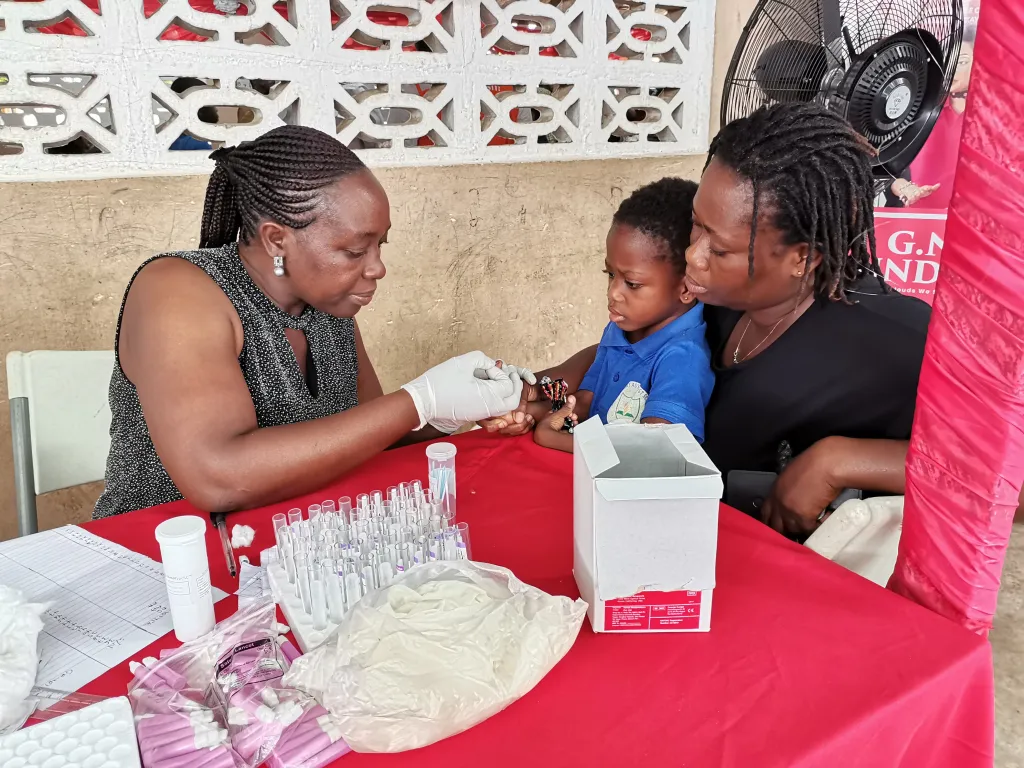
    The Navrongo Health Research Centre (NHRC) has diagnosed about 100 children with sickle cell disease in the Kassena-Nankana Municipality and the Kassena-Nankana West District of the Upper East Region.

    The children, who are below five years old, were screened using a new device called Gazelle, which was launched last year to enable faster and easier diagnosis of the disease.

    The NHRC has also introduced a new app called Vula, which allows health workers at the periphery to consult with doctors at the hospital online and get advice on how to manage and refer sickle cell patients.

    The app, which was sponsored by South Africa through Novartis, is expected to reduce sickle cell related mortalities and improve access to care.

    The Director of the NHRC, Dr Patrick Odum Ansah, told the media that the Centre had screened over 4,700 children so far and found that over 100 of them had sickle cell disease.

    He said this was a significant number and that the Centre was concerned about their health and well-being.

    He said the app would be implemented in ten selected health centres and CHPS compounds where the sickle cell project was being carried out.

    He said the app would help health workers to diagnose and manage sickle cell patients more effectively and avoid unnecessary referrals.

    He said the NHRC was committed to minimising the menace of sickle cell and the misconception about the disease in the area.

    He also appealed to parents and guardians to take their children for screening and treatment as soon as possible.

    Sickle cell disease is a genetic disorder that affects the red blood cells and causes them to become sickle-shaped.

    This can lead to various complications such as anaemia, infections, pain crises, organ damage and stroke. The disease is common in sub-Saharan Africa where malaria is prevalent.

    The NHRC is one of the leading health research institutions in Ghana and has been conducting various studies on diseases such as malaria, meningitis, tuberculosis and HIV/AIDS.

    The Centre also collaborates with other national and international partners to improve health outcomes in the country.

    Sickle cell disease (SCD) is a genetic disorder that affects the red blood cells and causes them to become sickle-shaped. This can lead to various complications such as anaemia, infections, pain crises, organ damage and stroke. The disease is common in sub-Saharan Africa where malaria is prevalent.

    SCD is a significant public health burden in Ghana. Recent studies indicate that 2% of Ghanaian newborns are affected by SCD; one in three Ghanaians has the haemoglobin S and/or C gene. The disease is more prevalent in the northern regions of the country, where malaria transmission is high and health facilities are scarce.

    The challenges in administering healthcare to sickle patients in Ghana include lack of awareness, stigma, discrimination, inadequate screening, diagnosis and treatment services, high cost of drugs and supplies, and poor referral systems. Many patients suffer from chronic pain, infections, organ damage and premature death.

    The government of Ghana and its partners have been implementing various interventions to assist the process of managing and preventing SCD. These include:

    • The establishment of a national newborn screening programme for SCD in 2010, which covers all 10 regions of the country and aims to screen all newborns within 28 days of birth.
    • The introduction of a new device called Gazelle, which was launched in 2019, to enable faster and easier diagnosis of SCD in children below five years old.
    • The introduction of a new app called Vula, which was launched in 2021, to allow health workers at the periphery to consult with doctors at the hospital online and get advice on how to manage and refer sickle cell patients.
    • The provision of hydroxyurea, a drug that reduces the frequency and severity of pain crises and other complications of SCD, to patients at a subsidised cost through the national health insurance scheme.
    • The promotion of public education and awareness campaigns on SCD, its causes, symptoms, treatment and prevention.

    These interventions have been yielding positive results in improving the quality of life and survival of sickle cell patients in Ghana, especially in the Upper East Region where the Navrongo Health Research Centre (NHRC) has been conducting various studies on SCD.

    Source: The Independent Ghana

  • New digital platform launches in Ghana to tackle Sickle-Cell

    A new digital healthcare platform, EMGuidance which delivers essential medical guidance to support clinical decision-making at the point of care, is this month launching in Ghana.

    The independent platform connects healthcare practitioners to the local healthcare ecosystem and medical industry, bringing comprehensive, up-to-date and locally relevant clinical information to healthcare workers.

    The platform, a public-private partnership with the Ghanaian Ministry of Health, leading medicines company, Novartis, and the Sickle Cell Foundation of Ghana, will be an instrumental step forward in supporting the initiative to improve outcomes for patients suffering from Sickle Cell Disease.

    Globally it is estimated that 15 million babies will be born with sickle-cell disease over the next 30 years, with up to 90% of them in low-income countries likely to die before reaching five years of age. Early detection and treatment of the disease, however, can substantially reduce mortality[1].

    “Empowering frontline healthcare professionals with locally relevant medicines and clinical guidance is critical to achieving the best patient outcomes. Many times, however, quick access to the right information to drive important clinical decisions is not at hand,” explains Yaseen Khan, CEO of EMGuidance.

    “Taking complex clinical information, from across a medical ecosystem, and creating simple but powerful digital support at the point of care, is at the heart of what EMGuidance does, and is particularly relevant in the treatment of Sickle Cell Disease. With the support and leadership of local Ghanaian medical partners, we believe this effort will enhance clinical guideline adherence by practitioners, supporting improved rates of screening and diagnosis, greater dosage and treatment and accuracy, and ultimately reducing crisis events and supporting improved quality of life for patients with this disease,” he continues.

    EMGuidance will serve as an independent medical platform that will be instrumental in carrying content and clinical information that supports the Sickle Cell Disease project to these healthcare professionals. However, the platform will not be restricted to this project alone, but will bring its full service offering to the market.

    EMGuidance has launched in South Africa six years ago, and has grown rapidly, with 55% of health care practitioners in the country now signed up as subscribers.

    With over 10 000 daily users and over 1 million searches per month, it is a powerful day-to-day clinical decision-making support tool trusted by doctors, nurses, pharmacists and multinational pharmaceutical companies alike. It is free to use for registered health professionals.


    Source: Peacefm

  • NHIS to cover medication for sickle cell

    Government, through the National Health Insurance Scheme, has agreed to implement an agreement to make hydroxyurea free and accessible on the scheme for sickle cell disease patients who depend on that medication for improved health.

    This is to honour the memory of the renowned world SCD specialist, the late Professor Emeritus Kwaku Ohene-Frempong, who for years, advocated for this intervention, and got the medicine introduced into Ghana as part of the treatment for sickle cell disease.

    Announcing the intervention in a tribute to Prof. Ohene-Frempong at his memorial and funeral rites, Vice-President Dr Mahamudu Bawumia said it was the right thing to do to ensure that the legacy of a man “who dedicated his entire life for the cause of patients of sickle cell disease is preserved”.

    “One of the major issues of Prof. Ohene-Frempong’s advocacy was to make hydroxyurea available for all SCD patients. It is a good medication, but extremely expensive, and through his initiative, he got Norvatis to provide the medication for free in Ghana on a pilot basis through an agreement.

    “As part of the agreement, government was to ensure that the drug was put on the list of medications that could be accessed on NHIS, and as the initial agreement neared its expiration, Prof. Ohene-Frempong pushed for the full agreement to be honoured. So with his unexpected death, it is proper to honour his legacy by fully implementing the agreement,” Dr Bawumia announced.

    What is hydroxyurea?

    Hydroxyurea is in a class of medications called antimetabolites used for treating cancer by slowing or stopping the growth of cancer cells in one’s body.

    It is also prescribed to treat sickle cell anemia by helping to prevent formation of sickle-shaped red blood cells.

    Funeral rites

    The solemn ceremony marked by tributes and traditional rituals in Accra was the final farewell ceremony for Prof. Ohene-Frempong who died in the USA on May 7 this year, and had already been buried in the USA by the tomb of his late son, Kwame, in accordance with his dying wish.

    Other dignitaries at the event were the wife of the Vice-President, Samira, representatives of the World Health Organisation, various international sickle cell disease organisations, the Sickle Cell Foundation, Ghana (SCFG) which he founded, old students of Prempeh College, among others.

    Tributes

    Dr Bawumia said Prof. Ohene-Frempong was a man driven to do good not just for his family but mankind, and that his popularity in the world of medicine for his role in sickle cell disease interventions was ample testimony.

    “Prof. who I later came to know more closely due to his passion for sickle cell disease interventions, was highly intelligent but very humble.

    “His passion was admirable, and he was determined to ensure that right at birth, the status of a baby was known so as to help with his treatment and management.

    “As a nation, we owe him a lot of gratitude, and though he has already been honoured with the Order of the Volta in 2010, we will ensure that his legacy lives on by continuing to support his advocacy. We will miss him dearly,” Dr Bawumia said.

    The new President of the Sickle Cell Foundation, Ghana, Professor Solomon Fiifi Ofori-Acquah, said Prof. Ohene-Frempong did not only mentor people but also inspired them to ensure that the battle against the disease was appreciably won with the medical and clinical interventions, especially with the newborn screening.

    According to Prof. Ofori-Acquah, though it was not the last of his impact, the decision by government to make hydroxyurea free on NHIS would be one of his significant achievements.

    “It was a battle he fought in life and won in death, and the legacy of Prof. Ohene-Frempong, which was relentlessly driven, was about to begin, and across the rest of the world, people will come to know and feel the impact of the legacy of Prof. Ohene-Frempong,” he said.

    Source:graphics.com.gh

  • President of the Sickle Cell Foundation of Ghana, Prof. Ohene-Frempong, has died

    The President of the Sickle Cell Foundation of Ghana, Professor Kwaku Ohene-Frempong, has died.

    This was contained in a statement made available to GhanaWeb by Dr. Bertha Serwa Ayi, the President of the Ghana Physicians and Surgeons Foundation (GPSF) of North America.

    According to the information, a family source of the late Prof. Ohene-Frempong said that he died on May 7, 2022.

    The statement added that the family, which is surrounded by a supportive network of people, has requested for limited calls and visits to allow the family grieve in private.

    “He fought bravely till the end. His wife, Mrs. Janet Ohene-Frempong is surrounded by a supportive network of people and she is grateful for the support but has asked that people limit phone calls and visits,” it said.

    It also added that there will be no gathering but, “There will be an opportunity for a beautiful national celebration of this hero at a future date. A website will be created to allow for expressions of sympathy and eulogies.”

    In 2020, Prof. Kwaku Ohene-Frempong was honoured by the U.S. Department of Health and Human Services with the Assistant Secretary of Health Exceptional Service Medal for his contributions to the management of sickle cell disease in the world.

    Ghana Physicians and Surgeons Foundation Of North America (GPSF) is preparing a video collage and tributes for Professor Kwaku Ohene-Frempong.
    |
    Target: Friends, family, colleagues, classmates, students, residents, patients and anyone whose life was touched by his work.

    Video

    1. Place your iPhone or phone in LANDSCAPE mode.

    2. Please record a 20 to 30 second video of yourself and say what you knew of Prof or what he did for you.

    3. Hit your share or upload button and send to: missena28@gmail.com

    Pictures

    4. Solo pictures of him alone, or pictures of two of you or him in a group picture can be sent to:

    missena28@gmail.com and ghanaphysiciansusa@gmail.com

    5. Write ups can be sent to ghanaphysiciansusa@gmail.com.

    Send them by Tuesday, May 17, 2022, 12 midnight Eastern Time.

    Source: www.ghanaweb.com