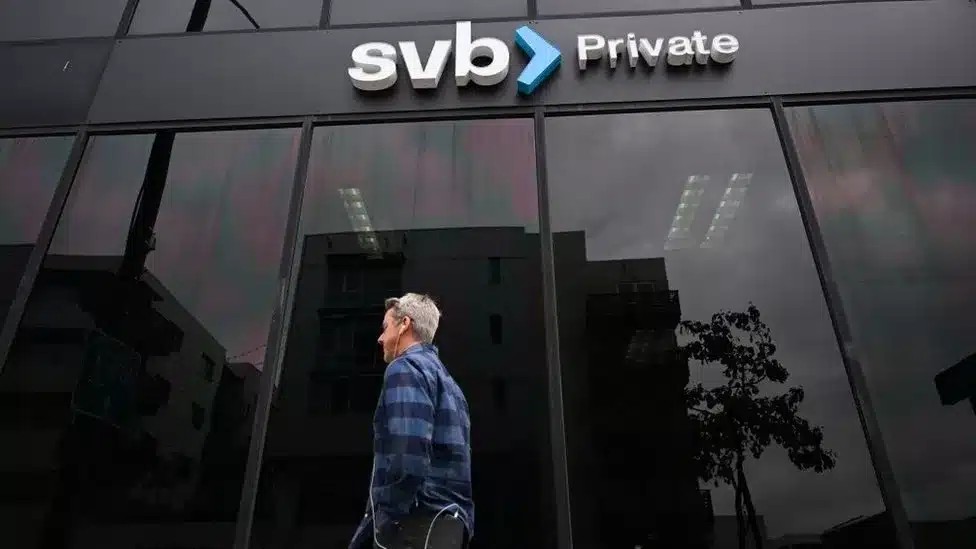
The biggest bank failure in the nation since 2008 occurred last month when Silicon Valley Bank fell, and the US central bank has claimed that it did not act with “sufficient force and urgency” in its supervision of the institution.
One of the primary conclusions from the Federal Reserve’s study into the occurrence is the conclusion.
It raised concerns about the state of the banking sector throughout the world.
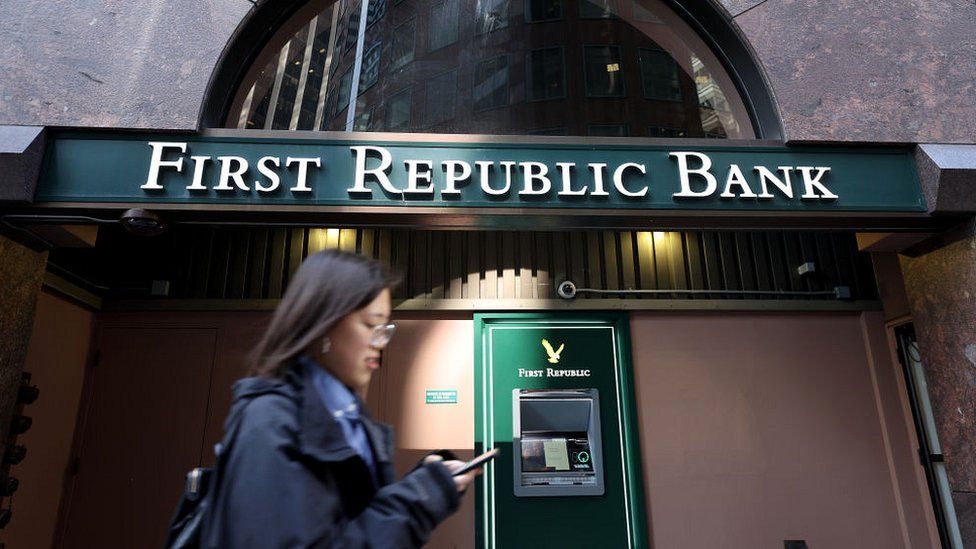
First Republic, another US lender, is still having problems as of the time of the assessment.
According to reports, US regulators are preparing a potential rescue plan for the troubled company, which was the country’s 14th-largest bank at the end of the previous year.
Michael Barr, the Federal Reserve‘s vice chair for supervision, who led the review, said the US central bank should toughen its rules in response to what it had learned from SVB’s demise.
“Federal Reserve supervisors failed to take forceful enough action,” he said, pointing to regulatory standards that were “too low”, supervision that did not work with urgency, and risks to the wider system posed by troubles at a mid-size bank that Fed policies had missed.
“Following SVB’s failure, we must strengthen the Federal Reserve’s supervision and regulation,” he said.
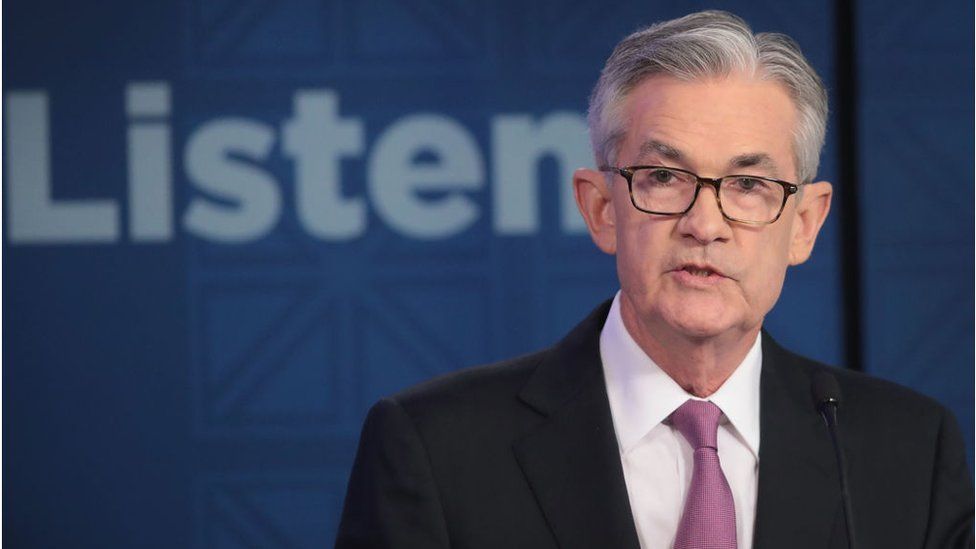
Image caption,Jerome Powell said he was confident the recommendations would lead to a more resilient banking system
The head of the Federal Reserve, chairman Jerome Powell, said he welcomed the “thorough and self-critical report”.
“I agree with and support his recommendations to address our rules and supervisory practices, and I am confident they will lead to a stronger and more resilient banking system,” he said.
The report from the Fed was one of three published by US officials on Friday, detailing regulatory lapses that contributed to the failures of SVB and Signature Bank last month.
Both banks catered to business customers and ran into trouble after the US central bank raised interest rates sharply last year which is when customers started to withdraw money.
SVB’s subsequent announcement that it needed to raise funds last month prompted panic and billions of dollars were withdrawn overnight, forcing regulators to step in.
The fears then spread to other firms, including Signature Bank and First Republic, which suffered $100bn in outflows last month.
Shares in First Republic, worth more than $120 apiece at the beginning of March, fell more than 40% on Friday to below $4, as questions swirled about its future.
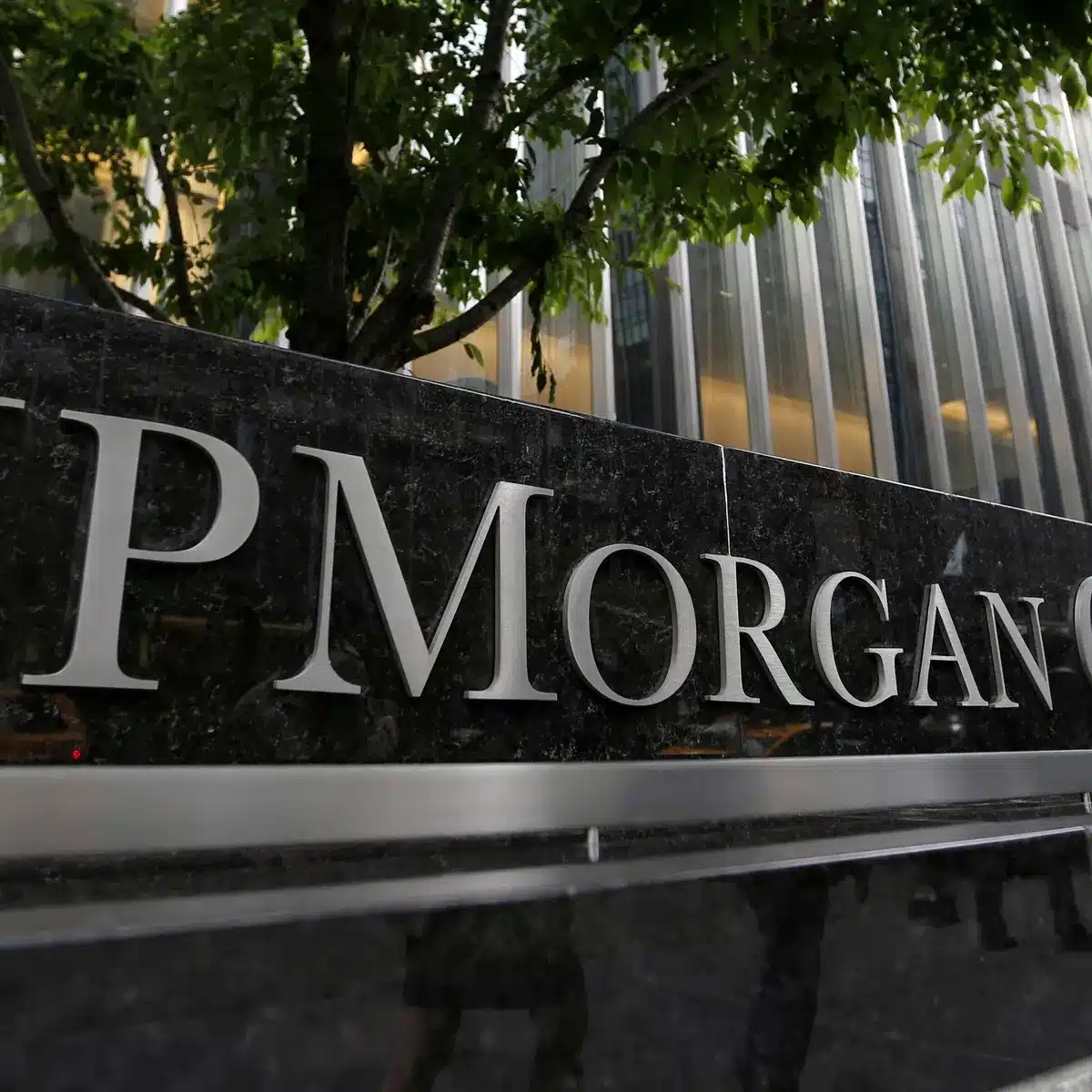
Due to rising interest rates that allowed the bank to charge clients more for loans, JPMorgan Chase & Co. reported a 52 percent increase in first-quarter profits.
After Silicon Valley Bank and Signature Bank failed last month, the banking giant saw a noticeable increase in deposits as clients and business rushed to it.
There don’t seem to be many indications of potential banking system instability, at least among the biggest, most sophisticated financial firms in the country, following Friday’s positive reports from JPMorgan, Citigroup, and Wells Fargo.
“These were the most watched bank earnings announcements in over a decade, with market participants scouring the results looking for signs of cracks in the US banking sector. Those analysts looking for signs of the banking crisis were greatly relieved to not find any,” said Octavio Marenzi, CEO of the consulting firm Opimas LLC, in an email.
JPMorgan, the nation’s biggest bank by assets posted a profit of $12.62bn, compared with a profit of $8.28bn in the same period a year earlier. On a per-share basis, the bank earned $4.10 a share, up from $2.63 a share a year ago, beating analysts’ expectations.
Most of the profit growth came from higher interest rates. The bank’s net interest income was $20.8bn in the quarter, up 49 percent from last year. Net interest income is a measure of the difference between what it pays depositors and what it charges for loans.
The largest US lender gained $50bn in deposits at the end of March, even as the rest of the industry saw a 3 percent decline in the first quarter.
Deposits at big banks had been falling for several quarters as consumers spent down their pandemic savings and businesses tapped into their stored cash to pay bills. But with the collapse of Silicon Valley Bank and Signature Bank in March, businesses have been withdrawing their funds from smaller banks and moving them into the larger banks, which are considered “too big to fail” and have an implicit government backstop.
In a call with reporters, JPMorgan Chief Financial Officer Jeremy Barnum said most of the new deposits flowed into new business and company bank accounts opened in the past month. The new deposits reversed the flow of deposits exiting the bank for several quarters.
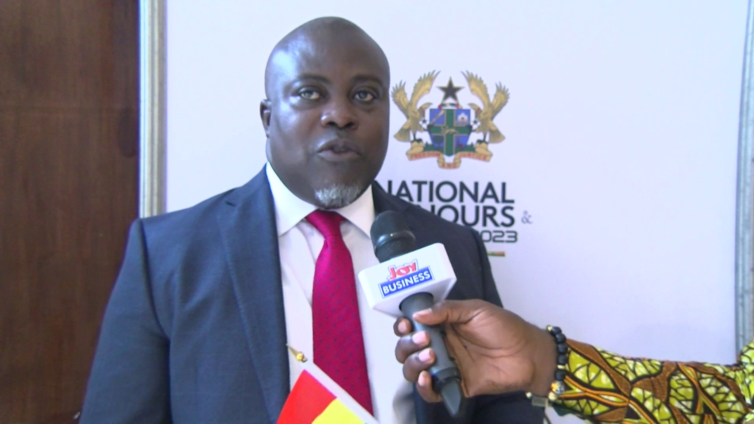
Anthony Sarpong, a senior partner at the accounting and auditing firm KPMG Ghana, has counselled the Bank of Ghana and other central banks in Africa to view the failure of banks in developed countries as a warning to the banking industry to avoid a similar situation in the future.
Maintaining sufficient liquidity to cover customer withdrawals, in his opinion, is one way to stop bank failure.
He said the failure of those banks is a wake-up call that must not be disregarded in an interview with Joy Business following the collapse of US Bank, Silicon Valley Bank, and other larger financial institutions.
However, he expressed assurance that the steps taken by the Bank of Ghana to support banks will be successful.
“You noticed that the regulator has taken swift action to contain the effect of what is happening in the United States on the banking sector and any potential spill-over. So we won’t expect any effects”.
“However, it’s a developing situation and therefore must be watched with caution so that the fear it triggered in the US does not have a negative impact on Ghanaian banks as we go through our own challenges, he explained.
Furthermore, Mr. Sarpong urged the Bank of Ghana to ensure sufficient liquidity in the banking industry.
“The main area is to ensure sufficient liquidity of the banks, and the Bank of Ghana has assured of liquidity support to our banks. So one will be sure that we won’t go through a similar situation as we go on with our own debt restructuring”..
On March 10, Silicon Valley Bank, one of the most prominent lenders in the start-up ecosystem, collapsed.
Banking stocks have dropped sharply again, as investors remain concerned following the failure of Silicon Valley Bank (SVB) in the United States last week.
The failure of SVB has raised concerns that other banks may also be in trouble.
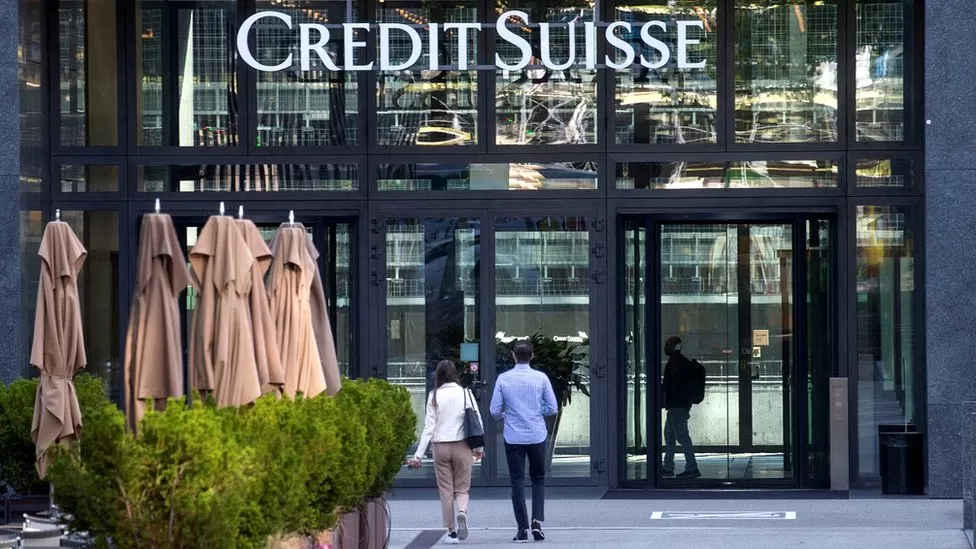
Credit Suisse shares have reached a new low after falling by 20%.
The drop occurred after Credit Suisse’s largest investor stated that it could no longer provide the bank with financial assistance.
By mid-morning, European stock indexes, including the FTSE 100 in the United Kingdom, were down about 2.5%.
The FTSE 100 has fallen 6% in the past week to reach a three-month low.
“Investors remain nervous about what might be lurking in the shadows,” said Russ Mould, investment director at AJ Bell.
“It’s no wonder that investor sentiment remains cautious towards the big banks given that credit agency Moody’s downgraded its outlook on the US banking system to ‘negative’.“
Credit Suisse’s shares slumped after it revealed on Tuesday that its auditor, PwC, had identified “material weaknesses” in its financial reporting controls.
That prompted major investor the Saudi National Bank to say it would reject calls to inject further funds into the Swiss lender.
The wider problems in the banking sector began last week with the collapse of SVB, the US’s 16th-largest bank.
The bank – which specialised in lending to technology companies – was shut down by US regulators on Friday in what was the largest failure of a US bank since 2008.
SVB’s UK arm was snapped up for £1 by HSBC.
In the wake of the SVB collapse, New York-based Signature Bank also went bust, with the US regulators guaranteeing all deposits at both.
But fears have persisted over the fallout from the collapse and trading in bank shares has been volatile this week.
On Monday, trading was temporarily halted in several smaller US banks as shares slumped, although Tuesday saw stock prices rebound.
However, credit ratings giant Moody’s has warned of more pain ahead for the US banking system.
On Tuesday, it cut its outlook for the sector to “negative” from stable, warning of “a rapid deterioration in the operating environment”.
“The worry is that banks sitting on large unrealised losses in their bond portfolios might not have sufficient buffers if there is a fast withdrawal of deposits,” said Susannah Streeter, head of money and markets at Hargreaves Lansdown.
“Although the biggest players are judged not to be at risk, thanks to the chunky layer of capital they are sitting on and the stable nature of their deposits, the nervousness is palpable.”
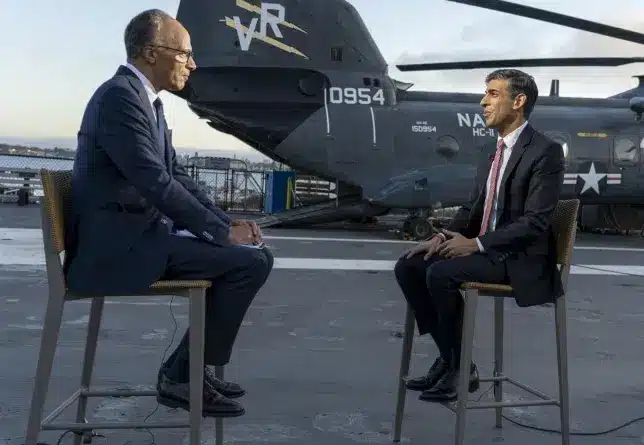
In an exclusive interview with NBC, Rishi Sunak stated that China posed a “systemic challenge” to the global order.
During an interview with Lester Holt while visiting the US, the Prime Minister expressed his alarm over recent Chinese behavior.
A agreement for nuclear submarines for $201,000,000 was revealed by the prime minister earlier today.
He added that China “represents the biggest major threat to our economic interests” because it is “behaving in a more authoritarian manner at home” and “more forceful outside.”
He added: And it’s a systemic challenge for the world order.’
China has replied to news of the deal by calling it ‘a blatant act of nuclear proliferation’ that undermines regional peace and stability.
Sunak also weighed in on the collapse of the Silicon Valley Bank, saying that it was important to a large number of UK technology companies.
He said he was ‘concerned’ by the behaviour of China in his chat tonight (Picture: NBC)The PM met with the Prime Minister of Australia Anthony Albanese and US President Joe Biden earlier today.
He said: ‘I’ve been working through the weekend with our finance minister, the Chancellor and our Bank of England, our regulators to find an appropriate solution. We’ll be making an announcement about that very shortly.’
‘Britain is back’ Sunak added.
Asked how Britain would respond if China were to try to seize Taiwan through military force, Sunak declined to answer directly.
The PM said the international response to Russia’s invasion of Ukraine served to deter any country from launching an unprovoked attack.
He told NBC: ‘I think the best thing we can do to deter hostile action by any state anywhere, is doing what we’re doing right now in Ukraine. And that’s where we’ve seen an illegal, unprovoked invasion of Ukraine by Russia.
‘And the right thing to have done in that circumstance is to provide Ukraine with all the support that it needs to defend itself.
He added: ‘I think it’s important right now that we accelerate and intensify our support to Ukraine.’
He said London’s commitment to the AUKUS pact was part of an overall increase in defence spending by the UK.
He said: ‘We’re investing more in our armed forces over the next couple of years, billions of pounds more. We’re increasing our defence spending, because my belief is that the world has become more volatile.’
Despite assurances from the US president that America’s financial system is secure in the wake of the failure of two American lenders, bank shares in Asia and Europe have plummeted.
The falls come after authorities moved to protect customer deposits when the US-based Silicon Valley Bank (SVB) and Signature Bank collapsed.
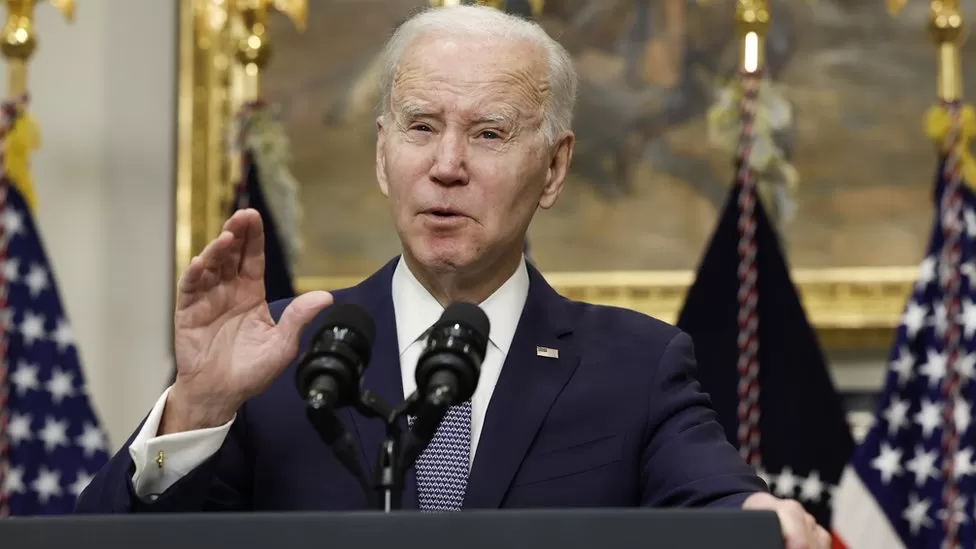
Joe Biden promised to do “whatever is needed” to protect the banking system.
But investors fear other lenders may still be hit by the fallout.
Tuesday trading saw sharp falls in share prices globally, with Japan’s Topix Banks index falling by more than 7%, putting it on course for its worst day in more than three years.
Shares of Mitsubishi UFJ Financial Group, the country’s largest lender by assets, were down by 8.1% in mid-day Asian trading.
On Monday, Spain’s Santander and Germany’s Commerzbank saw their share prices dive by more than 10% at one point.
A string of smaller US banks suffered even worse losses than European counterparts, despite reassuring customers that they had more than enough liquidity to protect themselves from shocks.
The volatility has led to speculation that America’s Federal Reserve will now pause its plans to keep raising interest rates, designed to tame inflation.
Mr Biden said that people and businesses that had deposited money with Silicon Valley Bank would be able to access all their cash from Monday, after the government stepped in to protect their deposits in full.
Many business customers had faced the prospect of not being able to pay staff and suppliers after their funds were frozen.
BBC North America Technology correspondent James Clayton spoke to people queuing up all day outside the SVB branch in Menlo Park, California, to access their funds.
As the bank was no longer offering wire transfers, they were taking out their money in cashier cheques.
The BBC is not responsible for the content of external sites.
End of twitter post by James Clayton
How did Silicon Valley Bank collapse?
Silicon Valley Bank – which specialised in lending to technology companies – was shut down by US regulators who seized its assets on Friday. It was the biggest failure of a US bank since the financial crisis in 2008.
It had been trying to raise money to plug a loss from the sale of assets affected by higher interest rates. Word of the troubles led customers to race to withdraw funds, leading to a cash crisis.
Authorities on Sunday also took over Signature Bank in New York, which had many clients involved in crypto and was seen as the institution most vulnerable to a similar bank run.
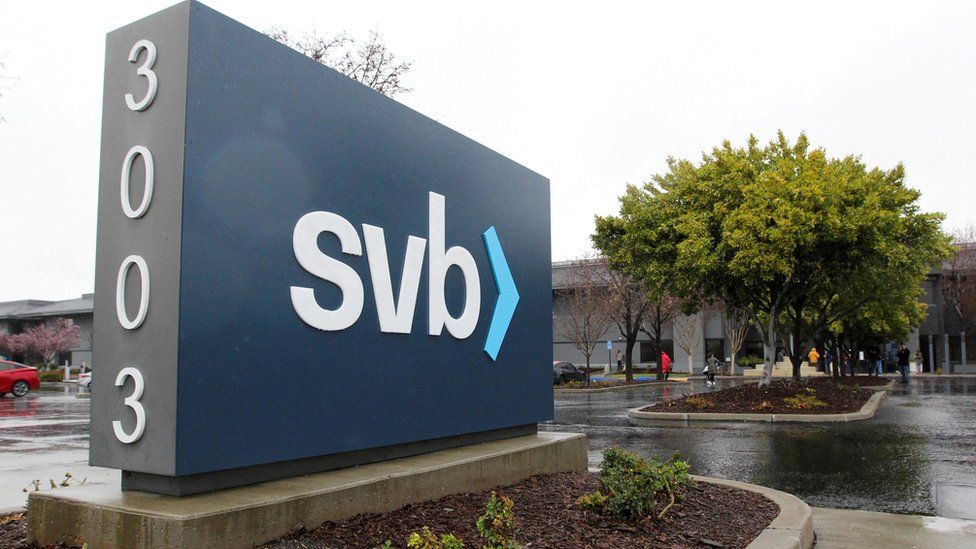
Image caption,Silicon Valley Bank’s headquarters in Santa Clara, California
Mr Biden promised that covering the deposits would not cost taxpayers anything, and instead be funded by fees regulators charge to banks.
As part of efforts to restore confidence, US regulators also unveiled a new way for banks to borrow emergency funds in a crisis.
Yet there is concern that the failures, which came after the collapse of another US lender, Silvergate Bank, last week, are a sign of troubles at other firms.
Paul Ashworth of Capital Economics said the US authorities had “acted aggressively to prevent a contagion developing”.
“But contagion has always been more about irrational fear, so we would stress that there is no guarantee this will work,” he added.
Danni Hewson, head of financial analysis at the stockbrokers AJ Bell, said: “The first rush of relief has been replaced by niggling concerns that the era of high rates might be more difficult for some banks to stomach than had been previously thought.
“In the US, bank stocks slid despite Joe Biden’s pledge that ‘whatever is needed’ will be carried out to prevent more dominos from tumbling.”
Political fallout
The failure of SVB has re-ignited debates – similar to those seen following the 2008 financial crisis – about how much the government should do to regulate and protect banks.
The chair of the US Federal Reserve, Jerome Powell, says there will be a thorough and transparent review of the collapse.
Mr Biden called for tougher rules and emphasised that investors and bank leaders would not be spared.
“They knowingly took a risk… that’s how capitalism works,” he said.
Still, Republican Senator Tim Scott, seen as a potential presidential candidate in 2024, called the rescue “problematic”.
“Building a culture of government intervention does nothing to stop future institutions from relying on the government to swoop in after taking excessive risks,” he said.
Once again people are worried about banks. Once again there is intense debate about bailouts. But this isn’t 2008.
Following the global financial crisis, the focus was on reforming banks considered “too big to fail”. Today’s problems are centred around medium- and smaller-sized banks.
Both of the banks that collapsed – Silicon Valley Bank and Signature Bank – had the same thing in common: their business models were too concentrated in one sector and they were over exposed to assets whose values came under pressure from rising interest rates.
The criticism is that they should have foreseen this and they didn’t. US Federal Reserve chair Jerome Powell has gone to great lengths to signal the Fed’s intention to raise interest rates.
Since most banks are well diversified and have plenty of cash on hand, the assumption is that the risk to the rest of the banking sector is low. That won’t stop regulators looking into what went wrong and what rules need to change.
And the pressure on small- and medium-sized banks hasn’t gone away. What happens to the US economy and the fight against inflation also remains to be seen.
The government and Bank of England intervened to “promote” a private transaction, which led to HSBC purchasing the UK division of the defunct US lender Silicon Valley Bank.
The rescue deal comes with “no governmental support,” and customers have been promised that their deposits would be secured.
Following the £1 sale, customers will have regular access to financial services.
The second-largest bank failure in history raised concerns that it would trigger a banking crisis in the US and have a negative impact on the UK’s technology and life sciences industries.
Assuring SVB clients that they “should feel comforted,” Chancellor Jeremy Hunt confirmed the sale this morning.
In a statement, he said: ‘The UK’s tech sector is genuinely world-leading and of huge importance to the British economy, supporting hundreds of thousands of jobs.
‘I said yesterday that we would look after our tech sector, and we have worked urgently to deliver on that promise and find a solution that will provide SVB UK’s customers with confidence.
Chancellor Jeremy Hunt made the announcement this morning (Picture: PA)
‘Today the Government and the Bank of England have facilitated a private sale of Silicon Valley Bank UK; this ensures customer deposits are protected and can bank as normal, with no taxpayer support. I am pleased we have reached a resolution in such short order.
‘HSBC is Europe’s largest bank, and SVB UK customers should feel reassured by the strength, safety and security that brings them.’
The bank has stressed that all services will continue to operate as usual at SVB UK following the deal, with all staff remaining employed.
‘Customers can continue to contact SVB UK through the usual channels and borrowers should make any loan repayments to SVB UK as normal’, a statement said.
It added that the wider UK banking system ‘remains safe, sound, and well capitalised’.
SVB UK had around £6.7 billion of deposits and loans of about £5.5 billion as at Friday last week, while its balance sheet stood at £8.8 billion, according to the Bank of England.
But the ‘scale of the deterioration of liquidity and confidence means that, in the view of the Bank and the PRA, the position was not recoverable’.
It comes after the US government moved to halt a potential crisis amid fears that the factors that caused the Santa Clara, California-based bank to fail could spread.
Officials assured all depositors at the failed institution that they could access all their money quickly on Sunday.