Tag: Sissala

  • Sissala maize sellers stranded, forced to sell stock at cheaper prices over lack of buyers

    Sissala maize sellers stranded, forced to sell stock at cheaper prices over lack of buyers

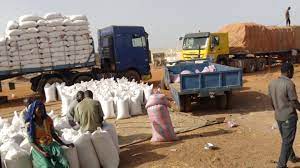
    Maize sellers in Sissala in the Upper West Region are facing challenges finding buyers for their produce weeks after harvest.

    Despite the abundance of maize, known buyers are nowhere to be found, forcing sellers to offer their commodity at lower prices than expected.

    According to reports from the Ghana News Agency (GNA), maize sellers interviewed expressed their frustration at the situation.

    Some have been unable to sell their stock, while others, in desperate need, are compelled to sell at prices below the standard rates.

    A prominent maize dealer, Alhaji Maize Adinan Bajin, revealed the decline in maize prices over time.

    In December 2023, a bag of maize was sold for GH¢370.00, which subsequently dropped to GH¢365.00, then GH¢320.00, and currently stands at GH¢300.00.

    Traditionally, after Christmas, many buyers would flock to the Sissala area to purchase maize.

    However, the current scenario is markedly different, with a notable absence of buyers.

    Only one company remains willing to purchase maize, but at a reduced price, exacerbating the challenges faced by sellers.

    “We can’t get buyers and as farmers, we need to sell and clear our new fields, buy fertilizer and prepare our new fields, but we are at a standstill and stranded,” Alhaji Bajin said.

    “More challenged are the smallholder farmers and women who are having difficulty selling their maize due to the fewer buyers.”

    “Looking at the amount of inputs that were used in producing the maize, it’s now difficult to break even, and this could make us indebted to our suppliers.”

    He said he currently has 5,000 mini bags of maize that he has not been able to sell and called on the government to intervene by regulating the price, as they feared reducing their farm sizes next season if there was no support.

    A woman maize farmer said, “I had to carry my two maize bags to the WARC shop, a maize aggregation company, to sell, but I was told I would receive my money the following day since the company’s mode of payment was mobile money and that had to be done the next day.”.

    “A few years ago, buyers would trace to my house and even buy the maize and pay me cash; this situation is affecting us.”

    Mr. Nabong Ayie, a farmer, said, “I have tried selling 2000 bags for the past two weeks and nobody is calling to buy. I need money badly to do other things, and now I have to wait until a buyer calls.”.

    Mr. John Dimah, a former National Best Maize Farmer, bemoaned the absence of buyers, saying,This year we are stranded; I still have some 15,000 mini bags of maize unsold, hoping to get a buyer.”

    He attributed the situation to disruptions in the Sahelian region, favourable growing conditions in Ghana’s Middle Belt, and the potential influx of foreign maize into the market.

    He urged farmers to consider diversifying into crops such as sorghum, sesame, and soybeans.

  • Slavery emptied the Sissala area – Gwollu Kuoro

    Kuoro Buktie Limann IV, the Paramount Chief of the Gwollu Traditional Area has indicated that slavery affected the growth in the Sissala area and thereby derailed development.

    He said over 250, 000 people within the Sissalla area alone were captured during the slavery, which to some extent derailed development.

    He told the GNA in Gwollu that Europe had meted out the worst forms of atrocities to Africa saying, “No amount of compensation will be able to soothe our suffering.”

    Kuoro Limann IV also expressed worry about how tourists during Emancipation Day events are limited to only Forts and Castles in the Coastal areas to the neglect of roots of the slavery.

    “The slaves were captured from the north and sent to the Coast to be shipped. Tourists visit places of “No return but they don’t visit where the slaves were captured,” he said.

    He said tourism on slavery would be incomplete if attention was not equally given to the roots of slavery and that slave camps in the north will be extinct if attention is not paid.

    The Ghana News Agency (GNA) visited the area to acquaint itself with the development challenges and tourism potential and to see how the place could be developed more.

    The chief said Gwollu as a slave route “emptied the Sissala area as a conservative figure of more than 250,000 people were sent away as chattel slaves and that’s why it left the villages empty”.

    He said, “From here to Navrongo and back to Hamile, there were few people. You will see vast and deserted places because they took the strong people away, it is now that we have started populating the area.”

    The Paramount Chief said now that tourism was being promoted, the diaspora people must be allowed to trace their route through to where they were taken away from and argued that Cape Coast, Anomabo and Elmina were all exit points to Europe and the Americans.

    He explained that allowing Europeans, Americans, and others to visit tourist sites in the north would increase the revenue base of all the towns and communities that were affected by the slave trade as the country sought to promote tourism.

    He emphasized that slaves were gathered from Southern Burkina Faso through Gwollu and other towns right up to Salaga slave Market.

    He said the slave route from Paga, Gwollu through to Salaga slave market must not be forgotten and erased in history because of a lack of interest and access roads to those areas.

    He said the people of Gwollu built an anti-slavery wall against the raiders whom he mentioned as Samori and Babatu Zato, a place he said had been left unattended.

    The anti-slave walls were built of mud that had holes in them where the locals hid and pointed their bows and arrows at the enemy each time they came to attack, and this eventually protected them from the raiders. ]

    The Gwollu Kuoro mentioned the Gwollu mystery bone setting centre, the anti-slavery defence wall and slave route and the local viagra centre as some tourist attractions worth visiting.

    The rests are the tomb of Dr Hilla Limann and the crocodile pond of Gwollu, which if properly taken care of could generate revenue for development.

    Kuoro Limann IV appealed to the government to consider constructing roads linking to tourist sites in the region to boost tourism and for investors to relocate to the area.

    Source: GNA