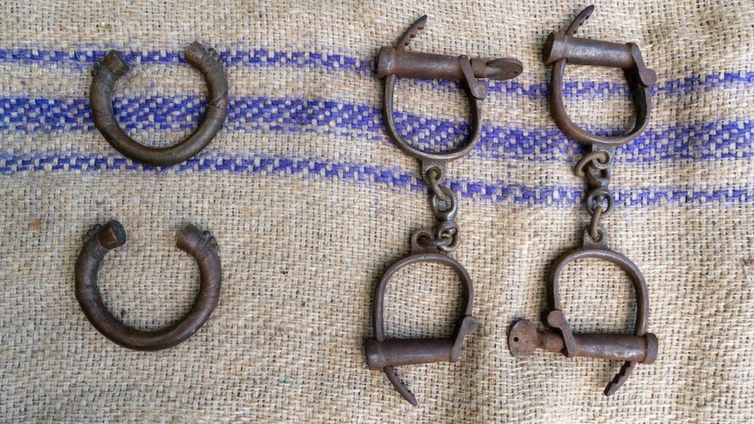
Tag: slave trade

  • Manasseh Azure Awuni: Who captured and sold the slaves?

    Manasseh Azure Awuni: Who captured and sold the slaves?

    Last year, I took an English course in my ongoing programme that got me very close to the subject of the transatlantic slave trade. The course was a study of writings in the Reconstruction Era. We read Frederick Douglas’ fiction, Lincoln’s speeches, and watched heart-wrenching films such as “Slavery by Another Name.”

    The harrowing tales I’d heard narrated by tour guides at Ghana’s slave castles and captured casually in textbooks I’d read growing up did not come close to the cruelty the slaves endured in the United States and elsewhere.

    For this reason, I wholeheartedly agree with the declaration of slavery as the gravest crime against humanity.

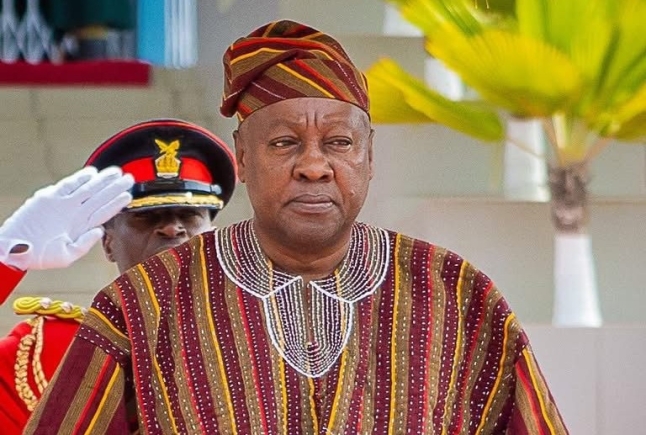
    President John Dramani Mahama and Samuel Okudzeto Ablakwa deserve immense commendation for pushing and securing the United Nations’ passage of the resolution declaring slavery as the gravest crime against humanity.

    At the end of the semester, we were to produce a seminar paper. I proposed to my professor that, instead of doing a paper on how the slaves were treated in the United States, I wanted to explore how the slaves got onto the slave ships in the first place.

    The literature I read for my paper, including from Africans such as Ghana’s Professor Akosua Perbi, showed that Africans were at the forefront of capturing their fellow Africans and selling them to the European slave traders who were based mainly along the coast. The Europeans conducted some raids, but they were minimal. One source estimated that 90% of the slaves captured and shipped abroad were captured by Africans.

    The slave trade boomed whenever there were wars among African ethnic groups. Some wars were waged for the purpose of capturing and selling slaves. The powerful kingdoms made money by selling slaves, which they used to buy powerful weapons to fight and capture more slaves.

    When the British abolished the slave trade, some powerful African kings, including some in Ghana, were unhappy that their source of wealth was being stifled.

    I also read that some African countries, such as Benin, have formally apologised for their role in capturing and selling their own people into slavery.

    Ghana subtly acknowledged its role when it launched the Joseph Project during the celebration of Ghana’s 50th independence anniversary. (In the Bible, Joseph was sold by his own brothers.)

    That brings us to the second part of the push: the payment of reparations. If reparations are to be paid, countries such as Ghana should also be required to pay them for their role in the slave trade.

    It will not be right to pay reparations to those who took part and benefited from the slave trade, even though the benefits and exploitation of the enslaved people were disproportional.

    The descendants of the slaves in America, the Caribbean, and elsewhere legitimately deserve reparations, but the African countries whose people captured and sold slaves are accomplices, not victims.

    In 100 years, it will be untenable for Ghana to demand reparations from China for destroying our forests in the illegal mining scourge. Without tacit support in fronting for the Chinese illegal miners (sometimes providing state security protection), they would not have succeeded in destroying our forests.

    We need to tell ourselves the hard truth and learn from how we have hurt ourselves through selfishness and greed.
  • UN endorses landmark resolution declaring slave trade a crime against humanity

    UN endorses landmark resolution declaring slave trade a crime against humanity

    The United Nations General Assembly has agreed on a new decision saying the transatlantic slave trade was a very serious crime against humanity.

    This decision was strongly pushed by John Dramani Mahama, who has been leading calls for compensation and justice for African countries and people whose ancestors were enslaved.

    The decision was approved on Wednesday, March 25, 2026. Out of all the countries, 123 voted in support, 3 voted against it, and 53 chose not to vote.

    The Assembly described the slave trade as a terrible event that caused long periods of pain, violence, and economic hardship for millions of Africans and their descendants.

    It also called on countries that were involved in the slave trade in the past to sit down and have serious discussions with African countries and the African Union to find ways to address these historical wrongs.

    Overall, Mahama’s efforts at the global level have helped bring renewed attention to the issue of reparations and the need for justice over the slave trade.

    Here is the full text of President Mahama’s speech at the UN to commemorate International Day of Remembrance of victims of slavery

    Madam President, Excellencies, Heads of State and Government, Distinguished Delegates, Ladies and Gentlemen

    Progress is made in steps. It’s the forward motion toward something better, and the changes are often incremental. Today marks the International Day of Remembrance of the Victims of Slavery and the Transatlantic Slave Trade.

    It is a day on which we honour the memory of the approximately 13 million African men, women and children who were enslaved over the course of several centuries.

    We remember them through articles and oral histories, through broadcast programmes, books, music, visits to museums, monuments, and memorials, such as the Ark of Return, located right here at the Visitors Plaza of the United Nations Headquarters.

    Through these activities, we do more than remember. We document and educate; we gain a greater perspective; we find the delicate balance of learning from history so we do not repeat it, while leaving the pain behind. In doing so, we begin to heal, individually, within our immediate communities, and within the global community.

    This day of remembrance did not happen by accident. In 2006, our global community gathered here, just as we have done today, and resolved to designate the 25th of March of the following year, a Day of Remembrance. It marked progress.

    Then the following year, in 2007, we decided to make the event an annual one, so the 25th March of every year would be the International Day of Remembrance of the Victims of Slavery and the Transatlantic Slave Trade. That marked an additional step in our forward motion.

    It is, indeed, fortunate to be here today, two decades later, addressing the General Assembly on behalf of the African Group, regarding the draft resolution entitled “Declaration of the Trafficking of Enslaved Africans and Racialised Chattel Enslavement of Africans as the Gravest Crime Against Humanity.”

    In September last year, at the 80th session of the General Assembly, I stated that Ghana would move a motion to declare the transatlantic slave trade the gravest crime against humanity.

    This draft resolution is the result of months of consultation and consensus-building by continental bodies, nations, experts, scholars, and jurists, with the sole aim of achieving a united front and grounding the final outcome in truth, compassion, and moral conscience, remembrance, education, and dialogue.

    Today, we come together in solemn solidarity to affirm truth and pursue a route to healing and reparative justice. The adoption of this resolution serves as a safeguard against forgetting.

    I conclude with two significant quotes by two great leaders, one white, one black.

    Former President of the United States of America, Theodore Roosevelt, said, “With a great moral issue involved, neutrality does not serve righteousness; for to be neutral between right and wrong is to serve wrong.” Civil rights leader, Dr Martin Luther King, also reminds us that “the arc of the moral universe is long, but it bends toward justice.”

    We have travelled the long road, each step guided by a desire to be better, to do better; each step bringing us closer to the kind of world we would like to leave for our children.

    On this beautiful day in March, we are called to stand on the right side of history. Let it be recorded that when history beckoned, we did what was right for the memory of the millions who suffered the indignity of slavery.

    Let our vote on this resolution restore their dignity and humanity. I thank you.

  • History of Slave Trade is not in our curriculum – Education Minister

    History of Slave Trade is not in our curriculum – Education Minister

    The Minister for Education, Dr Yaw Osei Adutwum has admitted that Ghana’s curriculum does not teach students about the history of the country’s slave trade.

    In an interview on Peace FM’s Kokrokoo show, the minister noted that he found out about this grave issue when a university graduate engaged him on Ghana’s Year of Return initiative.

    “During the year of return when tourists arrived here, someone asked me, uncle, why are the whites and diasporans coming to Ghana? Someone who has visited university asked me how they got to America.

    “Then I asked him about the transatlantic slave trade. He said it is not in the curriculum. So I went and truthfully, it is not in. No, I tell you. That is the big question.”

    Dr Adutwum noted that this came to be after a former Education Minister appended his or her signature to a curriculum structured by the Social Studies Association of America.

    According to the Minister, the National Council for Curriculum and Assessment (NaCCA) is working on a new curriculum that educates Ghanaian children on the history of the country.

    Here are some facts to know about the transatlantic slave trade.

    Elmina Castle and Cape Coast Castle: These were two of the most prominent slave forts used by European powers, particularly the Portuguese, Dutch, Swedish, and British, to hold enslaved Africans before they were shipped across the Atlantic. These castles were also used as administrative centers for colonial powers in the region.

    The Role of Chiefs and Traders: Local African traders, often working in conjunction with European slave traders, captured and sold Africans from various inland regions to the coastal forts. Chiefs in some cases were complicit in these activities, exchanging captives or prisoners of war for European goods.

    The Middle Passage: Enslaved Africans from Ghana and other parts of West Africa were transported across the Atlantic Ocean in brutal conditions, known as the Middle Passage, to the Americas. Many died during this horrific journey.

  • Meet the British governor who bought fortresses in an attempt to end the Slave Trade

    Sir William Robert Wolseley Winniett was a governor in the Gold Coast but worked tirelessly to end the trade of slaves.

    Serving under the Governor of Sierra Leone, Winniett became the lieutenant governor of the Gold Coast (now Ghana) on October 24, 1845.

    Determined to abolish the Slave Trade, he went to the capital of Abomey (current Benin) in 1847 after the Slave Trade Act outlawed the slave trade in the British Empire in 1807 and the Slavery Abolition Act of 1833 outlawed slavery altogether.

    According to details available online, in 1848, Sir William Winniett led the West India Regiments and others to stop the murdering of Africans and Europeans by deposing Kaku Aka, the king of Amanahia (Apollonia).

    That same year, with his secretary, Thomas Birch Freeman, he went to the Kingdom of Ashanti to persuade Ghezo, the King of Dahomey, also known as King Kwaku Dua, to stop the slave trade and abolish human sacrifice.

    Details by Wikipedia show that at the time, the king was in the business of exporting 8,000 slaves a year.

    He also purchased Dutch fortresses on the Slave Coast to end the Dutch slave trade.

    On June 29, 1849, Sir. Winniett was knighted by Queen Victoria at the Buckingham Palace.

    He died on December 4, 1850, at Jamestown/Usshertown, Accra and was interred in the cemetery at Fort Christiansborg (Ebenezer Presbyterian Church, Osu).

    Source:  Ghanaweb

  • George Floyd death: Protesters tear down slave trader statue

    A slave trader’s statue in Bristol has been torn down and thrown into the harbour during a second day of anti-racism protests across the UK.

    It comes after largely peaceful demonstrations in London on Saturday ended in some clashes with police.

    Metropolitan Police Commissioner Cressida Dick urged protesters to find another way to make their views heard.

    But thousands of protesters massed for a second day outside the US embassy in London before moving towards Whitehall.

    Other protests have been taking place in Manchester, Wolverhampton, Nottingham, Glasgow and Edinburgh.

    In Bristol, protesters used ropes to pull down the bronze statue of Edward Colston, a prominent 17th Century slave trader, who has been a source of controversy in the city for many years.

    Colston was a member of the Royal African Company, which transported about 80,000 men, women and children from Africa to the Americas.

    On his death in 1721, he bequeathed his wealth to charities and his legacy can still be seen on Bristol’s streets, memorials and buildings.

    After the statue was toppled, a protester posed with his knee on the figure’s neck – reminiscent of the video showing George Floyd, the black man who died while being restrained by a Minnesota police officer.

    The statue was later dragged through the streets of Bristol and thrown into the harbour. The empty plinth was used as a makeshift stage for protesters.

    Home Secretary Priti Patel called the tearing down of the statue “utterly disgraceful”, adding that “it speaks to the acts of public disorder that have become a distraction from the cause people are protesting about”.

    “It’s right the police follow up and make sure that justice is undertaken with those individuals that are responsible for such disorderly and lawless behaviour,” she said.

    In a statement, Avon & Somerset police confirmed there would be an investigation into the “act of criminal damage”.

    Historian Prof David Olusoga told BBC News that the statue should have been taken down long before.

    He said: “Statues are about saying ‘This was a great man who did great things.’ That is not true, he [Colston] was a slave trader and a murderer.”

    ‘Proud of young people’

    Aerial footage in London showed thousands more protesters flooding the roads outside the US embassy in Vauxhall, south London before marching towards Parliament Square and Downing Street.

    They appeared to be ignoring warnings from both the police commissioner and Health Secretary Matt Hancock not to congregate and risk spreading the coronavirus.

    But free masks, gloves and hand gel were being handed out by volunteers.

    Labour’s Lisa Nandy backed the demonstrations, saying people “cannot be silent in the face of racism”.

    The shadow foreign secretary said young people were “right to raise their voices” but urged demonstrators to take precautions and socially distance amid fears that the mass gatherings could prompt another spike in coronavirus cases.

    Ms Nandy told the BBC’s Andrew Marr she was “proud” of young people demanding change following mass anti-racism protests across the UK on Saturday.

    “I think it’s one of the most important things about living in a free society is that people can go out and protest,” she said.

    Officers injured

    While protests across the UK on Saturday were largely peaceful, some clashes broke out between police and people gathered near Downing Street in the evening.

    Missiles and fireworks were aimed at police and bikes were also thrown by some demonstrators.

    The Metropolitan Police said 14 officers were injured, including a mounted officer who came off a horse as it bolted down Whitehall, with a further 13 hurt during demonstrations earlier in the week.

    Dame Cressida said she was “appalled” by the scenes of unrest on Saturday night, which led to 14 arrests.

    In a statement on Sunday, she added: “There is no place for violence in our city. Officers displayed extreme patience and professionalism throughout a long and difficult day, and I thank them for that.

    “I would urge protesters to please find another way to make your views heard which does not involve coming out on the streets of London, risking yourself, your families and officers as we continue to face this deadly virus.”

    Ms Patel condemned the actions of those involved and said there was “no excuse for violent behaviour”.

    “These protests should stop, they should not go ahead and people must be mindful and stick with the rules that have been put in place.

    “We have guidelines that basically say it is illegal for gatherings of more than six people to get together…. It is not in the interest of public health and it is certainly not going to assist the NHS or protect lives.”

    Prof John Edmunds, an member of the government’s scientific advisory group, Sage, said – even with reduced transmission outdoors – the large numbers protesting increased the risk of spread.

    “If you have a crowd of a few thousand people you would expect some of those people to be infectious,” he said.

    “And we know that the infection can be passed on by people who don’t have symptoms.”

    Source: bbc.com