Tag: Slavery

  • It’s time for you to apologise to “the entire continent of Africa” for slave crimes – Akufo-Addo to European nations

    It’s time for you to apologise to “the entire continent of Africa” for slave crimes – Akufo-Addo to European nations

    President Akufo-Addo is calling for a formal apology and reparations from the Western world, condemning the inhumane treatment Africans endured during the slave trade.

    He asserts that Africa deserves compensation for the human rights abuses suffered under slave masters.

    Speaking at the inaugural Accra Reparation Conference, President Akufo-Addo emphasised the necessity of reparations, stating that European countries involved in the slave trade must apologise for the crimes committed against Africans.

    “It is time for Africa, thirty million of whose sons and daughters had their freedoms curtailed and sold into slavery, to also receive reparations.

    “No amount of money can restore the damage caused by the Transatlantic Slave Trade and its consequences, which spanned many centuries, but surely, this is a matter that the world must confront and can no longer ignore.”

    “And even before these discussions on reparations conclude, the entire continent of Africa deserves a formal apology from the European nations involved in the slave trade.”

  • Ghana’s president reiterates his demand for compensation for slavery

    Ghana’s president reiterates his demand for compensation for slavery

    Ghana’s President, Nana Akufo-Addo, is asking for African nations to be compensated for the wrongs done to them during the transatlantic slave trade.

    He spoke at the UN General Assembly and said that now is the right time to focus on reparations.

    He said that for many centuries, the world has not wanted or been able to deal with the effects of slave trade.

    It’s time to openly recognize that a lot of Europe and the United States have been built using the immense wealth gained from the hard work, suffering, and terrible experiences of the transatlantic slave trade.

    He stated that reparations should be given. He mentioned that even though no amount of money could fully make up for the terrible experiences of the slave trade, it would highlight the fact that millions of hardworking Africans were forced to work without being paid.

    The Ghanaian president has talked about reparations before. Last year, he said it was time to have more serious discussions about the topic.

    He asked European countries to say sorry officially for their involvement in the slave trade. He also encouraged the African Union to involve the dispersed African population in supporting the reparations movement.

    The transatlantic slave trade was a very big and cruel event in history where millions of Africans were forcefully taken away from their homes and treated very badly. The United Nations (UN) says it was the biggest forced movement of people ever and one of the most terrible.

    Many Africans left their homes and went to different parts of the world for 400 years.

    Many people who were forced into slavery in West Africa started their journey from Ghana.

  • Jamaicans demand Gladstone apologies for slavery

    Jamaicans demand Gladstone apologies for slavery

    The family of former Prime Minister William Gladstone is being asked to give money to Jamaica as compensation for what their ancestor did during the time of slavery.

    The Gladstone family said sorry for owning slaves in Guyana in the past and promised to provide money for the study of slavery and other projects at an event on Friday.

    However, the family has been accused of not recognizing the need to provide compensation for the effects of slavery in Jamaica.

    The family said to the BBC that right now they are only thinking about Guyana.

    The Gladstones said, “There is a lot to do here in Guyana. ”

    John Gladstone, who was the father of William Gladstone, a highly respected prime minister of the UK, owned many slaves in the British West Indies.

    The University of London’s (UCL) Legacies of British Slavery database reveals that John Gladstone, in the 1800s, had ownership or mortgages on 2,508 enslaved people in Guyana and Jamaica.

    He received over £100,000 as payment after the British Parliament made a law to end slavery in many British colonies in 1833. He was given £15,052 for 806 enslaved people in Jamaica.

    Charlie Gladstone, who is the great-great-grandson of William Gladstone, said sorry to Guyana for his family’s involvement in slavery. He called slavery a terrible crime and recognized that it still affects people’s lives today.

    He said that the family agreed with and supported a plan suggested by Caribbean countries that had ten different points regarding reparations.

    But they did not talk about John Gladstone owning slaves in Jamaica during the ceremony in Guyana on Friday, and they also did not mention it in the family’s statement last week when they said sorry and promised to donate.

    According to Verene Shepherd, who is the director at the Centre for Reparation Research at the University of the West Indies, John Gladstone had important land and buildings in Jamaica.

    She said that the Gladstone family needs to go to where the crime happened and say sorry to the people who live there.

    The professor of social history from Jamaica advised the family of Gladstone to “pledge to give reparations, like they are doing in Guyana.”

    Reparations are given as compensation for something that was considered wrong or unfair. It can come in many different ways.

    The Gladstones promised to give £100,000 to the University of Guyana’s International Institute for Migration and Diaspora Studies. The institute started last week.

    In Guyana, the family promised to provide money to help with different projects in the country and support UCL’s Centre for the Study of the Legacies of British Slavery for five years.

    Prof Shepherd said that since they have realized they have been ignored, he believes Jamaica should reach out to someone or take action in some way.

    The BBC has learned that Jamaica’s National Council on Reparations is talking about the Gladstone case and thinking about what they should do.

    The council has not talked to the Gladstone family yet.

    John Gladstone was a wealthy Scottish businessman who became very rich by owning sugar farms and having people work for him without their freedom. This happened before slavery was officially ended.

    His important role in the industry influenced the political career and reputation of his son, William Gladstone. William’s opinion about slavery changed throughout his life.

    In his first speech to Parliament, the Liberal prime minister supported plantation owners’ rights, but later stated that slavery was the worst crime in history.

    William Gladstone was a leader of the Liberal party who served as the prime minister of the United Kingdom on four separate occasions in the 19th century.

    The Gladstones are a family from Britain and they are the most recent descendants of people who owned slaves in the past. Recently, they have been trying to make up for the wrongs done by their ancestors.

    During the Black Lives Matter protests in 2020, people became more aware of the family’s historical connection to slavery.

    Since that time, a few people in the family have joined a group called the Heirs of Slavery. This group is made up of British individuals whose families made money from the slave trade across the Atlantic. They now want to do something to make up for the wrongs of the past.

    Other people in the group are Laura Trevelyan, a former journalist from the BBC, and her family. They said sorry to Grenada and pledged to give £100,000 as compensation in February this year.

    In a recent interview, United Nations Judge Patrick Robinson expressed doubt about these families.

    He said that the amount of money paid for reparations should depend on how many slaves John Gladstone owned and how much his family financially gained from this.

    He said he would be ready to request a calculation from the Brattle Group, a company that studies economics and made a report on the money that states should pay for their role in slavery.

    “If people want it to be taken seriously and not just as a symbolic action, they need to determine the reparations that are owed,” Mr. Robinson stated

    The Brattle Group Report, written by Mr. Robinson, suggested that the UK should give $24 trillion (£18. 8 trillion) as compensation for its role in slavery in 14 different countries.

    Robert Beckford, a professor at the University of Winchester, suggested that the Gladstones should do a similar calculation to show how much money they actually owe.

    The professor said that instead of giving money to a university for more research, he would have “liked it better if they talked to community organizers or reparations groups, to figure out the best way to move forward. ”

    He liked the Gladstone apology in Guyana, but he thought it was wrong that Jamaica wasn’t acknowledged. He felt that this showed that the country didn’t want to confront and accept the terrible and cruel reality of chattel slavery.

  • Let’s decolonize African mentality from slavery through films – Actress Akofa Edjeani

    Let’s decolonize African mentality from slavery through films – Actress Akofa Edjeani

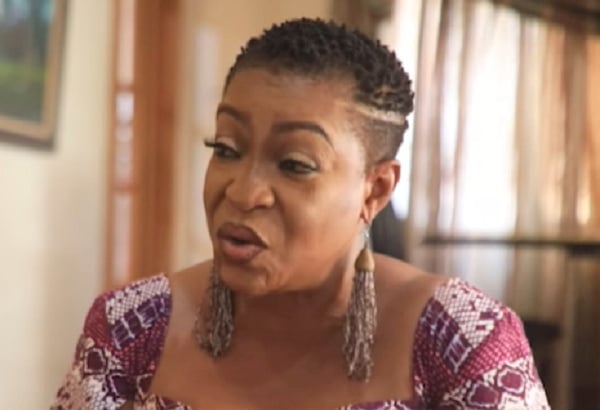
    Film is essential in helping to decolonize African mentality, according to veteran actress Akofa Edjeani.

    The lasting impacts of colonialism and slavery, she claimed, may be powerfully challenged through the medium of film.

    “…and again, if the colonial masters used film as part of their weapons in colonizing us, I think that the honor is on us to do the same, by using film to decolonize ourselves, the mental slavery is still there… we are not independent, we are still begging for things and so many things.”

    In a recent interview with Pan African TV on July 1, 2023, Edjeani emphasized the historical role of film in sustaining colonial dominance and stressed the importance of African governments prioritizing and backing their local film industries.

    Edjeani highlighted the transformative power of film, stating that with adequate attention and investment, it has the capacity to bring about significant positive change and create numerous opportunities.

    She compared the investment to the financial support given to sports to emphasize worries about the investment’s return on investment in terms of job creation and revenue production.

    Edjeani went on to say that given the immense potential of the film industry, the advantages connected with sports might be surpassed, emphasizing the importance of understanding and utilizing its advantages.

    “Look at how much money we pump into sports and most times we go and, we don’t really win, …so if we can pump all that money into sports, the bonuses that they get…but the film can even do better so they should pay equal attention to film as well.

    “Sports yes, but how many jobs can it create and how much money is it bringing compared to if you give the necessary push to film, so, there are so many reasons.

    “The job creation and the fact that it is education as well. You know it is that medium that you can use to showcase your heritage… film is that powerful tool to create that identity, we use film to change policies, we use film to change perceptions.

    “Film is a tool that can attract tourists, so when you are talking about tourism, the best tool is to showcase your tourist attraction, and your heritage in film, and that will make people flood to your country just to see those places,” she added.

  • Africans need to break the shackles of impossibility mindset – Bawumia

    Africans need to break the shackles of impossibility mindset – Bawumia

    Africans, according to Vice President, Dr. Mahamudu Bawumia, have long been stuck in an aura of impossibility.

    This, he said, was probably the result of the experience of years of slavery and colonialism.

    “We don’t believe in ourselves. However, for us to realize our full potential and set ourselves apart, we need to break the shackles of impossibility mindset and embrace the mindset of possibility.

    “African countries can do what the Advanced countries have done and more. It is possible,” he said on Saturday April 15 while speaking as the guest speaker at a gathering of students, academics and the business community at Harvard university during the African Development Conference at the Harvard Law School on the theme “reimagining Africa’s growth on our terms.”

    He indicated that at the heart of this vision is the transformative power of technology.

    “In my view, the greatest bane to the development of Africa is our inability to solve the basic problems of the absence of unique identity for our population, functioning property address systems, financial inclusion, payment systems, efficient public service delivery, etc. that underpin our economic activities.

    “For many years after independence we have been trying to transform our economies without data and transparent systems. Without data and systems African countries cannot participate in the fourth Industrial Revolution,” he said.

  • How Carriacou escapees made history by risking their lives

    When the Spanish Crown decreed in 1680 that an enslaved person would acquire their freedom when they accept the Catholic faith, many slaves dreamed of making it to its colonies. It did not matter the cost or risk involved, all that mattered was for them to embrace the air of freedom.

    This was firmed up by a related declaration made in Venezuela in 1704. It left the Spanish Crown no other alternative but to give its royal decree oxygen by making a bold statement that slaves who managed to run away from protestant-governed states will be legally free as Catholic converts.

    The news made rounds on many plantations in the Caribbean, sparking intense scheming among slaves on how to escape from their owners, according to Clements Library.

    Even those enslaved people confined to hard-to-reach plantations became aware of the news through traders, rebels, deserters, sailors, and anyone interested in these overtures made by the Spanish Crown.

    Slaveholders and plantation owners were deeply concerned by the grave implications it had on the economy of their business and the subtle opposition it will breed. It almost proved impossible to suppress the spread of the fast-moving information of the royal decree like seeking to slow the pace of the very ships that were transporting the slaves to the plantations.

    The naval routes of the transatlantic slave trade were not left out as they were flooded with the reality creating a sense of anxiety among sailors and smugglers of possible attempts to escape by the slaves.

    The most daring of these runaways however was carried out in 1770 by escapees from the then-British Caribbean colony, Carriacou, an island few meters away from Grenada in the southeastern Caribbean through the turbulent waves.

    According to a report by the British Windward Islands’ governor William Leybourne in 1773, the freed slaves made it to the Spanish colonies in boats from the plantations. They were however at loss as to how they learned about the royal decree granted by the Spanish Crown.

    Governor Leybourne conceded that pleas to the Spanish authorities to reverse their stance proved fruitless placing intense pressure on them on how to prevent the slaves from escaping. Historical records indicate that the Carriacou slaves were part of some 2,700 enslaved people on a cotton plantation under the watchful eye of about 100 white settlers.

    But, with determination and bracing against all odds, the Carriacou fugitives undertook one of the most dangerous attempts at freedom. How they managed to escape through dangerous waters in a boat has become a mystery and folklore on the Caribbean islands.

    Historical accounts captured in the Henry Strachey papers indicated that the slaves managed to escape because of ample information provided to them by unknown agents.

    The Governor said he was convinced that the fugitives did not escape on their own efforts but relied heavily on intelligence from these unknown agents. He admitted that they failed in their attempts to control the seepage of information to the enslaved people on the plantations despite the keen tactics they employed.

    The British authorities were also worried about the subversive information that were making rounds and the competing interest among the various colonial powers. The Governor noted that these unknown agents who aided the fugitives had ulterior interests, hence, the decision to back the Carriacou escapees with their knowledge of the geography of the territories.


    Source: Face2faceafrica

  • The bleak world of trafficked children and modern slavery

    Modern slavery. Domestic servitude. Trafficking. Exploitation. Whatever name you want to call it, increasing numbers of vulnerable people – many of them children – are being brought into England and Wales, often having been fed lies about employment, education and an elevated standard of living.

    What they face instead is an unrelenting, and apparently inescapable, cycle of being used and abused. For money, for sex, for household drudgery. For errands that flirt with criminality until they become full-time, albeit unofficial and low-paid, jobs.

    The latest Home Office figures indicate that in the first three months of 2022, nearly 4,000 potential victims of modern slavery were identified – and more than a third of those said they had been exploited when they were children.

    These young victims come from all over the world: Albania, Eritrea, Nigeria, among other countries. Some of them manage to escape their captors and make it to a place of safety – some to relatives or friends, others into the care system.

    But the care system is not the haven it could and should be.

    One in three of the trafficked children (378 out of 1,231) in local authority accommodation, whether hotels, hostels, or foster families, went missing in 2020.

    In London specifically, numbers have gone up too, seeing a 63% increase between 2018 and 2020.

    It is unsurprising to people who work in the system.

    John StokesImage source, Getty Images
    Image caption, Foster carer John Stokes says victims of trafficking felt going missing was their only option to stay in the UK

    John Stokes is a charity worker in London who lives with his foster children in Bristol.

    He has been fostering for more than 30 years. Six years ago he started fostering child victims of trafficking.

    “Until I started working with children who come into contact with the Home Office, I didn’t realise how it operated or how dismissive they are of these people,” he said.

    He believes victims of trafficking are being criminalised by the government as soon as they enter the country.

    “They are interviewed for seven or eight minutes and that determines their next few years.

    “But traffickers obviously tell them what to say, so they just say that.”

    Research by children’s rights organisation Every Child Protected Against Trafficking UK (ECPAT UK) suggested trafficked children continue to be one of the groups of looked-after children most at risk of going missing in the UK.

    Chief executive Patricia Durr explained: “We have to find out whether children are going missing because of a pull or push factor.

    “If you don’t feel safe, and nobody’s listening to you, and you don’t feel believed – that is a key reason why you might then decide to go.”

    The charity echoed Mr Stokes’s observation: the traffickers tell their victims what to say to the authorities. They also give them a phone number to contact once they arrive, with the aim of pulling the children out of the care system and back into modern slavery.

    Patricia Durr
    Image caption, Patricia Durr, chief executive of ECPAT, said children go missing for both “pull and push” reasons

    Mr Stokes’s foster son was trafficked from Albania. He was allowed to stay in the UK, but when he turned 18 he was told he had to go back.

    The Stokes family has been fighting this decision, believing he would be killed if he returns to Albania.

    “The choice for these kids is to either give themselves up and so they are taken back to Albania, or go missing. And they know they are likely to be re-trafficked,” the charity worker said.

    “They may get forced back into the cannabis farms as the only way to survive.”

    Scruffy bedroom with lots of bedsImage source, Getty Images

    A scruffy child unwilling to make eye contact.

    A lad who does not have a change of clothes.

    A woman who, on the rare occasions she is seen, scurries to the shops and hurries straight back.

    A man who gets picked up and dropped off at the same time and place every day.

    A house where the curtains are always closed.

    All are indicators that a person has been forced into modern slavery.

    man walking in tunnelImage source, Getty Images

    One girl we spoke to was taken from her parents in Nigeria aged 12. Pulled into the shadows of society, she was forced into a life no child should have to tolerate.

    Rather than experiencing the normal highs and lows of entering her teenage years, she endured domestic slavery, abuse, isolation and oppression.

    “The only time I got a rest would be when it was time for bed. [The woman I worked for] was obsessed with the bathroom. I had to clean it two or three times a day, every day.

    “It was spotless. But I had to keep cleaning,” she explained.

    “There was no talking to the neighbours – she especially emphasised that. She said no talking to anybody. I go to a place to get the shopping then I come home. If anyone asks me anything I say I don’t know. She said if I did say something they will take me back to Nigeria.

    “One elderly neighbour, I think she was concerned and she called the police. And then the police came they asked if I was OK.

    “I was scared. I just said ‘I don’t have anything to say’, because that is what my mum had told me to say. The police went away. They never came back for me.”

    Pregnant womanImage source, Getty Images

    The domestic drudgery continued, but in time, more onerous duties were forced upon her. She was expected to have sex with multiple men.

    And then she became pregnant.

    It was the catalyst she needed: “It pushed me to leave. Before I didn’t have a reason but then I got pregnant and that was a reason.

    “I had been raped, I had been used, I had to do things against my will. It was bad. I thought ‘I’m not going to have a child here. I need to protect them’.

    “I remembered how my mum used to protect us and I thought ‘I want to do that’.”

    She is now free from her trafficker, has become a mother, and is part of a group of trafficking survivors who meet every month to help advise charity workers on how to improve services.

    Her trafficking story has an optimistic end. Many don’t.

    Mr Stokes says he feels like he is working to feed the abusers, rather than the people he looks after.

    “These kids are just fodder for the gangs and the traffickers, ” he said.

    cannabis farmImage source, Getty Images

    The government insists protecting vulnerable children “is one of the most important legal duties” for local authorities, which are responsible for all looked-after children in their area.

    “If a child goes missing, they operate missing persons protocols with other local safeguarding agencies, including the police, to find them and make sure they are safe,” it said.

    The government has also introduced “independent child trafficking guardians” to all local authorities in London and is rolling the scheme out across the country.

    They are meant to provide one-on-one support to trafficked children where there is no-one with parental responsibility for that child.

    But another survivor, a young man from Nigeria, said he did not even realise he had been trafficked.

    He said he understands why some young people go missing. If they do not know they are victims, how do they know to ask for help?

    “Some carers don’t actually care, it’s about the allowance they receive from the government. And it feels like they are working for the government, not for us.

    “So imagine you are a trafficking victim – you just want to move or go missing,” he said.

    “There are so many lies and negative things said about us that are untrue.

    “We are human. We are not here to steal jobs. We have value. We need love and care.”


    Source: BBC

  • Enslaved African Chico Rei hid gold in his hair to raise funds to buy his freedom

    Chico Rei is believed to have hailed from the West Central African Kingdom of Kongo. He was born in the early 1800s into the royal family. His fortunes took a different twist when some members of his family and himself were captured by slave raiders and shipped to work on the plantations in Europe.

    Chico and his family were put in the hilly region of Vila Rica where they worked in the gold mines of Minas Gerais. While working the mines, Chico was determined to attain his freedom from the harsh conditions of the mine pits.

    He began hiding the gold he picked from working in the mines. When he had enough, he sold it to buy his freedom. He proceeded to rescue his family after he made enough profits from a goldfield he bought in Vila Rica, shortly after he became a free man.

    Oral tradition also states that the gold he used to purchase his freedom came from his former slave owner as a gift for his sterling work output. Historical records posit that when Chico and his family established themselves after their freedom, they initiated steps to have the Church of Saint Iphigenia built which is currently being used by the Brotherhood of Our Lady of Rosary.

    Brazilian historian Diogo Luiz de Almeida Pereira de Vasconcelos wrote about the exploits of Chico in his book ‘História antiga de Minas’ published in 1904. Chico has become a folklore legend in Brazilian popular culture with schools and theatres staging drama and plays about his feats. In 1964, Rio de Janeiro’s Salgueiro samba school held a play depicting the heroic deeds of Chico Rei.

    The character Chico symbolizes the horrors of Africans captured and placed in the mines and plantations of European states, their trials while under captivity and their eventual freedom. His story has been used by playwrights and local Afro-Brazilian groups to promote the story of resilience and victory by enslaved people.

    A discovery of a mine blocked with stones by a local resident in 1946 has been named Chico Rei’s mine. The mother of the teenager who found the gold mine was resolute it was synonymous with what was described in Histórias da terra mineira by Maria Bárbara de Lima. It has been decorated with lights to increase visibility in the one-mile-deep mine shaft.

    The authorities have used the place to promote tourism by setting up a small restaurant and opening it to the public. Over half a decade now, there has been a conscious effort to promote the values of Chico Rei in scholarly articles and literature in Portuguese, English, and Spanish.

    His story is important because the Afro-Brazilian population, though in the minority, has become a significant pillar in the history and economic growth of Brazilian society.

    He is believed to have lived the different sordid experiences many enslaved people endured after being shipped from Africa to work in the gold mines of southeastern Brazil and earn his freedom through his ingenuity.

    DISCLAIMER: Independentghana.com will not be liable for any inaccuracies contained in this article. The views expressed in the article are solely those of the author’s, and do not reflect those of The Independent Ghana

    Source: face2faceafrica.com

  • Kenyans petition Prince William over land evictions

    A group of Kenyans have sought Prince William’s help in getting reparations paid for what they say are human rights abuses committed and land stolen during British colonial rule.

    They also want an apology from the UK government.

    The group is composed of people from the Talai and Kipsigis clans in Kenya’s western Kericho county.

    In a letter to the Duke of Cambridge, lawyer Joel Kimutai Bosek said the UK government had refused to engage with the victims and their representatives.

    He said a request to meet officials from the UK’s Foreign, Commonwealth and Development Office had been denied this week and no opportunity to resolve the matter had been offered.

    Last year, six UN special rapporteurs wrote to the UK government expressing concern over its failure to provide “effective remedies and reparations” to the two clans who were brutally evicted from their farms by the British army in the late 1800s to mid 1960s to make way tea plantations owned by white settlers.

    In response, the UK government said that in 2013 it “made a settlement in the Mau Mau emergency case of 1952-1963 and therefore do not need to provide any further apology or reparation”.

    In their letter, the group has asked Prince William to treat their request with urgency as he prepares to celebrate his grandmother’s Platinum Jubilee, which marks Queen Elizabeth II’s 70 year reign.

    “Our own elderly family members remember the pain of having their homes and land taken away from them at the same time. We have very little to celebrate.”

    In March on a visit to Jamaica, Prince William spoke of his “profound sorrow” over slavery, saying it should never have happened.

    Source: bbc.com

  • How Oware was used by slaves in the Caribbean to plan their escape from plantations

    Oware is considered the oldest Mancala board game in the world. Dating back centuries to ancient Africa, specifically the Ashanti tribe in Ghana, Mancala is one of the most commonly known board games in Africa, among others.

    The worldwide spread is noted to be because of the slave trade that saw many Africans sold to foreign regions. They carried with them the joy of playing Mancala and played it in their free time.

    Oware is very popular in the Caribbean till date. It is believed to have been taken by slaves from West Africa and it stuck there. The word “Oware” is an Akan word meaning “he/she marries”. According to an Ashanti legend, it was given that name when a man and woman got married in order to be able to play the game uninterrupted.

    Oware was also considered a game for royals and was notably played by the Kings of Ashanti and Denkyira of Ghana until it became accessible to all.

    Oware is popular across Africa with other names like “Awale”, “Awele”, “Warri”, “Ayoayo” and so many others. It is played on a board with 12 pits or “houses” as they are referred to, 6 on either side. Some game boards have an extra hole on opposite sides to keep the counters. Counters, usually shells, pebbles or nickernuts are used to play and fill these houses according to the rules of the game.

    You may have heard that Oware among other Mancala games was one of the techniques employed for counting in ancient Africa.

    Well, in the Caribbean, Oware was not just considered a game or sport. When men played Oware, it showed that they collectively engaged their African roots.

    In Oware, among the slaves, the counters represented men and the pits represented the various sections of the plantations on which they worked. As they moved the counters from hole to hole, it was a way to communicate the next move in action for the slaves or report the happenings in different sections without uttering a word. They also used Oware as a way to plan, strategize and communicate possible escape routes and plans for the future.

    Till date, it is seen as a way to spiritually connect with the “ancestors.” It is considered a game for men because of this history. Women play the game with no deep sentimental connection, as it was merely played as a pass time for females.

    Oware is still played all over the world by men, women, old and young people as a sport or pass time. In 2009, 810 students participated in an Oware tournament in Catalonia, Spain. The Mind Sports Olympiad has also categorized oware as an abstract strategy game. There is even an Oware society for all things Oware.

    Oware is not so difficult a game to play. Watch the video below to learn more about the game and how to play it. Have fun!

    Source: face2faceafrica.com

  • ‘Not enough to say sorry’ for slavery links

    Companies that benefited from slavery must go further than apologising, the chairman of the Caribbean Reparations Commission has said.

    Many British and European firms and their predecessors “drank from the well of Caribbean slavery”, said Prof. Sir Hilary Beckles in a Reuters interview.

    The comments came as several financial institutions apologised for their historical links to the slave trade.

    He called on British firms to fund development projects in the Caribbean.

    “Unfortunately, one cannot go back and remake the history but you can make atonement: it is not enough to make your apology as a public spectacle, it is not enough to present it as public relations exercise,” said Prof. Beckles, who is vice-chancellor of the University of the West Indies.

    The historian added that British institutions should sit down with Caribbean nations to fund development projects. Alternatively, they could consider a type of “Marshall Plan” – a reference to the US aid given to Europe after World War Two.

    “All the institutions that created this mess really have to come and help in practical ways to clean it up,” he said.

    The Bank of England and the Church of England have apologised for the role that some of their senior figures played in the slave trade. The Daily Telegraph, which first reported the news, said the Church called its links a “source of shame”.

    The Bank said it would ensure that images of former governors who were involved in the slave trade are not displayed in its buildings.

    Pressure has been growing on companies around the world to address links to slavery and tackle racial inequality following the death of George Floyd in the US last month while in police custody.

    “Racism – the ideology used to justify slavery – is a legacy that still shapes the life chances for people of African and Caribbean heritage in the UK,” said Dr Katie Donington, a senior lecturer in history at the London South Bank University.

    “It is an important step that firms with historical links to trans-Atlantic slavery are now beginning the process of acknowledging the past.”

    Slaves branded In 2006, the Church voted to apologise to the descendants of victims of the slave trade.

    Its missionary arm, the Society for the Propagation of the Christian Religion in Foreign Parts (SPG), inherited three sugar estates in the Caribbean.

    The plantation was run for the Church by professional planters, but its profits went to the missionary group. Slaves working on the estate were branded on their chests with the word “society”.

    And now, the Telegraph has reported that nearly 100 clergymen also benefitted individually from slavery.

    “While we recognise the leading role clergy and active members of the Church of England played in securing the abolition of slavery, it is a source of shame that others within the Church actively perpetrated slavery and profited from it,” the spokeswoman said.

    When slavery was abolished in 1833, the UK government raised huge amounts for compensation. However, that money was not paid to those who had been enslaved, but was given instead to slave-owners for their “loss of human property”.

    ‘Unacceptable part of history’ A database compiled by University College London shows that at least 11 former Bank governors and 16 early directors either benefitted from those payments or had links to the slave trade.

    “There can be no doubt that the 18th and 19th Century slave trade was an unacceptable part of English history,” a Bank spokeswoman said.

    “As an institution, the Bank of England was never itself directly involved in the slave trade, but is aware of some inexcusable connections involving former governors and directors and apologises for them.”

    She said the Bank had started a “thorough review” of its image collection to ensure no pictures of anyone involved in the slave trade remained on display.

    Pressure has been growing on companies around the world to address links to slavery and tackle racial inequality following the death of George Floyd in the US last month while in police custody.

    Videos showed Mr Floyd, who was unarmed and in handcuffs, dying after a white policeman knelt on his neck for nearly nine minutes.

    On Wednesday, pub chain Greene King and insurance market Lloyd’s of London also apologised for their historical links to the slave trade.

    One of Greene King’s founders owned a number of plantations in the Caribbean, while the maritime insurance business, which centred around Lloyd’s, thrived on the trans-Atlantic slave trade.

    Source: bbc.com

  • Three slavery museums to be constructed in Ketu South Municipality

    According to reports on Sustainable Development Goals, Tourism is one of the world’s fastest-growing industries and an important source of foreign exchange and employment for most developing countries. It is closely linked to the social-economic, and environmental well-being of these countries.

    Maritime or ocean-related tourism, are for example vital sectors of the economy in small island developing States (SIDS) and coastal least developed countries (LDCs).

    A lead search by Professor Wazi Apoh from the Department of Archaeology and Heritage Studies, University of Ghana – Legon, has led to the discovery of slave sites in two communities in the Ketu South municipality.

    In his quest to revive history and culture, Professor Apoh sought support from the Municipal Chief Executive, Hon Elliott Edem Agbenorwu, Torgbui Sape Agbo V and Torgbui Dovo V all from Somey traditional area and got funding form Gerda Henkel Foundation, an NGO in Germany for the construction of two museums and a slave market visitor centre in Hedzranawo and Adafienu.

    In a speech delivered by the Municipal Chief Executive, Hon Elliott Agbenorwu, he expressed delight in the commencement of the project which would bring a major turnaround for economic activities. He pledged on behalf of his government that by the time the buildings are ready, feeder roads leading to the sites would be constructed.

    Prof Wazi Apoh, who took a turn to address a handful of community members gathered, noted that as the contractors are on-site, the projects would be completed in five(5) months.

    “As we speak now, the contractor is on-site moulding blocks to begin work. We believe that once the project is completed it will showcase the culture and history of the community, showcase a lot of past slave trade in this area. It will also create an avenue for people to sell art and craft which will bring an influx of tourism in the area,” he said.

    Gerda Henkel Foundation has awarded a € 90,000 for all three projects.

    Torgbui Sape Agbo V, the Divisional Chief of Somey traditional area, has called on the people to willingly donate items in their possession to be kept in the Museum.

    The chiefs and the people are grateful to have Hedzranawo Adzidor Slave Market Center, Hedzranawo Slave Museum and Adafienu Palace Slave Museum.

    In the 2030 Agenda for Sustainable Development SDG target 8.9, aims to “by 2030, devise and implement policies to promote sustainable tourism that creates jobs and promotes local culture and products”, you are welcomed to tour these site in ” Year of Return ” by African Countries.

    Source: Slyvia Awuye