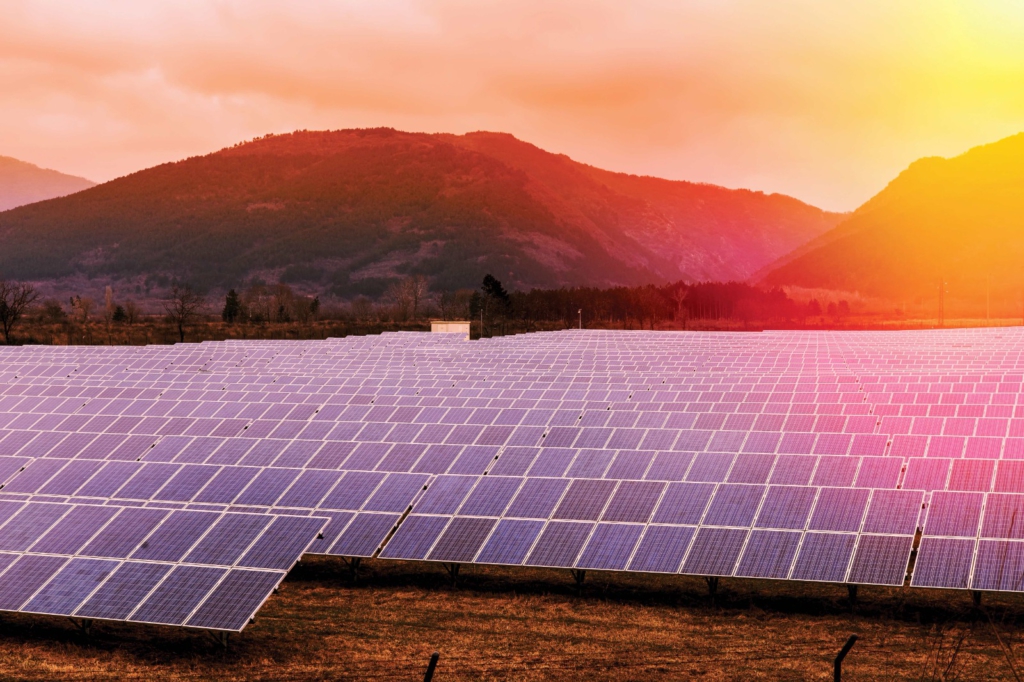
Dr. Mahamudu Bawumia, the New Patriotic Party’s (NPP) flagbearer, has made a commitment to reduce Ghana’s power costs by transitioning from fuel-based power to solar energy if elected president.
He believes that Ghana has the potential to harness solar energy for power generation and shared his vision during a conversation with clergy in the Upper East region.
Dr. Bawumia aims to introduce about 2000 megawatts of solar power within his first four years in office, which is approximately half of the country’s current power consumption. This move could potentially reduce power costs by at least 50%.
Additionally, the Vice President expressed his desire for Ghana to start manufacturing solar panels and become a supplier for other parts of Africa.
“The next major objective for me is to bring down the cost of power, electricity. And how am I going to do it? I want to do it by shifting Ghana away from fuel-generated power to solar-generated power. I want us to move from fuel to solar.
“Solar is given to us by God for free. If we have to buy fuel we need foreign exchange and then we have to import. But solar we can harness it and generate power.”
“So I want us to bring 2000 megawatts in the first four years. That is about half our consumption in the first four years and we can reduce the cost of power by at least 50% if we move in this direction…I want Ghana to start manufacturing solar panels as well and then let us start supplying the rest of Africa with it,” he stated.
A major objective for me is to bring down the cost of power. I want to shift Ghana from fuel-generated power to Solar – Dr. Bawumia. #JoyNewspic.twitter.com/8kyAjcyQor
The Environmental Protection Agency is giving money to 60 recipients, which they announced on Monday. According to senior officials, the projects are expected to reduce emissions by the same as 30 million metric tons of carbon dioxide and save households $350 million every year.
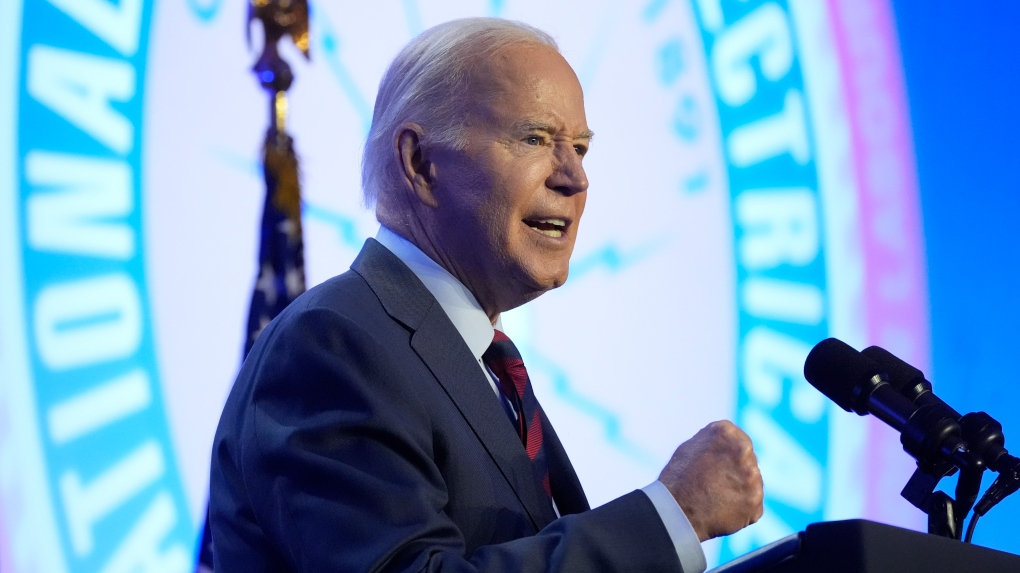
Biden recently shared some new plans for helping the environment while also trying to get more young people excited to vote for him again. Young people were an important part of a big group that helped him win against Donald Trump in 2020. Some people have joined protests in different parts of the country to show their disagreement with how the government is dealing with Israel’s war with Hamas in the Gaza Strip.
High-ranking government officials said that young Americans are very interested in and supportive of President Biden’s plans for the environment, and they want to help make it happen. The Climate Corps program is a way for them to help, the officials said.
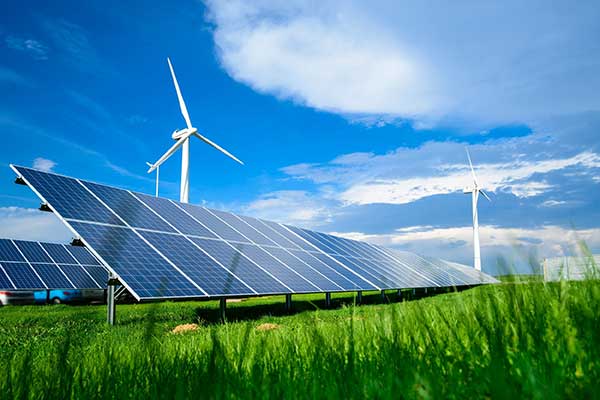
Sun power is becoming more popular as a type of renewable energy that could help lessen our dependence on fossil fuels, which release harmful gases that warm the planet. Solar energy not only keeps the environment clean but also helps make the electric grid more reliable.
Forty-nine grants are for states, six are for Native American tribes, and five are for multiple states. These can be used to invest in things like solar panels on the roof and shared solar gardens.
Biden is telling people the news at Prince William Forest Park in northern Virginia, which is about 30 miles southwest of Washington. Roosevelt’s New Deal program. The camp provided opportunities for young people from struggling families to enjoy outdoor activities and learn new skills. Roosevelt’s Civilian Conservation Corps helped people get jobs during a bad time in history called the Great Depression.
Jean Su, who leads the Energy Justice program at the Center for Biological Diversity, believes that solar power in local communities is the best way to keep people safe and protect the environment from the harmful effects of fossil fuels. “These investments help poor families get clean energy that is affordable, strong, and protects our environment. ” “It’s really good to see President Biden start this very important program. ”
Biden, a member of the Democrat party, used his power to create the American Climate Corps, which was inspired by Roosevelt’s New Deal, through executive action last year. On Monday, he’s saying that there are almost 2,000 jobs available in 36 states. Some of these jobs are being offered with the help of the North American Building Trades Unions.
The president has frequently used Earth Day to support his administration’s efforts to address climate change. Last year, he made a new rule to help protect poor and non-white people from being exposed to pollution and harm from the environment.
He has tried to show how he is different from GOP congressional leaders. They want to have fewer rules for oil production to make energy prices lower. Biden’s team says that Republican policies help big oil companies make a lot of money and could make it hard for the US to keep up with China in making renewable energy.
He said the programs can help people find good jobs, save money, and have a better life.
The awards were given from the Solar for All program, which is a part of a $27 billion “green bank” created as part of a big climate law passed in 2022. The bank wants to make the air cleaner by giving money to the neighborhoods that need it the most, especially those that are affected a lot by climate change and are not very rich.
Janet McCabe from the EPA is excited to give money to the community. This will help people learn new skills, find jobs, and save money on their energy bills. It will also help them to spend money on other things they need.
Some projects in different states are getting money to put solar panels on homes, college housing, and community buildings. There’s also a program in Mississippi that helps people lease solar panels, and a project in South Carolina to train people to work with solar panels.
The green bank, which is funded by taxpayers, has been opposed by Republicans. They are worried about how the money is being used and want more accountability. The EPA gave $20 billion to nonprofits and community banks for clean energy projects, like heat pumps, home improvements, electric vehicle charging stations, and community cooling centers.
Power generation companies have stated that Nigeria possesses the capacity to generate approximately 427,000 megawatts of electricity using solar energy derived from sunlight.
Presently, Nigeria’s power generation stands at less than 5,000MW, which is inadequate for its population of over 200 million people.
For instance, data extracted from the Federal Ministry of Power reveals that the grid’s power generation at 6am was recorded at 3,803.6MW.
The CEO of the Association of Power Generation Companies, Joy Ogaji, delivered a presentation titled ‘The Electricity Act 2023: Options for Renewable Energy Penetration and Role of Stakeholders.’
She highlighted that solar energy could potentially contribute over 420,000MW to Nigeria’s power generation capacity.
Ogaji presented this information at a workshop centered on renewable energy penetration and the roles of stakeholders, organized by the Renewable Energy and Energy Efficiency Association-Alliance in Abuja.
This presentation was shared with our correspondent on Sunday by the REEEA-A.
She said, “The potential of renewable energy in Nigeria is huge. The country has solar radiation of 3.5 to 7.0 kWh/m2 per day, and 427,000MW can be generated in Nigeria from solar alone!
“Hydro resources are estimated at 14,750MW. Wind speeds of 2-5m/s with a potential of 150,000 TJ per year.”
Describing the present state of renewable energy in Nigeria, the representative from the power generation companies (Gencos) indicated that no renewable energy generation was linked to the distribution or transmission levels, despite having set targets.
She elaborated, “The majority of energy generation occurs off-grid, involving solar home systems and rooftop solar. However, accurate data is lacking.” The cost of renewable energy in Nigeria is around $0.55 to $0.6 per kWh, making it less competitive compared to utility electricity, which costs approximately $0.105 per kWh.
“Achieving set targets with mini-grids will be a slow process. If 1,000 mini-grids of 1MW each are built, we will only achieve 1GW (gigawatts).”
On the challenges in the renewable market, she said domestic demand in West African countries was too low to attract investments in large projects that benefitted from economies of scale.
Ogaji said, “Lack of effective planning and monitoring has led to reliance on emergency rental plants, which further inflates costs. Imbalance in bilateral contracts for the purchase and sale of electricity, especially for deliveries beyond the borders, payment defaults of buyers, as well as the failures to deliver the electricity promised by several sellers.
“There is a lack of synergy in the regulatory frameworks of some member states. Differences in contractual arrangements and disparities in the organisation of national markets are challenges. Lack of harmonisation and standardisation in operational, security rules, contractual provisions and tariffs are concerns.”
The President, REEEA-A, Prof. Magnus Onuoha, said with enough renewable energy capacity, Nigeria could create green jobs, entrepreneurs and evolve women and youth empowerment.
Onuoha said, “Beyond installation and deployment of renewable energy and energy efficient technologies, there are millions of ancillary jobs/efforts that accrue from there.
“There are so many activities, new dynamics, technologies, interventions, measures, policies and relationships flowing around the renewable energy and energy efficiency sector.
“Globally, the Russia-Ukraine war showed us that beyond energy transition, we need to look vigorously at energy security. Here in Nigeria, the fuel subsidy removal, the Electricity Act recently signed into law, rising cost of energy dominant systems and measures, show us that it is time for a very critical rapprochement and behavioural change towards renewable energy and energy efficiency.”
Ghana will, in some two months, have access to solar powered Artificial Intelligence TV, the first of its kind in the whole of the African continent.
In an era where countries are constantly looking for alternatives to provide power and energy for household appliances, the television set has come to meet such requirements.
The move forms part of a new age of energy transition and digital transformation into the artificial intelligence (AI) movement.
Introduced and produced by a South African tech giant, Agilitee Africa, the digital video broadcasting second generation (DCB-T2) full AI television set will not only help conserve energy, but can easily be used with its voice command feature.
It can be powered with solar energy increasing its viability in several geographical locations and has an ISO approval.
The AI television is a generation television that uses telematics for voice recognition and instruction remote system bordering on the regulating a TV with voice recognition.
Ghana is one of many African countries including Rwanda, Nigeria, and South Africa to benefit from this innovative product.
CEO of the firm, Dr. Mandla Lamba intimated that the products will start selling in February 2022 in other West African markets.
“We will do Ghana, Zambia, Kenya, Malawi, Zimbabwe, Swaziland, Tanzania and Namibia in January and start selling on the 1 st of February in all,†he noted.
An indigenous firm, SunPower Innovations, has said it is ready to partner the government to produce and deliver solar energy to businesses and communities in Ghana.
According to the founder and the Chief Executive Officer, Ernest Amissah, it is time for the government and other development funding institutions to partner indigenous companies like SunPower Innovations to expand their operations, a situation he believes will lead to enormous job creation.
Speaking at the opening ceremony of a one-megawatt off-grid solar system for Special Ice Factory manufactured by indigenous firm SunPower Innovations, Mr. Amissah said the “government wants to do 1D1F, but I ask myself, everybody is saying we are over generating. But if you build 250 factories, where are you going to get that energy from? If you build one oil refinery, where are you to get the energy from? When you build one gold refinery, where are you going to get that energy from?â€
“You want to integrate bauxite, where are you going to get that energy from?â€
“So, I think we have to shy away from saying; we have expensive PPAs, negotiate the expensive PPAs, but at the same time open the market for renewables to come in and take over the energy generation for the up and coming industries.
“And I think it will be a bigger change in the economy of Ghana.â€
Director of Renewable and Nuclear Energy at the Energy Ministry, Wisdom Ahiataku-Togobo said the construction of the first phase of a 50-megawatt solar PV plant to be hybridised with the 400-megawatt Bui Power Authority, has commenced.
The first 10 megawatts is expected to be connected to the national grid by the end of September, while the remaining 40 megawatts will be completed by December this year.
According to him, the move will not only boost the energy capacity of the nation, but also diversify the sources of power.
Since its inception, SunPower Innovations has installed more than seven megawatts of Solar PV capacity and have undertaken major installations at shop centres, banks and financial institutions, educational institutions and dozens of commercial projects in Ghana, Nigeria and Sierra Leone.
The Central University is set to increase its usage of solar energy as part of efforts to reduce the school’s spending on electricity.
The school started using electricity from solar at its Miotso Campus at Dawhenya, near Tema, this month and is now convinced that the resource was the best bet in cutting down its power bills.
The Vice-Chancellor of the Central University, Professor Bill Buenar Puplampu, disclosed this at the inauguration of a 401-kilowatt (KW) solar system last week.
The plant was built and installed by Yingli Namene West Africa, a solar provider, but funded by Ecoligo, a German-based firm that specialises in sourcing funds to support green technologies.
The total cost of the project was €445,000.
Why solar
Explaining the rational behind the project, the vice-chancellor said the decision to add solar to the energy mix at the Miotso campus was to help reduce the increasing energy costs that the school was saddled with.
The Central University, he noted, was spending over GH¢1 million on power every year, something he described as unsustainable, given that power tariffs would not go down.
“Our lecture halls are always in use and we have to always power the lighting systems, public address systems and air conditioners. The cost in terms of the standard power grid has been incredible.
“The solution is simple; renewable energy and that is why we chose solar to try and cut down on the cost of providing power to the university,†he said.
He said estimates showed that the school would make some savings by using solar.
Those savings, he noted, would help the university to provide additional infrastructure for students over the lifetime of the project.
Promoting solar
The Managing Director of Yingli Namene West Africa, Mr Firmin Nkamleu Ngassam, noted that the company was playing its role to promote the use of solar in Ghana.
“We have been in the market since 2015. We believe that the environment is suitable for solar energy and the government is setting up the framework progressively and we are also trying to promote the use of solar,†he said.
He said although the entire campus was not off-grid, the university was prioritising solar energy which would help make some savings for the university.
He said using solar was relatively cheaper compared with consuming power from the national grid.
Funding partner
The Senior Marketing Manager of Ecoligo, Ms. Emma Patmore, said the company covered the upfront costs of the solar system by funding each project through its crowd financing platform ecology investments in Germany.
“We also manage the installation and maintenance of each system in collaboration with our technical partners such as Yingli Namene West Africa.
“Our customers pay for the use of their solar systems through a payment plan which covers all maintenance and repair costs for the lifetime of the contract,†she said.
Ecoligo, she noted, provided a fully financed solar as a service solution which allowed customers to use clean energy while focusing on their core business.