Tag: Somaliland

  • Irro wins Somaliland’s presidential election, defeating incumbent Musa Abdi Bihi

    Irro wins Somaliland’s presidential election, defeating incumbent Musa Abdi Bihi

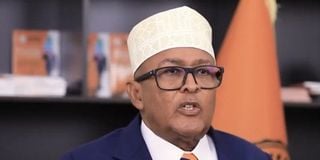
    The opposition leader of the self-declared republic of Somaliland, Abdirahman Mohamed Abdullahi, has won the territory’s presidential election.

    More popularly known as Irro, he won with 64% of the vote to become Somaliland’s sixth president since it broke away from Somalia in 1991.

    The 69-year-old, a former speaker of Somaliland’s parliament, beat incumbent Musa Abdi Bihi, who took 35% of the vote.

    Bihi had led the breakaway region since 2017, but critics described his style as paternalistic and dismissive of public opinion at a time when economic difficulties have undermined the value of the local currency.

    Diplomats from nine European countries and the US witnessed the vote on 13 November, which had originally been scheduled to take place in late 2022.

    Somaliland is located in a strategic part of the world, and is seen as a gateway to the Gulf of Aden and the Red Sea.

    Despite its relative stability and regular democratic elections, it has not been recognised internationally.

    Besides the economy, Somaliland’s new leader will have to grapple with the diplomatic fallout over a deal to lease landlocked Ethiopia a 20km (12-mile) section of its coastline for 50 years to set up a naval base.

    As part of the agreement, announced on New Year’s Day, Somaliland expects to be recognised by Addis Ababa as an independent nation.

    This has upset Somalia, which regards Somaliland as part of its territory – and it has said it views the deal as an act of aggression.

    The former British protectorate of Somaliland joined the rest of Somalia on 1 July 1960.

    In a conflict leading up to the overthrow of President Siad Barre in 1991, tens of thousands of people were killed in Somaliland and its main city of Hargeisa was completely flattened in aerial bombardments.

    In the chaos that followed Barre’s departure, Somaliland declared its independence and has since rebuilt the city, created its own currency, institutions and security structures.

    This is often contrasted to Somalia, which collapsed into anarchy for decades and still faces many challenges, including from Islamist militants, and does not hold direct elections.

    Born in Hargeisa, Irro went to school in Somalia and later attended college in the US – graduating with a master’s degree in business administration.

    After university he pursued a diplomatic career, joining Somalia’s foreign service in 1981.

    He was posted to Moscow where he worked at Somalia’s embassy. During the civil war, he became the country’s acting ambassador to the former Soviet Union.

    Many people fled Somalia during the conflict, which tore the nation apart, including Irro’s family who went to live in Finland.

    He was able to be reunited with them there and obtained Finnish citizenship.

    Irro returned to Somaliland several years later, entering politics in 2002 as co-founder of the opposition Justice and Welfare party (UCID).

    He went on to serve as speaker of the parliament for 12 years.

    It was during this time that he established the Wadani Party, which has grown to be a powerful political force in Somaliland and on whose ticket he won the 2024 elections.
  • Army chiefs from Somaliland and Ethiopia meet amidst tensions

    Army chiefs from Somaliland and Ethiopia meet amidst tensions

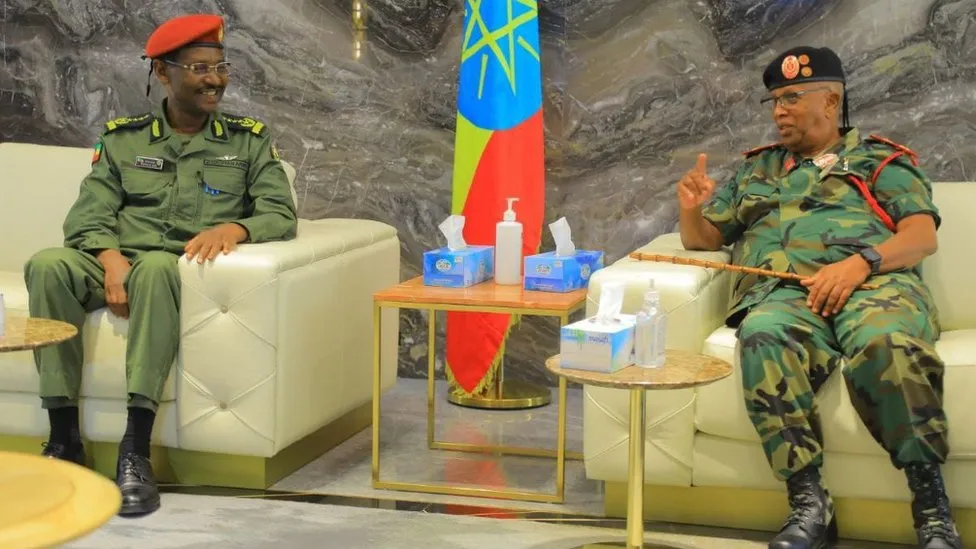
    The leaders of the Ethiopian army and the self-declared Republic of Somaliland are talking about working together militarily. People are worried about a deal that could let Ethiopia have a naval base on the Gulf of Aden.

    On January 1st, both sides agreed to let Ethiopia use the sea for trade and military purposes.

    Somalia said it was a mean thing to do.

    It thinks that Somaliland belongs to it and promised to protect its control.

    Somaliland used to be controlled by Britain. In 1991, it broke away from Somalia. But other countries do not officially recognize it as its own country.

    Ethiopia’s military leader Birhanu Jula met with Somaliland’s military leader Nuh Ismael Tani to talk about working together. The meeting took place on Monday in Addis Ababa, Ethiopia.

    Somaliland and Ethiopia signed an agreement to let Ethiopia use part of Somaliland’s coast for a naval base.

    Somaliland has agreed that in return, Ethiopia will acknowledge it as an independent country in the future.

    Ethiopia has not said yes or no about this. Instead, they are thinking about it and will decide later about whether to support Somaliland’s effort to be recognized.

    Somalia thinks the MoU is an attack on its land. On Sunday, President Hassan Sheikh Mohamud told people to get ready to defend the country.

    The African Union and the US are trying to reduce tensions.

    Somalia’s friends, such as Egypt and Turkey, have promised to help Somalia.

    Ethiopian and Somaliland soldiers met in Addis Ababa. At the same time, Mr Mohamud was in Eritrea talking with Isaias Afwerki in Asmara.

    The official statements did not directly talk about Ethiopia’s agreement with Somaliland, but it is probably that they discussed the matter.

    Eritrea said the two leaders agreed to work together with patience and a positive attitude, while not reacting to provocative things.

    On Monday, President Mohamud’s office said the two leaders will talk about things that will help both of them.

  • Senate from Kenya stirs things up with post about Somaliland

    Senate from Kenya stirs things up with post about Somaliland

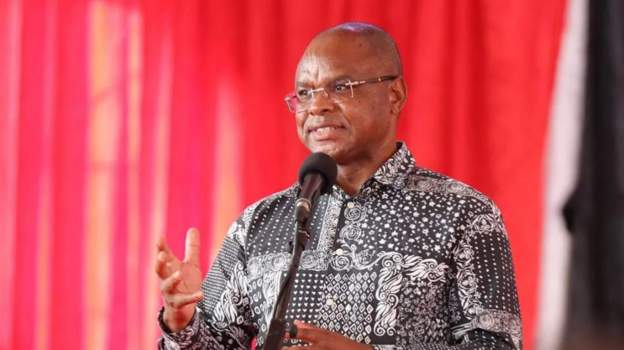
    The leader of Kenya’s senate is being accused of acknowledging that Somaliland is an independent country, even though that goes against Kenya’s official stance.

    Tuesday, Speaker Amason Kingi posted on social media that he talked with Somaliland’s “ambassador to Kenya”.

    He said they met to find new ways for our governments to work together.

    Principal Secretary of Foreign Affairs, Mr. Korir Sing’Oei, was one of the people who said that Mr. Kingi made a mistake by acknowledging the government of Somaliland in his post, which he later deleted.

    Mr Sing’Oei said that Kenya’s foreign policy, like the African Union, only recognizes Somalia as a state.

    “Somaliland is part of Somalia and has an office in Nairobi for doing business. ” “This place is not a embassy. ”

    Some people think the speaker should not get involved in foreign policy because it’s not their job.

    In 1991, Somaliland decided to break away from Somalia. However, other countries and organizations like the UN and African Union don’t officially consider it a separate country.

  • UN calls for investigation into deadly clashes in Somaliland

    UN calls for investigation into deadly clashes in Somaliland

    The UN has called for an investigation into violence in the self-declared republic of Somaliland where at least 50 people have been killed during two days of fighting between regional government troops and local militias.

    Medics in the city of Las Anod say they are struggling to cope with the number of casualties.

    The city is in an area (Sool) which is also claimed by the Somali region of Puntland.

    The authorities there have denied that troops from Puntland are fighting alongside local militias.

    The president of Somalia, Hassan Sheikh Mohamud, has called for all sides to hold talks to end the conflict.

    Somaliland broke away from Somalia in 1991 but has not been internationally recognized.

    Source: BBC

  • Murderer saves his lives with 100 camels in Somaliland

    A murderer’s life in Somaliland has been spared after he agreed to pay 100 camels as compensation.

    Per reports, the man, whose name was not disclosed was among five convicts set to be executed in the Madheera area, north-east of Hargesia, the capital of the self-declared republic on Tuesday.

    Elders from the families of both the murderer and the victim arrived at the execution site and untied him from a pole.

    This was some minutes before the firing squad was given their orders.

    The other four, who had been found guilty over separate murder charges, were shot dead.

    Last-minute interventions at execution sites are not uncommon in Somaliland.

    In the traditional justice system, the compensation for a man’s murder is 100 camels, but money is often used instead because of a decline in the number of the prized animals in recent years.

    This parallel system operates alongside a formal court process which complements or sometimes replaces it entirely.

    It has however been criticised because it means people from rich families can buy their freedom while the poor can’t.

  • Somaliland to deport TikTok star over Somali flag

    A court in the self-declared republic of Somaliland has ordered the deportation to Somalia of a popular social media star after a video was released of him drinking tea which was decorated with the image of the Somali flag.

    Bilal Bulshawi, who is known by Somalis as “the president of TikTok”, has been in detention for nearly two months.

    Somaliland, which broke away from Somalia nearly 30 years ago, has punished others for displaying the Somali flag.

    In 2015, members of a popular band were arrested on return to Somaliland after they waved the Somali flag at a concert in Mogadishu.

    Source: bbc.com

  • Somaliland minister tests positive for Covid-19

    The information minister for the breakaway state of Somaliland has tested positive for Covid-19 amid concerns of a second wave of infections.

    The minister, Suleiman Ali, who was on a peace and mediation tour in Sool area said he was feeling okay.

    Mr Ali said he would go into isolation and continue discharging his duties.

    He warned that coronavirus was still a risk and that people should follow guidelines put in place to prevent its spread.

    Somaliland is in dispute with the neighbouring semi-autonomous Somali region of Puntland over the Sanaag and Sool areas, some of whose inhabitants owe their allegiance to Puntland.

    Source: bbc.com

  • Somaliland frees prominent journalist

    The self-declared republic of Somaliland has freed controversial Somali journalist Abdimalik Muse Oldon following a presidential amnesty.

    Mr Oldon had been behind bars for more than 13 months. He was found guilty of defamation and spreading false news by a court in Hargeisa in July 2019 and sentenced to three and half years in prison.

    He has repeatedly denied all the charges and his lawyers termed the judgement as injustice.

    Somaliland President Muse Bihi Abdi on Saturday ordered for his release following pressure from opposition leaders and human rights groups.

    This was the second time Mr Oldon was released through a presidential pardon.

    “I was released after the leaders of UCID (For Justice and Development) and Waddani political parties spoke to Somaliland President,” Mr Oldon told BBC Somali Service.

    He said he was treated well while in prison but had become ill.

    Since Somalia’s civil war and the collapse of government in 1991, Somaliland has been a self-declared independent state and has its own government. However, it is not officially recognised by the United Nations (UN), African Union (AU) or any country.

    Source: bbc.com