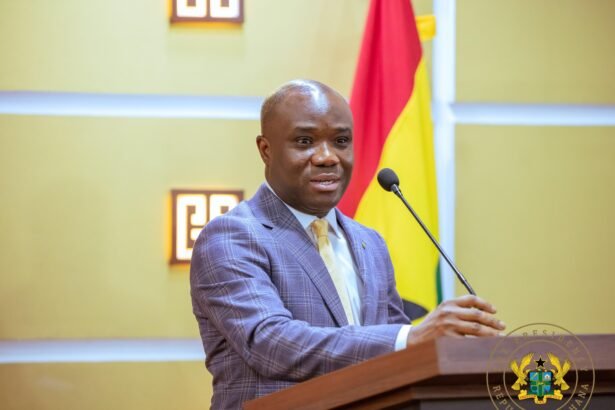
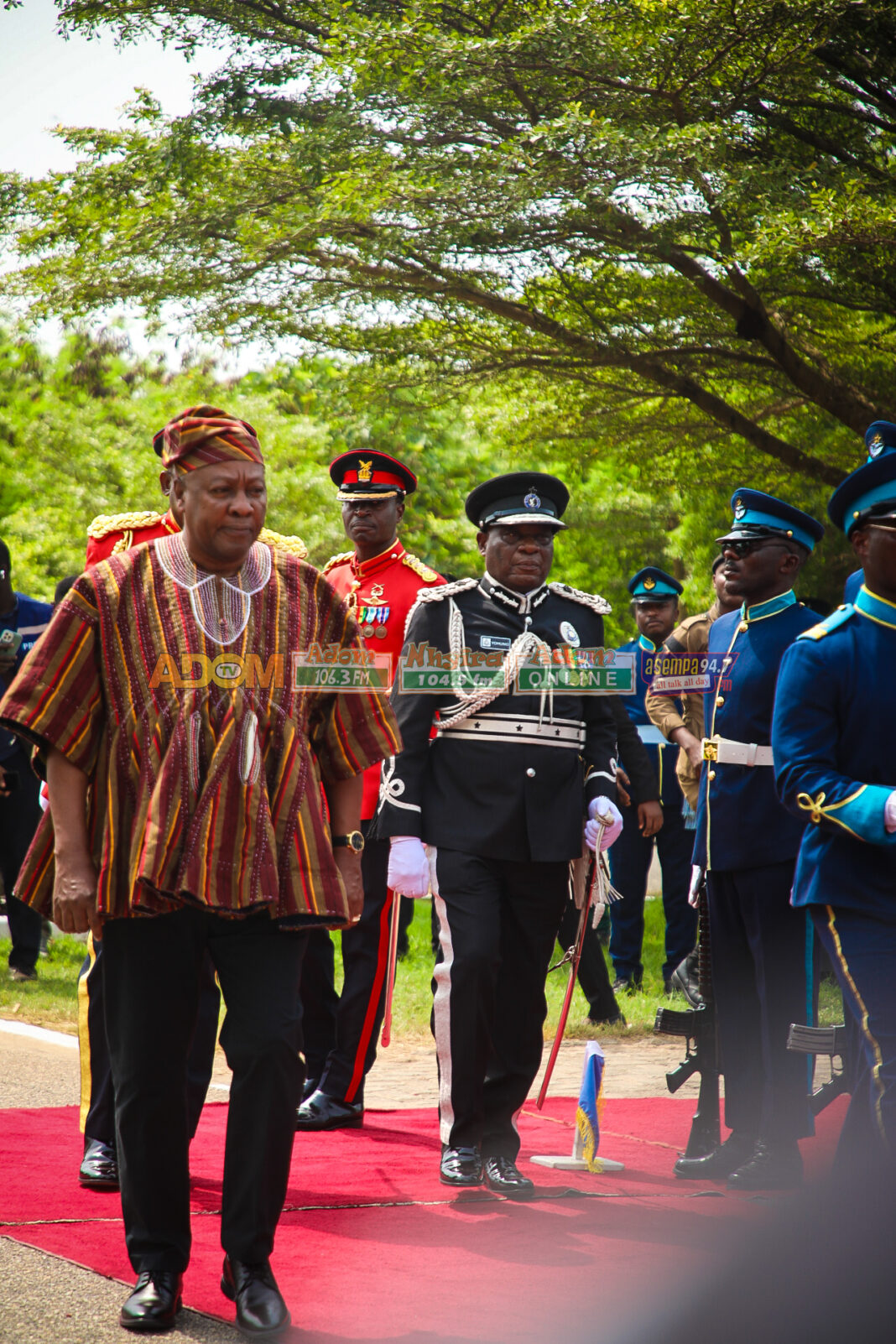
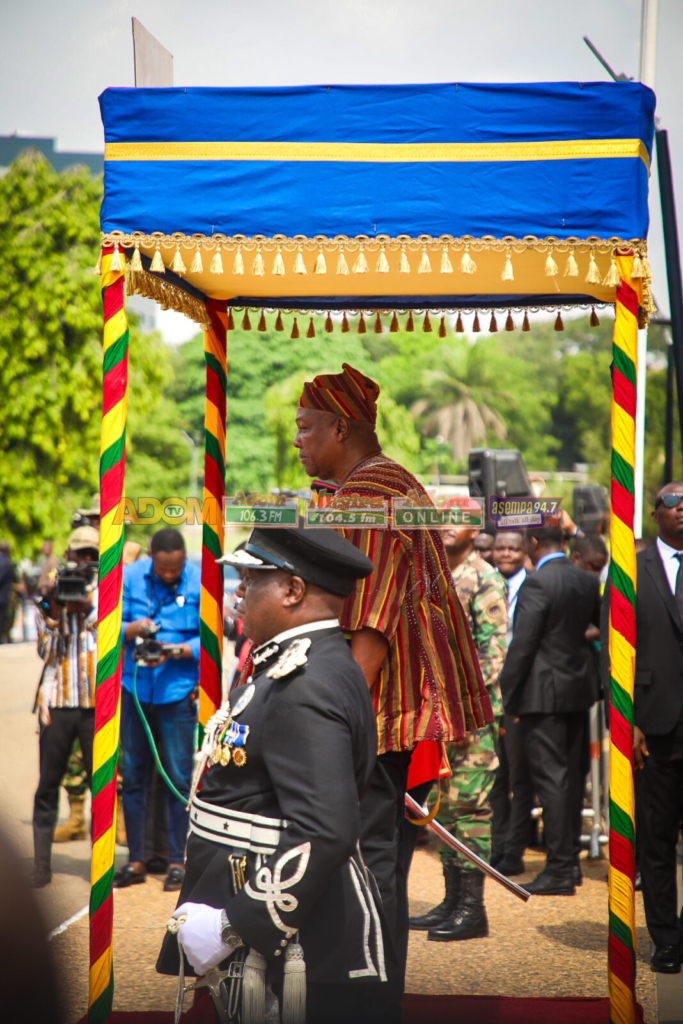
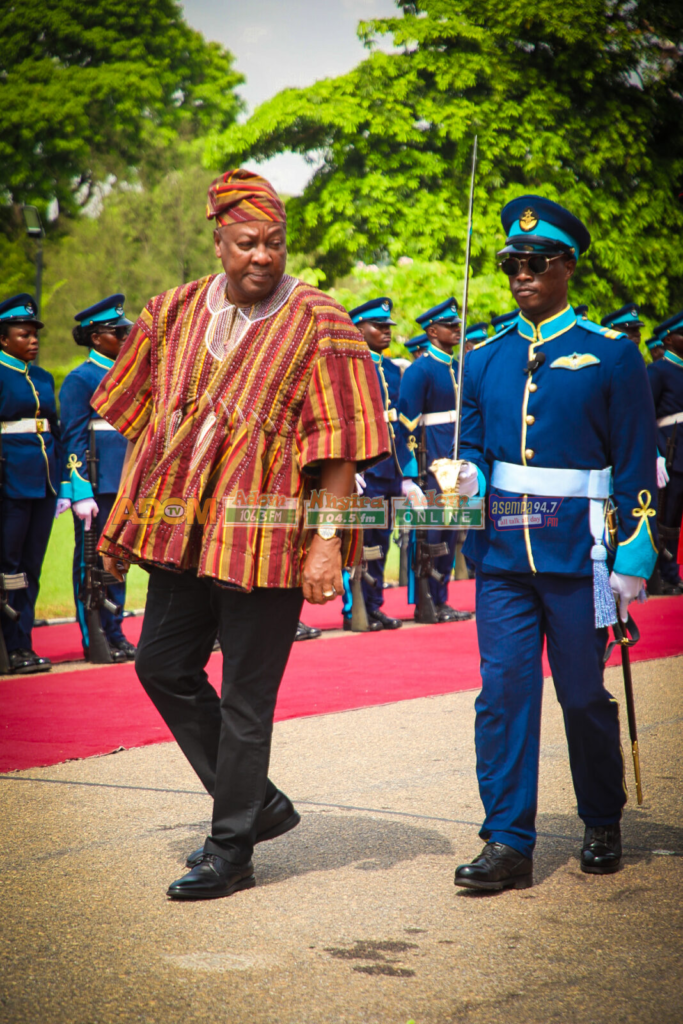
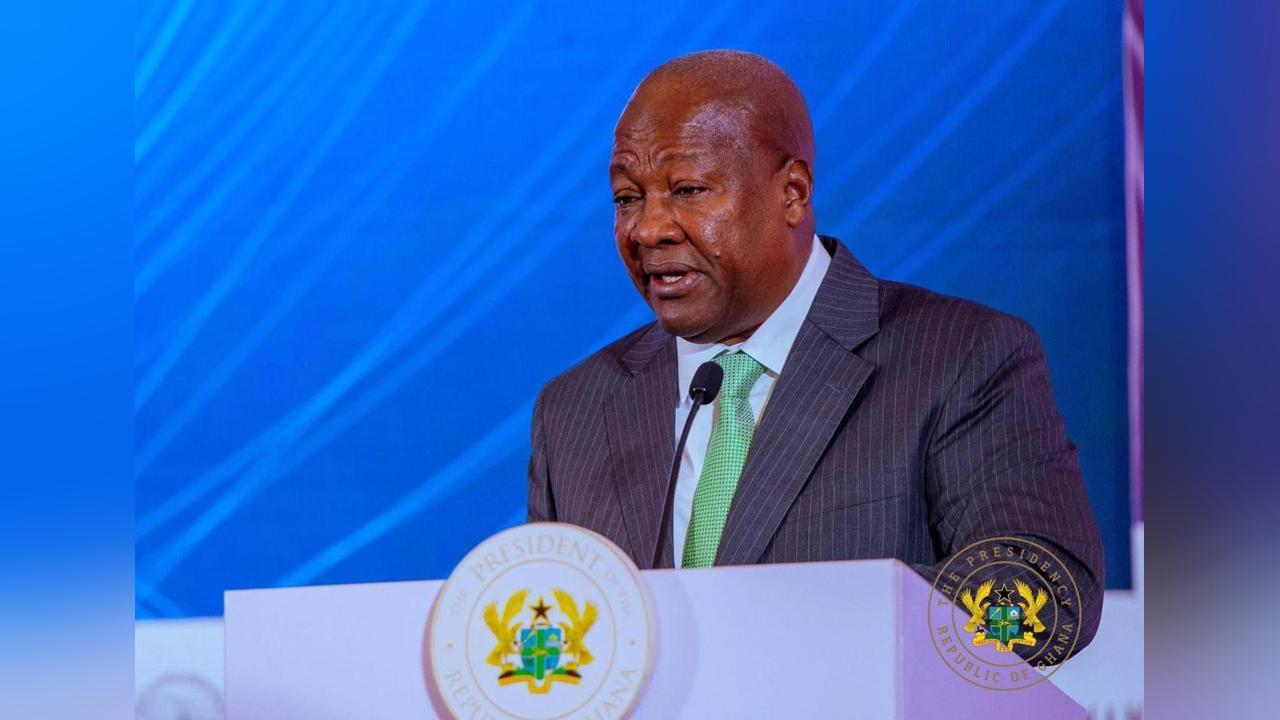
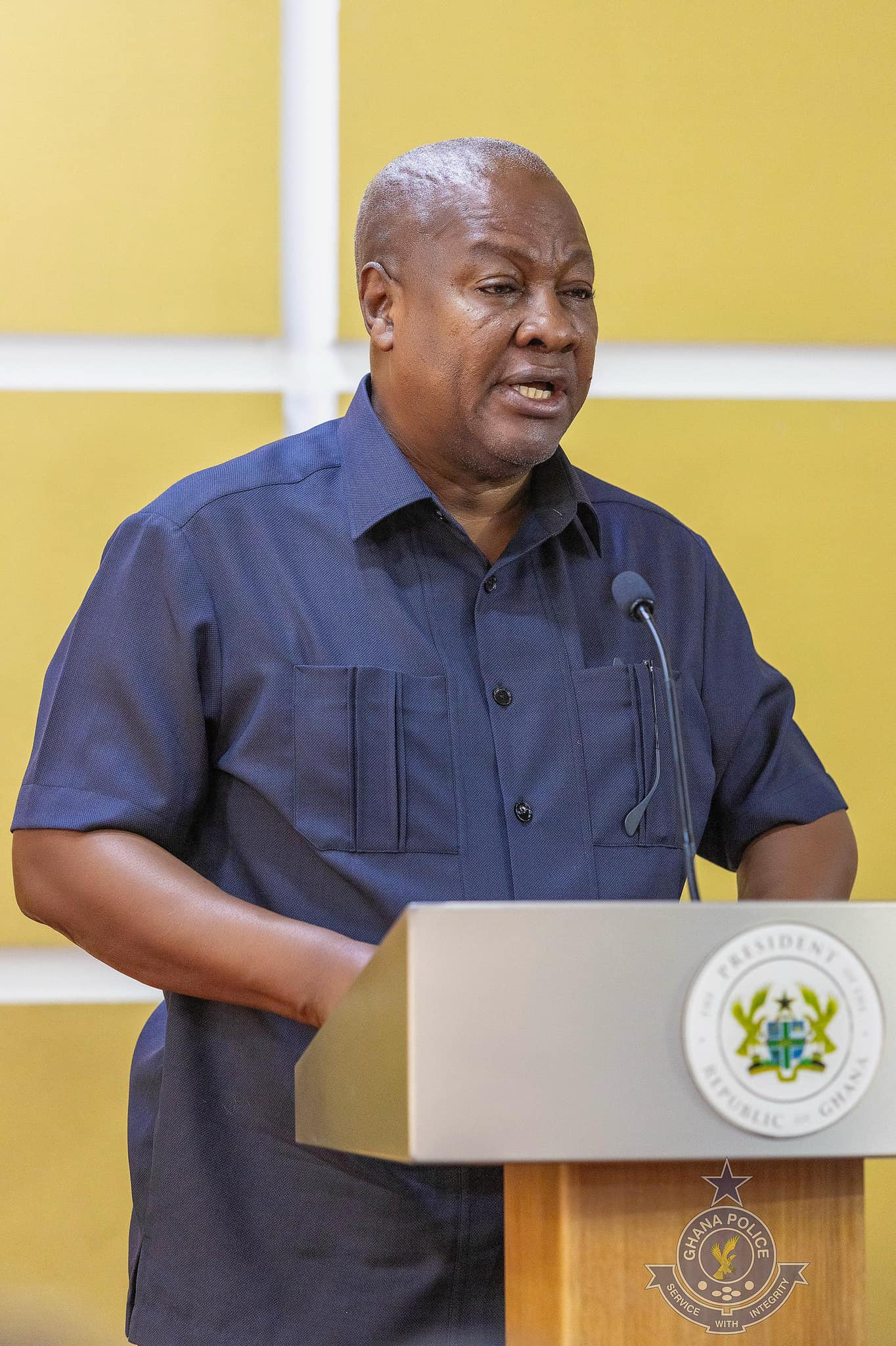
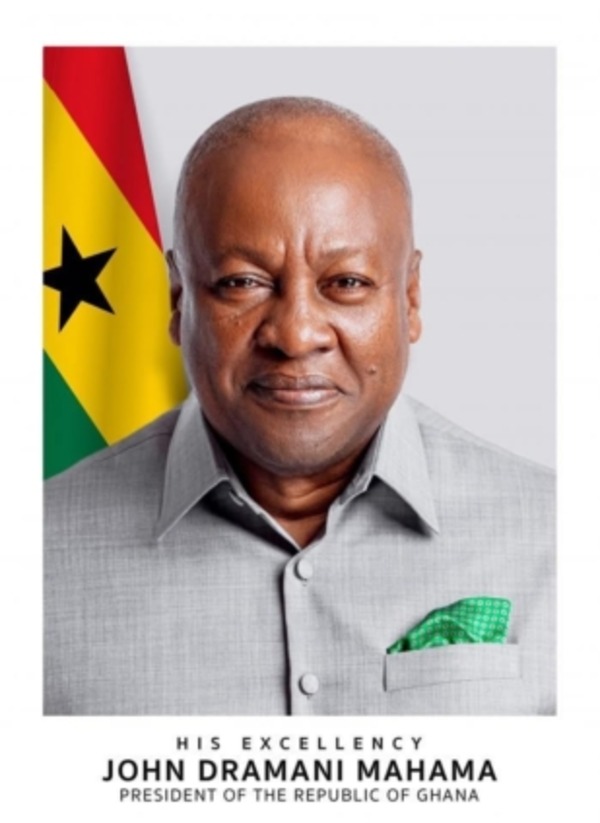
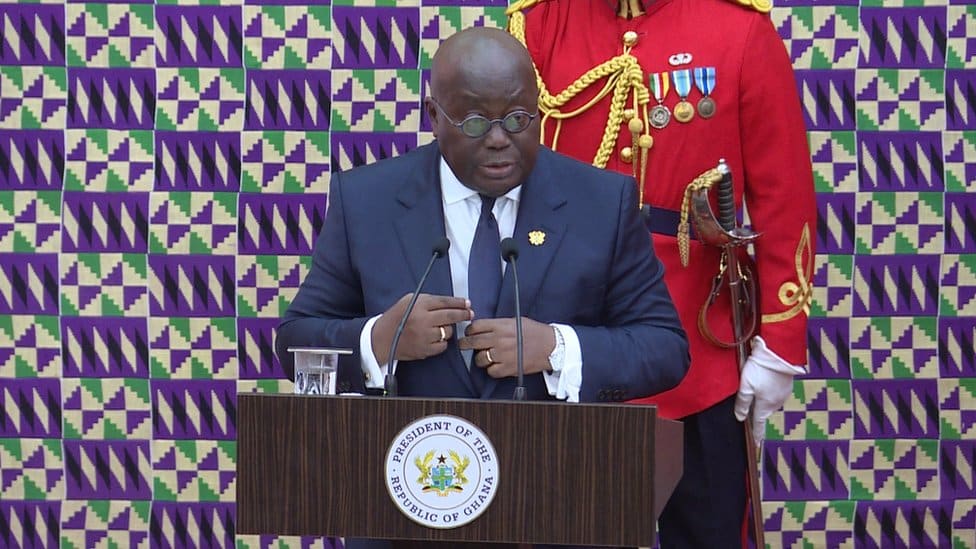
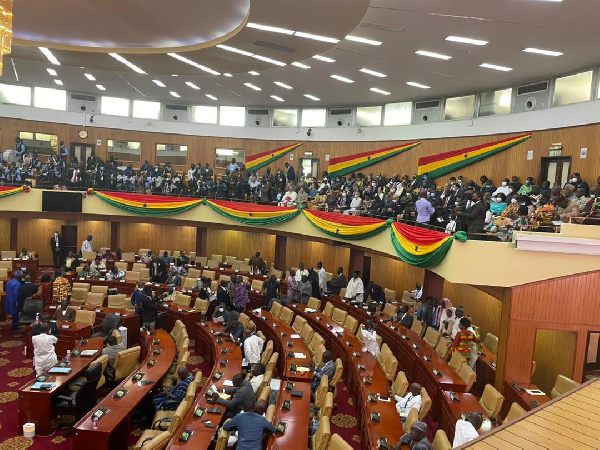
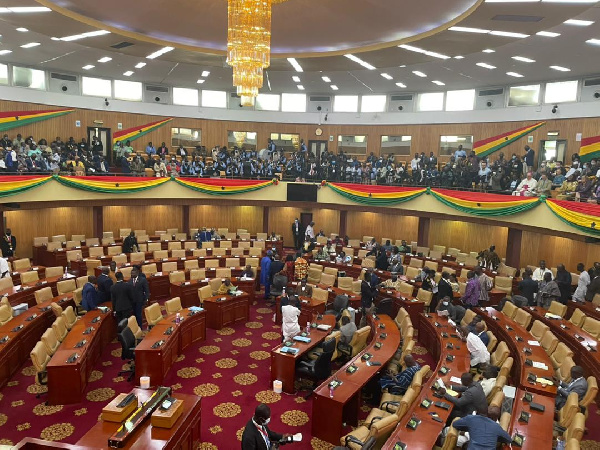
Parliament has adopted the motion on the 2026 State of the Nation Address (SONA) delivered by John Dramani Mahama after days of intense debate.
The House adopted the motion of the SONA, which was moved by the MP for Bolgatanga Central, Hon. Isaac Adongo and seconded by the MP for Assin South, Hon. John Ntim Fordjour.
During the Parliamentary session on Wednesday, March 11, both the Majority and Minority caucuses made their final remarks to conclude the debate.
The Minority Leader, Hon. Alexander Afenyo-Markin, opposed the government’s decision to buy a Presidential Jet, arguing that the country has other priorities to address, such as healthcare, education, and infrastructure.
He mentioned that President Mahama has failed in creating jobs for the youth, stressing that many youths were denied the opportunity to take part in the recent security recruitment because they could not access the internet.
Additionally, he noted that the government has worsened the plight of Ghanaian cocoa farmers by reducing the cocoa producer price, despite the sector already being in crisis.
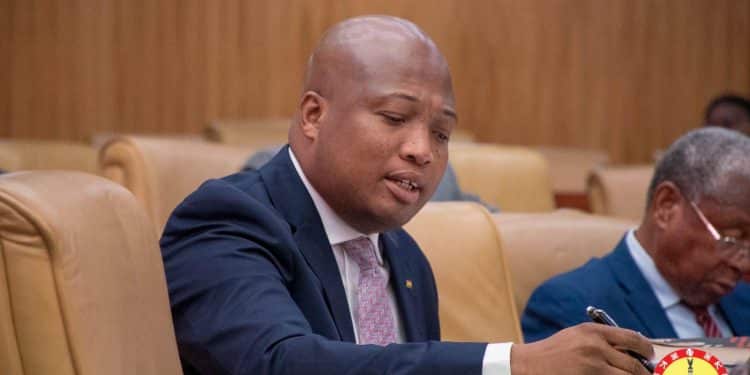
But in making his counterargument, the Majority Leader, Hon. Mahama Ayariga, noted that the producer price has been increased to unprecedented heights under President Mahama, ensuring that when the world pays more for a bar of chocolate, the farmer in Sefwi, Enchi, and Tepa finally sees a reflection of that value in his pocket.
“This is not mere commerce; it is the restoration of the dignity of the Ghanaian soil. We are moving from being exporters of raw toil to masters of our own industrial destiny, investing in local processing so that “Made in Ghana” becomes a global standard of excellence, not a colonial footnote,” he stated.
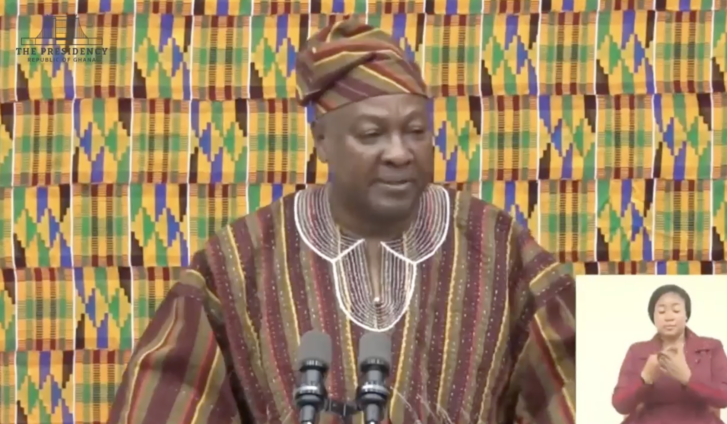
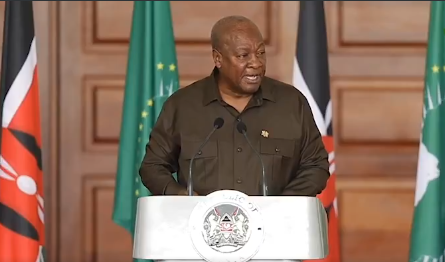
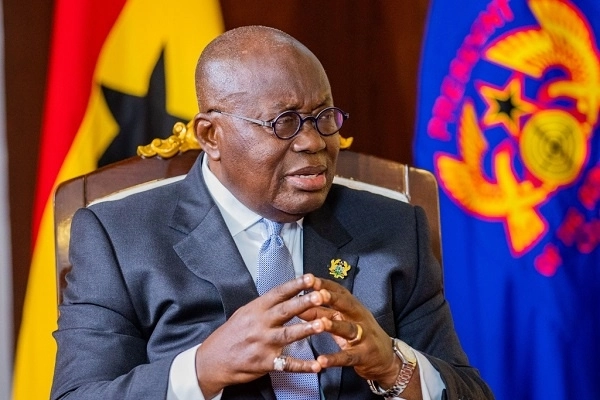
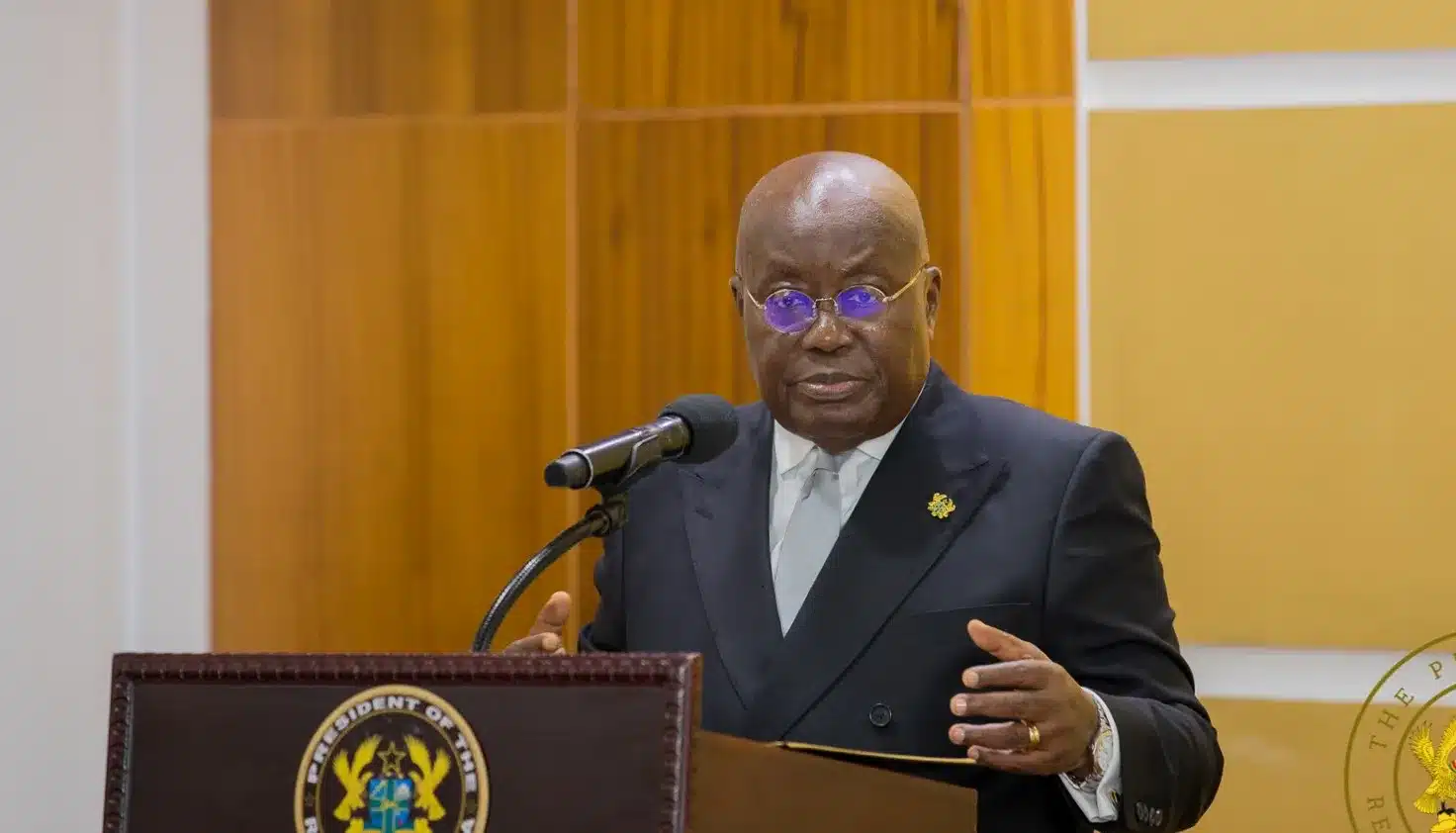
On Friday, February 27, President John Dramani Mahama addressed the nation, providing an update on the state of the country and the progress made since he assumed office.
During his second State of the Nation Address of his second term, the president outlined his administration’s vision and priorities under the ambitious Resetting Ghana agenda.
He also called on Ghanaians to unite and support his administration as it rolls out key initiatives aimed at improving the country’s development and overall well-being.
According to him, “ the resetting agenda is working, the Accra reset is gaining momentum, and together we are laying the foundation for a stronger, more resilient and more prosperous Ghana. Mr Speaker, our nation is on a runaway, it will take off now, and you are all advised to fasten your seat belts”.
He added, ” Mr Speaker, the journey continues as the direction is set and the hope is real, our theme today of building prosperity and restoring hope is not mainly aspirational. It reflects the tangible transformation we have delivered for the Ghanaian people”.
President John Mahama also announced fresh progress toward the re-establishment of a national airline, stating that concrete steps have been taken to ensure the initiative becomes a reality.
The President revealed that a ten-member task force set up to oversee the process has completed its work and submitted a detailed business model together with an operational framework.
The documents, he explained, will guide the government in selecting a credible strategic partner to run the new national carrier.
“In fulfilment of my pledge to re-establish a national airline, a ten-member taskforce established to oversee this initiative has submitted a business model and operational framework to guide the selection of a strategic partner for the new national airline. And this new national airline will take off soon. Isha Allah,” President Mahama stated.
He indicated that the creation of a new national airline forms part of a broader plan to strengthen Ghana’s aviation sector, boost tourism, create jobs, and position the country as a key aviation hub in West Africa.
The President also highlighted growth in air travel, pointing to increased passenger numbers handled by the Ghana Airports Company Limited. According to him, passenger traffic rose to 3.625 million in 2025, up from 3.4 million recorded in 2024.
“Mr Speaker, passenger traffic handled by the Ghana Airport Company increased to 3.625 million passengers in 2025 from 3.4 million in 2024,” he added.
The rise in passenger movement, he noted, demonstrates renewed confidence in Ghana’s aviation industry and underscores the importance of establishing a national airline to meet growing demand.
He expressed optimism that once operational, the airline would enhance connectivity, facilitate trade and investment, and contribute significantly to national development.
The government has announced a new development in its anti-corruption fight, with assets worth about GH¢1.5 billion frozen as part of investigations under Operation Recover All Loot (ORAL).
This was revealed by the Minister for Government Communications, Felix Kwakye Ofosu, on Tuesday, March 3, during the debate on the State of the Nation Address (SONA) in Parliament.
He detailed that the government has discovered money and properties believed to have been acquired illegally; however, the persons involved currently cannot be thrown in jail without being prosecuted, and found guilty first.
He explained that although the government has found and secured money and property believed to have been obtained illegally, they cannot permanently take the assets back yet. The people involved must first be taken to court and found guilty before the funds can be fully recovered.
Mr Kwakye Ofosu made the remarks while contributing to the debate on the State of the Nation Address delivered by John Dramani Mahama on Tuesday, March 3. He dismissed claims that the Economic and Organised Crime Office (EOCO) had recovered only GH¢600 million under the ORAL initiative.
According to him, the GH¢600 million figure being cited relates to recoveries made by EOCO through its routine anti-corruption and financial crime operations, and not funds specifically retrieved under ORAL.
President Mahama officially launched ORAL on December 18, 2024, barely two-weeks after he won the 2024 elections. Ghanaians have received the Operation Recover All Loot (ORAL) initiative with a mix of optimism and scepticism. While many welcomed it as a bold anti‑corruption drive to reclaim billions in stolen assets, others criticised it as politicised, slow, and more of a performance than a genuine legal process. However, Dr Ayine clarified that his outfit, in collaboration with the Economic and Organised Crime Office (EOCO) and the National Intelligence Bureau (NIB) are working both locally and internationally to track and recover misappropriated state funds.
He noted that, very soon, their coordinated efforts would produce tangible results and the anticipated results Ghanaians want to see, and in turn draw some money into state coffers, reinforcing the government’s commitment to accountability and the protection of public resources.
“Extensive work is currently underway, both locally and internationally, to track and recover misappropriated state funds. On the local front, my office is working closely with the Economic and Organised Crime Office (EOCO) and the National Intelligence Bureau (NIB). In addition, there is a special clandestine investigations team that reports directly to me. I am confident that the coordinated efforts of local agencies and foreign partners will soon translate into tangible financial recoveries for the state, reinforcing our commitment to accountability and the protection of public resources.”
Meanwhile, President John Dramani Mahama in June last year, stated that in due course, 33 former government appointees have been implicated in corruption-related cases in the Operation Recover All Loot (ORAL) Team report will face prosecution.
President Mahama, while addressing the African Union Advisory Board Against Corruption at the Jubilee House on Tuesday, 3 June, noted that the Attorney General (A-G), Dr Dominic Ayine, is preparing the cases for judicial proceedings.
“We set up the ORAL Committee, and they have identified 33 cases, which were handed over to the Attorney General. We have created special investigative teams to investigate each of them,” he said.
“Some of them have found a lot of evidence of the procurement of properties with illicit wealth. Many of them are just at the point of beginning prosecution. Some have also started the prosecution, and others are being lined up.”
Operation Recover All Loot (ORAL)is an initiative set up by the president to gather information on corruption to the appropriate government institutions for further investigation.
The committee is chaired by Samuel Okudzeto Ablakwa, who also serves as the Member of Parliament (MP) for North Tongu.
The other members include former Auditor-General Daniel Domelevo, retired Police Commissioner Nathaniel Kofi Boakye, legal practitioner Martin Kpebu, and investigative journalist Raymond Archer — all renowned for their integrity and strong stance against corruption.Currently, the hundreds of issues presented by the ORAL team to President John Mahama are being investigated by the Attorney-General and Minister for Justice, Dr. Dominic Ayine.
Additionally, its work has increased public awareness about the importance of protecting state resources.
The committee’s report has revealed that approximately $21.19 billion in p
President John Dramani Mahama on Friday, February 27, delivered his second State of the Nation Address (SONA) in his second term before Parliament.
The SONA delivery is in accordance with Article 67 of the 1992 Constitution, giving the President the opportunity to update the state on the economic, social, and financial state of the country, highlighting achievements, challenges, and outlining government plans for the year. It serves as both an accountability mechanism reporting to citizens through Parliament and a policy roadmap setting out the government’s agenda.
At today’s delivery, President Mahama declared that Ghana’s economy is stabilising and returning to growth, telling Parliament that “Ghana is back” and “Ghana is working again.” He also mentioned that his government will tackle one of the country’s setbacks, i.e., the “no bed syndrome” in the country’s health facilities, which has recently claimed the life of 29-year-old engineer Charles Amissah, who reportedly died after being turned away from multiple hospitals due to a lack of beds.
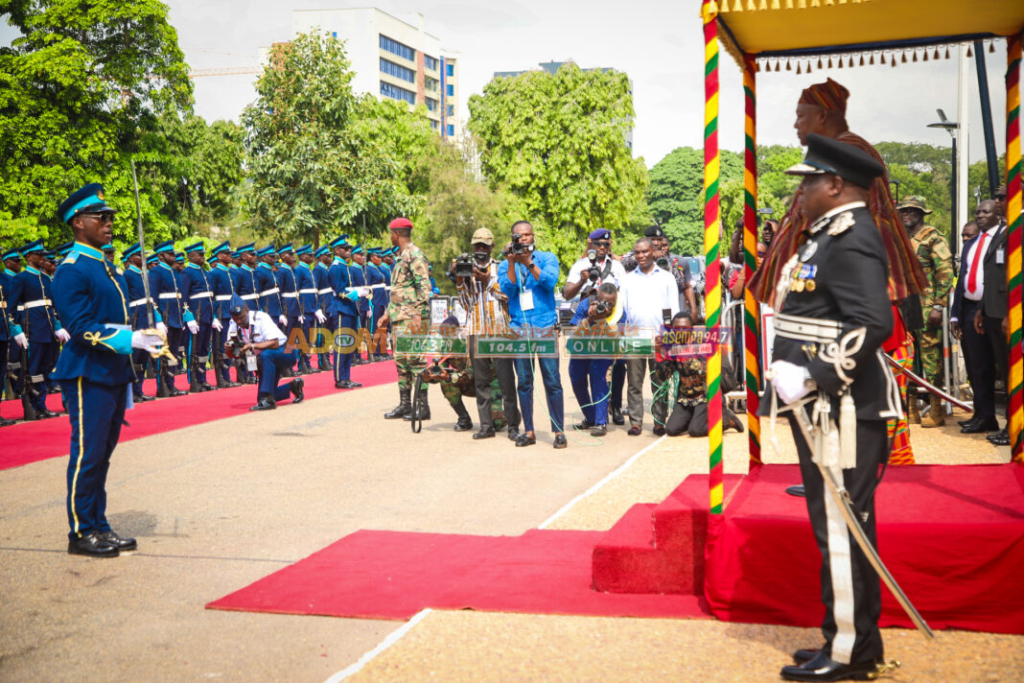
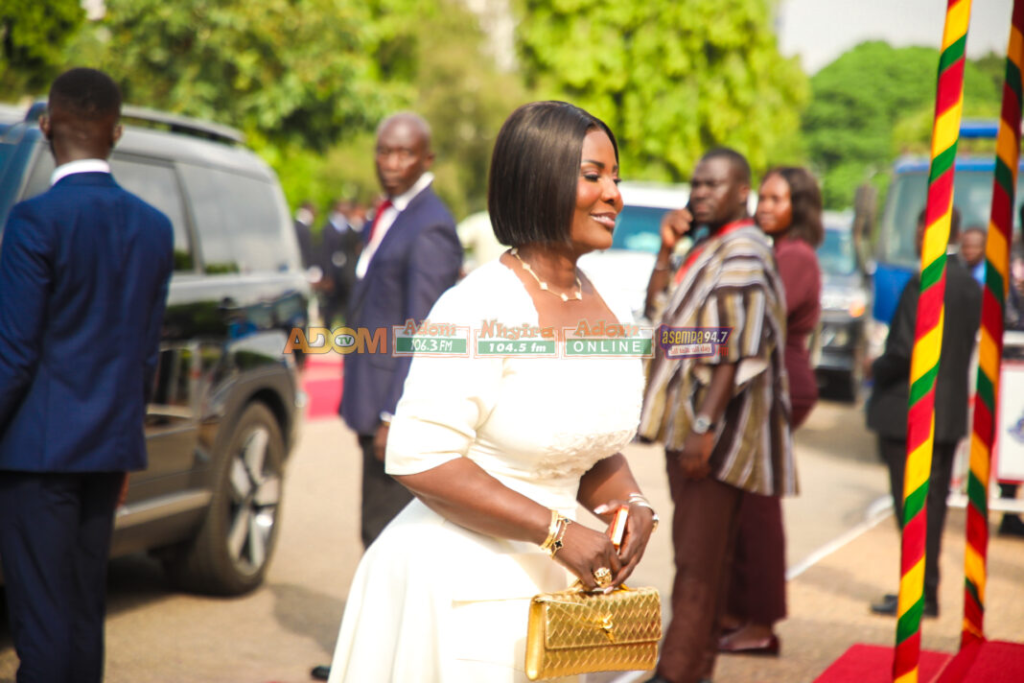
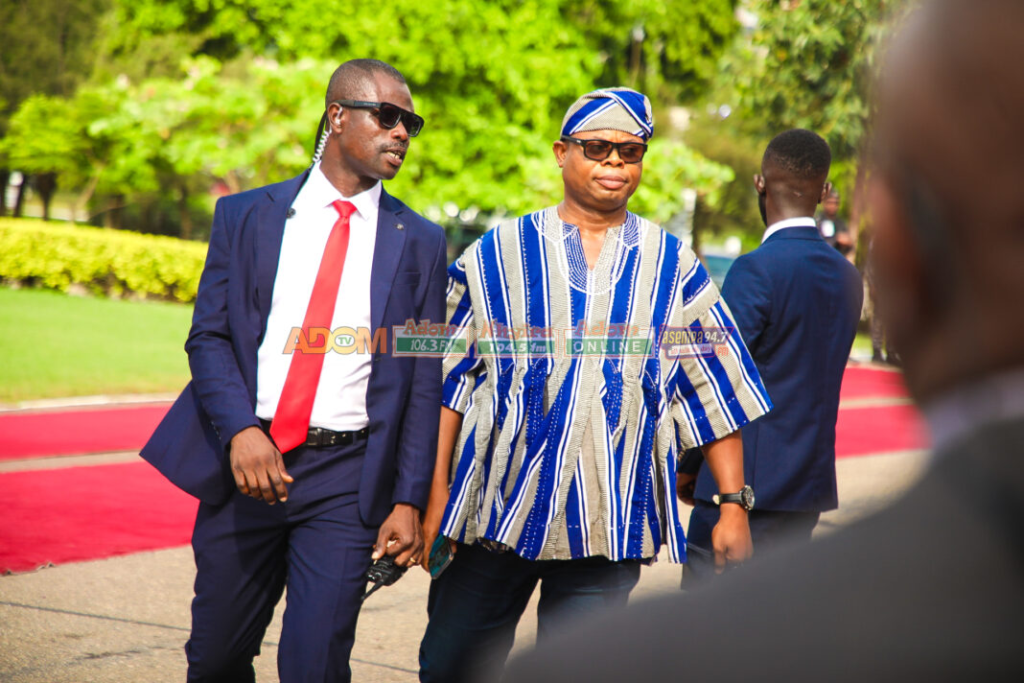
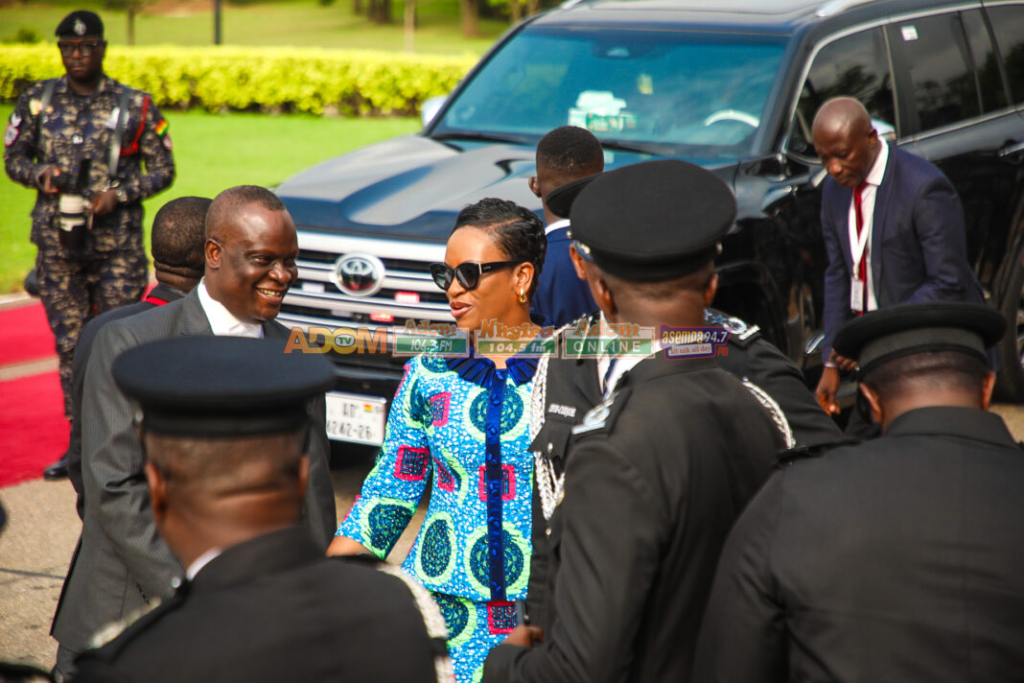
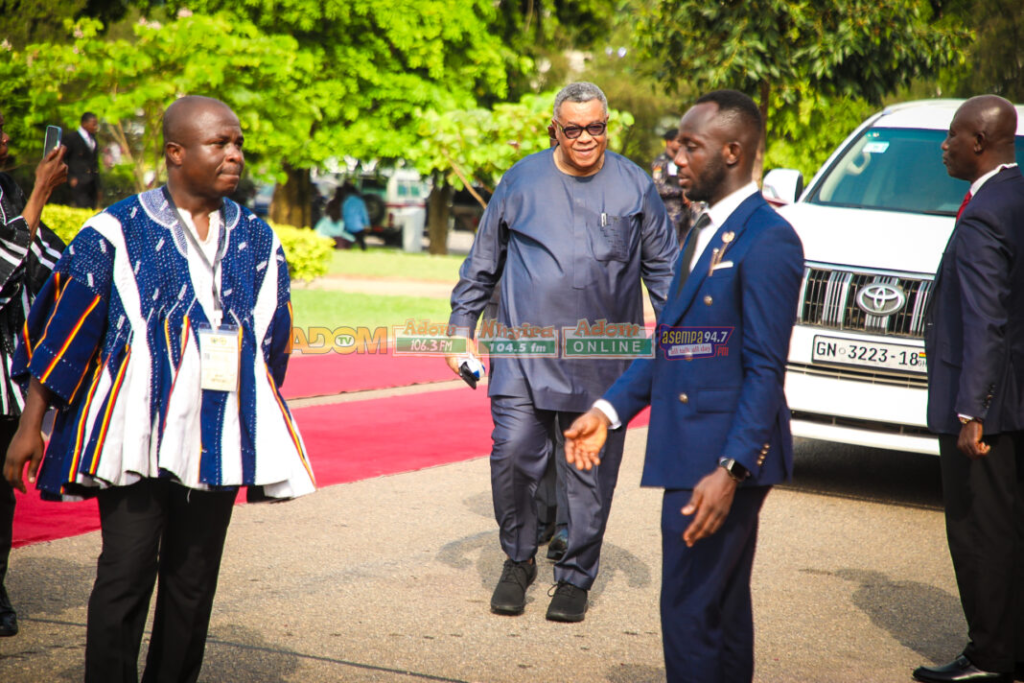
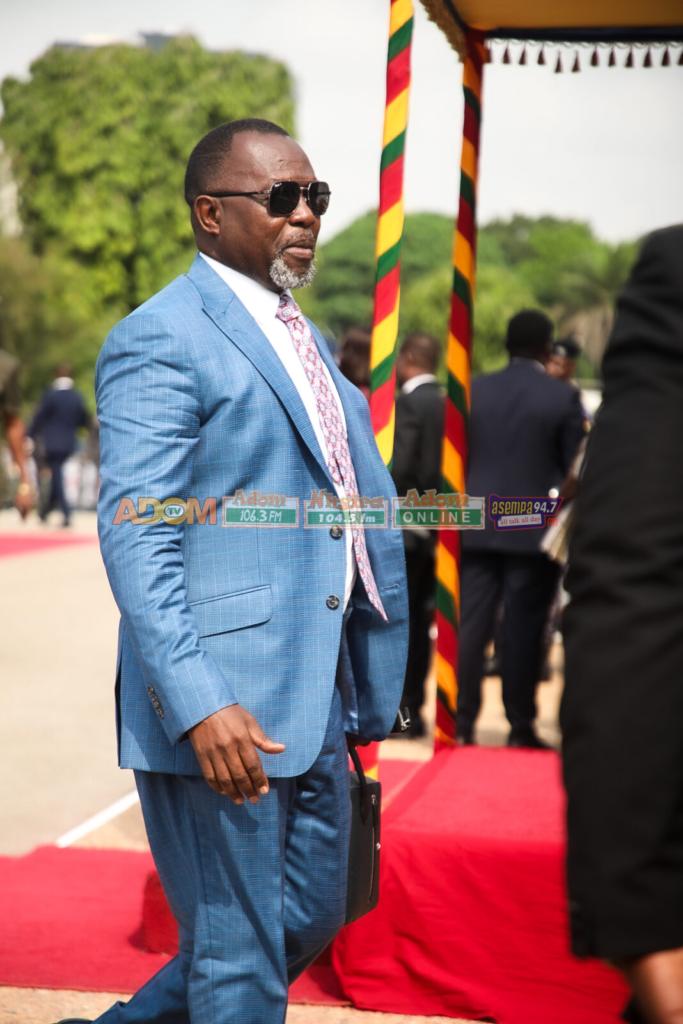
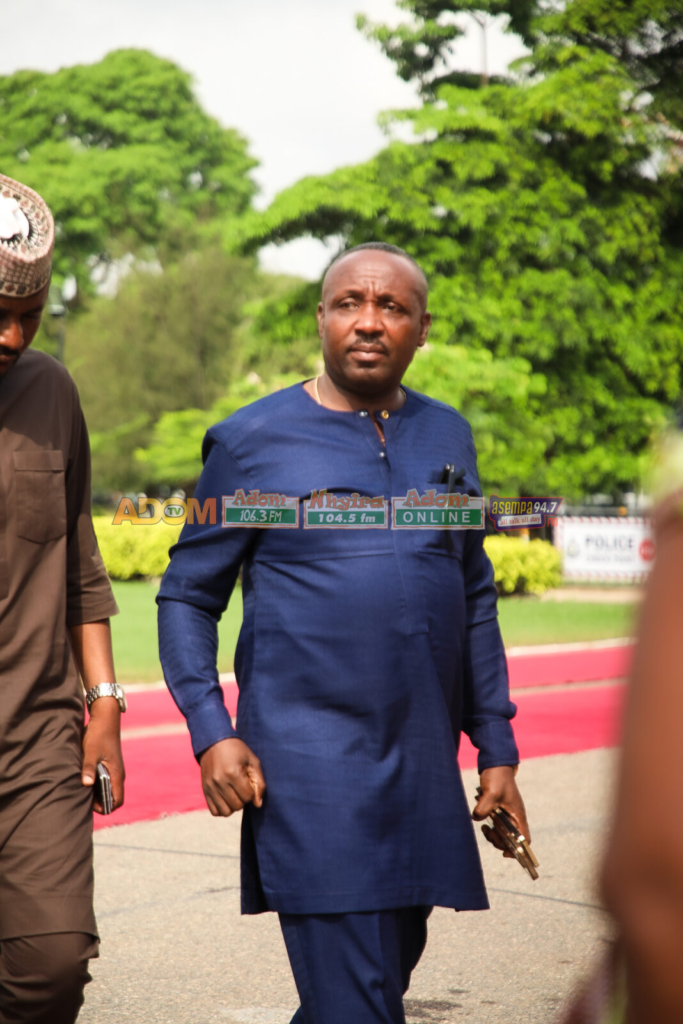
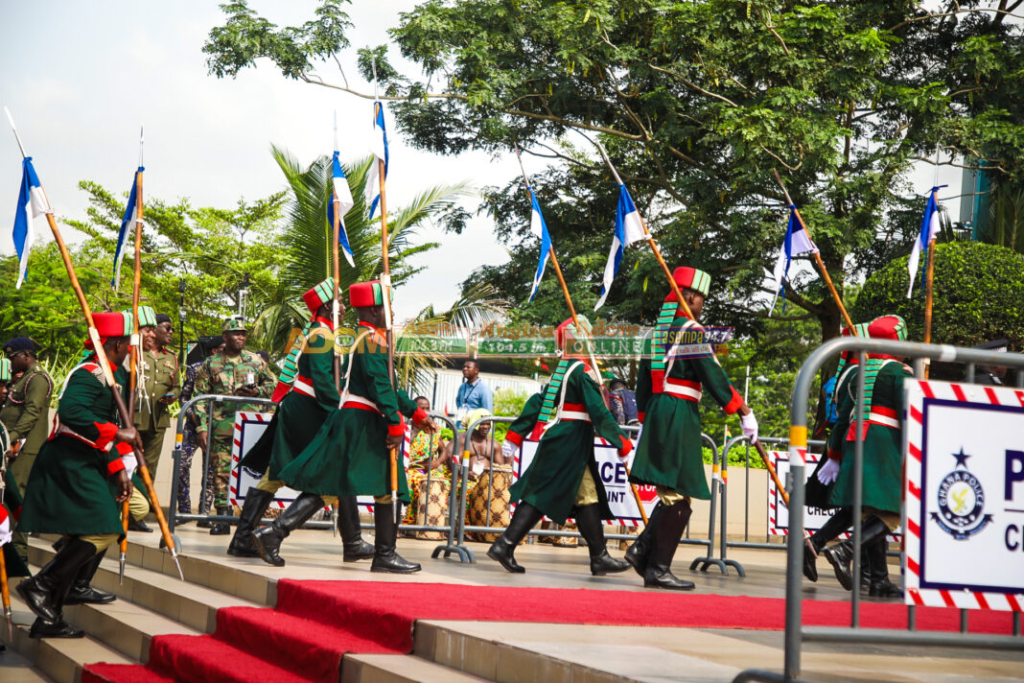
The address was attended by Vice President Naana Jane Opoku-Agyemang, Chief Justice Baffour-Bonnie, Chief of Staff Julius Debrah, First Lady Lordina Mahama, members of the Council of State, heads of security agencies, the diplomatic corps, and other dignitaries.
President Mahama has urged supporters travelling to the USA for the 2026 World Cup to respect their visa duration and return at the designated time.
According to the President, the government put in a lot of effort to ensure safe and smooth travel for fans attending the 2026 FIFA World Cup in the United States, Canada, and Mexico.
Consequently, during his delivery of the State of the Nation Address (SONA) on February 27, on the floor of Parliament, President Mahama explained the challenges Ghana faced following US travel restrictions affecting several African countries.
“Supporters and others interested in going to support the team would have to submit visa requests to the American Embassy. We were informed that we must ensure supporters who travel [to the tournament] return on their visas. It has taken extensive work to restore Ghana’s five-year non-immigrant visas and to remove us from the ban list.”
Mahama urged fans to strictly follow visa regulations, warning that violations could have broader diplomatic consequences.
“I hope that this event will not result in thousands of Ghanaians going to America and jeopardising our position on the visa list.”
The Ghana Football Association has confirmed that the team will be based at Bryant University in the United States throughout the competition.
The US govt warns Ghanaians about visa stay
The president’s remarks come just a few days after the Charge d’Affaires, Mr Rolf Olson, gave the warning at a media engagement on Friday in Accra to clarify visa procedures and appointment availability ahead of the tournament.
He stressed that travellers must depart the United States before the authorised stay expires.
“People who have exceeded the terms of their visa are breaking the law, and we will take that very seriously,” Mr Olson noted.
He indicated that overstaying a visa could negatively affect future applications, as U.S. immigration law treated such violations with gravity.
Govt to sponsor some supporters in partnership with private sector investors
Sports Minister, Kofi Adams, has announced a new twist in supporters’ sponsorship by the government for the 2026 FIFA World Cup.
Ghana sealed their place at the 2026 World Cup with a hard-fought 1-0 victory over Comoros in their final Group I qualifier at the Accra Sports Stadium on Sunday, October 12, marking the country’s fifth appearance at football’s biggest tournament, which will be hosted in the United States, Mexico, and Canada.
Past governments have mostly offered some form of financial support, be it full or partial, for supporters who travel to attend the World Cup. However, it has become a challenge over the years due to financial constraints.
Consequently, in early November last year, Kofi Adams noted that, although it has been a long-standing practice, he “doesn’t recommend” it.
However, in a recent radio interview on Asempa FM’s Ultimate Sports Show in Accra on February 5, he acknowledged the tradition of sponsoring fans to support the Black Stars, adding that it is for that reason that his outfit has set up a fundraising committee.
“The policy that we should take for fans is clear. It is clear that we should work at it, and that is why we have set up a fundraising committee. The number we would take ultimately will depend on how much we raise,” he stated.
He explained that the government seeks to sponsor some Ghanaian fans for the 2026 World Cup so Ghana will have strong support at the tournament.
The government believes Ghana should not only be represented by its team but also by its fans. However, he detailed that the number of supporters will be heavily dependent on the funds available to the government.
He continued that, as part of the fundraising committee’s task, is to raise resources to cover travel and accommodation for supporters who will journey to back the Black Stars at the tournament.
He acknowledged, however, that the plan requires significant financial backing, prompting the government to appeal to the private sector and the general public for support.
“This is why we are appealing to corporate bodies, companies, mining firms and well-meaning individuals to come on board and support this initiative,” he said.
Earlier, Mr Adams explained his objection to the government funding supporters to the World Cup, citing the need for the government to prioritise investment in the country’s sports infrastructure instead of spending it on fan sponsorship.
“We are in a period of austerity. We need money to build sports infrastructure in Ghana. If we are going to spend money to transport supporters all the way to America, that same amount can build five multipurpose parks in some communities,” he stated.
While confirming that government funding is off the table, Mr Adams encouraged individuals and corporate organisations to step in.
“I believe there are a lot of Ghanaians in those areas. Anyone who wants to go should find their own resources; we can facilitate their travel documents. Or we can mobilise support from corporate bodies, both private and public, to assist the fans.
“Government can collaborate with corporations to support, which would be a good idea, but putting government money into the budget to take supporters, I don’t think so,” he added.
The government has fully settled all outstanding gas invoices owed to Eni and Vitol, totaling approximately $500 million as disclosed by President John Dramani Mahama.
Delivering the 2026 State of the Nation Address (SONA) in Parliament on Friday, February 27, President Mahama stated that the debt, including accrued interest, was completely paid off as of December 31 last year.
He added that the settlement has strengthened Ghana’s international financial reputation and reinforced confidence in the country’s ability to honour its obligations.
“As of December 31, 2025, government has fully repaid and restored the entire $500 million World Bank guarantee, including interest. This has reinstated the facility in full and reaffirmed Ghana’s standing as a credible and reliable partner on the global stage.We are paying for every gas we are consuming today,” he declared.
The clearance is expected to stabilize the energy sector, ensure uninterrupted gas supply for power generation, ease financial pressure on key industry players, and restore investor confidence in Ghana’s energy value chain.
As part of his address, John Dramani Mahama commended his administration for what he described as decisive steps taken to address the country’s economic challenges.
He added that Ghana is now ranked among the top ten largest economies in West Africa, attributing the progress to prudent fiscal management and renewed investor confidence.
He added that “in 2025, Ghana’s GDP was expected to reach $113bn, an increase of $83bn at the end of 2024. This has placed Ghana among the top 10 largest economies in Africa. We did not just arrest currency instability; we strengthened the cedi to put up a good fight against other currencies,” he said.
The delivery of SONA by the president aligns with the constitutional mandate stated in Article 67 of the 1992 Constitution.
Under Ghana’s constitutional framework, the President is required to deliver a State of the Nation Address at the beginning of each session of Parliament.
The President may also present a supplementary address at the end of the session to update the nation on developments and the overall state of the country.
In his second term under the 9th Parliament, President Mahama outlined Ghana’s current state and his administration’s strategy for navigating the country through this challenging period, especially as Ghana remains under an International Monetary Fund (IMF) support program.
However, cocoa pods unexpectedly became the center of political tension in Parliament as Minority Members held a symbolic demonstration just before the President delivered the SONA.
The dramatic scenes took place immediately after the Speaker of Parliament, Alban Bagbin, invited President John Mahama to speak to the House.
Majority MPs responded with a celebratory Twi chant — “Ɔde asɛmpa na aba oo, Ɔde asɛmpa na aba ooo (He has brought good news). The chant included references to the government’s proposed “24-Hour Economy,” a plan designed to increase productivity and drive economic growth.
In response, the Minority group quickly began their own chant, changing the final line to “atɔ nsuom” — literally meaning “it has fallen into water,” a phrase often used to indicate failure.
However, it was not the musical exchange that captured the most attention. In a bold visual statement, Minority MPs displayed cocoa pods in the chamber, focusing attention on what they describe as a worsening situation in Ghana’s cocoa sector.
Cocoa remains one of Ghana’s most vital exports and a key part of the national economy. The crop provides livelihoods for hundreds of thousands of farmers and continues to be an important source of foreign currency.
By bringing cocoa pods into Parliament, the Minority aimed to draw attention to concerns about declining production, financial difficulties in the sector, and the wider economic impact of the slump.
The protest by the Minority indicates growing dissatisfaction with how these challenges are being handled, especially as the government promotes a narrative of economic recovery and reform.
While the Majority’s song portrayed the President’s speech as delivering “good news,” the cocoa pods acted as a silent but forceful response — a reminder, according to the Minority, that key parts of the economy are still facing serious problems.
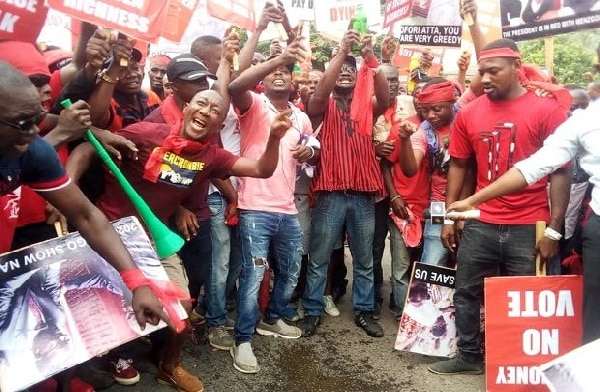
Aggrieved cocoa farmers picketed at the headquarters of the Ghana Cocoa Board (COCOBOD) in Accra, on Friday, February 20, over a slash in producer prices and delayed payments, which they say have placed them in economic and financial distress.
With placards bearing inscriptions of government betrayal and chanting slogans, they called on authorities and all stakeholders to protect their livelihoods.
Some of the inscriptions read: “We worked, you lied,” “Government celebrates, but our families mourn,” and “We can’t pay our kids’ school fees,” among others.
The distressed farmers expressed deep concerns through their chants and placards, stating that despite their significant contribution to the economy, their income has been eroded.
They warned that unless urgent measures are taken, they may lose their livelihoods, a situation likely to push many farmers away from cocoa farming and potentially affect future production levels, which is likely to affect the economy.
They are demanding an upward review of the prices and expedited processing to ensure the settlement of outstanding payments owed to them by Licensed Buying Companies operating under COCOBOD’s supervision.
“The prices were not reduced under the previous regimes; why is this administration reducing them. We have no problem with the government; they should just leave the prices to remain the same,” a frustrated woman told journalists.
According to the farmers, delays in payment and the recent downward adjustment in cocoa prices have made it increasingly difficult to cover basic household needs, including school fees, healthcare, and farm maintenance.
“We depend entirely on cocoa. When payments are delayed, or prices drop, our families suffer,” one protester said, adding that many farmers are struggling to prepare for the next crop season due to a lack of funds.
The demonstration at COCOBOD headquarters follows similar protests in cocoa-growing regions, particularly in the Western North Region, where farmers marched through major towns to protest the reduced farmgate price.
The unrest comes amid broader challenges facing Ghana’s cocoa sector, including global price volatility, declining output in some regions, and financial pressures on COCOBOD.
Meanwhile, the new cocoa producer prices set by the government for the remainder of the 2025/26 cocoa season took effect on Friday, February 13.
This was confirmed in a statement issued to the Ghana News Agency on Tuesday, which indicated that the new price would apply to all cocoa purchased nationwide.
The statement mentioned that under the revised prices, the producer price to be paid at all buying centres is GH¢1,241.76 per load of 30 kilograms of Grade I and II cocoa beans, naked ex-scale.
It continued that the newly approved price per bag of 64 kilograms gross is GH¢2,587.00, adding that a tonne of cocoa, comprising 16 bags, now attracts a total payment of GH¢41,392.00.
Although COCOBOD has announced payments to Licensed Buying Companies to facilitate farmer payments, many producers say the relief has yet to reach them at the farmgate level.
Barely a week ago, COCOBOD announced a salary cut for some staff members and top management as part of efforts to resolve its cash flow challenges.
The announcement was contained in a formal press release issued by the Chief Executive, Dr. Ransford A. Abbey, and dated Monday, February 16.
The release noted that the cuts would take effect on the same day the announcement was made, explaining that the leaders of the government’s cocoa-regulating agency would bear the reductions for the remainder of the 2025/26 crop year.
According to the statement, “The Executive Management and the Senior Staff of COCOBOD have, effective today, Monday, February 16, 2026, reduced their salaries for the remainder of the 2025/26 crop year in recognition of the current liquidity challenges in the cocoa industry.”
It continued, “The Executive Management has taken a twenty (20) percent cut, while the Senior Staff have taken a ten (10) percent reduction in their respective salaries,” as part of a broader cost-containment measure aimed at aligning expenditure with revenue.
Management indicated that additional steps, “other cost-cutting measures in procurement and a staff rationalisation exercise, are aimed at reducing the overall expenditure of COCOBOD and aligning costs with revenue.”
Meanwhile, the statement did not disclose how much the salary cuts would save the sector or the size of the liquidity gap. The announcement comes at a time of heightened strain in the cocoa industry, marked by rising operational costs, financing pressures, concerns over farmer welfare, and intensified public scrutiny over cocoa pricing and COCOBOD’s financial position.
In recent weeks, the sector has been at the centre of national debate, particularly over producer prices and the sustainability of cocoa farming.
Industry observers have also pointed to the heavy financing burden associated with cocoa purchases, operational commitments, and exposure to global price volatility.
Last year, the Ghana Cocoa Board (COCOBOD) announced that it would not secure any syndicated loan to finance cocoa purchases for the 2025/26 crop season.
According to them, the shortage of cocoa beans at the global level informed such a decision.
“We’re not doing syndication…this year [2025], we’re not doing syndication. What has necessitated us not to do syndication is that we’re experiencing a global shortage of the cocoa bean,” he said.
He made these remarks during an interview with Accra-based radio station Citi FM on Monday, August 4. The Head of Public Affairs at COCOBOD, Jerome Kwaku Sam, explicitly stated that the Board had not sought syndicated financing for the 2024/2025 season and had no intention of doing so this year.
“…To be very honest, last year [2024], we didn’t do syndication, and this year [2025], we’re not doing syndication.”
Mr. Sam further noted that the move also reflects a strategic effort to reduce costs under prevailing market conditions.
“We’re not doing syndication whereby we’re going to incur additional expenses and what have you. That is out of the system or table for now,” he emphasised.
President John Dramani Mahama has called on Ghanaians to unite and support his administration as it rolls out key initiatives aimed at improving the country’s development and overall well-being.
He made this comment during the 2026 State of the Nation Address (SONA)held in Parliament on Friday, February 27.
According to him, “ the resetting agenda is working, the Accra reset is gaining momentum, and together we are laying the foundation for a stronger, more resilient and more prosperous Ghana. Mr Speaker, our nation is on a runaway, it will take off now, and you are all advised to fasten your seat belts”.
He added, ” Mr Speaker, the journey continues as the direction is set and the hope is real, our theme today of building prosperity and restoring hope is not mainly aspirational. It reflects the tangible transformation we have delivered for the Ghanaian people”.
The President applauded the country’s current economic state, adding that “in 2025, Ghana’s GDP was expected to reach $113bn, an increase of $83bn at the end of 2024. This has placed Ghana among the top 10 largest economies in Africa.
The delivery of SONA by the president aligns with the constitutional mandate stated in Article 67 of the 1992 Constitution.
Watch the livestream here:
According to a report issued by the Office of the President, president Mahama is required to present the SONA at the beginning of each session of Parliament and may also deliver a supplementary SONA at the end of the session to update the nation on the state of the country.
In his second term under the 9th Parliament, President Mahama is expected to outline Ghana’s current state and his administration’s strategy for navigating the country through this challenging period, especially as Ghana remains under an International Monetary Fund (IMF) support program.
With Ghana’s ongoing economic challenges and recent warnings from the World Bank regarding the government’s fiscal decisions, many expect key issues to be addressed in the upcoming speech.
The IMF’s recent discussions with the government, including talks on scrapping certain taxes and recommendations to tackle the country’s growing debt crisis, are also crucial topics.
Additionally, President Mahama is expected to address important sectors such as education, health, and energy. On January 3, 2024, the immediate past president, Nana Akufo-Addo, outlined the state of the economy, which has now been handed over to the Mahama-led administration.
Former President Akufo-Addo highlighted the resilience of Ghana’s economy, which faced significant hurdles, particularly during the COVID-19 pandemic. Through the IMF-supported Post-COVID-19 Programme for Economic Growth (PC-PEG), his administration stabilized the economy.
“Economic growth has also returned to the pre-COVID trajectory, with an impressive growth rate, rising from 4.8 percent in the first quarter of 2024, 7 percent in the second quarter, and 7.2 percent in the third quarter. It is projected that this year’s growth rate will be 6.3 percent, significantly higher than the 3.4 percent my administration inherited in 2017,” he said.
President Akufo-Addo also emphasized strides in healthcare, including the Agenda 111 project to expand access to medical facilities and the revitalization of the National Health Insurance Scheme (NHIS).
Coverage now includes critical treatments for childhood cancers and sickle cell disease, reflecting a commitment to enhancing health equity.
President John Dramani Mahama presented his first State of the Nation Address (SONA) today, Friday, February 27. The President began his address at 10:00 am in Parliament.
Majority Leader and Leader of Government Business, Mahama Ayariga, announced the president’s address on the floor of Parliament on Friday, February 14.
The Office of the President communicated this date to Parliament, and it was confirmed during the session.
The delivery of SONA by the president aligns with the constitutional mandate stated in Article 67 of the 1992 Constitution.
Watch the playback here:
According to the constitution, the president is required to present the SONA at the beginning of each session of Parliament and may also deliver a supplementary SONA at the end of the session to update the nation on the state of the country.
In his second term under the 9th Parliament, President Mahama is expected to outline Ghana’s current state and his administration’s strategy for navigating the country through this challenging period, especially as Ghana remains under an International Monetary Fund (IMF) support program.
With Ghana’s ongoing economic challenges and recent warnings from the World Bank regarding the government’s fiscal decisions, many expect key issues to be addressed in the upcoming speech.
The IMF’s recent discussions with the government, including talks on scrapping certain taxes and recommendations to tackle the country’s growing debt crisis, are also crucial topics.
Additionally, President Mahama is expected to address important sectors such as education, health, and energy. On January 3, the immediate past president, Nana Akufo-Addo, outlined the state of the economy, which has now been handed over to the Mahama-led administration.
Former President Akufo-Addo highlighted the resilience of Ghana’s economy, which faced significant hurdles, particularly during the COVID-19 pandemic. Through the IMF-supported Post-COVID-19 Programme for Economic Growth (PC-PEG), his administration stabilized the economy.
“Economic growth has also returned to the pre-COVID trajectory, with an impressive growth rate, rising from 4.8 percent in the first quarter of 2024, 7 percent in the second quarter, and 7.2 percent in the third quarter. It is projected that this year’s growth rate will be 6.3 percent, significantly higher than the 3.4 percent my administration inherited in 2017,” he said.
President Akufo-Addo also emphasized strides in healthcare, including the Agenda 111 project to expand access to medical facilities and the revitalization of the National Health Insurance Scheme (NHIS).
Coverage now includes critical treatments for childhood cancers and sickle cell disease, reflecting a commitment to enhancing health equity.
President John Dramani Mahama is scheduled to present his first State of the Nation Address (SONA) today, Friday, February 27. The time for his address has been slated for 10:00 am at Parliament.
This was announced by the Majority Leader and Leader of Government Business, Mahama Ayariga, on the floor of Parliament on Friday, February 14.
The Office of the President communicated this date to Parliament, and it was confirmed during the session.
The delivery of SONA by the president aligns with the constitutional mandate stated in Article 67 of the 1992 Constitution.
According to this article, the president is required to present the SONA at the beginning of each session of Parliament and may also deliver a supplementary SONA at the end of the session to update the nation on the state of the country.
In his second term under the 9th Parliament, President Mahama is expected to outline Ghana’s current state and his administration’s strategy for navigating the country through this challenging period, especially as Ghana remains under an International Monetary Fund (IMF) support program.
With Ghana’s ongoing economic challenges and recent warnings from the World Bank regarding the government’s fiscal decisions, many expect key issues to be addressed in the upcoming speech.
The IMF’s recent discussions with the government, including talks on scrapping certain taxes and recommendations to tackle the country’s growing debt crisis, are also crucial topics.
Additionally, President Mahama is expected to address important sectors such as education, health, and energy. On January 3, the immediate past president, Nana Akufo-Addo, outlined the state of the economy, which has now been handed over to the Mahama-led administration.
Former President Akufo-Addo highlighted the resilience of Ghana’s economy, which faced significant hurdles, particularly during the COVID-19 pandemic. Through the IMF-supported Post-COVID-19 Programme for Economic Growth (PC-PEG), his administration stabilized the economy.
“Economic growth has also returned to the pre-COVID trajectory, with an impressive growth rate, rising from 4.8 percent in the first quarter of 2024, 7 percent in the second quarter, and 7.2 percent in the third quarter. It is projected that this year’s growth rate will be 6.3 percent, significantly higher than the 3.4 percent my administration inherited in 2017,” he said.
President Akufo-Addo also emphasized strides in healthcare, including the Agenda 111 project to expand access to medical facilities and the revitalization of the National Health Insurance Scheme (NHIS).
Coverage now includes critical treatments for childhood cancers and sickle cell disease, reflecting a commitment to enhancing health equity.
President John Dramani Mahama is set to deliver the State of the Nation Address (SONA) on Friday, February 27.
The SONA delivery is in accordance with Article 67 of the 1992 Constitution. The date for the SONA was announced by the Majority Leader and Leader of Government Business during the Friday, February 21, Parliamentary sitting, while presenting the Business Statement to the House.
He noted that the President will formally be welcomed to the Chamber by 10 am, hence he charged Members of Parliament (MPs) to be seated by 9:15 a.m.
The address covers the economic, social, and financial state of the country, highlighting achievements, challenges, and outlining government plans for the year. It serves as both an accountability mechanism reporting to citizens through Parliament and a policy roadmap setting out the government’s agenda.
The Speaker of Parliament, Rt. Hon. Alban Kingsford Sumana Bagbin, is expected to preside over the sitting, which would bring together Members of Parliament, government officials, the diplomatic corps, and other invited dignitaries.
This will mark President Mahama’s second SONA since he assumed office after winning the 2024 elections. His maiden address was delivered on Thursday, February 27, 2025. That address highlighted challenges the country was facing at the time, such as high inflation, unemployment, and financial distress, promising fiscal discipline and reforms to restore stability.
He also highlighted measures his government is set to undertake to restore investor confidence, which was lost during the Akufo-Addo-led administration due to the heavy depreciation of the cedi, an increase in tax rates, among other economic crises.
Addressing one of the major environmental challenges, galamsey, which is eating into the cloths of the Ghanaian forests and water bodies, he vowed to ensure stronger enforcement to protect water bodies and the environment.
On corruption, he vowed to bring all corrupt officials to book, both those under his government and those who worked under the erstwhile government. His administration had already launched a flagship anti-corruption initiative in December 2024, after the elections. The initiative called Operation Recover All Loot (ORAL) is aimed at recovering misappropriated state funds, properties, and assets from previous administrations and ensuring accountability.
On education, highlighted reforms to improve access, infrastructure, and teacher support while pledging expanded healthcare and support for vulnerable groups such as Persons with Disabilities (PWDs).
Also, during his 2025 SONA address, President John Dramani Mahama reassured bondholders of the government’s commitment to fulfilling its debt obligations, emphasising that every pesewa owed will be repaid in full.
He highlighted the government’s proactive approach to debt management, including the creation of financial buffers to ensure the timely repayment of both domestic and external debt.
“As we have done previously, we are building buffers in the sinking funds and adopting prudent debt management practices to ensure the prompt repayment of upcoming domestic and external debt maturities,” he stated.
Mahama further disclosed that the government had successfully settled a matured coupon payment amounting to $6.081 billion in cash and $3.46 billion in kind for all domestic debt exchange programme bondholders due in February 2025.
“The good news is that we have built additional buffers in the sinking funds to honor the maturing bonds due in July and August. Bondholders can rest assured that they will be paid to the last pesewa that is owed them,” he affirmed.
His assurance comes amid heightened concerns about Ghana’s debt sustainability and the government’s ability to meet its financial commitments.
Under the previous government, bondholders faced payment issues due to economic challenges and delays in debt servicing efforts by the government. Ghana’s financial difficulties strained its ability to meet debt obligations, leading to delays in payments. The government initiated a Domestic Debt Exchange Programme (DDEP) to restructure its public debt, causing uncertainty and payment delays.
The terms of the debt restructuring resulted in significant investor losses, which led to resistance and a lack of participation in the program. Additionally, a general lack of confidence in the government’s ability to manage the debt restructuring process effectively further complicated the situation. These factors collectively caused the payment problems experienced by bondholders, resulting in frustration and protests among the affected investors.
When did SONA start in Ghana?
The Address, which is a constitutional requirement, was first implemented during the former President J. A Kuffour’s tenure. He delivered the first SONA in January 2001, shortly after he assumed office as the second President of the Fourth Republic.
Although Article 67 of the 1992 Constitution had always required the President to deliver a message on the state of the nation at the beginning and end of each parliamentary session, President Jerry John Rawlings never complied during his 18 years in office.
Kufuor was the first to strictly adhere to the constitutional provision, thereby establishing the practice as a regular fixture in Ghana’s democratic governance.
Since then, every Ghanaian president has delivered SONAs annually, making it a key accountability and policy-setting tradition.
The Minority New Patriotic Party (NPP) has delivered what it calls the “True State of the Nation” address, challenging the accuracy of President John Dramani Mahama’s recent presentation to Parliament.
According to the Minority caucus, the President’s address did not reflect the true state of affairs in the country.
Below is the full speech delivered by former Finance Minister, Dr. Mohammed Amin Adam.
THE TRUE STATE OF THE NATION ADDRESS BY THE NPP MINORITY CAUCUS IN PARLIAMENT AT PARLIAMENT HOUSE 3RD MARCH 2025
1.0. INTRODUCTION
Friends of the Media fraternity, Ladies and Gentlemen, fellow citizens. Today is an important day in our political history as we the Mighty Minority is here to present The True State of the Nation, following the President’s presentation of the “False State of the Nation” to Parliament last Thursday, 27th February 2025. It is our hope that this will entrench our democracy by providing factual information on the state of our nation to the Ghanaian people, who are better placed to judge over the handling of the affairs of our country. One would have appreciated a True State of the Nation that acknowledged challenges in 2022, the remarkable turnaround as a result of the decisive policies of the NPP government, supported by the IMF, and the challenges still remaining that will require steadfastness from the new government. And, when this is backed by a clarion call by the President to Ghanaians to support him and his new government to consolidate the gains, you would have had consensus across the political divide to drive the building- back-better agenda for Ghana. But what did we get from the President? Rather he chose to do propaganda, and we can assure you that this propaganda will come to hit and hurt him hard.
2.0. ASESSMENT OF ECONOMIC PERFORMANCE President Mahama accused the previous government of ending the year with a headline inflation of 3.8% above the IMF target of 18%. This divergence, the President indicated, showed a poor performance of monetary policy. Isn’t this the typical story of the glass being either “half empty or half full? If one looks at the fact that the COVID and Russia-Ukraine war crisis driven inflation rose to 54% at the end of 2022 and dropped sharply to 23% at the end of 2023 (within 12 months), then a headline inflation of 23% should be seen as a significant positive performance. Of course, not at the medium-term target yet, but the disinflation process is on track. It is also instructive to note that the IMF has an upper band of 22% for inflation for December 2024. This suggests a rather marginal deviation compared to the programme target, contrary to what President Mahama wants us to believe. If such a marginal deviation from the disinflation path is bad, then the President is the worst culprit when his last Government deviated from an inflation target of 10.1% in 2016, by recording 15.4% at the end of December 2016.
For those who are familiar with Ghana’s programme with the IMF, these minor deviations from the programme targets are sometimes normal because we are dealing with a very uncertain economic environment, and deviations like these can always be explained when one analyzes the data. Per the rules of the programme, we will need to enter into consultations with the Fund as provided by the consultation clause so that both the government and the Fund can assess what went wrong and see the way forward. President Mahama has shot himself in the foot by his rush to paint this situation as bad; and soon, we will see how he recovers from this.
What the President also failed to do was to inform the people of Ghana that there are other significant measures of the performance of the economy that informs the state of the nation other than inflation alone. – real GDP growth, trade balance, current account balance and international reserves, the performance of the financial sector, among others. These are the important components of an economy – the real sector, external sector and the financial sector.
The average growth in real GDP for the first three quarters of 2024 was 6.4% and expected to end the year at a rate above the IMF target of 4%. This trend outperformed all projections and revised projections by both the IMF and the World Bank. If this is bad by President Mahama’s standard, see the President’s previous record – In 2016, the economy grew by 3.4% below a target of 5.4%. It was 4% the year before. He underperformed by all standards, whilst President Akufo-Addo over-performed.
The trade balance also shows a significant economic improvement maintaining a surplus trend since 2017 ending 2024 with a surplus of 5.9% of GDP. If this is bad economy; let’s, consider President Mahama’s record of a deficit of 2% of GDP in 2016. The current account balance also ended 2024 with a surplus of 4.2% of GDP (the very few times in recent history to have a surplus current account). And such a surplus tells us of the strength of the external payments position of the country. Throughout the history of when President Mahama was in office, and without any confluence of crisis as faced by the previous government, the current account was consistently in deficit, and he ended 2016 with a deficit of 3.1% of GDP. Gross international reserves measure the resilience of the economy particularly in times of crises, and how prepared the country is to weather external shocks and vulnerabilities. The Bank of Ghana has through novel innovations, accumulated high levels of reserves, the largest in our history with $8.9 billion. This is 4 months of import cover. The NDC left office in 2016 with gross international reserves of $6.2 billion or 3.5 months of import cover.
Ladies and gentlemen, the true state of our nation is that economic growth has rebounded strongly, the external sector is impressive and our resilience towards shocks and external vulnerabilities is at all-time high. This is the true state of our economy, but the President and his government has a different understanding of what a strong economy means.
3.0. THE CONTEXT OF INFLATION AND EXCHANGE RATES
President Mahama again cited the headline inflation of 23.8% and the 19% rate of depreciation of the cedi for 2024, as indicators of a badly managed economy. It is important to provide context to this. Following the COVID-19 and supply shocks globally, prices of food and other essentials increased substantially. Even in the advanced countries, inflation averaged 7%, very high for countries that are used to 1% or less inflation.
The causes of this rise in inflation globally were not far-fetched. For example, COVID-19 slowed down the world economy due to lockdowns and the closure of factories and offices including major port facilities across the World; and this adversely impacted global supply chains. Also, many countries implemented fiscal stimulus to revive economic activity. However, faced with supply constraints, the increased demand resulting from the fiscal stimulus led to higher inflation.
To control inflation, the Central Banks of many countries led by the advanced economies resorted to monetary tightening by increasing rates. This led to significant investment reversals from small open economies like Ghana, weakening our currency, and fueling the rise in inflation. This together with imported inflation pushed Ghana’s inflation sharply to 54% by the end of 2022.
The current rate of 23% therefore means that inflation was halved within a year; and we were working to bring it further down to the pre-COVID level of 8(+-2%) by 2026. Whilst 23% is still high, the effort to bring it down from 54% has been significant.
It must be noted that before COVID-19 struck the World, the NPP demonstrated a record in inflation management. We brought inflation down from 15.4% in 2016 to 11.8% in 2017; 9.4% in 2018, 7.9% in 2019. Inflation for two successive years remained a single digit, the longest period in our recent economic history. The effect of the pandemic began to be felt from 2020 when inflation rose to 10.4% in 2020, 12.6% in 2021, and then to 54% at the peak of the global economic crisis in 2022.
Even laymen can understand this. How the current managers of the economy cannot understand this can only be borne out of political dishonesty. The adverse circumstances the NPP administration faced were unprecedented and such did not exist when President Mahama’s government achieved headline inflation of 15.4% above the target of 10.1% in 2016.
We know that there is an inverse relationship between inflation and the strength of a currency. A higher depreciation of the currency will automatically passthrough to inflation in developing economies like Ghana. This means that inflation will also be higher, and the reverse also holds. Therefore, following the sharp depreciation of the cedi in 2022 by 50%, inflation was also going to rise sharply. This strong pass-through would naturally be a major challenge for the managers of the economy. By reducing the rate of depreciation to 19% in 2024, we have seen the muting of the passthrough to inflation and these efforts cannot be glossed over.
These efforts by the previous administration and the favorable results produced should be appreciated by President Mahama and improved for even better outcomes for our people. These effective efforts should not be disregarded and belittled for political reasons. As a country, we gain nothing by this kind of politics.
It is important to note that the rate of 6.5% depreciation we have witnessed year to date in 2025 is not informed by any sustainable strategies by the current government. The current disparity between inflation and the rate of depreciation is evidence of heavy Central Bank intervention on the market.
The Mahama administration and the Central Bank can do that; but this is happening only because the previous administration left a gross international reserve of $8.9 billion by the end of 2024, which is being used to shore up the value of the Cedi. The President deliberately avoided this in his statement.
Fellow Ghanaians, the true state of the Nation is that exchange rate stability which we saw before the end of 2024, and which has continued into the first quarter is not by any magic from the Mahama government. It is because the Akufo-Addo government left significant levels of international reserves.
4.0. FINANCIAL BUFFERS TO SUPPORT THE ECONOMY
In addressing the issue of buffers created to support expenditure and maturing debt obligations, the President focused on the Sinking Fund as if it is the only source of buffers. The Sinking Fund is just one of our buffers. At each point in time, the government designates some accounts for buffer and for purposes of special payments. In the last eight years, such accounts included the Sinking Fund (both Dollar and Cedi Accounts), the Eurobond Proceeds Account, the IMF Proceeds Account and the Treasury MAIN 2 Account.
For Example, the IMF third review disbursement of $360 million was done on 2nd December 2024 but this was kept as buffer, part of which was used to pay coupons amounting to $346 million to Eurobond holders on 3rd January 2025. This was not done from the Sinking Fund.
Similarly in October 2024 we paid $520 million to our Eurobonds holders for the first coupons and other fees, but again this was not done from the Sinking Fund. How could we have made these payments if we didn’t have buffers?
The NPP also left significant amount of buffers, more than GHS5 billion, from end 2024 revenue collected by GRA, in the Treasury Main 2 Accounts, which the new Government has used.
5.0. FINANCIAL SECTOR PERFORMANCE
On the financial sector, the President again played to the gallery by stating that: “The financial sector continues to struggle despite the previous government reportedly spending GHS29.9 billion on the financial sector clean-up exercise to date”.
Typical of NDC’s usual sweeping statements, he made this conclusion without providing any basis. Whilst we sympathize with those who were adversely affected by the financial sector cleanup, the exercise was well intended – to protect the banking industry from collapse, protect depositors’ money and revive the economy.
The evidence today shows that notwithstanding the DDEP effects on the local Banks, the financial sector has become stronger, with banks posting impressive financial ratios and returned to profitability. This is the true state of the financial sector in Ghana.
The Bank of Ghana’s recent publication “Summary of Economic and Financial Data, January, 2025” provides very rich information about the performance of the financial sector. The annual growth in Total Assets of the financial sector as at the end of 2024 was 33.8%; and Total Deposits by 28.8%. Similarly, in terms of liquidity, core liquid assets to short-term liabilities grew by 46.3%.
The Capital market shows similar strong performance with the GSE All Share Index Year to Date growing by 56.2% by December 2024. The earnings and profitability ratios also show that Return on Asset before Tax recorded an annual growth of 5.4% in December 2023 and 5% in December 2024; whilst Return on Equity after tax grew at 34.2% in December 2023 and 30.8% in December 2024. It is no secret that the strength of an economy is also determined by the strength of its financial sector. Given the record of performance of our financial sector under the NPP administration, is this correct for such an economy to be described as badly managed?
ladies and gentlemen, you can now understand that all the main components of our economy are in ood shape – the real sector as demonstrated in real GDP growth, the external sector showing impressive external positions through trade and current account surpluses; and the performance of the financial sector posting impressive financial ratios.
Therefore, we need to ask President Mahama – How did he come by the conclusion that the economy was mismanaged?
6.0. DEBT MANAGEMENT
The President tried to scare the Ghanaian people about the country’s debt service obligations for the next four years, which according to him will amount to GHS280 billion, comprising GHS150 billion for domestic and GHS130 billion in external debt servicing. Government at every time provides for debt servicing obligations; and the President is aware of this. We expect the President to mobilize the funds as every Government in Ghana has done to service our debts. The NPP did that when he left us with debts in 2017.
Our debt management strategy has ensured that Ghana’s debt levels have decreased substantially, and so are our debt service, taking a significant burden off the government. We have ensured that through strong negotiations, the servicing of Ghana’s debts owed to our official bilateral creditors ($5.4 billion) has been rescheduled until after 2016. The NDC government didn’t negotiate this.
The Agreement we reached with the Official Creditors Committee for Ghana entails a rescheduling of all debt service (principal & interest) falling due between 20th December 2023 to 31st December 2026. As a result, no debt service under bilateral debt will be paid until after 2026, including the debt we didn’t pay in 2023 since we declared the debt stand still.
The rescheduled amounts are expected to be repaid in two instalments, respectively 16 and 17 years after their contractual due date. Delays in payments will be compensated for by interest accruing on the amounts, at concessional rates ranging between 1 percent and 3 percent. This offer applies to all our official bilateral creditors and ECA-backed facilities signed and disbursed before end-2022. This no doubt provides briefing space for the current government.
In addition, the debt service relief from this negotiation stands at $2.8 billion, which the Government of Ghana would have paid, but which now stands as savings to the country.
Even with such a great work done by the NPP government, the President could not acknowledge it. Rather, he sought to take unearned credit for it when he stated in his address:
“We signed a Memorandum of Understanding (MoU) with our Official Creditor Committee (OCC) to formalize the debt treatment agreed upon with official creditors. This marks a crucial step toward Ghana’s restoration of long-term debt sustainability. The agreement will enable financial resources to support and strengthen economic recovery”. Please Mr. President, you didn’t sign any MoU!
What Ghana needed to do to reach an Agreement was to express consent to the terms of the MoU in writing. This was done on 12th January 2024 to reach an agreement in principle, later firmed up after further negotiations in June 2024, which paved way for the second successful review of the IMF programme implementation. The OCC members (the participating creditor countries), 25 of them, were those required to sign up individually, which all of them did except 3 countries that delayed because of their long internal processes. These countries finally signed up in January 2025.
Mr. President, you played no role in this!
Apart from the rescheduling of debt service and savings from the negotiations with our official bilateral creditors, we also achieved debt cancellation of almost $4 billion and additional debt service relief of $4.7 billion through our negotiations with Ghana’s Eurobond holders. This has reduced our debt levels from 78% of GDP to 72% of GDP.
In fact, from September to October 2024 alone, our debt levels reduced by GHS68 billion. It is instructive to note therefore that with a total public debt level of GHS721 billion, which is 72% of GDP, our record on debt sustainability is better compared with President Mahama’s debt to GDP ratio of 73.1% by the end of 2016. This therefore does not give the President a good standing to teach us lessons on debts.
The energy sector debt at the beginning of 2017 stood at $2.5 billion. According to the Ghana Energy Sector Recovery Programme, the energy sector was badly managed to the extent that the debts could reach $12 billion in 5 years if nothing was done about it. President Akufo-Addo ensured this did not happen.
The NPP administration kept the lights on by spending $6.2 billion in the process over 7 years, with 2024 expenditure on energy alone standing at $1.4 billion. It is important to state also that the bulk of the ECG debts the President referenced came from excess capacity payments because of take-or-pay energy contracts signed by President Mahama. These payments could not be reflected in electricity tariffs since PURC allows for only the cost of energy consumed in tariffs and not the cost of contracted energy. This is what resulted in the debts. So who cause am? Even with these debts from President Mahama’s energy deals, Nana Akufo-Addo kept the lights on. We expect the President to do same.
Keep the lights on Mr. President.
The President’s reference to some 55 stalled projects funded from external sources because of non-disbursement of $2.9 billion pails in the shadow of the savings we have made for Ghana, which he is going to be a beneficiary of. The consequent savings Ghana is making through the rescheduling of debt service in respect of these projects shows that our debt management strategy was a masterstroke, the reason the President must applaud us, rather than doing politics with it.
We wish to state without any equivocation that unlike the NDC, the NPP administration borrowed to develop our country. By the end of our administration, we increased the size of GDP by $20 billion; and created 2.3 million jobs in eight years, the highest job creation of any government since independence. This contrasts with the previous Mahama administration which supervised a contraction in GDP by $10 billion between 2013 and 2016.
The President’s assurances to Bondholders about his commitment to honour matured coupons is good. That is what this Government must do to continue to increase investor confidence in the economy. However, to present this as a new policy or measure is to play mischief. The honouring of the matured coupon payment of GHS6.081 billion (in cash) and GHS3.46 billion (in kind) due in February 2025 to all Domestic Debt Exchange Programme (DDEP) bondholders was the fourth of these payments, the previous three payments honoured by the previous NPP government.
In fact, the previous NPP Government honoured these three previous payments to domestic bonholders between August 2023 and December 2024 totaling GHS17.25 billion (in cash) and GHS9.77 billion (in kind), based on the prescribed payment terms. Also, individuals who did not tender their bonds were paid coupons amounting to GHS515.17 million at various times between 2023 and 2024, in line with the MoU signed between the Government and the Coalition of Individual Bondholders. And we did these payments without all the noise about Sinking Fund.
The Breakdown of the payments are as follows:
a.1st Payments: August 2023, total payment-GHS 8.55 billion (GHS 5.42 billion in cash & GHS 3.13 billion in kind) b. 2nd Payments: February 2024, total payment-GHS 9.11 billion (GHS 5.85 billion in cash & GHS 3.27 billion in kind) 9 c. 3rd Payments: August 2024 Total Payment – GHS9.35 billion (GHS5.98 billion in cash & GHS3.38 billion in kind).
7.0. ENERGY SECTOR
The government’s handling of the power situation has increased uncertainty about economic growth prospects this year. The promises by the President in his address to the nation to fix the current “dumsor” cannot be different from those he made during the four years of “dumsor” endured by Ghanaians between the end of 2011 and 2016. Not even the creation of a new Ministry of Power by him could save the nation from the excruciating effects of “dumsor”, resulting in the dismissal of then Minister for Power in January 2015.
Even in 2016, there were major power interruptions which were blamed on maintenance and what was described as “localised faults”, a new term for a PR-stunt intended to cover up “dumsor”, as the government was avoiding issuing load shedding timetable despite public demands for it, because the general elections were close. Yet, the Ghanaian people knew “dumsor” had not ended, because they lived with it and continued to suffer from it.
Mr. President, you did not fix “dumsor” as you claimed in your address. Your record on “dumsor” is abysmal, unlike your predecessor Nana Addo Dankwa Akufo-Addo, who kept the lights on.
As we are back to “dumsor” in another Mahama term, Ghanaians remember with fear and anxiety, the potential devastation this could cause for them and their businesses, especially small businesses like hair salons, welders, dress makers and many more who earn their daily bread from these vocations. Many people and businesses have already felt the pinch and the pain of living with the current “dumsor”. We have also seen the return of electric generating sets in shops, clinics and at social events.
Mr. President this is the true state of our nation!
To ameliorate the impact of these erratic power supplies, we the Mighty Minority call on the government to publish a load shedding timetable to help people and businesses plan effectively to offset some of the losses the economy is currently suffering from.
On the petroleum sector, the record will show that production of crude oil has declined because President Mahama signed contracts with 13 companies most of which had no technical and financial capacity to undertake oil activity. However, President Akufo- Addo administration, rather introduced measures for aggressive reserve replacement on assumption of office in 2017. As a result of these measures, between 2018 and 2022, seven discoveries of oil and gas were made.
a. Pecan South-East, with an estimated volume of 10 million barrels of oil, discovered in 2018; b. Nyankom-1X with an estimated volume of 168 million barrels of oil, discovered in 2019; c. Afina-1X, with an estimated volume between 150-300 million barrels of oil, discovered in 2019; d. Akoma 1-X with an estimated volume between 500-700 million barrels oil discovered in 2022; e. Aprokuma-1X (Albian and Cenomanian), discovered in 2022, but the estimated volume is yet to be known. f. Eni’s Aprokuma-1X well was a double discovery in the Albian and Cenomanian formations, As industry watchers know, the COVID pandemic slowed down operations which affected the appraisal of these discoveries. To incentivize these companies, the then government took the decision to restore their lost time to them. Several amendments were made to the existing frameworks to provide further incentives to the industry.
The NPP government could therefore not be accused of creating a “hostile business climate and excessive political interference” in the words of President Mahama. The NPP administration also added to crude oil production with the coming on stream of Jubilee South-East in September, 2023, which added 30,000 barrels of oil per day to production from the Jubilee Field thereby taking production from the Jubilee Field to 100,000 barrels of oil per day.
8.0. SPENDING ON ECONOMIC GROWTH
Ladies and gentlemen, we are alarmed at the risk of these power challenges reversing the economic turn-around in Ghana evidenced by the resurgent economic growth achieved last year. The dangers to economic growth are very visible for us to see: a. there is no reliable power supply, b. investors are being turned away by a government that is baselessly painting a bad picture of its own economy; and c. contractors are not being paid despite the GHS68 billion approved by Parliament for the government to spend in the first quarter of the year, and notwithstanding the significant amount of revenue at their disposal to meet these spending requirements, including for example, the over GHS5 billion buffer left for them, GHS8.7 billion collected by GRA for January 2025, and about GHS67 billion borrowed in less than 2 months. Many government projects have halted as a result, and the resultant job losses by young Ghanaians is very painful and unfortunate.
Therefore, ladies and gentlemen, the prospects for growth in the first quarter of 2025 remain weak and sluggish; and the government must change its economic management strategy.
9.0. TERMINATION OF EMPLOYMENT
The Mahama administration made a lot of political gains by highlighting the plight of young Ghanaians who were yet to get jobs after over 2 million others had gotten jobs in the 8years of the NPP administration. They promised two more people for each job under the 24hour economy program.
Ladies and gentlemen, it is now a notorious fact that, to create vacancies for the purpose of employing NDC youth, the Mahama administration has sacked thousands of young Ghanaians who had been properly employed by the previous administration. The termination of the jobs of young Ghanaians which has become synonymous with President Mahama “Terminator 1” is a sign of what is yet to come. Sacking people from employment and replacing them later with others does not amount to job creation.
What the people of Ghana wants are new jobs for those yet to be employed. President Mahama knows that the programmes he outlined in his statement – “nkoko nkitinkiti” and the rest cannot create sustainable jobs for the Ghanaian youth, hence the resort to termination of existing jobs for future replacement to shore up his job numbers.
This is after President Mahama had argued in 2016 that it was legitimate for an outgoing administration to recruit and sign deals up until the midnight of January 7 the following year when its term expires. Not only are the double standards worrying, but the dismissals will no doubt worsen the unemployment situation which he promised to fix. The thousands who have been dismissed have been condemned to suffering and hardship.
10.0. GALAMSEY FIGHT The fight against Galamsey has been difficult no doubt. President Mills struggled with it, President Mahama struggled with it in his first term, and despite the best of efforts, President Akufo Addo also struggled with it. After having made so much propaganda about it while in opposition, key NDC figures appearing before Parliament’s appointments committee could not substantiate any of the propaganda allegations of the NPP being complicit in the galamsey phenomenon.
12 In contrast, media networks are now reporting that weeks after the election, known NDC kingpins in the Ashanti region have invaded some forests and commenced galamsey activities.
On the 19th Day of January 2025 edition of the Ghanaian Daily Graphic, it was reported that illegal miners numbering about 60 breached the Anglo Gold Ashanti Mines Security fence and intruded at Cote D. The aim of the illegal miners was to enter the Deep Decline.
The decision to enter the Deep Decline was because of a promise made to these illegal miners by the leadership of the NDC during the campaign. The promise was to assist them to illegally mine in areas which had been legally acquired by the Anglo Gold Company.
The Minister for Lands and Natural Resources, speaking to Parliament on February 19, 2025, raised a very disturbing issue of insecurity leading to an alarming rate of illegal mining activities within the nation’s forest reserves. Nine (9) out of the forty-four (44) forest reserves have been completely taken by illegal mining thugs with impunity.
Our security agents and the Forestry Commission no longer have access to these Forest Reserves. We wish to ask, since when thugs involved in illegal mining became more powerful than our well-trained security agents? This is the true state of the fight against galamsey for which reason the President’s address was scanty on any real steps to tackle the canker.
11.0. INFRASTRUCTURE DEVELOPMENT The President conveniently omitted from his address the strides made in the housing sector under the immediate past administration. This included the completion of some of the stalled projects inherited in 2017 like the Asokore Mampong housing project, resumption of works on the Adenta SHC estates and the selection of the private partner to commence work on the completion of the Saglemi project. Additionally, 1000 homes were delivered to the security services, 1000 homes delivered by the TDC and nearly another 1000 homes by the State Housing Company. The Administration also set up the National Homeownership fund that has delivered about 500 homes so far. The President failed to mention that the Ministry of Finance gave approval for GIIF to set up a GIIF Housing sub-fund to receive funding for bankable housing projects while the Ministry of Housing rolled out a PPP framework to stimulate housing. These strides made in the housing sector marked an unprecedented change in the approach to resolving the housing deficit in Ghana. Instead of seeking to lambast the outgone 13 administration, credit should rather be given to it followed by a commitment to build on it. The Ghana Priority Health Infrastructure Project (GPHIP) referred to as Agenda 111, was to design, construct and equip 111 hospitals across the country. The need for the construction of hospitals became essential after Ghana recorded its first case of COVID- 19 on 12th March 2020. In one of his regular addresses to the nation, where he detailed the Government’s measures to contain the spread of the virus, His Excellency President Akufo-Addo bemoaned the lack of hospitals in some 88 districts and 6 newly created regions of the country and promised swift Government investment in new hospitals, not only to address the urgent need to contain the spread of the virus in those districts and regions, but also to correct the anomaly in the distribution of health infrastructure across the country. The initial hospitals comprise of 101 District Hospitals, 7 Regional Hospitals, 2 Regional Psychiatric Hospitals; and 1 National Psychiatric Hospital (Accra Psychiatric Hospital). The programme was, however, revised to include the three (3) District Hospitals thus expanding to cover 114 sites. As at 31st December 2024, progress on completion of civil works were – 37 sites achieved 70% completion and above, 28 sites achieved between 50% and 70% completion, and 36 sites have achieved below 50% completion. Three (3) District Hospitals achieved practical completion, equipped and commissioned on 5th December 2024 and they are Atwima Kwanwoma Municipal Hospital at Trede, the Oforikrom Municipal Hospital at Kokoben, and Ahanta West Municipal Hospital at Bokro. We also had dedicated sources of funding these projects from Direct Government of Ghana (GOG) budgetary allocation and the Annual Budget Funding Amount Capex from oil revenues. Total outstanding amount to complete all the District Hospitals and the Zonal Psychiatric Hospitals as at 31st December 2024, was US$ 1.3 billion. In his haste to misinform the Ghanaian people, the President told a group of clergy men who visited him in his office that he needed $1.7 billion to complete the Agenda 111 projects. In his address to the nation, he put the amount at GHS22 billion ($1.4 billion at GHS15.5 to US$). So which is the correct amount? We have taken note of the new government’s plan to abandon these projects by proposing to re-channel the ABFA from oil revenues used in financing these projects to other projects. This is unacceptable and will lead to significant cost overruns, which will later hurt the country. 14 The NDC has resorted to a deliberate distortion of road sector data as a way of undermining the work the NPP administration has done. When it is reported that between January 2017 and June 2024, the NPP successfully undertook works covering a total length of 13, 624 kilometers, the NDC mischievously reports it as a claim of some 13,000 km of brand-new roads. We have always made it clear that this figure represents the total kilometers of roads we worked on including construction of brand new, reconstruction of delipidated roads, rehabilitation of bad roads, and upgrades of roads in poor condition. This is a major achievement when compared to the NDC’s paltry 4, 636 kilometers delivered by the Atta Mills and Mahama administration over the entire eight years in office covering the same scope of works. We also improved on the condition of roads across the country. As at the start of 2017, only 39% of roads were classified as Good, with 32% Fair, and a worrying 29% poor. By the end of 2022, we had significantly improvedthe condition mix, with 44% of roads classified as Good, 34% Fair, and Poor roads reduced to just 22%. Mr. President, no amount of propaganda will change the facts. It remains to be seen how much work your administration can do on our roads within the next 4 years. Also, between 2009 and 2016, the Atta Mills and Mahama administration managed to complete only five interchanges and I mean just five in eight years. Contrast this with the nine interchanges delivered under the Akufo Addo-Bawumia administration. Additionally, the NPP started work on at least 13 other interchanges. i. Nungua ii. Adjiringanor iii. PTC interchange iv. Kpong Barrier v. Dawhenya vi. Prampram vii. Savannah viii. Suame ix. Anomangye x. Maakro/Magazine New Road xi. Abusuakuruwaa xii. Abrepo xiii. Krofrom 15 In fact, our performance in the road sector has been so impressive that the World Bank Country Director stated on 7th August 2024 that in terms of road density (kms of road per 100 sq km land), Ghana has road assets that exceed the regional average: 32.8 km per 100sq km in Ghana versus 17 km regional average in Africa. Nearly double. Ghana is also above the regional average in terms of rural accessibility. In Ghana 63% of the population lives within 2 km of all-weather roads as compared to only 47% in the region. We must celebrate our achievements irrespective of who is doing it. Ghanaians can judge for themselves when it comes to roads and infrastructure, the record is clear: our vision, our delivery, and our impact far surpass anything our predecessors achieved. 12.0. EDUCATION Throughout the SONA, the President did well to explain to the nation his vision for education. His commitment to continue the implementation of Free School High School (FSHS) is commendable. We also commend his commitment to continue President Akuffo Addo’s drive to boost the Tertiary Gross Enrolment Ratio. Besides these, however, the vision espoused by President Mahama is uninspiring, exposing a profound education best practice and knowledge gap. Clearly, the President’s speech lacked coherence and did not articulate clearly the role of education in the transformation of Ghana. Many of the initiatives announced are already being implemented with a high degree of success under the previous regime. Consequently, a number of reforms have taken place across all levels of education in Ghana including tackling the learning crisis in the early years of education, through the implementation of of Differentiated Learning approach (Foundational Learning). In the face of Covid-19, teachers and other education workers came together and saved our nation from what could have been catastrophic learning losses. By working together, our Primary 2 literacy jumped from 2 percent in 2015 to 38 percent in 2022. To equip learners with 21st-century skills at the secondary level. The Ministry of Education under Akufo-Addo’s administration had a total overhaul of the country’s secondary education curriculum with a focus on improving national values, promoting STEM education, and preparing learners for the field of work. To make sure that our students meet global standards and participate in the fast growth of digitalization, advancing STEM education for Ghana’s transformation was a key focus in our government. Thus, 13 STEM schools have been built across the nation. These include Awaso STEM SHS, Koase STEM High, East Legon STEM Academy, Kpasenkpe STEM SHS, Bosomtwe STEM and Girls SHS, and so on. In 16 addition to that, over 20 STEM centers have been built in existing schools across the country. Contrary to the assertion that the Ghanaian education system is outmoded, we have rather enhanced our education system during the last few years. An education system that has introduced courses like biomedical sciences, engineering, aviation, manufacturing engineering, robotics, and so on. We have also built science and engineering labs across the country. This system of education cannot be described as outmoded. As we speak, high school students are receiving tablets to facilitate technology integration to enhance teaching and learning under the Ghana Smart Schools Project introduced to empower students on a global scale. While His Excellency John Dramani Mahama has outlined his vision for education and skills development, it is imperative to acknowledge the substantial progress made under the previous administration in transforming Technical and Vocational Education and Training (TVET) in Ghana. In 2017 The TVET sector was uncoordinated, and some seventeen (17) Ministries were engaged in some form of TVET regulation and delivery and therefore made coordination across the landscape quite challenging since each of the TVET Institutions were taking direct instructions from their ministries and legislations. Almost all the workshops in the TVET Institutions were filled with obsolete tools and equipment and outdated curricula. The sector was not responsive to the needs of Industry. The linkage between training providers and industry was very weak which caused mismatches in the demand and supply. The Akufo-Addo led government implemented bold reforms, backed by significant investments, to revamp TVET, ensuring it becomes a viable pathway for skills acquisition, entrepreneurship, and employment creation. Some of the key interventions and accomplishments in the sector included the establishment of the Commission for TVET (CTVET) and the Ghana TVET Service (GTVET), introduction of Free TVET into the Free Senior High School (Free SHS) policy leading to a massive jump in 3-year enrolment from 41,696 in 2016 to over 172,473 in 2024, construction of four new TVET centres of excellence, rehabilitation and Equipping of tertiary and pre-tertiary TVET Institutions, implementation of Competency-Based Training (CBT), Establishment of Sector Skills Bodies (SSBs) to bridge the gap between training institutions and industry, introduction of the National Apprenticeship Policy and Ghana Apprenticeship Programme (GAP) with over 40,000 beneficiaries, Strengthening of TVET Teacher Training by establishing 17 the Akenten Appiah Menkah University for Skills Training and Entrepreneurial Development (AAMUSTED), Establishment and Operationalization of the Ghana Skills Development Fund (GSDF), introduction of STEM-Integrated TVET Centres, TVET Curriculum Reforms with over 108 CBT curriculum packages developed, introduction of World Skills Ghana and joining as the 81st member, and initiated the construction of 32 new state of the art TVET centers (two per a region). We have laid a solid foundation for TVET transformation in Ghana. The focus should now be on consolidating these gains rather than presenting an inaccurate narrative that disregards these achievements. The future of TVET in Ghana depends on building upon these robust interventions to further enhance skills development and economic growth based on our proposed TVET policy that focuses on just transition, governance, access, quality, sustainable and efficient financing, research and innovation, competency based training and environmental sustainability. The previous NPP government focused on equipping learners at all levels with 21st century skills so that learners can be partakers of the 4th Industrial Revolution. However, it’s quite appalling to hear President Mahama say that they inherited an outdated system. 13.0. JUDICIARY AND POLITICS On the Judiciary, the President complained about politicization of the judiciary and the need to make it independent. Very unfortunate. This is a myth in their own minds that they are pushing to discredit the only institution that is not formed by political parties. The power to appoint lower court – district and circuit – court judges is in the Chief Justice, subject to the approval of the President, under Article 148 of the 1992 Constitution. No political person has power to start the process. If the president doesn’t approve, all he can say is no. What evidence does he have that any president, including himself and his party – picked lower court judges for the Chief Justice? Any such position cannot be true. Pursuant to Article 144 of the constitution, Superior Court Judges are not appointed by the President alone. His choices must be approved by the Judicial Council, and by the Council of State. Any refusal by any of these bodies means the President’s nominee will not become a Judge or be promoted. By Article 153 of the Constitution, the Judicial Council is made up of 14 CONSTITUENCIES. The sitting president contributes in the selection of the Attorney General and four non-lawyers. How is the President suggesting that these non-lawyers that the president sends can politicize the independent thinking of the remaining majority 18 on the council. Judges are professionals who must serve our democracy free of insinuations that intimidate them as if they don’t tow a political line, they will not be appointed to the next level. It is such utterances by politicians that can affect the ability of judges to serve the country independently. If that is what he wants to achieve, then it is unfortunate. After all, he kept saying that his party will look through their ranks and encourage them to become judges, to serve the interest of his party. Therefore, in our view, the President’s statements about politicisation of the judiciary is only an expression of his own agenda he kept touting before the elections. 14.0. INSECURITY IN THE COUNTRY Ghana has been ranked the second safest destination in Africa by Altezza Travel, a global tourism firm. According to their 2025 tourism report, Ghana boasts a remarkably low crime rate, surpassing even countries like Canada, Greece, and Australia in terms of safety. In the Terrorism Index, it is among the countries with a zero score. Its crime rate is lower than Canada, Greece, and Australia. With regards to the Global Peace Index, Ghana surpassed Moldova, Bosnia and Herzegovina, France, China, and even Jamaica. Under President Akufo Addo, a deliberate policy and planning had enhanced Ghana’s peace and security. The crime rate in the country for instance, had reduced significantly following the increase in police visibility. The visibility has brought discipline on the roads and made communities safer. However, in a rather contrasting and worrying view, following the election of President Mahama in the 2024 general elections, several acts of lawlessness and violence have erupted in the country leading to the arrest of over 100 people suspected to be supporters of the ruling party. (BBC, December 11, 2024). Supporters of the newly elected president who want jobs have allegedly attacked some state institutions, looted properties, and engaged in disturbances that have left some police and military personnel injured. Below are details of some of these acts of violence and lawlessness: a. At Ayensuano, angry youth set the Electoral Commission office ablaze. The arson, reportedly carried out by individuals dissatisfied with the declaration of results, symbolises a loss of faith in the fairness and credibility of Ghana’s electoral processes. b. The standoff at the Ghana Gas Headquarters, where security forces fired warning shots to disperse a crowd of protesters. 19 c. In Mamobi, hooded individuals paraded through the streets on vehicles and motorbikes. d. In Obuasi, civilians and party members were in direct showdown with military officers. Several shooting incidents led to four dead and many injured. e. In Damongo, frustrated youth storm Damongo Municipal Collation Centre and set the EC office ablaze. The fire caused extensive damage to the building and its contents. The violence resulted in the death of one person and the burning of the district office of the Electoral Commission. f. Eight suspects were arrested for attacking the Metro Mass Transit workshop in Sunyani, Bono Region. Suspects unlawfully entered the workshop premises and attacked and threatened workers, forcing them to vacate their offices. g. A wave of violence swept through Ejura Police station as angry Zongo youth attacked a local police station, freeing suspects on remand and setting the police station on fire. h. The lifeless body of a final-year Biological Sciences student of Kwame Nkrumah University of Science and Technology was discovered near the KNUST Disability and Rehabilitation Centre. i. The Council of State elections in the Ashanti Region descended into chaos as a group of unidentified thugs stormed the election center, disrupting the sorting and counting of ballots. j. In Bunkpurugu-Yunyoo chieftaincy clash, four people lost their lives, and six others sustained gunshots wounds in attacks on the Nanik and Nganme Gberuk communities in Bunkpurugu-Yunyoo district of the North East Region on Friday, February 28. k. Four students were arrested at Weija Divisional Police Command after a clash ensued between some students of Christian Methodist Senior High School and local youth over a missing mobile phone at the school’s premises at Aplaku. Some of the youth were trading blows, and in some instances, clubs were used, resulting in some students sustaining injuries while some school properties were also destroyed.
l. Five students sustained severe injuries, with several others suffering minor wounds, after violence erupted during a peace ceremony between students of Bawku Senior High School and Bawku Technical Institute. m. Twenty students from Salaga Senior High School in the East Gonja Municipality of the Savannah Region have been arrested following a violent clash that left one person with multiple stab wounds. Law enforcement officers seized a locally manufactured pistol and a round of ammunition from the scene. Of the twenty students, 17 have been granted bail, while three remain in custody.
It is sad to mention that because of the insecurity situation in our country, the EC has not been able to conclude Ablekuma Parliamentary Election declaration. This certainly is a dark spot in our democratic dispensation given that the people of Ablekuma are currently not having a representative in parliament.
Insecurity in the Bawku area continues to heighten in recent times, with a woman and her two children being tragically murdered in their home by gun men on February 9,
Again, on February 25, 2025, a 13-year-old boy was killed in the same township. The indiscriminate killing of the indigenes of Walewale and its environs is getting out of hand with the imposition of curfew in the area. Government needs to decouple Politics from Security and ensure that every Ghanaian is protected.
Mr. President, the insecurity situation in our country is indeed very worrying. As you refuse to act decisively, the security agencies have become powerless, and this continue to embolden thugs of your party who visit mayhem on innocent Ghanaians daily. Sadly, the homes of some former public servants have been raided in “Rambo-style” that can only be akin to what happens in a military coup de-tat. For many Ghanaians, this is reminding them of the dark days of our nation’s history. The President must act. And indeed, action is required now.
Rather strangely, whilst officials of the NPP administration are being harassed and investigated, former officials of the NDC government who were on judicial trials have been cleared of all criminal charges against them; and in some cases have been rewarded with juicy appointments like the current Governor of the Bank of Ghana. Today, we are being told that crime has party colours, and our country has been turned into an Animal Farm where “Four legs good, Two legs bad”.
15.0. CONCLUSION
Ladies and Gentlemen, we the Mighty Minority are ready to do our work – to provide truthful information to the Ghanaian people on the affairs of our nation, especially, as the government is holding a National Economic Dialogue, which is intended to whitewash the unfounded and baseless claims of the mismanagement of our economy under the erstwhile NPP administration. They are even scaring the people of Ghana further by putting out unaudited outstanding claims on government, and we will expose the mischief in these claims.
We believe these unholy moves by the NDC are intended to buy time to cover for its incompetence in managing the economy and to establish the basis for increasing taxes and introducing new taxes in the 2025 Budget Statement, even as they are promising to scrap E-Levy, COVID-Levy and others.
Ladies and gentlemen, does it make sense to scrap E-levy and betting tax, and replace them with new taxes on the mining, telecommunication, the financial sector and real estate industries, which will all be passed on to customers? The people of Ghana should wait for the deception of the NDC government when they present the 2025 budget – taxes galore!
This is how they intend to tax Ghanaians to collect their target of GHS200 billion in tax revenues this year. This government accused us of overtaxing the people of Ghana because by the end of 2024, the NPP administration collected GHS152.9 billion which is 17% tax to GDP ratio taking it from President Mahama’s 13% in 2016. How do you then turn around to expect to collect GHS200 billion in a broken economy?
We the Mighty Minority will join the people of Ghana to resist any attempt to smuggle in new taxes or increase existing taxes. We owe it a duty to hold the government accountable for their promises to the people of Ghana. Ladies and Gentlemen, as a country, we have come a long way, working closely with our key stakeholders including the IMF, World Bank, the African Development Bank, bilateral partners, domestic and international investors; and more importantly, the Ghanaian people who have sacrificed so much to see us get this far. We can assure you all that our partners and the people of Ghana are not happy because the President’s SONA has reversed the gains made especially towards building confidence with investors. The President has painted the picture of a country that has been economically mismanaged when in fact, we have turned the corner from what we have all come to know was the worst economic crisis in Ghana following an unprecedented global crisis between 2020 and 2022. Even when they were confronted with a domestic challenge in the form of dumsor, they run to the IMF to save the economy. How much more a crisis that plagued all countries across the world. What the President has done is like putting a gun on one’s head and pulling the trigger. Investors had felt the hope of a resurging economy, and were looking forward to the new things the President was bringing to consolidate the gains. The President has effectively told them to go away because the economy is in crisis, contrary to the evidence. 22 The cost-of-living crisis is a global problem, and we understand, but that cannot be used to degrade the entire economy in the face of overwhelming data pointing to the contrary. And in addressing the cost-of-living crisis, the President himself went to a meeting with leaders of the labour union to assure them he was on top of his job, only to offer them 10% increase in the base pay, when his predecessor without this drama offered them 23% from January to June and 25% from July to December 2024 in an economy that is “criminally mismanaged” in the words of President Mahama. He also touted his economic strategy around the 24-Hour economy to deliver jobs to the youth. However, the only area he mentioned was in the processing of passports. Not even the incentives to industries that will create sustainable jobs. Does the President think many Ghanaians would want to run out of the country because they know his poor record on job creation, and are preparing to run out of the country as a result of which they need a 24hour issuance of passports?
Ladies and gentlemen, let no one be surprised at the blame game by His Excellency the President. It is not new. This is what President Mahama said about the late Professor John Evans Atta Mills, in his last state of the nation address delivered on January 5, 2017, in which he blamed the poor performance of their first four years during which he served as Vice President.
“Mr. Speaker, we inherited [in 2013] an economy that was running a high deficit, with increasing inflation and interest rates. It was also characterized by a rapidly depreciating currency. This unstable macro environment created an unfavourable investment environment for both indigenous and foreign capital. Our forum at Senchi was an attempt to forge a consensus for a homegrown fiscal consolidation programme. The Senchi outcome eventually became the basis for the IMF Extended Credit Facility (ECF) programme we are implementing”.
Ladies and gentlemen, we are back there, with another round of blame game and another National Economic Dialogue and with the same “da da noaa” His Excellency John Dramani Mahama, who promises to create jobs and begin by firing those who have jobs. Ladies and gentlemen, fellow citizens. This is the True State of our Nation. May the Almighty God bless our Nation and make her great and strong. Thank you!
Former Deputy Finance Minister Abena Osei Asare has strongly opposed President John Dramani Mahama’s first State of the Nation Address (SONA) in his second term, arguing that it lacked a concrete plan for governance.
In his speech on Thursday, February 27, 2025, President Mahama outlined the country’s economic difficulties and assured Ghanaians of efforts to restore stability.
However, Osei Asare, who also represents Atiwa East in Parliament, dismissed the address, describing it as an attempt to instill fear, make lofty promises, and shift accountability.
She also criticized the President for failing to provide details on how he intends to secure resources for the proposed social programs.
“President John Dramani Mahama’s first State of the Nation Address (SONA) was expected to set the tone for his administration’s governance agenda. Instead, it was a predictable mix of economic doom-saying, political blame-shifting, and populist promises without a credible funding plan.
“In addition to creating a gloomy picture of the economy he has inherited, the President has outlined heavy expansionary fiscal policies that, at best, may be considered populist and unsustainable. It is ironic that, on the one hand, the President describes the economy as being in an intensive care unit (ICU), yet, on the other hand, he is pushing for massive new social intervention programs without indicating how they will be financed.’
President John Dramani Mahama has assured Ghanaians of full transparency regarding government spending on the country’s national teams, emphasizing that all budget allocations must be made public.
This commitment aims to ensure that taxpayers’ money is used responsibly and that the public is informed about how funds are allocated and spent.
Delivering the 2025 State of the Nation Address in Parliament today, Mahama reiterated his commitment to accountability in sports financing, stating, “There would be no secrecy in how much the government spends on our national teams. The budgets presented by the SA and other sports associations must be known to the public. After all, it is the taxpayers’ money that is used to fund these activities.
He also reiterated the Sports Ministry’s inclusion in his government’s reset agenda in waste and unnecesary expendture cut.
“The reduction in government expenditure waste applies to all sectors of the economy, including the Ministry of Sports and Recreation” he added.
His comments come amid growing public interest in how state resources are allocated to sports, with calls for greater scrutiny and efficiency in government spending.
It will be recalled that in the past, the GFA has been criticized for not being transparent about their expenditures. For example, former Sports Ministers Isaac Asiamah and Mustapha Ussif did not provide detailed breakdowns of the state’s expenditure during major tournaments likeAFCON 2019 and AFCON 2021. This lack of transparency has led to growing scrutiny and demands for accountability.
Meanwhile, many Ghanaians are frustrated with the team’s poor performance and believe that the funds could be better utilized elsewhere. The Black Stars have struggled in recent years, failing to qualify for major tournaments and not living up to their former glory.
President John Dramani Mahama has declared his decision to cut down the number of staff working at the presidency.
Addressing Parliament on Thursday, February 27, during his first State of the Nation Address (SONA) in his second term, he stressed the importance of maintaining a more compact administration to promote fiscal discipline.
He noted that the presidency had seen a steady rise in staff numbers under previous governments, leading to avoidable costs that must be addressed.
“We cannot continue to run a government where the cost of administration outweighs the benefits to the people. My government will take decisive steps to reduce the number of presidential staffers to promote efficiency and accountability,” he stated.
He clarified that scaling down the workforce would strengthen governance while boosting overall efficiency.
“A smaller, more competent team is what we need to drive our development agenda. We must cut down on bureaucracy and focus on delivering results that positively impact the lives of Ghanaians,” President Mahama assured.
President John Dramani Mahamahas reassured bondholders of the government’s commitment to fulfilling its debt obligations, emphasizing that every pesewa owed will be repaid in full.
Delivering the 2025 State of the Nation Address in Parliament, he highlighted the government’s proactive approach to debt management, including the creation of financial buffers to ensure the timely repayment of both domestic and external debt.
“As we have done previously, we are building buffers in the sinking funds and adopting prudent debt management practices to ensure the prompt repayment of upcoming domestic and external debt maturities,” he stated.
Mahama further disclosed that the government had successfully settled a matured coupon payment amounting to $6.081 billion in cash and $3.46 billion in kind for all domestic debt exchange programme bondholders due in February 2025.
“The good news is that we have built additional buffers in the sinking funds to honor the maturing bonds due in July and August. Bondholders can rest assured that they will be paid to the last pesewa that is owed them,” he affirmed.
His assurance comes amid heightened concerns about Ghana’s debt sustainability and the government’s ability to meet its financial commitments.
Under the previous government, bondholders faced payment issues due to economic challenges and delays in debt servicing efforts by the government. Ghana’s financial difficulties strained its ability to meet debt obligations, leading to delays in payments. The government initiated a Domestic Debt Exchange Programme (DDEP) to restructure its public debt, causing uncertainty and payment delays.
The terms of the debt restructuring resulted in significant investor losses, which led to resistance and a lack of participation in the program. Additionally, a general lack of confidence in the government’s ability to manage the debt restructuring process effectively further complicated the situation. These factors collectively caused the payment problems experienced by bondholders, resulting in frustration and protests among the affected investors.
President John Mahama will deliver his first State of the Nation Address (SONA) today, Thursday, February 27, since starting his second term in office.
His speech is expected to outline his plans for reviving Ghana’s struggling economy, creating jobs, and restoring stability under his “Resetting Ghana” agenda.
With rising inflation, high unemployment, and economic difficulties affecting many citizens, Mahama’s address is seen as a crucial moment to offer reassurance and present clear solutions. One of his key proposals, the 24-hour economy policy, is expected to be a major focus. This initiative aims to boost industries, increase productivity, and create long-term employment opportunities.
Labour unions, business leaders, and civil society groups are eagerly awaiting the speech, hoping for concrete steps to address the high cost of living, wage concerns, and infrastructure challenges.
The Resetting Ghana plan aims to transform the economy, improve governance, and support social development, with key reforms in energy, manufacturing, agriculture, and technology.
As Mahama speaks to Parliament and the nation, his proposals will likely spark debate, with business groups and the opposition closely analyzing his plans.
With Ghana facing economic hardship, many citizens will be watching to see how the president intends to lead the country toward recovery and growth.
Majority Leader Mahama Ayariga has revealed that Parliament will introduce stricter security protocols on Thursday, February 27, 2025, while President John Dramani Mahama presents the State of the Nation Address (SONA).
The decision follows remarks by Felix Ofosu Kwakye, Minister of State responsible for Government Communications, ahead of the highly anticipated event.
As stipulated by Article 67 of the 1992 Constitution, the address will outline the country’s economic landscape and the administration’s development agenda.
According to Mahama Ayariga, Members of Parliament (MPs) must be seated by 9:15 am, as National Security will enforce access restrictions once the President arrives.
He provided this update while outlining the parliamentary agenda for the coming week.
Additionally, legislators will not be allowed to enter the chamber with unauthorized guests. Access to the Speaker’s lounge will be limited to deputy speakers and the two parliamentary leaders, while movement near the area will also be controlled.
During the session, doors on the Majority side will remain shut, requiring MPs to exit through the Minority side or the designated division room.
“Members are expected to be seated in the chamber at 9: 15 am, this is because once the Excellency enters the chamber, National Security will not allow any member access into the chamber. When the National Security takes over no member will be allowed access, so after 9:15, it will be difficult for anyone to access the chamber, Honorable members are not entering the chamber with a stranger.
“Only the deputy speakers and the two leaders will have access to the speaker’s lobby. There will be limited access to the area in front of the speaker’s lobby. During the address, the doors into the chamber from the Majority side will be locked. Hence all honourable members are required to exit the chamber from the minority side or exist in the division room.” he cautioned
President John Mahama is scheduled to present his first State of the Nation Address (SONA) on February 27, as programmed by Parliament.
This was announced by the Majority Leader and Leader of Government Business, Mahama Ayariga, on the floor of Parliament on Friday, February 14. The Office of the President communicated this date to Parliament, and it was confirmed during the session.
The delivery of SONA by the president aligns with the constitutional mandate stated in Article 67 of the 1992 Constitution. According to this article, the president is required to present the SONA at the beginning of each session of Parliament and may also deliver a supplementary SONA at the end of the session to update the nation on the state of the country.
In his second term under the 9th Parliament, President Mahama is expected to outline Ghana’s current state and his administration’s strategy for navigating the country through this challenging period, especially as Ghana remains under an International Monetary Fund (IMF) support program.
With Ghana’s ongoing economic challenges and recent warnings from the World Bank regarding the government’s fiscal decisions, many expect key issues to be addressed in the upcoming speech. The IMF’s recent discussions with the government, including talks on scrapping certain taxes and recommendations to tackle the country’s growing debt crisis, are also crucial topics.
Additionally, President Mahama is expected to address important sectors such as education, health, and energy. On January 3, the immediate past president, Nana Akufo-Addo, outlined the state of the economy, which has now been handed over to the Mahama-led administration.
Former President Akufo-Addo highlighted the resilience of Ghana’s economy, which faced significant hurdles, particularly during the COVID-19 pandemic. Through the IMF-supported Post-COVID-19 Programme for Economic Growth (PC-PEG), his administration stabilized the economy.
“Economic growth has also returned to the pre-COVID trajectory, with an impressive growth rate, rising from 4.8 percent in the first quarter of 2024, 7 percent in the second quarter, and 7.2 percent in the third quarter. It is projected that this year’s growth rate will be 6.3 percent, significantly higher than the 3.4 percent my administration inherited in 2017,” he said.
President Akufo-Addo also emphasized strides in healthcare, including the Agenda 111 project to expand access to medical facilities and the revitalization of the National Health Insurance Scheme (NHIS).
Coverage now includes critical treatments for childhood cancers and sickle cell disease, reflecting a commitment to enhancing health equity.
President Akufo-Addo will deliver his final State of the Nation Address to Parliament on Friday, January 3, 2025, before the 8th Parliament is dissolved.
As required by the 1992 Constitution, this speech will be the President’s final update on the country’s condition before he leaves office.
The 8th Parliament of Ghana will be officially dissolved on Monday, January 6, 2025.
Parliamentary proceedings were briefly disrupted on Thursday, February 29, 2024, after the house experienced a power outage, commonly referred to as “dumsor.” The incident occurred during a debate on the president’s State of the Nation Address, leaving members of the minority chanting “Dumsor, Dumsor, Dumsor” as the lights went off.
The interruption came just hours after the minority had called on the power sector to release a load-shedding timetable, highlighting concerns over the reliability of the country’s power supply. John Jinapor, the Member of Parliament representing the Yapei-Kusawgu constituency, expressed alarm over the situation, citing persistent load shedding and worsening power outages.
“The minority side has been monitoring the power situation for the past month, and it appears, based on the information available to us, that the power sector is collapsing,” Jinapor stated. “Since February 2, there has been persistent and consistent load shedding by the generation companies. Indeed, the load shedding is worsening by the day.”
Jinapor further highlighted that on the day of the president’s State of the Nation Address, load shedding was occurring, adding to concerns about the reliability of the power supply. He warned that load shedding would commence again at 12 pm, citing issues with thermal plants and a lack of fuel as contributing factors.
“Our investigation indicates that some of our thermal plants are down, and there is a lack of fuel causing the load shedding,” Jinapor explained. “The handlers of the power sector should do the honourable thing by informing the people of Ghana so they can plan ahead of time.”
The interruption in parliamentary proceedings underscores ongoing challenges within Ghana’s power sector, with concerns raised over the stability and reliability of electricity supply. As debates continue surrounding the country’s energy infrastructure, stakeholders are calling for greater transparency and accountability from authorities to address the root causes of power outages and ensure a consistent and reliable electricity supply for all citizens.
The absence of the entire 137 members of the Minority Caucus from Ghana’s parliament during President Akufo-Addo‘s 2024 State of the Nation Address prior to the delivery of the address has been attributed to discontent over the president’s refusal to assent to the Anti-Witchcraft Bill.
Media personality Nana Yaa Brefo shed light on the matter, revealing that the Minority Caucus felt disrespected by the president’s decision, leading to their delayed appearance in parliament.
President Akufo-Addo was scheduled to commence his address at 10:00 am on Tuesday, February 27, 2024. However, the absence of the National Democratic Congress (NDC) Members of Parliament (MPs) was conspicuous as the nation awaited the president’s speech. While the exact reason for the Minority Caucus’s nonattendance remained unclear initially, it was later revealed that their absence was a form of protest against the president’s actions.
According to Nana Yaa Brefo, the Minority Caucus was particularly aggrieved by President Akufo-Addo’s refusal to assent to the Anti-Witchcraft Bill, among others. The bill aimed to protect individuals accused of witchcraft, but the president cited constitutional concerns that needed resolution before he could assent to it.
“It took the intervention of John Mahama to convince them to rescind their decision and show up in parliament,” Nana Yaa Brefo explained during an Instagram live session.
In a letter addressed to Parliament on Monday, December 4, President Akufo-Addo highlighted his inability to assent to certain bills, including the Anti-Witchcraft Bill, due to constitutional matters requiring resolution. Speaker Alban Bagbin conveyed the president’s message to members of the House, emphasizing that the specific constitutional issues needing resolution were yet to be specified.
President Akufo-Addo delivered the State of the Nation Address in accordance with Article 67 of the 1992 Constitution, which mandates the president to present a message on the State of the Nation to parliament at the beginning of each session and before the dissolution of parliament.
The absence of the Minority Caucus during the State of the Nation Address underscores the importance of ongoing dialogue and resolution of legislative disputes to ensure effective governance and representation in Ghana’s parliament.
President Nana Addo Dankwa Akufo-Addo expressed grave concern over the performance of theBlack Stars at the 2023 Africa Cup of Nations during his State of the Nation(SONA) address on Tuesday, February 27, 2024.
He characterised it as a clear indication of the team’s current dire state and the urgent need for intervention.
President Akufo-Addo pointed out that the Black Stars have been on a steady decline since 2014, with the 2023 AFCON serving as a stark reminder of the depth of their decline.
He stressed the necessity for immediate action to reverse the downward trajectory that Ghanaian football has experienced over the past decade.
“It is fair to say that, since the sad events of Brazil in 2014, many Ghanaians have been left disappointed by some of the recent results of the Black Stars. Various attempts have been made to revive the fortunes of the national team and rebuild the enthusiasm of the people with varying degrees of success.
“The recent AFCON in Cote d’Ivoire was probably the nadir of the performance of the Black Stars, and has left the nation saddened. However, I am quite certain that the young men and the technical handlers would, themselves, have wanted to make our nation proud, and I believe that the captain, Andre Dede Ayew, meant every word when he rendered heartfelt apologies on behalf of his team-mates to all Ghanaians for the team’s early exit,” he said.
To address the continuous downward spiralling of Ghanaian football, President Akufo-Addo says his government will institute the Presidential Policy on Football.
This policy, according to the president, will see the government working with the Ghana Football Association to develop football at the grassroots level.
“Mr Speaker, I believe it is time for us to take a long-term, far-sighted approach to correct what has gone wrong. It is time to return to scouting, grooming and developing talent at the district grassroots level under a Presidential Policy on Football that I intend to unveil.
The school sports department of the Ministry of Education will work hand in hand with the Ministry of Youth and Sports, in collaboration and synergy with the Ghana Football Association (GFA), to build district, regional and national juvenile teams for both boys and girls,” he said.
The Black Stars endured a disappointing campaign in the 2023 AFCON, failing to secure a single victory in any of their three matches.
Ghana suffered defeats to Cape Verde and managed only draws against Egypt and Mozambique, accumulating a mere two points out of a possible nine.
In the aftermath of their premature exit from the tournament, the GFA took decisive action by dismissing coach Chris Hughton. They are currently in search of a suitable replacement to lead the team forward.
Member of Parliament for North Tongu, Okudzeto Ablakwa, has expressed deep disappointment in the 2024 State of the Nation Address (SONA).
Speaking after President Akufo-Addo delivered the address, Mr Ablakwa labeled the speech as “uninspiring” and questioned the President’s commitment to key promises made during his tenure.
Addressing the nation on February 27, 2024, Mr Ablakwa highlighted several areas of concern, including Akufo-Addo‘s perceived failure to address corruption and fulfill promises made in his inaugural address.
“Another disappointment is the President’s refusal to touch on corruption,” Ablakwa lamented. “In his first State of the Nation Address, he assured us he was going to protect the public purse; he will fight corruption head-on. Now in his eight years, he can’t even approach the issue of corruption. So what is going on? Is he conceding defeat that corruption has defeated him?”
Ablakwa also criticized the President for not addressing the issue of the National Cathedral, a flagship project of the Akufo-Addo administration. “Why didn’t he speak on it? Why is he silent on it? He promised to commission the Cathedral on March 6, 2024, but here we are. So he has disappointed Ghanaians and has disappointed even God,” Ablakwa remarked.
The MP further expressed disappointment with the President’s handling of major scandals in the country, accusing Akufo-Addo of failing to provide financial accountability, particularly in relation to the performance of the national football team, the Black Stars.
“We are where we are now because of mismanagement, because of bad leadership,” Ablakwa asserted. “I was expecting that in this time of injury time, the president will indicate that he has reflected and will now offer us a new paradigm and do things differently but clearly there is no hope and the only way forward is to kick them out.”
Drawing attention to what he perceived as contradictions in the President’s actions, Ablakwa pointed to Akufo-Addo’s failure to fulfill promises made in his inaugural address, particularly regarding tax waivers and exemptions.
“The way he started his tenure, that’s not how he is ending,” Ablakwa observed. “He gave us so much hope, presented himself as someone who can be trusted but as it is now, it is a very very disappointing outcome,” he added.
President Akufo-Addo revealed that the government has successfully secured an alternative funding solution for the reconstruction of the La General Hospital project.
He announced this during his State of the Nation Address in Parliament on Tuesday, February 27, 2024.
This comes after the project was stalled over claims of a lack of funds.
Former Majority Leader Kyei Mensah Bonsu mentioned that the sponsors of the project had become lackadaisical in the release of funds for the project since Ghana entered into an engagement with the International Monetary Fund (IMF).
In August 2020, President Nana Akufo-Addo cut the sod for the commencement of construction of the Hospital Redevelopment Project after his government demolished the hospital following the management’s complaints of severe structural problems in 2015.
However, in a new development, the president said “an alternative source of funding has been secured for the reconstruction of the La Hospital Project as a fully functional modern hospital, with the necessary equipment for diagnosis and treatment.
The contractor has been paid an advance mobilisation of 15%, representing some US$7.5 million, and work has begun.”
He went on to assure the completion of the project in twenty-eight months.
“The project commenced effectively in January of this year and will be completed in 28 months.
The President emphasised that the hospital project, which has been eagerly anticipated and has garnered widespread public interest, will undergo a remarkable transformation.
With the recent acquisition of funding, the hospital will undergo reconstruction and be furnished as a fully operational modern healthcare facility, equipped with the latest diagnostic and treatment technologies.
President Akufo-Addo has declared that his administration will soon present a Legislative Instrument to Parliament, aiming to restrict the export of raw bauxite as part of Ghana’s strategy to enhance industrialization.
During his penultimate State of the Nation Address (SONA) to the 8th Parliament on February 27, the President emphasized the implementation of the Ghana Integrated Aluminium Development Corporation’s (GIADEC) Four Project Agenda.
He stated that Projects 1 and 2 are already underway, with a recent agreement signed for Project 3.
“Mr. Speaker, to spur our industrialisation, we are implementing the Four Project Agenda of the Ghana Integrated Aluminium Development Corporation (GIADEC), with Projects 1 and 2 having, already, taken off, and last month, we signed an agreement for the implementation of Project. We will lay before this august House, at this First Meeting of this Session of Parliament, a Legislative Instrument to prohibit the export of bauxite in its raw state.
He added that, “We are, also, in the concluding phase of discussions for the establishment of a four hundred and fifty million US dollar (US$450 million) refinery to refine the manganese we produce.”
President Akufo-Addo expressed the intention to submit the legislative measure during the First Meeting of the current Parliament session.
Additionally, he highlighted ongoing discussions towards establishing a $450 million refinery for the processing of locally produced manganese.
Former parliamentarians, Osei Kyei-Mensah-Bonsu and Haruna Iddrisu have been spotted shaking hands during The State of The Nation Address (SONA) 2024.
The duo witnessed what others have deemed as a controversial exit from parliament.
On February 21, 2024, Osei Kyei-Mensah-Bonsu stepped down as the Majority Leader of parliament.
This decision was revealed during a crucial meeting of the Majority Group at the Jubilee House, addressing heightened tensions within the caucus regarding potential leadership reshuffling.
In this regard, the party endorsed Member of Parliament (MP) for Effutu, Alexander Afenyo-Markin as the leader for the Majority Caucus.
In contrast, on January 24, 2023, the opposition National Democratic Congress underwent a parliamentary leadership reshuffle. In a letter directed to the speaker, Haruna Iddrisu, the former Minority Leader, was replaced by Cassiel Ato Forson, the MP for Ajumako Enyan Esiam.
Furthermore, James Klutsey Avezi, the former deputy, was succeeded by Emmanuel Armah-Kofi Buah, the MP for Ellembele Constituency.
Kwame Governs Agbodza, the MP for Adaklu Constituency, took on the role of Chief Whip, supplanting Alhaji Mohammed Mubarak Muntaka, the MP for Asawase in the Ashanti Region.
Hopeson Adorye has characterised President Nana Addo Dankwa Akufo-Addo’s 2024State of the Nation Address (SONA) as his farewell speech, suggesting it be his official handover of power.
According to the former New Patriotic Party (NPP) communicator, the party is heading into opposition at all costs. “It is his last State of the Nation Address and it is this same State of the Nation Address that is taking them into opposition.
So it is a handing over State of the Nation Address,” he stated in an interview with Atinka TV. “They cannot win the 2024 election no matter what,” he emphasised.
On the chances of NPP flagbearer, Mahamudu Bawumia in the 2024 elections, he said: “Mahama lost by over one million votes as an incumbent. So, Bawumia will be trounced convincingly.
The Ghana Union of Traders Association (GUTA) has urged President Akufo-Addo to outline strategies for stabilizing the local currency in the forthcoming 2024 State of the Nation Address (SONA) scheduled for Tuesday, February 27.
In adherence to Article 67 of the 1992 constitution, the President is expected to provide updates on governance, security, education, health, and other nationally significant matters to parliament.
In a Monday interview with Citi News, Dr. Joseph Obeng, President of GUTA, underscored the government’s imperative to implement incentives fostering the growth of the business sector.
Dr. Obeng also raised serious concerns about the influx of foreign businesses dominating major trading sectors.
He appealed to the government to strengthen measures promoting the expansion of local businesses.
“When it comes to trading it will surprise you to know that the Chinese, China Town and China Mall and all that have taken about 40% of the market for the trading sector. So, what have we to show again? So, we must start thinking about how we can give the commanding heights as promised by our forefathers to the Ghanaian indigenes.
“And this is one area that we are expecting the government or all other political leaders to start thinking around. Otherwise, the people of Ghana will be disappointed.”
“And it doesn’t leave anything also for us because they take the best of it and repatriate to their home countries when we are always crying that we don’t have any foreign exchange, the depreciation,” he stated.
Constitutional lawyer Paul Kumi, who appeared on the Class FM Morning show on February 26, 2024, emphasized that President Akufo-Addo’s most valuable legacy would be ensuring a peaceful election on December 7th.
This sentiment was expressed ahead of the President’s final State of the Nation’s Address (SONA) scheduled for February 27, 2024.
During the interview with Kwame Dwomoh Agyeman, Kumi articulated his expectation for the SONA to focus on assuring a tranquil electoral process.
He stated, “I think that what could be the best of legacies he [Akufo-Addo] can leave for us would be for him to ensure that there is a very peaceful election, that is, before, during, and after the election,” Mr Kumi said.
“We experienced a very unfortunate case during the 2020 elections where close to seven lives were lost and so, we expect that he’d give the assurance and it would not just be words of mouth but they would be demonstrated by actual acts”.
Reflecting on the unfortunate incidents during the 2020 elections, where lives were lost, Kumi emphasized the need for tangible actions to accompany verbal assurances.
President Akufo-Addo is set to deliver the SONA to Parliament on February 27, 2024, as mandated by Article 67 of the 1992 Constitution.
This constitutional provision requires the President to address the State of the Nation at the beginning of each session and before Parliament’s dissolution.
The upcoming address is expected to outline the government’s key policy objectives for the upcoming year, providing insights into strategies aimed at improving the current economic conditions.
It serves as a platform for the President to communicate the administration’s plans and priorities to both the legislative body and the nation.
Given that this address marks President Akufo-Addo’s final presentation to Parliament in his current term, its significance is heightened.
President Nana Addo Dankwa Akufo-Addo is set to deliver the State of the Nation (SONA) address to Parliament on Tuesday, February 27, 2024, as required by Article 67 of the 1992 Constitution.
This constitutional mandate requires the President to deliver a message on the State of the Nation at the beginning of each session and before the dissolution of Parliament.
The address is expected to highlight the government’s main policy goals for the year and offer insights into the strategies aimed at improving current economic conditions.
Earlier in February, the then Majority Leader, Osei Kyei-Mensah-Bonsu, announced this development in Parliament, stating, “Mr Speaker, in accordance with Article 67 of the Constitution, H.E the President will deliver to the House a message on the State of the Nation on Tuesday, February 27, 2024.
“Honourable Members are entreated to avail themselves of the task ahead.”
This upcoming address will signify President Akufo-Addo’s second-to-last presentation to Parliament.
The Minority Caucus in Parliamenthas warned the government against using Green Ghana Day celebrations as platforms for corruption.
According to members of the caucus, such programmes in the past, have been used to siphon money from the state and the taxpayer.
Green Ghana Day is an initiative launched in March 2021 by President Akufo-Addothrough the Ministry of Lands and Mineral Resources aimed at planting trees across the country.
The maiden edition was held on June 11, 2021, where an estimated seven million tree seedlings were planted across the nation.
According to an account made by the president, 85% of trees planted during the maiden edition were successful.
In the second edition of the project, the president announced government’s plan to plant an additional 20 million trees in support of the Green Ghana Project in 2022.
But speaking in Parliament on June 9 to mark the third edition of Green Ghana Day, the Deputy Ranking Member on the Lands and Forestry Committee, Alhassan Suhuyini raised the concern that government has not been transparent in accounting for the monies that go into the project.
Mr Suhuyini said “The President in 2022, in his State of the Nation Address (SONA), revealed to this House that they had successfully planted 7 million trees, 2 million more than was initially planned to be planted. However, the Minister, weeks earlier, in an answer to a question in this same house, reported that only about 4.89 million trees were planted.
“Mr Speaker the question therefore is, how many trees indeed were planted and how much did we throw at the plantation of these trees?” he interrogated.
Furthermore, Mr. Suhuyini stated that parliament should ensure that this initiative does not become an institution that siphons taxpayer funds, as climate finance must be optimised for impact and effectiveness.
Additionally, he stressed that the ultimate way to ensure the aforementioned is for parliament to ensure that, “strategies are put in place to change finance and to ensure that finance that is meant for climate change and its mitigation and its adaptation are not misapplied and also give us [Ghanaians] less optimal value.”
Meanwhile, the Minister of Lands and Natural Resources, Samuel Abu Jinapor provided an update on the two previous Green Ghana editions to the House.
He claimed that the success rate of the planting done in 2021 amounted to an excess of 80%, whereas that of the planting done in 2022 was an excess of 70%.
The Minister also reiterated that Green Ghana Day is one of the efforts made by government to replenish Ghana’s depleted forest cover and support the world’s efforts to halt climate change.
Ghana’s biggest opposition party, the National Democratic Congress, is holding a counter press conference on the State of the Nation’s Address (SoNA) delivered by President Akufo-Addo.
Dubbed “The True State of the Nation’s Address,” the NDC will highlight various issues it claims President Akufo-Addo failed to touch on while delivering the SoNA, key among them is the ongoing economic hardships.
The press conference is being held at the National Headquarters of the NDC.
National Chairman of the party, Johnson Asiedu Nketia is addressing the press.
According to the minority in parliament, President Akufo-Addo‘s administration has made the worst progress on roads in the fourth republic.
Speaking during discussions of the President’s State of the Nation Address (SONA), Minority Chief WhipKwame Agbodza contended that the President’s claim was not substantiated by government statistics.
According to the Adaklu MP, there are many projects for which sods were cut for their commencement including the Suame interchange have not seen any action so far.
“President Akufo-Addo’s records are probably the most appalling in terms of roads, the records we have and I quote paragraph 505 of the 2017 budget as a reference point as against paragraph 700 of the 2023 budget. You will see that President Akufo-Addo’s record on road maintenance work is the worst in the history of the fourth republic.
“I wish my senior colleague, a very affable Road Minister will be here, let him know that if you are Road Minister you have to call for a bipartisan committee to investigate roads that are physical for everybody to see. It means you haven’t done any work because if you fix the roads we will see them,” the lawmaker stated.
The ranking member on roads further stated that the road sector in the country is in a very terrible state.
Background
President Nana Akufo-Addo has stated categorically that this Government has built more roads than any government in the history of the 4th Republic.
In his address on the State of the Nation in Parliament on Wednesday, March 8, 2023, President Akufo Addo said: “Mr. Speaker, the details of all these roads are attached in the annex to this Message. I have done so because, last year, when I made a similar pronouncement, I was met with howls and gasps of incredulity from the Minority benches, and so I thought it appropriate, this time, to present it as an annex to the Statement, which will be part of Hansard.”
He said he is proud of the amount of work that his government has done, especially in the road sector.
“Roads constitute the largest number of questions asked in this House by Members of Parliament; a large amount of the monies we borrow are for road construction. Shall we dare stop constructing roads?” he asked.
Contrary to President Akufo-Addo’s assertion that debts accumulated under the previous administration were to blame for the economy’s downturn, he claimed that the current administration bears a major share of responsibility for the dire state of the economy.
According to statistics on the nation’s debt accumulation, a sizable portion of it was contracted under the current administration, he claimed.
“If you look at the statement again that the President made that it is worth noting that the debts that we’re servicing were not only contracted during the period of this administration – yes that is true but if you look at it in the final details, a lot of it actually have been contracted during this administration,” he said.
Explaining his assertion, Dr. Acheamong disclosed that the current government has borrowed three times as much as the Mahama administration and “almost about ten times” as much as former President John Agyekum Kufuor’s administration. This, he says defeats the President’s claim during his delivery of the 2023 SONA in parliament, where he explained that a chunk of the borrowed funds had been channelled into “the unprecedented road construction.”
But Dr. Acheampong has questioned the quality of the roads said to have been constructed with such a huge amount of borrowed money.
“So what is the quality of the roads that have been constructed,” he quizzed.
According to the expert, borrowing is done to also service debt but currently, the country is broke to the extent that “we cannot service our debt.”
He reiterated that data clearly shows that the country has been “on an unsustainable path that has led it down this way,” however, he said there are some positive sides to consider.
He explained that when he takes into account state indicators such asGDP growth, inflation, lending rates, harmony on labourfronts and general sense of security, amongst others currently, he would rate the government 5 out of 10.
He disclosed that in the last couple of years, the country has been exporting more than it imports, saying that the country exported 17.4 billion dollars’ worth of goods and imported just under 15 billion dollars.
Although the country had recorded a positive trade balance which should have shored up its reserves, the “negative outflow from its capital account” has “offset those upflows,” according to the Economist.
Akufo-Addo has come under fire from Sam Nartey George, the member of parliament for Ningo Prampram, for claiming that Ghana has experienced a great deal of freedom of speech during his administration.
Sam George claims that Akufo-Addo spread untruths when he summoned the diplomatic community to Peduase on January 28, 2020, and sternly warned them to refrain from commenting on domestic matters affecting our nation.
Speaking on the 2023 SoNA debate in parliament on March 10, 2023, Sam George said “…Our friends on the other side, led by President Akufo-Addo, who have given the truth and facts a haircut. Mr Speaker, it appears that the government led by Akufo-Addo has engaged in a debt exchange programme with the truth but has decided to peddle the untruth in this house.”
“President Akufo-Addo, in his statement in this house, said that indeed ‘freedom of speech has now reached such a height that even members of the diplomatic corp feel able to join in our national discourse’.
“Mr Speaker Akufo-Addo has forgotten that he summoned the diplomatic community to Peduase on Tuesday, January 28, 2020, and issued them with a stern warning to stop commenting on national issues of our country, that is a record of Akufo-Addo, yet today he turns around and says there is freedom of speech and that there is an intolerant person who is unhappy about the descent.
“You are begging the German government to help you beg China to forgive debt, and when the German ambassador tells you that your government is suffering from elephantiasis, you say your party symbol is an elephant, so he should leave you alone, and you are complaining about that,” Sam George added.
President Akufo-Addo on Wednesday, March 7, 2023, fulfilled his constitutional mandate by addressing parliament about the current state of the nation under his stewardship.
The president emphasised that but forCOVID-19 and the Russia-Ukraine war, the country was headed in the right direction in terms of overall development.
But according to the opposition minority, Ghana has suffered and continues to suffer from what they deem to be the incompetence of the current government.
Samuel Okudzeto Ablakwa, Member of Parliament (MP) for North Tongu, has criticizedPresident Akufo-Addofor not addressing the murder of a soldier in Ashaiman during his State of the Nation Address (SONA).
Tuesday saw a military raid on Ashaiman locals after a soldier was killed.
In a debate on President Akufo-Addo’s State of the Nation Address, Samuel Okudzeto Ablakwa said the President should have commiserated with the families of the deceased officer and the innocent people brutalized by the military.
“As Commander in Chief of the GAF, he should have first of all commiserated with the family and the GAF over the loss of the solider. But the President did not say a word. He didn’t think that he should condemn the brutality and assure that there will be a committee to probe the killing and the high-handedness meted out to the residents, and he is the Commander in Chief of the GAF?”
President Akufo-Addo is under increasing pressure to address the military abuses in Ashaiman.
Many anticipate that the President will make a public statement on the subject as Commander-in-Chief of the Ghana Armed Forces.
Amnesty International, a non-governmental and human rights advocacy group claims that during his state of the nation address, the President had a chance to address the issue but failed to do so.
Former President John Dramani Mahama has advised the military to refrain from meting out extra-judicial justice to them adding that there are many people who live and work in Ashaiman who are innocent of this heinous crime.
He further advised the military to exercise restraint and allow due process to work.
For him, the government must step in to address the situation between Ashaiman residents and GAF while pushing for compensation for all persons affected.
A list of government’s completed road projects between January 2017 and December 2022 has been released by theMinistry of Roads and Highways.
This follows the president’s claim while delivering the State of the Nation Address (SONA) in Parliament on Wednesday, March 8 that his administration had built more roads than any other in the history of Ghana’s 4th Republic.
President Akufo-Addo indicated that the majority of monies borrowed had gone into the construction of roads.
The Roads Ministry named Pokuase Interchange, Tema Motorway Interchange Ph.1, Suhum Interchange, among others as some of the road projects completed by the Nana Akufo-Addo administration.
Member of Parliament for Old Tafo, Vincent Ekow Assafuah, has lauded President Akufo-Addo over the 2023 State of the Nation’s Address (SONA).
He says President Akufo-Addo’s 2023 State of the Nation Address as one of the best addresses since he assumed office in 2017.
According to him, Akufo-Addo was very candid about the current state of the economy, which is the nation’s true state, and he deserves to be commended.
Speaking in an interview with Ghana’s Nimatu Yakubu Atouyese, he said, “I must say that since 2017, this is one of the best state of the nation addresses I have ever heard from President Nana Addo. Akufo-Addo did not just come to the house to come and fulfil Article 67 of the 1992 constitution; he came to indeed let us know the health of this nation. He gave us a trajectory of where we came from as a nation from 2017 to date, and you remember that before 2020, Ghana was seen as one of the fastest-growing economies in the world, not in Africa.
“…Akufo-Addo was very candid with Ghanian people, he was very clear about what is happening, and he did not mince words with whatever is happening and gave the true state of the nation address.”
President Akufo-Addo appeared before Parliament to give the State of the Nation Address in accordance with Article 67 of the 1992 Constitution of Ghana.
SONA is a constitutional obligation and yearly tradition where the Commander-In-Chief of the Ghana Armed Forces reports on the status of the country, unveils the government’s agenda for the coming year and proposes to Parliament certain legislative measures.
Article 67 of the 1992 Constitution of Ghana obliges Members of Parliament (MPs), the Speaker of Parliament and the Judiciary to receive the President’s SONA.
A member of parliament for Old Tafo, Vincent Ekow Assafuah, has praised President Akufo- Addo’s 2023 State of the Nation Address (SONA) as one of the greatest since he took office in 2017.
He saidAkufo-Addo deserves praise for being quite open about the economy’s current plight.
Speaking in an interview with Ghana’s Nimatu Yakubu Atouyese, he said, “I must say that since 2017, this is one of the best state of the nation addresses I have ever heard from President Nana Addo. Akufo-Addo did not just come to the house to come and fulfil Article 67 of the 1992 constitution; he came to indeed let us know the health of this nation. He gave us a trajectory of where we came from as a nation from 2017 to date, and you remember that before 2020, Ghana was seen as one of the fastest-growing economies in the world, not in Africa.
“…Akufo-Addo was very candid with Ghanian people, he was very clear about what is happening, and he did not mince words with whatever is happening and gave the true state of the nation address.”
President Akufo-Addo appeared before Parliament to give the State of the Nation Address in accordance with Article 67 of the 1992 Constitution of Ghana.
SONA is a constitutional obligation and yearly tradition where the Commander-In-Chief of the Ghana Armed Forces reports on the status of the country, unveils the government’s agenda for the coming year and proposes to Parliament certain legislative measures.
Article 67 of the 1992 Constitution of Ghana obliges Members of Parliament (MPs), the Speaker of Parliament and the Judiciary to receive the President’s SONA.
Politicians must learn to accept responsibility for their acts, according to an economist and professor of finance at the University of Ghana Business School.
Prof. Godfred Bokpin asserts that it has become common for politicians to attribute their failures to anything but themselves.
“It’s not only this government, if you look at the narrative from 1992 across the two major political parties, it’s as though the marking scheme is blaming it on others, don’t admit wrongdoing,” he told the mediaon Wednesday.
His comments come on the back President Akufo-Addo’s State of the Nation Address on March 8.
The President in his address said Ghana’s economy was performing until it was hit by Covid-19.
On the back of this, Professor Bokpin said although the President had admitted that the economy was faced with challenges, he had failed to assume responsibility for the crisis.
“Whilst we agree with the President that we are in an economic mess we disagree with the President on what has brought us here and this is where Ghana’s immaturity shows up again.
“After 66 years of independence, we are unable to admit wrongdoing and own up as responsible adults who are capable of managing our own country and that is unfortunate,” he told host, Evans Mensah.
The Economist explained that the government’s claim that Covid-19 was the major cause of the hardship, was false.
“It’s as though you are majoring on the minor and the reason, we are saying is that Russia – Ukraine is a global issue, the impact is pervasive. Covid-19 is a pandemic, the impact is pervasive, you also see marginality in how countries were affected by this twin development.”
“It is in the level of the marginality that you are able to see the difference in the resilience of one economy compared to the other economy.
“So, it takes shocks of this global proportions to reveal local vulnerabilities so you see economies that are sustained by words and propaganda and the once that are real on the ground. So, when pandemics of this nature strike that is when you will see countries that have pursued good and sound policies over the years,” he said.
He added that the fundamental of Ghana’s economy was doing well until the exit from the IMF programme.
Professor Bokpin stressed that the government under the guise of Covid-19 incurred debt.
“Ghana unlike any other country decided to monetise the virus. Ghana took advantage of the virus to mess up. In the name of Covid we overspent actually trying to win over electorates in 2020 elections…Whilst Cote Ivoire and the others were running deficits in the same Covid year of less far less than 10 %, Ghana did an excess of 15 %.. How do you explain this?” he quizzed.
ThePresident Akufo-Addo, has said that, the Gold for oil program aimed at boosting the economy “is already bearing fruit”.
Delivering the State of the Nation Address (SONA) in Parliament on Wednesday, the President said the policy, which is aimed at reviving the economy “is already bearing fruit.”
“Firstly, it will help us preserve foreign exchange, especially the US dollar, and secondly, it will enable us to stabilise the price of oil products such as petrol and diesel on the domestic market.”
He indicated that some successes have been seen on both fronts, “with the price of US dollars and petroleum products falling since we announced the policy and began to implement it.”
“The average price of petrol at the pump, which had risen to twenty (20) cedis a litre, in the middle of December 2022, is now thirteen cedis and eighty pesewas (GH¢13.80) a litre. The price of diesel had risen to more than twenty-three cedis and seventy pesewas (GH¢23.70) a litre and is now selling on the average at thirteen cedis and eighty pesewas (GH¢13.80) a litre, which is a reduction of almost ten cedis a litre.”
“We expect this trend of falling fuel prices to reflect soon in our daily lives, since transport fares affect the price of everything. I hope the trend of prices going up and coming down become a regular feature of our retail economy as is being demonstrated in the fuel prices. Because, as we all know, prices, especially of petroleum products, used only to go up in our country,” he further indicated.
The Gold for oil policy was announced by the government to help reduce the pressure on the cedi and bring in cheaper fuel.
So far about 100,000 metric tons of fuel have been brought into Ghana under the policy.
President Akufo-Addo has announced that his government has constructed more roads than any other government in the history of the 4th Republic. He made this statement during his first State of the Nation Address (SONA) for 2023.
As part of the ruling government’s developmental goals, Akufo-Addo declared 2022 as the third “Year of Road” to improve the construction works on major parts of the nation’s roads. Roads are regarded as one of the essential infrastructures upon which a nation’s development and expansion depend.
Addressing the nation, he said, “I am proud of the amount of work that we have done, especially in the road sector. Roads constitute the largest number of questions asked in this House by Members of Parliament, and a significant amount of the monies we borrow are for road construction. Shall we dare stop constructing roads? I would like to state categorically that this Government has built more roads than any government in the history of the 4th Republic.”
The government, in its 2022 budget statement, highlighted some of the major road projects that began in 2022, including the Accra-Kumasi Dualisation, Kumasi South and Western Bypass, Kumasi Outer Ring Road, Mamfe-Koforidua and Oyibi-Dodowa-Somanya-Akuse junction road.
Other projects include the Accra Outer Ring Road, Asutuare Junction-Volivo Bridge, Eastern Corridor Road (Gbintiri-Kulungugu), Sawla-Wa, Buipe, Yapei and Daboya Bridges, Adawso-Ekyi Amanfrom Bridge, Obuasi, Juanayilli and Nawuni Bridges, and the construction of five interchanges in the Greater Kumasi Metropolitan Area (including Suame, Santasi and Airport Roundabout).
The Association of Ghana Industries (AGI) has urged President Akufo-Addo to step in and find creative ways to widen the tax net as opposed to imposing new levies that burden private companies.
The Association is concerned that the government’s plans to impose a 20% Excise Tax and a 2.5% Growth and Sustainability Levy on beverage companies may lead to the closure of numerous businesses.
The Greater Accra Regional Chairman of the AGI, Tsonam Cleanse Akpeloo made the call ahead of the President’s State of the Nation Address (SONA) scheduled for March 8, 2023.
“There are several taxes that are being levied on industries on a daily basis. We already pay VAT. As I speak to you, there’s a growth and sustainability levy which is 2.5% on profit before tax which is a bill before Parliament. This will bring an additional tax burden on industries. We have also got the excise duty bill which is proposing to introduce about 20% levy on beverage companies, and actually increasing the levy on bottled water from 17.5% to 20%,” Tsonam Akpeloo lamented.
The Coalition of Aggrieved Customers of MenzgoldGhanais not backing down in its efforts to retrieve locked-up funds.
They have appealed to President Akufo-Addo to urgently address the issue in the upcoming State of the Nation’s Address (SONA).The President is expected to present the SONA to Parliament on March 8, 2023.
In a statement, the Coalition stated that the President’s decision on how the government will pay the locked-up investment in Menzgold will help customers retrieve their funds. The Coalition’s leadership first presented a petition to the President on September 12, 2022, requesting his intervention in their quest to retrieve their monies.
They have since been appealing to the President to intervene in their plight and help resolve the issue to save lives since nearly 200 customers have already died.
Meanwhile, the Director of Operations at the Office of the President has asked aggrieved customers of the embattled gold dealership company, Menzgold, to exercise patience with the government.
Mr. Lord Commey, who received the petition on behalf ofPresident Akufo-Addo, assured the aggrieved customers that the government would not neglect them.
In 2018, Menzgold was asked to suspend its gold trading operations with the public by the Securities and Exchange Commission (SEC).
The SEC said this was in contravention of “section 109 of Act 929 with consequences under section 2016 (I) of the same Act.”
According to the SEC, Menzgold had been dealing in the purchase and deposit of gold collectibles from the public and issuing contracts with guaranteed returns with clients without a valid license. Since then, some aggrieved customers have protested on different occasions for their locked-up money to be released. Despite these protests, customers have yet to receive their money.
But Mr. Commey stresses that the Akufo-Addo government is committed to reimbursing aggrieved customers.
The President was supposed to address the country on Tuesday, February 28.
The postponement was announced by the majority leader, Osei Kyei-Mensah-Bonsu, when he delivered the business statement for the third week ending Friday, March 3.
The majority leader did not give any specific justification for the postponement.
If nothing changes, the address will take place two days after the Volta Region’s 66th independence anniversary celebration.
A sitting president must perform the exercise in accordance with Article 67 of the 1992 Constitution.
South Dayi Member of Parliament, Rockson-Nelson Dafeamekpor, has accused President Nana Addo Dankwa Akufo-Addo of deliberately turning a blind eye to victims of tidal waves which rocked the Ketu Municipality and its environs somewhere last year.
President Nana Addo Dankwa Akufo-Addo during the State of the Nation Address delivered on Wednesday, March 30, 2022, paid tribute to victims of the Appiatse explosion while stating government’s efforts in rebuilding the community reduced to rubbles in the January 21 accident.
“Let me use this platform to extend, again, the condolences of the nation to the victims of the Appiatse Explosion. The response to the disaster by the public and the organs of State was highly commendable. Government responded swiftly in the immediate aftermath of the incident by dispatching a high-powered delegation to Appiatse.
“An Appiatse Support Fund has been established to spearhead the building of a decent, green and sustainable community, to enable victims of this tragic incident and members of the community to get back on their feet and rebuild their lives. Arising out of this incident, government will ensure that the Health and Safety policies of the mining industry are in accordance with international best practices.
But reacting to the president’s address in a Twitter post, Mr Dafeamekpor bemoaned the president’s silence on the Ketu tidal waves while his government has paid close attention to the Apiate incident.
“Two disasters befall a Nation: one was natural, the other, man-made. One destroyed over 400 homes displacing over 4000, whilst the other destroyed about 50 homes and displaced over 300. Strange but true, Prez never said a word about Keta & Blekusu but constantly talks about Apiatse
“In respect of Apiatse, the State has actually set up a Fund to source for monies to assist the people. Indeed, brand new housing units are being built to house the victims at the expense of the State. The damaged highway has also been redone quickly & opened to motorists,” the MP wrote.
Questioning why the president and his vice have not paid the same attention to the tidal wave victims, the South Dayi MP described the government’s action as deliberate.
“Why has the same Prez not extended a word of sympathy to the people of Blekusu, Adina, Keta & Dzita who suffered heavily when the tidal waves disaster struck? And why no visits by the Prez nor his Vice, Dr. Bawumia? And why no arrangements to also settle the people in new homes?
“The staggering & clearly deliberate differences in policy approach in managing these two not-related but nonetheless very devastating disasters cannot escape my scrutiny as an MP of the Volta Region & a son of the area. Very Sad,” he added.
The Apiate explosion which was a result of an accident involving a truck transporting mining explosives, led to the loss of 13 lives and an entire community reduced to rubbles.
In respect of Apiatse, the State has actually set up a Fund to source for monies to assist the people. Indeed, brand new housing units are being built to house the victims at the expense of the State. The damaged highway has also been redone quickly & opened to motorists. Perfect
— Rockson-Nelson Dafeamekpor, Esq. MP. (@etsedafeamekpor) March 31, 2022
The truck reportedly caught fire after crashing with a tricycle leading to a massive explosion.
On the other hand, the tidal waves saw the displacement of over 3,000 residents when sea waters flooded several communities.
There were also some reports of casualties from the incident.
President Nana Adoo Dankwa Akufo-Addo has disclosed that the country has spent a whopping GHC17.7 billion fighting the COVID-19 pandemic since 2020.
Delivering the 2022 State of the Nation address in Parliament on Wednesday, March 30, 2022, the president said, “In all, data from the Ministry of Finance tells us that an amount of GHC17.7 billion (or 4.6% of GDP) has been spent in containing the pandemic since 2020.”
He noted that the economic devastation of COVID-19 has been further aggravated by the Russian invasion of Ukraine since the beginning of this year, which has worsened the economic outlook of the entire world.
President Akufo-Addo added: “We, in Ghana, have not escaped this development, and the consequences are being felt in rising living costs at our markets and at fuel stations”.
“The terrible events in Ukraine have a direct impact on our lives here in Ghana. Mr Speaker, 30% of our wheat flour and fertilizer imports come from Russia. 60% of iron rods and other metal sheets are imported from Ukraine, and almost 20% of Ghana’s manganese is shipped to Ukraine.”
“The bombs might be dropping on cities half a world away, but they are hitting our pockets here in Ghana. Even so, we have managed to ensure that fuel supplies have not been disrupted, unlike in several other parts of the world.”
Parliament House is expected to see a full chamber as President Nana Addo Dankwa Akufo-Addo delivers his 2022 State of the Nation Address.Â
Already, Members of Parliament on both sides of the House- the New Patriotic Party (NPP) and the National Democratic Congress (NDC)- are seated, awaiting the president’s arrival.Â
Also in the Chamber are members of the Supreme Court of Ghana, political party heads, the diplomatic community, among other dignitaries.
The Chief Justice, Kwasi Anin-Yeboah, is already seated on the right side of the Speaker of Parliament, Alban Bagbin, who is also present in the House.Â
This year’s SONA comes a day after the controversial Electronic Transactions Levy (E-Levy) was finally approved by parliament in the absence of Minority MPs.Â
Deputy Minority Leader has announced that the President, Nana Addo Dankwa Akufo-Addo will no longer deliver the State of the Nation Address on Thursday, March 3, 2022.
Alexander Afenyo-Markin indicated that the house will be duly informed f the new date.
Presenting the Business Statement for next week, Alexander Afenyo-Markin said, “In presenting Business statement for this week, an indication was given to this honorable house that the president is expected to deliver the message on the state of the nation on Thursday, March 3. The indicative date given no longer holds. Hon. Member would be duly informed of a date when the president would deliver his address to this house,†he said.
President Akufo-Addo is expected to address the nation at the beginning of each session of Parliament in accordance with Article 67 of the current 1992 Constitution.
Akufo-Addo will be expected to present his plans for the next 3 years of his governance.
This includes government programmes and what strategies the government intends to implement, how to achieve them and also rally the people of Ghana towards accelerated national development and progress among others.
President of Ghana, Nana Addo Dankwa Akufo-Addo has said that there is an abundance of food in the country as a result of the Planting for food and jobs programme initiated by his government.
Delivering the last State of the Nation Address for his first tenure in Parliament today, the President said the Planting for Food and Jobs program has vindicated his government.
“Thanks to the Planting for food and jobs programme food is in abundance in our country,†the President told Parliament.
Planting for Food and Jobs was a flagship agricultural Campaign of the Government, with five (5) implementation modules.
The first module PFJ (Crops) aims to promote food security and immediate availability of selected food crops on the market and also provide jobs.
This module was officially launched by President Akufo-Addo at Goaso on April 19, 2017, in the then Brong Ahafo Region.
The five Modules are:
Food Crops (PFJ)
•Planting for Export and Rural Development (PERD)