Tag: South Africa

  • South Africa to charge governments for evacuating their citizens

    South Africa to charge governments for evacuating their citizens

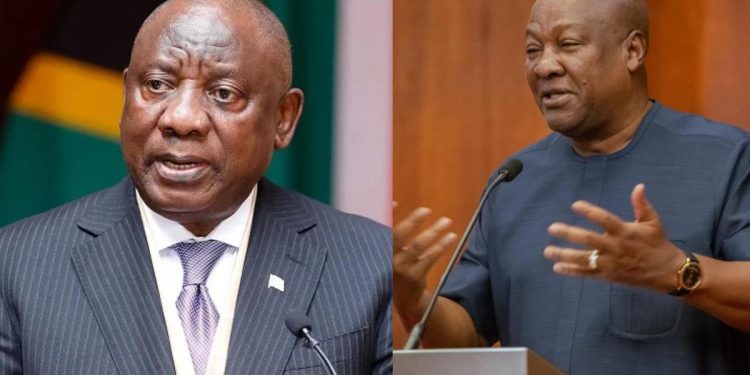
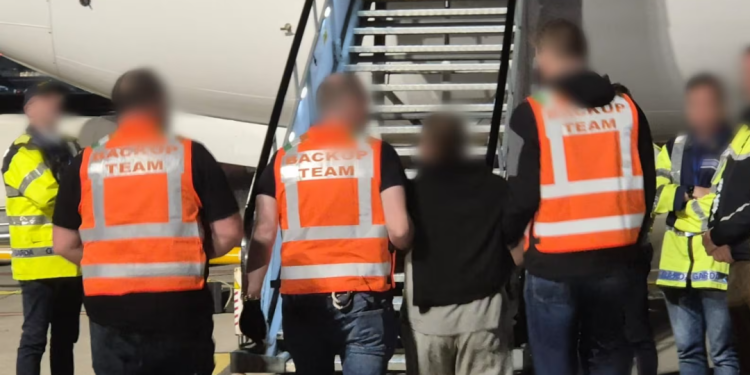
    South Africa has introduced a new policy amid its ongoing efforts to deport undocumented foreign nationals residing in the country. According to the Department of International Relations and Cooperation (DIRCO), South Africa will now impose deportation charges on countries whose nationals are deported from the country.


    The deportation of more than 100,000 undocumented migrants over the past two years has cost the state millions of rand, according to authorities. Therefore, South African authorities believe the new move will ease the financial burden on the state.

    DIRCO noted, “Moving forward, we will also be billing countries for their foreign nationals who have to be deported or who are in our criminal detention facilities and have to be deported back into their countries. At least now we can see that there’s capacity for countries to extract the foreign nationals who have fallen foul of the law. That’s something that through the department of home affairs we will pursue as a government”.

    Meanwhile, Ghanaians repatriated from South Africa could face severe legal consequences if they attempt to return to the country; Ghana’s High Commissioner to South Africa, Benjamin Quarshie, has hinted.


    During a media interaction, he explained that once fingerprints are taken during the repatriation process, the person becomes subject to strict immigration restrictions, including possible re-entry bans.


    He added, “Once your fingerprints are taken during the repatriation process, you cannot return to South Africa. Anyone who does so faces a compulsory 10-year ban”.


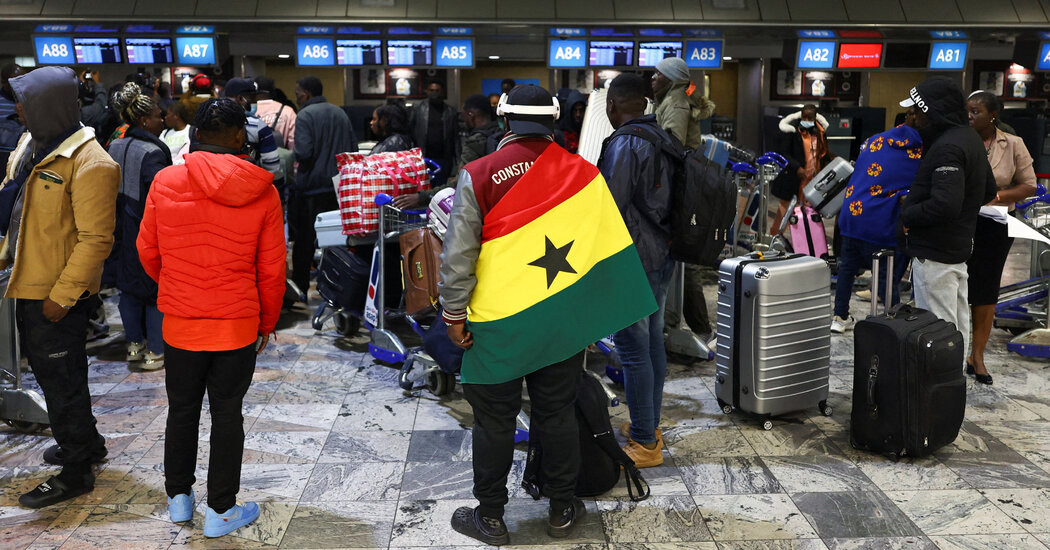
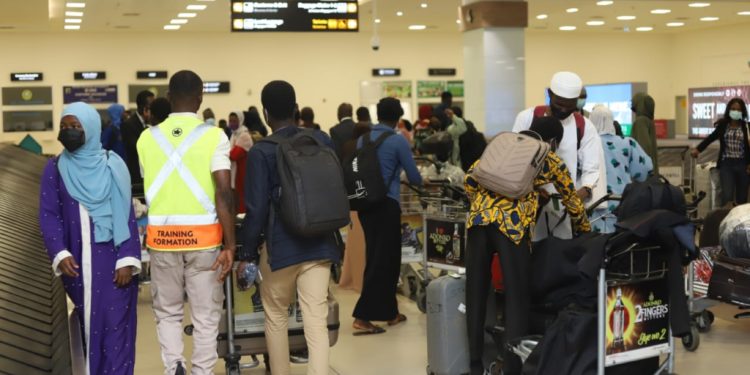
    The revelation comes ahead of a planned repatriation exercise expected in the coming days. The next batch of evacuees from South Africa is set to arrive in Ghana by Sunday, June 7, the Ghana High Commission in South Africa has announced under the ongoing voluntary evacuation programme amid the rising violent xenophobic attacks on foreign nationals.


    This comes barely a day after the Commission announced the temporary suspension of the repatriation registration exercise to allow it to complete the screening of the growing number of people who have currently registered for the voluntary repatriation.


    In a notice to Ghanaians in South Africa, the Commission released a list of registered evacuees who are set to be airlifted on Sunday to report to the Commission by Saturday, June 6, for briefing, verification and other pre-departure procedures.


    “All individuals scheduled for evacuation on Sunday, 7 June 2026, are required to report to the High Commission on the evening of Saturday, 6 June 2026, for pre-departure arrangements, verification, and briefing”, parts of the notice read.


    It also admonished that all persons on the list who have changed their minds about returning home should inform the consular by tomorrow, Thursday, June 4, to aid arrangements for other interested persons.


    “Individuals whose names appear on the approved evacuation list but no longer intend to travel are kindly requested to notify the High Commission no later than 12:00 noon on Thursday, 4 June 2026. This will enable other eligible applicants to be accommodated on the flight”, the notice added.


    Luggage requirements and guidelines for parents and guardians. Under the travel guidelines, each passenger will be permitted to check in two bags, with a maximum weight of 23 kilograms per bag. Any luggage exceeding the stipulated limit will not be accepted.


    Parents and guardians travelling with children have been advised to carry all required travel documents, including consent letters where necessary.


    “Each traveller is entitled to two pieces of checked luggage with a maximum weight of 23kg each. Any baggage exceeding the prescribed weight limit will not be accepted for travel.


    Parents or guardians travelling with children are required to bring all necessary travel documentation, including consent letters (where applicable), Road-to-Health Cards, and/or child weighing cards.


    “Travellers issued with Emergency Travel Certificates (ETCs) will receive their documents at the airport on the day of departure”, the notice added.


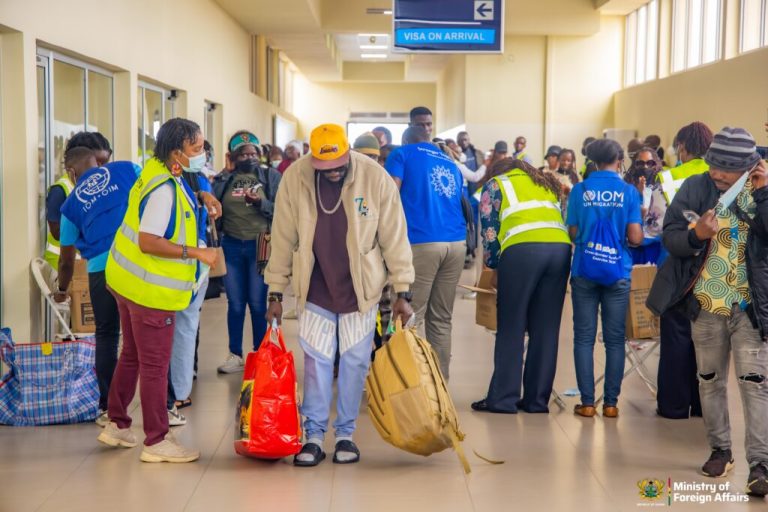
    Meanwhile, over the weekend, the Foreign Affairs Minister, Okudzeto Ablakwa, announced that following the successful repatriation of the first 301 Ghanaians from South Africa, an additional 600 more have registered at Ghana’s High Commission in the host country to be brought back home.


    In a Facebook post on Saturday, May 31, the Minister said that “600 more Ghanaians have registered at our High Commission to be evacuated from South Africa.”


    Consequently, the government will not hesitate to respond to the desires of the distressed Ghanaians in South Africa amid the heightened xenophobic violent attacks on foreigners, including those from Ghana.“When the safety and dignity of Ghanaians are at stake, the Government of Ghana does not compromise or dither”, he said.


    Mr Ablakwa also expressed admiration for the resilience of affected Ghanaians, commending their calmness and determination in the face of the situation. “I am immensely proud of the resilient spirit of Ghanaians,” he added.

    Julius Malema slams Ghanaian government over citizens’ evacuation


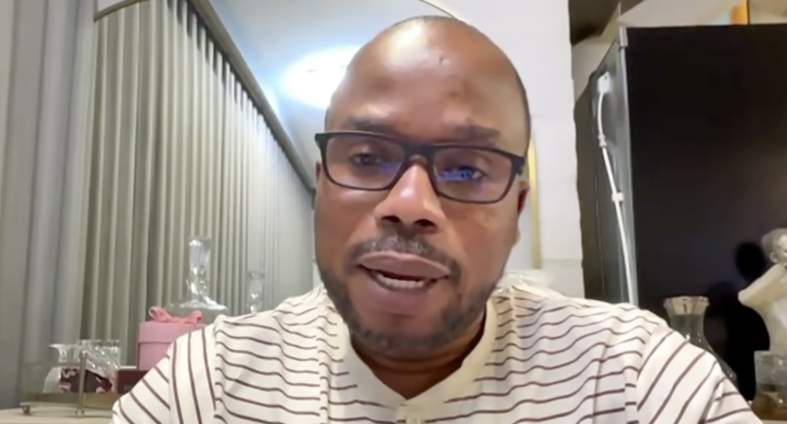
    Leader of South Africa’s Economic Freedom Fighters (EFF), Julius Malema, has broken silence following the evacuation of the first batch of 300 Ghanaians in South Africa.


    In a viral video, the politician noted that the Ghanaian government could have responded to recent xenophobic attacks in South Africa without resorting to the evacuation of citizens.


    According to him, the best approach could have been to pursue stronger diplomatic engagement and protective measures in collaboration with the South African government.


    He added, “The Ghana response was not necessary because it now creates an impression that we are all like that when it is a certain section of our society that needs to be contained by law enforcement”.


    “And one Ghanaian lady was saying, ‘you see the problem is, and I wouldn’t have taken this option, the problem is we’re being beaten in front of the police, and the police are not doing anything. That’s a problem. And when this opportunity came for me to leave, I left because if the police can’t defend me, it means the state is in agreement with the people who are beating me’.


    “So, we think it was too quick, we will still resolve this, and the president of Ghana should have given us some time to really deal with this matter and we’ll get to the bottom of it. We hope they will come back to their senses”.

  • South Africa to impose 10-year ban on repatriated Ghanaians – High Commissioner

    South Africa to impose 10-year ban on repatriated Ghanaians – High Commissioner

    Ghanaians repatriated from South Africa could face severe legal consequences if they attempt to return to the countey, Ghana’s High Commissioner to South Africa, Benjamin Quarshie, has hinted.

    During a media interaction, he explained that once fingerprints are taken during the repatriation process, the person becomes subject to strict immigration restrictions, including possible re-entry bans.

    He added, “Once your fingerprints are taken during the repatriation process, you cannot return to South Africa. Anyone who does so faces a compulsory 10-year ban”.

    The revelation comes ahead of a planned repatriation exercise expected in the coming days. The next batch of evacuees from South Africa is set to arrive in Ghana by Sunday, June 7, the Ghana High Commission in South Africa has announced under the ongoing voluntary evacuation programme amid the rising violent xenophobic attacks on foreign nationals.


    This comes barely a day after the Commission announced the temporary suspension of the repatriation registration exercise to allow it to complete the screening of the growing number of people who have currently registered for the voluntary repatriation.


    In a notice to Ghanaians in South Africa, the Commission released a list of registered evacuees who are set to be airlifted on Sunday to report to the Commission by Saturday, June 6, for briefing, verification and other pre-departure procedures.


    “All individuals scheduled for evacuation on Sunday, 7 June 2026, are required to report to the High Commission on the evening of Saturday, 6 June 2026, for pre-departure arrangements, verification, and briefing”, parts of the notice read.

    It also admonished that all persons on the list who have changed their minds about returning home should inform the consular by tomorrow, Thursday, June 4, to aid arrangements for other interested persons.


    “Individuals whose names appear on the approved evacuation list but no longer intend to travel are kindly requested to notify the High Commission no later than 12:00 noon on Thursday, 4 June 2026. This will enable other eligible applicants to be accommodated on the flight”, the notice added.


    Luggage requirements and guidelines for parents and guardians
    Under the travel guidelines, each passenger will be permitted to check in two bags, with a maximum weight of 23 kilograms per bag. Any luggage exceeding the stipulated limit will not be accepted.


    Parents and guardians travelling with children have been advised to carry all required travel documents, including consent letters where necessary.


    “Each traveller is entitled to two pieces of checked luggage with a maximum weight of 23kg each. Any baggage exceeding the prescribed weight limit will not be accepted for travel.


    Parents or guardians travelling with children are required to bring all necessary travel documentation, including consent letters (where applicable), Road-to-Health Cards, and/or child weighing cards.


    “Travellers issued with Emergency Travel Certificates (ETCs) will receive their documents at the airport on the day of departure”, the notice added.


    Meanwhile, over the weekend, the Foreign Affairs Minister, Okudzeto Ablakwa, announced that following the successful repatriation of the first 301 Ghanaians from South Africa, an additional 600 more have registered at Ghana’s High Commission in the host country to be brought back home.


    In a Facebook post on Saturday, May 31, the Minister said that “600 more Ghanaians have registered at our High Commission to be evacuated from South Africa.”


    Consequently, the government will not hesitate to respond to the desires of the distressed Ghanaians in South Africa amid the heightened xenophobic violent attacks on foreigners, including those from Ghana.
    “When the safety and dignity of Ghanaians are at stake, the Government of Ghana does not compromise or dither”, he said.


    Mr Ablakwa also expressed admiration for the resilience of affected Ghanaians, commending their calmness and determination in the face of the situation.


    “I am immensely proud of the resilient spirit of Ghanaians,” he added. Julius Malema slams Ghanaian government over citizens’ evacuation


    Leader of South Africa’s Economic Freedom Fighters (EFF), Julius Malema, has broken silence following the evacuation of the first batch of 300 Ghanaians in South Africa.


    In a viral video, the politician noted that the Ghanaian government could have responded to recent xenophobic attacks in South Africa without resorting to the evacuation of citizens.


    According to him, the best approach could have been to pursue stronger diplomatic engagement and protective measures in collaboration with the South African government.


    He added, “The Ghana response was not necessary because it now creates an impression that we are all like that when it is a certain section of our society that needs to be contained by law enforcement”.


    “And one Ghanaian lady was saying, ‘you see the problem is, and I wouldn’t have taken this option, the problem is we’re being beaten in front of the police, and the police are not doing anything. That’s a problem. And when this opportunity came for me to leave, I left because if the police can’t defend me, it means the state is in agreement with the people who are beating me’.


    “So, we think it was too quick, we will still resolve this, and the president of Ghana should have given us some time to really deal with this matter and we’ll get to the bottom of it. We hope they will come back to their senses”.

  • Xenophobic attack in South Africa leaves Ghanaian woman in ICU – High Commissioner

    Xenophobic attack in South Africa leaves Ghanaian woman in ICU – High Commissioner

    Ghana’s High Commissioner to the country, Benjamin Quarshie, has disclosed that the xenophobic attack in South Africa has left a Ghanaian woman battling for her life. Addressing the media on Wednesday, June 3, the High Commissioner said the victim is on intensive medical care after she was assaulted for refusing to pay a group that demanded money from her. 

    According to him, the group had earlier requested documents from the woman, which she provided. However, the situation escalated after they ordered her to give them money. 

    “There’s a Ghanaian who has been in the ICU until now, beaten to a pulp by these South Africans.When they went to her shop and asked for her documentation, she gave them the documentation. Then they said, ‘Give us money.’ She said, ‘No, but you asked for documentation, and I’ve shown you the documentation,” he added. 

    Meanwhile, the next batch of evacuees from South Africa is set to arrive in Ghana by Sunday, June 7, the Ghana High Commission in South Africa has announced under the ongoing voluntary evacuation programme amid the rising violent xenophobic attacks on foreign nationals.

    This comes barely a day after the Commission announced the temporary suspension of the repatriation registration exercise to allow it to complete the screening of the growing number of people who have currently registered for the voluntary repatriation.

    In a notice to Ghanaians in South Africa, the Commission released a list of registered evacuees who are set to be airlifted on Sunday to report to the Commission by Saturday, June 6, for briefing, verification and other pre-departure procedures.

    “All individuals scheduled for evacuation on Sunday, 7 June 2026, are required to report to the High Commission on the evening of Saturday, 6 June 2026, for pre-departure arrangements, verification, and briefing”, parts of the notice read.It also admonished that all persons on the list who have changed their minds about returning home should inform the consular by tomorrow, Thursday, June 4, to aid arrangements for other interested persons.

    “Individuals whose names appear on the approved evacuation list but no longer intend to travel are kindly requested to notify the High Commission no later than 12:00 noon on Thursday, 4 June 2026. This will enable other eligible applicants to be accommodated on the flight”, the notice added.

    Luggage requirements and guidelines for parents and guardians

    Under the travel guidelines, each passenger will be permitted to check in two bags, with a maximum weight of 23 kilograms per bag. Any luggage exceeding the stipulated limit will not be accepted.

    Parents and guardians travelling with children have been advised to carry all required travel documents, including consent letters where necessary.

    “Each traveller is entitled to two pieces of checked luggage with a maximum weight of 23kg each. Any baggage exceeding the prescribed weight limit will not be accepted for travel.

    Parents or guardians travelling with children are required to bring all necessary travel documentation, including consent letters (where applicable), Road-to-Health Cards, and/or child weighing cards.

    “Travellers issued with Emergency Travel Certificates (ETCs) will receive their documents at the airport on the day of departure”, the notice added.

    Meanwhile, over the weekend, the Foreign Affairs Minister, Okudzeto Ablakwa, announced that following the successful repatriation of the first 301 Ghanaians from South Africa, an additional 600 more have registered at Ghana’s High Commission in the host country to be brought back home.

    In a Facebook post on Saturday, May 31, the Minister said that “600 more Ghanaians have registered at our High Commission to be evacuated from South Africa.”

    Consequently, the government will not hesitate to respond to the desires of the distressed Ghanaians in South Africa amid the heightened xenophobic violent attacks on foreigners, including those from Ghana.

    “When the safety and dignity of Ghanaians are at stake, the Government of Ghana does not compromise or dither”, he said.

    Mr Ablakwa also expressed admiration for the resilience of affected Ghanaians, commending their calmness and determination in the face of the situation.

    “I am immensely proud of the resilient spirit of Ghanaians,” he added.

    Julius Malema slams Ghanaian government over citizens evacuation

    Leader of South Africa’s Economic Freedom Fighters (EFF), Julius Malema, has broken silence following the evacuation of the first batch of 300 Ghanaians in South Africa.

    In a viral video, the politician noted that the Ghanaian government could have responded to recent xenophobic attacks in South Africa without resorting to the evacuation of citizens.

    According to him, the best approach could have been to pursue stronger diplomatic engagement and protective measures in collaboration with the South African government.

    He added, “The Ghana response was not necessary because it now creates an impression that we are all like that when it is a certain section of our society that needs to be contained by law enforcement”.

    “And one Ghanaian lady was saying, ‘you see the problem is, and I wouldn’t have taken this option, the problem is we’re being beaten in front of the police, and the police are not doing anything. That’s a problem. And when this opportunity came for me to leave, I left because if the police can’t defend me, it means the state is in agreement with the people who are beating me’.

    “So, we think it was too quick, we will still resolve this, and the president of Ghana should have given us some time to really deal with this matter and we’ll get to the bottom of it. We hope they will come back to their senses”.

  • Next batch of evacuees to arrive on June 7; High Commission issues travel guidelines to evacuees from South Africa

    Next batch of evacuees to arrive on June 7; High Commission issues travel guidelines to evacuees from South Africa

    The next batch of evacuees from South Africa is set to arrive in Ghana by Sunday, June 7, the Ghana High Commission in South Africa has announced under the ongoing voluntary evacuation programme amid the rising violent xenophobic attacks on foreign nationals.

    This comes barely a day after the Commission announced the temporary suspension of the repatriation registration exercise to allow it to complete the screening of the growing number of people who have currently registered for the voluntary repatriation.

    In a notice to Ghanaians in South Africa, the Commission released a list of registered evacuees who are set to be airlifted on Sunday to report to the Commission by Saturday, June 6, for briefing, verification and other pre-departure procedures.

    “All individuals scheduled for evacuation on Sunday, 7 June 2026, are required to report to the High Commission on the evening of Saturday, 6 June 2026, for pre-departure arrangements, verification, and briefing”, parts of the notice read.

    It also admonished that all persons on the list who have changed their minds about returning home should inform the consular by tomorrow, Thursday, June 4, to aid arrangements for other interested persons.

    “Individuals whose names appear on the approved evacuation list but no longer intend to travel are kindly requested to notify the High Commission no later than 12:00 noon on Thursday, 4 June 2026. This will enable other eligible applicants to be accommodated on the flight”, the notice added.

    Luggage requirements and guidelines for parents and guardians

    Under the travel guidelines, each passenger will be permitted to check in two bags, with a maximum weight of 23 kilograms per bag. Any luggage exceeding the stipulated limit will not be accepted.

    Parents and guardians travelling with children have been advised to carry all required travel documents, including consent letters where necessary. 

    “Each traveller is entitled to two pieces of checked luggage with a maximum weight of 23kg each. Any baggage exceeding the prescribed weight limit will not be accepted for travel.

    Parents or guardians travelling with children are required to bring all necessary travel documentation, including consent letters (where applicable), Road-to-Health Cards, and/or child weighing cards.

    “Travellers issued with Emergency Travel Certificates (ETCs) will receive their documents at the airport on the day of departure”, the notice added.

    Meanwhile, over the weekend, the Foreign Affairs Minister, Okudzeto Ablakwa, announced that following the successful repatriation of the first 301 Ghanaians from South Africa, an additional 600 more have registered at Ghana’s High Commission in the host country to be brought back home.

    In a Facebook post on Saturday, May 31, the Minister said that “600 more Ghanaians have registered at our High Commission to be evacuated from South Africa.”

    Consequently, the government will not hesitate to respond to the desires of the distressed Ghanaians in South Africa amid the heightened xenophobic violent attacks on foreigners, including those from Ghana.

    “When the safety and dignity of Ghanaians are at stake, the Government of Ghana does not compromise or dither”, he said.

    Mr Ablakwa also expressed admiration for the resilience of affected Ghanaians, commending their calmness and determination in the face of the situation.

    “I am immensely proud of the resilient spirit of Ghanaians,” he added.

    Julius Malema slams Ghanaian government over citizens evacuation

    Leader of South Africa’s Economic Freedom Fighters (EFF), Julius Malema, has broken silence following the evacuation of the first batch of 300 Ghanaians in South Africa.

    In a viral video, the politician noted that the Ghanaian government could have responded to recent xenophobic attacks in South Africa without resorting to the evacuation of citizens.

    According to him, the best approach could have been to pursue stronger diplomatic engagement and protective measures in collaboration with the South African government.

    He added, “The Ghana response was not necessary because it now creates an impression that we are all like that when it is a certain section of our society that needs to be contained by law enforcement”.

    “And one Ghanaian lady was saying, ‘you see the problem is, and I wouldn’t have taken this option, the problem is we’re being beaten in front of the police, and the police are not doing anything. That’s a problem. And when this opportunity came for me to leave, I left because if the police can’t defend me, it means the state is in agreement with the people who are beating me’.

    “So, we think it was too quick, we will still resolve this, and the president of Ghana should have given us some time to really deal with this matter and we’ll get to the bottom of it. We hope they will come back to their senses”.

  • Some Ghanaian business owners willing to employ 120 evacuees from South Africa – Foreign Ministry

    Some Ghanaian business owners willing to employ 120 evacuees from South Africa – Foreign Ministry

    The government has secured 120 job opportunities for one hundred and twenty (120) Ghanaian evacuees from South Africa, the Ministry of Foreign Affairs has announced. The Ministry made the disclosure through a statement on Monday, June 1.

    According to the statement, the Ministry noted that as part of efforts to support the reintegration of citizens returning home, Ghanaian business owners have been engaged to provide employment opportunities for the evacuees. The statement further called on more business owners to support the victims in this difficult time.

    “So far, we have secured 120 job opportunities from patriotic Ghanaian business owners. Be part of this noble project. We invite Ghanaian CEOs and entrepreneurs desirous of employing Ghanaians returning from South Africa to contact the Delivery Unit of the Ministry of Foreign Affairs, the statement added.

    As part of efforts to safeguard nationals’ investments in South Africa, Ghana’s High Commissioner to South Africa, Benjamin Quashie, has emphasised that there must be “realistic compensation” should the South African government seek to take over such businesses.

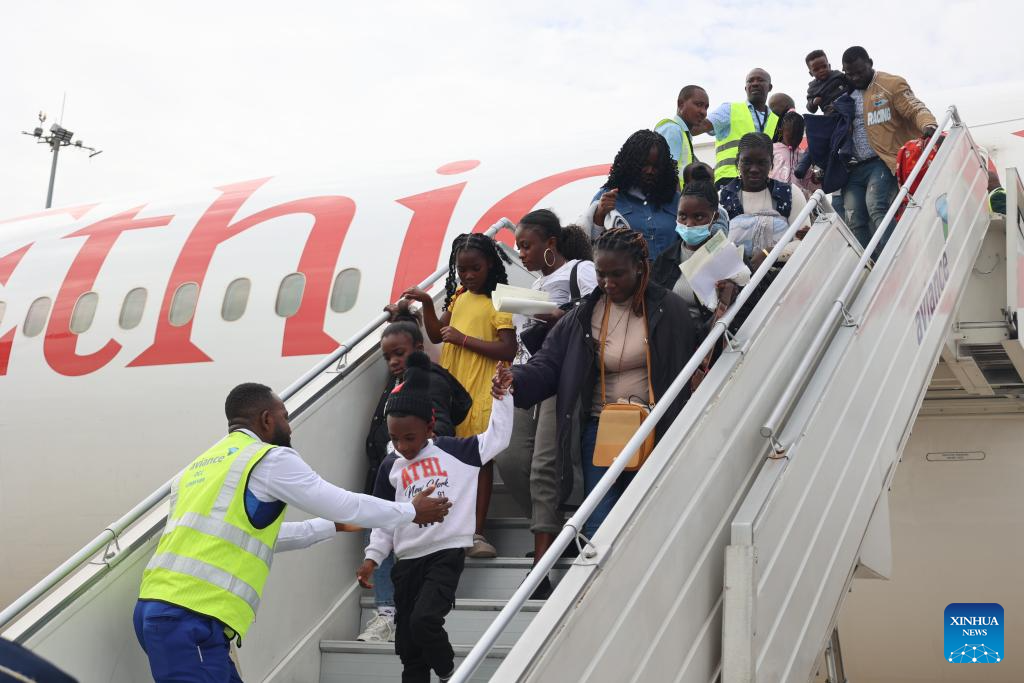
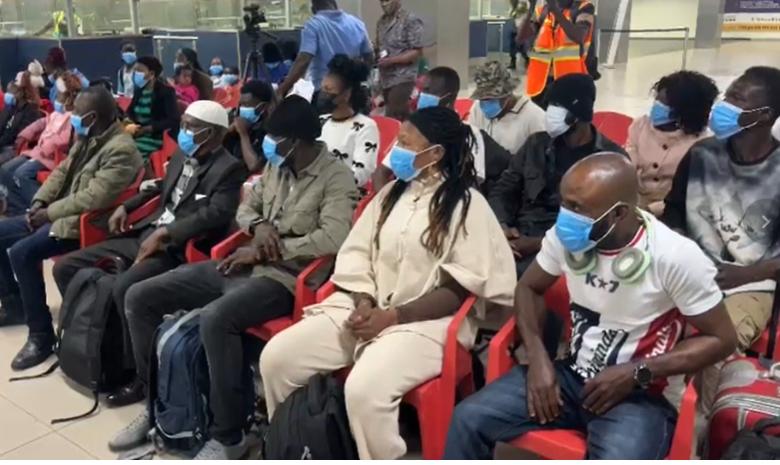
    The first batch of 300 Ghanaians in South Africa amid heightened tensions of xenophobic attacks on foreigners arrived in Ghana on Wednesday, May 27.


    Earlier this month, a Ghanaian national, Emmanuel Asamoah, who was captured in a viral video being harassed by a group of individuals in a xenophobic attack in South Africa, was flown home by the government. The viral video showed several other foreign nationals being intimidated by some South African citizens for allegedly taking jobs meant for locals.


    Meanwhile, the leader of South Africa’s Economic Freedom Fighters (EFF), Julius Malema, has reacted following the evacuation of the first batch of 300 Ghanaians in South Africa.


    In a viral video sighted, the politician noted that the Ghanaian government could have responded to recent xenophobic attacks in South Africa without resorting to the evacuation of citizens.


    According to him, the best approach could have been to pursue stronger diplomatic engagement and protective measures in collaboration with the South African government.


    He added, “The Ghana response was not necessary because it now creates an impression that we are all like that when it is a certain section of our society that needs to be contained by law enforcement”.


    “And one Ghanaian lady was saying, ‘you see the problem is, and I wouldn’t have taken this option, the problem is we’re being beaten in front of the police, and the police are not doing anything. That’s a problem. And when this opportunity came for me to leave, I left because if the police can’t defend me, it means the state is in agreement with the people who are beating me’.


    “So, we think it was too quick, we will still resolve this, and the president of Ghana should have given us some time to really deal with this matter and we’ll get to the bottom of it. We hope they will come back to their senses”.


    Weeks ago, the Ministry confirmed that over eight hundred (800) Ghanaians have registered at their Commission in Pretoria, for voluntary evacuation due to the worsening xenophobic attacks in South Africa.
    Consequently, “the planned evacuation has been deferred by a few days to enable our High Commission to meet these evacuation conditions”.
    “The Ministry of Foreign Affairs wishes to provide an update on the evacuation of Ghanaians from South Africa, which was scheduled to commence today, 21 May, 2026. The Government of Ghana notes that more than 800 Ghanaians have registered with our High Commission in Pretoria seeking to be evacuated due to the latest wave of xenophobic attacks.
    Considering the numbers involved and the South African legal conditions that have to be met, including mandatory passenger screening, multi-institutional coordination and flight permits, parts of the statement read.
    To ensure that all the necessary regulatory requirements are met, an additional day of preparation to ensure a safe and orderly evacuation process.
    “Ghanaian and South African authorities have agreed to enhanced and more efficient pre-evacuation modalities to expedite the process”, the Ministry added.
    Govt pledges support package for SA repatriates
    Before the planned evacuation, the government announced a support package for Ghanaians being evacuated from South Africa.
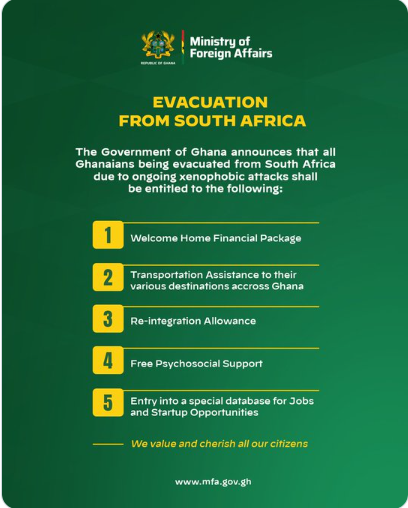
    In a statement shared on the Ministry of Foreign Affairs’ (MoFA) official X (formerly Twitter) account on May 20, Foreign Affairs Minister Samuel Okudzeto Ablakwa stated that returnees would receive a welcome-home financial package, transportation assistance to their destinations across Ghana, and a reintegration allowance.
    The package also included free psychosocial support for those who may have experienced trauma or violence, as well as counselling and medical assistance to aid their recovery.
    In addition, the government indicated that the evacuees would be enrolled in a special database for job and startup opportunities as part of efforts to support their reintegration.
    The Ministry described the intervention as part of the government’s commitment to protecting the welfare of Ghanaian citizens abroad and assisting them during times of crisis, stating that it valued and cherished all Ghanaian citizens.
    The support package was announced ahead of the planned evacuation of the first batch of 300 Ghanaians from South Africa on a special chartered flight.
    The evacuation had been approved by President John Dramani Mahama after Ghana’s High Commissioner to South Africa, Benjamin Anani Quashie, reported growing fears among Ghanaians living in the country amid renewed xenophobic attacks targeting foreign nationals.
    Is this the first time xenophobic attacks have happened in SA?The recent xenophobic attacks on foreigners by South African nations aren’t the first. SA has a history of violent xenophobic attacks dating as far back as 1998.
    In 1998, three foreign nationals were killed in Johannesburg. Two years later, seven more were killed in Cape Town.After a long period of quiet in the attacks, the worst in SA’s history happened in 2008 when sixty‑two (62) people lost their lives, 1,700 were injured, and about 100,000 were displaced nationwide, cementing xenophobia as a recurring national crisis.
    In 2015, violence flared again after inflammatory remarks by the Zulu King. The unrest spread across the country, forcing the government to deploy the military to restore order.
    By 2019, riots erupted in Durban and Johannesburg, with Nigerian‑owned businesses being specifically targeted.More recently, between 2022 and 2025, smaller but persistent flare‑ups were linked to vigilante movements such as Operation Dudula.
    These included blocking foreigners from accessing health facilities in Gauteng and KwaZulu‑Natal, reflecting how xenophobia had become embedded in everyday life.

  • Ghana temporarily suspends repatriation registration exercise effective June 2 – High Commission

    Ghana temporarily suspends repatriation registration exercise effective June 2 – High Commission

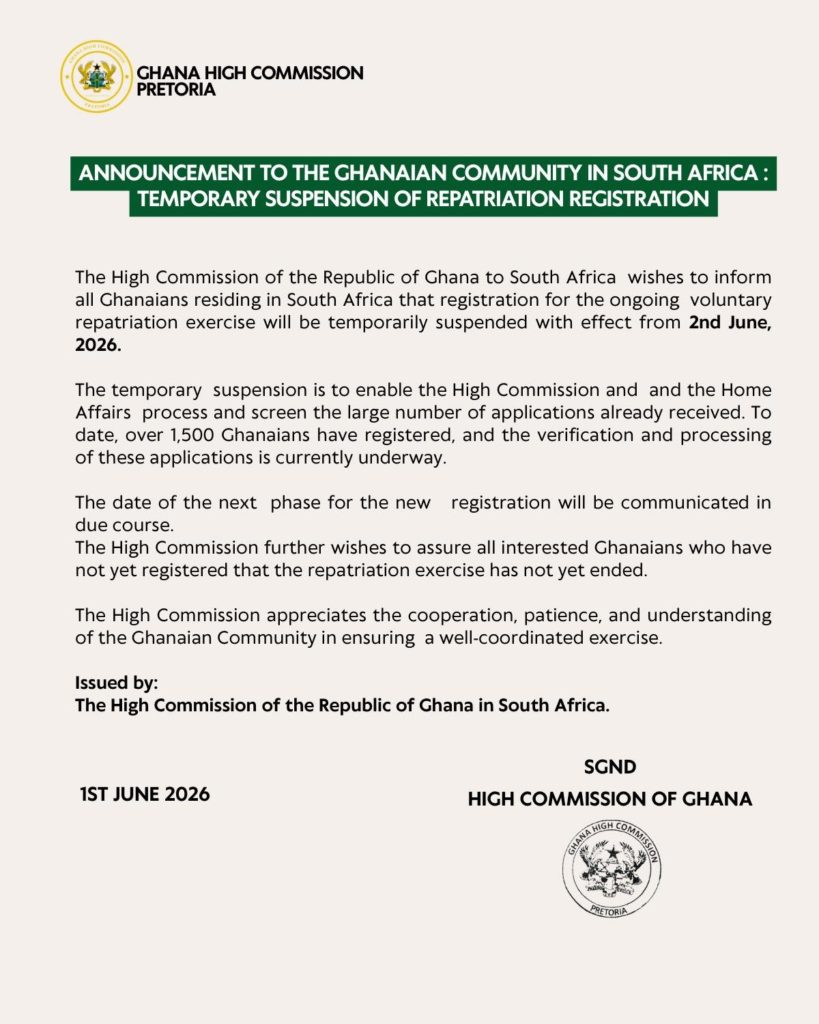
    Ghana has announced a temporary suspension of the repatriation registration exercise in South Africa, effective today, Tuesday, June 2, the High Commission of the Republic of Ghana to South Africa has confirmed.

    The Commissioner communicated this in a formal notice yesterday, Monday June 1 citing that the move has become necessary to allow his outfit complete the screening of the growing number of people who have currently registered for the evacuation back home.

    As at the time the Commission issued the notice, it indicated that over 1,500 Ghanaians had registered with his outfit waiting to be airlifted.

     “The High Commission of the Republic of Ghana to South Africa wishes to inform all Ghanaians residing in South Africa that registration for the ongoing voluntary repatriation exercise will be temporarily suspended with effect from 2nd June, 2026.

    The temporary suspension is to enable the High Commission and the Home Affairs authorities to process and screen the large number of applications already received. To date, over 1,500 Ghanaians have registered, and the verification and processing of these applications are currently underway”, parts of the statement read.

    It assured affected parties to exercise patience, noting that the exercise hasn’t ended.

    “The date for the next phase of registration will be communicated in due course. The High Commission further wishes to assure all interested Ghanaians who have not yet registered that the repatriation exercise has not ended. The High Commission appreciates the cooperation, patience, and understanding of the Ghanaian community in ensuring a well-coordinated exercise”, it continued.

    Meanwhile, over the weekend, the Foreign Affairs Minister, Okudzeto Ablakwa, announced that following the successful repatriation of the first 301 Ghanaians from South Africa, an additional 600 more have registered at Ghana’s High Commission in the host country to be brought back home.

    In a Facebook post on Saturday, May 31, the Minister said that “600 more Ghanaians have registered at our High Commission to be evacuated from South Africa.”

    Consequently, the government will not hesitate to respond to the desires of the distressed Ghanaians in South Africa amid the heightened xenophobic violent attacks on foreigners, including those from Ghana.

    “When the safety and dignity of Ghanaians are at stake, the Government of Ghana does not compromise or dither”, he said.

    Mr Ablakwa also expressed admiration for the resilience of affected Ghanaians, commending their calmness and determination in the face of the situation.

    “I am immensely proud of the resilient spirit of Ghanaians,” he added.

    Also, earlier, Ghana’s High Commissioner to South Africa revealed that 410 Ghanaians fleeing xenophobic attacks in South Africa will be evacuated over the weekend.

    The weekend group would be the second batch to be repatriated, while the date for the rest is yet to be communicated after the arrival of the first 300 evacuees on Wednesday, May 27.

    Speaking during JoyFM’s Super Morning Show on Thursday, May 28, the High Commissioner indicated that, “The next batch will be of 410 evacuees who have given us their names that they want to go home voluntarily. It is going to be the coming Sunday or Tuesday; we have not fixed the exact date yet, but it should be between these three days.”

    He disclosed that about 1,000 Ghanaians living in South Africa have registered to return home over fears of the attacks.

    “As of this morning (Thursday, May 28), I have been briefed that we have almost a thousand who have fully registered and have indicated that they want to leave South Africa and go back home,” he noted.

    Meanwhile, Foreign Affairs Minister Samuel Okudzeto Ablakwa has urged the evacuees not to lose hope, assuring them that the government has plans in place to support their reintegration into society.

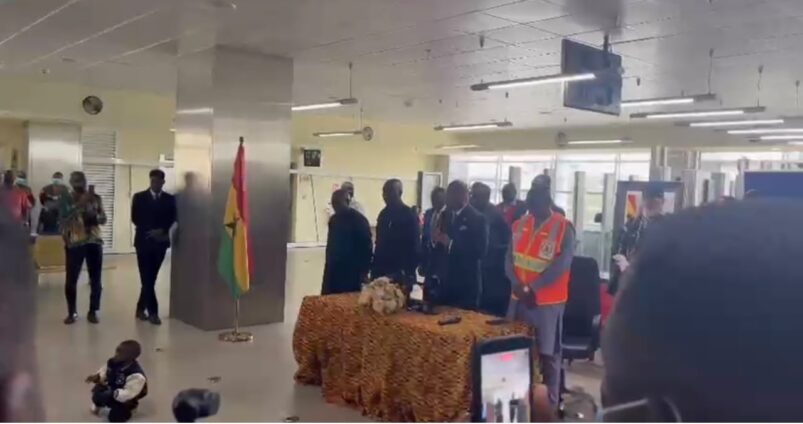
    Addressing the returnees at the Accra International Airport on Wednesday, May 27, Mr Ablakwa encouraged them to remain optimistic despite their experiences abroad.

    “We don’t want any of you to feel brokenhearted, don’t be downhearted, don’t be depressed, have confidence that the almighty has better plans for you,” he told the evacuees upon their arrival.

  • Govt to protect investments of citizens in South Africa – Benjamin Quashie

    Govt to protect investments of citizens in South Africa – Benjamin Quashie

    The government has begun efforts to ensure that Ghanaian-owned businesses in South Africa are protected from unlawful seizure or interference amid ongoing xenophobic attacks in the country.

    As part of efforts to safeguard nationals’ investments in South Africa, Ghana’s High Commissioner to South Africa, Benjamin Quashie, has emphasised that there must be “realistic compensation” should the South African government seek to take over such businesses.

    “We’ve instituted measures to ensure that everybody who has business in this country, we protect that business. And ensure that if the government of South Africa wants to take that business, there should be compensation to the owners of those businesses,” he added.

    The first batch of 300 Ghanaians in South Africa amid heightened tensions of xenophobic attacks on foreigners arrived in Ghana on Wednesday, May 27.

    Earlier this month, a Ghanaian national, Emmanuel Asamoah, who was captured in a viral video being harassed by a group of individuals in a xenophobic attack in South Africa, was been flown home by the government. The viral video showed several other foreign nationals being intimidated by some South African citizens for allegedly taking jobs meant for locals.

    Meanwhile, leader of South Africa’s Economic Freedom Fighters (EFF), Julius Malema, has broken silence following the evacuation of the first batch of 300 Ghanaians in South Africa.


    In a viral video sighted, the politician noted that the Ghanaian government could have responded to recent xenophobic attacks in South Africa without resorting to the evacuation of citizens.

    According to him, the best approach could have been to pursue stronger diplomatic engagement and protective measures in collaboration with the South African government.


    He added, “The Ghana response was not necessary because it now creates an impression that we are all like that when it is a certain section of our society that needs to be contained by law enforcement”.


    “And one Ghanaian lady was saying, ‘you see the problem is, and I wouldn’t have taken this option, the problem is we’re being beaten in front of the police, and the police are not doing anything. That’s a problem. And when this opportunity came for me to leave, I left because if the police can’t defend me, it means the state is in agreement with the people who are beating me’.


    “So, we think it was too quick, we will still resolve this, and the president of Ghana should have given us some time to really deal with this matter and we’ll get to the bottom of it. We hope they will come back to their senses”.


    Weeks ago, the Ministry confirmed that over eight hundred (800) Ghanaians have registered at their Commission in Pretoria, for voluntary evacuation due to the worsening xenophobic attacks in South Africa.

    Consequently, “the planned evacuation has been deferred by a few days to enable our High Commission to meet these evacuation conditions”.

    “The Ministry of Foreign Affairs wishes to provide an update on the evacuation of Ghanaians from South Africa, which was scheduled to commence today, 21 May, 2026. The Government of Ghana notes that more than 800 Ghanaians have registered with our High Commission in Pretoria seeking to be evacuated due to the latest wave of xenophobic attacks.

    Considering the numbers involved and the South African legal conditions that have to be met, including mandatory passenger screening, multi-institutional coordination and flight permits, parts of the statement read.

    To ensure that all the necessary regulatory requirements are met, an additional day of preparation to ensure a safe and orderly evacuation process.

    “Ghanaian and South African authorities have agreed to enhanced and more efficient pre-evacuation modalities to expedite the process”, the Ministry added.

    Govt pledges support package for SA repatriates

    Before the planned evacuation, the government announced a support package for Ghanaians being evacuated from South Africa.

    In a statement shared on the Ministry of Foreign Affairs’ (MoFA) official X (formerly Twitter) account on May 20, Foreign Affairs Minister Samuel Okudzeto Ablakwa stated that returnees would receive a welcome-home financial package, transportation assistance to their destinations across Ghana, and a reintegration allowance.

    The package also included free psychosocial support for those who may have experienced trauma or violence, as well as counselling and medical assistance to aid their recovery.

    In addition, the government indicated that the evacuees would be enrolled in a special database for job and startup opportunities as part of efforts to support their reintegration.

    The Ministry described the intervention as part of the government’s commitment to protecting the welfare of Ghanaian citizens abroad and assisting them during times of crisis, stating that it valued and cherished all Ghanaian citizens.

    The support package was announced ahead of the planned evacuation of the first batch of 300 Ghanaians from South Africa on a special chartered flight.

    The evacuation had been approved by President John Dramani Mahama after Ghana’s High Commissioner to South Africa, Benjamin Anani Quashie, reported growing fears among Ghanaians living in the country amid renewed xenophobic attacks targeting foreign nationals.

    Is this the first time xenophobic attacks have happened in SA?The recent xenophobic attacks on foreigners by South African nations aren’t the first. SA has a history of violent xenophobic attacks dating as far back as 1998.

    In 1998, three foreign nationals were killed in Johannesburg. Two years later, seven more were killed in Cape Town.After a long period of quiet in the attacks, the worst in SA’s history happened in 2008 when sixty‑two (62) people lost their lives, 1,700 were injured, and about 100,000 were displaced nationwide, cementing xenophobia as a recurring national crisis.

    In 2015, violence flared again after inflammatory remarks by the Zulu King. The unrest spread across the country, forcing the government to deploy the military to restore order.

    By 2019, riots erupted in Durban and Johannesburg, with Nigerian‑owned businesses being specifically targeted.More recently, between 2022 and 2025, smaller but persistent flare‑ups were linked to vigilante movements such as Operation Dudula.

    These included blocking foreigners from accessing health facilities in Gauteng and KwaZulu‑Natal, reflecting how xenophobia had become embedded in everyday life.

  • South Africa evacuation includes 26 detained Ghanaians – Ablakwa

    South Africa evacuation includes 26 detained Ghanaians – Ablakwa

    Twenty-six (26) Ghanaians who were detained in South Africa over alleged visa violations were part of the first batch of individuals who arrived in Ghana on Wednesday, May 27. This information was made public by Samuel Okudzeto Ablakwa, the Minister of Foreign Affairs, while addressing the media on Wednesday, May 27.

    According to him, prior to the development, the Ghanaian government had engaged with officials in South Africa to ensure that all Ghanaian nationals returned home, including those in prison detention.

    “We negotiated with the South African government that since we are evacuating our nationals, we don’t want to leave anybody behind in prison. “So now, there is no Ghanaian in any South African prison for visa violations. We have brought all of them back home,” Mr. Ablakwa added.

    Meanwhile, Immigration officials at OR Tambo International Airport have revealed that about 290 who were flown to Ghana violated visa laws. Speaking to the media, Home Affairs Immigration and Law Enforcement head Stephen van Neel indicated that authorities will soon take action against the affected individuals who have violated the laws.

    “Of the 300 individuals that were on that list, we only found 10 of them to be legal in the country…We obviously have to make sure that certain sanctions are enforced,” Home Affairs Immigration and Law Enforcement head.

    The first batch of 300 Ghanaians in South Africa amid heightened tensions of xenophobic attacks on foreigners including Ghanaians arrived in Ghana on Wednesday, May 27. Earlier this month, a Ghanaian national, Emmanuel Asamoah, who was captured in a viral video being harassed by a group of individuals in a xenophobic attack in South Africa, was been flown home by the government.


    The viral video showed several other foreign nationals being intimidated by some South African citizens for allegedly taking jobs meant for locals.


    Addressing the media, the Coordinating Director in charge of Political and Economic Affairs at the ministry, Harold Agyeman, disclosed that Emmanuel Asamoah has successfully made it to Ghana following the government’s intervention.


    “Government is very much conscious and strongly committed to protecting our nationals abroad. And so, under the instructions of the minister, Emmanuel Asamoah has been relocated to Ghana to ensure that he is in a safe space,”he added.

    According to him, “We continue to rely on the assurances that the South African government has given that they would stop this activity by their nationals, which can be threatening to the relations with other African countries.”


    Weeks ago, the Ministry confirmed that over eight hundred (800) Ghanaians have registered at their Commission in Pretoria, for voluntary evacuation due to the worsening xenophobic attacks in South Africa.

    Consequently, “the planned evacuation has been deferred by a few days to enable our High Commission to meet these evacuation conditions”.


    “The Ministry of Foreign Affairs wishes to provide an update on the evacuation of Ghanaians from South Africa, which was scheduled to commence today, 21 May, 2026. The Government of Ghana notes that more than 800 Ghanaians have registered with our High Commission in Pretoria seeking to be evacuated due to the latest wave of xenophobic attacks.


    Considering the numbers involved and the South African legal conditions that have to be met, including mandatory passenger screening, multi-institutional coordination and flight permits, parts of the statement read.


    To ensure that all the necessary regulatory requirements are met, an additional day of preparation to ensure a safe and orderly evacuation process.


    “Ghanaian and South African authorities have agreed to enhanced and more efficient pre-evacuation modalities to expedite the process”, the Ministry added.


    Govt pledges support package for SA repatriates


    Before the planned evacuation, the government announced a support package for Ghanaians being evacuated from South Africa.


    In a statement shared on the Ministry of Foreign Affairs’ (MoFA) official X (formerly Twitter) account on May 20, Foreign Affairs Minister Samuel Okudzeto Ablakwa stated that returnees would receive a welcome-home financial package, transportation assistance to their destinations across Ghana, and a reintegration allowance.


    The package also included free psychosocial support for those who may have experienced trauma or violence, as well as counselling and medical assistance to aid their recovery.


    In addition, the government indicated that the evacuees would be enrolled in a special database for job and startup opportunities as part of efforts to support their reintegration.


    The Ministry described the intervention as part of the government’s commitment to protecting the welfare of Ghanaian citizens abroad and assisting them during times of crisis, stating that it valued and cherished all Ghanaian citizens.


    The support package was announced ahead of the planned evacuation of the first batch of 300 Ghanaians from South Africa on a special chartered flight.

    The evacuation had been approved by President John Dramani Mahama after Ghana’s High Commissioner to South Africa, Benjamin Anani Quashie, reported growing fears among Ghanaians living in the country amid renewed xenophobic attacks targeting foreign nationals.


    Is this the first time xenophobic attacks have happened in SA?
    The recent xenophobic attacks on foreigners by South African nations aren’t the first. SA has a history of violent xenophobic attacks dating as far back as 1998.


    In 1998, three foreign nationals were killed in Johannesburg. Two years later, seven more were killed in Cape Town.
    After a long period of quiet in the attacks, the worst in SA’s history happened in 2008 when sixty‑two (62) people lost their lives, 1,700 were injured, and about 100,000 were displaced nationwide, cementing xenophobia as a recurring national crisis.


    In 2015, violence flared again after inflammatory remarks by the Zulu King. The unrest spread across the country, forcing the government to deploy the military to restore order.


    By 2019, riots erupted in Durban and Johannesburg, with Nigerian‑owned businesses being specifically targeted.
    More recently, between 2022 and 2025, smaller but persistent flare‑ups were linked to vigilante movements such as Operation Dudula.

    These included blocking foreigners from accessing health facilities in Gauteng and KwaZulu‑Natal, reflecting how xenophobia had become embedded in everyday life.

  • SA immigration officials say 290 repatriated Ghanaians violated visa laws

    SA immigration officials say 290 repatriated Ghanaians violated visa laws

    Only 10 out of about 300 Ghanaians who presented themselves for evacuation were found to be in South Africa legally, Immigration officials at OR Tambo International Airport have revealed.

    Speaking to the media, Home Affairs Immigration and Law Enforcement head Stephen van Neel indicated that authorities will soon take action against the affected individuals who have violated the laws.

    “Of the 300 individuals that were on that list, we only found 10 of them to be legal in the country…We obviously have to make sure that certain sanctions are enforced,” Home Affairs Immigration and Law Enforcement head.

    The first batch of 800 Ghanaians in South Africa amid heightened tensions of xenophobic attacks on foreigners including Ghanaians arrived in Ghana on Wednesday, May 27. Earlier this month, a Ghanaian national, Emmanuel Asamoah, who was captured in a viral video being harassed by a group of individuals in a xenophobic attack in South Africa, was been flown home by the government.

    https://www.youtube.com/watch?v=iBTvIm6dZZ8


    The viral video showed several other foreign nationals being intimidated by some South African citizens for allegedly taking jobs meant for locals.


    Addressing the media, the Coordinating Director in charge of Political and Economic Affairs at the ministry, Harold Agyeman, disclosed that Emmanuel Asamoah has successfully made it to Ghana following the government’s intervention.


    “Government is very much conscious and strongly committed to protecting our nationals abroad. And so, under the instructions of the minister, Emmanuel Asamoah has been relocated to Ghana to ensure that he is in a safe space,” he added.

    According to him, “We continue to rely on the assurances that the South African government has given that they would stop this activity by their nationals, which can be threatening to the relations with other African countries.”


    Weeks ago, the Ministry confirmed that over eight hundred (800) Ghanaians have registered at their Commission in Pretoria, for voluntary evacuation due to the worsening xenophobic attacks in South Africa. Consequently, “the planned evacuation has been deferred by a few days to enable our High Commission to meet these evacuation conditions”.


    “The Ministry of Foreign Affairs wishes to provide an update on the evacuation of Ghanaians from South Africa, which was scheduled to commence today, 21 May, 2026. The Government of Ghana notes that more than 800 Ghanaians have registered with our High Commission in Pretoria seeking to be evacuated due to the latest wave of xenophobic attacks.


    Considering the numbers involved and the South African legal conditions that have to be met, including mandatory passenger screening, multi-institutional coordination and flight permits, parts of the statement read.


    To ensure that all the necessary regulatory requirements are met, an additional day of preparation to ensure a safe and orderly evacuation process.


    “Ghanaian and South African authorities have agreed to enhanced and more efficient pre-evacuation modalities to expedite the process”, the Ministry added.


    Govt pledges support package for SA repatriates


    Before the planned evacuation, the government announced a support package for Ghanaians being evacuated from South Africa.


    In a statement shared on the Ministry of Foreign Affairs’ (MoFA) official X (formerly Twitter) account on May 20, Foreign Affairs Minister Samuel Okudzeto Ablakwa stated that returnees would receive a welcome-home financial package, transportation assistance to their destinations across Ghana, and a reintegration allowance.


    The package also included free psychosocial support for those who may have experienced trauma or violence, as well as counselling and medical assistance to aid their recovery.


    In addition, the government indicated that the evacuees would be enrolled in a special database for job and startup opportunities as part of efforts to support their reintegration.


    The Ministry described the intervention as part of the government’s commitment to protecting the welfare of Ghanaian citizens abroad and assisting them during times of crisis, stating that it valued and cherished all Ghanaian citizens.


    The support package was announced ahead of the planned evacuation of the first batch of 300 Ghanaians from South Africa on a special chartered flight. The evacuation had been approved by President John Dramani Mahama after Ghana’s High Commissioner to South Africa, Benjamin Anani Quashie, reported growing fears among Ghanaians living in the country amid renewed xenophobic attacks targeting foreign nationals.


    Is this the first time xenophobic attacks have happened in SA?


    The recent xenophobic attacks on foreigners by South African nations aren’t the first. SA has a history of violent xenophobic attacks dating as far back as 1998.


    In 1998, three foreign nationals were killed in Johannesburg. Two years later, seven more were killed in Cape Town.
    After a long period of quiet in the attacks, the worst in SA’s history happened in 2008 when sixty‑two (62) people lost their lives, 1,700 were injured, and about 100,000 were displaced nationwide, cementing xenophobia as a recurring national crisis.


    In 2015, violence flared again after inflammatory remarks by the Zulu King. The unrest spread across the country, forcing the government to deploy the military to restore order.


    By 2019, riots erupted in Durban and Johannesburg, with Nigerian‑owned businesses being specifically targeted.
    More recently, between 2022 and 2025, smaller but persistent flare‑ups were linked to vigilante movements such as Operation Dudula. These included blocking foreigners from accessing health facilities in Gauteng and KwaZulu‑Natal, reflecting how xenophobia had become embedded in everyday life.

  • SA xenophobic attacks: Ghanaians set to be repatriated home to receive support package

    SA xenophobic attacks: Ghanaians set to be repatriated home to receive support package

    Ghanaians who are being evacuated from South Africa due to rising violent xenophobic attacks on foreigners are guaranteed an immediate relief, safe return, and reintegration assistance as the government announces a support package ahead of their return.

    In a formal notice shared by the Ministry of Foreign Affairs (MoFA) on its official X (formerly Twitter) handle today, Wednesday, May 20, the Minister of the sector, Okudzeto Ablakwa, announced in a five-itemised infographic notice that they shall be entitled to a “Welcome home financial package, transportation assistance to their various destinations across Ghana and a reintegration allowance…”

    Also, the government is not just offering financial support but also providing “free psychosocial support” for the potential victims of trauma and violence. They will receive counselling and medical support to aid recovery.

    Also, jobs will be provided to them. “Entry into a special database for jobs and startup opportunities”, part of the notice read.

    The Ministry of Foreign Affairs described the intervention as part of the government’s commitment to protecting the welfare of Ghanaian citizens abroad and supporting them in times of crisis.

    “We value and cherish all our citizens,” the statement said.

    Meanwhile, the first batch of 300 Ghanaians living in South Africa will be evacuated through a special chartered flight scheduled for Thursday, May 21.

    President John Dramani Mahama approved the immediate evacuation of 300 Ghanaians from South Africa following renewed xenophobic attacks targeting foreign nationals.

    The decision was announced by the Foreign Affairs Ministry on May 13 after Ghana’s High Commissioner to South Africa, Benjamin Anani Quashie, reported growing fears among Ghanaians living in the country, prompting many to consider returning home.

    The affected individuals had registered with Ghana’s High Commission in Pretoria in response to an earlier advisory issued by the ministry.

    The government assured the public of its commitment to protecting the welfare and safety of Ghanaians both at home and abroad amid concerns over renewed xenophobic attacks in South Africa.

    Earlier, Ghana’s High Commissioner to South Africa, Benjamin Anani Quashie, disclosed that many Ghanaians affected by the attacks had lost their businesses and sources of livelihood.

    He revealed that Ghana’s mission in South Africa had received requests from more than 200 Ghanaians seeking voluntary repatriation due to fears over the resurgence of xenophobic violence.

    The situation gained further attention after Ghanaian national Emmanuel Akowuah Asamoah, who featured in a viral video linked to the attacks, returned to Ghana and was offered employment by businessman Ibrahim Mahama.

    According to Mr Quashie, the offer was intended to support the returnee and serve as an encouragement to Ghanaians abroad facing difficult circumstances, demonstrating that opportunities remained available for those who chose to return home.

    When the attacks started in SA and why ?

    News of the xenophobic attacks surfaced after videos of nationals were captured attacking foreign nationals, showing harassment and intimidation of foreign nationals, including Ghanaians, over economic strain, including the over 40% unemployment, housing pressures, misinformation, including reports of foreign nationals taking over SA markets, while groups like Operation Dudula and “Put South Africa First” campaigns openly demand foreigners leave, documented or not.

    Is this the first time xenophobic attacks are happening in SA?

    The recent xenophobic attacks on foreigners by South AFrican nationas isn’t the first. SA has a history of violent xenophobic attacks dating as far back as 1998.

    In 1998, three foreign nationals were killed in Johannesburg. Two years later, seven more were killed in Cape Town.

    After a long quiet in the attacks, the worst in SA’s history happened in 2008 when sixty‑two (62) people lost their lives, 1,700 were injured, and about 100,000 were displaced nationwide cementing xenophobia as a recurring national crisis.

    In 2015, violence flared again after inflammatory remarks by the Zulu King. The unrest spread across the country, forcing the government to deploy the military to restore order.

    By 2019, riots erupted in Durban and Johannesburg, with Nigerian‑owned businesses being specifically targeted.

    More recently, between 2022 and 2025, smaller but persistent flare‑ups were linked to vigilante movements such as Operation Dudula. These included blocking foreigners from accessing health facilities in Gauteng and KwaZulu‑Natal, reflecting how xenophobia had become embedded in everyday life.

  • Government to evacuate 300 Ghanaians from South Africa on May 21 – Ablakwa

    Government to evacuate 300 Ghanaians from South Africa on May 21 – Ablakwa

    Effective Thursday, May 21, the government will begin evacuating the first batch of 300 Ghanaians from South Africa in response to xenophobic attacks against foreign nationals.

    Addressing the media, the Minister for Foreign Affairs, Samuel Okudzeto Ablakwa, noted that, as part of a broader response to safeguard Ghanaian nationals in South Africa, the evacuation exercise will be fully funded by the state. Ghanaians and other foreign nationals, have repeatedly come under attack in sporadic outbreaks of violence in South Africa.

    Speaking on PM Express on Monday, May 11, Ghana’s High Commissioner to South Africa, Benjamin Anani Quashie revealed that his outfit had already received requests from more than 200 Ghanaians seeking voluntary repatriation.

    “We have already received requests from more than 200 Ghanaians who want to voluntarily return home. Many of them have lost their businesses and livelihoods, and the fear of renewed xenophobic attacks is pushing them to seek repatriation,” Mr Quashie noted.

    Earlier this month, a Ghanaian national, Emmanuel Asamoah, who was captured in a viral video being harassed by a group of individuals in a xenophobic attack in South Africa, was been flown home by the government.

    The viral video showed several other foreign nationals being intimidated by some South African citizens for allegedly taking jobs meant for locals.

    Addressing the media, the Coordinating Director in charge of Political and Economic Affairs at the ministry, Harold Agyeman, disclosed that Emmanuel Asamoah has successfully made it to Ghana following the government’s intervention.

    “Government is very much conscious and strongly committed to protecting our nationals abroad. And so, under the instructions of the minister, Emmanuel Asamoah has been relocated to Ghana to ensure that he is in a safe space, he added”According to him, “We continue to rely on the assurances that the South African government has given that they would stop this activity by their nationals, which can be threatening to the relations with other African countries.”

    Meanwhile, Ghana, through the Minister for Foreign Affairs, Samuel Okudzeto Ablakwa, has called on the African Union (AU) to intervene in the ongoing xenophobic attacks carried out by South African citizens against foreign nationals.

    The petition comes ahead of the upcoming Eighth Mid-Year Coordination Meeting of the continental Body slated for 27 June 2026 in El Alamein, Egypt.

    In a letter dated May 6, Ghana’s Foreign Affairs Minister pleaded with the Chairperson of the African Union Commission in Addis Ababa to treat the request with urgency to avoid further escalation of tensions and ensure the safety of foreign nationals living in South Africa.

    The attacks, as per the letter, violate the African Charter on Human and Peoples’ Rights and run contrary to the objectives of the African Continental Free Trade Area (AfCFTA). The AfCFTA promotes free movement, reduces barriers, and fosters a common African market.

    In addition, the letter further urged the AU to conduct a thorough probe into the xenophobic violence in South Africa, while recommending appropriate permanent solutions.

    Parts of the letter read, “It is particularly troubling that manifestations of xenophobia, including violent attacks against fellow Africans, have persisted in recent years”.

    Is this the first time xenophobic attacks are happening in SA?

    The recent xenophobic attacks on foreigners by South African nationals is not the first. SA has a history of violent xenophobic attacks dating as far back as 1998.

    In 1998, three foreign nationals were killed in Johannesburg. Two years later, seven more were killed in Cape Town.

    After a long quiet in the attacks, the worst in SA’s history happened in 2008 when sixty‑two (62) people lost their lives, 1,700 were injured, and about 100,000 were displaced nationwide cementing xenophobia as a recurring national crisis.

    In 2015, violence flared again after inflammatory remarks by the Zulu King. The unrest spread across the country, forcing the government to deploy the military to restore order.

    By 2019, riots erupted in Durban and Johannesburg, with Nigerian‑owned businesses being specifically targeted.

    More recently, between 2022 and 2025, smaller but persistent flare‑ups were linked to vigilante movements such as Operation Dudula. These included blocking foreigners from accessing health facilities in Gauteng and KwaZulu‑Natal, reflecting how xenophobia had become embedded in everyday life.

  • Ghana urges AU to act on attacks against foreigners in South Africa

    Ghana urges AU to act on attacks against foreigners in South Africa

    Ghana, through the Minister for Foreign Affairs, Samuel Okudzeto Ablakwa, has called on the African Union (AU) to intervene in the ongoing xenophobic attacks carried out by South African citizens against foreign nationals.

    The petition comes ahead of the upcoming Eighth Mid-Year Coordination Meeting of the continental Body slated for 27 June 2026 in El Alamein, Egypt.

    In a letter dated May 6, Ghana’s Foreign Affairs Minister pleaded with the Chairperson of the African Union Commission in Addis Ababa to treat the request with urgency to avoid further escalation of tensions and ensure the safety of foreign nationals living in South Africa.

    The attacks, as per the letter, violate the African Charter on Human and Peoples’ Rights and run contrary to the objectives of the African Continental Free Trade Area (AfCFTA). The AfCFTA promotes free movement, reduces barriers, and fosters a common African market.

    In addition, the letter further urged the AU to conduct a thorough probe into the xenophobic violence in South Africa, while recommending appropriate permanent solutions.

    Parts of the letter read, “It is particularly troubling that manifestations of xenophobia, including violent attacks against fellow Africans, have persisted in recent years”.

    On Wednesday, April 6, a Ghanaian national, Emmanuel Asamoah, who was captured in a viral video being harassed by a group of individuals in a xenophobic attack in South Africa, was flown home by the Ghanaian government.

    The viral video showed several other foreign nationals being intimidated by some South African citizens for allegedly taking jobs meant for locals.

    Addressing the media, the Coordinating Director in charge of Political and Economic Affairs at the ministry, Harold Agyeman, disclosed that Emmanuel Asamoah has successfully made it to Ghana following the government’s intervention.

    “Government is very much conscious and strongly committed to protecting our nationals abroad. And so, under the instructions of the minister, Emmanuel Asamoah has been relocated to Ghana to ensure that he is in a safe space, he added.

    According to him, “We continue to rely on the assurances that the South African government has given that they would stop this activity by their nationals, which can be threatening to the relations with other African countries.”

    Last week, Ghana’s High Commissioner to South Africa, Benjamin Quarshie, said no Ghanaian has lost his or her life in the ongoing xenophobic attacks. His remarks follow speculation that some Ghanaians may have been killed in ongoing attacks in parts of South Africa, after videos showing locals targeting foreigners went viral online around April 22-27.

    During an interview with Joy News PM Express Show with Evans Mensah on Wednesday, April 30, Mr Quarshie cited that according to official data presented to his outfit by South African authorities, no Ghanaian has lost their life.

    “So the current xenophobic actions that are going on, nobody has lost their lives. The statistics are there; they’ve given it to us,” he stated.

    He went on to further address a video which went viral, capturing a Ghanaian man who had been reportedly killed in East London. According to him, investigations conducted by his outfit showed that the man was attacked and fatally stabbed by armed robbers, stressing that his death was unrelated to a xenophobic violent attack.

    “In fact, there was a story going round about a Ghanaian who had lost his life in East London… We went there yesterday on the instructions of the Foreign Affairs Minister. We got to find out that the gentleman was stabbed to death by armed robbers, and it happened three weeks ago,” he said.

    He disclosed that the case came to the authorities’ attention only weeks later.

    “They just left his body there, and we only got to know after three weeks that the citizen had been stabbed to death,” he added.

    According to him, the Ghanian government has stepped in, calling for a thorough investigation into the fatal attack and halting an attempted mass burial until a full probe is completed.

    The envoy said the Ghanaian government has since intervened at the highest level. “The Foreign Affairs Minister has officially asked them to open an investigation. In fact, they wanted to mass-bury the gentleman, but the Minister again gave instructions that the gentleman should not be buried until a full investigation is completed,” he said.

    He stressed that authorities are seeking clarity and justice. “Until we know who killed him, why he was killed, and compensation given to his family,” he stated.

    Mr Quarshie confirmed that the victim’s family in Ghana has been identified and contacted. “We’ve spoken to them. It has been a difficult one for them, because this is the breadwinner in the family,” he said.

    Describing the circumstances of the killing, he added, “When you hear the story as to how they killed him, it’s really, really pathetic.”

    Despite the incident, he maintained that it should not be conflated with xenophobic violence.

    “But I’m sure that the era of Ghanaians or any other person being killed, and South African authorities just brushing it aside… that era is over,” he said while pledging the government’s commitment to Ghana’s diplomatic mission.

    “We would ensure there’s accountability. Will account for every single individual, be it Ghanaian, be it any African person, Until justice is done, we will not stop,” he added.

    When the attacks started in SA and why ?

    News of the xenophobic attacks surfaced after videos of nationals were captured attacking foreign nationals showing harassment and intimidation of foreign nationals, including Ghanaians over economic strain including the over 40% unemployment, housing ptrssures, misinformation including reports of foreign nationals taking over SA markets while groups like Operation Dudula and “Put South Africa First” campaigns openly demand foreigners leave, documented or not.

    Is this the first time xenophobic attacks are happening in SA?

    The recent xenophobic attacks on foreigners by South African nationals is not the first. SA has a history of violent xenophobic attacks dating as far back as 1998.

    In 1998, three foreign nationals were killed in Johannesburg. Two years later, seven more were killed in Cape Town.

    After a long quiet in the attacks, the worst in SA’s history happened in 2008 when sixty‑two (62) people lost their lives, 1,700 were injured, and about 100,000 were displaced nationwide cementing xenophobia as a recurring national crisis.

    In 2015, violence flared again after inflammatory remarks by the Zulu King. The unrest spread across the country, forcing the government to deploy the military to restore order.

    By 2019, riots erupted in Durban and Johannesburg, with Nigerian‑owned businesses being specifically targeted.

    More recently, between 2022 and 2025, smaller but persistent flare‑ups were linked to vigilante movements such as Operation Dudula. These included blocking foreigners from accessing health facilities in Gauteng and KwaZulu‑Natal, reflecting how xenophobia had become embedded in everyday life.

  • Ghanaian in viral South Africa xenophobia attack flown home by government

    Ghanaian in viral South Africa xenophobia attack flown home by government

    A Ghanaian national, Emmanuel Asamoah, who was captured in a viral video being harassed by a group of individuals in a xenophobic attack in South Africa, has been flown home by the government.

    The viral video showed several other foreign nationals being intimidated by some South African citizens for allegedly taking jobs meant for locals. 


    Addressing the media, the Coordinating Director in charge of Political and Economic Affairs at the ministry, Harold Agyeman, disclosed that Emmanuel Asamoah has successfully made it to Ghana following the government’s intervention.


    “Government is very much conscious and strongly committed to protecting our nationals abroad. And so, under the instructions of the minister, Emmanuel Asamoah has been relocated to Ghana to ensure that he is in a safe space, he added”

    According to him, “We continue to rely on the assurances that the South African government has given that they would stop this activity by their nationals, which can be threatening to the relations with other African countries.” 

     Last week, Ghana’s High Commissioner to South Africa, Benjamin Quarshie, said no Ghanaian has lost his or her life in the ongoing xenophobic attacks. His remarks follow speculation that some Ghanaians may have been killed in ongoing attacks in parts of South Africa, after videos showing locals targeting foreigners went viral online around April 22-27.

    During an interview with Joy News PM Express Show with Evans Mensah on Wednesday, April 30, Mr Quarshie cited that according to official data presented to his outfit by South African authorities, no Ghanaian has lost their life.

    “So the current xenophobic actions that are going on, nobody has lost their lives. The statistics are there; they’ve given it to us,” he stated.

    He went on to further address a video which went viral, capturing a Ghanaian man who had been reportedly killed in East London. According to him, investigations conducted by his outfit showed that the man was attacked and fatally stabbed by armed robbers, stressing that his death was unrelated to a xenophobic violent attack.

    “In fact, there was a story going round about a Ghanaian who had lost his life in East London… We went there yesterday on the instructions of the Foreign Affairs Minister. We got to find out that the gentleman was stabbed to death by armed robbers, and it happened three weeks ago,” he said.

    He disclosed that the case came to the authorities’ attention only weeks later.

    “They just left his body there, and we only got to know after three weeks that the citizen had been stabbed to death,” he added.

    According to him, the Ghanian government has stepped in, calling for a thorough investigation into the fatal attack and halting an attempted mass burial until a full probe is completed.

    The envoy said the Ghanaian government has since intervened at the highest level. “The Foreign Affairs Minister has officially asked them to open an investigation. In fact, they wanted to mass-bury the gentleman, but the Minister again gave instructions that the gentleman should not be buried until a full investigation is completed,” he said.

    He stressed that authorities are seeking clarity and justice. “Until we know who killed him, why he was killed, and compensation given to his family,” he stated.

    Mr Quarshie confirmed that the victim’s family in Ghana has been identified and contacted. “We’ve spoken to them. It has been a difficult one for them, because this is the breadwinner in the family,” he said.

    Describing the circumstances of the killing, he added, “When you hear the story as to how they killed him, it’s really, really pathetic.”

    Despite the incident, he maintained that it should not be conflated with xenophobic violence.

    “But I’m sure that the era of Ghanaians or any other person being killed, and South African authorities just brushing it aside… that era is over,” he said while pledging government’s commitment to Ghana’s diplomatic mission.

    “We would ensure there’s accountability. Will account for every single individual, be it Ghanaian, be it any African person, Until justice is done, we will not stop,” he added.

    When the attacks started in SA and why ?

    News of the xenophobic attacks surfaced after videos of nationals were captured attacking foreign nationals showing harassment and intimidation of foreign nationals, including Ghanaians over economic strain including the over 40% unemployment, housing ptrssures, misinformation including reports of foreign nationals taking over SA markets while groups like Operation Dudula and “Put South Africa First” campaigns openly demand foreigners leave, documented or not.

    Is this the first time xenophobic attacks are happening in SA?

    The recent xenophobic attacks on foreigners by South AFrican nationas isn’t the first. SA has a history of violent xenophobic attacks dating as far back as 1998.

    In 1998, three foreign nationals were killed in Johannesburg. Two years later, seven more were killed in Cape Town.

    After a long quiet in the attacks, the worst in SA’s history happened in 2008 when sixty‑two (62) people lost their lives, 1,700 were injured, and about 100,000 were displaced nationwide cementing xenophobia as a recurring national crisis.

    In 2015, violence flared again after inflammatory remarks by the Zulu King. The unrest spread across the country, forcing the government to deploy the military to restore order.

    By 2019, riots erupted in Durban and Johannesburg, with Nigerian‑owned businesses being specifically targeted.

    More recently, between 2022 and 2025, smaller but persistent flare‑ups were linked to vigilante movements such as Operation Dudula. These included blocking foreigners from accessing health facilities in Gauteng and KwaZulu‑Natal, reflecting how xenophobia had become embedded in everyday life.

  • South Africa releases over 150 Palestinian passengers after 12-hour airport detention

    South Africa releases over 150 Palestinian passengers after 12-hour airport detention

    South Africa has let over 150 Palestinian passengers leave a plane after they were stuck on it for nearly 12 hours.

    They were only allowed to get off after a local charity promised to provide them with a place to stay if needed.

    “Given that Palestinians are eligible for 90-day visa-exempt travel to South Africa, they have been processed as per normal and will be required to adhere to all conditions of entry,” South Africa’s Border Management Authority (BMA) said in a statement late on Thursday.

    The chartered plane carrying 153 Palestinians landed shortly after 8am (06:00 GMT) on Thursday morning at OR Tambo International Airport, which serves the cities of Johannesburg and Pretoria.

    According to the BMA, the Palestinian passengers were not allowed to disembark from the aircraft after it was discovered they “did not have the customary departure stamps in their passports”.

    The BMA said the passengers hadn’t stated how long they planned to stay in South Africa or where they would be staying.

    “Following their failure to pass the immigration test and given that none of the travellers expressed an intention to apply for asylum, they were initially denied entry,” it added.

    the Palestinians being held on the airport tarmac for hours sparked widespread anger in South Africa, a country that strongly backs the Palestinian cause.

    They were finally allowed to leave the plane after the Home Affairs Ministry received assurance from the humanitarian group Gift of the Givers that the visitors would have a place to stay.

    130 Palestinians stayed in South Africa, while 23 continued on to other destinations, the BMA said. The flight, operated by South African airline Global Airways, had come from Kenya.

    Founder of Gift of the Givers, Imtiaz Sooliman, told SABC that he was unaware of who chartered the plane and noted that an earlier flight carrying 176 Palestinians had arrived in Johannesburg on October 28, with some passengers later traveling to other countries.

    “The families of this first group told us yesterday their family members are coming on a second plane, and nobody knew about that plane,” Sooliman said.

    “Those people are really distraught coming from two years of genocide,” Sooliman said of the passengers.

    Based on “feedback” from those who have arrived already in South Africa, Sooliman said Israel appears to be “removing people from Gaza … and sending them on chartered planes” without stamping their passports.

    “Israel deliberately did not stamp the passports of these poor people to exacerbate their suffering in a foreign country,” he added in a post on social media.

    Other humanitarian groups are also now offering to provide support for the Palestinian visitors, he added.

    Nigel Branken, a South African social worker who assisted those held on the plane, said the passengers from Gaza had told him of being ordered by Israeli authorities to leave all their belongings behind before boarding an unmarked plane at an Israeli air force base.

    “Very clearly all the marks of Israel involved in this operation to take people…to displace them,” Branken told Al Jazeera.

    South Africa has historically been a vocal supporter of the Palestinian cause and has repeatedly criticised Israeli actions in Gaza, often advocating for international accountability through the United Nations and the International Criminal Court. The country has strong civil society and humanitarian networks that frequently mobilise to assist refugees and displaced persons from conflict zones.

    Palestinians traveling to South Africa are generally eligible for visa-exempt entry for up to 90 days. However, standard immigration procedures still apply, including verification of departure stamps, intended length of stay, and accommodation details. Failure to meet these requirements can result in delays or temporary denial of entry, as seen in this incident.

    Chartered flights carrying Palestinian passengers from Gaza have become more common amid ongoing conflict and displacement. Many of these flights are organised with the assistance of humanitarian agencies or private sponsors, though details are not always publicly disclosed. Previous arrivals, such as a flight in late October carrying 176 Palestinians, underscore the recurring nature of such movements and the challenges faced by both passengers and South African authorities.
    Humanitarian organisations such as Gift of the Givers play a key role in providing temporary shelter, food, and medical support to displaced persons upon arrival. In this case, their intervention ensured that passengers could finally disembark safely after nearly 12 hours of waiting on the tarmac.

    The incident has sparked public attention and outrage in South Africa, reflecting widespread solidarity with Palestinians and concern for human rights. Social workers and volunteers assisting the passengers have described the distress caused by long waits and strict procedures, as well as reports that Israeli authorities instructed passengers to leave belongings behind, raising questions about the treatment of displaced civilians.

    This event also highlights broader issues in international refugee movements, including coordination between airlines, governments, and humanitarian groups, and the bureaucratic challenges that can compound the trauma experienced by displaced populations.

  • South Africa’s top Court rules men can take their wives’ surnames

    South Africa’s top Court rules men can take their wives’ surnames

    Husbands in South Africa can now adopt their wives’ family name, if they wish, the South Africa’s highest court has ruled.


    The recent ruling by the Constitutional Court on Thursday, September 11, overturns a previous law enacted by a lower court last year.

    The law, which was introduced during the apartheid years of white-minority rule, allowed women to change their family name when they got married.


    However, the new development comes after two couples sued the Department of Home Affairs for gender discrimination. During court proceedings, Justice Loena Theron called the previous law a “colonial import” which treated men and women unequally in marriage.


    The Constitutional Court noted that “in many African cultures, women retained their birth names after marriage, and children often took their mother’s clan name” but this changed after the “arrival of the European colonisers and Christian missionaries, and the imposition of Western values.”


    “The custom that a wife takes the husband’s surname existed in Roman-Dutch law, and in this way was introduced into South African common law.


    This custom also came into existence as a result of legislation that was introduced by countries that colonised African countries south of the Sahara,” the court said.


    Meanwhile, the Minister of Home Affairs Leon Schreiber and the Minister of Justice and Constitutional Development Mamoloko Kubayi have supported the couples’ application, while arguing that the law was indeed outdated.,

  • At least 124 poisoned from Elephant carcass in South Africa

    At least 124 poisoned from Elephant carcass in South Africa

    A tragic incident at South Africa’s renowned Kruger National Park has led to the deaths of at least 124 vultures, who consumed the carcass of an elephant that had been poisoned by poachers using agricultural pesticides.

    Authorities at the park reported on Thursday that a quick and coordinated emergency operation spanning nearly a full day rescued 84 vultures.

    This response involved helicopters, ambulances, and intensive care. Unfortunately, one of the rescued vultures later succumbed to its injuries.
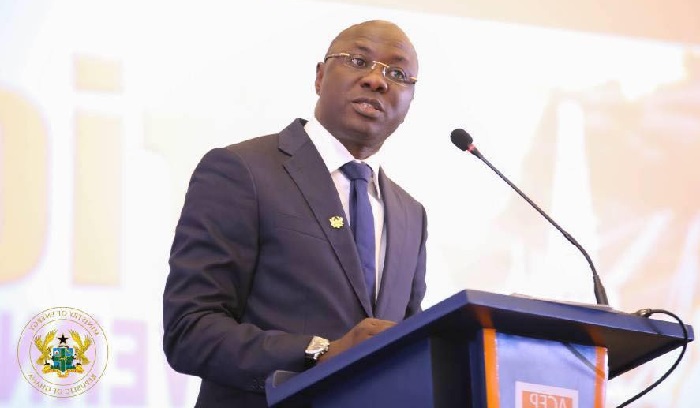
    The discovery of this mass poisoning was prompted by an alert from a remote sensing system used by an environmental group. The system flagged suspicious activity in a remote area of the park, leading to the mobilisation of a joint team of rangers. They quickly identified the incident, marking it as the largest mass vulture poisoning event ever recorded in southern Africa.

    The 124 vultures that died included 102 white-backed vultures, 20 Cape vultures, and one lappet-faced vulture. All of these species are classified as either endangered or critically endangered. Experts believe that poachers are increasingly using agricultural toxins on elephant carcasses to target vultures. The toxins kill the birds, which otherwise could alert rangers by circling overhead.

    Vultures play an essential role in ecosystems, helping to reduce the spread of disease by consuming the carcasses of deceased animals. However, many vulture species across Africa face a grave threat from poisoning and other dangers, which have led to their endangered status.
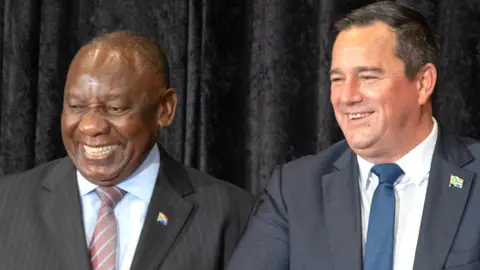
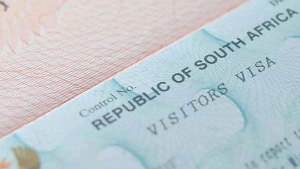
  • South Africa risk potential 2026 World Cup penalty after fielding ineligible player

    South Africa risk potential 2026 World Cup penalty after fielding ineligible player

    South Africa could face disciplinary action after allegedly fielding an ineligible player during their 2026 FIFA World Cup qualifying match against Lesotho last Friday.

    Midfielder Teboho Mokoena was supposed to serve a one-match suspension after accumulating yellow cards in previous games against Benin and Zimbabwe. However, he was included in the squad and played a key role in Bafana Bafana’s 2-0 victory in Polokwane.

    Following the incident, Lesotho have lodged a formal complaint with FIFA, seeking clarification on the matter. The world football governing body is now expected to review the case and determine if South Africa will face any sanctions.

    “We are hoping for them to respect their own regulations and act appropriately,” Lesotho Football Association secretary general Mokhosi Mohapi told BBC Sport Africa.

    “Even if they just caution South Africa, it will be okay. If they give us the points, so be it. [It would be] the cherry on top.

    “There’s no malice but it’s just that we are looking for the regulations to be adhered to. If it were us who had defeated South Africa, wouldn’t [they] do the same?”

    The South African Football Association declined to comment when contacted by BBC Sport Africa.

    Mokoena was withdrawn from the squad to face Benin in Tuesday’s qualifier and, after the 2-0 win that took his side five points clear at the top of Group C, national team coach Hugo Broos said the matter is “something that will be sorted over the next week”.

    Fifa’s competition regulations state that any protest about player eligibility should be lodged within 24 hours of the end of a match.

    Should South Africa be punished with a points deduction, their hopes of appearing at the World Cup for the first time since hosting the tournament in 2010 will be back in the balance.

    Instead of the 2-0 win for Bafana Bafana, Lesotho could be awarded a 3-0 technical victory that would move them up to second in the table and one point behind South Africa.

    It would also boost Nigeria’s chances of qualification, given the Super Eagles sit six points adrift of top spot with four rounds of fixtures remaining after drawing 1-1 with Zimbabwe.

    Only the group winners are assured of a place at next year’s 48-team tournament in the United States, Mexico and Canada.

    How Group C table might change:

  • South Africa secures €4.7bn EU investment to boost economy

    South Africa secures €4.7bn EU investment to boost economy

    The European Union has committed €4.7 billion ($5.1 billion) to South Africa, aiming to enhance the country’s renewable energy transition and vaccine manufacturing.

    This investment, announced during the first EU-South Africa bilateral summit in seven years, reflects a renewed focus on economic and political collaboration.
    A Shared Journey of Reconciliation

    At the summit, European Commission President Ursula von der Leyen underscored the similarities between South Africa and the EU, both of which overcame historical conflicts through reconciliation.

    “South Africa remains an emblem of hope for the world,” von der Leyen stated. “Today, we are together announcing an investment package to mobilize €4.7 billion in South Africa.”

    President Cyril Ramaphosa reinforced the importance of global partnerships in upholding democracy and international law.

    “This is the time to work together in defense of what we believe in—democracy, the rule of law, including the respect for international law and international humanitarian law,” Ramaphosa said.

    As South Africa’s largest trading partner in sub-Saharan Africa, the EU seeks to strengthen economic cooperation. Von der Leyen stressed the importance of reliable partnerships and resilient supply chains.

    “We want to strengthen and diversify our supply chains, but we want to do it in cooperation with you,” she said.

    A significant portion of the investment is allocated to South Africa’s Just Energy Transition Partnership (JETP), a multilateral effort to reduce carbon emissions.

    The EU’s commitment comes as the U.S. pulls back from a similar agreement.

    “We know that others are withdrawing, so we want to be very clear with our support,” von der Leyen affirmed. “We are doubling down, and we are here to stay.”

    Amid shifting geopolitical dynamics, the EU reaffirmed its support for South Africa’s leadership in the G20. Ramaphosa aims to use the country’s presidency to push for debt relief and climate financing for developing nations, priorities that have been sidelined by the U.S.

    Relations between South Africa and the U.S. have become increasingly strained. Tensions escalated following South Africa’s legal challenge at the UN’s top court, accusing Israel—a key U.S. ally—of genocide in Gaza. In response, Washington imposed sanctions and cut financial aid, citing human rights concerns and alleged ties to groups such as Hamas and Iran.

    Adding to the rift, U.S. Secretary of State Marco Rubio has avoided key G20 meetings hosted by South Africa and signaled that Washington will provide limited support for international cooperation through the bloc.
    Trade Disputes Cast a Shadow Over Diplomacy

    While the EU-South Africa summit marked a deepening of economic collaboration, transatlantic tensions were also at play. U.S. President Donald Trump recently announced plans to impose a 200% tariff on European wine, Champagne, and spirits in retaliation against EU proposals to tax American whiskey.

    Von der Leyen responded with a firm stance.

    “We will defend our interests. We’ve said it and we’ve shown it, but at the same time, I also want to emphasize that we are open for negotiations.”

    Despite global uncertainties, the summit underscored a growing EU-South Africa partnership focused on trade, energy, and governance.

  • South Africa’s HIV crisis deepens amid US aid freeze

    South Africa’s HIV crisis deepens amid US aid freeze

    A 19-year-old unemployed woman, Nozuko Majola, from a rural village in South Africa’s KwaZulu-Natal province, is uncertain whether she can afford the one-hour trip to collect her crucial HIV medication.

    The rough, untarred roads in her area often prevent timely delivery to her home.

    “Things will be tough around here, and a lot of people will default on their treatment because we really struggle with transport,” she said. “The mobile clinics hardly come here.”

    Majola’s situation reflects the wider impact of the U.S. foreign aid freeze imposed under former President Trump. This suspension has raised alarm over potential rises in HIV cases and fatalities, as many patients are now unable to access the vital treatment they need.

    A 2024 report from the Human Sciences Research Council revealed that KwaZulu-Natal has the second-highest HIV rate in South Africa, with an estimated 1,300 new infections among young people each week.

    The province also has the highest number of people living with HIV—approximately 1.9 million—contributing to South Africa’s position as the country with the most HIV-positive individuals in the world, totaling over 7.5 million.

    In total, 5.5 million South Africans depend on antiretroviral medication, partially funded by the U.S. President’s Emergency Plan for AIDS Relief (PEPFAR). However, the suspension of this crucial aid threatens the future of these treatment programs.

    PEPFAR’s funding, which amounts to over $400 million annually, accounts for about 17% of South Africa’s HIV-related expenses, according to the Health Ministry. Since its launch in 2003, PEPFAR has been instrumental in saving over 26 million lives globally.

    “People who were doing administration and data capturing, whose salaries were funded by PEPFAR, have left. We are a small facility and we cannot handle such a workload,” said the manager, who spoke on condition of anonymity because they were not authorized to speak to the press.

    A recent federal ruling temporarily lifted the freeze on funding, allowing some PEPFAR projects to resume, but many organizations have already been forced to close, adding pressure on already overburdened public health facilities.

    Much of PEPFAR’s funding goes to non-governmental organizations that support the government’s HIV response, particularly in rural areas like Umzimkhulu, where unemployment is widespread and access to healthcare is limited.

    With the aid freeze, these services have been significantly disrupted, leaving communities like Majola’s without vital support.

    Nozuko Ngcaweni has been receiving HIV treatment for nearly three decades. Tragically, one of her children also contracted the virus and passed away at the age of 17. She shared how the suspension of aid has already taken a toll on her community, with many individuals missing out on their crucial medication.

    “Not long ago, we said by 2030, we want to see an HIV-free generation. But if things remain as is, we will not achieve that. We will have to deal with deaths,” she said.

    A provincial manager for the Treatment Action Campaign, Mzamo Zondi, which fights for access to HIV care for the impoverished, has been closely tracking the effects of the aid freeze in Umgungudlovu.

    “Our response (to HIV) is likely to falter as we struggle to stop newly infected cases,” he said. “This is a matter of life and death.”

  • Ghana draws against South Africa in 2024 WAFCON

    Ghana draws against South Africa in 2024 WAFCON

    Ghana’s Black Queens have been drawn in Group C alongside defending champions South Africa for the 2024 Women’s Africa Cup of Nations (WAFCON).

    The draw held on Friday also placed Ghana in competition with Mali and Tanzania as they make their long-awaited return to the tournament after missing out on the last two editions.

    In other groups, record champions Nigeria will contend with Tunisia, Algeria, and Botswana in Group B, while hosts and 2022 finalists Morocco face Zambia, Senegal, and DR Congo in Group A.

    The tournament format will see the top two teams from each group advance to the quarterfinals, alongside the two best third-placed teams.

    The Black Queens are not only aiming for continental glory but also seeking to end an 18-year absence from the FIFA Women’s World Cup. A semifinal finish at WAFCON would secure them a spot at the global tournament.

    The 2024 WAFCON will take place from July 5 to 26, offering a competitive platform for Africa’s top women’s football teams.

  • Okyeame Kwame rocks ‘kente’, poses with Prince of Wales at Earthshot Prize event in South Africa

    Okyeame Kwame rocks ‘kente’, poses with Prince of Wales at Earthshot Prize event in South Africa

    Ghanaian musician and cultural ambassador, Okyeame Kwame, turned heads at the 2024 Earthshot Prize in South Africa with his striking traditional attire.

    On November 6, 2024, the artist showcased Ghanaian heritage through his elegant kente ensemble, paired with regal accessories, as he stood alongside Prince William of Wales.

    A Facebook post from Okyeame Kwame highlighted the moment, featuring him proudly representing Ghanaian culture on the global stage.

    “Standing Next to Prince William of Wales, I was honoured. When I was invited to the #EarthshotPrize awards, I came to ask you, my wise counsel, whether I should wear a suit or represent as an African prince. 90% of you suggested I wear my kente. So you I listened to advice and threw on my Bonwire kente.

    In fact, everybody wanted to take a picture with me. I have come to say thank you for advising me that #madeinghana is the way. Thank you to earthshot prize and multi choice group for organizing the programme. Thank you @princeandprincessofwales for the invitational,” he wrote.

    The Earthshot Prize recognizes individuals and organizations tackling climate change and environmental challenges with groundbreaking ideas.

    In 2024, the winners were unveiled during a glamorous event in Cape Town, South Africa. The ceremony was hosted by celebrated entertainer Billy Porter, known for his Emmy, Grammy, and Tony wins, alongside renowned television personality Bonang Matheba.

    Launched in 2021, the Earthshot Prize draws inspiration from former U.S. President John F. Kennedy’s Moonshot initiative, which dared scientists to achieve the ambitious goal of sending astronauts to the moon and bringing them back safely.

  • South Africa’s busiest border crossings with Mozambique closed due to post-electoral protests

    South Africa’s busiest border crossings with Mozambique closed due to post-electoral protests

    South Africa has shut down one of its major border crossings with Mozambique due to violent protests that erupted after the country’s recent elections.

    The protests, sparked by last month’s controversial presidential election, have resulted in deadly confrontations across several cities in Mozambique, where the ruling Frelimo party claimed victory.

    Authorities have received reports of vehicles being set on fire on the Mozambican side of the Lebombo port of entry.

    “Due to these security incidents and in the interest of public safety, the port has been temporarily closed until further notice,” the South African border agency said.

    Lebombo, one of the four most heavily trafficked land ports in southern Africa, is located roughly 110 km (68 miles) from Maputo, the capital of Mozambique, and about 440 km from Pretoria, the capital of South Africa.

    Travelers have been urged to seek alternative border crossings between the two nations.

    Violence had spread to Ressano Garcia, a small area in Maputo province, near Lebombo, said Michael Masiapato, South Africa’s Border Management Authority (BMA) commissioner.

    Mr Masiapato said the South African side was not affected, but safety measures needed to be taken.

    “Some buildings have been set alight. At the moment we are working on securing the Lebombo border as well as travellers’ safety,” he said in a statement.

    “The border will be closed to ensure the safety of travellers.”

    Reports say protesters on the Mozambican side of the border have burnt down an immigration office in that country.

    Seven Mozambican officials have requested refuge on the South African side for safety and protection, the authorities said.

    BMA officials, the South African police and the army have been engaged to stop the protests from spilling over into South Africa.

    Demonstrations started at the end of October in Maputo after Daniel Chapo, the Frelimo candidate, was officially declared the winner with more than 71% of the vote.

    Opposition leader Venâncio Mondlane, who came second with 20% of the vote, went into hiding before the results were announced.

    He cited fears for his safety after his aide and lawyer were killed as they were preparing to challenge the results.

    The protests have led to violent clashes with the police and at least 18 people have been killed, according to Human Rights Watch.

    The internet and social media have also been restricted.

    A general strike called by Mondlane has continued, despite the prime minister’s call for people to return to work.

    On Tuesday, Defence Minister Cristóvão Chume threatened to deploy the army ahead of nationwide protests called for Thursday.

    Chume said the post-election protests were intended “to change the democratically established power”.

  • Police launch manhunt after mass shooting kills 18 people in South Africa

    Police launch manhunt after mass shooting kills 18 people in South Africa

    In a tragic incident in the remote town of Lusikisiki, South Africa, a mass shooting has claimed the lives of eighteen individuals, prompting a manhunt for the assailants, according to local police.

    Authorities reported that two homes on the same street were targeted during the attack. At one location, 12 women and one man were killed, while a second site saw the deaths of three women and another man.

    The South African Police Service confirmed that the 18th victim succumbed to injuries in the hospital on Sunday.

    Police Minister Senzo Mchunu stated that the motive behind the shootings remains unclear. In a press release on Sunday, police indicated that, aside from the confirmation of the 18th victim’s death, there have been no significant updates, and no suspects have been arrested yet.

    Officials noted that the victims were all relatives and neighbours from Nyathi village, Ngobozana, in Lusikisiki.

    Reports from South African media revealed that the victims were gathered at the homes to prepare for a traditional mourning ceremony honouring a mother and daughter who had been murdered a year earlier.

    They were in the process of organising goods and presents, including furniture, for the ceremony when the shooting occurred on Friday night.

    “We heard gunshots and doors that were kicked,” Nomnikelo Ndlovu, one of the residents who was able to hide during the attack, told state broadcaster SABC.

    “We tried to hide, and three people were shot. We are still traumatised.”

    In a statement on Saturday, the police minister said that there had been a total of 19 people sleeping in two homes in the same yard at one of the shooting locations.

    Mchunu added that there had been six survivors at that homestead – four women, a man, and a two-month-old child. A police spokesperson said earlier that the child was uninjured but had been taken to the hospital as a precaution.

    There were no survivors at the other homestead.

    Mchunu said a team of detectives and forensic experts, including crime scene managers from Pretoria, had been deployed “to piece all [the] evidence together in a bid to apprehend these brutal criminals.”

    Regional cabinet member for community safety Xolile Nqatha told SABC that he hoped the critically injured man would make a “speedy” recovery, as “his recovery can help us shed more light” on the shooting.

    He also indicated that the attackers might have had some familiarity with the victims.

    According to recent statistics from the United Nations Office on Drugs and Crime, South Africa has one of the highest murder rates globally.

    In 2022, the country recorded over 27,000 homicides, translating to 45 murders per 100,000 people within a population nearing 60 million. In contrast, the murder rate in the United States stands at six per 100,000.

  • Namib Mills porridge taken off shelves after death of 3 children in South Africa

    Namib Mills porridge taken off shelves after death of 3 children in South Africa

    In South Africa, an instant porridge product has been pulled from the market following the tragic deaths of three young children, who reportedly consumed it.

    According to police spokesperson Lt Col Siphokazi Mawisa, the victims, aged between 18 months and four years, experienced stomach pains after eating Top Score Instant Porridge before passing away on Friday.

    The Spar supermarket chain, where the porridge was sold, has ordered all its locations to take the product off their shelves.

    The porridge’s manufacturer, Namib Mills, a Namibian company, stated that while there is no current evidence linking their product to these tragic incidents, they are treating the situation with utmost seriousness.

    They expressed their condolences to the affected families and confirmed that the product will be removed as investigations are underway.

    “We are cooperating fully with all relevant authorities and have also initiated our own internal investigation to ensure complete transparency,” it said.

    The three deceased children belonged to two different families in the Eastern Cape province. Additionally, a seven-year-old child also experienced illness after consuming the porridge but was released from the hospital over the weekend.

    Reports indicate that the children had ingested the vanilla-flavoured variety of the instant porridge, leading to the decision to remove all flavours from circulation.

    The exact cause of the children’s deaths remains undetermined. According to Bongani Fuzile, a spokesperson for Buffalo City Municipality, samples of the porridge have been sent to the National Health Laboratory Services for thorough testing and analysis.

  • 17 people dead after mass shooting in South African town

    17 people dead after mass shooting in South African town

    A tragic incident unfolded in Lusikisiki, a rural town in South Africa‘s Eastern Cape province, where 17 individuals were killed, including 15 women, during a shooting that occurred on Friday night.

    The police have since launched a search for the suspects involved in this heinous act.

    Authorities, including national police spokesperson Athlenda Mathe, reported that the shootings took place at two nearby houses during what local media described as a family gathering.

    In one house, 12 women and one man lost their lives, while in the other, three women and one man were killed.

    Fortunately, four women, a man, and a two-month-old baby survived the ordeal.

    Police Minister Senzo Mchunu announced that a specialized team of detectives and forensic experts has been deployed to investigate the incident.

    He expressed confidence in their ability to apprehend those responsible, emphasizing that they would either turn themselves in or be captured by law enforcement.

    National police chief Fannie Masemola stated that the motive behind the shooting remains unclear, and it is unknown whether one or multiple suspects are involved.

    South Africa, home to 62 million people, has seen alarming crime rates, with over 12,700 homicides reported in just the first half of the year, averaging more than 70 murders daily.

    Gun violence is a significant contributor to these statistics.

    While firearm regulations are in place, the proliferation of illegal and unregistered weapons poses a major challenge to public safety.

    This recent shooting reflects a disturbing trend of mass violence in the country, including a previous incident in KwaZulu-Natal in April 2023, where ten family members were killed in a similar fashion.

  • SA grab first Rugby Championship trophy since 2019

    SA grab first Rugby Championship trophy since 2019

    South Africa triumphed over Argentina in Nelspruit to secure the Rugby Championship title for the first time since 2019. The Springboks delivered a dominant performance, scoring four tries in the first half.

    Aphelele Fassi was instrumental, scoring two tries and assisting Cheslin Kolbe, while Pieter-Steph du Toit also scored his first try of the match. Argentina’s only points in the first half came from fly-half Tomas Albornoz.

    A critical moment in the second half occurred when Pumas replacement Pablo Matera received a yellow card that was upgraded to a 20-minute red for head contact while trying to clear out Vincent Koch. This dismissal left Argentina vulnerable, and with full-back Santiago Carreras also sin-binned for a deliberate knock-on, Malcolm Marx capitalized on the situation to score from the back of a maul.

    Du Toit added another try before centre Jesse Kriel finished the scoring, reacting to Handre Pollard’s clever dink kick. The victory allowed the Springboks to avenge their previous week’s narrow one-point loss to Argentina, which had denied them the title a week earlier.

    “It has been a journey and a half. After last week the way we stood up says a lot about our team,” said Springboks captain Siya Kolisi in an interview with Sky Sports.

    This championship win marks the Springboks’ first full tournament victory since 2009, following a shortened format in 2019 due to the Rugby World Cup, and is their first since Argentina joined the competition. The achievement adds to Rassie Erasmus’ impressive coaching resume, which now includes two World Cups, two Rugby Championships, and a British and Irish Lions tour victory.

    Despite the defeat, this championship marked a milestone for the Pumas, as it was the first time they had defeated all three teams in the Rugby Championship, entering the final round with an outside chance of claiming the title. They finished in third place after New Zealand secured the runners-up position by beating Australia earlier that day.

  • American hiker found dead on South Africa’s table mountain after going missing

    American hiker found dead on South Africa’s table mountain after going missing

    20-year-old student from North Carolina, Brook Cheuvront, who went missing while hiking on South Africa’s Table Mountain has been found dead, authorities confirmed.

    The American woman had been in Cape Town for an internship with a local NGO.

    She was reported missing on Saturday after the tracking app she was using during her solo hike stopped updating, and she became unreachable.

    On Sunday, her body was discovered in the Devil’s Peak area, a mountainous region near Table Mountain, according to police reports.

    South African National Parks (SANParks), which oversees Table Mountain, stated that Cheuvront had left her accommodation around noon to begin the hike. Concerned friends alerted police when there were no further updates from her tracking app, and she could not be reached by phone.

    Search teams, including rangers and wilderness crews, initiated a rapid search on Saturday but had to halt operations later that evening. Efforts resumed on Sunday, with a helicopter joining the search and eventually spotting her body on the mountain’s slopes.

    “The circumstances around the hiker’s death are still being investigated,” SANParks said in a statement.

    Police said an autopsy would be conducted to determine the possible cause of death.

    SANParks said an investigation into Cheuvront’s death was ongoing.

    In a Facebook post, Cheuvront’s father said the family was “devastated.”

    “God help me and us,” Steve Cheuvront wrote.

    She was a student at the University of North Carolina at Chapel Hill, interning with a non-governmental organization (NGO).

    While South African officials have refuted claims of a crime issue in Table Mountain National Park, they advised hikers in a separate statement to refrain from trekking alone.

  • Ghana risks losing assets in SA over offsetting $134m Trafigura judgement debt

    Ghana risks losing assets in SA over offsetting $134m Trafigura judgement debt

    Oil conglomerate Trafigura has petitioned Ghana’s Finance Minister, Dr. Mohammed Amin Adam, over a judgment debt owed by the government, threatening to seize Ghana’s assets in South Africa if the debt remains unsettled.

    In its petition submitted on September 23, the energy firm requested an immediate settlement and warned of further legal action to recover the funds if the government fails to comply.

    The petition expresses frustration over the government’s delay in resolving the debt, despite multiple attempts at negotiation.

    “We would nevertheless like to reiterate the message of our previous correspondence, that we would prefer not to take any further enforcement action and instead to resolve the matter amicably by fully executing the settlement agreement, as soon as possible, ideally within this week, and receiving payment in accordance with the agreed schedule,” the letter read.

    Per the letter in question, it is not public knowledge of the exact assets in South Africa that the company seeks to secure.

    Reports indicate that Ghana’s Regina House in London, one of the nation’s key commercial properties, has been taken over by Trafigura’s Ghana Power Generation Company (GPGC) due to the government’s failure to settle a $134 million judgment debt.

    This development follows a prolonged four-year effort by Trafigura to recover funds after Ghana abruptly terminated a power purchase agreement with the energy firm. Despite repeated attempts to secure payment, Trafigura was forced to obtain a ruling from a U.S. District Court, which added $111.4 million in mandatory interest to the arrears, compounding Ghana’s debt and exacerbating its financial obligations.

    Bright Simons, the Vice President of Imani Africa, revealed on the social media platform X (formerly Twitter) that Regina House has been placed under receivership by Trafigura, an assertion later confirmed by Joy News. Simons claimed that this information had been concealed by the Ghanaian government, stirring further controversy.

    In an interview with Joy News, Ghana’s High Commissioner to the United Kingdom, Papa Owusu-Ankomah, acknowledged that Trafigura will remain in control of Regina House until the full debt is settled.

    He urged for renewed negotiations to avoid further financial penalties, stating, “Until we pay in full or come into an arrangement to pay them, Trafigura will remain in control over the receivership of the Regina House and its proceeds.” He also admitted that Ghana is facing severe financial challenges.

    The legal dispute began on January 26, 2021, when a UK tribunal awarded GPGC $134.3 million after determining that Ghana had breached its contractual obligations by terminating a power purchase agreement on February 18, 2018.

    Although Ghana argued that GPGC failed to meet certain contractual conditions, the tribunal disagreed, awarding GPGC damages based on an Early Termination Payment formula. The tribunal’s award included an interest rate of six-month USD LIBOR plus 6% and reimbursement of GPGC’s arbitration costs amounting to $3.3 million. Although Ghana made partial payments totaling $1.89 million, a significant balance remains unpaid.

    In a bid to recover the remaining funds, GPGC filed a case in the U.S. District Court in January 2024 under the New York Convention, seeking to enforce the arbitral award. Ghana failed to respond to the court’s petition and missed the March 29, 2024 deadline, leading to a ruling in GPGC’s favor.

    Chief Judge James E. Boasberg confirmed that the U.S. court had jurisdiction under the New York Convention, which requires member states to recognize and enforce arbitral awards, regardless of location or nationality.

    While the U.S. court did not grant pre-judgment interest, it awarded post-judgment interest at a rate specified under U.S. law, further increasing Ghana’s financial burden. As a result, Trafigura now controls Regina House until Ghana can resolve the debt crisis.

  • Cyril Ramaphosa’s decision to sign a contentious education bill into law to strain south Africa

    Cyril Ramaphosa’s decision to sign a contentious education bill into law to strain south Africa

    The stability of South Africa’s uneasy coalition government is about to face a major test as President Cyril Ramaphosa prepares to sign new education reforms into law during a public ceremony on Friday.

    In the run-up to May’s general election, which led to the African National Congress (ANC) forming a coalition, the two main partners had clashed over the Basic Education Laws Amendment (Bela) Bill.

    Despite now sharing power, the ANC and the Democratic Alliance (DA) remain at odds over the bill’s provisions.

    DA leader John Steenhuisen has warned that if the signing proceeds, the party will “have to consider all of our options on the way forward”.

    What is in the Bela bill?

    The contested bill, which was passed by the ANC-majority parliament shortly before the election, introduces several significant and controversial changes to current education legislation.

    Key reforms include:

    – School admissions and the language of instruction will be regulated nationally

    – Home schooling will be regulated

    – Parents who fail to ensure their child is in school may face jail
    Grade R, for four and five-year-olds, will be the new compulsory school starting level – a year earlier than currently

    – The abolition of corporal punishment will be backed by fines and possibly jail time for those who administer it

    The ANC says the changes are necessary in order to transform the education system and address continued inequalities.

    Why is there such fierce opposition?

    The clause which has caused the most controversy is the one concerning strengthening government oversight over language and admission policies.

    This is a sensitive topic relating to racial integration.

    The previous ANC government argued that language and other admission criteria were being used to “derail access to schools [for] the majority of learners”.

    Although apartheid, a system of legally enforced racism, ended over thirty years ago, its legacy continues to affect certain areas of education.

    While the legislation does not explicitly address Afrikaans, the ANC argues that some children are being barred from schools where Afrikaans, the language of the white-minority Afrikaners, is the medium of instruction.

    The DA has supported the right of school governing bodies to establish their own language policies, citing constitutional provisions and the importance of learning in one’s native language.

    The most vocal opposition has emerged from the Afrikaans-speaking community.

    Civil rights group AfriForum has described the bill as an attack against Afrikaans education and has said it remains committed to opposing the legislation as “it poses a threat to the continued existence of Afrikaans schools and quality education”.

    The Freedom Front Plus – another one of the 10 parties in the coalition government and seen as representing the interests of Afrikaners – is also opposed to Bela. It called it “ill-conceived”, saying it would “cause needless uncertainty and disputes about clearly established rights and responsibilities related to Basic Education”.

    Some are also concerned about the reforms to home schooling. There are currently many unregulated schools popular with the middle classes because of the poor state of government schools.

    These are allowed to continue through a loophole in the current law where the students are registered as “home learners” and the teachers offer “tuition”. But through the Bela bill, the government wants to close the loophole and ensure they are regulated like state schools.

    Could this threaten the coalition government?

    After the ANC lost its outright majority in parliament, it needed coalition partners to remain in power.

    It reached a deal with its long-time opponent, the DA, and eight other parties to form the Government of National Unity.

    Steenhuisen, who is the agriculture minister, has said that enacting the Bela bill would violate “the letter and spirit” of the coalition agreement as the DA had made it clear that the bill was unacceptable “in its current form”.

    But he does not yet appear to be pulling the plug on the coalition.

    On Thursday, the DA leader said conflict over policy was not necessarily “an existential threat to the government”, echoing similar comments from the president’s spokesperson.

    But Steenhuisen said this did not mean it would never walk away, especially if the ANC was “trashing the constitution”. The DA has said it has some simple amendments to the bill which would make it acceptable and, as it sees it, bring it in line with the constitution. However, these have not been incorporated in the bill signed by President Ramaphosa.

  • Ghanaian tourists throng South Africa after visa waiver

    Ghanaian tourists throng South Africa after visa waiver

    The South African High Commissioner to Ghana, Jeanet Grace Mason, has emphasized the beneficial effects of the newly implemented visa-waiver policy.

    She revealed that the policy has resulted in a notable rise in the number of Ghanaian tourists visiting South Africa.

    “I am thrilled to report that Ghanaian tourist arrivals in South Africa have surged by an impressive 249 percent month-on-month since November 2023.

    “Year-to-date, we have seen a remarkable 31 percent increase in tourist arrivals from Ghana. This follows the introduction of a visa-waiver, making it easier for Ghanaians to visit and explore all that South Africa has to offer,” she indicated.

    At a recent corporate networking event in Accra, South African High Commissioner Jeanet Grace Mason shared the positive impact of the new visa-waiver policy, which has notably increased Ghanaian tourist visits to South Africa.

    The event, organized by the South African High Commission and South African Tourism, aimed to enhance business, tourism, and cultural exchanges between the two countries.

    Mason emphasized South Africa’s dedication to strengthening economic and cultural ties with Ghana, while also celebrating the recent tourism growth.

    Despite these successes, she acknowledged ongoing challenges in further boosting tourism between the nations.

    “We are highly aware of the barriers that still exist – such as concerns over accessibility, affordability and perceptions of safety and security,” she said.

    She further noted that to tackle these challenges, South African Airways currently operates three weekly flights from Ghana, with plans to expand to four flights per week.

    This increase in capacity is intended to lower travel costs and enhance accessibility to South Africa for both Ghanaian tourists and business travelers.

    “South Africa is not just a destination but an experience that leaves an indelible mark on visitors,” she emphasised, underscoring the country’s diverse offerings – from world-renowned safaris and pristine beaches to vibrant urban settings and rich cultural heritage.

    On his part, Regional Head of South African Tourism in West Africa, Thekiso Rakolojane, emphasized that the visa-waiver has not only streamlined travel procedures but has also fostered increased engagement and exploration between South Africa and Ghana.

    “The visa-waiver allows for hassle-free conferences and business events in South Africa. We invite Ghanaian businesses to explore opportunities for training, incentives and conferences in our country.

    “The result has been a near-300 percent growth in tourist arrivals from Ghana, showcasing the success of this policy in boosting bilateral tourism,” he reiterated.

    He also challenged Ghana to attract more South African visitors, stating: “Ghana tourism is doing some amazing work in South Africa. We believe there is much more that can be done to promote Ghana to South Africans. South Africans love the history behind Ghana, and there are endless opportunities for collaboration”.

  • South Africa mourns ‘favourite teacher’ as he dies 85

    South Africa mourns ‘favourite teacher’ as he dies 85

    South Africa is mourning the loss of William Smith, a cherished educator known for his profound impact on mathematics and science education.

    Smith, who passed away at the age of 85 after a brief battle with cancer, was widely admired for his innovative teaching methods and dedication to his students.

    For many years, Smith hosted a popular educational program on SABC, South Africa’s national broadcaster, which resonated deeply with countless viewers across the country.

    His engaging approach to teaching earned him significant recognition, including a prestigious national award in 2019 from President Cyril Ramaphosa.

    This accolade celebrated Smith’s remarkable efforts in making complex subjects like mathematics and science accessible and understandable to students.

    Smith’s passing has prompted a wave of tributes from those who remember him as a beloved and influential figure in education. His legacy continues to inspire educators and students alike, reflecting his lasting impact on South African education.

    President Ramaphosa described the “favourite teacher” as “an education and cultural icon to our nation”.

    “William Smith’s passion for his curriculum and for the success of those he taught in classrooms, at matric camps and on TV benefited millions of young South Africans even before our transition to democracy and the dawn of a new dispensation of equal education,” he said.

    William Smith is celebrated for revolutionizing mathematics and science education with his pioneering 1990s TV show, Learning Channel.

    Smith successfully persuaded SABC to broadcast this innovative program, which made high-quality education freely accessible to millions of South African children.

    The South African presidency has described Learning Channel as a transformative initiative, akin to an open-access school offering instruction in physical science, mathematics, biology, and English.

    For many underprivileged students, this program provided crucial extra lessons and was often their sole source of quality education.

    One notable viewer, Johan Ferreira, who is now a professor in the statistics department at the University of Pretoria, was among those who benefited from Smith’s groundbreaking work.

    He told the BBC that Mr Smith had an “astounding effect”, adding that “the inspiration that he elicited [showed] that anyone is able to or can understand science”.

  • Okyenhene labels “Agyapadie” document as a complete fabrication

    Okyenhene labels “Agyapadie” document as a complete fabrication

    Okyenhene, Osagyefuo Amoatia Ofori Panin, has strongly refuted a circulating document titled “Agyapadie” that features his image, calling it a complete fabrication.

    He stated that the document is part of an ongoing hate campaign against the Ofori Panin household and Okyeman.

    Speaking at a meeting of the Akyem Abuakwa State Council, the Okyenhene urged his people and all Ghanaians to dismiss the document, questioning the motives and sanity of those behind its creation.

    The King of Akyem Abuakwa emphasized that the Ofori Panin Fie has always held a prominent position and has not engaged in any recent activities that would justify accusations of self-aggrandizement.

    According to the Okyenhene, the Eastern Region had greater representation in former President Kufuor’s cabinet than in President Akufo-Addo’s, suggesting that the controversy aims to incite animosity towards the Akyem people.

    He recalled similar tactics used during J.B. Danquah’s era and in 2016 when a document known as the “Akyem Project” was circulated to stir up discord between Okyeman and Asanteman.

    The Okyenhene also dismissed rumors about his wealth.

    “I have heard things in recent times. The funniest of it is that I am the richest chief in Ghana. I mean how? Anyway, when anyone regards you as a rich person, you must receive it. I receive it.”

    About the Agyapadie book

    The Agyapadie book is a controversial document that has been circulating in Ghana, sparking debates and concerns among various groups.

    The document allegedly outlines a strategy for the Akyem people to dominate Ghana’s economy, politics, and social structures. It’s claimed to contain plans for Akyems to control key sectors, including finance, commerce, and industry.

    The book’s origins are unclear, but it’s believed to have been created by unknown individuals or groups.

    The Okyenhene, Osagyefuo Amoatia Ofori Panin, has rejected the document’s authenticity and discredited its contents. He’s labeled it a fabrication and part of a long-standing hate campaign against the Ofori Panin household and Okyeman.

  • South African police discovers huge meth lab worth millions of dollars on a farm

    South African police discovers huge meth lab worth millions of dollars on a farm

    South African police have arrested four individuals, including two Mexican nationals, following the discovery of a multimillion-dollar drug manufacturing operation on a farm in the country’s northern region.

    The South African Police Service (SAPS) and the Directorate for Priority Crime Investigation, known as the Hawks, conducted a raid in Groblersdal after receiving tips about suspicious activities at the site, according to an SAPS statement.

    During the raid, authorities searched four buildings on the farm and uncovered large quantities of chemicals used in producing illicit drugs, such as acetone and crystal meth, with an estimated street value of 2 billion South African rand ($109.4 million).

    Among those arrested on Friday were the farm owner and two Mexican nationals. The police have indicated that further arrests could be possible as the investigation continues.

    “What makes this different from other [seizures] is the involvement of Mexican citizens,” Katlego Mogale, national spokesperson for the Hawks told Reuters, adding: “It means that our task has just become very difficult.”

    Police found large quantities of chemicals used to make illicit drugs including acetone and crystal meth

    It remains unclear whether the drugs seized were intended for the South African market or for export.

    The Mexican Ministry of Foreign Affairs has stated that its embassy in South Africa has “not received the respective consular notification” and is working with local authorities to gather more information about the case and the involvement of the Mexican nationals.

    The suspects are set to appear in Groblersdal Magistrate’s Court on Monday, facing charges related to the manufacturing, distribution, and possession of illicit drugs, according to the police service.

    Since 2019, police have reported shutting down approximately 131 drug laboratories nationwide. Last year, more than 19,000 individuals were arrested for drug possession during the festive season.

    This year, the Hawks have identified 10 clandestine drug labs and made 34 arrests as part of their ongoing crackdown on drug-related crimes, the statement noted.

    South Africa is dubbed as potentially one of the “largest meth consumer markets in the world,” researchers at the Global Initiative Against Transnational Organized Crime highlighted in a 2021 report.

    It was also described by the United Nations Office on Drugs and Crime (UNODC) last year as “an attractive drug transit country.”

    The UNODC attributed the nation’s growing market for synthetic drugs to its “porous borders,” as well as its geography and international trade links.

  • South African football star held up at gunpoint

    South African football star held up at gunpoint

    Former captain of South Africa’s national football team, Portia Modise, has reached out to her supporters for assistance in recovering her vehicle after a hijacking incident outside her residence in Soweto.

    In a video shared on Instagram, Modise recounted being accosted at gunpoint by “individuals “boys” who confiscated her phone, keys, and made off with her car.

    The Portia Modise Foundation expressed concern over the trauma endured by the retired Banyana Banyana star.

    Modise, who retired from professional football in 2015, holds the distinction of being the first African footballer to score 100 international goals.

    “When I arrived home… there were a few guys who pointed firearms at me and hijacked me… I am not OK but I am grateful for life.”

    She goes on to give the registration details of her stolen vehicle, urging people to call her if they spot it.

    “If anybody has seen this car, it’s a blue Polo Golf – that is my car,” she says.

    Despite the widespread support and solidarity shown by fans and supporters in response to the video, Portia Modise’s car has yet to be located.

    Modise, who started her international career at the age of 16 in 2000, holds a record number of appearances for Banyana Banyana.

    Her achievements include a nomination for the FIFA Player of the Year award in 2005, and a subsequent Player of the Tournament accolade at the African Women’s Championship the following year.

    Currently, Modise has transitioned into coaching, continuing to contribute to football beyond her illustrious playing career.

  • Gayton McKenzie, the gangster turned Sports Minister in South Africa

    Gayton McKenzie, the gangster turned Sports Minister in South Africa

    Former gangster and bank robber Gayton McKenzie, who transformed into a nightclub owner and opposition politician, has now been appointed as South Africa’s minister of sports, arts, and culture.

    President Cyril Ramaphosa selected Mr. McKenzie, leader of the Patriotic Alliance (PA), for the position in the new multi-party government announced on Sunday, following the African National Congress (ANC) losing its parliamentary majority in the May 29 election.

    A prolific tweeter, the 50-year-od relished his appointment, posting a photo of himself putting on football boots and, with a touch of humour, typed: “Thank you for all the well wishing messages, I will reply shortly I’m just busy getting ready, I have work to do 🥅 ⚽️.”

    For Mr. McKenzie’s admirers, his appointment is a testament to how he overcame adversity to achieve success. He robbed his first bank before turning 16, became a fully-fledged gangster, and spent seven years in prison.

    Following his release, he vowed to change his ways.

    However, the nightclub he owned was later shut down, as was a branch in Cape Town registered in his name, following legal action over alleged unpaid rent and electricity, according to the IOL news site.

    “I’m not interested in clubbing. I’m busy with other projects. We killed the Zar brand – there are no future plans [for Zar],” Mr McKenzie was quoted as saying at the time.

    Nowadays, he is better known as a politician, having launched the Patriotic Alliance (PA) in 2013 with Mr. Kunene as his deputy. More than a decade later, the party secured 2% of the national vote and performed even better in the provincial elections in the Western Cape, achieving 8%.

    The party’s support primarily came from the coloured community, as people of mixed race are referred to in South Africa.

    The PA’s signature slogan is “Ons baiza nie”, an Afrikaans phrase which loosely translates as “We are not scared”. Afrikaans is widely spoken in the coloured community, which makes up around 8% of South Africa’s population.

    “For the first time there is coloured people also going to parliament through the Patriotic Alliance. We are the only party that takes all races to parliament,” Mr McKenzie said, after the results were announced.

    Political analyst Kagiso Pooe told the BBC that Mr McKenzie had a “bravado” style, which appeals to his constituency.

    “People want to believe and see someone that comes from their type of background and isn’t shy to say: ‘This is who I am.’ You see it with people like President Zuma, President Trump and other such personalities,” he said.

    Mr McKenzie’s campaign against undocumented migrants was a vote-winner for him, the analyst added.

    “Unfortunately, mainstream politicians and parties have shied away from this and he tackles it directly.”

    Critics denounced his campaign as xenophobic. He waged it under the slogan “Abahambe”, which he has translated from the Zulu as “Let them go” – and, in a publicity stunt, he visited the border with Zimbabwe to chase away people trying to enter South Africa.

    He faced accusations of hypocrisy, as critics highlighted a 2013 SABC interview where he described immigrants from other parts of Africa, including Zimbabwe, as an “integral” part of South Africa’s economy. In the same interview, he controversially stated, “the problem with us is – black people I’m talking about here – we are lazy.”

    As Mr. Ramaphosa began negotiations for a coalition government, Mr. McKenzie publicly expressed his desire for his deputy to run the home affairs ministry, which oversees immigration. He also sought the police ministry for himself, arguing that his previous life as a gangster uniquely positioned him to address South Africa’s high crime rate.

    “None of them [other politicians] are equipped to deal with the mafias, with the murder rates we are seeing. South Africa needs me,” he was quoted as saying by the TimesLive news site.

    He was unperturbed when he failed to get the post, saying he had in fact asked for the sports ministry in “off-the-record” negotiations with the ANC.
    “Sport can be used to change children’s lives. A child in sport is a child out of court,” he said.

    “There’s one promise I’ve made: I will make spinning [of cars] one of the biggest sports in this country,” he added in a live Facebook post.

    Car spinning is a recognised motorsport in South Africa – it involves vehicles being driven in circles and a driver climbing out to perform stunts.

    But there are many unregulated events and as IOL sports journalist John Goliath wrote, stigma still surrounds it as a lot of people in the coloured, Indian and black townships often do spinning in the streets, which is viewed as dangerous.

    “The spinning of tyres started in the townships as a ritual to honour fallen gangsters during the apartheid era,” he said.

    Mr McKenzie has promised to make it possible for car spinning to take place in a safe environment, and to help keep young people away from gangsterism and drugs.
    “The spinners will be recognised,” he said, adding: “When a boy has an interest in cars, he doesn’t have time for drugs. He just worries about his car.”

    But Mr Ramaphosa’s decision to give Mr Mckenzie a seat in his cabinet is politically risky, as he is at the centre of an investigation ordered by the Western Cape government. It is controlled by the Democratic Alliance (DA), a fierce political rival of the PA, although they are now partners in Mr Ramaphosa’s government.

    Until last year, Mr McKenzie was the mayor of Central Karoo, and was accused of failing to account for 3m rand ($161,000, £127,000) raised at a glitzy gala dinner in 2022 to improve public services, including repairing swimming pools and replacing bucket toilets.

    According to local media, a court ordered him last month – just weeks before his promotion to the cabinet – to declare certain financial records to investigators.

    While the PA described the ruling as “flawed”, the DA welcomed it, saying Mr McKenzie would “soon learn that corruption does not pay off”.

    The DA kept up the pressure by picketing last week in the small town of Beaufort West, which is part of Central Karoo, to demand answers about the money.

    Mr McKenzie said in a post on X that he intended to visit the area to give “feedback”.

    “The truth shall come out. I have nothing to hide,” he said, adding: “Lies have short legs.”

    “I might have had 12 rand in my pocket but I had billion rand in my mind. And that is what people do not understand – they concentrate on what they lack instead of how to get what they lack,” he said in a 2013 interview with public broadcaster SABC.

    He became a highly paid motivational speaker and authored several books about his life, including “A Hustler’s Bible.” He also ventured into various businesses, ranging from mining in Zimbabwe to running nightclubs in South Africa, partnering with Kenny Kunene, his close friend from prison.

    Mr. Kunene gained the nickname “Sushi King” after his extravagant 40th birthday party at the Zar Lounge nightclub in a wealthy Johannesburg suburb, where sushi was served on the bodies of women dressed only in their underwear.

  • Tourism Ministry hardly supports musicians, they fend for themselves – Rex Omar

    Tourism Ministry hardly supports musicians, they fend for themselves – Rex Omar

    Veteran Highlife musician Rex Omar has firmly stated that he would not advise his children to pursue a music career in Ghana, pointing out the numerous challenges and disappointments in the industry.

    During an interview with Accra-based 3FM, Omar shared his personal struggles and the systemic obstacles faced by Ghanaian musicians, especially on the global stage.

    When asked if he would encourage his children to enter the music industry, he replied decisively, “no.” Despite their musical talents, he has managed to steer them away from a professional music path.

    “None of my children are into music. I didn’t impose it on them. I told them the truth. They understand that if you play around with music as a Ghanaian, music will disappoint you,” he stated.

    Omar recounted his experiences touring South Africa and other countries, where he observed a lack of support from the Ghanaian government. While other artists were greeted with significant support from their embassies, including branded vehicles, he often found himself without any such backing.

    “I realized how exposed I am as an artist. It brought my spirit down,” he shared.

    He mentioned an instance where he sought assistance from the Minister of Tourism for a tour, but received minimal aid.

    “Today, tomorrow, today, tomorrow, today, tomorrow. He said they could sponsor one person, but even with that, I went on the tour for five months. I came back two months later before I was given something small. And even that something small, with the ups and downs, I nearly left it,” he explained.

    Rex Omar believes that the industry has neglected its artists, making it difficult for them to achieve international success without a solid support system.

  • I swear I will be faithful; I will obey – Ramaphosa’s pledge at inauguration for second term

    South Africa has entered a “new era,” announced President Cyril Ramaphosa as he was inaugurated for his second full term.

    Despite the African National Congress (ANC) not achieving a parliamentary majority in last month’s election, Ramaphosa remains in power.

    The ANC formed a coalition with its long-time rival, the Democratic Alliance (DA), and other parties to govern. In his inauguration speech, Ramaphosa commended this coalition but cautioned that failure to address deep inequalities could lead to instability in the country.

    “Through the ballots that they have cast, the people of South Africa have made plain their expectation that the leaders of our country should work together,” President Ramaphosa, 71, said solemnly.
    “They have directed their representatives to put aside animosity and dissent, to abandon narrow interests, and to pursue together only that which benefits the nation.”

    Among those in attendance were the leaders of Nigeria, Angola, Zimbabwe, Congo-Brazzaville, and Eswatini, who gathered in the Nelson Mandela Amphitheatre outside the Union Building in Pretoria. A large crowd assembled outside the government’s official seat, waving national flags.

    Under a crisp blue winter sky, Chief Justice Raymond Zondo administered the oath of office to President Cyril Ramaphosa. This event marks a significant moment for South Africa, highlighting Ramaphosa’s journey from union leader to mine boss to president, and underscores the unity deal as a pivotal moment in the nation’s history.


    “I swear I will be faithful to the Republic of South Africa… I will obey, observe and uphold the constitution and all other laws of the republic,” the president said.

    A band performed the national anthem, followed by a 21-gun salute and an army helicopter fly-past. The African National Congress (ANC), which has ruled since the end of apartheid in 1994, lost its majority for the first time after the May 29 election yielded no clear winner.

    The ANC secured 40% of the vote, a 17 percentage point drop, losing 70 seats in parliament. Lawmakers re-elected Mr. Ramaphosa after the ANC formed a power-sharing agreement with the pro-business Democratic Alliance (DA), which received 22% of the vote, and three smaller parties.

    The DA, the ANC’s main new governing partner, holds free-market ideologies that conflict with the ANC’s social welfare traditions and is often perceived as serving the interests of the white minority, an allegation it denies. Despite their differences, both parties are united in their goal to repair the country’s infrastructure, ensure basic services like water and power, and create jobs.

    This coalition represents a shift towards the political center, as the ANC’s left-wing and populist breakaway factions declined the invitation to join a national unity government.

    In his address, Mr. Ramaphosa assured South Africans that the coalition is dedicated to reducing inequalities and fostering economic growth. He also highlighted the stark divisions between the affluent and the impoverished within the country.


    Despite progress, “our society remains deeply unequal and highly polarized,” he said.

    “There are toxic cleavages and an incipient social fragmentation that can easily turn into instability.”
    And he warned against “those who seek to stand in our way, to inflame tensions” and “undermine our institutions.” They will not succeed because South Africans are resolute, he said.


    Mr Ramaphosa did not say to whom he was referring. But the uMkhonto weSizwe (MK) party formed six months ago by former President Jacob Zuma didn’t attend what it called the “farcical” inauguration.
    The party, which won 15% of votes and obtained 58 parliamentary seats, also boycotted parliament’s first sitting last Friday.

    It has since joined a counter-coalition of opposition parties, vowing to oppose the policies of what Mr Zuma described as an “unholy alliance” between black and white elites to benefit the markets, not the people.
    It “must be crushed before it finds its feet,” he said, “in the streets, in the courts and in parliament.”

    MK has stated that its protests will be peaceful, though concerns remain that Mr. Zuma’s stance could incite violence among his supporters, who previously instigated deadly riots in July 2021 following his imprisonment for refusing to testify at a public inquiry into corruption during his presidency.

    President Ramaphosa is expected to appoint a cabinet in the coming days, incorporating members from the DA and three other smaller parties, collectively holding 68% of the parliamentary seats. Following this, the president is anticipated to outline policies aimed at reviving the struggling economy.

    The coalition faces several challenges, including potential ideological clashes within the alliance, dissatisfaction from left-wing elements within the ANC, and the threat of volatile political opposition. Despite these obstacles, many South Africans are hopeful for the coalition’s success.

    “This is a moment when we must choose to either move forward together,” Mr Ramaphosa said “or risk losing all we have built.”
    The former trade unionist and business tycoon first became president in 2018 when his predecessor, Mr Zuma, was forced to resign because of corruption allegations. Mr Zuma has repeatedly denied any wrongdoing.

  • South Africa records second death from mpox

    South Africa records second death from mpox

    South Africa’s health minister, Joe Phaahla, has announced a second death from monkey pox (mpox) less than 24 hours after the country reported its first fatality from the virus.

    The deceased men, aged 37 and 38, tested positive for the virus, according to Mr. Phaahla.

    Mr. Phaahla further disclosed that South Africa has recorded six cases of mpox this year: two in Gauteng and four in KwaZulu-Natal.

    All cases were severe, requiring hospitalisation, and involved men aged between 30 and 39 who had not traveled to countries experiencing outbreaks, indicating local transmission of the disease.

    Mpox, previously known as monkeypox, is a viral infection spread through close contact.

    Symptoms typically start with fever, headaches, swellings, back pain, and muscle aches, which may progress to a rash.

    While the World Health Organisation (WHO) declared a public health emergency during a 2022 outbreak, reporting has shown continued low levels of cases in certain countries even after the emergency was lifted last year.

    “One death is too many, especially from a preventable and manageable disease,” Mr Phaahla said on Wednesday, urging those with suspected symptoms to seek medical attention and help trace contacts.

    According to Mr. Phaahla, the six patients diagnosed with mpox since the beginning of May had pre-existing immunodeficiencies.

    The virus has been documented in over 100 countries since 2022.

    Of those infected, two have been discharged home, while two are still hospitalised. Close contacts of the deceased individuals will undergo a 21-day monitoring period.

    The first human case of mpox was reported in the Democratic Republic of the Congo in 1970, where the disease continues to be endemic, as stated by the World Health Organisation (WHO).

  • Injured Osimhen sidelined in Super Eagles’ World Cup qualifiers games

    Victor Osimhen will miss Nigeria’s upcoming 2026 FIFA World Cup qualifiers due to an injury, the Nigeria Football Federation announced on Tuesday.

    While the federation did not disclose specifics about the injury, it stated that the 25-year-old Napoli striker will be sidelined for four weeks.

    Osimhen will be absent for the matches against South Africa in Uyo on June 7 and Benin in Ivory Coast on June 10.

    His absence presents a challenge for recently appointed head coach Finidi George, who is aiming to get the Super Eagles’ qualification campaign back on track following unexpected 1-1 draws with Lesotho at home and Zimbabwe in Rwanda.

  • Ex-leader of South Africa Zuma disqualified from upcoming election

    Ex-leader of South Africa Zuma disqualified from upcoming election

    The previous president of South Africa, Jacob Zuma, cannot run for a seat in Parliament in the upcoming election after he was convicted of a crime in the past. The highest court in the South Africa made a decision that will likely cause more arguments before an important vote in Africa’s most advanced economy. Former allies of Zuma are being challenged by his new political party.

    The Constitutional Court decided that the rule in the constitution that stops people who have been given a prison sentence of more than 12 months from running for Parliament also applies to the 82-year-old former leader. Zuma was sent to jail for 15 months in 2021 because he didn’t want to answer questions at a trial about corruption in the government.

    The court said that Zuma cannot be a lawmaker for five years after he finishes his sentence. They made this decision nine days before the May 29 election.

    Zuma used to lead South Africa’s African National Congress party but was told to leave in 2017. He also quit as president in 2018 because people thought he was involved in corruption.

    He came back to politics last year with a new party and started criticizing the ANC and President Cyril Ramaphosa again. Ramaphosa took over as the leader of the party and president after him.

    Zuma’s new party said in a statement that they are not happy about the decision, but it has not made them feel discouraged. They also did not agree with the court’s decision and the judges who made it.

    The upcoming election in South Africa is very important, possibly the most important in 30 years. The ANC, the ruling party since the end of apartheid in 1994, is facing a big challenge.

    The ANC is having a hard time keeping its majority in parliament, and the election could make it form a government with other political parties. That would be the biggest change in the country’s politics since apartheid was ended and everyone was allowed to vote.

    The court decision does not stop Zuma’s party, the MK Party, from participating in the election.

    Zuma is on the party’s election posters and is the main person in its campaign. The group in charge of elections in South Africa said Zuma’s picture can stay on the party’s election clothing, but his name won’t be on the list of people they want to run for office.

    In South Africa, people don’t choose their president directly. Instead, they vote for political parties. Those political groups will have seats in the government based on how many votes they received. Lawmakers choose the president based on which party has the most members. Since 1994, the ANC has always been in charge, but this time, if it doesn’t get more than 50% of the votes, it will need to work with other political parties to stay in power and reelect Ramaphosa for another term.

    Zuma’s MK Party could take away more of the ANC’s votes and make it difficult for the ruling party to stay in power.

    Zuma still has a lot of people who support him. The court’s decision has made things more tense politically, especially after some MK Party officials said they would not accept any decision that stops Zuma from running for office.

    Ramaphosa told Radio 702 that he did not think the decision would make people angry, but he also said that if there was any chance of violence, the security forces are prepared.

    Since 1994, South Africa has been having fair and peaceful elections.

    Zuma was not allowed to run for Parliament at first. He won the case at the Electoral Court after challenging their decision. Monday’s decision changed the previous outcome and confirmed that he is disqualified.

    Zuma led South Africa for almost 10 years from 2009-18, but he resigned because the ANC wanted him to. There were claims that the government was very corrupt. He was asked to speak at a formal investigation about the claims of corruption, but he said no. That caused him to be punished for disrespect.

    The sentence showed that Zuma still has power in some areas of South Africa. This caused a week of stealing and fighting in two provinces. More than 350 people died, making it one of the worst times of violence in the country since the end of apartheid. Zuma got out of prison early because he was sick after only serving two months of his 15-month sentence.

    Zuma has been accused of doing something wrong in a different case that is about things he did before he became president. He is supposed to go to court next April for those charges and has said he did not do it.

  • Rescue operations comes to an end at South Africa’s building collapse site

    Rescue operations comes to an end at South Africa’s building collapse site

    Rescue operations at the George building collapse site in South Africa have ceased, leaving 19 individuals still missing.

    The collapse, which occurred on May 6, claimed the lives of at least 33 construction workers. Fortunately, 29 survivors were rescued from the rubble.

    The building is now under investigation to determine the cause of the tragic incident.

    President Cyril Ramaphosa, after visiting the site on Thursday, promised compensation for the victims and assured accountability once the investigation concludes.

  • Unemployment rate rises in South Africa ahead of elections

    Unemployment rate rises in South Africa ahead of elections


    South Africa’s unemployment rate has climbed to 32.9% in the first quarter of this year, according to the national statistics body.

    This marks a 0.8% increase from the previous quarter of 2023.

    The country is grappling with one of the highest unemployment rates globally, with one in two young South Africans and 60% of the population living below the poverty line.

    The rise in unemployment, along with issues of corruption and economic inequalities, are key topics in the upcoming elections.

    The ruling African National Congress (ANC), in power since the end of apartheid in 1994, faces criticism over its economic policies. Some polls suggest that the ANC might receive less than 50% of the vote for the first time.

  • South Africa’s opposition party to take legal action against bill aimed at providing universal health coverage

    South Africa’s opposition party to take legal action against bill aimed at providing universal health coverage

    South Africa’s primary opposition party, along with several labor and business organizations, has announced their intention to initiate legal proceedings against a bill designed to establish universal health coverage.

    Previously, we reported that South African President Cyril Ramaphosa was scheduled to sign the controversial proposal into law on Wednesday.

    The National Health Insurance (NHI) bill aims to grant all South Africans, regardless of race, wealth, or legal residency status, access to high-quality healthcare. Its implementation is estimated to require billions of dollars.

    On Tuesday, the leader of the Democratic Alliance (DA) party stated that his party would contest the legislation “up to the Constitutional Court”.

    “Our legal team was instructed several months ago and will promptly file our legal challenge against this harmful legislation,” John Steenhuisen remarked.

    Additionally, the trade union Solidariteit declared that it had notified Mr. Ramaphosa of its intention to challenge the bill “within an hour” of its signing on Wednesday.

    The South African Health Professionals Collaboration (SAHPC), representing 25,000 healthcare workers in both the public and private sectors, is reported by Reuters to be considering a legal challenge.

    According to Reuters, the group expressed concerns that the bill would “retreat, rather than advance, equitable, high-quality healthcare in South Africa”.

    Proponents of the bill view it as a transformative measure that will address long-standing disparities.

    The South African Medical Association Trade Union, which represents most public sector doctors, called it “a monumental shift towards achieving universal health coverage and ensuring that every South African has access to quality healthcare irrespective of their socio-economic status”.

  • I never took US$2.5m bribe from any South African firm – Haruna Iddrisu

    I never took US$2.5m bribe from any South African firm – Haruna Iddrisu

    A recent investigative report by a prominent news portal in South Africa, News24, has raised allegations of bribery involving a local company engaged in projects in Ghana.

    According to the report, Tamale South Member of Parliament, Haruna Iddrisu, is implicated in the scandal, with accusations suggesting he received bribes totaling over US$2.5 million (equivalent to 47 million rands).

    The focus of the investigation centers on Rushil and Nishani Singh, siblings who operated the Ghana Infrastructure Company (GIC) from 2017 to 2022.

    Details from the report outline various instances where substantial sums of money were allegedly transferred to Haruna through intermediaries, with some funds purportedly used to finance projects associated with him.

    “Between 2015 and 2020, Nishani Singh used several methods to pay Idrissu directly, or to others at his request or for his benefit, at least R47 million.

    “The majority of the money was paid directly from GIC’s account to various suppliers, or to GIC’s director in Ghana, Asumah Dokurugu,” the report said adding that the amount was exclusive of “amounts paid for several overseas trips to London and at least one trip to Indonesia and South Africa.”

    However, Haruna Iddrisu has refuted these claims stating that “To be clear, and for the avoidance of doubt, I have never at any point in time, received personally, directed to be paid to, benefited from, or been aware of, any unlawful, illegal or immoral payments made by either GIC or the Singhs. Also, I have never brokered any deals to benefit GIC and/or the Singhs”.

    Read Haruna Iddrisu’s statement:

    Re: Murray Murders: The Singhs’ R1bn Ghanaian Empire that the Murrays threatened to destroy

    My attention has been drawn to the above-titled publication published on 13 May 2024, by News24, a South African news website on its portal, www.news24.com. In my long public service career, I have grown accustomed to being the subject of false publications that seek to impugn my reputation, or in one way or the other, implicate me in matters that I am clueless about. Generally, I have considered attempts of this nature to be a hazard of the job and have usually ignored them. However, the allegations contained in this particular publication, which has sought to implicate me in bribery allegations, which according to News24, in an attempt to cover up, has led to the death of two persons, are so grave that I cannot help but respond.

    In this publication, I have been described as “the Singhs’ closest associate” and described as being responsible for brokering contracts worth over GHS 400 million to their company, Ghana Infrastructure Company (“GIC”), in exchange for money.
    In making these allegations which I do not take lightly, New24, after its supposedly painstaking investigation, fails to show that I indeed received any monies from the Singhs’ or GIC. All it resorts to are fabrications and colourful storytelling in its attempts to forcefully include me in its publication. I am neither a director nor a shareholder of GIC, neither am I involved in its management.

    In all, even though I am alleged to have received Forty-Seven Million Rand (R47 million), the breakdown of the alleged receipts shows the fanciful nature of the allegations made by New24, following its supposedly elaborate investigation.


    Payments that were made to one Asumah Dokurugu, GIC’s director in Ghana, various suppliers, and political campaigns are for some reason being attributed to me without any basis. New24 also seeks to forcefully implicate me on an irrational basis regarding the association of my name to the Haruna Institute. For the record, the Haruna Institute does not operate a bank account and only survives on members’ contributions.

    Finally, in its desperation, News24, further states that GIC paid for the construction of my house and funded several foreign trips for me. Conspicuously missing in all these claims, is any suggestion or claim that there is any proof that I received these alleged payments, betraying the bad faith intent of the publication, which has sought to put square pegs in round holes just to use my name to create traction for its portal.

    To be clear, and for the avoidance of doubt, I have never at any point in time, received personally, directed to be paid to, benefited from, or been aware of, any unlawful, illegal or immoral payments made by either GIC or the Singhs. Also, I have never brokered any deals to benefit GIC and/or the Singhs.

    Curiously, News24 in trying to create the impression that it reached out to me for comments, indicates that I ignored posts on my active social media pages. This further shows the bad faith approach, and honestly, puts in question the supposedly in-depth nature of its investigation. I have had occasion in the past to publicly indicate that I have no social media accounts and that the general public should disregard any accounts associated with my name. A simple Google search on my social media presence leads you to several posts by media outlets on this. It is therefore questionable that a supposedly reputable media outlet would after using its hallowed investigative skills, seek to reach me through social media accounts unrelated to me.

    I vehemently deny these allegations and categorically refute any implication of wrongdoing. This unfounded allegation not only seeks to tarnish my reputation but also undermines the trust and integrity of my office as the Member of Parliament for the people of Tamale South.
    As a responsible member of parliament, I am committed to upholding the highest standard of ethics and transparency. I have always conducted myself with integrity and have never engaged in any form of corrupt behaviour.
    In light of these unfounded claims, I demand that the accuser provide concrete evidence to support their accusations. Any allegation of corruption must be backed by factual evidence rather than mere speculation or hearsay.

    I do not know what may have motivated this false and unjustified attempt to denigrate my image, but rest assured that I do not intend to treat these false allegations lightly. I have promptly referred this matter to my lawyers and eagerly await their advice on the next steps to be taken. It is time that we held media outlets to high journalistic standards and quell the abuse of journalistic privileges. I will not succumb to cheap blackmail.

    Signed

  • Haruna Iddrisu allegedly involved in taking bribe from a South Africa business

    Haruna Iddrisu allegedly involved in taking bribe from a South Africa business

    A prominent news portal in South Africa, News24, has released a report alleging that an indigenous company involved in projects in Ghana paid bribes to high-ranking politicians.

    Specifically, the report implicates Tamale South Member of Parliament, Haruna Iddrisu, who is alleged to have received bribes exceeding US$2.5 million (47 million rands).

    The investigative report by News24 focuses on the activities of siblings Rushil and Nishani Singh, who operated the Ghana Infrastructure Company (GIC) from 2017 to 2022.

    Segments of the report detail how various sums of money were transferred to Haruna through intermediaries and, in some instances, provided financial backing for projects associated with him.

    “Between 2015 and 2020, Nishani Singh used several methods to pay Idrissu directly, or to others at his request or for his benefit, at least R47 million.

    “The majority of the money was paid directly from GIC’s account to various suppliers, or to GIC’s director in Ghana, Asumah Dokurugu,” the report said adding that the amount was exclusive of “amounts paid for several overseas trips to London and at least one trip to Indonesia and South Africa.”

    The report also referenced a former MP for Ejisu, although it did not delve into specifics regarding how he gained from the alleged bribes.

    Kwabena Owusu Aduomi’s connection was primarily associated with certain road subcontracts awarded to GIC.

    “Aduomi is not a signatory to the contracts but in his capacity as deputy roads minister, he was in charge of the departments responsible for the administration of the bids — most of the deals were awarded on a sole source basis.

    “But it appears that Haruna was their main go-to person to secure contracts in the Ashanti Region, from where Aduomi hails, and in Tamale, Haruna’s constituency,” the report added.

    GhanaWeb is endeavoring to obtain a response to the allegation from the Tamale South lawmaker, who formerly served as Minority Leader in Parliament.

  • Death toll in South African building collapse rises to 24

    Death toll in South African building collapse rises to 24

    The death toll from a building collapse in South Africa’s city of George has risen to 24, with 28 people still trapped under the rubble.

    Efforts are ongoing to rescue and recover those trapped, including 19-year-old Florence Kawunga, a cleaner at the site.

    81 people were inside the partially-constructed, five-storey building when it collapsed.

    Of the 29 survivors rescued, 13 remain hospitalized.

    The cause of the collapse is under investigation.

    Rescue efforts involve 200 people, sniffer dogs, and heavy lifting equipment.

    Building Collapse in South Africa: Death Toll Reaches 24

  • 7 reported dead, dozens more missing after collapse of South African building

    7 reported dead, dozens more missing after collapse of South African building

    Wednesday saw rescue teams employing underground cameras and sniffer dogs to locate nearly 40 construction workers still missing in the rubble, two days after the collapse of an apartment building under construction in coastal South Africa.

    Seven workers have been confirmed dead, while 16 of the 29 people rescued from the debris were in critical condition in hospitals, with an additional six facing life-threatening injuries, authorities reported. They stated that 39 workers remained unaccounted for and buried in the rubble of concrete and mangled metal scaffolding.

    The collapse of the unfinished five-story apartment complex on Monday in George, a city on South Africa’s south coast, prompted a desperate rescue effort, drawing disaster response teams from other towns and cities. A total of 75 construction workers were present at the building site during the collapse, according to the George municipality.

    More than 200 rescue personnel continued to search for survivors, using cranes and heavy lifting equipment to lift concrete slabs while forming lines to remove smaller rubble by hand.

    Some survivors trapped under the debris managed to use their cell phones to contact family members, aiding emergency responders in locating them. Cheers and applause erupted when several survivors were rescued on Tuesday night.

    Colin Deiner, head of the rescue effort, described Tuesday night as “very successful,” but noted less progress on Wednesday. The operation has now transitioned into a phase where rescuers rely more on heavy equipment to access deeper areas of the collapsed structure in search of potential survivors.

    The George municipality appealed for donations of water, energy drinks, and food for the exhausted rescue personnel, who had been working in shifts for over 48 hours. The rescue effort, involving emergency response teams from across the region, is expected to continue until at least Friday.

    George, a city known for its scenic coastal views and golfing opportunities, is the site of multiple investigations into the cause of the building collapse, including probes by police, the provincial government, and the national department of labor.

    “There will be consequences,” said Anton Bredell, the Provincial Minister of Local Government, Environmental Affairs and Development Planning.

  • Amazon online shopping launched in South Africa

    Amazon online shopping launched in South Africa

    Amazon has at last debuted its eagerly awaited online store in South Africa.

    The online retail titan unveiled its virtual storefront on Tuesday.

    “We are excited to launch Amazon.co.za, along with thousands of independent sellers in South Africa,” said Robert Koen, managing director of Sub-Saharan Africa at Amazon.

    Customers can benefit from both same-day and next-day delivery options.

    Additionally, individuals will have the opportunity to support small local businesses while shopping.

    “Building a strong relationship with South African brands and businesses—small or large—is incredibly important to us,” Mr Koen said.

  • South African polling agency denies request to oust Zuma from MK party

    South African polling agency denies request to oust Zuma from MK party


    The South African electoral commission declined a request to oust former President Jacob Zuma as the head of the newly established Umkhonto weSizwe (MK) party.

    The commission’s decision came in response to a letter from MK founder Jabulani Khumalo, who sought Zuma’s removal as the party’s figurehead and from its potential list of parliamentary members.

    Khumalo, recently ousted from the party, alleged fraudulent occupation of leadership by Zuma within the new party and placed him on a precautionary suspension for what he termed “several acts of misconduct.”

    However, in a Tuesday statement, the Independent Electoral Commission (IEC) asserted its non-interference in political parties’ internal affairs and affirmed Zuma’s status as a registered leader of the MK party.

    “The commission only acts on the instruction of the registered leader of the party,” the poll agency said, adding that Mr Zuma has remained MK party leader since last month.

    The 82-year-old has successfully resisted efforts to prevent him or his new party from participating in the general election on May 29th.

    On Friday, the Constitutional Court will review an appeal by the IEC regarding Mr. Zuma’s disqualification from running for a parliamentary seat.

    In March, the electoral commission made an unsuccessful attempt to disqualify him due to a contempt of court conviction.

  • Several others yet to be found in South Africa’s building collapse

    Several others yet to be found in South Africa’s building collapse


    Efforts are ongoing in South Africa to locate approximately 50 individuals who disappeared following the collapse of a five-story apartment building on Monday.

    Since the incident occurred in the coastal city of George, at least six fatalities have been confirmed.

    Rescuers made contact with 11 additional survivors amidst the wreckage of the building under construction on Tuesday.

    Among them are four individuals trapped in the basement. Authorities are investigating the cause of the collapse.

    At the site on Tuesday, emergency responders took turns working on the small area, manually removing concrete blocks and debris.

    Periodically, the team leader raised his fist, signaling for silence. Everyone halted, hopeful that someone had been found. Some instances turned out to be false alarms, and the noise resumed.

    The majority of the workers believed to be on the construction site, estimated to be at least 75 individuals, remain unaccounted for. Bringing survivors to safety has been a slow and challenging process.

    “They will then begin a process of lifting the different floors off each other,” said Colin Deiner, chief director for disaster management.

    “There is a possibility people could still be alive,” he added.

    The entire rescue operation is expected to take between four and five days.

    Video footage taken nearby showed a huge cloud of dust as the building fell.

    The site has been cordoned off from the public. But there were still many people standing around the perimeter in shock and disbelief.

    South African President Cyril Ramaphosa said his thoughts were with the families of people who died in the incident and called for the investigation to “bring closure to the community and prevent a repeat of this disaster”.

    The city’s mayor, Ald Van Wyk, sent his condolences to the families “and all those affected who continue to wait for word of their loved ones”.

    Overnight, more than 100 rescuers with sniffer dogs worked to locate those trapped in the building. Heavy lifting equipment was used to assist the operation.

    Photos of the area now show a completely flattened construction site, with parts of the building’s roof lying atop the rubble.

    “I saw one guy was working and then ‘boom’ and I saw the whole building collapsed… I’m also traumatised. It is very sad,” local councillor Theresa Jeyi said.