Mamelodi Sundowns and ES Tunis have clinched spots in the inaugural FIFA Club World Cup 2025, finalizing the roster of CAF teams set to compete in the tournament scheduled for the United States next year.
While Al Ahly had already secured a place in the competition as previous winners of the CAF Champions League, Wydad claimed another spot by winning the 2021/22 edition.
With Sundowns and ES Tunis now joining the fray through the ranking pathway, Africa will be represented by four teams in the 32-team tournament.
The FIFA Club World Cup 2025 will feature clubs from six confederations battling for the title of world champions. Should Al Ahly triumph once again in the upcoming CAF Champions League final against ES Tunis, both Sundowns and ES Tunis will also qualify for the tournament via the ranking pathway.
This unique qualification scenario arises from the regulations stipulating that if a club wins multiple editions of the confederation’s premier club competition within a specific timeframe, the ranking pathway will be utilized to grant additional access.
With the lineup for the tournament taking shape, anticipation grows for the exciting clashes and potential upsets that will unfold during the FIFA Club World Cup in the summer of 2025.
A person who used to work for the US state department has been given a prison sentence of almost six years because of what he did during the US Capitol riot.
Federico Klein, who is 45 years old, was found guilty in July of 12 crimes. These crimes include physically attacking police officers and intentionally disrupting an official process.
Prosecutors said Klein was one of the first rioters to go into a tunnel at the Capitol on January 6, 2021.
“He said he can’t be stopped. ” He used a stolen police shield to keep the doors open.
The ex-soldier tried to resist the officers for over an hour and told other people to harm the police, as shown in the trial evidence.
At that time, Klein was working for the state department as an expert on South America. He got this job when the Trump administration chose him in 2017.
He quit his job on January 19, 2021, just one day before President Joe Biden took office.
Before, Klein was employed by Mr. Trump for his 2016 presidential campaign.
He got sent to prison for five years and 10 months on Friday.
US District Judge Trevor McFadden said that Klein’s actions were very surprising and extremely bad.
The prosecutors wanted the person to be in prison for 10 years.
But in a document before sentencing, Klein’s lawyers argued that the government was making his involvement in the riot seem worse than it actually was.
They said that he should be punished for what he actually did on that day, and not for the worse things that others did.
The lawyers wanted the person to go to prison for 40 days and then be on probation.
Over 1,100 people have been accused of being involved in the riot.
Taiwan’s vice president and potential presidential candidate declared on Sunday while travelling through the United States that his country will never capitulate in the face of escalating Chinese threats, contradicting Beijing’s criticism of his visit.
William Lai, a front-runner in the Taiwanese presidential election in January, stopped in New York on his way to Paraguay, where he will be present for the country’s new president’s inauguration on Tuesday.
Only 13 nations, including this one from South America, have formal diplomatic ties with Taiwan, a self-governing democracy that China’s ruling Communist Party claims as its own despite never having had any kind of control over it.
Lai framed Taiwan’s long-term survival as something the world community should be concerned about in an address to supporters at a luncheon banquet in New York.
“When Taiwan is safe, the world is safe, and when there is peace on the Taiwan Strait, there will be world peace,” Lai reportedly remarked, according to Taiwan’s presidential office.
“No matter how great the threat of authoritarianism is to Taiwan, we absolutely will not be scared nor cower, and we will uphold the values of democracy and freedom.”
Lai made his remarks after the Chinese foreign ministry denounced his visit and referred to him as a “trouble maker through and through.”
China, it was stated, vehemently opposes any official contact between the US and Taiwan as well as any “‘Taiwan independence’ separatists to the US.”
Lai’s transits, which include a stop in San Francisco on his way back on Wednesday, have been described as usual by both Taiwan and the US.
A senior administration source told CNN on July 16 that such transits were “fairly common” and that they were “unofficial, in keeping with our US One China policy.”
In January 2022, Lai last travelled via the US.
Lai, 63, is a member of the Democratic Progressive Party (DPP), which is in power, and is noted for being more overtly pro-independence. This group is known as the “deep green” camp.
Former physician turned politician with a Harvard education has described himself in the past as a “pragmatic worker for Taiwanese independence.”
Beijing, which has not renounced the use of force to capture the self-governing island, has grown particularly hostile to him as a result.
But after obtaining the DPP nomination, Lai has changed his stance on China.
Beijing has increased economic, diplomatic, and military pressure on Taiwan under the direction of Xi Jinping, particularly in the wake of President Tsai Ing-wen’s 2016 victory and subsequent election to a second term in office in 2020.
Tsai is ineligible to run for a third term under Taiwan’s constitution.
In January, Taiwan will hold elections that might have a significant impact on world relations at a time when Xi’s potential to fulfil his promise to “reunite” the island with China is being closely watched.
The Kuomintang, a political group that was originally the Chinese Communist Party’s fiercest foe but has subsequently changed to support far closer ties with Beijing, is the DPP’s historical rival.
Since the US and the government of Taiwan do not have formal diplomatic relations, travel by Taiwanese officials to the US is referred to as “transits” rather than “visits” because the stopovers are part of an unofficial trip en route to another location.
Despite Beijing’s warnings and threats, Taiwan’s President Tsai visited California in March and spoke with US House Speaker Kevin McCarthy. China began three days of live-fire military drills surrounding Taiwan after Tsai’s tour.
Prison populations globally face a nine-fold higher risk of tuberculosis (TB) compared to the general population.
TB is an infectious disease primarily affecting the lungs, transmitted through the air when infected individuals cough, sneeze, or spit.
A recent study, analyzing data from nearly all countries worldwide between 2000 and 2019, reveals that approximately 125,105 of the 11 million incarcerated individuals developed TB in 2019.
This represents a rate of 1,148 cases per 100,000 people per year, significantly higher than the global incidence rate of 127 cases per 100,000 people.
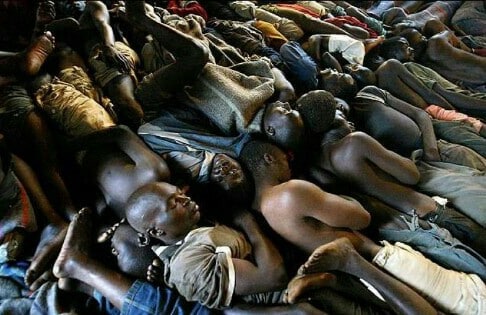
The study also highlights a strong correlation between tuberculosis rates and prison overcrowding.
Leonardo Martinez, study lead from the School of Public Health, Boston University, USA, said: “This connection between TB and overcrowding suggests that efforts to limit the number of people who are detained may be one potential public health tool to combat the TB epidemic in prisons.”
Martinez said, “The high incidence rate globally and across regions, low case detection rates, and consistency over time indicate that this population represents an important, under-prioritised group. Continued failure to detect, treat, and prevent tuberculosis in prisons will result in the unnecessary disease and deaths of many incarcerated persons.”
“And, of course, when incarcerated persons are released from prison, they can take this infectious disease back into the communities in which they live, further contributing to the spread of tuberculosis globally. Greater focus and resources for addressing the tuberculosis epidemic in prisons are needed to protect the health of incarcerated people and their communities.”
The risk of tuberculosis (TB) among incarcerated populations surpasses that of other health conditions such as diabetes, alcohol use disorders, smoking, and undernourishment.
Researchers from various countries conducted a study and discovered significant regional variations in prison TB rates in 2019, with the highest incidence observed in the African region at 2,242 cases per 100,000 people annually—almost double the global estimate for this population.
The Americas region, particularly Central and South America, had the largest absolute number of TB cases among incarcerated individuals, reaching 30,509.
Factors contributing to the increased TB burden in the Americas may include the significant rise in mass incarceration, leading to overcrowding.
The study also highlighted the strong association between crowding and TB incidence, suggesting it plays a crucial role in the rising TB rates in prisons, particularly in Central and South America.
Anthony D Harries, senior adviser at the International Union Against Tuberculosis and Lung Disease, said: “These findings give us a much clearer picture of tuberculosis in prisons than we’ve ever had before. The high rate of tuberculosis and low rate of detection indicates that current control measures are insufficient for preventing the spread of the disease in prisons globally. Therefore, further research is vital to identify and implement the most effective interventions.”
Karabo Rafube, who developed TB in a South African prison, said: “There was no screening when you entered, and we were crowded into small spaces, so it was no surprise that I caught TB. I was very sick, but it took a long time to find out that I had TB. I took treatment for six months and luckily fully recovered. Some people would sell their medicines to other inmates. “After recovering I was appointed as a TB teacher in the prison. Ever since I left, I’ve been supporting others with TB in prison.
“It is important to break the silence of TB. Prisoners have the right to be screened and have access to medicines, but they are often neglected. We can’t end TB without treating everyone – that includes prisoners.”
The International Union Against Tuberculosis and Lung Disease (The Union) officially sponsored the four-year project, providing TB research expertise, logistical and operational support and accountability for success.