Tag: south Sudan

  • South Sudan secures over 280,000 of oral vaccines to fight cholera

    South Sudan secures over 280,000 of oral vaccines to fight cholera

    The Ministry of Health of South Sudan, with support from the World Health Organization (WHO), has procured over 282,153 doses of oral cholera vaccine (OCV). These vaccines will be used in a mass vaccination campaign targeting cholera transmission hotspots in the country.

    The OCV has been supplied by the International Coordinating Group (ICG), which oversees the global stockpile of vaccines for cholera outbreaks. The vaccination campaign will initially focus on Renk and Malakal Counties in Upper Nile State. In the coming days, additional doses will be shipped to support efforts in other affected areas.

    UNICEF’s Supply Division, with backing from Gavi, the Vaccine Alliance, procured and delivered the vaccines, which will be deployed strategically in Upper Nile State and other priority locations. This initiative is part of a broader strategy aimed at preventing and addressing cholera, a preventable and severe diarrheal disease, particularly in vulnerable communities.

    Honorable Yolanda Awel Deng, Minister of Health for South Sudan, emphasized, “Cholera prevention is a priority in areas that have been prioritized for multisectoral intervention.” The OCV campaigns are seen as a critical step toward safeguarding vulnerable populations and setting the stage for long-term water, sanitation, and hygiene (WASH) interventions.

    In light of the country’s humanitarian crisis and limited access to safe drinking water and sanitation, the vaccination efforts will employ a ring vaccination strategy to maximize impact, alongside other key interventions such as enhanced cholera surveillance, patient care, and risk communication.

    Dr. Humphrey Karamagi, WHO Representative to South Sudan, noted, “Although cholera is endemic in South Sudan, this time WHO and partners, together with the Ministry of Health, are better prepared to contain the outbreak and reduce transmission through targeted interventions.”

    He further explained that these efforts include training rapid response teams (RRTs) at the state level, prepositioning diagnostic test kits and essential supplies, and improving surveillance to facilitate quick responses to suspected and confirmed cholera cases.

    Hamida Lasseko, UNICEF Representative, added, “Cholera remains a major health threat, particularly to vulnerable populations such as women and children. UNICEF is working closely with the Ministry of Health and partners to ensure increased access to life-saving vaccines, enhance WASH services, and promote behavioral change to address the root causes of this preventable disease.”

    The Ministry of Health will lead the vaccination campaigns in collaboration with WHO, UNICEF, Médecins Sans Frontières (MSF), and other health sector partners.

    Cholera continues to be a significant public health challenge in South Sudan. Other African countries such as Ghana are battling cases of cholera.

    Since the outbreak was confirmed on 4th October, Ghana has recorded 2,385 suspected cases, 196 confirmed, and 21 deaths.

    The Ghana Health Service and partners have procured 150,000 doses of oral cholera vaccines to control the ongoing cholera outbreak. Speaking at the press launch today, Dr. Patrick Kuma-Aboagye urged the public to maintain proper Water, Sanitation, and Hygiene (WASH) standards, drink safe water, and consume hot meals post-vaccination, as the vaccine offers additional protection, not a replacement for preventive measures.

    The first phase of the campaign runs from 30th November to 3rd December 2024 and targets individuals aged two years and above in three hotspot sub-districts of Awutu Senya East District: Akwelley, Kasoa North, and Odupong Kpehe.
  • South Sudan opposition groups advocate for new constitution

    South Sudan opposition groups advocate for new constitution

    South Sudan’s opposition and civil society groups, currently engaged in political negotiations with the government in Nairobi, are calling for the talks to result in a new constitution to reset the country’s governance framework.

    This new demand, which adds to their initial goal of inclusion in the government of national unity, emerged as the discussions entered their second month this week.

    Pagan Amum, a former minister in South Sudan and leader of the South Sudan Opposition Movement Alliance (Ssoma), joined other opposition factions on Thursday to present a four-point agenda for the negotiations.

    He emphasized that the Nairobi talks should pave the way for a “constitutional conference,” starting in Nairobi and continuing in Juba.

    “The expected outcome of the conference will be: the adoption of a new social contract; a constitutional text; interim governance arrangements with a rescue programme; and implementation modalities,” said a joint statement signed by other opposition groups and the PCCA (People’s Coalition for Civil Action), which represents civic movements.

    “We strongly appeal to the region, the continent, and the international community to support the people of South Sudan in their search for peace and transition to stability and democracy.”

    The collective call for peace and security has been a consistent demand among various opposition groups, initially opposed to the government, but consensus on the approach has remained elusive.

    President Salva Kiir’s administration has advocated for general elections as a starting point and has pushed for necessary preparations. However, stakeholders argue that such preparations are currently unfeasible due to insufficient funds and the lack of required agencies to facilitate the elections.

    Kiir’s coalition partners, including Riek Machar of the Sudan People’s Liberation Movement-in Opposition (SPLM-IO), have recommended postponing the elections until the country’s transitional objectives are achieved.

    Even the Revitalised Joint Monitoring and Evaluation Commission (R-JMEC), established to oversee the implementation of the 2018 peace agreement, has cautioned that the country is not yet ready for elections.

    South Sudan faces a critical dilemma: delaying the elections would extend the transitional government of national unity, formed under the 2018 peace deal, until February 2025. However, conducting elections in an unprepared nation risks inciting new armed conflicts.

    “Our country is not prepared for elections and we believe that part of the outcome of the Tumaini Process will be to delay elections so that we can hold them under a new constitution,” the group said.

    Amum told a press briefing that negotiating parties are on the same page and that the “country is in danger of collapsing from multiple crises.”

    He was referring to the humanitarian toll from flooding and violent clashes, an economic downturn that has seen the country struggle to pay salaries and slow the implementation of transitional arrangements.

  • 2026 World Cup qualifiers: Kwesi Appiah’s Sudan tops Group B after win over South Sudan

    2026 World Cup qualifiers: Kwesi Appiah’s Sudan tops Group B after win over South Sudan

    Former Black Stars coach James Kwesi Appiah has guided Sudan to maintain their lead in Group B of the 2026 African FIFA World Cup qualifiers following a dominant 3-0 victory over South Sudan in Juba on Tuesday afternoon.

    Sudan showcased their prowess in the match, taking the lead in the third minute of first-half added time with a goal from Waliedin Khidir, expertly assisted by Abdelrazig Omer.

    Yasin Mozamil extended their lead six minutes into the second half, and star player Mohamed Abdelrahman sealed the victory with a goal in the 78th minute.

    Remaining undefeated in the qualifiers, Sudan has secured three wins and one draw, accumulating a total of ten points. This impressive tally places them two points ahead of Senegal, currently in the second position with eight points.

    The Falcons of Jediane’s achievements are particularly noteworthy given the absence of a competitive league in Sudan due to ongoing conflict in the country.

    Despite the challenges posed by the war, forcing them to play their home matches outside Sudan, the team has shown remarkable resilience.

    Their ability to secure victories under such circumstances is a testament to their determination and skill.

    Kwesi Appiah is now pursuing the dream of reaching another World Cup with a different African country, having previously led Ghana to the 2014 edition.

    His leadership and experience are proving invaluable as Sudan continues to perform strongly in the qualifiers.

    Sudan’s upcoming match will be crucial as they aim to solidify their position at the top of Group B and move closer to securing a spot in the 2026 World Cup, set to be held in the USA, Mexico, and Canada.

  • Thousands still fleeing Sudan’s war into South Sudan

    Thousands still fleeing Sudan’s war into South Sudan

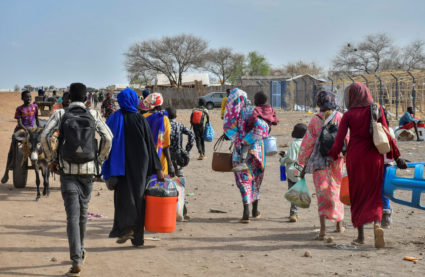
    Since the outbreak of war in Sudan a year ago, over half a million individuals have migrated to South Sudan via various border points.

    Renk, a small town situated approximately 45 kilometers across the border in South Sudan’s Upper Nile state, serves as the primary entry and transit hub.

    Life in this town, already challenged by scarcity of resources and rainfall, has become even more difficult due to the surge in population resulting from its role as the main route for those fleeing conflict.

    With daily increases in arrivals, many newcomers arrive exhausted, famished, and in dire need of assistance and protection at the Renk Transit Centre, where conditions are exceptionally harsh.

    “As you can see, this is where they live and conditions are terrible. They do not have shelter, they lack food, water is still a problem here,” said Plan International case worker, Harriet Konga.

    For more than a year, Sudan has been engulfed in war, sparked by escalating tensions between its military and the paramilitary Rapid Support Forces, leading to street clashes in the capital, Khartoum, since April 2023.

    According to Plan International, nearly 20,000 Sudanese refugees have sought refuge in Renk, posing significant challenges to humanitarian aid and support efforts due to the large influx of people.

    “They seek peace, they need shelter, they need water, sanitation hygiene. I see a number of kids are just playing around the mud, they have not gone to school and have fear of the war. They want to move to a better place from here,” said Sheeram KC of Plan International – Nepal

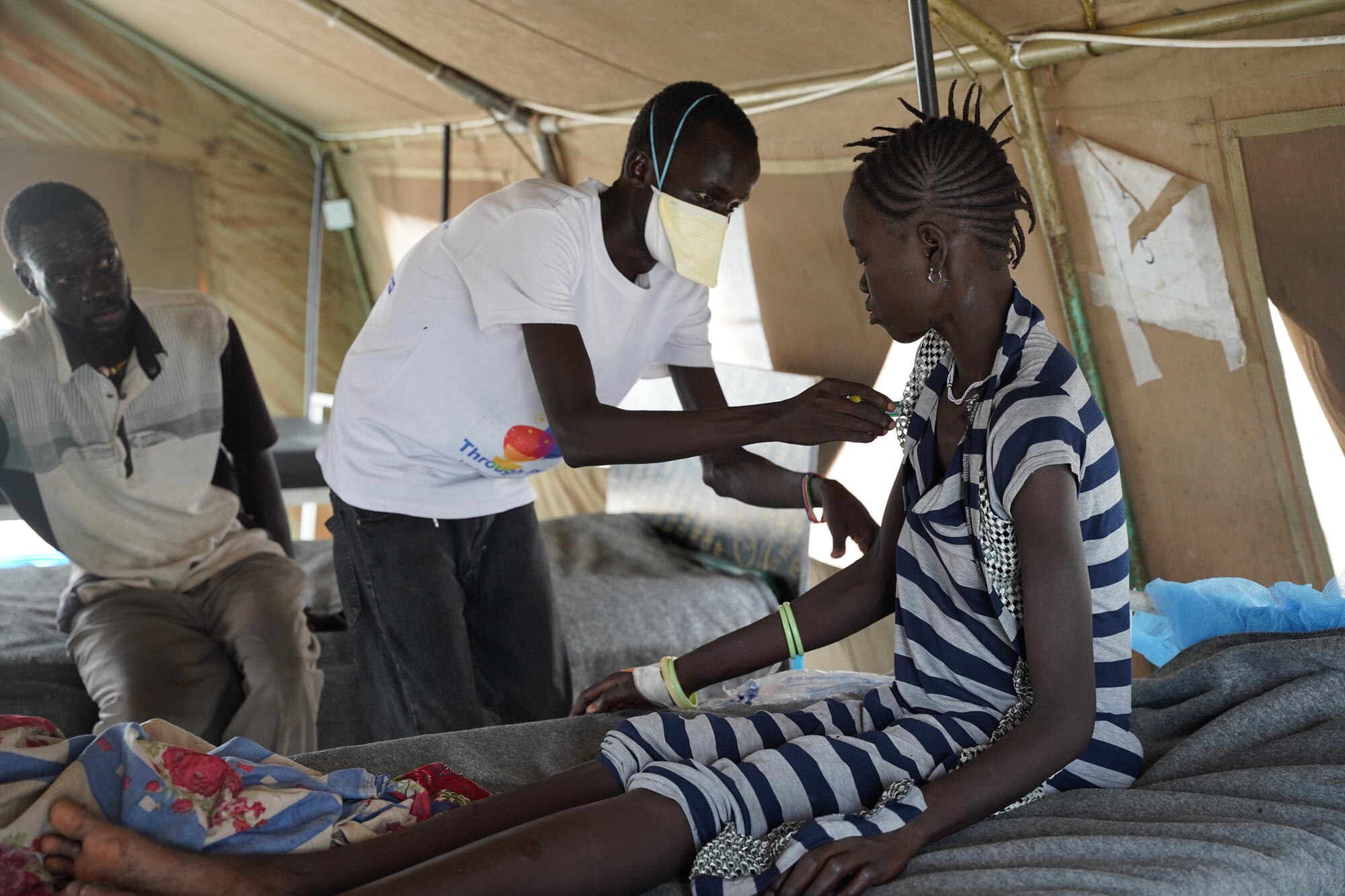
  • MSF reports hundreds of children afflicted by measles in South Sudan

    MSF reports hundreds of children afflicted by measles in South Sudan

    The medical charity, MSF, has sounded the alarm regarding measles outbreaks in South Sudan and Yemen.

    These outbreaks have resulted in fatalities and numerous cases, particularly among children under the age of five in South Sudan’s Western Equatoria state.

    MSF also reported a significant influx of measles patients at its hospital unit in Taiz Houban, Yemen, underscoring challenges related to low vaccination rates and limited access to primary healthcare services.

  • South Sudan to reopen schools amidst severe heatwave

    South Sudan to reopen schools amidst severe heatwave

    After being closed due to scorching temperatures exceeding 40C, South Sudan’s government announces the reopening of all schools next week.

    With the anticipation of the rainy season’s arrival, relief spreads among the populace. However, the recent “excessive heat” claimed the lives of at least 15 individuals, according to authorities.

    Upon the resumption of classes, teachers are urged to exercise caution, scheduling outdoor activities for the early morning and favoring indoor settings.

    Additional precautions include ventilating classrooms, ensuring access to water for students, and closely monitoring children, especially the young, for signs of heat-related illnesses like exhaustion and stroke.

    In case of emergencies, medics are to be promptly notified.

    The ministries of general education, health, and environment pledge to monitor weather conditions closely and provide ongoing guidance to the public.

  • American activist from South Sudan accused of attempting coup back home

    American activist from South Sudan accused of attempting coup back home

    A top educated person from South Sudan who now lives in the United States has been accused in Arizona, along with a man from Utah, of planning to buy and send lots of weapons to overthrow the government in South Sudan.

    Peter Biar Ajak ran away to the United States with the help of the American government, four years ago after he said South Sudan’s president wanted to kidnap or kill him. Ajak, who is now 40 years old, and his family were given special visas quickly because they had been hiding in Kenya for several weeks. He lived in Maryland until recently.

    A legal document in Arizona says Ajak and Abraham Chol Keech, who are 44 and from Utah, are accused of plotting to buy and send weapons to South Sudan through another country. This breaks the law about exporting weapons. The weapons they were thinking about included guns like AK-47s, grenade launchers, Stinger missiles, hand grenades, sniper rifles, bullets, and other controlled weapons.

    The criminal report was made public by the United States. Officials from the justice department still couldn’t find the case on the government’s website by Tuesday afternoon. It was not clear if the men had lawyers who could talk about the accusations against them.

    The defendants tried to secretly bring big weapons and bullets from the United States to South Sudan, which is a country controlled by the U. NThe arms embargo is because of the fighting between armed groups that has caused thousands of deaths and people to leave their homes. This was said by Assistant Attorney General Matthew G. Olsen from America The Department of Justice’s National Security Division said in a statement.

    “Saying no to sending American weapons to other countries helps to make sure they don’t get used to cause trouble in other countries,” Gary Restaino, U.S, lawyer explained in Arizona.

    A man who picked up the phone at the Embassy of South Sudan in Washington on Tuesday said that they don’t have a press officer and the ambassador was not available to comment because he was traveling.

    From 2022 to 2023, Ajak worked at Harvard University’s Belfer Center as a postdoctoral fellow, where he studied how South Sudan became a country. He was also a member at the Africa Center for Strategic Studies of the National Defense University and a Reagan-Fascell Democracy Fellow at the National Endowment for Democracy.

    South Sudan became its own country on July 9, 2011, after a vote by the people. But many different groups of people are fighting each other and treating each other very badly in the country.

  • South Sudan: Ghanaian peacekeeper allegedly killed during conflict between local rival groups

    South Sudan: Ghanaian peacekeeper allegedly killed during conflict between local rival groups


    Clashes between local rival groups in the Abyei region on the South Sudan border has allegedly resulted in the tragic death of a Ghanaian United Nations (UN) peacekeeper, according to a statement by the United Nations Interim Security Force for Abyei (UNISFA).

    The incidents occurred in three locations within the Abyei area on Saturday, causing casualties and leading to the evacuation of civilians to UNISFA bases for safety amid the violence.

    During the fighting, one UNISFA base came under attack and although the attack was repelled “tragically a Ghanaian peacekeeper was killed during the incident,” the statement said.

    The UN mission is currently in the process of verifying the extent of the impact, including the number of casualties, injuries, and displaced individuals.

    Frequent clashes between various communities are common in South Sudan, stemming from the aftermath of a devastating war involving the country’s leader, Salva Kiir, and his former deputy, Riek Machar, in a conflict between rival tribes. The statement, however, did not specify which tribes were involved in Saturday’s clashes.

    The Abyei region, known for its oil resources, grapples with recurring episodes of violence, primarily due to a dispute over the administrative boundary among rival factions of the Dinka ethnic group. The ownership of Abyei itself is contested between Sudan and South Sudan, with the latter declaring independence from Sudan in 2011.

  • New cardinal in South Sudan describes women leaders in church a priority

    New cardinal in South Sudan describes women leaders in church a priority

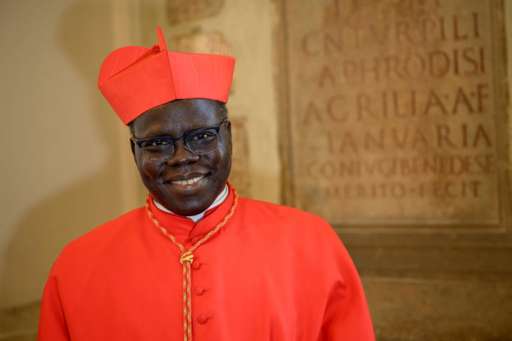
    Cardinal Stephen Ameyu Martin Mulla, Archbishop of Juba in South Sudan, has disclosed that Pope Francis has issued a directive to bishops, emphasizing the importance of promoting women’s leadership in various capacities within their dioceses.

    Cardinal Mulla, who was recently elevated to the rank of Cardinal by Pope Francis, returned to South Sudan from the Vatican.

    This elevation to the rank of Cardinal was part of a larger move by Pope Francis in September, where he promoted three African archbishops to the status of Cardinal.

    The other two clerics were Cardinal Protase Rugambwa from Tanzania and Cardinal Stephen Brislin from South Africa. This decision was part of the appointment of 21 new cardinals.

    Addressing an enthusiastic gathering at St. Theresa’s Cathedral in the capital, Juba, Cardinal Ameyu mentioned that his return was slightly delayed due to Pope Francis’ request for his participation in a synod dedicated to discussing the Church’s role in evangelization.

    Pope Francis’ call for prioritizing women’s leadership highlights the evolving and inclusive approach being adopted within the Catholic Church. This emphasis on gender equality in leadership roles underscores the importance of fostering diversity and equal representation in the Church’s activities.

    “In the synod, the Pope says ‘let’s put women first’. If we put women first, this church will stand strong. God willing in our archdiocese we will respect the work done by women in all the committees in our Church.

    “Today our life [in South Sudan] has been broken by the war, it has been broken by quarrels in our families, it has been broken by mothers leaving the house, it has been broken by irresponsible fathers who leave the house – all of us have a broken life,” Cardinal Ameyu said.

  • Hunger in South Sudan after running from conflict – WFP

    Hundreds of thousands of individuals escaping the battling in Sudan to South Sudan are going different days without nourishment as child lack of healthy sustenance takes off, the World Nourishment Program (WFP) has cautioned.

    The UN office says a starvation crisis is approaching on the border between the two nations and concedes it is battling to meet the developing helpful needs.

    “We are seeing families take off one fiasco for another as they escape peril in Sudan as it were to discover lose hope in South Sudan,” says Mary-Ellen McGroarty, WFP’s South Sudan nation chief.

    It is evaluated that 90% of individuals are going for days without eating and as of now one in five children and a quarter of pregnant or breastfeeding moms are malnourished.

    They are escaping the war which broke out in Sudan in April.

    Numerous say they were ransacked along the way and regularly individuals arrive with nothing but the dress on their backs.

    The larger part are South Sudanese who were living and working in Sudan. South Sudan withdrawn from Sudan in 2011 after decades of war.

    The WFP says it essentially does not have the assets to supply life-saving help.

    It needs more than $120m (£99.5m) to extend bolster to those who require it most.

  • South Sudan: Former defense minister assumes new position after dismissal

    South Sudan’s President Salva Kiir has named Angelina Teny, the former defense minister who was recently dismissed, as the new minister of the interior. Ms. Teny is the spouse of opposition leader Riek Machar, who serves as the country’s vice-president within a unity government established in 2018 to end the nation’s devastating six-year civil war.

    Her earlier removal this year sparked opposition protests and jeopardized the delicate peace agreement between the president and his rival, Mr. Machar. According to the terms of the agreement, the defense ministry should be held by a member of Mr. Machar’s SPLM-IO party.

    As of now, the SPLM-IO has not issued a statement regarding Ms. Teny’s reappointment to the cabinet, which was announced in a presidential decree broadcast on national television on Tuesday night.

    This peace deal is designed to pave the way for South Sudan’s first election since it gained independence from Sudan 12 years ago. The elections are scheduled for December 2024.

  • Mayor of South Sudan dismissed for ‘slapping woman’

    Mayor of South Sudan dismissed for ‘slapping woman’

    The temporary mayor of Juba, the capital city of South Sudan, has been fired after a video showed him slapping someone from the public.

    Emmanuel Khamis Richard has been under increasing pressure from other politicians to quit, but he has refused to do so. A video of him seemingly attacking a female street seller has been widely shared for the past week.

    The governor of Central Equatoria state told everyone on Friday night that he was firing him, and then more people heard about it over the weekend.

    The governor took action after all the MPs sent him a letter asking for the mayor to be removed.

    MrKhamis Richard did not say if he slapped the woman or not. Before he was fired from his job, he was asked to go and see some important people in Juba to explain what he did wrong. But he didn’t go, and instead asked for two more weeks before he had to go.

    No one has been chosen yet to take over. But for now, the leader of Juba city council, Martin Simon Wani, has been told to oversee the overall tasks of the municipality.


  • Mayor in South Sudan expelled after assaulting woman

    Mayor in South Sudan expelled after assaulting woman

    The interim mayor of Juba, South Sudan, has been dismissed from his position following a widely circulated video that appeared to show him slapping a female street vendor.

    Emmanuel Khamis Richard had resisted calls to resign, even as political pressure mounted in the wake of the video’s viral spread.

    The announcement of his removal was made by the governor of Central Equatoria state on Friday evening and was subsequently reported more widely during the weekend.

    MPs had previously sent a unanimous letter to the governor, urging the mayor’s removal.

    Mr. Khamis Richard neither admitted nor denied the alleged incident. Prior to his dismissal, he had been summoned to face questions from Juba city councillors, but he failed to appear and instead requested a two-week delay.

    No replacement has been named as of yet, but Martin Simon Wani, the head of Juba city council, has been tasked with overseeing the municipality’s operations temporarily.

  • Mayor in South Sudan fired for allegedly slapping a woman

    Mayor in South Sudan fired for allegedly slapping a woman

    The acting mayor of Juba, the capital city of South Sudan, has been dismissed from his position after a video surfaced showing him allegedly slapping a member of the public.

    Emmanuel Khamis Richard had resisted calls to resign despite mounting pressure from fellow politicians after the video, in which he appeared to assault a female street vendor, went viral a week ago.

    The governor of Central Equatoria state announced his removal on Friday evening, a decision that gained wider attention over the weekend.

    This action came in response to a unanimous letter from Members of Parliament urging the mayor’s removal. Mr. Khamis Richard has neither confirmed nor denied the allegations of slapping the woman.

    Before his dismissal, he had been summoned to appear before Juba city councillors to address the incident, but he did not attend and instead requested a two-week delay.

    At present, no successor has been appointed. However, Martin Simon Wani, the head of Juba city council, has been tasked with overseeing the general operations of the municipality in the interim.

  • UN suggests South Sudan unprepared for elections

    UN suggests South Sudan unprepared for elections

    The UN mission in South Sudan has issued a warning, stating that the country is not adequately prepared to hold elections next year.

    Originally scheduled for December 2024, these elections would mark the first democratic exercise in the world’s newest country, which gained independence from Sudan 12 years ago.

    The prolonged and devastating civil war, along with a challenging peace process, has caused significant delays in conducting these crucial polls.

    According to Nicholas Haysom, the head of the UN mission, analysts believe that South Sudan has not yet put in place the required infrastructure necessary for conducting fair and credible elections.

    The current situation in the war-torn country raises concerns about the feasibility of holding elections as planned.

    The candid and honest observation of most analysts, observers and stakeholders, is that as it stands today, South Sudan is not yet ready for elections. But that elections could be held on schedule if there is adequate political will, a practical approach to the arrangements and commensurate resources are applied to achieving the benchmarks and the roadmap.”

    He further cautioned:

    “I don’t think the elections will have the effect they should have if they are not transparent, if they are not free and they are not fair.”

    “I don’t think the elections will have the effect they should have if they are not transparent, if they are not free and they are not fair.”

    “Quote Message: “Then, simply, they will provide a basis for more conflict. It’s really important that we establish proper foundations for the elections.”

    “Then, simply, they will provide a basis for more conflict. It’s really important that we establish proper foundations for the elections.”

  • South Sudan’s first-ever general election experiences several obstacles

    South Sudan’s first-ever general election experiences several obstacles

    Even though South Sudan is already 12 years old, the country’s independence day festivities may not be as boisterous as one may anticipate, And, since that historic referendum in 2011, the people of South Sudan have been waiting in line once more to elect their leaders after years of strife.

    Previous attempts by the nation have failed, with security issues, a lack of funding, and other difficulties being cited. The most recent bid is scheduled for December 2024.

    This week, President Salva Kiir promised that it will happen. “We are committed to implement the chapters in the Revitalised Peace Agreement as stated, and the election will take place in 2024,” President Kiir said on Monday, after his Sudan People’s Liberation Movement (SPLM) endorsed him to run for president.

    He did, however, acknowledge that it won’t be an easy journey to the polls.

    Since the nation’s independence, he has served as its sole president; nevertheless, he has never been chosen. Since 2017, the nation has been unable to openly observe Independence Day due to financial restrictions brought on by a faltering economy. Some even questioned if the event was even necessary.

    However, this anniversary comes at a moment when introspection is warranted: Will the nation be able to hold genuine elections in 17 months?

    The Revitalized Agreement on the Resolution of the Conflict in South Sudan (R-ARCSS), which helped bring together a coalition of President Kiir and former military leaders, is another issue that has to be addressed.

    South Sudan’s permanent envoy to the African Union, James Morgan, predicts that Juba will prevail this time.

    “South Sudan will hold its first democratic elections in 2024 bringing to an end the past years of political uncertainty, instability, and conflicts,” Mr. Morgan said.

    The head of the United Nations Mission in South Sudan, Nicholas Hayson, expressed concern, however, that this year will be a “make-or-break” period for the country.

    South Sudan must complete changes in the security sector, rehouse more than two million refugees in the surrounding nations, and create a permanent constitution in order to hold credible elections.

    Maj-Gen (Rtd) Charles Gituai, the chairman of the Joint Monitoring and Evaluation Commission (JMEC), stated to the UN Security Council on June 21 that the unification and redeployment of forces must be finished in order to provide election-related security; institutions involved with the preparation and conduct of elections, such as the Political Parties Council and the National Elections Commission must also be completed.

    Completing a people-centered constitution to govern elections, implementing judicial reforms to strengthen the ability and independence of judicial institutions to handle election-related disputes, and enhancing the overall political and civic environment in which multiparty elections are held are the third and fourth requirements.

    “The 2018 peace agreement legitimises the Transitional Government of National Unity and remains the most plausible blueprint for a peaceful transition. With prospects of elections looming only 18 months away, there is a need for our collective efforts to focus on South Sudan at this critical time and ensure that the Agreement is implemented in letter and spirit,” said Maj-Gen Gituai.

    He added that over the past five years of the implementation of the agreement, South Sudan has enjoyed its longest period of relative peace and stability since its independence. However, the pace of implementation has been slow, as much of what was expected to have been implemented by the end of the stipulated 36 months of the transitional period was not achieved.

    Consequently, the Revitalised Peace Agreement was extended for 24 months, from February 2023 to February 2025, to enable the completion of the unification of forces, the making of the permanent constitution, and to prepare for the conduct of credible, free, and fair elections in December 2024.

    Overall, key achievements in the implementation include the fact that the parties have addressed the issues of governance with the executive and legislative arms of the transitional government having been established at both the national and state levels.

    The dispute over the number of states was resolved, and the peace agreement was incorporated into the transitional constitution.
    Also, some crucial legal, judicial, and institutional reforms are ongoing.

    There have also been security arrangements, with about 55,000 of the expected 83,000 unified have been trained.

    These troops remain in their training areas awaiting deployment to their respective units. However, Phase 2 and the disarmament, demobilisation and reintegration process is yet to commence.

    On humanitarian affairs, the opening of key humanitarian corridors has facilitated the return of some South Sudanese refugees and IDPs.

    However, over 2 million South Sudan refugees are still stuck in neighbouring countries such as Kenya, Uganda, and Ethiopia.

    Peter Biar Ajak, a South Sudanese peace activist, scholar, and former political prisoner says that over 80 percent desire that elections will be held so as to help South Sudan move forward. “But despite this excitement from the people of South Sudan to go to the ballot, many prerequisites remain outstanding and could hinder the conduct of free and fair elections,” he says.

    Then there is the issue of the constitution which could take time.

    The constitution will allow South Sudanese to debate and agree on critical issues of governance including: whether the country will have a presidential or a parliamentary system of governance; the nature of federal arrangement between the national government and sub-national units; term limits for executive and legislative posts; whether to adopt federalisms being agitated by holdout groups such as Gen Thomas Cirillo; the independence of judiciary and development of robust dispute resolution mechanisms.

    Gen Gituai says that challenges abound. There is a trust deficit among the parties; a lack of adequate resources; a lack of capacity of some institutions relevant to the implementation of the peace agreement; persistent levels of inter-communal violence in the states; negative activities of the holdout groups, and natural calamities like floods.

    “Without predictable and adequate funding, our assessment is that South Sudan will continue to struggle to adhere to the implementation schedule of the agreement Most recently, additional strain has been placed on humanitarian and other resources in South Sudan by the influx of refugees and returnees from the conflict in the Republic of Sudan,” said Gen Gituai.

    The country needs at least $50 million for the National Election Commission (NEC) to conduct the general elections.

    According to a new survey released by the UN Mission in South Sudan on June 21, the security situation in South Sudan declined in 2022 compared with 2021, with more than half of South Sudanese expressing concerns about their safety.

  • South Sudan set to conduct its first general election since independence in 2011

    South Sudan set to conduct its first general election since independence in 2011


    President Salva Kiir of South Sudan has confirmed that the country’s much-delayed elections will proceed as scheduled next year.

    President Kiir himself has announced his intention to seek re-election, marking the first elections since South Sudan gained independence.

    While no other candidate has formally declared their candidacy, it is expected that First Vice-President Riek Machar will also participate in the race.

    Since South Sudan gained independence in 2011 after a protracted civil war, President Kiir has held the presidency.

    However, the nation continued to experience internal strife, leading to a renewed civil war in 2013 when President Kiir and Mr. Machar’s relationship deteriorated.

    In an effort to bring an end to the five-year civil war, a power-sharing agreement was signed between the conflicting parties in August 2018.

    The mandate of the transitional government, which was due to end in 2022, was extended to allow the leaders to address challenges with the implementation of the peace agreement.

    On Tuesday, Mr Kiir said those challenges would be addressed “before the elections” set for December next year.

  • Uganda and South Sudan sign deal to strengthen energy ties

    Uganda and South Sudan sign deal to strengthen energy ties

    Uganda and South Sudan have come together to strengthen their energy ties and promote socioeconomic development in the border towns of Oraba, Elegu, Kaya, and Nimule through the signing of a crucial power sales agreement (PSA).

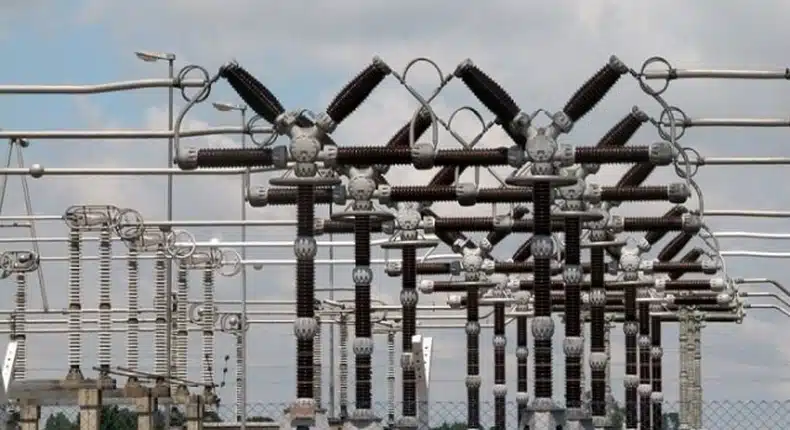
    The power sales agreement aims to boost electrical commerce between the two neighboring nations and foster economic growth in the region. The Olwiyo substation in northern Uganda, which is already operational at 132kV, will serve as the electricity source for the 400kV Olwiyo-Juba transmission line, facilitating the distribution of power to Juba, the capital city of South Sudan.

    The initiative stems from a Memorandum of Understanding (MoU) established in December 2015, focusing on developing transmission and distribution infrastructure to connect Uganda and South Sudan under the Nile Equatorial Lakes Subsidiary Action Plan (Nelsap). To ensure effective implementation, a joint technical committee has been set up to plan and coordinate the project’s development.

    As per the agreement, the priority lies in the construction of the 308 km power transmission line, with 138 km located in South Sudan and 170 km in Uganda. Additionally, the substations at Juba, Olwiyo, and Bibia (near the Elegu border post in Uganda) will undergo expansion to facilitate smooth electricity flow.

    The momentous power sales agreement was officially signed in Juba on Tuesday by Irene Bateebe, the Permanent Secretary of the Ugandan Energy Ministry, and Beck Awan Deng, the General Manager of the South Sudan Electricity Corporation (SSEC). This collaboration represents a significant step forward in strengthening energy ties and promoting socioeconomic progress between Uganda and South Sudan.

    “Today’s signing ceremony marks the beginning of serious cooperation in power trade between Uganda and South Sudan,” energy minister Dr Ruth Nankabirwa Ssentamu, who led the Ugandan delegation said.

    Peter Marcello Jelenge, South Sudan representative, added, “We would like to see projects that benefit both the people of Uganda and South Sudan…We will take power from small towns in Uganda, such as Elegu and Oraba.”

    The feasibility study, which started in March 2023 and is anticipated to be finished in February of the following year, is being carried out by a consortium made up of the Italian companies CESI S.p.A., ELC Electro Consult S.p.A., Colenco Consulting Ltd., and Colenco Consulting Ltd. of Nigeria.

    The African Development Bank (AfDB) has decided to donate money to South Sudan and Uganda for feasibility studies with additional funding by the AfDB.

  • Fighting in South Sudan camp kills 13 displaced persons – UN

    Fighting in South Sudan camp kills 13 displaced persons – UN

    Intercommunal fighting in a displaced persons camp in northern South Sudan has killed 13, according to the UN mission in charge of the camp.

    The clashes between two ethnic communities living in the camp in Upper Nile State’s capital, Malakal, first erupted on Thursday when a man was stabbed to death.

    “Initial reports to the mission indicated that at least three persons have been killed and more than 20 injured with some of them receiving treatment at the mission’s hospital,” a spokesperson for the UN Mission in South Sudan (UNMISS), Ben Malor, said in a statement on Friday.

    “Later in the day, 10 more people were confirmed dead in other facilities.”

    The camp is home to at least 50,000 people. Its number has been fluctuating since the first group of people came there at the start of a civil war in 2013.

    The numbers have increased in recent weeks after about 3,000 people fleeing fighting in neighbouring Sudan also came to the camp, Luke Saadala, Upper Nile’s information minister, said.

    Malor said UNMISS and South Sudan’s army had reinforced security in and around the camp and calm was returning on Friday.

    A peace deal signed in 2018 to end the civil war has significantly reduced fighting in South Sudan, but violence remains rife in areas where rights to grazing areas, water, farmland and other resources are under dispute.

    In recent months, Upper Nile State has been an epicentre of violence mainly orchestrated by armed militias.

    In 2016, fighting at the Malakal camp killed at least 18 people, including two staff members of the aid group Médecins Sans Frontières.

  • Sudanese refugees flee war as Chad struggles to help

    Sudanese refugees flee war as Chad struggles to help

    Despite being only 22 years old, Mastiura Ishakh Yousouff has spent the majority of her life in the Darfur region of Sudan. But even for someone who has never known a permanent home, this is unfamiliar territory: a refugee camp in eastern Chad, one of the world’s poorest nations.

    After conflict in West Darfur grew more intense, she was compelled to cross the border with just her newborn and the few personal belongings she could fit.

    “I’m concerned about everyone who was left behind, especially my mother, who was unable to cross the border because she was in too poor of health to do so. She spoke to CNN at the Gaga Refugee Camp in the Ouadda region of the central African nation. “I keep asking myself how I can get her to Chad,” she said.

    Hundreds of people have died in West Darfur, as fighting escalated between the country’s two rival military factions locked in a deadly power struggle. At least 60,000 Sudanese have crossed into Chad since fighting broke out in mid-April, UN figures show.

    Even before the fighting intensified, years of political instability meant Sudan had several millions of people internally displaced; the country also hosted 1.13 million refugees from other conflict-ridden countries, including South Sudan, Eritrea and Syria, according to UNHCR data.

    The new outbreak of violence forced nearly 850,000 more civilians so far to leave their homes and move elsewhere in Sudan, while more than 250,000 people left the country in search of safety, UNHCR data shows.

    Chad is feeling the strain of the displacement on its resources and was already home to 400,000 Sudanese refugees before this latest conflict.

    The current surge has humanitarian workers scrambling to provide services to new arrivals, relocate them away from border towns and deliver aid to mushrooming refugee cities in a remote part of a poor nation that has its own security challenges.

    Money is tight to take care of all of them but the people keep coming, afraid that they will be killed if they stay in Sudan.

    Close to 90% of the new arrivals at the Gaga Camp are women and children, UNHCR, the United Nations’ Refugee Agency, told CNN.

    “The young and the men told us to take the children and cross the border for now so that they can stay behind to defend themselves and our property, if necessary,” Yousouff explained.

    They may have escaped the conflict back home, but some are so traumatized that even the guns that police and security carry around the camp trigger painful memories, humanitarian workers say. They’re scared of men in military fatigues, a reminder of the horrors they witnessed back home.

    CNN traveled to eastern Chad with USAID Administrator Samantha Power, who announced $103 million to support the over 1 million people who have been displaced in Sudan and neighboring countries since the conflict broke out.

    It was a full-circle moment for the US official, who is a former journalist who reported from Chad in 2004 as Sudanese civilians fled from the Janjaweed Arab militias who were accused of major human rights violations and atrocities in Darfur.

    On this latest trip, she heard harrowing stories from refugees who were forced to cross over into Chad in the face of unprecedented violence.

    One group of nearly 200 families left at 3 a.m. as they feared that they would get attacked imminently.

    “You talk to them, you feel like you’re in a time warp, because they’re describing Janjaweed coming in with their knives and their machetes, killing people, raping women. We met one woman whose eye had been gouged basically, with somebody just attacking her,” Power told CNN.

    General Mohamed Hamdan Dagalo, known as Hemedti, was a commander of the Janjaweed during the bloody years of the Darfur conflict.

    Hundreds of thousands of people were killed during the violence two decades ago by Janjaweed fighters who murdered, raped and tortured the people of Darfur in what is widely recognized as a genocide.

    Hemedti now leads the Rapid Support Forces, the paramilitary group battling the Sudanese Armed Forces in this latest conflict. Their representatives signed a seven-day humanitarian ceasefire agreement in Jeddah, Saudi Arabia, over the weekend that begins on Monday night local time. But the two sides have violated each of the previous truces they agreed to since they started fighting on April 15.

    “Nowhere in the world, is there a humanitarian solution for a political problem. Nowhere in the world, is there a humanitarian fix for generals who are willing to destroy their country in the interests of seizing power, or consolidating power,” Power told CNN.

    As she spoke, some children gathered behind her, curious about the scene and likely bored in a newly built camp with no recreational facilities.

    Countries that “might be tempted” to support one faction or the other should keep their faces in mind, she said. The ambassador wants the generals isolated and pressured to end the conflict.

    Koubra Abdallah, 23, told CNN she left Geneina in West Darfur so suddenly that she got separated from her young son, who got lost in the chaos.

    “My brother is still back there, I heard he was injured. I was forced to come to Chad to seek safety,” she said as she sorted vegetables for lunch in the Gaga camp. She stressed that she wouldn’t go back to Sudan except to bring her son and brother back to safety.

    “There has been too much insecurity for too long,” she said in a mixture of the Masalit and Arabic dialects spoken in western Sudan.

    Like Yousouff, many of the refugees were already internally displaced thanks to decades of conflict in Sudan. “Some of them have been in a cycle of displacement,” explained Patrice Ahouansou, the Deputy Representative in Chad of the UNHCR.

    “So they were living in Internally Displaced Persons camps in Sudan and have now crossed into Chad to seek asylum.”

    Chadian law requires refugees to be housed at reasonable distances from border towns, the UN official says. So they are moved to camps like Gaga further away from the border to begin the difficult process of figuring out the rest of their lives.

    About 1,000 people had been relocated when CNN visited. Tens of small one-room iron sheet structures wrapped in UNHCR logos had sprung out of the desert.

    The women and their toddlers sat or slept under trees to escape the 45 degree heat while some children played near a tap as water flowed. It’s basic, no piped water or power in the dwellings that host one family each, but they feel safe in this refugee city.

    The people crossing into Chad are the poorest, most vulnerable victims of Sudan’s instability.

    They’re mostly farmers, village folk with simple lives who yearn for the chance to build a safe future. Unlike the thousands who have been evacuated through Port Sudan or flown out of the country, they don’t have dual nationalities or foreign visas. “I’ll go back for any leader that brings peace to Sudan,” one of the men told USAID’s Power.

    They don’t care about which general wins in this power struggle.

    “What’s sad is that while there was hope for a civilian-led transitional government, and while there was hope for a time that the military and these militia would recede, for many of these individuals, it’s just proof that the militia will never go away in their minds,” she told CNN.

  • Mary Ashun among 10 finalist for Africa Education Medal 2023

    Mary Ashun among 10 finalist for Africa Education Medal 2023

    Principal of Ghana International School (GIS), Mary Ashun is among the top 10 finalist for the Africa Education Medal 2023.

    Founded last year by T4 Education and HP in collaboration with Microsoft, the Africa Education Medal is Africa’s most prestigious education accolade.

    The Africa Education Medal was established to recognise the tireless work of those who are transforming education across the continent – to celebrate the stories of those who have lit the spark of change so others will be inspired to take up the torch. It is given to an outstanding individual who has demonstrated impact, leadership, and advocacy in the field of education.

    Mary Ashun is Principal of Ghana International School (GIS), an independent not-for-profit school that provides an internationally diverse experience which instils mutual understanding, promotes holistic development, and teaches life skills to produce responsible global citizens.

    Projects she has championed through GIS include support for students from under-equipped schools, teacher training and resource capacity building in remote villages, collaborative international educator visits as well as fostering student efforts to be innovative in the Arts and Sciences.

    Dr. Ashun advocates for all children, especially the marginalised in education. In March 2021, she learned about a young man who sat entrance exams and gained admission to the most prestigious public boarding school in Ghana. On checking in to his dormitory he was denied entry because he had dreadlocks. Dr. Ashun wrote a paper titled “The Issue of the Other When it Comes to Admissions” and published it on Ghanaweb. The ensuing heated national discourse on whether a Rastafarian student could be denied his place in a public boarding school put her opinion and that of others of like minds at the centre of a national debate. While the issue raged on in the court of law, a group of committed GIS parents worked with her and a scholarship was arranged for him. She admitted the student in question to GIS, making a statement of inclusion and acceptance. In advocating for his right to an education

    irrespective of his religion, she showed her students the power of their voices and the need to live out the school motto of ‘Understanding Of Each Other’.

    Prior to joining GIS, Dr. Ashun was a school principal in Canada and also taught Sciences and Maths from K – 12 and lectured at Redeemer University (Ontario) in the Faculty of Education, teaching and supervising pre-service and in-service teachers.

    Dr. Ashun created a teacher conference called TIME (Teachers, Inspiring, Motivating & Empowering). At these conferences, researcher teachers are able to share their action research, master teachers share strategies that work well in different kinds of classrooms, and administrator teachers share insights relating to parent engagement, supporting teacher growth and self-care for educators. Each year, a fifth of the spaces are reserved for educators from underserved regions.

    As Chair of the Mastercard Foundation Young Africa Works Advisory Board, Dr. Ashun has been a panellist on EdTech Mondays, a programme that showcases technological innovation in schools. This is streamed online and is a key component of Mastercard Foundation’s drive to make learning relevant and accessible across Africa.

    Her work with the African Leadership Academy and the Anzisha Fellowship also allows her to mentor the next generation of African entrepreneur educators. Through the programme she has mentored educators from Algeria, Uganda, Zimbabwe, South Sudan, Egypt, Senegal, Nigeria, and Congo, sharing her experiences with them as they transform education in refugee communities or innovate with micro-schools in North Africa.

    Mayank Dhingra, Senior Education Business Leader, Southern Europe, Middle East and Africa, at HP said:

    “My warmest congratulations to Mary Ashun on being named a Top 10 finalist for the Africa Education Medal 2023. Her tireless work to improve education stands as an inspiration to us all and I hope many others will follow in her footsteps to become leaders in the field.

    “HP has a bold goal to accelerate digital equity for 150 million people globally by 2030. Only by joining forces and aligning with NGOs, government, educators and businesses can we truly improve the education environment. The Africa Education Medal brings together all those who are changing the face of African education, whose vital work deserves to be celebrated.”

    Vikas Pota, Founder and CEO of T4 Education, said:

    “Africa’s teachers and school leaders, and its leaders of governments, NGOs and businesses, all play a crucial part in unlocking the continent’s potential through quality education. African education stands at a crossroads in the wake of the pandemic, but if leaders from across the continent in every field can work together then they can build the lasting change needed.

    “I congratulate Mary Ashun on her achievements in leading Ghana International School and I hope her success serves as a rallying cry for changemakers to come forward and make a difference.”

    The Top 10 finalists for the Africa Education Medal are:

    Mary Ashun, Principal of Ghana International School, Ghana
    Laura Kakon, Chief Growth & Strategy Officer of Honoris United Universities, Morocco
    Rogers Kamugisha, Country Director of Educate!, Rwanda
    Grace Matlhape, CEO of SmartStart, South Africa
    Mary Metcalfe, former policymaker and CEO of Programme to Improve Learning Outcomes (PILO), South Africa
    Martha Muhwezi, Executive Director of FAWE, Uganda
    Jean-Claude Nkulikiyimfura, Executive Director of Agahozo-Shalom Youth Village, Rwanda
    Simi Nwogugu, CEO of JA Africa, Nigeria
    Sara Ruto, Former Chief Administrative Secretary of Kenya’s Ministry of Education and former CEO of PAL Network, Kenya
    Snehar Shah, CEO of Moringa School, Kenya

    Nominations for the Africa Education Medal opened in February 2023 for individuals working to improve pre-kindergarten, K-12, vocational and university education who are either educators, school administrators, civil society leaders, public servants, government officials, political leaders, technologists, or innovators.

    The winner of the Africa Education Medal will be announced in July. Finalists will be assessed by a Jury comprising prominent individuals based on rigorous criteria.

    ABOUT T4 EDUCATION:

    We believe every child everywhere deserves a good education. We are building the world’s largest community of teachers and schools to achieve this. Together. Our digital media platform provides opportunities for educators to network, collaborate, share good practices, and support each other’s efforts to improve learning and school culture. We work to amplify teachers’ voices because the world we want to see will only be built by listening to those at the heart of education.

    Our global community of over 200,000 teachers and our digital media platform provides an engine for organisations to run education prizes that cut through in both the international media and the public consciousness.

  • Impunity fueling violence in South Sudan – UN rights commission

    Impunity fueling violence in South Sudan – UN rights commission

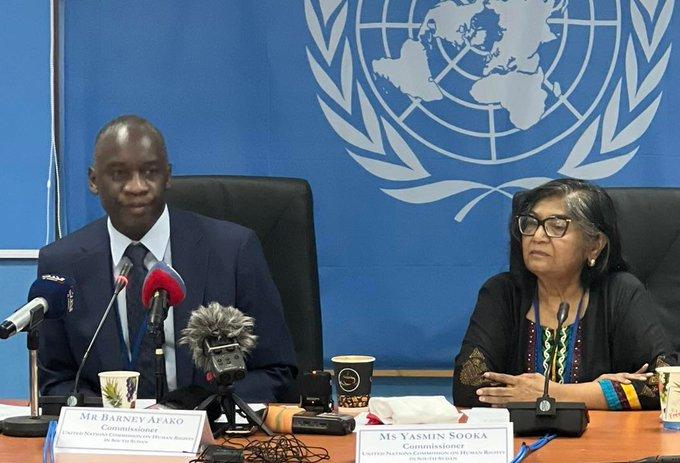
    The UN Committee on Human Rights in South Sudan’s report explains how the worst atrocities, such as frequent assaults against civilians and extrajudicial killings, go unpunished, with high government officials and military personnel being held accountable for grave violations.

    “Over several years, our findings have consistently shown that impunity for serious crimes is a central driver of violence and misery faced by civilians in South Sudan,” said Yasmin Sooka, Chair of the independent expert group.  

     “So, we have taken the step of naming more of the individuals who warrant criminal investigation and prosecution for their role in gross human rights violations,” she added.  

    No accountability at all 

    South Sudan, the world’s youngest country, has been mired in unrest for nearly a decade, although a 2018 Peace Agreement sought to end the violence. 

    The UN Commission has been monitoring the human rights situation there since March 2016. Its latest report is based on investigations in six states, and in the neighbouring region, over the past 12 months. 

    Members had presented the main findings to the Council last month, but the full report provides greater detail on “emblematic situations and sites of human rights violations” during this period, such as widespread attacks against civilians, including killings, rape, sexual slavery and other forms of sexual violence, as well as mass displacement.  

    The Commission found that although the Government of South Sudan has announced special investigation committees into several situations, not one has led to any form of accountability. Furthermore, Government and military personnel implicated in these serious crimes remain in office.  

    Failure to protect civilians 

    “Once again, hundreds of South Sudanese shared with our Commission their experiences of being subjected to a range of human rights violations. Their suffering is immense. The State continues to fail in its duty to protect civilians, and to ensure accountability for violations,” Commissioner Andrew Clapham said.  

    “We call upon the authorities to properly investigate alleged perpetrators of serious crimes, no matter their rank or office, and to establish and strengthen the justice mechanisms for holding them accountable.”  

    Senior officials implicated 

    The report identifies Unity State Governor Joseph Monytuil, and Lieutenant General Thoi Chany Reat of the South Sudan People’s Defence Forces, as among the individuals warranting criminal investigation in relation to State-sanctioned extrajudicial killings carried out in Mayom in August 2022.  

    The Commissioner in Koch County, Gordon Koang, is among persons identified as being responsible for leading widespread attacks against civilians in Leer in February and April 2022.  

    The Commission’s findings also identify other individuals warranting further scrutiny or investigation in relation to human rights violations in Warrap State, Upper Nile State, northern parts of Jonglei State, and the Equatoria states.  

    Recommit to peace deal 

    Commissioner Barney Afako said “breaking the grip of impunity” can only be realized if the authorities recommit and adhere to the values and promises in the peace agreement. 

    “Political leaders are accountable to the people of South Sudan, and must therefore ensure that civic space for discussion is protected if the country’s first electoral and constitution-making processes are to be credible and positively impactful,” he said.  

    The report also assesses justice systems and initiatives in South Sudan, including the recent use of military courts and ad hoc inquiries. 

    It also addresses thematic human rights issues, including the use of children in the armed forces and in armed groups, conflict-related sexual violence, and the virtual disappearance of civic space in the country.  

    Independent experts 

    The Commission is an independent body and receives its mandate from the UN Human Rights Council, which is based in Geneva. 

    The three Commissioners serve independently and are not UN staff, neither are they paid for their work. 

  • South Sudan’s new Defence Minister rejected by Veep

    South Sudan’s new Defence Minister rejected by Veep

    Gen. Chol Thon Balok’s appointment as the next defense minister has been rejected by vice-president of South Sudan and head of the opposition SPLM-IO party, Riek Machar.

    The general, who is a member of President Salva Kiir’s party, takes the position of Mr. Machar’s wife Angelina Teny, who was fired a few weeks ago.

    The parties of Mr. Kiir and Mr. Machar share cabinet positions under a peace agreement that put an end to a devastating five-year civil war.

    The SPLM-IO has requested Mr. Kiir to withdraw Gen. Thon’s appointment, arguing that the president shouldn’t make such choices without consulting his deputy first.

    The new developments pose a danger to the tenuous deal that was signed in 2018 and is meant to clear the way for elections the following year.

  • Why South Sudan is using an age-old dowry system to reverse girl dropouts statistics in school

    Why South Sudan is using an age-old dowry system to reverse girl dropouts statistics in school

    In some regions of South Sudan, a girl’s value is based on how many animals the potential husband demands in exchange for her hand in marriage. Cattle are not simply another type of animal or a food source; they are also considered to be a symbol of stability, wealth, and security. Owning a herd of cattle is the equivalent of saving money in some areas. Pastoral people in Sudan take great satisfaction in caring for their cattle; it has been done in this way for thousands of years.

    The recent civil war in the nation may have upset numerous long-standing traditions that the people had upheld for ages, but one of them has endured: their marriage custom. When a man wants to get married, it is mandatory he works toward securing dowries, which traditionally come in the form of cattle. The bidding for eligible women in some instances can cost prospective grooms and their families a lot of cattle worth hundreds or thousands of dollars.

    Aside from the associated costs, there are laid down determinants for the number of cattle a man needs to provide before a girl’s hand is given out in marriage. These elements include the height of the woman, her level of education, and the family background she belongs to. If a woman is very tall and voluptuous with a good pedigree, the possibility of the man providing more cattle is high. The average dowries in this case can range from 10 to 60 cattle, according to the Times.

    In some pastoral communities, the number of cattle demanded is tied to the girl’s level of education. This emerging trend has become an incentive for some families to educate their girl child to higher levels. The reason is simple, a well-educated girl attracts more cattle, which costs $250 per head. According to UNICEF, 35 percent of South Sudanese girls go to school.

    It is significant that many communities are using this age-old tradition to stem the tide of high school dropouts among girls. Staying in school is now more attractive for girls because the length of a girl’s educational period determines the weight and demands of her dowry. The families consider paying tuition as a form of investment that can be retrieved when the dowries of their daughters are paid, according to relief web.

    UNICEF states that educating girls is one of the most effective ways to promote development and growth. In the past, marriage has been a way of ending the education of girls and getting them tied to domestic chores. A positive trend has emerged in more recent times as a result of the premium placed on educating girls.

    This has also inadvertently influenced the type of cattle the family requires. There are age-old classifications the bull or cow must meet; the key characteristic that is looked out for is the color of the coat. This is followed by the horns the animal must have. A bull is considered a prized one when the horn is neither too big nor small and is slightly bent, which is an indication that it is unique and extraordinary. With such qualities, the groom will be willing to pay any price to enhance their chances of winning the bride.

  • South Sudan opposition wants sacked minister reinstated

    South Sudan opposition wants sacked minister reinstated

    The biggest opposition political organization in South Sudan, Sudan People’s Liberation Movement in Opposition (SPLM-IO), is pleading with President Salva Kiir to reinstall Defense Minister Angelina Teny.

    President Kiir sacked Ms Teny on Friday in a presidential decree. She was the country’s first female defence minister.

    The president also dismissed Interior Minister Mahmoud Solomon. No reasons were given for their sacking.

    Mr Kiir also swapped the Ministry of Defence to his political party, the Sudan People’s Liberation Movement (SPLM) and the Interior Ministry to the SPLM-IO.

    The SPLM-IO has “condemned and rejected” the “unilateral removal” of Ms Teny.

    It called it a violation of the revitalised peace agreement, which gives parties the power to remove their representatives in the council of ministers and nominate the replacements by notifying the president.

    It said swapping of the ministries also violates the provisions of the peace agreement – which require the parties to agree on the allocation and selection of ministerial portfolios in the unity government.

    In a statement, Riek Machar, the SPLM-IO leader and the first vice-president, called for the president to “revoke the unilateral decree”, adding that his party was committed to the revitalised agreement.

    Analysts say the latest move seems to suggest that the relations between Mr Kiir and Mr Machar “remain strained”.

  • Looks way older than age: Why South Sudan’s 18-year-old goalkeeper is trending

    Looks way older than age: Why South Sudan’s 18-year-old goalkeeper is trending

    Godwill Yogusuk Simon Sabio, a goalkeeper for South Sudan, age 18, has generated a lot of buzz online after helping his nation earn its first-ever victory in a CAF competition.

    Godwill Yogusuk Simon Sabio’s appearance, which some Twitter users believe makes him appear much older than his actual age, has put him in the top trends rather than his performance.

    Godwill Yogusuk Simon Sabio was born in 2004, making him 18 years old, according to the records.

    One of the tournament’s talented players is Simon Sabio, who is competing in the U-20 Africa Cup of Nations, which is currently taking place in Egypt.

    The teenage goalkeeper was in the post to help South Sudan record their first-ever win at the tournament.

    Godwill Yogusuk Simon Sabio inspired the Bright Stars of South Sudan to beat the Central African Republic 1-0 in their Group B encounter.

    The 18-year-old was instrumental for South Sudan as he made a couple of saves to ensure that his side keeps a clean sheet.

    He was awarded the Man of The Match award for his top performance in the game.

    Following his performance in the game, many football fans have been wondering if Simon Sabio is indeed 18 years old because of his matured looks.

    Simon Sabio plies his trade at club level with Kator Football Club in South Sudan.

  • UN experts fear violence in South Sudan

    UN experts fear violence in South Sudan

    Violence in South Sudan is one of the worst humanitarian crises in the world, according to a panel of UN human rights experts.

    They expressed “concern” and “worry” over ethnic attacks going on outside the capital, Juba.

    “This situation in South Sudan is amongst the greatest human rights and humanitarian crises that the world is facing,” Barney Afako, a member of the panel, told reporters in a briefing in the capital.

    “The suffering across the country remains immense. South Sudanese women and girls continue to face unspeakable sexual violence,” Mr Afako said.

    He urged the government to prioritise peace and end the cycle of violence in the country.

    Pope Francis made the same appeal during his historic visit to the country earlier this month, but violence continues to spread.

    Source: BBC

  • Bishops call for arrest of South Sudan attackers

    Bishops call for arrest of South Sudan attackers

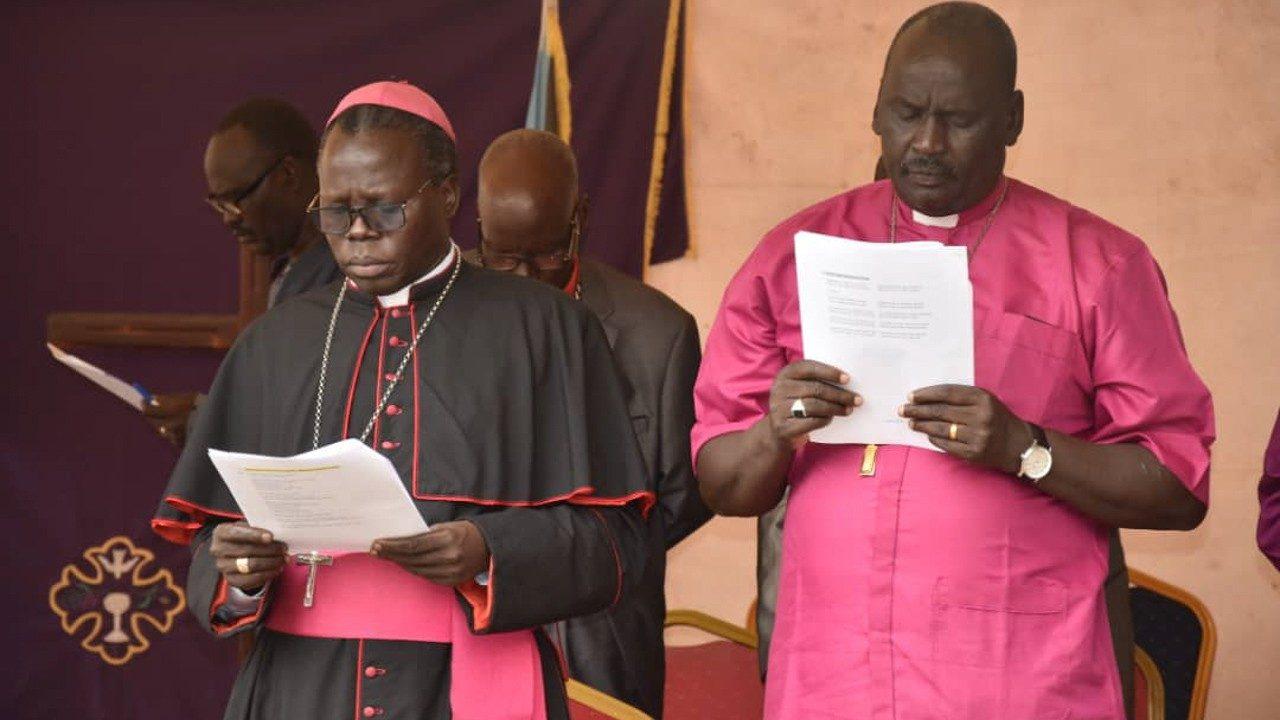
    Catholic bishops in South Sudan are urging the government to arrest and bring to justice the attackers who killed civilians on the eve of the historic visit of the Pope and two other top clerics.

    At least 21 civilians were killed on Thursday in Kajo-Keji county in Central Equatoria state by suspected cattle herders from Jonglei state.

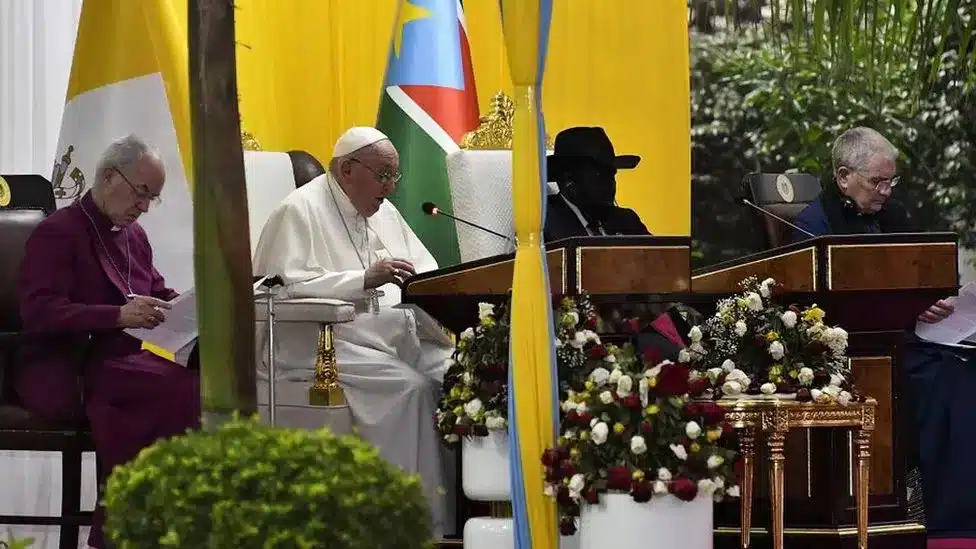
    The following day, Pope Francis, Archbishop of Canterbury Justin Welby, and Iain Greenshields, Moderator of the General Assembly of the Presbyterian Church of Scotland, embarked on an ecumenical peace pilgrimage to South Sudan.

    The death toll from the Kajo-Keji incident has risen to 27, with “countless numbers” injured, according to the UN peacekeeping mission in South Sudan (Unmiss).

    Unmiss also stated that 2,000 people, including 30 unaccompanied minors, were forced to flee their homes.

    Among those killed were four volunteers from the South Sudan Red Cross Society, who were stationed in the area conducting Ebola awareness work following the recent outbreak of deadly disease in neighbouring Uganda.

    The Red Cross says its volunteers in Kajo-Keji were taken from their homes and “callously killed.”

  • Bishops demand arrest of South Sudan assailants

    Bishops demand arrest of South Sudan assailants

    The government of South Sudan has been urged by Catholic bishops to apprehend and prosecute the assailants who murdered civilians on the eve of the historic visit of the Pope and two other prominent clerics.

    At least 21 civilians were killed on Thursday in Kajo-Keji county in Central Equatoria state by suspected cattle herders from Jonglei state.

    The following day, a joint ecumenical peace pilgrimage to South Sudan was launched by Pope Francis, Archbishop of Canterbury Justin Welby, and Moderator of the General Assembly of the Presbyterian Church of Scotland, Iain Greenshields.

    The death toll from the Kajo-Keji incident has risen to 27, with “countless numbers” injured, according to the UN peacekeeping Mission in South Sudan (Unmiss).

    Also 2,000 people, including 30 unaccompanied children, were forced to feel from their homes, Unmiss said.

    Among those killed were four volunteers from the South Sudan Red Cross Society, who were stationed in the area conducting Ebola awareness work following the recent outbreak of the deadly disease in neighbouring Uganda.

    The Red Cross says its volunteers in Kajo-Keji were taken from their homes and “callously killed.”

  • Speak up on injustice – Pope in South Sudan tells clergy

    Speak up on injustice – Pope in South Sudan tells clergy

    Pope Francis has told clergy in South Sudan to raise their voices against injustice, on an unprecedented trip to the war-torn country.

    Travelling with the heads of the churches in England and Scotland, the group are on a three-day “pilgrimage of peace” to the world’s newest nation.

    The Archbishop of Canterbury Justin Welby said his “heart breaks with sorrow” over continued violence there.

    South Sudan has been wracked by civil war since becoming independent in 2011.

    Despite a peace deal in 2018, violence driven by ethnic tensions has continued – more than 400,000 people are thought to have died as a result of the conflict.

    At least 20 people were killed in a cattle raid on the eve of the religious leaders’ visit.

    On the first full day of his visit, Pope Francis met hundreds of South Sudan’s religious leaders at the Cathedral of Saint Therese in the capital Juba.

    During his address, he urged them not to remain neutral, and instead speak up against “the injustice and the abuses of power that oppress”.

    “If we want to be pastors who intercede, we cannot remain neutral before the pain caused by acts of injustice and violence. To violate the fundamental rights of any woman or man is an offence against Christ.”

    Elsewhere in Juba on Saturday, Archbishop Justin Welby said: “My heart breaks, I can hardly speak, with sorrow for South Sudan.”

    “I beg that at every level, from the president to the smallest child, that people find the mercy of God and are transformed, and that there is peace and good government. That no-one steals money. That no-one kills their neighbour for cattle,” he told congregants at the All Saints Anglican Cathedral.

    Source: BBC

  • South Sudan: Security heightened in Juba ahead of papal visit

    South Sudan: Security heightened in Juba ahead of papal visit

      Security forces in South Sudan were preparing Thursday for the arrival of Pope Francis who visits the nation as part of his African journey.

      Francis kicked off his six day tour in Democratic Republic of the Congo on Tuesday where he has already presided over a Mass for 1 million people and heard firsthand of atrocities some have endured following the conflict in the country’s east.

      He landed in South Sudan on Friday where he will visit the country’s capital, Juba.

      On Thursday security forces, which included armed soliders and police officers, motivated themselves by running around he courtyard at Juba police station, brandishing their weapons in celebration of the pope’s arrival.

      The spokesman for South Sudan People’s Defence Forces‘, Major General Lul Ruai, said more than 5,000 security personnel would be deployed around Juba during Francis’ visit.

      Security was also being heightened around the city’s residential areas said Major General Daniel Justin Boulo Achor, spokesman for the South Sudan National Police Service.

      “Some criminals, when people are out, they will be replacing them in their houses so we will have patrols in residential areas to make sure that the houses are safe during the celebrations,” he said.

      Source: Africa News

    • South Sudan: 5 things you should know

      South Sudan: 5 things you should know

      Pope Francis arrived Friday in South Sudan, one of the poorest countries in the world, the first papal visit to this independent country for ten years and undermined by violence and climatic hazards.

      The country, landlocked between lush African rainforests and arid deserts, borders Sudan, Ethiopia, Kenya, Uganda, the Democratic Republic of Congo and the Central African Republic.

      It has more than 60 ethnic groups. The largest community is the Dinka, ahead of the Nuer. Both have been settled for centuries on the banks of the White Nile, which crosses the country from south to north.

      The country is predominantly Christian, a legacy of European missionaries who arrived at the end of the 19th century to gain a foothold in the region in the face of the expansion of Islam towards the south of the African continent.

      About 60% of the roughly 12 million South Sudanese are Christians, almost a third are animists or follow another traditional religion, and a small minority are Muslims.

      The youngest state in the world

      On January 9, 2005, the North (with a Muslim majority) and the South of Sudan sign a peace agreement, after decades of civil war between southern rebels and Khartoum (1959-1972 and 1983-2005), which made millions of dead.

      On July 9, 2011, South Sudan proclaimed its independence from Sudan, six months after having voted by referendum for its secession (nearly 99% yes).

      With an area of ​​589,745 km2 (barely larger than metropolitan France), the country represents almost a quarter of former Sudan. North and South are still fighting over the oil-rich province of Abyei.

      A terrible civil war

      Two years after its independence, South Sudan is falling into a civil war that will leave nearly 400,000 dead and millions displaced.

      Fighting broke out in the capital Juba on December 15, 2013, between rival army units, plagued by political-ethnic antagonism fueled by dissension between President Salva Kiir and his former vice-president Riek Machar, respectively Dinka and Nuer. The conflict is rapidly spreading in the country.

      This five-year war will be marked by innumerable atrocities: ethnic massacres of men, women and children, castrated men, women and girls abducted, reduced to slavery and systematically raped, and children slaughtered or thrown alive in burning huts…

      More than 13,000 children have also been enrolled in the ranks of the various forces. The war will officially end with a peace agreement between Kiir and Machar in September 2018, but tensions between the two enemy brothers continue.

      Poverty and humanitarian crisis

      The majority of the South Sudanese population lives in poverty. Since 2013, 4.5 million people have fled their homes (2.2 million inside the country, 2.3 million to neighbouring countries), according to the UN, thrown on the roads by politico-ethnic violence that persists in the country, but also droughts and floods.

      In 2017, a famine was declared in two northern counties. Since the end of July 2022, around one million people have been affected by floods, caused by torrential rains that ravage crops and destroy homes, according to the UN.

      By July, more than 7.7 million people are at risk of being in a situation of acute food insecurity, three UN agencies (FAO, Unicef, WFP) warned in November 2022, a level never reached, even during the war. civil.

      The country is ranked 191st and last on the Human Development Index (HDI) of the United Nations Development Program (UNDP). South Sudan has one of the lowest literacy rates in the world (35% in 2018, according to the World Bank ).

      Oil-dependent economy and unexplored biodiversity

      South Sudan’s economy, based on oil and agriculture, is particularly vulnerable to climate, oil and conflict shocks.

      Growth, recently undermined by floods, locust invasions and the Covid-19 pandemic, “should rebound to (…) 6.5% in 2023 thanks to the increase in oil export revenues”, underlines the African Development Bank (ADB).

      The South inherited at independence three-quarters of Sudan’s oil reserves but remains dependent on the infrastructure of the North for its exports. The oil sector contributes 90% of its income and represents almost all of its exports, according to the World Bank.

      But the oil windfall is largely diverted for political ends and enrichment in this country classified as the most affected by corruption by the NGO Transparency International (180th out of 180).

      The economy is also suffering from runaway inflation. It had slowed somewhat after reaching 33% in 2020, but should be 16% in 2023 “due to drought and rising food prices (…) following the Russia-Ukraine conflict”, estimates the AfDB.

      South Sudan, 15% of whose territory is made up of national parks and reserves, is home to a variety of fauna (antelopes, elephants, buffaloes and the very rare Nubian giraffes, etc.) battered by civil war and poaching, but which could enable tourism to flourish.

      It is also home to the largest savannah ecosystem in East Africa, which supports one of the largest seasonal animal migrations in the world, involving some 1.2 million antelopes and gazelles.

      The southern marsh, the largest marshy area in the world (57,000 km2), is home to countless birds and huge expanses of papyrus and aquatic plants.

      Source: Africa News

    • South Sudan pray for Pope’s ‘safe arrival’

      South Sudan pray for Pope’s ‘safe arrival’

      Pope Francis is expected to arrive in South Sudan on Friday, and the Catholic Church there plans to perform special prayers on Thursday for his safe arrival.

      Approximately a million people attended one of Pope Francis’ largest Masses, which he conducted on Wednesday in Kinshasa, the capital of the Democratic Republic of the Congo, while he is currently there.

      According to Archbishop Stephen Ameyu Martin, the prayers for the Pope’s visit to South Sudan would be performed at the mausoleum of the late president John Garang in Juba.

      “I want to make this announcement to all the Christians, let us come here on Thursday afternoon at 17:00 hours (15:00 GMT) to pray for the health of our Holy Father Pope Francis and for his safe arrival in our country on Friday,” Archbishop Ameyu said.

      The Mass will be officiated by Archbishop Hubertus van Megen, the Vatican’s ambassador to South Sudan.

      The government has reportedly sent 5,000 soldiers and police officers to the nation’s capital to serve as security for the Pope’s visit.

    • UN worried about militia build-up in South Sudan

      UN worried about militia build-up in South Sudan

      Concern has been raised by the UN peacekeeping mission in South Sudan (Unmiss) in response to recent claims of an increase in the Agwelek, an ethnically-affiliated militia, in the northern state of Upper Nile.

      It has appealed to national and community leaders to “exercise restraint and commit to peace and dialogue”.

      “The mission urges these forces, loyal to General Johnson Olony, to refrain from any actions or movements that might pose threats to civilians and affect humanitarian operations,” Unmiss said on Wednesday.

      The latest reports of military escalation surfaced just days before the historic visit of Pope Francis this week.

      On Tuesday, the embassies of Norway, the UK, and the US, issued a joint press statement saying they had “noted with grave concern” an indication of preparation for renewed fighting in Upper Nile.

      They urged traditional leaders and political actors to prevent it and find a peaceful and sustainable solution.

      They also called on the government of South Sudan to hold accountable those responsible for violence, including the most recent clashes in Upper Nile, Jonglei and the Greater Pibor Administrative Area – as well as those who have engaged in human rights violations, abductions and human trafficking.

      Source: BBC

    • Pope blasts foreign ransacking of Africa as he arrives in DR Congo

      Pope blasts foreign ransacking of Africa as he arrives in DR Congo

      Francis, 86, says that a “forgotten genocide” is happening in the DRC as he starts his journey through two African countries.

      Pope Francis, who recently arrived in the Democratic Republic of the Congo as part of a trip to two African countries, has demanded that foreign nations stop stealing Africa’s natural resources for the “poison of their own greed.”

      Since Pope John Paul II visited the Democratic Republic of the Congo in 1985, when it was still known as Zaire, Pope Francis, 86, is the first pope to make such a trip.

      “Hands off the Democratic Republic of the Congo! Hands off Africa!” Francis said on Tuesday to applause in his opening speech to Congolese government authorities and the diplomatic corps in the garden of Kinshasa’s national palace.

      Calling Congo’s vast mineral and natural wealth a “diamond of creation”, Francis demanded that foreign interests stop carving up the country for their own interests and acknowledge their role in the economic “enslavement” of the Congolese people.

      “Stop choking Africa. It is not a mine to be stripped or a terrain to be plundered,” said history’s first Latin American pope, who has long railed at how wealthy countries have exploited the resources of poorer ones for their own profit.

      Residents of Kinshasa welcome Pope Francis, on his apostolic journey, in Kinshasa, Democratic Republic of Congo
      Residents of Kinshasa welcome Pope Francis on his apostolic journey, in Kinshasa, the Democratic Republic of Congo, on January 31, 2023 [Justin Makangara/Reuters]

      Francis pointed the finger at the role colonial powers such as Belgium played in the exploitation of Congo until the country, which is 80 times the size of Belgium, gained its independence in 1960. He also said neighbouring countries are playing a similar role today.

      The 86-year-old didn’t identify Belgium or any neighbouring country by name, but he spared no word of condemnation, saying there was a “forgotten genocide” under way.

      “The poison of greed has smeared its diamonds with blood,” Francis said.

      “May the world acknowledge the catastrophic things that were done over the centuries to the detriment of the local peoples, and not forget this country and this continent.”

      Pope Francis is welcomed by residents of Kinshasa, on his apostolic journey, in Kinshasa, Democratic Republic of Congo, January 31, 2023
      Pope Francis is welcomed by residents of Kinshasa on January 31, 2023 [Simone Risoluti/Vatican Media/Handout via Reuters]

      Al Jazeera’s Malcolm Webb, reporting from Kinshasa, said hundreds if not thousands of people on the roads followed the pope’s motorcade on motorbikes to the presidential palace from the airport.

      “The roads were lined up with church groups and schoolchildren from the many Catholic-run church schools run over here in Congo,” he added.

      “The Catholic church runs about 60 percent of health and education services here … it’s what makes the Catholic Church such a significant institution here [in Congo],” Webb added.

      About half of Congo’s population of 90 million are Roman Catholics.

      The six-day trip, which also includes a stop in South Sudan, was originally scheduled for July 2022, but was postponed because of Francis’s knee problems, which were still so serious on Tuesday that he could not stand to greet journalists in the plane heading to Kinshasa and was forced to use a wheelchair on the ground.

      Fighting in DRC

      Francis was also supposed to have included a stop in Goma, in eastern Congo, but the surrounding North Kivu region has been plagued by intense fighting between government troops and the M23 rebel group, as well as attacks by fighters linked to the ISIL (ISIS) armed group.

      The fighting has displaced some 5.7 million people, a fifth of them last year alone, according to the World Food Programme.

      Congo accuses Rwanda of backing the M23 rebel group fighting government troops in the east. Rwanda denies this.

      “As well as armed militias, foreign powers hungry for the minerals in our soil commit, with the direct and cowardly support of our neighbour Rwanda, cruel atrocities,” said Congolese President Felix Tshisekedi, speaking just before the pope on the same stage.

      The pope said the Congolese people were fighting to preserve their territorial integrity “against deplorable attempts to fragment the country”. The pope did not name Rwanda in his address or take sides in the dispute.

      Instead of travelling to Goma, Francis will meet with a delegation of people from the east who will travel to Kinshasa for a private encounter at the Vatican embassy on Wednesday.

      The plan calls for them to participate in a ceremony in which they jointly commit to forgiving their assailants.

    • Pope Francis to meet conflict survivors in DR Congo

      Pope Francis to meet conflict survivors in DR Congo

      Pope Francis’s highly anticipated trip to the DRC and South Sudan, two of the most neglected crises in the world, is currently taking place.

      Marie Louise Wambale had to flee with almost nothing about ten years ago due to fighting between the M23 rebels and the DRC army in the country’s eastern region, and it took her years to rebuild her life.

      She hoped, along with the majority of Catholics in the eastern DRC, that Pope Francis would bring a message of hope at a time when the rebels are posing their greatest threat to this region since 2012.

      “Many people were disappointed because they wanted to welcome him to our home, for him to come here and live our suffering, to feel it with his own eyes,” she said. “We wanted him to live it because there are many people who have fled the war. There are pregnant mothers who gave birth in the camps in very bad conditions – many women and children are suffering.”

      Now Wambale has been tasked with taking this message to the capital, Kinshasa, where she will be among the Congolese faithful chosen to meet Pope Francis.

      His long-awaited visit to DRC and South Sudan this week comes after he postponed an earlier trip late last year that had originally included a stop in the volatile east for health reasons. Insecurity, though, has soared in the months since so the pope is limiting his visit to Kinshasa.

      “It is clear to anybody that there is a danger. But the danger, I would say, even more than for the pope is for the people,” the Vatican’s ambassador to DRC, Archbishop Ettore Balestrero told The Associated Press news agency.

      The security requirements to protect people at a papal mass would be hard under ordinary circumstances, but even more delicate in an already dangerous area like the east, he said.

      An estimated two million Congolese are expected at the mass at Kinshasa airport on February 1, which he said would make it the largest crowd event in DRC’s recent history.

      Fighting in the eastern DRC, which involves more than 120 armed groups, has simmered for years but spiked in late 2021 with the resurgence of the M23, which had been largely dormant for nearly a decade. The rebels have captured swaths of land and are accused by the United Nations and rights groups of committing atrocities against civilians.

      The violence, which has displaced approximately half a million people, has triggered a diplomatic spat with neighbouring Rwanda. Kinshasa has accused Kigali of backing the M23, an allegation also made by UN experts and the European Union.

      Rwanda denies backing the group, which continues to resist a concerted pushback from the Congolese military and a regional peacekeeping force.

      The region is also increasingly grappling with violence linked to ISIL (ISIS) and al-Qaeda affiliates. Earlier this month, ISIL claimed responsibility for a bomb explosion at a church, which killed at least 14 people and injured dozens while they were praying.

      In DRC, the Catholic church mediated rising tensions in 2016 after the government postponed elections, creating an agreement which led to the 2018 vote, said Katharina R Vogeli, founder of CapImpact, a peace-building organisation working in the Great Lakes region.

      Religious advisers say people in countries with enormously entrenched problems need to be lifted out of a generational sense of dread and anxiety.

      “It’s the message of eternal hope that transcends, which is what people need,” said Ferdinand von Habsburg-Lothringen, a peace-building expert and former adviser to the South Sudan Council of Churches.

      “The church has enormous power,” he said. “Though they may not necessarily have political power, they have moral authority.”

    • Sudan, South Sudan to set up joint border force

      Sudan, South Sudan to set up joint border force

      South Sudan’s President Salva Kiir and Sudanese military ruler Lt Gen Abdel Fattah al-Burhan have agreed to set up a joint force to secure their two countries‘ 1,800km- (1,120 mile-) border, state-owned channel Sudan TV has reported.

      The agreement was announced following talks between the two leaders in South Sudan’s capital, Juba, on Thursday.

      The two countries’ defence and foreign ministers also attended the talks.

      Gen Burhan and Mr Kiir also discussed the disputed Abyei region, calling for “regular joint meetings” to resolve the dispute over the territory, the statement added.

      Mr Kiir also briefed Burhan on the implementation of the 2018 South Sudan peace agreement, of which Sudan is one of the main guarantors.

      Source: BBC

    • Sudan houses hundreds who fled South Sudan violence

      According to the state-run Sudanese news agency Suna, at least 1,700 people have crossed into Sudan as a result of fighting between armed factions in South Sudan’s northern Upper Nile province.

      Earlier reports of escalating civilian casualties, injuries, and kidnappings prompted thousands of women and children to evacuate their homes in Upper Nile state as a result of fighting between armed factions that began in August, according to the UN agency Unicef.

      Since then, the fighting has spread to the states of Jonglei and Unity.

      The UN reported on Wednesday that at least 166 people have died as a result of the violence.

      Large numbers of South Sudanese fleeing the violence had arrived in the border state of White Nile, according to Salah Taaj al-Sir, a member of Sudan’s state-run Humanitarian Aid Commission, who spoke to Suna.

      He urged humanitarian organizations to help the refugees right away.

    • Concerns over renewed fighting in South Sudan region

      The South Sudan Opposition Alliance (SSOA), an umbrella group of ten opposition political parties, has urged the government to intervene immediately to deescalate the ongoing hostilities in the northern oil-producing state of Upper Nile.

      On Tuesday, international ceasefire monitors based in the country who are assessing the implementation of the resurrected peace agreement reported “renewed fighting” between the national army and opposition forces in the Maiwut area.

      According to the Ceasefire Transitional Security Arrangements Monitoring and Verification Mechanism (CTSAMVM), there has also been renewed fighting in the Fashoda area.

      It did not provide details regarding casualties, but said “it was concerned that these incidents might pose a real threat to the implementation of the revitalised peace agreement”.

      Local media reported that countless numbers were killed in the Fashoda clashes.

      Brig-Gen Samuel Chan Mut, a senior representative of SSOA said, he feared that renewed fighting between the parties that are signatories to the revitalised peace agreement would impose “immense humanitarian challenges” and displacement of civilians.

    • UN panel accuses South Sudanese officials of letting gang rapes occur

      UN experts have urged South Sudanese authorities to look into officials accused of supervising systematic gang rapes, some of which involved girls as young as nine.

      On Monday, the South Sudan Commission on Human Rights stated that it had reasonable grounds to believe that a county commissioner in the northern oil-rich state of Unity orchestrated gang rapes at a military camp.

      The UN experts said in a statement that the documented abuses included beheadings, rape victims being forced to carry severed heads, victims being burned alive, and days of brutal sexual assaults.

      “Conflict-related rape and sexual violence in Unity State has become so systematic and is a direct result of impunity,” commission member Barney Afako said.

      Investigators say sexual abuse has been used as a weapon by all sides in South Sudan’s civil conflict, which erupted in 2013 and triggered Africa’s biggest refugee crisis since the 1994 Rwandan genocide.

      In the abuses outlined in Unity, multiple witnesses said the state official planned and ordered the attacks, which were led by his deputy and followed strikingly similar patterns in different areas, according to the UN statement.

      In response, Michael Makuei, South Sudan’s information minister and government spokesman, dismissed the commission’s statement as a fabrication.

      “They come and sit in hotels here in Juba and fabricate these false reports on South Sudan to make a living,” he told the Reuters news agency. “… I am saying these are false reports fabricated against the government.”

      The commission said the abuses cut across all political affiliations. It said one governor in the opposition in the state of Western Equatoria was appointed to his post despite being responsible for the 2018 abduction, rape, torture and sexual slavery of more than 400 women and girls.

      Lam Paul Gabriel, military spokesman for Vice President Riek Machar’s Sudan People’s Liberation Movement/Army in Opposition (SPLM/A-IO), said it had had no hand in the reported crimes.

      “This report is misplaced because they do not know who is fighting who in those areas where these accusations are made,” Lam said.

      Attempts to reach officials from Unity and Western Equatoria to comment were unsuccessful.

      South Sudan gained independence from Sudan in 2011 but two years later descended into a spiral of brutal ethnic violence and revenge killings.

      A peace agreement was signed in 2018, but 9.4 million people will require humanitarian aid next year, representing more than three-quarters of the population, according to UN figures.

      The UN Human Rights Council set up the Commission on Human Rights in South Sudan in 2016 to monitor rights and make recommendations on accountability.


    • South Sudan’s first national malaria conference unites Government and partners to renew efforts towards ending malaria

      Over 150 participants took a major step to end malaria in South Sudan during the first-ever national malaria conference that took place from 8 to 10 November 2022.

      Malaria remains the leading cause of illness and death in the country accounting for 66.8 per cent of outpatient consultations, 30 per cent  of admissions and about 50 per cent of deaths.

      “Malaria is preventable and treatable, and we cannot continue to lose lives needlessly”, said H.E. Vice President Hussein Abdelbagi Akol Agany. “We cannot continue doing business as usual. Malaria is an emergency and cannot just be the business of the Ministry of Health. I therefore call upon all of us, the public and private sectors, Intentional Organizations, UN Agencies, NGOS, Civil Society Organizations and communities to take action and fight this disease”, said H.E Abdelbagi.

      “Malaria is a disease that is well known to everybody in this nation. It is treatable and preventable, yet half of the people especially children under five years of age and those with compromised immunity die from malaria. Recent data shows that three out of 10 hospital admissions are due to malaria. This shows that we are still a long way to go”, said Honorable Yolanda Awel Deng, Minister of Health, South Sudan.

      The Ministry of Health together with its partners has made some progress in terms of prevention, treatment, and case management. “According to the 2017 Malaria Indicator Survey, 48 per cent of households slept under an insecticide treated net the previous night”, said Honorable Deng. “ Hon. Deng pledged USD 500 000 from the 2022/2023 budget to fight malaria and urged partners for continued long-term sustainable support to implement targeted interventions towards reducing the burden of malaria”.

      Although great progress has been made in malaria control, major challenges such as the inadequate supply of malaria commodities at the utilization level,  fragility of health systems, flooding, population displacements and food and nutrition insecurity affects the implementations of key malaria control and prevention interventions.

      “Malaria is our number one enemy. One person dies of malaria every hour in this country”, said George Otoo, Head RCO, Strategic Planner on behalf of  Sara Beysolow Nyanti, the Deputy Special Representative of the Secretary-General, Resident and Humanitarian Coordinator. “It is time to act. Let us all unite and fight malaria. To fight malaria, we need domestic resources to strengthen Health systems and build more confidence in donors to provide the necessary support so that we are able to mount a good front against this disease”.

      “Malaria remains a significant public health and development challenge globally. Last year, about 95 per cent of the estimated 228 million cases occurred in the WHO African Region, along with over 600,000 reported deaths”, said Dr Fabian Ndenzako, WHO South Sudan Representative a.i.  “In South Sudan malaria is the number one killer. The World Malaria Report 2021 estimated that about 20 people die of malaria daily and over 8,500 people get malaria daily”.

      Malaria is a life-threatening disease caused by parasites that are transmitted to people through the bites of infected female Anopheles mosquitoes. It is preventable and curable.
      Early diagnosis and treatment of malaria reduces disease severity, prevents deaths, and contributes to reducing transmission.

      The Republic of South Sudan’s Ministry of Health with support from the World Health Organization and other partners convened the conference to call for multisectoral collaborative approaches towards targeted interventions to accelerate the reduction of malaria illness and death towards the larger goal of achieving Universal Health Coverage.

      The conference offered a platform for the government to update stakeholders on efforts towards the delivery of healthcare services at all levels with a special focus on malaria interventions. Also present at the conference were Sudan, Tanzania, Kenya, Uganda, and Rwanda to share their experience in the reduction and control of the malaria burden.
      The conference also sought to formulate ways through which the government and partners can work together to strengthen the national and local institutions to address the key drivers of Malaria which includes flooding, food insecurity, population displacement due to conflict and climate change and develop capacities to deliver healthcare services to the population.

      The conference with the theme “saving lives from malaria in a protracted humanitarian emergency setting” galvanized plans and actions by South Sudan’s health sector. Partners have re-committed to taking action to reduce the preventable impact of malaria on the population and ensure access to quality healthcare services for everyone in South Sudan.

      At the conclusion of the three-day event, H.E. Abdelbagi announced the launch of the Zero Malaria in South Sudan Starts With Me campaign to add his voice and commitment towards a Malaria Free South Sudan.

      Source: World Health Organization

    • Eight million people at risk of starvation in South Sudan – UN

      The United Nations has warned that nearly eight million people in South Sudan, or two-thirds of the population, are at risk of food insecurity and famine.

      “Hunger and malnutrition are on the rise in flood-, drought- and conflict-affected areas of South Sudan, and some communities are at risk of famine unless humanitarian assistance is sustained and climate adaptation measures are strengthened,” the new report released on Thursday said.

      The joint report by the U.N. Food and Agriculture Organization (FAO), the U.N. Children’s Fund (Unicef), and the World Food Programme (WFP) says the proportion of people facing high levels of food insecurity and malnutrition “has never been higher,” exceeding levels seen even during the conflict in 2013 and 2016.

      According to the report, 7.76 million people are at risk of acute food insecurity during the lean season from April to July 2023, while 1.4 million children will suffer from malnutrition.


      According to the report, 7.76 million people are at risk of acute food insecurity during the lean season from April to July 2023, while 1.4 million children will suffer from malnutrition.

      The report blames a combination of conflict, poor macroeconomic conditions, extreme weather events, and spiraling food and fuel costs, as well as a decline in funding for humanitarian programs.

      “We have been in famine prevention mode all year and have avoided the worst outcomes, but that is not enough,” says Makena Walker, WFP’s acting country director in South Sudan, in a statement.

      “South Sudan is on the front lines of the climate crisis, and day after day, families are losing their homes, livestock, fields, and hope due to extreme weather conditions,” Walker adds.

      “Without humanitarian food aid, millions more will find themselves in an increasingly dire situation and unable to provide the most basic food for their families.”

      Famine was declared in South Sudan in 2017 in Leer and Mayendit counties in Unity State, areas that have often been a hot spot for violence.

      Last month, the U.N. Office for the Coordination of Humanitarian Affairs (Ocha) estimated that about 909,000 people had been affected by flooding in South Sudan, as torrential rains ravage crops and destroy homes.

      The world’s youngest country, South Sudan has struggled with deadly conflict, natural disasters, economic malaise, and ongoing political strife since gaining independence from Sudan in 2011.

      It has spent more than half its life at war, with nearly 400,000 people dying during a five-year civil war that ended in 2018.


      Source: African News


    • Women and children suffer a great deal from South Sudan’s dehumanizing crimes

      Conflict Related Sexual Violence (CRSV) has been a problem in South Sudan. In 2021, the United Nations Office for Coordination of Humanitarian Affairs estimated at least 3,414 civilian deaths, injuries, abductions, or sexual violence related to the CRSV in South Sudan. A report published by the United Nations Mission in South Sudan (UNMISS) and the Office of the United Nations High Commissioner for Human Rights (OHCHR) stated that 87 per cent of rape survivors experienced rape from multiple perpetrators.

      South Sudan needs to improve the assessment and treatment of CRSV victims. It is also imperative that a free and fair justice system exists. In addition, there needs to be public education campaign about sexual violence.

      Government and military leaders instrumentalize CRSV against women as a weapon of war. Military men, warring parties, and small armed groups carry out sexual violence to mete out retribution against perceived enemies and their people. Over time, the usage of CSRV as a weapon of war has served to destroy the fabric of personal relationships, families, and communities. Measures targeted against the vices have failed due to bad leadership.


      An inclusive meeting is the first step in the right direction. A national conference involving government officials, civil society representatives, traditional rulers, and religious leaders is necessary. In this meeting, the purpose should be to identify the root causes of CRSV, such as systemic impunity and inefficient legislation. Understanding South Sudan’s root causes of sexual violence, therefore, can provide insight into why it has lasted so long. The leaders can, then, determine what course to take based on understanding the origins of the problem. Moreso, such a conference would strengthen the momentum for action.

      Access to a free and fair justice system is critical. There is a need for a fairer justice system since many CRSV perpetrators get away with punishment for their crimes. The South Sudanese government needs to amend its legislation to meet international law standards against sexual violence. Currently, in the South Sudan constitution, there is a lack of clarity in the definition of rape and a lack of specific rules on consent for rape. There also exists a lack of protection for rape victims. The amendment needs to, therefore, target these areas and prioritize zero tolerance for sexual violence crimes.

      Education is key to curbing the long-standing sexual violence against women and children in South Sudan. South Sudan’s Ministry of General Education and Instruction can set up schemes to educate children, teenagers, and young adults. Information campaigns about CRSV, especially in conflict areas, will further sensitize the people in South Sudan. Such an educational scheme will encourage more sexual violence victims to speak out. Furthermore, security personnel needs to undergo second-level education on how to tackle sexual violence. Specialized investigative training on health-related cases needs to follow too.

      According to Borgenproject, in South Sudan, less than half of the population has access to health care. There is an urgency to tackle the latter since women in this country have severe post-traumatic stress disorder (PTSD) due to sexual violence. The provision of rapid medical assessment and treatment of sexual violence victims can adequately alleviate this health crisis. Rapid medical assessment can be done by setting up an emergency health system, including mobile hospitals and clinics near localities. Such medical intervention will allow victims to receive swift and adequate medical care. Quick treatment for CRSV victims in the early stages will prevent not only primary health issues but also Sexually Transmitted Infections (STIs).

      In South Sudan, CSRV against women and children now sits alongside the uncertainties of everyday life. Over time, sexual violence has become increasingly damaging to the right of every human. It will take a concerted effort from all sectors to end this epidemic of violence. However, it is achievable with commitment and determination.

      Muyiwa Adekojede is a writing fellow at the African Liberty.


      Source: face2faceafrica

      DISCLAIMER: Independentghana.com will not be liable for any inaccuracies contained in this article. The views expressed in the article are solely those of the author’s, and do not reflect those of The Independent Ghana

    • South Sudan violence causing death and destruction says officials

      A South Sudan Human Rights Commission official says large-scale intercommunal violence is “claiming lives,” “displacing hundreds of thousands and destroying their properties and livelihoods.”

      Beny Gideon Mabor made the comments in a statement delivered during a meeting of the African Commission on Human and Peoples’ Rights in Banjul, Gambia, on Sunday.

      It marks the first statement from the South Sudan human rights body acknowledging the gravity of the ongoing violence in the country.

      The statement also recognized that the implementation of the revitalized peace agreement which was signed in September 2018 to end five years of the conflict “remains slow”.

      There was also a warning about how “communal violence threatens total breakdown of social fabric amongst and between ethnic groups with no history of violence between them.

      “The Jieeng (Dinka) ethnic communities of Twic and Ngok of Bahr El-Ghazal region are attacking each other in scale and brutality never seen before. The Shilluk and Nuer ethnic groups in Upper Nile are also fighting each other, same as worrisome tensions between the Murle and the Jieeng in Jonglei State, respectively,” Mr Gideon continued. He said this unprecedented surge in violence requires the swift deployment of the necessary unified forces to protect civilians and their properties.

      Late month, a UN panel of experts on human rights in South Sudan said incidents of rape had become common in the country, and women who are victims were no longer bothering to report repeated sexual violence.

      However, Mr Gideon did not highlight sexual violence in his presentation.


    • Close to a million affected by South Sudan floods – UN

      The UN Office for the Coordination of Humanitarian Affairs (Ocha) reports that over 900,000 people have been affected by floods in 29 countries throughout South Sudan and in the southern portion of the Abyei administrative territory.

      It says the worst affected states are Northern Bahr El-Ghazal, Warrap, Unity, and Western Equatoria.

      Increasing water levels reported in Rubkona and Bentiu towns in Unity State were putting pressure on existing dykes, the UN agency said.

      It added that the collapse of a key bridge in Western Bahr El-Ghazal State continues to hamper humanitarian response to some 50,000 people living in the area.

      Funding shortfalls and insecurity have hampered humanitarian work, Ocha added.


    • South Sudan to expel Eritrean and Ethiopian migrants

      South Sudan’s immigration body says it will deport more than 20 foreign nationals, mainly Eritreans and Ethiopians, who entered the country illegally.

      They were arrested on arrival at Juba International Airport a few days ago and were said to have entered the country without passports or travel documents, local media reported.

      The migrants had come from Sudan’s capital Khartoum to seek refuge in South Sudan, and had boarded local flights to Juba from Bentiu and Paloch towns in northern South Sudan, an immigration official said.

      Lt Gen Atem Marol Biar, the head of immigration at the interior ministry, said they would be deported to where they came from. He said they were arrested as they had neither travelling documents nor did they have connections with any organisation operating in South Sudan.

      “We cannot continue receiving people who don’t have documents from different countries. It will put our country at risk because we don’t know the reason why they don’t have travelling documents,” local newspaper The Dawn quoted Lt Gen Biar as saying.

      Local outlets said they were being detained at Kololo, a special immigration facility in Juba for foreign nationals, pending their deportation.

      South Sudan is a destination for many migrants who come to do business in the oil-producing East African nation. But it finds it difficult to control the influx of illegal migrants due to its porous borders.

      Source: BBC

    • No South Sudan road funds for lack of rules – World Bank

      The World Bank says South Sudan cannot receive infrastructure funding from international investors due to lack of financial policies and transport sector regulations.

      The bank has placed conditions to be met before the country begins receiving funding for roads infrastructure development.

      A new study by an East African body, the Northern Corridor Transit and Transport Co-ordination Authority (NCTTCA), has found that South Sudan’s roads are “the worst” in the region.

      The roads became worse following recent torrential rains that made them impassable because of flash flooding and mud.

      A delegation from the World Bank is in the capital, Juba, to discuss the possibility of supporting the country’s road network connectivity.

      They said for the bank to support South Sudan’s transport sector, the government needs to put in place clear institutional regulations and financial policies.

      “It is about the diagnostics and framework not being in place and this is the stage that we are at, in our engagement with the government of South Sudan. It doesn’t make sense to start investing when you don’t have the rules in place.

      “These are the things that South Sudan needs to tackle,” Bernard Aritua, a World Bank official told reporters in Juba.

      Source: BBC

    • Government plans to boost collection of non-oil revenue

      The government of South Sudan said on Friday that it is working to double the collection of non-oil revenue by 380 percent in the next five years.

      Addressing journalists after the cabinet meeting, Martin Elia Lomuro, the Minister of Cabinet Affairs, said the National Revenue Authority had developed a strategic document that will improve the collection of non-oil revenues.

      “The revenue authority is faced with many challenges; it is not able to collect enough money for us to be able to run the government, so we have had that strategic plan for five years, 2022 to 2027,” he said.

      “The plan has a number of key strategic objectives, eleven of them. It has 42 implementation metrics, and the aim is to increase collection from the 80 billion that we are collecting now to 367 billion over five years; that is a 380 percent increase,” Lomuro stated.

      The cabinet also said the government is working to develop close economic and development ties with the United Arab Emirates to spur economic prosperity.

      Lomuro said the two countries signed several bilateral agreements that will allow companies from UAE to South Sudan to invest in a number of areas.

      “Bilateral relationship that was reached between the United Arab Emirates (UAE) on a number of development issues, on agriculture, mining, roads, which affects different entities. Traders, business communities, and some of the business communities have signed an agreement on mining, and there are agricultural companies the president has already met with chiefs to allocate land for agriculture,” Elia said.

      Lomuro reiterated that the ministry of justice is developing a document that will help in limiting tax avoidance by the investing companies.

    • UN Human rights team :Rape so common in South Sudan, women do not even bother to report

      A United Nations human rights team says rape cases are now so frequent in South Sudan that many women choose not to bother reporting frequent sexual assaults.

      Even those who have been gang-raped repeatedly during the country’s prolonged conflict lack access to medical and trauma care.

      Some women have been raped up to five times in the last nine years, the panel said.

      “Just imagine what it means to be raped by multiple armed men, pick yourself up for the sake of your children, and then for it to happen again and again and again,” said Yasmin Sooka, the chairperson of the panel.

      She added: “These women are asking us when it will stop – 2013, 2016, 2018, 2021, and now in 2022 – they say they keep telling their stories and nothing changes.”

      In several villages in Western Equatoria State and Unity State – where fighting is ongoing – there is no medical care for rape victims, the panel said.

      “Women raped by armed forces while collecting firewood are threatened with death if they report it,” said Prof Andrew Clapham, a member of the panel.

      The experts have been participating in meetings at the UN General Assembly in New York to speak about the situation in South Sudan.

    • UN reveals South Sudanese rape victims lacking support

      United Nations experts warn have disclosed that rape victims in South Sudan lack access to medical and trauma care.

      This includes even those who have been gang-raped multiple times in the ongoing conflict in the country.

      Women are no longer bothering to report repeated sexual assaults, according to a UN panel on human rights in South Sudan.

      Some women have been raped up to five times in the last nine years, the panel said.

      “Just imagine what it means to be raped by multiple armed men, pick yourself up for the sake of your children and then for it to happen again and again and again,” said Yasmin Sooka, the chairperson of the panel.

      She added: “These women are asking us when it will stop – 2013, 2016, 2018, 2021 and now in 2022 – they say they keep telling their stories and nothing changes.”

      In several villages in Western Equatoria State and Unity State – where fighting in ongoing – there is no medical care to rape victims, the panel said.

      “Women raped by armed forces while collecting firewood are threatened with death if they report it,” said Prof Andrew Clapham, a member of the panel.

      The experts have been participating in meetings at the UN General Assembly in New York to speak about the situation in South Sudan.