Tag: SpaceX Starship

  • SpaceX’s Starship takes off

    SpaceX’s Starship takes off

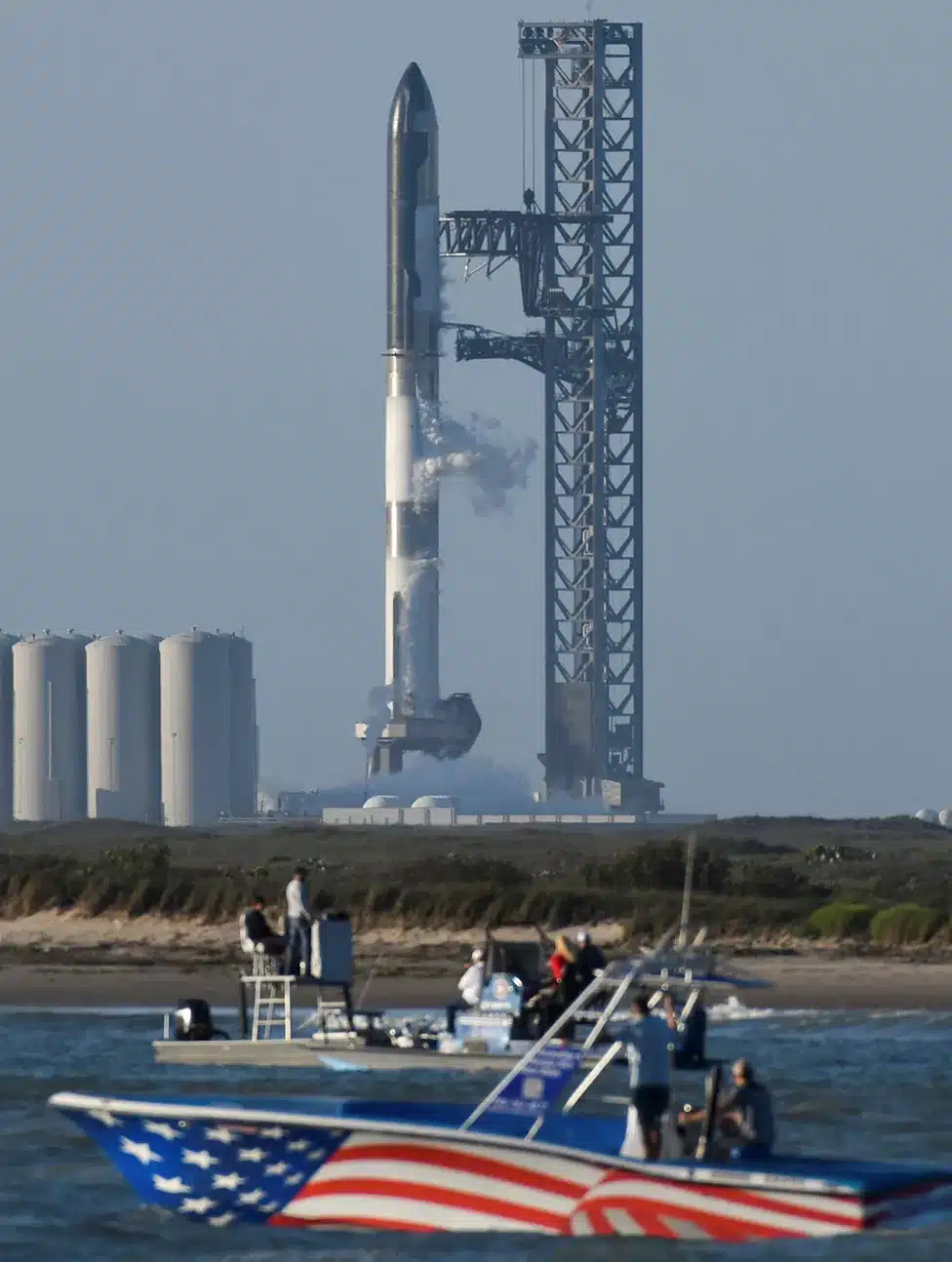
    With a thunderous boom, the 33 engines of the Super Heavy booster of the most powerful rocket ever created lifted off from the launch pad.

    “Starship has cleared the pad and beach! Vehicle is on a nominal flight path,” SpaceX tweets.

    We should have had a separation by now, SpaceX engineers say.

    The Starship test flight is now over, after experiencing what engineers have called a “rapid unscheduled disassembly” during ascent.

    “To make it this far is amazing,” engineers say, after the rocket cleared its tower and successfully lifted off.

    “You never know what’s going to happen,” they say, adding that “Starship gave us an exciting end to an incredible test”.

    “As if the flight test was not exciting enough, Starship experienced a rapid unscheduled disassembly before stage separation,” the company tweeted.

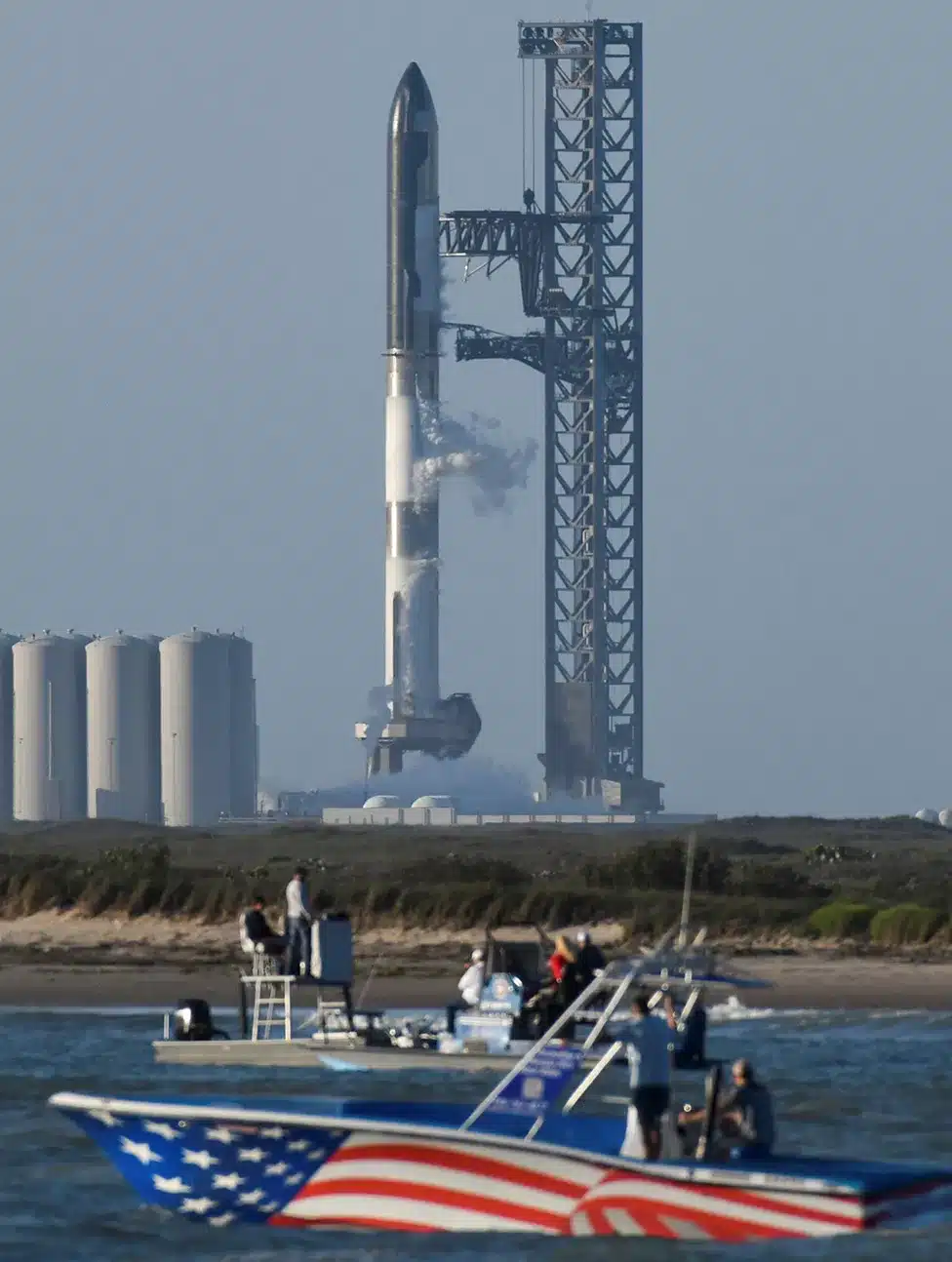
    What a launch – seeing Starship head skywards, its 33 engines burning as it slowly pushed upwards into the blue Texan sky, was quite something. It passed a key point – clearing the tower and not blowing up the launch pad infrastructure.

    So far so good.

    But it was at the point where the booster tried to separate from the upper stage that things went wrong. The booster started tumbling, then boom – it was gone.

    SpaceX call this a rapid unscheduled disassembly. But even though the company wanted this test to go further, they won’t call this a failure.

    There were still cheers at SpaceX HQ even when the rocket went up in smoke. The fact that the rocket got off the ground is a start – they’ll assess what went right and what went wrong – and then have another go.
  • SpaceX Starship to try again in launch of history’s most powerful rocket ever developed

    SpaceX Starship to try again in launch of history’s most powerful rocket ever developed

    The ultimate objective is to have both half of the vehicle conduct controlled landings so they may be refuelled and utilised repeatedly, even if both segments would end the day on the ocean floor.

    Nobody knows how long it will take to develop this skill. Nonetheless, a successful effort would be transformative.

    A bright future should be possible given the potential payload performance to orbit of more than 100 tonnes per trip and the low cost of operation, which is primarily only the cost of fuel.

    “We’ve got an arduous two or three years ahead of us with, probably, you know, many bumps on the road, but at the end of that, we should have something that enables a base on the Moon and a base on Mars,” Mr Musk said this week.

    Mr Musk has tried to set expectations low for the test flight, which will begin at Boca Chica, on the the US-Mexico border.

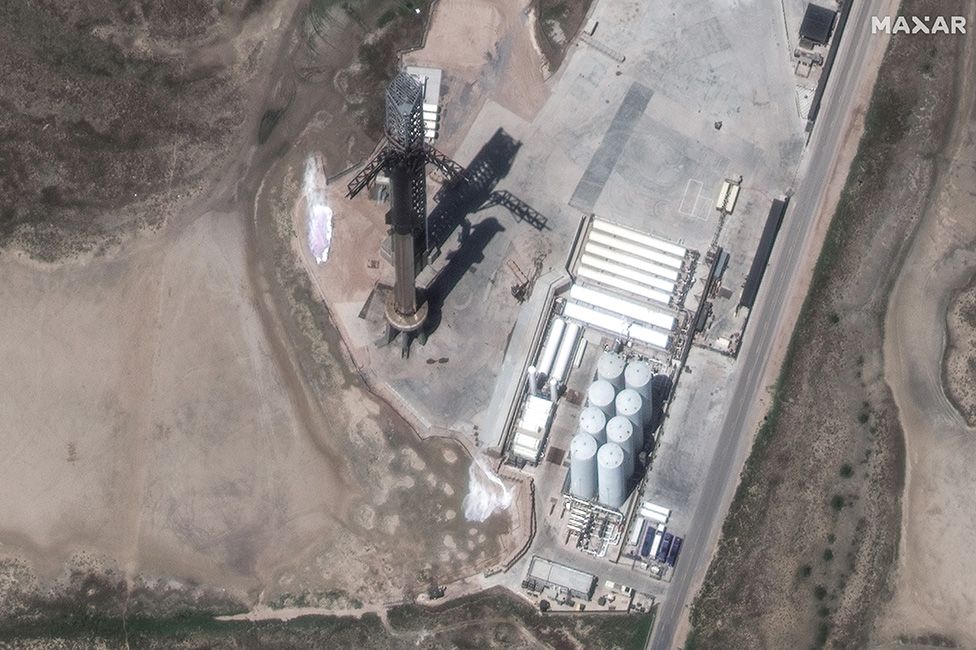
    Just getting the vehicle off the ground and not destroying the launch pad infrastructure would be considered “a win”, he said.

    SpaceX will again open a live stream on its website about 45 minutes before lift-off.

    The top segment of Starship, also known as the ship, has taken flight previously on short hops, but this will be the first time it will launch with its lower-stage.

    This immense booster, called simply Super Heavy, was fired while clamped to its launch mount in February. However, its cluster of engines on that occasion were throttled back to half their capability.

    Starbase
    Image caption,Mr Musk’s fear is that a launch pad explosion would destroy valuable infrastructure

    If, as promised, SpaceX goes for 90% thrust on Thursday, the stage should deliver something close to 70 meganewtons. This is equivalent to the force needed to propel almost 100 Concorde supersonic airliners at takeoff.

    It’s also double the thrust achieved by the Saturn V rocket that famously sent men to the Moon in the 1960s and 70s.

    The mission would see the integrated Starship rocket fly out over the Gulf of Mexico.

    The aim is to despatch the ship on a near-orbital trajectory that concludes with it splashing down in the Pacific, a couple of hundred km north of Hawaii.

    Super Heavy, which powers the first two minutes and 50 seconds of flight, will try to return close to the Texas coast once its lifting job is done.

    It will be commanded to make a vertical hover just above the Gulf’s waters, before being allowed to topple over and sink.

    Although both segments will end the day on the seafloor, the ultimate goal is to have both halves of the vehicle perform controlled landings so they can be refuelled and reused, repeatedly.

    How long it will take to achieve this capability is anyone’s guess. But if the project is successful, it would be transformative.

    The prospective payload performance to orbit of more than 100 tonnes a flight, allied to the low cost of operation – principally, just the cost of fuel – should open the door to an exciting future.

    “We’ve got an arduous two or three years ahead of us with, probably, you know, many bumps on the road, but at the end of that, we should have something that enables a base on the Moon and a base on Mars,” Mr Musk said this week.