Tag: state of emergency

  • State of emergency on galamsey unnecessary, current measures are sufficient – Lands Ministry

    State of emergency on galamsey unnecessary, current measures are sufficient – Lands Ministry

    The Ministry of Lands and Natural Resources has insisted that ongoing government interventions in the fight against illegal mining (galamsey) are already producing results; therefore, calls for a state of emergency over the menace are premature.


    Addressing the media on Wednesday, May 20, Media Relations Officer at the Ministry, Paa Kwesi Schandorf, acknowledged that although illegal mining remains a serious environmental and security challenge, calling for a declaration of a state of emergency is not the solution to the situation.


    According to him, “The call for a declaration of a state of emergency, materially as of now, is moot and inconsequential. If we get to a point where the current interventions are not enough, government may decide to take stronger action, including declaring a state of emergency”.

    For years, the country’s efforts to nip the canker in the bud have not yielded the needed results. Among recent measures taken to protect water bodies from illegal miners is the deployment of the National Anti-Illegal Mining Operations Secretariat (NAIMOS).


    During a recent media engagement on Wednesday, March 4, 2026, the Chief Executive Officer of the Forestry Commission, Hugh Brown, disclosed that nearly 9,000 hectares of Ghana’s forest reserves have been destroyed by galamsey, with more than 5,200 hectares lost between 2021 and 2024.


    He added, “The military was withdrawn on the 1st of November, and we were left to our own devices. We had to strengthen our rapid response teams quickly, sometimes putting them in situations where they were not well-equipped.


    “We cannot continue protecting forests as we did in the 1920s and 1930s, when forest guards held cutlasses and patrolled boundaries to detect offences. There has been insufficient investment in modern protection measures”.

    In June, NAIMOS warned criminal groups to vacate galamsey areas.
    As part of efforts to crack down on the canker, thirty-eight (38) individuals were arrested by the Eastern South Regional Police Command for engaging in illegal mining activities at Ntoranang on the outskirts of New Abirem on Friday, February 27.


    Their arrest comes after the police received intelligence about their illegal activities at a palm plantation in the area. The police disclosed that of the 38 arrested, 17 are Burkinabe nationals and 21 are Ghanaians, including 9 juveniles aged 13-17.


    The police destroyed items used by the suspects in their operations; including water pumping machines, power plants, water hoses and makeshift shelters. All 38 suspects will be arraigned before the court on Monday, March 2, for prosecution.


    Months ago, the Commanding Officer of NAIMOS, Colonel Dominic Buah, signaled an imminent and aggressive crackdown on illegal miners.


    “I would like to send this warning to illegal miners, their assignees, and financiers that they are the first or prime enemies of the state, and they will be dealt with as such. There will be no room for them to escape or to hide. NAIMOS will smoke them out very soon. There’s no resting place for them,” he said at a stakeholder engagement at the Jubilee House on October 3, 2025.


    Meanwhile, President John Dramani Mahama has emphasized that his government is not backing down in its fight against the longstanding menace of illegal mining.


    According to the President, the country will soon be cleared of the menace as the government plans to launch a programme in the coming days to reclaim degraded lands.


    He added that youths in affected communities will be employed under the programme, each receiving a monthly stipend of GH₵1,500.


    “We’re restoring degraded lands while creating thousands of jobs for young people in affected communities. I have asked the Minister of Finance to increase the budget allocation so that we can recruit more youth into forest tree planting and the Blue Water Guard to safeguard our water bodies.


    “These youth are to be recruited from affected communities, and they will receive a monthly stipend of GHC1,500. I wish to commend journalists who persist in exposing environmental crime at great personal risk. Your bravery is noted, and it’s patriotic. I wish to assure you, as the President, that I will never give up the fight,” President Mahama said.


    President Mahama made the remarks at the 2025 GJA/KGL National Awards held at the Manhyia Palace on Saturday, November 8.


    Speaking at a stakeholder engagement in Accra on October 3, the President said: “There are new chemicals that have come that allow you to treat water and take out the toxins and the heavy metals. One of them is called dowtine. The people came, and we sent them there. They took samples, tested. We are waiting for them to bring the results back.”


    President Mahama urged patience in the long-running battle against galamsey, noting that declaring a state of emergency alone will not end the menace.


    He said government advisors believe the country can overcome galamsey by adopting best practices in small-scale mining and technologies that neutralize or remove harmful chemicals from water bodies.


    He also pledged to act on calls for a state of emergency if his advisors recommend it.


    “While we are fighting the menace, I am also saying we should uptake technology in order to protect the environment. So yes, let’s fight the illegal mining but at the same time, let’s bring the new technology that will help us protect our environment.


    “Now with the elephant in the room, state of emergency, yes, I have the power to do it, but the president acts on the advice of the National Security Authority, and as at now, this moment, the National Security Authority believes that we can win the fight against galamsey without declaring a state of emergency. I want to assure you that the day they advise me otherwise, that boss, now we need a state of emergency, I won’t hesitate,” he added.


    Despite renewed efforts, the canker continues to wreak havoc. The National Anti-Illegal Mining Operations Secretariat task force narrowly escaped death in a mob assault at Hwidiem in the Ahafo Region on Saturday, November 1, during an operation that resulted in several arrests, including a Burkinabe national.


    Locals were seen in a viral video confronting the NAIMOS team and demanding the release of those arrested. NAIMOS spokesperson Paa Kwesi Schandorf described the attack as “extremely and profoundly disappointing,” saying the officials “survived clearly by the mercy of God. If you look at how they were charged, the rest of the team could have lost their lives.”
  • Declaring State of Emergency won’t end galamsey activities – GWL MD

    Declaring State of Emergency won’t end galamsey activities – GWL MD

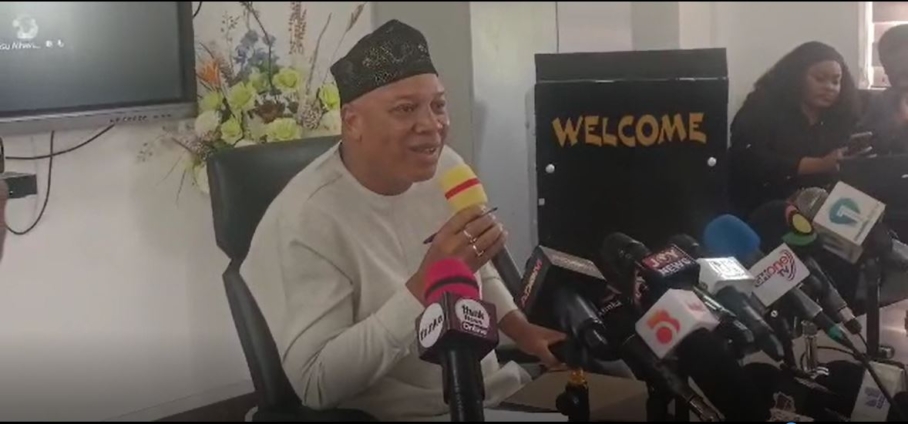
    The Managing Director of Ghana Water Limited (GWL), Adam Mutawakilu Mutawakilu, has indicated that the declaration of a State of Emergency is not the remedy to ending illegal mining activities (galamsey) in the country.


    At a press conference in Accra on Monday, October 20, he stated that such a measure will escalate tensions in the country rather than provide a lasting solution to the galamsey menace.


    He explained that declaring a State of Emergency would only push illegal miners to other parts of the country, forcing the government to extend the declaration to all regions. This, he argued, would be unrealistic and unsustainable. To prevent that, he called on the government to introduce lasting solutions rather than temporary ones.


    “First and foremost, I don’t think that a State of Emergency will stop illegal mining. If you declare a State of Emergency in one area, they [illegal miners] would migrate to another area. At the end of the day, the whole of Ghana will be in a State of Emergency.


    “You declare a State of Emergency for how many years? There must be pragmatic measures, as President Mahama has outlined, to ensure sustainability. From my position at Ghana Water, I don’t believe State of Emergency is the answer,” he said.


    His comment comes amid mounting pressure on the Mahama-led government to declare a State of Emergency on the matter. However, President John Dramani Mahama, at a meeting with Civil Society Organizations (CSOs), emphasized that he will only declare a State of Emergency when his government’s advisors give him the nod.


    According to him, government advisors believe the country can overcome galamsey by adopting best practices in small-scale mining, including technologies that help neutralize or remove harmful chemicals from water bodies.


    “While we are fighting the menace, I am also saying we should uptake technology in order to protect the environment. So yes, let’s fight the illegal mining but at the same time, let’s bring in new technology that will help us protect our environment.

    “Now, with the elephant in the room State of Emergency yes, I have the power to do it, but the President acts on the advice of the National Security Council. And as at now, this moment, the National Security Council believes that we can win the fight against galamsey without declaring a State of Emergency. I want to assure you that the day they advise me otherwise that, boss, now we need a State of Emergency I won’t hesitate,” he added.


    President Mahama believes that the country can eradicate the long-term canker if it deploys more troops and invests more resources in the fight. He concluded that the battle may be a long one, but his administration is committed to winning it.


    The menace continues to threaten not only Ghana’s water bodies, food crops, and forest reserves but also the country’s energy infrastructure. Earlier this month, Ghana Water Limited and the Electricity Company of Ghana (ECG) blamed illegal mining activities for the 200% tariff increment proposal under the 2025–2030 Multi-Year Tariff Order. The Director of Communications for ECG, William Boateng, made this publicon Tuesday, October 14.


    “They are digging and moving towards the roads and trenches, which is very dangerous. Anytime we have the slightest rainfall, the poles come down because the base has been weakened. That affects the stability of power supply.


    “It costs us more money to fix the fallen poles and restore the line. Beyond that, we are also losing unserved energy power that we’ve already purchased but cannot deliver to customers,” Mr. Boateng noted.
    In September, the Public Utilities Regulatory Commission (PURC) received proposals from eight utility companies calling for a significant adjustment in utility tariffs to ensure they can fully operate at capacity.
    Proposals from the electricity distributors and the water provider for the 2025–2029 tariff period cite rising operational costs and the need to maintain efficient service delivery.


    The eight companies include the Electricity Company of Ghana (ECG), Volta River Authority (VRA), Northern Electricity Distribution Company (NEDCo), Ghana Water Limited (GWL), Ghana Grid Company (GRIDCo), and Ghana National Gas Limited, among others.


    ECG is pushing for a massive 225% hike in its distribution service charge. For instance, a household consuming 150 kWh monthly would pay an additional GHS64, while a residence using 100 kWh per month would pay about GHS43 more in distribution charges. As part of ECG’s request, the current Distribution Service Charge (DSC) of 19 pesewas per kilowatt-hour should be raised to nearly 62 pesewas per kilowatt-hour.


    “The PURC will undertake the major adjustment in the fourth quarter of 2025 to reflect capacity charges, additional liquid fuel usage, and additional capex. The current charge is below industry benchmarks, and cedi depreciation has reduced its value. US$408 million spent on network upgrades and smart meters,” parts of ECG’s petition read.


    ECG has emphasized that the adjustment has long been overdue, noting that in 2022 it proposed 39.95 pesewas, but only 19.04 pesewas was approved.


    According to ECG, it has invested $48 million in network upgrades and smart metering systems to enhance power reliability, reduce outages, and align tariffs with international industry standards, yet these efforts have not yielded the expected cost recovery.


    Furthermore, ECG has projected an annual revenue of GHS9.5 billion between 2025 and 2029 if the new charges are approved. The proceeds, according to the utility company, would be allocated to cover operational costs, depreciation of assets, staff salaries, and the recovery of recent capital expenditures.

  • Over 600 suspects on trial for illegal mining – Attorney-General

    Over 600 suspects on trial for illegal mining – Attorney-General

    Government has announced that 600 suspects are currently standing trial for their alleged involvement in illegal mining, popularly known as galamsey.

    According to the Attorney-General (A-G) and Minister for Justice, Dr. Dominic Ayine, his department is currently managing court cases from 65 different files, several of which include more than one accused person.

    While addressing a high-level stakeholder forum on illegal mining in Accra on Friday, October 3, Dr. Ayine disclosed;

    “Currently, we have initiated prosecutions in 65 dockets, and there is a difference. When we say 65 dockets, it is not 65 individual persons who are being prosecuted,” Dr. Ayine clarified, highlighting the scale and complexity of the cases before the courts.

    The Attorney General further revealed that some files cover over 10 accused persons.

    Adding that one notable case in the Western North Region involves the prosecution of 28 suspects under a single charge sheet.

    “By my calculation, the 65 dockets contain about 600 illegal miners that are being prosecuted,” he stated.

    Meawhile President Mahama has responded to calls, urging him to declare a state of emergency over the grave damages illegal mining has brounght to the nation’s water bodies.

    The President noted that he can only declare a state of emergency when his government’s advisors give him the approval.

    During a meeting with Civil Society Organisations (CSOs)on Friday, October 3, President Mahama said he cannot act ahead of his advisors, as that would go against established governance procedures.

    President Mahama pledged to honor scores of Ghanaians’ calls by declaring a state of emergency when his advisors give him the nod to do so.

    According to him, government advisors believe the country can overcome galamsey by adopting best practices in small-scale mining, including technologies that help neutralize or remove harmful chemicals from water bodies.

    “While we are fighting the menace, I am also saying we should uptake technology in order to protect the environment. So yes let’s fight the illegal mining but at the same time, let’s bring the new technology that will help us protect our environment.

    “Now with the elephant in the room, state of emergency, yes, I have the power to do it, but the president acts on the advice of the National Security Council, and as at now, this moment, the National Security Council believes that we can win the fight against galamsey, declaring a state of emergency. I want to assure you that the day they advise me otherwise, that boss, now we need a state of emergency, I won’t hesitate,” he added.

    President Mahama believes that the country can eradicate the long-term canker if it deploys more troops as well as invests more resources in the fight. He concluded that the battle seems to be a long one, but his administration is committed to fighting it.

    “While we are fighting the menace, I am also saying we should uptake technology in order to protect the environment. So yes let’s fight the illegal mining but at the same time, let’s bring the new technology that will help us protect our environment.

    “Now with the elephant in the room, state of emergency, yes, I have the power to do it, but the president acts on the advice of the National Security Authority, and as at now, this moment, the National Security Authority believes that we can win the fight against galamsey, declaring a state of emergency. I want to assure you that the day they advise me otherwise, that boss, now we need a state of emergency, I won’t hesitate,” he added.

    Individuals present at the meeting include government officials and civil society leaders. The engagement comes at a time when there is mounting pressure on the Mahama-led administration to declare a state of emergency regarding the issue, due to its adverse effects on the environment.

    The menace continues to threaten not only Ghana’s waterbodies, food crops and forest reserves but also the country’s energy infrastructure.

    Parliamentary Select Committee on Energy has given a stern warning about the potential future repercussions of galamsey if the country fails to find a lasting solution to the menace.

    During a visit to the Anwomaso Thermal Power Station in Kumasi on Wednesday October 1, Deputy Ranking Member, Collins Adomako-Mensah, starling revelation about how Ghana’s power installations are being tempered with by illegal miners.

    According to him, the country’s electricity generation authorities including the Ghana Grid Company (GRIDCo), the Bui Power Authority (BPA), WAPCO Gas Pipeline and the Volta River Authority risk shutting down over attacks on their infrastructure.

    “When we were engaging the other participants, two things came up- one has to do with galamsey and it is having a heavy, heavy toll on the energy sector, not just about water. Gridco complained about galamsey. Their pylons, people are digging where they have a lot of their pylons. Yesterday we were at Bui and the Bui water situation is deteriorating because of the galamsey situation surrounding their water bodies.

    He added, “Gridco complained about galamsey. Their pylons, people are digging where they have a lot of their pylons. Yesterday we were at Bui and the Bui water situation is deteriorating because of the galamsey situation surrounding their water bodies.”

    In September, GRIDCo expressed grave concern over the encroachment on its transmission tower sites by galamsey operators, who are digging dangerously close to the foundations.

    Acting Deputy Chief Executive Officer of Engineering and Operations, Frank Otchere, made this known at GRIDCo headquarters in Tema on Thursday, September 25.

    Mr. Otchere stated that maintenance teams now face attacks when they attempt to access certain areas.

    “Unfortunately, there are some areas that even when our maintenance teams go there, they get shot at. And some of them have had to run away,” he disclosed, adding that the situation has made it impossible for GRIDCo to operate in certain locations without security support.

    He added that the galamseyers are weakening the towers, which are carefully engineered to withstand immense weight and pressure. He appealed for urgent assistance from national security agencies to protect transmission corridors and avert the potential collapse of towers.

    “This engagement aims to provide a platform for frank and constructive dialogue between the Government and civil society on the menace of illegal mining, with a view to harnessing collective expertise, perspectives, and solutions to address this national challenge,” the letter stated.

    Ongoing research by a forensic histopathologist and former Head of Pathology at KNUST and Komfo Anokye Teaching Hospital (KATH), Prof. Dr Paul Poku Sampene Ossei, has revealed alarming trends in the rising cases of spontaneous abortions among pregnant women in Ghana.

    Approximately five hundred cases of spontaneous abortions (miscarriages) have been recorded in research that links these cases to severe contamination of placentas and the presence of heavy metals, such as lead and mercury, resulting from galamsey activities.

    A spontaneous abortion is the unintentional expulsion of an embryo or fetus from the uterus before it is viable.Speaking on JoyNews’ Newsfile on Saturday, September 27, Prof. Sampene warned that galamsey is poisoning unborn babies and endangering the lives of mothers.

    “I have about 500 cases where women go to the hospital and abort their babies because of the concentration of these heavy metals in their placenta,” he disclosed.

    According to him, his research involved over 4,000 placentas examined from different regions across Ghana. The results showed dangerous levels of heavy metal contamination on both the maternal and foetal sides. “The placentas are all contaminated, polluted with heavy metals,” he said.

    The dangers of these metals extend beyond pregnancy losses. Another effect of galamsey is the excessive use of alum to address the increasing turbidity of water.

    Ghana Water Company Limited, the nation’s largest water supplier, has resorted to using higher concentrations of alum. Prof. Sampene cautioned that high levels of aluminium hydroxide pose serious health risks.

    According to him, one of the consequences of excessive alum use is kidney disease, which is already on the rise. He warned that if left unchecked, “Ghana will be in big trouble.”

    “Of course, people are talking about turbidity, and then the Water Company is saying that they are using more alum. Alum is aluminium hydroxide, that is the full name, aluminium hydroxide, and this aluminium hydroxide, when taken for a long period, in fact at higher concentration, has a lot of what you call health effects. One of them is kidney problems.

    “When you use alum, that’s aluminium hydroxide, which is used to purify the water, especially when they are using that concentration, which I believe is so high, it’s going to cause kidney problems, it’s going to irritate the respiratory tract, and it’s going to cause what we call neurological defects.

    “All these things have been proven, have been studied and proven to be important, and we have to be very careful about them now. This goes apart from the effects that we are seeing around,” he explained.

    Among the recent measures taken to protect water bodies from illegal miners is the deployment of the National Anti-Illegal Mining Operations Secretariat (NAIMOS).

    The Secretariat includes the Ghana Armed Forces, the Ghana Police Service, the Ghana Immigration Service, the National Intelligence Bureau (NIB), the Narcotics Control Commission, and the National Security Secretariat.

    Addressing the security forces, the Minister for Lands and Natural Resources, Emmanuel Amarh Kofi-Buah, directed the team to ruthlessly counter the activities of galamsey operators as they are the enemies of the state.

    “Any recalcitrant entering into these zones is not merely a trespasser. They are an enemy of the state. You are to be firm. You are to be resolute. You are to be ruthless.

    “And please, take it from me, you will take no obstructionist instruction from any big man. Remember, the biggest man in Ghana is the President of the Republic, and he’s the one who has sent you,” Mr Kofi-Buah charged.

  • Galamsey: Declare a state of emergency – IMANI President tells Akufo-Addo

    Galamsey: Declare a state of emergency – IMANI President tells Akufo-Addo

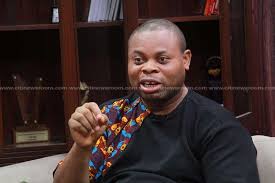
    Franklin Cudjoe, President of IMANI Africa, has urged President Nana Addo Dankwa Akufo-Addo to declare a state of emergency in response to the severe damage inflicted on the nation’s water bodies by illegal mining, also known as galamsey.

    Cudjoe criticized the president for what he sees as inaction, pointing out that the president’s recent focus on trips to China has overshadowed the pressing issue of galamsey.

    During an appearance on Channel One News’ “The Big Issue” on Saturday, Cudjoe also voiced his frustration with the National Security Minister, accusing him of not recognising the critical nature of the crisis.

    “It behoves us to do that. We are looking up to the president to lead the charge.

    In a serious civilised country, the call by some of the media actors that some sort of emergency should be declared should have been listened to long ago because this is really an emergency.

    “These are people who are going to be killed by these mining activities down the line. I expected the president—that is where leadership counts, but he is gallivanting in China claiming to be doing what on our behalf.”

    “I don’t even understand what is wrong with that man. Look, this is an existential threat.

    In fact, I even expected the National Security Minister to declare some sort of emergency already, but he is also asleep, fast asleep more than even the president… Until the president actually declares an emergency, nothing will happen,” he stated.

  • State of Emergency declared in South Nigeria over death of traditional ruler and kidnapped wife

    State of Emergency declared in South Nigeria over death of traditional ruler and kidnapped wife

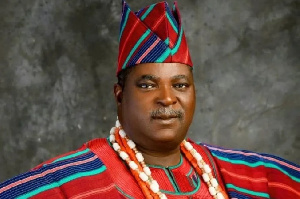
    Armed men have fatally shot a traditional ruler, Segun Aremu, and abducted his wife along with another person in south-western Nigeria.

    The attackers raided the palace of the retired army general and monarch, known as the Olukoro of Koro, on Thursday night.

    The motive behind the attack and whether a ransom is being demanded remain unclear.

    This incident follows recent calls for a state of emergency by civil society groups, with over 1,800 abductions reported since President Bola Tinubu assumed office last May.

    Nigerian risk consultancy SBM Intelligence suggests the actual number may exceed 4,000 abductions during that period.

    Despite legal prohibitions against ransom payments, victims often resort to payment due to distrust in authorities.

    Condemning the killing of the Olukoro of Koro in Kwara state, as “reckless, shocking, and abominable”, Governor AbdulRahman AbdulRazaq has vowed that the authorities would catch those responsible.

    According to police, a manhunt is underway. Additionally, they have assured the neighborhood that a police outpost will be established.

    There are hundreds of traditional rulers in Nigeria who are well-respected members of the community despite having no official position under the constitution. They are frequently asked to conduct cultural events and mediate conflicts among the local populace.

  • Turkey earthquake: Turkish government declares three-month state of emergency

    Turkey earthquake: Turkish government declares three-month state of emergency

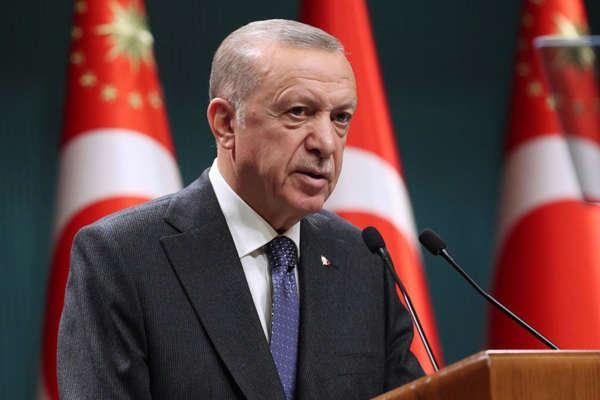
    In 10 of the provinces most severely impacted by the earthquake that has killed thousands of people, Turkish President Recep Tayyip Erdogan has declared a three-month state of emergency.

    3,549 people have now died in Turkey, according to Mr. Erdogan.

    There have reportedly been 1,600 fatalities in Syria.

    In a televised speech, Mr. Erdogan stated that the purpose of declaring a state of emergency is to allow for “quickly carried out” rescue operations in the nation’s southeast.

    Without providing more information, he said the measures would let aid workers and money into the affected areas.

    The state of emergency will end just before elections on May 14, when Mr. Erdogan will attempt to stay in power after 20 years.

    Turkey last imposed a state of emergency in 2016 after a failed coup attempt. It was lifted two years later.

    Rescuers in Turkey are battling heavy rain and snow as they race against the clock to find survivors of the earthquake that struck in the early hours of Monday.

    The World Health Organization has warned the toll may rise dramatically as rescuers find more victims.

    Thousands of children may be among the dead following the earthquake and aftershocks, the United Nations has said.

    Heavy machinery worked through the night in the city of Adana, with lights illuminating the collapsed buildings and huge slabs of concrete, in scenes repeated across southern Turkey.

    Occasionally, the work stopped and a call of “Allahu Akbar” rose up when a survivor was found or when the dead were recovered.

    Adana is full of the homeless – those who lost their homes and others too fearful of aftershocks to return.

    Some left without shoes, coats and phone chargers. Temperatures are expected to drop below freezing later this week.

    The 7.8 magnitude tremor struck at 04:17 (01:17 GMT) on Monday at a depth of 17.9 kilometers (11 miles) near the city of Gaziantep, according to the US Geological Survey.

    A later tremor had a magnitude of 7.5 and its epicentre was in the Elbistan district of Kahramanmaras province.

    On Tuesday morning, traffic was at a standstill on the main highway to the Turkish city of Maras, close to the epicenter of the quake.

    Cars occasionally crawled forward, the wet road illuminated by glowing red brake lights. Few rescuers have made it to this part of southern Turkey yet.

    One search and rescue team on their way to the city, their van loaded with specialist equipment and supplies, told the BBC they were eager to start looking for survivors, but they had no idea how bad the devastation would be when they arrived.

    Nationally, 8,000 people have been rescued from more than 4,700 destroyed buildings, Turkey’s Disaster and Emergency Management Authority (AFAD) said in its latest statement.

    As aftershocks continue, rescuers in some areas have been digging through rubble with their bare hands. But freezing conditions are hampering search efforts.

    In the southern province of Hatay, the Reuters news agency reported that a woman’s voice was heard calling for help under a pile of rubble.

    “They’re making noises, but nobody is coming,” a resident who gave his name as Deniz said while weeping.

    “We’re devastated, we’re devastated. My God… They’re calling out. They’re saying, ‘Save us,’ but we can’t save them. How are we going to save them? There has been nobody since the morning.”

    In Hatay, Ghanaian footballer Christian Atsu – who made 107 appearances for Newcastle – was pulled from the rubble of a building with injuries, his manager Mustafa Özat told Turkish radio.

    Atsu now plays for Turkish club Hatayspor. The club’s sporting director, Taner Savut, is still under the rubble, Mr Özat said.

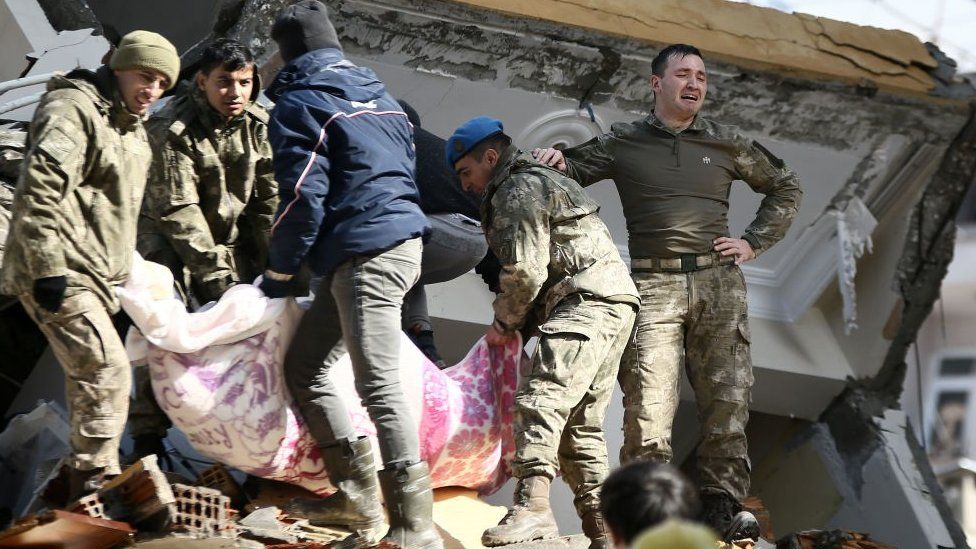
    Members of the Turkish military pull two women from under the rubble of a collapsed building in Hatay
    Image caption,Members of the Turkish military pull two women from under the rubble of a collapsed building in Hatay

    In the Turkish city of Osmaniye, near the epicentre, pouring rain hampered rescuers. The city was without power as the cold and rain set in.

    One family camped on the street, scared of the aftershocks, despite the freezing temperatures. Every time they felt an aftershock, the family moved closer into the middle of the street.

    A hotel owner in the city told the BBC that of 14 guests staying that night, only seven had been found.

    Countries around the world are sending support to help the rescue efforts, including specialist teams, sniffer dogs and equipment.

    But the earthquake has caused significant damage to three airports across Turkey, also creating challenges for aid deliveries.

    https://emp.bbc.com/emp/SMPj/2.47.2/iframe.htmlMedia caption,

    Diyarbakir, Turkey: ‘People are still trapped under the rubble’

    At least 1,600 people are now known to have been killed in Syria, where millions of refugees live in camps on the Turkish border.

    Turkey lies in one of the world’s most active earthquake zones.

    In 1999 a quake killed more than 17,000 in the north-west, while in 1939, 33,000 people died in the eastern province of Erzincan.

    This earthquake was powerful enough to be felt as far away as Cyprus, Lebanon, and Israel.