Tag: State Owned Enterprises (SOE)

  • Dalex Finance CEO asks government to sell off state-owned enterprises

    Dalex Finance CEO asks government to sell off state-owned enterprises

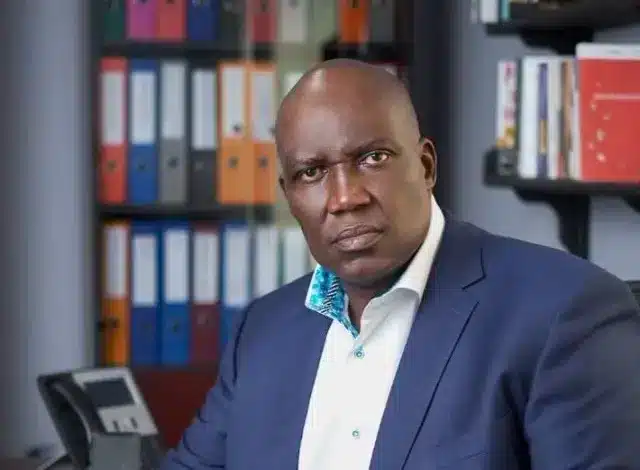
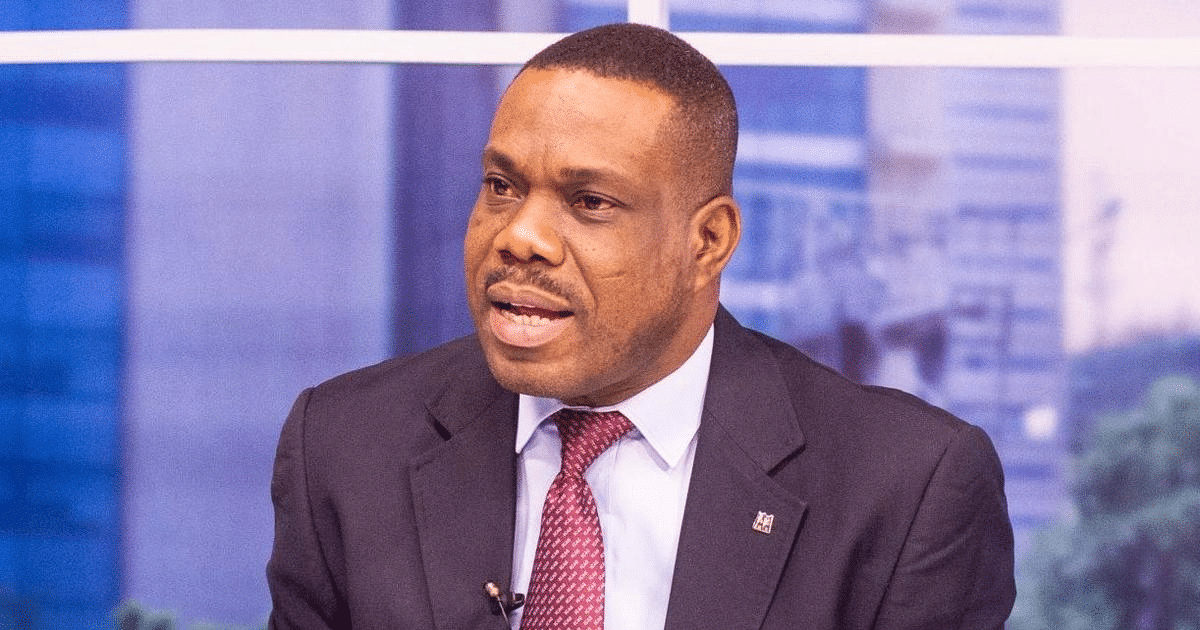
    The Chief Executive of Dalex Finance, Kenneth Thompson, has asked government to sell off non-performing State-Owned Enterprises (SOEs).

    He says they are solely responsible for the country’s economic misfortunes.

    According to him, this economic downturn can be averted should government sell SOEs to private investors.

    The Chartered Accountant made these assertions while contributing to discussions on Joy FM’s Super Morning Show on Tuesday.

    “Sell them [state-owned enterprises] off. What is the worst that can happen?” he wondered as he engaged host, Kojo Yankson.

    He further explained that most of the workers in charge of state-owned businesses attain their position on the ticket of familiarity with the appointing authority who is mostly the President.

    In his opinion, this action does not contribute to increased productivity in SOEs.

    Mr Thompson eventually alluded to a principle of business that states that “If the people in charge of a business did not have any skin in it, the business was not going to succeed.”

    However, his co-panellist, Dr Eric Oduro Osae was against the position.

    He noted that SOEs could not be sold to private companies due to national security implications.

    For Dr Osae, handing over SOEs to private investors would mean the investors would have greater shares, which could have severe implications on the economy of the country.

    But the CEO of Dalex Finance, rebutted the claims of his co-panelist, and labelled it as an emotional argument, and highlighted some aspects of state-owned businesses that were failing, such as performance management.

    The Chartered Accountant emphasised that until employees in SOEs had a stake in the business, the country’s economy would continue to suffer. 

    To curb the issue of insufficient productivity at SOEs, Mr Thompson proffered, “Let’s get institutions where people have skin in the game and there’s true accountability.”

    Source: Myjoyonline

  • Selling SoEs to private investors a threat to national security – Internal Audit Agency boss

    Selling SoEs to private investors a threat to national security – Internal Audit Agency boss

    The Director General of the Internal Audit Agency, Dr Eric Oduro Osae, has explained why some State Owned Enterprises (SoEs) cannot be sold to private entities, despite challenges they are bedeviled with.

    He says some SoEs cannot be sold to private investors due to national security implications.

    Speaking on Joy FM’s Super Morning Show, he said such enterprises provide critical services that cannot be left in private hands.

    “Some of these SoEs are critical, we cannot hand them over to private investors because of the national security implications of the work they do”

    “Can you imagine handing over ECG to a private investor, you may not know where the resources are coming from, handing over VRA to a private investor, handing over BUI to a private investor, handing over GRIDCO to a private investor, this is not to say some private investors are not critical,” he said on Tuesday.

    Dr Oduro added that even though some countries have succeeded in implementing this initiative, the level of security involved in the work may differ.

    “It will depend on the level of national security, because in our case if you hand it over and you get somebody from a certain country coming to get a certain amount in it, they will hold all of us hostage”, he said.

    However, CEO of Dalex Finance, Kenneth Thompson, had a different view.

    He described Dr Oduro Osae’s argument as based on emotions.

    According to him, if the developed countries have tried it and succeeded, Ghana can imitate.

    “Are we more intelligent than some other countries?  I mean their modules have worked let’s learn from it,” Mr Thompson indicated.

    About a week ago, the Minister for Public Enterprises in Ghana, Joseph Cudjoe announced that 12 State Owned Enterprises (SOEs) have been submitted to cabinet for approval to be sold to private investors.

    The initiative is part of the government’s plan to restructure the economy, by making the SoEs more efficient, profitable and less of a drain on public resources.

    Source: Myjoyonline

  • Akufo-Addo directs SOEs to submit all management accounts by February 28

    Akufo-Addo directs SOEs to submit all management accounts by February 28

    All Specified Entities have been directed by President Akufo-Addo to deliver all of their management accounts to the Controller and Accountant General’s Department by February 28, 2023.

    He expressed concern that as of the first quarter of 2022, only 54 per cent of State-owned Enterprises (SOEs) submitted their financial statements for consolidation into the national accounts.

    The President gave the directive when he addressed participants at the Annual Stakeholder Meeting of the State Interests and Governance Authority (SIGA) at Kwahu-Nkwatia in the Eastern Region on Friday.

    He noted that the late and non-submission of financial statements by SOEs undermined the work of the Controller and Accountant General in providing a total picture of Ghana’s public finances.

    “I wish to reiterate strongly that by 28 February this year, all management accounts should be submitted to the Controller and Accountant General’s Department.

    “The more we consolidate the national accounts with additional SOEs, the wider the national assets and fiscal space become” the President said.

    President Akufo-Addo also directed all SOEs to submit to SIGA’s performance contract process to facilitate the inclusion of their financial statements in the preparation of the national accounts.

    Currently, SIGA has 175 Specified Entities under its supervision.

    These entities are mandated by law to submit management accounts by 28th February to allow the Auditor General to submit audited accounts to Parliament by April 30.

    The number of financial statements submitted by SOEs in the consolidated national accounts rose from 19 in 2020 to 47 in 2021.

    In 2020, the 19 SOEs included in the national accounts contributed 30 per cent to the national assets. It further increased to 49 per cent when 47 SOEs were included in the 2021 national accounts.

    President Akufo-Addo charged Chairpersons of Boards and Chief Executive Officers of SOEs to collaborate with their respective internal auditors in the preparation of their management accounts to reduce incidents of infractions in the ongoing 2022 audit process.

    He said it was unacceptable for SOEs to control about half of the country’s national assets and contribute less to the nation’s Gross Domestic Product (GDP).

    SOEs, President Akufo-Addo insisted, must own up to their responsibilities and take a centre stage in the country’s development.

    “Jumpstarting our economy begins with you. You should be the major drivers of Ghana’s economy rather than being a financial burden,” he said, adding: “excuses for non-performance should no longer be tolerated.

    The 2023 Stakeholder Meeting of SIGA brought together Board Chairs, CEOs of Specified Entities, and other relevant stakeholders to discuss strategic initiatives aimed at transforming the Specified Entities into high-performing organisations and ensuring they meet the President’s vision of contributing 30 per cent to Ghana’s Gross Domestic Product.

    The two-day Conference, which was in accordance with Section 30 of the SIGA Act 2019 (Act 990), was on the theme: “A Time to Reflect and Rebuild.”

    Source: Ghanaweb

  • Fuel allocations to Political Appointees and heads of MDAs, MMDAs, SOEs slashed by 50%

    Government has announced a 50% cut in fuel allocations to all Political Appointees and heads of MDAs, MMDAs and SOEs by 50%.  This, according to the Finance Minister, Ken Ofori-Atta, forms part of measures “toward expenditure rationalisation.”

    Addressing Parliament while presenting the 2023 budget statement and economy policy on November 24, 2022, the Minister announced that the directive takes effect from January 2023.

    “Mr. Speaker, as a first step toward expenditure rationalisation, Government has approved the following directives which takes effect from January, 2023:All MDAs, MMDAs and SOEs are directed to reduce fuel allocations to Political Appointees and heads of MDAs, MMDAs and SOEs by 50%.

    “This directive applies to all methods of fuel allocation including coupons, electronic cards, chit system, and fuel depots. Accordingly, 50% of the previous years (2022) budget allocation for fuel shall be earmarked for official business pertaining to MDAs, MMDAs and SOEs,” he said.

    Additionally, measures toward expenditure rationalisation include a ban on the use of V8s and V6s by government officials (except for across country travels).

    Government has also announced a limited budgetary allocation for the purchase of vehicles. “For the avoidance of doubt, purchase of new vehicles shall be restricted to locally assembled vehicles,” the Minister said.

    “Only essential official foreign travel across government including SOEs shall be allowed,” he added.

    These directives comes at a time when the country has been plunged into an economic crisis. Amidst the crisis, there have been calls on the government to cut down on its expenditure. An Associate Professor of Political Science and a former Director of the Centre for European Studies of the University of Ghana, Prof Ransford Gyampo was one of the active voices championing this course.

    In line with the calls, government initially announced a 30% slash in the salaries of some of its appointees. Subsequently, it has announced the 50% slash in fuel allocations to all political appointees.

    Meanwhile, the prices of goods and services continue to soar. Inflation currently stands at 40.4 % and the fuel prices continue to surge, making life unbearable for the ordinary Ghanaian. Nonetheless, government is confident that the measures outlined in the 2023 Budget will “redirect us on the path of macroeconomic stability and growth.”

    Source: The Independent Ghana

  • Why are CEOs of loss-making SOEs earning salaries 3 times higher than that of the President? – TUC

    Organised Labour has questioned why Chief Executives and heads of some loss making State-Owned Enterprises (SOEs) are earning salaries that are three times higher than that of even the President of Ghana.

    Addressing the 2022 May Day parade at the Black Star Square in Accra on Sunday, the Secretary-General of the Trades Union Congress (TUC), Dr Yaw Baah speaking on behalf of Organised Labour appealed to President Nana Addo Dankwa Akufo-Addo to ensure that the reward system in the entire public service, including emoluments for Article 71 office holders and the top management of SOEs was totally overhauled.

    He argued that in 2021 and 2022, when public sector workers were given just 4 per cent and 7 per cent pay increases, some state-owned enterprises actually awarded themselves over 25 per cent salary increase even though their salaries are already much higher than workers on the Single Spine Pay Policy (SSPP), and they did so without clearance from the Fair Wages and Salaries Commission (FWSC) as required by Act 737.

    “Chief Executives and top management of SOEs are using public funds to pay themselves very fat salaries and allowances because they know they will not be held accountable,” he said.

    The low level of salaries and the pay inequalities have very serious implications for workers not only when they are in active service but also when they retire, he added.

    Watch the video below

    Review SSPP

    Dr Baah recalled that at the 2022 Labour conferene held at Nkwatia in Kwahu, which was graced by President Akufo-Addo and the Vice-President, Dr Mahamudu Bawumia, “social partners agreed that the Single Spine Pay Policy (SSPP) should be reviewed and a technical committee has since been constituted to review the policy.”

    He urged the committee to present its report before the end of June 2022 so that pay increases can be factored into the 2023 national budget.

    He said they expect the committee to address key challenges that have hindered the effective implementation of the SSPP.

    The first challenge has to do with the low levels of pay for workers. “Some public sector workers on the Single Spine are actually receiving salaries as low as
    GH¢415 a month. This is woefully inadequate for any meaningful life in this difficult times. One of the main objectives of Single Spine was to ensure fairness in the reward system in the public service [but] after 12years of implementation of the policy, pay differential in the public service has actually worsened. We now have a situation where some junior officers in some public service institutions, especially those that are not on the Single Spine are earning much higher than senior officers on the Single Spine structure. Workers on the Single Spine structure are receiving lowest salaries compared to their counterparts on other salary structures in the public service.”

    “The highest salary on the Single Spine now is GH¢7000 per month but some heads of public sector institutions earn over four times this salary. This is not the right thing to do. Infact there are some heads of state-owned enterprises who are earning over three times the salary of the President of the Republic, even though some of the SOEs are making huge losses. Why should a Chief Executive Officer who is managing a loss making state-owned enterprise receive over three times the salary of the President of the country who is managing the entire country, why?

    Again in 2021 and 2022, when public sector workers were given just 4 per cent and 7 per cent, some state-owned enterprises actually awarded themselves over 25 per cent salary increase even though their salaries are already much higher than workers on the Single Spine, and they did so without clearance from Fair Wages and Salaries Commission (FWSC) as required by Act 737.

    Chief Executives and top management of SOEs are using public funds to pay themselves very fat salaries and allowances because they know they will not be held accountable.

    Organised Labour therefore appealed to President Akufo-Addo to ensure that the reward system in the entire public service, including emoluments for Article 71 office holders and the top management of SOEs is totally overhauled.

    The low level of salaries and the pay inequalities have very serious implications for workers not only they are in active service but also when they retire. Currently a significant number of pensioners are receiving the minimum pension of just GH¢300 per month compared to someone on the same pension scheme who is receiving GH¢142,000 a month. I mean, the lowest monthly pension as a ratio of the highest monthly pension is 1:475… this is not right and it must be fixed. Nearly 60 percent of all pensioners on social security receive less than GH¢1000 per month and approximately 90 per cent receive less than GH¢2000 per month when somebody is receiving GH¢142,000 a month. Life is very very tough retirees in Ghana, especially for those who retire ,” he said.

    Source: graphic.com.gh