Sexually transmitted infections are spreading very quickly in the US, a government agency has alerted.
In the last ten years, the number of babies born with syphilis has increased by 937%, putting their lives at risk.
The CDC announced the update with frustration, showing that they were very disappointed, like a parent.
It was reported that over 2. 5 million cases of chlamydia, gonorrhea, and syphilis were found in the United States.
Chlamydia was the most common STI in 2022, with about 1. 6 million cases in the country. This is the most recent data available.
Gonorrhea had the second highest number of cases, with nearly 650,000.
Public health officials are worried about the big increase in syphilis cases. They have gone up 80% in the last five years, and now there are a total of 203,500 cases of syphilis in all stages.
If syphilis is not treated in adults and reaches its last stage (which is very rare), it can be deadly. But if caught early, it can be treated with antibiotics.
The sickness can be passed through having sex, either through the vagina, anus, or mouth. In the beginning, there may be sores around the mouth or genitals, and later there may be rashes all over the body and flu-like symptoms.
Many people can have the disease but not feel sick.
The first two stages are the most contagious, the report shows a 10% rise in 2022 and a 68% rise since 2018.
However, the most worrying discovery was that there were 3,755 recorded cases of babies being born with syphilis.
Congenital syphilis is when a baby gets sick because their mom has syphilis and passed it to them during pregnancy.
Tag: STIs
-
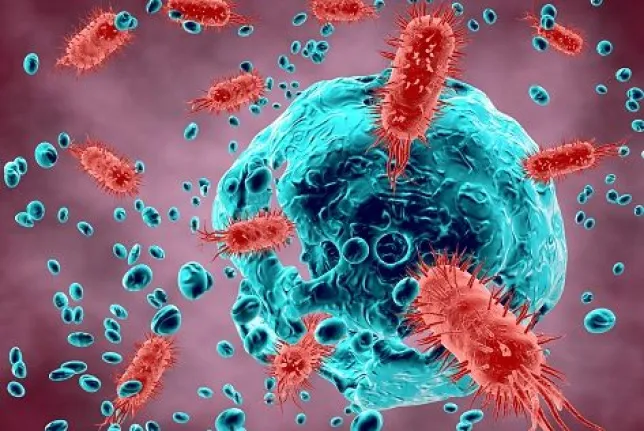
STIs “out of control” in US following 937 percent increase in infants syphilis cases
-
France makes condoms free for 18 to 25-year-olds
Young people in France will have free access to condoms from January, in a bid to minimise the spread of sexually transmitted infections (STIs).
The French president announced the new health measure on Thursday at an event for young people’s health.
Emmanuel Macron said young people would be able to collect them from pharmacies, and described the move as a “small revolution in prevention”.
In 2020 and 2021 France experienced a 30% national increase in STI rates.
The new measure comes alongside other health initiatives targeting the spread of STIs and improving access to contraception.
In 2018 the French government started reimbursing the costs of condoms to individuals, if purchased in a pharmacy with a prescription from a doctor or midwife.
Earlier this year the government made contraception free for all women up to 26 years old – a move that affected three million women. Contraception had previously been free for women and girls 18 or younger.
Mr Macron added in a tweet that Thursday’s announcement comes alongside other health measures.
They include free emergency contraception for all women in pharmacies, and free STI screenings without a prescription, except HIV, to those under the age of 26.
Source: myjoyonline
-
STIs increase in France: Government makes condoms free for 18 to 25 year old
From January next year, young people in France will have free access to condoms in an effort to stop the spread of STDs (STIs).
At a Thursday event for young people’s health, the French president made the new health initiative official.
Young people would be able to pick them up from pharmacies, according to Emmanuel Macron, who called the initiative a “small revolution in contraception.”
The national STI rate in France increased by 30% in 2020 and 2021.
The new measure comes alongside other health initiatives targeting the spread of STIs and improving access to contraception.
In 2018 the French government started reimbursing the costs of condoms to individuals, if purchased in a pharmacy with a prescription from a doctor or midwife.
Earlier this year the government made contraception free for all women up to 26 years old – a move that affected three million women. Contraception had previously been free for women and girls 18 or younger.
Mr Macron added in a tweet that Thursday’s announcement comes alongside other health measures. They include free emergency contraception for all women in pharmacies, and free STI screenings without a prescription, except HIV, to those under the age of 26.
-
6 facts you might not have learned in sex ed
Accurate and comprehensive sex education can be difficult to find in the United States, and people may not always be aware that they aren’t receiving sufficient information.
As of July, only 29 US states and the District of Columbia mandate sex ed, and of those states, only 11 require that the information provided be medically accurate, according to the Guttmacher Institute, a nonprofit research and policy organization that focuses on sexual and reproductive rights worldwide. Additionally, the use of social media can allow misinformation to spread more rapidly, including among those actively seeking accurate information, according to a 2021 study by the University of Louisville in Kentucky.Misinformation and misconceptions can lead to consequences, including unplanned pregnancy, sexually transmitted infections and diseases, and increased fear and stigma around sex and sexual health, said Kristen Mark, a sex and relationships researcher and professor in family medicine and community health at the University of Minnesota Medical School’s Institute for Sexual and Gender Health in Minneapolis.Here, sex educators and researchers break down some common misconceptions, and share accurate information that you may not have learned in traditional sex education.Sex and sexual health aren’t just about the physical act
Often people believe sexual health is only related to sex itself, New York City-based sexuality educator Logan Levkoff said. In reality, sexual health is a “state of physical, emotional, mental and social well-being in relation to sexuality,” according to the US Centers for Disease Control and Prevention.“It has to do with how we take care of our bodies in a holistic way,” Levkoff said, “how we navigate mental health, the access we have to the information and services, the culture we’re living in.”Understanding and promoting sexual health can allow people to feel empowered in their bodies and sexual decisions, and can open up discussion around these topics, potentially allowing people to challenge these misconceptions more directly.‘Normal’ does not exist
The most common question Levkoff fields is “Am I normal?” “People don’t want to feel like they’re weird, they’re the outsider, that there’s something wrong with them,” she said.Some people might wonder if they got their first period at a normal age. However, menstruation, including the onset and length of one’s period, varies from person to person, according to the Mayo Clinic.There is no single definition of normal, according to Levkoff. Since each person is unique, searching for normal may not be the most beneficial thing. Instead, people can learn about their own bodies and desires, Levkoff added.Sex can be pleasurable
Growing up in a suburb of Charlotte, North Carolina, Alexa Hulse, 20, learned in public school that people have sex to conceive a child. There was no discussion around the female orgasm, and the male orgasm was discussed in the context that it helped sperm find the egg to create a baby.The reality is that sex is pleasurable, the University of Minnesota’s Mark said. In fact, the No. 1 reason humans engage in sex is for pleasure, she added.“I was very fearful of sex,” Hulse said. “There was no discussion of pleasure. It was only have babies and fear, because you didn’t want to get pregnant and didn’t want to contract an STD or an STI.”With the recent US Supreme Court decision to overturn Roe v. Wade, eliminating the constitutional right to have an abortion, people have been saying, “Don’t have sex if you don’t want to get pregnant.”But for many people who have sex and try to avoid getting pregnant, limiting access to reproductive health care can be a burden, Mark said.“Contraceptive methods and access to reproductive health care such as abortion are really important components to ensuring that people can engage in their human right to have pleasurable sexual experiences,” she said.Moreover, sexual pleasure can have health benefits, including better general health, better sleep, less stress, improved cognitive functioning and higher quality of life, according to research.STIs are not always visible
Stigmas that people who have sexually transmitted diseases or infections are “dirty” and those who don’t are “clean” have dominated narratives around sex.However, STIs are more common than people think. In 2018, 20% of people in the US had an STI on any given day, according to a 2021 study in the journal Sexually Transmitted Diseases.And people may have an STI and not even be aware of it since most are not noticeable, said Debby Herbenick, professor at the Indiana University Bloomington’s School of Public Health and author of “Sex Made Easy.”“The only way to tell if someone has an STI is to get tested for STIs, which all sexually active people should do from time to time (the frequency varies based on a person’s own sexual behaviors and risk factors, so check with a healthcare provider to see what they recommend for you),” Herbenick said via email.Levels of sexual desire vary
Low or high sexual desire does not mean there is anything wrong with you, Herbenick said. People’s sex drives often fluctuate based on outside factors such as stress levels, she added.Furthermore, there is a common misconception that men always want to have sex and women do not, Mark said. These assumptions can cause people to worry that something is wrong with them, when really, sexual drive and desire is not based on sex or gender and varies by person.Teaching comprehensive sex ed doesn’t mean people will have more sex
In the US, only 11 states and the District of Columbia require that the importance of consent to sexual activity be covered in sex education, according to the Guttmacher Institute. Consent, or an agreement between parties to engage in sexual activity, is an important component of sex, Mark said.Some believe sex education is about morals and values, but it really is about health information, including understanding bodily autonomy and consent, Mark said. Sex education gives people the opportunity to learn that saying yes is just as important as saying no, and vice versa, she added.Covering topics such as consent in sex education classes does not mean people are going to run out and have sex, Mark said. Instead, it means people will understand how to navigate the world better, both when it comes to sex and when it doesn’t, she added.In fact, abstinence-only sex education has been shown to be ineffective and harmful, according to a 2017 study in the Journal of Adolescent Health.Younger children can have comprehensive sex education beginning in kindergarten, a 2021 study in the same journal found.“It’s going to involve talking about bodily autonomy and the right to have the ability to say no to touch to your body if it’s not wanted,” Mark said of sex ed for younger kids. “It’s about learning about boundaries and respect for your own body.”Source: CNNDISCLAIMER: Independentghana.com will not be liable for any inaccuracies contained in this article. The views expressed in the article are solely those of the author(s) and do not reflect those of The Independent Ghana.