Tag: streets

  • Unpleasant smell from foreign beggars’ clothes, urine makes me sick – Ghanaian woman

    Unpleasant smell from foreign beggars’ clothes, urine makes me sick – Ghanaian woman

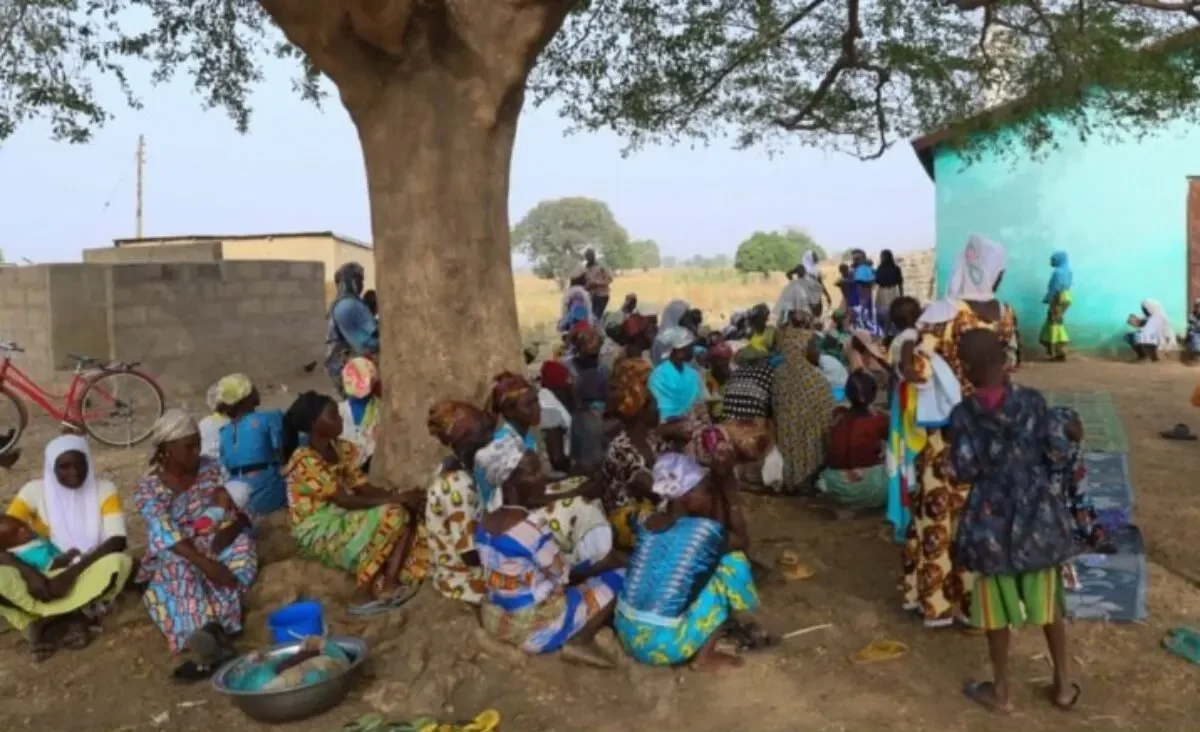
    A Ghanaian woman has openly expressed her frustrations regarding what she perceives as the negative impact of refugees in the country.

     Her concerns primarily center around hygiene and behavior issues attributed to some non-native residents.

    The woman shared her sentiments, particularly highlighting her discomfort with the perceived unpleasant smell of refugees’ urine and clothes on the streets, asserting that it makes her feel sick.

    In a statement, she conveyed her perspective, stating, “Foreigners are frustrating us in this country. The smell of their urine and clothes on our streets makes me sick all the time.”

    Reports indicate that the refugee population has seen a steady increase, prompting heightened apprehension within the country.

     In 2023, approximately 500 individuals from Burkina Faso communities migrated to Fufulso, a suburb in the Central Gonja District of the Savannah Region.

    The influx of migrants has sparked fear among local residents, who now worry about the safety of their lives and property.

     Sources within Fufulso reveal that these foreigners often arrive during the night and have been gradually integrating into the community as residents since their arrival.

  • Moroccans too terrified to stay inside turn to spend night sleeping on streets

    Moroccans too terrified to stay inside turn to spend night sleeping on streets

    Many people from Morocco were very scared to stay inside, so they decided to sleep on the streets for a second night in a row.

    Pictures and videos show lots of scared people on the sidewalks, worried that more shaking would happen after the big earthquake on Friday.

    Some people used duvets as beds, while others only had one blanket to wrap themselves in.

    Some people put their things in a suitcase and kept it with them all night.

    Many people decided to sleep outside. Others had to because their houses were destroyed.

    The earthquake, which measured 6. 8 on the scale used to measure earthquakes, has caused entire villages to collapse. The earthquake started near the town of Ighil in Al Haouz Province, about 43 miles south of Marrakech.

    Over 2,012 people have passed away and 2,059 have been hurt, and unfortunately, these numbers are likely to increase more.
    More families are stuck under the collapsed buildings, and rescue teams are having a hard time reaching them. This is particularly true in the worst affected countryside, where the roads are entirely blocked by the debris.

    Yesterday, Caroline Holt, who is in charge of operations for the International Federation of Red Cross and Red Crescent Societies (IFRC), said that there is only a limited amount of time for rescues to happen.

    She said the next 24 to 48 hours are very important for saving lives. She promised that they will focus on searching for people while also taking care of those who have been found and are safe.

    The people who live in the area are working together to help those trapped under collapsed buildings. Some are searching through debris using only their hands.

    The earthquake was the largest one to happen in Morocco in 120 years. It caused buildings and walls in old cities, which were made of stone and other materials not built to handle earthquakes, to collapse.
    Not a lot of earthquakes happen in North Africa. Lahcen Mhanni, who is in charge of monitoring earthquakes at the National Institute of Geophysics, said on 2M TV that the earthquake was the most powerful ever recorded in the mountain area.

    In 1960, a big earthquake with a strength of 5. 8 happened near the city of Agadir in Morocco. Many people died because of it.

    Professor Bill McGuire, a retired professor who specializes in studying the dangers of natural disasters like earthquakes, explained that even though people don’t usually associate Morocco with earthquakes, they do occur there.

    A very strong earthquake caused many buildings to collapse in Marrakech, Morocco.
    This one is really big for the area – the largest in over 120 years – and, as shown by the number of deaths from climbing, very dangerous.

    The issue is that in places where there are not many powerful earthquakes, buildings are not built strong enough to handle strong shaking of the ground. Because of this, many buildings collapse and a lot of people get hurt or killed.

    I think that the number of people who died will go up to thousands once we have more information. After a major earthquake, there will probably be more smaller earthquakes called aftershocks. These aftershocks may cause more people to get hurt or even die, and they will also make it harder for rescuers to find and save people.

  • Protests on the streets of Ouagadougou – report

    On Friday, several young people took to the streets of the Burkinabè capital, Ouagadougou, following reports of gunfire in the early hours, the privately-owned Wakat Sera website reported.

    “Youths, claiming to be members of some civil society movements, on Friday 30 September, stormed some of the streets of the capital of Burkina Faso, calling for a ‘massive mobilisation for the total liberation of the national territory’,” the report said.

    It added that the demonstrators said that a “full-blown coup d’etat” had taken place, and demanded the release of Lt-Col Emmanuel Zoungrana, who has been detained since the time of ousted President Roch Kabore’s rule.

    The BBC has not been able to independently confirm that there was a coup attempt but a government official, speaking anonymously, told us that a mutiny had taken place.

    The report also said youths on motorcycles were seen carrying Burkinabè and Russian flags.

    On Thursday, hundreds of people held a protest in the western city of Bobo Dioulasso, to demand the resignation of interim President Lt Col Paul-Henri Damiba.

    The protesters were blaming him for the chaotic management of the security situation in the country – which is facing a jihadist insurgency.

    A mutiny that took place on 23 January was linked to the detention of Lt-Col Zoungrana.

    Source: BBC