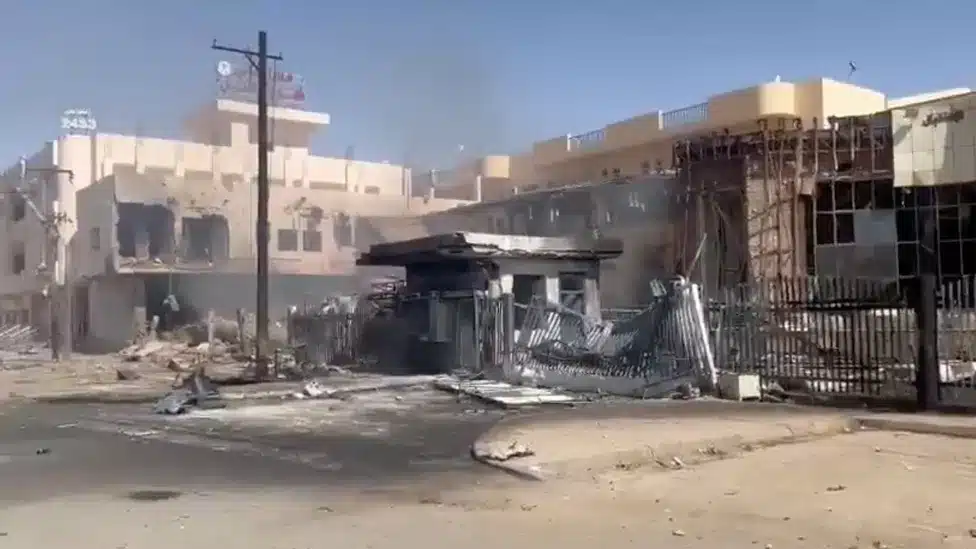
Data obtained by BBC News Arabic, has it that both parties in Sudan’s conflict may be committing war crimes against medical facilities and personnel.
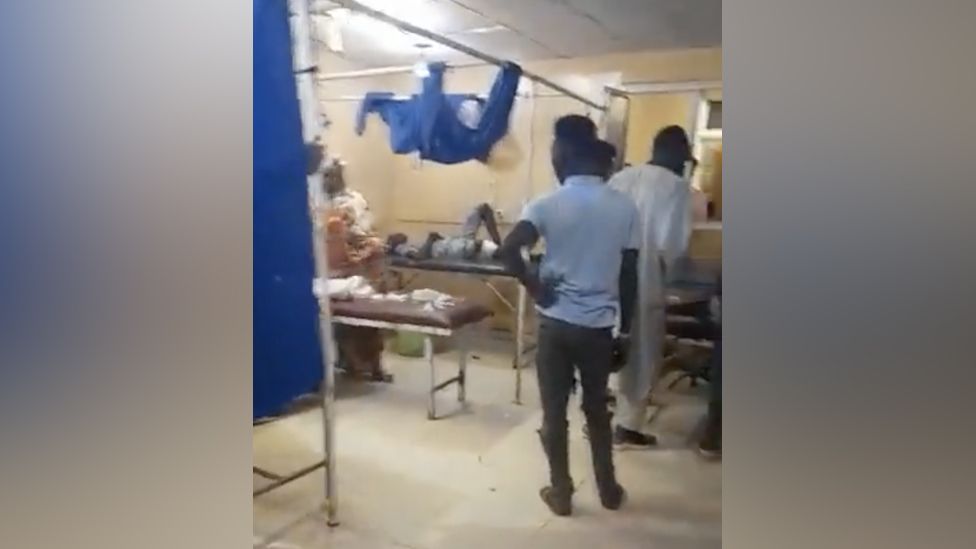
Hospitals have been hit by airstrikes and artillery fire while patients were still in the building and doctors have also been singled out for attack – all of which are potential war crimes.
Only a handful of the 88 hospitals in the capital, Khartoum, remain open after weeks of fighting, according to Sudan’s Doctors Union.
The BBC team used satellite data and mapping tools, analysed user-generated content on a huge scale, and spoke to dozens of doctors, to build a picture of how hospitals and clinics are being affected.
The World Health Organization (WHO) called the attacks “a flagrant violation of international humanitarian law” adding that they “must stop now”.
The fighting in Sudan began on 15 April and was triggered by a power struggle between former allies – the leaders of the regular army and the paramilitary Rapid Support Forces (RSF).
Khartoum’s Ibn Sina hospital is one of a number the BBC has identified as having been targeted in an airstrike or by artillery fire when medics were treating civilian patients.
Dr Alaa is a surgeon at the hospital and was present when the attack happened on 19 April.
“There wasn’t any warning. Ibn Sina hospital where I worked was hit by three bombs, while a fourth bomb hit the nurses’ house which was entirely set on fire,” he said.
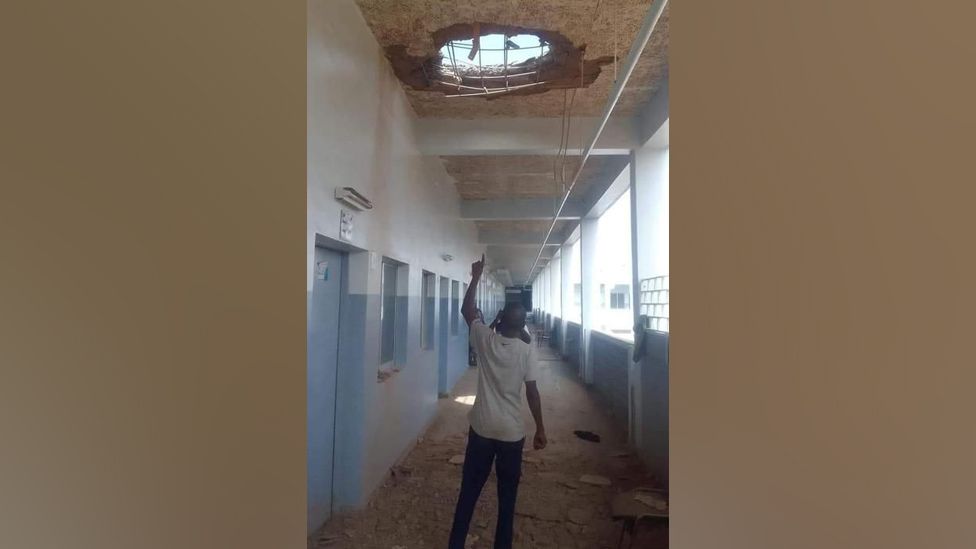
Christian de Vos, an international criminal law expert with NGO Physicians for Human Rights, says this could be classed as a war crime.
“The duty to warn of any impending airstrike to ensure… that all civilians are able to evacuate a hospital prior to an airstrike – that is very clear under the laws of war,” he said.
Looking at the images of the attack, forensic weapons expert Chris Cobb-Smith said it could have been caused by artillery fire.
Uncertainty over the kind of weapon used means it is hard to be sure which side was responsible, or whether this was a targeted attack.
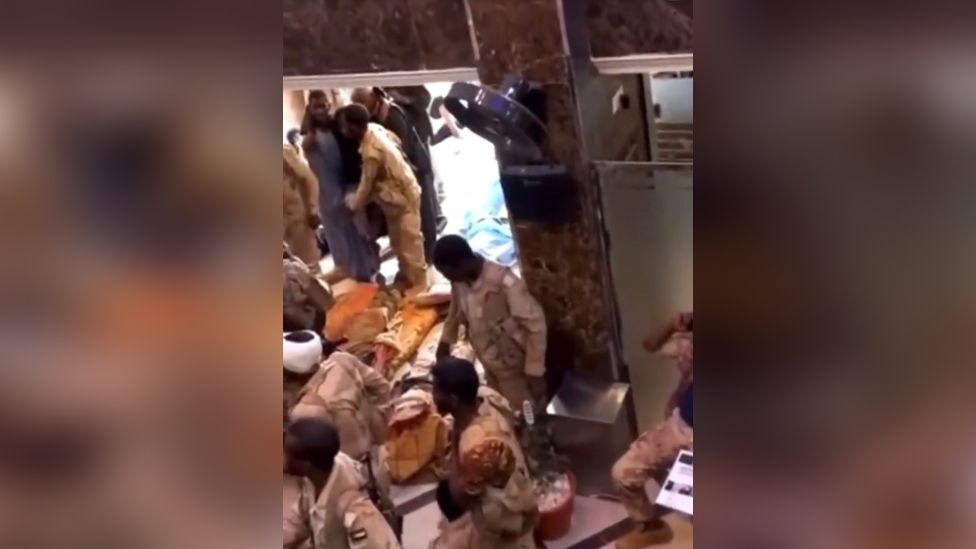
Another medical facility hit was the East Nile hospital – one of the last operating in that part of the capital.
The BBC has seen evidence of RSF fighters surrounding it with their vehicles and anti-aircraft weapons.
There have been reports of patients being forcibly evacuated from the building. But we have also spoken to witnesses who say civilians continued to be treated alongside the RSF soldiers.
On 1 May, a public area next to the East Nile hospital was hit by a Sudanese army airstrike. There was no warning, according to sources the BBC has spoken to.
Five civilians died in that attack.
There was a further airstrike two weeks later but there has been no independent confirmation of the number of injured.
The WHO has reported that nine hospitals have been taken over by fighters from one side or the other.
“The preferential treatment of soldiers over civilians [is] not an appropriate use of a medical facility and it may well constitute a violation of the laws of war,” Mr De Vos said.
A political advisor to the RSF, Mostafa Mohamed Ibrahim, denied that they were preventing the treatment of civilians. He told the BBC: “Our forces are just spreading… they are not occupying and don’t stop civilians from being treated in these hospitals.”
The Sudanese army did not provide a response to this investigation’s findings.
There is also evidence of another potential war crime – the targeting of doctors.
The BBC has seen social media messages threatening doctors by name, even sharing their ID number. The messages accuse them of supporting the RSF and receiving money from abroad.
In a widely circulated video, Major-General Tarek al-Hadi Kejab from the Sudanese army said: “The so-called central committee of doctors, should be named the committee of rebels!”
Sudanese doctors’ organisations have been monitoring threats which they say are coming from both sides and the BBC has spoken to doctors who have gone into hiding.
“We know that this is a tactic that is used in wars, for pressure, that is illegal in all international laws. Unfortunately, this has pushed medical staff into a propaganda war – between the RSF and the Sudanese army,” said Dr Mohamed Eisa from the Sudanese American Physicians Association.
Doctors around the world have been calling for an end to the targeting of their colleagues.
At a conference in London last week, Sudan’s Doctors for Human Rights said medical staff had been killed, ambulances targeted and hospitals forced to close their doors.
Dr Ahmed Abbas said: “We’re gathering all the evidence of these transgressions, which are crimes against humanity and war crimes, and this could be presented to international judicial authorities, or national authorities in Sudan.”