Tag: Sub-Saharan Africa

  • Ghana’s growth in digital bank account ranked 4th in Sub-Saharan Africa

    Ghana’s growth in digital bank account ranked 4th in Sub-Saharan Africa

    Ghana has been ranked 4th in Sub-Saharan Africa for the largest growth in digital bank account ownership, according to a report by Fitch Solutions.

    The report revealed that the country experienced over 40% growth in digital bank accounts (including mobile money) between 2011 and 2022, bringing the total to a little over 60%.

    Despite this progress, Fitch Solutions noted that the growth remains relatively low when compared to global peers. The top three countries in Sub-Saharan Africa are Mauritius with over 90% growth, followed by South Africa at 82%, and Kenya at 74%.

    Following Ghana, Senegal took the 5th spot with 54%, with Tanzania, Ivory Coast, Ethiopia, and Nigeria ranking 6th to 9th respectively.

    In its article titled Navigating The Digital Banking Landscape In Sub-Saharan Africa, the UK-based firm highlighted that while the Sub-Saharan Africa (SSA) region has lagged behind other areas in banking sector development, it has led the way in digital banking advancements.

    “We estimate that SSA banking assets will represent 53.0% of Gross Domestic Product in 2024, compared to the emerging markets average of 84.8%. Limited access to traditional banking has hindered broader economic participation and growth,” the report stated.

    The rise of digital banking, driven by factors such as the proliferation of mobile phones, improved internet connectivity, and increasing regulatory support, presents immense opportunities for financial inclusion, which is essential for economic development and technology adoption in the region.

    Fitch Solutions added, “We anticipate that SSA will continue to develop its digital banking capabilities, benefiting households, businesses, traditional and challenger banks, and the broader economy. This article investigates key themes and challenges associated with digital banking in SSA, a topic we previously highlighted as influential in the region’s banking development.”

    The report further highlighted that Nigeria and Kenya stand out as key hubs for digital banking in the SSA region, driven by a blend of traditional banks and innovative fintech companies. In Nigeria, institutions like Kuda Bank and GTBank are using mobile platforms to serve unbanked and underbanked populations.

    Additionally, South Africa is recognized for its advanced financial infrastructure, while Ghana continues to surge in mobile money usage, and Tanzania experiences rapid growth in mobile banking.

    These trends signify the potential for further digital banking development across Sub-Saharan Africa, with Ghana playing a crucial role in this transformation.

  • Ghana has the most bank-held govt debt in Sub-Saharan Africa in 2023 – Report

    Ghana has the most bank-held govt debt in Sub-Saharan Africa in 2023 – Report

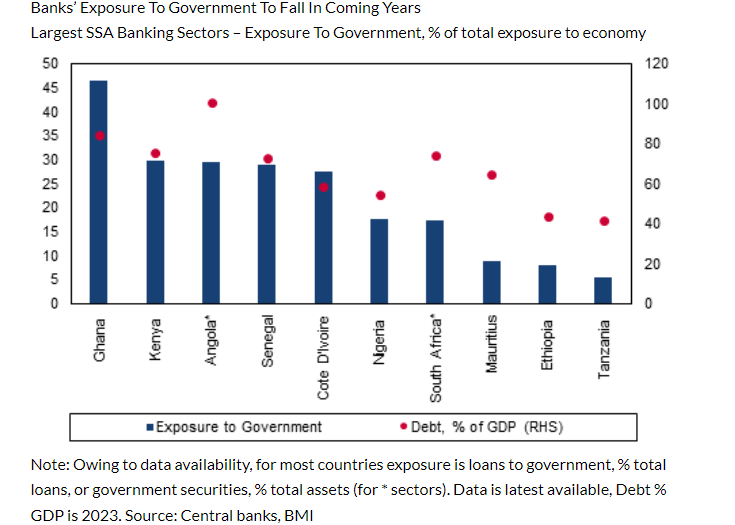
    Ghana had the highest banks’ holdings of government debt in Sub-Saharan Africa in 2023, according to Fitch Solutions.

    Regarding government debt to Gross Domestic Product (GDP), Ghana ranked second, just behind Angola.

    Kenya, South Africa, and Senegal followed in third, fourth, and fifth places respectively.

    The report highlighted that banks in Sub-Saharan Africa, including Ghana, will continue to face risks related to sovereign exposure throughout the forecast period. However, these risks are anticipated to decrease over time.

    During the Covid-19 pandemic, banks’ holdings of government debt and claims on the public sector surged as governments increased borrowing to cover additional expenditures.

    With limited access to international markets due to high costs, domestic banks became the primary financiers. This reliance poses significant risks to banks, particularly when government finances are under strain.

    “This dependence poses significant risks to banks, particularly when government finances are strained. For instance, Ghana’s default on its domestic and external debt in December 2022 led to considerable losses for banks participating in its domestic debt exchange programme”.

    “As can be seen in the chart below, banking sectors in markets with elevated levels of government debt typically have the highest exposure to the government through loans or government securities holdings. We expect that the average debt-to-GDP ratio for the region will fall in the coming years, after peaking in 2023, boding well for our view that banks will reduce exposure to the sovereign”, it stressed.

    Reopening of Africa’s Eurobond market in 2024 marks positive shift

    The report noted that the reopening of Africa’s Eurobond market in 2024, after more than a year of inactivity, signifies a positive development, with successful and oversubscribed bond issuances from countries like Côte d’Ivoire, Benin, and Kenya.

    This revival, it stated, gives governments an alternative financing source beyond banks, allowing banks to reduce their exposure to sovereign debt and potentially free up resources for more lending to the private sector. However, this shift is anticipated to be gradual, given ongoing concerns about loan quality and the higher risk profiles of private sectors compared to sovereigns.

  • Ghanaian workers ranked 4th most stressful employees in Sub-Saharan Africa

    Ghanaian workers ranked 4th most stressful employees in Sub-Saharan Africa

    Ghana has emerged as the fourth most stress-inducing work environment in Sub-Saharan Africa, as highlighted by the 2023 Gallup’s State of the Global Workplace report.

    The findings from Gallup’s survey reveal a prevalent experience of daily stress among Ghanaian workers, positioning the country prominently on the list of stress-stricken workplaces in the region.

    Topping the list is Chad, with its workforce facing the highest daily stress levels, followed by Uganda, Tanzania, and Sierra Leone. Ghana closely trails Sierra Leone, securing the fourth spot in the ranking of countries with the most stressful working conditions.

    Across Sub-Saharan Africa, 46% of workers endure daily stress, with similar percentages observed among both male and female employees. Despite the region’s strides in recovering from the pandemic’s impact, employee stress remains alarmingly high.

    The survey underscores the imperative for organizational leaders to tackle employee stress, recognizing its significant repercussions on productivity and performance.

    Gallup underscores the pivotal role of employee engagement in stress reduction, emphasizing its importance over the physical work environment.

    In the words of Gallup, “While the debate over remote, hybrid, or on-site work continues, employee engagement remains paramount in reducing stress levels. The flexibility of remote work offers autonomy and well-being, valued highly by today’s workers,” stated Gallup in its survey.

    Gallup’s survey methodology involves gathering responses from 1,000 individuals in each country or region, employing a standardized set of core questions translated into major local languages. The data represent the perspectives of employed adults aged 15 and above.

    The report serves as a call to action, highlighting the urgency of addressing workplace stress and fostering employee engagement to cultivate a healthy and productive workforce across Sub-Saharan Africa.

    “While the debate over remote, hybrid, or on-site work continues, employee engagement remains paramount in reducing stress levels. The flexibility of remote work offers autonomy and well-being, valued highly by today’s workers,” stated Gallup in its survey.

  • Economic outlook for Sub-Saharan Africa positive – IMF

    Economic outlook for Sub-Saharan Africa positive – IMF

    The International Monetary Fund (IMF) has highlighted a positive trajectory in the economic outlook for sub-Saharan Africa after a tumultuous four years.

    The IMF’s Regional Economic Outlook for Sub-Saharan Africa reveals promising signs, with growth projected to increase from 3.4% in 2023 to 3.8% in 2024, with a majority of countries expecting higher growth rates.

    The report outlines a continued economic recovery beyond 2024, with growth forecasts reaching 4.0% in 2025.

    “Economic recovery is expected to continue beyond this year, with growth projections reaching 4.0% in 2025. Additionally, inflation has almost halved, public debt ratios have broadly stabilised, and several countries have issued Eurobonds this year, ending a two-year hiatus from international markets”, it mentioned.

    Notably, inflation has nearly halved, public debt ratios have stabilised, and several countries have successfully issued Eurobonds this year, marking a return to international markets after a two-year hiatus.

    Despite these improvements, challenges persist.

    The IMF notes ongoing funding constraints as governments grapple with financing shortages, high borrowing costs, and looming debt repayments.

    “Risks to the outlook remain tilted to the downside. The region continues to be more vulnerable to global external shocks, as well as the threat of rising political instability, and frequent climate events”.

    Additionally, the region remains vulnerable to global external shocks, political instability, and frequent climate events, posing risks to the economic outlook.

    To navigate these challenges effectively, the IMF emphasises three key policy priorities: improving public finances without hindering development, maintaining monetary policies for price stability, and implementing structural reforms to diversify funding sources and strengthen economies.
    Acknowledging the need for international support, the IMF concludes that sub-Saharan African countries require additional assistance to foster inclusive, sustainable, and prosperous economic growth in the future.

  • Global 5G coverage expected to reach 85% by 2029, led by Africa – Ericsson report

    Global 5G coverage expected to reach 85% by 2029, led by Africa – Ericsson report

    The number of mobile subscriptions in Sub-Saharan Africa is projected to surpass 1.1 billion by the end of 2029, with 5G subscriptions experiencing the fastest growth at a rate of 60% annually between 2023 and 2029, according to a recent report.

    Fixed Wireless Access (FWA) is identified as a crucial technology to meet the growing broadband demands in Africa.

    Key markets such as South Africa, Angola, Nigeria, Kenya, Zambia, and Zimbabwe have already launched 5G FWA services due to its cost-effectiveness, rapid deployment capabilities, and inherent flexibility.

    Hossam Kandeel, Vice President and Head of Global Customer Unit MTN and Customer Unit MTN Africa at Ericsson Middle East and Africa, emphasized the significance of this shift.

     “In the latest edition of the Ericsson Mobility Report, it is found that Sub-Saharan Africa is poised to remain the region with the highest growth in total mobile data traffic in the forecast period. This growth will be driven by the expansion of 4G network coverage across the continent and the increasing affordability of data and smartphones.”

    Ericsson’s report predicts a substantial surge in global 5G subscriptions, projecting an increase of over 330% from 1.6 billion to 5.3 billion between the end of 2023 and 2029.

    The forecast also anticipates that 5G coverage will be accessible to more than 45% of the global population by the close of 2023, with a significant expansion to reach 85% by the conclusion of 2029.

  • BoG tells IMF to adapt lending toolkits to address global financial architecture for Sub-Saharan Africa

    BoG tells IMF to adapt lending toolkits to address global financial architecture for Sub-Saharan Africa

    Governor of the Bank of Ghana, Dr. Ernest Addison, has proposed several actions to the International Monetary Fund (IMF) in response to the disintegrated global financial framework that is affecting countries in Sub-Saharan Africa.

    During his address at the IMF-African Caucus gathering in Marrakech, Morocco, Dr. Addison urged the IMF to maintain its resolve and modify its lending strategies to align with evolving global circumstances, with the aim of better serving its susceptible member nations.

    “In this context, we restate our earlier request for increased concessional financing by aligning PRGT access thresholds with those of the GRA to ensure uniformity of treatment,“ Dr Addison said.

    “In addition, we call on the Fund to relax the Poverty Reduction and Growth (PRGT) eligibility criteria to foster access to adequate Fund support while reducing, suspending, or eliminating entirely surcharges for most vulnerable PRGT-eligible members facing acute debt challenges,” he added.

    The Governor of the Bank of Ghana reiterated the appeal to the IMF for additional commitments from willing donors to address the shortfalls in PRGT resources.

    He emphasized the vital importance of successfully concluding the ongoing 16th General Review of Quotas (GRQ) to strengthen the IMF’s financial standing while safeguarding the quota share of more vulnerable member nations.

    In response to the present economic difficulties, countries in Sub-Saharan Africa have been advocating for a transformation in the global financial structure to enable greater access to international markets and increased concessional funding.

  • Six people including mother and baby killed as migrant boats off coast of Italy sank

    Six people including mother and baby killed as migrant boats off coast of Italy sank

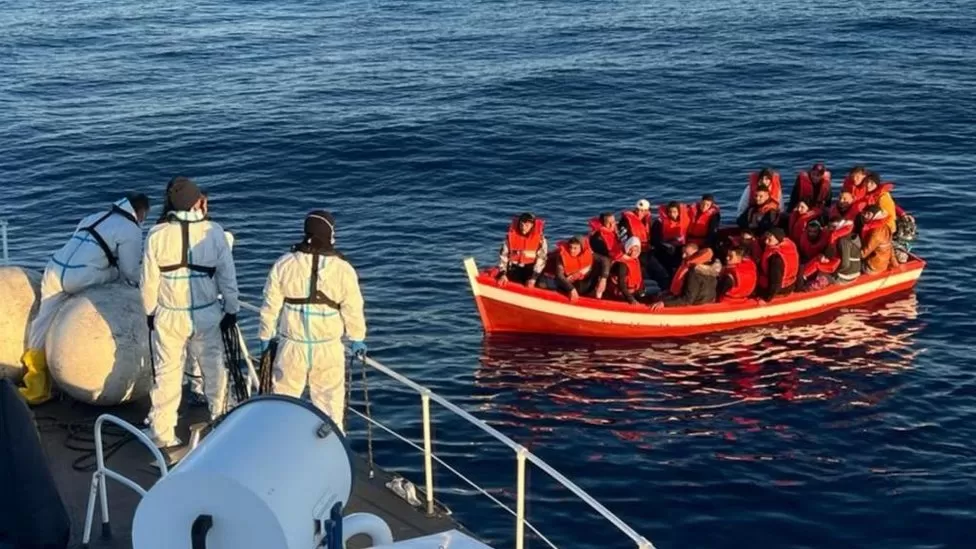
    Six people perished after three migrant ships capsized in the Mediterranean Sea, including a mother and baby.

    A ship capsized on Sunday off the Kerkennah Islands in Tunisia, resulting in at least four fatalities and 51 being reported as missing.

    A woman and child perished along with more than 30 people who are believed to be missing after two ships sank off the coast of Lampedusa, Italy, in a separate incident.

    Italian coast guards found the bodies of the Ivory Coast woman and her infant child, who was one year old.

    All those on board were from sub-Saharan Africa during the incident off the Kerkennah Islands, a judicial official told Reuters.

    Officials from Tunisia reportedly reported discovering the bodies of 10 migrants on a beach close to Sfax.

    The official told the AFP news agency that the 10 persons were discovered between Friday and Saturday amid a windstorm that might have capsized their boat.

    According to Tunisian authorities, the port city is a well-liked entry point for immigrants looking for a better life in Europe.

    The migrants were largely from sub-Saharan African nations, according to Sfax officials, who said they were trying to determine their nationalities. Sfax is only about 80 miles (130 kilometres) from Lampedusa.

    The occurrences were under investigation, according to Italian authorities.

    When the boats sank on Saturday, some 23 nautical miles (46 km) south-west of Lampedusa, the Italian coastguard reported that it had saved 57 people.

    More than 30 people had been reported missing earlier, according to the International Organisation for Migration, the UN’s migration agency.

    Firefighters and mountain rescue teams were getting ready to save 20 migrants who were stranded on a rocky section of Lampedusa’s coastline on Sunday.

    After the boats were forced against the rocks by heavy winds late on Friday, the migrants have been there ever since.

    The NGO Open Arms reported that it has begun disembarking 195 rescued migrants in the port of Brindisi in southern Italy after more than two days of sailing in rough weather.

    The investigation’s police chief, Emanuele Ricifari, told local media that the traffickers would have been aware of the impending severe seas.

    “Whoever allowed them, or forced them, to leave with this sea is an unscrupulous criminal lunatic,” Mr. Ricifari remarked.

    Another 2,000 people who have arrived on the island in recent days have been rescued by Italian patrol vessels and humanitarian organisations.

    Some of the migrants have received food, water, clothing, and emergency thermal blankets from the Red Cross.

  • IMF appeals for assistance in managing serious financial deficit in Sub-Saharan Africa

    IMF appeals for assistance in managing serious financial deficit in Sub-Saharan Africa

    The IMF predicted in a press briefing on April 13, 2023 that growth in sub-Saharan Africa will drop to 3.6 percent in 2023 due to a “big funding squeeze” brought on by the region’s inability to access private financing and the drying up of aid.

    If no measures are taken, this shortage of funding may force countries to reduce fiscal resources for critical development like health, education, and infrastructure, holding the region back from developing its true potential.

    “I wish I was bearing better news, but unfortunately, we’re expecting growth to decelerate from 3.9 percent to 3.6 percent in 2023. And this to a large extent reflects the big funding squeeze tied to drying up of aid and access to private finance” said Abebe Aemro Selassie, Director of the IMF’s African Department. 

    Sub-Saharan African countries lag significantly in revenue collections, with a median tax ratio of only 13 percent of GDP in 2022, compared with 18 percent in other emerging economies and developing countries and 27 percent in advanced economies.

     “So, there are a number of reforms that need to be pursued. I think first and foremost, of course, is policies to strengthen the resilience of economies. So, many countries, for example, there’s a big challenge on mobilizing more domestic revenues. That needs to be addressed wherever that’s the main challenge. Second, I think it’s also important to consider policies to insulate domestic economies from external environment. So, allowing exchange rates to adjust, interest rates to be recalibrated, to reflect better to reduce inflation are all going to be very important part of the policy response to this adverse external environment,” added Selassie.

     The IMF has provided the region with around $50 billion dollar in financing since the start of the pandemic and will continue to work with the region to put in place the right type of policies that are tailor-made to each country’s needs. 

    “We are engaging like never before with the region. Of course, over the last couple of years, we’ve provided considerable financing to the tune of around $50 billion to support the region. Whether the very difficult economic environment that was facing and we continue to try and provide as much financing as possible to support countries in the coming months. As important, however, of course, are policies and reforms that needs to be pursued by countries, and we are deeply engaged with working with countries to navigate and to put in place the right types of policies in each individual country,” said Selassie.

  • World Bank revises Ghana’s 2023 growth rate to 1.6%

    World Bank revises Ghana’s 2023 growth rate to 1.6%

    According to the World Bank‘s April 2023 Africa Pulse Report, Ghana’s growth rate has been reduced to less than 2.0% in 2023, ranking it 29th in Sub-Saharan Africa.

    This is lower than the 2.7% it earlier projected.

    According to the Bretton Wood institution, the expected low growth rate in the country is due to deleterious global shocks and heightened macroeconomic instability.

    “In Ghana, more timely data highlight the weakness of economic activity amid the deleterious
    global shocks and heightened macroeconomic instability”.

    It further said government consumption has declined on the back of high debt service and restricted access to international capital markets, adding, business and consumer confidence slumped in late 2022. However, the Purchasing Managers Index is gradually picking up and signaling an expansion in economic activity (50.2 in February 2023).

    Continuing, it pointed out that the Ghanaian economy has been struggling with high levels of public debt and elevated inflation fueled by a sharp weakening of the cedi.

    “Growth in Ghana is expected to have slowed in 2022 to 3.2%, down from 5.4% in 2021 and far below the country’s average pre-pandemic performance (6.1%)”.

    “The economy has been struggling with high levels of public debt and elevated inflation (52.8 percent in February 2023) fueled by a sharp weakening of the cedi (a cumulative depreciation of 40 percent in 2022 and about 20 percent in 2023 so far)”, it added.
    World Bank lowers Ghana’s growth rate to below 2% in 2023

    To curb the rising inflation, it said the Bank of Ghana raised its policy rate by a record 1,500 basis points to 29.5% in March 2023, from 14.5% in December 2021.

    The World Bank added that the recovery of economic activity in Sub-Saharan Africa is multispeed, with wide variation across countries.

    Sub-Saharan African countries growth characterised as divergent and multispeed

    Congo DR will become the fastest growing country in Sub-Saharan Africa in 2023.

    The World Bank said the recovery of economic activity in Sub-Saharan Africa is multispeed, with wide variation across countries.

    “The region’s moderate growth in 2022 was associated with large countries on the continent registering growth rates that were lower than their long-term average”.

    Broadly, more than half of the countries in the region are growing at rates below their long-term average. Among the 10 largest economies in Sub-Saharan Africa—which represent more than three quarters of the region’s GDP—eight are growing at rates that are below their long-term average growth.

    Sudan, Nigeria, Angola, and Ethiopia are among the countries with weaker performance compared to their long-term growth rates.

    Economy to grow at 2.8% in 2023 – Finance Minister

    Finance Minister, Ken Ofori-Atta during the presentation of the 2023 Budget in November said the economy will expand by 2.8% in 2023.

    “The economy is expected to rebound from 2024 and grow steadily in the medium term to record an average growth of 4.8 percent over the period (between) 2024 and 2026,” he said.

    The services sector would “remain the dominant sector over the medium term in percentage contribution to overall national output, followed by industry and agriculture,” he pointed out.

  • World Bank bemoans slow rate of Africa’s growth

    World Bank bemoans slow rate of Africa’s growth

    Growth across Sub-Saharan Africa remains sluggish, dragged down by uncertainty in the global economy, the underperformance of the continent’s largest economies, high inflation, and a sharp deceleration of investment growth, a World Bank report said Wednesday.

    In the face of dampened growth prospects and rising debt levels, African governments must sharpen their focus on macroeconomic stability, domestic revenue mobilization, debt reduction, and productive investments to reduce extreme poverty and boost shared prosperity in the medium to long term.

    Economic growth in Sub-Saharan Africa is set to slow from 3.6% in 2022 to 3.1% in 2023, according to the latest Africa’s Pulse, the World Bank’s April 2023 economic update for Sub-Saharan Africa. Economic activity in South Africa is set to weaken further in 2023 (0.5% annual growth) as the energy crisis deepens, while the growth recovery in Nigeria for 2023 (2.8%) is still fragile as oil production remains subdued. The real gross domestic product (GDP) growth of the Western and Central Africa subregion is estimated to decline to 3.4% in 2023 from 3.7% in 2022, while that of Eastern and Southern Africa declines to 3.0% in 2023 from 3.5% in 2022.

    “Weak growth combined with debt vulnerabilities and dismal investment growth risks a lost decade in poverty reduction,” said Andrew Dabalen, World Bank Chief Economist for Africa. “Policy makers need to redouble efforts to curb inflation, boost domestic resource mobilization, and enact pro-growth reforms—while continuing to help the poorest households cope with the rising costs of living.”

    Debt distress risks remain high with 22 countries in the region at high risk of external debt distress or in debt distress as of December 2022. Unfavorable global financial conditions have increased borrowing costs and debt service costs in Africa, diverting money from badly needed development investments and threatening macro-fiscal stability.

    Stubbornly high inflation and low investment growth continue to constrain African economies. While headline inflation appears to have peaked in the past year, inflation is set to remain high at 7.5% for 2023, and above central bank target bands for most countries. Investment growth in Sub-Saharan Africa fell from 6.8% in 2010-13 to 1.6% in 2021, with a sharper slowdown in Eastern and Southern Africa than in Western and Central Africa.

    Despite these challenges, many countries in the region are showing resilience amidst multiple crises. These include Kenya, Cote d’Ivoire, and the Democratic Republic of Congo (DRC) who grew at 5.2%, 6.7%, and 8.6% respectively in 2022. In the DRC, the mining sector was the main driver of growth due to an expansion in capacity and recovery in global demand. Harnessing natural resource wealth provides an opportunity to improve fiscal and debt sustainability of African countries, but the report cautions that this can only happen if countries get policies right and learn the lessons from the past boom and bust cycles.

    “Rapid global decarbonization will bring significant economic opportunities to Africa,” noted James Cust, World Bank Senior Economist. “Metals and minerals will be needed in larger quantities for low carbon technologies like batteries—and with the right policies—could boost fiscal revenues, increase opportunities for regional value chains that create jobs, and accelerate economic transformation.”

    In a time of energy transition and rising demand for metals and minerals, resource-rich governments have an opportunity to better leverage natural resources to finance their public programs, diversify their economy, and expand energy access. The report finds that countries could potentially more than double the average revenues that they currently collect from natural resources. Tapping these fiscal resources in the form of royalties and taxes while continuing to attract private sector investment requires the right kinds of policies, reforms, and good governance. Maximizing government revenues derived from natural resources would offer a double dividend for people and planet by increasing fiscal space and removing implicit production subsidies.

  • Ghana ranks 1st with highest food price increases of 122% in Sub-Saharan Africa – World Bank

    Ghana is ranked 1st by the World Bank with the highest food prices in Sub-Saharan Africa in 2022.

    According to the Bretton Wood institution’s October 2022 Africa Pulse Report, food prices have since January 1, 2022, gone up by 122 per cent.

    Since the start of 2022, food prices have increased sharply in many countries, largely due to the Russian/Ukraine war.

    According to the Food Price Index in Countries in Sub-Saharan Africa, Ghana has recorded very sharp prices in food on the African continent.

    Food inflation in Ghana has been high, recording a year-on-year inflation of 34.4 per cent in August 2022, the Ghana Statistical Service disclosed.

    On month-on-month basis, inflation was even higher.

    The drivers of food inflation in Ghana are oils and fats (67 per cent); fish and other seafood (42.9 per cent); water (42 per cent); cereal products (40 per cent); milk, dairy products and eggs (39.7 per cent), fruits and vegetable juices (37.7 per cent) and live animals and meat (34.5 per cent). All of the items recorded inflation rates higher than the national average of 33.9 per cent.

    Overall, the World Bank said inflation breached the ceiling of the central bank target bands for all countries with an explicit nominal anchor.

    In Nigeria, headline inflation started the year above the central bank limit of 9.0 per cent and accelerated to 20.5 per cent in August 2022 – the highest since September 2005. Food and fuel prices were the key factors behind the rally in inflation.

    Meanwhile, Senegal followed Ghana closely with food price increases of 110 per cent

    Uganda is 2nd with 107 per cent increase in food prices.

  • Prince David Osei threatens a protest against the government in response to an increase in living standards

    Following news that Ghana has been the nation with the highest food costs in Sub-Saharan Africa since January 2022, Ghanaian actor Prince David Osei posted a lengthy message on social media threatening a protest against the Akufo-Addo-led administration.

    Expressing himself on Instagram on October 10, 2022, the actor mentioned that he has noticed that the president and his subordinates have made it their agenda to inflict pain on citizens.

    “Mr President! With all due respect Mr President, why are you sleeping on Ghanaians… This is not acceptable Mr President? We deserve better, we know there are global crises and hardships. Yes, we know!

    “But it looks like you and your ministers are determined to inflict untoward hardship on the citizenry. I decided to give you and your government the benefit of the doubt, I reckon I was wrong!” he said.

    He added that the youth in the country are suffering and if things don’t change by December he was going to mobilise them to demonstrate.

    “The Youth of this nation are not smiling, it pours, but we are still sweating. If things don’t change by December, we will mobilise the youth of this country and hit the street irrespective of party affiliations, whether NPP, NDC, CQQ, PNC whatever, it doesn’t matter now, we are all in this together.

    “God bless our motherland ???????? We want to see improvement in our livelihoods. If you have to sack some people do it without fear or favour because your legacy is on the line, Sir!! @nakufoaddo,” he added.

    His post comes after the World Bank’s October 2022 Africa Pulse Report revealed that food prices in Ghana have been on the rise since January 2022 by 122%.

    The report noted that Ghana has experienced very rapid food price increases this year, breaching the “inflation ceiling of the central bank target bands for all countries with an explicit nominal anchor.”


  • Sub-Saharan Africa children missing school on the rise – UNESCO

    United Nations Educational, Scientific and Cultural Organization (UNESCO) has disclosed that about 98 million children and young people out of school in Africa.

    In a report, UNESCO revealed that sub-Saharan Africa is the only region in the world where the number of children and young people who are out of school is growing.

    The out-of-school population in the continent has increased by 20 million since 2009.

    The region with the second highest out-of-school population is Central and Southern Asia, with 85 million.

    The three countries with the most children and young people excluded from education are India, Nigeria and Pakistan.

    Nigeria has an estimated 20 million children and young out of school, Ethiopia 10.5 million, the Democratic Republic of Congo 5.9 million and Kenya 1.8 million.

    Unesco said that school closures and disruptions caused by the COVID pandemic have probably increased learning losses and drop-outs, especially amongst vulnerable populations.

    “We must step up our support for those who are being deprived of their opportunities, keeping a watchful eye on those who have struggled on their return after COVID-related school closures,” said Manos Antoninis, Director of the Global Education Monitoring Report.

    Graphic showing children out of school
  • Sub-Saharan Africa braces for full-fledged virus outbreak

    After escaping mostly unscathed by the coronavirus pandemic, sub-Saharan Africa is bracing for the worst after its first outbreaks of the illness that has already engulfed China and Italy and spread to other parts of the globe.

    The region maintains one of the lowest rates of confirmed infections in the world, despite strong links to Europe and China – the original epicenter of the pandemic.

    Coronavirus has so far only been reported in thirteen sub-Saharan African countries and no deaths have yet been recorded.

    Almost all of the region’s 170-odd cases contracted COVID-19 abroad.

    But African leaders are now preparing for the outbreak to spread as doctors and experts fear it could only be a matter of time before the virus spirals out of control.

    South Africa’s President Cyril Ramaphosa warned the outbreak could turn into a “national crisis” after the country confirmed its first case earlier this month.

    “We are going to be hit badly,” said Kenya’s tourism minister Najib Balala, who has set aside 500 million Kenyan Shillings ($4.9 million) for a “post-coronavirus” marketing campaign.

    More than 130,000 people have been infected and 5 000 killed by the novel virus since it was first detected in the Chinese city of Wuhan late last year.

    Across the globe, governments have imposed travel restrictions and closed schools to help prevent the spread and world stock markets have plunged.

    Stemming the spread

    After a slow start, the number of coronavirus cases in Africa is creeping up.

    A Kenyan national tested positive for the virus this week after returning from the United States via London, bringing the first case of COVID-19 to East Africa.

    Guinea also detected its first case in a Belgian woman who recently arrived in the country.

    Five more people tested positive in Senegal, the worst-affected country in West Africa. All were family members of a man who is normally resident in Italy.

    Several African countries have been rolling out measures to prevent further contamination.

    Conferences, sporting events and concerts are being suspended one after the other.

    Kenya has temporarily banned major public gatherings and prison visits and stopped its national airline from flying to Rome.

    South Sudan suspended all direct flights to affected countries and Gabon is denying access to travelers coming from China, Italy and South Korea.

    In Rwanda, washing basins with soap and sanitizer have been placed on streets for commuters to use before boarding buses.

    Some schools were temporarily closed in Chad and Gabon.

    Places of worship have remained open for the time being, as well as most restaurants, bars and entertainment precincts.

    ‘Critical’ phase

    “We are at this very early phase where it is critically important that we contain the virus,” said Richard Friedland, head of South Africa’s largest private healthcare provider Netcare.

    “The key issue is with people living in informal settlements, in shacks… that (are) very difficult to self isolate,” he told AFP, warning that a spread to such areas could be “catastrophic” for the continent.

    To date South Africa is the only country in the region that has agreed to repatriate citizens from Wuhan, which has been placed under lockdown.

    More than 120 South Africans are expected to fly back to the country this weekend. All will be quarantined in a remote resort before being allowed to rejoin their families.

    South Africa, which has not yet imposed any restrictions, has detected 24 cases of coronavirus — the highest in sub-Saharan Africa.

    “There is currently no evidence to suggest that COVID-19 is widely circulating in the community,” said South Africa’s National Institute for Communicable Diseases.

    “However, based on the experience in other parts of the world it is highly likely that the status of COVID-19 transmission will change.”

    ‘New hotbed’

    The World Health Organisation and the African Union’s Centres for Disease Control have trained health workers and equiped more than 40 laboratories to test for the virus.

    Some experts believe West Africa could also benefit from experience acquired by tackling the 2014-2016 Ebola outbreak, which killed some 11 300 people.

    But many countries on the continent are already crippled by ailing medical facilities and struggle to deliver basic healthcare.

    “The system itself is overstretched and inadequate to deal with a coronavirus epidemic,” said Zimbabwean doctor Norman Matara.

    He told AFP there were only eight functioning intensive care and two isolation units in the whole of Zimbabwe.

    “In the event of an epidemic, these are not enough to cater for all the country’s ten provinces,” Matara explained, adding that testing capacities were limited as materials were being kept in two cities.

    Some have started preparing for the worst. In Kenya’s capital Nairobi, panicked residents rushed to supermarkets after the first case was announced to stock their pantries.

    “I call on all my African colleagues to act together,” tweeted Senegal’s President Macky Sall on Friday.

    “Africa must not turn into a new hotbed for the illness.”

    Source: sierraleonetimes.com