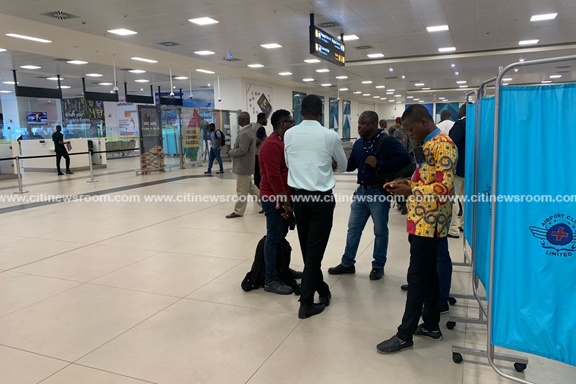
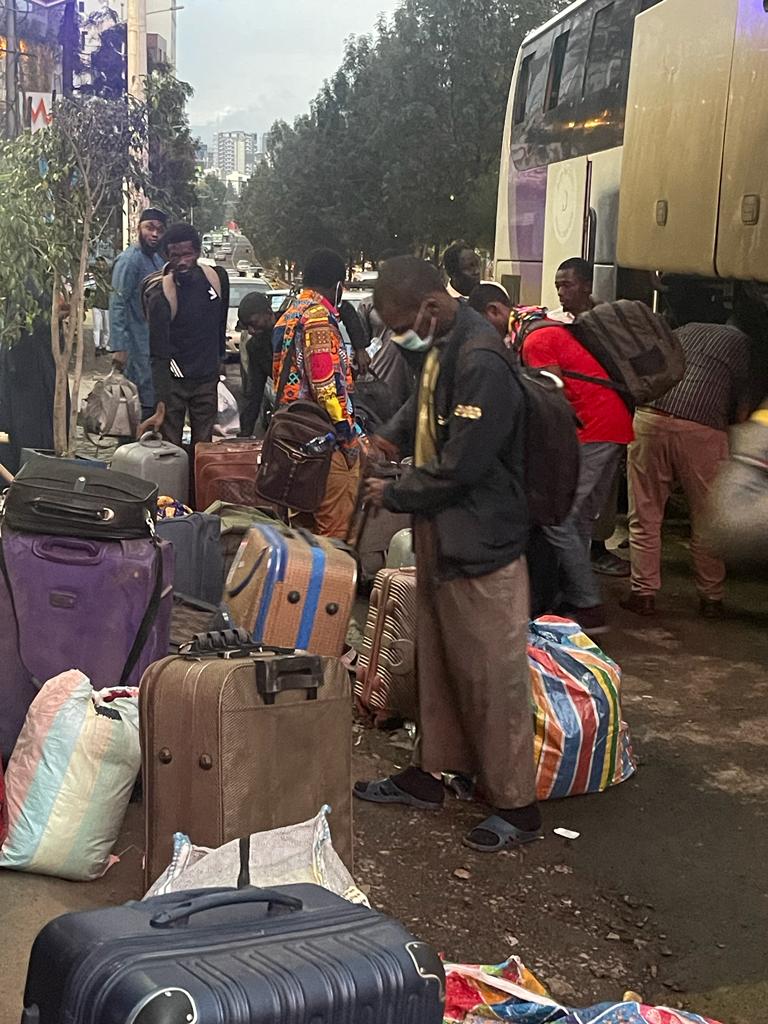
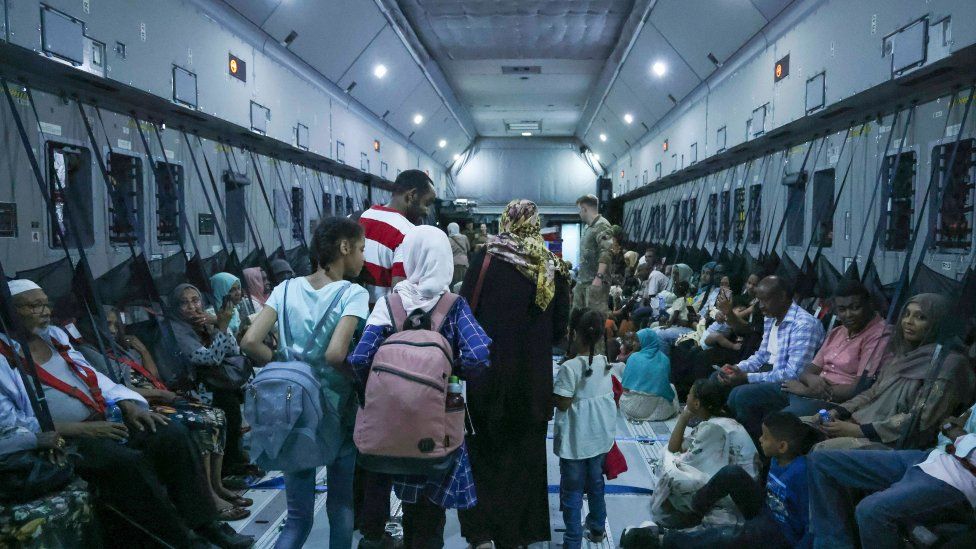
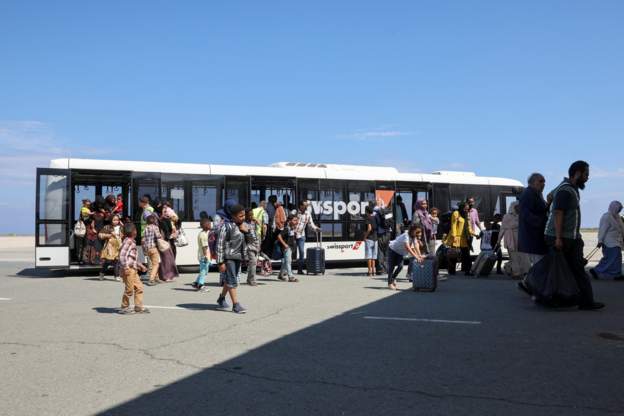
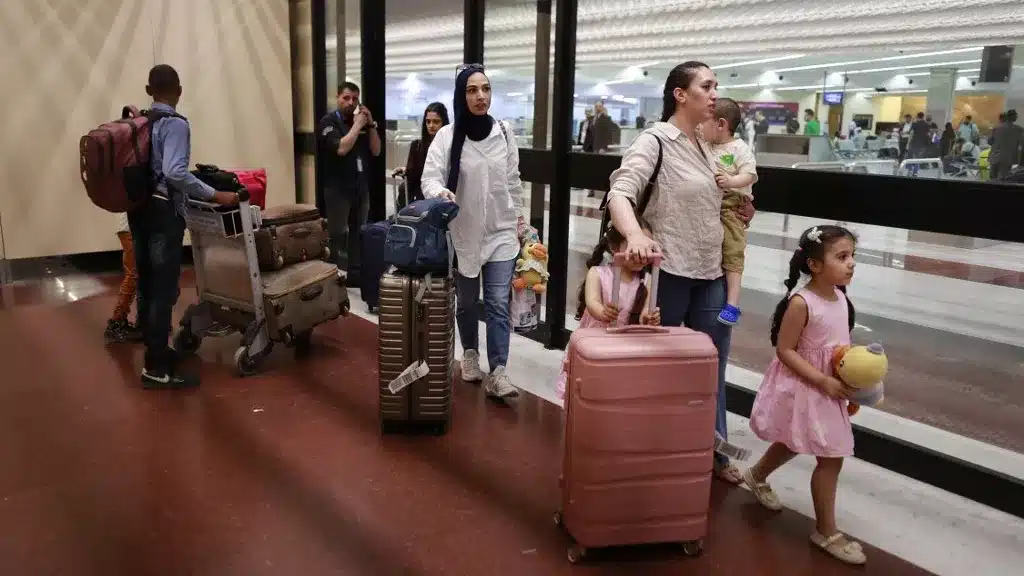
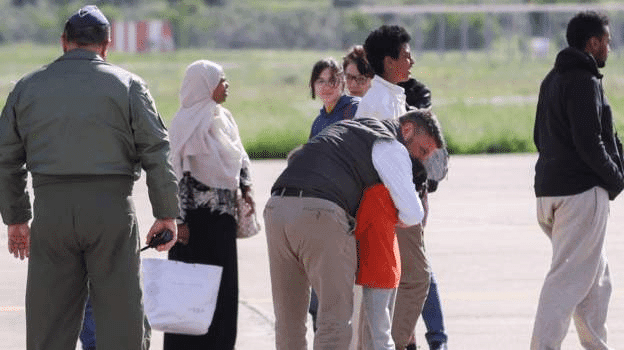
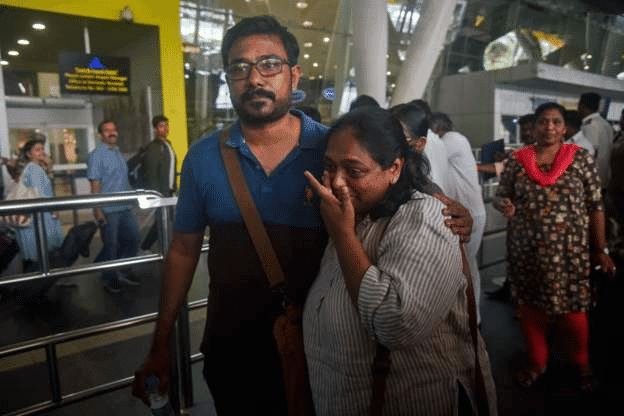
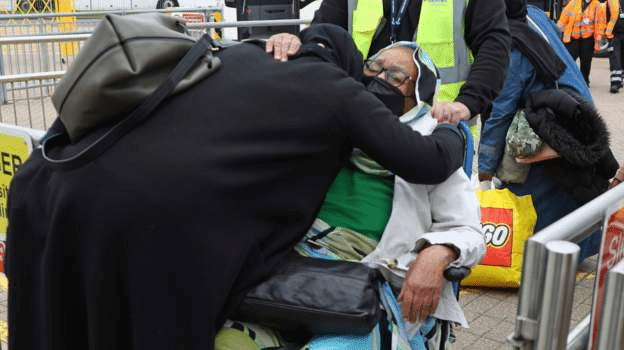
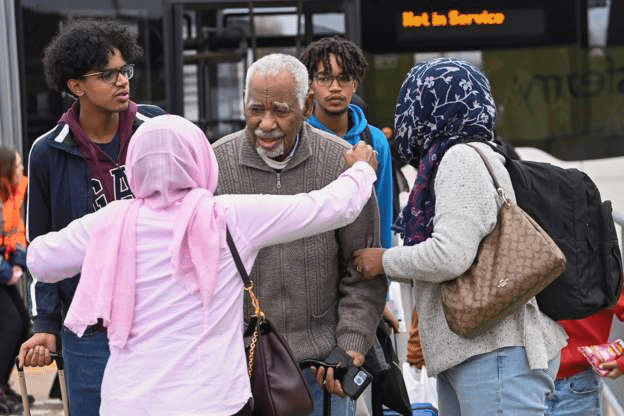
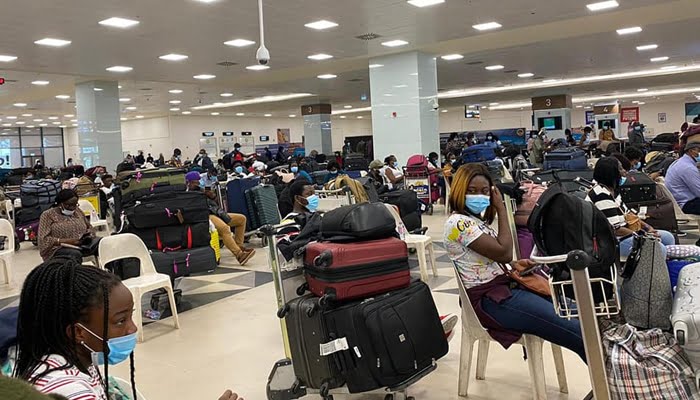
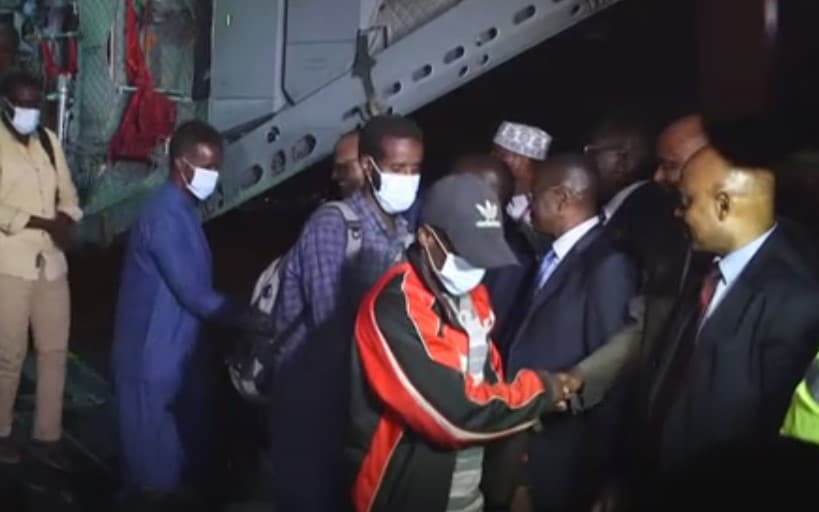
Seventy-four Ghanaian who caught up in the conflict happening in Sudan have arrived at Kotoka International Airport.
On Tuesday, April 25, the Ministry of Foreign Affairs and Regional Integration successfully organised the safe transfer of 76 Ghanaians from the Republic of Sudan to Ethiopia. Following that, on Tuesday, May 2, 74 of them were evacuated to Ghana.
The airport’s Terminal 3 welcome lounge was a happy place for the individuals and their families.
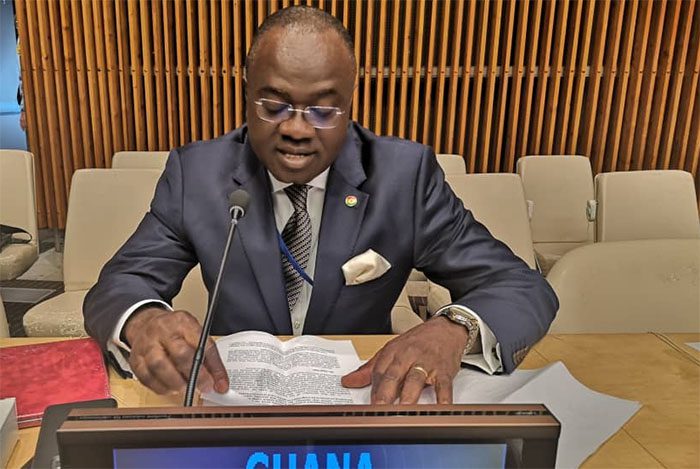
The Deputy Foreign Affairs and Regional Integration Minister, Kwaku Ampratwum-Sarpong was also there to welcome the citizens.
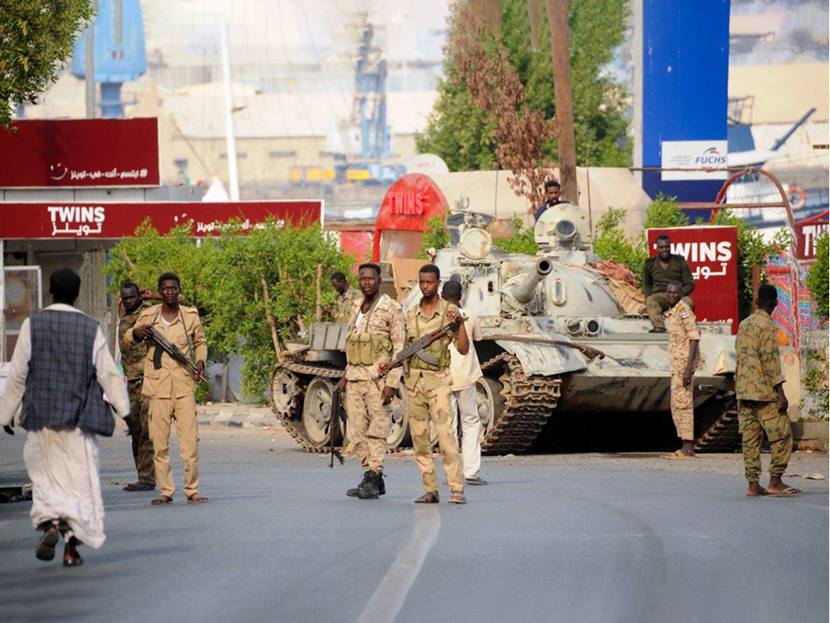
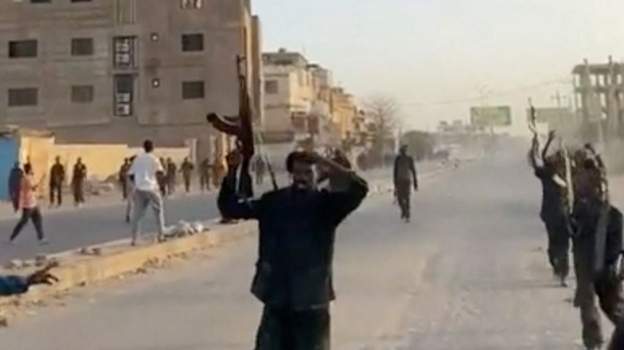
Sudan has been gripped by a deadly conflict between the Sudanese Armed Forces and the paramilitary Rapid Support Forces, resulting in avoidable casualties in the past week which has forced many countries to evacuate their citizens from the country.
The BBC News Arabic World program will launch an emergency radio program for Sudan on Tuesday.
The pop-up radio service will be broadcast twice daily for three months, providing news and information for people in the war-tornAfrican nation.
It will include eyewitness accounts and news on diplomatic efforts, the BBC said, and help counter disinformation.
BBC director general Tim Davie said the move was “crucial at a time of great uncertainty”.
The programme will be broadcast live from London, with input and analysis from teams in Amman in Jordan and the Egyptian capital Cairo.
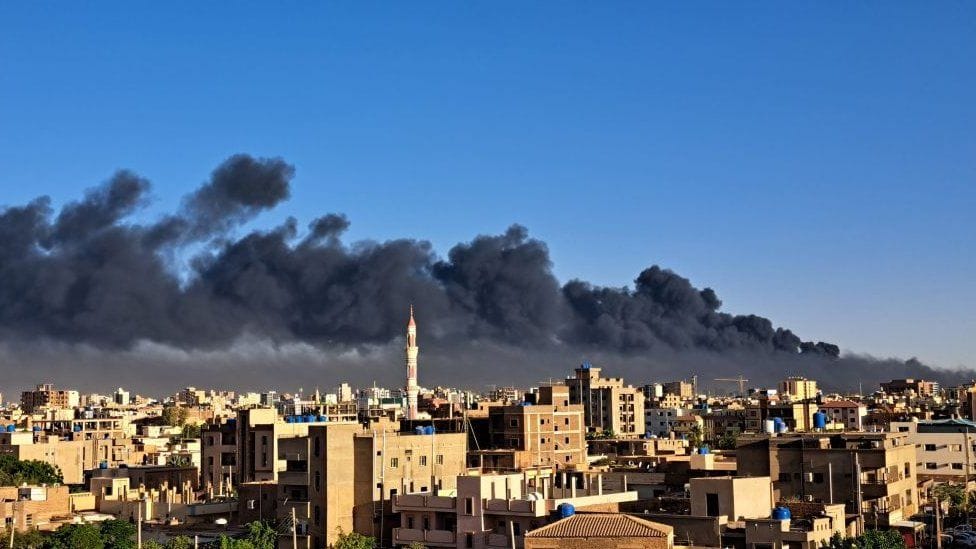
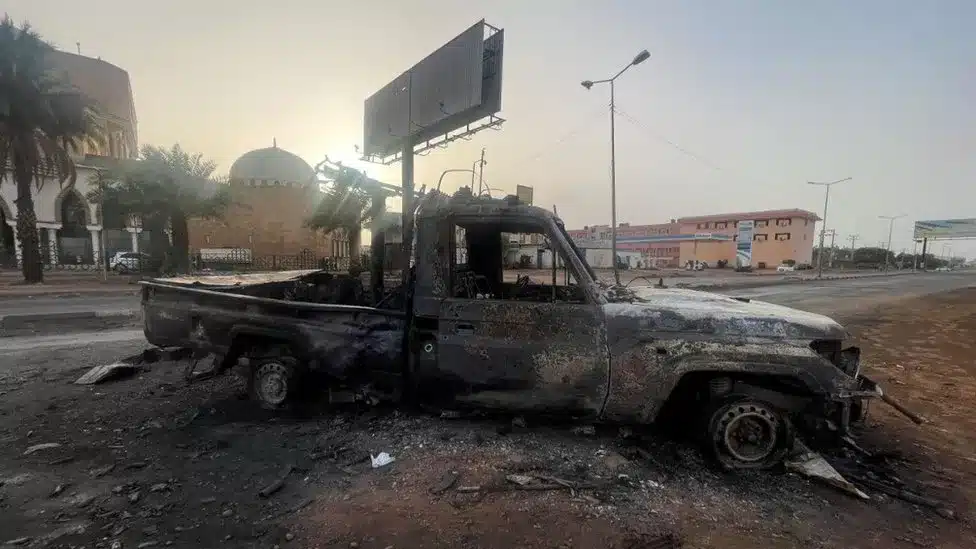
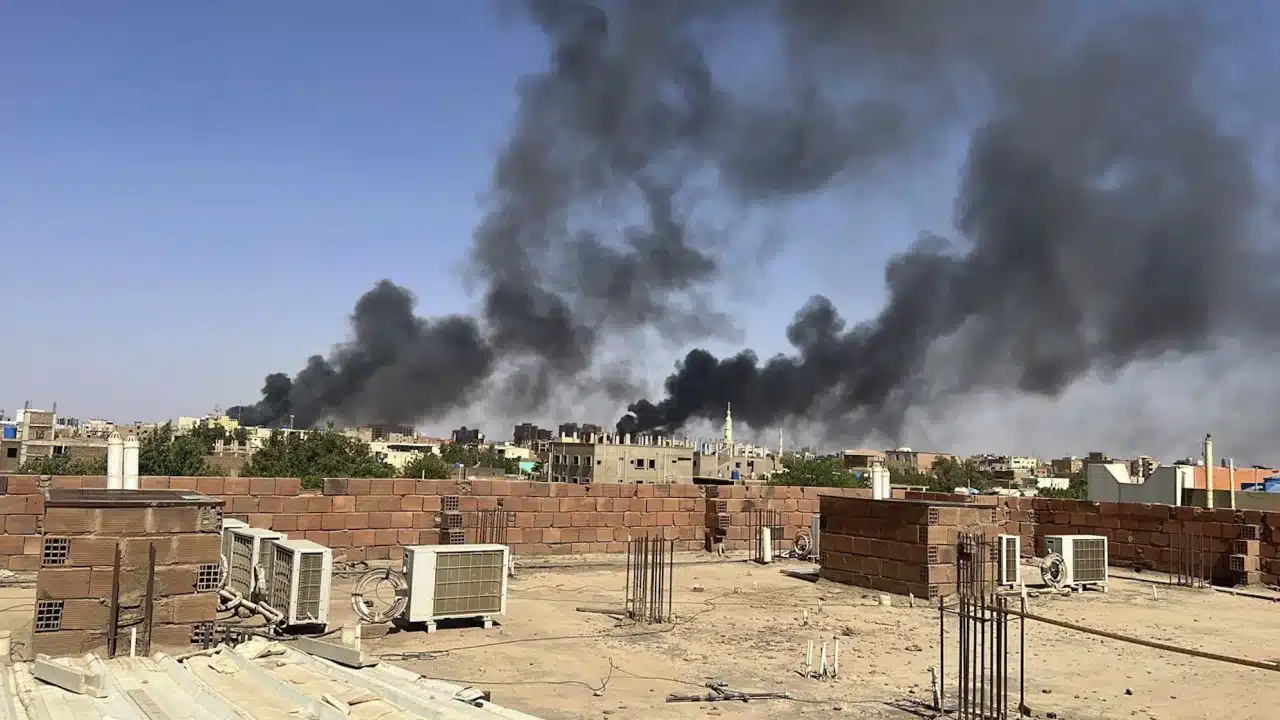
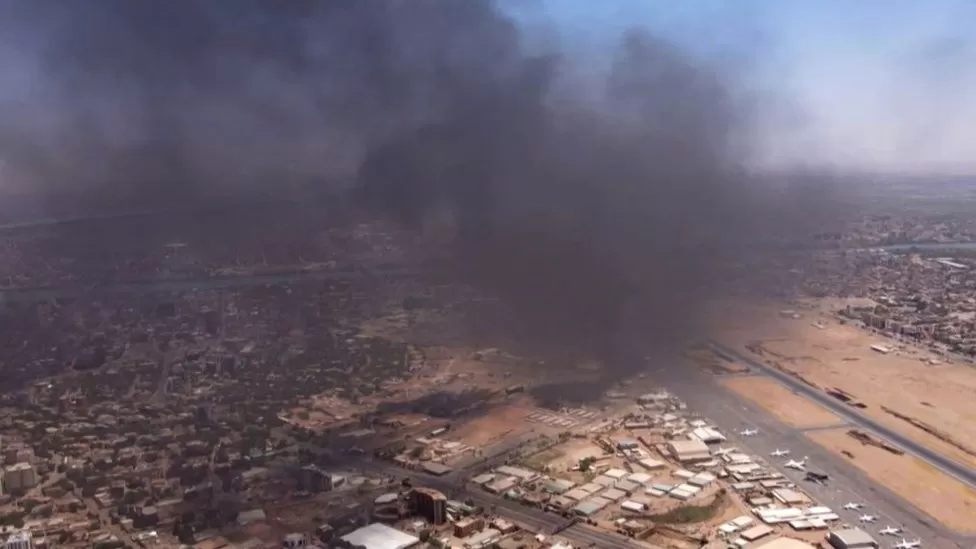
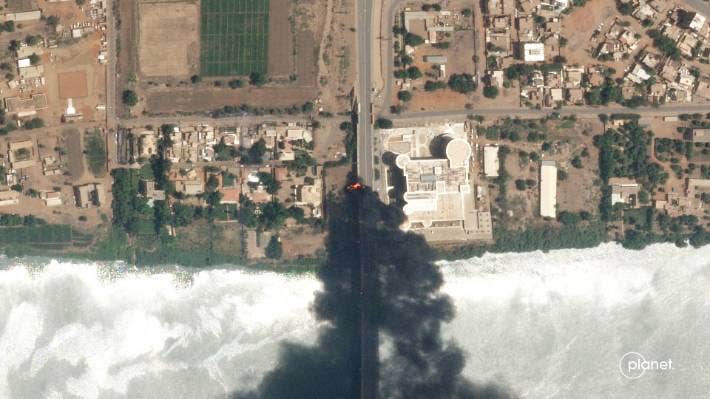
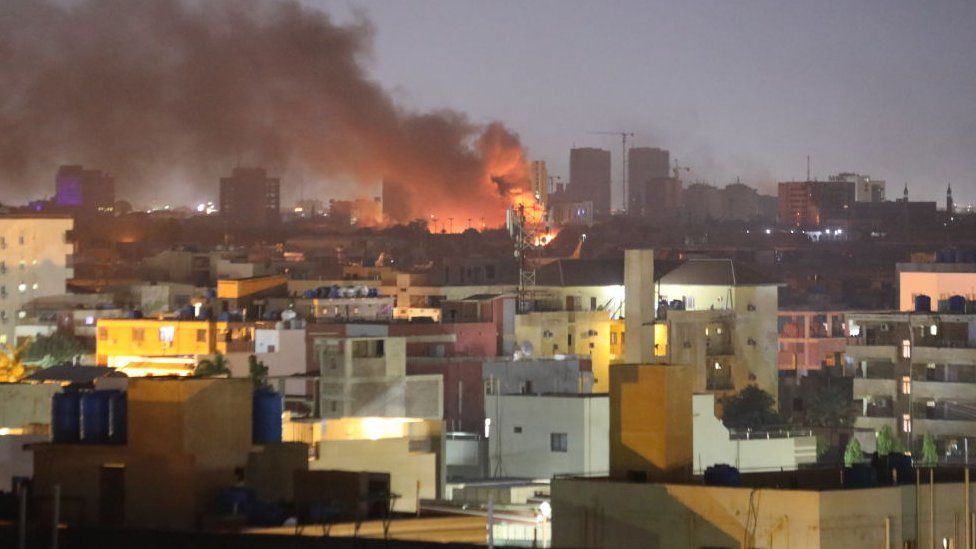
Black smoke seen over the city of Khartoum after recent explosions
It will be available on shortwave radio in Sudan, as well as online, where listeners will be able to hear information on how to access essential supplies and services, the BBC said.
“The World Service provides an essential lifeline to many around the world where access to accurate news and information is scarce,” Mr Davie said in a statement.
“The enhanced emergency service for Sudan will be crucial at a time of great uncertainty in the country.”
Fighting that has erupted in the Sudanese capital, Khartoum, and elsewhere in the country is a direct result of a vicious power struggle within the country’s military leadership.
The clashes are between the regular army and a paramilitary force called the Rapid Support Forces (RSF).
Liliane Landor, director of the World Service, said: “The situation in Sudan has escalated quickly with its citizens seeking clear, independent information and advice at a time of critical need.
“BBC Arabic’s Emergency Radio Service for Sudan will bring vital live updates of the situation on the ground and inform listeners of life-saving resources.”
The programme will broadcast at 09:00 local time (07:00 GMT) on 21,510 kHz and 17:00 local time (15:00 GMT) on 15,310kHz. The first programme will be available on Tuesday afternoon.
At least 528 people have died and 4,600 have been injured in Sudan’s conflict.
Here is the situation on Sunday, April 30, 2023:
Fighting
• Army soldiers clashed with the paramilitary Rapid Support Forces in downtown Khartoum as deadly hostilities entered a third week despite the latest ceasefire, It is set to expire at the end of Sunday.
• The most recent three-day truce was agreed on Thursday after mediation led by the United States, Saudi Arabia, the African Union and the United Nations.
• Former Prime Minister Abdalla Hamdok warned that the conflict in the turbulent African nation could deteriorate into one of the world’s worst civil wars if not stopped early.
• UN Secretary-General Antonio Guterres called for negotiations to end the bloodshed: “There is no right to go on fighting for power when the country is falling apart,” he told Saudi-owned Al Arabiya television.
Humanitarian crisis
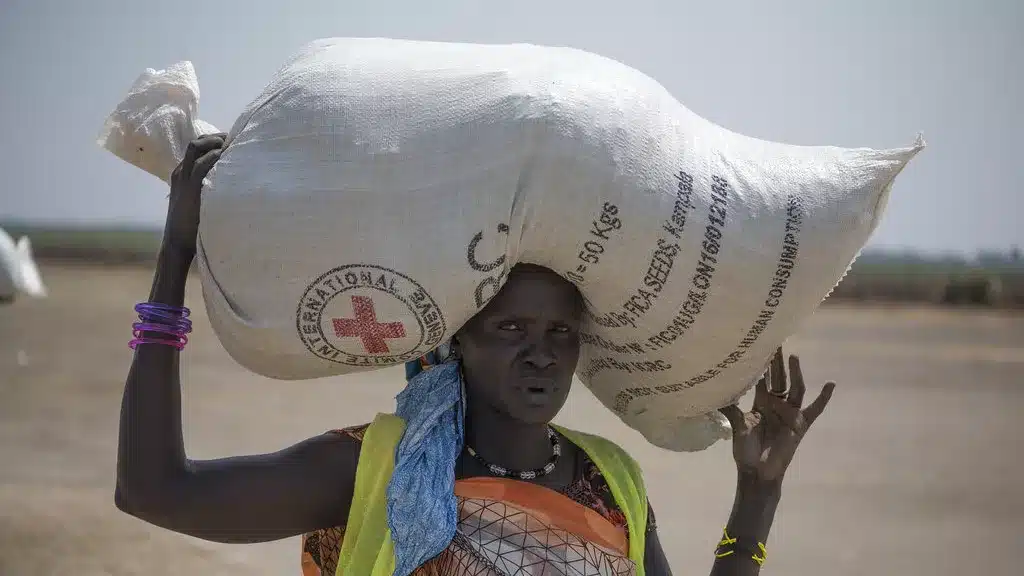
• The World Food Programme warned that the ongoing violence could plunge all of East Africa into a humanitarian crisis with food prices in Sudan skyrocketing.
• The violence has killed at least 528 people and wounded about 4,600, the health ministry said, but those figures are almost certainly incomplete.
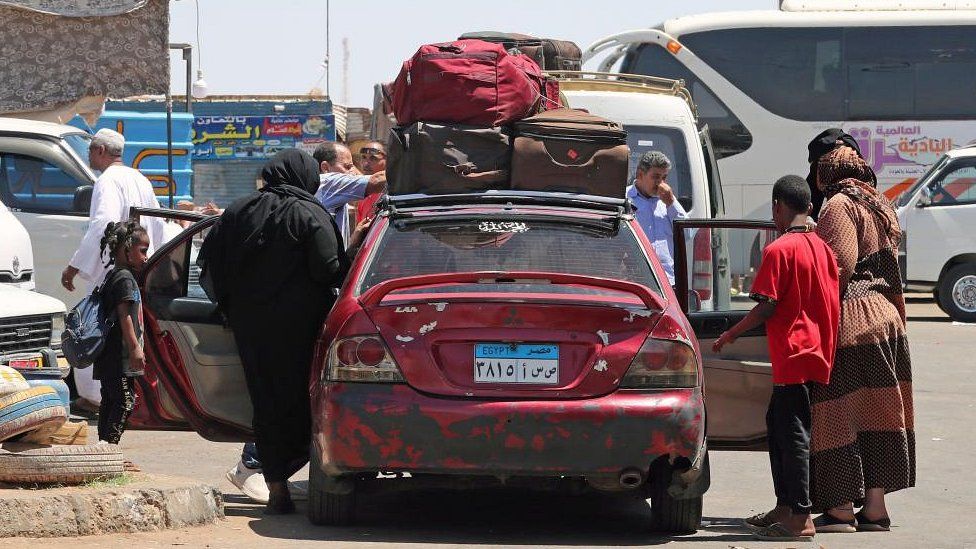
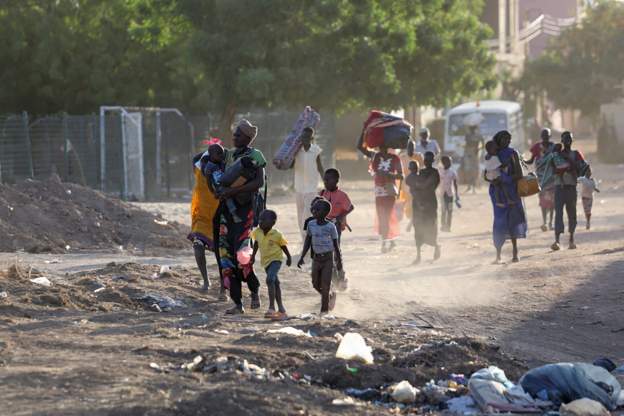
• Civilians fleeing the violence kept streaming into neighboring countries. Satellite images showed long bus convoys at the Egyptian border. The UN said at least 20,000 people have fled into Chad, 4,000 into South Sudan, 3,500 to Ethiopia and 3,000 to the Central African Republic.
Evacuations
•The United Kingdom promised to maintain support for Britons trapped in Sudan but said conditions had grown too dangerous to continue evacuation flights.
• A further 363 Indonesian citizens evacuated from Sudan arrived home on a second flight by Indonesia’s flag carrier, Garuda Indonesia, the Ministry of Foreign Affairs said.
•Two Chinese naval vessels transported 940 Chinese citizens and 231 foreigners to a port in Jeddah, Saudi Arabia, from Wednesday through Saturday, ministry spokesperson Tan Kefei said in a statement.
The World Food Programme of the United Nations said that it would immediately resume its operations in Sudan, which had been put on hold following the tragic loss of one of its team members.
“WFP is rapidly resuming our programs to provide the life-saving assistance that many so desperately need right now,” WFP executive director Cindy McCain wrote on Twitter on Monday.
The WFP said on April 16 it had temporarily halted all operations in Sudan after three of its employees were killed in clashes between the Sudanese army and the paramilitary Rapid Support Forces (RSF) a day earlier.
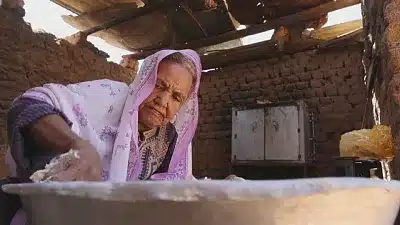
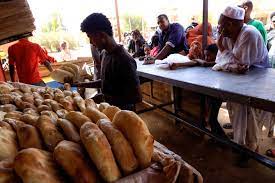
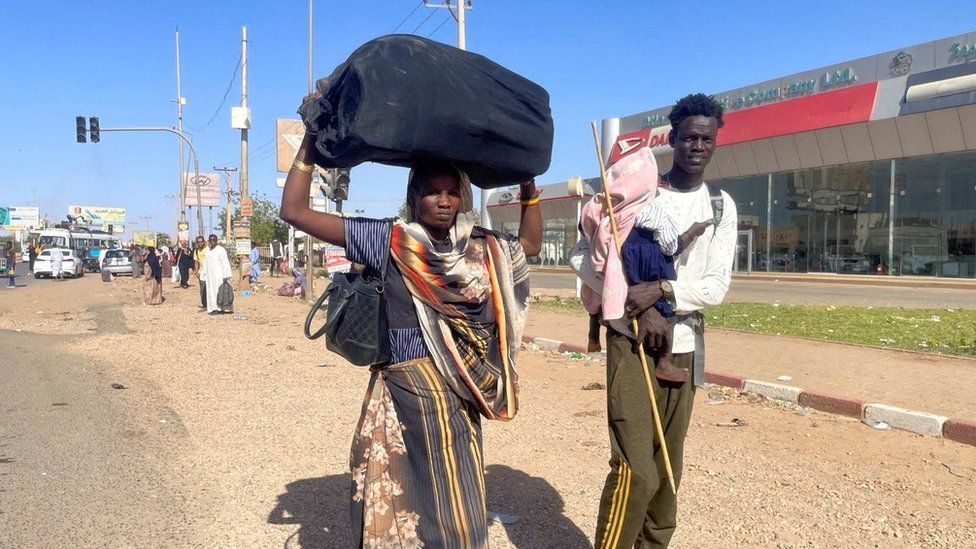
An elderly woman in Northern Sudan opened her door to and shared bread to displaced people at the Sudan border.
“The door of our house is open, we will welcome any guest who comes to us”: local resident Naamat Jabal Sayyid Hasan, 75, bakes bread in a mud hut as she does daily to offer to people fleeing war-torn Sudan passing through the northern town of Wadi Halfa, near the border with Egypt.
Her gesture comes amid warplanes bombing raids over Khartoum as fighting between Sudan’s army and paramilitaries entered a third week with the UN chief warning the country was falling apart.
“We are in Wadi Halfa, the people of Wadi Halfa, we welcome our guests (people fleeing the war-torn Sudan), we welcome our people, all people. The door is open, the schools, the mosques, the country will welcome any guest who comes to us. We only hope that God will stop the wars and that both (parties) will agree to solve the situation, to solve the country, to save our youth and to fix our situation and the situation of Muslims. The door of our house is open, we will welcome any guest who comes to us. Generosity exists and goodness exists.” Naamat Jabal Sayyid Hasan said.
Water and food have been in shortage in Khartoum according to humanitarian organisations say who on Sunday said operations are at a standstill as they look to resume work in some areas.
More than 500 people have been killed since battles erupted on April 15 between the forces of army chief Abdel Fattah al-Burhan and his former number two Mohamed Hamdan Daglo, who commands the paramilitary Rapid Support Forces (RSF).
Seventy-six Ghanaians have successfully been relocated from Sudan to Addis Ababa in Ethiopia for safety, according to the Ministry of Foreign Affairs and Regional Integration.
On Tuesday, May 2, 2023, seventy-four of these people are anticipated to be flown to Accra.
While two other football players are going through immigration procedures, a football player and two engineers have received assistance to cross the Egyptian border at Hadi Walfa.
Ghanaians moved to Addis Ababa
The Ministry has remained steadfast in its pledge to remove every one of its citizens who are entangled in the turmoil taking place in Sudan.
Ghanaians moved to Addis Ababa
Sudan began to observe chaos after the government’s army and the paramilitary Rapid Support Forces clashed over two weeks ago.
Over 300 lives have been lost and several properties have been destroyed.
International bodies have called for an end to the ongoing conflict. There appeared to be progress when a truce was held.
However, reports indicate that fighting has resumed in the country’s capital, Khartoum.
Countries such as Nigeria, UK, South Africa, Turkey among others have evacuated their nationals.
More people attempt to flee the country as the fighting between the Sudanese army and the paramilitary Rapid Support Forces enters its third week. Even after the parties decided to extend the cease-fire for a another three days, explosions and heavy weapons have been heard in the capital Khartoum.
Since the beginning of this violent part on the conflict more than 400 civilians have been killed. This is the information from the Sudanese Doctors Union.
In Khartoum, the five million inhabitants are deprived of running water and electricity, as well as, in many cases, internet and telephone services. Gasoline and cash are also becoming scarce.
Those who have the possibilities leave. According to the latest UN data over 50000 refugeese came to the neighbouring countries. Sudan’s partners organize the evacuation of foreigners, more of them are arriving to more secure places. But some might still blocked in the coutry.
Several tens of thousands of people have already crossed the borders, notably from Chad in the west and Egypt in the north. In total, 270,000 people could flee to Chad and South Sudan, according to the UN.
Several Western countries, including the United States, France, Canada and the United Kingdom, have continued to evacuate hundreds of people. China has announced that it has evacuated most of its nationals.
Dampening hopes for a democratic transition, the two generals together ousted civilians from power in a coup in 2021. Since then, they have not been able to agree on the integration of paramilitaries into the army before finally going to war on April 15.
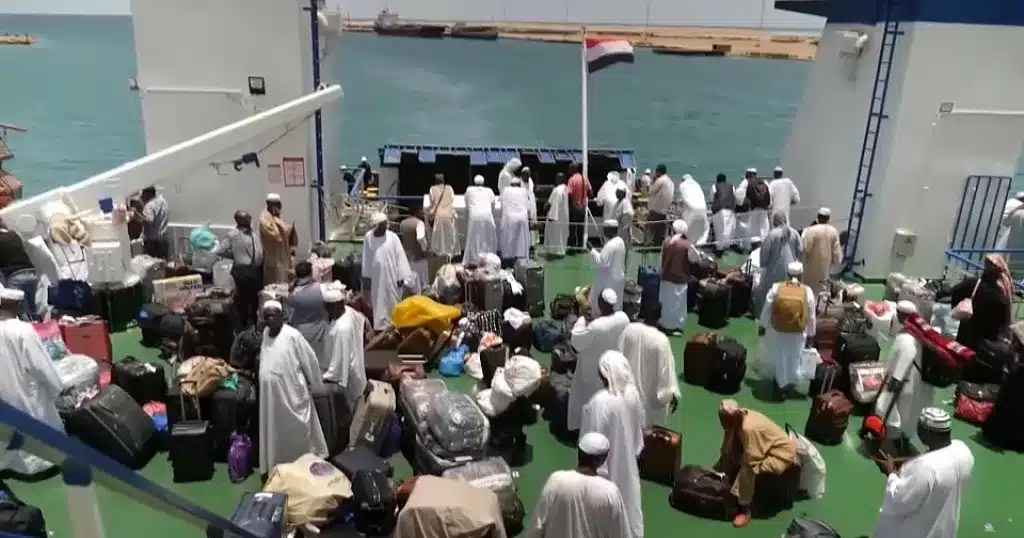
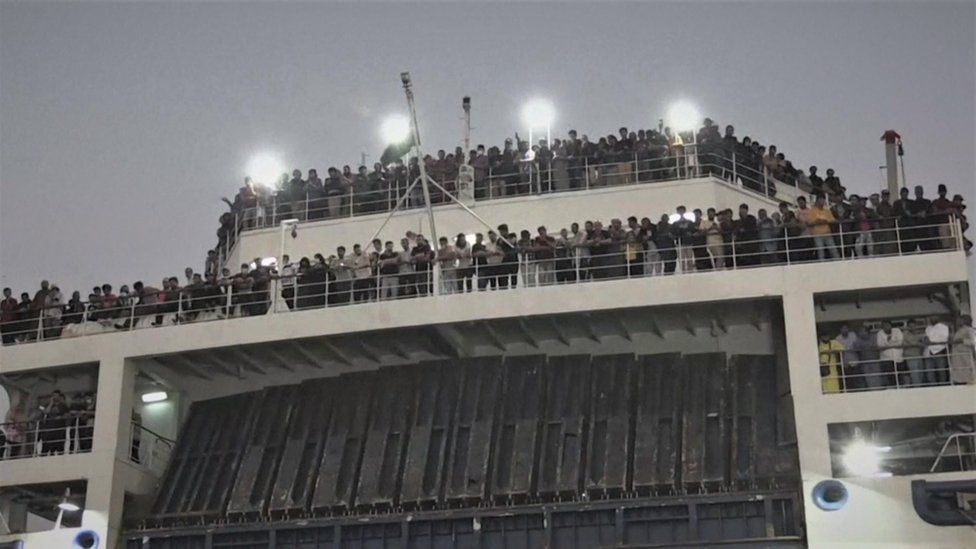
Foreign nationals looking to flee the turmoil by sea now frequently go through Port Sudan on passenger ships bound for Jeddah, Saudi Arabia.
But despite the huge numbers trying to get out, there are some who are making their way back to the war torn country so they can be with their families.
One passenger said: “Death will find us anywhere, it is important we are with our families.”
Warring factions trying to seize control of the east African nation of Sudan have plunged the country into chaos with at least 400 dead and thousands displaced.
Water and food are in short supply.
One woman told how she had left her one-and-a-half year old child at home while she went on a pilgrimage to Mecca.
“I’m suffering a lot ’til I found a ticket,” she said.
At Port Sudan hundreds of displaced people from all over the world were waiting to try and leave on a ferry.
A woman, who was also displaced by the Syrian war, said “We are suffering. Even in Syria we didn’t see war like this.”
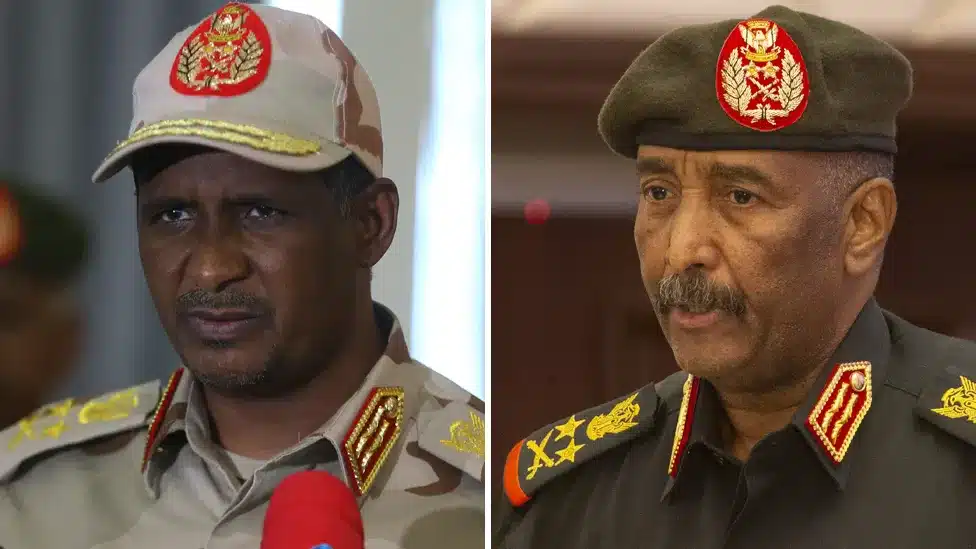
The violence is a result of a struggle for power between two powerful generals and their armies: Gen. Abdel Fattah Burhan, who leads the Sudanese armed forces, and Gen. Mohammed Hamdan Dagalo, the head of a paramilitary group known as the Rapid Support Forces.
The latest truce was due to end late on Sunday April 30, 2023 but the army declared that it is attacking the city from all sides with airstrikes and powerful artillery in order to wipe out its paramilitary competitors
Millions remain trapped in the capital, where food is running short.
Foreign countries have been evacuating their nationals amid the chaos.
More than 500 people have been reported killed since fighting erupted on April 15 between the regular army and the Rapid Support Forces (RSF). But the number of dead and injured may be much higher.
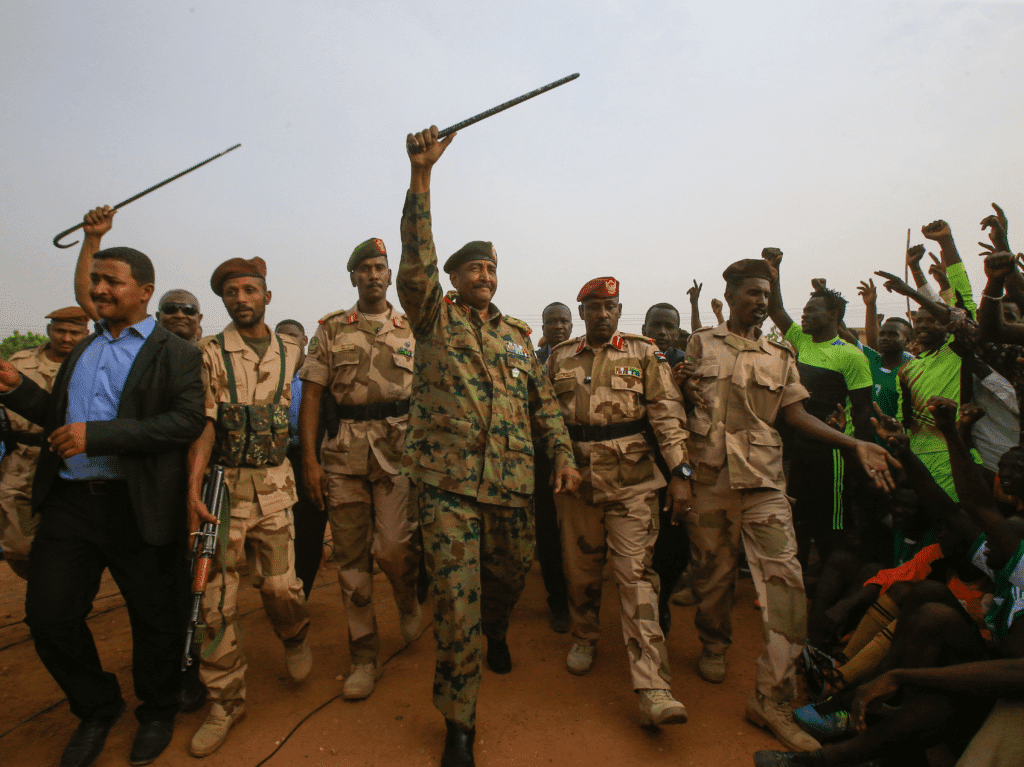
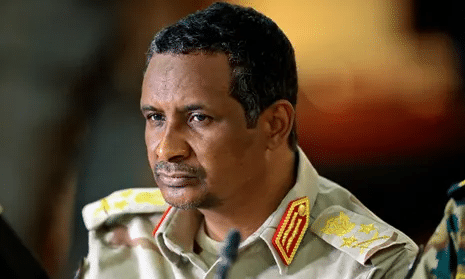
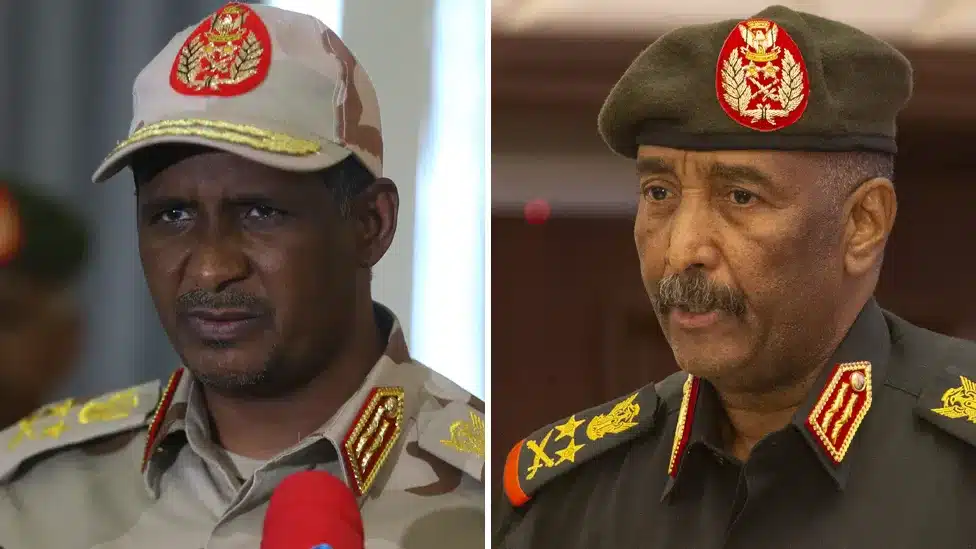
Army commander Gen Abdel Fattah al-Burhan and RSF chief Gen Mohamed Hamdan Dagalo, better known as Hemedti, are vying for power – and disagree in particular about plans to include the RSF into the army.
Thursday night’s agreement to extend an uneasy ceasefire followed intensive diplomatic efforts by neighbouring countries, the US, UK and UN. But the 72-hour extension has not held.
By Saturday evening, heavy fighting had resumed in Khartoum. The army said it had conducted operations against RSF troops north of the city centre.
Eyewitnesses told Reuters news agency that army drones had targeted RSF position near a major oil refinery.
“We woke up once again to the sound of fighter jets and anti-aircraft weapons blasting all over our neighbourhood,” one resident told AFP news agency on Sunday.
Image caption,Tens of thousands of people are attempting to flee Sudan
BBC diplomatic correspondent Paul Adams, who is monitoring events from Nairobi in Kenya, says the army will find it difficult to expel the RSF from Khartoum.
For all the army’s superior firepower, the RSF are highly mobile and more suited to urban warfare, our correspondent adds.
On Saturday the UK government has ended its evacuation operation. The Foreign Office said the last flight left Khartoum at 22:00 local time (20:00 GMT), and in total nearly 1,900 people were flown out.
A US-organised convoy has reached Port Sudan to evacuate more US citizens by ship to Jeddah in Saudi Arabia. It said hundreds of Americans had already left, in addition to the diplomats evacuated by air a week ago.
Also on Saturday Sudanese former Prime Minister Abdalla Hamdok warned that the conflict could become worse than those in Syria and Libya. Those wars have led to hundreds of thousands of deaths and caused instability in the wider regions.
Speaking in Nairobi, he said: “I think it will be a nightmare for the world. This is not a war between an army and small rebellion. It is almost like two armies.”
Meanwhile, there are chaotic scenes in Port Sudan where people are desperate to board ships, some of which are heading to Saudi Arabia and Yemen.
Image caption,Some 1,888 British nationals have been rescued from Sudan, the government said
More than 1,000 people have been flown on to the UK out of the more than 1,650 people who have now been evacuated from Khartoum.
The operation here in Cyprus will continue until tomorrow afternoon.
Sources at Larnaca Airport have told me that several RAF flights are due in here from Khartoum this afternoon and into the early hours of tomorrow morning.
The evacuees will then be put on flights back to the UK.
Despite a ceasefire, the paramilitary Rapid Support Forces (RSF) has made claims that their enemy, the regular Sudanese military, has repeatedly airstriked their bases throughout Khartoum.
The RSF said these targeted residential areas of the capital.
In a statement issued last night, seen by BBC Monitoring, the group claimed it controlled the majority of Khartoum. We’ve not been able to verify this.
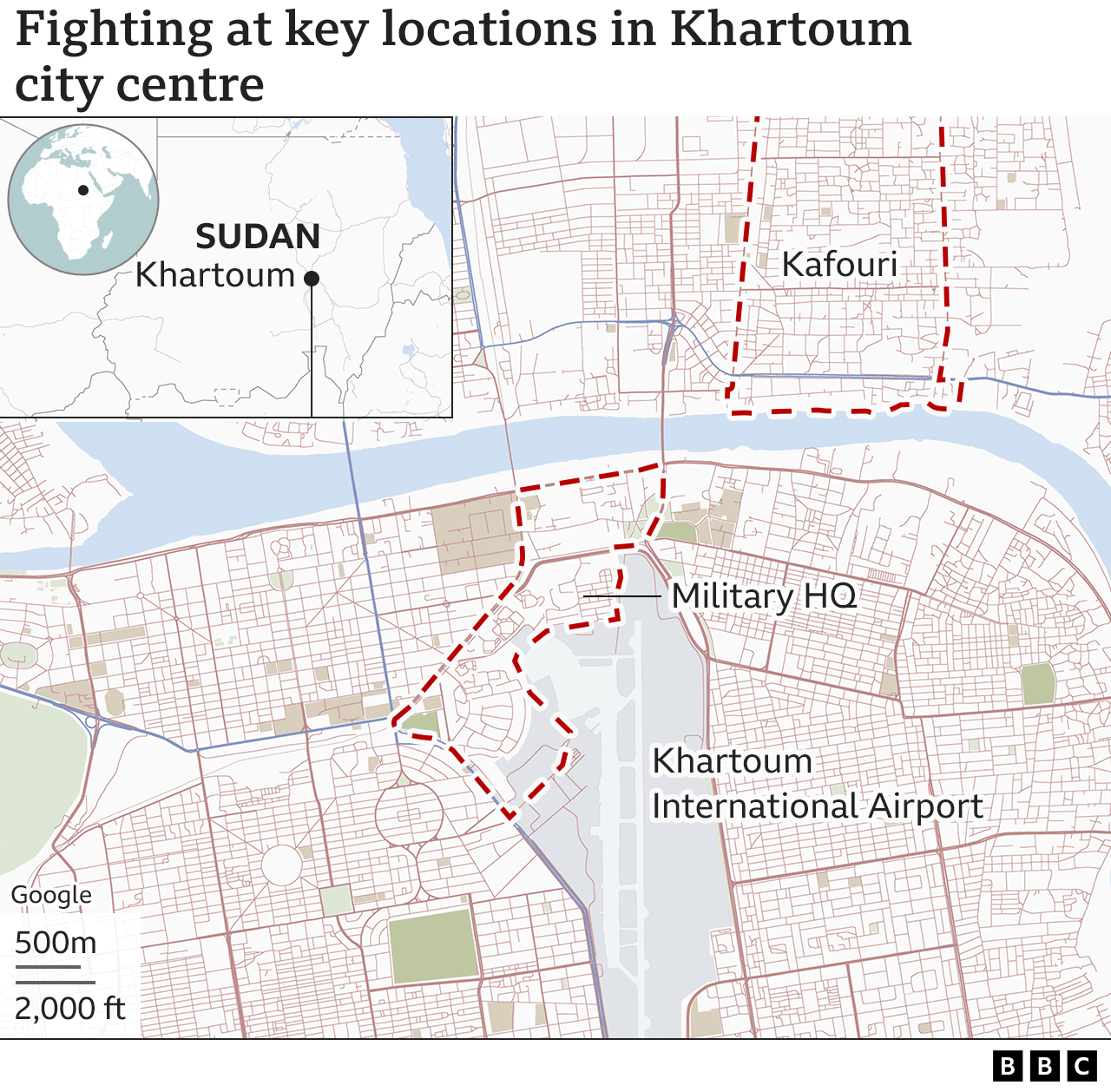
Some of the latest clashes between the army and RSF have been happening around the army headquarters and the Republican Palace in Khartoum – and some parts of the Khartoum’s twin city of Omdurman.
However, other parts of Khartoum and Khartoum Bahri, to the north, remain largely calm.
The rival factions officially agreed to extend a ceasefire for another 72 hours on Thursday night.
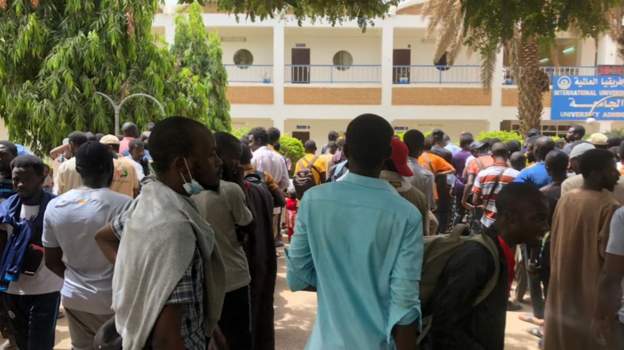
The capital city of Sudan draws university students from all around Africa, Asia, and beyond. Nigeria has one of the largest student populations.
But many Nigerians say they’re still waiting to be rescued from Khartoum, despite seeing their friends from other nations being safely removed.
“There is no presence of the embassy of Nigeria at the International University of Africa. There is no communication. There are only Nigerian students [left there] right now,” Abubakar Sadiq Ibrahim told the Reuters news agency.
Other Nigerian students have made similar complaints to the BBC. Nigeria has asked for a safe corridor to evacuate 5,500 citizens, most of them students, Reuters reports.
The fighting broke out when Ibrahim was just two weeks away from completing his degree.
“It’s a very sad and unpleasant experience,” he said. He cited inflation, food shortages, and walks of 3km [1.8 miles] to buy supplies. “All the shops are closed. There is no movement, there is nothing.”
TheNigerian government has said that its efforts to evacuate thousands of students and civilians stuck in the crisis-hit Sudan were hindered by “a few logistical delays.”
The fighting in the country entered its 12yh day on 27 April with over 500 people killed and at least 3,700 wounded, according toUN agencies.
Nigerian government critics accuse officials of undue delay in evacuating her nationals, especially students, out of the north-east African country.
To date, some 5,500 Nigerians are stranded in Sudan, Nigeria’s foreign ministry says.
“When there is [a] problem of this nature people are only agitated because they want to see the final result,” Ezekiel Manzo, an official of the Nigeria Emergency Management Agency (NEMA), tells The Africa Report of the government’s evacuation efforts.
“This thing, it has a process. One is the crisis itself. It broke out [and] there was no preparation or planning for the crisis. Secondly, this is a crisis that is internal, within the country, and the people that are the arrowheads of this crisis are the leaders of the country.”
Nigerian government has been having sleepless nights following the ongoing crisis in Sudan.
Our officials are doing a lot, coordinating with the Embassy in Khartoum, the Sudanese and Ethiopian governments trying to ensure the safety of the large number of our citizens there. pic.twitter.com/nZTgQVxata

— Garba Shehu (@GarShehu) April 23, 2023
Nations evacuate nationals
The latest crisis in Sudan erupted on 15 April following a disagreement between the country’s two most powerful military forces, the SAF (Sudan Armed Forces) led by General Abdel Fattah al-Burhan and paramilitary RSF (Rapid Support Forces) led by General Mohamed Hamdan Dagalo, also known as Hemeti.
The crisis triggered a large-scale evacuation of foreign nationals from the country. As of 25 April, several EU and Middle East countries, including China, the UK, and the US launched emergency evacuation operations for their citizens.
On Tuesday, the first batch of stranded Indians left Port Sudan for Jeddah, Saudi Arabia, aboard INS Sumedha. The Indian foreign ministry said 278 people were onboard.
The Netherlands carried out a fourth evacuation operation on Monday night, moving a total of around 100 Dutch nationals and 70 others, from 14 different nationalities, out of Sudan.
The US government says it evacuated its diplomats and their families on 23 April.
Nigeria’s Foreign Minister, Geoffrey Onyeama, said the West African country began evacuation plans at the same time as those who had already evacuated their nationals.
“The advantage that these people have is that the US, Italy, [or] France, don’t have 5,000 citizens in Sudan,” Onyeama told Channels Television on 23 April.
“There is also a risk that they took. The US helicopters… they have a naval base close by, they have those kinds of resources and evidently, they were ready to take certain risks to move those helicopters and other things in there and pull their people out.
“If we did the same, we would be being very selective. Because 100 people out of 5,500, who do you take?” Heading to Egypt
As of 25 April, Nigerian officials say buses have been hired to move nationals to Sudan’s border with Egypt. From there, they will bring them to the southern Egyptian cities of Aswan and Luxor where they would be airlifted to Nigeria.
A student told Nigeria’s Arise Television on Tuesday that they are “really pained” over the government’s slow pace of evacuation.
“Other countries are evacuating their nationals, they are eager, they are showing that care, they are valuing their lives. But for us, our own country is full of excuses, that there is no money, and it’s going to cost a lot. Is it that the money is more valued than the 4,000 lives of Nigerian citizens living in Sudan?”
💥
Nigerian students at the registration point in #Sudan waiting to the convey to Egypt Before Airlifting to Nigeria.🍁 pic.twitter.com/FIgpqc6YCe

— يامير™🍁 (@Sheikh_Ameer_O1) April 26, 2023
On Tuesday, Abike Dabiri-Erewa, head of the Nigerians in Diaspora Commission, shared on Twitter a receipt showing the payment of N150m ($330,000) for the hiring of buses for the evacuation of the students.
Onyeama later told journalists on Wednesday that the actual amount spent on hiring 40 buses for the evacuation is $1.2m.
“Of course you know, because of the risks involved and so many other things, a lot of people are going to also take advantage, you’re going to hike up the price. We saw that the French convoy was attacked and so forth. It was difficult procuring these buses. But we had to do it because you know, Nigerians’ lives matter to us.”
Sources, however, told The Africa Report that the Nigerian government would have to sort out the issue of security escorts for the buses before the evacuation.
“There must be [an] arrangement for security to accompany the buses to the border of Egypt. Then from Egypt, the military of Egypt will now take over from there and accompany them to Aswan,” says a source who preferred not to be named because he was not authorised to speak about it. “The buses are going to be moving in convoys and Aswan is like 45 hours or so from Khartoum, by road.”
Dabiri-Erewa did not respond to phone calls and messages requesting comments. But she posted a photo of the buses, taken at nightfall, and added that the Nigerian government had sorted out “a bit of some logistics delay.”
It’s late in the night . Will get a clearer view in the morning . But in that dark shot are buses that will convey Nigerian students to nearby borders in Egypt . More buses are arriving. A bit of some logistics delay but all now sorted by @nemanigeria and the Nig mission,Sudan pic.twitter.com/AYUGCPfF6u

— Abike Dabiri-Erewa (@abikedabiri) April 25, 2023
Airline’s offer
On Monday, Nigerian carrier, Air Peace Airlines, offered to airlift Nigerian citizens in Sudan free of charge if they are taken to a safe, neighbouring country.
“If they are moved to Kenya or Uganda or any other country, we will move in to get them out,” Allen Onyema, the airline’s CEO said in a statement. “Some parents have started calling on us to help. We are ready to do this again and again.”
Manzo says the government had already assembled Nigerians in a holding area in Khartoum, the Sudanese capital, awaiting their conveyance to Aswan.
“It is from Aswan that Air Peace will go and lift because many people are saying that Air Peace is ready to carry Nigerians but that the authorities are not allowing it. Do we own Sudan? We don’t own Sudan?
“Air Peace cannot land in Sudan as we speak. They will have to go to a safe location and that is Aswan.”
On Wednesday, Onyema told Arise Television that the first batch of the stranded Nigerians would be flown out of Egypt on Friday.
Residents in a city in Sudan’s Darfur region reported seeing armed gunmen storm through the area on Thursday April 27, 2023 fighting and pillaging homes and businesses. Despite the prolongation of a tenuous cease-fire between Sudan’s two senior generals, whose power battle has claimed hundreds of lives, the carnage continued.
The mayhem in the Darfur city of Genena pointed to how the rival generals’ fight for control in the capital, Khartoum, was spiraling into violence in other parts of Sudan.
The two sides accepted a 72-hour extension of the truce late Thursday. The cease-fire has not stopped the fighting but created enough of a lull for tens of thousands of Sudanese to flee to safer areas and for foreign nations to evacuate thousands of their citizens by land, air and sea.
The cease-fire has brought a significant easing of fighting in Khartoum and its neighboring city Omdurman for the first time since the military and a rival paramilitary force began clashing on April 15, turning residential neighborhoods into battlegrounds.
Both the military, led by Gen. Abdel Fattah Burhan, and the paramilitary Rapid Support Forces, led by Gen. Mohamed Hamdan Dagalo, said that they accepted the extension of the truce. But explosions and heavy gunfire could be heard in at least one Khartoum neighborhood late Thursday.
The African Union (AU) reiterated its plea for a truce on Thursday, April 27 and urged Sudan’s neighbors and the world community to assist those fleeing the country’s deadly violence.
AU Commission Chairperson Moussa Faki Mahamat “continues to follow with growing concern the plight of civilians caught in the deadly conflict in Sudan,” his office said in a statement.
“The chairperson renews the call on Sudan’s neighboring countries, relevant regional and global agencies to facilitate the transit and safety of civilians crossing their borders unhindered,” the same source said.
Mr. Faki reiterated his call on the Sudanese army and the Rapid Support Forces (RSF) paramilitaries to “immediately agree on a permanent ceasefire to facilitate the delivery of humanitarian assistance to Sudanese in need.
Multiple attempts at a truce since the fighting began on April 15 have all failed.
A few hours before the expiry of a three-day ceasefire at midnight (22:00 GMT), which has hardly been respected, the army announced on Thursday evening that it would “extend the ceasefire for another 72 hours”, “following an initiative by Saudi Arabia and the United States”.
The paramilitaries have not yet commented on this announcement.
The fighting has caused a massive exodus in this country of 45 million people, one of the poorest in the world.
Tens of thousands of people have already arrived in neighbouring countries: Chad in the west, Ethiopia in the east, South Sudan and the Central African Republic in the south and Egypt in the north.
Dr. Howida AlHassand clearly recalls the family who were slaughtered in their home among the sea of gunshot wounds and war injuries at the little Alban Gedid hospital in Khartoum.
She calls me and shows me three images of their dead bodies draped in blood-stained bedsheets. “The kids were playing when a mortar hit their house,” she says.
One shows a boy with a severed leg, his muscles and bones pouring out of the skin that once held his thigh to the hip. In the second photo, the brain of a young boy is visible through a gaping hole in his skull that extends from his forehead to the top of the head. And in the third, another boy lies in a red T-shirt darkened by the blood from wounds that pierce his jaw.
“They were two brothers and their cousin. The rest of the family have various injuries,” she says almost mechanically.
Most of the other injuries she treated and saw are the result of bullets. “People are not just shot once or twice. Every injury we get has multiple gunshot wounds – bullets in the chest, stomach, leg. Each surgery takes a long time,” she says, stressing how dangerous it is for civilians to walk down the streets of the capital.
The staff at the hospital have been working around the clock since the fighting started in Sudan.
In a series of videos, photos and messages Alhassan shared with CNN, she provides a glimpse into the life of Khartoum residents during two weeks of gun battles, shelling and airstrikes as Sudan’s Armed Forces and Rapid Support Forces battle for control of the country. They reveal what the doctors and nurses in the two dozen operating hospitals are doing to keep the injured alive, with little and dwindling supplies.
Only 23 hospitals are open out of 82 in the capital and other states witnessing fighting, according to the Central Committee for Sudan Doctors on Wednesday. Nineteen hospitals were directly hit and evacuated, while others were shuttered for various reasons, including security threats, power cuts, and the inability of the medical staff to safely reach their hospitals
CNN spoke to several physicians and hospital staff in Khartoum, who described their frustration with not being able to serve those most in need. “The biggest challenge facing medical staff trying to reach hospitals is the lack of safe passages. Even ambulances are not let through,” Abdel Moniem Al-Tayeb tells CNN. The hospital he works at in central Khartoum was shuttered on the first day of the fighting. He said the staff was willing to keep on working if they had electricity.
“The biggest challenge is that there is no fuel. That there is no continuous electric power at hospitals,” he adds.
“Medical services collapsed on the first day of the fighting. Right now, there are no medical services at all. We are only focusing on gunshot wounds and injuries,” one doctor tells CNN, asking not to publish her name or her hospital because of safety concerns.
She fears the Rapid Support Forces (RSF) soldiers would raid the hospital to force the doctors to treat their wounded, as doctors said happened at other hospitals. If the army learns about the presence of the RSF there, they could strike the hospital, she says, referring to the two warring parties.
Supplies at her hospital are running dangerously low and like AlHassan’s hospital, they too are relying on donations and the protection and support of their neighbors. When there is a brief lull in the fighting, they see an increase in looting and criminal activities around them, leading to even more injuries.
In one video shared by AlHassan, her phone camera shows medical staff tending to wounds of a man stretched on a surgical bed as she decries the ceasefires that collapse hours after going into effect.
“They talk about a ceasefire but there is no ceasefire. The wounded keep on coming,” she says in a video recorded on April 25. “It’s the same staff that has been working for 11 days,” she adds.
Her videos show busy halls with continuous movement of staff, patients and families.
One video shows a doctor stitching a wound cutting through the calf of a woman. The doctor’s scissor and bandages rest on the same bed she is sitting on, as a family member hugs her and a man holds down her hand. In another, the medical staff are slumped over a patient with a gaping wound in the upper thigh. Curtains do a poor job separating patients stretching on gurneys in a different room. In another video, a man carrying a backpack is mopping the blood covering the hospital floor.
The staff and the volunteers are doing multiple jobs, AlHassan says. She is an obstetrician-gynaecologist who for the past two weeks has been treating gunshots and other battle wounds, and when needed once queued for four hours at a nearby bakery to get bread for the team.
“We try as much as we can. We are working with very scarce capabilities, and we’re not working at the standard that we would like,” she says, turning her camera goes past a squeaky wooden door to show the medical equipment near the operation room. “There are issues with sterilization. We use the equipment and the instruments more than once … Even with medication, we give smaller doses.”
As her camera whizzes through squeaky doors and people clogging the corridors, it quickly skims over walls with chipped paint and worn-out furniture.
In another video, she shows her colleagues resting their heads on their folded arms on a table. One man dressed in scrubs is startled by the movement, opening his eyes for a second before going back to sleep.
“We don’t sleep. I wouldn’t call what we do sleep. I would call it fainting,” she says. And it is full of nightmares, she adds. When she is awake, she worries about her elderly mother, who lives nearby. AlHassan considers herself lucky that she’s able to check on her every now and then.
Her fatigue shows in the videos she recorded. She starts every video stating her name, the hospital name and then sometimes fumbles the date and time, asking her colleagues for guidance. “Is it Monday or Tuesday now?” she asks in one video.
AlHassan shared the videos with CNN over several days, as the evacuation of foreign nationals were underway. She worries that the fighting will get a lot worse once the evacuation is over. And it would be made worse by the food shortage they are already experiencing.
“I call upon all humanitarian organizations and all the countries in the world to make the two sides of the conflict to stop the war immediately. And I call upon the sides of the conflict to stop the war. Sudanese blood is one blood. I beg you to silence the sound of the rifle,” she says in a final voice note. Calls and messages were repeatedly cut short by the disruption in phone and internet services.
“Hospitals of Sudan are under fire, medical supplies have almost run out, medical staff is exhausted. Now, the Sudanese citizen is dying, not just because of bullets, but because of other illnesses that they can’t go to hospitals for. I beg you, I beg you, stop the war.”
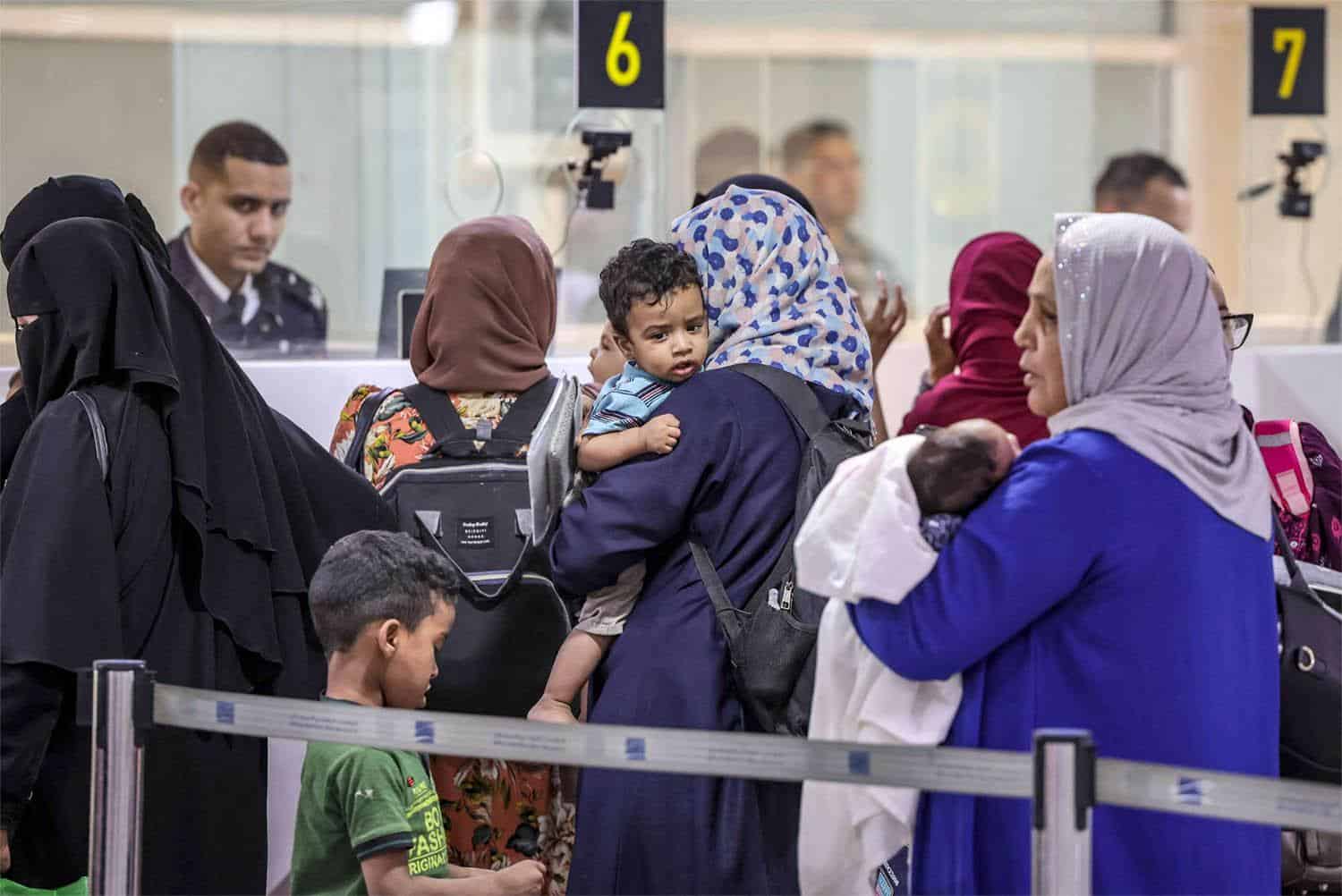
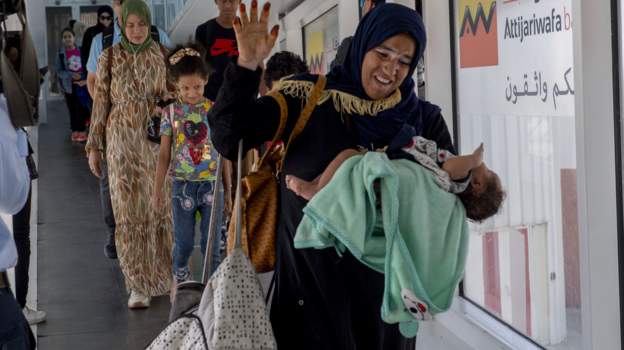
A second plane carrying 157 Moroccan nationals repatriated from Sudan arrives at Casablanca’s Mohammed V International Airport.
A second plane of Morocco’s flag carrier Royal Air Maroc coming from Sudan landed early Wednesday afternoon at Mohammed V airport, carrying 157 Moroccan nationals evacuated from Sudan, after the deterioration of the security situation in this country.
A first plane of RAM had arrived on Wednesday morning at Mohammed V airport, carrying 136 Moroccans from Sudan. Thus, the total number of Moroccan nationals repatriated from this sister country amounts to 293 people.
The evacuation of Moroccans from Sudan is taking place following King Mohammed VI’s instructions to ensure the repatriation of Moroccan nationals from this country in the best conditions.
On Monday, a statement by the Ministry of Foreign Affairs, African Cooperation and Moroccan Expatriates said that “following the recent events in the Republic of Sudan and the deterioration of the security situation in this brotherly country, King Mohammed VI has given His High Instructions to ensure the repatriation of Moroccan nationals from this country.”
“In accordance with the High Royal Instructions, the services of the Embassy of the Kingdom of Morocco in Sudan have, in a first phase, organized a land caravan from the capital Khartoum to the city of Port Sudan, which benefited more than 200 Moroccan nationals established in Sudan or whose presence in this country coincided with this difficult domestic situation,” added the ministry, specifying that this land caravan arrived Monday evening safely in the city of Port-Sudan.
At least 512 people have been killed and close to 4,200 wounded in nearly two weeks of conflict between the army and a rival paramilitary force – the Rapid Support Forces (RSF) – which are locked in a power struggle that threatens to destabilise the wider region.
A second plane conveying 157 Moroccan nationals repatriated from Sudan arrives at Casablanca’s Mohammed V International Airport after the deterioration of the security situation in the country
The evacuation of Moroccans from Sudan is taking place following King Mohammed VI’s instructions to ensure the repatriation of Moroccan nationals from this country in the best conditions.
On Monday, a statement by the Ministry of Foreign Affairs, African Cooperation and Moroccan Expatriates said that “following the recent events in the Republic of Sudan and the deterioration of the security situation in this brotherly country, King Mohammed VI has given His High Instructions to ensure the repatriation of Moroccan nationals from this country.”
“In accordance with the High Royal Instructions, the services of the Embassy of the Kingdom of Morocco in Sudan have, in a first phase, organized a land caravan from the capital Khartoum to the city of Port Sudan, which benefited more than 200 Moroccan nationals established in Sudan or whose presence in this country coincided with this difficult domestic situation,” added the ministry, specifying that this land caravan arrived Monday evening safely in the city of Port-Sudan.
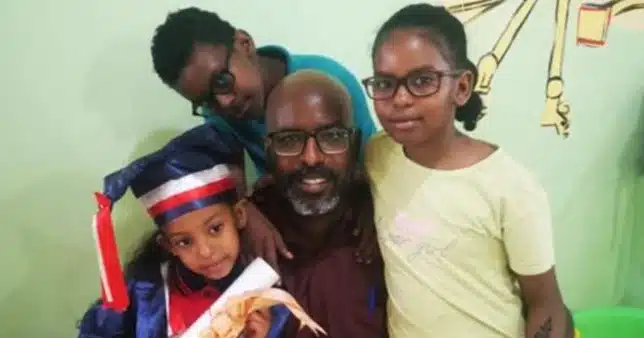
As their home in Sudan got caught up in a gunfire, a father pretended to his kids that they were playing “hide and seek” as they dove for shelter.
In the capital of Sudan, Khartoum, Munzir Salman’s family was at home when two military factions who are currently engaged in combat began firing at each other from opposite sides of their home.
I was in the center, the 37-year-old claimed. Unfortunately, that wasn’t the first time I’ve heard gunfire around me, and it was horrifying.
I had to maintain my composure for my three children because I am a single parent. I had to explain to them that it was a game, so I described it as a game of hide-and-seek.
‘It was an experience they had never been through before, it was very scary but I tried to make it a game for them.
‘I explained the danger before trying to make it like Tom and Jerry where the people outside were Tom and we were Jerry.’
Munzir, a British-Sudanese builder with dual citizenship, told his story while waiting to fly to the UK via Cyprus.
British-Sudanese dad shows gunshot damage to his home caught in the fighting
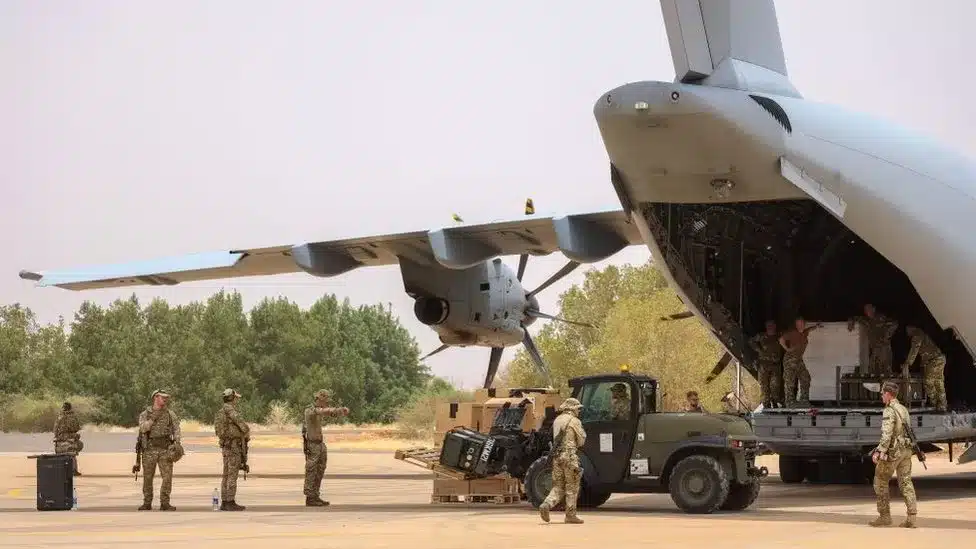
British nationals have faced dangerous journeys to the Wadi Saeedna airstrip in the hopes of being able to board an evacuation flight out of the country.
Eight flights were expected to have left by the end of Wednesday to lift people to safety as the military races against time to rescue citizens while a fragile ceasefire holds.
British nationals have faced dangerous journeys to the Wadi Saeedna airstrip in the hopes of being able to board an evacuation flight out of the country.
Eight flights were expected to have left by the end of Wednesday to lift people to safety as the military races against time to rescue citizens while a fragile ceasefire holds.
Foreign secretary James Cleverly told UK nationals on Tuesday that they must make their own way to the airstrip.
Munzir, whose wife died in 2020, had to take the trip with three children, 11-year-old Siddig, eight-year-old Shaden and six-year-old Yasmin.
It was only 20 miles from the family’s house to the airstrip but the violence around them meant they travelled 60 miles to get there.
The dad added: ‘It was hard to explain to the children that it’s a dangerous journey.
‘The first part was that the RSF were trying to spot us as we travelled through neighbourhoods. They spotted us four times but because they saw I had children they let us go.’
The first British evacuees from Sudan touched down on home soil at Stansted Airport at around 2.24pm this afternoon after taking off from Cyprus this morning. Around 100 people were counted off the plane.
According to the government’s own estimates, there are at least 2,000 UK nationals in Sudan, though there have been suggestions the number could be above 4,000.
What you need to know about the war in Sudan
How did the war start?
The current fighting is the result of a power struggle between the Sudanese army and the Rapid Support Forces (RSF).
The paramilitary group, which was originally created by dictator Omar al-Bashir to crush a rebellion in the western region of Darfur, cooperated with the army to overthrow the autocrat in 2019.
This was supposed to precede Sudan’s transition to a democratic government, a move backed by western nations.
The north African country saw more than two years of power-sharing between the military and civilian leaders but a coup brought this to an end in October 2021.
Sudan was left with the army’s general, Abdel Fattah al-Burhan, as Sudan’s de facto ruler and the RSF’s general Mohamed Hamdan Dagalo, commonly known as Hemedti, as vice-president.
What sparked the recent escalation?
The Sudanese people and the international community continued to push for a new transition to democracy after the coup.
The plan was to get Sudan to a point where civilian parties would have control over the military, which the RSF would be dissolved into.
But there has long been tension surrounding the details of this arrangement, namely the proposed timeline – the army wanted the integration complete in two years but the RSF insisted on waiting 10.
Nevertheless, negotiations looked hopeful with a final deal due to be signed earlier this month, before a new phase of fighting broke out on April 15.
The army pointed the finger at the RSF for mobilising troops to key strategic sites in the capital of Khartoum and the RSF claimed it was just responding to the army’s alleged plot to seize full power with Bashir loyalists.
What now?
More than 420 people have been killed and more than 3,700 wounded since the conflict escalated, according to Sudan’s Federal Ministry of Health.
Paramedics, frontline nurses and doctors have told the Wold Health Organisation they are often unable to reach the wounded because of attacks on ambulances and health facilities.
Some 20 hospitals are no longer functional and 12 others are at risk due to lack of medical supplies and health care workers.
Multiple countries, including the UK, are working on evacuation plans for its citizens with the Government promising to prioritise the vulnerable ‘starting with family groups with children, the elderly or people with documented medical conditions’.
World leaders have urged the two warring generals to de-escalate the violence and return to negotiations.
Senior German political sources have told the media that British attempts to remove its diplomatic workers from Sudan over the weekend slowed down efforts by other nations to save their own citizens.
They claim that British forces entered Sudan without the consent of the Sudanese army while other European countries hoped to fly their citizens to safety.
That was called “complete nonsense” by the UK Ministry of Defense (MoD).
Germany, among others, had planned to use the airfield north of Khartoum from which subsequent evacuation operations have been conducted.
But, the sources say, the “unannounced British military presence” so angered the Sudanese army that they refused access to the facility.
According to one source, having landed without permission, the British had to pay the army before leaving.
And negotiations to use the airfield meant that German rescuers “lost at least half a day” during what was, at the time, considered to be a very small window of opportunity.
The MoD denied that it was responsible for any delay.
In a statement, it said: “It is not accurate to suggest that Britain’s efforts to evacuate embassy staff from Sudan last weekend slowed-down Germany’s plans.
“Operating in such complex circumstances will always come with challenges, but we have worked extremely closely with our French, US and particularly German partners who have facilitated access to the airfield throughout this week, and of course we remain grateful to the Sudanese Armed Forces.”
Later, an MoD spokesperson said it was “complete nonsense to claim that we landed in Sudan without permission from the Sudanese army. We had permission”.
After airlifting more than 700 people to safety on six flights from the airfield north of Khartoum that the UK is now utilizing for its evacuation operation, Germany has now concluded its rescue mission.
German citizens made up about 200 of those who were transported to safety, while the remaining people came from 30 other countries, including the UK.
Defense officials’ rage has been subdued in Berlin by the pleasure and joy that its mission came to a relatively successful conclusion, but military authorities are still reportedly “not amused.”
Even Boris Pistorius, the defense minister, couldn’t help but poke fun.
When asked why the UK had managed to get its embassy staff out on Saturday, while German flights only started on Sunday, Mr Pistorius said: “How shall I put it diplomatically? They ignored what the Sudanese had stipulated.”
And, in Berlin, there are lingering traces of disdain for the UK government’s initial handling of the crisis.
German Foreign Minister Annalena Baerbock may not have mentioned the UK by name but launched a thinly disguised attack on countries that, she implied, had abandoned their citizens and focused their rescue efforts only on diplomatic staff.
“It was important to us that the [German] evacuation, unlike other countries, didn’t just involve our diplomatic personnel but all Germans on the ground and their partners.”
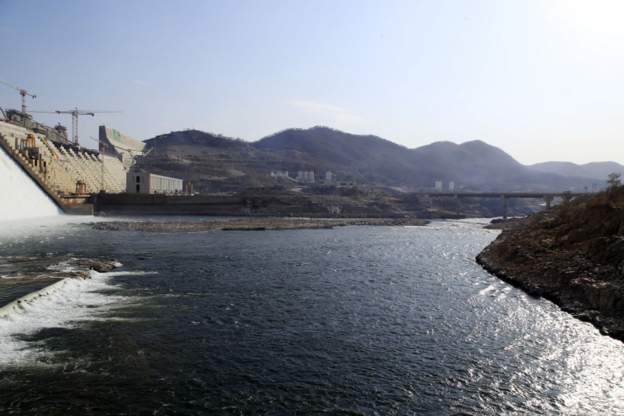
The Grand Ethiopian Renaissance Dam (Gerd) remains the subject of ongoing trilateral negotiations, which Ethiopia states it is prepared to resume with Egypt and Sudan.
Mesganu Arga, the state minister for foreign affairs, made the remarks while speaking with Mike Hammer, the US special representative for the Horn of Africa.
“Regarding Gerd, he [Ambassador Mesganu] said Ethiopia is ready to resume the tripartite negotiations under the auspices of the AU,” the ministry posted on Twitter.
Despite a 72-hour ceasefire mainly holding, fighting is still occurring in some areas of Sudan.
Fighting broke out near TV and radio buildings in Omdurman, a city next to the capital Khartoum, according to Mohamed Osman of the BBC.
People are having trouble getting access to food and money, our correspondent continues, and there is no fuel and a shortage of doctors.
The ceasefire, which was set to end on Friday, has apparently been extended for another 72 hours by the army head of Sudan.
According to the Reuters news agency, Gen Abdel Fattah al-Burhan gave the plan from the regional African body Intergovernmental Authority on Development initial clearance.
The proposal suggests sending envoys from the Sudanese army and rival group Rapid Support Forces (RSF) to Juba in South Sudan to discuss the details.
The current ceasefire began at midnight local time (22:00 GMT) on Monday bringing a pause to a conflict which erupted on 15 April amid a power struggle between the leaders of the army and the RSF.
People in Khartoum and Omdurman are finding it difficult to find clean water and food and access to cash, our correspondent says.
Explosions and gunfire could still be heard on Wednesday, with warplanes in the air, although it was quieter than before the ceasefire and the situation was good enough for evacuations to continue.
Our correspondent says he and his family find it difficult to sleep because of the explosions and shooting.
Gangs have also been looting homes and empty buildings, targeting cars and vehicles, he adds. Local people fear what will happen after the ceasefire ends.
Both sides still man checkpoints but these are fewer in number as some troops have withdrawn to other areas.
The warring factions both claim to control important places like airports and army headquarters. There is no internet access and phone lines are poor.
At least 459 people have been killed since the fighting broke out though the actual number is thought to be much higher.
Earlier the World Health Organization said it expected “many more” deaths due to disease, a lack of access to food and water and disruption to health facilities.
Several countries have evacuated their nationals since the ceasefire took hold.
A boat evacuating more than 1,600 people from dozens of countries arrived in Saudi Arabia on Wednesday and both Germany and France say all their citizens have now left the country.
The first flight bringing British national home landed at Stansted on Wednesday, via Larnaca in Cyprus.
Some 536 British nationals have been evacuated from Sudan on six flights, the Foreign, Commonwealth and Development Office said.
The chairman of the Nigerians in Diaspora Commission confirmed to the BBC that evacuations of stranded Nigerian students in Sudan had started.
It is thought there could be up to 5,000 Nigerians living in Sudan, and that 3,500 of them are students.
However, a UK-born student in Sudan said she did not have enough petrol to get to rescue flights.
Samar Eltayeb, 20, from Birmingham, has been sheltering with a relative outside Khartoum since fighting began.
The third-year medical student at Sudan’s National University has been waiting to be evacuated to join her parents and siblings in the UK.
“We have have no gas, and the petrol stations are empty,” Ms Eltayeb said. “There’ll be constant flights within the next few days, but if I can’t find gas to get there, then I’m stuck.”
Buses carrying evacuees are continuing to leave Khartoum despite soaring prices of fuel and bus tickets.
Meanwhile, former Sudanese politician Ahmed Haroun said that he and other former officials are no longer in jail.
Reports emerged this week of a prison break at Kober in Khartoum- where Ahmed Haroun was serving a sentence alongside Omar al-Bashir, Sudan’s former president.
The Sudanese army said Bashir was moved from the prison to a military hospital before the fighting erupted.
Both Bashir and Haroun are facing charges by the International Criminal Court for their alleged role in the atrocities in the western Sudanese region of Darfur.
On Tuesday, Haroun confirmed in a statement aired on Sudan’s Tayba TV that he and other Bashir loyalists who served under him had left the jail – but said he would be ready to appear before the judiciary whenever it was functioning.
Evacuation efforts for Nigerian students stuck in Sudan have begun , according to the chairman of the Nigerians in Diaspora Commission.
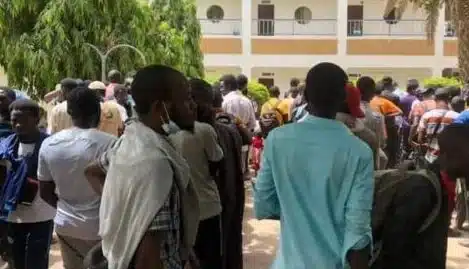
Students are seen waiting outside for buses in a video released on Twitter by Abike Dabiri-Erewa.
These buses, according to Ms. Dabiri-Erewa, are loading pupils before departing Sudan.
Sudan update: For ease of conveying the students, they were put on the buses according to their states of origin , as our excited Student doing this narration tells us here.Journey mercies 🙏🏿🙏🏿🙏🏿 pic.twitter.com/JQmVdHB0to
She stated that they would first be flown to Egypt and then Nigeria.
It happens just a short while after we spoke to a university student in Khartoum who was anxiously anticipating assistance from the Nigerian embassy but felt abandoned.
An ex-politician from Sudan who is wanted for alleged crimes against humanity claims that he and other ex-officials are no longer in jail,
The International Criminal Court (ICC) has accused several people, including Ahmed Haroun, who was being detained in Khartoum’s Kober prison.
Reports emerged earlier this week of a prison break at Kober – where Ahmed Haroun was serving a sentence alongside Omar al-Bashir, Sudan’s former president.
On Tuesday, Haroun confirmed in a statement aired on Sudan’s Tayba TV that he and other Bashir loyalists who served under him had left the jail – but said he would be ready to appear before the judiciary whenever it was functioning.
In an audio message circulating on social media, Haroun claimed the group had been aided in their escape by prison guards and the armed forces.
“We made a decision to protect ourselves due to lack of security, water, food and treatment, as well as the death of many prisoners in Kober,” Haroun told al-Sudani, a daily newspaper with ties to Bashir.
Bashir himself – who is 79 – is currently at a military hospital in police custody, and was moved there before hostilities broke out, according to the Sudanese army.
The former president was ousted by the military after mass protests in 2019, and had been serving a jail sentence for corruption.
He is accused by the ICC of leading a campaign of mass killing and rape in Sudan’s Darfur region, which he denies.
For his part, Ahmed Haroun played a key part in the Sudanese government’s brutal response to two long-running and still unresolved civil wars – in Darfur (from 2003) and South Kordofan (from 2011).
He was indicted by the ICC in 2007 for his alleged role in the atrocities in Darfur, which has been described as the first genocide of the 21st Century.
Haroun faces 20 counts of crimes against humanity and 22 counts of war crimes allegedly committed in the early 2000s when he served as the country’s interior minister. The charges include murder, rape, persecution and torture.
Haroun, who has also previously denied the ICC charges, was a member of Bashir’s inner circle for much of his 30 years in power and was arrested in 2019 following the coup against the veteran leader.
Since then, the country has experienced frequent unrest and several other coup attempts.
A ceasefire between rival military forces seems to be mainly holding.
The desire for a durable peace, however, is questioned on all sides.
A severe power struggle between the leaders of Sudan’s regular army and a competing paramilitary group, the Rapid Support Forces (RSF), gave rise to the battle, which started on April 15.
Sudan’s interior ministry has accused the RSF of breaking into five prisons in the past few days – including Kober, which Bashir had already left.
Police said the raid led to the killing of several prison officials, adding that the RSF released all who where being held there.
The RSF has denied the allegations, claiming instead that the military “forcibly evacuated” the facility as part of a plan to restore Bashir to power.
Plenty of Sudanese will believe this is just the latest example of Gen Burhan, leader of Sudan’s armed forces, trying to restore Bashir’s Islamist lieutenants to the forefront of Sudanese politics.
The ceasefire in Sudan has allowed several countries to evacuate their nationals from the country. A second evacuation flight rescuing UK nationals from Sudan has landed in Cyprus, while a boat evacuating more than 1,600 people from dozens of countries has now arrived in Saudi Arabia.
Image caption,Hundreds of people evacuated from Sudan have arrived in Saudi Arabia by boat
Volker Perthes, who is the UN special envoy to Sudan and is currently in the country, said on Tuesday that the 72-hour pause in fighting still appeared to be holding together.
But gunfire and explosions continued to be reported in Khartoum and the nearby city of Omdurman.
“There is yet no unequivocal sign that either [side] is ready to seriously negotiate, suggesting that both think that securing a military victory over the other is possible,” said Mr Perthes.
The ceasefire, which began at midnight local time (22:00 GMT) on Monday, is the latest attempt to bring stability to the country after fighting broke out nearly two weeks ago.
At least 459 people have died in this conflict so far, though the actual number is thought to be much higher.
Thousands more are reported to have fled Sudan and the UN has warned that this is likely to continue.
There is also concern for those who are left behind, with an estimated 24,000 pregnant women currently in Khartoum who are expected to give birth in the coming weeks.
Mr Perthes also said that many homes, hospitals and other public facilities had been damaged or destroyed in residential areas near the army headquarters and airport in Khartoum during the fighting.
The Ministry of Foreign Affairs and Regional Integration has revealed that a total of 82 Ghanaians have been evacuated from Khartoum in Sudan to safety.
In a press statement dated April 25, the ministry indicated that it successfully evacuated two batches of 50 and 27 identified Ghanaian nationals to safety in Gedaref, Sudan. They comprise 34 females and 43 males.
According to the ministry, “they will be transported tomorrow to the Ethiopian border town of Metema where they will be received by Ghana Embassy officials, processed for Ethiopian entry visas and thereof repatriated home.”
Also, three Ghanaian footballers and two others working for an Australian Mining Company are being evacuated through the Egyptian border post of Wadi Halfa, north of Sudan. This brings the total to 82.
To ensure all Ghanaians are brought to safety, those stranded have been advised to reach out to the Honorary Consul, Mr Osama Ataaelmanan via +249-92920-0000.
Accordingly, the public will be apprised of new developments in due course, the ministry pledged.
Earlier this week, the Ministry of Foreign Affairs and Regional Integration announced its preparedness to evacuate Ghanaian nationals trapped in Sudan’s conflict.
The Ghana Embassy in Cairo, Egypt which has concurrent accreditation to Sudan, working with the Ministry of Foreign Affairs and Regional Integration and the Honorary Consulate is working to ensure this.
Thousands of people have been displaced in Sudan as a result of a deadly war between the Sudanese Armed Forces and the paramilitary Rapid Support Forces.
Khartoum has been the epicentre of the violence, with civilians suffering the most. Over 300 deaths have been reported.
Countries such as Egypt, South Africa, Turkey, Kenya and the UK are all working to evacuate their nationals and diplomats.
The first group of Kenyans who fled Sudan arrived at the Nairobi airport on Monday night in an aircraft.
Defense Secretary Aden Duale welcomed the several evacuees after they departed from a Kenya Air Force aircraft.
The Egyptian military evacuated 177 soldiers last week, while the foreign ministry reported on Sunday that 436 citizens had traveled abroad by land. It is estimated that there are around 10,000 Egyptians living in Sudan.
Over 200 Moroccans were taken to Port Sudan in convoys organised by their embassy.
Deputy Minister of Foreign Affairs and Regional Integration, Dr Kwaku Ampratwum-Sarpong, has assured the safety of Ghanaian students and other nationals in Sudan.
There are 73 students in the Northeast African country and according to Dr Ampratwum-Sarpong, “none of them has been harmed, and we have all of them safe in a place.”
They will be evacuated together with three other Ghanaian football players in the country.
“The plan is to evacuate them to the nearest country which is Ethiopia”, he added.
The Ghana Embassy in Cairo, Egypt which has concurrent accreditation to Sudan, working with the Ministry of Foreign Affairs and Regional Integration and the Honorary Consulate is working to ensure this.
Thousands of people have been displaced in Sudan as a result of a deadly war between the Sudanese Armed Forces and the paramilitary Rapid Support Forces.
Khartoum has been the epicentre of the violence, with civilians suffering the most. Over 300 deaths have been reported.
Countries such as Egypt, South Africa, Turkey, Kenya and the UK are all working to evacuate their nationals and diplomats.
On Monday night, an aircraft carrying the first group of Kenyans fleeing Sudan touched down at Nairobi’s airport.
The scores of evacuees boarded a Kenya Air Force aircraft, where they were met by Aden Duale, the defense secretary.
The foreign ministry reported on Monday that three evacuation programs were in operation, meaning that more evacuations are now taking place.
As fighting rages on in Sudan, a steady stream of military planes from Europe, the Middle East, Africa, and Asia flew into Khartoum all day Sunday and Monday to remove foreign nationals who were evading enemy fire at the tense front lines of the city.
A flight carrying 39 evacuees from chaos-torn Sudan lands in Nairobi as part of evacuation efforts. “The first successful evacuation flight that has delivered 39 evacuees of which 19 are Kenyans, 19 of Somalian nationality and one evacuee is from the Kingdom of Saudi Arabia,” Kenya’s Cabinet Secretary Ministry of Defence Aden Duale told reporters.
“There was a lot of shooting and a lot of bombing going for almost 24 hours,” one evacuee tells AFP after disembarking the aircraft.
Scramble to evacuate
Saudi Arabia led the first reported successful evacuations on Saturday. A boat from Sudan carrying nearly 200 people from 14 countries reached the Saudi coastal city of Jeddah late Monday, the Saudi foreign ministry said.
So far, 356 people have been evacuated to the kingdom from Sudan — 101 Saudis and 255 foreigners from more than 20 countries, the official Saudi Press Agency reported.
Egypt’s military last week evacuated 177 soldiers, and on Sunday the foreign ministry said 436 citizens had left by land. More than 10,000 Egyptians are thought to live in Sudan.
Over 200 Moroccans were taken to Port Sudan in convoys organised by their embassy, Rabat said Monday, adding that they would be flown home from there.
Both Algeria and Tunisia have announced rescue operations.
Jordan — whose military airports have been used for some rescue flights — said Saturday it had begun the evacuation of around 300 citizens with Saudi and UAE cooperation, while 52 Lebanese and 105 Libyans had also left on a Saudi naval vessel.
A truce in Sudan went into effect at midnight local time (22:00 GMT on Monday), and it seems to be holding.
With prior cease-fires not being respected, this is the fourth attempt to put an end to the violence that started on April 15.
After 48 hours of discussions, the army and the paramilitary Rapid Support Forces (RSF) came to a 72-hour truce, according to US Secretary of State Antony Blinken.
On Tuesday, there were reports of gunshots in the capital, Khartoum.
There have also reportedly been reports of airplanes hovering overhead, but city dwellers have returned to the streets.
Independently, both parties to the conflict, which has claimed more than 400 lives, declared their participation in the truce.
The violence in Sudan, according to UN Secretary General António Guterres, runs the risk of igniting a “catastrophic conflagration” that might spread over the entire region and beyond.
Residents in Khartoum have been ordered to stay inside since the violence started, and food and water supplies are running low.
Some individuals have been compelled to drink water from the River Nile since the bombing damaged important infrastructure, such as water pipes.
As battle raged in the core, heavily populated areas of the capital, nations scurried to evacuate their embassies and citizens.
There will be hopes the ceasefire will allow civilians to leave the city. Foreign governments will also hope it will allow for continued evacuations out of the country.
Egypt’s foreign ministry said on Monday that an attaché had been killed while driving to the embassy in Khartoum to help with the evacuation of Egyptian citizens.
EU foreign policy chief Josep Borrell also confirmed on Monday that more than 1,000 EU citizens had been evacuated.
South Africa, Kenya and Uganda are among the African nations to have announced the evacuation of their citizens.
The UK government has announced it will begin evacuating British passport holders and immediate family members from Tuesday.
On Monday, Mr Blinken said that some convoys trying to move people out had encountered “robbery and looting”.
The US, he added, was looking at potentially resuming its diplomatic presence in Sudan but he described the conditions there as “very challenging”.
Sudan suffered an “internet blackout” on Sunday amid the fighting but connectivity has since been partially restored, according to monitoring group NetBlocks.
It is estimated that tens of thousands of people, including Sudanese citizens and those from neighbouring countries, have fled because of the unrest.
Hassan Ibrahim, 91, was among them. The retired physician lives near the main airport in Khartoum, where some of the worst fighting has taken place, but has since made the perilous journey into neighbouring Egypt with his family.
He told the BBC World Service’s Newshour programme they had escaped being caught up in a firefight between RSF fighters and the army but that a van travelling behind them had got hit. The family then boarded a bus to the border, which took 12 hours, only for them to be met by “crowded and chaotic” scenes as people waited to be given entry.
“There were so many families with elderly passengers, children and babies,” said Mr Ibrahim. “The Sudanese are fleeing the country – it is a sad reality.”
Eiman ab Garga, a British-Sudanese gynaecologist who works in the UK, was visiting the capital with her children when the fighting began and has just been evacuated to Djibouti on a flight organised by France. Her hurried departure meant that she was not able to say goodbye to her ailing father, her mother or her sister.
“The country is dirty, there’s rubbish all over it,” she told BBC Radio 4’s World Tonight programme. “There’s sewage overflowing, it smells, so now we’re next going to have an outbreak of illness and disease, and there won’t be a hospital to go to there.”
“We’re just looking at death and destruction and destitution.”
Violence broke out primarily in Khartoum, between rival military factions battling for control of Africa’s third largest country.
This came after days of tension as members of the RSF were redeployed around the country in a move that the army saw as a threat.
Since a 2021 coup, Sudan has been run by a council of generals, led by the two military men at the centre of this dispute – Gen Abdel Fattah al-Burhan, the head of the armed forces and in effect the country’s president, and his deputy and leader of the RSF, Gen Mohamed Hamdan Dagalo, better known as Hemedti.
They have disagreed on the direction the country is going in and the proposed move towards civilian rule.
The main sticking points are plans to include the 100,000-strong RSF into the army, and who would then lead the new force.
Gen Dagalo has accused Gen Burhan’s government of being “radical Islamists” and that he and the RSF were “fighting for the people of Sudan to ensure the democratic progress for which they have so long yearned”.
Many find this message hard to believe, given the brutal track record of the RSF.
Gen Burhan has said he supports the idea of returning to civilian rule, but that he will only hand over power to an elected government.
In response to complaints from some stranded people that they felt “abandoned,” the UK pledged that it was “doing everything we can” to rescue its citizens from the conflict-torn Sudan.
Andrew Mitchell, the state’s minister of foreign affairs, defended the decision to prioritise a nighttime military operation to remove embassy personnel and their families by claiming that there had been a “very specific threat to the diplomatic community.”
Tobias Ellwood, chairman of the parliamentary Defence Select Committee, called for a “clear-cut plan” to get British passport holders out of Sudan.
“If that plan does not emerge today, then individuals will then lose faith and then start making their own way back,” he told the television channel GB News, saying that could lead to “some very difficult situations”.
One Briton told the BBC he had beenforced to make his own evacuation arrangements, even as other countries got their citizens out of the country.
Both Sudanese citizens and Western personnel are desperately attempting to leave Khartoum, the country’s capital, where fierce fighting between opposing factions is overrunning hospitals with victims and numerous attempts to bring about a ceasefire have failed.
Six days of violent clashes and confrontations between the Sudanese military and the Rapid Support Forces (RSF) have destabilised the streets of Khartoum and other nearby cities.
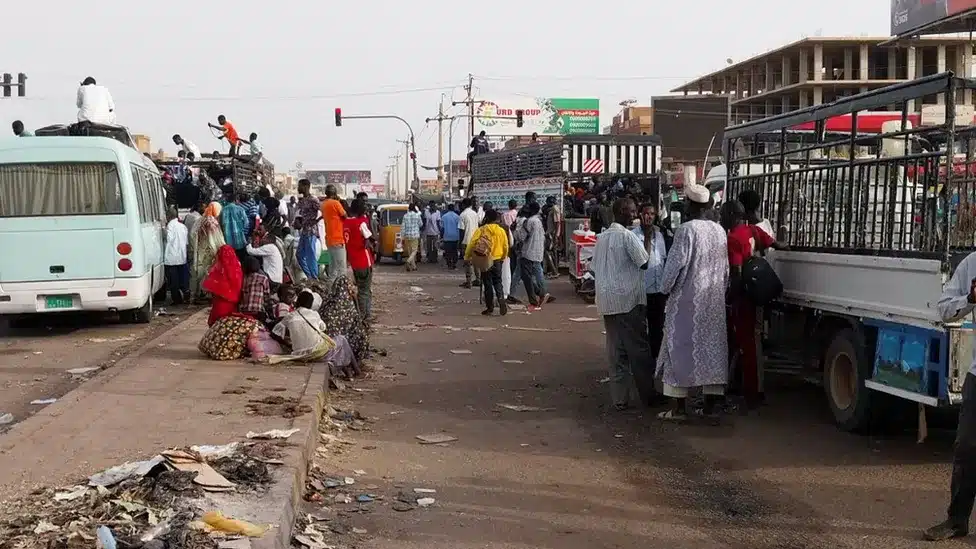
By Thursday morning, many residents trapped in the middle of the clashes appeared to have lost faith in an immediate resolution. There was an increase in the number of people at bus stops, trying to leave Khartoum and escape the fighting, according to witnesses.
“Yesterday (Wednesday), I decided to leave Khartoum together with my wife and four of my children at any cost,” Muhammad Hammam told CNN in an interview, as he recalled his success in escaping from the Al-Nasr neighborhood, east of the Nile, to the city of Atbara, northern Sudan.
“Death surrounded us from all directions, so I said it would be better for us to die attempting to cling to life while trying to survive instead of dying by a stray bullet at home or maybe dying of hunger or thirst,” he said.
Up to 20,000 refugees from Sudan’s Darfur region have fled to Chad in recent days, according to a statement from the UN Refugee Agency.
But escaping is no simple task. The capital’s international airport remains out of service, according to a source in a Sudanese army, who claims the airport’s control towers were destroyed by RSF bombings. CNN is reaching out to the RSF for comment.
The ongoing fighting and closed airport have hampered efforts to evacuate US diplomatic staff. A senior US official told CNN Thursday that an evacuation was not imminent as the situation on the ground remained too volatile. Americans in the country have been urged to shelter in place.
The US Defense Department said it was deploying “additional capabilities” nearby Sudan to secure the US embassy in the country and assist with a potential evacuation, if the situation calls for it. It includes hundreds of marines who are already in Djibouti, a US defense official told CNN, with aircraft capable of bringing in ground units to secure an embassy.
US President Joe Biden had “authorized the military to move forward with pre-positioning forces and to develop options in case – and I want to stress right now – in case there’s a need for an evacuation,” National Security Council spokesman John Kirby said Thursday.
Hammam said the attempt to flee was interrupted by a street war that broke out in his neighborhood by the warring factions. “My wife, children and I remained lying on the ground until yesterday morning,” he said.
Bus tickets out of the conflict zone were around five times more expensive than before violence broke out, he told CNN. “Praise be to God, we escaped death. However, my children live in real terror. They will never forget the sound of ammunition and exchange,” he said.
The RSF and Sudan’s armed forces have been battling for power for since Saturday, and numerous attempts to pause the violence have proven futile despite expressions of support from each side.
Eyewitnesses said Thursday that reinforcements for the paramilitary RSF were on their way to Khartoum when army forces confronted them with warplanes and ground forces.
The UN has called for a ceasefire for at least three days after recent fighting to mark Eid celebrations, Secretary General António Guterres said during a press conference on Thursday.
“As an immediate priority, I appeal for a ceasefire to take place for at least three days marking the Eid al Fitr celebrations to allow civilians trapped in conflict zones to escape and to seek medical treatment, food and other essential supplies,” Guterres said.
But Sudan’s army leader Abdel Fattah Al Burhan told Al Jazeera that RSF troops need to withdraw from the cities if there is to be any truce, which the RSF pushed back against, saying they “will not withdraw or give up their right” to defend themselves, in a statement to CNN.
The World Health Organization (WHO) says the death toll in Sudan as of Thursday has risen to 331, with another 3180 injured, according to spokesman Tarik Jašarević in a statement to CNN.
A water and electricity crisis has continued in Khartoum, with food shortages in shops and pharmacies closed, eyewitnesses say. Fuel is also in short supply with gas stations shut since Saturday.
Intisar Muhammad Khair told CNN that she and her daughters were stranded for four days in her three-storey house in the center of Khartoum, until they managed to escape during Wednesday’s truce. “(This was) after I lost hope of survival and began prayers and supplications that we die in decent fashion, especially when our stocks of food and water had run out,” she said.
“The most dangerous thing that frightened us was the presence of an armored vehicle of the RSF under our house,” she said, adding that she “saw corpses dumped in the streets and military vehicles burned” as they made their escape.
With gas stations closed, those with fuel in their vehicles have had greater opportunities to flee the danger. “So many people can’t drive out because they don’t have petrol but for us, thank God, we took the car that has petrol,” Hadeel Mohamed, a 28-year-old architect, told CNN after leaving the city.
“We packed our bags and the few necessities and that and we left. We went inside the neighborhood we did not take the main streets,” she said.
“There are very few people now, the whole neighborhood left. Everyone with a family has left.”
She said many in the city have felt unprotected by the armed forces as they engage in combat with the RSF. “The army started a war in a city where citizens are, and didn’t release a statement prior to the citizens saying ‘you need to be aware some clashes will happen,’” she said. “That kind of left us saying: ‘who are you and who are you fighting for really?”
At least nine children have reportedly been killed and more than 50 injured amid the ongoing fighting in Sudan, according to a statement from UNICEF Executive Director Catherine Russell on Thursday.
“We have received reports of children sheltering in schools and care centers while fighting rages around them, of children’s hospitals forced to evacuate as shelling moves closer, and hospitals, health centres and other critical infrastructure damaged or destroyed, limiting access to essential and lifesaving care and medicine,” Russell said.
Sudan’s Doctor’s Union has meanwhile said that 52 hospitals are out of service in the capital and adjacent areas, equating to about 70% of hospitals in the region.
Nine hospitals were bombed, and 19 were subject to forced evacuation, according to the union.
The union also said that five ambulances had been attacked by military forces, and others were prevented from transporting patients for treatment and delivering aid. Attiyah Abdullah, general secretary of the Preliminary Committee of Sudan’s Doctors Union, said in an interview that there are “very few hospitals still in operation, and those that are, are on the edge of collapse.”
As facilities run low on supplies, the violence is blocking aid from being delivered to hospitals, Save the Children Sudan country director Arshad Malik told CNN on Thursday.
Malik said that while the hospitals were without blood bags used in transfusions and short on diesel to power generators, Save The Children is relatively well stocked in the city but transport and access were the problems.
“We have the supplies, and we have the emergency support staff. They are ready, but they are stuck at home for now. We will see if they can move and give the supplies to different hospitals,” he said.
“Children are seeing bullets and mortars hitting their houses,” Malik added. “There is constant fighting and shelling around them.”
RSF leader Mohamed Hamdan Dagalo, also known as Hemedti, is vying for power against Sudan’s military chief Abdel Fattah al-Burhan, with forces loyal to each man battling violently for control.
Hemedti is commanding his troops from the city’s Hai Al Matar neighborhood, which is close to the military headquarters, a high-ranking military official and an eyewitness told CNN on Wednesday. The military official chose to remain anonymous as they were not authorized to speak. The eyewitness, who saw Hemedti’s convoy, requested anonymity out of fear for their safety.
A latest attempt to strike a ceasefire for 24 hours was quickly upended late on Wednesday, when clashes erupted north of Khartoum. Each faction previously accused the other of breaking another failed truce on Tuesday.
Many were unable to attend the Eid prayers earlier in the morning due to fighting that erupted in Khartoum’s capital earlier in the day.
وافقت القوات المسلحة على هدنة لمدة ثلاثة أيام اعتبارا من اليوم الجمعة الموافق ٢١ أبريل لتمكين المواطنين من الاحتفال بعيد الفطر، وانسياب الخدمات الأنسانية. تأمل القوات المسلحة أن يلتزم المتمردون بكل متطلبات الهدنة ووقف أي تحركات عسكرية من شأنها عرقلتها. مكتب الناطق الرسمي pic.twitter.com/xGi1BOfYCm
— القوات المسلحة السودانية – الإعلام العسكري (@GHQSudan) April 21, 2023
“The armed forces hope that the rebels will abide by all the requirements of the truce and stop any military moves that would obstruct it,” the statement says.
Diplomatic sources in the region and in Sudan has revealed that the Russian mercenary company Wagner has been delivering missiles to the Rapid Support Forces of Sudan to help them in their conflict with the national army.
The sources said the surface-to-air missiles have significantly buttressed RSF paramilitary fighters and their leader Mohamed Hamdan Dagalo as he battles for power with Gen. Abdel Fattah al-Burhan, Sudan’s military ruler and the head of its armed forces.
In bordering Libya, where a Wagner-backed rogue general, Khalifa Haftar, controls swathes of land, satellite imagery supports these claims, showing an unusual uptick in activity on Wagner bases.
EU sanctions Wagner subsidiary in Sudan after CNN investigation into gold exploitation
The powerful Russian mercenary group has played a public and pivotal role in Moscow’s foreign military campaigns, namely in Ukraine, and has repeatedly been accused of committing atrocities. In Africa, it has helped to prop up Moscow’s growing influence and seizing of resources.
Dagalo and Burhan had been jockeying for power in negotiations over restoring civilian leadership in Sudan before talks broke down, erupting into some of the worst violence the country has seen in decades.
The fighting has claimed hundreds of lives and deprived millions of people from electricity, water and food.
The International media has reported that South Korea has made an announced that it will send a military aircraft to rescue its citizens who are currently living in Sudan.
According to the agency, which cited security sources, the plane carrying dozens of military and medical personnel is scheduled to leave later today.
Twenty-five South Korean citizens are stuck in Sudan but are known to be safe, media say.
More than 330 people have so far been killed in Sudan’s power struggle that began last weekend.
Despite the paramilitary Rapid Support Forces (RSF) declaring they were ready to follow a three-day ceasefire with the army to coincide with the Muslim holiday of Eid, sporadic fighting is still occurring in the capital of Sudan, Khartoum.
The UN and several countries have been trying to persuade the two sides to agree to a truce.
The RSF said it had been forced to act in “self-defence” to repel what it described as a coup attempt – but it would abide by the truce.
The army chief, Gen Abdel Fattah al-Burhan, made no mention of a ceasefire in a pre-recorded speech that has been posted on the army’s Facebook page.
He said he remained committed to restoring Sudan to civilian rule, and called for everyone to abide by the slogan “One army, One people”.
In order to put an end to the fighting in Sudan, which has claimed more than 300 lives in the past week, diplomatic pressure is being increased.
The Rapid Support Forces (RSF), a paramilitary group, have been in conflict with the regular army.
To celebrate the Muslim festival of Eid al-Fitr, the UN, the US, and other nations have been calling for a three-day ceasefire.
According to the RSF, a 72-hour ceasefire was agreed upon for humanitarian reasons. The army did not immediately respond with a statement.
To coincide with the festival, the truce would start at 6:00 (04:00 GMT) on Friday, according to the RSF.
However, the capital city of Khartoum still seems to be filled with the sound of gunshots and explosions.
Two prior attempts at a ceasefire were unsuccessful.
Last year, there was another agreement on transition, but by now the two men had become rivals who were unable to agree on how their armed forces could be merged into a single military.
The head of the army, General Abdel Fattah al-Burhan, earlier dismissed the possibility of negotiations with the RSF.
The latest hope of a temporary truce came after UN Secretary General António Guterres appealed for a ceasefire to allow civilians to reach safety.
The Eid ceasefire “must be the first step in providing respite from the fighting and paving the way for a permanent ceasefire”, Mr Guterres said.
“This ceasefire is absolutely crucial at the present moment,” he added.
Eid is the Muslim festival marking the end of the fasting month of Ramadan.
The UN has warned that between 10,000 and 20,000 people – mostly women and children – have fled Sudan amid bitter fighting there, to seek safety in neighbouring Chad.
US Secretary of State Antony Blinken also appealed to the warring military leaders separately to join a ceasefire at least until Sunday.
Mr Blinken “expressed grave US concern about the risk to civilians, humanitarian and diplomatic personnel, including US personnel” from the fighting, the state department said.
A Sudanese army statement said Gen Burhan had received calls from the Turkish, South Sudanese and Ethiopian leaders, as well as Mr Blinken and the Saudi and Qatari foreign ministers.
Image caption,People were seen fleeing Khartoum on Thursday
The two military men at the centre of the crisis are Gen Burhan and Mohamed Hamdan Dagalo, a former warlord known as Hemedti.
Both served under the previous president, Omar al-Bashir, until they turned on him in 2019, after months of pro-democracy protests.
They have large numbers of troops at their disposal. Gen Burhan has the regular military – around 120,000 strong – while the RSF has as many as 150,000, with a fearsome reputation for violence.
They were part of a transitional administration that was supposed to pave the way for a democratic government.
But in 2021 Gen Burhan staged a military coup, putting all that on hold.
There are economic interests too, especially gold. It is the country’s biggest export, and Hemedti’s family has a big stake in it.
It has strategic importance too. A lot of the gold goes to the United Arab Emirates. Russia’s Wagner Group, which has fighters in Ukraine, has lucrative mining interests too, which is very useful for the Kremlin.
Sudan is Africa’s third biggest country. What happens there matters, to its neighbours and to the wider world.
Russia, the US, Saudi Arabia and lots of other countries are vying for influence. And watching, nervously, to see if civil war is about to erupt.
Sudan’s conflict between the army and Rapid Support Forces (RSF) continues for a sixth day.
Due to the chaos, residents have been fleeing Khartoum, and this is due to fear about dwindling food supplies and the collapse of medical services.
According to Norway’s ambassador to Sudan Endre Stiansen, the current conditions are “hellish”.
Per reports, about 270 people have died as a result of the unrest happening.
Sudan’s paramilitary group Rapid Support Forces on Wednesday said it set up a call centre to receive distress calls from the citizens and foreigners in the capital, Khartoum.
“The room operates under the supervision of a force comprising various legal, medical and rescue teams, a direct communication mechanism is allocated to serve 24/7, to provide humanitarian aid and contribute to evacuations and resolve insecurities,” the group said in a statement posted on Twitter.
It said the room was located in the RSF’s controlled areas in Khartoum.
Meanwhile, the Libyan National Army (LNA), a group of armed forces loyal to Gen Khalifa Haftar, has denied providing support to a rival party in Sudan amid the deadly fighting.
Gen Haftar heads Libya’s parallel government in control in the east of the country, but which is not recognised by the international community
“The General Command categorically denies reports of providing support to one party against the other,” LNA spokesman Ahmad Mesmari is quoted as saying in statement by the Reuters news agency.
He said the army was ready to play a mediating role between the rival parties in Sudan.
The Dinka people of South Sudan have been pastoralists for millennia; as such, many of their assets are practical valuables they can bring with them whenever they take care of their animals rather than tangible items like houses and furnishings. They prefer it to be wearable objects or items they can decorate their bodies with. One of the prized valuables in the Dinka customs is corsets.
The corset is made using a variety of materials, including leather and beads of various colors. These corsets are also crafted from glass beads, shells, ostrich eggshells, cow hide, metal, and ivory. One intriguing feature of the corset is the colors and patterns they take. Each element that goes into its weaving communicates a message, according to the learner. It can determine a person’s age, social standing, and level of prosperity. Aside from the decorative purpose of the corset, in the Dinka culture, it is a sign of many things. The corset is intricately beaded and serves as a form of body adornment.
For a Dinka man, it is his life’s garment, which is not worn beyond the rows of beads – that is the covering they rely on. For his entire life’s journey, what might change are the colors and rows, but the corset is the outfit he would wear either at home or on the field. The red and black rows which form the majority of the coloring of the corset, distinguish the difference between 15 and 25-year-old men.
The yellow beads found in the corset indicate the fact that the wearer may be over the age of thirty. The glass beads and wire used in making the corsets are imported products, making the outfits considerable markers of status and prestige. The vertical strip that runs on the spine represents the Dinka man’s wealth, and if the strip is higher than the shoulder, then it means he has a large herd of livestock.
The corset is primarily worn by elderly men as a symbol of their status and wisdom. The amount of beads on the corset indicates the age of the wearer, with more beads representing a higher age. It is also used as a way to differentiate between the younger and older men in the community, with only the elderly men being permitted to wear the corset.
It is believed that the wearing of corsets emerged among the people of Dinka in the 19th century after the arrival of the Turkish slavers from Cairo. The glass beads were imported from the Czech Republic for the slave trade with the Bari tribe, who are found on the banks of the White Nile.
With time, the Dinka people were impressed with the aesthetics as they controlled trade in the north of Juba and began incorporating it into their culture. It suffered extinction after the Islamist government of Sudan prohibited the use of corsets with the passing of Sharia in 1984, according to last places.
According to a top relief agency, half the hospitals in Sudan’s capital are “out of action” as a result of the conflict’s escalating casualties and the grave medical needs of many of the injured.
Abdalla Hussein, the operational manager for Médecins Sans Frontières in Sudan, stated, “According to the information we have in Khartoum, 50% of hospitals have been out of operation in the first 72 hours.” He explained, “This is because the hospitals itself have been the target of shelling or bombing or the employees didn’t feel secure going there.
According to the World Health Organization (WHO), at least 270 people have been killed and more than 2,600 injured since the clashes erupted on Saturday between Sudan’s army and the paramilitary Rapid Support Forces (RSF).
At the heart of the conflict is a power struggle between the groups’ leaders: Sudan’s military chief Abdel Fattah al-Burhan and RSF leader Mohamed Hamdan Dagalo, also known as Hemedti.
As residents cower from gunfire, international governments have called for a ceasefire so authorities can distribute aid and coordinate evacuations amid attacks on foreign nationals, including diplomatic staff.
Japan has been able to contact all 60 of its nationals in Sudan, including embassy staff, Chief Cabinet Secretary Hirokazu Matsuno said during an emergency news conference. There are no reports of injuries among them, though food and water are scarce, and power cuts have become frequent as the security situation deteriorates.
Further details about the deployment of Japan’s Self-Defense Forces will be discussed in the future, he added
The United States has not announced any plans for an evacuation operation for Americans in Sudan, but has urged its nationals to stay indoors, shelter in place, and stay away from windows.
Other countries have published advisories to their national in Sudan. China has asked its citizens there to stay vigilant and to register their information online with the Chinese Embassy in Khartoum. The Indian Embassy in Sudan also issued an advisory on Tuesday asking its citizens to stay indoors and ration supplies due to looting.
The advisories come as reports emerge of attacks on foreign nationals and staffers.
Armed personnel stormed the homes of people working for the UN and other international organizations in downtown Khartoum, according to reports in an internal UN document seen by CNN.
According to the document, the gunmen sexually assaulted women and stole belongings including cars. One incident of rape was also reported. These armed personnel, “reportedly from RSF, are entering the residences of expats, separating men and women and taking them away,” read the report.
CNN has not been able to independently verify the alleged attacks.The RSF denied the claims, blaming Sudan’s armed forces for committing the crimes while wearing RSF uniforms. The armed forces have denied involvement in the violations, and reiterated accusations that the RSF has committed crimes against humanity.
In separate incidents cited in the document, two Nigerian men working for an international organization were abducted and later released; a building housing the UN Office for the Coordination of Humanitarian Affairs was targeted; and a rocket-propelled grenade hit the home of a local UN staff member in Khartoum.
Other incidents in recent days include a US diplomatic convoy coming under gunfire, the EU ambassador to Sudan being assaulted in his Khartoum residency, and three workers from the UN’s World Food Programme (WFP) killed in clashes.
In the midst of ongoing hostilities in the nation, a schoolteacher in Khartoum, the capital of Sudan, told the BBC that one of his students was struck in the head by a stray bullet.
Residents were becoming accustomed to the “scary” condition, the instructor, who went by the name Mo, told the BBC’s Newsday show on Wednesday.
“No one is listening or respecting the ceasefire,” he claimed, stating that loud artillery booms could be heard on Wednesday morning.
The teacher asked to transfer the interview to a safer location as gunfire temporarily interrupted the conversation.
A makeshift grave for a student killed on campus surroundings at the University of Khartoum
Credit: Facebook
Mo said food supplies were getting less and less every day as shops and supermarkets remain closed. “Electricity is stable but any moment it can go off,” he said.
Schools and universities are calling on humanitarian organisations to help evacuate dozens of stranded people and students.
But Ghazali Babiker, Sudan’s acting director for the medical charity Médecins Sans Frontières, said that even aid agencies trying to help have been cut off.
“With this war no-one can walk out on the street. Everyone is trapped in their location,” he said.
It came as the Sudanese army and paramilitary Rapid Support Forces (RSF) traded blame for violating a 24-hour humanitarian truce that was declared on Tuesday.
Nearly 200 people have been killed in the fighting which began on Saturday.
The Rapid Support Forces (RSF) has been accused of attempting to break into several homes in Sudan and loot.
According to gender justice and democracy campaigner Hala Y Alkarib, she has been collecting testimony from friends and colleagues across the capital city, Khartoum.
She asserts that the RSF lacks a supply chain and is therefore relying on looting.
There is nobody to protect the people, she says, “because the Sudanese military and Sudanese police – both of them former partners of the RSF – are not quite oriented to provide or extend protections to civilians”.
With shops shut and power supplies intermittent at best, she says Khartoum’s inhabitants are at high risk – because many on the outskirts rely “100% on the informal economy” and people living in the centre used to have to leave the city to be able to put food on the table but now can’t.
There is nowhere to go, because it’s actually way more dangerous to step out because there is no safe routes, there is no instructions from the military, in terms of where to go. There is no hotlines, it’s extremely random. Some people are trying to leave the city but it’s extremely complex because, from what we’re hearing, there is also pockets of fighting that’s extending around Khartoum,” Hala Y Alkarib Gender Justice and Democracy Campaigner added.
Meanwhile, Sudan’s army has rubbished claims by its paramilitary RSF rivals that a day-long ceasefire agreement had been reached, calling it mere propaganda.
“We are not aware of any coordination with the mediators and the international community about a truce, and the rebellion’s declaration of a 24-hour truce aims to cover up the crushing defeat it will receive within hours,” a Sudan Armed Forces spokesman states on the Army Twitter page.
“We have entered a critical phase and our efforts are focused on achieving its objectives at the operational level,” the army statement adds.
According to the International Federation of Red Cross and Red Crescent Societies (IFRC), the Sudanese health system “will almost go into a collapse” if fighting lasts much longer.
It said that providing humanitarian help in and around the capital Khartoum was all but impossible.
According to Reuters, the chairman of the IFRC mission for Sudan, Farid Aiywar, told reporters on Tuesday that there had been calls from organizations and residents besieged in the city “asking for evacuation.”
The combat between the Sudanese army and the paramilitary Rapid Support Forces (RSF) has resulted in around 200 fatalities and more than 1,800 injuries.
A resident of Khartoum, the capital of Sudan, informed the BBC that she had run out of drinking water as violence between opposing forces has continued there for a fourth day.
“This morning we ran out,” Duaa Tariq admitted, adding that she was reserving one bottle specifically for her two-year-old child.
There are ongoing efforts to persuade the army and the paramilitary Rapid Support Forces (RSF) organization to enforce a 24-hour ceasefire.
In certain residential parts of the capital, the RSF has started plundering.
Residents of the Khartoum 2 area told the BBC that the RSF militia had been going home-to-home in the neighbourhood demanding water and food.
Heavy bombardments and black smoke can be seen around the airport, which is in the centre of Khartoum and right next to the military headquarters, as tanks are reported on some streets.
Residential areas surround the airport and staff and patients at a nearby cancer hospital say there are trapped by the fighting.
A female patient at Al-Zara Hospital told the BBC on Monday the situation was deteriorating as there were no medicine or food. The hospital is already overcrowded as it took in patients from another hospital that had come under attack by the RSF.
Lack of supplies is a problem countrywide, in up to seven states, according to the World Health Organization (WHO).
“Now most of the hospitals are reporting [being] out of medical supplies, blood bags, oxygen and other many important medicine and surgical kits,” WHO’s Sudan representative Dr Nima Saeed Abid told the BBC’s Newsday radio programme.
UN special envoy to Sudan Volker Perthes has told the BBC that he is in daily contact with the two generals whose forces are fighting for control, but he says they are not talking to each other.
Sudan’s de facto leader, Gen Abdel Fattah al-Burhan, told CNN earlier on Tuesday the ceasefire would start at 16:00 GMT. Some elements of the army have denied this.
RSF head Mohamed Hamdan Dagalo, who is better known as Hemedti and is also Sudan’s deputy leader, tweeted that he had approved a ceasefire to ensure the evacuation of wounded civilians, but said previous deals to halt fighting had been violated.
Mr Perthes said agreements to pause the fighting for several hours on Sunday and Monday were not fully observed.
The Red Cross said it was receiving multiple calls for help from people trapped in their homes by the fighting – the city has an estimated population of 10 million residents.
But the aid group said providing humanitarian support was “almost impossible”, amid airstrikes and artillery attacks.
Around 185 people have been killed and more than 1,800 injured since the fighting erupted on Saturday, according to the UN.
For Ms Tariq the only safe place to be in her home is “one tiny corridor” where “we’re laying and spending the whole day” on one shared mattress.
“Most of the people [that] died, died in their houses with random bullets and missiles, so it’s better to avoid exposed places in the house” like windows, she said.
There is not sufficient light because there is no electricity, but she goes to a neighbour’s flat to charge her phone as they have a power bank.
“Last night I wasn’t able to sleep and I feel very sick,” she added.
A group in her community were forming a “crisis room,” and had “promised to provide food and water for those in need”, she said.
People are also organising anti-war campaigns online, she added.
The presence of some Egyptian soldiers in neighboring Sudan who are not taking part in the present battle has been confirmed by Egypt’s President Abdul Fattah al-Sisi.
He said that they weren’t taking sides in the battle between the army and the Rapid Support Forces (RSF) paramilitary organization and that they were only there as part of a cooperative training initiative.
A video that the RSF said showed Egyptian soldiers “turning themselves in” at the Merowe military air base in northern Sudan was released on Twitter on Saturday.
“I hope we retrieve these forces at the fastest earliest time,” Mr Sisi said.
The president made the comments during a meeting with the Supreme Council of the Armed Forces on Monday, part of which was broadcast on the privately owned Extra News TV.
He said Egypt would not interfere in Sudan’s “internal affairs”, but added it could play a role in mediating between factions “to encourage them to cease fire”.
Sudan has been in turmoil for several years, and two men have emerged as key players in the country’s political landscape – General Abdel Fattah al-Burhan and Mohamed Hamdan Dagalo, commonly known as “Hemedti.” These two men have been at the center of the conflict in Sudan, with each playing a critical role in shaping the country’s future.
General Abdel Fattah al-Burhan, the head of Sudan’s ruling military council, greets his supporters in Khartoum’s twin city of Omdurman on Saturday.
General Abdel Fattah al-Burhan is the Chairman of Sudan’s Sovereign Council, which was formed in August 2019, following the ousting of long-time dictator Omar al-Bashir. Burhan was appointed as the head of the transitional government, which was tasked with steering the country towards civilian rule.
He is a former army general who was appointed as the head of the transitional military council after al-Bashir’s ousting.
On the other hand, Mohamed Hamdan Dagalo, also known as “Hemedti,” is the Deputy Chairman of the Sovereign Council and the commander of the Rapid Support Forces (RSF).
Mohamed Hamdan Dagalo
The RSF is a paramilitary group that was formed in 2013 to fight against rebel groups in Darfur. Hemedti rose to prominence during the Darfur conflict, and he is considered to be one of the most powerful men in Sudan.
Despite their shared position in the Sovereign Council, Burhan and Hemedti have different political backgrounds and ideologies.
Burhan is considered to be a moderate and has been seen as more willing to negotiate with opposition groups, while Hemedti is seen as a hardliner who is more likely to use force to achieve his goals.
The conflict in Sudan has taken various forms, ranging from economic struggles to ethnic tensions.
The most recent crisis began in October 2022, when protests erupted over the rising cost of living and fuel shortages.
The protests quickly turned violent, with security forces cracking down on demonstrators. The violence has led to the deaths of hundreds of people and forced thousands to flee their homes.
The international community has been closely watching the situation in Sudan, with many countries calling for a peaceful resolution to the conflict.
However, there are also concerns that the conflict in Sudan is becoming a global power struggle, with various countries vying for influence in the region.
The United States, China, and Russia are among the countries that have been accused of interfering in Sudan’s internal affairs.
In conclusion, General Abdel Fattah al-Burhan and Mohamed Hamdan Dagalo, commonly known as “Hemedti,” are two men who have been at the center of the conflict in Sudan. Their political differences have contributed to the unrest in the country, and the situation remains precarious.
The international community must work together to find a peaceful solution to the crisis in Sudan and ensure that the country can transition to civilian rule.
A constant state of terror and uncertainty in Sudan as gunfire, rockets, and rumors fly, an explosive soundtrack, and a skyline dominated by bitter, black smoke.
Life in Sudan’s capital, Khartoum, and in many other parts of the country, has taken a sudden, very dramatic turn for the worse.
At the heart of it are two generals: Abdel Fattah al-Burhan, the leader of the Sudanese Armed Forces (SAF), and Mohamed Hamdan Dagalo, better known as Hemedti, the head of the paramilitary Rapid Support Forces (RSF).
The two worked together, and carried out a coup together – now their battle for supremacy is tearing Sudan apart.
The relationship between the two goes back a long way.
Both played key roles in the counter-insurgency against Darfuri rebels, in the civil war in Sudan’s western region that began in 2003.
Gen Burhan rose to control the Sudanese army in Darfur.
Hemedti was the commander of one of the many Arab militias, collectively known as the Janjaweed, which the government employed to brutally put down the largely non-Arab Darfuri rebel groups.
Darfur conflict: A bloody stalemate
Majak D’Agoot was the deputy director of the National Intelligence and Security Services at the time – before becoming deputy defence minister in South Sudan when it seceded in 2011.
He met Gen Burhan and Hemedti in Darfur, and said they worked well together. But he told the BBC he saw little sign that either would rise to the top of the state.
Hemedti was simply a militia leader “playing a counter-insurgency role, helping the military”, while Gen Burhan was a career soldier, though “with all the ambitions of the Sudanese officer corps, anything was possible”.
The military has been running Sudan for most of its post-independence history.
The government’s tactics in Darfur, once described by Sudan expert Alex de Waal as “counter-insurgency on the cheap”, used regular troops, ethnic militias and air power to fight off the rebels – with little to no regard for civilian casualties.
Darfur has been described as the first genocide of the 21st Century, with the Janjaweed accused of ethnic cleansing and using mass rape as a weapon of war.
Hemedti eventually became the commander of what could be described as an offshoot of the Janjaweed, his RSF.
Image caption,The Janjaweed militia were accused of ethnic cleansing and mass rape during the Darfur conflict
Hemedti’s power grew massively once he began supplying troops to fight for the Saudi-led coalition in Yemen.
Sudan’s then-military ruler, Omar al-Bashir, came to rely on Hemedti and the RSF as a counterweight to the regular armed forces, in the hope that it would be too difficult for any single armed group to depose him.
In the end – after months of popular protests – the generals clubbed together to overthrow Bashir, in April 2019.
Later that year, they signed an agreement with the protesters to form a civilian-led government overseen by the Sovereign Council, a joint civilian-military body, with Gen Burhan at its head, and Hemedti as his deputy.
It lasted two years – until October 2021 – when the military struck, taking power for themselves, with Gen Burhan again at the head of the state and Hemedti again his deputy.
Siddig Tower Kafi was a civilian member of the Sovereign Council, and so regularly met the two generals.
He said he saw no sign of any disagreements until after the 2021 coup.
Then “Gen Burhan started to restore the Islamists and the former regime members to their old positions”, he told the BBC.
“It was becoming clear that the plan of Gen Burhan was to restore the old regime of Omar al-Bashir to power.”
Mr Siddig says that this is when Hemedti began to have doubts, as he felt Bashir’s cronies had never fully trusted him.
Sudanese politics has always been dominated by an elite largely drawn from the ethnic groups based around Khartoum and the River Nile.
Hemedti comes from Darfur, and the Sudanese elite often talk about him and his soldiers in pejorative terms, as “country bumpkins” unfit to rule the state.
Over the last two or three years, he has tried to position himself as a national figure, and even as a representative of the marginalised peripheries – trying to forge alliances with rebel groups in Darfur and South Kordofan that he had previously been tasked with destroying.
He has also spoken regularly of a need for democracy despite his forces having brutally put down civilian protests in the past.
Tensions between the army and the RSF grew as a deadline for forming a civilian government approached, focused on the thorny issue of how the RSF should be re-integrated into the regular armed forces.
Image caption,Flames and smoke can be seen in Khartoum as the forces controlled by the two generals clash
And then the fighting began, pitting the RSF against the SAF, Hemedti against Gen Burhan, for control of the Sudanese state.
In one way, at least, Hemedti has followed in the footsteps of the SAF top brass, who he is now fighting – over the last few years, he has built a vast business empire, including interests in gold mines and many other sectors.
Gen Burhan and Hemedti have both faced calls from civilian leaders and victims of the conflict in Darfur and elsewhere to face trial for alleged abuses.
The stakes are extremely high, and there are plenty of reasons for these former-allies-turned-bitter-enemies to not back down.
Egyptian President Abdel Fattah el-Sissi on Monday April 17 2023 claimed that his government was in contact with the warring parties in Sudan in an effort to put an end to the fighting and begin talks aimed at reestablishing normalcy in the neighboring nation.
Speaking at a meeting with Egypt’s Supreme Council of the Armed Forces, the president added that he and his counterpart from South Sudan were both ready to “play a mediation role.”
“If I had a message to deliver, and I have said that to President Salva Kiir (of South Sudan), we are both ready to play a mediation role between our brothers in Sudan in order to reach a truce between the brothers and this is still going on and we have endless calls between the Sudanese armed forces and the Rapid Support Forces, we are in constant contact with them to encourage them to cease fire and end the bloodshed of the Sudanese and reaching negotiations that leads to restoring stability once again,” said President Abdel Fattah el-Sissi.
The power struggle in Sudan pits General Abdel-Fattah Burhan, the commander of the armed forces, against his former ally, General Mohammed Hamdan Dagalo, who heads the Rapid Support Forces (RSF), a paramilitary group.
El-Sissi also said Egypt was in contact with the RSF in order to secure the release of a number of Egyptian troops who were captured in Sudan.
The president insisted that the soldiers had been taking part in joint exercises, and were not deployed to Sudan “to side with anyone or to support a side against another.”
A U.S. Embassy convoy was attacked in Sudan, according to Washington’s top ambassador, who also condemned “indiscriminate military operations” as the nation’s armed forces and a potent adversary continued to use heavy weapons in populated areas.
The convoy of clearly marked embassy vehicles was attacked on Monday April 17 2023, and preliminary reports link the assailants to the Rapid Support Forces, the paramilitary group battling Sudan’s military, U.S. Secretary of State Antony Blinken told reporters. Everyone in the convoy was safe, Blinken said.
The convoy attack in Khartoum, along with earlier assaults on aid workers and the EU envoy’s residence in the Sudanese capital, signaled further descent into chaos since the battle by two rival generals for control of Africa’s third-largest country erupted over the weekend.
More than 185 people have been killed and more than 1,800 wounded, according to U.N. figures, which did not include a breakdown of civilians and combatants. The Sudan Doctors’ Syndicate said Tuesday that at least 144 civilians were killed and more than 1,400 wounded since Saturday.
The overall death toll could be much higher because clashes in Khartoum have prevented the removal of bodies in some areas. The two sides have been using tanks, artillery and other heavy weapons in densely populated areas.
Late Monday, fighter jets swooped overhead and anti-aircraft fire lit up the skies as darkness fell. Fighting resumed early Tuesday around each side’s main bases and at strategic government buildings — all of which are in residential areas.
Satellite images from Maxar Technologies taken Monday showed damage across Khartoum, including security service buildings. Tanks stood guard at a bridge over the White Nile River and other locations in the capital.
Satellite images from Planet Labs PBC, also taken Monday, showed some 20 damaged aircraft at Khartoum International Airport, which also has a military side. Some had been completely destroyed, with one still belching smoke. At the El Obeid and Merowe air bases, north and south of Khartoum, several fighter jets were among the destroyed aircraft.
Top diplomats have urged the two rival generals — armed forces chief Gen. Abdel-Fattah Burhan and RSF leader Gen. Mohammed Hamdan Dagalo — to halt fighting.
The State Department said late Monday that Blinken spoke by phone separately with the two generals.
“I made very clear (in my calls) that any attacks or threats or dangers posed to our diplomats were totally unacceptable,” Blinken told reporters at the Group of Seven wealthy nations meeting in Japan on Tuesday,
He appealed for an immediate 24-hour cease-fire, as a foundation for a longer truce and a return to negotiations. “Indiscriminate military operations have resulted in significant deaths and injuries, recklessly endangering civilians, diplomats, including U.S. personnel, and humanitarian personnel,” he said.
Dagalo said in a series of tweets Tuesday that he had approved a 24-hour humanitarian truce after speaking to Blinken while the Sudanese military said more troops would join the battle and that it would “widen the scope of its operations” against the RSF.
Burhan and Dagalo, former allies who jointly orchestrated an October 2021 coup, have dug in, demanding the other’s surrender. The violence has raised the specter of civil war just as Sudanese were trying to revive the drive for a democratic, civilian government after decades of military rule.
The Sudanese military blamed the RSF, which grew out of the notorious Janjaweed militias in Sudan’s Darfur region, for the attack on the U.S. convoy and an earlier assault on the home of the EU envoy in Khartoum.
The European Union’s foreign policy chief, Josep Borrell tweeted Monday that the EU ambassador to Sudan “was assaulted in his own residency,” without providing further details.
The RSF denied involvement in the attack on the ambassador’s home, instead blaming the military. However, a Western diplomat in Cairo said the residence was ransacked by armed men in RSF uniforms. No one was hurt but the armed men stole several items, said the diplomat who spoke on condition of anonymity because he was not allowed to talk to media.
Under international pressure, Burhan and Dagalo had recently agreed to a framework agreement with political parties and pro-democracy groups, but the signing was repeatedly delayed as tensions rose over the integration of the RSF into the armed forces and the future chain of command.
Both generals have a long history of human rights abuses and their forces have cracked down on pro-democracy activists.
Only four years ago, Sudan inspired hope after a popular uprising helped depose long-time autocratic leader Omar al-Bashir.
But the turmoil since, especially the 2021 coup, has frustrated the democracy drive and wrecked the economy. A third of the population — around 16 million people — now depends on humanitarian assistance in the resource-rich nation.
G7 foreign ministers on Tuesday April 18 2023, called on the opposing sides in Sudan on Tuesday to “end hostilities immediately” and resume talks.
A weeks-long power struggle exploded into deadly violence Saturday between the forces of two generals who seized power in a 2021 coup: Sudanese army chief Abdel Fattah al-Burhan and his deputy, Mohamed Hamdan Daglo, who commands the paramilitary Rapid Support Forces.
The surge in violence forced the issue onto the agenda as the top G7 diplomats met in the Japanese town of Karuizawa for talks.
“We urge the parties to end hostilities immediately without pre-conditions,” they said in a statement issued after their discussions.
They warned that the fighting “threatens the security and safety of Sudanese civilians and undermines efforts to restore Sudan’s democratic transition.”
The group urged a return to negotiations and called on all sides to “take active steps to reduce tensions and ensure the safety of all civilians, including diplomatic and humanitarian personnel.”
Earlier Tuesday, US Secretary of State Antony Blinken spoke with the generals leading the two warring factions and urged them to agree to a ceasefire, the State Department said.
A US diplomatic convoy was fired upon in Sudan, but those inside were unharmed, US Secretary of State Antony Blinken said Tuesday.
“I can confirm that yesterday we had an American diplomatic convoy that was fired on. All of our people are safe and unharmed. But this action was reckless, it was irresponsible and of course unsafe,” he told reporters in Japan after G7 talks.
Analysts say the fighting in the capital of the chronically unstable country is unprecedented and could be prolonged, despite regional and global calls for a ceasefire as diplomats mobilise.
Battles have also taken place throughout the vast country, and there are fears of regional spillover.
Terrified residents of the capital are spending the last and holiest days of Ramadan watching from their windows as tanks roll through the streets, buildings shake, and smoke from fires triggered by the fighting hangs in the air.
The conflict has seen air strikes, artillery and heavy gunfire.
Those compelled to venture out face queues for bread and petrol at outlets which are not shuttered. Residents are also dealing with power outages.
Volker Perthes, the head of the United Nations mission to Sudan, told the Security Council in a closed-door session, that at least 185 people have been killed and another 1,800 wounded.
“It’s a very fluid situation so it’s very difficult to say where the balance is shifting to,” Perthes told reporters after the meeting.
Earlier Monday, UN Secretary-General Antonio Guterres again called on Sudan’s warring parties to “immediately cease hostilities”. He warned that further escalation “could be devastating for the country and the region.”
The fighting happening in Sudan over power struggle is reported to have claimed about 200 lives.
The Sudanese army and a paramilitary group called the Rapid Support Forces (RSF) who began fighting over the weekend are reportedly still engaged in fierce fighting to control the military headquarters in the capital.
Sounds of gunfire are still being heard in Sudan’s capital Khartoum despite mounting pressure for rival groups to cease the fighting.
A justice and democracy campaigner in Khartoum, Hala Y Alkarib, has told the media that she could still hear very loud artillery sounds around her.
“There is nowhere to go because it’s more dangerous to step out and there are no safe routes,” she said, adding that the situation in Khartoum is “extremely deteriorating”.
Both parties have claimed control of the army command as well as the main airport.