The Rapid Support Forces (RSF) in Sudan shot down a drone made in Iran that they say belonged to the Sudanese army. There is fighting between the two groups in the capital city Khartoum and other places.
The team announced on X.
Twitter said that it successfully stopped and brought down a flying robot operated by the Sudanese Armed Forces and their extremist supporters.
“The Iranian Mohajer-6 aircraft was stopped by our brave soldiers, making it the third drone to be neutralized recently. ” “Even though we are doing well, we still have problems to deal with,” it said.
The army hasn’t said anything about the incident yet.
The local news says the army is using more drones to attack RSF bases in Khartoum, Omdurman, and Bahri.
The army has started to bomb the RSF more often in the last few weeks as the fighting in the country has been going on for nine months.
Tag: Sudanese Armed Forces
-
Sudan’s RSF claims to have shot down Iranian-made drone
-
‘Nerve-wracking’: Lions leave conflict area in Sudan
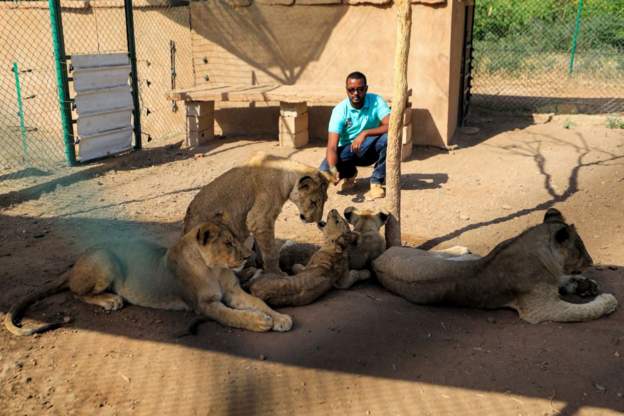
The person in charge of a place that takes care of animals in the middle of a war zone said it is very hard to rescue trapped animals, like lions and hyenas, in a safeway.
Osman Salih said it took a fewdays to save the stuck animals from a Sudanese animal rescue center near the cityKhartoum.
For the past seven months, it has been hard to find enough food and take care of the animals because of the fighting between the Sudanese Armed Forces and the Rapid Support Forces.
“It was a difficult mission,lots of vehicles were taken and we brought supplies with them… Our base has been attacked many times,” Osman Salih told the BBC’s Newsday show.
When the war started, there were 23 lions, 6 hyenas and 30 other types of animals in the center.
But after a few months, some of the animals got sick and died because the veterinarians couldn’t get them the medicine they needed,according to Salih.
He said it was hard to evacuate the conflict area because we needed to get permission,talk to both sides and it took a long time to plan. This is because the RSF controls the area. He said it was a very difficult job and a big risk for the team.
The animals are being moved to safer places in different cities outside the capital. -
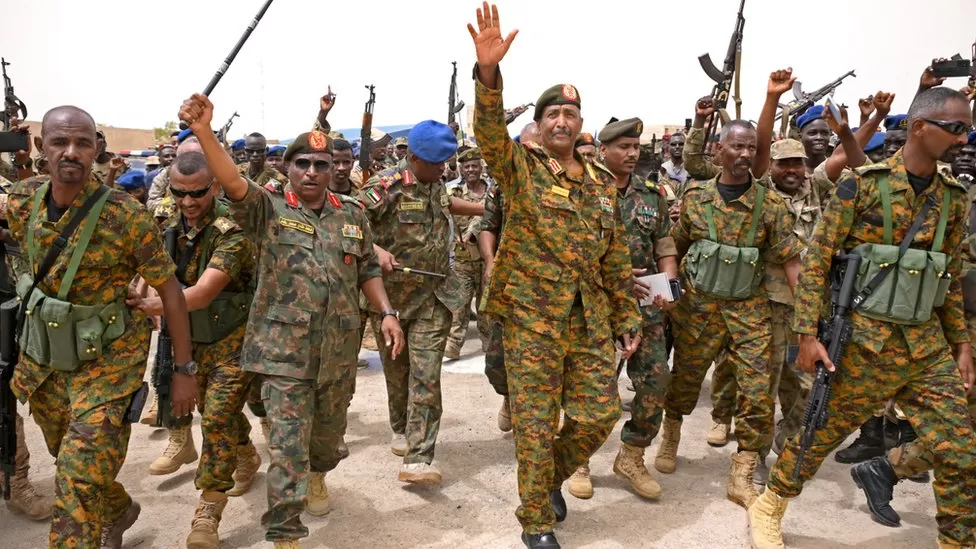
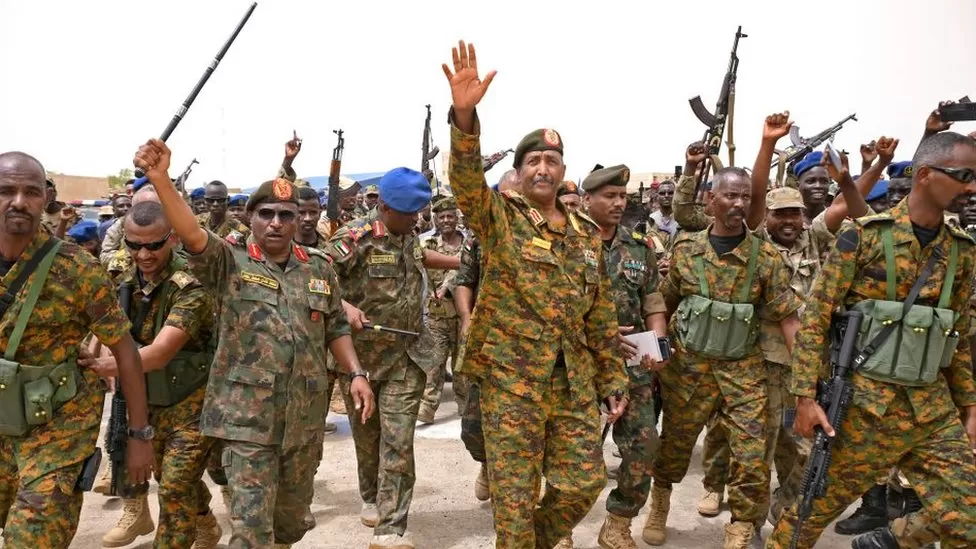
Army head of Sudan says he is prepared for peace negotiations
The leader of Sudan’s military said he is open to having a conversation with the rebel group’s commander. They are currently fighting for control of the country.
Gen Abdel Fattah al-Burhan said he agreed in general to meet with Mohamed Hamdan Dagalo, the leader of the Rapid Support Forces (RSF).
The two men have been fighting a very violent war within their own country since April. The United Nations has stated that over 5,000 people have been killed as a result of this war.
It means that over five million people have been forced to leave their homes.
Gen Burhan, who took control in a 2021 takeover, talked to the BBC in a rare interview after giving a speech at the UN General Assembly in New York.
He is in charge of the Sudanese Armed Forces (SAF) and is traveling around the world to get support from other countries and gain recognition for his leadership. However, he has not given up his power to civilian authorities.
The leader disagreed when people said his troops were attacking innocent people. But the United Nations and nonprofit organizations have proof that they are carrying out air strikes without considering who might be affected, hitting homes where regular people live.
He said he believed he would win, but acknowledged that he had to move his main office to Port Sudan because the fighting in the capital Khartoum had made it impossible for the government to keep going.
Gen Burhan said he is willing to have a meeting with Gen Dagalo, also known as Hemedti, if he keeps his promise to safeguard civilians. Both sides made this commitment during their negotiations in Jeddah, Saudi Arabia, in May.
Gen Burhan said that they are prepared to start talking about a deal.
If the leaders of these rebellious groups want to be reasonable and take their soldiers out of the places where people live and go back to their bases, we will talk to any of them. Whenever he keeps his promise in Jeddah, we will come together to solve this problem.
In a video message, Hemedti said he is prepared for political discussions.
Both leaders have discussed stopping the fighting in the past, but it hasn’t made the fighting decrease.
General Burhan said Sudan will not become a failed state like Somalia or a divided country like Libya.
Sudan will stay together as one country. Sudan will continue to be a whole country, and not a country that has failed. We don’t want the same things that happened in the other countries you mentioned. The people of Sudan are all supporting one cause now, which is to peacefully stop this mutiny or fight against it,” he said.
The United Nations has declared that neither side of the war seems likely to achieve a clear win through their military efforts.
Gen Burhan said he was very sure that he would be able to defeat the RSF. However, he acknowledged that the fighting had made him leave the city.
“He said that in Khartoum, the embassies, ministries, and all government bodies are unable to perform their usual duties. ” “Due to the ongoing conflict, there are people with guns hiding and military activities happening. ” That is why no organization can currently operate in Khartoum.
Many people in Sudan are being killed in random air attacks by Gen Burhan’s forces, especially in the city of Khartoum. But the leader said that innocent people were not being intentionally singled out and attacked.
The rebel forces are making up fake stories and acting like the armed forces. They are attacking innocent people and recording it as if it was done by the actual armed forces. We are skilled fighters, and we carefully choose specific places to attack where only the enemy is. We do not attack innocent people and we do not aim at places where people live.
The ex-UN special representative to Sudan, Volker Perthes, told the Security Council recently that “people with an air force, specifically the SAF, frequently carry out random bombings from the sky without choosing specific targets. ”
The fighting in Sudan has started again and has caused more disagreements between different tribes. This is especially happening in Darfur, which is in the western part of Sudan. The RSF and other groups that support them have been accused of causing many deaths, sexually assaulting people, and hurting others in a very severe way. -

Measles outbreak in Sudan’s displacement camps kills at least 13 children – NGO
An international medical NGO on Sunday reported that at least 13 children have passed away recently during a possible measles outbreak in internal displacement camps in Sudan’s White Nile state, amid fighting between the two warring factions of the country.
“The circumstance is urgent. The most critical health issues, according to Médecins Sans Frontières (MSF), or Doctors Without Borders, are suspected measles and child malnutrition.
MSF Sudan stated in a series of tweets: “Sudan‘s White Nile state is receiving an increasing number of refugees from the fighting. Thousands are being housed in nine camps, mostly women and kids.
From June 6 to 27, the NGO treated 223 children with suspected measles in White Nile camps, it said, with 72 – including the 13 who died – admitted to two clinics it supports.
“We are receiving sick children with suspected measles every day, most with complications,” MSF Sudan tweeted.
The NGO said it had received a total of 3,145 patients to the two clinics in the month of June, adding, “as more people arrive, there’s an urgent need to increase assistance, scale up services like vaccinations, nutritional support, shelter, water & sanitation.”
“The rainy season is approaching, and we’re concerned about a rise in waterborne diseases and malaria endemic to the area,” MSF Sudan warned.
There has been a steep rise in Sudanese refugees since fighting between the Sudanese Armed Forces (SAF) and the paramilitary Rapid Support Forces (RSF) broke out on April 15. Nearly 2.8 million people have fled, according to data from IOM, the UN Migration Agency.
At least 2,152,936 people are estimated to have been internally displaced, while another 644,861 fled across Sudan’s borders into neighboring countries, according to the IOM’s Displacement Tracking Matrix report published Tuesday.
-
Warring groups in Sudan’s leadership concur on a seven-day ceasefire – US
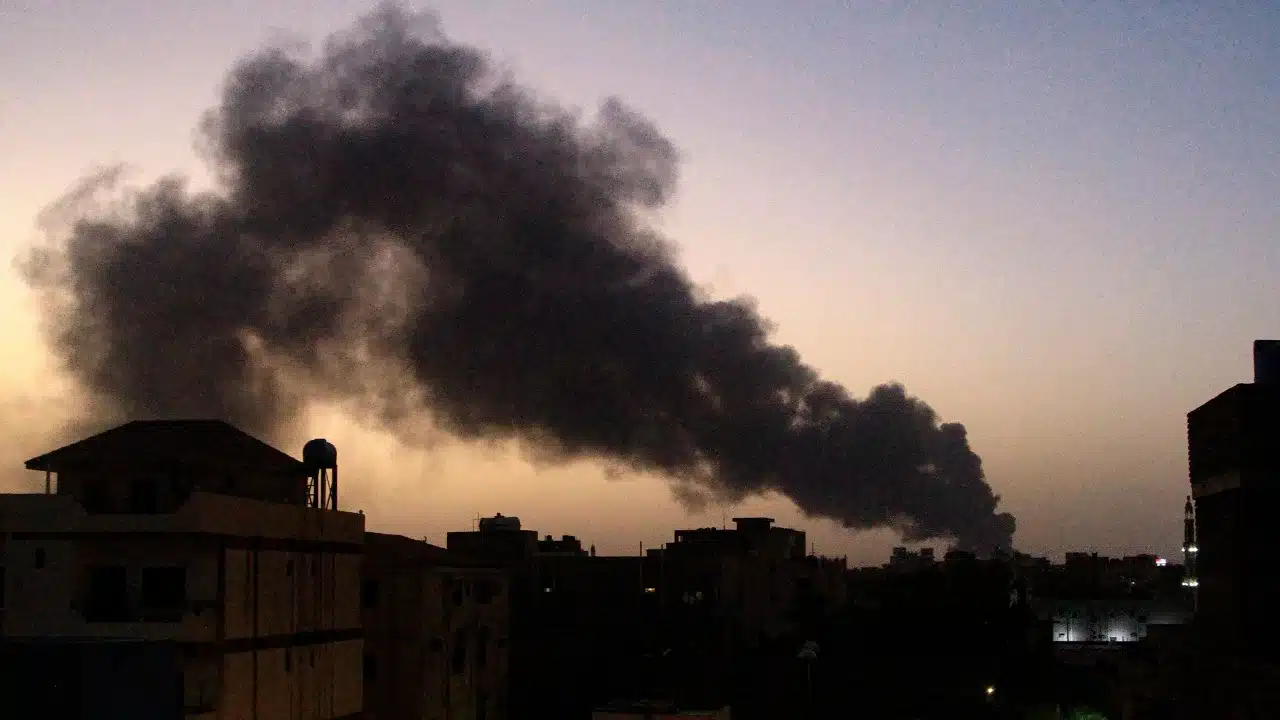
The US State Department said on Saturday that the Sudanese Armed Forces and the paramilitary Rapid Support Forces, the two warring factions in Sudan, had reached a seven-day ceasefire agreement. This is the first such agreement between the parties since violence broke out last month.
“It’s past time to put a stop to the shooting and to block human access. The world is watching, so I beg both parties to uphold this agreement, Blinken wrote in a tweet.
Earlier on Saturday, Blinken held a conversation with the commander of the Sudanese Armed Forces during negotiations between the two parties in Jeddah, Saudi Arabia.
The ceasefire, which was brokered by both the US and Saudi Arabia, will go into effect Monday, according to a State Department statement.
Previous ceasefires have failed to stop the fighting between the rival factions in various parts of Sudan, CNN reported. Failed negotiations between the head of the Sudanese army Abdel Fattah al-Burhan and RSF leader Mohamed Hamdan Dagalo broke out into intense clashes between both sides in mid-April, sparking a mass exodus of refugees from the conflict-ridden country and leading to the deaths of at least 528 people.
Thousands of foreign nationals have escaped Sudan as Western powers stepped in to evacuate their own citizens, while thousands more local families have risked perilous journeys from the capital Khartoum as they have been left to fend for themselves.
The ceasefire, according to the text of the agreement, will be “supported by a US-Saudi and international-supported ceasefire monitoring mechanism,” acknowledging that previous ceasefire agreements between the two groups have not been observed
John Godfrey, the US Ambassador to Sudan, called on both groups to observe the terms of the cease fire shortly after it was announced.
“The 7-day ceasefire agreement signed by SAF and RSF today in Jeddah will allow desperately needed humanitarian aid to reach the Sudanese people and provide a pathway to a permanent cessation of hostilities. I call on both parties to honor the agreement,” Godfrey said in a tweet.
The State Department said in its statement the US believes “subsequent talks in Jeddah will address steps needed to reach a permanent cessation of hostilities.”
“We look forward to leadership by Sudanese civilian stakeholders, with the support of the regional and international community, on a political process to resume a democratic transition and form a civilian government,” the statement said.
-
First RAF flight carrying Britons out of Sudan takes off for Cyprus
Following a broad agreement on a 72-hour truce, the British military has started the process of evacuating UK citizens from Sudan.
At least 2,000 Britons were reportedly still present in the country of North Africa as of yesterday, and there are rumors that the number may even be higher.
Around 1,400 military soldiers are reportedly working today’s operation, which involves flying British nationals first to the Akrotiri RAF station in Cyprus and then back to the UK.
According to information from the aviation website FlightRadar24, an RAF Lockheed C-130J Hercules with the registration ZH868 departed Khartoum, the capital of Sudan, at 10.21am local time, which is one hour earlier than UK time.
Foreign Secretary James Cleverly had previously said any effort from the government to evacuate UK citizens would be ‘severely limited’ unless there was a pause in the fighting.
The breakthrough came last night, with all sides of the conflict agreeing to put down their weapons for three days.
US Secretary of State Anthony Blinken said: ‘Following intense negotiation over the past 48 hours, the Sudanese Armed Forces (SAF) and the Rapid Support Forces (RSF) have agreed to implement a nationwide ceasefire starting at midnight on April 24, to last for 72 hours.’
A spokesman for Prime Minister Rishi Sunak said: ‘The prime minister made the decision [to evacuate] late last night.
‘This is something that the prime minister and the foreign secretary and others have been working on for some time now.’
This morning, Mr Cleverly tweeted: ‘The UK government is coordinating an evacuation of British nationals from Sudan.
‘We have started contacting nationals directly and providing routes for departure out of the country.’
The Foreign Office urged citizens not to travel to the airfield outside the capital Khartoum unless they are contacted, as the situation remains ‘volatile’.
Just hours after the beginning of the ceasefire last night, there were reports of gunfire and shelling heard in Khartoum.
On its website, the department says: ‘Travel within Sudan is conducted at your own risk and plans may change depending on the security situation.’
Also writing on Twitter, Mr Sunak said those most at risk would be prioritised in the evacuation.
He said: ‘The government has begun a large-scale evacuation of British passport holders from Sudan on RAF flights.
‘Priority will be given to the most vulnerable, including families with children and the elderly.’
He added: ‘I pay tribute to the British Armed Forces, diplomats and Border Force staff carrying out this complex operation.
‘The UK will continue to work to end the bloodshed in Sudan and support a democratic government.’
Newly installed Deputy Prime Minister Oliver Dowden will chair a Cobra meeting on the evacuation efforts today, the eighth such meeting.
Sir Nicholas Kay, who served as the British ambassador in Sudan between 2010 and 2012, warned that the ceasefire was ‘precarious’ and the situation remained extremely dangerous.
He told BBC Radio 4’s Today programme: ‘The security situation can change very quickly.
‘The command and control over forces isn’t complete and there is no trust between the two sides so they might kick off again.’
British diplomats in Khartoum, as well as their family members and other embassy residents, were flown out of the country on Sunday night following a daring operation led by the SAS under heavy gunfire.
The mission had involved 1,200 personnel from the Army, Royal Air Force and Royal Navy.
The group was rescued using the same types of aircraft that have been mobilised for the wider evacuation effort today: A400M and C-130 Hercules transport planes, flying from RAF Akrotiri in Cyprus.
More than 400 people have died and thousands have been injured since the conflict between the Sudanese army and paramilitary forces began less than two weeks ago.
Army chief Abdel Fattah al-Burhan is locked into a power struggle with Hemedti, the leader of the rebel Rapid Support Forces (RSF), with both seeking control after combining to topple previous dictator Omar al-Bashir in 2019.
Yesterday, Downing Street confirmed British ambassador to Sudan Giles Lever and his deputy were out of the country when the violence broke out.
The prime minister’s official spokesman said: ‘I think it was around the time of Ramadan, that they were out of the country at that point.
‘There were very senior staff still in the country and both those who were in country and the ambassador have been working around the clock to aid efforts.’
-

France starts evacuating its embassy personnel
According to a statement released by the nation’s foreign ministry on Sunday, France has started a “rapid evacuation operation” to remove its residents and diplomatic officials from Sudan.
The ministry stated that this would also apply to nationals of “European and allied partner” countries.
The first evacuations of citizens from nations like Qatar, Egypt, Canada, India, Burkina Faso, and the United Arab Emirates by Saudi officials coincide with the evacuation of US federal employees and Iraqi diplomats from embassies in the capital Khartoum.
Fighting between two rival military factions in the country – the Sudanese Armed Forces and Rapid Support Forces (RSF) – continues despite a 72-hour truce declared for the Muslim holiday of Eid.
Loud explosions and clashes were reported early Sunday morning, particularly around the military headquarters and presidential palace in Khartoum.
Eyewitnesses told CNN that they could hear aerial attacks and heavy weapons being used in Khartoum as well as rocket launchers.
On Saturday night, the Sudanese Armed Forces spokesperson said that the RSF had released inmates from two prisons – El Hoda in northwest Omdurman and one in Soba.
Among El Hoda’s inmates are members of the security services, some of whom have been sentenced to death. There are also members of the RSF in the two prisons.
The RSF denied having released any prisoners.
In Bahri, a city north of Khartoum, hundreds of civilians protested late on Saturday against the fighting and violence – eyewitnesses told CNN journalists that they were using their lights from their phones while walking. The protest passed without violence or arrests.
On Sunday, protesters plan to display white flags in their homes.
CNN journalists said there is limited internet access to internet providers in Sudan.
This is a developing story. More to come