In Mogadishu, the Sudanese community has built a strong support system, finding comfort in shared traditions and collective resilience.
During Ramadan, this bond is even more evident as families gather for iftar, sharing familiar dishes like aseeda and balila.
The community also organizes a five-a-side football tournament, bringing together both Sudanese and Somali players in the spirit of unity.
“As you can see behind me, love brings us together,”said Ishag Ali Mohamed, a Sudanese academic who now teaches Arabic at the Somali Digital Media Academy.
Watching a match from the sidelines, he added, “This is how we spend all of Ramadan, filled with beautiful activities. And it almost feels like you’re not in a foreign land.”
But Mohamed’s journey to this new home was far from easy. Fleeing the violence in Sudan, he was forced to leave everything behind. In 2023, the country descended into war as tensions between the military and the paramilitary Rapid Support Forces erupted into full-scale conflict.
Trapped for months in his home, Mohamed and his family lived in constant fear”One of the most painful incidents was when I was at home with my family, and a massive ‘dana’ explosive (shell) fell on our house,” he said.
“It destroyed a wall, cut down trees, and shattered doors. The entire neighborhood thought we had died.”
The war has taken a devastating toll, with over 20,000 lives lost and more than 14 million people displaced.
Many have been forced to seek refuge elsewhere, including Somalia, where Mohamed has managed to rebuild his life.
Despite the trauma of war, the Sudanese in Mogadishu have created a sense of home away from home.
In their gatherings, meals, and shared experiences, they find solace—and in the face of adversity, they hold onto hope.
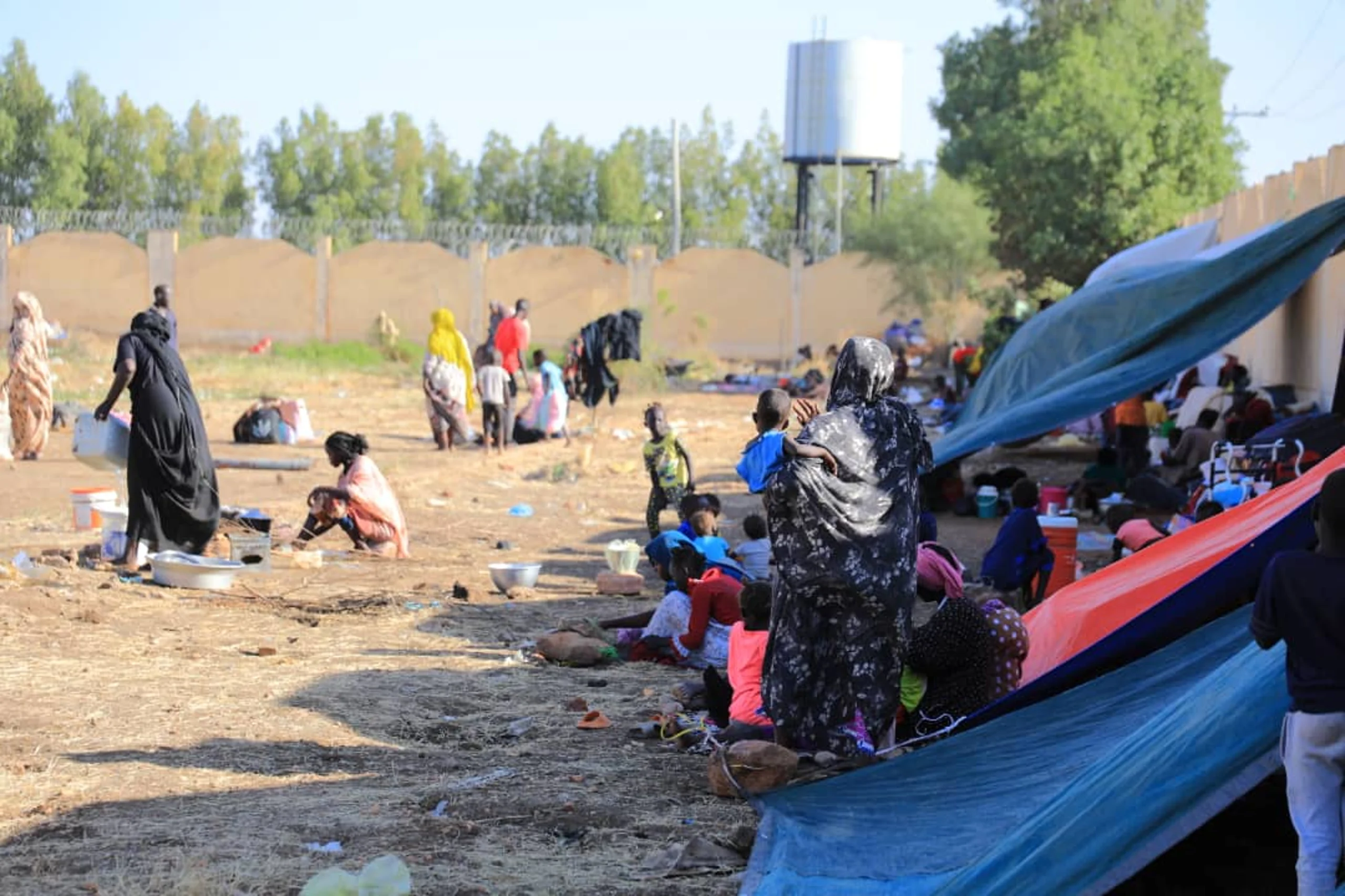
Displaced Sudanese families are making their way back to Omdurman, west of Khartoum, as the city shows signs of recovery following nearly two years of war.
With the Sudanese military regaining control from paramilitary forces, many residents have returned to observe the Muslim fasting month of Ramadan.
However, for some, like Awad Zayed, the homecoming has been bittersweet, as they find their houses in ruins, riddled with bullet holes and debris.
Despite the destruction, normalcy is gradually returning. According to local resident Yousef Abdul Qader, food prices were initially high, but with roads reopening and supply routes improving, markets are stabilizing.
“Every day, people return to their homes, and life is gradually returning to normal,” he said.
Humanitarian efforts are also aiding the transition. Gaith Abdul Qader, who manages a community kitchen, noted that while Omdurman was almost empty last year, his team is now feeding dozens of people daily as families resettle.
Meanwhile, the Sudanese military continues to advance against the paramilitary Rapid Support Forces (RSF), pushing further into Greater Khartoum. Their goal is to reclaim key government institutions, marking a crucial stage in a conflict that has displaced millions and left tens of thousands dead since April 2023.
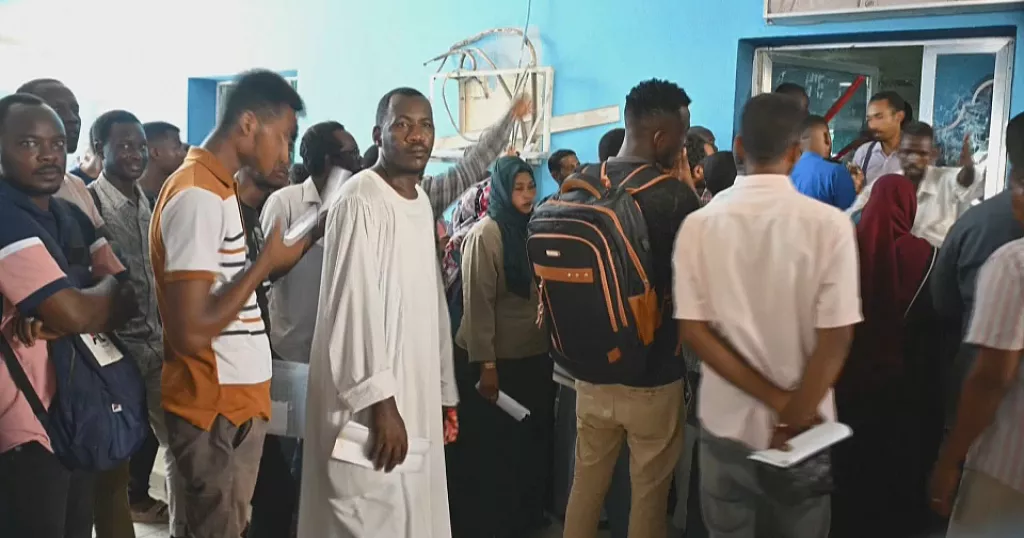
Marwa Omar, along with hundreds of others, queued at dawn in Port Sudan to secure passports, but after 15 hours of waiting, she remained empty-handed.
Since April, an estimated one million people have fled Sudan due to the war between the Sudanese army and the paramilitary Rapid Support Forces. However, many needed passports, and when violence erupted in April, passport offices closed.
In late August, a new passport office opened in Port Sudan, leading to long queues of desperate people trying to obtain the necessary documents to leave the war-torn country.
Asked about her destination, Marwa Omar replied, “Anywhere but here. This isn’t a country anymore.”
The five-month war has resulted in the deaths of 7,500 people, the displacement of over five million, and the deterioration of Sudan’s fragile infrastructure, leaving millions in dire need.
“There’s nothing left. We can’t live or put food on the table or educate our children,” said Marwa Omar.
Coastal city Port Sudan, which has largely been spared in the fighting, has become a haven for many, including government officials, the United Nations, and Sudan’s only functional airport.
But even for those who manage to enter the passport office, the process is grueling, with cramped conditions, heat, and a lack of seating.
Fares Mohammed, attempting to obtain a passport for his child, said, “At this rate, we’ll be here for months.”
Over 2.8 million people have fled the Sudanese capital Khartoum, and more than half of Sudan is in dire need of humanitarian aid, with six million on the brink of famine, according to the UN.
The cost of obtaining a passport, $200, is a considerable burden for those already grappling with soaring living and food costs.
Nour Hassan, a mother of two, said, “It’s a terrible choice to leave, but living here has become impossible.” She hopes to reach Cairo, Egypt, where she has family, and, like many others, considers it a temporary solution, waiting until it’s safe to return home.
In the Sudanese city of Nyala, heavy fighting between rival military forces has persisted for several days, resulting in the death of at least 30 civilians and leaving dozens others injured.
The paramilitary Rapid Support Forces (RSF) and allied Arab militias have been engaged in attempts to seize control of the main army base in the city, which serves as the capital of South Darfur state.
In response, the army has used heavy artillery, leading to shells hitting residential areas.
As a consequence of the violence, many people have fled to villages outside the city, seeking safety.
A human rights worker informed the BBC that RSF fighters have been compelling civilians to surrender their vehicles.
The western region of Darfur has witnessed the worst of the violence since the fierce power struggle erupted in April between the army and the RSF.
Numerous regional efforts have been made to negotiate a ceasefire between the two factions.
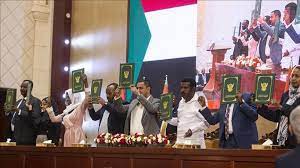
On Tuesday (July 25), a group of Sudanese who support democracy demanded an end to the country’s strife and opposed the deployment of different militaries there.
The group, known as the Forces for the Declaration of Freedom and Change, expressed their hope that a solution to the conflict would result in the establishment of a “Sudanese state free from wars and the building of an armed forces that serve the Sudanese people based on principles and values” in a press conference with reporters in Cairo, the capital of Egypt.
Yasir Arman, a member of the bloc’s executive office, declared: “We are against the multiple armies.”
Arman added that the bloc has no issues with the arrival of IGAD and other international forces to oversee any cease-fire and an end to hostilities.
As part of the process to end the war, he emphasised, “there should be preparation for the deployment of these forces to monitor the final ceasefire, not to occupy Sudan.”
Since the beginning of April, when months-long tensions between the military and its competitor, the paramilitary Rapid Support Forces, erupted into open combat in Khartoum, the capital, and other parts of the country in northeastern Africa, the country of Sudan has been in a state of turmoil.
Over 2 million people have been displaced by the battle between the leader of the RSF paramilitary group and the general of the Sudanese army.
The horrors of the conflict include assaults on hospitals and rapes.
Accountability was demanded by representatives of the FFC, a coalition of militants and many political parties.
According to Sediq al Sadik al- Mahdi, a member of the Sudan Forces for the Declaration of Freedom and Change’s executive office, “in this context, we affirm that we deal with violations as a matter of human rights and ethics.”
“We demand that any infractions stop right away, and that an independent inquiry be carried out to find the offenders and hold them accountable. Adopting efficient processes is necessary to provide victims justice, hold offenders accountable, offer restitution, and pay those who have been harmed.
The fighting dashed Sudanese expectations of resuming the nation’s democratic transition, which had started with the overthrow of longtime tyrant Al-Bashir. The transition was halted in October 2021 by a coup that was organised by the military and RSF.
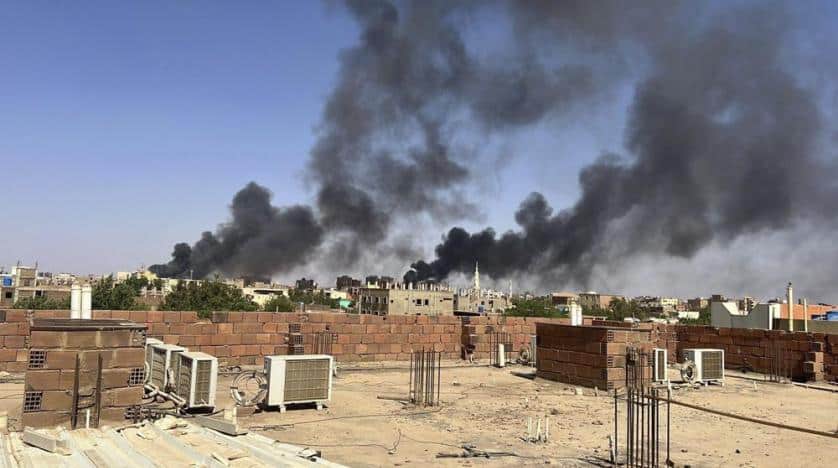
More shelling has been reported in the Sudanese capital Khartoum, as fighting between the country’s warring generals intensifies.
Witnesses reported artillery fire around the state television building in the adjoining city of Omdurman.
The army announced it had brought reinforcements to the capital from other parts of Sudan.
Fighting has continued for nearly seven weeks, between the army and the paramilitary Rapid Support Forces (RSF), in Khartoum and the western region of Darfur, despite efforts to broker a humanitarian ceasefire.
On Thursday the US issued sanctions against four Sudanese companies and several individuals, after the collapse of a US-Saudi brokered truce.
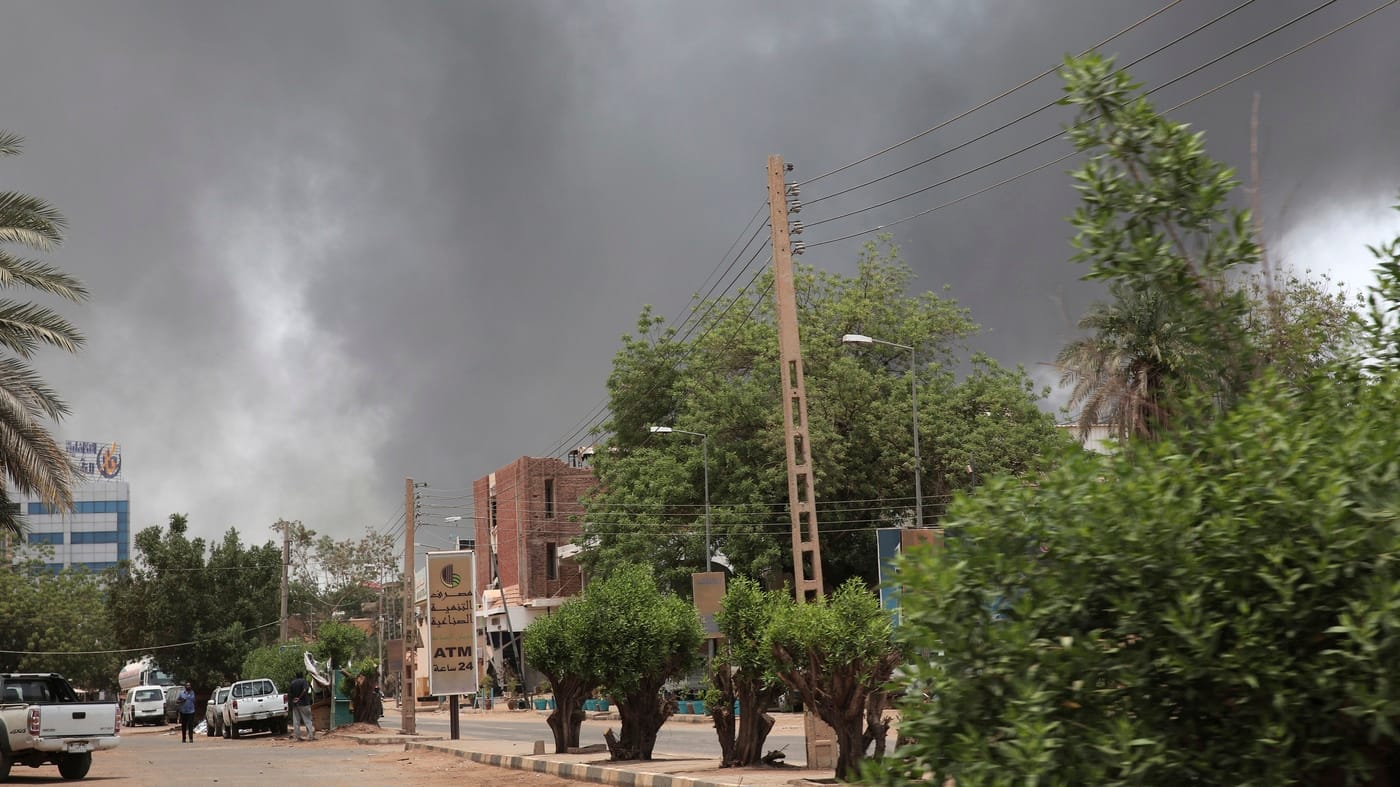
Gunfire and explosions have echoed across the Sudanese capital Khartoum for the 20th straight day.
Witnesses reported loud blasts and exchanges of fire on the streets.
Heavy bombardments also rang out in the adjoining cities of Omdurman and Bahri.
The army said it was ready to abide by a new seven-day ceasefire, but there’s been no word from the rival paramilitary, the Rapid Support Forces (RSF).
The military said it killed RSF fighters and destroyed a number of vehicles “belonging to the rebels”, after clashing with the group in the Bahri military region.
It is reportedly trying to push the RSF back from the area around the presidential palace and the army headquarters.
The United Nations aid chief, Martin Griffiths, said the determination of the warring parties to keep fighting risked turning the conflict into a global tragedy.
The Sudanese civil war erupted again last month, this time originating inside Khartoum, the country’s capital.
The war is thought to have displaced at least 75,000 people.
I count over 65 relatives, aunts, uncles, a great uncle, and my 80-year-old father among them as a British-Sudanese who was spending Ramadan there.
According to their texts, my family’s escapes from Sudan have been difficult, risky, and expensive. My father shared food and water with his cousin and extended family, slept outside, went without a bathroom for six days, and had to ration it.
Having spoken to them, their despair at having to leave is palpable. They look so, so tired. I wish I could reach out and carry them all to a safe bed.
And more than that, I wish the UK government would step up, like they did in Ukraine, and support those caught up in this war.
Despite my family’s plight, they have struggled to get the help they need from British authorities.
Evacuation flights to the UK were announced too late for my father to get to the airfield safely.
They even initially refused boarding to those who didn’t have British passports, despite some being NHS doctors with resident and work permits and others the parents of British citizens.
For me, the subsequent u-turn proves the government could have allowed them to board immediately, but only acted after bad headlines.
I was born and raised in England and now work as a doctor all over the world. I shouldn’t have to battle for my family fleeing war to be allowed a legal – and safe – route to safety in the UK.
The government’s approach seems in marked contrast to last year, when, just a week after Russia’s invasion, the government announced the new Ukraine Family Visa scheme, offering a legal route to enter the UK for family members of British nationals or people with settled status in the country.
Simply having a relative with indefinite leave to remain, a resident permit or even being a UK-based refugee, would qualify any Ukrainian to apply for a no-fee online visa, supported by a free-of-charge telephone helpline.
I feel qualified to ask Suella Braverman exactly what, in her government’s eyes, is the difference between a Sudanese person fleeing war and a Ukrainian person fleeing war? (Picture: Javid Abdelmoneim)
Having worked in Ukraine from March to July 2022. I agree that those fleeing that war needed all the help they could in reaching safety.
After 17 days of war in Sudan, those of us hoping for a similar scheme have been left disappointed.
Instead, Home Secretary Suella Braverman went on a media round to confirm not only that no legal means would be made available but that any Sudanese arriving by small boat would be detained and could be removed to Rwanda.
She said that ‘the situation is very different to Ukraine’.
Take it from someone who has worked in conflict zones, war is war no matter where in the world it takes place.
Choosing to leave your home is never the easy option. I see the strain of that decision haunting my cousins’ faces this week, much as I have seen it in my patients’ faces in Iraq, South Sudan, Syria, Tigray and indeed Ukraine when I worked in those wars.
So given my experience, I feel qualified to ask Suella Braverman exactly what, in her government’s eyes, is the difference between a Sudanese person fleeing war and a Ukrainian person fleeing war?
Watching Braverman roll out tired cliches about helping those caught up in conflict was infuriating.
I was born and raised in England and now work as a doctor all over the world. I shouldn’t have to battle for my family fleeing war to be allowed a legal – and safe – route to safety in the UK (Picture: Javid Abdelmoneim)
Arguably, the UK has more of a connection to Sudan, as the former colonial power in Sudan, which achieved independence only when my dad was 14 years old in 1956.
That is not ancient history, rather living memory. Dad studied, married my mother and raised his family in Cambridge. His is just one of thousands of stories of Sudanese with strong links to the UK.
For me, denying Sudanese people the same support we extended to Ukrainians, is just another element of the grim reality of racism in the UK.
That reality is evident in the Windrush scandal, in the events at Yorkshire Cricket Club, in NHS maternal health outcomes and in reports like Lady Casey’s into the Met Police.
Whatever the reason behind this breathtaking double standard, the outcome for Sudanese people is in no doubt.
As I write, my cousins are languishing at border crossings, with no prospect of finding safety at my side.
I believe more Sudanese will drown at sea trying to flee war.
It doesn’t have to be this way – it is on all of us in the UK, no matter our background, to challenge the reality of racism wherever we meet it.
For the sake of my family and so many others, I need the UK to do more to help Sudanese people, just as we helped Ukrainians.
No matter what Suella Braverman says, these are comparable situations.
Bullets don’t differentiate between nations, and nor should we.
Having spoken to them, their despair at having to leave is palpable. They look so, so tired. I wish I could reach out and carry them all to a safe bed.
And more than that, I wish the UK government would step up, like they did in Ukraine, and support those caught up in this war.
Despite my family’s plight, they have struggled to get the help they need from British authorities.
Evacuation flights to the UK were announced too late for my father to get to the airfield safely.
They even initially refused boarding to those who didn’t have British passports, despite some being NHS doctors with resident and work permits and others the parents of British citizens.
For me, the subsequent u-turn proves the government could have allowed them to board immediately, but only acted after bad headlines.
I was born and raised in England and now work as a doctor all over the world. I shouldn’t have to battle for my family fleeing war to be allowed a legal – and safe – route to safety in the UK.
The government’s approach seems in marked contrast to last year, when, just a week after Russia’s invasion, the government announced the new Ukraine Family Visa scheme, offering a legal route to enter the UK for family members of British nationals or people with settled status in the country.
Simply having a relative with indefinite leave to remain, a resident permit or even being a UK-based refugee, would qualify any Ukrainian to apply for a no-fee online visa, supported by a free-of-charge telephone helpline.
I feel qualified to ask Suella Braverman exactly what, in her government’s eyes, is the difference between a Sudanese person fleeing war and a Ukrainian person fleeing war? (Picture: Javid Abdelmoneim)
Having worked in Ukraine from March to July 2022. I agree that those fleeing that war needed all the help they could in reaching safety.
After 17 days of war in Sudan, those of us hoping for a similar scheme have been left disappointed.
Instead, Home Secretary Suella Braverman went on a media round to confirm not only that no legal means would be made available but that any Sudanese arriving by small boat would be detained and could be removed to Rwanda.
She said that ‘the situation is very different to Ukraine’.
Take it from someone who has worked in conflict zones, war is war no matter where in the world it takes place.
Choosing to leave your home is never the easy option. I see the strain of that decision haunting my cousins’ faces this week, much as I have seen it in my patients’ faces in Iraq, South Sudan, Syria, Tigray and indeed Ukraine when I worked in those wars.
So given my experience, I feel qualified to ask Suella Braverman exactly what, in her government’s eyes, is the difference between a Sudanese person fleeing war and a Ukrainian person fleeing war?
Watching Braverman roll out tired cliches about helping those caught up in conflict was infuriating.
I was born and raised in England and now work as a doctor all over the world. I shouldn’t have to battle for my family fleeing war to be allowed a legal – and safe – route to safety in the UK (Picture: Javid Abdelmoneim)
Arguably, the UK has more of a connection to Sudan, as the former colonial power in Sudan, which achieved independence only when my dad was 14 years old in 1956.
That is not ancient history, rather living memory. Dad studied, married my mother and raised his family in Cambridge. His is just one of thousands of stories of Sudanese with strong links to the UK.
For me, denying Sudanese people the same support we extended to Ukrainians, is just another element of the grim reality of racism in the UK.
That reality is evident in the Windrush scandal, in the events at Yorkshire Cricket Club, in NHS maternal health outcomes and in reports like Lady Casey’s into the Met Police.
Whatever the reason behind this breathtaking double standard, the outcome for Sudanese people is in no doubt.
As I write, my cousins are languishing at border crossings, with no prospect of finding safety at my side.
I believe more Sudanese will drown at sea trying to flee war.
It doesn’t have to be this way – it is on all of us in the UK, no matter our background, to challenge the reality of racism wherever we meet it.
For the sake of my family and so many others, I need the UK to do more to help Sudanese people, just as we helped Ukrainians.
No matter what Suella Braverman says, these are comparable situations.
Bullets don’t differentiate between nations, and nor should we.
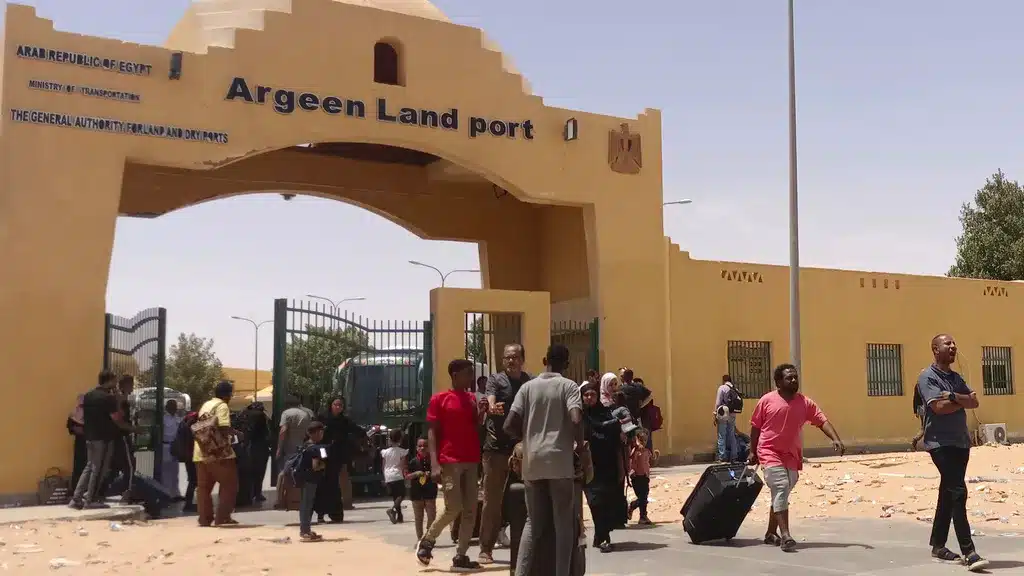
Thousands of Sudanese have begun entering Egypt through the northern Arqin border as a result of the conflict that broke out in their nation in mid-April between the army and the paramilitary Rapid Support Forces.
Buses are lining up at the border area and families have been sleeping outside in the desert, waiting to be let in to the neighbouring country.
“I left my home, my place because of the fighting between people of the same country against each other,” said Sudanese citizen Nawal al-Sharif.
The Egyptian foreign ministry said Thursday that more than 14,000 refugees from Sudan had crossed the border into Egypt since deadly
It added that a further 2,000 nationals from 50 other countries or members of international organisations had crossed into or were airlifted to Egypt.
The Sudanese Health Ministry says at least 512 people, including civilians and combatants, have been killed and another 4,200 wounded since the fighting began.
The Doctors’ Syndicate, which tracks civilian casualties, said at least 295 civilians have been killed and 1,790 wounded.
Tens of thousands of residents of the capital, Khartoum, have also fled to neighbouring provinces or into already existing camps within Sudan that house victims of past conflicts.
Egypt has close ties with the Sudanese military but has called on both sides to end the fighting.
Violence between Sudan’s two senior generals has erupted, causing havoc in Khartoum’s hospitals.
People have been unable to leave their homes since Saturday as the two sides engaged in gun battles and bombarded each other with artillery and airstrikes.
More than 185 people have been killed and over 1,800 wounded since the fighting erupted, according to United Nations figures.
At the Ahmed Qassem children hospital, medical staff had to evacuate all cases except the ones in the intensive care unit.
Supplies were running low, with doctors, nurses, patients and their relatives trapped inside for days as the Sudanese capital turned into a war zone.
“There is a shortage in staff, medicine and oxygen. The hospital is witnessing a shortage in many things and even the doctors have left,” said Dr. Mohamed al-Mostafa.
There are some 20 hospitals in the capital and the neighboring city of Omdurman. Those that still managed to operate were understaffed and overwhelmed, running low on supplies and struggling with power or water cuts, doctors said.
The sudden outbreak of fighting caught everyone off guard, trapping doctors and nurses inside hospitals, and preventing other staff from reaching the facilities.
The World Health Organization said many hospitals in Khartoum reported shortages of “blood, transfusion equipment, intravenous fluids, medical supplies and other life-saving commodities.”
Along with Ahmed Qassem children’s hospital, the Al-Shaab Teaching Hospital shut down Monday after a ward was struck in fighting, said the general manager, Al Nameir Gibril Ibrahim.
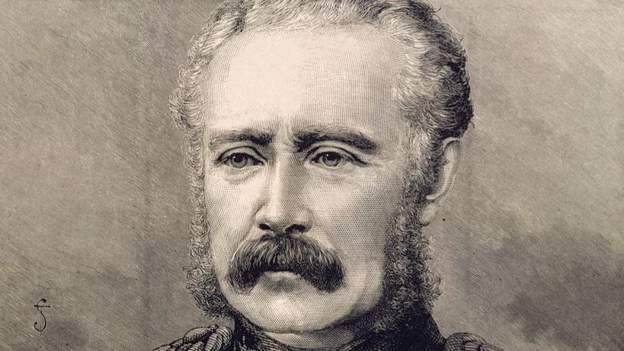
Award-winning Sudanese writer Leila Aboulela has retold the story of a British army general killed by the troops of the Mahdi – a religious leader in Sudan in the late 19th Century – in her new novel, River Spirit.
The book gives a Sudanese view of Gordon of Khartoum, whose story has travelled around the world in history books and Hollywood films – but almost always with a British outlook, glorifying him as a colonial-era hero.
General Charles Gordon died defending Khartoum in 1885 following a siege by Sudanese forces.
Aboulela says the 1966 film Khartoum starring Charlton Heston as Gen Gordon and Laurence Olivier as the Mahdi was full of inaccuracies.
“The only accurate thing was the weapons apparently… It wasn’t even filmed in Khartoum,” she told the BBC’s Newsday programme.
“So I wanted to retell the story and make it from a Sudanese point of view and how they saw events unfolding.”
The story of Gen Gordon is also one of the foundational stories for Sudan as nation, the novelist says.
For much of the 19th Century it was ruled by the Ottoman Empire and then in the early to mid 20th Century it was under joint British-Egyptian rule, before becoming independent in 1956.
“What the Mahdi did – it brought the Sudanese together almost for the first time. They felt united against the foreigner, whether they were Egyptians, Ottomans or British,” she said.
Her novel also puts women at the heart of the story, looking at their roles from nurses and vendors to cooks and spies.
“They are mentioned as footnotes in history or not mentioned at all – but they were part of the army… they were very much playing an active part and it was interesting to explore that.”
Source: BBC
DISCLAIMER: Independentghana.com will not be liable for any inaccuracies contained in this article. The views expressed in the article are solely those of the author’s, and do not reflect those of The Independent Ghana
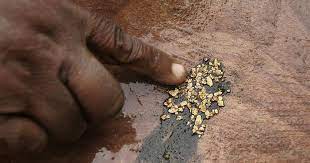
The body described it as the highest productivity in the history of the mineral sector in Sudan.
The Director of the General Administration for Supervision and Control of Production Companies, Engineer Alaeldin Ali, said in a press statement on Monday (Jan. 02) that productivity increased by one ton and 611 kilograms, compared to the highest production in the last period, which was achieved in 2019.
The 18 tons and 637 kilograms of gold produced in 2022 originated from the production of the organised sector of concession companies and companies dealing with traditional mining waste.
It is estimated that over 50% of Sudan’s gold is smuggled out of the country, with proceeds frequently used to finance the internal conflict.
Central Bank of Sudan issued a new circular to banks and related authorities in March 2022, banning the export of gold by government agencies and foreigners, individuals, and companies, excluding concession companies operating in mining.
The circular also limited the role of the Central Bank of Sudan to purchasing gold for the purpose of building reserves only.
Lovers of Sudanese dates are taking part in the 4th International Dates Festival which opened its doors in Khartoum, on Wednesday, November 30.
The festival started at the Friendship Congress Hall under the auspices of the Sudanese Ministry of Agriculture and Forestry.
Organisers say it is aimed to increase the international recognition of Sudanese dates and to develop production, marketing and exports. About 250 farmers from the United Arab Emirates, Egypt, Mauritania, Jordan and Saudi Arabiaare taking part in the festival.
With an annual production of about 330,000 tons and a date palm population of about 8 million, Sudan ranks number 8 in the list of top date producing countries of the world according to the International Society for Horticultural Science.
On August 28, 2022, forty members of the Sudanese Journalists Syndicate were elected into office. The team is tasked with defending the freedom of the press in Sudan. Since the 2021 coup, press freedom has declined. The military junta stifled private media reporting. Several journalists were detained and tortured. The new journalists need to form a strong network with other pro-democracy groups to stand up to the government backlash.
Press freedom is a fundamental human right in every society. The Syndicate needs to create a strong network with fellow liberty fighters. The network stands a risk of defeat if they fight alone. This strong network can be built by journalists working with other pro-democracy unions in Sudan, like the Local Resistance Committees (LRCs). The LRCs are effective against the military junta. Due to their stand against the junta, the LRCs have gained the people’s trust, especially the youth. Such trust in the resistance committeesfuels the people’s drive to seek a democratic government.
Sudanese journalists will contribute to the ongoing activism by fine-tuning the LRCs’ political watchdog narrative through their news coverage. The publication of their message is vital because the LRCs need to be independent of the junta. Partnership with Sudanese journalists will bring clear-cut coverage of the LRCs’ struggle. It will be without contamination from the people they seek to unseat from power. In addition, factual reporting on the LRCs’ activities will keep the group in check and see that they do not become autocratic.
The Syndicate must tell the stories of the Sudanese. Stories could be deployed in fighting military oppression. Interviewing underrepresented people will highlight the perils of the military’s authoritarian government. When the damage brought on the people by the junta is properly broadcast, ideas for solutions will come up. The best ideas will morph into movements that awaken people to challenge tyranny. In this way, a voice is given to those that the military junta wants to stay quiet.
The Sudanese press has to remind the youth that a government that respects and upholds all human rights is best. A Sudanese press that educates young people on the tenets of democracy and the doctrines of the rule of law will build a citizenry that thinks and speaks freely. Sensitization of democracy is the way to ensure the fight for press and civil freedoms continue. The press can carry it out by publishing editorials that clearly state the need for and benefits of freedom. These editorials should be published in local newspapers that will reach everyone.
The leadership election for the Sudanese Journalists Syndicate is a good sign, but that is only what it will be if there is no following action. These journalists must take a more attacking posture in their defense of media freedoms. The contribution of the press to the general freedom of the Sudanese people will come from speaking for the people with a pro-democratic strategy.
Arinze Nwafor is a writing fellow at the African Liberty
Source: Face2faceafrica
DISCLAIMER: Independentghana.com will not be liable for any inaccuracies contained in this article. The views expressed in the article are solely those of the author’s, and do not reflect those of The Independent Ghana