In the bustling streets of Accra, a scene unfolded that left bystanders amused and sympathetic in equal measure.
It was a scorching hot day, the kind that makes even the most seasoned locals break a sweat just by stepping outside. But for one unsuspecting visitor, the heat proved to be an unexpected challenge.
As the taxi came to a halt amid the midday heat, a white gentleman emerged from the vehicle, his face flushed with discomfort.
His attire now clung uncomfortably to his body. In a moment of sheer desperation, the man made a bold decision.
Right there in the middle of the bustling street, he removed his shirt. It was a sight that drew curious glances from passersby.
The moment a wh!te man was humbled by the extreme heat in Ghana as he stepped out of the taxi he had boarded in the middle of the road and removed his shirt. pic.twitter.com/5tQ6LPUrNR
Temperatures are expected to rise significantly in the coming days, with a peak anticipated on March 20, 2024, as the sun moves towards the equator.
The current weather in Ghana is already hot, exacerbated by the ongoing Harmattan season. However, GMet forecasts that temperatures will intensify, surpassing the current conditions.
According to GMet, “The sun is on its apparent movement from the southern hemisphere towards the northern hemisphere and expected to be on the equator on March 20, 2024.”
In view of this, “an increase in temperature is expected from now through March to April 2024.”
The projected temperature ranges are formidable, with the southern half expected to experience maximums between 33°C to 37°C and the northern regions facing even higher temperatures ranging from 36°C to 42°C.
Simultaneously, minimum temperatures are anticipated to fluctuate between 22°C and 27°C nationwide.
GMet has however clarified that this does not suggest the occurrence of heat waves. “Temperatures are normally high during these months and require precautionary measures to deal with the associated risks,” it noted.
According to GMet, “this period also coincides with the transition from the dry season into the major rainy season for southern Ghana. Rains during this period will be less frequent but quite violent.”
“Expect localised rain and thunder with occasionally strong winds, especially over southern Ghana,” it added.
To protect public health during this period of heightened temperatures, GMet advises the following precautions:
Stay Hydrated: Drink plenty of fluids to prevent dehydration.
Seek Shade: Use umbrellas or hats, especially between 11 am and 3 pm when the sun is strongest.
Apply Sunscreen: Use sunscreen when spending extended time outdoors to protect your skin from sunburn.
Please note that this DOES NOT suggest the occurrence of heat waves. Temperatures are normally high during these months and require precautionary measures to deal with the associated risks. https://t.co/vksSyevbHT
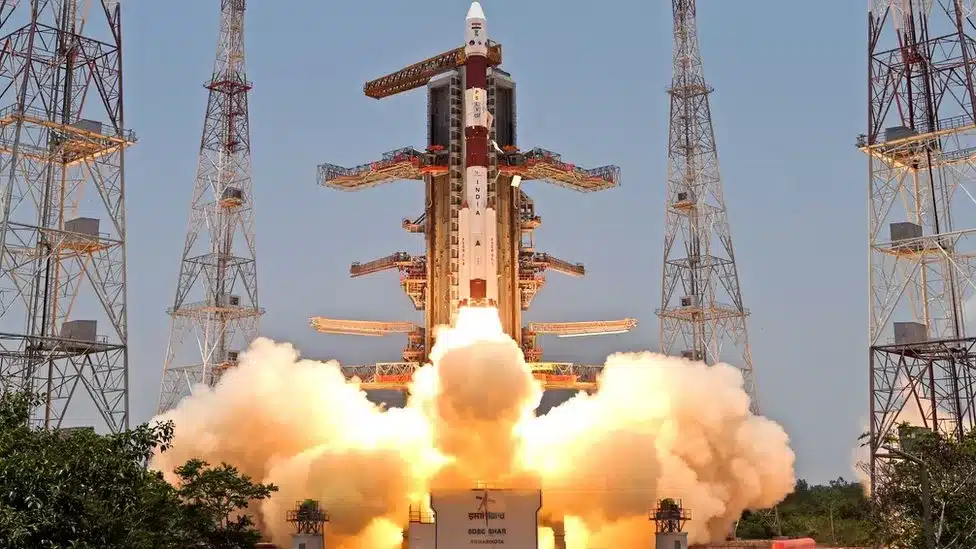
India has successfully launched its inaugural observation mission to the Sun, named Aditya-L1. The launch took place at Sriharikota at 11:50 AM Indian time (06:20 GMT). Aditya-L1 will travel a distance of 1.5 million km (932,000 miles) from Earth, equivalent to 1% of the Earth-Sun distance, and it will take approximately four months to reach its destination.
The mission is named after Surya, the Hindu god of the Sun, and “L1” refers to Lagrange point 1, the precise location between the Sun and Earth where the spacecraft is heading.
A Lagrange point is a position where the gravitational forces of two large objects, such as the Sun and Earth, balance each other, allowing a spacecraft to remain stationary. Once Aditya-L1 reaches this point, it will orbit the Sun at the same rate as Earth, requiring minimal fuel for operation.
The launch was witnessed by thousands of people at the viewing gallery set up by the Indian Space Research Agency (ISRO) near the launch site, and it was broadcast live on national TV. ISRO scientists declared the launch successful, and it will take Aditya-L1 135 days to complete its journey to Lagrange point 1.
The mission aims to benefit not only India but also the global scientific community by studying the Sun continuously, even during eclipses, and conducting scientific research.
It will observe and study various aspects of the Sun, such as the solar corona, photosphere, and chromosphere, helping scientists better understand solar activity and its impact on Earth and near-space weather.
While the exact cost of the mission has not been disclosed, reports in the Indian press estimate it at 3.78 billion rupees ($46 million). The mission is expected to enhance our scientific understanding of the Sun, improve space weather forecasting, and contribute to the longevity of satellites in space.
India’s solar mission comes shortly after the country achieved a historic milestone by successfully landing a probe near the lunar south pole, becoming the fourth nation in the world to achieve a soft landing on the Moon.
Other countries, such as Japan, the US (through NASA), and the European Space Agency (ESA), have conducted missions to study the Sun, with NASA’s Parker Solar Probe being a notable recent example. These missions aim to unlock the mysteries of our solar system’s star and its dynamic behavior.