Belinda, the CEO of Chez Amis and a well-known Snapchat personality, has addressed the speculation surrounding her curvaceous figure.
She firmly denies claims that her ample buttocks are the result of plastic surgery.
Belinda explained that her naturally full figure has always been a part of her.
While she hasn’t had surgery specifically for her buttocks, she has undergone other cosmetic procedures.
She underwent liposuction 360, a technique that removes fat from the back and abdomen, and also had breast reduction surgery to alleviate back pain caused by excess breast tissue.
She shared, “People who know me can attest that I’ve always had a sizable rear end.
The liposuction was to address fat in my back and stomach, and the breast reduction was necessary due to discomfort from having too much breast tissue.
Now, my breasts are small enough that I don’t need to wear a bra, which was my goal for comfort.”
Belinda mentioned that her procedures were carried out in Ghana by a well-regarded surgeon in Kumasi, and she praised the results.
“It’s been three years since the surgeries, and my Ghanaian doctor did an outstanding job,” she said.
In a recent comment on her growing influence, Delay remarked, “I think you’re now the ones who control Accra.” To which Belinda responded, “I see it as my time to shine, but like all things, this too shall pass, and someone else will eventually take the lead.”
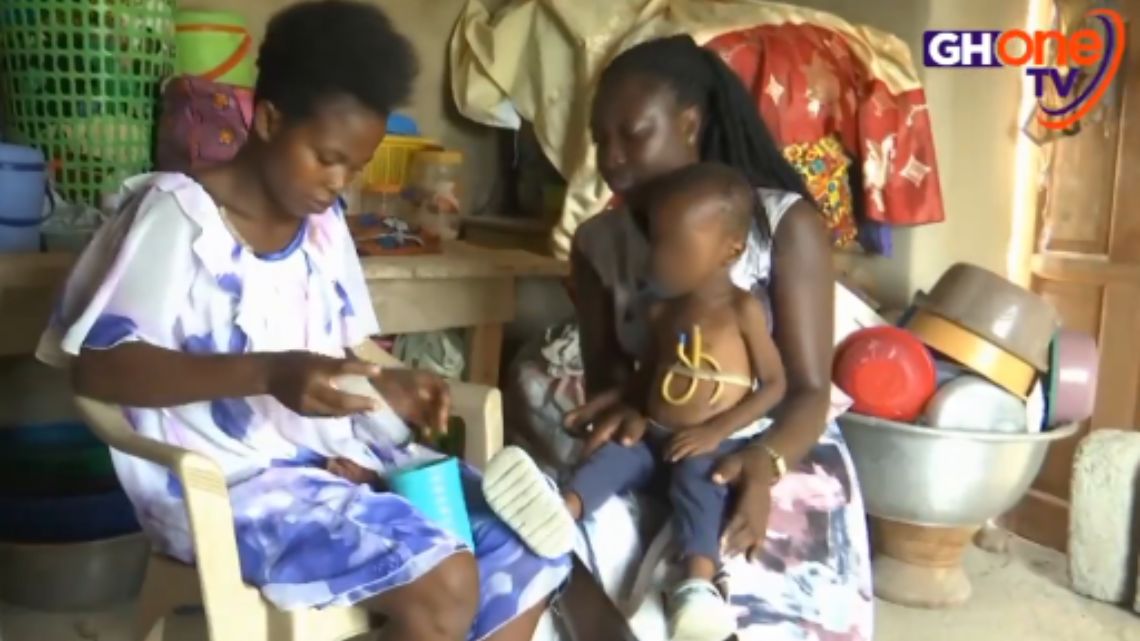
Two-year-old Heaven Shebbulwell urgently needs GHS400,000 to undergo surgery for oesophageal stricture to enable him to swallow easily without intense discomfort.
Oesophageal stricture is a narrowing of the oesophagus, the tube that carries food from the throat to the stomach. This condition can make swallowing difficult and painful.
For almost a year, the condition has led to a blockage in little Heaven Shebbulwell’s throat, causing him unbearable pain.
Heaven is currently relying on a tube to stay alive.
Speaking to GHOne TV, Heaven’s mother, Jacklyn Konaki, a petty trader, shared a heartbreaking story of struggle and abandonment.
Two-year-old Heaven Shebbulwell urgently needs GHS400,000 to undergo surgery for esophagus stricture; a condition that causes difficulty in swallowing. For almost a year, the condition has led to a blockage in little Heaven Shebbulwell's throat, causing him unbearable pain.… pic.twitter.com/lUcT4cQu58
Gastroesophageal reflux disease (GERD): This is when stomach acid backs up into the oesophagus, damaging its lining and causing inflammation and narrowing.
Swallowing corrosive substances: Ingesting substances like lye or other strong chemicals can cause scarring and narrowing of the oesophagus.
Radiation therapy: Treatment for cancer in the chest or upper abdomen can cause scarring and narrowing of the oesophagus.
Surgery: Some types of surgery on the oesophagus or nearby structures can lead to scarring and narrowing.
Inflammation: Conditions like eosinophilic esophagitis, an allergic reaction in the oesophagus, can cause narrowing.
Symptoms of oesophageal stricture include:
Difficulty swallowing (dysphagia), especially with solid foods.
Pain or discomfort when swallowing.
Regurgitation of food or liquids.
Heartburn.
Unintentional weight loss.
Treatment for oesophageal stricture depends on the underlying cause and the severity of the narrowing. Options may include:
Dilation: A procedure to stretch or widen the narrowed area of the oesophagus.
Medications: Acid-reducing medications may be prescribed to reduce inflammation and promote healing.
Surgery: In severe cases, surgery may be necessary to remove the narrowed area or to bypass it.
Treating the underlying cause: Addressing conditions like GERD or eosinophilic esophagitis can help prevent further narrowing.
The National Vice President of trained Wanzam operators in Ghana, Akua Afriyie Nkrumah, has outlined the potential risks associated with not undergoing circumcision.
She pointed out that uncircumcised men face a higher susceptibility to Sexually Transmitted Diseases (STDs).
Mrs. Nkrumah’s comments were prompted by the 2022 Demographic Health Survey from the Ghana Statistical Service, which disclosed that approximately 5 percent of Ghanaian men remain uncircumcised, accounting for around 835,000 individuals.
During an interview on Adom FM’s morning show, Dwaso Nsem, Mrs. Nkrumah emphasized that aside from the increased risk of STDs, uncircumcised men are prone to phimosis, penile cancer, and urinary tract infections.
She advised against having multiple partners, as this further elevates the risk of infections and their transmission.
Mrs. Nkrumah also addressed the psychological impact of the decision not to undergo circumcision, noting that the procedure is possible in adulthood.
She shared her experience of performing circumcision on a 56-year-old man, emphasizing that there was no observable difference, encouraging men not to be discouraged by age if considering the procedure.
The father of a three-month-old baby named Nsoroma, who needed assistance for the removal of a lump on her back present since birth, is urgently seeking support.
Following multiple visits to a hospital in the Eastern Region, the baby was transferred to the Korle-Bu Teaching Hospital, where a scan revealed excess fluid in her head.
The necessary surgery was estimated to cost GH¢15,000. Despite several attempts to secure this amount and save Nsoroma’s life, the family was unable to gather the required funds, leading to the unfortunate demise of the baby.
Her devastated father, Kwadjo Misah, said, “My world has come to an end. I feel shattered and guilty for not being able to save my baby’s life due to financial constraints.”
In order to receive some much-needed relief, he is pleading with the publicto help him pay the GH¢8000 hospital bill he incurred during those trying times.
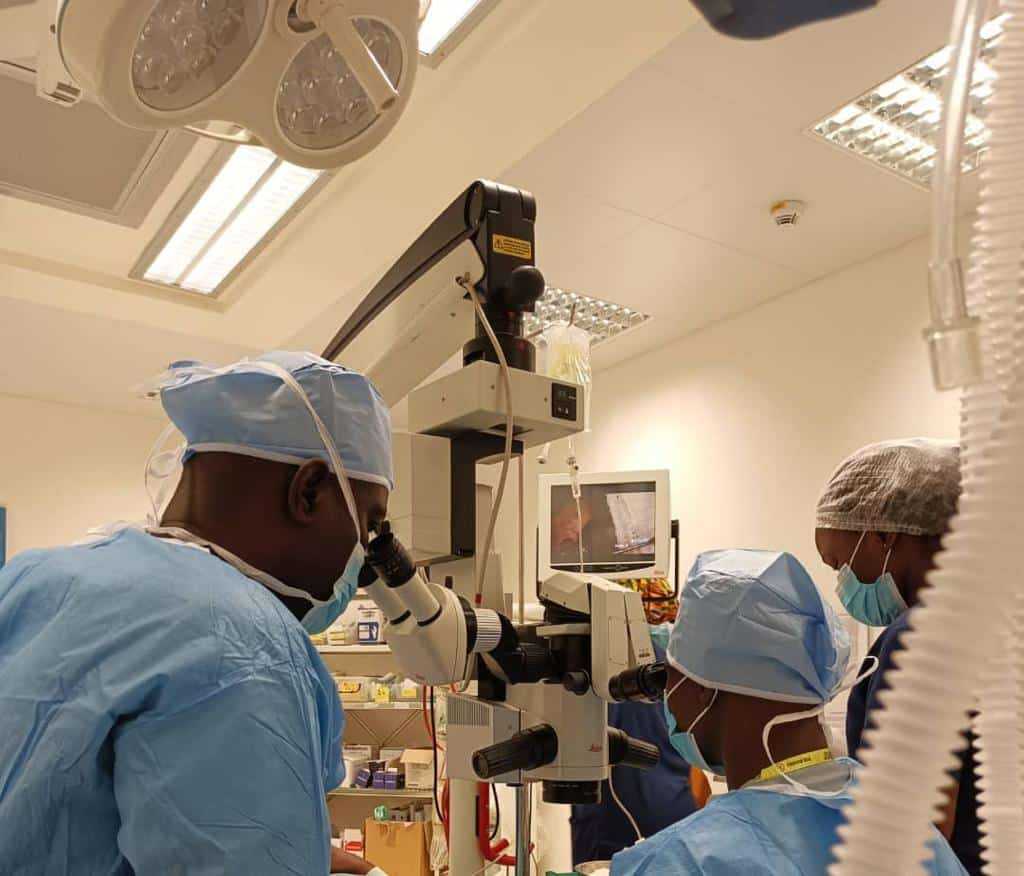
The Head of the Eye Department at the University of Health and Allied Sciences (UHAS) in Ghana, Dr. Alfred Osafo-Kwaako, introduced the Minimally-Invasive Glaucoma Surgery (MIGS) in the country nine years ago.
This pioneering procedure has not only enhanced the quality of life for glaucoma patients but has also significantly reduced cases of glaucoma-related blindness in Ghana.
The UHAS MIGS is conducted under the supervision and introduction of the School of Medicine at UHAS, located in Ho, Volta region, Ghana. It is a cost-effective procedure that typically takes only 10-15 minutes to complete, in contrast to traditional glaucoma surgeries that may require 30-60 minutes.
Unlike conventional glaucoma surgeries, which often involve painful eye injections and the use of small scissors to dissect eye tissues, the UHAS MIGS eliminates the need for eye injections and scissors. These factors contribute to the complications observed in traditional glaucoma surgery.
During the UHAS MIGS, the surgeon creates a small channel to alleviate pressure in the eye, rendering the use of pressure-reducing eyedrops and tablets unnecessary. Notably, no cases of blinding complications have been recorded in the past nine years of performing MIGS at UHAS.
To address the challenge of excessive scarring in the eyes of black individuals, which reduces the effectiveness of glaucoma surgeries, Dr. Alfred Osafo-Kwaako modified the MIGS procedure to achieve better outcomes in black populations. This modified version is now known as UHAS MIGS.
In 2018, Dr. Alfred Osafo-Kwaako presented data on the results of UHAS MIGS operations performed on 77 patients in 2016 to the members of the Ophthalmological Society of Ghana (OSG).
He presented the data while speaking at the 2018 Glaucoma Update Conference held at the Korle bu Teaching Hospital in Accra, Ghana, with world-renowned glaucoma specialist, Professor Donald Budenz from the USA as the co-speaker on minimally invasive glaucoma operations.
One of the glaucoma patients who had undergone the UHAS MIGS, Dr Thomas Tontie Baah, a top eye surgeon in Ghana and founder of the Save the Nation Sight Clinic in Accra, disclosed that he is lucky to be a beneficiary of the UHAS MIGS and recommended that the operation be made easily available and accessible to the many patients suffering from the scourge of glaucoma in Ghana.
“It was a short uneventful procedure lasting only about 15 minutes and I am very pleased with the results so far. After I examined some of the patients who had undergone the UHAS MIGS, I decided to act fast to save my eye” Dr Baah added.
Another glaucoma patient who has undergone the UHAS MIGS five years ago, Professor Col (Rtd) Edwin Afari, Professor of Public Health at the University of Ghana and former commander of the 37 Military Hospital stated that he hasn’t had to use glaucoma eyedrops anymore since he underwent the UHAS MIGS.
He used glaucoma eyedrops for eight years before his MIGS operation. According to Professor Afari, his MIGS was painless and was done in 10 minutes, and he also recommended MIGS for all glaucoma patients.
In 2016, Rev Joshua Tamakloe of the Assemblies of God Church was warned by eye doctors in London that, without surgery, he will go blind in a matter of days, considering the progression of his glaucoma, so the doctors performed surgery on one eye.
“When I returned to Ghana, I was introduced to Dr Alfred Osafo-Kwaako for surgery on my second eye. To my surprise, the surgery in Ghana was relatively cheap, completed very fast in 10-15 minutes and there was no pain during and after the surgery,” Rev Tamakloe added.
Other glaucoma patients who had undergone the UHAS MIGS operation also made positive comments and recommendations at the 9th-year celebration of the UHAS MIGS in Ghana.
They are Togbe Tepre Hodo IV, president of the Volta Regional House of Chiefs and former Council Member of UHAS; Dr Ransford Antwi, Dean of Arts at the Central University in Ghana; and Mr Nana Bosompim, Ahafo Regional Manager of the Forestry Commission of Ghana
Eye surgeons from various hospitals and universities in Ghana have started training on the new UHAS MIGS glaucoma operation with Dr Alfred Osafo-Kwaako as the training instructor.
However, at present, the UHAS MIGS operation is only available from the UHAS Eye Team headed by Dr Alfred Osafo-Kwaako.
Eye surgeons training on the new UHAS MIGS came from the Korle Bu teaching hospital, Komfo Anokye Teaching Hospital, Tamale teaching hospital, Cape Coast University Hospital, 37 Military Hospital, Ridge Hospital, Emmanuel Eye Center, Tema Christian Eye Center, Agogo Presby Hospital, Manhyia Hospital and Asamang SDA Hospital.
Dr Alfred Osafo-Kwaako is sincerely grateful to God for the success of the UHAS MIGS operation for the past 9 years.
He also expressed special thanks to the UHAS authorities for their support since the introduction of the UHAS MIGS operation, especially the vice chancellor, Prof Lydia Aziato; the immediate past vice chancellor, Prof John Gyapong; the Pro vice chancellor, Prof Harry Tagbor; the immediate past Pro vice chancellor, Prof Seth Owusu Adjei; the Registrar Madam Yaa Amankwah Opuni and the Dean of the school of medicine, Professor Frank Edwin.
He also appreciated the support of ophthalmic nurses, optometrists and ophthalmologists or eye surgeons who have participated in various ways in the delivery of the UHAS MIGS operation to glaucoma patients in Ghana.
The 37 Military Hospital has successfully conducted its first-ever Dual Chamber Pacemaker surgery for a 47-year-old woman who has lived with a blocked heart for 12 years.
Heart block is a condition where the electrical impulses that control the beating of the heart muscle are disrupted.
The most serious type of heart block is known as complete or third-degree.
Heart block has symptoms such as shortness of breath, palpitations (irregular heartbeat), dizzy spells/fainting, and nausea.
Dual-Chamber Pacemaker is a type of surgery, which helps to correct the condition by carrying electrical impulses to the right ventricle and the right atrium of the heart to help control the timing of contractions between the two chambers.
The surgery does not allow the heart to dip below a programmed heart rate and ensures that the atrium – the top chamber of the heart – and the ventricle – the lower chamber of the heart – beat in sync with one another.
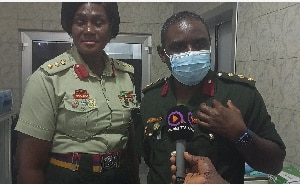
Colonel Dr Kwame Acheampong Adomako, the Head of Cardio Center 37 Military Hospital, addressing the media after the surgery, said the patient’s blocked heart was due to a family history of hypertension and diabetes.
He said because the patient was hypertensive and diabetic, the nerves that needed to carry messages to other parts of the body were unable to do so.
The Cardiologist explained that the electronic pulse generator implanted in the heart would help the patient live her normal life without any sudden cardiac arrest or death.
This means that the heartbeat has increased from 39-40 beats to 80-90 beats per minute.
Col Adomako said the successful surgery had given the Hospital the confidence to do more and urged Ghanaians to go for regular check-ups to help pick up some of those conditions early for timely treatment.
He expressed gratitude to the medical team that assisted in the success of the procedure.
The patient expressed appreciation to the 37 Military Hospital for the prompt attention given to her, adding that before her referral to the facility on Friday, June 23, 2023, she had been given up to Sunday, June 25 to live.
She narrated how she had an attack at a function and was advised to go for a checkup immediately.
“After my checkup at the SSNIT Hospital, I was asked to wait for a while because my condition was critical. My heart was beating slowly at about 39 to 40 instead of the normal of 70 to 80 per minute.
“I was later rushed with an ambulance to the 37 Military Hospital where I was told about the surgery right away, which was performed because it cannot wait,” she added.
The patient said she was currently well and doing everything without the help of anyone, adding that “initially, I could not walk even a small distance.
“After the surgery, I can confirm today that my condition has changed. There is nothing like dizziness and pain anymore as it used to be,” she narrated.
She urged Ghanaians to have faith in local health facilities for their health needs.
Her wife said he was happy with the success of the surgery, saying his wife had gone through a lot.
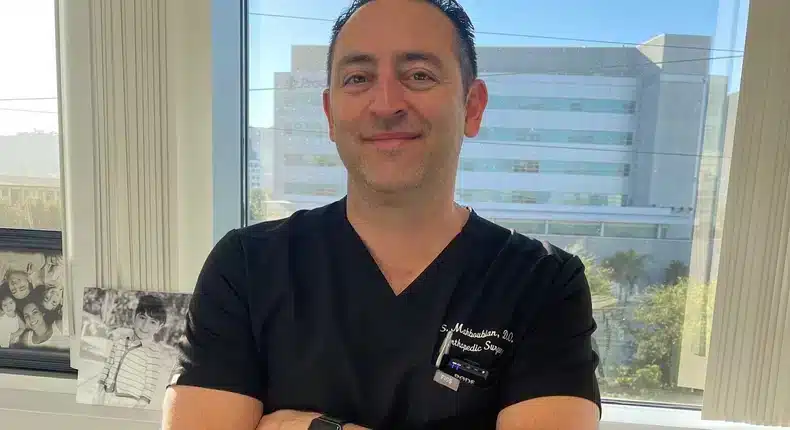
This as-told-to essay is based on a conversation with Shahab Mahboubian, an orthopedic surgeon in his 40s who specializes in limb-lengthening surgeries at his private practice, Height Lengthening, in Burbank, California. It has been edited for length and clarity.
I love what I do. I see my height-lengthening patients as my kids, and I get to watch them grow. After surgery, some of them are actually taller than me — I’m 5-foot-9 — putting them above the national average.
I grew up in LA and got my medical degree from Western University of Health Sciences in Pomona, California. Then I spent six years in New York doing my residency at Long Island’s Peninsula Hospital and completing my limb-lengthening fellowship at the Hospital for Special Surgery. I’ve been practicing for 13 years, including two years at my current office in Burbank, California.
As a child, I loved working with my hands and was always taking things apart and putting them back together
I especially enjoyed working with tools like screwdrivers, hammers, and drills, but the human body especially fascinated me. The only field in medicine that uses all of these tools is orthopedic surgery, so it seemed like the right fit.
I specialized in limb-lengthening surgery specifically because I wanted to do something that was different from everybody else. I also wanted to help a portion of the population that didn’t have access to services that correct deformities and limb-length discrepancies. It’s a difficult field to get into because orthopedic-surgery programs are very competitive, and there aren’t many fellowships or training facilities for limb lengthening, but I found the challenge very gratifying.
In the beginning of my career, I mostly focused on surgeries that correct deformities from prior traumas or birth
Kids sometimes get hurt and end up with leg-length discrepancies. Others are born with leg-length discrepancies or bow-legged and knock-kneed deformities. I had a young lady who came to me with a knock-kneed deformity when she was 16 years old. Seven or eight years later, she came back with her own child who was having orthopedic problems after a car accident. It was very memorable to treat her as a child then have her come back to make sure her own child was OK — fortunately, she was.
Surgery helps patients with these deformities or injuries walk better and participate more fully in activities like sports, but my practice has since evolved. Now the people who reach out to me seem more interested in cosmetic limb-lengthening — or leg surgery to increase height — so that’s the direction that my practice has taken, though I still see a small percentage of patients to correct deformities.
The idea of being taller fascinates people
I get about 20 emails a day asking about limb-lengthening procedures and up to 40 when one of our posts goes viral on TikTok or Instagram. The general population believes that whatever height you grow to is your final height, but that’s not the case — a lengthening procedure provides an opportunity to become taller.
People mostly ask the price of the surgery, how soon they can return to work or get back to playing sports, and how long they’ll be in a wheelchair or using a walker. They want to know how the procedure will affect their lives. We also get some international patients who ask us how to get a visa if they come from elsewhere. We can’t do that for them, but we try to guide them on where to go.
The surgery is quite expensive — it can cost anywhere from $75,000 to $90,000, depending on exactly what the patient wants to do — and insurance does not cover it if it’s cosmetic. People that undergo limb-lengthening surgery are from all walks of life, and many used COVID lockdowns to recover post-surgery.
For the most part, it’s men who want the procedure
Most men who come to me complain that they’re not taken seriously or that they’re made fun of. Plenty of patients say that they don’t get attention from women, while others say they’ve been passed over for career opportunities because of their height.
When I talk to these same patients after height-lengthening surgery, they feel like they’re on the same playing field with everyone else. They’re happier, they have a lot more confidence, and they feel like they’re able to conquer a lot more than before.
I would say 80% to 85% of my cosmetic limb-lengthening patients are men, and 15% to 20% are women. A lot of our patients are entrepreneurs, in the military, or work in tech. I’ve performed height-lengthening surgery on individuals ranging from 16 to 65 years old. I’ve had twins, siblings, and even a father and son who’ve undergone the procedure.
All of them are unique in their own ways. Some have gained as little as four centimeters, while others have gained up to 16 centimeters, or about six inches.
I’ve had a few transgender men as patients
As they transition, some patients want to have more masculine features, including being taller.
One of my patients was very hesitant to tell me about their transition — I guess because of bad experiences they’d had with other physicians for things they wanted to do, including gender-affirmation surgery. I figured it out, based on anatomy and X-rays, and told them the best thing to do is be honest. Once I gained their trust and let them know that their experience is nothing abnormal, they felt a lot more comfortable with me.
Like most other cosmetic surgeries, I don’t think an additional psychiatric evaluation is necessary before getting the procedure, unless the patient is seeing a psychiatrist or feels they need one.
I turn away some people, either because they don’t have enough muscle flexibility or because they have unrealistic goals
As we lengthen the bone, the surrounding soft tissue, such as the muscles, tendons, veins, arteries, and nerves, will also lengthen. Hence, the more flexibility a person has, the easier it will be to lengthen the bone against the surrounding soft tissues. As long as a person is healthy and active, and doesn’t have any bone disease, they should be fit for the surgery.
There are some people who want to be a foot taller and I’m like, “That’s not going to happen.” The maximum amount I can add to someone’s height for cosmetic reasons is about 6 inches in two separate surgeries at least three or four weeks apart. For most patients undergoing one surgery, the max we can add is just over three inches.
We do the surgery through a minimally invasive process
We make small incisions, and then we put in guidewires and use X-rays to make sure everything is being placed accurately on the bone. Then we surgically cut the bone and put a rod — also known as a Precice nail — that’s about 10 to 13 inches long and one-third to half-an-inch wide into the middle of the bone, where the marrow is. Then we put in screws to stabilize the nail.
After surgery, we start the lengthening process using a magnetic machine that communicates with the nail, or rod, that’s now inside the bone. The machine turns tiny gears that are inside the nail to lengthen the space between the segments of the bone, 1 millimeter at a time. When we lengthen really slowly over time, the patient’s body creates new bone and it fills in the gaps. It’s amazing, right?
All my patients leave one millimeter taller because we test the nail during surgery to make sure it’s functioning properly. A patient will typically spend two to three days in the hospital to recover, then lengthen their legs at home by about 1 millimeter a day. It’s actually fairly painless because it’s such a small amount at a time.
If a patient’s job requires them to sit for long periods of time, they can get back to work as soon as two weeks. It takes anywhere from six to eight months to a year to do activities that require being on your feet, such as labor-intensive work and competitive sports.
My caseload was on the higher end during 2020. Now, it’s about the same as it was in 2019.
In a year, I do anywhere from 30 to 40 cases. When everyone was dealing with COVID-19 at home and not doing things, it was a good time to have the surgery and recover.
An orthopedic surgeon can make $250,000 to $2 million a year. Some make more than that, but it really depends on how business-minded you are and what other things — like investing or getting involved with orthopedic products — you’re doing outside of seeing patients.
Doctors in all specialties are not making what they did 20 years ago. Insurance reimbursements keep getting lower every year as expenses get higher. It’s a challenge for everybody. You’ve got to be smart and have some business sense to make a good living.
Every day that I wake up and go to work, I feel like it’s a new opportunity for me to do good and help people.
When a patient comes in for a limb-lengthening consultation, I talk to them about why they want to get it done
We discuss whether their goals are achievable and which surgery would be best for them — either working on the femur bones in the high parts of the legs or the tibias and fibulas in the lower part of the legs. Then I make the proper measurements for the implants and make sure the patient’s fully ready for their surgery.
Before surgery, I meet the patient at the hospital, say hello, then get them pumped up and ready to go for the procedures. Before surgery, one of my favorite traditions is to play the song “Ten Feet Tall” by Afrojack on my phone as we’re walking to the OR suite. It always gets them pumped up for their surgery.
Though I’ve done limb-lengthening surgeries hundreds of times, I still get a little nervous. But when I actually start the surgery, all of that goes away.
Every job has its stresses, and mine is no different
There are times when we run into some difficulty, such as blood clots or compartment syndrome, which is when a patient bleeds a lot into the muscle. This problem can damage muscles and nearby nerves. I’ve also had a couple of patients who didn’t grow good bone during their lengthening, but after making several adjustments to the lengthening rate — and even using stem cells — we were able to help the bone grow nice and strong.
As an orthopedic surgeon, I’m constantly dealing with patients who come into the office upset and in pain, and my job is to make them feel better. I’m like their coach or cheerleader when they’re down on themselves. People talk about this surgery so much — it’s all over social media and forums. After I do these surgeries, I want my patients to be happy and encourage others to trust me and get good results.
When cosmetic surgeries started to gain popularity, people criticized it. The same is true for height-lengthening procedures.
There will always be people who have their opinions about changing what God has given us. But as more people realize that this surgery exists and as it becomes more popular, the level of criticism will decrease. There are colleagues who may bad-mouth you, but as long as they do good work, doctors, for the most part, have respect for one another.
In general, people see you for how you treat them, but you can’t make everybody happy. There will always be people who have complications or continue to have pain despite a perfect surgery. So you have to be able to relate to patients as well as peers.
It’s definitely not easy to do what I do. I have my own practice with my own staff, and sometimes it’s very difficult to balance patient care and business aspects. But as I get older and become more experienced, I think I’m able to handle those stresses better. In the end, you have to treat people with respect and always maintain open lines of communication.
Are you a surgeon or healthcare worker with a story to tell? Email mlogan@insider.com.
A French man is $65,000 richer after a surgery left him without his penis.
According to the New York Post, a French hospital compensated a man nearly $65,000 after a series of errors during surgery resulted in the “total removal of his penis.” The procedure, which took place at the Nantes University Hospital, left him with “no feeling” where his penis used to be.
“I have hatred towards this doctor who did not listen to me,” the unidentified victim told local rag Frenchblue. “He played Russian roulette with me!”
According to the Cleveland Clinic, the procedure occurred after the man, a father of three, had been diagnosed with carcinoma. In an effort to deal with the tumor, a urologist at the hospital made the decision to remove the man’s penis.
“Indeed he had removed everything,” the man said. “He had just left the testicles and had cut at the base. I’m really devastated and it’s really shameful.”
The victim added, “You can’t replace a feeling of a penis with several sensors.”
The victim’s lawyer, initially sued for one million euros, a lawsuit which was subsequently rejected by the French court. However, he reportedly plans to file an appeal on the grounds that the “psychological damage was not taken into account.”
The month of November was a transformational month for Ghanaian socialite Afia Schwar as she took a flight to Turkey to undergo a series of surgeries on her body.
By far, she has undergone a successful hair transplant, a surgery to correct her knee and dentition, and she is preparing to go for her last surgery, a body sculpting operation.
Afia Schwar shared all her plans to her fans online and has returned with an update of what she intends to do after she’s done with her final surgery on this trip.
A video Afia Schwar has posted on her Instagram page has captured her at the clinic where most Ghanaian female celebs go for liposuction and BBL surgeries.
She wore a clinical robe and stood beside popular surgeon, @Dr.Serkanbalta, the doctor who worked on actress Kisa Gbekle and other celeb’s body.
Afia stated without shame that she was going to operate on her body so she can also buy pressure for ladies on social media starting 2023.
A 28-year-old lady identified as Amelia Pounds has unfortunately died whiles undergoing a liposuction surgery.
Plastic Surgery, Liposuction, cosmetic surgery, collagen injections, BBL (Brazilian Butt Lift), etc are some of the professional terms used to describe the process of going under the knife to enhance one’s body parts.
From what we gathered, the beautiful young lady happens to be a socialite and businesswoman from Nigeria. According to reports, Amelia died in New Delhi, India as a result of complications following the liposuction surgery.
In a new piece he penned for The Players’ Tribune, Los Angeles Clippers point guard John Wall revealed he almost had to have his foot amputated.
Breaking down some of the struggles he’s been through during his time in the NBA, he said that he found himself in a place “that was so dark that suicide felt like the only option.” As for what led to him feeling such a way, he said it all came to a head when he suffered various injuries that required surgery.
“In the span of three years, I went from being on top of the world to losing damn near everything I ever cared about,” he wrote. “In 2017, I’m jumping up on the announcer’s table in D.C. after forcing Game 7 against Boston, and I’m the king of the city. I’m getting a max extension, thinking I’m a Wizard for life. A year later, I tore my Achilles and lost the only sanctuary I’ve ever known—the game of basketball. I ended up with such a bad infection from the surgeries that I nearly had to have my foot amputated. A year later, I lost my best friend in the whole world, my mom, to breast cancer.”
Wall was forced to go through with a season-ending surgery on his left heel in January 2019, which later developed into an infection. He then suffered a ruptured left Achilles tendon after falling in his home, and the whole situation left him unable to play for 12 months. His mother, Frances Pulley, died after a short battle with breast cancer in December, 2019. Wall did not return to playing until after the conclusion of the 2019-20 NBA season.
Elsewhere in the feature, Wall spoke about his experiences with therapy following his mother’s death. “I still talk to my therapist to this day, and I’m still unpacking a lot of the crazy shit that I’ve been through. I’m never going to stop doing it, because I really don’t know when the darkness could come back,” he added. “Right now, though? I’m feeling better than I’ve felt in years.”
She needs GH97,048 for the surgery intended to treat her for spondylolisthesis, a spine condition that has impacted her lower vertebrae.
The previously self-employed jeweler Rebecca Eshun is due for surgery at the FOCOS Orthopaedic Hospital, but her failure to raise the required finances is making the ailment she has been battling since 2019 worse.
For almost three years, she has had to deal with pain in the back, upper and lower limbs, leading to difficulties in walking.
During the period, initial recommendations by doctors after neurological and radiological evaluation suggested she was to be treated without surgery.
However, frequent follow-ups now point to a surgical intervention in her lower back to relieve trapped nerves and stabilise the spine using implants.
The cost covers theatre, ward stay, recovery medication, feeding, physiotherapy, six months of orthopaedic outpatient follow-up care, x-ray and laboratory tests.
Individuals willing to assist can do so through her MTN Mobile Money number – 0551145709 [Rebecca Eshun] to enable her garner funds for onward payment into the hospital’s account.
The Medical Director of the Dixcove Government Hospital in the Ahanta West Municipality of the Western Region has been robbed whilst he was performing surgery.
Dr. Nana Brobbey was reportedly robbed when he left his house to perform emergency surgery in the wee hours of Thursday.
Confirming the incident, the Ahanta West Health Director, Timothy Ofori, told Connect FM that he left his house to attend to the patient only to return to a raided room.
“He resides in the hospital, so around 1:00am, he had a call for an emergency he needed to attend to. He quickly went to save the life of the patient.
“After performing the surgery successfully, he came back to his house and realised that robbers have ransacked his room. He indicated that they made away with his laptop, mobile phones, and other personal belongings,†he indicated.
According to Mr. Ofori, this is not the first time Dr. Brobbey has been robbed.
“This is the third time the doctor has been robbed. He looked traumatised when I met him this morning.
“He is not even in the mood to serve again. This is a man who has left his family to serve us here in the Ahanta West District but look at what is happening to him,†he lamented.
Meanwhile, the Ahanta West Police Command has begun investigations into the robbery.
The Police Commander, ASP Valentine Akposu, assured that no stone will be left unturned until the perpetrators are brought to book.
Surgeons at the Komfo Anokye Teaching Hospital (KATH) in Kumasi are protesting over the unsafe used for surgeries.
The Surgeons are also complaining about the lack of basic equipment at the Surgery department. They claim that several complaints lodged with the management have not been resolved adding that the unsafe surgery could lead to deaths if the department is not refurbished immediately.
Speaking on Abusua FM on Friday, Dr Anthony Davor, a Pediatric surgeon at the Komfo Anokye Teaching Hospital, said basic equipment to treat children and critical emergencies are outdated and not fit for purpose.
“We have complained about several of these issues for a very long time but nothing happens. Sometimes they pretend to fix the challenges and then they suddenly stop. Our surgeries are not safe, they are not safe at all.
“We don’t intend to embarrass anybody but the main issue is that our patients must be safe when they come for surgeries. What we need is the basic equipment to work. Our water heater broke down on January 3, it was only fixed last week after several complaints. In the ICU there are no even fans there but we work in the heat all the same.”
Meanwhile, the PRO of the Hospital, Kwame Frimpong in response said, the management has put in place measures to address several of the issues raised by the Doctors. He added that the theatre will be renovated this year.
Mr Frimpong added that the management of the Hospital has made several investments over the years in ensuring the hospital is safe for both patients and doctors to work at. He also urged the Doctors to exhaust internal communication channels before moving to air their grievances to the media.
The protests by Doctors at KATH come after a renowned Neurosurgeon at the Korle Bu Teaching Hospital appealed to the Akufo-Addo led government to abandon the plan to construct some 100 new hospitals and focus on investing the money in the establishment of a neuroscience centre.
Speaking on the Morning Starr on Wednesday, Dr Hadi Abdallah told host Francis Abban that building a neuroscience centre which the country lacks will help save hundreds of lives being lost on a daily basis at Korle Bu.
He added that building new regional and district hospitals without first constructing a major neuroscience centre will put more pressure on the already choked Korle Bu.
“I am calling on the government of Ghana to postpone the construction of the 111 health care centres or the district hospitals, at least forgo 10 of them and use that to build the neuroscience centre. Because if you build the neuroscience centre it is going to free up the spaces at the accident centre and the emergencies.
“If you go and build these district hospitals they will still be referring cases to Korle bu, Neuroscience doesn’t have space. So I am hoping that this is what we would do.”
Armenian Prime Minister Nikol Pashinyan, who turned 45 on Monday, said he and his family had tested positive for the new coronavirus and that he would be working from home.
Pashinyan, said in video message posted on Facebook that his “coronavirus test was positive yesterday” and that his wife and four children were also infected.
He did not have any “visible symptoms” and would be working from home “to the best of my ability”, Pashinyan added in the clip he recorded himself.
The ex-Soviet republic with a population of around three million people has registered 9,492 coronavirus cases and 139 deaths.
COVID-19 patients have overwhelmed hospitals and health officials last week said that intensive care beds could be soon reserved for patients with the best chance of survival.
Health Minister Arsen Torosyan has said that out of 186 intensive care units in the country reserved for virus patients, only 32 are empty and those would soon be filled.
Russian President Vladimir Putin called Pashinyan to congratulate him on his birthday and to offer “words of support” for a speedy recovery, the Kremlin said.
‘Dangerous disinformation’
Pashinyan’s announcement came nearly one month after Armenia lifted a state of emergency imposed in March to slow the spread of the coronavirus.
He has acknowledged failings in his government’s coronavirus response including efforts to enforce anti-virus measures.
He told a cabinet meeting several days ago that “false rumours that the pandemic is a fiction” were to blame for widespread quarantine violations.
“People don’t believe that the virus exists, because 70 percent of cases are asymptomatic,” he said.
Analysts said conspiracy theories and disinformation on social media had undermined government efforts to fight the outbreak.
“Quarantine didn’t work in Armenia,” virologist Nuneh Bakunts told AFP, because people believed disinformation and so didn’t “take the threat seriously.”
An investigation by the UK-based website openDemocracy revealed that controversial local news portal Medmedia.am had been spreading “incredibly dangerous” virus disinformation.
Medmedia.am reported the pandemic was fake and falsely claimed that a local morgue offered money to a dead patient’s relatives to sign documents saying the death was caused by the coronavirus, openDemocracy said.
Dashed hopes
The pandemic has badly impacted the poor ex-Soviet country.
The economy grew by 7.6 percent last year but the International Monetary Fund has forecast GDP to fall by 1.5 percent in 2020.
Armenia’s central bank has said all sectors of the economy will suffer, especially tourism and construction.
In March, the government came up with an economic stimulus package worth $303 million (277 million euros), offering enterprises direct financial aid and a three-month tax holiday, among other measures.
Pashinyan was elected prime minister in the wake of mass popular protests he led two years ago against veteran leader Serzh Sarkisian and his Republican Party.
He has since led a relentless crusade against graft and initiated sweeping judicial reforms.
Disclaimer : “Opinions expressed in this article are the sole responsibility of the author(s) and do not in any way reflect those of backend.theindependentghana.com.
The Plastics and Reconstructive Surgery Unit of the Komfo Anokye Teaching Hospital (KATH) in Kumasi is to start cosmetic and breast enhancement surgeries, at the facility this month.
As part of the preparations, the Unit will from February 10th to 15th this year, hold “a maiden international breast intervention and aesthetic forumâ€, in Kumasi to create public awareness about the procedure.
Dr. Paa Ekow Hoyte-Williams, Head of Plastics and Reconstructive Surgery Unit, told the Ghana News Agency that the open forum aimed at demystifying the procedure and educate the public on cosmetic surgery, what it is and what is not.
He said the surgeries would be performed by renowned plastic surgeons and team of experts including Prof. Pius Agbenorku, Dr. Emmanuel Adu, Dr. Joseph Akpaloo and Dr. Oheneba Owusu-Danso, who is also the Chief Executive of the Hospital.
He encouraged the public to take advantage of the forum to ask questions and seek clarifications on all issues concerning breast enhancement and cosmetic surgeries.
Dr. Hoyte-Williams also appealed to ladies interested in breast enhancement – increase breast size, breast lifting or breast reconstruction after mastectomy (creating new breast after cancer treatment) to contact the Unit for assistance.
The Cape Coast Teaching Hospital (CCTH) has performed free surgery for about 30 patients including children with various Ear, Nose and Throat (ENT) conditions.
It was an exciting moment as patients with chronically discharging ears and defects in their tympanic membrane had their hearing restored while others with difficulty in breathing through the nostrils were also corrected.
Key among them was a four month old baby who was born without a hole in her nose and had to breathe through her mouth, was successfully operated on to breathe through her nostrils.
The week-long annual outreach programme is a collaborative gesture between the hospital and a team of doctors from the University of Uttah in the United States of America.
The team, led by Professor Jeremy Meier, a Pediatrician and an ENT surgeon was made up of ENT specialists, anesthesiologist and general surgeons.
Dr Peter Appiah Thomson, Head of the ENT Unit at CCTH indicated that ENT surgeries were usually very expensive, which cost between $50 to $200,000 which many Ghanaian patients could not afford.
He said CCTH had for the past six years collaborated with the University of Utah where ENT specialist, anesthesiologist and other general surgeons visit to offer complex ENT surgeries.
He said the hospital during the exercise, performed surgeries that ordinarily, resources were not available for the patients.
Dr Thompson expressed excitement about the exercise and said the team would also help develop the skills of staff to be able to solve such complex problems in future.
He said 15 ENT trainee nurses, four doctors from Korle Bu Teaching Hospital and various category of students from across the country were working with the team to improve their skills and techniques in ENT surgery.
He expressed the hope that the collaboration would go a long way to attract more ENT specialists to the hospital as he remained the only ENT specialist at the facility.
Dr Thompson encouraged mothers to vaccinate their new born babies and send their children to the ENT unit when they noticed any problem with their ear, nose or throat for early treatment.
A member of the team, Dr Ryan Meier said the University hoped to tighten the collaboration to make surgery safer at the CCTH while assuring the hospital of their continued support to build on the knowledge of the anesthetist and improve their skills for better delivery at the facility.
He said as part of their outreach, they had supplied various medical equipment to improve upon health care delivery at the hospital.
Dr Eric Kofi Ngyedu, Chief Executive Officer of CCTH described the partnership as one that augmented the service delivery of the hospital and as well offered opportunity for transfer of skills and technology.
He added that it would also be an opportunity for residents and doctors to learn high level technique in ENT surgery and to build their knowledge and skills.
He said as part of the partnership, a Memorandum of Understanding had been signed between the hospital and University of Utah to augment the collaboration to include laparoscopy surgery training.
Dr Ngyedu said CCTH as part of its five year strategic plan hoped to become a centre for the training of ENT surgeons in Ghana.