Meanwhile, new Chancellor Jeremy Hunthas been speaking to the BBC on his second day on the job.
He said “actions speak louder than words” as he promised to reassure the markets with effectively a new budget in two weeks’ time.
Mr Hunt added he wants to keep as many of Liz Truss’s tax cuts as he can – while insisting: “The prime minister is in charge.”
He said: “I’m not taking anything off the table. I want to keep as many of those tax cuts as I possibly can because our long-term health depends on being a low-tax economy. And I very strongly believe that.”
He also said no government department would be immune from “efficiency savings”, as he signalled spending cuts to come.
“I’m going to be asking every government department to find further efficiency savings,” he said.
He said he hopes his fiscal statement can stabilise the markets.
“The prime minister has changed her chancellor. We are going to have a very big fiscal statement a bit like a budget in which we set out the tax and spending plans for several years ahead, and that’s going to be independently verified by the Office for Budget Responsibility.”
He appeared to rule out any future tilt at the Tory leadership.
Mr Hunt said a desire to lead the party had been “clinically excised” thanks to his previous failed attempts.
“I think having run two leadership campaigns, and by the way failed in both of them, the desire to be a leader has been clinically excised from me.
“I want to be a good chancellor. It’s going to be very, very difficult. But that’s what I’m focusing on.”
Prime Minister Liz Trusshas released a comment piece she wrote for The Sun on Sunday, in which she calls it a “wrench” that “my buddy Kwasi Kwarteng has left government.”
She stressed on Twitter that she will always “act in the national interest, assisting people and businesses across our country.”
Ms Truss added: “We are going to do things differently, charting a new course for growth – it remains the core mission of this government.”
I will always act in the national interest, supporting families and businesses across our country.
We are going to do things differently, charting a new course for growth – it remains the core mission of this government👇https://t.co/CYWRRz27dn
Liz Trusssays she “acted decisively” as her first consideration is what is in the national interest.
Asked why she should stay as prime minister now her economic plan has been dismantled, the PM says: “I am determined to see through what I’ve promised – deliver higher growth, a more prosperous the United Kingdom.”
Ms Truss says her priority is “delivering the economic stability this country needs”.
She repeats: “I have to act in the national interest as prime minister.”
The pound has gained as speculation about a possible U-turn on the mini-budgethas increased.
On Friday morning, sterling was trading above $1.13 versus the dollar as the chancellor returned home early from the United States for urgent discussions in Downing Street.
In September, the currency touched a record low of $1.03 as markets responded negatively to Kwasi Kwarteng’s mini-budget.
In it he promised billions of pounds of tax cuts but did not explain how he would fund them.
Government borrowing costs have also fallen, after surging to worrying levels in the days after the mini-budget.
The Bank of Englandhas been buying government bonds – known as gilts – to try to stabilise their price and prevent a sell-off that could put some pension funds at risk of collapse.
However, that support is due to come to an end on Friday.
There has been speculation it may be extended, although this was dismissed by the Bank’s governor, Andrew Bailey, earlier this week.
The government has already U-turned on its plan to scrap the top rate of income tax, but many Conservative MPs think a further change of plan is imminent.
Russ Mould, investment director at AJ Bell, said the financial markets were already pricing in a government U-turn.
“They started to [price it in] yesterday,” he told the BBC’s Today programme.
Mr Mould pointed to the fact that the yields – or the effective interest rate – on UK government bonds have been falling back in anticipation of a reversal to the tax-cutting plans. On Friday morning, the yield on bonds that borrow money over 30 years fell to 4.47%.
“Gilt yields came down… and sterling rose against the dollar to $1.13 and against the euro to €1.16, so I think they are starting to either expect, demand, sniff out that there will be some degree of U-turn possibly on corporation tax, dividend tax, other areas,” Mr Mould said.
Asked what would happen if there is no U-turn, Mr Mould said: “You would expect the gains that we’ve started to see, to unwind.”
Bank of England support
The government raises the money it needs for spending by selling bonds – a form of debt that is paid back plus interest in anywhere between five and 30 years.
Pension funds invest in bonds because they provide a low but usually reliable return over a long period of time.
However, the sharp fall in their value after the mini-budget forced pension funds to sell bonds, threatening to create a “downward spiral” in their prices as more were offloaded, which left some funds close to collapse.
This sparked an emergency intervention by the Bank of England,which stepped in to buy bonds and prevent their price falling further.
There has been strong speculation that the Bank will extend the scheme, which is due to end on Friday.
But on Tuesday, Mr Bailey dashed those hopes, telling pension funds: “You’ve got three days left now and you’ve got to sort it out.”
Bethany Payne, global bonds fund manager at Janus Henderson, told the BBC it was not clear whether pension funds have done enough to strengthen their finances.
“The risk is that we don’t know how pension funds have used this window of time and whether they have used it effectively by raising cash and doing everything they need to,” she said.
“So the true test of the market will be this afternoon and Monday morning to see whether they have done enough.”
Some senior Conservative MPs have said that the government may need to reconsider its tax-cutting proposals in order to calm the financial markets and stabilise the economy.
The warnings were issued before the prime minister’s scathing appearance before a gathering of Tory backbenchers.
One loyal minister told the BBC: “We are completely in a dreadful place. There is no way out – maybe Liz Truss will find a way, but I cannot see it.”
Ms Truss has repeatedly defended the proposed tax cuts outlined last month.
The chancellor’s mini-budget on 23 September, which included £45bn of tax cuts funded by borrowing, sparked turmoil on financial markets and prompted the Bank of England to intervene to protect pension funds.
Kwasi Kwarteng is due to set out how he will fund the package and reduce debt on 31 October.
Ms Truss insists cancelling a rise in corporation tax from 19% to 25% due in April and other tax cuts will help boost growth.
The prime minister also believes stepping back from what she describes as the highest tax burden in 70 years would allow the public to keep more of the money they earn at a time of global high prices.
One of the ways the government plans to achieve this is by bringing forward a 1p cut in the lower rate of income tax, so people will be taxed 19% on earnings between £12,571 and £50,270.
But the editor of Conservative Home Paul Goodman has argued the mini-budget is now “more likely than not” to be totally withdrawn.
Mr Goodman told BBC Radio 4’s Today programme he was not sure Conservative ministers and MPs were “capable of putting together a package of public spending cuts on the scale required” to balance the books.
“And if they do, whether [the cuts] are going be acceptable to the markets,” he added. “Or whether the markets are now going to demand the withdrawal, in effect, of the mini-budget.”
Ms Truss has denied she is planning public spending cuts, saying the government would instead focus on reducing debt “by making sure we spend public money well”.
However, Mel Stride, a prominent backer of Ms Truss’s leadership rival Rishi Sunak, suggested the government would need to show a “clear change of tack” to restore credibility with the financial markets.
“Given the current clear government position on protecting public spending, there is an emerging question. Whether any plan that does not now include at least some element of further row back on the tax package can actually satisfy the markets,” he said.
Earlier, he told the Commons he believed it was “quite possible” the chancellor would have to make more changes to the tax cuts announced in his mini-budget.
Asked to confirm whether this possibility was still on the table, Treasury Minister Chris Philp replied: “There are not any plans to reverse any of the tax measures announced in the growth plan.”
Tory MP Kevin Hollinrake, a Sunak supporter, said it would be better for the chancellor to U-turn on aspects of his mini-budget rather than cause more market turmoil.
“I think it’s better to have looked at this more carefully in the context of what’s happened over the last few weeks and say ‘I think we’ve got some of this wrong and these tax cuts need to be introduced over time’,” he told BBC Radio 4’s World at One programme.
He suggested reversing the government’s decision to scrap the planned hike in corporation tax was one potential option.
Meanwhile, former deputy prime minister Damian Green said an obvious way to reduce debt while ruling out public spending cuts would be to defer some tax cuts.
He told BBC Radio 4’s PM programme the reversal of some parts of the mini-budget was being discussed openly by Tory MPs.
Former Conservative minister David Davis suggested overturning some of the tax cuts would “buy some time” and persuade Tory critics to “come in behind them”.
He told ITV’s Peston the mini-budget was a “maxi-shambles” but he did not think there would be moves to replace the prime minister in the next few months as the party would have “zero chance” of winning an election if it was in a “civil war”.
The government has already U-turned on its plan to scrap the top income tax rate, following market turmoil and vocal opposition from some Tories.
However, this only made up £2bn of the tax cuts announced by the chancellor.
On Wednesday evening, Ms Trussfaced sharp criticism from some of her own MPs during a meeting of the 1922 Committee of backbenchers.
Sources in the room told the BBC that Robert Halfon had accused Ms Truss of “trashing blue collar conservatism”.
He told her the party’s record over the past 10 years had included things like boosting apprenticeships and the living wage, whereas she had cut tax for millionaires and wanted to cut affordable housing and benefits.
MPs who were present said he got a cheer, while Ms Truss looked “shocked” and said he could come to speak to her.
They said another Tory MP, James Cartlidge, also criticised the government’s mini-budget, saying the communication had been poor and she had not prepared the markets.
Both MPs supported Mr Sunak during the Tory leadership election.
The BBC’s Nick Watt said he encountered a “wall of derision and unease” about the prime minister outside the room.
The loyal minister also told him: “It’s like Black Wednesday in 1992 when interest rates shot up, we lost economic credibility, and it took us 15 years to get it back.”
However, leaving the meeting the prime minister said it had been “very good”.
One MP who supported Ms Truss in the leadership race said the PM acknowledged during the meeting that she could have laid the ground better for her recent policies.
During the initial election rounds, most MPs did not back Ms Truss to become one of the final two in the contest. She won based on a final voteamong party members.
Margaret Thatcher would never have tried to cut benefits amid the cost of living crisis, Conservative former minister David Davis has said.
Speaking to BBC Radio 4’s Today programme today, he said while the Tory leader modelled herself on Ms Thatcher, she should “actually model herself really on Thatcher”.
“Thatcher was strategically terribly bold, but actually tactically incredibly careful. And (Liz Truss) should do the same,” he said.
“All this stuff about, let’s say one of the controversies, cutting benefits. Well, that’s not a real option. Margaret Thatcher would never have tried that, and under these circumstances with the winter coming up that we have.”
Asked what he would say to those in his party who want to change leader, Mr Davis said: “Well, firstly, you haven’t got time for that.
Addressing Ms Truss’s start as prime minister, he added: “It would be a very, very unwise person who tried to make a judgment over two years on what’s happened in four weeks.”
It’s hard to think of another episode like this. There have been budget U-turns before, but it’s hard to think of any which came so soon after they were announced and were not just an obscure technical consequence of a bigger measure (for instance George Osborne’s pasty tax).
The question now, however, is whether this change of mind changes the mind of the millions of investors who have, in the past week, been eschewing UK investments. That resulted in a fall in the pound and a sharp increase in government borrowing rates.
Yet – and this is something those inside Number 10 have pointed out themselves – the removal of the 45p rate was not all that expensive when compared to the other bits of the mini-budget: around £2bn of a total £45bn package.
They saw no arithmetic link between the measure in numerical terms and the reaction from currencies and bonds. The most straightforward conclusion, then, was that rather than responding to this 45p rate, investors seemed instead to be responding to something broader: a crisis of confidence in the government’s economic leadership.
Whether the abolition of the 45p rate is enough to change that view remains to be seen. In the immediate wake of the news, the pound rallied against the US dollar and money markets responded by reducing their expectations of future interest rates.
That is, from the government’s perspective, quite promising. But these are just small moves and we shall have to see what happens next.
Perhaps they will decide this is a sign of readiness from the government to try to rebuild their credibility; that they have moved away from the denial stage. Or perhaps not: we shall see.
DISCLAIMER: Independentghana.com will not be liable for any inaccuracies contained in this article. The views expressed in the article are solely those of the author’s and do not reflect those of The Independent Ghana
Source: Skynews, Ed Conway, data and economics editor
The chancellor stated that the government has changed its mind about wanting to eliminate the 45p income tax rate.
Kwasi Kwarteng told the BBC the proposals, announced just 10 days ago, had become “a massive distraction on what was a strong package”.
“We just talked to people, we listened to people, I get it,” he added.
The decsion, which marks a humiliating climbdown for Prime Minister Liz Truss, comes after several Tory MPs voiced their opposition to the plan.
Ex-cabinet minister Grant Shapps had warned the prime minister would lose a Commons vote on the proposal.
The plan to scrap the 45p rate, paid by people earning over £150,000 a year, had been criticized as unfair at time of rising living costs.
On Sunday, the prime minister had told the BBC she was absolutely committed to it as part of a package to make the tax system “simpler” and boost growth.
But the measure has seen remarkable opposition from the markets, opposition parties and a growing number of Tory MPs.
Increasingly, it seemed Ms Truss did not have the numbers to get it through.
On Sunday, senior Tory Michael Gove hinted he would not vote for the plan when it came to Parliament, saying “I don’t believe it’s right”.
The former cabinet minister said the PM’s decision was “a display of the wrong values”.
Mr Shapps also urged Ms Truss to U-turn, warning her not to have a “tin ear” to voters’ concerns about rising living costs.
“I don’t think the House is in a place where it’s likely to support that,” he told the BBC on Sunday.
The U-turn, suggestions of which were first reported by the Sun, comes on the second day of the Conservative conference in Birmingham, with Mr Kwarteng due to speak later on Monday.
The currency touched a record low last week after Mr Kwarteng’s mini-budget – which contained around £45bn of unfunded tax cuts – created turmoil on the markets.
Labour’s shadow chancellor,Rachel Reeves says, the government’s economic plan won’t result in annual growth of 2.5%.
Liz Truss, according to Ms. Reeves, does not understand how her policies are affecting the public.
“The prime minister just doesn’t seem to understand the anxiety and fear,” Ms Reeves told the BBC.
“This is a crisis made in Downing Street but it is ordinary working people who are paying the price.”
It has been suggested that the Truss administration is trying to use “tickle down economics” – the idea that tax cuts for the rich will create greater wealth in general, some of which will “trickle down” to those who are less well off.
It was announced in the mini-budget nine days ago that the top rate of tax – 45% – was being abolished.
But Ms Reeves commented: “The idea that trickle-down economics is somehow going to deliver the 2.5% growth we all want to see is for the birds.
“The prime minister and the chancellor are doing some sort of mad experiment with the UK economy and trickle-down economics.
“It has failed before and it will fail again.”
The prime minister has said that removing the top rate of tax was the chancellor’s idea.
But the chancellor’s spokesperson has said the pair are “in lockstep” on the issue (12.18 post).
After the mini-budget, Prime Minister Liz Trussacknowledged there had been “disruption” in the UK economy.
She declared in a letter to The Sun that she had “acted forcefully” and would maintain a “iron grip” on the country’s finances.
The government unveiled £45bn of tax cuts funded by borrowing last week – but did not accompany it with the usual economic assessment of the plans.
That worried investors causing the pound to slump and forcing the Bank of England to step in to reassure markets.
Ms Truss has resisted calls to reverse the cuts or to bring forward the publication of the independent fiscal watchdog’s economic forecasts and analysis of her tax plans.
The prime minister said she was “committed” to publishing the Office for Budget Responsibility (OBR) forecast on 23 November, the same day the chancellor is due to set out further economic plans, after she met the OBR on Friday.
But some Conservative MPs want to see this sooner to reassure the financial markets after turbulent trading.
The Treasury argues it should wait until additional changes are announced.
Ms Truss wrote in the Sun: “I am going to do things differently. It involves difficult decisions and does involve a disruption in the short term.”
She reiterated her commitment to “get the economy growing”, with plans to stimulate growth expected to include measures in eight areas – business regulation, agriculture, housing and planning, immigration, mobile and broadband, financial services, childcare, and energy.
And she insisted she would maintain an “iron grip on the national finances”.
Her chancellor, Kwasi Kwarteng, writing in the Telegraph newspaper, insisted that November’s statement would include a “credible plan” to get the public finances back on track, with a “commitment to spending discipline”.
“The British taxpayer expects their government to work as efficiently and effectively as possible, and we will deliver on that expectation,” Mr Kwarteng said.
But senior minister Simon Clarke told the Times newspaper the government needed to explain more about how it would control spending, as well as boost economic growth.
“We have acquired spending habits that outstrip our ability to pay for it. That needs to change,” he said.
He suggested the government was looking to make significant cuts and “trim the fat” when it comes to public spending.
“I think it is important that we look at a state which is extremely large, and look at how we can make sure that it is in full alignment with a lower tax economy.”
Ms Truss confirmed on Thursday that she was looking for cuts across the government as a way to pay for the mini-budget measures.
Waveney MP Peter Aldous said the timing of last Friday’s plan had been “hopelessly wrong”, and the rest of the details should be brought forward to October.
Liberal Democrat leader Sir Ed Davey argued that the government, by waiting until 23 November, was allowing the UK economy to “fly blind” for two months.
“Families and businesses can’t afford to wait any longer for this government to fix their botched, unfair budget,” he said.
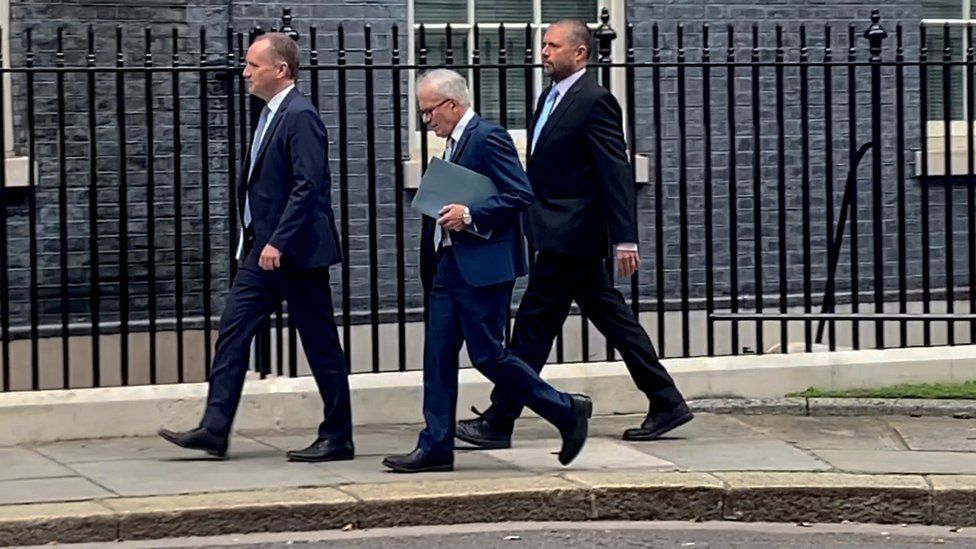
IMAGE SOURCE,PA MEDIA Image caption, Leading members of the Office of Budget Responsibility arriving at 10 Downing Street for a rare meeting with the prime minister
What is the Office for Budget Responsibility?
The Office for Budget Responsibility is the independent watchdog for the government’s finances.
It usually produces economic forecasts twice a year, to accompany each autumn budget and spring statement.
It scrutinises government plans, to increase taxes or borrowing for example, and predicts what the likely impact on the overall economy will be.
These forecasts are so important because a strong one gives investors confidence to put money into the UK economy – whereas a weak one is likely to have the opposite effect.
The government can request forecasts from the OBR at any time to get independent advice on big moves.
But it did not take the OBR up on its offer ahead of last week’s mini-budget. This is thought to have undermined confidence in the markets.
This led to the pound dropping to its lowest rate against the dollar in 37 years on Monday, before returning to its previous level.
The government’s tax-cutting plan faced criticism from the International Monetary Fund, and the pound dropped to a 37-year low of $1.03 on Monday.
On Friday, the sterling rose to $1.12 – close to the level the currency was at before the mini-budget was announced.
Despite that, the rating agency Standard & Poor’s cut the outlook for its AA credit rating for British government debt from “stable” to “negative” on Friday, because of the prospect of higher borrowing needed to fund the pledges.
In recent days, the Conservatives have posted some of their worst opinion poll ratings in more than 20 years.
A poll published on Thursday by Survation put the party on 28%, more than 21 points behind Labour, while a separate survey by YouGov put the Tories on 21%, 33 points adrift.
Labour’s shadow business secretary Jonathan Reynolds said ministers should “get back to Parliament, revoke the changes, and start again to try and rebuild confidence”.
And Conservative MP Martin Vickers urged the prime minister not to scrap the 45p tax rate and the bankers’ bonus cap, describing the move as “a political own goal”.
However, another Tory backbencher, Andrea Leadsom, said the mini-budget was “unashamedly pro-growth”, and that the markets were “wrong to be jittery” about the changes.
For more than six decades, some of the UK’s most devastating economic events have happened under an autumn cloud. Is history repeating itself?
The poet and banker T S Eliot got it wrong – April is not the cruelest month, at least when it comes to financial crises. Autumn is crueller.
The months of September, Octobe,r and November are when gestating economic turbulence tends to burst into full-blown economic storms.
The precedent of the calendar should give the prime minister and chancellor something additional to worry about as the government insists the present shocks to sterling, inflation and mortgages are nothing to worry about in spite of the Bank of England having to intervene with £65bn worth of reserves.
The big daddy of them all, the Wall Street Crash in the United States, is dated to September and October 1929. In the UK, the economic crises of the post-Second World War period have had an autumnal flavour.
Timeline of tumbles
November 1967: The Wilson government’s “pound in your pocket” devaluation took the value of a pound sterling down to $2.47.
October 1974: At the second general election of that year, Labour consolidated its victory over Ted Heath’s Conservative government. Heath’s chancellor, Sir Anthony Barber, quit politics after his disastrous “dash for growth”.
October 1976: The “Crisis What Crisis” crisis when the UK needed a $3.9bn bailout loan from the IMF. Free-floating exchange rates pushed the pound to a then-record low of $1.57.
26 October 1989: Nigel Lawson, at the time the longest-serving Chancellor, resigned from Margaret Thatcher’s government over economic policy differences, precipitating the year-long Tory turmoil that resulted in her resignation as prime minister.
October 1990: John Major, the Conservative prime minister, took the pound into the European Exchange Rate (ERM) mechanism, having failed to announce the decision at the Conservative Party conference days before.
Image:The pound crashed out of the ERM after John Major’s decision to take it in
16 September 1992: Black Wednesday. The pound crashed out of the ERM after the failure of the Major government’s panic measures, which briefly lifted interest rates as high as 15%. Although it had only been re-elected that summer and although the new chancellor, Kenneth Clarke, adopted a new economic strategy, the government’s fortunes never recovered. Labour and Tony Blair won the election in May 1997 by a landslide.
September 2007. The building society Northern Rock closed its doors to savers. To continue trading, it had to seek support from the Bank of England as lender of last resort. By February 2008 the mortgage lender had to be nationalised. It was an early harbinger of:
September 2008 banking crisis: Overextension and insecure loans resulted in the bankruptcy of Lehman Brothers and the need for taxpayer bailouts of lending institutions on both sides of the Atlantic.
Gordon Brown “saves the world [banking system]” by marshaling an emergency meeting of the G20. In the UK, the public stakes taken to support major banks resulted in a squeeze on public spending and the “austerity” policies followed by subsequent governments.
October 2016: The pound dropped 28% after the vote to leave the EU, hitting a then-record low of US$1.14.
September 2022: Markets lose confidence in UK economic managementafter an uncosted “fiscal event” announcement by the new chancellor, Kwasi Kwarteng, on 23 September. The pound dips to a new record low of $1.03 before recovering to around $1.08.
Gilt yields, the driver of domestic inflation, surged – even as pension funds obliged to sell them courted bankruptcy until the Bank of England made its intervention. Hundreds of mortgage products were withdrawn, paralysing the housing market. The International Monetary Fund publicly rebuked the government for proposing huge tax cuts without the funds to pay for them.
That is where the UK finds itself today, on top of the cost of living crisis it already faced, in large part because of Russia’s attack on Ukraine and the consequent rises in energy prices.
It is too soon to tell where the economy is going to end up. Each of the autumnal plunges listed above had different causes resulting from the same mix of political and financial ambitions, and human hubris, greed, ambition, and overconfidence.
But why in autumn?
The reasons economic crises come to a head in the autumn are speculative. It is certainly a time of year for stocktaking in Western market economies after a break or slowdown over the summer holiday period.
Autumn, mid-October this year, is when the International Monetary Fund and the World Bank hold their annual joint meeting. With the year’s three-quarters done, it is natural to look back and assess whether things have gone well or badly. If there are problems, governing politicians and markets are likely to take steps to correct them, which sometimes only leads to bigger mistakes.
Autumn crunch points are stronger in this country because of the long summer parliamentary recess and the ritual of the annual party conference season.
If they had to change leader, and Tory MPs decided Boris Johnson had to go, they were determined to have a new leader in place in time for a relaunch at the Conservative Party conference next week in Birmingham.
No need for an ethics watchdog
Ms Truss, in turn, was so anxious to hit the ground running that she launched her new economic strategy without running it through the usual channels of the Office of Budget Responsibility (OBR) and having sacked Sir Tom Scholar, the long-standing permanent secretary at the Treasury.
The OBR is not the only regulatory institution treated with contempt by Ms Truss. She has also closed down the National Security Council and the Independent Office of Tax Simplification and suggested she will not need a No 10 ethics watchdog.
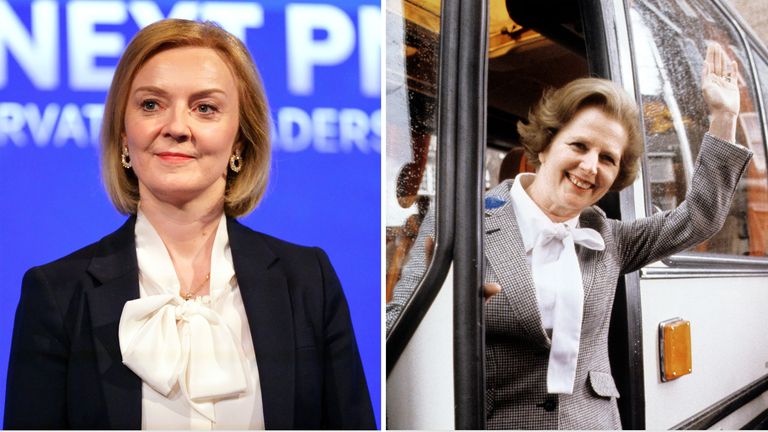
Her role model Margaret Thatcher – who like Sir Tony Blair avoided economic smashes while in office – played by the rules and conventions. She believed in balancing the books and famously observed, “You can’t buck the markets.”
The new prime minister thinks she and her chancellor know better, commenting: “We have had a consensus of the Treasury, of economists, with the Financial Times, with other outlets, peddling a particular type of economic policy for 20 years. It hasn’t delivered growth.”
Gamble
One can quibble with the accuracy of this statement, noting the early decade of this century was mostly characterized by on or above-trend growth and that since 2010, a Conservative government has been in charge, of which Ms Truss has been a supporter and member.
What matters is that Ms Truss has decided to gamble the economy on a new policy of pursuing growth at all costs even when her proposals seem contradictory, such as simultaneous borrowing, tax cuts, and huge government spending, to stabilize energy markets only temporarily.
Her opponent for the leadership, Rishi Sunak, warned of the consequences of her plans but was rejected by the party membership.
DISCLAIMER: Independentghana.com will not be liable for any inaccuracies contained in this article. The views expressed in the article are solely those of the author’s and do not reflect those of The Independent Ghana
Experts said a rise in the cost of long-term borrowing due to the market turmoil meant the cost to lenders of offering new mortgage deals was too expensive.
Sterling fell to an all-time low earlier against the US dollar after Chancellor Kwasi Kwarteng pledged further tax cuts at the weekend on top of Friday’s mini-budget where he announced the biggest tax cuts in 50 years.
The pound had been sliding as global markets reacted to the sharp increase in government borrowing required to fund the cuts.
A weak pound makes it more expensive to buy imported goods and risks pushing up the rising cost of living even further. Imports of commodities priced in dollars, including oil and gas, are also more expensive.
UK inflation, the rate at which prices rise, is already rising at its fastest rate for 40 years.
Some economists had predicted the Bank of England would call an emergency meeting in the coming days to raise interest rates in a bid to stem the fall, as well as calm rising prices.
But the Bank of England instead said it was “monitoring developments in financial markets very closely” and would make a full assessment at its next meeting on 3 November.
Investors are now predicting that interest rates could more than double by next spring to 5.8% from their current 2.25%, to curb high inflation, which is expected to be fuelled by the huge tax cuts announced in Friday’s mini-budget.
‘Not affordable’
Samuel Tombs, chief UK economist at Pantheon Macroeconomics, said if interest rates rise as predicted, the average household refinancing a two-year fixed rate mortgage in the first half of next year would see monthly payments jump to £1,490 from £863.
“Many simply won’t be able to afford this,” he said.
A late afternoon double dose of attempted reassurance – firstly from the Treasury, and then from the Bank of England.
What’s new from the Treasury is a timeline with dates attached. There will be a series of statements from various cabinet ministers about ideas we heard about on Friday.
And then in just under two months, a parliamentary moment. What’s being described as the “Medium Term Fiscal Plan” – and the Office for Budget Responsibility’s number crunching.
In short, what the Treasury is attempting to say is this: don’t panic, we know what we’re doing.
Well, let’s see what the markets do next.
The market volatility following Mr Kwarteng’s mini-budget has also been linked in part to the government’s decision not to publish a forecast of expected UK growth and government borrowing from independent forecaster the Office for Budget Responsibility.
Martin Weale, Professor of Economics at King’s College London and former member of the Bank of England’s Monetary Policy Committee, which votes on interest rates, told BBC Radio 4’s PM programme that people “are concerned that the government has no plan for bringing the national debt under control.”
“Sterling has fallen because market traders have been frightened by the government’s policies, and I think they got further frightened by the sense over the weekend that this was only the first installment of some tax cuts.”
But Lord David Frost, Conservative peer and former chief Brexit negotiator, said the reaction on global markets was “an overreaction”.
“I don’t think anything has gone wrong, actually, Liz Truss promised change, a different economic approach to get us back to growth and away from stagnation.”
He said as part of this change in approach, interest rates would rise and the government would need to provide additional support via tax cuts, and whilst it would need to reduce spending medium term, the details of that would come in November.
The government said its financial plan set for 23 November would include full growth and borrowing forecasts from the Office for Budget Responsibility.
It also pledged to set out further details on the government’s spending rules, including how it will try to decrease debt.
Paul Dales, the chief UK economist at Capital Economics, said given the pound had fallen back since the statements from the Bank and the Treasury the markets “may well need more reassurance and some actual action”, saying a change in policy from the government or an interest rate hike from the Bank at an emergency meeting before 3 November may be necessary.
The cost of UK government borrowing increased again to the greatest level since 2008 amid the financial crisis as a result of the falling value of the pound.
It’s because Chancellor Kwasi Kwarteng’s mini-budget outlined tax cuts which means the billions needed to help households with their energy bills will have to be borrowed.
When governments want to borrow money, they sell bonds – usually bought by international investors – and the loan gets added on to the national debt.
The larger the national debt gets, the more interest the government has to pay on all the bonds it has sold.
Until recently, the government was able to borrow very cheaply, at rates of less than one percent.
The interest on ten-year bonds has risen from 3.83% on Friday to 4.11% on Monday.
Paul Dales, from Capital Economics, says this shows that markets are worried that the government’s tax cuts will force the Bank of England to raise interest rates higher and “a deterioration in the public finances will undermine the UK’s long-term growth prospects”.
Chancellor Kwasi Kwartengis accused of squandering a chance to lay out a “real response to the cost of living problem” by Labour’s Shadow Chancellor Rachel Reeves in the opening of her keynote address at the Labour Party’s Annual Conference in Liverpool.
“What did we get instead?” she asks. “Tax cuts for the top 1%, increased bankers bonuses, and more than £50bn piled onto the national debt every single year.
“Sterling is down, that means higher prices as the cost of imports rise,” she says.
She adds that with the cost of government borrowing up, taxpayers’ money will go into paying off debt.
“The cost of borrowing for working people willnow go up too,” with higher mortgage repayments for families, she says.
“And all for what? Not to invest in industries of the future, not for our NHS, not for schools, but for tax cuts for the wealthiest, a return to trickle-down economics.”
Let’s head back toLondon now, the chancellor has declined to comment on reports that the pound hit an all-time low after his mini-budget.
Approached by a BBC journalist, while walking between government buildings, Kwasi Kwarteng is asked: “Chancellor, what are you doing to do about the turmoil in the markets this morning, sir?”
Refusing to answer, the Tory MP replies: “I’m not going to make any comment now.”
The reporter continues, asking what conversations Kwarteng is having with the Bank of England. He also asks if the chancellor has anything to say about what’s going on.
“Are you going to reverse your announcement that you made last Friday?” the reporter asks, referring to the mini-budget, to which Kwarteng says only: “I’m just going to my office now, thanks.”
The key announcements in Chancellor Kwasi Kwarteng’s mini-budget: stamp duty, energy bills, and alcohol duty.
Here are the key points from Chancellor Kwasi Kwarteng’s mini-budget statement to MPs:
• The basic rate of income tax will be cut to 19p in the pound from April 2023. Will mean 31 million people will be better off by an average of £170 per year.
• The 45% higher rate of income tax is to be abolished.
• It was already announced that April’s National Insurance hike is to be reversed from 6 November – saving money for businesses and 28 million workers. The 1.25 percentage points increase was introduced under former chancellor Rishi Sunak.
• Planned duty rises on beer, cider, wine, and spirits canceled
• Stamp duty to be cut from “today”. Nothing will be paid for the first £250,000 of the property’s value – double the current amount allowed. The threshold for first-time buyers is to be increased from £300,000 to £425,000. The value of the property on which first-time buyers can claim relief is to also go up from £500,000 to £625,000.
Image:Energy bills
• Household bills to be cut by an expected £1,000 this year with aid from an energy price guarantee and a £400 grant. Millions of the most vulnerable households will receive additional payments, taking their total savings this year to £2,200.
Image: Economy
• Total cost of energy package, including business support, over the next six months estimated at £60bn. It is “entirely appropriate for the government to use our borrowing powers to fund temporary measures to support families and businesses”.
• Treasury estimates tax cut measures will cost nearly £45bn a year in 2026.
• Independent forecasters expect the government’s energy plan “will reduce peak inflation by around five percentage points”.
• Bank of England independence is “sacrosanct”.
• Government to set out its fiscal approach more fully in the future and the Office for Budget Responsibility will publish an economic and fiscal forecast before the end of the year.
• The EU-inspired cap on bankers’ bonuses is to be scrapped as part of efforts to “reaffirm” the UK’s status as a financial services hub. “All the bonus cap did was to push up the basic salary to bankers or drive activity outside Europe”, the chancellor said.
• Planned rise in corporation tax to 25% next year is cancelled. “We will have the lowest rate of corporation tax in the G20. This will plough almost £19 billion a year back into the economy”, Mr Kwarteng said.
• Will legislate to require trade unions to put pay offers to a member vote so strikes can only be called once negotiations have fully broken down.
• To cut taxes for businesses in designated sites for 10 years to support investment, jobs, and growth. In talks with 38 local and mayoral combined authority areas in England about “investment zones”. Aims to roll out more widely across the UK.
• Universal Credit Claimants who earn less than the equivalent of 15 hours a week at the National Living Wage, 120,000 people, will be required to meet regularly with their Work Coach and take active steps to increase their earnings or face having their benefits reduced. The aim is to reduce vacancies in the economy.
• Will simplify IR35 rules – governing how temporary contractors are paid – by scrapping reforms in 2017 and 2021 that added “unnecessary complexity and cost” for many businesses.
• Introducing VAT-free shopping for overseas visitors.
• Changing regulations to increase investment by pension funds into UK assets, benefiting savers and boosting economic growth, and incentivizing investment into Britain’s science and tech companies.
• Annual Investment Allowance – tax relief for businesses on plant and technology investment – to remain at £1m permanently, rather than letting it return to £200,000 in March 2023.
Beth Rigby, the political editor for Sky, has spoken with some of the chancellor’s colleagues.
One said it was now “starting to look like a Conservative government”, while another said they were very supportive.
A third said there was no future in the “steady as she goes” approach pursued under the previous chancellor Rishi Sunak, and that now is the right time to go for growth.
However, it is notable that those who opposed the tax-cutting, high-spending plans outlined by Liz Truss in her bid to be Tory leader seem to be keeping their cards close to their chest.
Sunak supporter and Treasury committee chair Mel Stride said there was a “vast void at the centre of the announcements”.
Veteran Conservative Sir Roger Gale said: “Fortune favours the brave, but not the foolhardy.
“Without the support of an OBR Kwasi Kwarteng’s not-so-mini budget is certainly brave but also looks very high risk indeed. I trust that the promised detailed figures will underpin his calculations.”
The Treasury is understood to have based its analysis on the OBR forecast from March, with updated market prices.
As he announced his mini-budget, Chancellor Kwasi Kwarteng promised to “turn the vicious cycle of stagnation into a virtuous cycle of growth.”
He is proposing the largest tax cuts since 1988, which will be paid for by a significant increase in borrowing.
It is being seen as a major change of direction for the government under new Prime Minister Liz Truss.
It comes as the Bank of England warns the UK may already be in recession.
In a departure from Boris Johnson’s economic policies, Mr Kwarteng has scrapped plans to push up taxes to pay for public services with the aim of kick-starting the UK’s sluggish economy.
In a statement to the Commons, he said: “Growth is not as high as it needs to be, which has made it harder to pay for public services, requiring taxes to rise.
“This cycle of stagnation has led to the tax burden being forecast to reach the highest levels since the late 1940s.
“We are determined to break that cycle. We need a new approach for a new era focused on growth.”
The government normally releases an independent forecast of how major tax changes will impact the economy, but Mr Kwarteng has opted not to do this, as his statement is not technically a Budget.
However, Mr Kwarteng promised the Office for Budget Responsibility would publish a full economic forecast before the end of the year, with a second to follow in the new year.
The Institute for Fiscal Studies thinks tank has published its own analysis, saying: “The government is choosing to ramp up borrowing just as it becomes more expensive to do so, in a gamble on growth that may not pay off.”
Mr Kwarteng confirmed a planned corporation tax increase from 19% to 25% would also be scrapped.
The chancellor also announced an increase to the threshold people in England starts paying stamp duty on home purchases to £250,000.
For first-time buyers, the threshold will rise to £425,000.
There are likely to be changes in income tax.
Mr Kwarteng confirmed the cap on bankers’ bonuses would be lifted and new investment zones would be established, where businesses would benefit from tax cuts and planning rules would be relaxed to encourage house building.
The cost of cutting these taxes is estimated at about £30bn a year.
The statement also included details of the cost of the government’s plan to cap energy bills for households and businesses.
Mr Kwarteng said these estimated costs were “particularly uncertain, given volatile energy prices” but based on recent prices the total cost of the package for the six months from October was expected to be around £60bn.