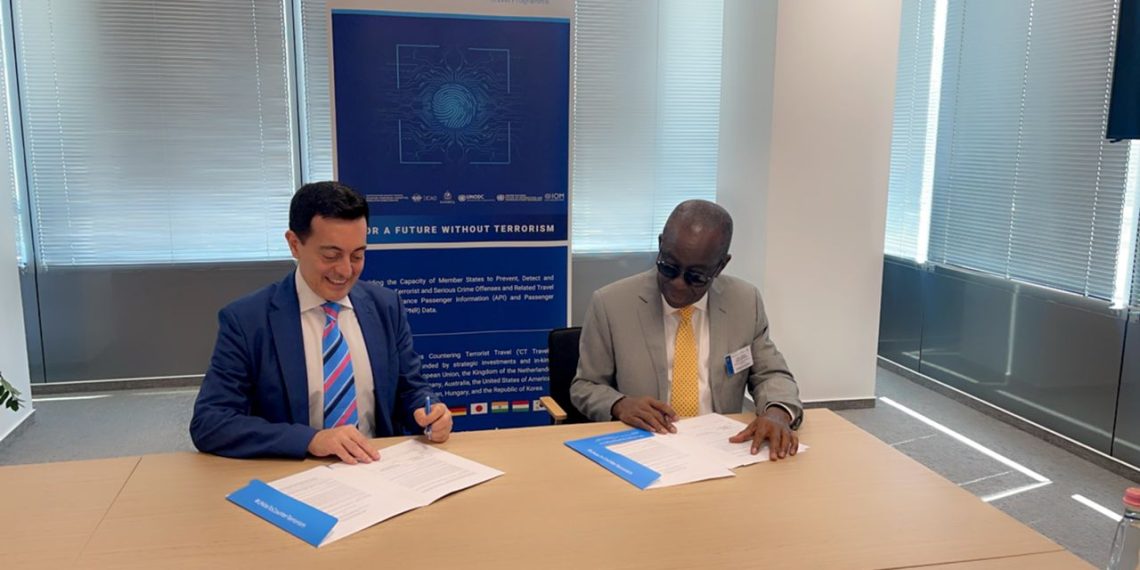
Ghana has formalized a strategic partnership with the United Nations Office of Counter-Terrorism (UNOCT) through the signing of a Letter of Agreement (LoA).
This collaboration is aimed at strengthening efforts against terrorism and addressing its links with transnational organized crime.
The LoA will facilitate technical support for Ghana under the United Nations Countering Terrorist Travel (‘CT Travel’) Programme. This initiative is focused on enhancing national capacities to manage threats associated with terrorist travel, leveraging Advance Passenger Information (API) and Passenger Name Records (PNR).
The agreement was signed by Mauro Miedico, Director of UNOCT, and Albert Kan-Dapaah, Ghana’s Minister for National Security. The signing ceremony took place in Budapest, Hungary, during the Forum celebrating the 5th Anniversary of the UN’s Countering Terrorist Travel Programme.
Miedico expressed appreciation for Ghana’s ongoing cooperation and robust engagement with UNOCT, highlighting the significance of this partnership in bolstering both national and regional security.
Kan-Dapaah, in turn, recognized the valuable support from UNOCT and reiterated Ghana’s commitment to implementing the agreed measures effectively.
The LoA will support the UN in assisting Ghana to enhance its abilities to detect and intercept terrorists and other criminal elements. This aligns with Security Council resolutions 2178 (2014), 2396 (2017), and 2482 (2019), which require Member States to ensure airlines operating within their jurisdictions provide API and PNR data to national authorities.
Launched in 2019, the UN Countering Terrorist Travel (‘CT Travel’) Programme is a global initiative aimed at equipping Member States with tools to prevent, detect, investigate, and prosecute terrorist and serious crimes.
It involves the collection and analysis of passenger data in line with Security Council resolutions, international standards, best practices, and human rights considerations.
The Programme, led by UNOCT, employs a “One-UN” approach to deliver tailored and comprehensive assistance to Member States.
It collaborates with various UN bodies and international organizations to support 76 Member States, 57 of which receive direct technical assistance. The initiative also fosters regional cooperation by sharing insights and best practices on passenger data exchange.