Tag: terrorist attacks

  • 17 heavily armed Burkinabè soldiers setting up combat position arrested in Wuru

    17 heavily armed Burkinabè soldiers setting up combat position arrested in Wuru

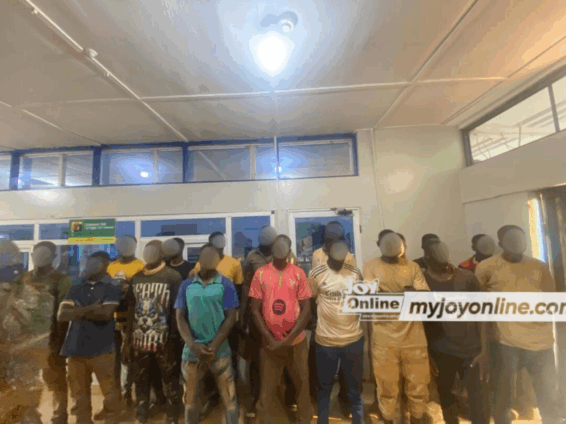
    Ghanaian security forces have arrested a group of heavily armed men who claim to be soldiers from Burkina Faso who were reported by residents in a community called Wuru in the Upper East Region.

    According to reports, the Burkinabè soldiers were spotted by residents setting up a combat position using sandbags.

    Responding to the distress call, the security forces in the Sissala East District of the Upper West Region arrested and detained the 17 heavily armed Burkinabè soldiers.

    The soldiers, aged between 20 and 30, were found in possession of dozens of military items, including firearms and explosive devices. They were reportedly arrested near the border community of Wuru, about a one-hour drive east of Tumu.

    “We received a distress call from community members about armed elements establishing a combat position. We responded swiftly, successfully ambushed them, and transported them together with their weapons to our office,” an official said.

    According to the official, these alleged soldiers claimed they had lost their way during a routine patrol. However, they were detained for several hours until about 9:00 p.m., until authorities at the national level ordered their release.

    Their weapons were released the following day after a delegation led by staff of the Ghanaian Embassy in Burkina Faso visited.

    The Wuru community lies within the Nazinga Forest range. Between 2022 and 2023, residents reported frequent sightings and movements of armed men suspected to be terrorists within farmlands inside the forest.

    Residents complained that these activities negatively affected farming, hunting, and other economic activities in the area.

    Intelligence reports indicating the return of these suspected terrorists began circulating in December 2025.


    Following this, netizens have expressed possible threats of terrorist attacks in Ghana, given the growing number of incidents in neighbouring countries, particularly Burkina Faso. Stakeholders, experts and security analysts, such as Dr Vladimir Antwi-Danso, have warned the government to take urgent measures as Ghana currently enjoys what is largely described as ‘relative peace’, with a possible risk of terrorist attacks from spillovers from the Sahel.

    Experts argue that Ghana’s intelligence agencies need better collaboration to detect and prevent extremist infiltration. Weak coordination is seen as a vulnerability.

    Consequently, in December last year, the Centre for Policy Scrutiny (CPS)held  a dialogue in Accra under the theme, “Fighting Terrorism in the Middle East and Africa.” Attendees included Ghanaian MPs and the Israeli Ambassador, highlighting the seriousness of the issue.

    Militant Islamist groups such as Jama’at Nusrat al Islam wal Muslimin (JNIM), Islamic State in the Greater Sahara (ISGS), Boko Haram, and Al Shabaab have sustained near-record levels of violence. The Sahel (Burkina Faso, Mali, Niger) and Somalia together account for 79% of terrorism-related deaths in Africa.

    The UN Secretary-General warned that terrorism in Africa is now a “growing global threat”. The Sahel alone represents 19% of terrorist attacks worldwide and more than half of global terrorism casualties. Around 4 million people are displaced across Burkina Faso, Mali, Niger, and neighbouring states.

    Meanwhile, Minister for Foreign Affairs, Samuel Okudzeto Ablakwa, has underscored the urgent need for stronger security frameworks to address critical global threats, including cybercrime, terrorism, and food insecurity.

    Speaking at a diplomatic gathering at Jubilee House during an annual New Year exchange hosted by President John Mahama, Mr Ablakwa emphasised the necessity of international cooperation in tackling these challenges.

    “Moreover, global economic uncertainties, cybercrime, terrorism, food insecurity, and pandemics are pressing challenges that need a unified response,” he stated.

    “These threats to global stability and security make it clear that comprehensive cooperation and stronger security frameworks are necessary,” he added, stressing that collective action was vital in navigating the evolving global landscape.

    To reinforce Ghana’s diplomatic strategy, Mr Ablakwa announced the introduction of a Comprehensive Foreign Policy, which will guide the country’s approach to international relations in a more proactive and strategic manner.

    He also revealed that the Ministry of Foreign Affairs had established a Delivery Unit to enhance efficiency and responsiveness in diplomatic affairs, ensuring Ghana remains adaptable in an ever-changing world.
  • Ghana’s mining linked to militant attacks in Sahel – Report

    Ghana’s mining linked to militant attacks in Sahel – Report

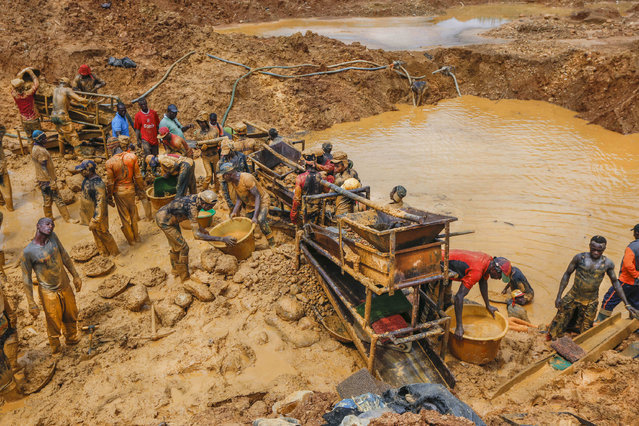
    Components like detonator cords and explosive charges used in attacks on U.N. and government forces in the Sahel have been traced back to West Africa’s commercial mining operations, including those in Ghana.

    In a report by Reuters, sources reveal that Islamist militants in the Sahel region are discreetly tapping into Ghana’s northern territories to secure logistical support, food, and medical treatment, a trend that poses risks of deeper entrenchment of militant networks across West Africa.

    According to Ghanaian security officials and regional diplomats cited by Reuters, militants from Burkina Faso cross into northern Ghana, taking advantage of porous borders to restock essential supplies and even seek medical care.

    Despite this, Ghana has so far avoided the type of Islamist attacks that have plagued neighboring countries, partly because of militants’ strategy of maintaining Ghana as a logistical safe haven rather than a target. “You won’t destroy where you sleep, would you?” a Ghanaian security official reportedly told Reuters, noting that militants are often monitored and, in some cases, used as informants.

    While Ghana has maintained close ties with Western nations and has worked actively to prevent militant violence within its borders, some analysts caution that the government’s low-profile approach may allow extremist networks to build roots in marginalized communities. Boniface Gambila Adagbila, Ghana’s ambassador to Burkina Faso, acknowledged the challenge, emphasizing that Ghanaian authorities are collaborating with Burkina Faso to curb cross-border movement of insurgents. Adagbila denied the existence of any informal non-aggression pacts between Ghana and the militants, asserting that Ghana is actively working to “flush them out.”

    Growing concern over Ghana’s mining sector

    Concerns are also mounting over the role of Ghana’s mining sector in inadvertently supplying materials used by militants for improvised explosive devices (IEDs) across the Sahel. According to a recent report by the Small Arms Survey and corroborated by U.N. sources, explosive materials from commercial mining activities, such as detonators and ammonium nitrate, are sometimes diverted and end up fueling violence across West Africa. The Center for International Cooperation in Mali (CIC) has highlighted the risks associated with the vast unregulated artisanal mining industry across the region, noting that insurgents can access these materials more readily as they exploit poorly regulated supply chains.

    Experts warn that the security implications for Ghana could intensify if militants strengthen their recruitment efforts in Ghanaian communities. Aaron Atimpe, an expert on extremist groups in West Africa, highlighted that militants crossing into Ghana “are not just using it as a rest and supply base; they are actively engaging and recruiting local residents.” While recruitment remains limited, the potential for expansion could destabilize the northern parts of the country.

    Regional impact and international concerns

    The movement of militants into northern Ghana underscores the growing insecurity in the broader West African region, particularly the Sahel. Burkina Faso, at the heart of the insurgency, has ceded control of over half of its territory to various militant factions aligned with Al-Qaeda or the Islamic State. The United Nations recently reported that instability in Burkina Faso, Mali, and Niger has effectively turned the Sahel into a new epicenter for global terrorism, leading to widespread displacement and violence. The crisis has led to international concerns over the potential spread of violence to the more stable coastal nations, including Ghana, Benin, and Ivory Coast.

    Clingendael, a Netherlands-based think tank, reports that Ghana’s low-conflict status is partly due to joint operations with neighboring countries and discreet monitoring of extremist groups crossing its borders. “Yet, to avoid escalation, it also appears to have accepted de facto non-aggression with JNIM [Jama’at Nasr al-Islam wal Muslimin],” the organization noted, referencing a group that has made public its intent to expand further into West Africa.

    Preventive measures amid rising tensions

    To counter potential spillover, Ghana has ramped up its efforts to control and monitor its northern borders and is reportedly collaborating with the United States and other Western partners. Additionally, Ghana’s military is conducting surveillance and joint training exercises with neighboring security forces to enhance cross-border security.

    However, critics suggest that economic pressures and local grievances may still make Ghana’s border regions vulnerable to extremist influence. Limited economic opportunities, paired with strained government resources in northern Ghana, could make communities susceptible to recruitment efforts by militants who provide economic incentives.

    The situation calls for urgent policy attention to improve border security and address vulnerabilities in Ghana’s mining industry, experts say, as the Sahel insurgency shows no signs of abating.

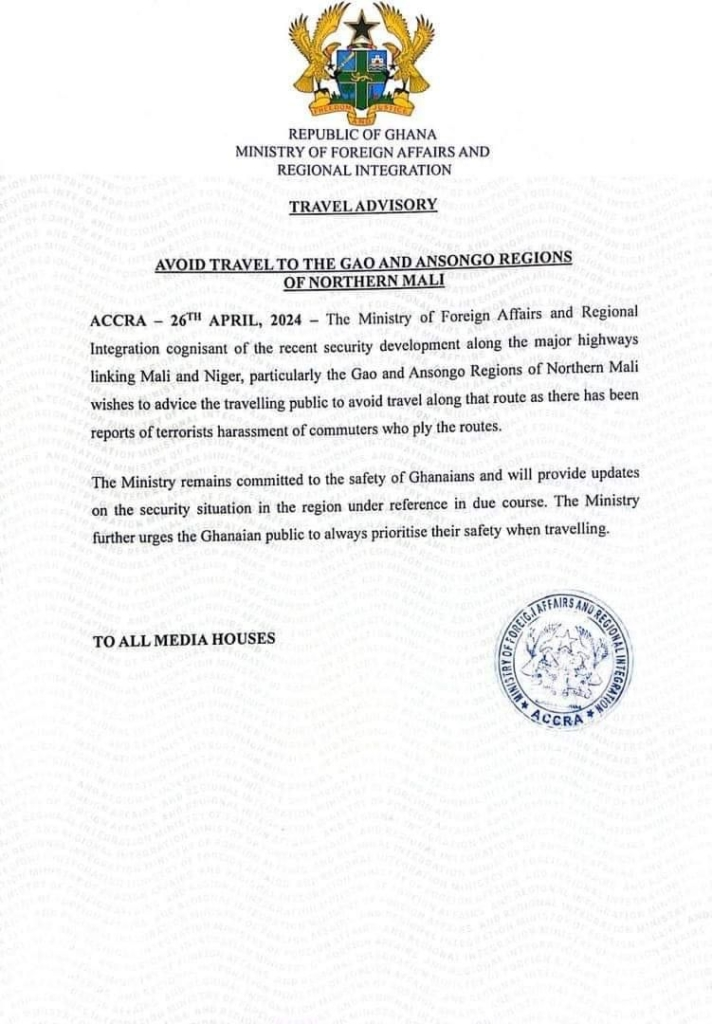
  • Don’t travel to Yao and Ansonga of Northern Mali due to terrorist attacks – Foreign Ministry to public

    Don’t travel to Yao and Ansonga of Northern Mali due to terrorist attacks – Foreign Ministry to public

    The Ministry of Foreign Affairs and Regional Integration has issued a travel advisory advising Ghanaians against traveling to certain regions in the northern part of Mali.

    In a press release, the Ministry cited a recent security threat along the major highways linking Mali and Niger, particularly in the Gao and Ansongo Regions of Northern Mali.

    The advisory comes in light of reports of terrorists harassing commuters who use these routes.

    “The Ministry remains committed to the safety of Ghanaians and will provide updates on the security situation in the region under reference in due course,” the statement read.

    The Ministry of Foreign Affairs urged the general public to prioritize their safety when traveling.

    In September 2023, Islamist militants attacked a river boat in north-eastern Mali, killing at least 49 civilians.

    They also reportedly attacked an army camp, killing 15 soldiers, while around 50 militants were said to have died.

  • ‘Huge risk of Christmas terrorist attacks’ – EU warns

    ‘Huge risk of Christmas terrorist attacks’ – EU warns

    A high-ranking EU official said there is a big chance of terrorist attacks in the European Union during the upcoming holiday season.

    Ylva Johansson, from the European Home Affairs Commission, said that the fighting between Israel and Hamas is making people more divided and increasing the chances of violence.

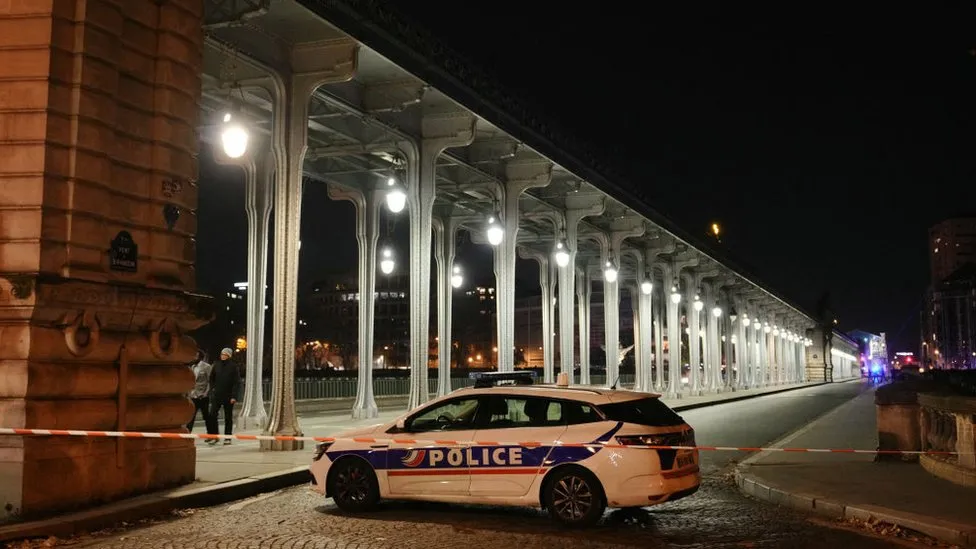
    She made these comments a few days after a visitor was killed by being stabbed in Paris.

    The EU is giving an extra €30m (£26m) for more security, said Ms Johansson.

    She did not say if there was any particular information that caused the warning.

    “We recently saw it in Paris, and we have seen it before too,” she said before a meeting of EU interior ministers.

    German Interior Minister Nancy Faeser said that the EU needs to watch out for threats and propaganda, as there is a high risk of violent Islamist attackers becoming more emotionally charged and radicalized.

    Several European countries have experienced an increase in hate crimes after Hamas gunmen attacked Israeli communities, resulting in about 1,200 deaths and many people being held hostage in Gaza. Israel went into Gaza and more than 15,000 people have been killed, according to the health ministry run by Hamas.

    European Union ministers met after a violent attack happened near the Eiffel Tower on Saturday. A 23-year-old German tourist named Collin B was killed, and his girlfriend and a British tourist were injured in the attack.

    The young German couple went to Disneyland Paris and the Louvre, and took pictures in front of the Eiffel Tower before the attack.

    Police said that the 26-year-old French suspect, named Armand R, who is from a non-religious Iranian family, promised to follow the Islamic State group.

    The man who was caught at the place had been in jail before for making a plan to cause terror in the La Défense area of Paris.

    In 2020, the French police talked to him because he was in contact with Abdoullakh Anzorov, who killed teacher Samuel Paty.

    The prosecutor in charge of stopping terrorism, Jean-François Ricard, said that Armand R’s mother was worried about his actions, but there wasn’t enough proof to do anything about it at that time.

    Germany is very worried about a possible attack and is being extra careful.

    Two boys were stopped in different places in the country last week because the police thought they might be planning to do a militant Islamist attack on a Christmas market in Leverkusen.

    A 20-year-old person from Iraq, who came to Germany last year, is being held by the police for allegedly planning to carry out a knife attack at a Christmas market in Hannover.

    The leader of German intelligence in the state of Thuringia, Stephan Kramer, said that people who support Hamas could be very dangerous. He thinks they could cause problems at big events like the Paris Olympics and Euro 2024 football championships, not just at Christmas markets.

  • 5 dangerous terrorists escape from Tunisia prison

    5 dangerous terrorists escape from Tunisia prison

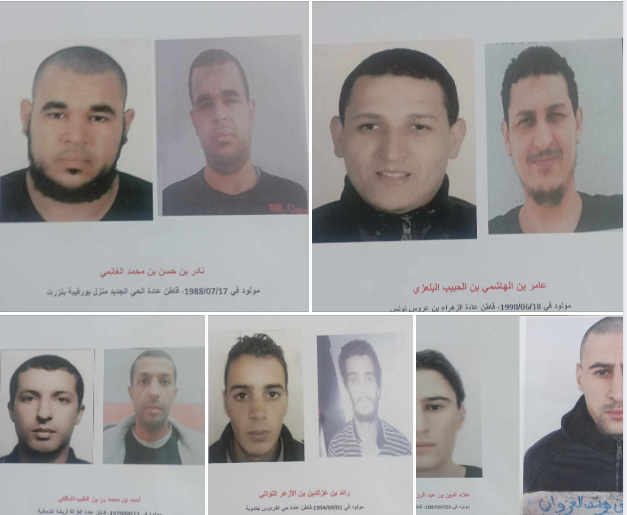
    Five inmates, who were labeled as dangerous Islamists, have successfully escaped from a prison in Tunisia. The country’s interior ministry has released their photographs and is urging citizens to provide any information they may have to help prevent “terrorist acts.”

    The escape occurred from Mornaguia prison early on Tuesday, as announced by the ministry on its Facebook page. Among the escapees is Ahmed Malki, who was imprisoned for the 2013 killings of two politicians. He is also known as “the Somali” and was serving a 24-year sentence for the assassinations of secular politicians Chokri Belaid and Mohamed Brahmi. These killings in 2013 triggered a political crisis in Tunisia, ultimately leading to the government’s resignation.

    The escaped prisoners also include Rayd Touati, who, according to security sources, has been involved in some of the most violent attacks that have shaken Tunisia over the past decade, as reported by Reuters.

    Tunisia gained global attention as the birthplace of the Arab Spring in 2011 when it overthrew its long-serving ruler, Zine al-Abidine Ben Ali. However, the nation is currently grappling with increased political instability, particularly as President Kais Saied has sought to consolidate near-total power.

    One of the most devastating attacks in Tunisia occurred in 2015 when a gunman targeted tourists staying in a popular resort just north of Sousse, resulting in the tragic deaths of thirty-eight people.

  • Four men arrested in Iceland on suspicion of plotting terrorist attacks

    The men were apprehended in a Reykjavik suburb when it became apparent that the police were the primary target of the preparations local media has reported 

    Four men have been detained by Icelandic police on suspicion of plotting terrorist attacks against government facilities, including the parliament, according to the country’s national television RUV.

    Officers are exploring potential links to Nordic far-right groups and the police were the central target, local media has reported.

    The four Icelandic men, all in their 20s, were arrested in the Kopavogur suburb of the capital Reykjavik, and in the southwestern town of Mosfellsbær, in an operation involving special forces.

    Two of the men were remanded in custody, while the other two were released after questioning.

    Several semi-automatic weapons, including 3D-printed guns, were seized at nine locations during the operation, which involved 50 officers, The Guardian reports.

    The operation was the first of its kind in Iceland.

    RUV reports that the men intended to target multiple public buildings, including the Icelandic parliament.

    Karl Steinar Valsson, the national commissioner of the Icelandic police, said at a news conference: “It is safe to say that our society is safer than it was.”

    “We are just starting some work and are seizing a large number of phones and computers and other such things. All that work is in the very early stages.

    “We took certain measures while we were getting the situation under control. Of course, we don’t want to reveal what the exact response of the police is.

    “At its peak, there was about 50 police personnel who took part in the police operation. With them, we think we’ve covered what we’re investigating and don’t think there’s any danger in travelling.”

    He added: “As far as we know, this is the first time that an investigation of this type has been launched (in Iceland).

    “The origin of the police operations yesterday … was in the context of an investigation into the preparation of a terrorist attack.”

    Mr Valsson added that the investigation was continuing but further arrests could not be ruled out.

    Iceland, a small country of 375,000 people, has topped the Global Peace Index since it was included in the ranking in 2008 and is considered one of the most peaceful places in the world.

  • Terrorist Attacks: Eastern border is well protected – 66 Artillery

    The Commanding Officer (CO) of the 66 Artillery Regiment in the Volta region, Lieutenant Colonel, Edward Sarpong Appiah has said the unit is well-armed against any possible terrorist attacks.

    Volta region serves as Ghana’s eastern entry point and according to the CO, the Military is working hand in hand with other security agencies, especially the Ghana Immigration Service (GIS) and National Investigation Bureau (NIB) in order to prevent any terrorists from having access to the country through Volta.

    He commended sister security agencies in the region for “doing a great job” as far as protecting the borders is concerned and mentioned that, the unit shall not be reluctant.

    Lt. Col. Appiah reiterated that fighting terrorism is a collaborative work hence the locals should always be able to “identify” and report suspected terrorists.

    He said “civilian relationship” with the unit is very solid in the region and he is optimistic about winning the fight against terrorism and other unruly activities.

    The Commanding Officer cautioned persons that will involve themselves in terrorism to desist from it and advised the general public to be more vigilant.

    Volta region has about three busy entry points, Aflao, Kpoglu-Segbe, and ECOWAS border at Akanu all in Ketu South and Ketu North Municipalities respectively.

    The region has numerous smaller borders, however, unapproved entry points continue to remain a challenge.

    Source: Ghanaweb via Albert Gooddays

  • Nigeria attackers disguised as worshippers – Police

    Police in Nigeria say gunmen who killed more than 20 people in a church on Sunday had disguised themselves as worshippers.

    A spokesman said the attackers detonated explosives inside the building, while others outside opened fire.

    It still isn’t clear why they carried out the assault in the south-western town of Owo.

    Police are also yet to announce an official number of deaths.

    The UN in Nigeria said it “strongly condemns the brutal attacks on worshippers”, according to a statement by the UN secretary general’s spokesman on behalf of the UN’s Resident Coordinator for Nigeria, Mattias Schmale.

    Nigeria violence: Gunmen attack Catholic church killing worshippers in Ondo state

    Mr Schmale appealed for calm and called for the attack perpetrators to be brought to justice.

    The attack overshadowed a meeting of Nigeria’s governing party, which has begun the process of choosing a candidate for next year’s presidential election.

    President Muhammadu Buhari cannot run again, having served two terms.

    Source: BBC

  • Terrorism: Information Minister outlines things to be on the lookout for

    Citizens have been notified of procedures to take as the government strives to enhance the country’s security against terrorist attacks, according to Information Minister Kojo Oppong Nkrumah.

    He warned Ghanaians to remain attentive about anything out of the norm, during a press conference on Sunday, May 22.

    But those of particular interest, the Minister said, include:

    •  Non-residents seen mobilizing youth or circulating extremist material in person or virtually, with the objectives of whipping up sentiments to attack people are public installations. 
    • Abandoned packages in public places.

    Individuals who observe any peculiar activity, Mr Oppong Nkrumah said, should draw the attention of the Police, other security agencies and local community leaders immediately.

    Meanwhile,  Edward Asomani, the Deputy National Security Coordinator, has revealed that the government will on Tuesday launch the “See something, say something” campaign.

    This campaign will enable Ghanaians to report any unusual activity to the security agencies by dialing 999.

    “When you ring, you don’t even need to identify yourself because we have some individuals who are worried about identifying themselves when giving information,” he said.

    He told Ghanaians not to regard any information they find as irrelevant.

    “Let the security and intelligence agencies take that decision,” he added. 

    According to Mr. Asomani, the government is on top of the situation and remains unshaken; but, for Ghana to have a chance against terrorism, all citizens must help.

    Meanwhile, the Ministry of National Security has advised religious leaders to beef up security in their various places of worship across the country.

    Terrorist groups have been targeting public gatherings in the sub-region, necessitating increased security at places of worship, according to a press release issued by the Ministry on May 12.

    Source: The Independent Ghana