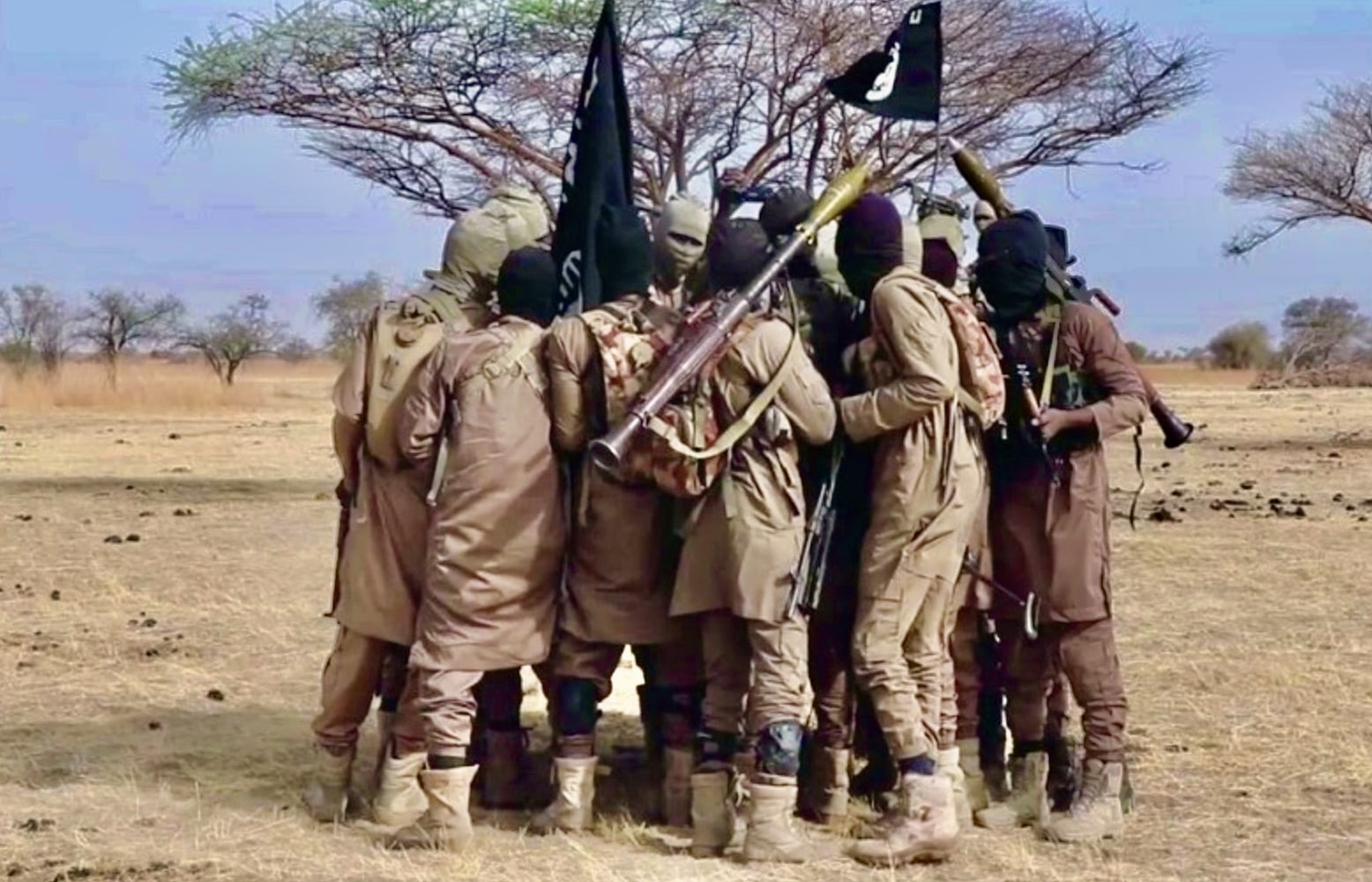
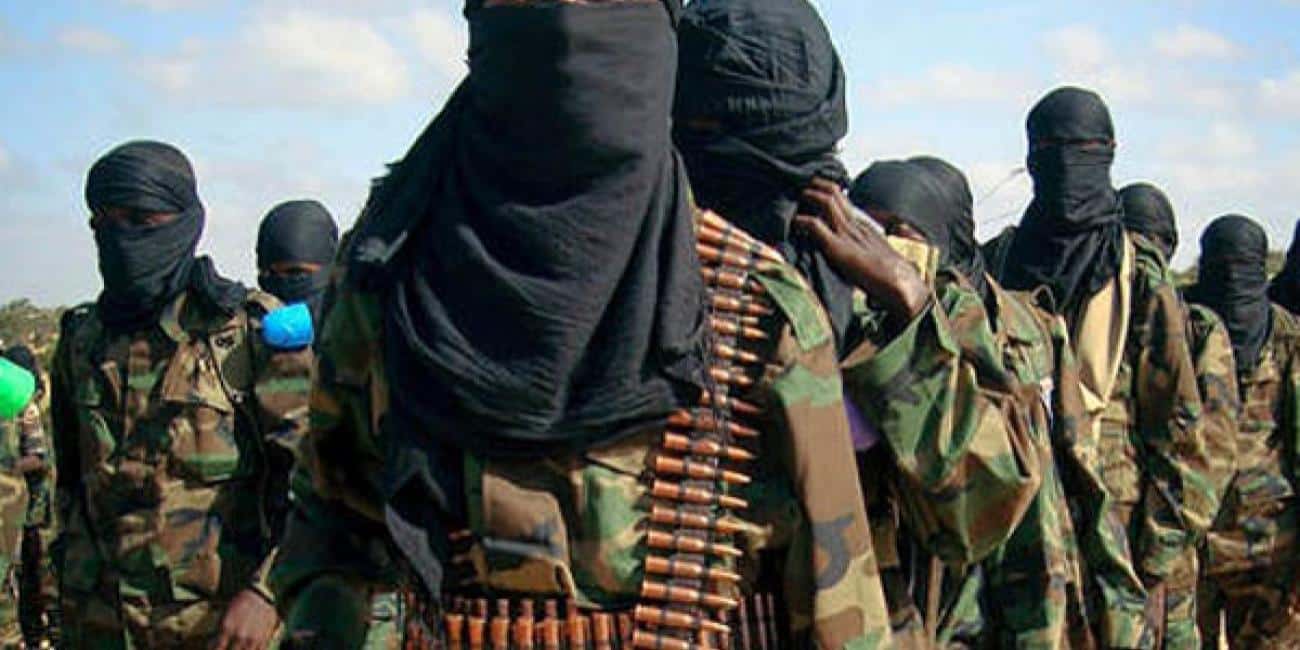
The Nigerian military said sorry for a air strike that killed 85 innocent people. They promised to only bomb places they are completely sure about in the future.
Major General Edward Buba said the army will be getting extra training and will learn more about the rules for air strikes.
Gen Buba said the army will handle the air strike incident directly.
The bombing happened when people from the Tundun Biri village came together for a religious celebration on Sunday evening.
Officials said that over 60 people had to go to the hospital for treatment after the air strike.
For a long time, the Nigerian army has been fighting against criminals and fighters in the northern part of Nigeria. These criminals have been attacking villages and kidnapping people in exchange for money.
Governor Uba Sani said that the military drone accidentally killed innocent people while trying to attack terrorists and bandits.
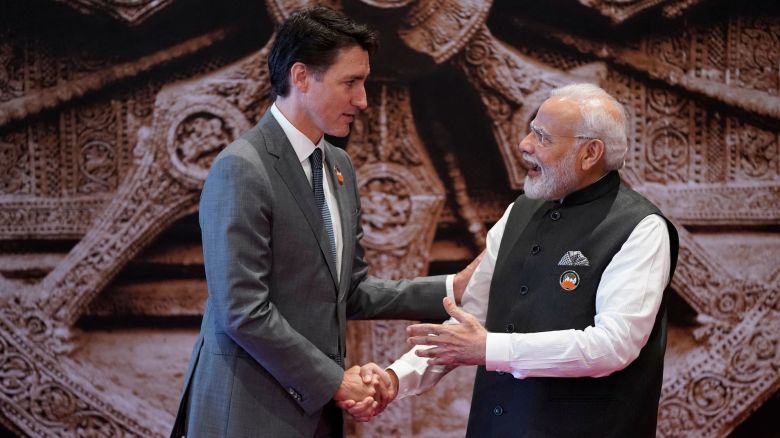
India has accused Canada of providing a safe place for terrorists after Canada stopped issuing visas to its citizens. This comes after Canada blamed India for the killing of a Sikh separatist activist on Canadian land.
India’s spokesperson, Arindam Bagchi, told reporters that Canada should be concerned about its reputation after making serious accusations.
He said that if we talk about Canada’s reputation being affected, it is getting known as a country where terrorists, extremists, and organized crime feel safe.
He made comments after India stopped accepting visa applications from Canadians because they believe there are security dangers towards their diplomats in Canada.
“The problem is with promoting violence, lack of action from Canadian authorities, and creating a disruptive environment for our high commission and consulates. This is the reason why we are temporarily stopping the issuance of visas or providing visa services,” Bagchi explained.
The relationship between the two countries got worse this week. The Canadian Prime Minister, Justin Trudeau, said that India might be responsible for the killing of Hardeep Singh Nijjar in June. Nijjar was a Sikh separatist activist who was shot by two masked men in Surrey, British Columbia.
India strongly denies the claims and thinks they are ridiculous and have a hidden motive. Bagchi said that Canada hasn’t given any specific evidence to back up the allegations.
India’s Ministry of Information and Broadcasting released a message to TV channels, requesting them to not provide a platform to individuals who have been accused of serious crimes, like terrorism or being part of banned organizations.
The Indian government has been saying for a while that Canada is not doing enough to handle Sikh separatist extremism. They believe that these extremists want to create a separate place for Sikhs called Khalistan, which would include some parts of India’s Punjab state.
Nijjar strongly supported the idea of creating Khalistan. India sees calls for Khalistan as a serious threat to its national security.
Several groups connected to the concept of Khalistan are labeled as “terrorist organizations” according to India’s Unlawful Activities (Prevention) Act (UAPA). Nijjar was listed as a UAPA terrorist and in 2020, the Indian National Investigation Agency accused him of trying to influence the Sikh community worldwide to support the creation of ‘Khalistan. ‘
Many Sikh groups in other countries believe that the Indian government is wrongly connecting the movement with terrorism. They intend to keep promoting the peaceful establishment of Khalistan and also raise awareness about the long history of human rights violations faced by the Sikh community in India.
Sikhs used to have their own kingdom in the Punjab region. They have been advocating for the establishment of Khalistan for many years, starting around the time India became independent from British rule in 1947.
When the Partition happened, the former colony was divided quickly based on religion. Muslims were sent to Pakistan and Hindus and Sikhs were sent to India. Punjab, which was a part of this colony, experienced a lot of extreme violence because it was divided in half.
The Sikhs went through a lot of suffering during the violence that happened afterwards, and they felt like they were treated badly in the new country where Hindus were the majority. Because of this, some important leaders started to push for the creation of Khalistan. Over time, there have been fights between the movement’s supporters and the government of India which led to the loss of numerous lives.
In the 1980s, there was a long period of violence in Punjab caused by some Khalistani militants. These militants did many bad things, like killing innocent people, setting off bombs without any specific target, and attacking Hindus. This information was reported by Human Rights Watch.
During counterinsurgency operations, Indian security forces had unlawfully imprisoned, tortured, killed, and made tens of thousands of Sikhs go missing, according to a rights group. The Indian government made laws to fight against rebellions, but these laws allowed for violations of people’s rights and protected the security forces from being held accountable for these violations.
In 1984, the Indian Prime Minister at that time, Indira Gandhi, told the Indian soldiers to forcefully enter the Golden Temple in Amritsar. The Golden Temple is the most holy place for Sikhs. This was done to fight against Sikh separatists, which made many Sikhs very angry.
Gandhi was killed by her Sikh bodyguards, which led to more violence. This violence resulted in the deaths of over 3,000 people, mostly Sikhs.
A year later, the violence also happened in Canada. Sikh separatists exploded a bomb on an Air India plane that had left from Toronto airport. This tragic event caused the death of all 329 people on board, which included many Canadians of Indian origin.
Today, there is no rebellion in Punjab and experts say that supporters of the Khalistan movement are not very influential in India.
But some Sikhs living in different countries, especially in Canada, Britain, and Australia, still feel sorry for the movement.
Some Sikhs believe in creating a separate country called Khalistan. They want to have regular votes to decide if this should happen and to agree on where this new country would be.
Nijjar’s death was a big surprise and made a lot of Sikhs in Canada very angry. The Sikh community in Canada is very big, with more than 770,000 members, and it is one of the largest Sikh communities outside of India.
The Canadian police have not taken anyone into custody for the murder of Nijjar. In August, the police started looking into three people they thought might be involved in a crime. They also gave a description of a car that might have been used to escape the scene. They asked the public to come forward with any information they had about these things.
Gunmen suspected to be terrorists have attacked a secondary school in Kwi hamlet, Riyom Local Government Area of Plateau in Nigeria.
Two secondary school teachers were killed by the assailants, and the vice principal of Beco Comprehensive High School was hurt.
Rwang Danladi and Sandra Rwang Danladi were a young married couple when they died.
The victims were killed on Monday while the school staff was meeting to prepare for Friday’s speech and award-giving day, according to Rwang Tengwong, a spokesperson for the Berom Youths Moulder-Association (BYM), who confirmed the incident on Tuesday.
When the teachers were asked to leave the school grounds while the meeting was going on, the group claimed that some herders opened fire on them, killing the teachers.
The State Police Command’s spokesperson, DSP Alabo Alfred, has not yet responded to our correspondent’s questions about the situation.
The BYM spokesperson provided details about the incident, saying, “We are again saddened over the invasion of BECO Comprehensive School, Kwi, where two staff members, Mr. and Mrs. Rwang Danladi are reportedly shot dead and one Mr. Dalyop Emmanuel Ibrahim, the Vice Principal of the School, seriously injured by some known armed men alongside suspected bandits elements about 3:00 pm on Monday, August 14, 2023.
“The bandits entered the school compound with their cattle and interrupted the staff meeting. The staff had asked the herders to get their cows out of the school environment. But instead of complying, they brought out their arms and opened gunfire at the teachers.
Senegal has temporarily closed its consulates abroad following attacks on diplomatic missions in Bordeaux, Milan, Paris and New York among others.
The foreign affairs ministry said in a statement on Tuesday that the precautionary measure followed “a series of aggressions that caused serious damage”.
It said the consulate in Milan had been particularly hard hit, with passport-making machines and identity cards damaged.
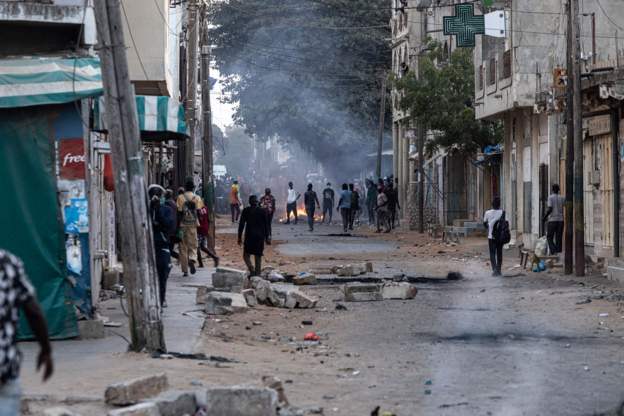
The closures come amid political tensions in Senegal following the sentencing of opposition leader Ousmane Sonko last week to two years in prison which led to deadly protests.
Italian media reported on Monday that about 40 Sonko supporters had gathered outside the consulate with flags and anti-government signs – breaking in and ransacking the offices before the police intervened.
Senegal’s foreign ministry says consulate services will resume “as soon as material and security conditions allow”.
Reporters without Borders, a media organization, has issued a report cautioning that the Sahel region is perilous for journalists and that there is a high chance of abduction.
“The deterioration of the state of the media in Chad, Burkina Faso and Mali has been exacerbated by military coups,” the report adds, saying that this is creating an environment of “controlled media”.
In addition, it mentions a “hostile atmosphere” for journalists brought on by regulations that restrict press freedom.
The report underlines the frequent attacks by extremists and continues by stating that “threats, the risk of kidnapping, even assassination, have become part of the daily life of journalists in the region.”
French journalist Olivier Dubois, who had been held captive in Mali for nearly two years by a group associated with al-Qaeda, was just recently freed in a high-profile case.
Bandits have kidnapped no less than 25 members of the New Life for All Church in Katsina State’s Kankara Local Government Area.
It was learnt that the bandits attacked the church around 10 am on Sunday and rode motorcycles there.
The Senior Special Assistant on Christian Affairs to Governor Aminu Bello Masari, Rev. Ishaya Jurau, who confirmed the incident to ThisDay, said the church pastor was injured during the attack while the service was going on.
“Bandits attacked New Life for All Church in Jan-Tsauni, Gidan Haruna in Kankara local government of Katsina State today (Sunday) around 10 am.
“They abducted 25 worshippers and left the church pastor with injuries while they were conducting service this morning.
“The security (operatives) are currently on top of the situation. They are working tirelessly to rescue the victims unhurt. We appreciate the efforts of the security,” he said.
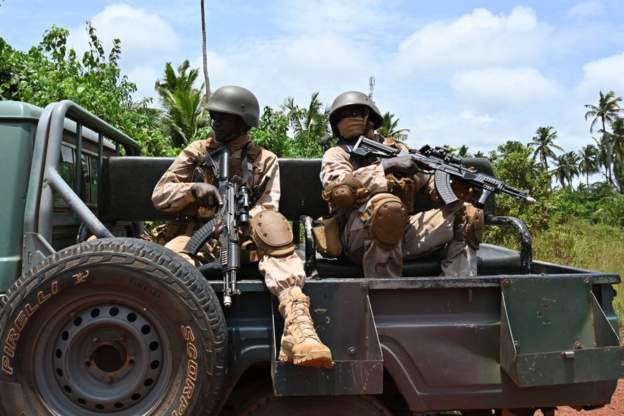
An attempt by some terrorists to attack the Wawa Military Cantonment in Borgu Local Government of Niger State, Saturday night, was thwarted as the army killed eight of the terrorists.
It was gathered that the intended attack, which would have been another setback to the military and bloodshed in the adjourning communities was foiled by the joint efforts of the Nigerian Air Force and the Army in the area.
It was also gathered that the aim of the terrorists was to set some of their colleagues in the military cantonment free and possibly attack neighbouring villages.
While eight of the terrorists were gunned down, unconfirmed sources said three of them, including their leader, were captured by the Army.
Some of the terrorists were also said to have escaped with bullet wounds while some of the soldiers also sustained some injuries during the fireworks.
The Army has beefed up security in the barracks and the area to forestall any possible reprisal from the terrorists.
Troops eliminate 7 terrorists in Kaduna
Meanwhile, troops of 1 Division, Nigerian Army on Operation Forest Sanity in fierce encounter with terrorists at Maidaro, Kagi Hill, Kusharki and Anguwan Madaki in Birnin Gwari Local Government Area of Kaduna State neutralised four.
Director of Army Public Relations, Brigadier-General Onyema Nwachukwu, in a statement added that others fled in disarray.
He said: “The gallant troops recovered two AK-47 rifles with two rounds of 7.62mm special, one automatic pump action gun with three cartridges, six Dane guns, three locally fabricated pistols with one 9mm round and four motorcycles.
“In a separate operation conducted by another fighting patrol team of 1 Division of Nigerian Army, troops along Sabon Birnin- Zartake, Ungwan Lima Riyawa and Tungan Madaki general area, closely supported from the air by Nigerian Air Force platforms, intercepted fleeing bandits from Kagi Hill. In the firefight that ensued, the troops neutralised 3 terrorists.
The United States Embassy yesterday issued a security alert on the elevated risk of terror attacks in Abuja, the Nigerian capital.
Following US Embassy’s terror warning, the British High Commission also issued an advisory to its staff on movement while also announcing reduced services.
According to reports, other European countries, are reducing services and will be attending only to critical needs.
In a swift reaction, the Department of State Services (DSS) called for calm, saying necessary precautions are being taken to secure the Federal Capital Territory (FCT) and other parts of Nigeria.
According to a statement from the embassy in Abuja, targets of the terrorist attack may include government buildings, places of worship, schools, markets, shopping malls, hotels, bars, restaurants, athletic gatherings, transport terminals, law enforcement facilities, and international organisations.
The British High Commission in a statement announced that: “On Monday 24 October, British High Commission Abuja (BHC) will be open for Business Critical staff only. ALL colleagues wishing to travel to BHC should seek authorisation from Line Manager/ Block Leads, and in advance of travel.”
On the same day, BHC Abuja UKB parents are advised strongly not to send children to schools.
The latest alert followed an intelligence report in September about possible attacks on military facilities in Nigeria. One of the targets was the Nigerian Army School of Artillery, Kachia, which houses the country’s second-largest ammunition dump, after Ikeja Cantonment.
The report had said the terrorists planned to mop up enough firepower to stage a takeover of Abuja.
Lt Gen Abdulrahman B. Dambazau (rtd) had a robust service in the Nigerian armed forces culminating in his appointment as the Chief of the Army Staff (COAS) in August 2008. Dambazau disengaged from the military in September 2010.
After his disengagement, he joined the defunct Congress for Progressive Change (CPC) in 2011 and became its Director, Security for the presidential election same year. In 2014, he joined then mega opposition party, the All Progressives Congress (APC), and was subsequently appointed the APC Director, Security, APC Presidential Campaign Council for the 2015 presidential election. He was also Director of Security of the APC Presidential Campaign Council during the 2019 presidential election.
The former Army chief was Minister of Interior from November 11, 2015 to May 28, 2019. In this interview, Dambazau speaks on insecurity in Nigeria and the way out. Excerpts:
What is your general impression on the country’s state of security?
Generally, every country has its own challenges on security and this is all over the world. But, of course, every nation too has its own security concerns. And, certainly, just like President Muhammadu Buhari expressed his feelings severally and many other personalities have done, the issue of insecurity is of concern to us because it has its implications economically, socially and politically.
What do you think was the background to these challenges?
There are many factors. Firstly, the issue of crime and criminalities is part of human nature. Every country experiences and that is why, in the first place, we have laws to govern society. Even God himself, who created us in His infinite mercy, sent prophets and books (Bible for Christians, Quran for Muslims etc) in order to guide our behaviour. Like I said, there are some factors involved…
Elaborate on those factors…
Some of those factors have to do with socio-economic issues, governance, environment (the impact of certain things happening within the environment). So, like I said, they are multi factors. For instance, on the issue of our environment, today, we are talking about climate change, how it has impacted on the environment, leading to land degradation, environmental degradation, resulting in forced migration for our farmers and herders from degraded areas to areas where they can access land and water to farm or herd their cattle. They are doing so because of the effect of what climate change has done which affected land and water resources and which are becoming scarce and smaller in size. In that case, you have conflict over their use or ownership. Also, in terms of socio-economic matters, we have issues of poverty and unemployment. Corruption also has a very serious impact on the environment.
These are some of the specific factors that I think contribute to some of the security challenges we have in the country. Globalization also has an impact. The world is becoming smaller, things are done faster. It gives a lot of opportunities for people with bad intentions to also take advantage of that. This is coupled with the fact that technology has so much improved. Another thing related to this is population. Our population after independence was about 50 million. Today, we are over 200 million people. Large population is not an issue as long as it is used as human capital to develop the country. So, the resources are scarce while the population has grown exponentially. These are some of factors that do contribute to the insecurity we are facing today.
Let’s expand the discussion to include insecurity generally. It started in 2009 with Boko Haram in the North-East. Today, it has escalated to every part of the North. How did something that started as insurgency in the North-East escalate to existential threat for the entire North?
Well, I want to correct an impression. The issue of insecurity did not start from the North-East. Recall that at one time in our history, what we were dealing with in the 80s and 90s was armed robbery. Remember the famous Oyenusi, particularly within the South-West and Anini & co. Those were the scary issues at that time.
Then, our prisons were filled with those awaiting trial, alleged armed robbery suspects or convicts of same crime. At a time, government started public execution of convicts. On one occasion, execution was taking place at Bar Beach (Lagos) for armed robbery and somebody was robbing another man of his car. So, the challenges of insecurity have always been there. Specifically, for the North-East, insecurity started way back with those young chaps who grouped and called themselves ‘Talibans’ in reference to what was happening in Afghanistan at that time.
So, this was the same group, I think, grew to become what it is today. But, this issue has gone beyond the North-East, like you rightly pointed out, it has spread to many parts of Nigeria and even beyond; it has become a regional issue in the sense that it has engulfed the entire Lake Chad Basin region. It is an issue that also has connection in the entire region. Recall the issue of countries showing concern about insurgency within, specifically, Mali, Burkina Faso and Niger Republic now. So, it is a regional issue and our neighbor, Benin Republic, is getting some touch of it. Initially, Lake Chad Basin countries did not show much concern about it. They thought it was a Nigeria’s problem until it became a reality to them that it was a regional problem and all the countries, led by President Muhammadu Buhari, in 2015, refocused attention to Multi-National Joint Task Force which is now based in Chad under the command of a Nigerian officer since it was established. And, of course, even Benin Republic, which is not a member of the Lake Chad Basin Authority, is contributing towards that because it is also a threat to it. It is, indeed, a threat to the whole of West Africa. Among the insurgent groups that are active, Islamic State for the West Africa Province, ISWAP, has the territorial ambition to rule the whole of West Africa. It has gone beyond the North-East, Northern Nigeria and the entire Nigeria. It is a regional issue and, as such, an African problem. It is a challenge which, I think, we should look at from that angle.
To be fair to President Buhari, when he assumed office in 2015, the first thing he did was to visit all the neighboring countries specifically because of insurgency and, following that, he organized a conference of heads of state in the region in Abuja where this issue was discussed. In addition, the Federal Government also gave a lump sum of money for this project. The Multi-National Joint Task Force is heavily funded mostly by Nigeria because we have more interest to protect here. Don’t forget our population, size and interest, particularly managing our borders and reinforcing it with security which we have to do alongside those neighbors. We have extensive land borders, covering about 4, 500km. So, it is a concern to us.
The fact that we must protect our borders is a major challenge. Even here in Nigeria, there were all types of narratives sponsored here and there, that people were not even taking Boko Haram serious. Part of the problem we have is national ownership of the problem because, even at that time, there are people who felt the issue was not their problem. Some looked at it as a northern problem but today it has become a regional issue, not even Nigeria’s.
There is a very wide network of insurgency connected with ISIS and others. So, these are issues we need to look deeply into and ensure that we nip them in the bud because insurgency, combined with extremism and terrorism, has seen young people sponsored to throw bombs, kill people and themselves in various places. We don’t even talk about 2009, even during former President Obasanjo’s administration, when there were attacks in Kano, followed by the killing of a popular cleric, Sheikh Adamu, who was murdered, while leading prayers in a mosque in Kano. This group had already established all over. It was not even at that time confined to the North-East. Remember the 2011 bombing of the United Nations, UN, Office in Abuja, the burning of Nyanya and other places. So, these are issues we have been dealing with. I don’t want to continue seeing it as a North-East or Northern Nigerian problem. It is a regional/African problem which we need to wake up and deal with.
You referenced the efforts of President Buhari and, of course, the military and the Multi-National Joint Task Force based in Chad. That brings us to the role of the Nigerian military in tackling these challenges. As one of Nigeria’s military veterans, how would you assess the performance of the military on the security threat the nation is facing, bearing in mind the numerous challenges facing the military, especially the issue of resources, welfare, equipment and an over-stretched military?
Bearing in mind all the challenges you mentioned, it is very glaring that the military is doing as much as they can to deal with the situation. I also want to use this opportunity to appreciate my colleagues in the military, particularly those who gave up their lives for others to live, leaving behind them widows and orphans. No soldier gets out of his house, deployed to fight a battle with the intention that he wants to die. No! He wants to win the war and come back safely. But, unfortunately, that is not always the case. So, we need to give the military standing ovation for what they have been doing as far as fighting insurgency is concerned. It is a big challenge. Americans just got out of Afghanistan after 20 years.
They have been fighting war against terrorism for more than three decades now. So, with all the technological advancements, all the intelligence they have, they are still fighting non-state actors, and the terrorism they are fighting is not home grown, they go outside their country to challenge threats against them, but ours is home grown and to challenge non-state actors who are Nigerians, mostly living within the communities, is not an easy task. Secondly, you mentioned the fact that the military is over-stretched. Yes, the military is over-stretched. What is the total strength of the army, the navy and the air force? Just a little under 200, 000 and not only are they occupied, engaged to fight insurgency, they also deal with issues of routine policing. I think we need to look at our police as an institution and strengthen them in order to be able to handle those tasks which are their primary responsibilities, so that the military can concentrate in defending the sovereignty and territorial integrity of this country.
They have to be very conscious about issues of human rights because those are the issues other people are waiting for them to make mistakes. So, to go into fighting people who are involved in terrorism or insurgency who are living within the country, who are Nigerians, who are within the communities and are irregular non-state actors, is extremely difficult to do. I believe they (military) are doing as much as they can, bearing in mind the circumstances and, of course, when you are talking of weapons and equipment, when Mr President said he needed $1m to buy equipment, people were making all kinds of noise. But when you look at the security challenges facing the country, $1m is not much to cover their needs, to be able to carry out the tasks, their constitutional responsibilities and other challenges. I believe we must be able to appreciate the military. Of course, there are areas that one can say they can do better, but if you look at it generally, I believe they are doing as much as they can to carry out the tasks the Commander-in-Chief has given them. Yes, there are issues that have to do with administrative problems.
This is not unique to the military, it is a general issue which, when you look at it, all the sectors in the country have challenges of accountability and transparency as well as rule of law. These are the key ingredients in any democracy and these challenges are also not unique to the military. We must be able to focus on these challenges, make sure that whatever we do, the process is transparent, accountable and follows the rule of law and, of course, human right. If we do that, it will not give much leverage for anybody to take advantage of the system.
You have been critical about inter- agency collaboration in intelligence gathering and the usage of that intelligence gathered. Sometimes, we hear that intelligence gathered didn’t get to the right people or that it got to the right people but they didn’t get the right order. In the context of what you said about how things could be done better, what is it that we need to do better in this regard, with particular reference to inter-agency collaboration, among security agencies?
As I earlier mentioned, in this business of security, two things are very important. One, security forces must have the capacity not only to monitor what is happening, they must also have the capacity to respond to incidents. That capacity must be quick and sharp for it to be useful to their action. If it is not quick and sharp, it would only lead to escalation. This is why I said, for instance, the train attack, the attack at Kuje Prisons and others whereby those violent criminals would operate, spend a couple of hours in an operation, finish and disappear.
This is why I said there is need for us to look into the way we respond to emergencies. That is the way security agencies collaborate because this is not a one-man business. This must be based on collective efforts. An agency will not be able to deal with emergency situation alone particularly with the type of security situation we are facing. This is why it is important that security agencies work together. They must share information or intelligence. Their equipment must be inter-operational. They must be able to speak to themselves using their equipment. They must be able to access situations simultaneously so they can know who takes what action at what time. Inter-agency co-operation, co-ordination and collaboration, which I call the 3cs, are very important. If they are not able to achieve that, it becomes a problem.
As a military man and, from the security perspective, there has been creation of regional security outfits, like the Civilian Joint Task Force in the North and the Amotekun in the South-West. Many, including security experts, say equipment, including weaponry, should be slightly enlarged to include the para – military and even vigilantes. What do you make of this?
Well, that has its own advantages and disadvantages but, understandably, it’s more like self – help; communities come together to form vigilante in order to cover the gaps left by officially recognized security forces and that is what is happening. Like I said, it has advantages and disadvantages.
For instance, Zamfara’s case has led to a kind of war between the Fulani herders groups in the forest and the vigilante groups coming from the communities. The Fulani groups accused the vigilante groups of going into their communities, killing their people, rustling their cows and raping their women, among others. I don’t know how far that is true, but they used that as excuse for going into the communities, where they identify vigilantes to carry out banditry attacks as a way of revenging. I think that kind of thing should be looked into. If, for instance, the South-West’s Amotekun is able to cover certain gaps, civilians, in the first place, have a role to play, whether they are formed as vigilante or not. They should be able to provide information to security agencies. They should be able to report whatever they see happening, but what we have today on the other side of it is that we also have civilians who assist violent criminals to do what they are doing. Some go to the extent of supplying them food, drugs, weapons etc in the forests. This should not be the case. This is a problem that is a threat to everyone. Sometimes too, you will find out that some of them do it out of fear, sometime, when a community feels that it is not getting the protection it requires from security forces, they give in to the demands of these criminals to the extent that they threaten and collect tax from them.
I have seen some unverified pictures where captors use captives to farm for them and whatever they produce belongs to the criminals. On the issue of para-military institutions, the Customs and Correctional Service already carry weapons in line with the Act establishing them. But the issue is that they need more training on the use of weapons. I am afraid to say that, several years ago, this was my experience as Minister of Interior which I made efforts to correct. For several years, I met a situation whereby there was weakness in training personnel in para-military organizations
. This is why we gave a lot of attention to training institutions to ensure that they are functioning. I also made it mandatory that before one is promoted from one rank to the other, he or she is required to undergo certain courses and trainings. I brought my military experience into that. You don’t get promoted without attending those courses/trainings, tested and certified, with good grade which you will now use to compete at the Board with others before you are promoted. Before then, people just got promoted without attending those courses. We have corrected that, at least, while I was there and I believe my successor continued with that. So, these are some of the issues. But, you cannot allow everybody to carry weapons.
Even Americans are still grappling with the issue of gun control, because you find situations whereby people go into schools and supermarkets and start shooting and killing people. So, to say that everybody should be allowed to carry weapons, I don’t think we have got to that stage, particularly on the issues of assault weapons which, I think, we should be very careful about. But, vigilante has always been there, it is not new. We have had communities organizing them, so it not a new thing. South-West as a region has started to look at it as the window to create Amotekun. We will be able to assist because they do not have constitutional mandate. So, they are doing that to assist law enforcement agencies. I have seen situations whereby when they arrest suspects they hand them over to law enforcement agencies.
A lot of weapons came into Nigeria through our borders, particularly after the death of Col. Gadaffi in Libya in 2011. Some of the people bringing in the weapons are not Nigerians. What can you say about that in terms of the strength of security in being able to control incursions such as this?
Our border security and management has some serious challenges. I mentioned earlier that we have over 5, 000km land borders and, of course, we have borders by the sea. This is a challenge. Then, of course, there is absolutely no way we can physically man all those borders. As at the time I was in office, they were about 84 officially recognized crossing areas and over 1, 000 illegal routes people use (to possibly bring in weapons). There is closeness between countries we have boundaries with. There were some borders I visited while in office where it was only a road that separated a community in Niger from a community in Nigeria. When I visited Benin Republic, upon their invitation on the issues of border, I met my counterpart, their then Minister of Interior, one Mr. Akande. Apparently, he is a Yoruba man.
He told me that they have this close cultural affinity with the Yoruba in one of the states, that none of the traditional rulers will remain on a seat without visiting a particular shrine in Benin Republic. If you look at Chad, we have Niger, we have Fulani and Kanuri speaking people, just like Benin with Yoruba speaking people. You look at Northern Cameroun, we have Fulani and Hausa speaking people. In Southern Cameroon, you cannot differentiate between the people of Akwa Ibom and Cross River states from those of South-West Cameroon, even in terms of name.
They have been sharing similar names. So, there is that strong cultural affinity. That is the second issue aside the expanse nature of the borders. Even if you just look at those two, you will know that we have these challenges. So, in order to deal with these challenges, we must work together with our neighbors. Interestingly, you find out that maybe because of population, some of those neighbors are more organized than us in terms of respect to rules, to laws. For instance, when you leave Nigeria and enter Niger, you will see the way they organized themselves.
They are not as rich as us or as exposed as us. There is need for us to come together. All our neighbors depend on us for survival to a very large extent. There was a time we heard that the Federal Government offered to buy vehicles for one of the neighboring countries and people were making…that is soft power. We also get aids from other countries, and they don’t make noise about them but they know why we do such aids. We also know why we do that.
. America has two bases in Niger: the Department of Defence and the CIA. They use those bases to protect their interests. We can’t neglect the fact that we need to move very close with the Americans to be able to leverage on what they do there. They are there for their interest. Also, we have our interest: interests that are mutual. Also, the influence of France and the European Union, EU, in that region, France has been conduction ‘Operation Barkani’ in Mali for years even though they said they were withdrawing some troops. France is a great influence in all our neighboring countries who are Francophone. We cannot distance ourselves from France because we have some interest to protect, just like France. And, France also has interest to protect in Nigeria. We should be able to have a bi-lateral relationship with these countries based on mutual interest.
Yoruba group, Afenifere, has intensified calls for the South-West security outfit, Amotekun, to bear arms, following the increasing cases of kidnapping and attacks on farms and farmers in the Southwest, Southeast and other parts of Nigeria.
This is as the organisation on Tuesday condemned, in strong terms, last Saturday’s attack on a farm in Ipapo, Oke Ogun in Oyo State as well as other kidnappings that had been going on in Osun, Kwara, Enugu and Kaduna states.
In a statement by its National Publicity Secretary, Mr. Jare Ajayi, Afenifere noted that the circumstances surrounding the Saturday attack and how the hoodlums were able to escape with their victims were further justifications for allowing security outfits set up by state governments to be equipped with necessary weapons.
Afenifere said, “Were Amotekun operatives to have equal arms, the attackers would not have escaped as Amotekun officials were able to prevent the terrorists from causing greater damage even with the limited weapons we carried. Were we to be allowed to carry sophisticated weapons that our assignment demands, the hoodlums would have met their Waterloo.”
According to the organisation, “Questions can also be raised on how those bandits got the army uniforms and the sophisticated weapons they wield.
“It is on record that a lot of calls have gone to the federal government to allow states that are so desired to set up state and community police with all the necessary paraphernalia to enable them to maintain security in their respective domains.
“Among advocates of such calls were Afenifere, Governor Rotimi Akeredolu of Ondo State and Governor Samuel Ortom of Benue State. Southern Governors’ Forum earlier in the year also backed the call for state police. President Muhammadu Buhari-led administration has however turned a deaf ear to the calls.
“Last month, Governor Akeredolu and Afenifere openly protested the denial of South West Governors’ requests to arm their security outfit, Amotekun, with AK 47 rifles while conceding the same to the Katsina State Government.
“Were Amotekun to be allowed to carry needed weapons, bandits would think it twice before they contemplate coming to Yorubaland.
“Our governors and our leaders in Yorubaland are aware of the possible attacks, but we are helpless in a way because of the handicap placed on our path by the federal government through its refusal to allow our state governments to put up requisite security structures.”
Afenifere further insisted that the Nigerian government’s continued refusal to arm states’ security outfits “Is not only against the federal spirit of the country’s constitution, but it is also detrimental to the overall peace of the country.
“Some of the steps to be taken to immediately allow states to set up their police forces; decentralise security apparatus; equip and motivate security agencies; stop treating bandits and terrorists with kid gloves and finally allow true federalism so that states and local governments can devise appropriate measures to deal with the challenges facing them in all areas of human endeavour.
“As we write this, residents of Onibueja in Egbedore local government of Osun are living in fear following handwritten letters pasted in parts of the community by suspected armed robbers notifying the people of their intention to come and raid them within the month, according to the Baale (Head) of the community, Najeemdeen Alabi.
“The situation on the ground does not seem to support the assurance being given by Mr President. Thus, the government needs to do more.”
A Chief Superintendent of Police and Divisional Police Officer of Birnin Gwari His release comes a day after the 23 remaining train hostages were released on WednesdayHis release comes a day after the 23 remaining train hostages were released on Wednesday in Kaduna State, Sani Mohammed Gyadi-Gyadi has been released three months after he was kidnapped.
His release comes a day after the 23 remaining train hostages were released on Wednesday.
It followed a sophisticated intelligence-coordinated operation led by the joint security service, PRNigeria reports.
Gyadi-Gyadi has been taken to a health facility in Kaduna State for a medical checkup.
“He is stable, but doctors are monitoring his health condition,” a close relative of Gyadi-Gyadi, a Chief Superintendent of Police, CSP, told PRNigeria.
An intelligence source had told PRNigeria that all efforts towards securing the freedom of the officer had been finalized on Wednesday.
“While I won’t like to preempt the ongoing processes, any moment from now, the police officer will be freed from the captivity,” the source was quoted as saying.
The family of the police officer had appealed to the Nigerian government to help secure his release from captivity.
In June, Gyadi-Gyadi was kidnapped along the Birnin Gwari Road while he was on his way to report as the new DPO in the division in Kaduna State.
PRNigeria gathered that the terrorists who abducted him initially demanded a ransom of N250 million from his family before reducing it to N80 million.
Some money was raised by his family and friends and given to the terrorists but they refused to release the police chief despite collecting the money.
His Royal Highness Nanleng Gotus, the head of the Tal Chiefdom, had also been abducted by bandits in a separate attack in Pankshin LGA, Daily Trust reports.
Terrorists have attacked Jannaret Town, Mangu Local Government Area, Plateau State, killing one person while two others were injured.
His Royal Highness Nanleng Gotus, the head of the Tal Chiefdom, had also been abducted by bandits in a separate attack in Pankshin LGA, Daily Trust reports.
It was gathered that the deceased in Mangu LGA, identified as Mapack Linus and the two injured victims were shot by the bandits when they opened fire on the residents after arriving in the community on Sunday night.
The attack was confirmed by Yusuf Charles, a resident of Jannaret town in Jos on Monday.
He said, “It was on Sunday night that bandits arrived in Jannaret Town, around 7:30pm and just opened fire on people in the community.
“From what we got to know, the bandits were targeting leaders of vigilante groups who they believed were frustrating their nefarious activities. Fortunately, the vigilante leaders who used to visit the affected spot in the community were not present when the bandits opened fire at the spot but their friends were there.
“Sadly, the bullet fired by the bandits hit three persons, one of them died on the spot while two others sustained injuries and were rushed to a nearby hospital,” he added.
The resident called on the government and the security operatives to beam more search light on the community and the surrounding villages saying, “What our people want at this time is for the authorities to urgently address the constant threat to our lives by bandits. Some days back, one person was also shot dead in the nearby Chanso village. The situation should not be allowed to continue.”
In the Pankshin attack, residents said the armed bandits stormed the palace of the paramount ruler at about 1:00am on Monday, and whisked him to an unknown destination.
A resident said, “After the gunmen left with the traditional ruler, they made contact with the palace some hours later and demanded N50m ransom. Right now, the security agents including members of the vigilante in the community have been combing the hills if they would locate the traditional ruler or his abductors but so far there is no success. That is the situation for now.”
The Spokesman of the Plateau State Police Command, Alabo Alfred, did not pick his calls when contacted on the incidents as at the time of filing this report.
Meanwhile, the Peoples Democratic Party leadership has expressed dissatisfaction about the government’s inability to solve the security issues in the state.
After the party’s chairman in Bokkos LGA was freed on Monday, the state publicity secretary of the PDP, John Akans, released a statement saying, “The leadership of the party is grateful to God Almighty for His supernatural intervention and to the community for their vigilance. The chairman of the LGA has been saved.
“After he was rescued yesterday night from the terrorists the chairman is admitted and currently undergoing medical treatment in Bokkos.
“As a responsible party our heart is truly broken and saddened over the incessant killings and kidnappings ongoing across the state.
“We sympathise with Tangur Community and Bokkos Local Government and indeed Plateau State over this unprovoked attack and to the immediate family of Mapack Linus, who was shot dead last night by the terrorist. Please, accept our heartfelt sympathy.
“Our prayers and thoughts are with you.”